



Abstract
Objective
To conduct a scoping review of published literature examining the influence of health storylines from fictional television programs on viewers.
Data Source
We performed literature searches in Medline, PsycINFO, and Mass Media Complete in October 2021, and examined bibliographies of included articles and conducted forward searching using Web of Science with included articles.
Study Inclusion and Exclusion Criteria
Selected studies were required to be original research published in English, involve exposure to fictional television programming by individuals not in the medical field, and assess associations between exposure and health-related outcomes.
Data Extraction
Article screening and data abstraction were performed by two independent researchers using DistillerSR (Cohen’s κ range: .73-1.00).
Data Synthesis
We analyzed and qualitatively described the data using methods of scoping reviews described by PRISMA-ScR.
Results
Of 5,537 unique records identified, 165 met inclusion criteria. The most frequently studied program was ER (n = 22, 13.3%). Most studies had adult participants (n = 116, 70.3%) and used quantitative methods (n = 136, 82.4%). The most frequently examined health topics were sexual behavior (n = 28, 17.0%) and mental health (n = 28, 17.0%). Exposure had a positive influence on viewers’ health-related outcomes in 28.5% (n = 47) of studies.
Conclusion
Health storylines on fictional television influence viewers. Future research could address gaps identified in this review to further elucidate the influence of this programming on health promotion and disease prevention.
Keywords
Objective
Television programs featuring health storylines are popular with viewers. According to ratings estimates from Nielson, Grey’s Anatomy is consistently Thursday night’s most watched program among all adults in the coveted 18-49 demographic. 1 Additionally, the availability of both current and off-air medical television programs on streaming services such as Netflix— which had over 221 million subscribers globally and about 75 million in the United States (U.S.) and Canada as of the end of 2021—ensures these programs continue to reach a vast audience beyond those who watched them originally. 2 In February 2020, ER was the most watched television series on Hulu, likely due to a mixture of original fans re-watching it and younger viewers discovering it for the first time. 3
Although health content is the central feature of medical television programming, it is common in other genres as well. Since 2003, the University of Southern California’s Hollywood, Health and Society (HH&S) program has conducted the TV Monitoring Project, which examines the prevalence and prominence of health topics in the top 10 primetime, English-language, scripted programs based on Nielsen ratings in six demographic categories. 4 Per the TV Monitoring Project, 59% of episodes analyzed between 2004-2006 had at least one health-related storyline, yet only 3 of the 33 programs analyzed were medical (ER, Grey’s Anatomy, House M.D.). 5 Moreover, a study published in 2020 found that 18 episodes of non-medical programs coded as part of the TV Monitoring Project in 2016 and 21 episodes of non-medical programs coded in 2017 contained a patient-healthcare provider interaction. 6
Theories of narrative influence aim to explain the relationship between viewing fictional television health storylines and changes in viewers’ health-related outcomes. Cultivation theory provides an explanation as to why television might “cultivate” viewers’ perceptions of reality over time. 7 Illustrating this point, one study found that heavy viewers of fictional medical dramas, which regularly feature death from cancer, were more likely to have a negative perception of cancer mortality rates than non-viewers. 8
Per social cognitive theory, when viewers observe a character on television with whom they identify engaging in certain behaviors, they may be prompted to change their own behavior through concepts such as observational learning and improvements in self-efficacy. 9 Studies examining the relationship between character identification and the influence of health storylines have found that identification (or character involvement) is associated with an increase in knowledge gained and behavioral intent.10,11
Finally, the extended-elaboration likelihood model (E-ELM) posits that when viewers are engaged in a storyline, they are less likely to counterargue against the depicted messages, eventually leading to persuasion in line with the messages in the entertainment program.12-15 Per the E-ELM, such engagement occurs via both identification and transportation. With transportation, viewers are swept up into the fictional world and devote their attention and cognitive resources to following the story and characters.
Consistent with theories of narrative influence, previous research and anecdotes suggest viewing health storylines on television may influence viewers’ knowledge about specific health topics, perceptions of disease, and thoughts about healthcare providers. For example, an Israeli woman diagnosed her own Ehlers-Danlos syndrome (EDS) and opened a clinic for other EDS patients after seeing a storyline about an EDS patient on an episode of Grey’s Anatomy. 16
However, while a 2017 systematic review synthesized research related to viewing fictional medical television programs on health-related outcomes, 17 there has yet to be a review of the literature examining the influence of viewing health storylines across both fictional medical and non-medical television programs, including those on streaming services. Given that the average U.S. adult watches 38 hours of primetime content per week and the average U.S. adolescent aged 9-14 spends over 20% of waking hours watching television,18,19 it would be valuable for researchers and practitioners to better understand the influence of this vast exposure on viewers. Therefore, the objectives of this scoping review were to (1) summarize existing scholarly research that examines the influence of exposure to health storylines on fictional television programs on the layperson without a medical background, and (2) identify gaps in the literature and make recommendations for future study.
Methods
Data Sources
In consultation with a research librarian, we developed a search strategy to identify relevant literature using bibliographic databases. The search strategy included terms for television viewing (including titles of popular television programs), narrative influence, and health attitudes. The research librarian used a combination of MeSH terms and title, abstract, and keywords to develop the initial Medline search, which the first author then checked against a known set of articles. After refining the search terms based on this check, the search was adapted to the APA PsycINFO (Ovid) and Media Communication and Mass Media Complete (Ebsco) databases (Appendix I). The research librarian exported the search results to Endnote reference manager for storage and to check for duplicates. To identify additional articles not found through the database searches, we examined the bibliographies of included studies and searched Web of Science with them as well. The searches were limited to articles published from 1945 to October 2021. Prior to the final searches being conducted, the protocol was published on Open Science Framework. 20
Inclusion and Exclusion Criteria
Search results were uploaded to DistillerSR (Evidence Partners) for screening. The first stage in the selection process was title/abstract screening. Two independently working researchers examined article titles and abstracts for inclusion/exclusion using structured abstraction forms on DistillerSR. To assess inter-rater reliability, we used DistillerSR to calculate Cohen’s κ (range: .90-1.00). Researchers met to adjudicate discrepancies, with the first author serving as final arbiter. Next, the full text of studies not excluded were uploaded to DistillerSR (Evidence Partners), and two independently working researchers screened the full text for inclusion/exclusion using structured abstraction forms between November-December 2021 (Figure 1). As with the title and abstract screening, we used DistillerSR to calculate Cohen’s κ (range: .85-1.00) and all discrepancies were adjudicated between the two researchers to reach a consensus, with the first author serving as final arbiter (Appendix IIB). PRISMA flowchart for selection of studies.*Each article that did not meet inclusion criteria was assigned a primary reason for exclusion.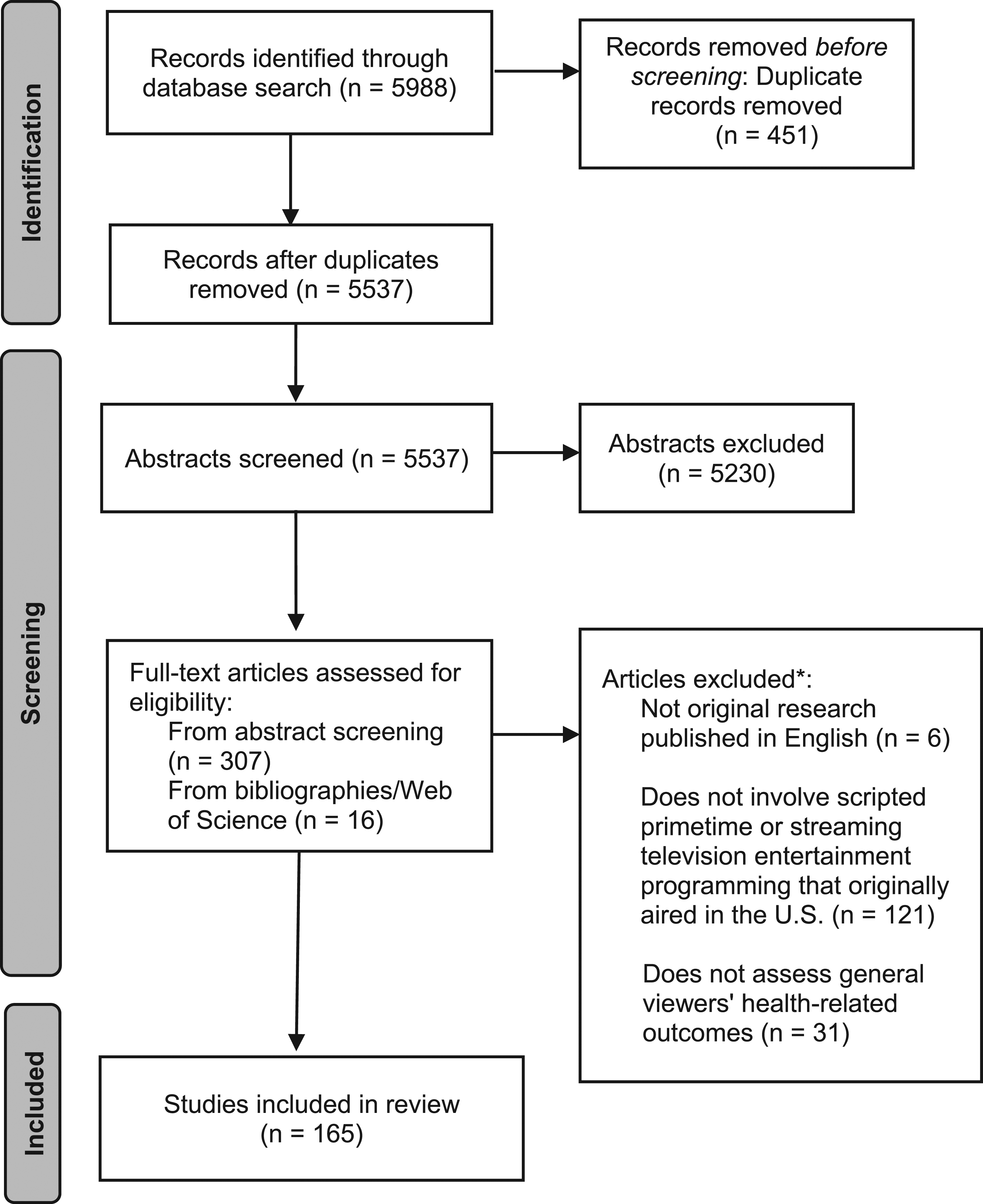
Selected studies were required to (1) be original research published in English, (2) involve fictional (ie scripted) primetime or streaming television entertainment programming that originally premiered in the U.S. and (3) assess associations between exposure by individuals who are not in the medical field or a health sciences training program and health-related outcomes (Appendix II). To be considered original research, studies were required to report results of an original study, not a review or commentary, in a research journal. We defined fictional primetime or streaming television programming according to the Academy of Television Arts and Sciences Emmy awards definition of such programs. 21 Lastly, we required studies to assess, through either qualitative or quantitative methodology, associations between lay audiences’ exposure to the television program or a specific storyline and health-related knowledge, perceptions, and/or behaviors or behavioral intention. Therefore, content analyses, such as a 2020 study analyzing the frequency of certain patient-provider communication behaviors on primetime television, were excluded because they did not include an assessment of how such content influenced viewers (Appendix II). 6 Coders assigned each excluded full text article a primary reason for exclusion (Figure 1).
Data Extraction
For all included studies, data abstraction was performed by two independent researchers using structured abstraction forms loaded into DistillerSR in January-February 2022. Researchers abstracted information on study objectives, study design, assessment of constructs/components of theories of narrative influence (eg assessing transportation, a component of the E-ELM), participant recruitment and sample size, television exposure information such as program name and total episodes/scenes viewed, and health outcome information such as main outcome measure and methods used for assessment (Appendix II). We used DistillerSR to calculate Cohen’s κ for each category (range: .73-1.00; Appendix IIC), and the two researchers met to adjudicate differences with the first author serving as final arbiter.
To assess methodological quality, we first classified studies as to whether they used a non-experimental (eg cross-sectional or cohort), experimental, or qualitative approach. Next, two independent researchers used checklists adapted from Joanna Briggs Institute’s (JBI)’s critical appraisal tools for the three study types. 22 Each checklist consisted of five items (Appendix IID). The two researchers met to adjudicate differences; consistent with the 2017 systematic review mentioned above, studies with a score of 4-5 were deemed “high quality”, 2-3 “fair quality” and 0-1 “poor quality. 17
Data Synthesis
To facilitate data analysis, we created relevant variables based on the exposure and outcome variables. Specifically, we noted if the study assessed a specific health topic (eg cancer, organ donation) or overall health and healthcare; similar health topics were grouped together. For example, studies examining health topics such as disordered eating, obsessive compulsive disorder, and depression were grouped under “mental health.” These categories were not mutually exclusive. We classified each study according to whether it assessed the influence of the television exposure on participants’ knowledge (eg, acquisition of facts), perceptions (eg, attitudes and beliefs), and/or behavior or behavioral intentions. We also classified studies as to whether they found an overall positive, negative, neutral/no influence, unsure or a combination of influences. We operationalized unsure influence as an influence for which the net influence at the societal level was unclear. For example, one study found that viewing fictional crime dramas was associated with support for the death penalty, 23 but whether this was a net positive or negative could not be determined. We analyzed and qualitatively described the data using standard methods of scoping reviews described by PRISMA-ScR. 24
Results
Study Selection
Of 5,537 unique records identified, we eliminated 5,230 based on an initial review of the title and abstract. We assessed the remaining 307 full-text articles to determine inclusion. Of these, 149 (48.5%) met inclusion criteria. Examination of the bibliographies of relevant articles and forward searching using Web of Science identified an additional 16 articles that met inclusion criteria. This resulted in 165 articles included in this review (Figure 1).
Population Characteristics
Descriptive Information for Included Studies (n = 165).
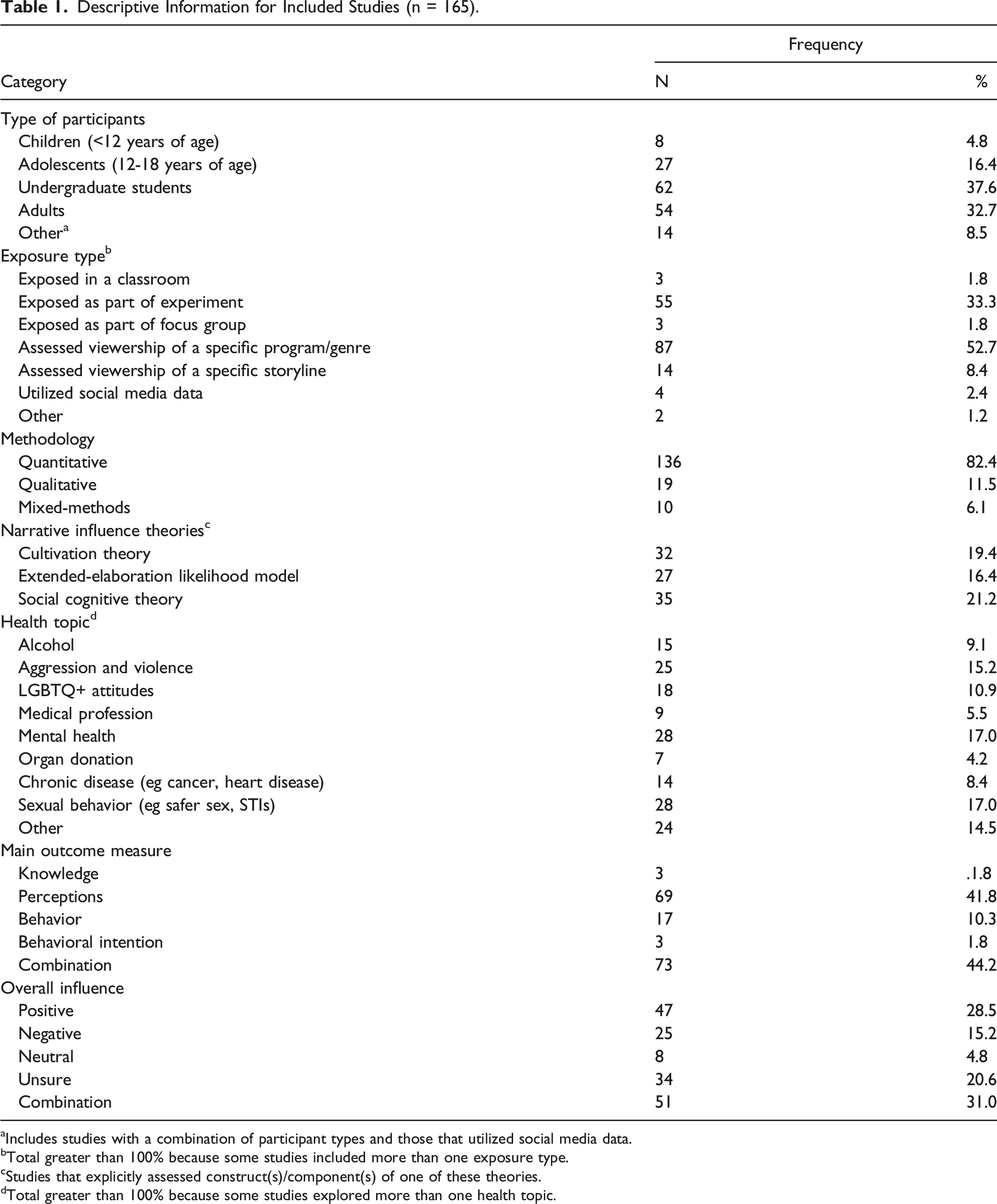
aIncludes studies with a combination of participant types and those that utilized social media data.
bTotal greater than 100% because some studies included more than one exposure type.
cStudies that explicitly assessed construct(s)/component(s) of one of these theories.
dTotal greater than 100% because some studies explored more than one health topic.
Included studies varied widely as to the number of participants, with the smallest study including three participants for a focus group and the largest including survey responses from 29 094 participants. Among the 147 studies that included a breakdown of participants by sex or gender, the percent of female participants ranged from 23.3%-90.3%; 22 studies (13.3%) included only one sex or gender by design. For studies reporting participant race/ethnicity (n = 120, 72.7%), all but 12 contained a majority of non-Hispanic white participants.
Study Methodology
Most studies used quantitative methods (n = 136, 82.4%) and 19 (11.5%) used qualitative methods. Eleven (6.1%) used mixed-methods (quantitative and qualitative methodology), with nine of these using a one-time survey that contained both closed and open-ended questions (Table 1). Approximately half (n = 78, 47.3%) of studies assessed constructs/components of at least one theory of narrative influence (Table 1). The most common construct measured was character identification in the context of social cognitive theory (n = 10, 6.1%), followed by parasocial interaction in the context of the E-ELM (n = 7, 4.2%).
Two studies each contained both one non-experimental and one experimental study.29,30 Of the 89 (53.9%) non-experimental studies, 87 (97.8%) were considered high quality and 2 (2.2%) were considered fair quality. The most common reason for a non-experimental study losing a quality point was having a convenience or non-representative sample (n = 69, 77.5%). Among experimental studies (n = 59, 35.8%), 23 (39.0%) were considered high quality and 36 (61.0%) fair quality. The most common reason for losing a quality point was having a convenience or non-representative sample (n = 55, 93.2%). For the 19 qualitative studies, 15 (78.9%) were considered high quality and 4 (21.1%) fair quality. The most common reason for losing a quality point was not having evidence of ethical approval by an appropriate body (n = 8, 42.1%).
Exposure Characteristics
One hundred four studies (63.0%) used regular viewing as the exposure, with 87 studies (52.7%) assessing exposure by asking participants the frequency with which they viewed a specific program or genre (eg fictional medical television) and 14 studies (8.4%) assessing exposure by asking participants about viewership of a specific episode or storyline of a program (Table 1). One study that used regular viewing habits as the exposure examined the impact of binge-watching and second-screening (ie using a second screen to talk to other viewers while watching) on outcomes. 31
Sixty-two studies (37.6%) involved a controlled exposure, including 55 (33.3%) that had participants view a particular episode or clip in a laboratory setting (Table 1). Among studies that involved exposure in a lab setting, one assigned participants to binge or appointment watch a program. 32 Three studies (1.8%) involved exposure in a classroom setting,33-35 and three studies assessed exposure by having participants watch clips from an episode during a focus group (Table 1).36-38
Television Programs and/or Genres Assessed (n = 165).
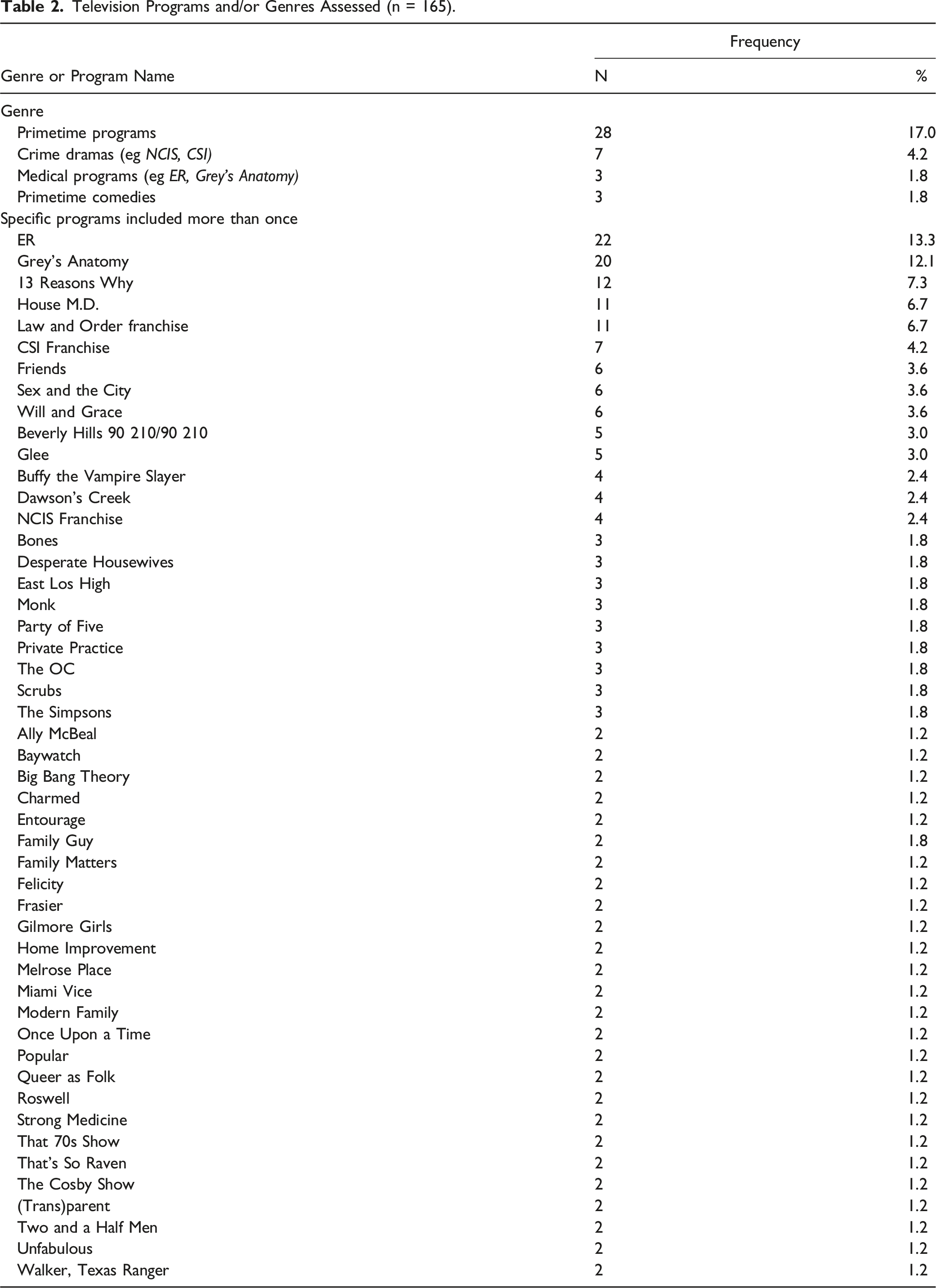
With regard to our broad health topic categories, the most common health topics assessed were sexual behavior (eg safer sex, STIs; n = 28, 17.0%) and mental health (n = 28, 17.0%), followed by aggression and violence (including sexual assault, n = 25, 15.2%; Table 2). Studies classified as “other” (n = 24, 14.5%) included two studies assessing tobacco use, as well as one study assessing abortion, one assessing masculine gender norms, and one assessing speeding, among others (Appendix Tables 1 and 2). Nine studies (5.5%) examined the influence of programs on viewers’ overall perception of providers or the healthcare system.
Outcome Characteristics
Of studies using regular viewing habits as the exposure, 41 (39.4%) assessed perceptions only (Appendix Table 3), with 14 of these studies (34.1%) finding a positive influence of exposure to the program(s) on perceptions/attitudes. One study assessed knowledge only, finding that exposure to a storyline on Grey’s Anatomy that discussed medication abortion was associated with increased knowledge (Appendix Table 3). 39 14 studies (13.5%) assessed behavior or behavioral intention, with three (21.4%) finding that exposure had a positive influence on behavior or behavioral intention,40-42 and five (35.7%) finding that exposure had a negative influence. The remaining 48 studies (46.2%) assessed a combination of outcomes, with 16 of these (33.3%) finding a positive influence of exposure (Appendix Table 3).
Of studies involving participants viewing an episode or clips from an episode(s) in a controlled environment as the exposure, approximately half (n=30) assessed perceptions only (Appendix Table 4). Four of these studies (13.3%) found a positive influence of the exposure on perceptions/attitudes,32,43-45 and nine (30.0%) found an unsure influence. Three studies assessed knowledge only, with all finding that exposure was associated with increased knowledge (Appendix Table 4).29,33,46 Nine studies (14.5%) assessed behavior or behavioral intention, with three (33.3%) finding a negative influence.47-49 The remaining 20 studies (32.3%) assessed a combination of outcomes, with eight of these (40.0%) finding a positive influence (Appendix Table 4).
Overall Influence by Health Topic.
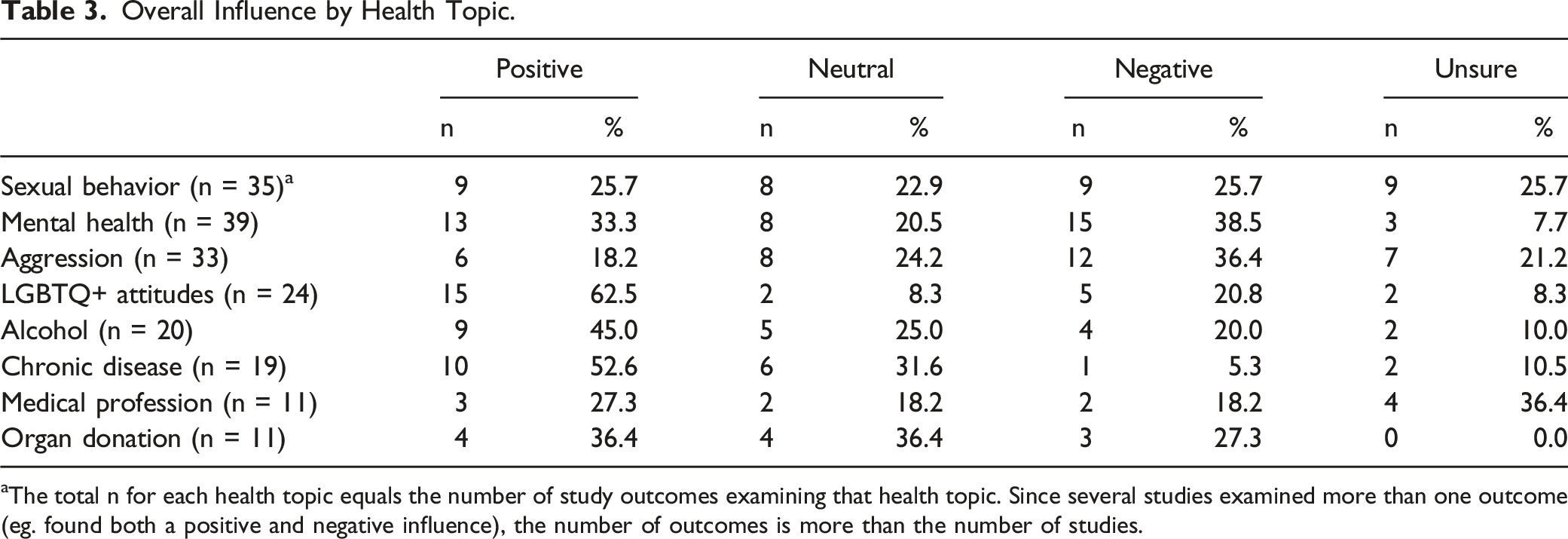
aThe total n for each health topic equals the number of study outcomes examining that health topic. Since several studies examined more than one outcome(eg. found both a positive and negative influence), the number of outcomes is more than the number of studies.
Discussion
This review identified 165 studies examining the influence of exposure to health storylines on fictional television programs on health-related outcomes. Since the 2017 systematic review assessing the influence of fictional medical television programs on health, 17 13 additional studies examining fictional medical television have been published along with 40 studies examining health storylines on non-medical fictional programming; of the latter, 12 examined the Netflix program 13 Reasons Why. The continued publication of scholarship in this area highlights public health and health communication professionals’ acknowledgment of the potential influence of these programs on viewers’ health-related outcomes.
Study Findings
The identified studies suggest these storylines can influence individuals’ knowledge about specific health topics, perceptions of health topics and healthcare workers, and health behaviors or behavioral intentions. Such influence can be negative, particularly regarding aggression and violence and mental health-related outcomes. For example, one study found that viewing aggressive behavior on television was associated with sending aggressive text messages to friends, 50 and several studies found that exposure to the program 13 Reasons Why (which depicted a graphic suicide scene) was associated with suicidal ideation and self-injurious behavior among vulnerable adolescents. Other studies found evidence to support negative influences of exposure to popular television programs on adolescent body image, e-cigarette initiation, and sexual behavior under the influence of alcohol.51-53
However, such influence can also be positive, particularly when storylines are crafted in collaboration with organizations such as Hollywood, Health and Society that provide expert consultation and the opportunity for influence evaluation.10,25,54-57 We also found evidence to support a positive influence regarding LGBTQ+ attitudes, chronic disease, or negative depictions of alcohol use. For example, adolescents who viewed crime and medical programs with storylines depicting negative consequences of alcohol intoxication (eg assaults, car crashes) demonstrated increased risk perception of drinking alcohol, and adolescents and young adults who viewed an ER episode depicting negative consequences from binge drinking were less likely than non-viewers to participate in drinking games.58,59 These storylines are examples of loss-framed messages, and the findings from these studies are consistent with a recent meta-analysis suggesting that appeals to negative emotions through narrative and vivid imagery in loss-framed messages may enhance their effects. 60
In general, findings from the identified studies suggest that, particularly for behavioral health topics, overall influence is mixed. Specifically, the health topics of sexual behavior and mental health each had approximately the same number of positive study outcomes as negative. Given these influences, it may be valuable for medical and public health professionals to both be aware of these portrayals and develop tools to minimize the negative influences and maximize the positive. Such tools could include the formation of toolkits, such as the one related to 13 Reasons Why, 61 or interventions utilizing television clips as part of health education programs. It may also be valuable for health professionals to encourage television writers, producers, and directors to promote accuracy in health storylines as much as possible without sacrificing their entertainment value, or to work with these programs to augment current public health and health education campaigns.
Gaps in the Literature and Recommendations for Future Research
This review identified several gaps in the current literature related to both study design and research questions assessed. Regarding study methodology, most studies (n = 136, 82.4%) used quantitative methods. While quantitative methods are valuable for exploring relationships between predictor and outcome variables, including mediating or moderating variables, qualitative methods can provide an in-depth exploration of discussions and lived experience. Thus, it would be valuable for future research to use qualitative or mixed-methods to explore in greater depth the influence of fictional television programs on viewers’ health-related outcomes. Future research using quantitative methods could also be strengthened by the use of representative or random samples, as only 24 (16.7%) of included studies using survey methods or an experimental design did not use a convenience sample.
Moreover, while most manuscripts referred to theories of narrative influence in the Background or in the Discussion, less than half of included studies assessed constructs/components of at least one of these theories. While findings from these studies overall support the hypothesized mechanisms of narrative influence, future research would benefit from more explicit evaluation of theoretical constructs. As demonstrated by a recent study examining character identification in the context of the influence of an Alzheimer’s disease storyline on This Is Us, qualitative or mixed-methods study designs may be particularly valuable to examine the nuances of theoretical constructs. 62
Additionally, only four studies utilized social media data.25-28 Given that in 2015 there were over 80 billion tweets about television programming, and 58% of tweets related to television dramas on network and cable television occur during the live-airing of the program,63,64 the lack of research utilizing this valuable source of data represents a substantial gap. Future research could address this gap by analyzing social media data related to television exposures, allowing for analysis of viewers’ reactions in real-time.
Another gap in the literature relates to a limited focus on adolescents; only about 16% of studies in this review included adolescent participants exclusively, and despite evidence suggesting Grey’s Anatomy and other fictional medical television programs are popular with this age group, 65 only five of these studies involved exposure to fictional medical programs. Furthermore, although anecdotal evidence suggests that medical television programs like ER influence viewers’ decisions to enter the healthcare workforce, 66 no studies explicitly examined the influence of these programs on young peoples’ career paths.
This review also highlighted gaps in the literature in terms of health topics studied. The two leading causes of mortality in the U.S.—heart disease and cancer—are considered chronic diseases, yet only 14 studies examined chronic diseases. Only two studies examined tobacco, despite cigarette smoking causing about one in five deaths in the U.S. each year and being a leading cause of cancer. 67 The lack of literature on tobacco is particularly noteworthy given the plethora of research on the relationship between exposure to tobacco use in movies and the subsequent use of these products by adolescents.68,69 Although the relationship between exposure and outcomes may be similar for both the small screen and large screen, research has yet to robustly evaluate this.
Results from this review also suggest the need for more research addressing health misinformation, message framing, and viewing conditions. While five studies included in this review addressed the influence of viewing television programs or health storylines on misinformation or misconceptions,42,54,70-72 all of these studies were conducted before the widespread use of social media and concurrent increase in the spread of health misinformation, 73 as well the COVID-19 pandemic which brought the issue of health misinformation into the spotlight. 74 Additionally, while several studies mentioned crafting storylines in collaboration with health experts via Hollywood, Health and Society,10,25,54-57 no studies explicitly examined associations between health information accuracy and influence on health-related outcomes. Furthermore, despite the preponderance of message framing studies in the mass communication literature, no studies in this review compared health storylines with gain frames vs loss frames. Likewise, no studies in this review examined the potential influence of time of viewing programs with health storylines (eg live-airing of a program vs streaming at a later date), and only two examined the potential influence of binge-watching as compared to watching one episode at a time.31,32 Findings from both studies suggest binge-watching may dilute the influence of the health-related content. Given the increased frequency with which viewers are choosing to binge-watch programming on streaming services, 75 it would be valuable to further investigate this association.
A final major gap in the existing literature is the lack of intervention development. Only two studies examined the use of clips with health storylines as part of an adolescent school-based health education intervention, with both finding that the clips were well-received and students reported improvements in knowledge and/or attitudes after the intervention.33,35 However, neither of these studies used adolescent input when designing, implementing, or evaluating the intervention, which may be particularly valuable given previous work suggesting adolescents interpret health content on television differently than adult academics. 76 Future research could use adolescent input to design school-based health education interventions utilizing clips from television programming with health storylines.
Limitations
Although we aimed to minimize bias by carefully defining selection criteria with specific protocols and examples (Appendix II) and having two independent working researchers conduct screening and data abstraction, it should be noted that interpretation of selection criteria can be subjective. We also limited our inclusion criteria to studies examining fictional programs that originated in the U.S. and aired during primetime or on a streaming service. We put these restrictions in place because such programs were the central tenant of our research question, but it may be valuable for other researchers to examine other types of programming, such as reality programs, daytime programs, and those originating in other countries. We also only included studies that explicitly measured viewers’ health-related outcomes, as opposed to those that used methods such as interrupted time-series analyses to examine population-level trends correlated with the live-airing of programs or specific episodes. Although these studies may be valuable at examining correlations, we elected to exclude them to focus more explicitly on associations between exposure and outcomes.
Conclusions
Results from this literature review suggest that health storylines on fictional television programs influence viewers’ health-related knowledge, perceptions, and/or behavior or behavioral intentions. Although this review identified 165 articles, several important gaps in the literature remain, mostly notably the need for research using social media data, examining a broader array of television programming with adolescent participants, and examining the influence of health storylines about chronic disease or substance use. Given the continued popularity of fictional television programs with health storylines and the availability of these programs 24/7 on streaming services, such research will be valuable to better understand the influence of this programming on health promotion, education, and disease prevention. A 2017 systematic review found that viewing fictional medical television programs can influence viewers’ health-related outcomes.
17
This is the first review of the literature examining the influence of health storylines across both fictional medical and non-medical television programs, including those on streaming services, on viewers without a medical background. Results of the 165 identified studies suggest these storylines can influence individuals’ knowledge about specific health topics, perceptions of health topics and healthcare workers, and health behaviors or behavioral intentions. Given the continued popularity of fictional television programs with health storylines, health promotion practitioners should develop tools to maximize their potential positive influences. For example, practitioners could work with content creators to augment current health promotion campaigns. There is also a need for research to address several gaps in the literature, mostly notably research utilizing social media data and examining the influence of health storylines about chronic disease.SO WHAT?
What is already known on this topic?
What does this article add?
What are the implications for health promotion practice or research?
Supplemental Material
Supplemental Material - Characterizing the Influence of Television Health Entertainment Narratives in Lay Populations: A Scoping Review
Supplemental Material for Characterizing the Influence of Television Health Entertainment Narratives in Lay Populations: A Scoping Review by Beth L Hoffman, Robert Hoffman, Helena M VonVille, Jaime E Sidani, Jennifer A Manganello, Kar-Hai Chu, Elizabeth M Felter, Elizabeth Miller, and Jessica G Burke in American Journal of Health Promotion
Supplemental Material
Supplemental Material - Characterizing the Influence of Television Health Entertainment Narratives in Lay Populations: A Scoping Review
Supplemental Material for Characterizing the Influence of Television Health Entertainment Narratives in Lay Populations: A Scoping Review by Beth L Hoffman, Robert Hoffman, Helena M VonVille, Jaime E Sidani, Jennifer A Manganello, Kar-Hai Chu, Elizabeth M Felter, Elizabeth Miller, and Jessica G Burke in American Journal of Health Promotion
Footnotes
Acknowledgments
The authors would like to thank Noelle Spencer, Flor Cameron, Stephanie Christian, Riley Wolynn, and Jennifer McCartney for their assistance with screening abstracts and full-text articles.
Author Contributions
Author BLH conceptualized the study, conducted data acquisition, formal analysis and interpretation, and drafted and revised the manuscript. Author RM conducted data acquisition, formal analysis and interpretation, and revised the manuscript. Author HMV conducted the literature sources (eg resource acquisition), data curation, and revised the manuscript. Authors JES, JAM, KHC, EMF, and EM provided supervision and project administration and revised the manuscript. Author JGB assisted with conceptualizing the study, provided supervision, and revised the manuscript. All authors read and approved the final version of the submitted manuscript and agree to be accountable for all aspects of the work.
Declaration of Conflicting Interests
The author(s) declared no potential conflicts of interest with respect to the research, authorship, and/or publication of this article.
Funding
The author(s) received no financial support for the research, authorship, and/or publication of this article.

Supplementary Material
Supplementary material for this article is available online.
References
Supplementary Material
Please find the following supplemental material available below.
For Open Access articles published under a Creative Commons License, all supplemental material carries the same license as the article it is associated with.
For non-Open Access articles published, all supplemental material carries a non-exclusive license, and permission requests for re-use of supplemental material or any part of supplemental material shall be sent directly to the copyright owner as specified in the copyright notice associated with the article.
