



Abstract
Purpose
The purpose of this study was to evaluate the effectiveness of the WISE (Women in the South-East) Telehealth Network.
Design
A follow-up survey design was used to determine the impact of the program on access to healthcare.
Setting
WISE provided preventive care to women and gender expansive people at local libraries and the Mobile Library in the rural South Carolina Lowcountry.
Subjects
In 1 year (February 2021-2022), WISE reached 523 individuals with 151 agreeing to participate in the study. Most participants identified as white (66%) or Black (22%).
Intervention
A Community Health Worker provided health education, connection to telehealth services, referrals, and connected individuals with community and social services.
Measures
The Telehealth Usability Questionnaire (TUQ), changes in knowledge, satisfaction with WISE, Acceptability of Intervention measure (AIM), and sociodemographic characteristics.
Results
Participants with a high telehealth usability score were significantly more likely to be under the age of 35 (OR 4.60 [95% CI 1.21-17.52]), married (OR 10.00 [95% CI 2.19-45.64]), or white (OR 4.00 [95% CI 1.06-15.08]). The intervention earned a high acceptability score 4.46 (± .61)/5.0 by helping participants obtain necessary medical care and resources, as well as meeting their educational needs.
Conclusion
This study offers practical suggestions to expand the use of telehealth initiatives to improve health outcomes by engaging libraries in rural communities.
Purpose
The COVID-19 pandemic increased healthcare disparities and inequities among women 1 .1,2 One in three women experienced difficulty accessing birth control during the early months of the pandemic. 3 Women were disproportionately impacted by unemployment and shouldered a greater share of housework and childcare responsibilities. 4 These health disparities were exacerbated for women living in rural locations, especially women of color and younger women. 5 Research shows that women play an important role maintaining the health of their families and communities. 6 During a time when it was difficult to maintain contact with healthcare services, the WISE (Women in the South-East) Telehealth Network (WISE) aimed to improve the health and well-being of women and gender expansive people by providing preventive care through telehealth at local libraries and the Mobile Library in rural South Carolina. Although this initiative was not created in direct response to the pandemic, WISE utilized telehealth, which was used more frequently during the early pandemic due to reduced access to in-person visits.
Women in rural communities face barriers to healthcare due to access, availability, and health literacy.7,8 Accessing healthcare can be a barrier because some rural communities lack specialized physicians, such as obstetrician-gynecologists.9–11 In South Carolina, almost 39,000 women live in a county without a single obstetric provider, which amounts to almost 22 percent of counties across the state. 12 Over 29 percent of counties in South Carolina do not have a hospital or birthing center offering maternity care. 13 South Carolina ranks 43rd in physician density. 14 The percentage of rural counties in South Carolina with OB/GYN practices decreased substantially from 2004 (80%) to 2014 (55%), with 20% of all rural counties lacking a hospital that provides OB/GYN services. 15
To access obstetric care, only 61.6% of the U.S. population can reach healthcare services within 30-minutes and only 20.7% can reach a level 3 facility with NICU within 30-minutes. 16 For woman-centered healthcare, such as perinatal care, almost half of women who live in rural America have to drive at least 30 minutes to receive treatment. 9 Limited healthcare options and lack of public transportation means that women living in rural areas may need to secure child care and travel long distances to see a healthcare provider, which can be costly and time consuming.10,17 Lack of fully trained, local providers contributes to women’s health disparities in rural communities, creating an undue burden for this population. 7
During the pandemic, while healthcare offices were closed or restricted, virtual care increased, however, the gap in broadband coverage remained a barrier to effective telehealth services in rural communities. Along with physical distance from medical facilities, ubiquitous broadband internet access has not yet been established in the United States. In South Carolina, 650,000 individuals and 180,000 households in the state do not have high speed internet access. 18 Despite the proliferation of telehealth, health promotion scholars argue that the future of digital health must also improve equity and health literacy. 19
The Role of Telehealth
The American College of Obstetricians and Gynecologists (ACOG) encourages the use of telehealth technologies to expand and improve services for rural women. 20 Telehealth is a cost-effective solution that provides consultations, preventive care, and access to specialists not typically available in rural areas.21,22 Researchers investigating the use of telehealth in family health services and acute care found high satisfaction among patients and providers, suggesting that this type of care is a promising solution for underserved and rural populations.23,24 In the context of women’s health services, individuals were comfortable receiving care through video chat. 10 A recent study identified telehealth as a strategy that may inform doula care among low-income and birthing people of color. 1 Other advantages of telehealth include being able to reach patients with mobility issues and those without access to reliable transportation.25,26 Although telehealth does not replace all health services, it complements existing healthcare networks and offers high quality care and convenient services to those who may otherwise not receive care.27,28 Telehealth can increase access to high value, quality healthcare in rural areas.
The Role of Public Libraries
A large inequity for rural communities is a lack of high-speed internet access.29,30 Lack of broad-band internet has made aspects of modern life more difficult for rural residents by limiting opportunities for social connection, supplementary education, finding employment, participating in civic engagement, researching vital information, financial organization, and telehealth.30,31 Rural residents lean on public libraries, which are more likely to have high-speed broadband access, to be able to stay connected and access resources, especially when facing limited healthcare information and literacy.30,32,33 Across the nation, libraries have become trusted institutions in rural areas, providing health and well-being programming to increase health equity and health literacy.34-37 Libraries are already positioned in most communities to fill this role. In Charleston County, all library branches offer high-speed broadband access through computers and laptops, as well as connection through personal devices.
In addition to internet access, libraries play a critical role improving digital literacy with trained staff available to answer questions as individuals access websites, fill out forms, or use their own devices. 32 Public libraries have become a catalyst for health prevention and intervention, with screenings for illnesses such as STIs and cancer, and provision of services for opioid addiction.38-41 Community-based participatory research programs have found that utilizing the unique position of centralized organizations like public libraries has shown a decrease in negative health outcomes by providing education and telehealth services.7,40,42,43
Public libraries are ubiquitous, even in rural areas where there are 4190 public libraries or about 46.8% of all public libraries. 44 In South Carolina, rural libraries comprise 31% of the public libraries. 44 The average distance to the nearest public library is 2.1 miles. 45 In Charleston County, the main medical facility is approximately 30 miles away from some rural communities, while libraries and mobile libraries are more accessible, adapting to meet the needs of rural communities in a variety of places. In addition, library hours are often expanded compared with medical offices or clinics, with consistent hours in the evenings and weekends. Researchers hypothesized participants in the WISE Telehealth Network will report satisfaction with telehealth in general and the intervention itself, as well as improved knowledge in multiple health domains. Findings from this study offer a model to develop a sustainable system that can be adopted by other rural libraries, easily scaled, and informs health promotion.
Methods
Design and Sample
Women and gender expansive people ages 18 and older participating in WISE (N = 523) were eligible to participate in the study in either English or Spanish. Participation in WISE was defined as interacting with the Community Health Worker at least once. The Community Health Worker invited WISE participants to complete a research study on-site at the rural libraries (e.g., Edisto Island Library, McClellanville Library, St. Paul’s Hollywood Library, and the Mobile Library), as well as through email and social media ads. After providing informed consent, participants completed a web-based survey through Qualtrics (Provo, UT) either in-person at the library or through a link emailed to them after their participation in WISE. Participants received a $10 gift card for completing the 20-minute web-based survey. Then, participants were contacted up to 6-weeks following the initial assessment to complete a mobile-optimized text-based survey developed by DokBot. Dokbot is a free, secure, simple chatbot designed to mimic human interaction in order to collect data in an interactive way. 46 Six weeks provided an appropriate interval to assess satisfaction and acceptability of intervention since participants would have had enough time to receive prescriptions, access referral services, and more. Participants received an additional $5 gift card for completing an eight-question text-based follow-up survey. The same participants received both surveys. The appropriate Institutional Review Board (IRB) approved the ethical conduct of this study.
Measures
The initial survey collected data about participant attitudes regarding telehealth, changes in knowledge as a result of participation, satisfaction with services provided, demographic characteristics, and prior reproductive healthcare experiences. The web-based survey included the Telehealth Usability Questionnaire (TUQ), a measure with strong content validity incorporating items from the best available scales in telehealth research. 47 The TUQ includes 21 items measuring constructs of usefulness, ease of use, effectiveness, reliability, and satisfaction. Possible scores range from 21–105. A question adapted from materials developed for AIDS Housing of Washington’s technical assistance program by Clegg & Associates 48 asked participants, “to what degree do you feel you have improved your knowledge in the following areas (i.e., sexually transmitted infections (STIs) or HIV, HPV vaccination, contraception, pregnancy, mental health, and nutrition/exercise) as a result of the WISE Telehealth Network?” and “How satisfied are you with the following aspects of our services (i.e., knowledge demonstrated by staff; responsiveness of staff to needs; usefulness of information/assistance provided; and overall quality of services provided)?”
Questions from the CDC’s Household Pulse Survey 49 employed a 5-point Likert scale to investigate delays in medical care and accessing prescription medicines, with response options ranging from “never” to “always.” A 5-point Likert scale question asked participants to rate their experience (e.g., helpful, valuable, enjoyment) with the WISE Telehealth Network, with response options ranging from “not at all” to “extremely.” Demographic characteristics included age, gender, race/ethnicity, level of education, employment status, health insurance status, income, HPV vaccination status, and contraceptive use. In order to respect and maintain a positive relationship with participants, many survey questions were optional, which occasionally resulted in varied response totals.
At follow-up, participants completed a text-based survey through DokBot assessing their perceptions of the intervention. The brief questionnaire included a validated implementation outcome measure, the Acceptability of Intervention Measure (AIM). The AIM score captures the success of implementation outcomes with higher scores indicating greater acceptability. 50 In the text-based survey, in addition to the AIM questions, three 5-point Likert-type scale questions with response options ranging from “not at all” to “extremely” assessed how much, if at all, participants felt the overall intervention was useful, valuable, and/or worth recommending to a friend.
Intervention: The WISE (Women in the South-East) Telehealth Network
Formative audience research including in-depth interviews with 52 women in the rural Lowcountry of South Carolina found that women wanted private, confidential telehealth services at an established, neutral, community location such as a public library.51,52 This research found that women consider their health holistically when making choices about reproductive health. As a result, WISE addressed persistent disparities in women’s health through a “life course” perspective to health promotion and disease prevention. A “life course” perspective acknowledges that an individual’s health is impacted by each stage of life, including their personal experiences and health decisions, as well as their social, economic, and environmental contexts over their lifetime. WISE infrastructure connected women with healthcare resources and care management in the areas of maternal care, infectious disease, and mental health, as needed. WISE provided healthcare independent of gender identity, serving women, non-binary, and gender expansive people.
WISE partnered with the Medical University of South Carolina (MUSC) Center for Telehealth, recognized as a national telehealth center of excellence, to develop and implement a telehealth initiative launching in the community in February 2021. The Charleston County Public Library (CCPL) system offered appropriate infrastructure, including a computer and high-speed broadband internet access, as well as private space to offer telehealth appointments. At each location, a full-time community health worker (CHW) served as the point of contact for this initiative. The CHW provided tailored health education and resources to support an overall healthy lifestyle, such as HPV vaccination awareness, contraception education, health literacy, nutrition counseling and more. The CHW had a Master of Public Health (MPH) and was trained to provide health education. WISE used evidence-based health education resources, such as the “Hands on Health” initiative at MUSC and resources from the SC Department of Health and Environmental Control (DHEC). In addition, the CHW was trained to serve as a liaison to understand each woman’s unique needs and opportunities to offer personalized service connectivity with community and social services. The CHW facilitated the direct provision of care through telehealth appointments with physicians at MUSC. WISE also partnered with the SC Department of Health and Environmental Control (DHEC) to provide low-cost referrals for in-person services, such as HPV vaccination, contraceptive services requiring in-person insertion or removal, and STI testing, among others. Throughout the intervention, the WISE team met frequently and the CHW had access to clinicians and researchers for support and to discuss questions.
In South Carolina, expanding the use of telehealth initiatives could decrease health disparities among rural women and improve overall health outcomes. The purpose of the WISE Telehealth Network is to improve the health and well-being of women and gender expansive people by providing preventive care through telehealth at local libraries in the rural Lowcountry of South Carolina. The WISE Telehealth Network aim is to connect women in rural communities with essential healthcare services, health education, referrals, and community and social services at local public libraries and the Mobile Library. WISE serves individuals at the Edisto Island Library, McClellanville Library, St. Paul’s Hollywood Library, and the Mobile Library. All of these locations are defined as a rural area by the CMS- Rural Health Clinics (RHC) program. These areas are also designated as mental health and primary care health professional shortage areas, as well as medically underserved areas (MUAs).
Analysis
Descriptive statistics were used for all web-based survey and text-based survey measures. All data were reported as frequencies and response rates were reported as percentages of the total sample population. Continuous variables were analyzed using means with confidence intervals (CIs). Unadjusted and adjusted odds ratios were used to analyze the associations between high TUQ score, WISE satisfaction, and demographic variables. Demographic variables were selected for analysis based on frequencies and variances. Analysis of satisfaction aggregated extremely satisfied, somewhat satisfied, and satisfied responses, and descriptive data are provided. We defined a high TUQ score as the participant marks “strongly agree” for all items in the scale and high satisfaction as those who responded with “extremely satisfied” and “satisfied.” Multivariate analysis of TUQ scores, satisfaction, and descriptive data are provided in frequencies and percentages. Multiple binary logistic regressions were applied to analyze the overall and subdomain scores from TUQ and satisfaction. All demographic variables were used in univariate analysis, but some variables were omitted from regression analysis due to lack of correlation and low response. TUQ analyses followed Xu and colleagues recent approach, which assessed the importance and use of telehealth. 53 All statistical analyses and model fitting were performed using IBM® SPSS® Statistics containing the −2 Log Likelihood where a significant improvement in the fit of the final model over the null model was considered. Statistical significance was defined as P < .05.
Results
Selected Demographic Characteristics.
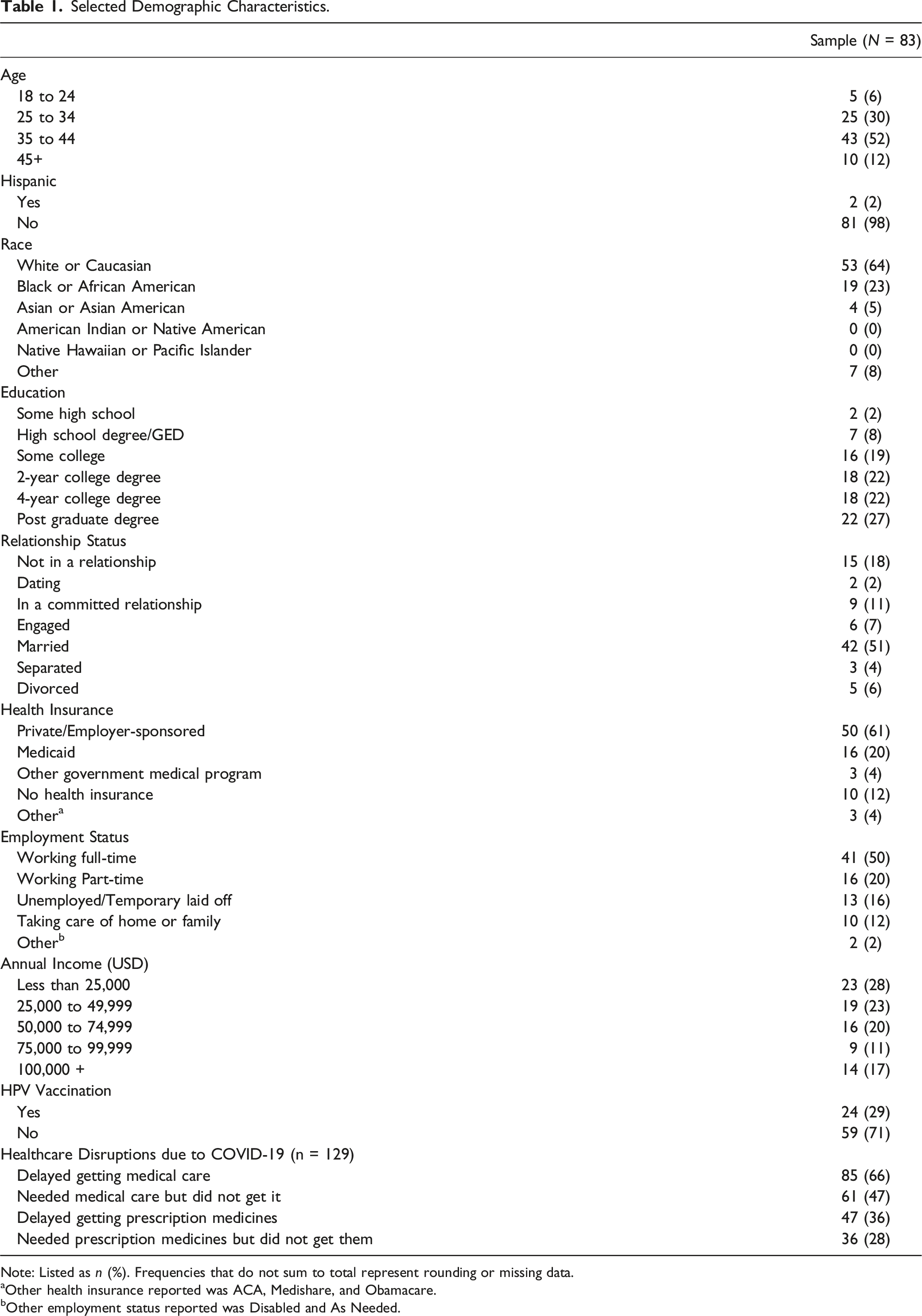
Note: Listed as n (%). Frequencies that do not sum to total represent rounding or missing data.
aOther health insurance reported was ACA, Medishare, and Obamacare.
bOther employment status reported was Disabled and As Needed.
Telehealth Usability Questionnaire (TUQ) Scores for Participants in the WISE Telehealth Network Web-Based Survey (n = 131).

Note: TUQ scores are out of 5.
Factors Associated With High TUQ Score.
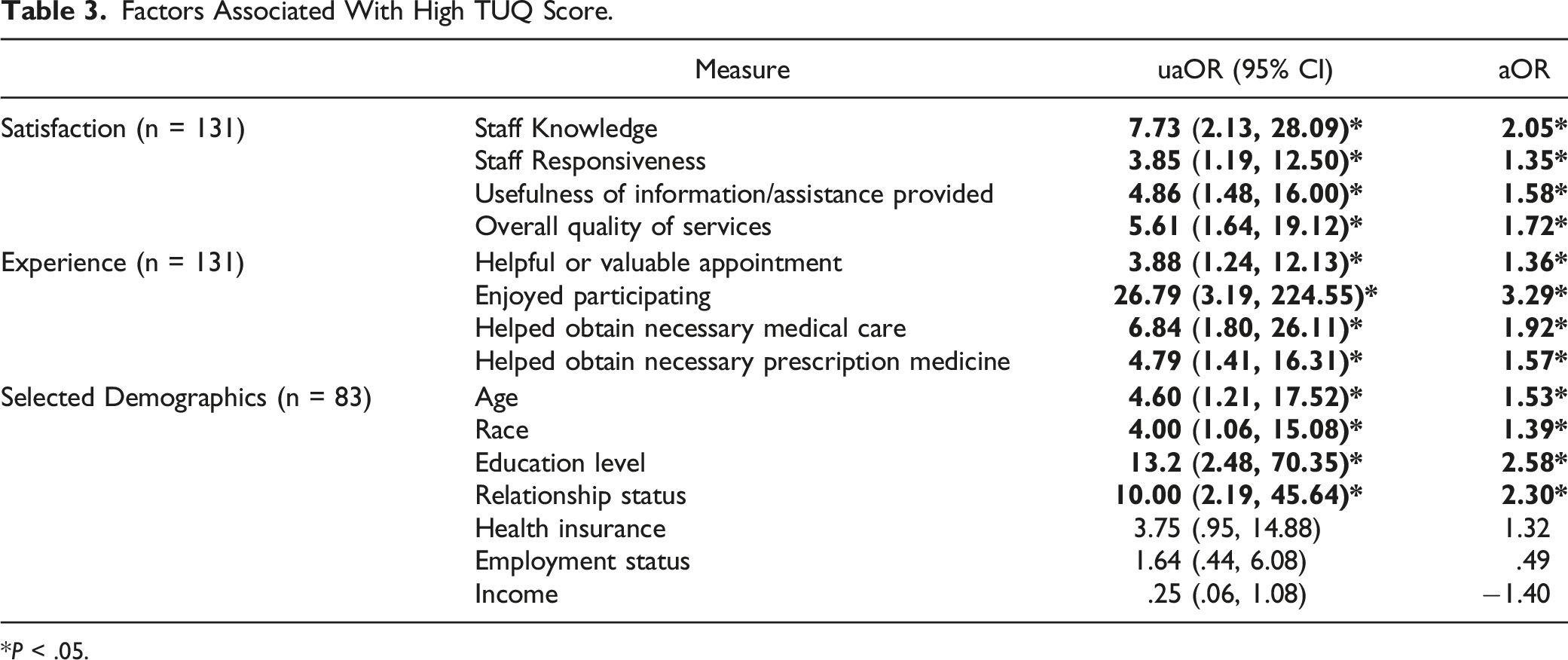
*P < .05.
Perceived Improvement in Knowledge of Health Topics (N = 83).
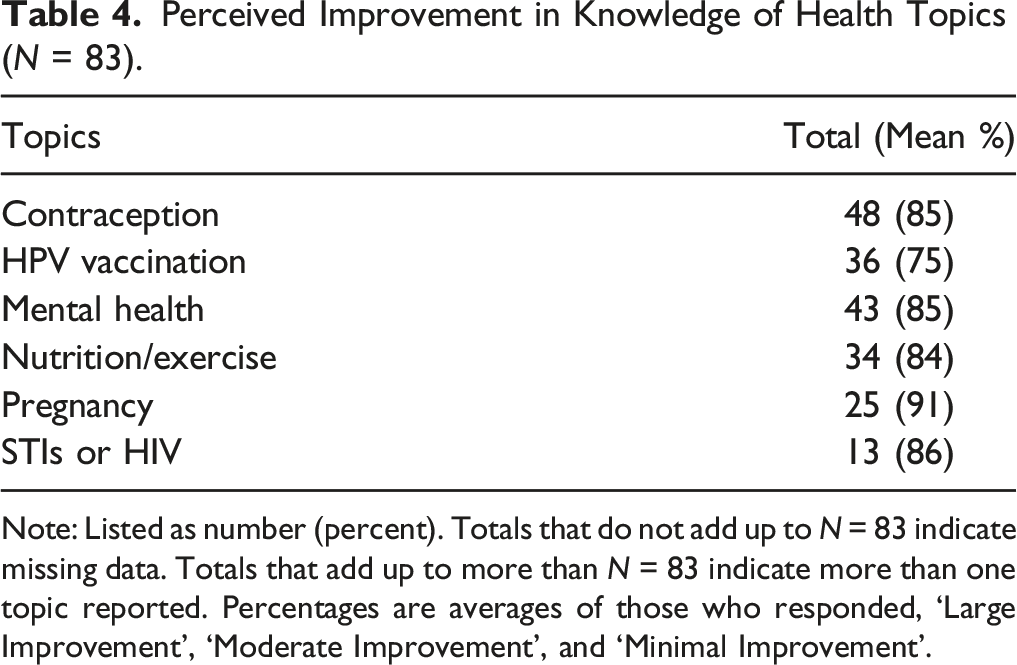
Note: Listed as number (percent). Totals that do not add up to N = 83 indicate missing data. Totals that add up to more than N = 83 indicate more than one topic reported. Percentages are averages of those who responded, ‘Large Improvement’, ‘Moderate Improvement’, and ‘Minimal Improvement’.
Satisfaction with the WISE Telehealth Network (N = 97).

Note: Listed as number (percent). Totals that do not add up to N = 97 indicate missing data.
Experiences Reported by WISE Telehealth Participants (N = 78).

Note: Listed as number (percent). Totals that do not add up to N = 78 indicate missing data.
Factors Associated With Satisfaction of Overall Quality of Services Provided by WISE.
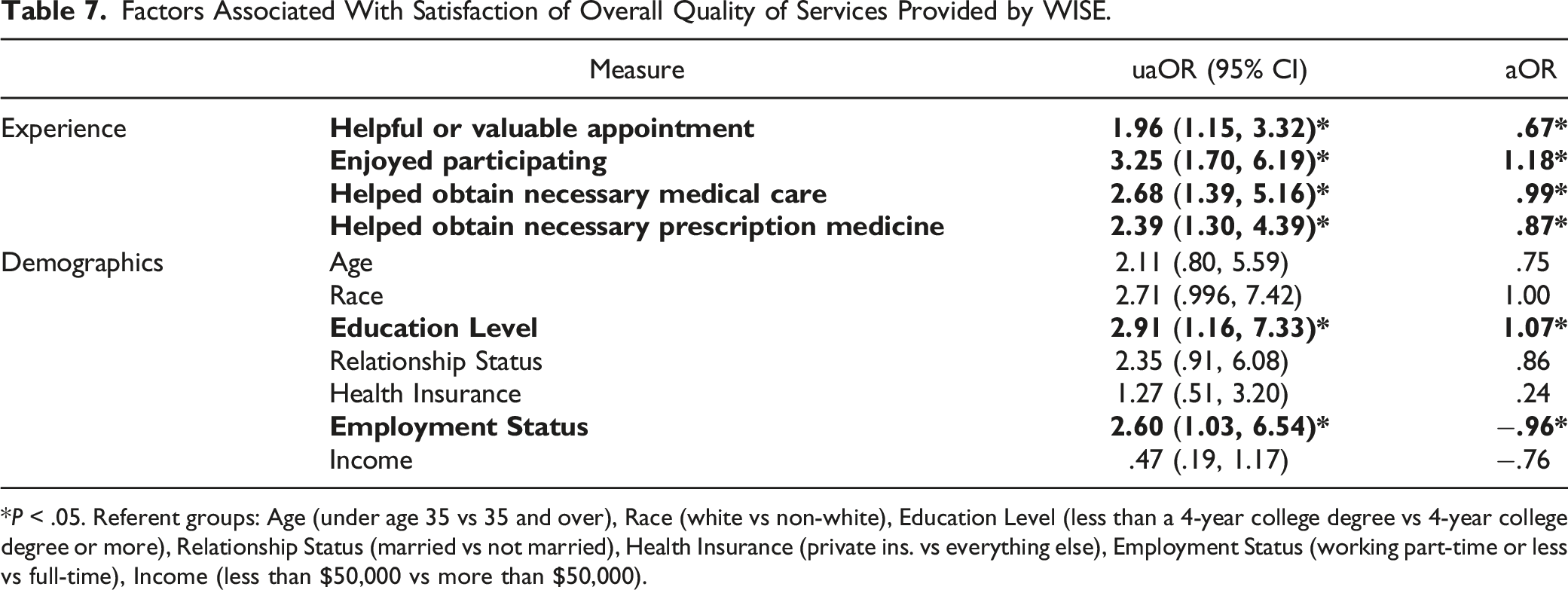
*P < .05. Referent groups: Age (under age 35 vs 35 and over), Race (white vs non-white), Education Level (less than a 4-year college degree vs 4-year college degree or more), Relationship Status (married vs not married), Health Insurance (private ins. vs everything else), Employment Status (working part-time or less vs full-time), Income (less than $50,000 vs more than $50,000).
Acceptability of Intervention (AIM) Among Participants at Follow-up (N = 86).

Discussion
WISE provided preventive care at local libraries and the Mobile Library in the rural South Carolina Lowcountry. Our findings contribute to recent research showing that telehealth improves access to patient-centered care. 54 A Community Health Worker provided health education, connection to telehealth services, referrals, and connected women with community and social services. WISE aimed to address health disparities in rural communities by increasing access to healthcare, health education, and availability of resources at local libraries. Our findings reflect recent research that lack of access, rather than interest, continues to cause disparities in telehealth use among rural communities. 55
Participants found value in the WISE Telehealth Network. Participants unanimously (99%) reported obtaining necessary medical care through WISE, demonstrating that the intervention met a need in the community. Participants identified healthcare disruptions due to the COVID-19 pandemic, including delays getting prescription medicines (36%) and inability to get needed prescriptions (28%). Most participants (96%) reported that the WISE Telehealth Network assisted them in obtaining necessary prescription medicines and providing useful information and assistance. The implementation and overall quality of services provided by WISE was well-received by participants. Findings indicate that successful library-based interventions could consider the importance of knowledge demonstrated by staff and responsiveness of staff to participants’ needs. Participants who were highly satisfied with the overall quality of services were significantly more likely to work less than full-time. At follow-up, participants’ Acceptability of Intervention Measure (AIM) score was 4.46 (± .61) out of 5, indicating high acceptability and sustained positive perceptions of the value of WISE. Results suggest that WISE could offer a possible model to meet the needs of women and gender expansive people in the rural Lowcountry of South Carolina.
In response to the COVID-19 pandemic, public libraries accelerated efforts to serve as hubs of community health, addressing health behaviors to improve physical and mental health. 32 Women participating in the WISE Telehealth Network were comfortable with telehealth reporting a Telehealth Usability Questionnaire (TUQ) score of 4.19 (±.19) out of 5. Although on a much smaller scale, this finding mirrors recent research that both physicians and patients reported positive experiences with telehealth during the COVID-19 pandemic. 54 However, we found that participants with a high TUQ score were significantly more likely to be under the age of 35, married, white, or have less than a 4-year college degree. Our findings suggest that young working families may benefit from telehealth interventions at their local library. Libraries starting a new telehealth program may want to identify the TUQ score of their community to better identify potential disparities and develop solutions. Understanding the target audience is important to implement telehealth programs at public libraries. This finding reinforces recent research that emphasizes the importance of a targeted approach to addressing community needs, which includes improving eHealth literacy.56,57 In particular, WISE sought to address disparities through partnerships with an academic health center and the state department of health to offer seamless provision of telehealth care and referrals to local clinics for low-cost, in-person services.
Although telehealth for reproductive care increased during the pandemic, disparities between rural and urban health clinics persisted. 58 Beatty and colleagues 58 found that barriers to provision of reproductive care among rural clinics in S.C. included limited electronic infrastructure, such as broadband. While public libraries in rural areas can overcome this barrier to help achieve equitable access to care, recent research found that rural librarians continue to have concerns about limited resources. 59 WISE provides a cost-effective model that protects librarians’ time by employing a Community Health Worker who is able to facilitate care. This study filled a gap in the literature outlining a potentially effective telehealth approach for women’s preventive services in reproductive health. 60
Public libraries offer ideal sites for public health interventions focused on health promotion of sexual and reproductive health. The majority of WISE participants reported improvement in knowledge about health topics, including contraception, HPV vaccination, and STIs/HIV. Our findings show that individuals in our study needed this information and were interested in receiving it at their public library. A recent study found that librarians are open to addressing this need with over 80% of librarians surveyed indicating that they would be comfortable discussing sexual and reproductive health topics. 61 However, there are currently limited public library interventions related to health justice, which aims to eliminate health inequities and create sustainable innovations, 62 a gap that WISE may be uniquely positioned to fill.19,57 The WISE Telehealth Network provides a possible solution to issues of access and health equity by integrating telehealth services with health education, referrals, and connection to social and community resources in rural public libraries. 60
This descriptive study is among the first evaluations of a telehealth intervention embedded in rural public libraries. WISE provides a framework for other rural library systems to create partnerships and to employ a Community Health Worker to provide health education, connection to telehealth services, referrals, and connect women with community and social services. Despite these contributions, this study also faced a number of limitations, including reaching the target audience, due in part to pandemic restrictions for in-library group services. Recent research found that US national and state survey response rates were impacted by the COVID-19 pandemic, with all except one reporting decreased response rates.
63
The current research study faced the same challenges and had a low response participant survey rate of about 29%. Survey nonresponse bias may play a role in the relative lack of diversity in the sample, which included 66% white participants. In addition, the sample was highly educated with most participants completing at least some college. We are unable to determine whether participants differed in significant ways from those who chose not to participant. These concerns should be considered in interpreting the results of this study despite recent research showing a limited relationship between response rates and survey nonresponse bias, questioning the need for increased spending to achieve high response rates.
64
Although scholars have argued that 20-25% response rates may provide fairly confident estimates with smaller sample sizes,
65
our small sample size limits our ability to interpret our results with confidence. Future research should seek to include a more diverse sample and to investigate the potential for public libraries to provide health education on sexual and reproductive health topics in other geographic locations. Other public libraries seeking to create and evaluate similar telehealth programs could consider a staggered release across counties or branches to facilitate a comparative control. Incorporating a brief DokBot survey, instead of a lengthy web-based survey at baseline could also improve response rates. Finally, future research could follow participants over one or more years to find out how library health programs can be integrated into the medical home model and improve health outcomes over the long-term. Still, the WISE Telehealth Network offers a practical model to expand the use of telehealth initiatives and health promotion to rural libraries, where communities can anticipate increases in education opportunities and connection to medical care. Telehealth is a cost-effective solution to expand and improve health care services for rural women. The WISE (Women in the South-East) Telehealth Network provides a solution to issues of access and health equity by integrating telehealth services with health education, referrals, and connection to social and community resources in rural public libraries. Public libraries offer ideal sites for public health interventions focused on health promotion of sexual and reproductive health. WISE provides a framework for other rural library systems to create partnerships and to employ a Community Health Worker to provide health education, connection to telehealth services, referrals, and connect women with community and social services.So What?
What Is Already Known on This Topic?
What Does This Article Add?
What Are the Implications for Health Promotion Practice or Research?
Footnotes
Acknowledgments
The authors would like to acknowledge the WISE Telehealth Network partnership with the Charleston County Public Libraries (CCPL), the Medical University of South Carolina (MUSC), the South Carolina. Department of Health and Environmental Control (DHEC), and the College of Charleston.
Declaration of Conflicting Interests
The author(s) declared no potential conflicts of interest with respect to the research, authorship, and/or publication of this article.
Funding
The author(s) disclosed receipt of the following financial support for the research, authorship, and/or publication of this article: Primary support for the WISE (Women in the South-East) Telehealth Network was funded by the South Carolina Center for Rural and Primary Healthcare as part of the state’s rural health initiative. This research was also supported in part by the College of Charleston’s Office of Undergraduate Research and Creative Activities (URCA) and the Summer Undergraduate Research with Faculty (SURF) Program.
