




Abstract
Personal identity formation is a key developmental task of adolescence, with the educational domain being a core life domain. Parents are gatekeepers of adolescent career development but their role in facilitating educational identity formation still needs to be uncovered. The present study investigated developmental trajectories of educational identity processes (commitment, in-depth exploration, and reconsideration of commitment) across two academic years. Educational identity processes, parental socio-economic status, and parental career-related behaviors (support, interference, lack of engagement) were appraised through a four-wave longitudinal study with 5- to 6-month intervals (N = 744; Mage = 15.2 years, 55% girls). Results of the latent class growth analysis revealed five educational identity trajectories (i.e., Undifferentiated, Searching moratorium, Foreclosed, Diffusion, and Achievement). Commitment and in-depth exploration processes were stable for all five trajectories. The undifferentiated trajectory (medium stable levels for all identity processes) was the most prevalent. Parental socio-economic status and perceived parental support correlated positively with achievement and searching moratorium trajectories and negatively with diffused and undifferentiated trajectories. Foreclosed adolescents perceived their parents as the most engaged. Trajectories characterized by high reconsideration of commitment also correlated the most with perceived parental interference. The results bring forward valuable insights into the role parents play in their adolescents’ educational identity development.
Keywords
Personal identity formation is a key developmental task of adolescence, with the educational domain being a core life domain (Crocetti, 2017). Recent studies (Becht et al., 2021; Hatano et al., 2020) have underscored that developmental trajectories marked by strong educational commitments and active in-depth exploration tend to be longitudinally linked to positive psychosocial functioning (e.g., satisfaction with life, subjective happiness). The social ecology of educational development in adolescence revolves around the core role of parents as providers of academic support and meaningful interpersonal relationships for their offspring (Skinner et al., 2022). Moreover, educational identity formation is intricately linked to career development in adolescence, as educational choices closely impact future career choices (Negru-Subtirica & Pop, 2018; Negru-Subtirica et al., 2018). As parents are the gatekeepers of adolescent career development, their role in facilitating educational identity formation still needs to be uncovered. Thus, the present study investigated developmental trajectories of educational identity over a period of two academic years.
Theoretical Considerations on Adolescent Educational Identity Trajectories, Parental Socio-Economic Status, and Perceived Parental Career-Related Behaviors
The formation of an adaptive and coherent educational identity in adolescence is crucial, as educational goals and plans in this life-stage are decisive for life success in adulthood (Verhoeven et al., 2019). Recent OECD data have pointed out that adolescent educational goals tend to be anchored in the informal and non-formal career guidance provided by their parents who can facilitate or hamper educational exploration and commitments (Mann et al., 2020). The bioecological model points out that parent-child relationships are key in understanding educational development in adolescence (Bronfenbrenner & Morris, 2006; Skinner et al., 2022). In this context, parental socio-economic status (SES) and parental career-related behaviors play key roles. More affluent and involved parents can provide more complex and diverse educational development tools and contexts. Also, career-relevant parental behaviors have a strong instrumental role in adolescents’ educational and vocational choices (Liang et al., 2020), providing adaptive but also maladaptive strategies and guidance for the child’s identity-relevant exploration. From a bioecological perspective, the social context that parents provide contributes to how adolescents appraise themselves in their educational settings, which in turn contributes to their educational involvement and success (Skinner et al., 2022). Hence, educational identities are built on how adolescents perceive their parents’ involvement in the educational domain.
Educational Identity
Adolescence represents a period of intense strivings, with the primary goal of forming a personal identity. For this age group, educational identity has been found to play a key role in providing adaptive development (Flum & Kaplan, 2012). One process-oriented model that has been widely used in investigating educational identity is the three-factor model of identity formation (Crocetti et al., 2008). This model views identity formation as a dynamic interplay between three identity processes: commitment, in-depth exploration, and reconsideration of commitment. In the educational domain, an adolescent enacts strong dedication to educational choices and gains confidence from these choices (i.e., commitment). Then, the adolescent can engage in continuous and active self-analysis stemming from current educational commitments combined with searching for new information or talking to others about these choices (i.e., in-depth exploration). Finally, considering the newly obtained information, the adolescent can reevaluate initial educational commitments (i.e., reconsideration of commitment). After attentive evaluation, current commitments might be changed to make way for new, more satisfactory choices and goals.
Cross-sectionally, the three identity processes have been studied through a person-centered approach by identifying identity statuses. An identity status represents a combination of different levels of the three identity processes at a given moment in time. The identity literature has highlighted several statuses: the achievement status (i.e., high commitment and in-depth exploration, low reconsideration of commitment), the foreclosure status (i.e., medium to high commitment; low in-depth exploration and reconsideration of commitment), diffusion (i.e., low levels of all identity processes), moratorium (low levels of commitment and in-depth exploration and high levels of reconsideration of commitment), and searching moratorium (high levels of all identity processes; Meeus et al., 2010). Additionally, in a study on Romanian adolescents, Negru-Subtirica et al. (2017) also found an “undifferentiated” educational identity status characterized by medium levels of all identity processes.
Longitudinally, these statuses have been studied from the perspective of identity trajectories, namely how the statuses change over time. In Japan, Hatano et al. (2020) found that identity trajectories can be stable (e.g., achievement, moratorium, diffusion), increasing (e.g., for searching moratorium all identity processes increased linearly over the course of the study), but also transitioning from one status to another (e.g., diffusion to moratorium). Interestingly, even though similar identity statuses have been uncovered cross-sectionally in different cultures (e.g., in Italy, the Netherlands, Turkey, and Japan; for a review, see Crocetti, 2017), longitudinally in terms of identity trajectories, the results are not so clear cut. For instance, previous studies performed in the Netherlands (Meeus et al., 2012) found different trajectories than the previously mentioned Japanese study (Hatano et al., 2020). Specifically, in the Dutch context, the achievement trajectory was characterized by decreasing commitment and in-depth exploration, while searching moratorium had decreasing values on all identity processes over time (Meeus et al., 2012). Interestingly, Meeus et al. (2012) found that the moratorium trajectory showed increasing commitments over time and a decrease in reconsideration, possibly a transition toward achievement, whereas diffusion exhibited increases of commitment and exploration, possibly a transition towards moratorium or achievement. As studies on identity trajectories are relatively few and the results from different cultures are inconsistent, we consider it is important to further explore this topic.
Parental Socio-Economic Status
Adolescence is a developmental timeframe when family variables facilitate or hamper youth intentional pursuits. Notwithstanding the complexities of measuring parental SES, there is good agreement regarding the impact of early life adversities on children and adolescents’ development (Skinner et al., 2022). Specifically, many children from economically vulnerable families face greater risks of mental health difficulties, missed opportunities to explore, limited access to activities, or high family stress as compared to their counterparts from more affluent families (Barnett, 2008). In the bioecological model, parents’ economic situation reflects their availability in the development of their children, as their financial and economic hardships gradually craft family dynamics, in terms of behaviors, emotions, and attitudes (Bronfenbrenner & Morris, 2006). Due to the lack of parental objective (e.g., access to professional networks to career and school counseling) and subjective assets (e.g., emotion- and goal-regulation strategies), adolescents with lower SES may have fewer and lower educational and career plans and goals and they often fail to attain them. These relations have been confirmed by some studies (e.g., Seginer, 2008), but have failed to emerge in other research (e.g., Goldner et al., 2019). Hence, parental SES plays a complex role in the personal development of adolescents’ identity and in parent-child communication in this timeframe.
Perceived Parental Career-related Behaviors
Parents are the gatekeepers of adolescent educational and career development, providing meaningful social contexts and interactions to facilitate their children’s academic success (Skinner et al., 2022). Parental practices have been operationalized from a behavioral perspective to provide a more nuanced and anchored perspective on how parents can communicate with their adolescent children regarding career issues. Parental career communication conveys parental aspirations for their child and plays an important role in adolescents’ career socialization and in their internalization of career goals and plans (Dietrich et al., 2012). One conceptualization has been proposed by Dietrich and Kracke (2009) and it encompasses three dimensions: parental career-related support, interference, and lack of engagement. Support focuses on the parental provision of resources and strategies (e.g., emotional coping strategies, access to professionals) that assist their children in career-relevant exploration, guided by the children’s needs and interests. It capitalizes on the freedom of choice adolescents are given when exploring or making career decisions, with parents stepping in when needed. Interference reflects parental excessive control over children’s career aspirations and actions, with parents pushing their children toward career choices without collaborative consultation with their offspring. It is viewed as maladaptive, in that it fosters career ambivalence and even indecision in adolescent children (Marcionetti & Rossier, 2017) and mental health concerns (anxiety, depressive symptoms, externalizing problems; Zhou et al., 2020). Parental lack of engagement reflects detachment from the educational choices of the child; this can be linked to a lack of interest but also to a lack of resources (e.g., economic, time) that hold back parents from being available for their children’s career development. This perceived absence of parents fosters career ambivalence (Zhou et al., 2020) and career indecision (Marcionetti & Rossier, 2017) in adolescents, being also related to more mental health concerns (anxiety, depressive symptoms, externalizing problems; Zhou et al., 2020).
Adolescents’ Educational Identity through the Lenses of Parental Socio-Economic Status and Career-Related Behaviors
Adolescent Identity Formation and Parental Socio-Economic Status
The development of adolescents’ identity does not happen in a vacuum and thus, it is important to delve deeper into factors which may influence how they form their identity. One such factor may be parental SES. A cross-sectional study on a sample of Hungarian adolescents has shown that parental SES predicts personal identity processes mediated by separate indicators of family functioning (Rivnyák et al., 2021). More specifically, adolescents with higher parental SES were more committed to their educational and relational self-relevant goals through adherence to family rituals. Also, parental SES indirectly supported adolescents’ identity exploration through family history knowledge. Last, higher parental SES fostered stronger identification with family which in turn impeded reconsideration of commitments. These results indicate that parental SES gradually shapes family dynamics across time, and that through these changes there is impact also on adolescent identity formation. Another cross-sectional study on Lithuanian adolescents has brought forward the complex mediation among family material condition as a proxy for SES, parental education-related behaviors (i.e., studying for school), and identity styles (i.e., cognitive strategies for processing identity-relevant information; Vosylis et al., 2021). Specifically, higher SES families having the means for a better supportive context can strengthen adolescents’ active searching and reflective capacities. On the contrary, poorer financial conditions marked by increased conflicts due to economic pressures and unpredictability may lead to parental interference and parental lack of engagement, which in turn, are more likely to hinder adolescents’ exploration possibilities. Hence, parental SES is also related to the cognitive processing of identity-central information, through the mediation of parental behaviors. Summing up, parental SES does play a key role in the educational identity development of adolescents, but multiple studies indicate that this relation may be mediated by parent- or child-level variables.
Identity and Perceived Parental Career-related Behaviors
Existing research has mainly investigated the relation between vocational or career identity and parental career-related behaviors, with mostly cross-sectional designs. Also, to the best of our knowledge no longitudinal study has analyzed the longitudinal relations between educational identity and perceived parental career-related behaviors in adolescence. Parental career support was found to positively predict Italian adolescents’ in-depth exploration regarding their future plans and partially mediated the relation between commitment and in-depth exploration (Zammitti et al., 2020). Therefore, parents should be aware of their crucial role in their adolescent’s identity development. Specifically, to support a fruitful identity development in adolescents, parents should keep in mind that allowing their offspring’s autonomy is key (Koestner et al., 2020). The beneficial links between parental career support and psychosocial outcomes were also found in a sample of Swiss adolescents. Parental career support was positively linked to adaptive psychosocial career outcomes (e.g., career exploration, family and friend emotional support) and negatively to maladaptive outcomes (e.g., lack and inconsistence of career information; Marcionetti & Rossier, 2017). The same study identified a similar pattern of positive associations with maladaptive outcomes for parental interference and lack of support. These behaviors were positively linked to reduced adolescent career exploration based on lacking or inconsistent information, with significant others (parents, friends) offering reduced emotional support. Summing up, these studies point out the positive role of parental support in the adolescents’ self-development, but also highlight the ambivalence of parental interference and lack of engagement for self-relevant career outcomes.
The Present Study
The aims of the present study were twofold. First, the study aimed to identify educational identity trajectories and second, to explore how these trajectories were associated with perceived parental socio-economic status and perceived parental career-related behaviors. In line with the current state of research on the three-factor model of identity (Crocetti et al., 2008), we hypothesized to find five identity trajectories (i.e., achievement, undifferentiated, searching moratorium, diffusion, and foreclosure; Hatano et al., 2020; Meeus et al., 2012; Negru-Subtirica et al., 2017). The hypotheses and analyses were not preregistered.
In the Romanian school system, education is compulsory from elementary until the 10th grade (in high-school), with a fixed curriculum, GPA-bound requirements, standardized admission tests, and a country-level computerized distribution to specific high-schools based on grades (Damian et al., 2016; Negru-Subtirica et al., 2017). Thus, in-depth educational exploration is not actively encouraged by the school system and firm and definitive educational choices are encouraged. As in most post-communist Eastern European countries, education is highly respected, especially by parents who grew up during communism. These parents had a very hard time accessing higher education due to the reduced capacity allocated by the government (Negru-Subtirica & Damian, 2018). Thus, they view higher education as a core pursuit that guarantees their children’s future social status and financial success later in life. Moreover, families have close connections among members and play a decisive role in influencing adolescents’ educational decisions and plans.
Considering this background, the present study aimed to explore how perceived parental factors such as perceived social economic status (SES), parental career support, career interference, and lack of career engagement associate with educational identity trajectories. When compared with studies from other cultural contexts, we expected to find an overrepresentation in the foreclosed educational identity trajectory (high educational commitment with low in-depth exploration) and achievement trajectory (high educational commitments and high in-depth exploration) due to both the structure of the educational system and the emphasis parents put on their children’s education. Additionally, considering the rigid and standardized school curricula, we also expected to find an overrepresentation in an educational identity trajectory characterized by average scores for all identity processes, like the undifferentiated status that was previously identified in the same cultural context (Negru-Subtirica et al., 2017). As the educational system does not encourage adolescent agency in choosing individualized educational paths, we also expect to find mostly stable trajectories.
The relation between identity and parental SES has been mostly investigated using cross-sectional designs and without specific focus on educational identity. Existing research indicates that each identity process (commitment, in-depth exploration, reconsideration) has unique associations with parental SES (Rivnyák et al., 2021), but no study has analyzed how educational identity process trajectories that unfold across time are differentially linked to parental SES. As longitudinal trajectories depict intra-individual change across time, it is important to further investigate if parental SES differentiated between educational identity trajectories. Does higher parental SES support trajectories marked by higher levels of educational commitment (i.e., achievement, foreclosure, searching moratorium)? Do adolescents who perceive that their parents have lower SES drift during their education, following diffused or undifferentiated educational identity trajectories marked by low or medium levels in all educational identity processes (i.e., commitment, in-depth exploration, reconsideration of commitment)?
To date, to the best of our knowledge, no longitudinal study has investigated how educational identity trajectories are related to perceived parental career-related behaviors. Education and vocation are intricately linked in adolescence (Negru-Subtirica & Pop, 2018; Negru-Subtirica, Pop, et al., 2018) and education is a core life domain that also provides relevant cues for career development (Mann et al., 2020). With parents as gatekeepers for career information during this life-stage and school as a pervasive environment for self-development, it is of utmost importance to uncover how parental career-related behaviors differ for specific educational identity trajectories. Existing longitudinal studies on parental career-related behaviors recommend tackling their relations with adolescents’ educational strivings, as the educational domain is more salient for both parents and their children in adolescence (Liang et al., 2020). How do parental career support, interference, and lack of engagement differentiate between educational identity trajectories? Are trajectories marked by strong educational commitment (i.e., achievement, foreclosure, searching moratorium) related to more perceived parental career support, less interference, and reduced parental lack of engagement? Are educational identity trajectories marked by low or medium commitment and in-depth exploration (i.e., undifferentiated, diffused) related to less perceived parental support and more interference and lack of parental engagement?
Method
Participants and Procedure
The present study used data from a larger four-wave longitudinal research project, named PERSEIDA (Perfectionism in Self and Identity Development in Adolescence; Damian et al., 2022; Negru-Subtirica et al., 2022; Negru-Subtirica et al., 2021). The sample at Time 1 comprised 744 Caucasian adolescents of Romanian ethnicity (Mage = 15.2 years, SD = 1.9, ranging from 11–19 years; 55% girls) from three public high-schools in North-West part of Romania (37 classrooms). At Time 2, all 744 adolescents participated in the study whereas 637 of the initial sample (86%) participated at Time 3 and at Time 4. The BLINDED FOR PEER REVIEW project received both the approval of the ethical committee of the first author’s university and the approval of the three participating schools through a written collaboration protocol. A written information letter about the research was distributed to adolescents and through them to their parents to obtain adolescent and parental consent, with the explicit note that parents could withdraw their child from the study at any time. No exclusion criteria were applied, and hence all adolescents who volunteered to participate in the study (with no compensation) completed the same questionnaires in their classrooms during school hours. The four measurement points were spread over two academic years, with 5- to 6-month intervals between waves.
Measures
Educational identity
We used the Utrecht Management of Identity Commitments Scale (UMICS, Crocetti et al., 2008; Romanian version: Crocetti et al., 2015) to measure the three identity processes in the educational domain: commitment (five items; e.g., “My education gives me certainty in life.”), in-depth exploration (five items; e.g., “I think a lot about my education.”), and reconsideration of commitment (three items; e.g., “I often think it would be better to try to find a different education.”). Participants responded to all items using a response scale from 1 (does not apply to me at all) to 5 (applies to me very well).
Parental Socio-Economic Status
Parental SES was appraised with a frequently used measure in research on youth (see Quon & McGrath, 2014, for a meta-analysis; Romanian version: Damian et al., 2020): “Compared to others living in this country, what economic status do you consider your family to have? Where would you put your family on this scale?” Participants responded using a response scale from 1 (low) to 5 (high).
Perceived Parental Career-Related Behaviors
We used the Parental Career-Related Behaviors scale (Dietrich & Kracke, 2009) to measure three parental career-related behaviors perceived by adolescents: parental support (five items; e.g., “My parents encourage me to seek information about vocations I am interested in.”), parental interference (five items, e.g., “My parents interfere too much with my vocational preparation.”), and parental lack of engagement (five items; e.g., “My parents don’t care about my vocational preparation.”). Participants responded to all items using a response scale from 1 (totally disagree) to 5 (totally agree). The scale was translated into Romanian and adapted for the Romanian context following standard back-translation procedures as recommended by Brislin (1986) using two independent translators. A third person then finalized the Romanian version. Because this measure was used for the first time with Romanian adolescents, we performed a confirmatory factor analysis (CFA). Results of the CFA indicated factorial validity with an acceptable fit of the three-factor model to the data: χ2(87) = 309.043, p < .001, CFI = .937, RMSEA = .064, SRMR = .062. Scale scores were computed by averaging responses across items (average item scores).
Plan of Analyses
The analytical procedure employed to examine trajectories of educational identity development and their associations with perceived parental socio-economic status (SES) and perceived career-related behaviors followed a series of steps described by Jung and Wickrama (2008) and were performed in Mplus 8.2. First, we investigated if the U-MICS and perceived parental career-related behaviors scales were equivalent across time through longitudinal invariance analyses. Thus, for each construct separately, we compared the metric model in which factor loadings were constrained to be equal across time with the configural (baseline) model. Then, we compared the scalar model in which both factor loadings and item intercepts were constrained to be equal across time with the metric model. Also, residual covariances between the same items over time points were included in all models (Vandenberg & Lance, 2000). Model comparisons were conducted considering changes in fit indices (χSB2, Comparative Fit Index [CFI], Root Mean Square Error of Approximation [RMSEA]) based on the following three criteria of which at least two had to be met: ΔχSB2 significant at p < .05, ΔCFI ≥ −.010, and ΔRMSEA ≥ .015 (Chen, 2007; Cheung & Rensvold, 2002).
Second, we employed a combined variable-centered and person-centered approach by performing Latent Class Growth Analysis (LCGA; Jung & Wickrama, 2008; Nagin, 2005) to model variability in identity trajectories through a number of classes defined by intercepts and slopes. The number of latent classes was determined following several recommended criteria (Reinecke, 2006): (a) the Bayesian Information Criterion (BIC) and the sample size adjusted BIC (aBIC) indicating relative model fit (a solution with k classes should have a BIC at least 10 points smaller than the BIC of a model with k-1 classes to be considered substantially better, Kass & Raftery, 1995); (b) entropy which shows classification accuracy (values > .70 indicate accurate classification; Reinecke, 2006); (c) the bootstrapped likelihood ratio test (BLRT; Asparouhov & Muthen, 2012) where p < .05 indicates that the model with k classes fits significantly better than the model with k-1 classes (Ram & Grimm, 2009); and (d) meaningfulness and parsimoniousness of the solution and class prevalence (in the absence of theory for a particular decision, one should carefully analyze the latent classes which should be sufficiently dissimilar so not to reflect merely variations of the same class; Muthén & Muthén, 2000). However, it is important to note that the aforementioned recommended criteria represent only guidelines, rather than conditions of acceptance (Ram & Grimm, 2009). Third, using the three-step approach conducted in Mplus using the AUXILIARY statement with DCAT option for categorical variables and BCH for continuous variables (Muthén & Muthén, 1998-2017) we compared the prevalence of males and females and the differences in means for perceived economic status and career-related behaviors between the probability-based latent classes of educational identity growth trajectories. Fourth, we examined the associations of class membership with parental socio-economic status and career-related behaviors over time. Thus, we performed separate LGCM for perceived socio-economic status and perceived career-related behaviors and we examined the correlations between the intercept and slopes of those models with the membership of the identity trajectories.
Results
Syntax and results (including data needed to reproduce the results and including exact p values) can be found in the output files made available on the Open Science Framework: https://osf.io/g8sur/?view_only=e6c0722387214d488763dd56b2e0cdac
Preliminary Analyses
To ensure that the minimum required sample size was achieved, we used Soper’s (2019) SEM sample size calculator specifying a small-medium anticipated effect size (0.2), 10 latent variables, 12 observed variables, and a desired power level of 0.8 at a probability level of .05. Results indicated that a minimum sample size of 632 was required for our analyses to yield adequate power and thus our total sample size of 744 adolescents was deemed adequate for the main analyses to be performed. Out of the initial sample of 744 adolescents, 86% participated in three or four waves of the study and 14% only participated in two waves. The attrition analysis revealed that participants who dropped out of the study did not significantly differ from those who participated in all waves with regards to gender (χ2[1, 740] = 1.52, p = .218), living conditions (χ2[4, 636] = 3.44, p = .488), or financial support (χ2[3, 624] = 0.53, p = .913). Because the data set contained 24.7% missing items from Time 1 to Time 4, we used the Little’s (1988) Missing Completely at Random (MCAR) test to compare participants with and without missing data. According to guidelines offered by Bollen (1989), the obtained normed chi-square (χ2/df) of 1.12 indicated a good fit between sample scores with and without imputations. Thus, the MCAR test showed no evidence of bias related to missing data suggesting that data was likely missing at random. In light of these preliminary analyses all (N = 744) participants were included in our analyses and missing data were estimated using the full information maximum likelihood (FIML) procedure in Mplus (Graham, 2009; Muthén & Muthén, 1998-2017).
Fit Statistics and Model Comparison for Longitudinal Measurement Invariance of Educational Identity Processes and Perceived Parental Career-Related Behaviors.

Note. CFI = Comparative Fit Index; RMSEA = Root Mean Square Error of Approximation and 90% confidence interval (CI); ΔχSB2 model comparisons are based on Satorra and Bentler’s (2001) scaled difference chi-square test statistic.
Reliabilities, Descriptive Statistics, and Correlations between Educational Identity, Parental Socio-Economic Status, and Perceived Parental Career-Related Behaviors.
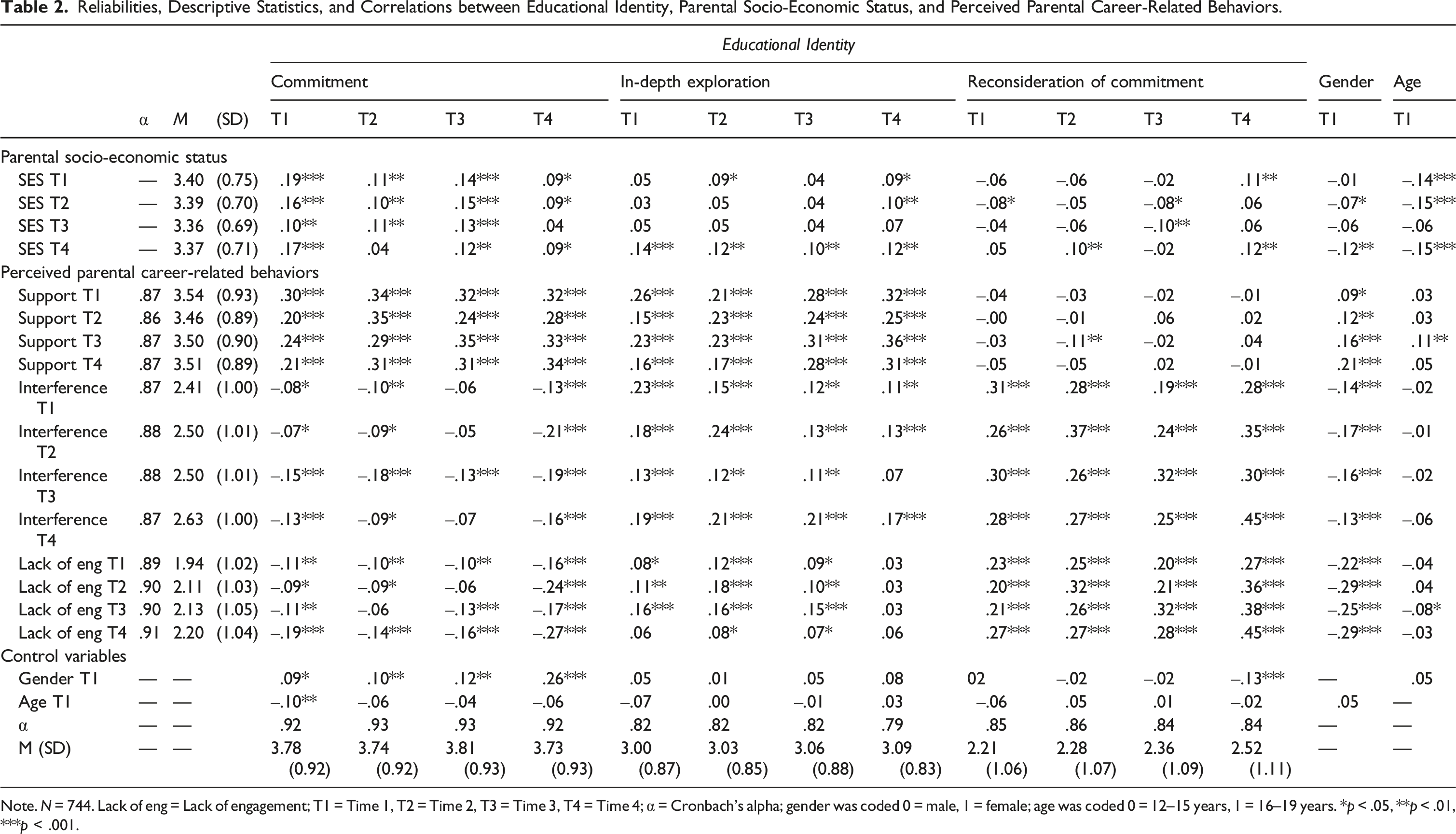
Note. N = 744. Lack of eng = Lack of engagement; T1 = Time 1, T2 = Time 2, T3 = Time 3, T4 = Time 4; α = Cronbach’s alpha; gender was coded 0 = male, 1 = female; age was coded 0 = 12–15 years, 1 = 16–19 years. *p < .05, **p < .01, ***p < .001.
Latent Class Growth Analyses: Educational Identity Trajectories
Results of Different Latent Class Growth Analyses.
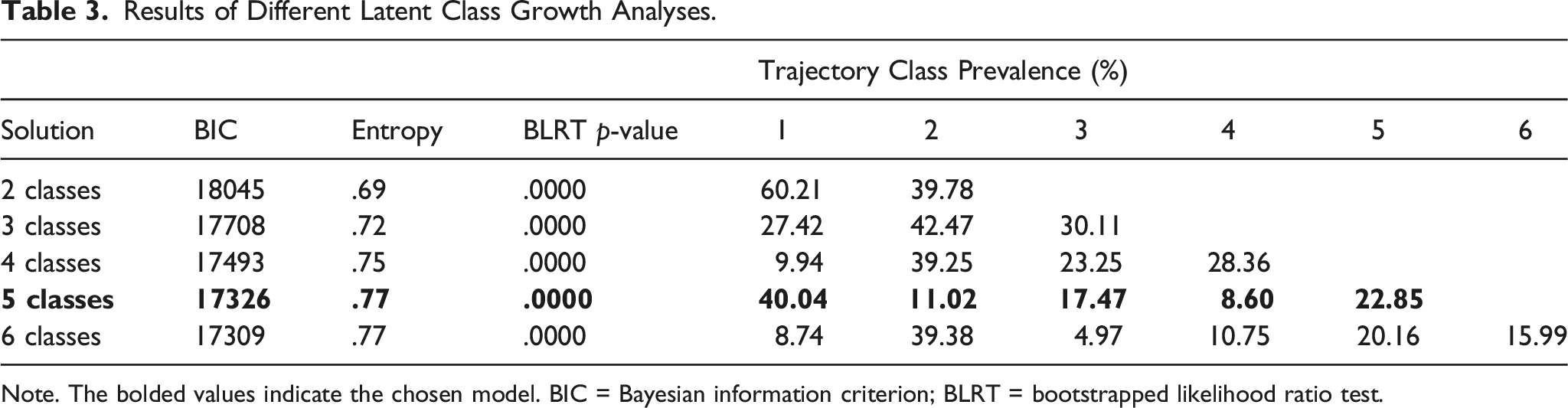
Note. The bolded values indicate the chosen model. BIC = Bayesian information criterion; BLRT = bootstrapped likelihood ratio test.
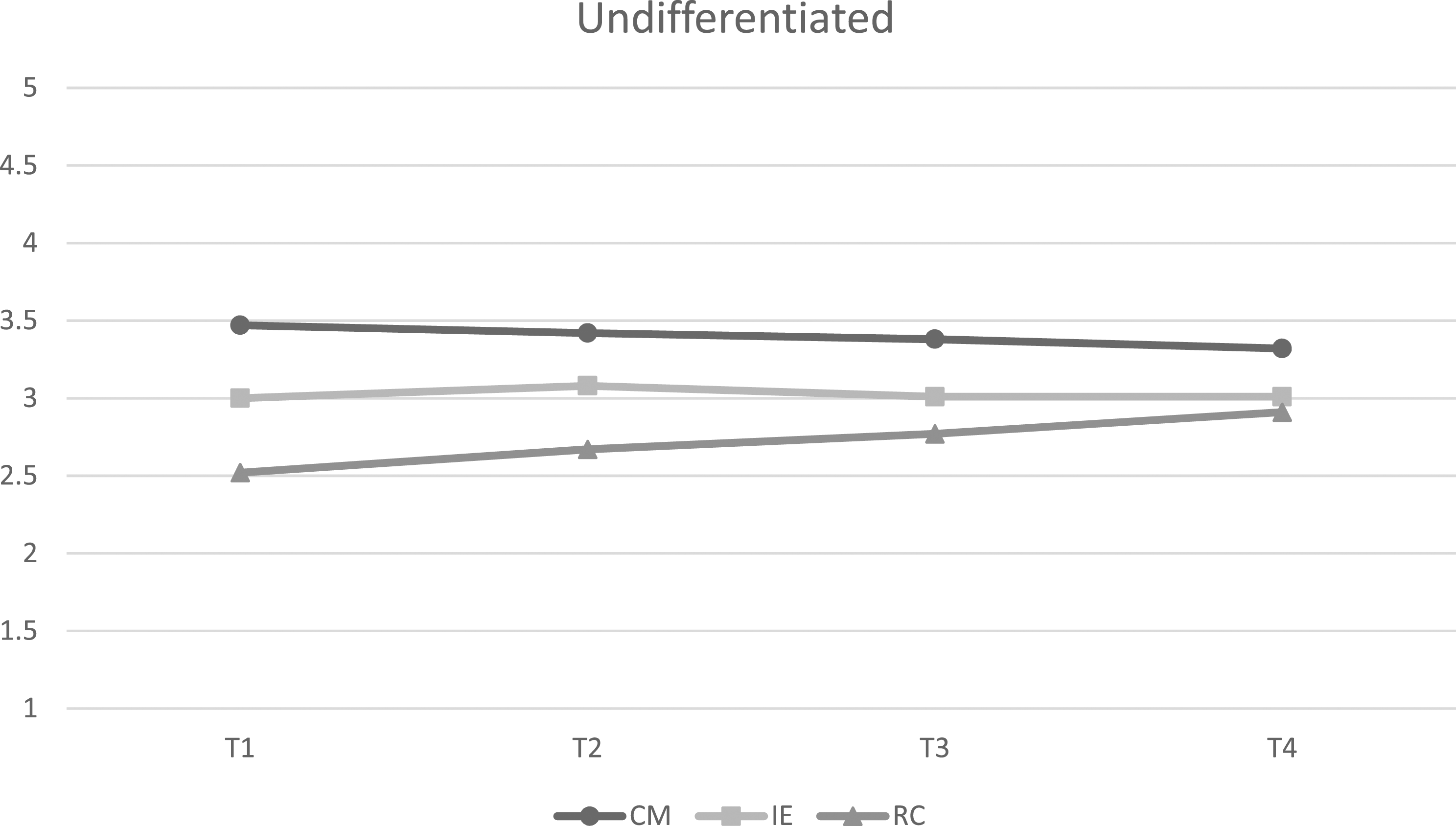
Means of identity processes of undifferentiated trajectory. CM = commitment; IE = in-depth exploration; RC = reconsideration of commitment. The y axis represents average item scores on a scale from 1 to 5 (see the Measures section).
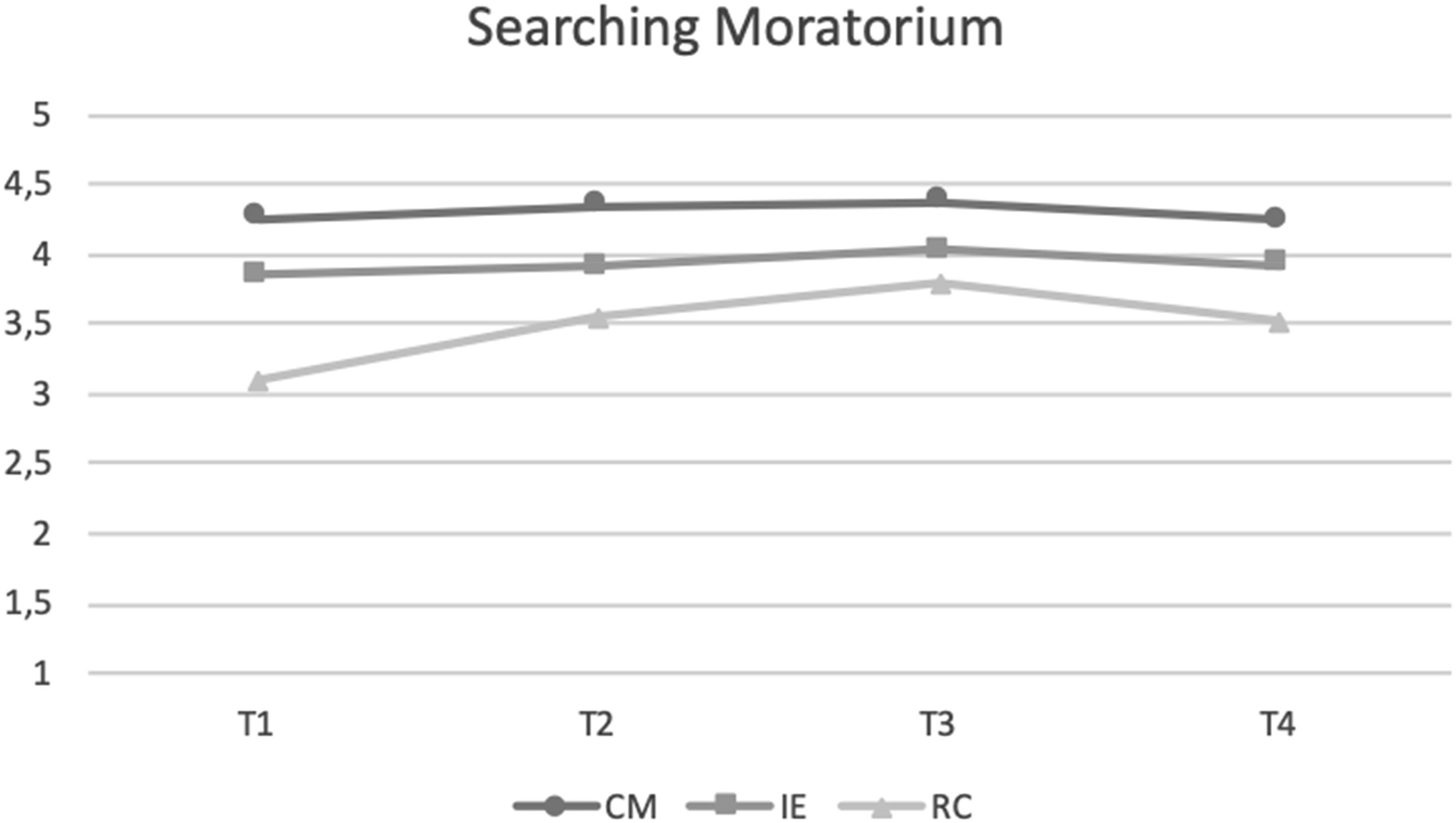
Means of identity processes of searching moratorium trajectory. CM = commitment; IE = in-depth exploration; RC = reconsideration of commitment. The y axis represents average item scores on a scale from 1 to 5 (see the Measures section).
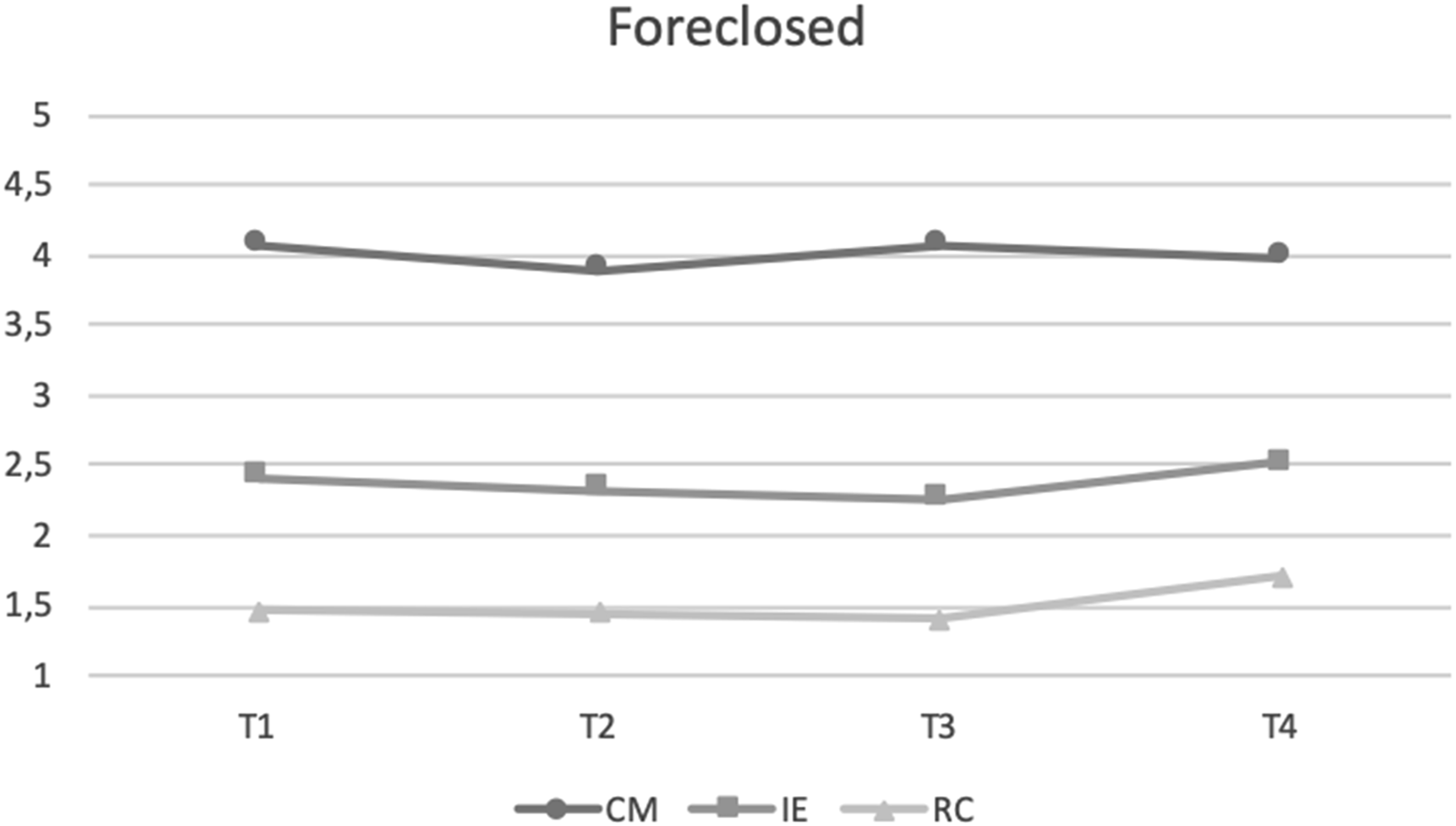
Means of identity processes of foreclosed trajectory. CM = commitment; IE = in-depth exploration; RC = reconsideration of commitment. The y axis represents average item scores on a scale from 1 to 5 (see the Measures section).
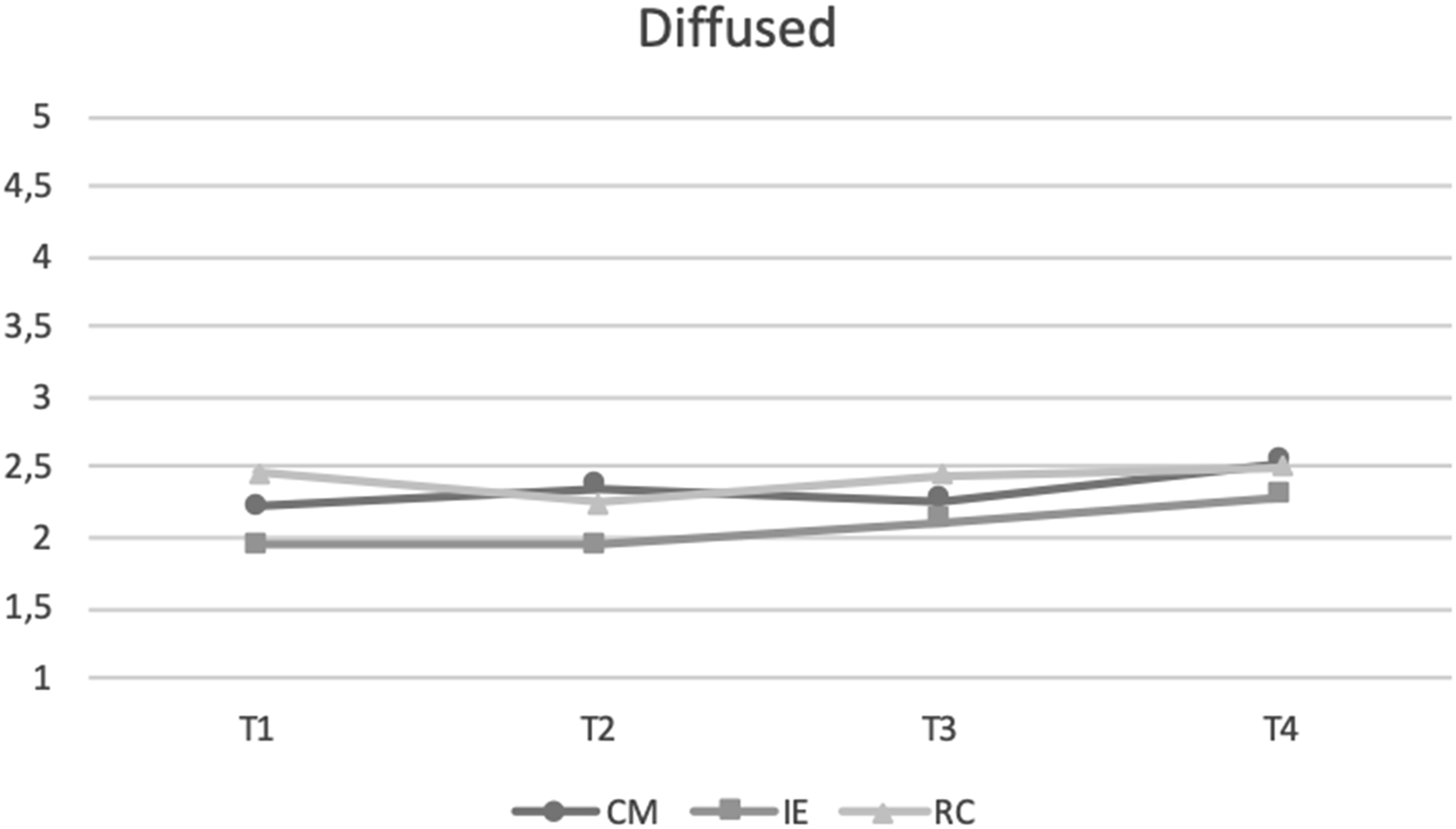
Means of identity processes of diffused trajectory. CM = commitment; IE = in-depth exploration; RC = reconsideration of commitment. The y axis represents average item scores on a scale from 1 to 5 (see the Measures section).
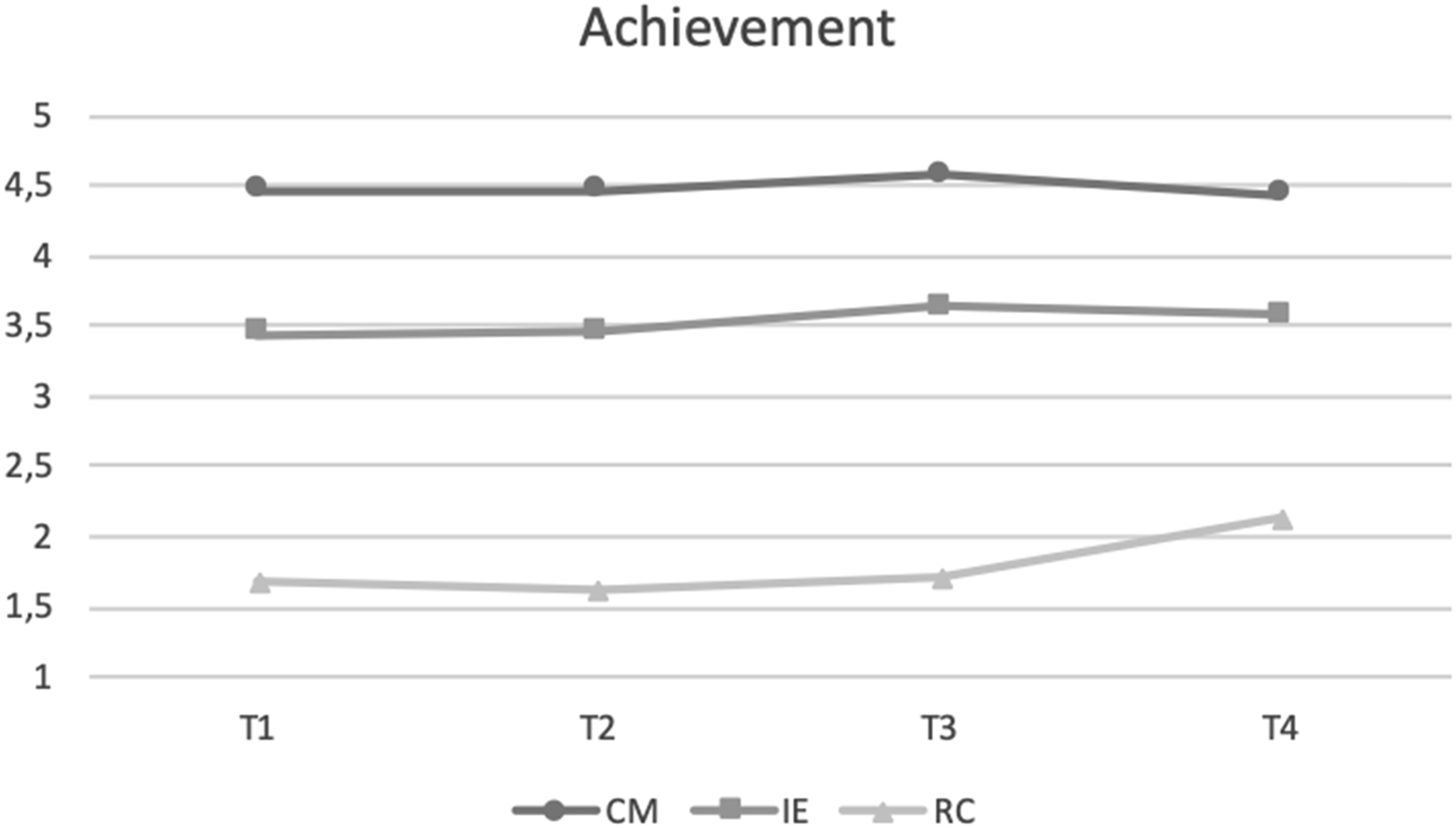
Means of identity processes of achievement trajectory. CM = commitment; IE = in-depth exploration; RC = reconsideration of commitment. The y axis represents average item scores on a scale from 1 to 5 (see the Measures section).
Final Parameter Estimates of Latent Class Growth Analysis in Educational Identity.
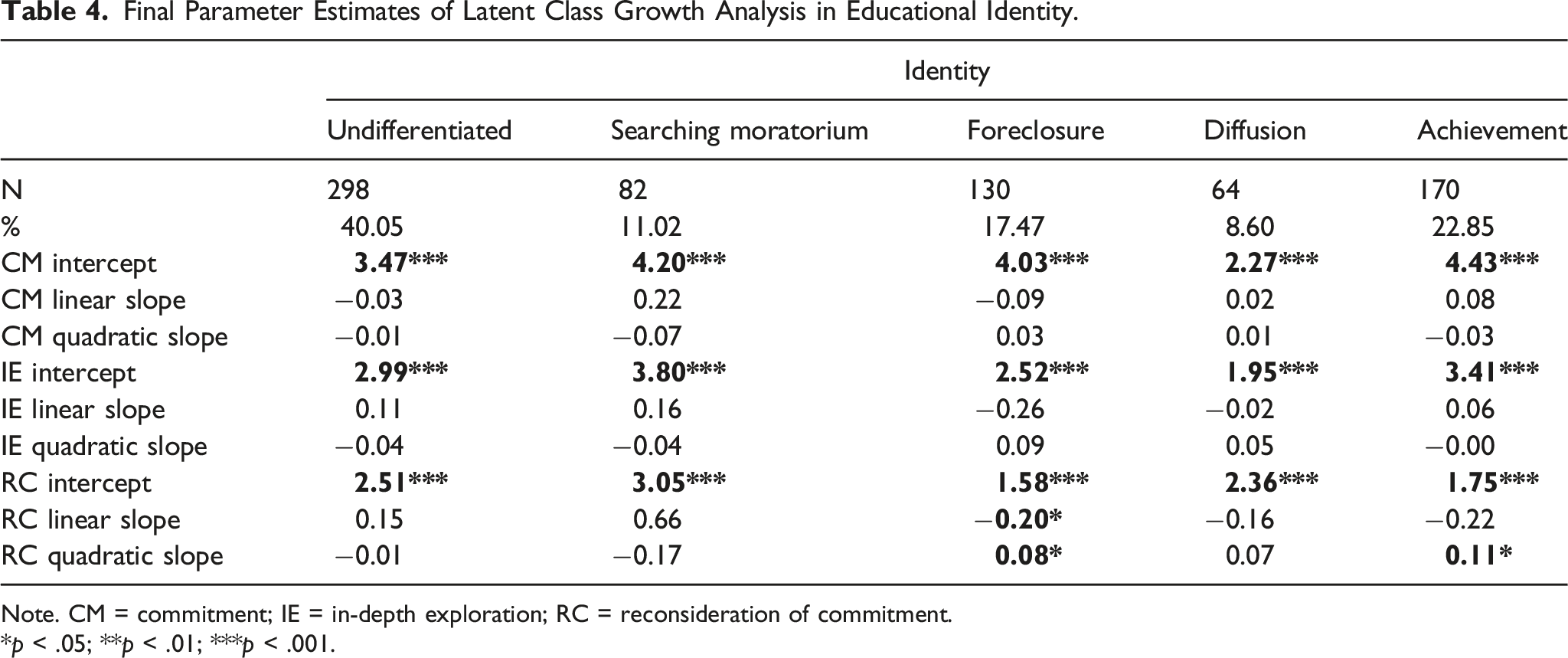
Note. CM = commitment; IE = in-depth exploration; RC = reconsideration of commitment.
*p < .05; **p < .01; ***p < .001.
Class 1 was the largest class (40.05%) and was interpreted as the undifferentiated trajectory, with adolescents having medium values for all educational identity processes, which were stable across time. Class 2 (11.02%), interpreted as the searching moratorium trajectory was also characterized by stable educational identity processes, with adolescents in this trajectory scoring relatively high on all identity processes. Class 3 (17.47%), interpreted as the foreclosure trajectory, included adolescents who scored high on educational commitment but had relatively low values of in-depth exploration and the lowest values of reconsideration. Both educational commitment and in-depth exploration were stable across time, while reconsideration of educational commitments had a decreasing linear slope and a positive quadratic slope. Thus, the reconsideration process for this trajectory initially decreased and later increased but still kept a generally decreasing trend. Class 4 (8.6%), interpreted as the diffusion trajectory was characterized by adolescents scoring the lowest on educational commitment and in-depth exploration among all identified trajectories. Reconsideration of educational commitment for this class was medium-low compared to the other classes. All identity processes of the diffusion trajectory were stable. Class 5 (22.85%), interpreted as the achievement trajectory, contained adolescents scoring the highest on educational commitment, relatively high on in-depth exploration, and low on reconsideration of commitments. For this trajectory, educational commitment and exploration processes were stable, whereas the reconsideration slope was positive, indicating an initial decrease followed by an increase.
Differences in Mean Characteristics at T1 between Class Memberships model Using the DCAT/BCH Procedure in Mplus.
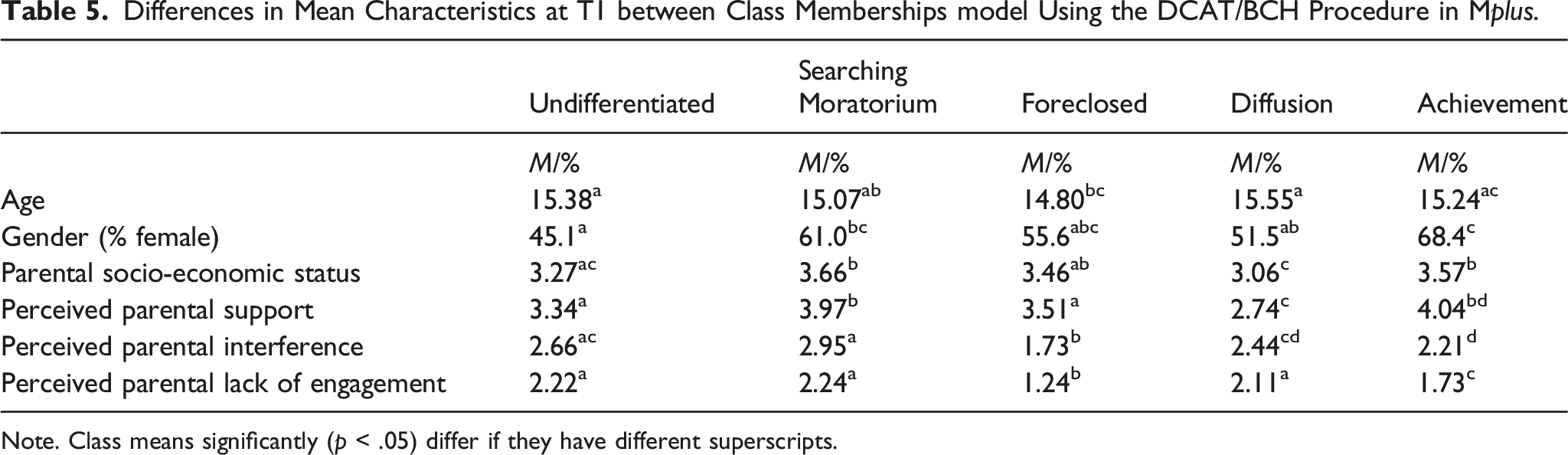
Note. Class means significantly (p < .05) differ if they have different superscripts.
Parental Socio-Economic Status and Perceived Career-Related Behaviors Associated with Latent Class Membership
Correlations Among Class Membership, Parental Socio-Economic Status and Perceived Parental Career-Related Behaviors.

Note. *p < .05; **p < .01; ***p < .001.
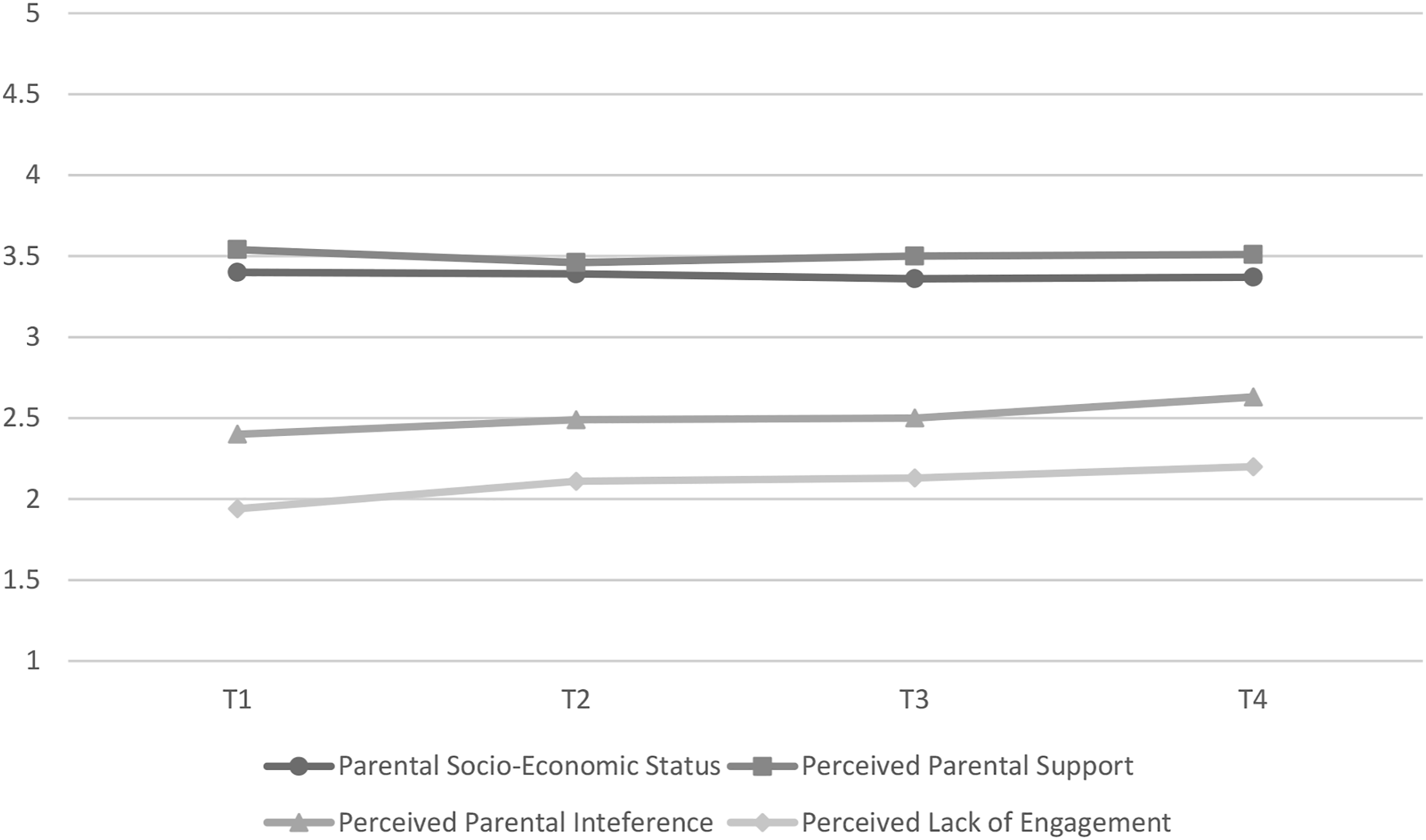
Means of parental socio-economic status and parental career-related behaviors. The y axis represents average item scores on a scale from 1 to 5 (see the Measures section).
The intercept of perceived socio-economic status correlated positively with the searching moratorium and achievement trajectories and negatively with the undifferentiated and diffusion trajectories. The slope correlated positively with the diffusion trajectory. Regarding career-related behaviors, the intercepts of perceived parental support correlated negatively with undifferentiated and diffusion trajectories and positively with searching moratorium and achievement trajectories. The intercepts of perceived parental interference correlated positively with undifferentiated and searching moratorium statuses and negatively with foreclosed and achievement statuses. Similarly, in the case of perceived parental lack of engagement the intercepts correlated positively with undifferentiated and searching moratorium trajectories and negatively with the foreclosed and achievement trajectories. Additionally, the slopes of perceived parental lack of engagement correlated positively with the searching moratorium trajectory and negatively with the achievement trajectory.
Discussion
In adolescence, personal identity evolves deeply grounded within the school context, with educational identity being a salient life domain for adolescents (Crocetti, 2017). Parents play a core role in supporting or hampering their offspring’s educational identity development (Mann et al., 2020). Therefore, essential questions arise about how educational identity trajectories are linked to perceived parental SES and perceived parental career-related behaviors, which, to the best of our knowledge, have not been addressed in prior studies. In this study, we first identified five developmental educational identity trajectories across two academic years. We then explored if parental SES and perceived parental career-related behaviors might differentiate between the identified developmental trajectories of educational identity and how the probability of membership in the identity trajectories correlates with parental SES and perceived parental career-related behaviors. In the next sections, we discuss results and implications of our analyses in detail.
Educational Identity Trajectories
The present study uncovered five educational identity trajectories. Most adolescents were classified in stable trajectories (59.67%) with the remaining participants following a quadratic slope for the reconsideration of commitment of educational identity process during the study. Educational commitment and in-depth exploration were stable for all educational identity trajectories. Thus, adolescents with either low initial levels of commitment (i.e., diffusion), medium levels (i.e., undifferentiated), or high levels (i.e., searching moratorium, foreclosed, or achievement) had roughly the same levels of commitment at the start of the study as they had at the end. This was also the case for in-depth exploration with low (i.e., foreclosure and diffusion), medium (i.e., undifferentiated), and high in-depth exploration trajectories (i.e., searching moratorium and achievement) having similar levels throughout the study. However, for trajectories characterized by high commitment (i.e., foreclosed and achievement) we found quadratic slopes for the reconsideration of commitment process.
The findings of the present study are in line with previous research on educational identity statuses in the Romanian context, by uncovering the undifferentiated class as the most populous (40.05%), with a roughly similar percentage of adolescents classified as such in a previous cross-sectional study (34.88%; Negru-Subtirica et al., 2017). The undifferentiated trajectory is characterized by average and stable values for all identity processes, indicative of adolescents who are detached from their identity strivings, both adaptive and maladaptive (Negru-Subtirica et al., 2017). The stability of educational commitment and in-depth exploration for all trajectories is also indicative of the lack of work Romanian adolescents put in their educational identity development. These findings can be seen through the lenses of an educational system (i.e., the Romanian one) which does not encourage exploration and focuses mostly on standardized tests, and a rigid curriculum, leaving adolescents with almost no agency in choosing an individualized educational path (Damian et al., 2016; Negru-Subtirica et al., 2017; Pop et al., 2016). When compared with similar studies performed in other cultural contexts (Hatano et al., 2020; Meeus et al., 2012), the present study did not find changeable trajectories (e.g., diffusion to moratorium) or changes in commitment or in-depth exploration in any of the trajectories. This finding may also indicate that educational systems that capitalize on predetermined educational paths and academic achievement do not stimulate adolescence to actively invest in changes in their educational identity. In line with our expectations, considering the high cultural emphasis on educational achievement, the present study found a greater percentage of adolescents in the achievement status (22.85%) compared to other contexts such as Japan (6.2%; Hatano et al., 2020), or the Netherlands (15.84%; Meeus et al., 2012). However, even though we expected an overrepresentation of adolescents in the foreclosed trajectory, considering the emphasis parents put on education and the limited opportunities for in-depth educational exploration, we found fewer participants in this trajectory (17.47%) compared to the early closure trajectory found in the Netherlands (39.6%, Meeus et al., 2012).
Parental Socio-Economic Status and Perceived Career-Related Behaviors Associated with Developmental Trajectories of Educational Identity
The results indicated that adolescents in the undifferentiated trajectory had significantly lower perceived parental SES than those in searching moratorium or achievement statuses. In terms of perceived parental support, adolescents in searching moratorium and achievement statuses scored the highest, whereas those following the diffusion trajectory scored the lowest. Adolescents in the foreclosed trajectory had the lowest scores for both perceived parental interference and parental lack of engagement among the five identity statuses, while adolescents in undifferentiated and searching moratorium trajectories scored the highest on these two scales.
Adolescents who reported lower parental SES were more likely to follow an undifferentiated educational identity trajectory than a searching moratorium or achievement trajectory. The latter two trajectories were marked by increased educational commitment and in-depth exploration. These findings are in line with the results of Rivnyák and collegues (2021), indicating that less affluent parents may have difficulties in supporting educational identity commitment and exploration of their children also across time. Hence, it may be that strong educational commitments are the privilege of adolescents whose parents do well financially. Intercept results indicated that across the two academic years, adolescents with a low initial level of parental SES tended to follow the undifferentiated and diffusion trajectories. Additionally, adolescents with a high initial level of parental SES tended to follow the searching moratorium and achievement trajectories. Finally, adolescents experiencing a slight increase in parental SES tended to follow the diffusion trajectory, meaning that starting out with a low parental SES was more meaningful to ascribe adolescents on the diffusion trajectory and that the increase of parental SES did not help adolescents become less diffused in their educational identity. It may be that a slight increase in parental SES is not sufficient in helping adolescents develop their educational identity, if it is not accompanied by supportive behaviors on the parents’ part. According to the bioecological model, families that are better off financially experience less economic pressure and hence can allocate more objective (time, money) and subjective (emotional and behavioral availability) resources to communicating with their children (Skinner et al., 2022). This increased availability may strengthen the latter’s cognitive processing of identity-relevant information (Vosylis et al., 2021) and hence contribute to the maintenance of strong educational commitments across time. In Romania, children’s education is a prime focus of their parents who strive to offer their best assistance both financially and emotionally (Bădescu et al., 2007; Negru et al., 2014).
For perceived parental support, adolescents following searching moratorium and achievement trajectories reported having the most support from their parents, while those following a diffusion trajectory reported the least support. These findings are in line with existing cross-sectional research (Zammitti et al., 2020) indicating that adolescents who hold firm educational commitments that they actively explore, also perceive that their parents offer psychological and instrumental support for their career development. Existing studies on parental career-related behaviors have mainly focused on their relations with vocational self variables, like career adaptability and ambivalence, and career goals (e.g., Dietrich & Salmela-Aro, 2013; Liang et al., 2020; Zhou et al., 2020). The present study brings forward the strong links between educational and vocational or career development in this timeframe pointing that perceived parental support for career issues is associated with educational self-formation. Intercept results indicated that across time adolescents who perceived an initial high level of parental support tended to follow the searching moratorium and achievement trajectories. Also, adolescents who reported an initial low level of parental support tended to follow the undifferentiated and diffusion trajectories. These results are in line with existing longitudinal work (e.g., Hatano & Sugimura, 2017) which highlighted that educational identity trajectories high in commitment and in-depth exploration are related to the most adaptive psychosocial outcomes in adolescence. Also, they point to the protective role of strong educational commitments that are supported by in-depth exploration of the present educational path (Crocetti, 2017). These adaptive educational commitments are actively supported by career communication with parents during adolescence, bringing forward once more the close interconnection of educational and career development in this timeframe, as also highlighted in the bioecological model (Bronfenbrenner & Morris, 2006; Skinner et al., 2022).
Regarding perceived parental interference and lack of engagement, adolescents in the foreclosed trajectory scored the lowest on both scales whereas adolescents in the undifferentiated and searching moratorium trajectories scored the highest among the five educational identity trajectories. Intercept results pointed out that across time adolescents who perceived initial high levels of parental interference and lack of engagement tended to follow the undifferentiated and searching moratorium trajectories. Moreover, adolescents who reported initial low levels of parental interference and lack of engagement, tended to follow the foreclosed and achievement trajectories. Importantly, slope results showed that longitudinal increases in perceived parental lack of engagement were associated with a higher probability of adolescents following a searching moratorium trajectory and a lower probability of adolescents following an achievement trajectory. On the dark side, these findings indicate that adolescents who are detached from their educational goals (i.e., undifferentiated trajectory) or are in the “limbo” of searching for alternative educational paths (i.e., searching moratorium) tend to have maladaptive career communication with their parents. Hence, there may be a component of distress that maintains these trajectories, as these parental behaviors have been linked to more anxiety, depressive symptoms, and externalizing problems (Marcionetti & Rossier, 2017; Zhou et al., 2020). Parental lack of career engagement or unpredictable career support might confuse adolescents and bring them to the point of becoming either detached from or overinvolved in their educational strivings, which may be detrimental for their educational identity development. On the bright side, educational identity trajectories high in commitment and low in reconsideration of commitment (i.e., achievement, foreclosure) were supported longitudinally by low parental career interference and lack of involvement. These findings are in line with existing research (e.g., Dietrich & Salmela-Aro, 2013) and show that in adolescence parental control (overdoing it) and parental absence (doing nothing) in the career development of their offspring are maladaptive extremes of parent-child communication. Trajectories marked by unshifting educational commitments (i.e., high commitment with low reconsideration) are reinforced by a parental stance of autonomy support and very limited control but also reduced lack of engagement. In the Romanian context, this is important, as parents view educational achievement as an important predictor of success and thus actively engage in their children’s educational choices (Negru-Subtirica & Damian, 2018; Negru-Subtirica et al., 2017).
Limitations and Future Research
The presented study has brought forward relevant associations of educational identity trajectories with parental socio-economic status and perceived career-related behaviors. Nevertheless, it should be considered in light of some limitations that can inform future directions of research and applied interventions. First, our analyses did not allow us to reveal directional conclusions between parental SES, perceived career-related behaviors and trajectories of educational identity processes. Building on the current study’s results, future studies may lead to predictive conclusions.
Second, parental SES was measured subjectively by asking the adolescents to compare their SES with other families living in their country. This measure was used as a proxy for the actual parental SES. Even though perceived parental SES and objective parental SES are not the same, previous studies have found evidence of convergent validity between the two (Okamoto, 2021).
Third, we did not appraise specific classroom and school variables (e.g., satisfaction with school, classroom climate), which may also account for the trajectories of educational identity processes. These may play a role in how parental career-related behaviors are processed and integrated into their educational identity work by adolescents. As the school environment provides complex explicit and implicit cues for personal identity formation (Verhoeven et al., 2019), future research could focus on how adolescents integrate parental career guidance with career guidance they receive at classroom and school level.
Fourth, the study did not tap into motivational factors associated with educational identity and career-related behaviors. Autonomous versus controlled goals are differential outcomes of parental career-related support versus parental interference and lack of engagement (Dietrich & Salmela-Aro, 2013). This is important especially in the analysis of adolescents following educational identity process trajectories that were linked with positive and negative parental career-related behaviors. Existing longitudinal evidence indicates that extrinsic versus intrinsic goals are differentially linked to identity processes across time (Luyckx et al., 2017). Hence, adolescents with medium and stable trajectories of educational in-depth exploration and medium and increasing trajectories of educational reconsideration of commitments may set and follow their educational goals for controlled reasons, hence not being able to integrate this educational domain into their personal identity structure. Nevertheless, future studies need to test these hypotheses.
Fifth, parental career-related practices develop and exist in the context of global parenting behaviors (Katz et al., 2018). Future studies may focus on how parental career-related behaviors are longitudinally related to global parental behaviors and how these relations differentially explain variations in educational identity process trajectories. By adding parental socio-economic status to the equation, future studies could also investigate how global and career-related parental behaviors buffer or hamper educational identity process trajectories in more versus less affluent parents and in parents fighting poverty.
Conclusions
The present four-wave longitudinal study identified developmental trajectories of educational identity processes and investigated how parental SES and perceived parental career-related behaviors are correlated with the probability of membership to the identity trajectories. Five identity trajectories were uncovered, all with stable commitment and in-depth exploration processes, whereas reconsideration of commitment followed a linear decreasing slope for the foreclosure trajectory and positive quadratic slopes for foreclosure and achievement trajectories. Most adolescents followed the undifferentiated trajectory characterized by medium stable values for all identity processes. Regarding the role parents play in their offspring’s educational identity development, adolescents in high commitment and in-depth exploration trajectories (i.e., achievement and searching moratorium) correlated with higher SES and also perceived their parents as more supportive compared to undifferentiated and diffused adolescents who generally came from lower SES families and perceived their parents as less supportive. Adolescents who perceived that their parents interfered seemed to also reconsider their commitments more, as trajectories with medium and high reconsideration (i.e., searching moratorium and undifferentiated) correlated positively, while low reconsideration trajectories (i.e., foreclosed and achievement) correlated negatively with perceived parental interference. As expected, the foreclosed trajectory correlated the most with perceived parental engagement. The findings bring forward important and valuable implications for research and practice on the role parents play in adolescents’ educational identity development.
Footnotes
Declaration of conflicting interests
The author(s) declared no potential conflicts of interest with respect to the research, authorship, and/or publication of this article.
Funding
This study was partially supported by a grant of the Romanian Ministry of Research, Innovation and Digitization, CNCS/CCCDI – UEFISCDI, project number PN-III-P4-ID-PCE-2020-0179, within PNCDI III, awarded to Oana Negru-Subtirica.
