




Abstract
The current research examined if dispositional optimism buffers against negative consequences of daily stressor exposure. The work also provides a direct test of positive affect as a mediator, in line with the broaden-and-build theory of positive emotions. Study 1 utilised data from a US older-adult sample (N = 958, Mage = 62.57, 45% male) to examine optimism’s buffering role on affective (negative affect) and cognitive (rumination) outcomes. Study 2 extended these findings with a Singapore young adult sample (N = 995, Mage = 21.93, 27% male), incorporating behavioural outcomes (procrastination and impulsivity), introducing additional affective indicators (depressive and anxious mood), and broadening the cognitive domain to include cognitive failure in addition to rumination. Using multilevel regression and multivariate modelling, we found that optimism acted as a buffer against all indicators across both studies, except for anxious mood and procrastination. Trait positive affect mediated the associations between optimism and negative affect (in Study 1), rumination (in Study 1 but not in Study 2), and depressive mood, impulsivity and cognitive failure (in Study 2). These findings shed light on the boundary conditions of the buffering effect of dispositional optimism and the broaden-and-build theory of positive emotions.
Plain Language Summary
This research investigated whether being optimistic helps protect people from the negative outcomes of daily stressors, and whether positive emotions explain this benefit. In Study 1, using data from 958 adults in the United States, optimism was found to reduce negative emotions and repetitive thought patterns. Study 2 used data from 995 young adults in Singapore, and outcomes included depressive and anxious moods, procrastination, impulsivity, repetitive thought patterns, and everyday cognitive slips. Optimism served as a buffer for all negative outcomes except anxious mood and procrastination. Positive emotions helped explain these benefits except for repetitive thought patterns, procrastination, and anxious mood. Overall, the findings suggest that optimism often shields people from daily stressors, though its effects have certain limits.
Keywords
Introduction
Daily stressors are minor hassles prevalent in day-to-day life, which can include an argument with a friend, a problem at work, or an unplanned home repair (Almeida et al., 2020). Although seemingly mundane, such stressors have been linked to a host of negative consequences, such as rumination and withdrawal (King & DeLongis, 2014), cognitive failure (Majeed, Kasturiratna, Li, et al., 2023), binge eating (Sulkowski et al., 2011), and negative mood reactivity (Almeida et al., 2002). Identifying psychological factors that could buffer individuals against these negative outcomes of daily stressor exposure is therefore crucial. One such promising candidate is dispositional optimism. Indeed, dispositional optimism has been found to attenuate the affective consequences of daily stressor exposure (Majeed et al., 2021). However, its role as a moderator in influencing behavioural and cognitive outcomes of daily stressor exposure remains insufficiently understood.
Buffering Role of Dispositional Optimism
The broaden-and-build theory of positive emotions provides a useful framework for understanding why dispositional optimism may buffer against negative outcomes following daily stressor exposure. Rather than simply promoting better functioning in general, optimism may reduce the extent to which individuals react adversely when stressors occur. Specifically, because optimism is associated with greater positive future expectancy (Scheier & Carver, 1985) and more frequent positive emotional experiences (Oriol et al., 2020; Segerstrom & Sephton, 2010), optimism may weaken the adverse impact of daily stressors on affective, behavioural, and cognitive functioning.
Affective Domain
In the affective domain, this buffering effect can be understood through the undo hypothesis, an extension of the broaden-and-build framework (Fredrickson & Levenson, 1998). The undo hypothesis proposes that positive emotions reduce negative emotions and counteract their enduring effects (Fredrickson, 2000). Since optimism promotes the experience of positive emotions (Oriol et al., 2020; Segerstrom & Sephton, 2010), individuals higher in optimism, and thus higher in positive emotions, may experience less intense or more short-lived affective reactivity to stressors. Existing works on the consequences of daily stressor exposure have only focused on broad indicators such as general negative affect (e.g., Baumgartner et al., 2018; Majeed et al., 2021), but affective responses to stressors may be more differentiated than this. In the present work, we therefore focus on and distinguish between general negative affect, depressive mood, and anxious mood.
The distinction is important because negative affect is a broad, higher-order construct encompassing diverse unpleasant emotional states (Watson, Clark, & Carey, 1988), whereas depressive and anxious mood are theoretically and empirically distinct constructs (Chen et al., 2024; Clark & Watson, 1991; Petersen & Ritz, 2009). Depressive mood is an affective state marked by persistent sadness, anhedonia, and disturbances in motor activity, sleep, and appetite patterns (Andrews & Thomson, 2009; APA, 2000). In contrast, anxious mood is an affective state of emotional unease, characterised by foreboding and somatic signs of tension in which an individual expects the possibility of looming threat, loss, or harm (APA, 2018; Slyker & McNally, 1991). While previous work has theorised that increases in positive affect would reduce negative emotions (in line with the undo hypothesis), existing work suggests that the (negative) relationship between positive affect and depressive mood is stronger than that of positive affect and anxious mood (Watson, Clark, & Carey, 1988). In an even more extreme case, it has been found that while depressive mood is primarily associated with the lack of positive affect, this is not the case for anxious mood (Clark & Watson, 1991). This suggests that while optimism may be particularly helpful in buffering the impact of daily stressor exposure on reducing depressive mood, it may be less effective in altering anxious mood. Indeed, recent meta-analyses have found a very large association between optimism and various operationalisations of depression (r = −.47, 95% CI = [-.51, −.43] from 31 studies; Uribe et al., 2021), but only a small association between positive future expectancy—a defining characteristic of optimism—and anxious mood (r = −.18, 95% CI = [−.25, −.11] from 9 studies; Yeo & Ong, 2024). Hence, we predict that (
Behavioural Domain
Optimism may also buffer against the behavioural consequences of daily stressor exposure. In the behavioural domain, positive emotions have a broadening effect on an individual’s thought-action repertoire (Fredrickson, 2004; Fredrickson & Branigan, 2005). When people experience positive emotions, they tend to think more creatively, perceive a wider range of possibilities, and engage in a broader array of actions. By fostering such positive emotional states, optimism may activate the broadening effect, enabling individuals to approach stressful situations with a more open and flexible mindset. As such, we predict that (
In the present work, we focus on impulsivity and procrastination as two behavioural outcomes of interest. Both behaviours have been widely regarded as problematic as they reflect failures of self-regulation (Fourtounas & Thomas, 2016; Simon et al., 2021; Sirois & Kitner, 2015). Impulsivity is the inclination to act quickly without deliberation, which is characterised by minimal forethought or regard for consequences (Muraven & Baumeister, 2000). Procrastination refers to the intentional delay of planned actions, even when the individual recognises that such delay will likely result in negative consequences (Steel, 2007). These behaviours are theoretically relevant as stress has long been linked to dysregulated behaviour (Maier et al., 2015; Oaten & Cheng, 2005). A broadened behavioural repertoire may help individuals identify more constructive behavioural responses (Folkman & Moskowitz, 2000; Murphy & Moriarty, 1976), thereby reducing their engagement with maladaptive behaviours such as substance use (Sinha, 2008).
Cognitive Domain
Optimism may also buffer against stressor-related disruptions in everyday cognitive functioning. Positive emotions associated with optimism may promote greater cognitive flexibility (Isen, 1999; Kahn & Isen, 1993), defined as the capacity to allocate resources flexibly to handle information within a shifting environment (Diamond, 2013). Optimism has also been linked to attentional biases toward positive material (Peters et al., 2016; Segerstrom, 2001). Taken together, these processes may lower the risk of engaging in repetitive and intrusive cognitions about the stressor (i.e., prolonged cognitive interference; Brosschot et al., 2006) by reducing or shifting attention away from negative stimuli. The reduced attention to negative stimuli may also preserve cognitive resources (Eysenck et al., 2007), thereby facilitating sustained focus on task-relevant information in the presence of competing distractions (Kahneman, 1973), promoting better memory. Therefore, we predict that (
In the present work, we focus on cognitive failure and rumination as cognitive outcomes. Cognitive failure refers to cognitive-based errors on straightforward tasks that individuals would normally be able to perform correctly without difficulty (Martin, 1983), while rumination is a perseverative cognition that involves repetitive thoughts about negative information (Brosschot et al., 2006; Nolen-Hoeksama et al., 2008). These outcomes are not only everyday manifestations of cognitive functioning (Carrigan & Barkus, 2016; Sladek et al., 2020), but also specific cognitive aspects that have shown potential impairments induced by stress (Chua et al., 2025; Mahoney et al., 1998; Majeed, Kasturiratna, Li, et al., 2023, Majeed, Kasturiratna, Lua, et al., 2023; Michl et al., 2013).
Limitations of Existing Literature
Although there is some support for optimism’s buffering role in affective consequences of stressor exposure, optimism’s influence on behavioural and cognitive outcomes of stressor exposure has yet to be thoroughly investigated. Therefore, we conceptualise the outcomes of daily stressor exposure across three domains in the present work: affective, behavioural, and cognitive. This tripartite distinction is grounded in classic social psychological theory, where attitudes have long been understood to comprise interrelated but distinct affective, behavioural, and cognitive components (Breckler, 1984; Rosenberg & Hovland, 1960). Extending this framework to the study of daily stressor exposure acknowledges that stressors do not produce solely negative affective outcomes, but also disrupt behavioural regulation and cognitive processes. Indeed, prior work has separately shown that daily stressor exposure is associated with heightened affective reactivity (Almeida, 2005), dysregulated behaviours (Sinha, 2001), and impairments in memory (McEwen & Sapolsky, 1995). The current work’s multidimensional approach allows us to concurrently examine whether optimism exerts a generalised protective effect, or whether its buffering role is more nuanced and/or domain-specific.
While the link between stressor exposure and its negative outcomes is well-established, existing research on the negative outcomes of stressor exposure is largely retrospective and cross-sectional in nature. Most glaringly, studies have used between-subject designs in which participants were required to recall their stressor exposure from the past, and then report their current outcomes (e.g., Chan et al., 2015; Sulkowski et al., 2011). Such approaches rely on retrospective recall, which is prone to recall biases due to a reliance on cognitive shortcuts to evaluate past events (Reis et al., 2014).
Moreover, these cross-sectional designs capture outcomes at only a single time point, thereby neglecting the within-persons fluctuations in daily stressor exposure and the negative outcomes that unfold (Curran & Bauer, 2011). The within-persons association between stressor exposure and negative outcomes may also be exacerbated by an individual’s own average exposure to daily stressors, such that a higher average stressor exposure accentuates the negative outcomes stemming from daily stressor exposure (DeLongis et al., 1988). This can be explained using the allostatic load theory, where cumulative exposure to daily stressors could exceed an individual’s capacity to cope with subsequent stressors, resulting in negative physiological and psychological downstream consequences (McEwen, 1998). The amplifying role of average daily stressor exposure has been mostly neglected in the existing literature, having been examined by only a small handful of studies (DeLongis et al., 1988; Stawski et al., 2008; Van Eck et al., 1998). As such, there is a need to account for the individual’s average daily stressor exposure to arrive at a more nuanced conclusion.
In addition, while many have hypothesised that optimism may reduce one’s reactivity towards stressors, much of the existing work relies on purely between-person comparisons examining the relationship between trait levels of optimism and well-being. However, because individuals higher on optimism also tend to experience higher levels of baseline well-being independent of stressor exposure (Segerstrom, 2007; also see Majeed et al., 2021), it remains unclear whether these differences reflect true buffering processes or simply elevated average functioning. To more clearly establish the role of optimism, it is necessary to examine whether optimism moderates the within-persons relationship between stressor exposure and well-being, rather than relying on cross-sectional comparisons that may only suggest buffering effects.
Expanding the research could potentially reveal additional ways optimism may contribute to buffering against a broader range of negative outcomes arising from daily stressor exposure. Therefore, this unexplored aspect of optimism’s influence highlights the importance of further research directly examining the role of dispositional optimism as a protective factor.
Aims of Current Work
Indices of Negative Outcomes
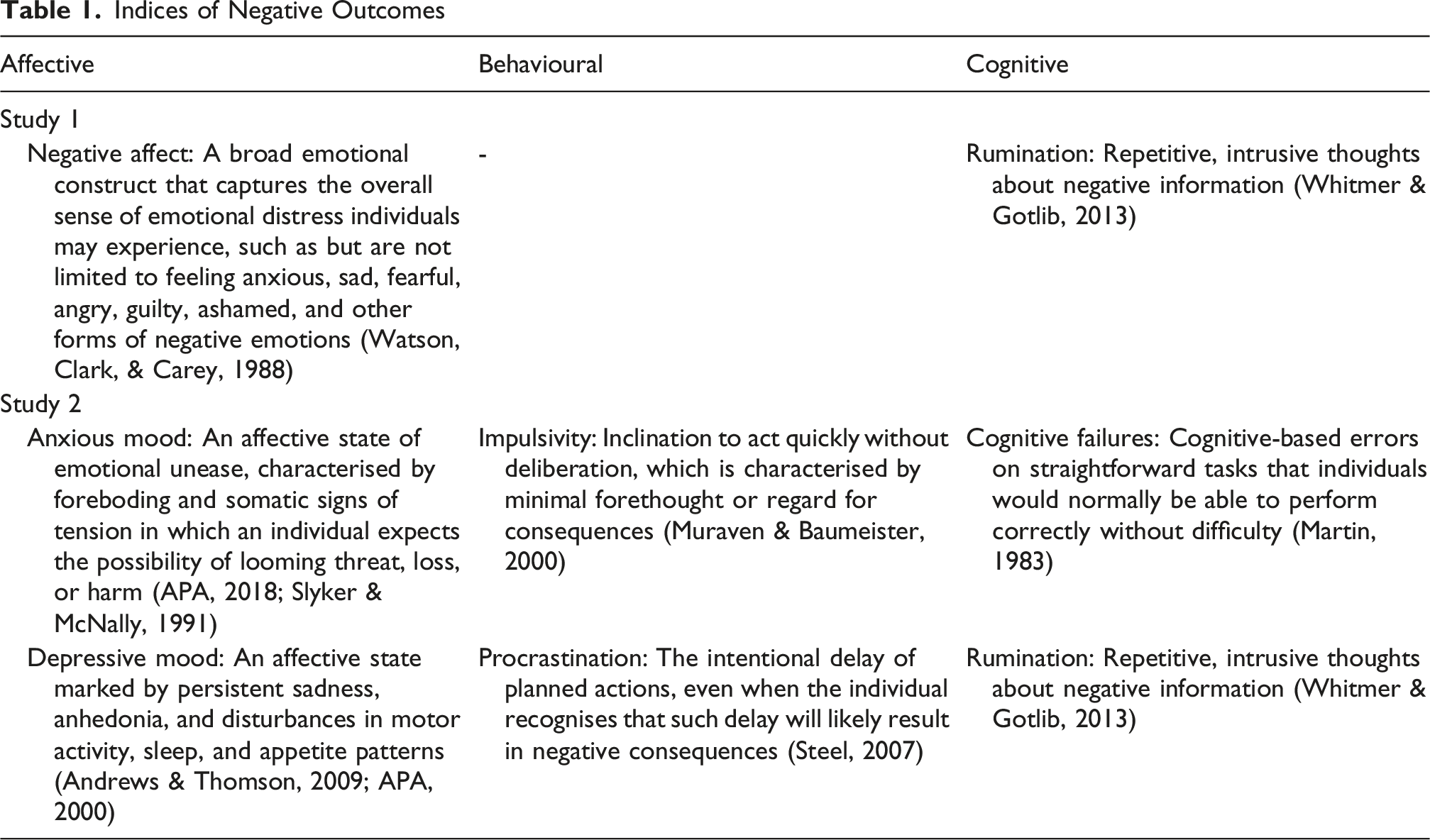
Drawing upon data from multiple relatively large-scale daily diary studies—conducted in the United States (Study 1) and in Singapore (Study 2)—this research capitalises on three major benefits of the daily diary approach. Firstly, it controls for between-person differences (Reis et al., 2014), a limitation that prior studies did not thoroughly address. Secondly, it offers a means to validate theory and results within real-world contexts, enhancing their ecological validity (Hektner et al., 2007). Lastly, measuring constructs such as cognitive failures once a day over the course of a week is beneficial, as it is expected to provide a representative set of responses that accurately reflect the construct (Hektner et al., 2007). In Study 1, we aim to examine if the buffering role observed for the affective domain in existing literature can be extended to cognitive outcomes, as well as testing for the mediating role of trait positive affect. In Study 2, we extend the examination of optimism’s buffering role to the behavioural domain, as well as testing the generalisability of Study 1 to a sample comprising younger adults.
Examining both older and younger adults is important given well-documented age-related differences in dispositional traits and cognitive-emotional processes. Dispositional optimism tends to increase with age (Isaacowitz, 2022; c.f. You et al., 2009), a pattern often attributed to older adults’ greater focus on positive information stemming from a shorter future time horizon (Carstensen, 2021). In a similar vein, older adults also possess better emotion regulation than younger adults (Shiota & Levenson, 2009). They also tend to ruminate less than their younger counterparts (Nolen-Hoeksema & Aldao, 2011), reflecting differences in cognitive styles. Together, these findings suggest that younger and older adults face distinct psychological profiles, and including both groups in analysis can reveal whether optimism buffers against negative outcomes arising from daily stressor exposure in similar or different ways across the lifespan.
General Method
Transparency and Openness
The current work’s design and its plan of analysis were not pre-registered. Relevant materials and data for Study 1 are available from the MIDUS Portal (https://midus.colectica.org/), while those for Study 2 are publicly available on the current work's associated Researchbox (#3631; https://researchbox.org/3631).
All analyses were performed in R version 4.5.0 (R Core Team, 2024) with psych version 2.6.1 (Revelle, 2024), lme4 version 1.1-38 (Bates et al., 2015), lavaan version 0.6-21 (Rosseel, 2012), and semTools version 0.5-7 (Jorgensen et al., 2025). Additionally, MuMIn version 1.48.11 (Bartoń, 2010), ggmice version 0.1.1 (Oberman, 2025), and parSim version 0.3.1 (Epskamp & Constantin, 2026) were used to obtain supplemental information. Full analytic code and relevant output for the current work—including missingness patterns of level 1 and 2 variables, full SEM output (with regression estimates for covariates and residual covariances for dependent variables), and supplementary information such as pseudo-R2 values for each multilevel regression model—are available in the aforementioned Research box.
Design
The data collection procedures for both studies were similar; individuals completed a self-administered questionnaire where they provided information on their demographics and stable psychographics (e.g., dispositional optimism, trait positive affect), and then completed a daily diary where they provided information on day-varying variables (i.e., stressor exposure, indices of negative outcomes). Specifics of the data collection procedures are described later in each study’s respective section. All data collection procedures were approved by relevant Institutional Review Boards and all individuals provided informed consent.
Measures
Two measures were consistent across both studies, namely the measure of dispositional optimism, and the measure of daily stressor exposure.
Dispositional Optimism
The Life Orientation Test–Revised (Scheier et al., 1994) was used to measure dispositional optimism. While the original questionnaire consists of six items of interest (e.g., “I expect more good things to happen to me than bad,” “I hardly ever expect things to go my way”) and four filler items, the filler items were not administered to the current samples due to time constraints. As such, individuals were asked to indicate their agreement with each of the six items of interest on a 5-point scale (1 = Disagree a lot, 5 = Agree a lot). Negatively-worded items were reverse-coded such that higher scores indicated higher levels of optimism, and items were then averaged to compute an overall optimism score for each individual (tau-equivalent reliability, i.e., Cronbach’s α, US: .79, SG: .80).
Daily Stressor Exposure
Daily stressor exposure was operationalised in terms of exposure to seven possible types of daily stressors (i.e., stressors related to arguments, stressors related to avoidance of potential arguments, stressors related to work or school, stressors related to the home, stressors related to family or close friends, stressors related to discrimination, and other miscellaneous stressors), as measured by the Daily Inventory of Stressful Events (DISE; Almeida et al., 2002). The DISE was administered using the original telephone interview method in Study 1, but was adapted to fit a daily online survey medium in Study 2. The questionnaire consists of seven items describing stressors which might have occurred in the past 24 hours (e.g., “Did you have an argument or disagreement with anyone since this time yesterday?”) and each individual indicated whether they had experienced each stressor using the options “Yes” or “No” on each day.
Importantly, the DISE does not yield a meaningful sum score across items. Each item indexes the occurrence of a type of stressor within the past 24 hours, not the frequency of events within that type. Consequently, summing across items would conflate the number of stressor types endorsed with the frequency of stressors experienced. 1 Thus, in line with existing literature on daily stressor exposure (e.g., Almeida et al., 2002; Majeed et al., 2021; Stawski et al., 2008), each day was classified as a stressor day if the individual experienced at least one stressor, and a non-stressor day otherwise.
Analytic Plan
A two-step approach was adopted to model the data in the current work: the first step involved the extraction of individual-specific reactivity slopes for each negative outcome index through multilevel regression models, and the second step involved multivariate modelling of dispositional optimism (through trait positive affect) concurrently predicting all reactivity slopes using structural equation models. This allowed for an examination of whether optimism influenced reactivity indirectly through positive affect.
Data Curation
In the samples involved in the current work, baseline assessments of demographic covariates were complete, with no missing data. In Study 1, baseline assessments of psychographic variables (i.e., dispositional optimism and trait positive affect) involved partially missing data within each measure, but each participant provided data on at least one item on each measure, thereby allowing us to obtain participant-level scores of dispositional optimism and trait positive affect for all participants. In Study 2, baseline assessments of psychographic variables were complete, with no missing data.
During the respective daily diary phases in Study 1 and Study 2, however, missingness occurred both at the level of diary days (i.e., an individual may completely skip one or more days) and within daily observations (i.e., an individual may provide only partial responses within the same daily survey). Diary days were retained for analysis only if individuals (1) reported whether or not they had been exposed to daily stressors and (2) provided responses to at least one negative outcome measure. Individuals were included in the analyses if they contributed data for a minimum of three valid diary days (Conner et al., 2009), in order to reduce the influence of potentially unreliable data from 1- or 2-day responses (Nezlek, 2012). Thus, while baseline variables were fully observed at the level of analysis, negative outcome indices exhibited partial missingness across the diary period. No procedures were undertaken to identify, remove, or truncate outliers, as our goal was to capture the full range of naturally occurring responses.
In the initial analytic step, reactivity slopes were estimated using the maximum available sample for each outcome measure. Subsequently, in the second analytic step, the full multivariate model incorporated all individuals, employing full information maximum likelihood (FIML) estimation to handle missing data in order to minimise statistical bias (Enders & Bandalos, 2001). This estimation relies on the assumption that the model is correctly specified, that data are missing at random, and that data follow a multivariate normal distribution (Enders & Bandalos, 2001; Lee & Shi, 2021).
Extraction of Reactivity Slopes per Individual
Due to the nested structure of the current data, where individuals (level 2) completed repeated measures daily (level 1), multilevel regression models were estimated to account for the dependence of daily data within each individual and to obtain individual-specific slopes indicating each individual’s reactivity to stressor exposure in terms of each negative outcome index. As all continuous dependent variables were continuous in nature, linear modelling was used for all cases. Multilevel regression models were estimated separately for each dependent variable.
In each model, the level of the daily negative outcome index was first allowed to have both a fixed (i.e., sample-level; γ00) and random (i.e., individual-level deviance from the sample; μ0i) component at level 1. Importantly, day in the study was included as both a fixed (γ10) and random (μ10) level 1 predictor to rule out potential effects due to participation in the study over time. Of critical interest to the current work, daily stressor exposure was included as both a fixed (γ20) and random (μ20) predictor at level 1, such that the relationship between daily stressor exposure and the dependent variable in question was allowed to freely vary across individuals, thus allowing us to obtain individual-specific reactivity slopes. An example of the linear mathematical model is shown as follows, where B2i is individual i’s reactivity slope of interest:
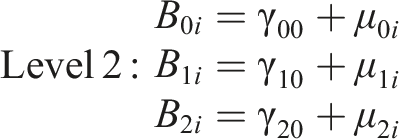
The unstandardised value of B2i (i.e., the reactivity slope) was extracted for each individual i for each index, and stored for use in the second step of the analysis.
Multivariate Modelling of Optimism-Positive Affect-Reactivity System
Of interest, to test dispositional optimism as a moderator of the association between daily stressor exposure and daily negative outcomes, mediated by trait positive affect, dispositional optimism and trait positive affect were entered as predictors of the reactivity slope values obtained in the previous step, for all indices concurrently, with dispositional optimism also predicting trait positive affect (Figure 1). All residuals of the reactivity slopes (but not of trait positive affect) were allowed to covary freely. Conceptual unadjusted models
Indirect paths (i.e., mediation paths) were quantified as the product of the optimism-to-affect (a path in Figure 1) and affect-to-reactivity (b paths in Figure 1) paths for each outcome, and 95% confidence intervals were computed using a Monte Carlo simulation approach with 2,000,000 draws. This method provides robust estimates of uncertainty around the indirect effects (Pesigan & Cheung, 2023; Tofighi & MacKinnon, 2016), especially in multivariate systems where conventional bootstrapping is computationally intensive (Preacher & Selig, 2012). Thus, the parameters of interest would be (1) the total paths ab + c connecting dispositional optimism to each reactivity slope (including the path through trait positive affect), where a 1 unit increase in optimism would correspond to a ab + c unit increase in reactivity, and (2) the indirect paths ab corresponding to the mediation pathway through trait positive affect, where a 1 unit increase in optimism would correspond to a ab unit increase in reactivity as explained by trait positive affect. In addition to the unstandardised coefficients, we also obtained the fully standardised coefficients β, where a 1SD increase in optimism would correspond to a βSD increase in reactivity.
Both unadjusted and adjusted models were estimated in order to check for robustness. In the adjusted models, all available demographic covariates as well as each individual’s average exposure to stressors (as a proportion of response days during the study duration) were included as exogenous predictors, and all zero-order bivariate correlations between all pairs of exogenous predictors (including optimism) were included in the model, in order to maximally de-bias the aforementioned regression parameters of interest. Binary covariates (Study 1 and 2: race with 0 = majority race [i.e., White or Chinese] and 1 = minority race, sex with 0 = male and 1 = female; Study 1 only: marital status with 0 = married and 1 = non-married) were dummy-coded.
In the case where the association between optimism and a specific reactivity slope (i.e., ab + c) was statistically significant, we conducted follow-up probing. Specifically, the corresponding reactivity slopes were computed for maximum-optimism individuals (at the theoretical maximum of the scale), midpoint-optimism individuals (at the midpoint of the scale), and minimal-optimism individuals (at the theoretical minimum of the scale). This was done to more clearly visualise how individuals at different levels of optimism react to stressor exposure in terms of each index. These were reflected in terms of unstandardised (i.e., raw scale) values in order to obtain an understanding of associations in relation to the original measurements.
Statistical Power
Prior to the studies proper, we sought to know the magnitude of the smallest effect size that we could possibly detect with 80% power and an α level of .05 (given the sample sizes we had access to in each study) on the two types of paths of interest in the current work (i.e., the indirect path ab and the total path ab + c). Thus, we would be sufficiently powered in each study to detect any effect size larger than the smallest possible effect size. Based on power benchmarks for indirect effects derived from simple mediation models ([blinded], under review), a sample size of N = 750 would be sufficiently powered to detect a standardised indirect effect of .09 (absolute value) or larger, and a larger sample size of N = 1000 would be sufficiently powered to detect an even smaller standardised indirect effect of .01 (absolute value) or larger.
To obtain specific insights on power given our current studies, we conducted a Monte Carlo simulation with 500 repetitions to obtain the smallest ab and ab + c values in relation to each negative outcome, given a sample size of N = 900 (a lower bound than our sample sizes of N = 958 in Study 1 and N = 995 in Study 2). We followed the procedure described by Majeed and Kasturiratna (unpublished manuscript), with modifications as detailed in the current section. In all cases, we fixed the population value of the a path (i.e., linking dispositional optimism to trait positive affect; Figure 1) to .41, based on the lower bound of the 95% CI of the relationship between dispositional optimism and trait positive affect from an existing meta-analysis of 72 effect sizes (total N = 22974; Alarcon et al., 2013). We allowed the b path (i.e., linking trait positive affect to the outcome reactivity index; Figure 1) and c path (i.e., directly linking dispositional optimism to the outcome reactivity index; Figure 1) to take any of the following values based on Funder and Ozer’s (2019) effect size thresholds: −.05, −.10, −.20, −.30, or −.40 (negative directions due to hypotheses). We found that we would have sufficient (≥ 80%) statistical power to detect the indirect association (ab) when b ≤ −.20 (i.e., ab ≤ −.082) at any value of c ≤ −.05, or when b ≤ −.10 (i.e., ab ≤ −.041) with c ≤ −.10. We found that we would have sufficient (≥ 80%) statistical power to detect the total association (ab + c) when b ≤ −.10 at any value of c ≤ −.05 (i.e., ab + c ≤ −.091), or when b ≤ −.05 with c ≤ −.10 (i.e., ab + c ≤ −.1205). A more detailed breakdown of the power simulation results is available in our associated Researchbox (#3631; under the “Power” section).
Study 1: Affective and Cognitive Consequences in the US
Method
Sample and Design
Descriptive Statistics of US Adult Sample (Study 1)
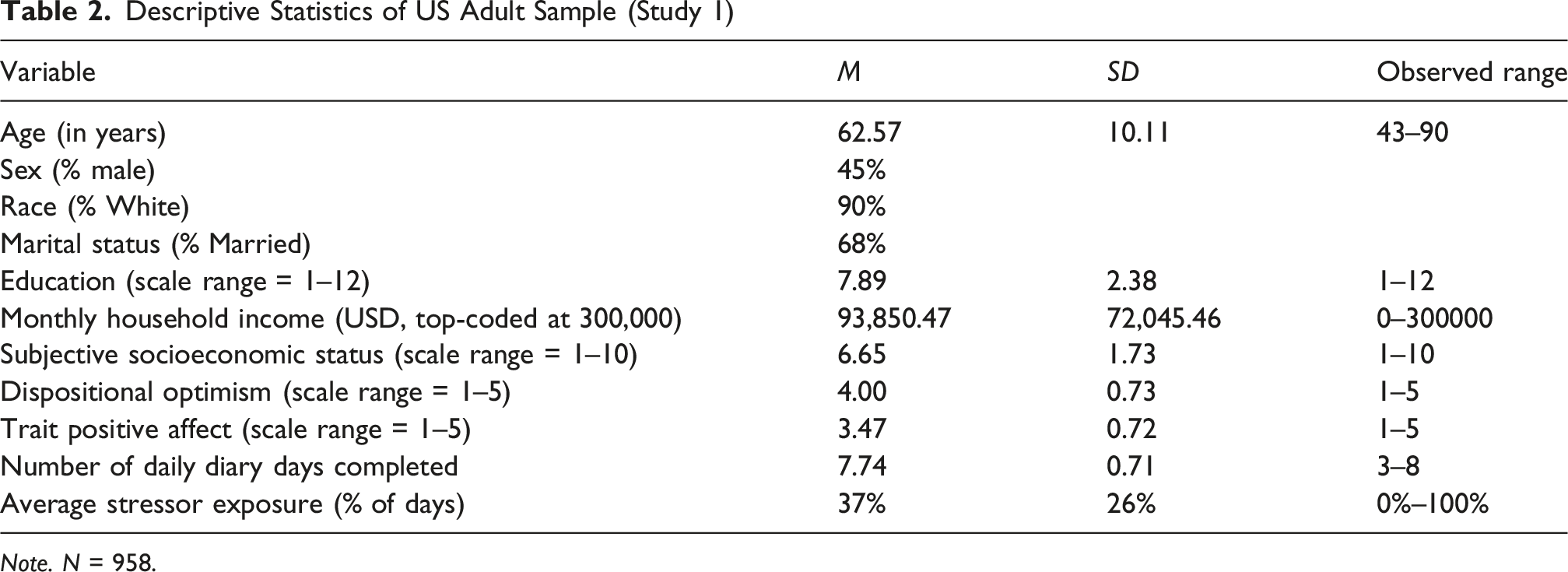
Note. N = 958.
Data for the baseline portion was collected from May 2013 to November 2014, while data for the daily diary portion was collected from January 2017 to December 2019. Individuals were first asked to complete a baseline survey that gathered detailed demographic and psychographic information, including a measure of dispositional optimism. Following the baseline survey, individuals participated in an 8-day daily diary study, which monitored their daily experiences with various stressors and examined the associated affective and cognitive responses. The daily diary portion was conducted via computer-assisted telephone interviews, with individuals being called by a member of the original data collection team each day, with 69% of individuals called in the daytime on all days and 1% of individuals called in the evening on all days (the remainder were called during a mix of daytime and evening slots depending on the diary day). 3
Measures
Demographic Covariates
The following demographic covariates were recorded in the baseline session: individuals’ age (in years), sex (male or female), main racial identity (recoded into White or non-White), marital status (recoded into married or non-married), subjective socioeconomic status through a ladder rank scale (1 = worst, 10 = best; Adler et al., 2000), and objective socioeconomic status in the form of monthly household income (from USD0 to USD300,000) and education level (1 = No School/Grade School, 2 = Eighth Grade/Junior High School, 3 = Some High School, 4 = GED, 5 = Graduated from High School, 6 = 1 to 2 years of College, no degree yet, 7 = 3 or more years of College, no degree yet, 8 = Graduated from 2-year College, Vocational School, or Assoc. Deg., 9 = Graduated from a 4- or 5-year College, or Bachelor’s Deg., 10 = Some Graduate School, 11 = Master’s Degree, 12 = PHD., ED.D., MD, DDS, LLB, LLD, JD, or other Professional Degree). To minimise model complexity, both indices of objective socioeconomic status (r = .35, 95% CI = [.29, .40]) were combined by first z-scoring each index separately, and then taking the average of the two z-scores for each individual, thereby creating a single objective socioeconomic status score for each individual.
Trait Positive Affect
Trait positive affect was measured by the 6-item Positive Affect Scale (Mroczek & Kolarz, 1998). Individuals indicated the extent to which they felt each item (i.e., “Cheerful,” “In good spirits,” “Extremely happy,” “Calm and peaceful,” “Satisfied,” “Full of life”), with an explicit timeframe specified as “during the past 30 days,” where each item was rated on a 5-point frequency scale (1 = All of the time, 5 = None of the time). An overall positive affect score based on the mean of the six items was then computed (tau-equivalent reliability, i.e., Cronbach’s α = .91).
Daily Negative Outcomes
Two indices of daily negative outcomes were available in Study 1: one for the affective component and one for the cognitive component.
Affective Component
The affective component was operationalised in terms of general negative affect, measured using the negative affect subscale of the Daily Distress Scale (Almeida & Kessler, 1998; Mroczek & Kolarz, 1998). The subscale consists of 14 items describing the frequency of negative emotion that individuals may have felt on that day (e.g., “How much of the time today did you feel nervous?”, “How much of the time today did you feel worthless?”), each of which was rated on a 5-point frequency scale (0 = None of the time, to 4 = All of the time). Higher scores indicated higher levels of negative affect, and items were averaged each day for each individual, leading to a maximum of eight daily negative affect scores for each individual (tau-equivalent reliability, i.e., Cronbach’s αwithin = .76, αbetween = .90).
Cognitive Component
The cognitive component was operationalised in terms of rumination, measured using a six-item daily Cognitive Interference scale (Ryff & Almeida, 2018). Individuals indicated the extent to which they experienced each item on the questionnaire on that day (e.g., “Today, how often did you think about personal problems and concerns?”, “Today, how often did you think about situations that upset you?”) on a 5-point frequency scale (0 = None of the time, 4 = All of the time). An overall daily rumination score based on the mean of the 6 items was then computed, resulting in a maximum of eight daily rumination scores for each individual (tau-equivalent reliability, i.e., Cronbach’s αwithin = .62, αbetween = .85).
Results
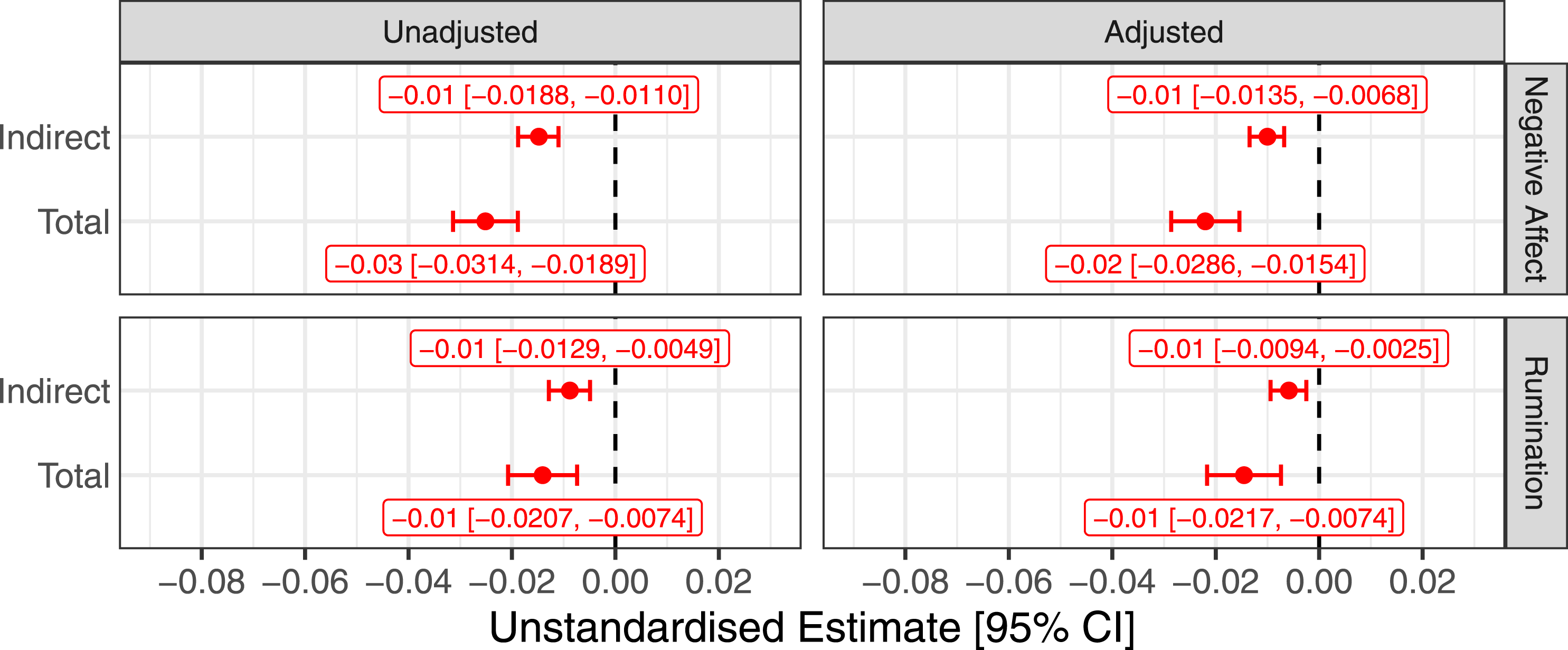
The full multivariate results are presented in Figure 2 in terms of the a, b, and c paths, and in Figure 3 in terms of the indirect and total associations. Structural paths in the US sample Indirect and total associations in the US sample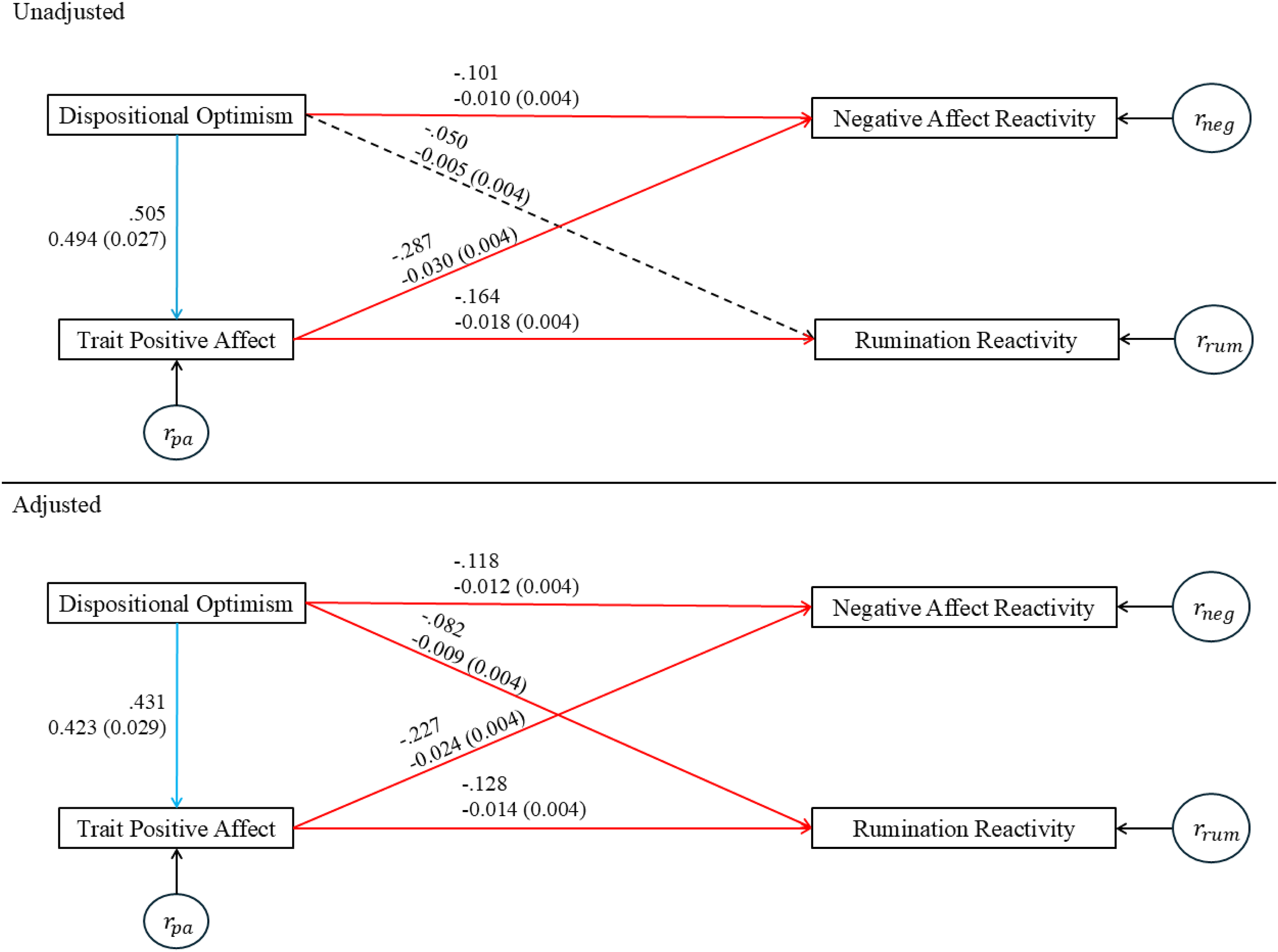
Affective Component
Total Change from Non-Stressor to Stressor Day in US Adult Sample (Study 1)

Note. Values correspond to unadjusted unstandardised estimates of the change in the level of the reactivity index from a non-stressor day to a stressor day, for a hypothetical person at each level of dispositional optimism. Bolded rows correspond to statistically significant unadjusted total associations.
Cognitive Component
Higher levels of dispositional optimism were significantly associated with lower levels of rumination reactivity to a small extent (unadjusted β = −.132; adjusted β = −.137) in terms of the total association (i.e., both through trait positive affect and directly), consistently across both the unadjusted and adjusted models (“Total” in Figure 3). For example, from the unadjusted model, for a hypothetical person with minimum levels of dispositional optimism, the increase in rumination from a non-stressor day to a stressor day would be 0.25 units, while for a hypothetical person with maximum levels of dispositional optimism, the increase in rumination from a non-stressor day to a stressor day would be only 0.19 units (Table 3). There was significant evidence that this pattern was mediated by trait positive affect (“Indirect” in Figure 3) to a very small extent (unadjusted β = −.083; adjusted β = −.055).
Interim Discussion
The current findings provide initial support for a model in which dispositional optimism is linked to reduced affective and cognitive reactivity to daily stressor exposure, primarily through optimism’s positive association with trait positive affect. Thus, we found support for all hypotheses tested in the current study (i.e.,
Study 2: Affective, Behavioural, and Cognitive Consequences in Singapore
Method
Sample and Design
Descriptive Statistics of Singapore Young Adult Sample (Study 2)
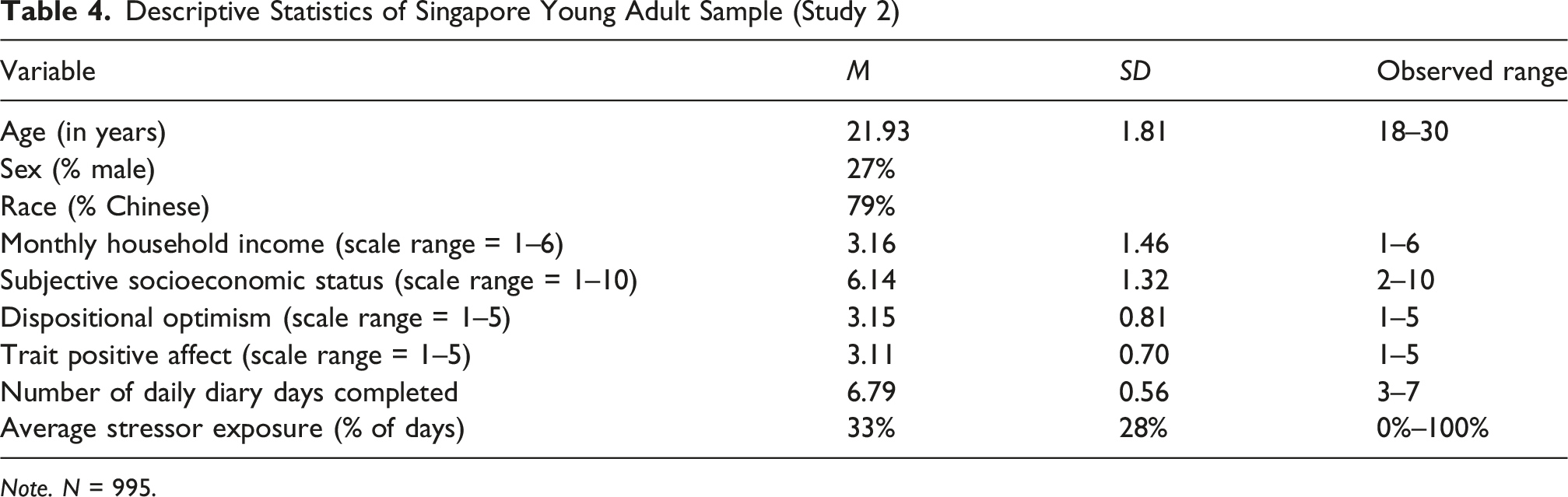
Note. N = 995.
Data for Study 2 was collected from December 2020 to February 2021 (first subsample), June 2021 to August 2021 (second subsample), July 2022 to September 2022 (third subsample), and January 2023 to March 2023 (fourth sample). Individuals completed a baseline survey (in either a single session or split into two sessions), followed by a 7-day daily diary survey (starting on Wednesday till the following Tuesday in the first sample, starting on Thursday till the following Wednesday in the second sample, and starting on Sunday till the following Saturday in the third and fourth samples). The daily diary portion was conducted via computerised surveys, with individuals self-administering each survey after receiving a unique link via email each evening at 8 p.m. (the survey remained available until 3 a.m. the following day). Individuals were allowed to complete these surveys from any location using their mobile devices or computers.
Measures
Demographic Covariates
The following demographic covariates were recorded: individuals’ age (in years), sex (male or female), race (recoded into Chinese or non-Chinese), objective socioeconomic status in the form of monthly household income (1 = less than SG$2000, 2 = SG$2000 to SG$5999, 3 = SG$6000 to SG$9999, 4 = SG$10,000 to SG$14,999, 5 = SG$15,000 to SG$19,999, 6 = SG$20,000 or more), and subjective socioeconomic status through a ladder rank scale (1 = worst, 10 = best; Adler et al., 2000).
Trait Positive Affect
Trait positive affect was measured by the 10-item general positive affect subscale of the Positive and Negative Affect Schedule (Watson, Clark, & Tellegen, 1988). Individuals were given words that may describe what they feel “on average” (e.g., “Enthusiastic,” “Inspired,” “Excited”), each of which was rated on a 5-point scale (1 = Very slightly or not at all, 5 = Extremely). An overall positive affect score based on the mean of the 10 items was then computed (tau-equivalent reliability, i.e., Cronbach’s α = .88).
Daily Negative Outcomes
Six indices of daily negative outcomes were used in Study 2: two for the affective component, two for the behavioural component, and two for the cognitive component.
Affective Component
The affective index was operationalised in terms of daily anxious mood and daily depressive mood.
First, daily anxious mood was measured by Marteau and Bekker’s (1992) shortened version of the Spielberger State-Trait Anxiety Inventory (Spielberger, 2012), with the time frame set to “today.” The questionnaire consists of six items describing how individuals may have felt on that day (e.g., “I am worried today”), each of which was rated on a 4-point frequency scale (1 = Not at all, 2 = Somewhat, 3 = Moderately so, 4 = Very much so). Positively-worded items were reverse-coded such that higher scores indicated higher levels of daily anxious mood, and items were averaged each day for each individual, resulting in a maximum of seven daily anxious mood scores for each individual (tau-equivalent reliability, i.e., Cronbach’s αwithin = .78, αbetween = .89).
Second, daily depressive mood was measured by the 10-item version of the CES-D (Zhang et al., 2012) with the time frame reworded from “during the past week” to “today.” The questionnaire consists of 10 items describing how individuals may have felt (e.g., “I felt depressed”), each of which was rated on a 4-point frequency scale (1 = Rarely or none of the time, 2 = Some or a little of the time, 3 = Occasionally or a moderate amount of time, 4 = All of the time). Positively-worded items were reverse-coded such that higher scores indicated higher levels of depressive mood, and items were averaged each day for each individual, resulting in a maximum of seven daily depressive mood scores for each individual (tau-equivalent reliability, i.e., Cronbach’s αwithin = .71, αbetween = .89).
Behavioural Component
The behavioural index was operationalised in terms of daily impulsivity and daily procrastination.
Daily impulsivity was measured by the Daily Impulsivity Index (Sperry et al., 2018), with item wordings adapted to fit a daily diary context (i.e., “Since the day started…”). The questionnaire consists of six statements describing impulsive behaviours (e.g., “I acted without thinking”), each of which was rated on a 7-point frequency scale (1 = Not at all, 7 = Very much). An overall impulsivity index based on the mean of the six items was then computed per day, resulting in a maximum of seven daily impulsivity scores for each individual (tau-equivalent reliability, i.e., Cronbach’s αwithin = .81, αbetween = .96).
Daily procrastination was measured by a shortened version of the general procrastination subset of the Procrastination Scale (Steel, 2002), with item wordings adapted to fit a daily diary context. The questionnaire consists of six statements describing procrastination behaviours (e.g., “I delayed tasks beyond what is reasonable today”), each of which was rated on a 5-point frequency or agreement scale (1 = Very seldom or not true of me, 5 = Very often true, or true of me). An overall procrastination index based on the mean of the six items was then computed per day, resulting in a maximum of seven daily procrastination scores for each individual (tau-equivalent reliability, i.e., Cronbach’s αwithin = .88, αbetween = .98).
Cognitive Component
The cognitive index was operationalised in terms of daily cognitive failures and daily rumination.
First, each individual’s daily level of cognitive failures was measured by the Questionnaire for Cognitive Failures in Everyday Life (Lange & Süß, 2014). The questionnaire consists of 13 items describing cognitive failures that the individual may have experienced in the past 24 hours (e.g., “Did you leave a task unfinished due to distraction(s), at any point of time today?”). Individuals indicated whether each instance of cognitive failure had occurred that day using a 4-point frequency scale (0 = Never, 1 = Once, 2 = Twice, 3 = Several times), and responses were averaged each day for each individual, resulting in a maximum of seven daily cognitive failure scores for each individual (tau-equivalent reliability, i.e., Cronbach’s αwithin = .77, αbetween = .96).
Second, each individual’s daily level of rumination was measured by the rumination subscale of the daily version of the Rumination-Reflection Questionnaire (Newman & Nezlek, 2019). The questionnaire consists of three items describing the individual’s level of rumination on that day (e.g., “How much today did you ruminate or dwell on things that happened to you?”), each of which was rated on a 7-point frequency scale (1 = Not at all, 7 = Very much). An overall daily rumination score based on the mean of the three items was then computed, resulting in a maximum of seven daily rumination scores for each individual (tau-equivalent reliability, i.e., Cronbach’s αwithin = .90, αbetween = .99).
Results
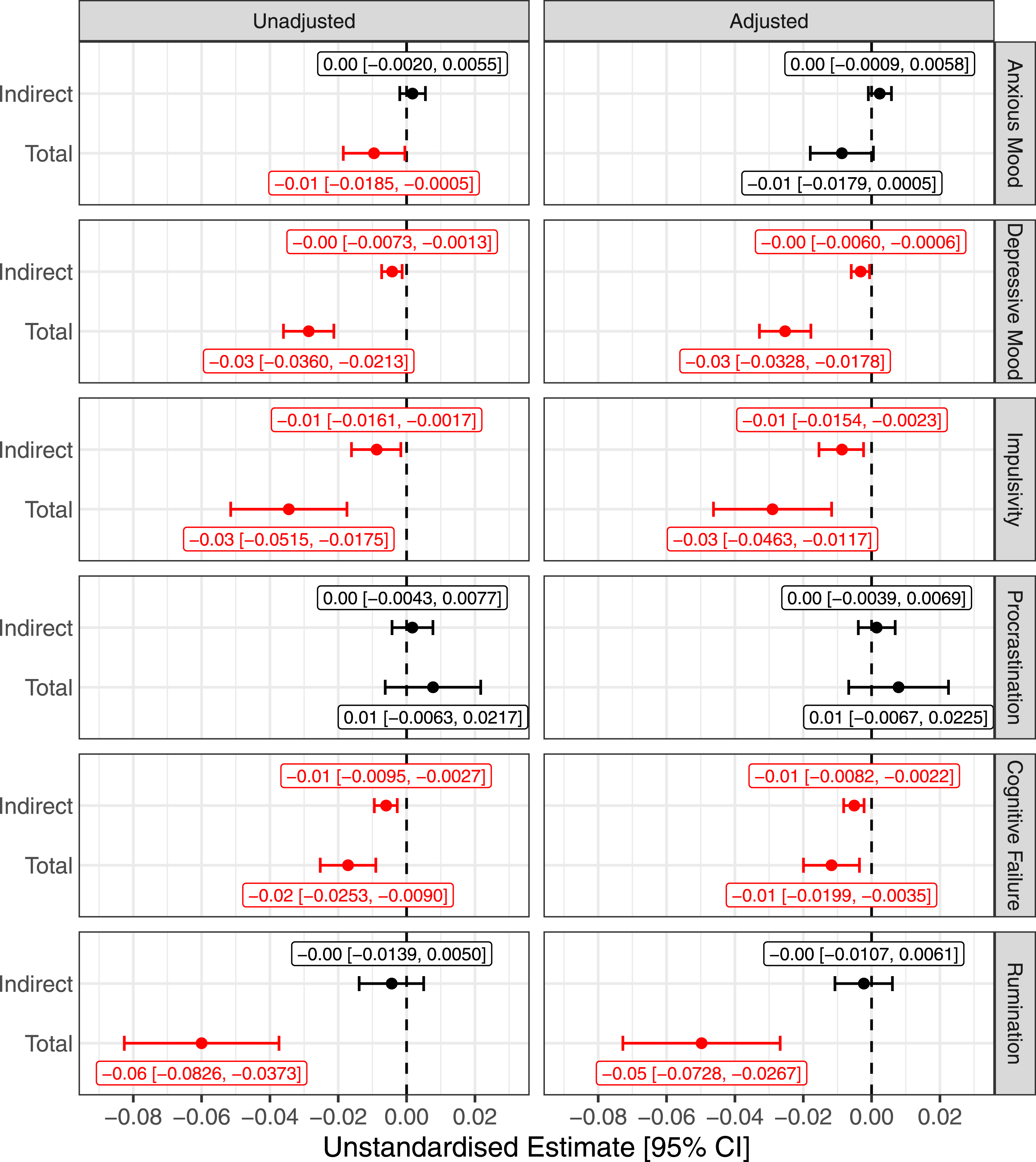
The full multivariate results are presented in Figure 4 in terms of the a, b, and c paths, and in Figure 5 in terms of the indirect and total associations. Structural paths in the Singapore sample Indirect and total associations in the Singapore sample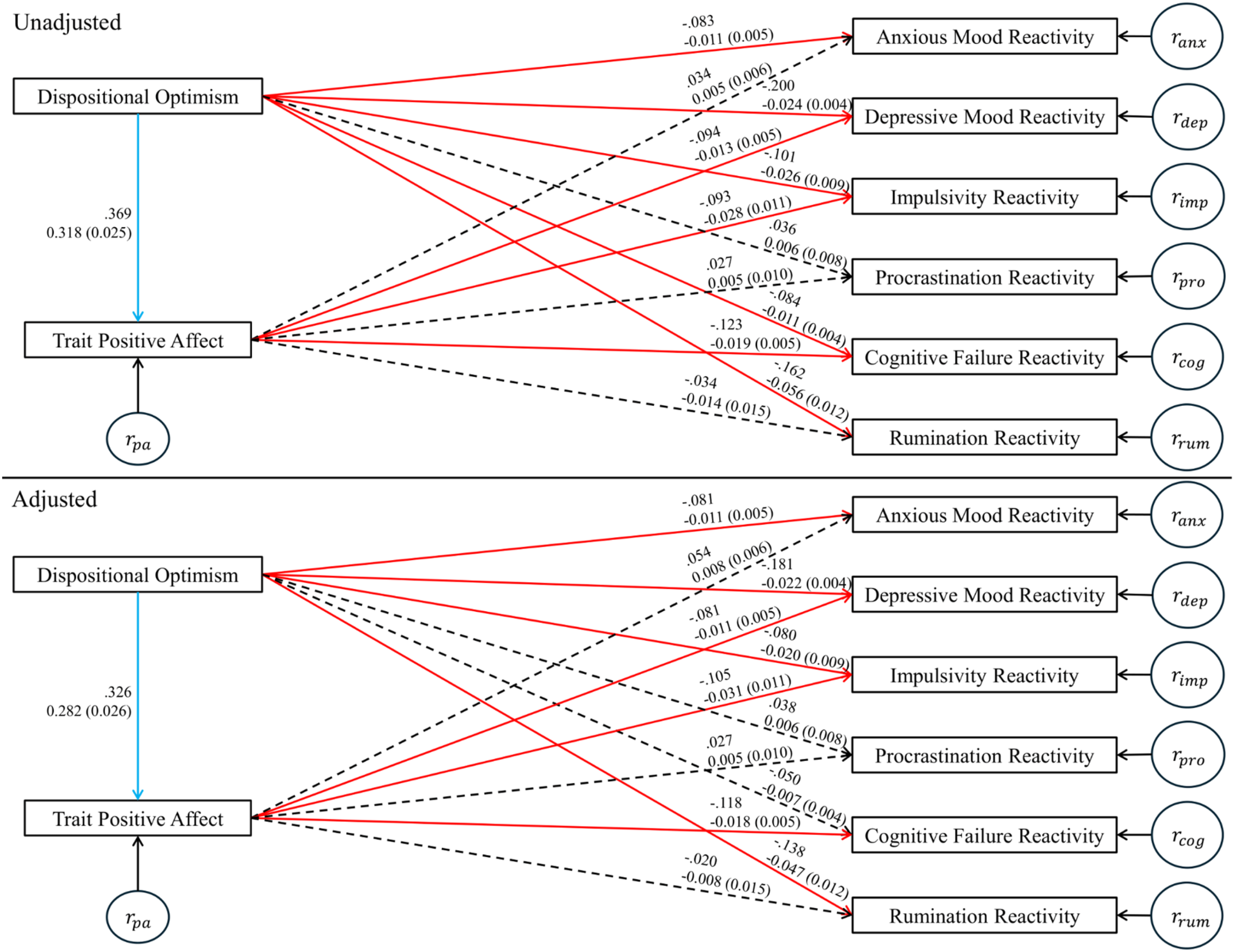
Affective Component
Anxious Mood
Dispositional optimism was not robustly associated with anxious mood reactivity in terms of the total association (i.e., both through trait positive affect and directly), being significant only in the unadjusted (β = −.070) but not in the adjusted model (β = −.064; “Total” in Figure 5). In both models, there was no evidence that dispositional optimism had a significant association with anxious mood reactivity through the mediation by trait positive affect (unadjusted β = .013; adjusted β = .018; “Indirect” in Figure 5).
Depressive Mood
Total Change from Non-Stressor to Stressor Day in Singapore Young Adult Sample (Study 2)
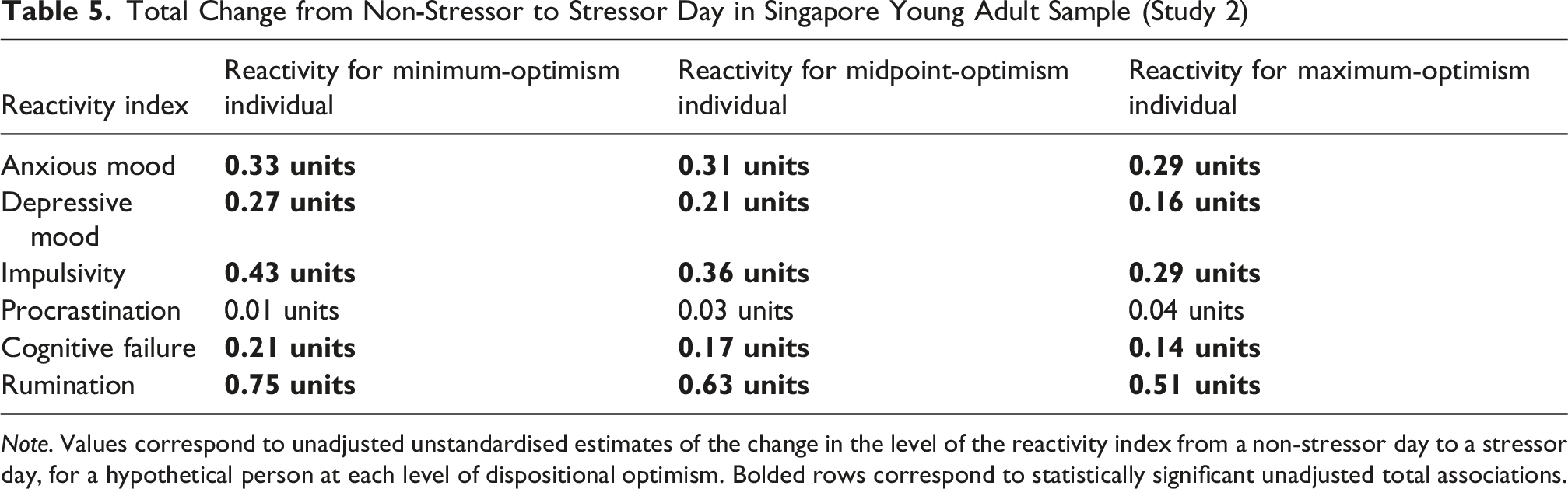
Note. Values correspond to unadjusted unstandardised estimates of the change in the level of the reactivity index from a non-stressor day to a stressor day, for a hypothetical person at each level of dispositional optimism. Bolded rows correspond to statistically significant unadjusted total associations.
Behavioural Component
Impulsivity
Higher levels of dispositional optimism were significantly associated with lower levels of impulsivity reactivity to a small extent (unadjusted β = −.136; adjusted β = −.114) in terms of the total association (i.e., both through trait positive affect and directly), consistently across both the unadjusted and adjusted models (“Total” in Figure 5). For example, from the unadjusted model, for a hypothetical person with minimum levels of dispositional optimism, the increase in impulsivity from a non-stressor day to a stressor day would be 0.43 units, while for a hypothetical person with maximum levels of dispositional optimism, the increase in impulsivity from a non-stressor day to a stressor day would be only 0.29 units (Table 5). There was significant evidence that this pattern was mediated by trait positive affect (“Indirect” in Figure 5) to a very small extent (unadjusted β = −.034; adjusted β = −.034).
Procrastination
We did not find any evidence that dispositional optimism was associated with procrastination reactivity in terms of the total association (i.e., both through trait positive affect and directly) whether it was prior to or after controlling for covariates (unadjusted β = .046; adjusted β = .047; “Total” in Figure 5). In both models, there was no evidence that dispositional optimism had a significant association with procrastination reactivity through the mediation by trait positive affect (unadjusted β = .010; adjusted β = .009; “Indirect” in Figure 5).
Cognitive Component
Cognitive Failure
Higher levels of dispositional optimism were consistently associated with lower levels of cognitive failure reactivity to a very small to small extent (unadjusted β = −.130; adjusted β = −.089) in terms of the total association (“Total” in Figure 5). For example, from the unadjusted model, for a hypothetical person with minimum levels of dispositional optimism, the increase in cognitive failure from a non-stressor day to a stressor day would be 0.21 units, while for a hypothetical person with maximum levels of dispositional optimism, the increase in cognitive failure from a non-stressor day to a stressor day would be only 0.14 units (Table 5). In addition, the indirect association through trait positive affect was consistently significant to a very small extent (unadjusted β = −.045; adjusted β = −.038; “Indirect” in Figure 5).
Rumination
In terms of the total association, higher levels of dispositional optimism were significantly associated with lower levels of rumination reactivity to a small extent (unadjusted β = −.174; adjusted β = −.144; “Total” in Figure 5). For example, from the unadjusted model, for a hypothetical person with minimum levels of dispositional optimism, the increase in rumination from a non-stressor day to a stressor day would be 0.75 units, while for a hypothetical person with maximum levels of dispositional optimism, the increase in rumination from a non-stressor day to a stressor day would be only 0.51 units (Table 5). However, this association showed no significant evidence of being mediated by trait positive affect (unadjusted β = −.013; adjusted β = −.007; “Indirect” in Figure 5).
Interim Discussion
The findings from Study 2 extend those of Study 1 by providing further evidence that dispositional optimism protects against multiple forms of reactivity to daily stressor exposure, with trait positive affect serving as an important mediator in several domains. First, when negative affect was disaggregated, optimism predicted lower depressive mood reactivity (both in totality and indirectly through trait positive affect), but showed no association with anxious mood reactivity, thus providing support for
General Discussion
Using large-scale daily diary datasets from two countries, the present work examined whether dispositional optimism buffers against daily negative outcomes (affective, behavioural, and cognitive). Consistent with prior research (e.g., Baumgartner et al., 2018; Majeed et al., 2021), we found partial support for our hypotheses. In Study 1, optimism significantly moderated the association between daily stressor exposure and negative affect, such that optimistic individuals showed smaller increases in negative affect on stressor days than less optimistic individuals (
The findings are partially in line with expectations following the broaden-and-build theory, which posits that positive emotions—which could be brought on by dispositional optimism—broaden individuals’ thought-action repertoires, fostering more flexible and adaptive ways to cope with stress (Fredrickson, 2004). However, the theory does not fully account for some of our findings—such as the lack of buffering effects of optimism on anxious mood and procrastination in Study 2. Furthermore, while we observed consistent evidence that optimism buffered against rumination in both Studies 1 and 2, trait positive affect was not a significant mediator for rumination in Study 2 unlike in Study 1. Additional nuances may explain why optimism did not buffer against these outcomes, and these will be explored in greater detail in the following sections.
Affective Domain
Dispositional optimism attenuated the relationship between daily stressor exposure and negative affect in Study 1, in line with
Negative affect is often defined as a broad construct encompassing a variety of unpleasant emotional states (Watson & Clark, 1984). Yet research indicates that it can be meaningfully distinguished into specific dimensions such as depressive and anxious mood (Legg et al., 2023; Renshaw et al., 2010). Although correlated, these dimensions are shaped by distinct psychological processes (Clark & Watson, 1991), making the distinction important for the present study. Our findings suggest that optimism may interact differently with daily stressor exposure depending on whether the outcome is depressive mood or anxious mood. This is consistent with prior work; optimism has been found to buffer against low-arousal negative affect (e.g., depression) more than high-arousal forms (e.g., anxiety; Birkeland et al., 2017). Because depression, but not anxiety, is marked by reduced positive affect (Segerstrom et al., 2017)—which was indeed replicated in our analyses—optimism’s ability to enhance positive affect may be particularly effective as a counter against stressor-related increases in depressive mood rather than in anxious mood. Moreover, positive affect may sometimes increase general arousal (Russell et al., 1989), which can overlap with feelings of anxiety. This might suggest that optimism attenuates the negative affectivity component of anxious mood but also increases the arousal component, effectively nullifying the buffering role of optimism. The non-significant findings observed here suggest that positive affect and anxious mood largely represent distinct emotional systems, and that any apparent connection likely reflects situational or physiological activation rather than a robust relationship.
In addition, depressive mood and general negative affect are regulative in nature (Duval & Wicklund, 1972; Pyszczynski & Greenberg, 1987), experienced in ways that motivate adjustment toward desired standards. In contrast, anxious mood is reactive in nature, directing attention toward potential threats (Eysenck et al., 2007; Yang et al., 2018). Given optimism’s role in emotional regulation proficiency (Ausbrooks et al., 1995; Gordon et al., 2016), optimism may be more effective in buffering against processes involving sustained reflection like depression and general negative affect. On the other hand, anxious mood is focused on immediate threat detection and preparedness (Eysenck et al., 2007), requiring a just-in-time approach, also known as reactive control, involving transient activation of cognitive resources typically triggered by situations requiring an immediate response (Braver, 2012). Thus, optimism may be less effective against anxiety, which may be relatively less responsive to sustained regulation abilities afforded by optimism. Nonetheless, further work testing the specificity of the buffering effect of optimism on depression but not anxiety is warranted, and these interpretations regarding optimism should be regarded as tentative.
Behavioural Domain
We found evidence that dispositional optimism buffered against impulsivity stemming from daily stressor exposure, in line with
Optimism may give rise to countervailing tendencies, such as overconfidence and reduced urgency, which could weaken or offset any buffering effects. Indeed, optimistic individuals often expect favourable outcomes regardless of effort (Carver & Scheier, 2014), which may diminish the pressure to act promptly. With the mindset that things will eventually work out, it could lead to underestimating the time and effort required to complete tasks, thus increasing the likelihood of postponement. Similarly, individuals often delay tasks perceived to be unpleasant (Blunt & Pychyl, 2000). As such, according to the mood-maintenance hypothesis (Isen & Patrick, 1983), they may be especially inclined to procrastinate when in a positive mood to protect their current positive emotional state. Positive emotions also enhance reward sensitivity (Craske et al., 2023; Young & Nusslock, 2016), which might make pleasurable activities more attractive than engaging in tasks.
Taken together, the absence of statistically significant results in relation to procrastination may be due to competing pathways. Optimism and positive affect are typically associated with motivation (Carver & Scheier, 2014; Løvoll et al., 2017) and self-regulation (Aspinwall, 1998; Nes et al., 2011), and these processes may help explain why optimism could buffer against some forms of behavioural reactivity. However, when optimism’s overconfidence and mood-maintenance mechanisms are simultaneously active, the buffering may be offset by competing mechanisms at the daily level. These findings suggest the nuanced role of optimism and positive affect in buffering against behavioural reactivity, although future research is required to provide direct tests of the theories before any conclusions can be drawn.
Impulsivity, or acting quickly without deliberation (Muraven & Baumeister, 2000), is often a reactive response to stressors. Although often accompanied and driven in part by anxious affect, impulsivity also depends on other non-affect related factors, such as one’s disinhibition (Sharma et al., 2014). While we did not find evidence that optimism buffered against anxious mood (as discussed above), we did find in the current work that optimism buffered against impulsivity. We posit that while optimism may be weak in attenuating anxious moods, it can still attenuate the non-affective precursors of impulsivity, thereby weakening the effect of daily stressors on impulsivity. Specifically, given that trait positive affect mediated the relationship between optimism and impulsivity, we posit that optimism broadens individuals’ thought-action repertoires and in turn promotes more deliberative responding, in line with the broaden-and-build theory (Fredrickson, 2001).
Cognitive Domain
In Study 1, dispositional optimism attenuated the link between daily stressor exposure and rumination, with positive affect mediating the relationship between optimism and rumination. In contrast, although optimism attenuated the relationship between stressor exposure and rumination in Study 2, trait positive affect did not serve as a mediator (unlike in Study 1). More specifically, a 1SD increase in optimism corresponded to approximately a 0.14SD decrease in rumination reactivity in both Study 1 and Study 2, indicating that individuals higher in optimism (vs. individuals lower in optimism) experienced smaller increases in rumination when daily stressors occurred. A portion of this association operated indirectly through trait positive affect in Study 1, such that a 1SD increase in optimism corresponded to a 0.06SD decrease in rumination reactivity via trait positive affect, but this indirect path was not observed in Study 2. This suggests that among younger adults, optimism may buffer against stressor-related increases in rumination through alternative mechanisms that bypass the mediating role of positive affect. In Study 2, optimism also attenuated the relationship between daily stressor exposure and cognitive failure, and positive affect significantly mediated the association between optimism and cognitive failure. More specifically, a 1SD increase in optimism corresponded to approximately a 0.09SD decrease in cognitive failure reactivity, indicating that individuals higher in optimism (vs. individuals lower in optimism) experienced smaller increases in everyday cognitive failures when daily stressors occurred. A portion of this association operated indirectly through trait positive affect, such that a 1SD increase in optimism corresponded to a 0.04SD decrease in cognitive failure reactivity via trait positive affect.
There are several possible explanations for the findings on rumination. First, age-related differences in emotional goals might explain this discrepancy. While individuals in Study 1 consisted of older adults over 43 years of age, individuals in Study 2 were young adults between 18 and 30. According to the Socioemotional Selectivity Theory (Carstensen, 2021), older adults allocate cognitive resources toward efficiency in information processing and toward goals that maintain emotional well-being. Rumination, with its repetitive and perseverative focus on negative information, is cognitively costly and misaligned with these priorities. Consequently, positive affect (which is posited to facilitate flexible cognition) may more reliably reduce rumination among older adults relative to younger adults. Younger adults, on the other hand, typically prioritise more future-oriented goals which involve information acquisition (Carstensen, 2021), potentially making rumination more adaptive. Although rumination often leads to poorer emotional well-being, they can also promote greater adaptive preparation and anticipatory planning behaviours (Watkins, 2008). Thus, it may be possible that while optimism might decrease the rumination of younger adults, trait positive affect fails to explain this pathway because unlike other outcomes in the broaden-and-build theory, rumination may not be considered a negative outcome for younger adults as compared to older adults.
A second possible explanation lies in the nature of rumination across cultures. Participants in Study 1 were recruited from the United States (a Western cultural context), while participants in Study 2 were recruited from Singapore (an Asian cultural context). Existing cross-cultural research suggests that rumination may be more negative for individuals with a Western cultural background relative to those from an Asian background (Chang et al., 2010; Kim et al., 2025; Sakamoto et al., 2001). Specifically, in Asian contexts where things and people are thought to be less stable and more subject to change (Peng & Nisbett, 1999), rumination may more often reflect a drive to improve, rather than an act that causes one to feel self-doubt. In line with this, Choi and Miyamoto (2023) found that self-doubt attributions from rumination partly explained why in Western cultural contexts, rumination was more strongly associated with poorer emotional well-being as compared to Eastern cultural contexts. Hence, the more adaptive role of rumination in Asian contexts like Singapore relative to the United States might explain why trait positive affect (which is assumed to lessen maladaptive behaviours) might not mediate the relationship between stressor exposure and rumination.
While these theories are in line with the findings, we did not directly test for any of these pathways due to the limitations of the data collected in these studies. This is a notable limitation of the current theorising. Further research is warranted before any conclusive evidence should be drawn about why there might be differing pathways by which optimism buffers against rumination across age and/or culture.
Strengths
There are notable strengths to the current work that lend confidence to the current findings. First, the use of the daily diary methodology allows for an ecologically valid look into the relationship between daily stressor exposure and negative outcomes as the present work captures the occurrence of stressors and outcomes in individuals’ day-to-day lives rather than in a laboratory setting (Scollon et al., 2003). Furthermore, the daily diary method reduces recall biases in responses, allowing for a more accurate and valid measurement of the variables examined (Stone & Shiffman, 2002; Te Braak et al., 2023). Third, as repeated measures of daily stressor exposure and negative outcomes were taken for each individual, the current approach was able to control for stable between-persons personality and environmental confounds when considering the relationship between daily stressor exposure and daily malfunctioning (Almeida, 2005), hence reducing the chances of the current findings being driven by such confounding variables. The current work is also highly-powered with large samples utilised in both studies, thereby lending confidence to the reliability and validity of the present findings.
Furthermore, the current work contributes to the literature as the first to empirically examine the moderating role of dispositional optimism across multiple domain outcomes of daily stressor exposure. The inclusion of behavioural and cognitive outcomes helps shed light on the domain-generalisability of dispositional optimism as a buffering trait. The current work also provides a direct test of the broaden-and-build framework through the addition of positive affect as a mediator. Indeed, as our results have shown, the buffering role of optimism did not extend to anxious mood and procrastination, suggesting that there are nuances in optimism’s ability to attenuate negative outcomes. Similarly, the mediating role of positive affect was not observed for anxious mood, procrastination, and rumination (in Study 2). These results suggest the likelihood of boundary conditions for the broaden-and-build theory, and the possibility of other relevant mechanisms that may explain the null findings in our current work, such as age and culture, as theorised in the previous sections.
Limitations and Future Directions
We acknowledge that the present study is not without limitations. First, the binary classification of “stressor days” versus “non-stressor days,” while consistent with the nature of the measure and prior research, carries inherent limitations. Experiencing multiple stressors in a day is likely qualitatively different from experiencing a single stressor, yet both were grouped together under “stressor day” in the present study. This simplification was largely due to the structure of our measure, which only recorded whether a particular type of stressor occurred (e.g., “Did you have an argument or disagreement with anyone since this time yesterday?”) rather than how many times it occurred. As such, constructing a continuous index based on stressor counts risked overstating the precision of the data and inviting misleading interpretations. Future work that incorporates both the presence and frequency of stressors may capture a more nuanced picture of daily stress processes and shed further light on how dispositional optimism shapes responses to stressor exposure.
Additionally, while we attempted to assess a variety of indicators of negative outcomes (e.g., impulsivity, cognitive failure, rumination), the included indicators may not fully capture the breadth of possible negative outcomes. Future research could benefit from including a different or wider range of negative behavioural outcomes, such as excessive technology use, restrictive eating, or aggression. Similarly, expanding cognitive outcomes to include aspects like decision fatigue or executive functioning and affective outcomes to include indicators like anger could offer deeper insights into the protective role of optimism on such outcomes stemming from daily stressors.
Another limitation concerns the asymmetry in the outcome components assessed across the two studies. In Study 1, which used a US adult sample drawn from the MIDUS dataset, only two indices of daily negative outcomes were available, with one reflecting the affective component (negative affect) and one reflecting the cognitive component (rumination). Behavioural outcomes were not available in this dataset. In contrast, Study 2, which used a Singapore young adult sample, included a broader set of six outcomes spanning three components: affective (anxious mood and depressive mood), behavioural (impulsivity and procrastination), and cognitive (cognitive failures and rumination). Consequently, conclusions regarding optimism’s buffering role in the behavioural domain are based solely on the Singapore sample and cannot be directly compared across the two studies. Future research that includes comparable measures across samples would help clarify whether optimism similarly buffers affective, behavioural, and cognitive responses to daily stressors across different populations and cultural contexts.
Additionally, there were slight differences in the scales used to measure trait positive affect across the two studies. While participants were asked to indicate how they felt “on average” (with an explicit timeframe not specified) in Study 2, trait positive affect was measured as an overall rating explicitly “during the past 30 days” in Study 1. It is possible that there may be practical differences between these two measurements; for example, individuals recalling their positive affect “on average” may be more influenced by memory reconstruction compared to those recalling their affect “during the past 30 days” (Scollon et al., 2009). These differences may have contributed to the differences in the mediation findings related to rumination in Study 1 and Study 2. Nonetheless, while the scale in Study 2 is theoretically more accurate as a trait measure of positive affect, a substantial proportion of the existing literature has used individuals’ average positive affect across 30 days as a proxy for trait levels of affect (e.g., Ong et al., 2013; Ostafin & Kassman, 2012; Stellar et al., 2015). While we expect this difference in scales to have little impact on the current findings, examining whether these different measures of “trait” positive affect has an impact on our results could be worth further exploration.
Furthermore, the present study’s usage of a two-stage analytic procedure assumes that participant-level parameters are estimated without error, which may lead to underestimated standard errors and overly precise estimates of indirect effects (Preacher et al., 2010). Although this approach was necessary due to the complexity of the model and size of the dataset, it does not fully account for sampling variability. Future research should seek to replicate these findings using a full-information multilevel structural equation modelling approach (Preacher et al., 2010), particularly in contexts where greater computational resources are available.
Although the use of two diverse samples strengthens the generalisability of our findings, it also introduces limitations in terms of comparability across the studies. Study 1 recruited a broader adult sample from the US, while Study 2 consisted primarily of undergraduate students from Singapore. The daily diary design, which spans a shorter timeframe and involves different age groups and cultural contexts (also recruited at different times), make it difficult to draw precise conclusions, especially given the inconsistencies between the findings in both studies. In terms of lifespan differences, optimism generally increases with age (Isaacowitz, 2022; Zou et al., 2016), which is often explained by the moderating roles of religion, stress, and coping strategies (Mattis et al., 2004; Nicholls et al., 2008; Robinson-Whelen et al., 1997). Furthermore, age-related differences in dispositional optimism may interact with cultural influences, as You et al. (2009) found that older adults exhibited higher levels of dispositional optimism in the US sample, while this effect was reversed in the Chinese sample. Therefore, longitudinal data that spans across different life stages, as well as two comparable samples of individuals from different cultures, would allow a clearer understanding of how optimism may differentially buffer the effects of daily negative outcomes across the lifespan. As such, we encourage future work to explore these lifespan and cultural dynamics more directly.
Apart from lifespan differences in optimism, stress reactivity also varies with age. Older adults have lower stress reactivity compared to younger adults, being able to emotionally recover better from stress than their younger counterparts (Scott et al., 2017). This is likely due to the age-related positivity effect, whereby older adults display a tendency to attend to and prefer positive information over negative information because of limited future time (Carstensen, 2006; Carstensen & Mikels, 2005). Furthermore, it could also be attributed to a greater usage of effective emotion regulation strategies in older adults when dealing with stressors (Carstensen, 1998), such as positive reappraisal (Kurth et al., 2024; Shiota & Levenson, 2009). As such, future studies could examine how these lifespan differences interact with optimism and positive affect to influence negative outcomes stemming from daily stressor exposure.
Conclusion
In sum, this work took a holistic approach in examining the buffering role of dispositional optimism in the relationship between daily stressor exposure and daily malfunctioning. Utilising daily diary data from two countries, we found nuanced support for the hypothesis that optimism acts as a buffer against some aspects of daily negative outcomes in the affective (general negative affect and depressive mood), behavioural (impulsivity), and cognitive (cognitive failure and rumination) domains. However, this buffering effect was not observed for anxious mood and procrastination. These findings shed light on the boundary conditions of the buffering effect of dispositional optimism on negative outcomes stemming from daily stressors. Future work examining the pathways by which optimism attenuates the negative effects of daily stressor exposure would shed light on the nuances in which dispositional optimism can serve as a resilience factor against the negative outcomes of daily stressor exposure.
Footnotes
Acknowledgements
We thank D’Alene Phua, Frosch Quek, Gloria Lai, Harkiran Kaur, Harleen Kaur, Kristine Lee, Manmeet Kaur, Sandeeshwara Kasturiratna, Wei Ming Ooi, and Xin Yi Poh for their assistance in data collection. The preliminary results of this work were presented as a conference poster at the annual convention of the Society for Affective Science in 2022.

Funding
The authors disclosed receipt of the following financial support for the research, authorship, and/or publication of this article: Data collection was supported by grants awarded by the Singapore Management University through research grants from the Ministry of Education Academic Research Fund Tier 1 (20-C242-SMU-001; 21-SOSS-SMU-023) and Lee Kong Chian Fund for Research Excellence.
Declaration of Conflicting Interests
The authors declared no potential conflicts of interest with respect to the research, authorship, and/or publication of this article.
Open Science Statement
The current work’s design and its plan of analysis were not pre-registered. Relevant materials and data for Study 1 are available from the MIDUS Portal (https://midus.colectica.org/), while those for Study 2 are publicly available on the current work's associated Researchbox (#3631; https://researchbox.org/3631). All analyses were performed in R version 4.5.0 (R Core Team, 2024) with psych version 2.6.1 (Revelle, 2024), lme4 version 1.1-38 (Bates et al., 2015), lavaan version 0.6-21 (Rosseel, 2012), and semTools version 0.5-7 (Jorgensen et al., 2022). Additionally, MuMIn version 1.48.11 (Barto&nacute, 2010), ggmice version 0.1.1 (Oberman, 2025), and parSim version 0.3.1 (Epskamp & Constantin, 2026) were used to obtain supplemental information. Full analytic code and relevant output for the current work—including missingness patterns of level 1 and 2 variables, full SEM output (with regression estimates for covariates and residual covariances for dependent variables), and supplementary information such as pseudo-R2 values for each multilevel regression model—are available in the aforementioned Researchbox.