



Abstract
Background:
Late preterm infants are at increased risk of breastfeeding difficulties compared to term infants. However, data on breastfeeding outcomes and specific risk factors for non-exclusive breastfeeding remain limited.
Research Aims:
To determine the exclusive breastfeeding rate among late preterm infants at one month of age and to identify factors associated with non-exclusive breastfeeding.
Methods:
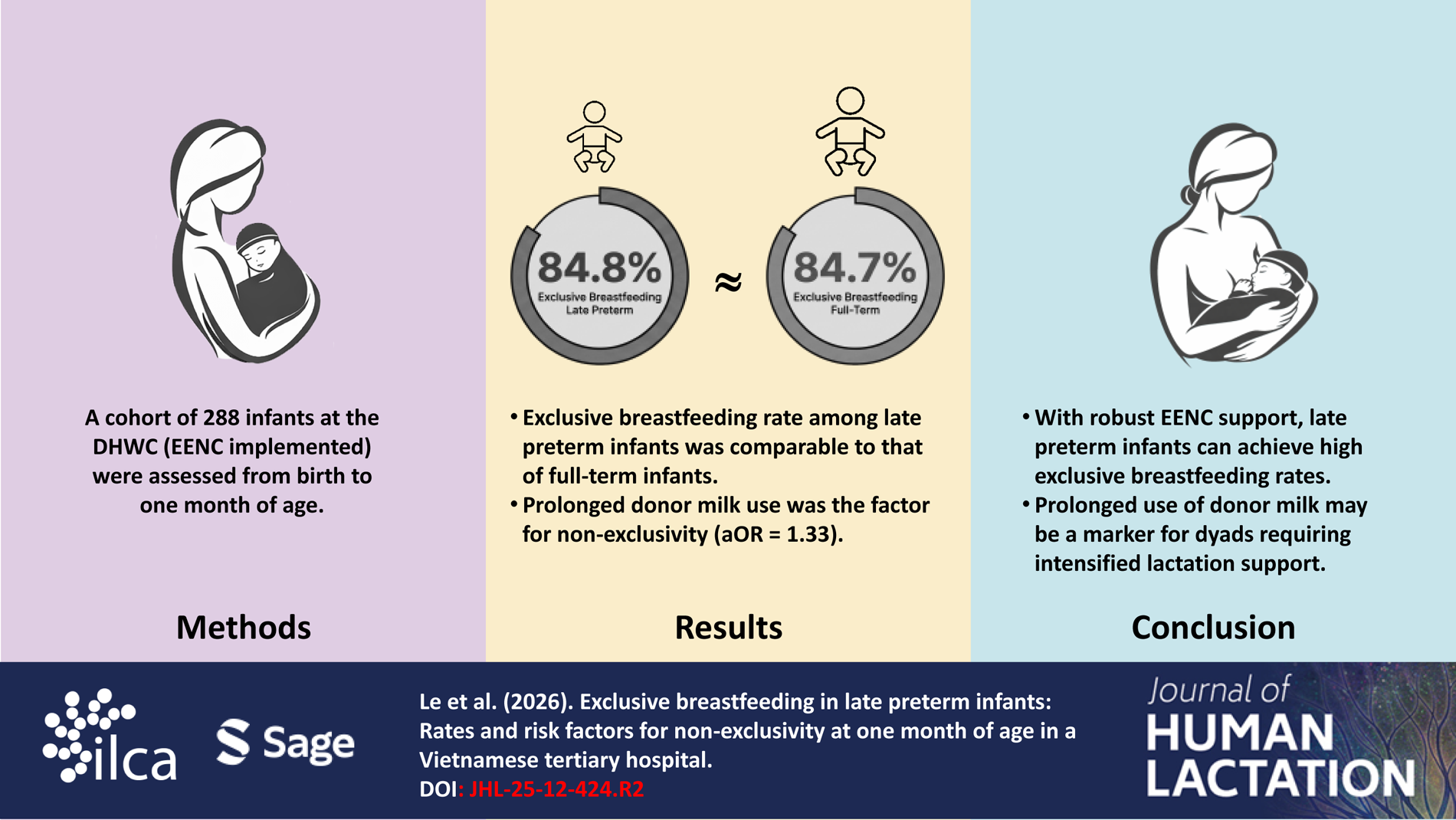
This secondary analysis used data from a randomized clinical trial conducted at Da Nang Hospital for Women and Children between August 2023 and May 2024. A total of 288 infants were included and stratified into late preterm (34-366/7 weeks) and full-term (≥ 37 weeks) groups. Feeding practices were assessed from birth to one month. Multivariable logistic regression was performed to identify independent factors associated with non-exclusive breastfeeding.
Results:
Late preterm infants more frequently required intravenous fluids and experienced longer times to achieve full enteral feeding and direct breastfeeding than term infants. They also required donor milk for a longer duration (1.73 vs. 1.19 days, p = .002). Despite these early challenges, the exclusive breastfeeding rate at one month among late preterm infants was high (84.84%) and comparable to that of full-term infants (84.65%, p = .96). In multivariable analysis, prolonged duration of donor milk use was the only independent factor for non-exclusive breastfeeding (adjusted OR = 1.33; 95% CI [1.04, 1.70]).
Conclusion:
With appropriate support, late preterm infants can achieve exclusive breastfeeding rates comparable to term infants. Prolonged use of donor milk may serve as an early marker for mother-infant dyads requiring intensified lactation support.
Get full access to this article
View all access options for this article.