




Abstract

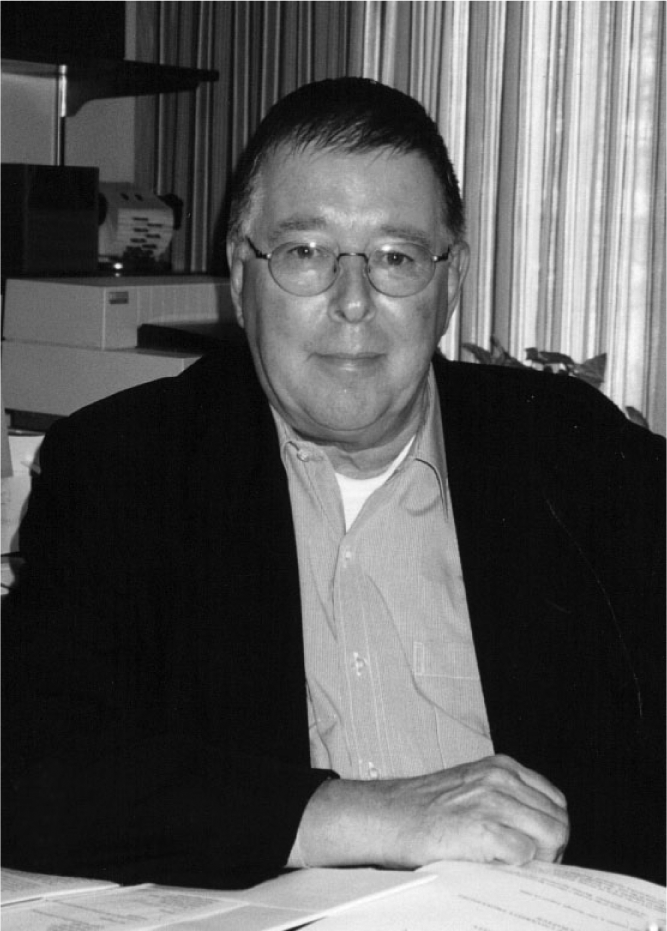
Richard Bingham died on New Year’s Eve. Some of us barely knew him, while others had the great fortune to know him very well. Nevertheless, his work forever changed the field of economic development research, and for us at Economic Development Quarterly (EDQ), he laid down the journal’s mission that we are still grappling with in every issue. As the founder and first editor of EDQ, Dick challenged the journal to bridge the gap between academic researchers and economic development practitioners, and to become the platform for research from economic development practitioners, academics, and informed citizens.
Dick held faculty positions at Marquette University (Milwaukee, WI) and at the University of Wisconsin-Milwaukee, also serving as the director of the Urban Research Center there from 1982–86. Dick joined the Levin College of Urban Affairs at Cleveland State University (Cleveland, OH) in 1988, retiring as professor emeritus from Cleveland State in 2007.
William Bowen, professor of urban studies at Cleveland State University’s Levin College of Urban Affairs and a close friend and colleague, remembers Dick’s passion for research and inquiry:
Dick devoted himself to both the study of economic development and to the creation of a vibrant intellectual environment in the Levin College. He was a consummate scholar. Before coming to CSU he wrote about critical and timely issues, from homelessness to the march of American Nazis on Skokie, Illinois, and its meaning for free speech. At CSU he took a deep dive into the then-nascent field of economic development. He and a wide variety of collaborators launched a series of edited monographs on economic development. The list of his research and writings goes on and on.
But Dick was more than a prolific scholar. He was also one of the best men I’ve ever known. Before returning to academic life he had spent several years flying airplanes in Vietnam as an officer in the U.S. Air Force. He spoke to me at length about his thoughts and feelings about the war, and his role in it. The violence profoundly affected him. But rather than responding to it with a sense of helplessness, worthlessness, dejection, anger, or depression, Dick came through it with an almost uncanny integrity and sense of his own identity. If anything, he was strengthened and liberated by it, and he carried this strength and self-mastery with him through everything he did.
The inaugural issue of EDQ was published in February 1987 after two years of intense development among Dick, Sammis White, co-founder and now senior editorial advisor to EDQ (University of Wisconsin-Milwaukee), and Gail Garfield Schwartz (a practitioner in the field of economic development). Sammis shares his recollections on the founding of the journal and Dick’s vision:
The notion of creating a journal of economic development was Dick Bingham’s. He and I talked a good deal about it, but he was the initiator back in 1985. As some may recall, the United States had experienced a double recession in 1979–1983 that had devastating effects across the Northeast and Midwest. We in Milwaukee saw first-hand just how dramatic the impact was, and we and others were struggling with how to revitalize our economies. Dick and I both thought that creating a journal that would serve both academics and practitioners was important to its success.
We would not be here if it was not for Dick, and his shadow looms large as we continue to work to fulfill his dream for EDQ.