




Abstract
Communities worldwide are increasingly introducing regulatory measures to protect independent businesses from chain stores, but the efficacy of these attempts is largely debated. Moreover, effects are likely to vary by the characteristics of the local economy, a consideration overlooked by existing studies. Using a sample of U.S. cities with unique community characteristics, the authors examine Formula Business Restrictions (FBR), a type of an American land use regulation that restricts the entry of “formula businesses.” The authors find that the passage of FBR led to a higher number and percentage of employees working in mom-and-pop businesses, which was primarily achieved by protecting existing ones from downsizing. This positive effect occurred over time with increasing magnitude. The authors also find heterogeneous effects on different sectors: FBR had strong positive effects on the retail sector, but not on the service sector. Findings suggest that chain store entry barriers can be beneficial for mom-and-pop businesses when designed carefully.
Keywords
Local governments are increasingly turning to land use regulations to create barriers against chain stores – a phenomenon that can be found in the United States (Boarnet et al., 2005; Evans-Cowley, 2006; Zhou, 2018), Canada (Webber & Hernandez, 2016), Europe (Bertrand & Kramarz, 2002; Cheshire et al., 2015; Viviano, 2008), and Southeast Asia (Mutebi, 2007). Proponents of the regulations have argued that chain store expansion inevitably forces independent stores out of business (Halebsky, 2004; Mitchell, 2007, p. 37). Such argument deserves consideration, given the empirical evidence that independent businesses are more vulnerable to competition than chain stores (Meltzer & Capperis, 2017). Nevertheless, despite the proliferation of regulatory efforts at the local level, whether and how chain store entry barriers affect independent stores (a.k.a., mom-and-pop businesses) is still largely unknown (see Bonanno & Goetz, 2012, for a survey of the existing literature).
The impact of chain store entry barriers on independent businesses is likely to vary by the characteristics of the local economy, a consideration overlooked by existing studies. For example, under certain contexts, chain stores may help small businesses because of positive spillover effects. By contrast, for a small town with an economy largely dependent on its unique amenity and community character, chain store entries could harm independent businesses by diminishing the town’s attractiveness as a tourist destination. An example of such unique community character can be found in small village-like communities located along the east and west coasts. Carmel-by-the-Sea, California (2003), for instance, describes its commercial center as dominated by ground floor retail activity operating from relatively small shops located in many of Carmel’s oldest commercial buildings. [ . . . ] Unique shops and the design qualities of this core area encourage pedestrian exploration and discovery, making the city’s downtown a strong visitor attraction. Architecture in the commercial core is diverse with many of the revival styles typical of the 1920s and 1930s on display. (p.11)
This article examines a form of American land use regulation that deters chain store entries and expansion, Formula Business Restrictions (FBR). The cities that have adopted FBR did so to protect their unique community character, on which the local economy depends. Thus, the chain store entry barrier is likely to have a greater positive effect on the mom-and-pop stores located in these cities compared with others with a more diversified local economic base. By contrast, if mom-and-pop businesses in these cities did not benefit from FBR, there is little reason to believe that entry barriers would help independent businesses located elsewhere. FBR, therefore, presents a unique opportunity to analyze how land use regulatory barriers against chain stores affect mom-and-pop businesses.
FBR restricts the entry of “formula businesses,” which are businesses offering and utilizing a standardized set of merchandise, services, and design. From the 1980s to 2016, a total of 31 U.S. communities have adopted some form of FBR. Most of these communities are tourist-dependent coastal towns, like the Cape Cod communities in Massachusetts and Sausalito in California. In adopting FBR, these communities have specifically relied on the argument that the regulation will help to preserve their unique character. Illustratively, residents of Provincetown in Cape Cod, Massachusetts have rallied to protect their “New England charm” when they advocated for the adoption of FBR. Although it is difficult to put down in words what constitutes a unique community character, it can be broadly understood as a pedestrian-friendly commercial center lined with small vernacular—many historic—buildings with ground-floor retail, the majority of which are occupied by mom-and-pop businesses. Thus, the case of communities with FBR presents an opportunity to test how chain store entry barriers affect mom-and-pop businesses when the local economy is largely dependent on maintaining a strong local character.
Using a difference-in-differences (DID) approach with coarsened exact matching (CEM), we find that the passage of FBR led to a higher number of employees working in mom-and-pop businesses. The mom-and-pop employment share as a percentage of total employment increased after passing FBR. We also find that the positive effect increases over time, indicating that the effect might not be observable shortly after cities enact FBR, but will occur over time.
The impact of entry regulation is likely to vary across industries due to the differences in demand elasticities, competition, and consumer behavior. For example, in the absence of the regulation, mom-and-pop retailers would be competing with chain stores that offer much lower prices due to the recent productivity gain. In contrast, services (such as food and hospitality services) must be locally produced by local labor, and thus are more resistant to cost competition. This means that, relative to the mom-and-pop businesses in the service sector, those in the retail sector will likely benefit more from entry barriers against chain stores. Consistent with this expectation, we find that FBR had strong positive effects on retail mom-and-pop stores, but not on the service sector.
Finally, we identify the specific mechanism through which FBR has helped mom-and-pop businesses. We find that the passage of FBR prevented existing mom-and-pop stores from downsizing. Together, our results suggest that chain store entry barriers are beneficial for independent businesses located in small towns with an economy dependent on its unique local character.
Literature Review
Land Use Regulation and Community Character
For American local governments, land use regulation has been one of the oldest and most powerful tools to foster and protect community character (Juergensmeyer et al., 2018). Therefore, zoning ordinances enacted to control community character have largely withstood legal challenges in courts. For instance, in Berman v. Parker (1954), the U.S. Supreme Court acknowledged that the concept of public welfare, for which localities can enact laws to promote, includes values that are “spiritual as well as physical, aesthetic as well as monetary” and that local legislative branches are empowered to “determine that the community should be beautiful as well as healthy.”
Regulatory attempts to curb chain store expansion is one of the latest innovations in land use regulations to protect community character. Planning Advisory Service Report Number 537, a widely distributed professional publication for planners, focused specifically on the planning, design, and regulatory challenges associated with big box stores (Evans-Cowley, 2006). Reflecting on the profession’s long-standing concern with community character, the report pointed out that one of the primary planning problems created by big box stores is their “aesthetic impact on a community” (Evans-Cowley, 2006, p. 15). The existing menu of regulatory strategies offered to mitigate this impact included strict regulatory standards enforced through zoning, such as square footage limitations and FBR, and a softer, advisory design-oriented approach, such as heightened design review requirements or signage and landscaping standards.
Community Character, Local Economic Development, and Mom-and-Pop Businesses
Small American towns often strive to protect and promote a unique “sense of place” to attract residents, visitors, and businesses (Birch, 2009; Robertson, 1995, 2004). Filion et al. (2004), for instance, conducted a survey of planning professionals and academics and concluded that the retention and enhancement of distinct physical characteristics was an important element for creating a successful and vibrant downtown. Similarly, preservation and adaptive reuse of historic buildings is considered to be one of the most important steps toward successful downtown revitalization (Dane 1997; Frieden & Sagalyn, 1989; Ryberg-Webster, 2013; The National Main Street Center, 2009; Zukin, 1982). Although there is no universal understanding of what constitutes a unique character, academics and practitioners have frequently juxtaposed downtowns against suburbs to highlight the older structures, smaller scale of buildings and streets, and pedestrian-friendly streetscapes as features that distinguish downtowns from the homogeneity found in suburban communities and shopping centers.
There thus is little disagreement that establishing a unique community character is good for the local economy, but regulatory attempts to curb chain store expansion to protect unique community character is often met with fierce debate (Li, 2009). This is because while entry barriers can help the local economy by preserving unique local character, chain stores, on the other hand, can create jobs and increase the local tax base. Moreover, chain stores could also have positive spillover effects on proximate businesses.
Mom-and-pop businesses, in particular, are uniquely affected by chain store entry barriers because they are the vital components of, and dependent on, maintaining a unique sense of place. Findings by Sciara et al. (2018) show that mom-and-pop businesses benefit from unique downtown characteristics, such as walkable streets, an eclectic mix of locally owned businesses, and buildings with historic character. Others have also argued that protecting mom-and-pop businesses strengthens the local economy because more businesses, shopping patrons, and tourists will be attracted because of the unique sense of place (Pratt Center for Community Development, 2009; Salkin, 2008). Nevertheless, quantitative research from the economics literature, as we show below, has found conflicting evidence regarding how chain stores affect mom-and-pop businesses.
The Impact of Big Box Stores on Independent Businesses
Empirical studies in the economics literature have predominantly focused on how big box stores (such as a Walmart), as opposed to formula businesses (such as a McDonalds), affect small businesses. Moreover, existing studies have yet to consider how the impact of big box stores might vary by the character of the local community. This study aims to contribute to the existing literature by analyzing an entry barrier that regulates chain stores regardless of their size or physical format and industries beyond the retail sector. Moreover, we focus on small communities that heavily depend on unique community character to attract businesses, visitors, and shopping patrons. We anticipate that chain store entry barrier is likely to be beneficial for such communities, because by keeping chain stores away they can protect the unique character and thus continue to attract customers to the local mom-and-pop stores.
Although the focus of this study diverges from the big box literature, we here review the literature as it offers valuable theoretical and methodological guidance for our study. Existing empirical research on the impact of big box store entries has been highly inconclusive (Hicks, 2007). On the one hand, scholars argue that the entry of big box stores negatively affects employment and smaller establishments (Ficano, 2013; Foster et al., 2006; Paruchuri et al., 2009). In sharp contrast, some scholars argue that Walmart’s growth has had no statistically significant long-run impact on small businesses (e.g., Hicks, 2009; Sobel & Dean, 2008). Others report mixed results, demonstrating that the impact of a big box entry depends on the proximity, industry, and scale of the existing businesses (Basker, 2003; Haltiwanger et al., 2010; Hicks et al., 2012; Merriman et al., 2012; Sciara et al., 2018).
A smaller, yet robust, group of papers examined the impacts of entry barriers against big box stores and largely agreed that local businesses did not benefit from entry barriers (Bertrand & Kramarz, 2002; Sadun, 2015; Viviano, 2008, Zhou, 2018). 1 However, a closer reading of the studies revealed that the details of the regulations matter. For instance, Sadun (2015) reported that the United Kingdom entry barrier harmed local businesses, but this was because the regulation motivated large retail chains to create smaller and more centrally located formats, which competed directly with independent businesses and accelerated their decline. We believe that FBR is likely to have a different effect, as FBR deters chain store entries in central locations and regulates stores of any size. These important differences in the details of the regulation would likely yield different outcomes.
Formula Business Restrictions Ordinance
FBR is a local zoning ordinance that prohibits or discourages entries of formula businesses, defined as businesses that offer a standardized array of services and/or merchandise, and utilize standardized features such as décors, architecture, uniform, and business methods. Examples of a formula business can range from big box stores like Walmart or Target, to smaller franchise locations of McDonalds or Dunkin Donuts. The stated purposes of the ordinances are as follows: (a) to protect unique community character and (b) to protect independent mom-and-pop businesses. For instance, when the city council of Jersey City, New Jersey adopted FBR in 2015, the council noted that “[formula businesses] detract from established community character and instill a sense of sameness to our commercial areas causing neighborhoods to feel less unique.” The council further stated that “downtown Jersey City [has] a great variety of small, unique local businesses,” and that “this pattern of retail development [should] remain to preserve downtown’s distinctive sense of place and unique neighborhood character” (Jersey City, N.J. Ordinance § 15-052, adopted May 13, 2015, repealed 2019). In Cape Cod, Massachusetts, the closing of a family-owned T-shirt shop triggered a community activist to petition for a FBR ordinance. She rallied support around the argument that an influx of chain outlets would destroy the town’s charm as a small New England town, eventually pushing out local, independent businesses. The ordinance was adopted by the residents at an annual town meeting in 2010. 2
The first city to adopt a FBR ordinance was Carmel-by-the-Sea, California in the mid-1980s. Since then, more than 30 different municipalities have adopted FBR, the majority of which are located along the east and the west coasts, concentrated in California and Massachusetts. Figure 1 shows the locations of these municipalities. Table 1 shows when the ordinances were adopted and brief descriptions of each municipality’s ordinance. 3 Most of the cities are small towns with an average population of 8,226, according to the 2000 Census (Table 1). The median household income was $10,618 (in 2000 $), and from 1990 to 2000, the average annual growth rates of the population and household income were 1.1% and 0.9%, respectively.
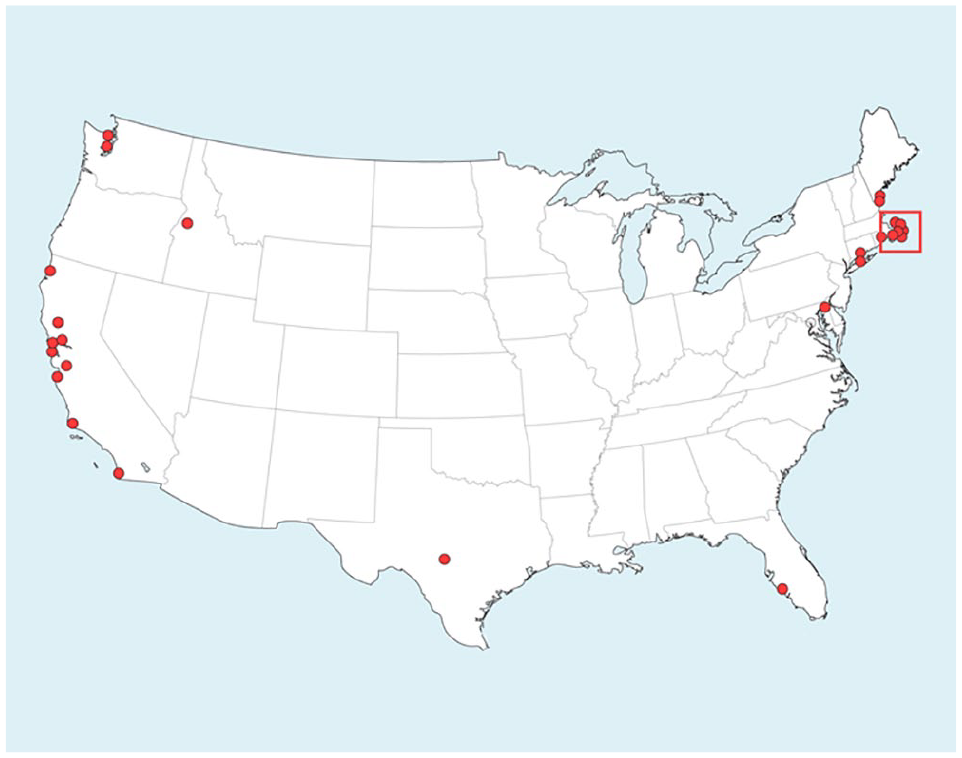
Cities that have adopted FBR.
List of Cities that Passed the FBR Regulation.

Note. This table summarizes the list of cities that passed the formula business restrictions. Population data are from the Decennial Census prior to the year passed. FBR = Formula Business Restrictions.
We do not include these cities because the FBR regulation was passed prior to 1998 or after 2015. bWe do not include the city of San Francisco and Mendocino County because they do not have the homogenous, small-town-like character that define all other municipalities. Additionally, the geographic applicability of FBR in these two jurisdictions are highly scattered and sporadic, making them unsuitable for testing the citywide effect of FBR.
Although the definition of formula business is similar across towns, ordinances vary in terms of (a) geographic scope, (b) target industries, and (c) degree of restrictiveness. For instance, few cities would outright prohibit formula businesses of all types citywide. Most cities regulated particular industry groups in select zoning districts (e.g., restricting food and beverage [F&B] formula businesses in the downtown commercial zone). We find that most localities targeted the retail and service sector, with many focusing on the F&B and hotel and lodging subsectors. We account for the differing stringency of the regulations in our analysis by developing and incorporating a regulatory restrictiveness index, as explained below.
FBR Restrictiveness Index
We developed an index to account for the variations in the FBR ordinances. Our survey revealed that all cities were regulating one or more of the following three industry groups: retail, F&B, and hotel and lodging businesses. A maximum point of 10 was allocated for each of the three industry categories, adding up to 30 points in total. Then, within each category, we had five zoning district types: downtown commercial, neighborhood commercial, general commercial, shopping center, and industrial districts. 4 For each district, we allocated 2 points if formula businesses were outright prohibited, 1 point if they were subject to special/conditional use permits, and 0 point if they were unregulated.
To arrive at values ranging from 0 to 1, we divided each city’s score with their maximum achievable score, which was adjusted for the cities that did not have all zoning district types. Restrictiveness ranged from the lowest at 0.17 in Benicia, California, where only F&B businesses were subject to special permits in downtown commercial and neighborhood commercial districts, to 1 in Carmel-by-the-Sea, California, where all three industry groups were prohibited in all locations. Each city’s FBR ordinance is described in Table 1 along with their respective restrictiveness index.
Data and Sample Construction
To examine the impact of introducing FBR on mom-and-pop stores, we compare the cities that have adopted FBR (treated) with those that are located within the same state but have not adopted FBR (control). We constructed our control group based on a matching strategy, further elaborated in the Empirical Strategy section below, to select cities that are otherwise highly similar to the treated group. We compare the number of employees working at mom-and-pop stores and the number of mom-and-pop establishments citywide. We chose to analyze the establishments citywide for two reasons. First, as explained above, the boundaries within which FBR applies to are neither homogenous, contiguous, nor clear; thus, it is impossible to delineate definite boundaries of the treated area. Second, the treatment effect of FBR may well extend beyond the applicable boundaries. When communities adopt FBR, it sends out a signal to chain stores that they will face an uphill battle even if they want to locate outside of the FBR area. Therefore, mom-and-pop businesses located outside of Main Street may as well benefit from the city’s FBR ordinance.
Our data set includes annual establishment-level observations of all U.S. businesses between 1997 and 2016. Observations include establishment ID, company name, address, the Standard Industrial Classification (SIC) codes, actual employee size, estimated sales volume, and latitude and longitude information, among others. 5 This data set comes from Infogroup, a private company that collects and manages the database to provide sales and marketing solutions. 6 Each year contains about 14 million records compiled from Yellow Page directories, new business filings, daily utility connections, press releases, corporate websites, annual reports, and user feedback. The company states that the location-specific employment data are available for 98% of businesses.
We start with a panel data set that consists of more than 274 million establishment-year observations. These establishment-level observations are linked across years using unique establishment IDs. Next, we restrict our sample to all establishments within the states where cities passed FBR between 1999 and 2014. Following Millar et al. (2016), we establish a 2-year buffer to allow for a reasonable construction lag. 7 We then aggregate these establishment-year observations to city-year level.
Mom-and-pop establishments are defined as single-unit establishments (i.e., there is only one unique store), following Dinlersoz (2004). 8 Under this definition, local chain stores are not identified as mom-and-pop stores. We believe this simple categorization is sufficient, as it is rare for mom-and-pop businesses to expand their operations beyond a single location. The very defining characteristics and value of mom-and-pop stores (i.e., their uniqueness) diminish steeply with increases in the number of establishments. As FBR predominantly targets the retail (SIC = 52-59) and service (SIC = 70-89) sectors, with some focusing on the F&B and hotel and lodging subsectors, we examine these subsectors in further detail.
The median value of number of employees per establishment of our sample was 1, with the 75th percentile value of 4. This range confirms that the majority of the establishments had a very small number of employees. The mean value was 6.94, indicating that our sample also includes mom-and-pop businesses that are larger in size. However, we believe that by identifying businesses by unique business names, we were able to identify businesses that are truly independently owned, some of which could be large, as opposed to including franchises that may be listed as individually owned but operating as a larger chain. These statistics are consistent with prior studies such as Hicks et al., (2012), Sadun (2015, and Schuetz et al. (2012).
The city-level demographic and economic characteristics are collected from the Decennial Census of 1990, 2000, and 2010 and the American Community Survey. 9 All incomes are converted to constant 2000-dollar values. We carefully checked and deleted cities if their boundaries changed between 1990 and 2010. 10 After merging the census data with the Infogroup database, our final sample includes 76,727 city-year observations in 10 states from 1997 to 2016. Variable definitions and data sources are summarized in Table 2.
Variable Definitions.

Note. This table summarizes the key variables, data sources, and definitions.
Empirical Strategy
Difference-in-Differences Approach
To examine the impact of FBR on mom-pop businesses, we use a DID approach. The regression equation is

where
Our estimates of interest is
Coarsened Exact Matching
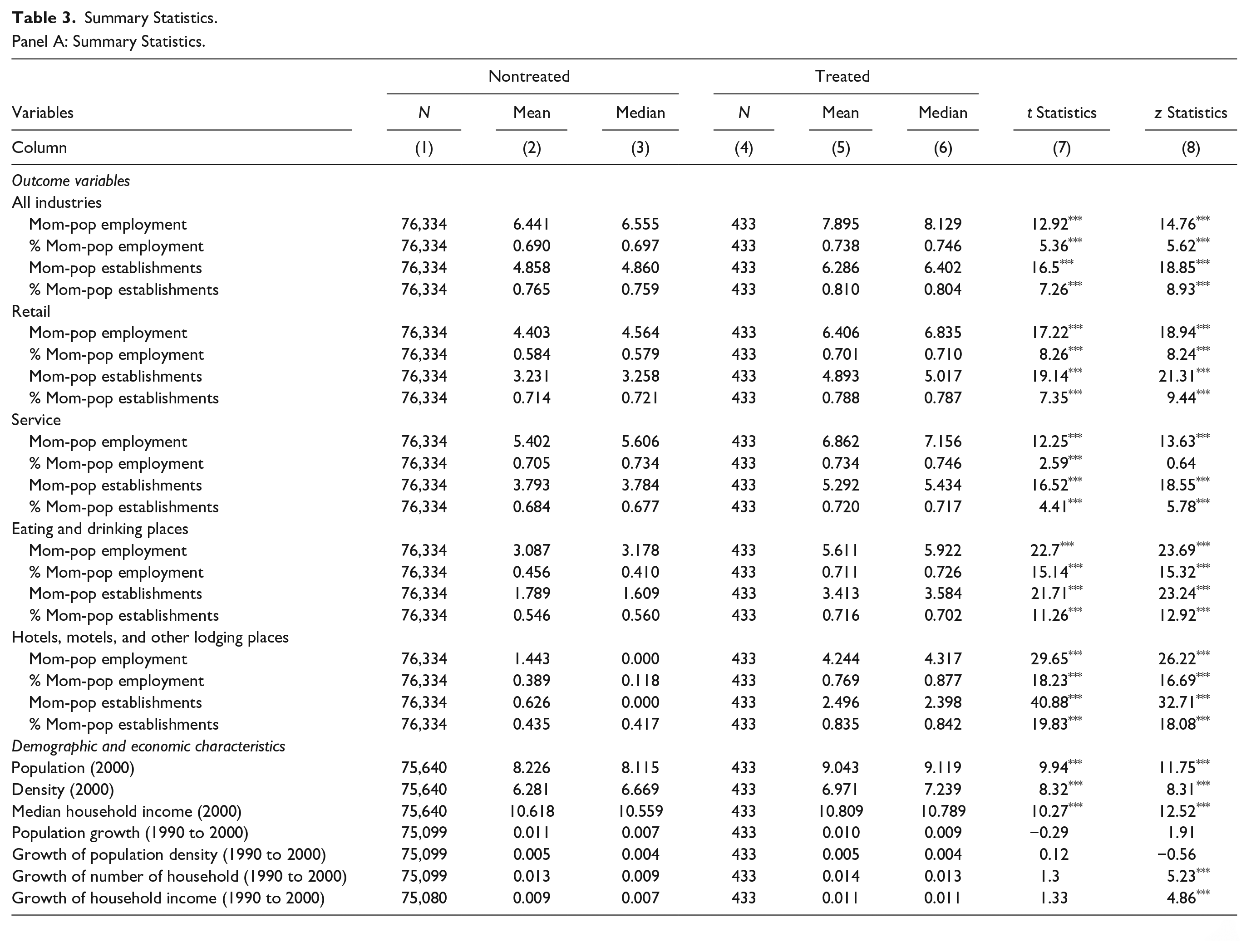
One of the most important concerns with a DID model is the potential violation of the parallel trend assumption. When we compare the cities that passed FBR (the treatment group) with otherwise similar cities that did not pass FBR (the control group), it is critical that they are similar prior to the passage of the regulation. In Panel A of Table 3, we compare city-year observations in the treated group with nontreated in the same state. We find large differences between the treated and the nontreated: The treated group has more mom-pop businesses and employment, in terms of both absolute amount and percentage. The mom-pop businesses also play a more important role in the treated group: Mom-pop businesses make up 73.8% (69%) of the total employment and 81% (76.5%) of all the establishments.
Summary Statistics.
Panel A: Summary Statistics.
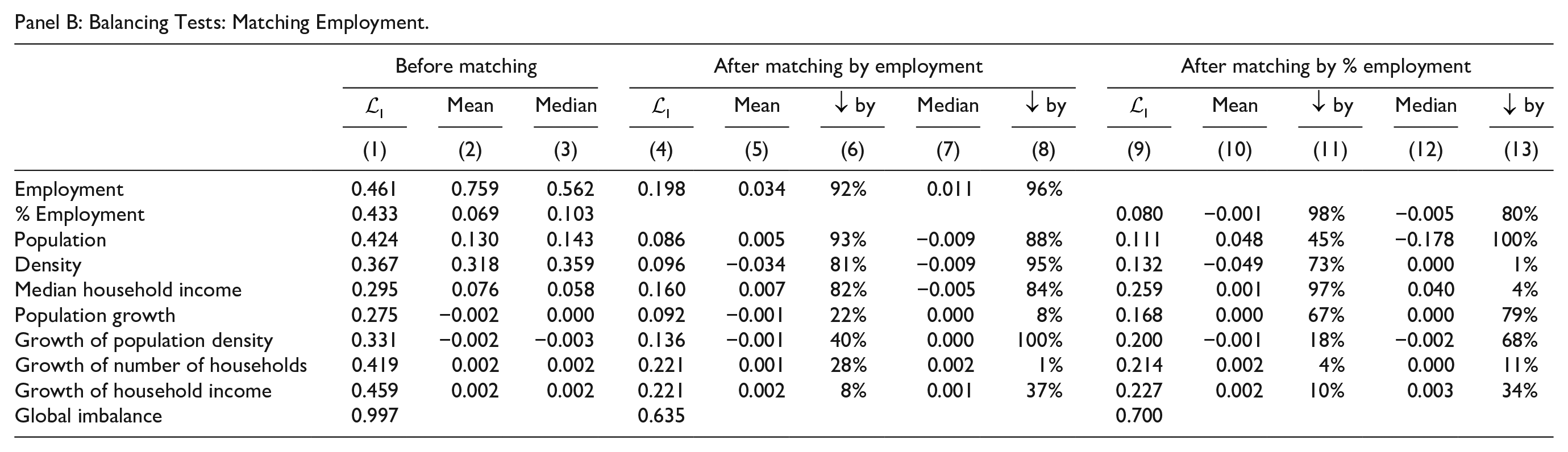
Panel B: Balancing Tests: Matching Employment.
Panel C: Balancing Tests: Matching Establishment.
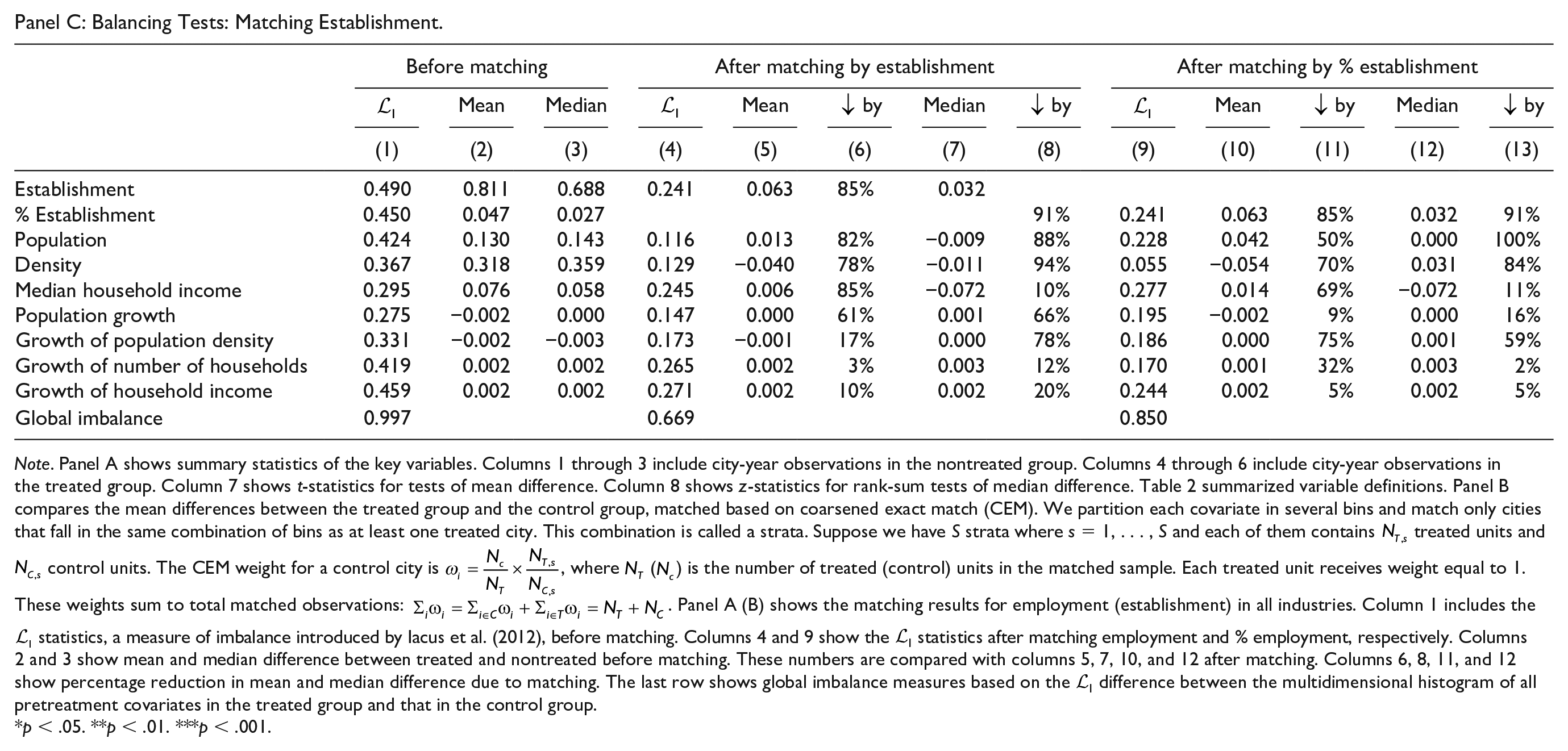
Note. Panel A shows summary statistics of the key variables. Columns 1 through 3 include city-year observations in the nontreated group. Columns 4 through 6 include city-year observations in the treated group. Column 7 shows t-statistics for tests of mean difference. Column 8 shows z-statistics for rank-sum tests of median difference. Table 2 summarized variable definitions. Panel B compares the mean differences between the treated group and the control group, matched based on coarsened exact match (CEM). We partition each covariate in several bins and match only cities that fall in the same combination of bins as at least one treated city. This combination is called a strata. Suppose we have S strata where s = 1, . . . , S and each of them contains
p < .05. **p < .01. ***p < .001.
Moreover, we found a variation between the retail and service sectors’ pretreatment trends. For example, the difference in % Mom-pop Employment is large in the retail industry, 70.1% for treated versus 58.4% for nontreated. In contrast, the difference is much smaller in the service industry, 74.6% versus 70.5%. These large differences suggest that mom-pop businesses play a much more important role in the treated cities’ retail industry, which in turn indicate that FBR might be more effective for the retail industry.
The comparison of demographic and economic characteristics shows that the treated cities have higher population, income, and rate of growth in number of households and household income, suggesting that high-amenity cities have grown faster than low-amenity cities (Glaeser et al., 2001) and that high-income communities prefer small and locally owned business (Zukin et al., 2009).
Given the differences between the treated and untreated group, we perform CEM to construct the control group. 11 The CEM is a nonparametric method to control for the confounding effects of pretreatment control variables. Similar to propensity score matching (PSM), CEM reduces the asymmetry between the treated and control groups, making the latter similar on both the outcome variables prior to the treatment and other covariates that predict which cities received the treatment. Scholars have proven that CEM is a stronger matching method than PSM, minimizing the endogeneity issue (Iacus et al., 2012; King & Nielsen, 2019).
We use the CEM developed by Iacus et al. (2012). See method descriptions in Table 3. Our covariates used for matching include demographic and economic characteristics relevant to local employment and businesses. Most important, we also include the outcome variable 2 years prior to the regulation. This means that we allow the set of covariates to vary by the outcome variables. The use of both demographic and economic characteristics and the lagged outcome variables is to ensure that our treated cities and control cities follow similar paths prior to the adoption of the regulation.
We first match cities within the same state 2 years prior to the regulation. We require each city to have at least two observations. Because decennial census is only available every 10 years, we construct covariates based on the previously available census. For example, if a city passed the regulation in 1996 to 2000 (2000-2010), we take level variables (e.g., population, median household income) from the 1990 census and the rate of growth (e.g., population growth) between 1990 and 2000 (2000-2010).
The improved similarities between the treated and the control group after matching is shown in Panel B of Table 3. As the pretreatment covariates differ across model specifications and the CEM drops treated and control units outside the common empirical support of both groups, the control groups vary depending on the outcome variable. The effectiveness of CEM is evaluated by the
We observe a large reduction in the
Results
Main Results
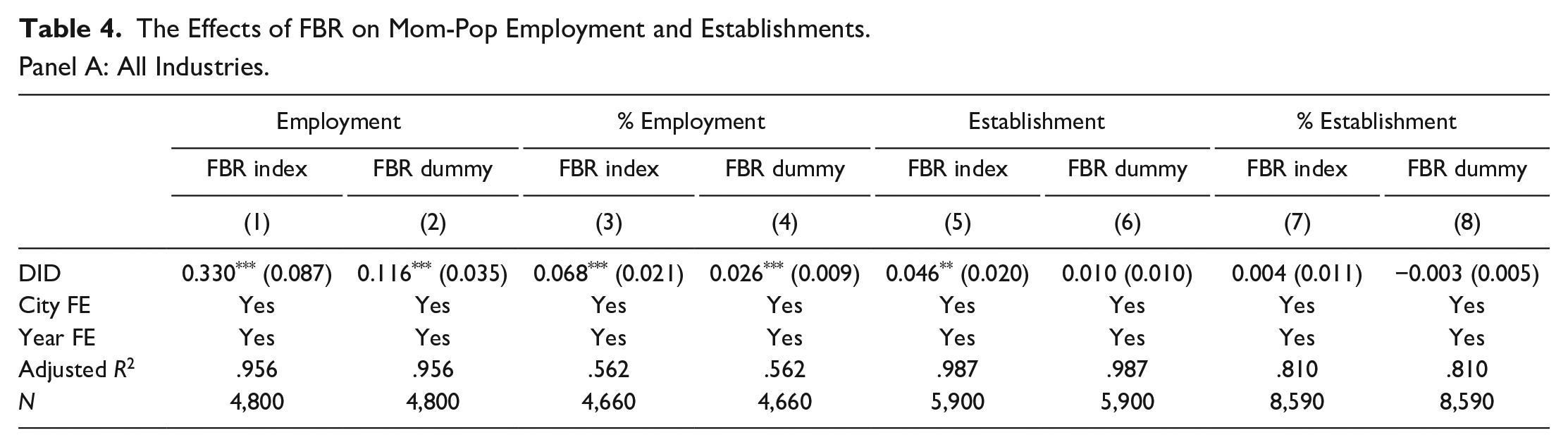
Panel A of Table 4 shows the results from the DID analyses. Overall, the results suggest that the number of employees working in mom-and-pop businesses increased after the adoption of FBR. The percentage of employees working in mom-and-pop businesses also increased after FBR adoption. The DID estimates on Employment and % Employment are positive and statistically significant in all models.
The Effects of FBR on Mom-Pop Employment and Establishments.
Panel A: All Industries.
Panel B: The Retail Industry.
Panel C: The Service Industry.
Panel D: Eating and Drinking Places.
Panel E: Hotels, Motels, and Other Lodging Places.
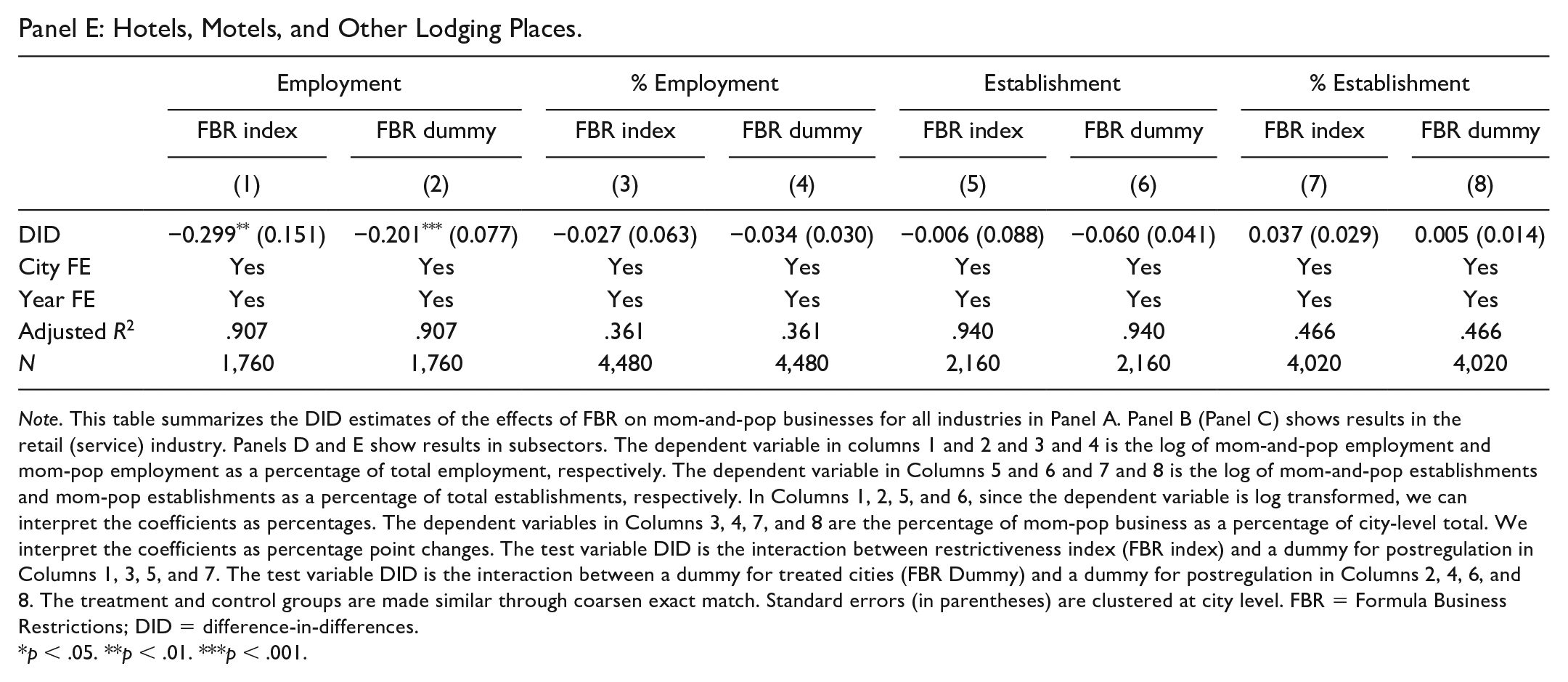
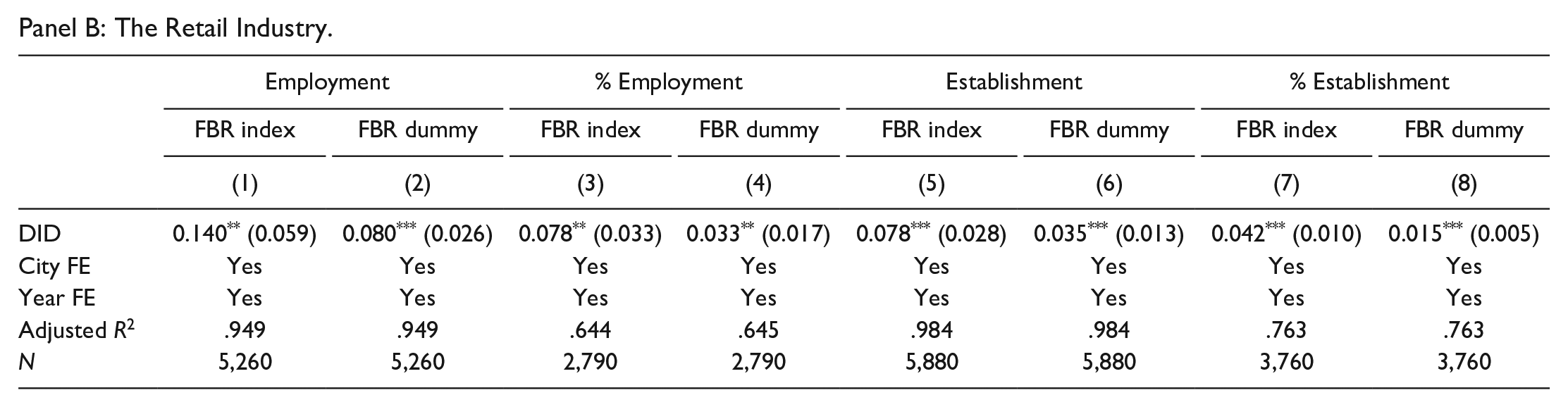
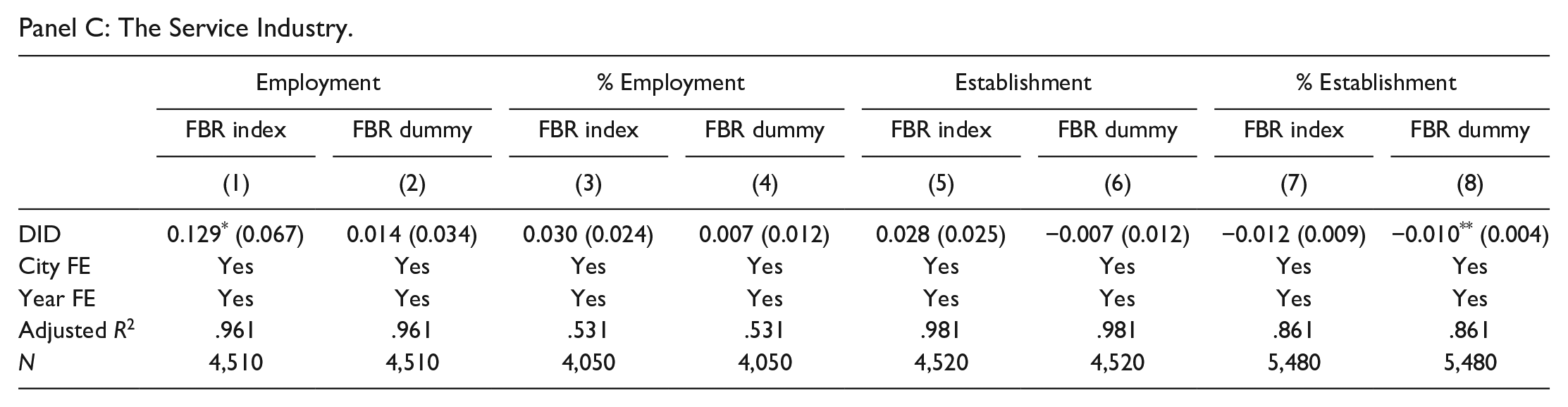
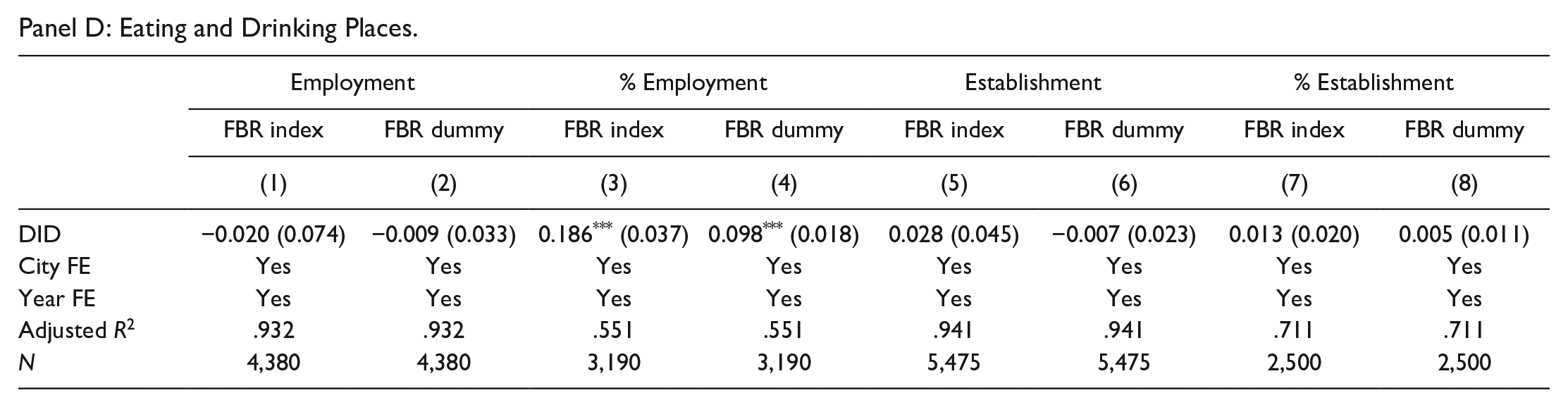
Note. This table summarizes the DID estimates of the effects of FBR on mom-and-pop businesses for all industries in Panel A. Panel B (Panel C) shows results in the retail (service) industry. Panels D and E show results in subsectors. The dependent variable in columns 1 and 2 and 3 and 4 is the log of mom-and-pop employment and mom-pop employment as a percentage of total employment, respectively. The dependent variable in Columns 5 and 6 and 7 and 8 is the log of mom-and-pop establishments and mom-pop establishments as a percentage of total establishments, respectively. In Columns 1, 2, 5, and 6, since the dependent variable is log transformed, we can interpret the coefficients as percentages. The dependent variables in Columns 3, 4, 7, and 8 are the percentage of mom-pop business as a percentage of city-level total. We interpret the coefficients as percentage point changes. The test variable DID is the interaction between restrictiveness index (FBR index) and a dummy for postregulation in Columns 1, 3, 5, and 7. The test variable DID is the interaction between a dummy for treated cities (FBR Dummy) and a dummy for postregulation in Columns 2, 4, 6, and 8. The treatment and control groups are made similar through coarsen exact match. Standard errors (in parentheses) are clustered at city level. FBR = Formula Business Restrictions; DID = difference-in-differences.
p < .05. **p < .01. ***p < .001.
Columns 1, 3, 5, and 7 present results using the FBR index, which considers the varying stringency of the regulations. For the dependent variable in logarithms, the increased effect from city i to city j, measured by
While the estimates using the FBR dummy are smaller than those using the FBR index, the two models give us consistent results. Illustratively, results suggest that the FBR presence leads to an 11.6% increase in the number of employees working at mom-and-pop establishments (column 2). Correspondingly, the employment share increases by 2.6 percentage points (column 4).
We find weaker effects on establishment in Columns 5 through 8. Only the coefficient estimates of DID based on the FBR index is statistically significant (column 5).
We also consider an alternative technique based on relative time models suggested by Angrist and Pischke (2009). Figure 2 shows the relative time graphs for DID estimated coefficients, which gives the differences in Employment and % Employment between treated and control cities. The omitted category in relative time model regressions is the year of FBR adoption. The graphs confirm that the coefficients do not exhibit a statistically significant trend prior to the passage of FBR. However, we start observing a significant and persistently positive trend starting 2 years after the passage of the ordinance. Moreover, the ordinance’s positive impact on mom-and-pop businesses increases over time, suggesting the positive effect could take time to materialize and would likely to magnify over time.
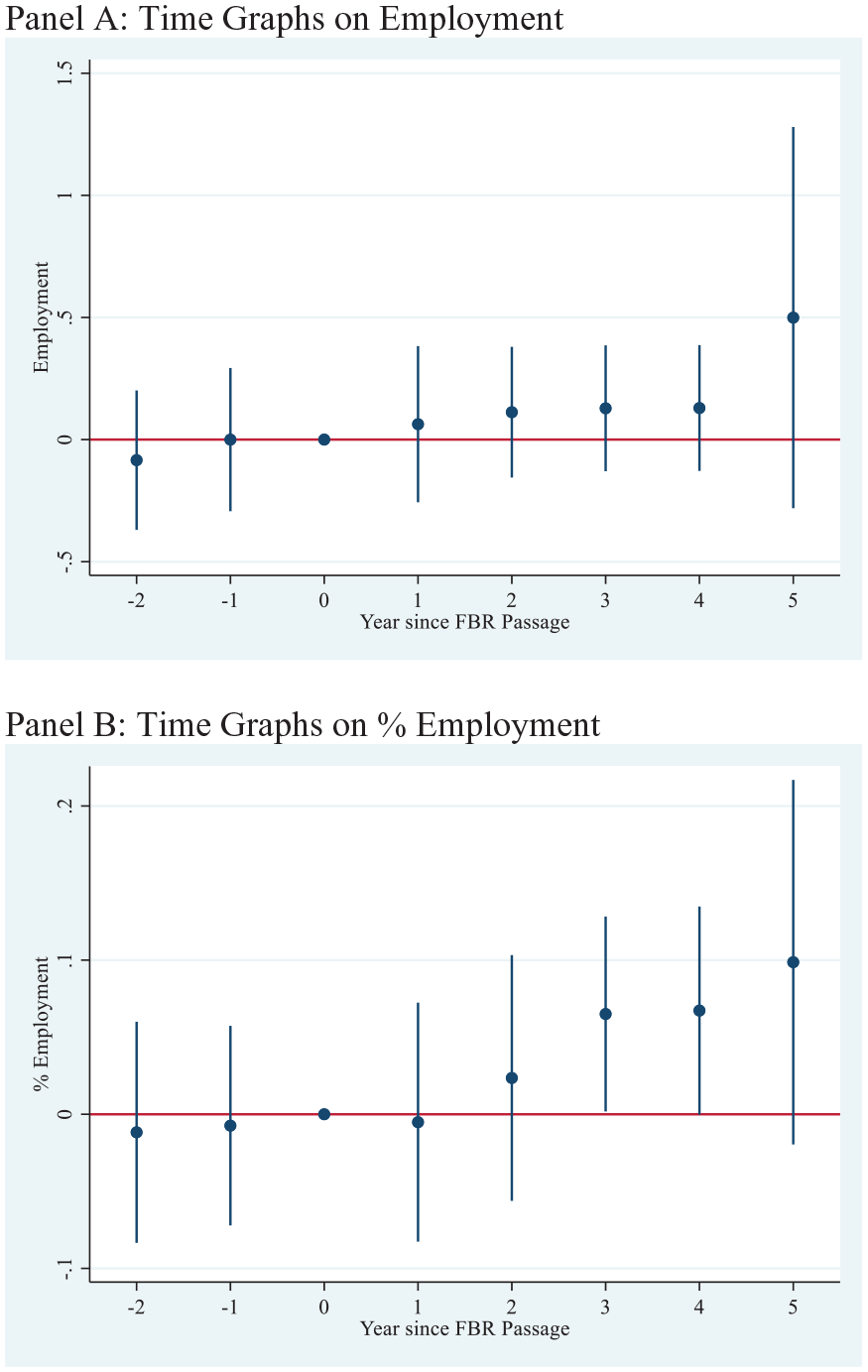
Relative time graphs (DID estimates with 95% confidence intervals).
Sector-Specific Results
Most FBR ordinances targeted two industry groups: retail and services (more specifically, F&B and hotel and lodging within the service sector). We thus examine sector-specific effects.
Panel B of Table 4 shows retail-specific results. We find positive and statistically significant results throughout all model specifications, indicating that the adoption of FBR had positive effects on the mom-and-pop businesses in the retail sector. Cities that passed FBR experienced an 8% (3.5%) increase in mom-and-pop employment (establishments) in the retail sector than matched cities without the ordinance (columns 2 and 6). The passage of FBR increased the proportion of mom-and-pop employment (establishments) by 3 (1.5) percentage points (columns 4 and 8). Using the restrictiveness index, we observe an increase of 6 (= 0.078 * [0.89 − 0.17] * 100%) and 3 (= 0.042 * [0.89 − 0.17] * 100%) percentage points in retail employment and establishments, respectively.
In contrast, the results in Panel C suggest that FBR did not have much impact on the service sector. The DID coefficients using the FBR index is positive but only marginally significant in the model of Employment. We also find a negative, albeit weak, effect on % Establishment.
The differences between the retail and service industry might be explained by the differences in competition. The retail sector has experienced substantial productivity gain in terms of online sales, and economies of scale in procurement, processing, and logistics (see, e.g., Basker et al., 2012). Therefore, in the absence of the regulation, mom-and-pop retailers would be competing with chain stores that offer much lower prices. In contrast, services (such as food and hospitality services) must be produced by local labor and thus are more resistant to cost competition. Furthermore, relative to the service sector, the retail sector is more vulnerable to online competition (Hortaçsu & Syverson, 2015). As most retail chains have also set up online shopping platforms, chain stores may have an additional competitive advantage over independent businesses through price coordination, lower consumer search costs, and greater product selection and information sharing (e.g., Brynjolfsson et al., 2003). Together, these factors render chain stores a greater threat to retail mom-and-pop stores, which likely led to our finding that FBR targeting the retail sector is more effective.
To better understand the result for the service sector, we further narrow our analysis to two subsectors within service: Eating and Drinking Places (F&B) and Hotels, Motels, and Other Lodging Places. The results in Panels D and E suggest that the passage of FBR has led to higher mom-and-pop employment in F&B but harmed that in lodging. For example, although the passage of FBR did not affect the absolute employment in F&B, it led to a 9.8 percentage point increase in the proportion of mom-and-pop establishments. In contrast, the passage of FBR harmed employment in lodging. This negative effect in the lodging subsector may be explained by the differences in consumer behavior: The demand for F&B is relatively inelastic compared with the demand for lodging services. For instance, the consumption of F&B is highly localized and bounded by travel distance. In contrast, consumers may be willing to drive to a nearby town and stay in a prebooked brand-name chain hotel with which they have joined a loyalty program.
Decomposition
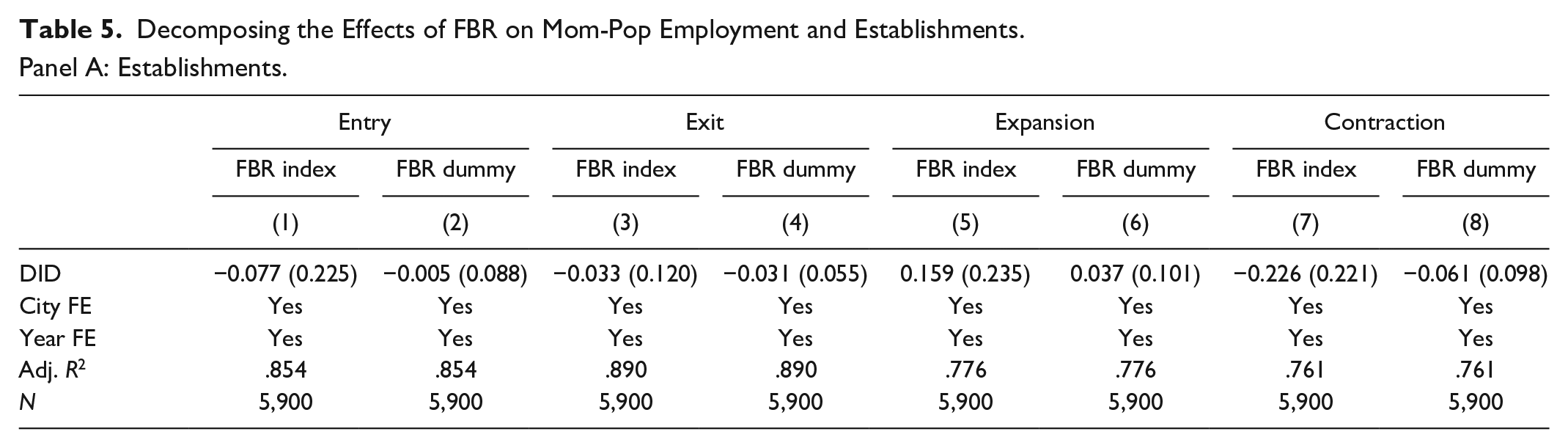
We next identify the specific mechanisms through which FBR affects mom-and-pop businesses. To do so, we follow Davis and Haltiwanger (1992) and analyze four mechanisms of change in mom-and-pop establishments and employment: (a) entry of new establishments, (b) exit of existing establishments, (c) incumbent expansion, and (d) incumbent contraction. We track the establishment-level changes using unique establishment IDs. Consistent with our previous analyses, we analyze the changes in the number and ratio of mom-and-pop employment and establishment. The control groups are identified using the same CEM methodology used in our previous analyses. The set of covariates shown in Table 3 (the outcome variables and the demographic and economic characteristics) were used to identify matches.
Results in Table 5 suggest that when cities adopt FBR, the employment of existing mom-and-pop businesses are 30% less likely to downsize (column 8 of Panel B). This result is explicable by the findings of Foster et al. (2006), who reported a large productivity advantage of chain stores over independent businesses. Because FBR restrains the entry of new chain stores, incumbent mom-and-pop businesses are protected from such competition and are thus less likely to downsize. However, Foster et al. (2006) also found that the large productivity gains by national chains was associated with displacement of independent businesses. We do not find any effects on exit, which may be due to the fact that our observation period is relatively short.
Decomposing the Effects of FBR on Mom-Pop Employment and Establishments.
Panel A: Establishments.
Panel B: Employment.
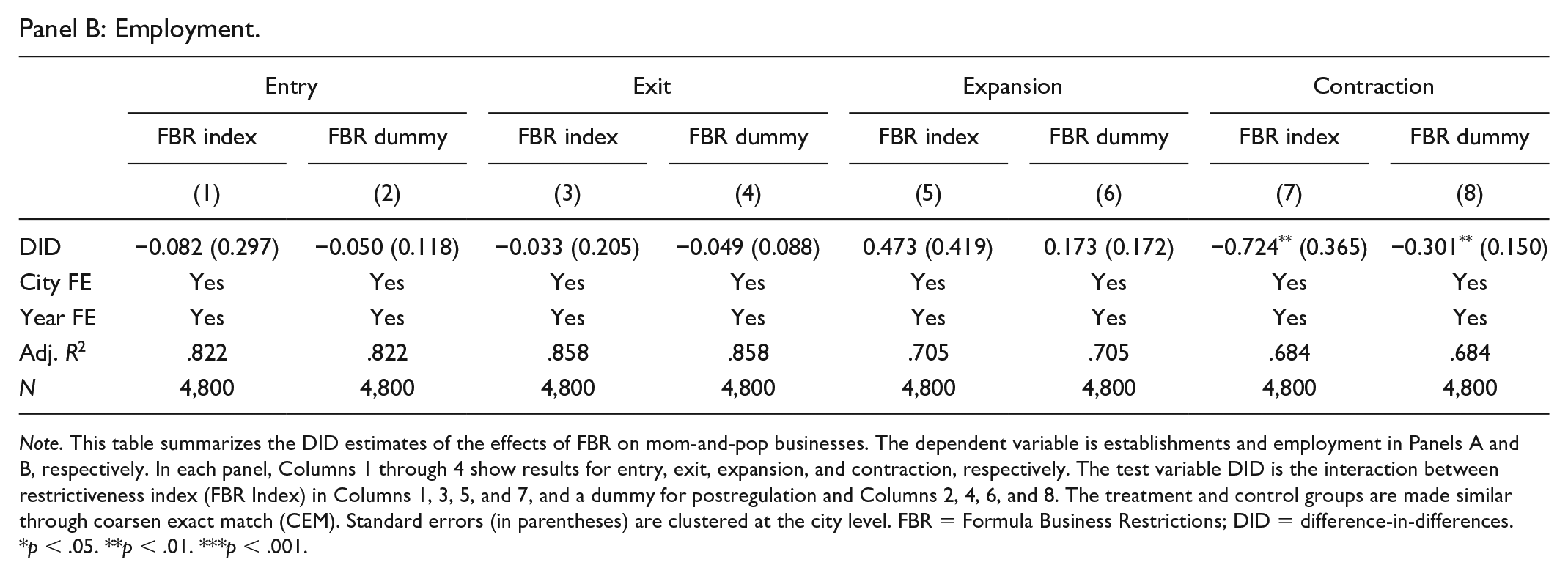
Note. This table summarizes the DID estimates of the effects of FBR on mom-and-pop businesses. The dependent variable is establishments and employment in Panels A and B, respectively. In each panel, Columns 1 through 4 show results for entry, exit, expansion, and contraction, respectively. The test variable DID is the interaction between restrictiveness index (FBR Index) in Columns 1, 3, 5, and 7, and a dummy for postregulation and Columns 2, 4, 6, and 8. The treatment and control groups are made similar through coarsen exact match (CEM). Standard errors (in parentheses) are clustered at the city level. FBR = Formula Business Restrictions; DID = difference-in-differences.
p < .05. **p < .01. ***p < .001.
Robustness Checks
To check the robustness of our analysis, we first perform an alternative matching approach based on PSM, using the same set of covariates used for CEM. We construct different control groups, including all cities with common support and one-to-one, one-to-three, one-to-five, and one-to-ten nearest-neighbor matching. The regression results using the FBR index are similar to those obtained through CEM.
Next, we repeat all the analyses using a smaller subset of cities where FBR only applies to the retail sector to account for the concern that there may be cross-sector spillover effects between the retail and the service sectors. For example, restricting the hotel sector might lower the number of visitors to a community and therefore harm the retail sector. This might create a downward bias in our DID estimates. Consistent with our expectation, the DID estimates become larger and more statistically significant.
To further ensure that our treated group is similar to the control group, we run two exercises using a restricted sample of cities that have adopted FBR. This way, our control group consists of cities that eventually adopts FBR. In the first exercise, we cut our time period off in a particular year t (e.g., 2006) in the middle of our sample period and compare places with FBR before year t to those without FBR at year t. In the second exercise, we take cities that passed FBR before a particular year t (e.g., 2002), assign those cities as “treated,” specify a testing window of n year (e.g., 5 years), and compare the “treated” with cities that passed FBR after t + n (i.e., 2002 + 5 = 2007; i.e., the “control”) using the period from year t to t + n (i.e., 2002 to 2007). The results were still robust and qualitatively similar.
Finally, we conduct a set of falsification tests. First, we examine the employment of the manufacturing sector, which is not targeted by the FBR restriction and should not be affected by the regulation. This also helps verify whether there is anything unobservable beyond the regulation shock. Our results show that FBR has no impact on manufacturing employment. Second, we randomly assign placebo FBR passage year to all treated cities based on a uniform distribution. Third, we randomly assign a placebo FBR passage year to both treated and control cities based on a uniform distribution. These “placebo” regulations did not have any significant impact on mom-pop businesses.
Conclusion and Discussions
Communities across the world have been wrestling with the proliferation of chain stores for decades. Accordingly, localities have explored and enacted regulations that would ban or minimize chain-store entries and expansions. How such regulations affect the local economy, in general, and mom-and-pop businesses, in particular, is still largely debated.
In this study, we examined the effect of FBR, a type of American zoning ordinance that restricts the entry of formula businesses. FBR are passed mostly in towns with unique community character where mom-and-pop businesses are likely to benefit from protecting such character. Therefore, we anticipated FBR to have positive effects on mom-and-pop businesses in these communities.
We find that the passage of FBR led to a higher number and percentage of employees working in mom-and-pop businesses. Moreover, the positive effect increased over time. This is not surprising given that the regulation’s indirect mechanism for helping mom-and-pop businesses (protecting local character and thus attracting more visitors and shopping patrons) will take time to take effect.
Our sector-specific analysis revealed that the ordinance had a greater positive effect on the retail sector but had little impact on the service sector. We believe this may be due to the differing sector-specific demand elasticity and consumer behaviors. This finding suggests that as policy makers consider adopting entry barrier regulations like FBR, they must be cognizant of sector-specific consumer behaviors. In the absence of chain retailors, consumers are likely to make purchases at local mom-and-pop retailors, such as gift shops and bookstores. By contrast, consumers may still elect to stay at a Marriott or Holiday Inn located in a neighboring jurisdiction, rather than stay at a mom-and-pop bed and breakfast; this is especially true for small towns, as the travel distance between alternative choices are short. We thus believe entry barriers against chain stores will be more efficient when the regulations target the retail and F&B industries. Finally, we also find that the passage of FBR protected existing mom-and-pop businesses from downsizing, which accounts for the greater number and percentages of employment in FBR cities.
The findings of this study should not be generalized to all types of cities as the effect of chain-store entry barriers are likely to be different in communities with different socioeconomic characteristics. Communities examined in this study are largely tourist-dependent, small towns that rely on maintaining a unique character to attract visitors and shopping patrons. Thus, FBR may not be appropriate when a community’s retail and service sectors are primarily composed of strip centers and shopping malls, for instance.
On the other hand, we believe that the findings of this study are meaningful for cities working to revitalize their downtown commercial districts. For instance, the Main Street initiative, a nationwide movement that works with small American towns to revitalize downtown commercial districts, recommends fostering downtown as a shopping and social destination that is walkable, small scale, and mixed use, and populated by local businesses. A FBR ordinance has the potential to become one of the core tools of this Main Street initiative. However, it is equally important to acknowledge that the magnitude of the effects found in this study is likely to be the upper bound effects of FBR. Although our matching method mitigates the self-selection bias and we find similar pretrends of the treated and the control groups, the communities that have adopted FBR are likely to be the ones that benefit the most from such entry barriers. Thus, a conservative interpretation of the results suggests that communities with weaker character and an economy less dependent on tourism will benefit less from adopting FBR.
Our findings show that the details of the regulation matter. We know that municipalities with more restrictive regulations saw a greater positive effect. We also know that FBR was more effective for retail businesses, but not for hotel and lodging businesses. However, this research does not go far enough to suggest what types of zoning districts and locations (e.g., downtown commercial, neighborhood commercial, general commercial) are best to target. It is possible that regulations that target only the main street may be more effective than regulations that deter chain store entry barriers in a larger area within a city. This location and zoning district-specific effect of FBR could be taken up by future research on chain store entry barriers.
Another limitation of our study is that it does not evaluate the impact of FBR on consumer welfare, the employment effect beyond those of mom-and-pop stores, and industry productivity. Illustratively, it is possible that consumers in FBR cities pay higher prices due to the lack of competition and that existing research has demonstrated that other forms of entry barriers could be harmful to consumer welfare (Maican & Orth, 2018). These broader economic implications are highly important to understand the comprehensive impacts of chain store entry barriers and thus should be subject to future research on FBR. Despite its limitations, nevertheless, this study fills a gap in existing literature by focusing on communities with high amenities and unique character. Chain store entry barriers can help independent businesses and communities when the local economy is largely dependent on unique character.
Footnotes
Acknowledgements
We would like to thank Rachel Meltzer, Jeff Brown, Kerry Li Fang, and Daniel Broxterman for their helpful comments.
Declaration of Conflicting Interests
The author(s) declared no potential conflicts of interest with respect to the research, authorship, and/or publication of this article.
Funding
The author(s) received no financial support for the research, authorship, and/or publication of this article.
