




Abstract
This article analyzes efforts to govern men’s reproduction in postwar India’s population control program from 1960 to 1977. It argues that the Indian state’s unconventional emphasis on men was linked to a gendered strand of social scientific research known as family planning communications and its investments in reframing reproductive control in behavioral terms. Communication scientists’ goal to understand the role of mass communications in shaping “reproductive decision-making” dovetailed with prevailing cultural ideologies of masculinity that readily associated men with economic rationality and calculative reasoning. Consequently, scientists cast Indian men as indispensable targets of behavioral interventions into reproduction due to their ostensible status as familial and social “decision-makers.” This reframing prompted Indian family planning officials to create novel interventions into men’s reproductive bodies and beliefs, exhorting them to use contraception and desire fewer children. The study thus offers new approaches for theorizing how men become framed as legitimate subjects of reproductive control.
In the middle of the twentieth century, Western demographers theorized that a country’s rate of economic development was inversely related to its population size, reversing decades of demographic thought that had observed no discernible relationship between the two (McCann 2009). As a result of this new claim, scientists, governments, and international institutions advocated national population reduction to promote postcolonial economic development, further suggesting that fertility management through contraceptive technology was the most effective means to do so (Connelly 2008; Greenhalgh 1996). So widespread was the faith in birth control as a panacea for economic insecurity that it undercut alternative solutions that were simultaneously jockeying for attention, such as industrialization and urbanization (McCann 2009; Rao 2004). The ensuing global population control movement unfolded in low-income and rapidly decolonizing regions of the world as a series of state-led and internationally funded family planning programs.
Feminist scholarship further illustrates how the history of twentieth-century population control is largely one of the biomedicalized surveillance of women’s fertility. First, the development of new contraceptive technologies to aid population control has almost exclusively focused on female contraception (Clarke 1998; Oudshoorn 2003; Takeshita 2011). This has, in turn, bolstered the state-led management of women’s fertility, as national family planning programs have typically focused on popularizing female contraceptive technologies (Ginsburg and Rapp 1995; Gutmann 2007). Finally, while international feminist discourse since the early 1990s has touted contraception’s role in securing women’s reproductive autonomy, women have also borne the brunt of states’ violent attempts to coerce contraceptive use in the service of population control (Halfon 2007; Hartmann 1995).
Against this global backdrop, India became the first country in the world to institute a national population control policy in 1952. In line with global scientific and political discourse at the time, the Indian government hoped to popularize contraception—primarily sterilization—to achieve its population control goals (Connelly 2008; Rao 2004). Yet given the broader literature’s explanations of how global population control efforts have generally rested on surveilling women’s bodies, it can seem puzzling that from the early 1960s through the mid-1970s India’s population control program pivoted largely around men and male contraception. According to official estimates, vasectomies constituted around 21.1 million of all 32.7 million sterilizations recorded between 1956 and 1980—almost 65 percent of the total number (Ross and Huber 1983). 1 The largest proportion of these occurred between the early 1960s and 1977, with annual numbers peaking during India’s Emergency Period from 1975 to 1977 (Tarlo 2003). Additionally, the Indian government prioritized condom manufacturing and distribution in the 1960s and 1970s, investing in a heavily marketed, government-manufactured condom brand named “Nirodh.” Furthermore, government publicity materials and fieldworkers’ promotional activities during this time period targeted men in droves, encouraging them to use contraception and desire fewer children. 2
This article is one of the first systematic explanations of the Indian population control program’s nearly two-decade emphasis on men. Based on historical analyses of archival materials from this time period, I argue that this focus on men was linked to a strand of social scientific knowledge claims on Indian men’s social and familial roles and how the Indian state employed this knowledge at the programmatic level. The analysis follows midcentury communication scientists in the field of population research, who redefined reproduction as a cognitive phenomenon involving beliefs, attitudes, and rational decision-making. Framing Indian men as familial and social “decision-makers,” communication scientists argued that persuasive mass communications on birth control targeted at Indian men would more effectively create favorable attitudes toward small nuclear families and increase contraceptive use. This scientific casting of Indian men as indispensable targets of reproductive regulation prompted Indian family planning officials to create novel behavioral interventions into men’s reproductive bodies and beliefs, exhorting them to practice contraception and desire fewer children.
This particular chapter in the history of reproductive control in India brings up important and underexplored questions about the relationships between gendered knowledge and the social control of men’s reproduction. Specifically, it calls for a renewed consideration of how and when men’s relationships to reproduction become imaginable as politically regulable, especially in a larger context dominated by the biomedicalized surveillance of women. Below I review the rich literature on reproductive control and gendered knowledge, focusing on the underexplored issue of state-led control of male reproduction. I then describe my data and method before proceeding to the analysis. I conclude by discussing the implications of the Indian case for new feminist research agendas on men and reproductive control.
To be clear, this article does not displace or dispute accounts of massive state-led efforts to regulate women’s fertility in postwar India (Chatterjee and Riley 2001; Gandhi and Shah 1992). On the contrary, I employ a relational view of gender to provide a more comprehensive picture of how and why men in India were framed as suitable targets for reproductive management in addition to women, broadening the reach of feminist scholarship to account for the place of men in larger dynamics of state-led reproductive regulation.
Men, Gendered Knowledge, and Reproductive Control
Reproduction has historically been a fundamental object of regulation for the modern nation-state (Murphy 2012). Building on the Foucauldian concept of biopolitics, Morgan and Roberts conceptualize the role of reproduction in statecraft through the term “reproductive governance,” defining it as “the mechanisms through which different historical configurations of actors—such as state institutions, churches, donor agencies, and non-governmental organizations—use legislative controls, economic inducements, moral injunctions, direct coercion, and ethical incitements to produce, monitor, and control reproductive behaviors and practices” (2012, 243).
Feminist social science scholarship links the emergence of reproductive governance as a form of social control to two primary processes: medicalization and biomedicalization (Clarke 1998; Clarke et al. 2003; Conrad 1992; Conrad and Waggoner 2014; Riessman 1983; Riska 2010). As the medicalization of deviance gave way historically to the medicalization of “everyday life,” the process of reproduction—previously considered “natural” and mundane—became increasingly subject to the scrutiny and jurisdiction of medical authorities (Conrad and Waggoner 2014; Rosenfeld and Faircloth 2006). Relatedly, scholarship has analyzed the “biomedicalization” of reproduction, which reflects the emergence of governmental discourses that persuade people to view reproduction as a matter of self-management and personal responsibility (Clarke et al. 2003; Riska 2010). Scholarship on the biomedicalization of reproduction has, in particular, elucidated how nation-states link “intimate governance” to national governance, inducing citizens to ensure that their reproductive actions help constitute a morally, economically, and politically desirable body politic and to expect sanctions otherwise (Bashford 2006; Kanaaneh 2002).
Importantly, feminist scholarship has identified a “gender asymmetry” in patterns of reproductive control, providing three key arguments for why the medicalization and biomedicalization of reproduction disproportionately engage women’s bodies and are relatively resistant to implicating men (Oudshoorn 2003). First, long-standing cultural ideologies have framed women as the primary agents of reproduction, likely due to women’s greater “visibility” in various stages of reproduction, including pregnancy, gestation, and childbirth (Riessman 1983). In turn, states, scientific authorities, and lay publics have historically viewed reproduction as more “essential” to women. As a result of these essentialist ideologies, the scientific development of reproductive technologies in twentieth-century medicine and biomedicine, spurred by international movements to curb global overpopulation and recognize women’s reproductive autonomy, was almost exclusively oriented to the female reproductive system (Clarke 1998; Takeshita 2011). Finally, these cultural and historical factors have “hardened” institutional practices for the production of reproductive knowledge within a pattern of focus on women (Oudshoorn 2003). Accompanied by similarly deep-rooted ideologies of masculinity that disassociate men from reproduction, this institutional hardening has rendered men’s role in reproduction relatively resistant to medicalization and biomedicalization and, subsequently, to social control.
Twentieth-century family planning and population control initiatives are particularly instructive examples of such gender asymmetry in reproductive governance. Touted as vital pathways toward modernization in low-income countries, these initiatives have sought predominantly to manage women’s fertility, driven largely by developments in contraceptive biomedicine that, for the reasons outlined above, have maintained an unwavering gaze on the female body (Clarke 1998). Here, too, scholars have analyzed institutional resistance to incorporating men into scientific research and political objectives across the globe, including in Bangladesh, Mexico, Taiwan, and Puerto Rico (Briggs 2002; Connelly 2008; Gutmann 2007; Hartmann 1995; Murphy 2012; Oudshoorn 2003).
Thus, while feminist scholarship on reproductive control is well prepared to answer the question, Why not men? it is less equipped to answer the converse, Why men? Posing the latter question is becoming more important as scholars begin to identify new instances of scientific and political interest in regulating men’s reproductive bodies while excavating older ones (Almeling 2015; Almeling and Waggoner 2013; Riska 2010; Rosenfeld and Faircloth 2006). Denying neither the historical reality of women’s positions as primary subjects of reproductive management nor the scholarly conditions that have produced a feminist inattention to men in the reproductive domain, a historically sensitive, feminist inquiry into the social control of men’s reproduction might ask, How, when, and why do men become imaginable as subjects of reproductive control?
One approach to this question involves investigating contexts that are historically resistant to scrutinizing men’s role in reproduction and the cultural and technical “work” that goes into overcoming this resistance, an approach exemplified by Oudshoorn’s (2003) research on biomedical efforts to develop a male hormonal contraceptive. In contrast, my approach entails looking beyond resistant contexts to examine how arguments to govern men’s reproduction might stem from alternate actors with parallel investments in reproductive governance. The analytical purchase of this approach lies in examining the distinctions between these contexts and those that have focused on women’s reproduction and how these distinctions make men newly “thinkable” as targets of reproductive management.
In the following analysis of the Indian case, I show how the notion that men could be germane targets of reproductive control was able to emerge in an epistemological context dedicated to understanding reproduction in cognitive and not purely biological terms. In contrast to their medical and biomedical contemporaries who maintained a sustained focus on the reproductive body, family planning communication scientists operated within a framework that advocated reproductive interventions of a behavioral and cognitive nature. In particular, social scientific goals to understand “reproductive decision-making” and the role of mass-communicated information in shaping such decision-making proved compatible with prevailing cultural ideologies of gendered difference that readily associated men with economic rationality and the calculative “mind” (Ross-Smith and Kornberger 2004). Consequently, communication scientists cast Indian men as indispensable targets of behavioral interventions into reproduction on account of their ostensible status as primary decision-makers in families and communities, while ignoring Indian women’s contributions in these roles. Indian family planning officials took this reframing of men as reproductive decision-makers seriously, expanding the state’s previously medicalized and women-centered approach to population control into one that incorporated behavioral interventions targeted at men.
Methods
I conducted qualitative and historical analyses of archival materials from 1960 to 1977 to trace how social scientists, research donors, and Indian state officials discussed applying communications research to population control. Archival sources I used include the Rockefeller Archive Center, the National Archives of India, the Nehru Memorial and Museum Library, online periodicals, and scholarly books in the social and communication sciences. Primary documents I examined include correspondence among Indian officials, social scientists, and philanthropic officials; scholarly publications; grants and conference reports; and family planning publicity media.
My search for relevant organizational documents, grants, correspondence, and media advertisements in physical archival collections was guided largely by archival finding aids and conversations with individual archivists (n = 29). In addition, I conducted several keyword-based searches of two leading periodicals in population and family planning research—Demography and Studies in Family Planning—to locate relevant scientific discussions from 1960 to 1977 on men’s reproductive decision-making in India and beyond (n = 34). 3 Having identified key actors in the Indian case over the course of my larger project on population control in India, I conducted additional author-based searches using the POPLINE database to locate other relevant writings on men’s reproductive decision-making outside of those two journals (n = 8). Published book chapters and conference proceedings constitute the rest of the primary materials (n = 10). Taken together, the archival and online searches yielded 81 relevant documentary sources, 23 of which are cited in this article.
Initial textual analyses revealed four thematic domains: social scientific justifications for framing reproduction in cognitive terms, scientific attempts to relate masculinity with “rational” decision-making, the translation of scientific knowledge on men’s reproductive decision-making into family planning initiatives targeting Indian men, and depictions of the nuclear family. Further analyses aimed to discern the nature and patterns of discourse in these domains. Additionally, I attended to relationships among social scientists and Indian policymakers to ascertain how social scientific discourse underpinned historical shifts in the Indian program toward mass communications campaigns targeting men. Finally, to frame the historical setting for this study, I refer to secondary scholarship on global population control (Connelly 2008; Greenhalgh 1996), the emergence of family planning communications research (Parry 2013), family planning in India (Tarlo 2003), and the history of men in family planning research (Oudshoorn 2003).
Motivating Men
Reframing Reproduction: Communication Scientists Enter Population Research
Scientists were both the earliest and the most enduring proponents of population control. In the 1920s and 1930s, demographers theorized the demographic transition, a process by which they claimed fertility levels in a region dropped automatically in response to industrialization and urbanization, followed by economic growth (Greenhalgh 1996). Yet in the wake of World War II, demographers reversed this stance, newly endorsing proactive interventions into human fertility and claiming that global inequality, underdevelopment, and political insecurity could be addressed at once by managing reproduction. Although debates ensued about how these interventions should be structured, consensus emerged around contraception as the prima facie approach. During the 1950s, reproductive scientists began to receive funding from governments and philanthropic foundations to develop new contraceptives, the bulk of which were geared toward women (Briggs 2002; Clarke 1998; Takeshita 2011), while governments in India and elsewhere began to augment family planning clinic infrastructures. In India, this approach came to be known as the “clinic” model of population control and focused primarily on women and female contraception—in particular, tubal ligation and topical spermicides (Rao 2004).
At the end of the 1950s, however, communication scientists—a group of social scientific newcomers to population research—began to question whether the mere availability of contraception would automatically accelerate its adoption, as countries like India appeared to be failing to reduce birth rates despite the proliferation of new contraceptive technologies and birth control clinics (Berelson 1964; Bogue 1962). The communication sciences were an interdisciplinary community of social scientists that employed behavioralist approaches to understanding social problems and viewed mass communication as a key explanation for social change (Glander 2000). Undergirding communication scientists’ doubts was a strong conviction that reproduction was not merely a biological phenomenon but also a behavioral one. When it came to population control, therefore, they contended that governments needed to expand their efforts beyond the mere development and delivery of contraceptives to include behavioral techniques for persuading people to believe in their virtues.
Sociologist Donald J. Bogue exemplified communication scientists that took this stance. Initially trained in classical demography, in the early 1960s he began to explore the role of communication in shaping reproductive behavior, visiting several countries including India to observe their fledgling family planning programs. Bogue delivered one of the first criticisms of medical and biomedical authorities’ singular focus on contraceptive development and delivery at a 1960 conference titled “Research in Family Planning.” Referring to the Indian program, he stated, As yet, the program of family planning in India has not produced the results that sponsors and friends hoped it would when it was launched. Despite the opening of many family planning clinics which distribute contraceptive materials without charge … the number and percentage of couples who are availing themselves of family planning services and information is discouragingly low. … One cannot help asking the question, “Why is not the family planning idea taking root and sweeping the nation?” (Bogue 1962, 503)
Bogue’s co-panelist, family sociologist and communications scholar J. Mayone Stycos, provided an answer, taking issue with what he believed were clinics’ “medical” and “middle class” biases (1962, 482). In his view, these “biases” meant that clinics inordinately emphasized individual patients who could afford sustained care over collectives that spanned the income spectrum, an approach that he believed was failing in regions like India where policymakers’ immediate goals were to reduce birth rates on a large scale.
Bogue and Stycos went on to frame this conundrum in the social scientific terms of “knowledge,” “attitudes,” and “practice.” They asserted that people in developing countries had little knowledge of contraceptives, ambivalent attitudes toward family planning, and little desire to practice contraception even if it were available. According to Bogue and his colleagues, members of the public need to be “sensitized and informed before they will take action. The mere establishment of a clinic does nothing to make them sense the need for family planning or to give them knowledge” (Bogue, Rogers, and Klinger 1966, 3). In their view, the mass communication of information held the key to stimulating this sensitization, which they termed “motivation.” Instead of merely building more clinics and increasing contraceptive availability, as the Indian state had done for at least a decade, Bogue called for “an ambitious supplementary program of communication and motivation which [would] employ the best principles and most effective techniques for stimulating attitude change and promoting active use of contraceptive procedures” (1962, 504). In effect, Bogue and Stycos were attempting to recast reproduction as a cognitive phenomenon. To them, a family planning program that privileged the mere provision of contraceptive technologies and services but disregarded behavioral techniques for regulating reproductive decisions was a myopic approach that was doomed to fail.
Yet Stycos had another criticism to levy—what he termed the “feminist bias” of the clinic approach (1962, 482). He was referring to birth control clinics’ focus on disseminating female contraceptives and practicing tubal ligations as well as their long-standing relationship with the international feminist movement and the Planned Parenthood organization. Lamenting this focus on women, Stycos claimed that men, not women, were the primary “decision-makers” in “traditional” cultures and societies—typically more literate, more educated, more powerful in the household and community, and more exposed to mass communication and mass media than women were. According to him, this made men more amenable to being motivated in the first place and, in turn, more amenable to motivating other men and women in their social networks. Sociologist and demographer Dudley Kirk, then director of the Population Council’s Demographic Division, concurred with this position, stating that men, “particularly in Asian countries,” were “the logical channels of information and communication [who] regard themselves as the initiators responsible for family destiny” and, therefore, that “a program to motivate men would be more successful than efforts to motivate women” (Panel Discussion 1962, 385, emphasis added). Thus, social scientists argued that if family planning programs in these countries were to adopt communications strategies, it would behoove them to target men for the greatest effect.
Communication scientists’ views on the role of communication in shaping reproductive decisions came to characterize a new research field called “family planning communications,” which found firm footing in the 1960s and 1970s with monetary backing from philanthropies, governments, and universities interested in tackling the global “threat” of overpopulation (Parry 2013). As I illustrate below, Stycos’s arguments about aiming behavioral modification techniques at men foreshadowed the profound impact that the burgeoning field would have on the Indian program.
Crafting Indian Men as Reproductive Decision-makers
Family planning communications scholars drew on two prevailing theories of communication to explain the behavioral dimension of reproduction: the diffusion of innovations model and the two-step model of communication and information, also known as the theory of the “opinion leader” (Rogers 1973). According to these theories, both mass and interpersonal communication were important causal factors underlying “decision-making,” a term by which social scientists gleaned how personal decisions were made when people came into contact with mass media and their social networks. Likewise, communications research on reproductive decision-making sought to delineate how mass-communicated messages and social networks could shape reproductive attitudes and spur the diffusion of contraception.
In contrast to rural sociology and public opinion scholarship, however, family planning communications scientists took the sex, gender, and social backgrounds of their research participants seriously. Coupled with disciplinary goals to understand reproductive decision-making, this created an intellectual context that enabled scientists to entertain the idea that men were important players in that process. They contended not only that mass communications on birth control would steer Indian citizens toward what they termed “modern” reproductive decisions—a desire for small nuclear families and the calculated use of contraception—but also that they would be more successful if targeted more at decision-making men than ostensibly “passive” women.
One of the earliest studies on men’s reproductive attitudes was conceptualized as early as 1957, when the Rockefeller Foundation’s representative in India, Marshall C. Balfour, wrote to N. V. Sovani, joint director of the Gokhale Institute for Politics and Economics in Poona, Maharashtra, to recommend a survey on vasectomy acceptability in the state. 4 After being promised Population Council funding, Sovani responded that the institute would be happy to oversee such a study in Poona’s Manchar District. The Manchar Study, which began three years later in 1960, not only sought to understand men’s attitudes toward vasectomy but also to provide village residents with information about sterilization and equip a local clinic to perform vasectomies. While the informational component resulted in around 20 men’s opting for the procedure, the survey of attitudes toward vasectomy administered to more than 1,062 men provided the grist for arguments to promote the technique. 5 Kumundini Dandekar, an institute demographer who had been trained at Princeton’s Office of Population Research, analyzed the survey data to conclude that residents ceased to be averse to vasectomy once they were told that it did not result in loss of sexual virility. Writing to Population Council president Frank Notestein, Dandekar recommended that vasectomies be promoted for the “general population” in India and not solely for men with disabilities and communicable diseases. 6
The Manchar Study not only set precedent for a slew of social scientific investigations into Indian men’s reproductive attitudes but also heralded deepening channels of scientific exchange among social scientific elites, philanthropic foundations, and the Indian government. These relationships were strengthened in 1963 when Bernard Berelson, a pioneering political scientist, succeeded Notestein as president of the Population Council. Notestein had hired Berelson the previous year to direct the Demographic Division’s new communications initiative, expressly citing his communications expertise. 7 As president, Berelson took it upon himself to extend research on the role of mass communication in shaping men’s reproductive attitudes, convinced of its necessity in India. To do so, he reached out to Colonel B. L. Raina, director of the Central Family Planning Institute (CFPI) in New Delhi, a government-funded research organization that counseled the Indian government on family planning. Writing to Raina, Berelson insisted that older methods of contraception like condoms and withdrawal—methods wherein men were presumed to have made the contraceptive “decision” (Panel Discussion 1962)—not be forgotten in the rush to popularize new female methods like the IUD. 8
It did not take long for Raina to take seriously the claim that men held the key to national population reduction. This time partnering with the Ford Foundation, in 1966 Raina designed a condom marketing study in the Meerut District of Uttar Pradesh to ascertain how mass media influenced men’s attitudes toward condoms and their decisions to purchase them. Additionally, the study drew on the theory of opinion leadership to assess whether male political and commercial leaders could help publicize condoms through interpersonal communication and persuasion. Reporting on the study, Raina and his foundation colleagues Robert Blake and Eugene Weiss (Raina, Blake, and Weiss 1967) remarked that male networks of communication had successfully promoted condom knowledge and sales, suggesting that family planning publicity efforts should capitalize on such networks. The Meerut study would eventually form the basis for the nationwide Nirodh Condom Marketing Program, which I analyze in the next section.
These early studies on vasectomies and condom promotion led to the mushrooming of several research projects in the mid-1960s and 1970s on the utilization of mass communication to modify Indian men’s reproductive practices (Kumar 1973; Poffenberger 1968). In time, men’s reproductive behavior would consume the family planning communications field, buoyed by the idea that Indian men’s roles as familial decision-makers and community opinion leaders rendered them particularly suitable targets for behavioral modification (Parry 2013; Oudshoorn 2003).
Importantly, decision-making and opinion leadership operated as conceptual lenses through which prevailing ideologies of gendered difference that readily associated men with “rationality” were reflected. Having reframed family planning as a cognitive phenomenon involving a degree of calculation and forethought, scientists continually referred to Indian men’s ostensibly greater contributions to economic decision-making and capacity for calculative reasoning. In particular, they argued that mass communications on birth control that were framed in economic terms and “strongly oriented to husbands and fathers” (Bogue 1962, 511) would exert a powerful effect on contraceptive use (Berelson 1964). Bogue, for example, stated that, due to their status as economic decision-makers, Indian husbands, more so than wives, would be receptive to messages about the ameliorative economic effects of smaller families (Bogue 1962, 1964). He argued that such educational efforts needed to appeal to Indian men’s roles as economic decision-makers by framing reproduction as a rational phenomenon deserving of calculative scrutiny. Alienating husbands in the Indian program was, thus, a grave misstep. According to Bogue, There are many reasons why men should be favorably disposed to accepting family planning. They earn the living and bear the major responsibility for feeding, clothing, and housing the family. They know the total family budget and can see the disparity between the cost of a comfortable living and the income earned. They lose status in the eyes of their colleagues if they are unable to support their family, or lose face with their relatives if they must turn to the greater family for support. Hence, there is much reason to suppose that husbands are able to see the economic advantages of the small family. (Bogue 1962, 514)
Afraid that a “failure to approach the family via the husband” would “greatly heighten male resistance to family planning” and sound the death knell of the Indian program (1962, 512), Bogue attested that there was “very little cultural or sociological basis to support a program in which the wife takes the lead in gaining information about family planning and convinces an unwilling or disinterested husband. … Making the male the primary target for educational and motivational efforts conforms to the realities of the ‘power structure’ within the Indian family” (1962, 512).
Unfortunately, these hasty conclusions about Indian women’s lack of decision-making power obscured important facets of women’s agentic roles in the family, the economy, and their communities, thereby reinforcing the notion that Indian women were less oriented to economic thought and less capable of rational calculation than their male counterparts. 9 Here, social scientific claims echoed contemporaneous biomedical discourse. As Takeshita (2011) notes in her study of IUD development at the height of the population control movement, midcentury biomedical researchers routinely justified expert-controlled, long-acting contraceptive technologies on the basis of racialized and gendered portrayals of “backward” Third World women who could not be trusted with user-controlled contraceptives, such as the oral pill, that required mathematical calculation and timely tracking.
Yet it was one challenge to cast reproduction as a cognitive phenomenon that would benefit from men’s calculative scrutiny; it was another test altogether to enable men to practice making new reproductive decisions with their wives. In scientists’ view, the “traditional” Indian joint family operated as an attitudinal impediment to calculated contraception, and this was another reason to center family planning communication programs on husbands. 10 Specifically, scientists attempted to delineate how communicative practices within the joint family upheld “fatalistic” outlooks on reproduction, including an apparent desire for many children, views that children were acts of god, and beliefs that conception was seldom manipulable (Rogers 1973). Social scientists’ wariness of reproductive fatalism persisted throughout the 1960s and 1970s despite the widespread knowledge that contraception and birth planning had been variably practiced in India for decades (Ahluwahlia 2008). According to them, the joint family—in which men made decisions with other men and older women—crucially sustained the intergenerational transmission of such outlooks on reproduction. Bemoaning these attitudes, communication scientists suggested that an effective family planning program required undoing the transmission of reproductive fatalism. Indeed, the joint family often appeared in family planning communications publications as an enduring symbol of Indian tradition, adverse to governmental agendas to popularize the “small family norm” (Mukherjee 1975).
In scientists’ view, men’s positions of decision-making power in the joint family made them primary catalysts for unraveling these dynamics. Nowhere was this view more pronounced than in academic discussions about “husband-wife communication,” defined as the extent to which husbands and wives communicated among themselves on various matters. According to Thomas Poffenberger, an American social scientist associated with the Ford Foundation and the CFPI, effective husband-wife communication about contraception would “seldom take place” in the traditional Indian joint family structure, and this could “present a major obstacle to effective family planning” (Poffenberger 1968, 761). Scientists like Poffenberger concluded that shaping Indian men’s beliefs around familial decision-making would eventually lead family patriarchs to adopt a “companionate” version of husbandliness that typified the ideal Euro-American nuclear family, in which the marital couple formed the nucleus of family dynamics and husbands and wives shared certain conjugal decisions. Lamenting the joint family as encouraging husbands and wives to live “parallel” to each other, researchers argued that companionate marriage, instead, would lead to calculated decisions to use contraception and fewer unplanned pregnancies (Mukherjee 1975; Poffenberger 1968).
Communication scientists’ recommendations to policymakers, therefore, often zeroed in on using mass communications to persuade men to develop favorable attitudes toward the nuclear family. According to Bogue (1964, 7), “a goal of the family planning program should be to promote the ideal of companionate marriage and much communication and education in this direction should be undertaken.” Echoing Bogue, Indian researcher Bishwa Nath Mukherjee suggested using mass educational efforts that reached “a sizeable number of male adults … through Baithak [social meetings] or Chaupal [open meeting places] in many villages … through coffee houses in the cities … [and at] trade centers and markets areas” (Mukherjee 1975, 663) to encourage groups of men to agree on the superiority of companionate marriage and how “the problem of fertility control applies equally to both husband and wife” (Mukherjee 1975, 664). He went on to recommend publicity strategies that promoted “the extent to which couples discuss goals about family size as well as the means of achieving these goals … [and] the social and psychological benefits of increased husband and wife companionship expressed in their sharing of different ideas with each other” (Mukherjee 1975, 666), concluding that such strategies could powerfully spur contraceptive use.
The implicit faith in husband-wife communication as the key to contraceptive use reveals that researchers did not view population control on a purely instrumental level; many shared deep convictions in the superiority of the nuclear family and the companionate husband around which it was organized. More broadly, they believed that intervening in gendered, familial relations was elemental to any modernization agenda. Families headed by breadwinning patriarchs, removed from the decision-making power of in-laws and driven by an “interactional” rather than parallel style of companionship, were by researchers’ definitions the most effective familial units (Hill, Back, and Stycos 1955; Mukherjee 1975). It did not matter that this family structure was historically particular to European and Euro-American social life; it was assumed to be the modern apotheosis of family organization, insofar as the West was coterminous with modernity and the purpose of any family was “effectiveness.” If mass communications could motivate “traditional” and “ineffective” Indian families to reengineer themselves in this image, scientists averred, they would become self-surveilling units that viewed childbearing as the culmination of rational decisions for the good of family and society. It was a reformed Indian masculinity that appeared to be the most reliable pathway toward a reformed Indian family and, eventually, a self-sustaining national economy.
Technologies for “Modern Men”: The Rise of Motivational Mass Communications on Condoms and Vasectomies
Under the influence of family planning communications research, India’s family planning and population control program changed dramatically in the early and mid-1960s. The Planning Commission of India—the central body tasked with envisioning the country’s Five Year Plans and allocating funding for key economic and social aims—tripled funding for the Ministry of Health and Family Planning during the Third Five Year Plan of 1961–1966 (Rao 2004). While the ministry continued to build and staff birth control clinics, it earmarked a larger proportion of this funding in this plan for a parallel “information, communication, and education” platform, partnering with the Ministry of Information and Broadcasting to create publicity touting birth control and small families. These initiatives were collectively termed the extension approach, and funding flowed generously toward it from the Ministry of Health and Family Planning, the Ford Foundation, and the Population Council. 11 Furthermore, the social scientific language of “opinion leadership” became a core justification behind extension efforts among community leaders and government fieldworkers—explicitly termed “motivators”—and the general population (Narain 1968).
Unlike the clinic model of the 1950s, extension efforts were directed prominently at male audiences. State and central ministries of health would ensure that information, communication, and education efforts did not merely advertise male contraceptive techniques but also framed contraception from an economic standpoint while attempting to transform men’s attitudes toward nuclear families. Based on Raina, Blake, and Weiss’s (1967) Meerut Study, the nationwide Nirodh Condom Marketing Program that began in the late 1960s exemplified this men-oriented outlook on motivational birth control messaging. Conceived jointly by the Ford Foundation, CFPI, Indian and American advertising agencies, consumer product companies, the Indian Ministry of Health and Family Planning, and the Indian Ministry of Information and Broadcasting in consultation with Indian and American communication scientists, the Nirodh Program was one of the largest applications of family planning communications research in India (Jain 1973). Built on theories of diffusion and male opinion leadership, the program flooded rural and urban India with mass media advertisements for the government-manufactured condom brand and conscripted men in the public sphere—including pharmacists, store owners, and local political leaders—to personally communicate favorable information about condoms.
Beyond popularizing condoms, Nirodh advertisements aimed to fundamentally reframe masculinity, fatherhood, and childbearing in line with communication scientists’ claims about reproductive decision-making in nuclear families. For example, a poster that was floated by the Ministry of Information and Broadcasting stated, “Men! The Power to Prevent Birth is in Your Hands!” (see Figure 1). 12 Accompanied by a stern palm showcasing a nuclear family of husband, wife, and two children, the poster persuades men to claim power over family planning and see themselves as important arbiters of childbearing in this family structure.

Nirodh Publicity Poster
Principles of mass communication also underpinned the efflorescence of government-led “mass vasectomy camps”—a new family planning initiative that transformed an otherwise private medical technique into a highly public and theatrical phenomenon of behavioral motivation (see Figure 2). While a handful of states like Kerala, Tamil Nadu, and Gujarat pioneered these camps, by the mid-1970s they would span multiple states with backing from the central government (Rao 2004; Tarlo 2003). Vasectomy camps were festival-like productions in which mobile structures were constructed at the commercial and cultural epicenters of villages and urban areas. They not only allowed doctors and nurses to perform vasectomies en masse but also boasted of poster exhibitions, song-and-drama routines, and interpersonal persuasion tactics touting the virtues of family planning. Men who had undergone the procedure were sometimes brought in to do this persuasive work. Government fieldworkers would drum up publicity for the camp a few months before it was constructed and would encourage men to attend and interact with previously vasectomized men when the camp was in session. Those who underwent the procedure were often given rewards as “incentives,” including household items and money (see Figure 3). Thus, mass vasectomy camps did not simply allow medical procedures to be conducted on a large scale; they were also lauded as preeminent mass communication strategies. Prominent family planning communication scientists hailed their motivational and educational components as powerful behavioral techniques that intervened not only in men’s bodies but also in their very philosophies around reproduction and the family (Rogers 1973).
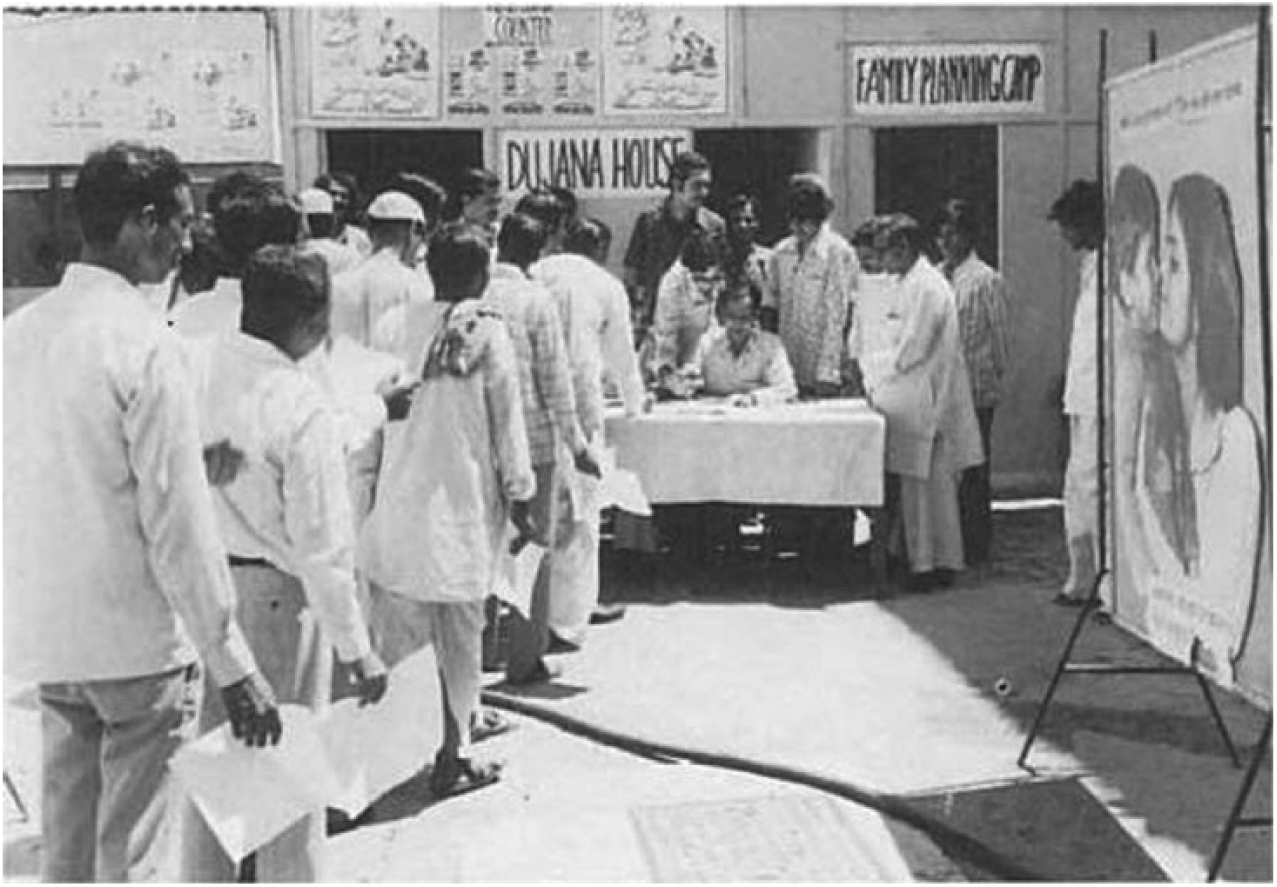
Men Register for Vasectomies at Dujana House Family Planning Clinic, New Delhi

Vasectomy “Acceptors” Receiving Household Goods at Dujana House
Although it is not within the scope of this article, the coercive targeting of thousands of men to undergo vasectomies, in camps and otherwise, during India’s Emergency Period from 1975 to 1977 cast vasectomy in an unfavorable political light. After 1977, state governments and political parties refocused family planning agendas on female contraception, while government-led mass vasectomy campaigns were almost entirely extinguished (Rao 2004; Tarlo 2003).
Conclusions: The Social Control of Men’s Reproduction
Prior scholarship has glossed over the emphasis on men in postwar India’s population control program, with little to no clarification of how and why this emphasis was legitimized or consolidated. By analyzing the workings of gendered knowledge in the Indian case, this study provides clarification and highlights new approaches for understanding the social control of men’s reproduction. Family planning communication scientists brought distinct scholarly concepts to bear on international family planning prerogatives—including decision-making, attitudes, opinion leadership, and communication—that expanded the focus of this discourse beyond the medical and biomedical vocabulary dominating it at the time. In doing so, communication scientists reframed reproduction as a behavioral phenomenon and cast population control as a matter of managing this behavioral dimension through the strategic use of mass communications. While twentieth-century medical and biomedical research on the reproductive body reified long-standing notions of femininity, a social scientific focus on reproductive rationality proved fertile grounds for prevailing cultural notions of masculinity, thereby facilitating the framing of men as legitimate targets of reproductive control when such control was cast in similarly cognitive terms.
It bears noting, however, that the scientific claims analyzed here diverge from broader debates about men’s inclusion in postwar family planning agendas, many of which centered on feminist arguments to encourage gender egalitarianism in contraceptive responsibility (Dudgeon and Inhorn 2003; Gutmann 2007; Oudshoorn 2003). Unlike their feminist contemporaries, communication scientists sought to capitalize on men’s power in the contraceptive domain. If concerns for gender equality accompanied these agendas, they played second fiddle to goals of reducing fertility and popularizing alternative familial forms organized around masculine dominance.
This study illuminates the analytical benefits of investigating the Indian family planning program’s unconventional emphasis on men. First, it invites feminist scholarship to reconsider what falls within the definitional ambit of reproductive control. In focusing almost exclusively on medical and biomedical interventions, which have tended to center on women, feminist scholarship has unwittingly reproduced a gender asymmetry of its own. Broadening the definition of reproductive control to include behavioral interventions can account for multiple contexts that seek to discipline men’s reproduction, including adolescent sex education, contraceptive marketing, and “responsible fatherhood” welfare programs. Doing so also spotlights the role of social scientific experts as key architects of reproductive regulation, which remains largely uncharted territory in the literature.
Nevertheless, the Indian case raises questions about why social scientific claims about men’s reproductive subjectivities did not take root elsewhere despite a bevy of contemporaneous studies in Asian, Caribbean, and Latin American regions (Parry 2013). Comparative research is needed to elucidate whether national and regional differences shaped the receptivity that communications research on men’s reproductive decision-making encountered across the globe. For example, in Mexico and other Latin American countries, the political dominance of the Catholic Church might have stymied communication scholars’ efforts to legitimize mass communications on birth control to begin with, let alone to target such communications to men (Gutmann 2007; Oudshoorn 2003). Likewise, comparative research might investigate whether communications experts theorized masculinity and men’s decision-making differently in other regions and were subsequently less likely to recommend targeting men in those regions. Taking the case of Mexico, social scientific and cultural understandings of “machismo” might have prevented communications scholars from positing that the Mexican state could reliably regulate men’s reproduction (Gutmann 2007).
In conclusion, future research should complicate assumptions that states will generally refrain from regulating male reproduction and that producers of reproductive knowledge will necessarily maintain an inattention to men. Doing so demands that scholars rethink prior assumptions about gender and reproduction while asking new questions about the conditions under which men become imaginable as legitimate subjects of reproductive surveillance. To quote Almeling and Waggoner (2013, 837), “it is more likely … that such questions have simply not been thinkable because of cultural constraints around gender and reproduction.” To remedy this blind spot, this study has investigated the political and scientific factors that shaped the erstwhile emphasis on men in postwar India’s population control program. In doing so, it has placed the political regulation of men’s fertility at the center of new agendas in the study of reproductive governance.
Footnotes
Author’s note:
I thank Jo Reger and two anonymous reviewers for their constructive recommendations. I also thank Ann Orloff, Chas Camic, Steve Epstein, Carol Heimer, Kevin Levay, my feminist writing group, and the Science in Human Culture colloquium at Northwestern University for their feedback on the manuscript and the larger project. Research for this manuscript was funded through a Research Grant from the Equality, Development and Globalization Studies Initiative (project #10036703) and a Rockefeller Archive Center Grant-in-Aid.
Notes
Savina Balasubramanian is a PhD candidate in the Department of Sociology at Northwestern University. Her research examines the global politics of gender and reproduction, science and technology, race, and law and society. Her previous work has appeared in Political Power and Social Theory and Journal of Contemporary Ethnography.