




Abstract
Job satisfaction is a vital factor regarding turnover rates, especially among women. Work life balance today, especially in times of COVID where home and work place have transgressed boundaries is an imperative precursor for the well-being of an individual. A satisfying job well-integrated into life, balances the overall mental and emotional quotient of working women particularly in the current pandemic in which the workplace is posing a new and unlike set of challenges and problems for women. Research suggests that work place problems faced by the Indian women are mostly long working hours, less recognition of work, lack of motivation and stress related issues, but the new normal of working remotely from home now is altogether an unexpected work scenario. With respect to emerging nations, problems of work life balance among women in the education sector are not well researched. Increased women employment has led to a swelling attention from academia and industry on WLB. With greater access to better educational opportunities, increasing number of women are entering the workforce, and shifting from being home-makers to the organized work force, thereby necessitating an urgent need to examine this phenomenon. Carrying on with online classes remotely has become the order of the day, and it is becoming stressful when both school and personal life operate from the same space. The main idea here is to understand challenges during COVID which are being faced by school teachers in Noida delivering content to students from home and their surviving strategies.
Introduction
‘Education services – a part of the tertiary sector comprises specialised establishments that provides systematic instruction and training in a varied areas/subjects leading to human development.' Or in a layman’s language, the education sector includes activities where individuals impart knowledge/skills and stimulate thinking of younger cohorts for their growth and overall development.
The 2019 Union Budget for India earmarked ₹ 94,853 crore for education, out of which ₹56,536 crore was for school education. With approximately 28.1 per cent of India’s population in the age group of 0–14 years, the educational sector here provides great growth opportunity (IBEF, 2019). The formal education sector [K-12] is growing rapidly at about 14%, and demand for teachers is expected to witness rapid progress if the Pupil Teacher Ratio (PTR) for elementary and secondary education of 23:1 in 2016–17 for India (IBEF, 2019) has to be improved to impart better quality education. The Periodic Labour Force Survey [PLFS] in May 2019 (NSO, May 2019) report shows that a growing segment of women are now being employed as regular salaried workers, rather than self-employed or casual workers. In the service sector, women are mostly seeking employment in jobs such as teaching and nursing.
Women teachers are women whose professional activity is student instruction, involving the delivery of lessons to students. (OECD, 2020). Recent data from OECD countries show large proportion of women in teaching. In Australia 97% of pre-primary teachers, 85% of primary teachers and 68% of secondary teachers are female (OECD, 2020). This represents a huge distortion in this specific labour market. It is interesting to note that the observed concentration of females in this sector is due to the high opportunity cost faced by men in teaching vis-à-vis other professions. Culture too has an important role to attribute towards gender differences to occupational preferences. In many countries, including developed ones, teaching has been looked upon as a relatively low-status profession, with the important positions being occupied by men. Women still must bear most of the child rearing responsibilities, and teaching seems to be one of the most agreeable professions for this demographic segment despite the low wages.
In emerging economies such as India, Government policies to universalize primary education and improve gross enrolment ratio, has increased job opportunities in this sector. However, it is disheartening to note that the concentration of women in the teaching profession is rising from a gender equality perspective. Due to social and economic reasons mentioned above, the gender composition in teaching based on job attributes such as more flexibility and work-life balance have increased the percentage of women employed in teaching.
Although current data, specific to the total employment of women teachers in schools over the last 5 years was not available, in India, it is well researched that the participation share of females in this sector has been consistently rising. For urban women, the education sector has become increasingly significant, with its share in employment rising from 35.7% in 1977–78 to 60.7% in 2017–18. Looking at the State-wise Percentage Distribution of Workers [Females] according to Broad Employment Status-2011–12, Uttar Pradesh has among the highest figures of 11.7 [regular wage/salaried/employee females] (National Sample Survey Office, June 2011–June 2012) with a rising percentage of females in the teaching industry.
Teaching over the last few decades, however, has become a challenging arena, whereby with the introduction of new courses and teaching pedagogy, as well as shift towards upgrading curriculum, is demanding more time beyond normal working hours to be devoted to the profession. This has particularly become more challenging as with the COVID pandemic, the mode of delivering content being online. The technicalities of the new teaching-learning tools came as an added challenge for teachers. Online teaching, meetings, professional development programmes, developing new resources for the new normal seems to have brought added anxiety and workload among women. Owing to the large-scale reverse migration in India, the domestic help easily available for household chores is also not there, adding to their burden of unpaid chores. A study on the Impact of the Pandemic on women’s burden of unpaid work in India (Chauhan, 2020) shows that the lockdown has widened the existing gender inequalities with limited opportunities for women for leisure, and subject them to time poverty.
What is also a matter of concern is that India’s female Labour Force Participation Rate (LFPR) has fallen abysmally low to 23.3% in 2017–18, meaning that for every three out of four women over the age of 15 in India, are neither working nor seeking work (Ministry of Finance, 2010–2011). Will a similar pattern emerge in the education sector also, and is the COVID pandemic an important reason behind it? The objective of the paper is to specifically study whether this negative trend of falling labour participation among women teachers during Covid-19 is due to rising expectations of a work culture being available 24 × 7 due to virtual meetings scheduled anytime, resource development for online teaching etc. and thereby making women teachers unable to assimilate work and life in ways that balance work, home, society, and self?
Definition of the term ‘Work Life Balance’
Objectives of the paper
Find decisive factors affecting work-life balance faced by female schoolteachers [K-12] due to shift to online content delivery during pandemic
To explore the linkages in the work life balance of female schoolteachers of Noida, with respect to demographic factors such as age, marital status, education level, work experience and income
Study and analyse the relationship between job satisfaction and work/life balance of female schoolteachers during the COVID pandemic as teaching shifts to remote content delivery
Explore factors which would help create smoother balance of work and family commitment among female schoolteachers during the new normal.
Literature review
Work-Life Balance is aptly defined as: ‘WLB is about people having a measure of control over when, where and how they work. It is achieved when an individual’s right to a fulfilled life inside and outside paid work is accepted and respected as the norm, to the mutual benefit of the individual, business and society’ (Jones, June 2003). Over time, work-family balance gradually evolved into ‘work-life balance’.
WLB, thus is defined as an ‘individual’s ability, irrespective of age and gender, to find a life rhythm that allows individuals to combine their work with other responsibilities, activities or aspirations’ (Felstead, 2002). The primary focus of WLB policies should be to allow personnel improve their quality of life by spending more time for different kinds of hobbies, leisure, training courses, social commitments (Hughes and Bozionelos, 2007).
The term ‘life’ applies to all non-paid activities, whereby an individual can satisfactorily manage her/his time between paid work and other activities. Labour put in by an individual should be such that he/she is able to devote time to family, have a satisfactory social life, and pursue hobbies leading to personal development along with self-stimulation. Thus, it pertains to ‘adjusting work patterns so that everyone, regardless of any factor can find a common pace that enables them more easily to combine work and their other responsibilities and desires’. The ‘accurate’ balance is difficult to define, as it varies with the individual perception and that too at various stages of a person’s life. While for some the perfect balance can be more of work, for others the degree might be different.
Past research has shown that flexible work measures allow people to assimilate both work and family responsibilities and are strongly influential in bringing about a healthy work and life balance (Galinsky et al., 1993). The balance, however, toppled with the pandemic.
In April 2020, a United Nations report revealed that unpaid care work had increased with the pandemic, with children at home, heightened care needs of older persons, and over-pressured health services (UN, 2020). The pandemic has also been instrumental in worsening gender roles, which has metamorphosed into glaring inequalities. The closure of schools and day care centres for kids has brought out the delicateness of women’s participation in the paid economy, whereby ‘school closures and household isolation are moving the work of caring for children from the paid economy – nurseries, schools, babysitters – to the unpaid one (Lewis, 2020).' Men have stepped in no doubt, to lend a supporting hand to their better half. However, what needs to be answered is whether the stress, anxiety and burden is the same on men and women? Are women being subject to an unsaid covert discrimination because of the expected traditional gender role of them as caregiver which has increased the cumulative burden due to work shifting home.
What is also of consequence is whether men are subject to the same expectations? If not, is it because of the structure of women’s economic participation, which is more likely to be part-time, flexible, and less remunerative (UN, 2020). It is further observed that ‘[w]ith the schools closed, many fathers will undoubtedly step up, but that won’t be universal…(Lewis, 2020), so has this led to women exiting from their work.'
The importance of family support as a positive factor influencing work life balance is also emerging from literature review (Merideth Ferguson, April 2012). Social support which includes family friendly policies, the work culture, support from extended family and friends does have a very significant influence on harmonizing the work life balance of women (Feeney, 2019). Studies do point out that work life balance does lead to bringing in better efficiency in all aspects of life.
However, with work shifting to home in 2020, problems in the work-home interface had a significant impact on parenting and marital harmony. Women are quitting jobs to maintain their marital relations. This clearly suggests that focus should be on support to working women to counter any problems in the work–family interface. And, thus it becomes all the more pertinent for organizations to invest more towards policies which ensure greater work–life balance for women, as it would ensure a work force, satisfied and able to deliver increasingly in the new normal (Chung et al., 2020).
Women’s employment participation has been growing in the education industry, both private schools as well as government schools. In Indian set-up, women entering the labour force are required to perform a heterogeneous basket of roles simultaneously. On one hand she might be responsible for bringing up her children, on the other it might be towards her in-laws or even ageing parents. Indian social set up is quite demanding in this aspect which requires women, especially staying in the traditional joint family system are responsible to take care of their ageing parents as well as elderly relatives (Bhatnagar, 2001–2002).
Given the above social set up, living up to the multi-faceted role expectations can be a very pressurizing experience if family support and domestic help is hard to find in a time when the entire country is in a situation of lockdown and uncertainty. Most schools have started bringing in policies to suit such critical situations. As a result, various kinds of work-related benefits such as professional development courses and upskilling of human-resources to match the requirements so that content can be delivered remotely and smoothly, flexitime have been introduced.
Behavioural support in the form of emotional support from family including assisting day-to-day household chores, or getting a little more accommodative with the woman’ routine allows her to balance her 24 hours, thereby positively influencing her functioning both at home and work (King, 1997). Thomas and Ganster (Thomas, 1995) reported that individuals who used flexible work practices had more control over managing work and family demands and also resulted in a much greater professional and personal satisfaction.
Various research studies paper also highlight the existing apprehension within the society about the impact of multiple roles on overall health of women and its implications. Women mostly resort to adaptive strategies which are nothing but methods that people resort to so as to address everyday challenges to cope with exacting circumstances (Jennings, 2007). These strategies may include making subtle choices between her profession and household such as ‘opting out’ or delaying marriage and parenting (Burke, 2000). Caring responsibilities along with increased work burden will over time reduce efficiency at work which will mean women are more likely to be furloughed or overlooked for promotion that would adversely affect their career trajectory (BBC, 2020). Furthermore, the concentration of women at senior level, including school level teaching is very low. There is gender disparity at higher levels in the education sector. According to the study published in 2012 titled – ‘Women in senior management: still not enough’ (Grant Thornton, 2012) states that the percentage of women in senior level management accounted to be only 21% globally and 14% in India.
The cause can perhaps be traced back to one of the studies carried out by Rajadhyaksha and Smita (‘Tracing a timeline for work and family research in India’, 2004), where it was shown that about only 34% of husbands willingly extended help to their working wives. Only a minimal 22 per cent of men occasionally helped, and still a good-sized percentage subscribed to the old-fashioned patriarchal role and did not extend any kind of help to their wives. This to an extent explains women exiting from school teaching roles during pandemic due to lack of family support. The verticals in the profession is such that even if the woman exits for a couple of years, there is not a significant loss in terms of promotions or wages. Wage stickiness and limited levels of hierarchical designations in school teaching, as stated before are a primary reason for gender concentration here. Nominal spousal support is a deep-rooted socio-cultural problem that exists in the Indian framework, where gender roles have been compartmentalized. However, the silver lining is that this mindset is changing gradually with an adaptive approach, especially in urban areas. Nevertheless, the role remains essentially with the woman to be the caregiver to the family.
Research methodology
Females above the age of 23 years working in registered schools [both private and government schools] were considered valid samples, irrespective of their marital status including widows and divorcee as everyone must deal with diverse responsibilities, stress, and workload. This is because school teaching in India mandatorily requires a professional Bachelor of Education/Teacher’s Training degree after graduation. Sample includes women who could be employed on contractual basis or were full-time employed.
For data collection, a primary survey questionnaire of 255 respondents was carried out in Noida [city in India] where many K-12 schools both private and Government run are located. This included working women with a minimum of one-year experience, so that the respondents would have developed an understanding of the issues affecting the balance between work and family life.
A structured questionnaire using the non-probability convenience sampling method was used for a sample size of 255 teachers at K-12 levels [primary, middle, and senior school]. This helped with quick and easy decoding and analysis of responses, although it restricted qualitative responses from the respondents. Responses were measured using the Likert scale. Telephonic as well as online interviews were conducted for primary data collection as movement was restricted due to COVID. During the interviews, effort was made to ensure that the respondents speak about decisions relating to their careers, the major decisions and compromises they are making while working from home in an online mode. Both the questionnaire for data collection and for the interviews were pre-tested with about 20 professionals in the education industry and modified accordingly.
The questionnaire is a mix of both closed and open-ended questions and divided into three distinct parts. The first section investigates demographic history of the sample including particulars about age, marital status, education, income and dependents in the family. Thereafter, factors affecting the work-life appraisal is studied. A five-point Likert scale was used – 5 is assigned for ‘Highly Satisfied’, and 1 for ‘Highly Dissatisfied’ to collect responses on factors affecting work-life balance. The third part studies the factors on family lifestyle, which mainly deals with questions related to the personal lifestyle of the respondents.
The questionnaire comprised of challenges women schoolteachers were facing with WFH post COVID related to their personal and professional commitments. It ranged from spending time for personal development, social interactions and hobbies, support from family/spouse towards household work and childcare, impact on personal health due to increased screen time, added working hours due to developing teaching resources to the support extended from their School on flexible classes/ work hours as and when required, revamped leave policies, problems faced due to lack of autonomy in work because of increased micro-management by management team. These were the areas identified as the crucial decision makers that were either initiating a disbalance in work-life, or probably enabling some the cohort to cope with the new normal of online teaching-learning.
Univariate data analysis is used to study demographic summary of the sample. This helps understand the demographics easily, as the method only helps summarize the data and find patterns. Principal component factor analysis is used to investigate factors influencing job burnout in female schoolteachers working in Noida. The advantage of using this method is that it is a dimensionality reduction technique, which converts several (possibly) correlated variables into a (smaller) number of uncorrelated variables helping in data analysis. The impact of each of the nine factors was further tested using multiple regression analysis.
Results
Analysis of demographic profile (N = 255)
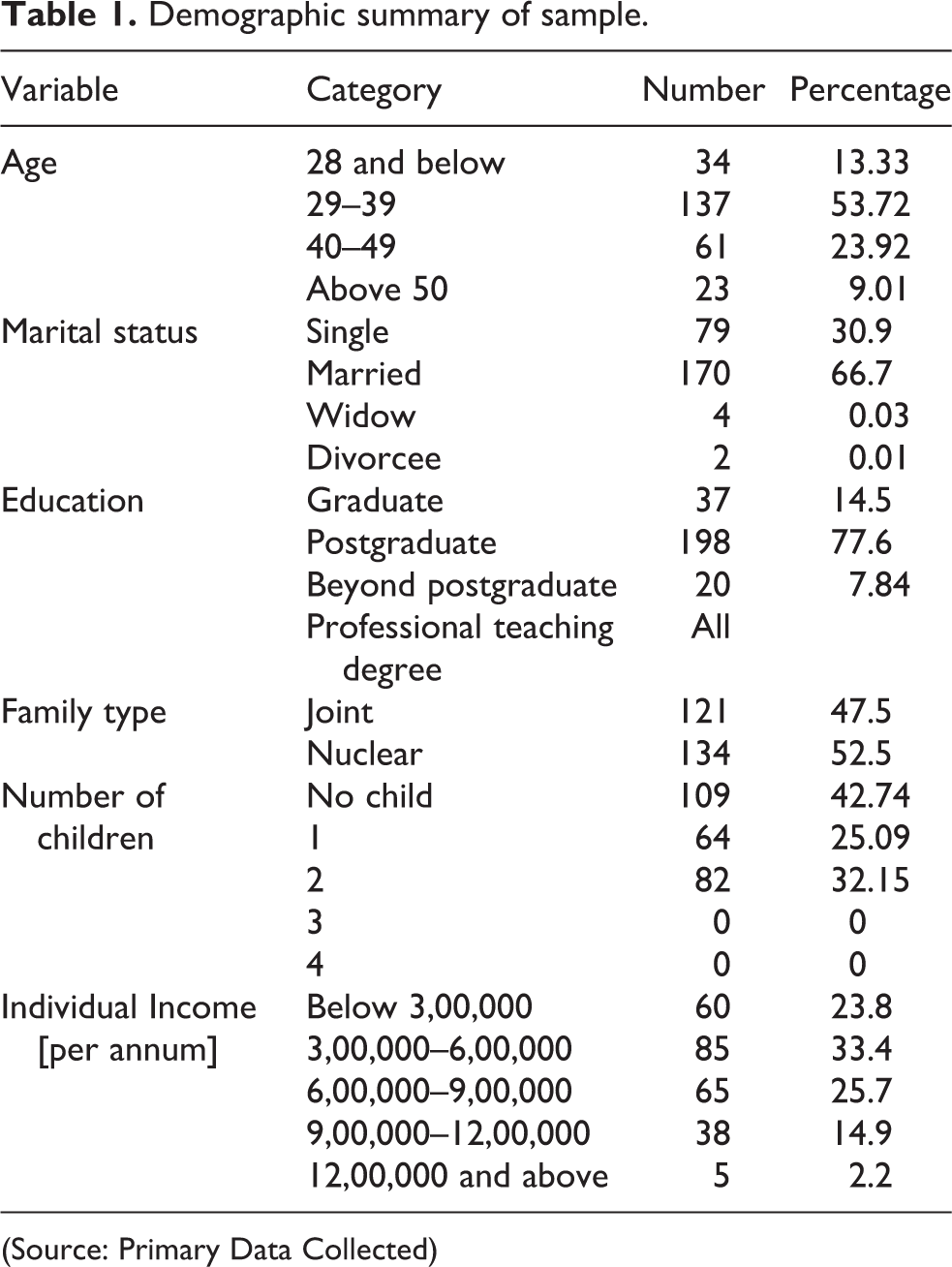
Chi-square test was carried out to find out the relationship between the demographic profile of the respondents and the level of satisfaction as regards their work life balance. Table 1 reflects the demographic summary of the sample based on criteria such as age, marital status, number of children etc.
Demographic summary of sample.
(Source: Primary Data Collected)
Hypothesis
Null hypothesis (H0): There is no significant relationship between the demographic profiles of female schoolteachers and work life satisfaction during current work from home [WFH] situation [WFH].
Alternate hypothesis (H1): There is a significant relationship between the demographic profiles of female schoolteachers and work life satisfaction during current work from home scenario.
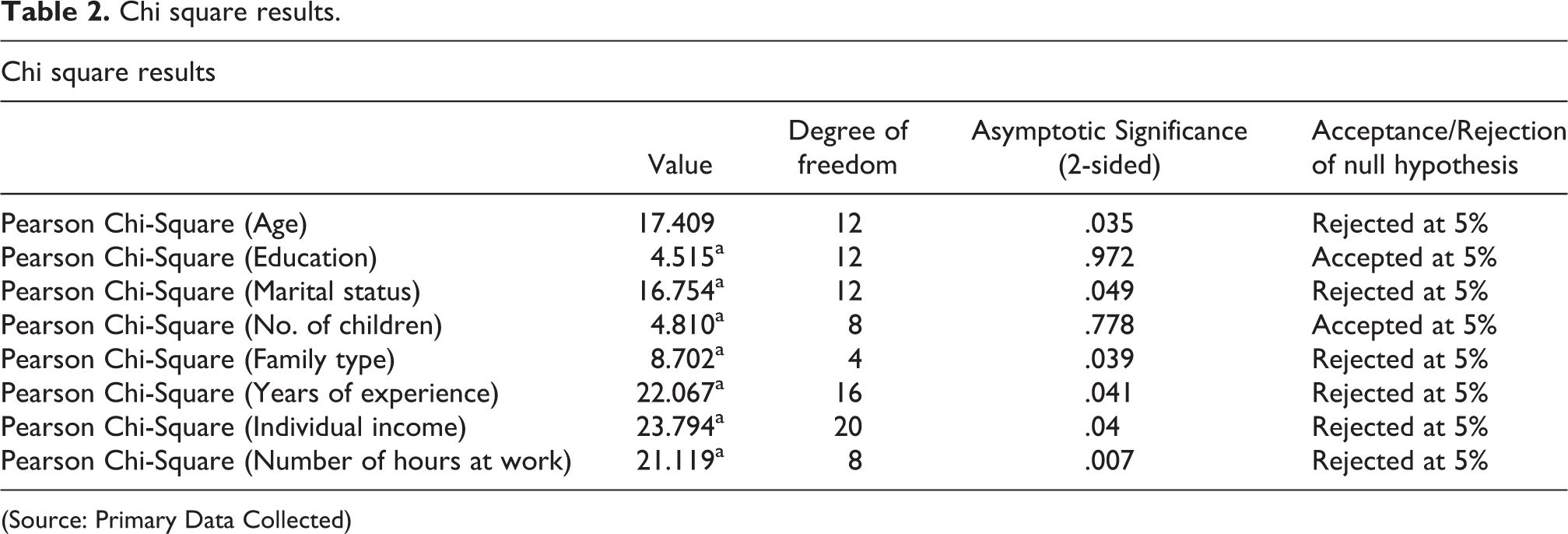
From Table 2, it is observed that as per Chi square results, the null hypothesis is rejected on almost all parameters except education and children, it means that there is evidence to further study the relationship between demographic profile of female teachers and their work life balance in an online teaching mode. Further analysis of the collected data regarding female professionals in K-12 schools was done using the principal components factor analysis method. This is a data reduction method condensing the information contained in several original variables into a smaller set of dimensions (factors) with a minimum loss of information (Hair, 1998). Factor analysis on the 30 selected variables was carried out. The results on KMO and the Bartlett’s test of sphericity are given in Table 3:
Chi square results.
(Source: Primary Data Collected)
KMO and Bartlett’s Test results.

(Source: Primary Data collected)
It may be noted from Table 3 that the value of KMO statistic is 0.783 (greater than 0.5) which means factor analysis is the next stage with primary data collected. Sphericity test to analyse significance of correlation matrix of variables indicates that correlation coefficient matrix is significant at 1% level of significance with p value of 0.000.
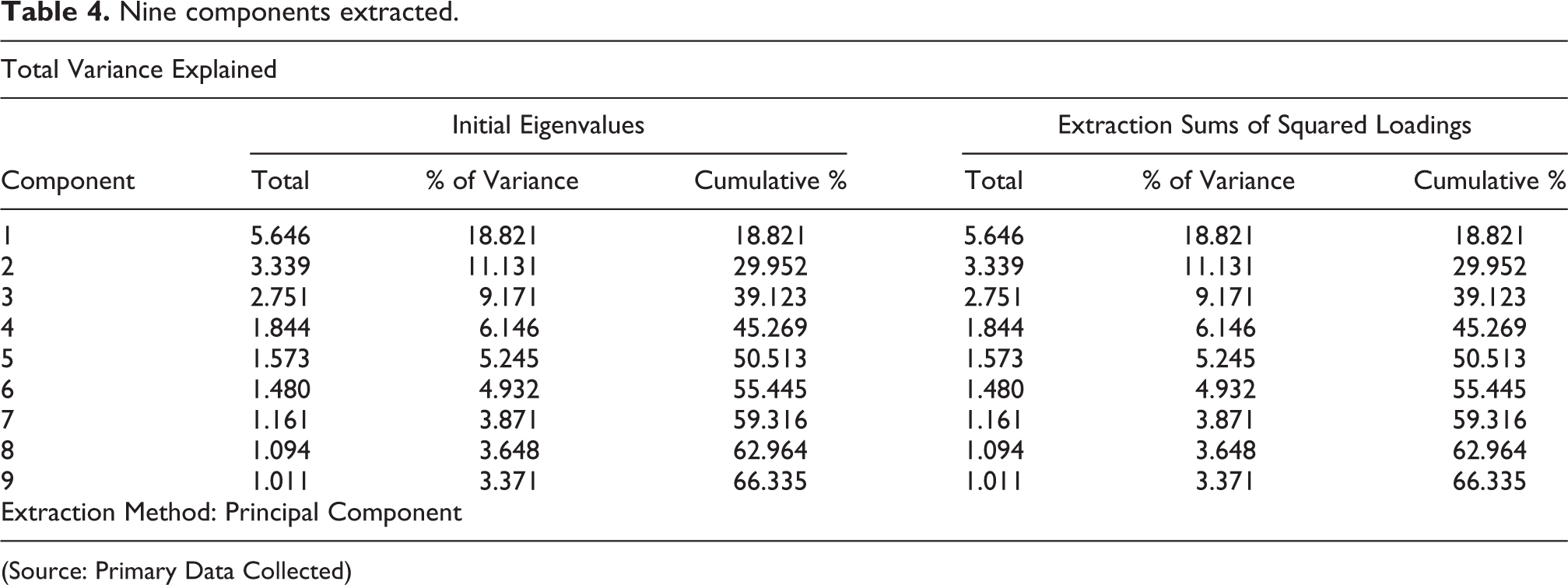
Table 4 represents factor analysis explaining percent of variance defined by each component generated. As per the Kaiser rule, all components with Eigenvalues under 1.0 is to be dropped (coedpages.uncc.edu, 2006). Thus, the first nine components taken as factors display 66.335% of variance of the parameters which is fair enough as they are reduced to a size of 9 by losing about 33.67% of the information content. The extracted 9 components are tabled below:
Nine components extracted.
(Source: Primary Data Collected)
The correlation coefficient between the factor score and the variables included in understanding the relationship is called Factor Loading and is presented in the matrix called Component Matrix (See annexure). The next task is to interpret the factor loading matrix i.e. Component Matrix using Factor Rotation.
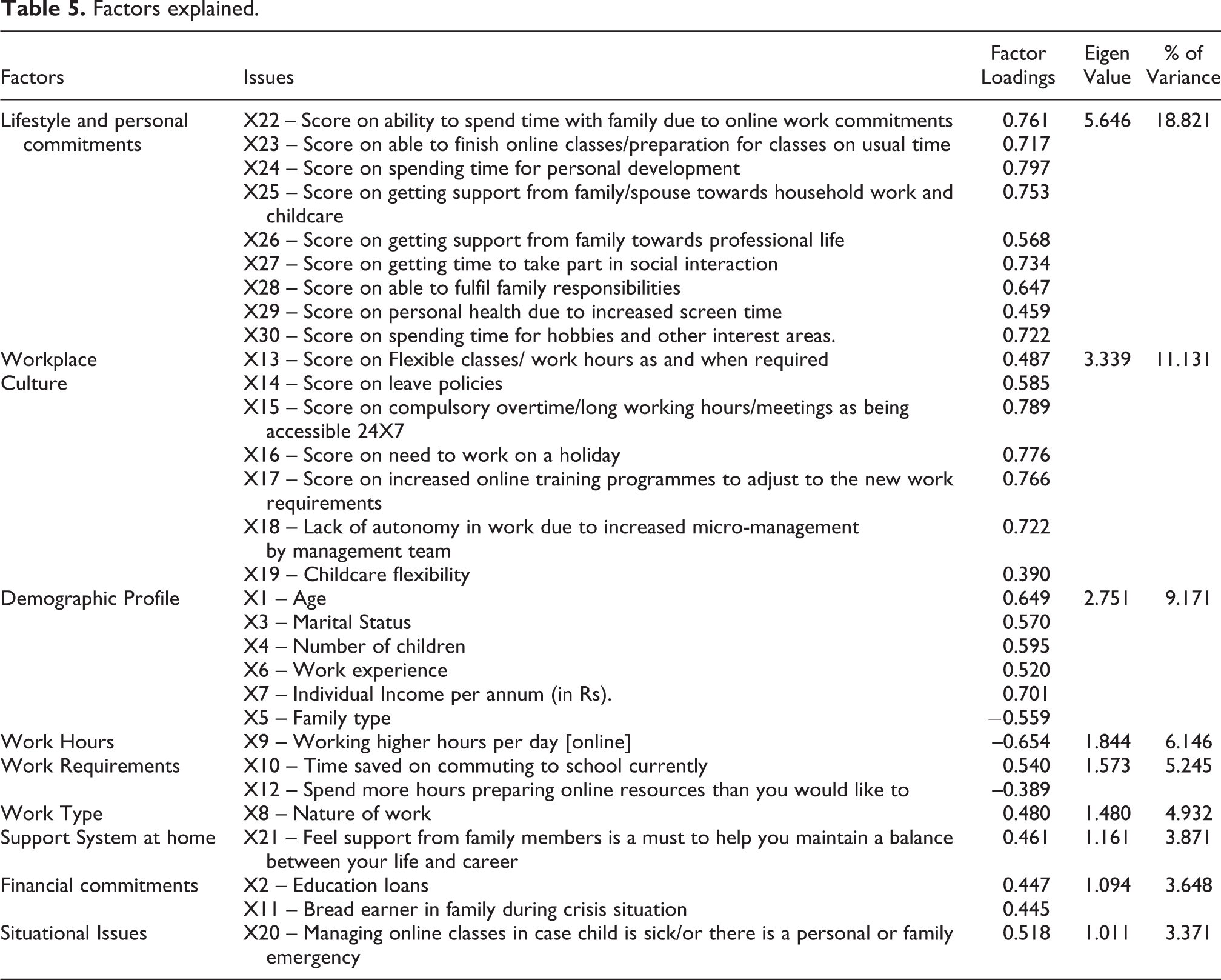
The factor analysis studies 30 statements categorized in nine areas in terms of highest impact (Column 1, Table 5). Lifestyle and personal commitment are most important factor as nine statements are loaded explaining 18.821% of variance with 5.646 Eigen value. Lifestyle inflexibility affects WLB of schoolteachers considerably, who are currently working remotely from home. Workplace factors have the second highest factor loading and explains 11.131% of variance with Eigen value of 3.339. Demographic summary too largely impacts work and life harmony. It has a weight of 6 statements, jointly explaining 9.171% of variance with 2.751 Eigen value. Workhours which has moved beyond school hours to become accessible 24X7 has Eigen value of 1.844 explaining 6.146% of variance. Work requirement is loaded with three statements, explains 5.245% of variance with 1.573 Eigen value. Although there is time saved on travelling to school, it is being used up for household work and childcare due to absence of day-care centres.
Factors explained.
To test the impact of the nine factors identified in factor analysis, multiple linear regression analysis has been done. The regression factor scores were generated on all the nine factors and labelled as above; were considered as the independent variables and the work-life satisfaction rating variable (X 31) i.e. score on feel stressed due to work pressure is taken as the dependent variable.
The following inferences can be drawn from the Table 6 about the significance of factors that are creating instability in the work life balance among women schoolteachers.
Regression results.

(Source: Primary data collected)
Firstly, the Multiple Linear Regression results show 6 out of 9 independent variables directly impact the work-life balance of women teachers. Lifestyle and personal commitments having beta coefficient 0.697 is statistically significant at 1% level of significance, which means a significant influence. If a woman can devote a considerable amount of time to her personal commitments, she would be able to strike a better balance in her work life. Workplace inflexibility and reduced autonomy at work is negatively related with satisfaction levels. Absence of harmonious and effective school policies would negatively affect the respondents’ work-life balance. Demographic profile is also inversely related, implying that maybe for some of the variables in demographic profile such higher levels of education and income entail more demanding job responsibilities and increased time, leading to greater pressure for balancing work life.
The next factor, work hours having a coefficient 0.049 has a positive relationship with the stress levels faced by females, in terms of a large share of daily hours devoted to work at all levels whether primary, middle or senior school, with no me-time increasing the stress levels among women. Work requirements involving increased daily reporting and feedback to management on conduct of online classes, as well as spending more hours on-screen than the respondent would like to at work is also negatively related to the level of contentment. This holds true in cases that as the work requirement increases, the level of satisfaction correspondingly decreases.
The family support system [beta coefficient 0.114] indicates that higher support from family in household work and childcare leads to lesser job-burnout. Financial commitments is statistically not significant at 5% level of significance. It explains that females satisfactorily fulfilling financial commitments, strike a better balance in work-life.
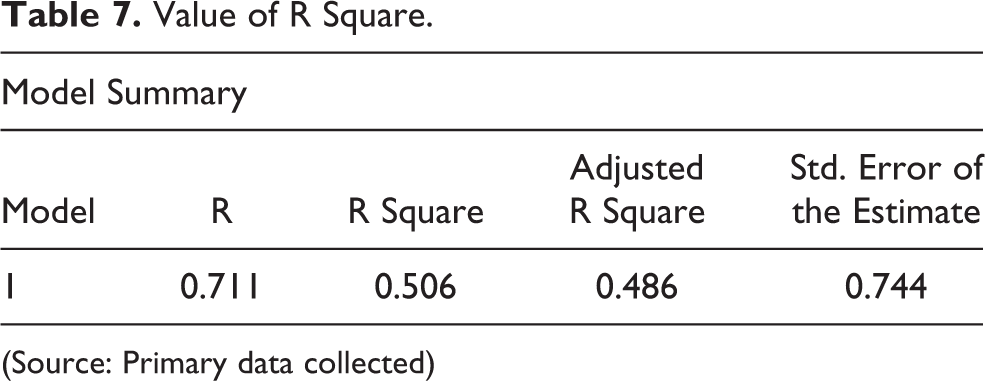
Next, to see how good the regression results are in terms of predictive ability is by examining coefficient of determination (R2).
R2 shows the percentage of the variations in work-life satisfaction that is explained by the independent variables.
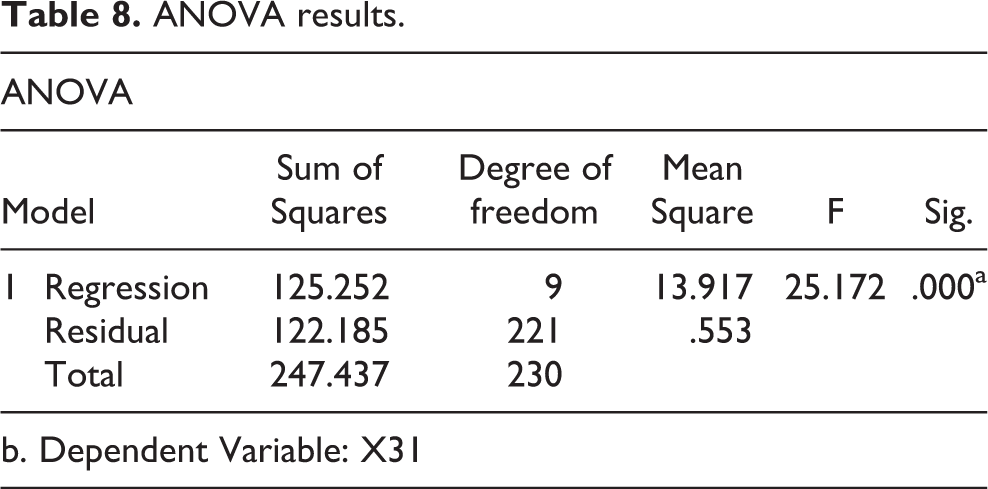
Table 7 shows R2 as 0.506 and adjusted R2 as 0.486, indicating that 9 essential factors explain 50.6% of the deviation affecting work-life contentment during COVID uncertainty. The value of R2 is significant as shown by the p value (0.000) of F statistic given (Table 8) below.
Value of R Square.
(Source: Primary data collected)
ANOVA results.
Thus, with work shifting to a place which has no time or space boundaries, and with the breakdown of the distinction between professional and personal lives means additional burden on the demographic segment studied. The data on employment related decision-making shows that gender roles and responsibilities remain rooted in the social norms of our traditional societal norms. Women look forward to online education becoming more flexible and such flexibility to be extended to men to facilitate their contribution in the unpaid domestic work.
Conclusion
This paper studies the impact of COVID-19 on the work-life disequilibrium created among female schoolteachers, which raises questions on gender equality due to the increased burden of unpaid work for women. It also highlights the fact that this increased burden of being available on the job 24X7, along with lack of family support for the additional burden is one of the reasons for women exiting the workforce.
To conclude work-life balance are two sides of coin, and it is impossible to separate them. Women expect some displeasure when the normal set-up shifts trajectory; however, the participants in the survey unanimously agreed that the pandemic has thrown open unexpected challenges in terms of a steep learning curve to accommodate online tools to deliver content. The next few months hold a lot of uncertainty, and gender roles need to get redefined to accept the new normal. Family members were accepting these changes and helping in maintaining work-life balance to a certain extent. In India, the philosophy of collective family life along with the penetration of western culture creates conflict. Family relationships are usually given more priority than individual personal interests, which has also turned out to be one of the most crucial factors for helping women manage a balance in their career and personal lives. Respondents expressed that they definitely had to schedule their daily work activities in order to fulfil their work and family responsibilities, but the existence of support from spouse/family was one of the very important factors enabling them to maintain their work-life balance during COVID.
A few recommendations that would help women in education sector to attain a healthier balance are as follows:
Targeted counselling programmes on work life balance can be conducted by the School, along with well-designed transparent and flexible working hours. The increased attention paid by Schools in recent times to integrate the new definition of work into other life domains is a positive indication for working women.
Policies are of value only when they are implemented, for example there can be an option of conducting classes with flexible times if required due to some family emergency. In normal times, the employee would have taken leave, but currently, when working from home – the teacher should be allowed to use technology flexibly such that it facilitates this option to a large extent. During the survey, it was realized that many working women were contemplating taking career breaks if they don’t have any option for taking care of their children. Increased empathy towards teachers with small children and who do not get adequate family support would help during these tough times. For women employees, it becomes very important that they need to set priorities for their work. Setting priorities allows one to schedule their tasks over a reasonable period. Organizations also need to be clear how working hours, output and targets will be monitored, especially when everyone is going through increased mental stress. It should consider the apprehension expressed by women employees, as well as also make sure that workload issues are resolved, and realistic targets set. A personal feedback from employees about their requirements can make the environment much more comfortable and reduce job-burnout. School management should re-survey and make any adjustments that are necessary in the policies and should incorporate any perceptible changes in the behaviour of their employees.
The attainment of work-life balance is a very circumstantial phenomenon which doesn’t remain same over a period. Work-life balance is all about individual achievement and enjoyment and feeling satisfied with whatever one does.
Limitations
The study may be applicable only to the current pandemic situation and consequent shift to online classes.
The study may not represent the whole population, as a small sample size was utilized given accessibility constraints during COVID.
Footnotes
Declaration of conflicting interests
The author(s) declared no potential conflicts of interest with respect to the research, authorship, and/or publication of this article.
Funding
The author(s) received no financial support for the research, authorship, and/or publication of this article.
