



Abstract
Background:
Idiopathic calcium oxalate stone formers (ICSFs) are a heterogeneous group. Randall’s plaque (RP) and ductal plugs are two common papillary features observed in ICSFs. These papillary phenotypes, implicated in early stone formation, may be susceptible to different risk factors and have differing long-term health outcomes such as stone events and kidney function. We investigate these outcomes using clinical data from a well-characterized cohort of ICSFs undergoing endoscopic stone removal.
Methods:
ICSFs undergoing stone removal procedures were consented for the study between August 2005 and May 2023. Papillae were imaged endoscopically per standard protocol. Two 24-hour urine tests were collected postoperatively while patients were off stone prevention medications. Chart review was performed for comorbidities, serum laboratories, and medication usage related to stone formation.
Results:
We identify three distinct phenotypes. Of 106 ICSFs, 37 had high plugging without plaque, 44 had high plaque without plugging, and 25 had low plaque and low plugging. High plugging ICSFs had lower estimated glomerular filtration rate (eGFR), increased history of prior urinary tract infection (UTI), and more prior stone events than ICSFs with high plaque or neither feature. Multivariable regression revealed plugging as a significant predictor of eGFR when correcting for age, gender, prior UTIs, and prior stone events.
Conclusions:
Plugging appears to be an important predictor for eGFR and multiple stone events. Prior UTIs appear to have a significant effect on plugging. RP did not appear to influence stone events or kidney function.
Keywords
Introduction
Over 1 in 10 Americans have experienced a kidney stone event, and the incidence continues to rise. 1 Calcium oxalate stones are the most common stone type, and many occur without an isolated metabolic explanation. 2 It is clear, however, that idiopathic calcium oxalate stone formers (ICSFs) are not a homogeneous group. Randall’s plaque (RP), interstitial apatite that deposits in the basement membranes of the thin limbs of Henle’s loop, and ductal plugs, luminal deposits of apatite in the collecting ducts, are common among stone formers. 3 Calcium oxalate overgrowth on either RP or ductal plug can lead to the progression of a symptomatic kidney stone. Furthermore, there has been an increasing number of collected calcium stones found to have an RP origin, insinuating a recent epidemic.4,5 Despite this, the exact etiology and long-term implications of precursor lesions such as RP and ductal plugs remain poorly understood.
To study mechanisms of early stone formation, identify risk factors, and develop precision medical therapies to ultimately improve health outcomes for kidney stone patients, we must accurately phenotype the diverse spectrum of ICSFs. There are two reported methods for phenotyping ICSFs: (1) by analyzing residues from intact collected stones and (2) by grading the endoscopic appearance of papilla intraoperatively. In two previous studies, we used these methods to categorize our long-standing cohort of ICSFs as part of a larger Randall’s Plaque project. Analyzing stone residues using micro-CT, we found that patients with even one stone on Randall’s plaque were significantly more likely to have RP endoscopically. 6 Phenotyping based on endoscopic papillary grading, we identified a dichotomous relationship between high plaque ICSFs and high plugging ICSFs; however, no differences in age, sex, or urinary parameters between either group. Building on this large well-characterized cohort with additional patients, we investigate the effect of additional clinical variables per chart and study intake review. We hypothesize that distinct groups of ICSFs will have differing clinical risk factors, long-term renal function, and stone prognosis.
Methods
ICSFs (stones containing > 50% calcium oxalate) undergoing endoscopic stone removal between August 2005 and May 2023 were included. Patients with any brushite stone, risk for enteric malabsorption, medullary sponge kidney, primary hyperoxaluria, or primary hyperparathyroidism were excluded. The details of study consent, urine collection, stone analysis, and endoscopic mapping are previously published (Indiana University Institutional Review Board protocol no. 1010002261).
Additional patient histories, medication usage, and clinical data were collected via patient intake form at enrollment or retrospective clinical encounters. Prior UTI was ascertained via self-report from patient intake form or office note. Estimated glomerular filtration rate (eGFR) was calculated using the CKD-EPI Creatinine formula for adults 7 and the Pediatric Bedside Schwartz for three patients who were younger than 18 years old. 8 Preoperative serum creatinine within 3 months of operation was used for eGFR. Urine pH was measured with glass electrode (Beckman Coulter, Fullerton, CA). All histories were reviewed by one urologist blinded to papillary scores and stone status (D.G.W). Prior events were considered stone passage, shockwave lithotripsy, or endoscopic stone removal.
Papillae were graded by one urologist (J.E.L.) at the time of operation and from endoscopic video clips using the semiquantitative Borofsky scale for four papillary features, including RP, plugging, pitting, and loss of contour (LoC). 9 Pitting refers to crater-like erosions at the papillary tip. LoC describes a flattening of the usual papillary mound and loss of papillary volume. High plugging group had a plugging score ≥ 1, high plaque group had an RP score ≥ 1(except one participant who had both plugging and plaque score ≥ 1), and low plaque low plugging group had both scores below 1.
Statistical tests were done using JMP Pro 17 (JMP, Cary, NC). Comparison of medians was made using the Wilcoxon and Kruskal test for nonparametric variables. Normality was tested using the Shapiro–Wilk test, and one-way analysis of variance was used to compare means for normally distributed variables. Categorical data were compared using Fisher’s exact test, or chi-squared test when applicable. Age, serum, urine, and eGFR values were compared with papillary scores using Spearman’s correlation test.
For analyses with multiple variables, clinical correlates for eGFR and papillary grading scores were analyzed using multiple linear regression and linear regression with first-order interactions.
Results
ICSFs
There were 106 ICSFs included during the study period (Table 1). There appeared to be three groups of ICSFs based on endoscopic evaluation of papillary features. The first group of 37 ICSFs was characterized by high plugging and low plaque. The second group of 44 ICSFs was characterized by high RP and low plugging. The last group of 25 ICSFs had minimal plaque or plugging features (Fig. 1). These groups did not differ based on 24-hour urine parameters, serum laboratories, or many of the clinical variables. High plugging ICSFs had significantly lower eGFR and were more likely to have a history of prior UTIs and prior stone events. High plaque ICSFs had lower stone volumes on average than other groups.
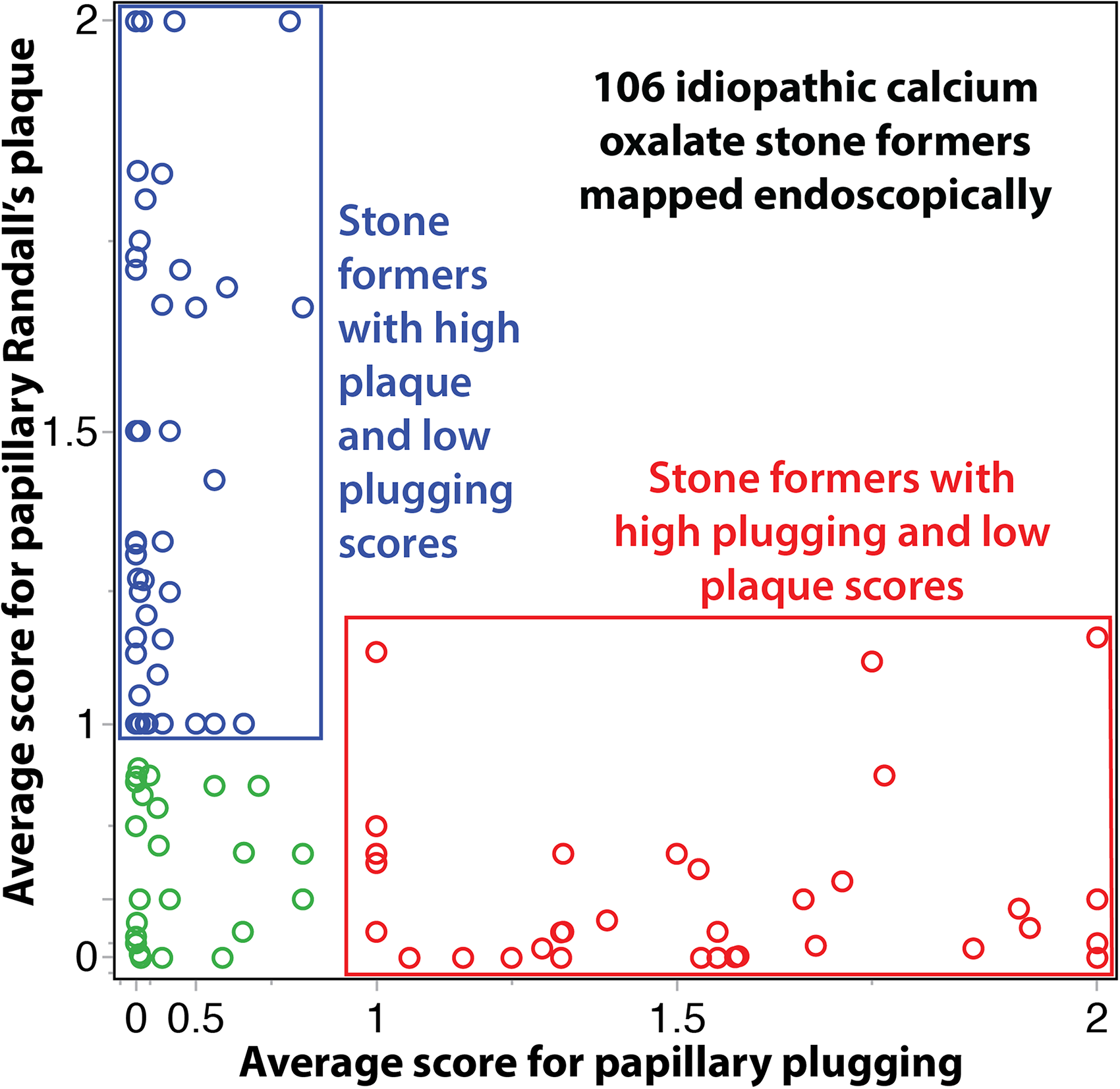
Three groups of ICSFs based on endoscopic mapping. ICSFs = idiopathic calcium oxalate stone formers.
Cohort Demographics Based on Endoscopic Evaluation
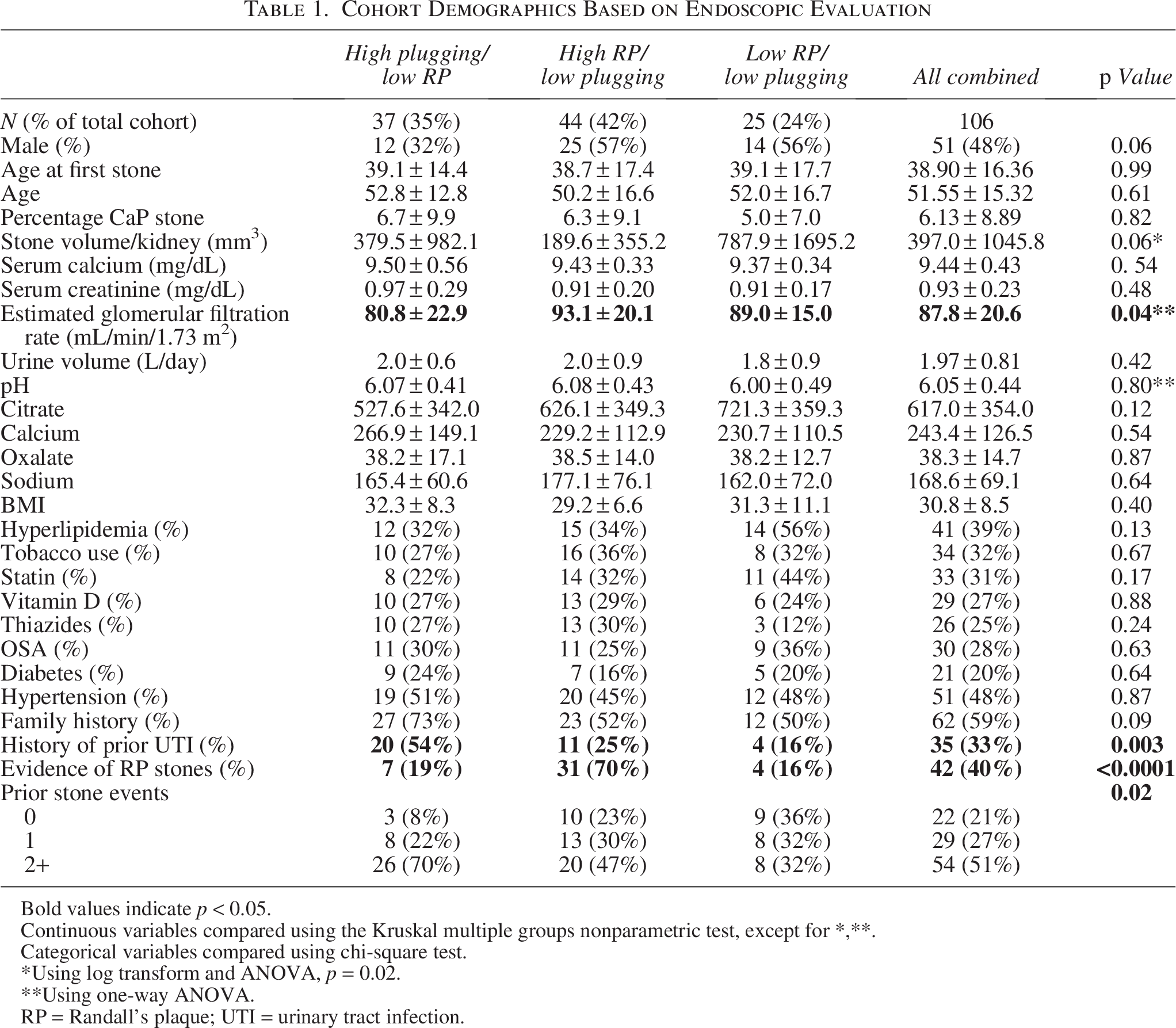
Bold values indicate p < 0.05.
Continuous variables compared using the Kruskal multiple groups nonparametric test, except for *,**.
Categorical variables compared using chi-square test.
*Using log transform and ANOVA, p = 0.02.
**Using one-way ANOVA.
RP = Randall’s plaque; UTI = urinary tract infection.
We performed univariate analysis on all ICSFs to determine variables influencing endoscopic RP and plugging score. Table 2 lists the mean RP and plugging score for the overall cohort based on the presence of a given categorical variable. RP score did not significantly differ based on any categorical variable. On the other hand, history of prior UTIs (1.06 ± 0.74 vs 0.56 ± 0.58, p < 0.001) and family history of stones (0.86 ± 0.74 vs 0.54 ± 0.53, p = 0.05) were associated with increased plugging severity. Male gender was associated with decreased plugging score (0.51 ± 0.56 vs 0.92 ± 0.73, p = 0.002). Each increasing level of prior stone events (spontaneous passage, lithotripsy, or endoscopy) had a higher plugging score. A separate Spearman correlation test was performed to confirm this relationship, which showed a positive correlation (r = 0.33, p < 0.001).
Categorical Variable Associations with Papillary Scoring
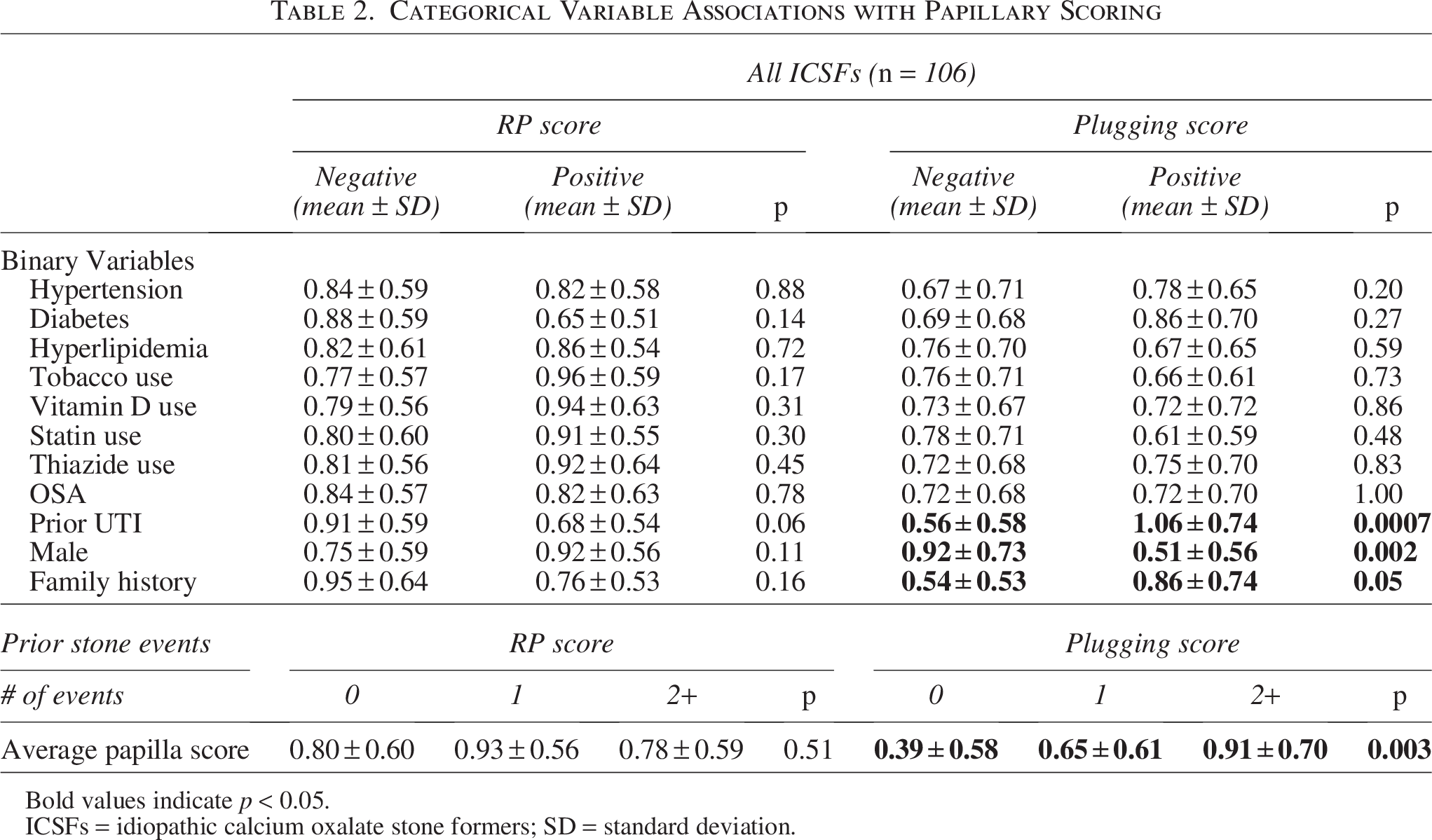
Bold values indicate p < 0.05.
ICSFs = idiopathic calcium oxalate stone formers; SD = standard deviation.
Table 3 shows the correlation of continuous variables with RP and plugging scores. Age, serum, urine, and stone characteristics were not correlated with RP or plugging scores. BMI had a weak positive correlation with plugging score (r = 0.21, p = 0.03). As we have previously noted, there was a negative correlation between RP and plugging scores (r = −0.55, p < 0.001). 6 We also continue to observe a positive correlation between LoC and plugging scores (r = 0.47, p < 0.001) (Fig. 2).
Continuous Variable Associations with Papillary Scoring
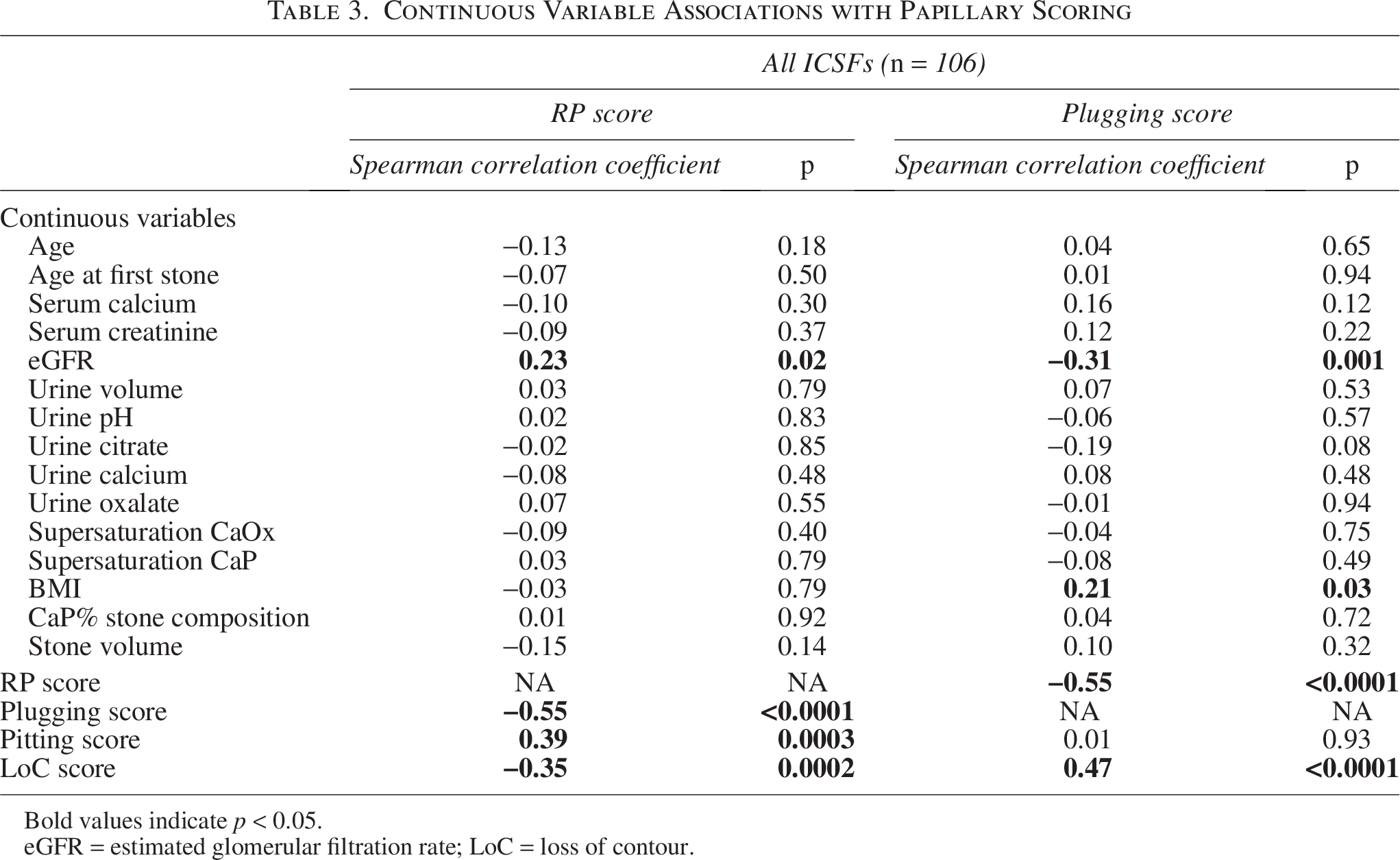
Bold values indicate p < 0.05.
eGFR = estimated glomerular filtration rate; LoC = loss of contour.
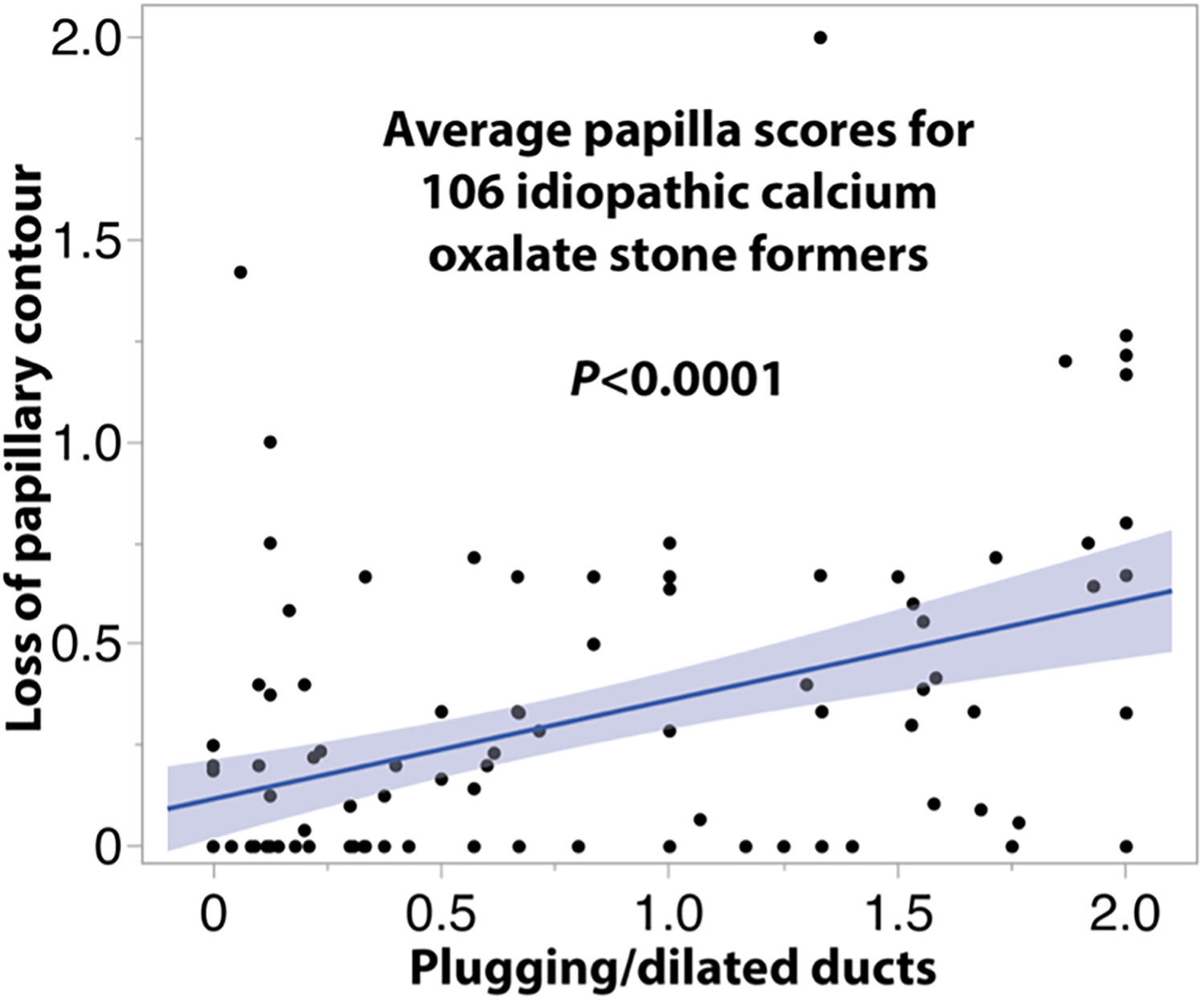
Loss of contour is positively correlated with ductal plugging.
There was a weak positive correlation between RP score and eGFR (r = 0.23, p = 0.02) while there was a negative correlation between plugging score and eGFR (r = −0.31, p < 0.01). LoC trended toward a decrease in eGFR, while pitting was not associated with eGFR (Fig. 3).
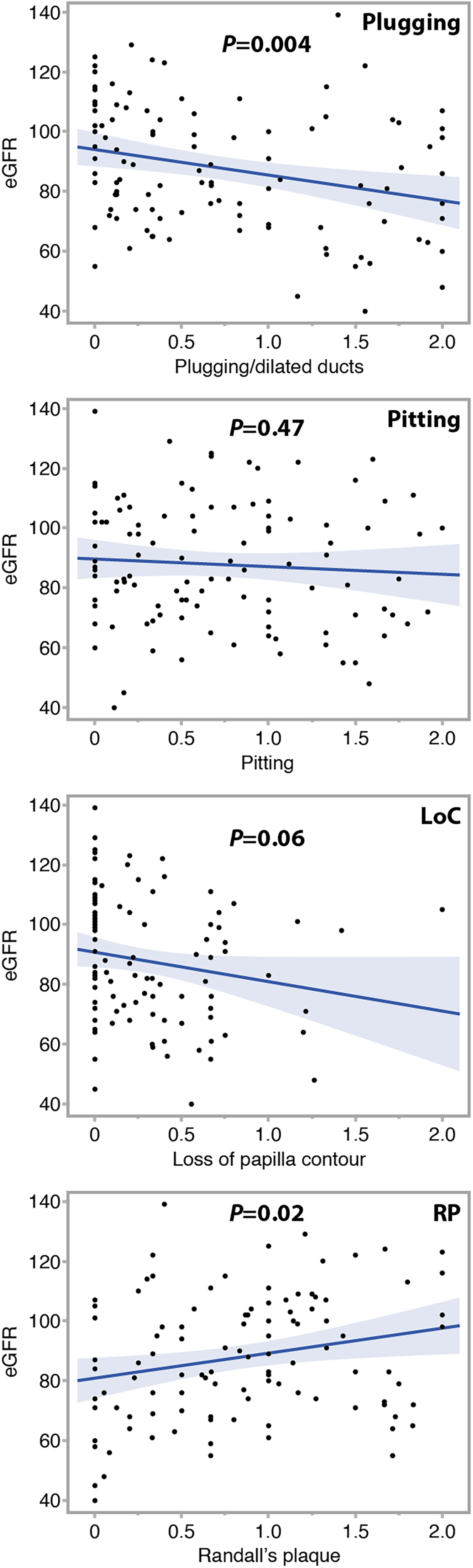
Correlation of kidney function and endoscopic papillary scores. (Plugging, Pitting, LoC, and RP).
Multivariable analysis
Using simple multivariate regression analysis, the key effects driving eGFR were patient age and papillary plugging (Table 4), controlling for sex, BMI, prior stone events, prior UTI, diabetes, and hypertension. The effect of age is not surprising, since it is part of the eGFR calculation. When the regression analysis included first-order interactions (cross-products of effects), papillary plugging was by far the most important effect determining eGFR.
Multivariate Analyses for eGFR and Papillary Plugging in Calcium Oxalate Stone Formers
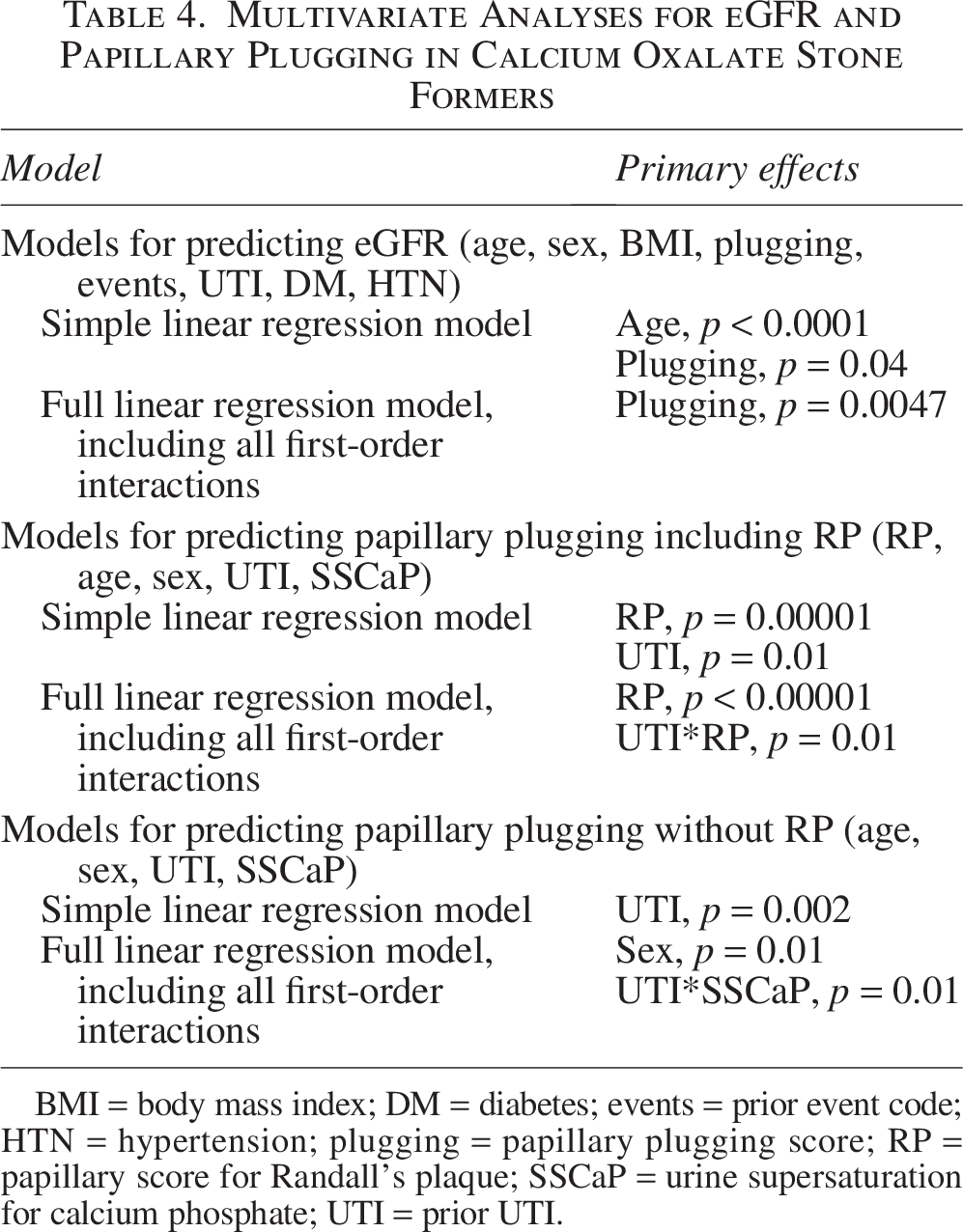
BMI = body mass index; DM = diabetes; events = prior event code; HTN = hypertension; plugging = papillary plugging score; RP = papillary score for Randall’s plaque; SSCaP = urine supersaturation for calcium phosphate; UTI = prior UTI.
For multivariate analysis to predict papillary plugging scores, the most powerful effect was always the papillary score for RP (Table 4, controlling for age, sex, prior UTI, and urine supersaturation value for calcium phosphate [SSCaP]), with a secondary effect of prior UTI. Given the strong inverse relationship between papillary plugging and RP scores (Fig. 1), this is not surprising. We also carried out multivariate analysis using only nonpapillary score effects, and prior UTI, sex, and an interaction between prior UTI and the SSCaP all showed influence on papillary plugging (Table 4).
By micro-CT evaluation
Micro-CT examination of extracted stones during endoscopic operation identified 42 ICSFs who had at least one stone with evidence of RP origin. There were 63 ICSFs without evidence of RP stones.
RP stone formers were younger at the age of first stone (34 vs 42, p = 0.03) (Supplementary Data S1). As previously reported, RP stone formers had higher RP scores on average than non-RP stone formers, whereas non-RP stone formers had higher plugging scores. 6 Otherwise, clinical, serum, and urine laboratories did not differ between the two groups (Supplementary Data S2).
Discussion
It is important that we accurately phenotype ICSFs to elucidate potential factors contributing to stone pathogenesis and develop effective targeted treatments. We report a large cohort of ICSFs and delineate phenotypes using endoscopic mapping and micro-CT data. We expand upon our previous work with a larger cohort and additional review of medical records. 10 We reveal three distinct phenotypes based on papillary precursor lesions and furthermore uncover a poor prognosis of multiple stone events and decreased kidney function associated with the plugging phenotype. We also demonstrate phenotyping based on micro-CT evidence of RP in stone specimens closely associated with endoscopically evaluated papillary features (Supplementary Data S2), with the caveat that if RP stones are not collected in the RP stone former, they may be incorrectly categorized as a non-RP stone former.
We previously reported two ICSF stone morphology phenotypes with and without evidence of RP residue based on micro-CT. 6 There were 42 patients who formed a stone with definite evidence of RP. We did not characterize plug stones because of their relatively lower abundance and more difficult discernment. 6 We previously found non-RP and RP stone formers did not differ based on clinical or metabolic factors, except that non-RP stone formers tended to have larger and less numerous stones. In this updated cohort, we found non-RP stone formers tended to be older at the age of first stone than RP stone formers. These findings are consistent with Letavernier et al., who also attempted to characterize stone formers based on intact stone morphology. 4 They found RP stone formers were younger at the age of first stone, and the percentage of RP stone formers was highest among 20- to 40-year demographic from an analysis of over 30,000 stones in France. These findings may be indicative of an exposure earlier in life. They hypothesized this was caused by vitamin D supplementation based on elevated ionized calcium and osteocalcin serum levels in RP stone formers exacerbation of papillary calcification with vitamin D supplementation in a mouse model.4,11 In our current series, vitamin D usage was not higher in RP stone formers, nor was it correlated with RP scores in either group.
Since it is not always feasible to collect intact stones in clinical practice, we report phenotypes based on endoscopic evaluation of papilla using Borofsky scores. 10 Similar to our previous report, there remained no differences in urinary or serum parameters between phenotypes. It is generally believed that low urine volume and high calcium are associated with plaque burden, although this finding is inconsistent. A series of 14 stone formers and 4 nonstone formers showed increased urine calcium and lower urine volume proportional to RP abundance. 12 Likewise, 42 ICSFs from Mayo Clinic showed urine calcium was notably higher if plaque coverage was greater than 5%. 13 Others have failed to show a relationship between urine calcium and RP presence or severity.4,14 Our results underscore the need for further study with larger cohorts and standardized assessment of papillary lesions.
If 24-hour urine values cannot consistently explain papillary lesions, then perhaps there is a systemic condition that predisposes to their development. Wang et al. showed that a history of UTI and BMI > 30 was more likely in low plaque ICSFs. 13 The same relationship was not present in our series; however, we did find that ICSFs with prior UTIs had significantly higher plugging scores. This relationship remained significant when correcting for clinical and urinary factors. Because our analysis is not temporal, plugging may be a sequela or risk factor for UTIs. Tubular injury induced by UTI could reduce the ability of the collecting duct to acidify urine, as has been suggested in other stone formers such as those with brushite, uric acid, or ileostomies.15–17 Tubular damage from UTIs may increase local tubular pH enough to precipitate plugs without changing bulk urine pH similar to how plugging is often found in ileostomy or uric acid stone formers with characteristically acidic urine. 18 Tubular injury may also lead to retention of crystal debris via adhesion to injury markers, 19 or inadequate clearance by phagocytic cells. 20 It is also plausible that urease-producing bacteria could raise local pH and increase SSCaP to initiate plugging.
Kidney stones are a known risk factor for the development of chronic kidney disease.21,22 Multiple stone events may further increase this risk. 23 A recent study using the National Health and Nutrition Examination Survey showed that the urine albumin to creatinine ratio had a positive relationship with a history of kidney stones, suggesting that kidney stones could be an indicator of early renal impairment even for individuals with normal kidney function. 24 Our current data may provide a rationale for these observations, as papillary plugging was independently associated with decreased eGFR. We have hypothesized that high plugging would result in decreased kidney function because of loss of many thousands of nephrons draining each obstructed collecting duct. 10 Indeed, we find that the high plugging group had decreased average eGFR, and plugging score was inversely correlated with eGFR in the overall cohort. This decreased kidney function is consistent with papillary biopsies in ICSFs, apatite, and brushite stone formers showing extensive injury of plugged collecting ducts with tubulitis spreading to nearby tissue.10,25 In contrast, RP seemed to correlate with healthier renal function. RP biopsies have repeatedly shown the absence of tubular injury, obstruction, or acute inflammation, which may explain preserved renal function.25,26 Our multivariable analysis highlights the important interaction between plugging and eGFR independent of prior UTIs, sex, BMI, hypertension, diabetes, and number of stone events. This poses interesting questions regarding the long-term prognosis for patients found to have plugging at the time of stone removal and whether plugging could be used for chronic kidney disease risk stratification.
Prior stone events were associated with the plugging score rather than RP score. This is opposed to previous reports, which highlighted an association between RP severity and prior stone events.27,28 The incongruence in our observations is evidence that there are multiple clinically significant pathways for idiopathic stone initiation. Our current results are consistent with an earlier series of ICSFs from Mayo Clinic, which showed that the percentage of plug surface area was positively correlated with the number of stone events. 29 An important question to answer prospectively will be whether patients with a plugging phenotype are at continued risk of stone recurrence.
There are notable limitations to consider. Given the difficulty of obtaining endoscopic data in humans, we must rely on cross-sectional observations in a heterogeneous cohort to reveal patterns explaining a process set in motion long before its clinical result. We attempt to limit heterogeneity by looking exclusively at ICSFs with strict criterion. Clinical data collection was performed through a self-reported patient intake form or clinical encounters within our health system. Therefore, recall bias is a possibility. Likewise, information regarding comorbid condition treatment and adherence was not consistently available in all patients.
Conclusions
We report one of the largest series of ICSFs with characterized papillae and associated clinical factors. Phenotyping ICSFs based on papillary grading, we reveal new associations with comorbidities that may play a role in stone pathogenesis. We also find the plugging phenotype is associated with decreased kidney function and more stone events, which may be useful for risk stratification and targeted treatment of stone formers. Taken together, these findings highlight the need for standardized phenotypic characterization of stone formers on a larger scale.
Authors’ Contributions
D.G.W.: Conceptualization, clinical review, analysis, interpretation, writing. E.W. and T.E.-A.: Interpretation and editing. F.C.: Analysis, interpretation, and editing. J.L.: Recruitment, conceptualization, data review and analysis, interpretation and editing. J.W.: Recruitment, conceptualization, data review and analysis, interpretation, editing and writing.
Footnotes
Acknowledgments
The authors thank Sharon Bledsoe for decades of collection of patient data for this study and Naim Maalouf for very helpful suggestions for the data analysis.
Author Disclosure Statement
The authors have no conflicts of interest to declare.
Funding Information
The authors acknowledge support from the NIH P01 DK056788.
Supplemental Material
Supplemental Material
Abbreviations
References
Supplementary Material
Please find the following supplemental material available below.
For Open Access articles published under a Creative Commons License, all supplemental material carries the same license as the article it is associated with.
For non-Open Access articles published, all supplemental material carries a non-exclusive license, and permission requests for re-use of supplemental material or any part of supplemental material shall be sent directly to the copyright owner as specified in the copyright notice associated with the article.
