




Abstract
Constant interaction, digital interruptions, and shrinking time to think and act characterize much of present-day communication. The management of time pressures is a key concern for contemporary workers as work responsibilities encroach on each other and other domains of life. This study focuses on how individuals and collectives try to exert control over time through communication. An analysis of observational and interview data (N = 26) at a health research organization revealed that workers encountered cyclical, pervasive temporal structures marked by commotion: a blur of jarring, immediate tasks that require intense communication. As workers sought to make time for sustained focus, these pervasive temporal structures stymied their efforts. The findings contribute to communication theory by illuminating relationships among organizing, time, and control. This study provides metalanguage that facilitates the description and examination of temporal activity, and it describes a form of temporal control that was evident across hierarchal roles. Power differences explained the efficacy and agency of team members’ choices to manage busy, disrupted, and fast-paced work.
Keywords
Organizations “run through time” in multiple senses (Ballard & Webster, 2009, p. 132). Researchers have theorized organizations as structured by time in that organizing both unfolds in discrete, quantifiable, and independent moments and is also structured by the experience and enactment of time. That is, organizing involves (dis)ordered processes of change and emergence that accompany the passage of time (Ancona et al., 2001). Communication is central to temporal structuring because it “lies at the nexus of the relationship between time and work” (Ballard & Seibold, 2003, p. 381). Organizing involves the negotiation of differing conceptions of time and beliefs about the wise uses of time that influence communication choices (Ballard & McVey, 2014; Barbour et al., 2017). Past research connecting individuals’ perceptions and experience of time at work and the temporal character of organizing underscores the need for scholarship addressing how individuals and groups try to influence and modify the temporality of work through communication (Ballard & McVey, 2014; Barbour et al., 2018).
The need for such research is also evident in scholarship documenting the temporal complexity and quick pace of the modern workplace (Hassard, 2002; Wajcman, 2015). Indeed, the pressures of constant interaction, interruptions, and the shrinking of time are common complaints in and outside of work today. For example, Newport (2020) wrote recently of the shifts in work in the last 30 years: “Work lives that had once been sequential—two or three blocks of work, broken up by meetings and phone calls—became frantic, improvisational, and impossibly overloaded” (⁋ 2). Constant connectivity exacerbated by information communication technologies (ICTs) has increased stress at work and made forming meaningful relationships difficult (Fonner & Roloff, 2012; Katz & Aakhus, 2002). ICTs that promise the more efficient use of time have invaded other areas of life and contributed to a sense that there is simply not enough time (Ballard, 2009; Wajcman, 2015).
This study focuses on HIRO, a health intervention and research organization, and its workers’ efforts to grapple with the temporal difficulties of work. Guided by theorizing on activity cycles (Ballard, 2009) and organizational control (Ashcraft, 2001; Barker, 1993; Tracy, 2000), this article reports an iterative, interpretive analysis of interview (N = 26), and observational data. The findings demonstrate the possibilities and limits of workers’ and managers’ choices about time: HIRO team members struggled with time pressure, time scarcity, and constant connectivity despite efforts to cultivate a workplace that minimized turbulence and overload for all. This study advances knowledge about the relationships among time, control, and communication by (a) proposing an auditory metalanguage to facilitate descriptions of the temporal structuring of work and efforts to restructure how time gets spent through communication. It also (b) demonstrates that control of and through temporality encompasses a form of control related to, but distinct from, previous conceptualizations. Answering calls to problematize and examine the effects of time pressures on communication and work (Ballard, 2009; Wajcman, 2015), this study also (c) contributes to practice by documenting workers’ strategic efforts to shape the temporal structuring of work through communication.
Time and Temporality
Time and temporality are related terms that are often used interchangeably. Here, time refers to the material symbolic constructs used to communicate past, present, and future, and temporality refers to experiences of time (Ballard & McVey, 2014; Barbour et al., 2017). The materiality and experience of time are entangled and inseparable. Existing scholarship makes clear a broad and enduring interest in time and temporality in organizational communication. In particular, organizational scholarship has focused on how perceptions of time and the experience of time influence organizational processes and relationships as well as outcomes such as productivity, satisfaction, and effectiveness (Ancona et al., 2001; Ballard & Seibold, 2003; Orlikowski & Yates, 2002). Time and temporality are also central in studies of temporary and ad hoc organizing (Bakker et al., 2016), orientations to time expressed in and across cultures (Lee & Flores, 2019), the negotiation of visibility and invisibility in organizing (Cruz, 2017), contextual influences on discourses about career success and meaningful work (Hanchey & Berkelaar, 2015), and the temporal character and influence of ICTs in organizing (Leonardi et al., 2010).
Across this scholarship, questions center on who gets to control time in organizing and to what ends. Indeed, the earliest studies of work focused managerial oversight on how workers ought to spend time (see Wajcman, 2015). Ballard and Seibold (2003) argued that “the modern industrial organization has arguably exerted the greatest single influence on its members’ collective sense of time,” because of its role in mobilizing “the Protestant work ethic, industrial capitalism, and the clock toward a single, unified mission” (p. 408). Understanding the dominance and pervasiveness of particular ways of spending time and beliefs about time surfaces questions about control and how pervasive temporal structures exert influence (Bluedorn, 2008). For example, Lee and Flores (2019) found that Western temporal norms such as punctuality and the linear ordering of activities may be imposed on immigrant workers who have different temporal orientations. Indeed, the temporality of work is important because the kind of work done and the temporal organizing of work shape the sense of time for so many.
What is not yet clear in this research is how the persistence of particular ways of organizing time flow from organizational members’ choices about time and communication. Research has focused on the emergence of temporal patterns or on the influence of time and temporality as features of context but has not examined purposeful efforts to bring about particular temporal patterns in organizing through communication (Ballard & Seibold, 2003). For example, Ballard and McVey (2014) highlighted this need to study how workers made or could make choices about time in and through their communication. They argued, for example, that “time scale constitutes a pivotal aspect of communication format because it presupposes certain types of interaction and constrains others” (p. 203). Barbour et al. (2018) made a case for the study of timing as a feature of efforts to influence organizing and the need to investigate “how different time signatures associated with competing approaches to communication are managed” (p. 350). They argued for the study of control in “strategic efforts to shape organizational life” and the implicated “introduction of, advocacy for, and reproduction of communication that becomes authoritative and powerful over time” (p. 350).
Control
Previous research has conceptualized control as related to power and resistance (Mumby, 2005). Control refers to the act of exerting power and the authority to choose. Many fruitful conceptualizations of organizational control have drawn on Edwards’s (1978) and Barker’s (1993) work articulating a four-part typology of the means and mechanisms of control. Communication scholars have built on this typology in research on managerial ideologies for emotional labor (Tracy, 2000), hybrid forms of control in bureaucracy (Ashcraft, 2001), professional identity (Kuhn, 2006), and leadership training (Bisel et al., 2007).
Although the means and mechanisms of control differ, each type of control reinforces managerial interests. Simple control refers to a direct, authoritative order that is followed. The direct oversight of managers and the power to determine rewards and punishment drive simple control. Technological control refers to instances where technology directs labor processes, such as in an assembly line. Here, oversight and the exercise of power is built into the tools of work. Bureaucratic control refers to the rules and hierarchical arrangements that exert systems of control over workers. In bureaucracies, the power rests in managers’ ability to codify and enforce particular behaviors. Barker (1993) identified concertive, unobtrusive control in studies of self-managed teams. These teams developed norms and rules and exercised self- and peer discipline by policing behavior inconsistent with those norms and rules. Their self-management notwithstanding, workers identified with managerial ideologies surrounding what it means to be an effective worker and disciplined themselves and each other accordingly.
A key insight in this work is that as managerial control moves further from direct oversight, control becomes stronger rather than weaker through unobtrusive means. A second insight is that control can be conceptualized as hybrid, involving differing forms of control that overlap, interrelate, and inure within a system. Control over time through communication is another clear, if implicit, focus in this research. Hierarchy, norms, rules, and complex, interrelated forms of control empower and constrain the capacity to make and enact choices about communication and time. For example, Wang (2019) found that choices about time involved organizational status, as staff members’ time was constrained by managerial availability whereas managers experienced flexibility because their tasks relied less on others.
Role and occupational norms can also influence workers’ choices about time. For instance, Kuhn (2006) found workers reported putting in long hours not because managers required it, but because the workers felt it was their professional responsibility to do so. Mazmanian et al. (2013) found that, because of increased mobile communication use, workers described their time as more autonomous and their work as increasingly bleeding into daily life. In the short term, workers exercised control over time because ICTs allowed them to accomplish work anywhere at any time. In the long term, the choice to stay perpetually connected reduced control over time as they came to see being connected as an organizational and occupational obligation (cf. Leonardi et al., 2010). In sum, this literature shows that temporal control reflects, but may not be fully explained by, simple, technological, bureaucratic, or concertive control mechanisms.
Activity Cycles
To understand organizational control of and through time, this study drew on Ballard’s (2009) “activity cycle” framework that theorizes the temporal and communicative patterns of activity that organizational members engage in day-to-day (see also, Ancona et al., 2001; Orlikowski & Yates, 2002). Activity cycles are “temporal structures” that “contain” activities, embodying the temporal form in and through which actions and processes occur (Ballard & McVey, 2014). Activity cycles occur in varying, repeating time intervals constituted by particular tasks. Activities may take seconds or minutes (i.e., sending an email) or years (i.e., writing a book). They may occur seasonally, weekly, or repeatedly in a day. An activity may occur cyclically in that it happens daily even if not at the same exact time or in the same way.
Activity cycles are important because they involve the rhythm, pacing, and repetition of activities and the resulting formation of temporal, organizational structures. Activity cycles repeat but they are not necessarily predictable. They co-occur and overlap. For instance, taking a break from writing an email to attend to an interruption involves shifting tasks. Ballard and McVey (2014) explained that all tasks may be thought of as occurring within temporal frames that are cyclical to some degree. Activity cycles are multiple and overlapping “nows,” and people may have differing conceptions of “now” depending on the time an activity takes and their perceptions of time (p. 193). Efforts to influence time and temporality may be understood as efforts to influence activity cycles.
Ballard (2009) also forwarded a typology that characterized four common activity cycles distinguished by the variability of activities and the time windows available for them. The typology included concentration, cultivation, creation, and commotion activity cycles. Concentration involves brief tasks that occur within small windows of brief time and are often routine. Ballard offered customer service as an example: Representatives greet clients, swipe cards, and ask about client needs. These interactions are simple, short, and routinized, and they occur again and again. Cultivation involves activities that occur over longer time intervals and that may be less noticeable. Project-oriented work, employee development, mentorship, and management are examples. According to Ballard, individuals can influence but not control such activities directly because they involve longer-lasting, emergent processes. Creation cycles include activities that are highly variable, iterative, and extend across time. Innovation and research and development are within the domain of creation cycles. Ballard explained that in creation cycles, results and timelines may be uncertain, and a focus on outcomes is often privileged over deadlines. Commotion cycles involve moment-to-moment, rapidly unfolding activity that is “inordinately variable but must be executed over a defined and (generally) brief span of time” (Ballard, 2009, p. 215). Examples include the work of first responders and medical technicians who must act to address time-sensitive emergencies as well as accountants who, during the weeks leading to tax filing, must complete a high volume of tasks clustered in a busy season marked by impending deadlines.
The activity cycles framework conceptualizes how behavior comes to reflect temporal structures as individuals align their actions and practices with existing patterns of activity. For example, people get used to waking up at specific times, adjust their comings and goings to account for traffic, and schedule their work for particular times of the day. They integrate and routinize work patterns, even those that occur at irregular times; they may come to experience interruptions not as inconveniences or disturbances, but as part of their workflows (Wajcman & Rose, 2011). Even unpredictable events can become anticipated and routinized over time as people form and adapt to the temporal structures of the organizational and social systems in which they are embedded. Applying this framework in the study of HIRO’s communication prompted us to ask first, what are the activity cycles at HIRO (RQ1), and second how do HIRO team members navigate activity cycles through choices about communication (RQ2)?
As argued above, control presents an important communication puzzle related to activity cycles. For example, as work time has colonized all other time, clear divisions between work, home, and leisure have blurred (Fleming, 2014; Wajcman, 2015). Workers may experience this blurring as a form of time pressure. They may also try to exert some control over when and where work is accomplished through the use of ICTs. On the one hand, it may be convenient to alter and shift activity cycles to accommodate life tasks outside the sphere of work. On the other, it may be equally convenient to work more often and at odd times (Mazmanian et al., 2013).
Tensions exist in the flexibility and pressure in activity cycles. For example, in an environment where the dominant temporal mode of organizing is urgency, the flexibility that workers enjoy through ICTs may be supplanted by constant interruptions and disruptions (Ballard & McVey, 2014). The questions at the edge of this literature center on individual and collective choices about communication and time as an exercise of control. Building on RQ1 and RQ2, this study also asked, how do HIRO members’ choices about time and communication demonstrate control (RQ3)? How workers try to exert, regain, or manage control over activity cycles should provide insight into the efficacy and reach of their choices.
Methods
HIRO is a health intervention and research unit embedded in a larger health organization in the Southwestern United States. Its mission focuses on conducting research while making health and healthcare more egalitarian, accessible, and effective. HIRO was fewer than 5 years old at the time of the study, and members described it as exciting, similar to a startup, and growing fast. HIRO sought to respond to the needs of at-risk and underserved populations with a programmatic focus on outreach, data gathering, and analysis for local communities. Leadership also sought to actualize this egalitarian emphasis by embracing flat structures and discouraging power distance among staff and managers. For example, leadership developed an organizational chart that placed the heads of the department at the bottom rather than the top to communicate these commitments.
In 2018, our research team, consisting of all three authors, was invited to gather data at HIRO as part of a communication assessment. Members hoped to understand and improve how they communicated and coordinated with each other. Our team developed a study design in collaboration with participants that focused on helping them assess and improve their communication. Threads of inquiry related to issues of time and control emerged during data collection, though these issues were not the focus at the time.
Participants
At the time of the research, HIRO employed approximately 30 core team members and about 70 additional members who held positions at HIRO and in other units in the larger organization. The research team recruited participants via email, presentations at meetings, and referrals from interviewees, aiming for a census of all HIRO core members and purposively recruiting participants across HIRO’s functional areas. Core members included administrators, scientists, community engagement specialists, data analysts, and team, unit, and senior leaders. Interviewees (N = 26) included (a) senior leaders (SLs, n = 2), (b) team leaders (TLs, n = 5) who led function-specific teams and reported directly to SLs, (c) team members (TMs, n = 16), and (d) administrative professionals (APs, n = 3), who directly supported SLs and TLs. To preserve anonymity and highlight the contrasts under study, the findings collapse member roles into “managers” (SLs and TLs), and “staff” (TMs and APs) (see Table 1).
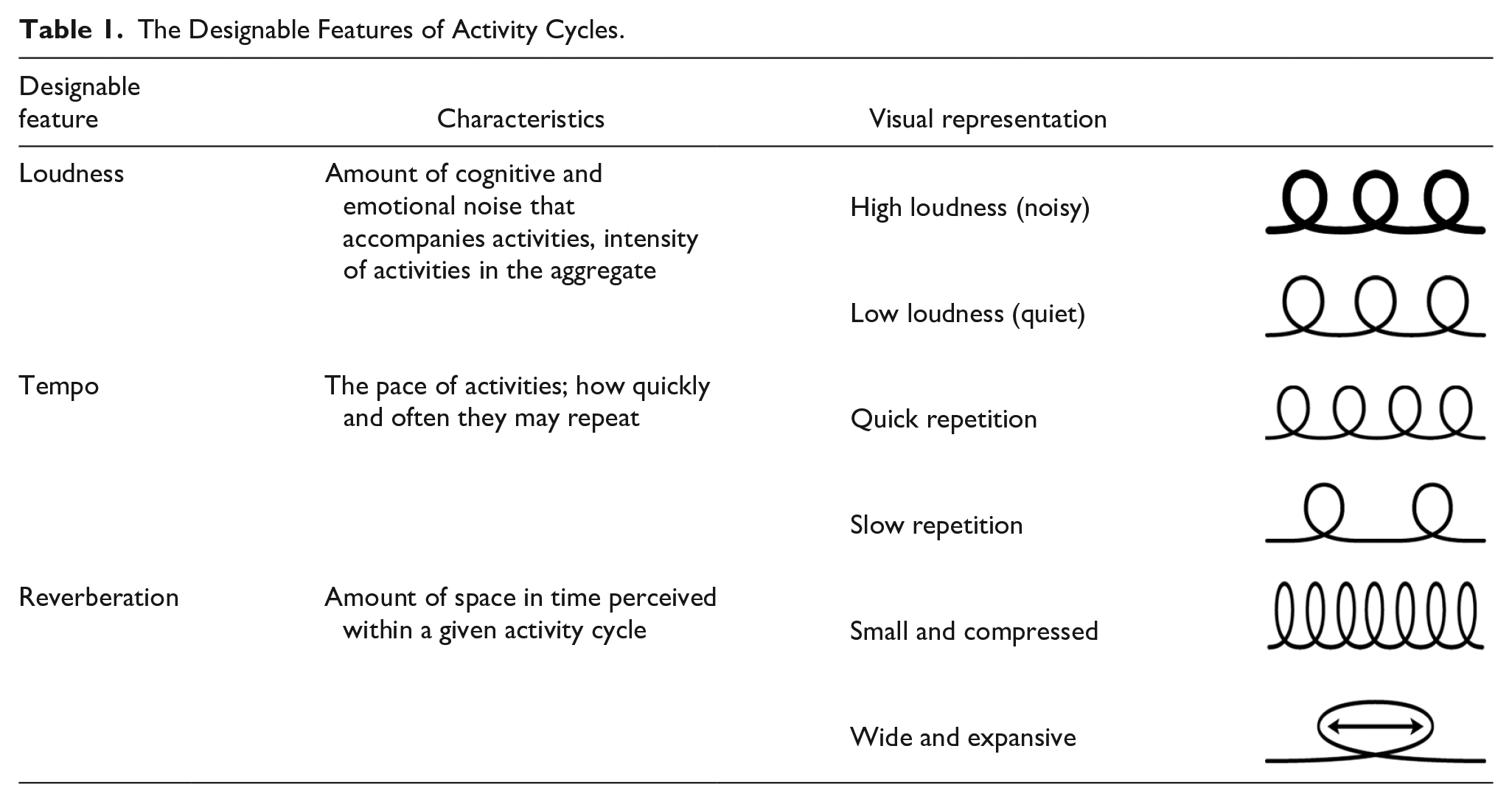
The Designable Features of Activity Cycles.
Data Collection
After obtaining IRB approval for this study, primary data collection began in May of 2018 and continued through 2019. Through the informed consent process and a presentation about the project at a HIRO meeting, the researchers and participants discussed that the data would be used to assess HIRO’s communication and work processes and in academic research and publications. Data sources, collected in two phases, included interviews, observations, and “member reflections” meetings (Tracy, 2013, p. 238). Phase one (May–September) focused on the collection of interview and observational data, and phase two (October–February) focused on the preliminary analysis of data and member reflection meetings.
In phase one, the research team conducted interviews and observations. First, all three authors worked with HIRO leadership and a committee formed by the larger organization to define the nature and scope of the project. We then completed an initial interview with a key informant that lasted for 93 minutes. This interview helped orient the data collection by providing basic information about the organization. The first and second authors then conducted 25 additional interviews (12 each alone and 1 joint interview). The interviews typically lasted three quarters of an hour (M = 44 minutes, SD = 16.56 minutes, range = 16–93 minutes). They were audio recorded, transcribed, and produced 392 single-spaced pages (175,383 words).
The open-ended, semi-structured interview protocol asked participants to (a) describe a typical day of work, (b) identify the individuals or teams they regularly interacted with to get work done, (c) share what was going well in their day-to-day work, and (d) reflect on what aspects of their communication could be improved. Interviewing strategy emphasized surfacing participants’ accounts of their communication, the problems they saw it solving or the goals they saw it addressing, and the accounts of why particular approaches to communication worked or did not. Interviewers asked for specific examples that illustrated the communication at HIRO to encourage rich accounts. The protocol did not include specific questions about time or control. Conversations focused on general work activities, organizational relationships, and communication. Time and control emerged as topics in the data collection process.
The first and second authors also engaged in 40 total hours of observations of bi-weekly department-wide member meetings and job shadowing. The bi-weekly meetings brought HIRO together to share expertise, talk across teams, promote initiatives, and hear from presenters. The first and second authors observed six bi-weekly meetings together, and the second author observed one alone. The third author attended an ad hoc meeting focused on a specific project. The authors captured key moments, actions, and participant details in jottings later elaborated as thick description. The second author also spent 4 days shadowing a member of HIRO who worked at a key nexus of interaction in a shared workspace. The resulting field notes comprised of thick descriptions of observations and contemporaneous memos totaled about 40 single-spaced, typed pages (20,060 words).
These observations deepened our understanding of work at HIRO by allowing us to see members communicate with each other. This understanding informed follow-up questions during interviews and member reflection meetings that prompted participants to explain the rationales for their communication choices. Combining observational and interview data in this way improved the rigor of the data collection by asking participants about specific moments rather than relying solely on their accounts of them. Throughout phase one, the research team met approximately once per week to compare notes, share stories, and coordinate research strategies. Data collection continued until comments and observations tended to produce similar and recurring information.
In the second phase of data collection, the third author facilitated a series of member reflection meetings to clarify and check our initial analysis. Tracy (2013) contrasted member reflection with member checks, member validation, and host verification in that, rather than seeking only correspondence between member accounts and the findings, member reflection intends participant feedback as a “space for additional insight and credibility” (p. 238). That is, the meetings served as a check of the findings and also involved additional opportunities for participants to elaborate how they could or would make choices about communication. We shared preliminary findings, invited participants to amplify, clarify, modify, and challenge findings with their own examples and stories, and, in the third meeting, prompted participants to discuss and share actions they planned to take having heard and talked about the findings. The first and second authors took notes regarding examples, reactions, and emerging strategies. In the first meeting, the research team met with the two senior leaders. The second meeting expanded to include the team leaders. The third meeting was a preliminary findings workshop with the entire department led by the third author. These member reflections provided opportunities to ask follow-up questions and observe new examples. Across the data collection process, the emphasis was on thick description in note taking and in soliciting participants’ accounts, triangulation of multiple types of data, and member reflections. This helped ensure the credibility, dependability, and confirmability of the findings.
Data Analysis
Data analysis took an iterative approach guided by the research questions. Led by the first author, the analysis alternated among (a) data analysis of the interview transcripts and field notes and notes taken during the member reflection meetings, (b) reviewing the research literature, and (c) meeting with the research team. This iterative process combined inductive analysis from the data and deductive analysis inspired by resonance we observed between the data and relevant literature (Ballard, 2009; Ballard & McVey, 2014; Ballard & Seibold, 2003). Furthermore, this analysis took inspiration from the preliminary findings produced by the research team for the member reflections, which focused on general observations about communication difficulties and complexities including but not limited to temporal issues how participants made sense of and elaborated on those early findings in the meetings.
Data coding consisted of three stages (open, axial, and selective coding) and constant comparisons of the codes, categorizations, and exemplars. To begin, the first author analyzed the interview data line by line, flagging comments related to time and temporality. For example, during interviews, participants had characterized their work environment as difficult to keep up with and stressful. Comments explicitly conveyed time, such as “I do this all the time,” or “I don’t have the time.” Others indicated temporality indirectly, such as “heavy meeting days,” suggesting a densely populated schedule or “the more email you send, the more you get back.” Ballard and Seibold’s (2003) temporal enactments and construals provided sensitizing concepts. In total, 387 comments were flagged in the first round of coding.
As the first author engaged in open coding, apparent connections among member role differences, time, and control emerged. For example, participants’ comments highlighted differences in choices about communication and time made by staff and managers. This distinction combined with a focus on the specific communication and temporal choices made by participants guided axial coding, in which the choices that members described and that we observed were compared across groups (RQ1 and RQ2). This axial coding focused on participants’ accounts of their experiences with and efforts to shape particular activity cycles. The team then analyzed these categorizations to make sense of the exercise of control indicated in them (RQ3).
In addition, throughout the analysis process, the research team met to discuss categorizations, challenge interpretations, solidify definitions, and verify that the categories reflected the underlying data. Throughout the process of analysis, we returned to field notes to examine the confirmability and credibility of the findings as they emerged. In summary, the categorizations that emerged revealed temporal difficulties at HIRO, the communication choices that individuals made to navigate them, and differences in the exercise of control. The first and second authors engaged in selective coding to highlight examples for the findings that follow.
Findings
First, we sought to identify the dominant activity cycles at HIRO (RQ1), and how participants navigated these activity cycles through choices about communication (RQ2). Because activity cycles involve the rhythm, pacing, and repetition of work tasks in time, a metalanguage inspired by literature on music and sound proved helpful (Levitin, 2007). Music is at once temporal, cyclical, and communicative, and a robust language exists for describing music in text. We drew on Levitin’s (2007) work to describe and represent activity cycles (see Table 1).
HIRO team members navigated (a) loudness, referring to the noise, amplitude, or volume of work; (b) tempo, referring to the pace or speed of work; and (c) reverberation, referring to the amount of temporal space members perceived (RQ1). Loudness, tempo, and reverberation highlight different ways that the variability of tasks and time windows in activity cycles can combine in choices about communication. Together, these concepts describe the features of the activity cycles at HIRO. They also point to the choices team members might make about their time, communication, and work. For example, although team members described their work as loud, fast-paced, and constricted, they also expressed communicating to try to make it quieter, slower, and spacious.
Second, the analysis identified three themes that describe how members navigated the characteristics of their activity cycles (RQ2). These included (a) struggles over focused time, encompassing the choices members tried to make to escape commotion cycles and find time for concentration; (b) struggles over constant connectivity, referring to choices members tried to make to plug in or plug out of work tasks; and (c) struggles over scheduling, meaning the choices members tried to make that involved scheduling and calendars.
Third, the analysis considered these struggles in terms of control (RQ3). The findings showed that members’ choices about communication and time—and the reach and efficacy of those choices—depended on their ability to exercise control. The dominance of commotion in activity cycles stymied members’ efforts to change how they worked. The findings also showed that leaders’ attempts to mitigate commotion tended to exacerbate it. The broader imperative to work more and work faster exercised its own sort of control in choices about communication.
Activity Cycles at HIRO (RQ1)
The activity cycles that dominated HIRO’s work were apparent in members’ descriptions of their day-to-day work patterns. Members described shifting among tasks, juggling responsibilities, interruptions, sudden emergencies, “putting out fires,” and flurries of meetings. Participants said they struggled to make time for activities that required significant focus.
They explained, too, that during moments of focus, commotion activity cycles continued in the background. For example, we observed that recurring meetings might have offered breaks from commotion but did not. They were cyclical, occurring weekly or bi-weekly, seemingly without interruptions from other work. We noted members working on email and checking smartphones during meetings. In interviews, members expressed frustration that the time spent in meetings allowed other tasks to “pile up.”
We characterized work at HIRO as dominated by commotion activity cycles because participants reported and we observed their experience of time as short; their tasks as immediate, blurring, and jarring; and their communication as intense. Commotion dominated. Specifically, it was evident in the (a) loudness, (b) tempo, and (c) reverberation of their activity cycles.
Loudness
If the tasks and physical environment of work were a volume dial, at HIRO the dial would be turned all the way up. HIRO was a temporally loud organization in that the amount of work was considerable and the environment where work took place was distracting. Loudness refers to the amplitude or volume of a given tone (Levitin, 2007). In this analysis, it encompasses the noisiness or quietness of the day-to-day work life described by participants. Temporal loudness was the experience of racket in a scramble to accomplish work. Participants worked in open offices where they could see and hear what others were doing. They said that co-workers often passed through, distracting them from their work. They explained that they welcomed the chance to connect with people but also found the distractions overwhelming.
Across roles, participants described work tasks in the following terms. They had “a lot of email and meetings” and “constant interruptions.” Managers were “highly scheduled.” Staff spent “a lot of time answering questions.” Sam (TL) said she received 150 to 200 emails a day. Jim (TL) remarked it was “horribly frustrating to get to the end of the day and have hundreds of messages waiting.” Blake (TM) told us that “everybody’s just stretched really thin . . . I just don’t think that there is a lot of . . . communication because everybody is off doing their own thing kinda busily.”
Staff seemed more affected because their offices were the most open. Managers, in contrast, had semi-private offices with glass doors that could block noise. Participants often described tradeoffs between availability and distraction. The ability to approach a coworker instead of emailing them was convenient, they explained, but it also meant they were always interruptible. For example, Deb (AP) said: I sort of get a lot of ‘Where’s this? Where’s that? How’s this? How do you do that? Who does this? Who does that?’ So ‘we’re out of coffee.’ It’s just a continual . . . I spend a lot of time answering questions.
Similarly, Janice (AP) shared: If people come [in], they’re looking for someone to tell them where to go. They look down the hallway . . . and they see me. I spend . . . a significant bit of time just telling people where to go, and being nice, and all of those things. So there are just a lot of natural interruptions in what I do.
Regina (TM) described a similar dynamic, explaining, “What’s really not working well the most is the seating arrangement. Cuz there’s just way too much . . . Like I want to talk to people and socialize about, but I know that’s a distraction for me.” These examples illustrate the loudness of their work. Their patterns of activity involved starting, stopping, pausing, and restarting a large number of tasks throughout the day.
Tempo
Tempo refers to how fast or slow something occurs, like the beat of a given piece of music (Levitin, 2007). Participants described their communication as accelerated and agitated. The difficulty members had in keeping up with communication activities and their desire for quick communication illustrated the fast tempo at HIRO. Camila (TM) told us that things “move quickly around here . . . so there’s a lot less room for error.” Regina (TM) commented that “people are pretty fast at responding to email.” Rapid email responses, quick face-to-face check-ins, and pressure to respond immediately when coordinating collaborative tasks and meetings were typical.
HIRO had ambiguous rules and norms surrounding tempo, specifically regarding when and how much communication should take place. A senior leader indicated during multiple meetings that staff should not work on the weekends. On multiple occasions, the organization encouraged everyone to distinguish work and personal life with clear boundaries between them. Nonetheless, messaging—particularly email among the members at HIRO—occurred rapidly, often throughout the day and on the weekends. Participants mentioned that sending and responding to messages outside work hours meant they felt “always plugged-in,” constantly being notified of new messages. “They email me at four in the morning,” said Pam (AP). “I see flags in my sleep,” she added, referring to an email organizing system. Participants described this system as useful when they did not have time to respond in the moment so they could return to the task later. Unfortunately the time to return rarely materialized. Frequent messaging at irregular times contributed to the sense of time pressure. Participants reported responding faster to keep up, thus increasing the tempo.
The length of messages contributed as well. Participants expressed frustration with what they described as “long-winded” and “wordy” emails, meetings, and interpersonal interactions. Long messages added to the tempo as well as the loudness of work, in that they added to the amount of information and the collective desire for speed: “It’s like, get to the point. What do you need from me?” said Kris (SL). Sam (TL) told us “I hate too much information.” These individuals saw speeding up as a way to manage the loudness. Participants explained that they wanted more efficient communication. Good communication, they described, should take less time. They argued for more bullet points and faster replies. The fast tempo of communication, and the logic that faster communication would relieve the fast tempo, contributed to the prevalence of commotion.
Reverberation
Reverberation refers to the size of a space and the movement of sound in it (Levitin, 2007). In concert halls, because sound waves travel farther, sound is perceived as expansive. In contrast, smaller rooms seem tight and constricted because sound waves hit the walls faster. In this context, reverberation captures the experience of time as expansive and abundant or limited and scarce. Participants at HIRO described time as short and limited. “I don’t have enough time,” was a common refrain in interviews. They explained they simply could not accomplish all the tasks they needed or wanted to complete. They reported being involved in so many initiatives that many had to be put on the “backburner,” sidelined to be completed later. Participants characterized meetings, email, and interruptions as keeping them from those tasks. A few participants mentioned they had little time for “the real work,” which for them meant research, creativity, or strategic planning. They explained that time for tasks requiring focus or concentration was elusive, and that the tasks they did devote time to felt like busy work.
The specific demands on managers’ time complicated reverberation in their activity cycles. Managers reported very little flexibility. They were highly scheduled and often held jobs in multiple areas of the wider organization. Staff concurred. Staff and managers often spent entire days going from meeting to meeting with few, if any, breaks in between. Oscar (TL) told us he did not necessarily know what meetings were next but relied on his calendar to keep him on task. “What I know,” he admitted, “[is] that I’m busy and all these things.” Managers held multiple roles in different parts of the organization, too. For example, Drew (TL) had clinical duties in the morning at one building where she hardly used her office, and then she had to walk a couple of blocks to another building to work for a completely different department. Another participant explained that his duties for another part of his work took him away from his team, but that while performing these duties he felt that he was also doing the additional, communicative work to further the goals of his team. He wanted to know how he could catch up.
Being “caught up” was relative. Rita (TL) told us she tried not to be more than a week behind on her email and indicated that most others were even more behind. Drew (TL) received a request to drop everything and write a project proposal in a day. “You’re kidding,” Drew said, “Because that’s not usually how we write a proposal . . . in a day.” These examples show that the reverberation of activity cycles at HIRO was tight and constricted. A worker could be a week behind in email, and a sudden project or deadline may force them to drop everything. Participants explained that days of meetings and jobs in other units also contributed to their feeling of time filling up. Sydney (TM) described feeling she was competing for “eyeball real estate” when she crafted email. Participants did not report having expansive temporal space where more room for reverberation might allow for activity cycles other than commotion.
Communication, Control, and Commotion in Time (RQ2, RQ3)
Members at HIRO navigated activity cycles exhibiting high levels of loudness, quick tempo, and constricted reverberation. RQ2 focused on how members managed activity cycles. We found three themes to illustrate the struggles members faced as they made choices about communication and time. These were (a) struggles over focused time, (b) struggles over constant connectivity, and (c) struggles over the schedule. How members responded to these struggles—the choices they sought to make and implement about communication—also demonstrated their agency in their organizing. To address RQ3, which focused on how members’ choices demonstrated control over activity cycles, we considered role differences in their choices and the scope and reach of their choices (see Table 2).
Collective Struggles for Control over Time.

Overall, we found participants’ capacity for making choices about time and communication—and thus influencing activity cycles—differed across roles. Managers tended toward choices such as task refusal and protecting their time, whereas staff tended toward choices such as shifting tasks and plugging in often. The animating questions that bound these choices together centered on (a) who or what controlled time and communication for each participant and (b) how participants perceived their capacity to control decisions about their time. The finding that managers might exercise more control over their time or that staff might perceive managers’ time as more valuable is not in and of itself surprising. What is remarkable is that even leaders’ choices were constrained and their efforts to move away from commotion spurred more commotion. The emergent dominance of commotion activity cycles at HIRO stymied leadership’s explicit efforts to advocate for more concentration activity cycles and for flat hierarchical arrangements.
Struggles over focused time
Participants managed commotion by deciding when to allocate time to do work that required focus and concentration. They explained that because of the abundance of meetings, emails, and distractions, they had to find the time and physical space to do work that allowed them to concentrate without interruption. Their choices reflected a desire to circumvent the dominant commotion activity cycle by creating pockets of time wherein they could attend to important projects or correspondence. Creating pockets of focused time allowed them to simultaneously reduce the loudness of work, slow down the tempo, and create moments with more space for reverberation.
Although everyone at HIRO worked long hours, organizational role influenced how they made and enacted choices about communication and time. We observed and managers reported being able to (a) allocate time for focused work during the 9 to 5 work hours; (b) refuse interrupting, distracting, or irrelevant tasks; and (c) reduce visibility by closing their office doors to block distractions. In contrast, staff were perpetually visible because they worked in an open office. In response, staff often shifted focused work outside of the 9 to 5 timeframe. For instance, Janice (AP) told us she stayed late, putting in 11-hour days, because “That’s when work gets done . . . after everyone else tends to go home.” Paola (TM) arrived at 7:30 A.M. because, she said, that was when the office was quiet. Pam (AP) worked from home at night. She explained it was necessary to “wrap her head around” the work because she could not focus during the day. Working from home also meant less visibility. “I need 4 walls,” Regina (TM) told us. “Also, I need window coverings, so you don’t know I’m inside. I need isolation.” Staff reported that finding less visible times and spaces let them compensate for the commotion of the workday.
In contrast, managers reported scheduling focused time within the 9 to 5 timeframe as well as the clout to refuse tasks. Managers had office doors they could close, making them less visible and signaling unavailability. Twice a week, Pat (SL) reported scheduling a 4-hour block of “personal work” time to avoid interruptions, and Kris (SL) shifted work that would otherwise be distracting to a specific time by holding an “office hour.” These efforts illustrated managers’ ability to work within the 9 to 5 timeframe to manage commotion to an extent.
Simple refusal helped them manage commotion as well. They explained that simply saying “no” often allowed them to manage the volume of work tasks and prioritize what was most important. Kris told us “I don’t respond to all email. I just don’t. I don’t have time . . . don’t email me if you want my attention. Not gonna happen.” Sam (TM) explained that she put off email to focus. “I have something that I have to do, that I have to think about . . . [I’m] not gonna be able to [do] some email this week to be able to do that.” Pat (SL) agreed: If I come in in the morning, the first thing I do is email . . . and when I’m way behind, I don’t do that. I can’t. Heavy meeting days—there’s no time to get that stuff done. And I refuse to work on them more. I used to do that. I don’t do that anymore.
Together these comments illustrate managers’ ability to say “no,” and allocate time to other work. In doing so, they demonstrated an ability to exert a measure of control over activity cycles through communication. Participants could flex this kind of control, or felt they could, by virtue of their role. In fact, in meetings and in our workshop, managers encouraged everyone to deprioritize email in favor of focused work. However, not all participants would or could.
These examples highlight the differences between managers and staff as they struggled to exert control over activity cycles to access focused time. Managers could refuse tasks, allocate protected time, and close doors. Staff shifted time and space to compensate for commotion. What these contrasting choices say about the collective is that (a) focused time was accessed through reduced visibility, and (b) staff described feeling less equipped to manage struggles with time. An illustration came in an exchange between a leader and several staff members. Staff worked in spaces adjacent to a manager’s office. Closing the door to the staff area meant closing the door to the manager. To minimize people passing through and interrupting, the staff asked to close the door. The manager overruled, explaining in an interview: I’ve had a little bit of a disagreement with the ladies working out there who want to leave that door closed because too many people are coming through there to ask directions and things like that. And I said “Yeah I understand that, but I want an open-door policy.” I don’t want to look like we’re trying to hide behind a door.
The staff asked to close the door in an attempt to exert control over their time and reduce visibility. The manager overruled them, deciding if they were seen and available for interruptions. Notice the contradictory communication choices: The manager sought to maintain an open-door policy and simultaneously limited the autonomy of others to control their space and time of work. The “open door” became an unintended temporal barrier. Ironically, the manager could close his office door when needed even if it still left the staff door open. He described doing this about half the time.
Struggles over constant connectivity
Choosing when to access ICTs presented problems of perpetual contact well-documented in other literature (Katz & Aakhus, 2002; Mazmanian et al., 2013). Choices about when to plug in involved checking, engaging with, and responding to messages. The more often individuals checked messages, the shorter the time intervals among communication events. Again, leader and staff choices differed. For staff, choices about plugging in led to being available at all times. They reported checking messages often, which meant that time away from the job occurred in smaller and smaller intervals. In contrast, managers described strategies for digital communication wherein they automated messaging. Automation helped them make longer messages in less time and shift when they were sent. These efforts were an attempt to manage commotion but produced ambiguous norms surrounding when, how often, and with what level of detail members should communicate.
Staff described staying perpetually connected in an ongoing effort to stay “caught up.” Pam (AP) remarked that her work “required” her to “stay plugged in all the time” because she was consistently receiving new messages. She described a process of returning to email at home in the evening to make sure she did not miss anything and receiving messages and RSVPs to meetings for leaders at all hours of the night. “I had to take the notifications off my phone because they email me at four in the morning,” she said. “Everything that they are going to, I’m getting a notification for it.” Pam turned off some notifications—a show of control over time, but the number of alerts and messaging at off-hours contributed to feelings of anxiety. “These are leaders,” she commented later. “You can’t mess up.” Not messing up meant plugging in.
Paul (TM) also described feeling plugged in all the time. He reported that he checked his email at night, during morning commutes, and even when he was on vacation. “I think there’s something unhealthy about that,” he told us. “I think there should be some time when we check off of work and say this is enough . . . I’m calling myself out on that.” Regina (TM) discussed similar difficulties. “I’ve been trying to stop,” she mentioned in her interview. “I read it at home as well . . . I probably spend way too much time on email. I check it when I first wake up.” Paul and Regina demonstrated perpetual contact with ICTs, and although they expressed conflict with their decisions, they still reported that they engaged with devices often. All staff felt that time away from work was important. Managers even suggested team members avoid checking devices or sending messages outside work hours except in cases of emergency. However, the choice to stay connected persisted. These practices demonstrate the difficulty of disconnecting and the dilemma staff described to stay plugged in.
The question of why they felt this pressure despite managers’ guidance that they should not presents a puzzle. Multiple managers were adamant that staff avoid work on the weekends and reported taking care to avoid explicit pressure to stay connected. They remarked in interviews and in meetings that HIRO team members should have a sustainable balance between work and home. Nonetheless, team members struggled to disconnect.
These practices may reflect social expectations around the use of digital and mobile technology, but also in this case, managers deployed two communication strategies that muddied expectations for staff. The first centered around automating message length. According to members, one leader had a reputation for replying to every email, responding quickly, and sending long messages. Participants described this behavior as though it was magical. Sam (TL) explained, “If I shoot him an email, he’s probably already answered the email before I can hit send. That’s how fast he is.” Others noted with awe that he sent long, three-paragraph replies. “I don’t know how he does it,” Blake (TL) wondered.
In interviews, the leader revealed that he automated messages to create lengthy, quick replies. The automation was impressive, but not magic. None of the participants seemed to know it was taking place. Instead, they described him as superhuman, faster than everyone else, and online more than others. His communication choices set expectations that countered and overrode his guidance. We observed him mention on multiple occasions that he did not expect HIRO team members to respond with such lengthy, quick messages, but they still reported feeling they needed to match this level of detail.
Another automating strategy managers developed was to set specific times for sending messages. Twice, a manager mentioned another leader who sent email on the weekends despite encouraging staff to do otherwise. “You know when you do that you set the expectation that everybody else ought to do that?” he told us. To resolve the issue, he suggested team members “work offline,” so that they could write emails when it was convenient for them, all to be queued in an outbox and sent off during the next available business hour. Working offline at inappropriate times like the weekends was meant to create the illusion of work-life balance. Instead, team members came to expect the blitz of emails first thing Monday morning. Shifting perceptions of work time by working offline backfired, because HIRO team members knew leaders were working during the weekend, and so they did too. Other participants’ descriptions of this offline strategy varied. They explained they worked offline most or some of the time or that they never worked offline. They also differed regarding their perceptions of appropriate and inappropriate times for sending messages. HIRO had no specific policy regarding when messages should be sent.
Participants’ responses highlighted the complicated mix of problems with constant connectivity at HIRO and control over time. On one hand, HIRO members got quick, lengthy replies from a leader at a tempo they found astounding. On the other, they were told not to work on weekends or that they could but should work offline and automate timing so that messages were received at appropriate times. Facing this ambiguity, participants who were anxious about how they were being evaluated or afraid of missing time-sensitive notes explained that they felt the best approach was to stay in perpetual contact just in case. Leaders’ automation strategies were meant to provide members with time flexibility. Instead, they increased commotion. Staff felt they had no choice but to remain in perpetual contact, spurring cycles of commotion, and reducing their ability to exert control over time.
Struggles over scheduling
Scheduling was difficult at HIRO because of the sheer number of meetings, appointments, and events. As stated above, control over time centered on the choices members made in response to commotion. For example, APs managed leader calendars and developed scheduling strategies contingent on “key” players. This left others to organize their time and calendars around those deemed “key.” APs exerted control over managers’ time, demonstrating agency, but it was the perceived value attached to that time that pressured others to conform their schedules accordingly. The struggles over scheduling demonstrated how staff aligned their schedules with managers’ and compensated when managers were unavailable.
APs described themselves as calendar “gatekeepers” and schedules as complex puzzles. They needed to fit brief intervals of time together based on managers’ needs and preferences as well as the urgency and strategic importance of projects. APs explained they scheduled meetings weeks, even months, ahead of time. This gave them wider time intervals in which to place events, but it also communicated to others the scarcity of managers’ time. Managers were not available now or soon, only in the distant future. Those “key” managers were especially difficult to pin down, and were given even more priority. “Some folks are more accessible than others,” Pam (AP) told us. “It’s really hard to get [an SL] into a meeting.” She described a process that centered around a particular leader. “I had to learn when I started here,” she said. “Start with [the SL’s] calendar, and when [they are] available, and shape the rest of the group around [them]. That is a special task.”
This approach worked. Others changed their schedules in response to Pam’s actions. Her strategy demonstrated the value attached to these people’s time. Janice (AP) remarked that others would “find” time in their schedule if it became clear that a manager might not otherwise attend: I remember trying to get some meetings going . . . I’d be throwing out all these times and I’d be trying to coordinate [multiple individuals] in these windows of open time, and they’d be like no, no, no. And I’d be like okay, who are the key people? So, I would take the three key people and schedule around them, and then magically people would be available. I finally had to learn . . . I am scheduling around these people and unless there is something really significant. They are out of town or whatever. Most people follow suit.
Janice and Pam’s efforts address the problems of time scarcity and commotion by deferring to formal hierarchy. Accommodations that might be consistent with the goals of more egalitarian organizing did not work. Instead, team members conformed to managers’ schedules.
Managers also explained that special projects allowed them to circumvent commotion activity cycles for some time. Jim (TL) temporarily withdrew from regular meetings and routine work tasks to allocate time to a special project. He explained: This last month or two have been incredible because [my leadership committee] blocked a lot of communication to me in order to help me dedicate time towards [this project] . . . It’s made it really nice because I’ve been at my desk. So anytime that . . . anyone has really needed me, they can come and find me. That’s been highly valuable where . . . before this time dedicated for the [project, I] would be running around.
Jim escaped the day-to-day commotion activity cycles. He reported that other staff were hesitant to come to him with other tasks during the day. At the same time, this blocking contributed to commotion overall by shifting activities to others. During an observation of the routine meetings that followed Jim’s project, team members teased him about covering for him while he was focused on the project. This example shows that cycles of creativity and concentration were nested within dominant commotion activity cycles but also exacerbated them. In this case, Jim secured time to focus, but his team had to pick up the slack. This illustrates how individuals’ choices about time and work have implications for others. That is, making choices that prioritize creativity and concentration for one individual can magnify commotion for others rather than reducing it on the whole.
The choices members made about scheduling showed that the value attached to leaders’ time was important for issues of control. In this case, scheduling was a way of asserting hierarchical status for leaders without explicit acknowledgement that deference to hierarchy was present. What is interesting here is the indirect path that control takes through communicating about time. Leaders’ packed schedules indicated somewhat that they lacked control over their time, and their time was wielded by APs to organize when meetings took place. Staff conformed their schedules to leaders’ and honored the boundaries for special projects. Leaders did not have to assert control over scheduling per say. The perceived value of their time did it for them. Deference to leaders’ time emerged, in part, because commotion was so prevalent. Deference helped members make sense of and navigate dominant commotion activity cycles.
Discussion
The temporal difficulties at HIRO were evident in the loudness, quick tempo, and constrained reverberations participants described as antithetical to their work. Following Ballard and McVey’s (2014) conceptualization of activity cycles, commotion activity cycles marked by jarring, quick, and turbulent work dominated HIRO. Team members grappled with distractions, ambiguity, and time deficiencies. They attributed the difficulties to being a new and fast-growing organization. They sought to shift and sculpt how they worked—their activity cycles—by making choices to control communication and time. The extent to which participants could shape and shift cycles was evident in their struggles with the (a) visibility and availability of focused time, (b) constant connectivity, and (c) scheduling processes. Even leaders were subject to the turmoil that commotion activity cycles produced, demonstrating that control over time emerged in choices about communication but also in the force of HIRO’s activity cycles themselves.
This study makes the following contributions to theory and practice. First, it contributes a textual and visual vocabulary for describing the patterning of tasks and timing in activity cycles by borrowing a metalanguage from sound and music. In doing so, it highlights loudness, tempo, and reverberation as foci for the study of time and temporality in organizing. Second, it extends work on organizational control as evident in choices about work and communication. The findings revealed a temporal form of control evident in activity cycles related to but distinct from simple, technical, bureaucratic, or concertive forms of control. Third, it confirms and extends the work of Ballard and McVey (2014) by answering calls to understand how temporal patterns flow from the choices workers try to make about time and communication. The findings have value for addressing pervasive societal concerns about how we spend time and how we should. The following sections elaborate on each contribution and highlight directions for future research and ideas for practice.
A Metalanguage of Sound, Temporal Choices, and Embedded Activity Cycles
Using a metalanguage of sound to describe activity cycles attends to their fluidity, (un)predictability, and interrelatedness. Collectives engage in interdependent, varied, overlapping choices about time, and temporal structures at any given moment (Ballard & McVey, 2014; Orlikowski & Yates, 2002). As individuals attempt to shift, sculpt, and nest activity cycles within others, their choices are anchored by the temporal context in which they are made, be it harmonious, cacophonous, or in between. This study extends the empirical knowledge and theoretical explication of temporal structuring by unpacking the rhythm and cadence of activity cycles defined in Ballard (2009) by tasks and time.
What is designable about activity cycles is illuminated and problematized by using sound as a lens. For instance, activity can be thought of as a volume dial. Turn the dial up, and cycles become chaotic and loud. Turn it down, and they are hushed. When individuals confront environments where the dial is always turned up, the problem with accessing quiet becomes clear: How can work’s loudness be reduced when collective activity works to maintain it at high levels? It is difficult to turn the volume down on the range of activities that increase loudness when efforts to create quiet such as shorter emails and additional communication channels add more noise to an already cacophonous space.
This auditory metaphor extends research that conceptualizes contemporary experiences of time as pressured or compressed (Hassard, 2002; Wajcman, 2015) by providing vocabulary to describe the inertia of time pressure. Here, the problem of constant connectivity is not just that pervasive tasks encroach on time, but that the loud, fast-paced, and constricted cycles of work have their own momentum. The inertia of commotion activity cycles limits the range of available communication choices, making other cycles and options relatively inaccessible.
Furthermore, our analysis indicates that attempts to carve out new space for an activity occur within and among other potentially competing cycles. Any wide timeframe that offers plenty of room for reverberation also contains layers of overlapping activities occurring within smaller timeframes. The more tasks that are embedded in a wide timeframe, the less room for reverberation there is, and the more constricted all time becomes. For example, managers’ efforts to encourage activity cycles of concentration were stymied by their own communication practices. The contradiction is evident in (a) one team member’s open-door policy that created barriers for others and (b) the automation meant to save time that also suggested to others an unobtainable ideal of communicating more, faster. The prevailing temporal structures moderated staff members’ and leaders’ choices, as well as the exercise of managerial control. Future research should consider how actors try to cultivate particular activity cycles and the implications of those efforts in organizing. For example, automation tools that save time for some may contribute to the frenzy of tasks for others and mark commotion activity cycles in the aggregate.
Temporal Control
These findings also extend and build on prior conceptualizations of control. The efficacy and reach of participants’ choices illustrate a hybrid system of control that was at once simple, technological, bureaucratic, concertive, and also temporal. No one at HIRO could act completely outside the influence of the dominant commotion activity cycles, and at the same time, choices were more or less constrained depending on role. Control over commotion was also not fundamentally altered by directive, procedure, or peer influence. It operated outside the purview of any one form of control.
The visibility of choices mediated the influence of the commotion activity cycles, which meant the collective emergence of commotion exercised a sort of control interdependent with formal authority but not determined by it. Choices available were contingent on others’ choices just as participants’ agency in their organizing was embedded and contingent. Managers’ time had different value and influence on others’ use of time which deferred to bureaucratic control. Yet, managers’ efforts were also constrained. Managers sought to encourage more egalitarian and focused uses of time through announcements at meetings and via email messages. They indicated that everyone should set aside time for concentration and creativity by providing direction about the timing of communication and by carving out time for specific team members to work on specific projects. However, the efficacy and persistence of their control was contingent on others’ choices and on the prevalence of commotion activity cycles. This stands apart even from concertive control where member norms and behaviors discipline worker conduct (Barker, 1993). At HIRO, members were also disciplined by the rhythm of activity and patterned coordination, which served management’s interest in getting work done. The dominance of commotion activity cycles demonstrated a temporal dimension to hybrid systems of control. Future research should explore how dominant activity cycles emerge, are negotiated, and resisted. This research confirms the difficulty of disrupting common activity cycles.
Finding Time in Commotion
These findings have implications for all workers who seek the focus and time to accomplish more complex projects. They show that the difficulties of constant connectivity are experienced differently by those who can exercise control over their choices about communication. Mazmanian et al. (2013) documented the power of individual workers’ and their rationales for constant connectivity. Their findings raised questions about the power-laden nature of individuals’ choices but stopped short of considering the interconnections among those choices. This study revealed that collective efforts to make choices about communication and time overlap and interact, especially when those choices are visible in organizing. In these data, the common recommendation to carve out time for focused work backfired for the organization as a whole. The findings underscore the need for this sort of research in debates surrounding open offices, constant connectivity, and overscheduling. These temporally-bounded, communication phenomena play out in the choices of individuals, teams, and organizations.
The findings also demonstrated activity cycles in tension. The dominance of commotion may be best understood in the context of the frustrated desire for concentration. Participants reported having too little time for concentration. They incorporated routinized work-related activities outside of suggested work times. They checked email at night and worked on projects at home to create concentration activity cycles. In fact, the tension between commotion and concentration may have contributed to the very cacophony that is characteristic of commotion, exacerbating its erratic character. The tension expressed itself in contradictory advice to focus on work while also building expectations around availability. That managers reported making time for concentration more so than subordinates reflected the inequity in choices about time and the operation of temporal control.
These findings may be useful for addressing the challenges organizations have navigating difficult temporal problems. Awareness of the overlapping, collective influence of dominant activity cycles can help organizations target and alter work patterns. Members can map activities and compare them across roles, surfacing how their time is intertwined and interrelated. Individuals and collectives should consider the choices they have in the loudness, tempo, and reverberation of communication and time in activity cycles to help them recognize that choices are being made and to empower different choices. For instance, if lower status members are shifting activities to compensate for high status members, leaders should empower members to decline tasks and unplug from communication technologies, not just admonish them to do so.
Notwithstanding the value of these findings and their implications for research and practice, this study should be read with its limitations in mind. First, HIRO was a department embedded within a larger organization, and the scope of our data collection relied primarily on HIRO members, making it difficult to disentangle local and organization-wide issues. The investigation also spanned a limited time. The length of our engagement was limited to 6 months of intensive contact followed by another 6 months of more intermittent contact. As a sort of engaged scholarship, this study provided participants space to reflect on and intervene further in their communication based on the findings, and they had only just begun to implement changes based on the research. Finally, these data were collected at an organization focused on research. The need for concentration and creation is acute in research organizations in ways that may not be true in others. Nonetheless, the communicative and temporal puzzles of finding focus in settings dominated by commotion are likely becoming more, not less, widespread.
Conclusion
The findings make clear the difficulties of finding moments of focus even when leadership dictates that team members do so. This study shows that even managers’ efforts to cultivate particular activity cycles may backfire or have unintended indirect effects because of the prevalence of commotion on the whole. Managing the chronic and pervasive sense of time deficiency at HIRO, and in society at large, involves managing activity cycles that can be difficult to shift or escape.
The jarring experience of commotion emergent in the context of frequent, irregular, interrupting communication makes it more difficult to find time for concentration and creation. Solving one temporal problem may cause others. This study demonstrates that the rhythm of organizational activity can be a source of control beyond direct managerial regulation, even as it serves managerial interests. It shows that intervening in the communication that constitutes organizing must involve more than mandates. Effective intervention must include consideration for the day-to-day accretion of choices about communication and their accompanying influence on the temporal patterning of organizing. Research on the implications of this insight is vital, because the future of work will unfold in workers’ relationship to time.
Footnotes
Acknowledgements
The authors also wish to thank Dr. Shiv Ganesh, Dr. Jeffrey Treem, and Dr. Dawna Ballard for their support and stewardship of this work.
Declaration of Conflicting Interests
The author(s) declared no potential conflicts of interest with respect to the research, authorship, and/or publication of this article.
Funding
The author(s) disclosed receipt of the following financial support for the research, authorship, and/or publication of this article: This material is based upon work supported by the National Science Foundation under Grant No. SES-1750731.
