



Abstract
This study examines the ways in which different forms of cultural capital are associated with college students’ subjective well-being and social support. Results show that when social capital is accounted for, cultural capital derived from sports participation was positively associated with subjective well-being and social support. Further, the size and density of discussion networks about culture were positively associated with well-being and social support in general, while the heterogeneity of networks was negatively related. Findings from this study extend previous research on cultural capital by (1) drawing attention to the inclusive aspect of cultural capital, (2) examining online cultural participation as well as multiple forms of cultural activities including popular and sporting events, (3) applying the literature on interpersonal discussion networks to the context of culture and demonstrating the value of communicative action about cultural experiences, and (4) understanding the implications of cultural capital in a college setting.
Keywords
The concept of cultural capital traces back to Bourdieu (1973, 1986), who introduced the theory of economic, social, and cultural capitals as different types of resources for generating profits. Bourdieu suggested that economic capital, which refers to material resources directly convertible to money, cannot sufficiently explain the disparities in children’s educational attainment. Hence, as a theoretical extension beyond the Marxian emphasis on economic relations as the predominant source of class reproduction, the concepts of social capital and cultural capital were developed. In essence, social capital refers to resources that can be mobilized from social relations and structure in which actors are located, while cultural capital pertains to various forms of habits, dispositions, and knowledge gained via exposure to cultural practices.
Social capital has received much attention across disciplines as a factor for explaining outcomes such as civic and political engagement (e.g., Rojas, Shah, & Friedland, 2011; Teney & Hanquinet, 2012); performance of employees, groups, and organizations (e.g., Adler & Kwon, 2002; Burt, 1997); and overall subjective well-being of individuals (e.g., Chan, 2015; Helliwell & Putnam, 2004). In comparison, research on the role of cultural capital has been relatively limited to educational achievements, especially in the context of children’s performance in school (e.g., Bourdieu & Passeron, 1977; DiMaggio, 1982; Purhonen, Gronow, & Rahkonen, 2011). The broader implications of cultural capital for individuals’ social and psychological outcomes have been untapped until recently (e.g., Hyyppä, 2010).
Such gap in literature is partly explained by the narrower definition of cultural capital adopted in earlier studies, which focused largely on “highbrow” cultural codes or activities (Bourdieu & Passeron, 1977; Lamont & Lareau, 1988). The emphasis of cultural capital theory has been on conceptualizing cultural capital as high-status cultural signals. Yet, there has been a call for considering cultural capital as more generalized and encompassing forms of culture (DiMaggio, 1987; Kingston, 2001). For example, Hyyppä (2010) suggested cultural capital be understood as “cultural participation and consumption of various cultural forms” (p. 43). Research on cultural omnivorousness (e.g., López-Sintas & Katz-Gerro, 2005; Peterson, 1992; Peterson & Kern, 1996; Warde, Martens, & Olsen, 1999) addresses the idea that classic highbrow arts and popular arts could be compatible, and an increasing number of people, especially in high-status groups, have shifted toward the appreciation of multiple forms of leisure and culture. Efforts have also been made to test Bourdieu’s proposition that sports operate as a type of cultural capital (e.g., Stempel, 2005; Taks, Renson, & Vanreusel, 1995; White & McTear, 1990).
The call also reflects the changes in today’s cultural landscapes. The rise of the Internet has contributed to the increasingly diffused nature of cultural capital. Previous studies of cultural capital mostly asked respondents’ behaviors and participation relating to off-line cultural activities, such as gallery visits, movie watching in film theaters, and attendance in pop concerts (Noble & Davies, 2009; Yaish & Katz-Gerro, 2012). Recently, however, various online platforms have been providing the means for participation in cultural and arts activities beyond traditional off-line venues of cultural engagement (McCarthy, Ondaatje, & Zakaras, 2001). Purcell (2013) shows that Internet users often go online to obtain information about cultural events and participate in virtual cultural events (e.g., visits to social media pages of their favorite artists, musicians, and performers, following the social media accounts of an art gallery or other cultural organizations, etc.).
Arguing for these broader conceptualizations of cultural capital, the current study seeks answers to two primary inquiries. First, in both off-line and online contexts, we examine the association between cultural capital and individuals’ subjective well-being and social support. Second, uniquely, we add a communicative perspective to the examination of cultural capital. The role of interpersonal discussion networks has been well recognized in the literature on various aspects of community life (e.g., McLeod et al., 1999) including civic engagement (Rojas et al., 2011), political participation (Campbell & Kwak, 2011, Scheufele, Hardy, Brossard, Waismel-Manor, & Nisbet, 2006), and community belonging (Ball-Rokeach, Kim, & Matei, 2001; Kim & Ball-Rokeach, 2006). In these various contexts, the role of communication lies in amplifying social capital and social integration by facilitating the sharing of information and meanings through social ties (Rojas et al., 2011). Drawing from these perspectives, we examine whether engaging in communicative interaction around cultural capital (i.e., interpersonal discussion about cultural information and experiences) with others, beyond cultural capital itself, may contribute to one’s subject well-being and social support. In particular, we focus on the three structural characteristics of communicative interaction, namely, size, heterogeneity, and density of the discussion network.
The current study examines these questions in a college setting. Although a large majority of studies on cultural capital focused on children population, college provides an appropriate and interesting context to examine the wider variety of cultural participation. Involvement in cultural activities as well as sports has been considered an important aspect of students’ college experiences, in particular for maintaining a sense of community (e.g., Dugan, 2013; Warner & Dixon, 2013). On one hand, findings show that younger generation is less interested and involved in traditional forms of highbrow cultural activities (Purhonen et al., 2011). On the other hand, online cultural capital is highly relevant to college setting, given college students’ heavy use of the Internet, social media, and other technologies, which can potentially provide means for virtual cultural consumption and sharing (Smith, Rainie, & Zickuhr, 2011). A study by Australia Council for the Arts (2010) shows that Internet use for arts was higher among youth, with 53% of all 15- to 24-year-olds using the Internet to research, view, or create cultural content. These unique characteristics make college students a relevant and well-suited population for the present study, which addresses the broader forms of cultural capital. However, as well known, the specialized context of college students is hardly generalizable, given that they are strongly embedded in the campus community which cultivates unique social and cultural activities. In particular, considering the boundary of cultural capital adopted in the present study that includes sports and online culture, college students will be a highly specialized group to examine the role of cultural capital. For instance, various aspects of campus life such as involvement in student organizations and other social activities may influence their patterns of cultural participation in ways that are not found in older adult population.
In the following sections, we further discuss the theory of cultural capital, communicative interaction around cultural capital, and its expected association with individuals’ subjective well-being and social support.
Theory of Cultural Capital and Its Conceptual Evolution
According to Bourdieu (1986), cultural capital refers to cultural tastes and styles as well as skills, competencies, and knowledge to understand and appreciate culture. Bourdieu suggested a typology for different forms of cultural capital and distinguished between three types of cultural capital, namely, embodied, objectified, and institutionalized cultural capital. Cultural capital can be embodied in tastes and aptitudes, objectified in physical objects, such as works of art, or institutionalized in the form of institutional recognition such as academic credentials or qualifications. The concept of cultural capital has been originally developed to refer to prestigious forms of culture and the way they contribute to the reproduction of social stratification. In other words, children of the dominant class grow up being exposed to and developing familiarity with culture and are likely to be able to transfer such “inherited” cultural capital toward broader social value, such as success and achievement in school.
The discussions about the concept of cultural capital surround the following two major issues: the scope of cultural forms involved and whether it is referring to preferences or behavior. First, the scope of cultural capital has evolved over time. For example, DiMaggio and Mukhtar (2004) and Prieur and Savage (2011, 2013) showed that the role of high-culture performing arts in cultivating cultural capital has weakened. Commercial popular culture has become pervasive, and the boundary between highbrow and popular culture has been more diffused over time (Yaish & Katz-Gerro, 2012). Cultural capital has evolved to embrace diverse arrays of genres (Prieur, Rosenlund, & Skjott-Larsen, 2008; Prieur & Savage, 2011, 2013) including popular culture such as rock and pop music (Willekens & Lievens, 2014) and sports participation (Stempel, 2005). When considering different cultural backgrounds, there is an even greater amount of diversity in cultural activities (Michalos & Kahlke, 2008).
Second, cultural capital is operationalized by two contrasting aspects, namely, taste, which refers to preferences, and participation, which refers to behavior (Yaish & Katz-Gerro, 2012). Bourdieu’s original notion puts more weight on taste as influenced by parental taste (Yaish & Katz-Gerro, 2012). From this perspective, cultural capital encompasses the ability or attitude to appreciate formal culture (De Graaf & De Graaf, 2002). Recently, the concept has become used to examine a broader range of behavioral aspects such as experiences of culture, participation in culture, and utilization of cultural resources (Lamont & Lareau, 1988).
The present study views cultural capital as encompassing multiple genres including highbrow and lowbrow cultures as well as sports. Further, this study considers participation as the primary indicator of cultural capital. It has been argued that focusing on cultural behavioral choices rather than self-reported tastes better shows their influence on one’s lifestyle (López-Sintas & Katz-Gerro, 2005). Further, the behavioral measures are better suited for examining the differences that might exist between online and off-line forms of cultural consumption.
Off-Line and Online Cultural Capital
Some attempts have been made to understand off-line as well as online dimensions of cultural capital and its formation. For example, in a report by the United Nations Educational, Scientific, and Cultural Organization, Morrone (2006) stated that there is no need for cultural events to happen at particular places and suggested extending the notion of cultural activity participation so that it includes “any context” and “any channel.” The Leadership Group on Cultural statistics (LEG-Culture), which was set up by the European Commission, also developed a system to measure and understand cultural participation and stressed the need to include information technologies such as the Internet as a viable channel of cultural experience (Bina et al., 2012). LEG-Culture suggested the following as examples of specific types of online cultural behaviors: virtual visits to museum sites and exhibitions, use of e-books, use of online resources for information about performing arts, and use of online television. Australian government, in its study on youth and cultural participation, also noted young people’s tendency to use the Internet for creative and artistic activities, including researching, viewing, and creating of music, writing, or artistic performance (Australia Council for the Arts, 2010). Levina and Arriaga (2014) explained how online platforms extend Bordieu’s theory of fields of cultural production and raised the need for empirical studies that would examine online fields in the study of cultural production and capital.
Although some attempts have been made to consider online dimensions of cultural participation and activities, little attention has been paid by academic researchers to understand the use of the Internet for cultural activities or to measure online cultural capital (Malaby, 2006). The current study addresses these underexamined questions.
Cultural Capital and Subjective Well-Being
The impact of cultural capital can be examined at the individual as well as at the broader interpersonal and social levels. At the individual level, cultural capital has been found to influence children’s academic performance (De Graaf & De Graaf, 2002) and attainment (Noble & Davies, 2009; Parcel & Hendrix, 2014). Outside of educational settings, some initial evidence exists on the role of cultural capital in contributing to personal and social well-being. For instance, studies suggest that participation in arts and cultural activities was associated with self-related health (Windsor, 2005) and individual well-being (Dongre, Deshmukh, Rajendran, & Kumar, 2015; Hyyppä, 2010). On the other hand, Michalos and Kahlke (2008) found that art-related activities did not enhance the quality of life when other predictors were controlled for. Similarly, Galloway, Bell, Hamilton, and Scullion (2006) indicated that there is not much evidence for the significant contribution of cultural participation to individuals’ well-being, except for the case of older people. Kim and Kim (2009) found that cultural experience positively predicted happiness, but not life satisfaction. Overall, the link between cultural capital and individuals’ subjective well-being is still a new area of research (Jeannotte, 2003) and the findings are mixed, partly due to the different ways in which cultural capital has been operationalized. In the present study, in an attempt to provide further evidence for this link, we measure two major dimensions of subjective well-being—satisfaction with life and mental health—and also consider both off-line and online cultural capital. We predict that
At the broader societal level, the interaction between culture and social structure has been a topic of interest (e.g., Jeannotte, 2003; Lamont & Lareau, 1988). Studies found that cultural participation and cultural capital have impacts on strengthening social ties and community spirit (Stern & Seifert, 1994) as well as social solidarity and integration (Jeannotte, 2003, 2006). Similarly, Matarasso (2000) found that cultural participation has a positive impact on social cohesion by bringing people together. Hyyppä (2010) suggests that participating in art events and cultural activities is associated with civic engagement in a community. In a recent study, Lizardo (2013) suggests that participation in cultural activities is positively related to the size of one’s personal network. Underneath these findings is the idea that cultural participation can create a sense of inclusion and collectiveness in a given community. As an attempt to extend this line of literature, the current study considers perceived social support. The link between social support and social capital, as well as various aspects of social relations in which one is embedded, has been strongly established in the past literature (e.g., Fisher, 1982; Wellman & Wortley, 1990). In the present study, we extend this literature and predict the association between cultural capital and social support:
Given the inherently different modes of participation involved in off-line and online forms of cultural capital, we suggest that they need to be distinguished from each other in examining their relationship with individuals’ subjective well-being and social support. The study by Windsor (2005) is unique in that it examined the differences between cultural activities via traditional off-line and newer media forms. Her results showed that access to arts through radio, television, videos or DVDs, and the Internet was positively associated with self-rated health, while the effect was not significant when other forms of arts and cultural activities were controlled for. Evidence is still sparse, and therefore, we posit the following research question:
Communicative Interaction Around Cultural Capital
According to Bourdieu (1984), cultural events and attendance are social in nature, and cultural experiences are often gained in social interaction with other people. Other than studies showing that students’ involvement in cultural and artistic organizations fosters their development of shared identity and norms (Barber, Stone, Hunt, & Eccles, 2005; Guiffrida, 2003), this link has not been examined in detail (Hyyppä, 2010). In the present study, we examine the interpersonal discussion and sharing of cultural information and experiences. Specifically, drawing from the literature on the role of communication and discussion networks in individual and community outcomes (e.g., Rojas et al., 2011), three structural properties of the discussion network are investigated, namely, size, heterogeneity, and density (e.g., Campbell & Kwak, 2011; Gil de Zúñiga & Valenzuela, 2011; McLeod et al., 1999).
First, network size indicates the number of people in one’s discussion network, which, in the current study’s context, refers to the number of people with whom an individual discusses cultural information or experiences. The larger the network size, the more one is likely to be exposed to communication of information, opportunities, and experiences of cultural activities (Rojas, 2008; Rojas et al., 2011). Therefore, when cultural participation is accounted for, network size is likely to be positively associated with psychological outcomes.
Second, network heterogeneity refers to the extent to which the people in one’s network are dissimilar in attributes such as demographic characteristics, social class, or views. In general, heterogeneity in one’s personal networks helps one gain access to or diffuse information (Bastani, 2007; Wong & Boh, 2010). Studies examining discussion network heterogeneity have largely been in the context of political communication, and the findings suggest that heterogeneous discussion networks increase political knowledge, the probability of confrontation, and ultimately, political participation (McLeod et al., 1999; Scheufele et al., 2006; Scheufele, Nisbet, Brossard, & Nisbet, 2004). It should be noted, however, that studies have found contrasting outcomes with respect to the effects of heterogeneous discussion networks on people’s position to opposing political views. A line of research has indicated that exposure to heterogeneous networks makes people tolerant toward and aware of opposing perspectives (e.g., Delli Carpini, Cook, & Jacobs, 2004; Mutz & Mondak, 2006; Price, Cappella, & Nir, 2002). In contrast, another body of research has suggested that exposure to heterogeneous political perspectives may strengthen one’s original positions and bring about more extreme attitudes toward different political views (e.g., Binder, Dalrymple, Brossard, & Scheufele, 2009; Wojcieszak & Price, 2010). Eveland and Hively (2009) attributed these conflicting results to unclear conceptualizations of related terms such as cross-cutting (Mutz, 2002), heterogeneous (McLeod et al., 1999; Scheufele et al., 2004), dangerous (Eveland & Shah, 2003), and diverse (Huckfeldt & Sprague, 1995; Marsden, 1987). Moreover, findings about network heterogeneity and its impacts on broader community and societal levels are mixed, with some viewing it as a challenge to civic processes and collective action (Rojas, 2008; Varughese & Ostrom, 2001).
The discussion of cultural experiences is likely to be situated in an inherently different context than in the case of political discussion, with less potential confrontation and conflict of view. In this sense, it can be expected that there will be a smaller advantage of heterogeneity raising balanced view and higher involvement. Instead, communicative action with homogeneous alters may allow more in-depth sharing of experiences and thoughts. Warner and Dixon (2013) suggest that the sharing of common interests was one of the major factors that created a sense of community through sports participation. It is expected that these common interests can be more easily shared with homogeneous alters than with heterogeneous ones. At the societal level, DiMaggio (1987) argued that heterogeneous networks of cultural discussion would lead to erosion of hierarchical systems of culture. Lesser known are the implications of heterogeneous networks of cultural discussion for individuals. Previous studies show that cultural capital primarily concerns the strengthening of ties, reinforcement of values, and trust among close individuals as opposed to bridging heterogeneous individuals (Bourdieu, 1984; DiMaggio, 1987; Jeannotte, 2006). Taking this perspective, we predict that homogeneous networks of cultural discussion will provide additional explanatory power for positive psychological outcomes beyond cultural participation itself. Therefore,
Finally, network density refers to the extent to which people in the network are tied to each other. Dense networks, based on the ideas of network closure (Coleman, 1988), have shown to enable more frequent social interaction. In the current study’s context, people embedded in dense networks are likely to be engaged in more discussion and communication. Therefore, density of one’s discussion networks is also likely to increase the possibility of arranging shared cultural activities and participation with the members in the network. Thus, it is predicted that
Method
Research Setting and Data Collection
Data for the current study were collected from February to April 2013 through an online survey. The survey was administered to undergraduate students recruited from a large Midwestern university in the United States. The students enrolled in participating courses were asked to sign up on a voluntary basis and given extra credit for their research participation. The survey took 15–20 min to complete. Among 579 students who participated in the survey, 574 respondents were considered valid; 5 students answered less than half of the questions.
Respondents were homogeneous in their age (M = 20.6, SD = 1.8). There were 236 male and 336 female students, and 2 did not indicate their sex. In terms of race, a majority was White (64.6%), followed by Asian/Pacific Islander (23.5%), African American (5.3%), and Hispanic (4.4%).
Measures
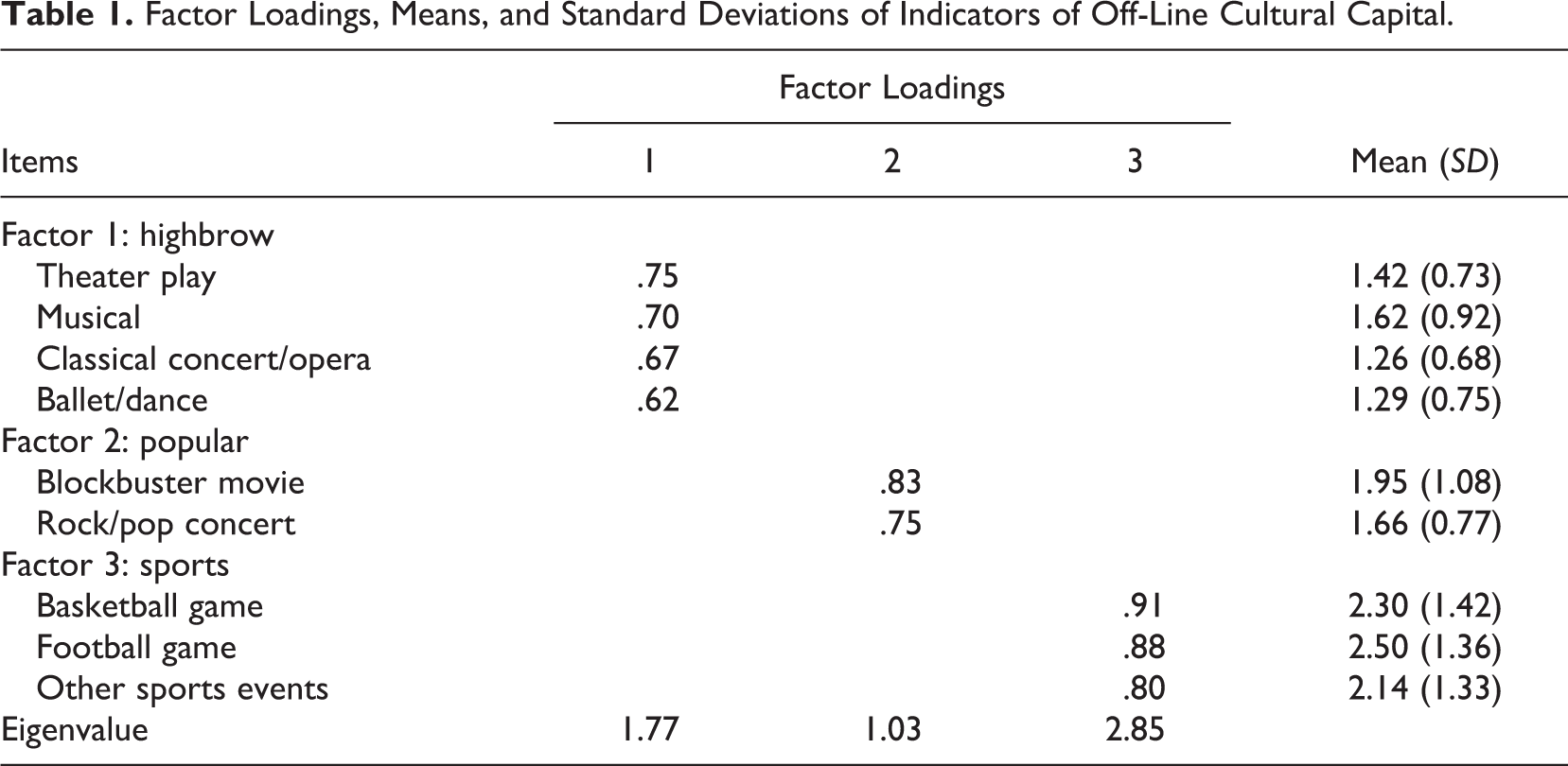
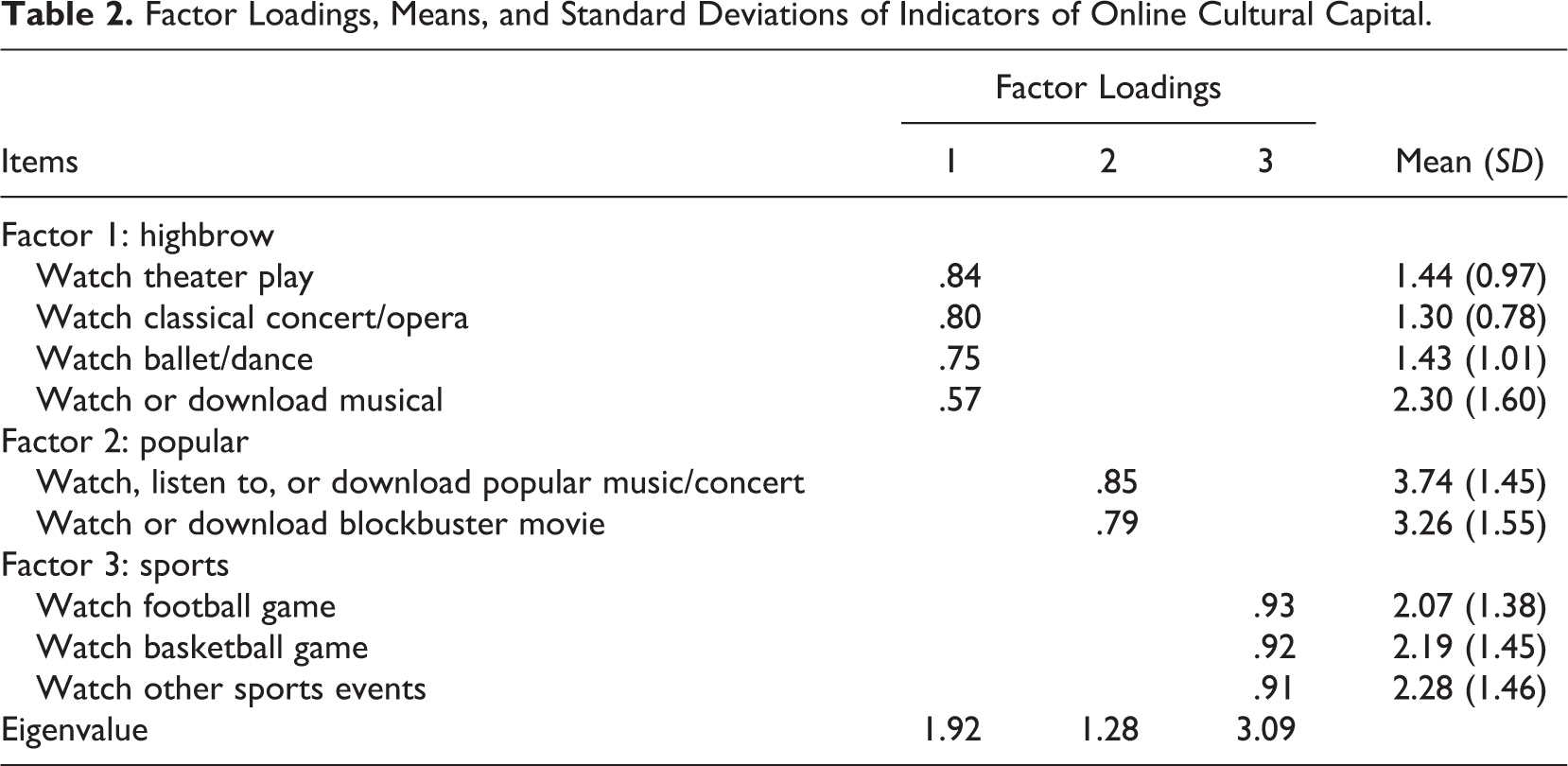
Cultural capital was measured by participation in cultural events in off-line and online contexts, respectively. For each item, respondents were asked to indicate their frequency of attendance during the last 12 months on a 5-point scale (0 = never, 1 = once or twice, 2 = three or four times, 3 = once in two months, and 4 = at least once a month). Off-line cultural capital was measured by a total of 9 items about participation in activities such as musical, ballet/dance, blockbuster movie, and football game. These items were adapted from Jeannotte (2003) and Yaish and Katz-Gerro (2012). For online cultural capital, a similar set of 9 items were created to tap into diverse aspects of online use for cultural activities and participation, such as watching of classical concert and watching and downloading of popular music and blockbuster movie on the Internet (adapted from Australia Council for the Arts, 2010; Christensen, 2001; Yaish & Katz-Gerro, 2012). Factor analysis produced three distinct dimensions for off-line and online cultural capital, namely, (1) highbrow culture, which can also be called formal culture (De Graaf & De Graaf, 2002); (2) popular culture; and (3) sports. The three factors derived were consistent across off-line and online and therefore assisted the comparison between the two forms of cultural capital. This factor structure is largely consistent with previous research (Katz-Gerro, Raz, & Yaish, 2007) as well. Tables 1 (off-line cultural capital) and 2 (online cultural capital) list all items for each of the dimensions and their respective factor loadings.
Factor Loadings, Means, and Standard Deviations of Indicators of Off-Line Cultural Capital.
Factor Loadings, Means, and Standard Deviations of Indicators of Online Cultural Capital.
Culture-specific discussion networks were adapted from the measures of political discussion networks used in Rojas, Shah, and Friedland (2011). Network size was measured by the following question: “How many of your … do you share information about cultural events and discuss your cultural experiences with? Specify any number equal to or greater than 0.” Network size was derived by averaging the number of people specified in the following five categories: friends on-campus, friends off-campus, neighbors, family/relatives, and coworkers/boss from work (α = .77). Heterogeneity was measured by averaging five categories (age, education, social class, political affiliation, and general views) from the following question: “How different the people named in the above question are in terms of …?” on a 6-point scale ranging from 1 = very similar to 6 = very different (α = .82). Density was an average of 3 items—whether the people they nominated in the previous question know each other, are friends among themselves, and talk about cultural events among themselves—measured on a 5-point scale (1 = strongly disagree to 5 = strongly agree; α = .90).
Overall life satisfaction and mental health were used as two measures of subjective well-being. For overall life satisfaction, we used the Satisfaction With Life Scale (Diener, Emmons, Larsen, & Griffin, 1985) which consists of the following 5 items: “In most ways my life is close to my ideal,” “The conditions of my life are excellent,” “I am satisfied with my life,” “So far I have gotten the important things I want,” and “If I could live my time over, I would change almost nothing” (α = .86).
Mental health, another indicator of subjective well-being, was measured by the RAND Mental Health Inventory 5-item version (Berwick et al., 1991; Stewart, Ware, Sherbourne, & Wells, 1992). This scale assesses a range of psychological well-being factors and evaluates four mental health dimensions, namely, emotional well-being, anxiety, depression, and behavioral/emotional control. As well as being developed as a screening instrument for clinical and psychiatric purposes, this particular measure has been used as an indicator of psychological well-being (McDowell, 2006). Many studies on social capital (e.g., Newman, 2007; Petrou & Kupek, 2008; Snowden, 2001) also adopted it as a measure of subjective well-being. The 5 items were “How much of the time, during the last month, have you … been a very nervous person?” (reverse-coded), “… felt calm and peaceful?” “… felt downhearted and blue?” (reverse-coded), “… been a happy person?” and “… felt so down in the dumps that nothing could cheer you up?” (reverse-coded). All measures were assessed on a 6-point scale (1 = never to 6 = all the time; α = .77).
Perceived social support was measured on a 7-point Likert-type scale by the following 4 items (Zimet, Dahlem, Zimet, & Farley, 1988): “My friends really try to help me,” “I can count on my friends when things go wrong,” “I have friends with whom I can share my joys and sorrows,” and “I can talk about my problems with my friends” (α = .93). The response options varied between 1 = very strongly disagree and 7 = very strongly agree.
Control variables included three demographic variables, namely, sex, age, and race. We also included social capital in the model to assess the unique impact of cultural capital when social capital is controlled for. Previous research brings attention to the association between social capital and cultural capital (Hyyppä, 2010). Although an in-depth discussion of the concept and implications of social capital is beyond the scope of the present study, we briefly note the two forms of social capital measured in this study (Putnam, 2000). Bonding social capital is built upon strong ties that reinforce exclusive identities and homogeneous groups. In contrast, bridging social capital is built upon weak ties that are formed across diverse social groups. Both forms of social capital have been found to be associated with greater personal well-being, yet in different ways (Morrow, 1999; Nieminen et al., 2010). Bonding and bridging social capital items were drawn from Williams (2006). 1
Analysis
First, to test the presence of multicollinearity, we examined variance inflation factors (VIFs) for all of the independent variables. All VIFs were within satisfactory ranges (i.e., <10; Hair, Anderson, Tatham, & Black, 1998), with the maximum value being 2.05 in models of off-line cultural capital and 1.56 in models of online cultural capital. For the test of hypotheses, hierarchical linear regression analyses were conducted. We ran two sets of models—off-line and online—for each of the three psychological outcome variables, namely, overall life satisfaction, mental health, and perceived social support. In the hierarchical regression analyses, we started with a model that includes only the demographic and social capital variables. In the second step, cultural capital items were added. In the third step, three measures of culture-specific discussion network were added to the model.
Results
Tables 1 (off-line) and 2 (online) show the means and standard deviations of participation frequency for the indicators of cultural capital as well as the results from factor analysis. Overall, all forms of sports participation were the most frequently consumed genres of off-line cultural capital. As to online forms of cultural capital, students reported that watching, listening, or downloading music and movies were their most frequent cultural activities. Watching sports game was also frequent in general compared to highbrow forms of cultural activities. Although the frequencies differed, all three dimensions of off-line cultural capital were moderately correlated with each other, as well as in the case of three dimensions of online cultural capital. Table 3 presents the correlation coefficients among all variables.
Descriptive Statistics and Zero-Order Correlations.
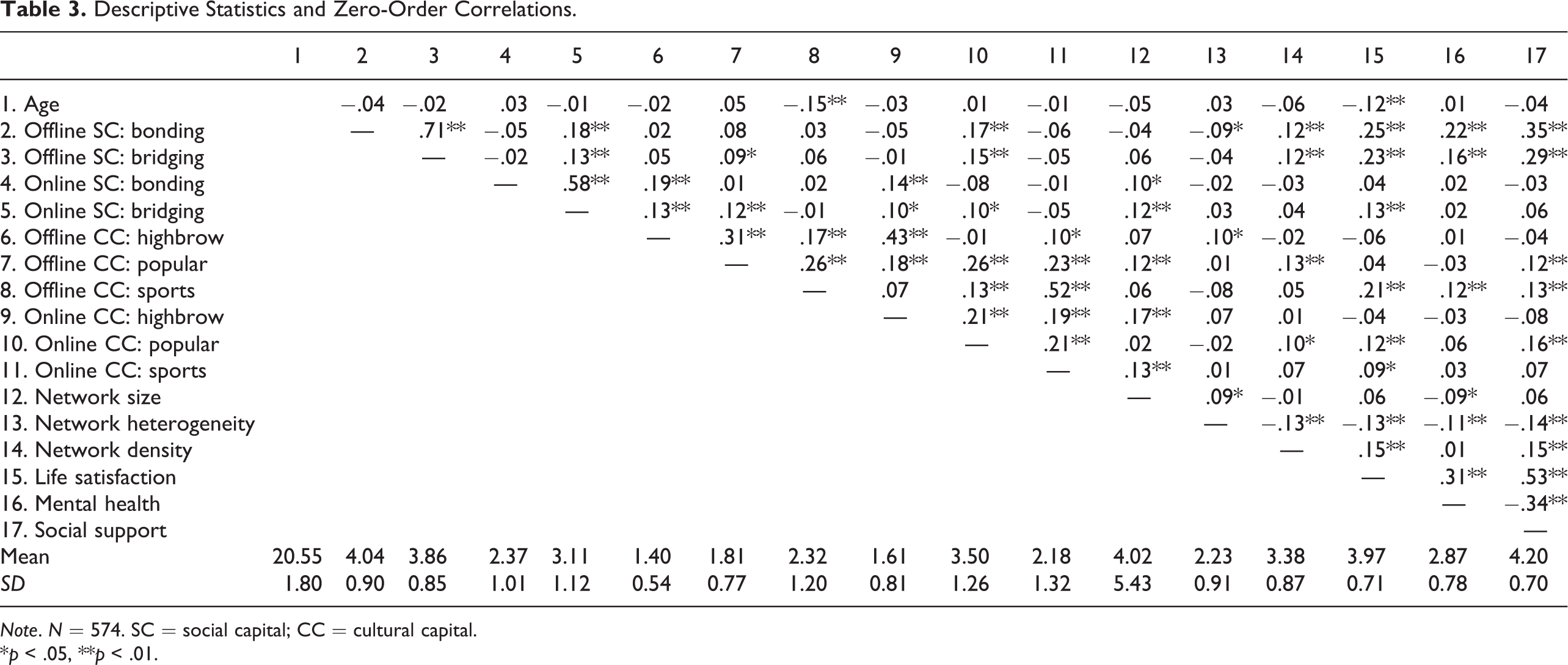
Note. N = 574. SC = social capital; CC = cultural capital.
*p < .05, **p < .01.
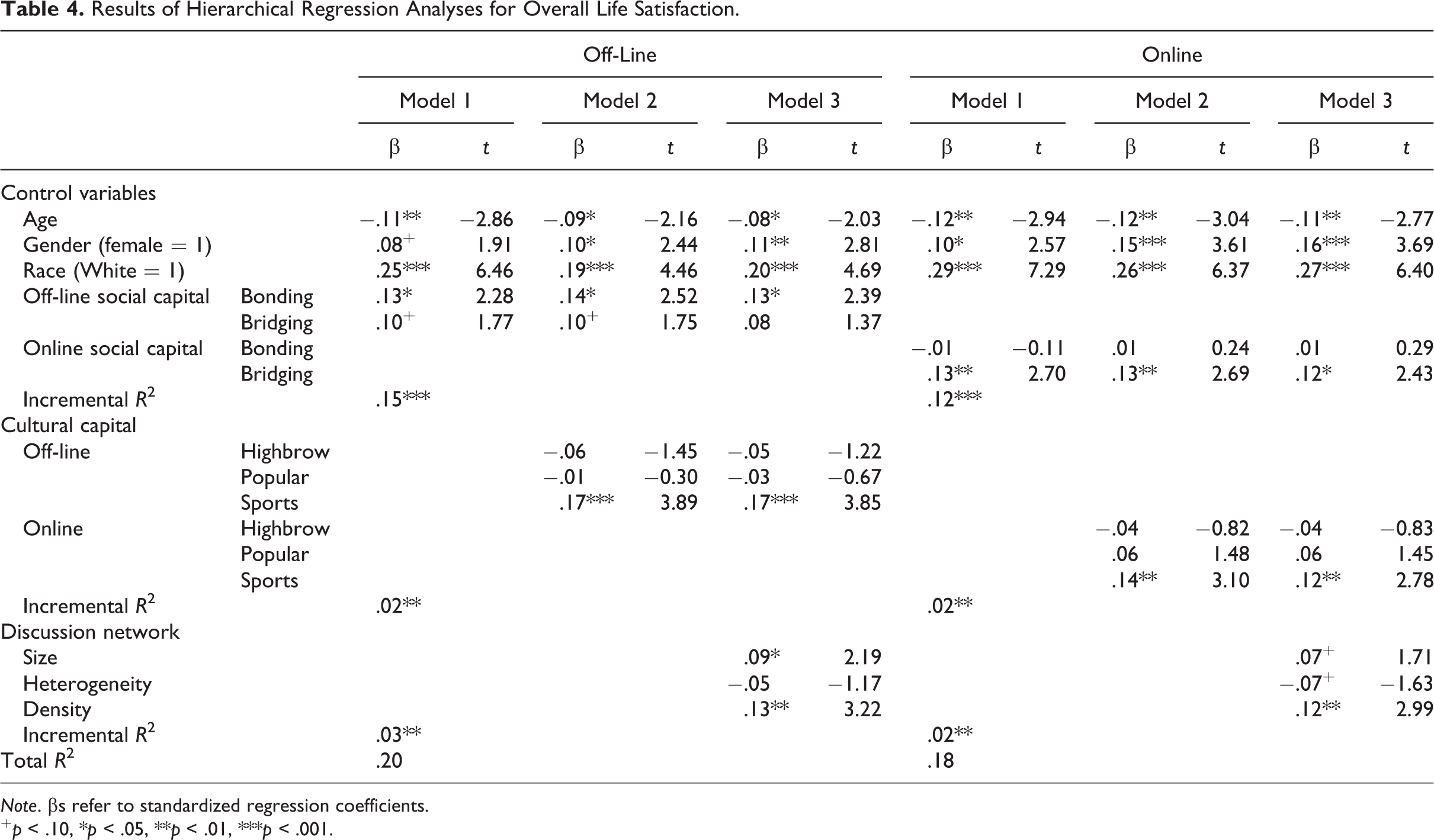
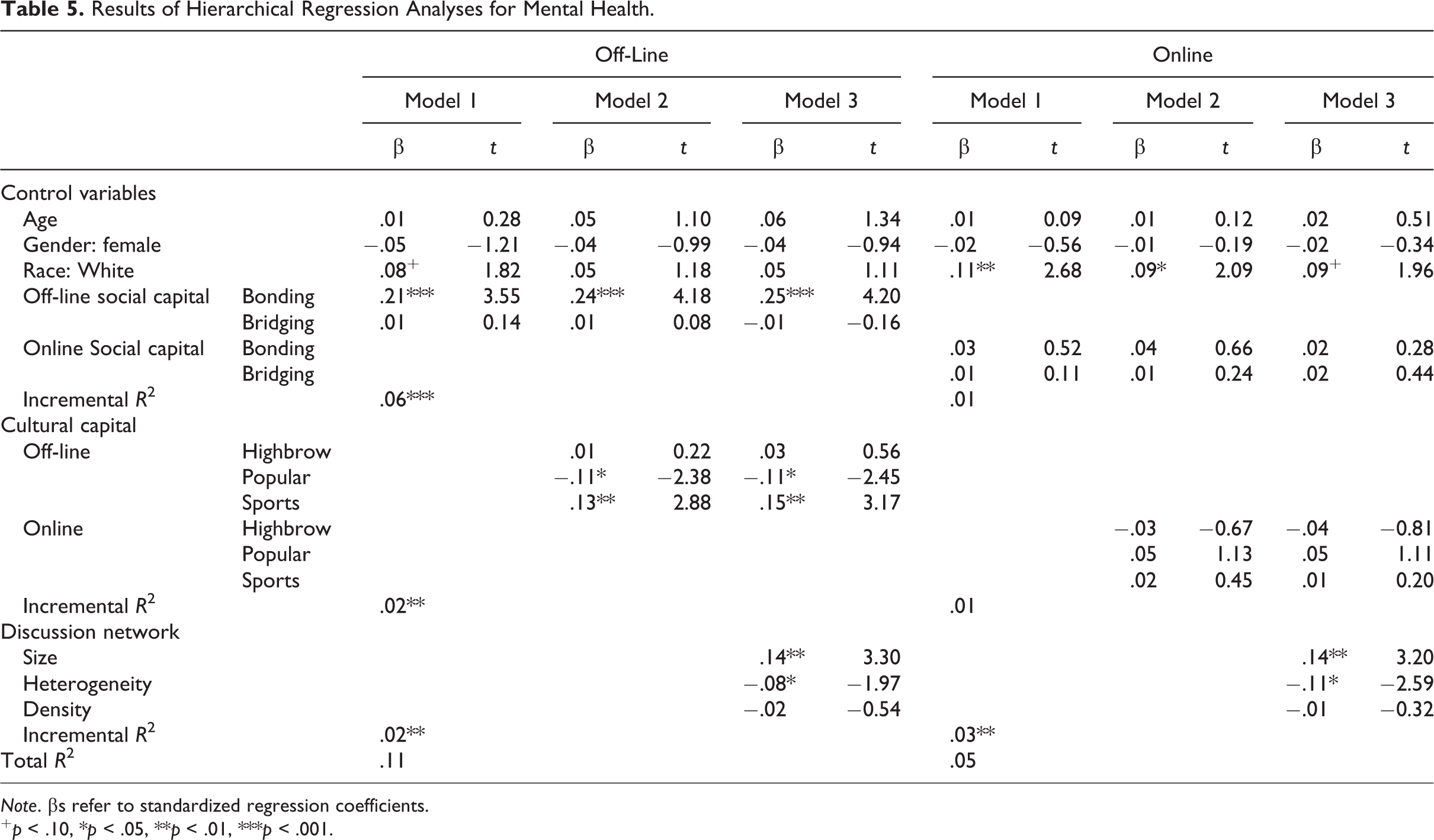
Hypothesis 1a tested the association between off-line cultural capital and subjective well-being. Tables 4 and 5 show the results from hierarchical regression analysis, predicting two indicators of subjective well-being, namely, overall life satisfaction and mental health. In terms of life satisfaction (Model 1 of Table 4), overall, younger respondents, female, and Whites reported higher satisfaction. Bonding social capital was positively associated with overall life satisfaction. In Model 2, cultural capital items were added. The results show that only participation in sports was positively associated with overall life satisfaction (β = .17, p < .001). In terms of mental health (Table 5), none of the demographic variables were significant except that Whites reported higher mental health with a marginal significance in Model 1. The effect of bonding social capital was positive and significant, being consistent with the results for life satisfaction. The results regarding cultural capital showed that participation in sports events was significantly associated with mental health (β = .13, p < .01). However, participation in popular cultural event was negatively associated with mental health (β = −.11, p < .05). Overall, the results provide only partial support for Hypothesis 1a and suggest that the different forms of cultural capital need to be paid attention to.
Results of Hierarchical Regression Analyses for Overall Life Satisfaction.
Note. βs refer to standardized regression coefficients.
+p < .10, *p < .05, **p < .01, ***p < .001.
Results of Hierarchical Regression Analyses for Mental Health.
Note. βs refer to standardized regression coefficients.
+p < .10, *p < .05, **p < .01, ***p < .001.
Hypothesis 1b suggested the same prediction between cultural capital and subjective well-being in the online context (see Tables 4 and 5). Although demographic variables had a similar effect as in the off-line context, it is notable that bridging social capital was significantly associated with overall life satisfaction, though not with mental health (see Model 1). With respect to the role of cultural capital (see Model 2), only sports participation (β = .14, p < .01) was positively associated with overall life satisfaction, while none of the cultural capital items was significant in the case of mental health. These findings show the differences between off-line and online forms of cultural capital (Research Question 1). In summary, Hypothesis 1b was partially supported in the case of overall life satisfaction.
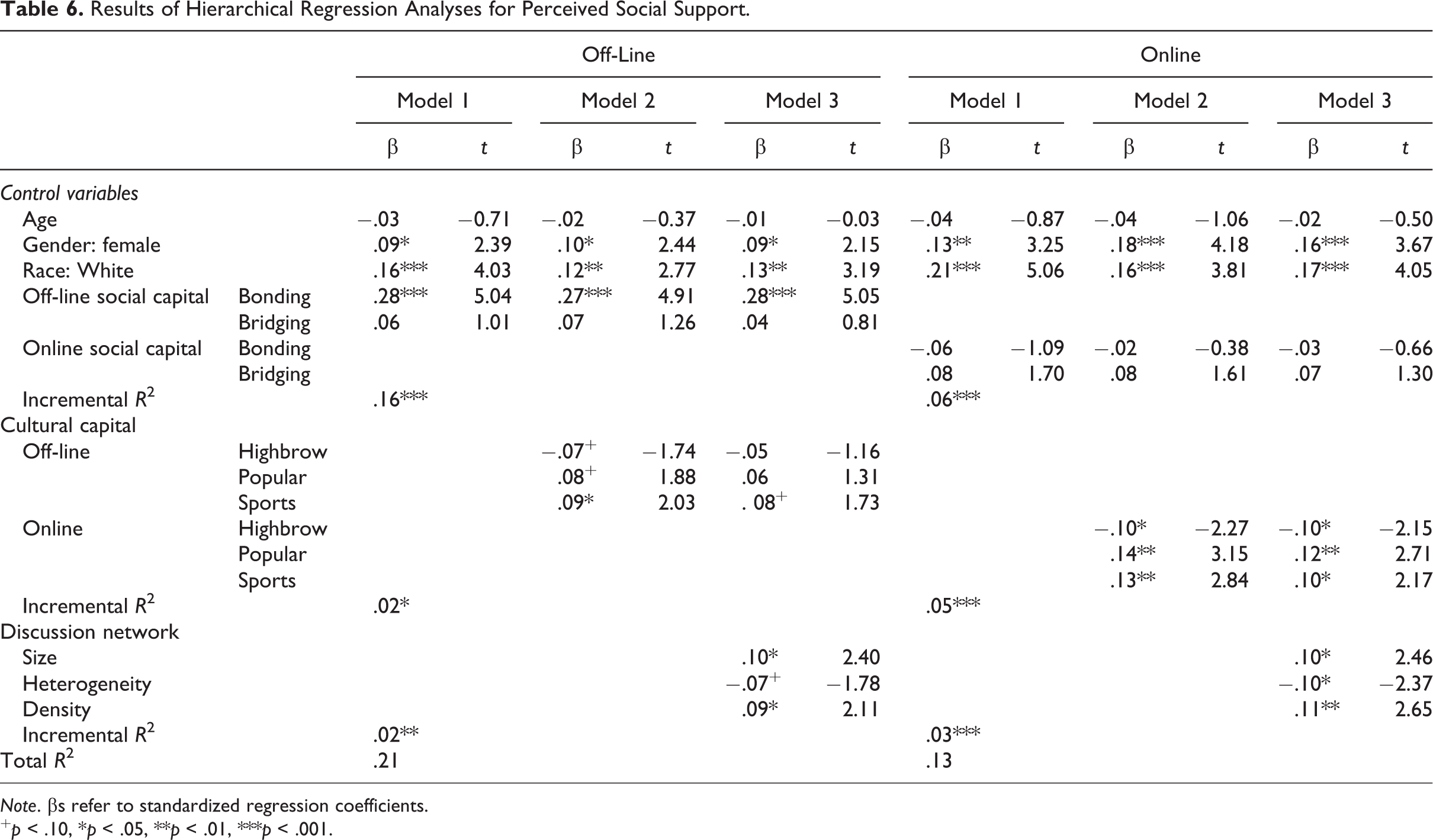
Hypotheses 2a (off-line) and 2b (online) tested the relationship between cultural capital and perceived social support (see Table 6). Females and White students reported higher perceived social support. In the off-line context, bonding social capital was positively associated with social support. Further, in contrast to the results regarding life satisfaction, bridging social capital was not significantly associated with perceived social support in both off-line and online contexts. When social capital was controlled for, sports participation was significantly associated with higher perceived social support (β = .09, p < .05), while participation in popular cultures was marginally significant (β = .08, p < .10). Thus, Hypothesis 2a was partially supported. As to online contexts, both popular culture (β = .14, p < .01) and sports participation (β = .13, p < .01) were positively associated with perceived social support, while highbrow cultural participation had a negative and significant effect (β = −.10, p < .05). In summary, Hypothesis 2b was only partially supported.
Results of Hierarchical Regression Analyses for Perceived Social Support.
Note. βs refer to standardized regression coefficients.
+p < .10, *p < .05, **p < .01, ***p < .001.
Hypothesis 3a through Hypothesis 5b examined three characteristics of discussion networks students were involved in about cultural information and experiences. Overall, inclusion of these network variables significantly contributed to the explanatory power of all of the models. Across all models for off-line and online cultural capital (see Tables 4–6), network size was positively associated with individuals’ subjective well-being (β = .09, p < .05 for life satisfaction in the off-line context; β = .07, p < .10 for life satisfaction in the online context; β = .14, p < .01 for mental health in the off-line context; and β = .14, p < .01 for mental health in the online context) and perceived social support (β = .10, p < .05 in the off-line context and β = .10, p < .05 in the online context), supporting Hypotheses 3a and 3b.
Findings regarding network heterogeneity were consistent in terms of its negative association with mental health and perceived social support. Network heterogeneity was negatively associated with mental health in both off-line (β = −.08, p < .05) and online contexts (β = −.11, p < .05) and marginally significantly with life satisfaction in the online context (β = −.07, p < .10), lending partial support to Hypothesis 4a. Network heterogeneity was also negatively related to perceived social support (β = −.07, p < .10 in the off-line context and β = −.10, p < .05 in the online context). Thus, Hypothesis 4b was supported.
Finally, network density had a positive and significant association with overall life satisfaction (β = .13, p < .01 in the off-line context and β = .12, p < .01 in the online context) but not with mental health, partially supporting the prediction of Hypothesis 5a. The relationship between network density and perceived social support was also positive (β = .09, p < .05 in the off-line context and β = .11, p < .01 in the online context). Thus, the results supported Hypothesis 5b. Overall, the patterns or directions of association between discussion network characteristics and outcomes were consistent across the models comparing off-line and online forms of cultural capital.
Discussion
Summary of Findings and Implications
The present study examined how off-line and online cultural capital as well as the communicative interaction surrounding cultural capital are associated with college students’ subjective well-being and perceived social support. In summary, hypotheses that examined the relationships between online and off-line forms of cultural capital and individuals’ subjective well-being (Hypotheses 1a and 1b) and perceived social support (Hypotheses 2a and 2b) were partially supported, with sports participation showing the most notable effect. Although sports participation was largely consistent in its association with overall life satisfaction and perceived social support, it showed significant association with mental health only in the case of off-line sports participation. These results indicate that the two forms of cultural capital tend to be similar but differ in a few aspects in their association with individuals’ subjective well-being and perceived social support (Research Question 1). In addition, the results largely supported the hypotheses that examined the relationships between the structural characteristics of culture-specific discussion network and the individuals’ subjective well-being (Hypotheses 3a, 4a, and 5a) and perceived social support (Hypotheses 3b, 4b, and 5b).
The results provide several theoretical contributions to the conceptual scope and definition of cultural capital, drawing attention to (1) the broader forms of cultural capital and (2) off-line as well as online forms of cultural capital. First, our study expanded the scope of cultural capital by examining a wide range of cultural activities including highbrow as well as popular and sports activities. Past studies have focused largely on the exclusionary character of cultural capital (Kingston, 2001), where highbrow and elite cultural arts bring social inequality by providing benefits to high-status individuals. Although several studies in the past considered sports as a component of cultural capital, their main focus was on the association between various sporting practices (e.g., golf) or spectatorship and exclusive class status or lifestyles (Stempel, 2005; Taks et al., 1995). The current study included sports such as basketball and football and demonstrated the significant role of sports event attendance in explaining individuals’ subjective well-being and perceived social support. In line with the cultural omnivorousness thesis (Warde, Tomlinson, & McMeekin, 2000), Kate (1992) and Thrane (2001) showed that interest in sports was associated with participation in other social and cultural activities. This association is also uncovered in the current study, with significant correlations among students’ participation in sports, highbrow, and popular culture activities (Table 3). In this sense, sports events can be an effective venue through which college students can access and share information about other cultural events and expand their scope of cultural participation.
Second, the present study also expanded the literature by introducing and measuring online dimensions of cultural capital. Cultural capital tends to remain an abstract concept in the literature, and in particular, there has been little discussion about how online aspects of cultural capital could be operationalized. Given the young generation’s tendency to enjoy and share culture using online resources (Threadgold & Nilan, 2009), it is imperative to understand the ways the Internet is used for cultural activities. The current study’s findings highlight the influence of online consumption of sports and popular cultural events among college students. Both life satisfaction and perceived social support were significantly higher among those who used the Internet more frequently for the enjoyment of sports events. In addition, those who enjoyed popular music and movies online indicated a greater feeling of social support. Previous research on off-line dimensions of cultural capital has accumulated evidence that cultural capital is positively associated with social cohesion and participation (Hyyppä, 2010; Matarasso, 2000). Adding to such evidence, the current study’s findings with respect to online forms of cultural capital show the potential of the Internet being used as a venue for appreciation and accumulation of cultural capital, consequently leading to positive psychological and social outcomes.
Of note is that online forms of highbrow cultural participation were negatively associated with perceived social support. This result is counter to past findings on the positive benefits that were created through activities and enjoyment of highbrow culture (e.g., Windsor, 2005). One possible explanation is that there might be unobserved variables related to both high-culture participation and psychological outcomes, which cause an association to appear between the two. For example, given the relative dominance of sports and popular culture participation in the present study’s college setting (see Tables 1 and 2 for mean frequencies), highbrow culture might be sidelined by many students. In other words, students who relatively prefer highbrow cultural activities might be those who are not involved in the more pervasive forms of cultural capital and thus do not acquire benefits from them. This explanation is supported by a few studies which note that sports attendance and heavy involvement in traditional forms of highbrow cultural activities do not go together (Kate, 1992; Stempel, 2005). However, this finding needs to be tested by employing more diverse groups of study sample who might have access to a wider range of cultural venues and resources including highbrow forms of culture.
Another point to note is the negative association between off-line popular culture participation and mental health. This relationship could also be due to unobserved variables related to other aspects of college student life, such as involvement in student clubs or organizations. Holding the level of social capital and sports participation constant, those who attend popular culture activities more might be less involved in other academic or social activities that contribute to one’s mental health. Data on these additional variables will provide further explanation for the results.
It is useful to examine the aforementioned findings about cultural capital in the context of social capital. Social capital, measured in both bonding and bridging forms, was included in all models so that we can separate out the independent effect of cultural capital. Bonding social capital in off-line context was consistently associated with well-being and perceived social support outcomes. On the other hand, bridging social capital was significant only in the case of online context for overall life satisfaction. This suggests that social ties that allow one to reach out to and interact with diverse people online contributed to one’s perception of general life satisfaction but not specifically to their mental states or perceived level of support. The effects of cultural capital, especially sports participation, being significant after controlling for social capital indicate that cultural participation brings unique values that are independent of the relational and social aspects it might encompass.
Further, the results highlight the importance of communication and network variables, which draws parallel to the recognized role played by citizen discussion network (Gil de Zúñiga & Valenzuela, 2011). Researchers have repeatedly found that certain characteristics of communication networks, such as size, density, and heterogeneity, affect the overall capability and influence of social capital (e.g., Stone & Hughes, 2002; Van Deth, 2003; Wellman & Frank, 2001). Likewise, we found that individuals’ psychological and social outcomes vary depending on the structure of communication network. To summarize, individuals with larger and denser interpersonal discussion networks about culture-related topics had more positive perceptions of life satisfaction and social support. In other words, those who were able to utilize cultural capital in the communicative interaction with a large number of others, who were themselves also engaged in discussion about those topics with others, had subjective well-being benefits. Being involved in cultural pursuits similar to peers and thus being able to communicate and socialize with them seem important in college students’ context. These findings indicate that consideration of the communicative perspective is a useful addition to the study of cultural capital in the context of assessing individuals’ subjective well-being and social support.
A close look at the results regarding online cultural capital again reveals the value of considering the communicative aspect. The findings showed that none of online cultural capital variables were significantly associated with mental health, although having a conversation with others about one’s cultural experiences was. In other words, findings suggest that the sharing of information and experiences about culture explained part of the well-being outcomes.
Unlike our expectation, communicating about cultural experience with people with diverse backgrounds was not associated with individuals’ well-being or perception of social support. The downside of heterogeneity in the discussion networks was counter to some findings about the positive aspects of heterogeneous political discussion networks in predicting forum participation (McLeod et al., 1999). The current study’s findings showed that those who talk about cultural events and activities with more diverse people benefit less in terms of mental health and perception of social support. One possible explanation is that communication about cultural events with those who are similar in terms of the dimensions we measured (i.e., age, education, social class, political affiliation, and general views) might involve more shared interpretations and feelings, therefore fostering a sense of collectiveness and engagement with each other. More research needs to be conducted to dissect the different nature and forms conversations can take depending on the characteristics of conversation partners.
These results have several practical implications. Literature suggests that a sense of community on college campuses has been diminishing, which resembles the trends of the larger U.S. population as suggested in Putnam’s (2000) argument (Warner & Dixon, 2013). Therefore, understanding what might help foster a sense of community among college students has become important. The findings showed that sports participation has by far the largest association with individuals’ subjective well-being and perceived social support among various modes of cultural participation across off-line and online contexts. The effect of sports participation was more consistent in off-line contexts. In addition, popular culture participation via online platforms had a positive effect on perceived social support. Student affairs administrators on campus can utilize these findings to enhance students’ access to and consumption of cultural events. Opportunities for attending cultural events can provide college students with a way to connect with others, which may in turn have a positive contribution to perceived well-being. In particular, administrators may want to expand opportunities for cultural event participation for older students as the correlation results showed that their participation in off-line sports events as well as their overall life satisfaction are lower than younger ones.
Further, results on communication networks showed that having opportunities to share their cultural experiences with others has meaningful value for students. Thus, administrators may consider introducing various face-to-face and mediated venues for students to engage in conversation and information about cultural activities and experiences. For example, after-event opportunities to talk with peers or performers, be it online or off-line, may help enhance the benefits of cultural experience.
Limitations and Directions for Future Research
First of all, while the sample population of the current study provides a valuable context for examining cultural capital, it presents limitations in terms of the generalizability of the results. College students of a Midwestern, large state university are situated in specific cultural and social contexts and these unique college-town environments are likely to have influenced the findings of the study. For example, the strong presence of sports participation as well as its positive association with psychological outcomes is likely to be explained by the particular characteristics of college student population such as heavy emphasis on collective behaviors and sense of belonging. Yet, the underlying mechanisms that link cultural participation and communicative involvement in one’s social networks with positive outcomes may be valid in general adult population. Future studies are encouraged to examine diverse populations in differing cultural and social environments to understand the varied ways in which these mechanisms unfold.
Second, several potentially relevant constructs can be considered in future studies. For example, students’ family and home climate and parental cultural characteristics can be measured, which have been found to be one of the major determinants of children’s educational attainment (De Graaf & de Graaf, 2002; Parcel & Hendrix, 2014). Examining whether these environmental factors continue to have effects on young adults will be useful. Further, while the present study operationalized cultural capital as participation, additional measures of taste could produce valuable insights about the multifaceted nature of cultural capital. Adults can develop their own cultural tastes independent of childhood tastes inherited from family. Cultural tastes have been found to predict participation (Yaish & Katz-Gerro, 2012).
Third, the measures of cultural capital in the present study did not include cultural consumption via mass media such as television or radio. Television viewing is a popular form of everyday cultural activity (Jeannotte, 2003) and its relationship with social capital and other outcomes such as civic engagement has been an important topic of study (e.g., Putnam, 2000; Shah, 1998). However, since the major focus was on comparing between off-line and online cultural capital, the current study excluded mediated cultural activities through mass media. Future studies with a broader spectrum of cultural activities including mass media use are expected to provide a more comprehensive picture of the associations between cultural capital and psychological measures. Related to this point, studies should also take into consideration the increasingly complex media environment which could lead to the blending of mass media use and other forms of cultural participation such as viewing popular culture or sports content online.
In addition, the survey questionnaire of the present study asked participants to answer their frequency of attendance or downloading patterns over a period of 12 months. While this choice has been made before (e.g., Australia Council for the Arts, 2010) and is useful in terms of capturing cultural events that are annual or seasonal, it might have led to the difficulty of recall, especially in cultural activities that are performed more frequently in everyday life. A shorter period such as 3 or 6 months may have been better from this perspective.
With respect to discussion network characteristics, the current study did not ask respondents to distinguish between the channels through which such discussion takes place (e.g., face-to-face and online communities). It is possible that online platforms are providing a venue for communicative interaction as well, as previous studies on political discussion identified. Further examination of this issue (the role of off-line vs. online channels in facilitating discussion) in the context of culture would be meaningful along with the distinction between off-line and online forms of cultural capital itself.
Furthermore, an interesting extension for future research would be to examine public spaces and cultural capital. These spaces can afford both physical and social resources to community members. For example, public libraries and other cultural institutions can play a role in bringing people together and providing cultural services (Goulding, 2008). Finally, as acknowledged by Hyyppä (2010), longitudinal research design will be needed to unpack the causality and underlying dynamics of cultural capital and individuals’ psychological outcomes. For instance, students with negative psychological dispositions are likely to refrain from attending cultural events and engaging in conversation with others.
Conclusion
Findings from this study extend previous research on cultural capital by (1) drawing attention to the inclusive aspect of cultural capital, which is associated with individuals’ positive psychological outcomes; (2) showing that examining online forms of cultural participation as well as multiple forms of cultural activities including popular and sporting events can enrich our understanding of the diverse nature of cultural capital; and most notably, (3) applying the literature on interpersonal discussion networks to the context of culture and demonstrating that the structural characteristics of communication networks play an important role for individual-level outcomes. Altogether, the current study presented a unique attempt to unpack various forms of cultural capital and examine it from the perspective of communicative interaction.
Footnotes
Declaration of Conflicting Interests
The authors declared no potential conflicts of interest with respect to the research, authorship, and/or publication of this article.
Funding
The authors received no financial support for the research, authorship, and/or publication of this article.