




Abstract
Moving beyond examining overall social networking site (SNS) use, this study examined the influence of three types of WeChat activities on loneliness, considering the moderating roles of age and perceived network supportiveness on WeChat. Results of a two-wave panel survey with Chinese WeChat users (N = 1202 at Time 1, N = 740 at Time 2) revealed that frequent directed communication, content consumption, and broadcasting on WeChat did not directly influence participants’ loneliness across age cohorts over time. However, the effects of WeChat activities on loneliness were contingent upon a user’s age. Moreover, the positive role of WeChat activities in alleviating loneliness was significant only for users who perceived higher levels of network supportiveness on WeChat. For users who perceived lower levels of network supportiveness, frequent WeChat activities led to increased loneliness over time. These findings contribute to a more nuanced understanding of the implications of mobile SNS use on well-being across generations in the longitudinal context.
Loneliness is the subjective experience of negative feelings resulting from the differences between the levels of desire for social relationships and the availability of relationships (Perlman & Peplau, 1998). This emotional distress, whether actual or perceived, is associated with numerous detrimental health outcomes, including chronic illness, depression, suicide ideation, and increased mortality (Holt-Lunstad et al., 2015). With these adverse health outcomes in mind, finding ways to reduce loneliness is of paramount importance for the well-being of both the individual and society.
One possible way to alleviate loneliness is through the use of social networking sites (SNSs) to help maintain social connections (Lee et al., 2020). SNSs have become an indispensable part of everyday life across generations, and they provide a wide variety of technological features that enable users to maintain meaningful relationships through diverse communication activities (e.g., directed communication, broadcasting). It is reasonable to anticipate that SNSs can be used effectively to enhance social connections, thereby reducing loneliness. However, extant research concerning the assumed potential benefits of SNSs has yielded inconclusive results. Although some of the existing evidence has been encouraging, indicating that SNS use is associated with lower levels of loneliness (e.g., Deters & Mehl, 2013), other research has demonstrated that SNS use is of no benefit in alleviating loneliness (e.g., Dienlin et al., 2017; Quinn, 2021). There are even concerns that SNS use is related to increases in social isolation and loneliness (e.g., Phu & Gow, 2019).
Such equivocal evidence concerning the impact of SNS use on loneliness points to several research gaps that need additional investigation. First, the diverging results can be explained by adopting a simplistic operationalization of SNS use (e.g., use vs. nonuse, time duration, intensity) that addresses it as a single general activity. Such monolithic measures could result in misleading generalizations, as SNSs offer heterogeneous features that are concurrently available for users’ free selection (Kim & Shen, 2020). More importantly, treating SNS use as a monolithic activity may cloud or even cancel out remarkably different psychosocial outcomes derived from different uses. Second, it is important to note that SNS users should not be identified as one uniform group, as the outcomes of SNS use tend to vary depending on individuals’ differences (Burke et al., 2011). However, most previous studies share the commonality of neglecting the variations among user groups, such as age and one’s network supportiveness, which are important in determining the effects of SNS use. Third, prior research relied heavily on cross-sectional data examining the contemporaneous relation between SNS usage and loneliness, which made it difficult to establish the direction of the investigated relationship. Without providing evidence of the temporal nature of the effects, we cannot rule out an almost ubiquitous confound: prior levels of the dependent variable, such as individuals’ existing loneliness scores in our study.
As of the second quarter of 2021, WeChat remains the most popular mobile SNS in China, with over 1.25 billion monthly active users from a wide range of age groups (Statista, 2021). As an indispensable tool in individuals’ everyday life, WeChat has been found to exert a significant impact on individuals’ well-being (Rui et al., 2021; Zhang & Jung, 2021). It is noteworthy that unlike open SNS of Twitter or Weibo which are public-oriented platforms, WeChat possesses a relatively private ecosystem that generally facilitates social interactions among pre-existing and mutual connections (Harwit, 2017). This is because WeChat’s social network is largely based on one’s existing friends and acquaintances by scouring one’s mobile phone contact list established in offline settings (Shen & Gong, 2019). Furthermore, different from Facebook in which individuals are linked into a network structure of friends of friends facilitating “second-degree connections” (Ellison et al., 2014), users’ Like and Commenting behaviors on WeChat are only visible to the Commenter/Liker and the original poster’s common friends.
Apart from being pervasive as an instant messaging tool, WeChat attracts users across generations, largely due to its myriad features providing directed communication, broadcasting, and content consumption. For example, a majority of WeChat users access WeChat Moments (a function similar to Facebook’s News Feed) every time they open the app for content consumption (Statista, 2021). Wang and Gu (2016) demonstrated that Moments and Share that allow users to broadcast as well as Friends’ Circle that allows users to consume social circles’ updates are the most representative features of WeChat. Older adults have also been found to use WeChat mainly for directed communication with their family and friends, checking others’ life updates, and broadcasting news and information (Guo, 2017). Additionally, prior research has shown that these three types of communication activities are closely related to individuals well-being outcomes across platforms and cultures (e.g., Frison & Eggermont, 2016; Zhang & Jung, 2021), highlighting the necessity of focusing on these three types of activities on WeChat in understanding the implications of WeChat use. Although WeChat also provides other unique features (e.g., WeChat Pay, virtual red pockets, official accounts), considering that certain features are platform-specific, examining shared features that are also available on other platforms would strengthen the implications of our study. Hence, instead of treating WeChat usage as a monolithic activity, this study examined three types of communication activities frequently used on WeChat: directed communication, broadcasting, and content consumption.
According to the digital inequality perspective, older adults are deemed a digitally disadvantaged group who struggle to harness SNS technologies (Sala et al., 2020), suggesting that age is an important variable determining the uses and effects of SNSs. Additionally, in light of the social enhancement hypothesis (Zywica & Danowski, 2008), socially rich users, such as those who possess greater social resources, tend to benefit more from SNS use, pointing to the crucial role of network supportiveness in understanding the implications of SNS use. Hence, the present study aims to extend the current scholarship on SNS use by examining the moderating effects of age and perceived network supportiveness on WeChat, assuming that users’ ages and digital network resources may influence the degrees to which individuals reap benefits from their WeChat use. Lastly, by employing a two-wave longitudinal survey, we aimed to establish a causal order between WeChat use and loneliness by considering the moderating conditions. To this end, this study can contribute to the knowledge base with a more nuanced view of the impacts of SNS use and provide practical guidelines for reducing individuals’ loneliness across their life spans.
Literature Review
Theoretical Perspectives on the Effects of SNS Activities
Maintaining meaningful social relationships is critical in alleviating loneliness, as it enables people to have a sense of belonging and social connectedness (Lee et al., 2020). A wealth of studies have examined whether SNS use is associated with psychological well-being, including reducing loneliness, but they have yielded inconsistent findings. The debate over the psychosocial outcomes induced by SNS use largely centers on either the reinforcement hypothesis or displacement perspective, mirroring a general trend in research on internet use (Dienlin et al., 2017; Ellison et al., 2020). The reinforcement hypothesis argues that internet technologies not only afford opportunities to connect with social network ties online but also enhance face-to-face communication, which improves well-being (Valkenburg and Peter, 2007). In sharp contrast, the displacement perspective holds that “superficial” online interactions are inherently inferior to face-to-face interactions, and time spent on the internet may compete for or even replace time spent offline building “real” social relationships; therefore, SNSs negatively affect well-being (Kraut et al., 1998). Considering the conflicting viewpoints, scholars have pointed out that research on the impacts of SNS technologies on well-being outcomes should consider a more systematic view of technology use, rather than just looking at whether people use the technology or not, as the contributions of SNS technologies largely depend on the nature of user engagement.
For example, Burke et al. (2011) distinguished among three types of Facebook activities—directed communication, passive consumption, and broadcasting—in examining the relationship between SNS use and social capital. Specifically, directed communication is defined as directed interactions with social network ties consisting of personal, targeted, one-on-one exchanges (e.g., “likes,” comments). Broadcasting involves the act of publicly revealing personal information, which affords users the opportunities to create and share public statements. Passive communication allows people to monitor other people’s updates and their communication patterns by viewing the content of others’ profiles (Burke et al., 2011). Burke et al. (2011) found that only receiving messages, such as comments and “likes” from friends (forms of directed communication), was positively associated with bridging social capital, whereas other types of uses had a nonsignificant relationship with bridging social capital. By adopting the same classification of communication activities on Facebook, Hutto et al. (2015) revealed that directed communication (as opposed to broadcast communication or passive consumption of content) was correlated with reduced loneliness among the older population. Reinforcing the positive role of directed communication, Kim and Shen (2020) indicated that frequent directed communication was positively associated with life satisfaction of older adults. Hence, it seems that directed communication as a targeted interaction that signals one’s attention and the value placed on a given relationship tends to bolster a sense of mutual connections and a sense of belonging, which is beneficial in reducing individuals’ loneliness. Accordingly, this study posits that:
In line with Burke et al.’s classification of SNS communication activities, Frison and Eggermont (2016) differentiated three types of Facebook use: passive Facebook use (e.g., reading a News Feed), active private Facebook use (e.g., chatting with someone on Facebook), and active public Facebook use (e.g., posting a message on a Facebook Timeline). They indicated that passive Facebook use directly predicted increases in depressed moods among adolescents, although they further found that the findings varied by gender. Given the existing empirical evidence, scholars have tended to adopt a dichotomous passive-versus-active framing. They have concluded that active use involving users’ interactive engagement, such as directed communication and broadcasting, is beneficial for well-being. Conversely, passive use comprising view-based activities without users’ click-based interactions, such as consumption, is detrimental to well-being (Liu et al., 2019; Verduyn et al., 2015). Nevertheless, a growing body of research recently challenges this dichotomous categorization by advocating a reconsideration of the passive-versus-active social media use hypothesis (Beyens et al., 2021; Ellison et al., 2020). For instance, Ellison et al. (2020) argued against this dichotomy in social media research and pinpointed that view-based activities, such as content consumption, are purposeful “non-click” behaviors resulting from users’ conscious and thoughtful engagement. More importantly, they found that deliberative non-clicks can facilitate off-platform interactions, which carry positive implications for psychological outcomes. In addition, Valkenburg and colleagues (2021) examined the effects of adolescents’ Instagram and Snapchat browsing behavior and they found that the passive social media use hypothesis was confirmed for 20% and rejected for 80% of adolescents through a three-week experience sampling study. Such results also concur with Beyens et al.’s (2020, 2021) research finding, demonstrating that the active versus passive dichotomy hypothesis was only observed on a small subset of youth. The uncertainty pertaining to the direction of the effects (positive vs. negative vs. null) is also detected in research on broadcasting activity. For example, Deters and Mehl (2013) showed that broadcasting activities, such as posting more Facebook status updates, resulted in reduced loneliness, while Xie and Karan (2019) revealed that frequent broadcasting on Facebook was associated with more negative feelings. Kim and Shen (2020) did not find a significant relationship between broadcasting on Facebook and well-being, either for younger or older adults.
Given the inconclusive results and conflicting viewpoints concerning the effects of broadcasting and content consumption, it will be difficult to conclude the direction of the effects of WeChat broadcasting and content consumption (i.e., positive vs. negative) on individuals’ well-being. In addition, considering the preponderance of cross-sectional studies on WeChat, additional longitudinal investigation covering different types of WeChat activities and a broad age range can be meaningful and is necessary to provide clear evidence about the WeChat platform. Therefore, the following research question was put forth in a longitudinal context:
The Moderating Role of Age
The outcome of SNS use not only depends on the types of use but also varies by individual characteristics, such as a user’s age. The literature on digital inequality suggests that the positive outcomes of using SNS technologies are more pronounced among people possessing the skills needed to capitalize on such use (Haight et al., 2014; Sala et al., 2020). To reap the benefits of SNS communication activities to mitigate loneliness, people must possess adequate skills to use SNSs effectively to build and maintain social relationships. Research has shown high variability in digital skills and literacy across generations. Older generations, or digital immigrants, have been found to be less skilled than younger generations, who are digital natives because of their earlier exposure to computers and other new technologies (Hayes et al., 2015; Helsper and Van Deursen, 2017). Because of their deficiencies in digital skills and knowledge, older adults face greater barriers to using SNS technologies and newer features. More importantly, such deficiencies may further hinder older adults from reaping the benefits of SNS use. For example, Quinn (2021) found that the beneficial role of SNS use in mitigating feelings of loneliness among younger users did not extend to older users, which the researcher largely attributed to the age groups’ gaps in technological proficiency. Moreover, because of their cognitive and physical barriers to using SNS technologies, older adults were found to possess skeptical attitudes toward the value of technology in their lives (Hayes et al., 2015). Particularly in the WeChat context, Rui et al. (2021) recently documented the significant moderating role of a user’s age in making a difference in the relationship between public interactions (e.g., commenting, posting) and emotional well-being. The researchers demonstrated that this finding may be because older adults have less familiarity with WeChat and fewer skills to harness WeChat than their younger counterparts. Therefore, it seems younger users tend to benefit more from SNS use in reducing their loneliness given their technological proficiency.
On the other hand, SNSs may be particularly valuable for older adults in dire need of social interaction, family connectedness, etc., especially considering the increasing challenges of daily functions as they age (Stevic et al., 2021). From a theoretical standpoint of social compensation, using SNSs to communicate can compensate for limited offline interactions in late adulthood due to societal withdrawal from the workplace or family home (Stevic et al., 2021; Zywica & Danowski, 2008). Empirical studies have also indicated that older adults’ main motivation for using SNSs is to stay connected with old friends and maintain intergenerational ties (e.g., Jung & Sundar, 2016). Prior research on WeChat found that it offers older adults a low-barrier user experience for alternative communication (Guo, 2017), and older adults are aware of the technological opportunities that WeChat provides to make up for their reduced intergenerational communication in offline settings (Zeng et al., 2016). In particular, Stevic et al. (2021) revealed that communicative smartphone use positively influenced well-being for adults older than 63 years but not for younger adults. They demonstrated that this disparate outcome is due to the increasing online communicative activities and social interactions that make up for the lack of older adults’ face-to-face relationships. Kim and Shen (2020) also documented that the positive relationship between frequent directed communication on SNS (e.g., tagging) and life satisfaction was only observed among older users, not for younger users. Hence, from the perspective of the social compensation hypothesis, it appears that older adults tend to benefit more from the opportunities offered by SNS use to reduce loneliness.
The literature suggests that a user’s age is likely to moderate the effects of SNS use. However, it remains unclear whether younger users or older users benefit more given that we found empirical support for both the social compensation hypothesis and the digital inequality perspective in the literature. Hence, we put forward a research question regarding the moderating role of age on the effects of WeChat usage:
The Moderating Role of Perceived Network Supportiveness
Perceived network supportiveness is an evaluation of one’s social network of friends to be supportive (Walsh et al., 2020). It captures one’s perceptions of social resources accessible through one’s network when needed. According to the social enhancement (“Rich Get Richer”) hypothesis, the positive outcomes of SNS communication activities on one’s well-being are more salient for socially rich individuals (Zywica & Danowski, 2008). Drawing from this theoretical viewpoint, individuals who enjoy the advantage of having a robust network with substantial available support resources would disproportionally benefit from SNS use. Contextualized in the current study, individuals perceiving higher levels of network supportiveness would benefit more from WeChat activities’ ability to reduce loneliness than those perceived lower levels of network supportiveness. Reinforcing the social enhancement hypothesis, Lee et al. (2020) found that frequent instant messaging improved subjective well-being only for those who felt they had higher levels of support.
The social enhancement hypothesis is closely related to the “Mathew effects” on digital inequality (Rains & Tsetsi, 2017). The literature on digital inequality and digital inclusion has increasingly highlighted the importance of network support that enables individuals to use internet technologies in the most beneficial way (e.g., Helsper & Van Deursen, 2017). Scholars have even pinpointed that access to support as a type of digital resource is another level at which the digital divide manifests and strengthens itself, creating a larger gap among individuals who need support in the digital sphere (Helsper & Van Deursen, 2017). This suggests that the level of support from an individual’s network reflects their (dis)advantages in accessing and utilizing network resources for online engagement. In the present study, we argue that such network characteristics can make a difference in the effects of SNS use. For example, knowing that someone is potentially available for support can improve users’ experiences and satisfaction when engaging in online interactions, which enhances the contribution of SNS interactions in terms of reducing negative feelings such as loneliness. Supporting this reasoning, Lo (2019) found that receiving support from their SNS networks helped ease the exhaustion users felt from their SNS interactions and improved their SNS satisfaction. Likewise, if an individual believes that their broadcasting activities, such as status updates, are viewed and responded by a network that fulfills their need for support, they are more likely to derive positive feelings from such activities, giving rise to feelings of social inclusion and connectedness and thereby reducing loneliness (Walsh et al., 2020). Hence, in line with the theoretical viewpoint of the social enhancement hypothesis and digital inequality literature, we examined the moderating role of perceived network supportiveness on WeChat by postulating that:
Method
Participants and Procedure
To examine the research questions, this study conducted a two-wave longitudinal survey in China. We recruited WeChat users through Wenjuanwang, one of the biggest online survey companies in China with more than 8.3 million registered respondents with diverse demographic characteristics. Quota sampling was employed to achieve a more representative pool of potential subjects. We established stratified quota sampling by implementing a sample matching method, which has been validated by and commonly used in previous research (e.g., Chen, 2019). Specifically, quotas on the population’s gender (male vs. female) and household income (by five quintiles) were specified based on the most recent census data from the National Bureau of Statistics of China (2020). Then we requested the survey company to recruit a corresponding number of participants for each quota so that the sample matches the distribution of gender and income in the Chinese national population. For example, the gender ratio for the Chinese population is 1:1.04 with 48.91% female and 51.09% male. Our sample’s gender ratio is generally in line with this distribution with 51.91% male for Wave 1 data and 50.68% male for Wave 2 data. To examine the moderating role of age in the effect of WeChat use, the age ratio was not adopted in order to obtain a comparable number of participants representing different age cohorts. In addition, considering that WeChat users older than 55 years are relatively scarce in Chinese online panels, the income ratio for older users was not strictly requested.
Descriptive Statistics of Variables.
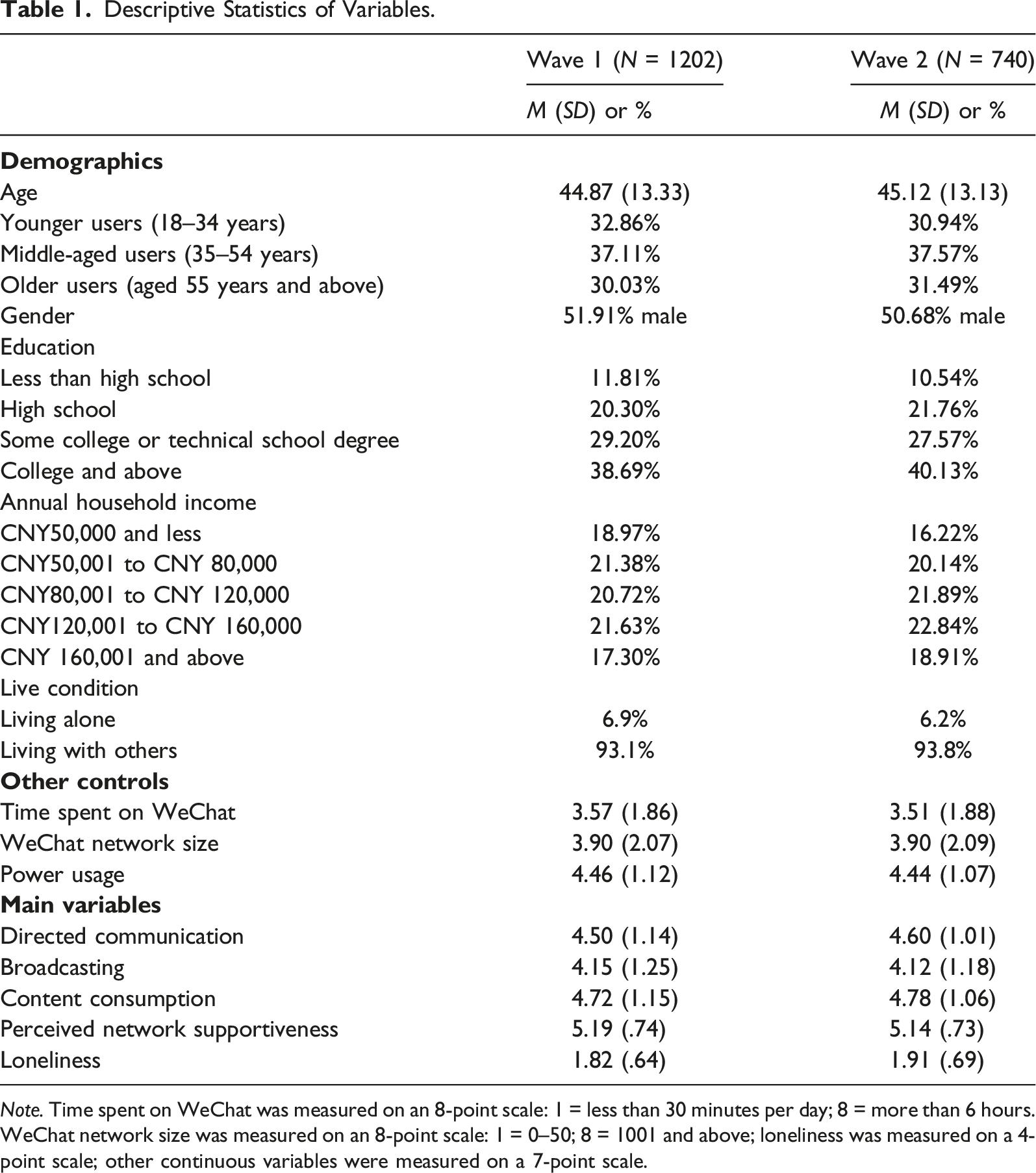
Note. Time spent on WeChat was measured on an 8-point scale: 1 = less than 30 minutes per day; 8 = more than 6 hours. WeChat network size was measured on an 8-point scale: 1 = 0–50; 8 = 1001 and above; loneliness was measured on a 4-point scale; other continuous variables were measured on a 7-point scale.
Measures
WeChat Activities
This study measured three types of WeChat activities: directed communication, broadcasting, and content consumption, based on previous literature on SNS use (Burke et al., 2011). It should be noted that compared to Burke et al.’s study on Facebook, this study measured fewer items on WeChat. On the one hand, several Facebook features are not available on WeChat, such as “Wall posts written,” “Tags in photos,” and “Times tagged friends in photos.” On the other hand, although we followed Burke et al.’s study by measuring and differentiating directed communication (in) from directed communication (out) (e.g., comments received vs. comments written), our exploratory factor analysis (EFA) with direct oblimin rotation generated a one-factor structure for directed communication. We also measured users’ engagement with “mention@ a friend on WeChat Moments” and “updating personal profile information (i.e., What’s Up, Region, profile photo)”; however, the EFA results revealed that “mention@ a friend on WeChat Moments,” doubled loaded on factors, and the item of “updating personal profile information (i.e., What’s Up, Region, profile photo)” did not load on any factors clearly. Thus, these two items were dropped as they fail to meet the factor purity criteria. The EFA finally yielded three factors for directed communication, broadcasting, and content consumption with 12 items, together accounting for 69.56% of the variance. The following contexts describe the details of the three WeChat activities measured in this study.
Directed Communication
Directed communication was measured with five items to assess users’ frequency of engaging in five WeChat activities that afford users targeted, one-to-one directed interactions on a 7-point scale (1 = very infrequently, 7 = very frequently). The activities include (1) “liking” a friend’s post on WeChat Moments (e.g., personal stories or shared links, articles, or photos), (2) receiving others’ “likes,” (3) writing a comment on a friend’s WeChat Moments, (4) replying to others’ comments on the survey participant’s WeChat Moments, and (5) receiving others’ comments on WeChat Moments. The five-item scale for directed communication was reliable for Wave 1 (α = .91) and Wave 2 (α = .92).
Broadcasting
Broadcasting was examined by asking participants to report their frequency in engaging WeChat features that enable users to make their content publicly visible to their WeChat network. Three broadcasting activities were assessed, including (1) posting original content (e.g., personal stories and feelings, details of daily life, photos) on WeChat Moments, (2) posting videos on WeChat Moments, and (3) reposting/sharing content (e.g., links, articles) on WeChat Moments. The three-item scale for broadcasting was examined on a 7-point scale (1 = very infrequently, 7 = very frequently), and it was reliable for Wave 1 (α = .80) and Wave 2 (α = .81).
Content Consumption
Four items were adapted from Burke et al. (2011) to examine users’ frequency in engaging in content consumption on WeChat, anchored by a 7-point scale (1 = very infrequently, 7 = very frequently). The four activities were (1) browsing content on your own WeChat Moments, (2) checking out WeChat groups’ information without leaving a message, (3) checking out friends’ reposts (e.g., photos, videos, articles) on your own WeChat Moments, and (4) checking out friends’ WeChat Moments. The four-item scale of content consumption was reliable for Wave 1 (α = .84) and Wave 2 (α = .85).
Perceived Network Supportiveness
Adapted from previous literature (e.g., Walsh et al., 2020; Wohn et al., 2016), six items were employed and modified to capture the extent to which participants perceived that their WeChat networks were supportive on a 7-point scale (1 = strongly disagree, 7 = strongly agree). The items include: (1) My WeChat network is supportive. (2) I can get the emotional help and support that I need on WeChat. (3) I have WeChat friends with whom I can share my joys and sorrows. (4) I can count on my friends on WeChat when things go wrong. (5) I can talk about my problems with my WeChat friends. (6) My WeChat friends really try to help me. This measure achieved reliable for Wave 1 (α = .88) and Wave 2 (α = .89).
Loneliness
Loneliness was measured with a three-item version of the UCLA Loneliness Scale (Hughes et al., 2004). Participants were asked to report the frequency of experiencing the following feelings or situations on a 4-point scale (1 = never, 4 = often): (1) How often do you feel that you lack companionship? (2) How often do you feel left out? (3) How often do you feel isolated from others? The scale was reliable for Wave 1 (α = .75) and Wave 2 (α = .77).
Control Variables
To eliminate potential confounding effects, a set of controls was measured, including gender, education, income, time spent on WeChat, WeChat network size, and power usage. Specifically, for time spent on WeChat, participants were asked to estimate on average how many minutes they spend on WeChat per day with an 8-point scale (1 = less than 30 minutes to 8 = over 8 hours). WeChat network size was assessed by asking participants to report the number of their friends/contacts on WeChat with a 10-point scale (1 = 0–50, 10 = more than 1000), and participants were guided by a screenshot to help them locate the relevant information. As for power usage, 12 items were adapted from previous research (Sundar & Marathe, 2010) to estimate the degree to which participants perceive their skills and ability to manage technologies in general (e.g., “I make good use of most of the features available to me in any technological device”) on a 7-point Likert scale with 1 = strongly disagree and 7 = strongly agree (Wave 1: α = .78; Wave 2: α = .79). Furthermore, considering that living alone was found to be related to loneliness, this study also assessed participants’ living situations to rule out alternative explanations.
Data Analysis
To establish causal ordering, we conducted a series of lagged regressions. Specifically, to answer H1 and RQ1, we examined the lagged associations between WeChat activities at Wave 1 and loneliness at Wave 2, controlling for the autoregressive effect of loneliness at Wave 1 and control variables. To examine RQ2 and H2, we predicted loneliness at Wave 2 as a function of loneliness at Wave 1, Wave 1 independent and control variables, and Wave 1 interaction terms. To avoid multicollinearity, each variable involved in the interactions was centered first, and the interaction terms were included separately in the statistical model. We further probed the interaction effects by employing the Johnson–Neyman technique using the interactions R package (Long, 2019).
Results
Zero-order Pearson correlations among all measured variables.
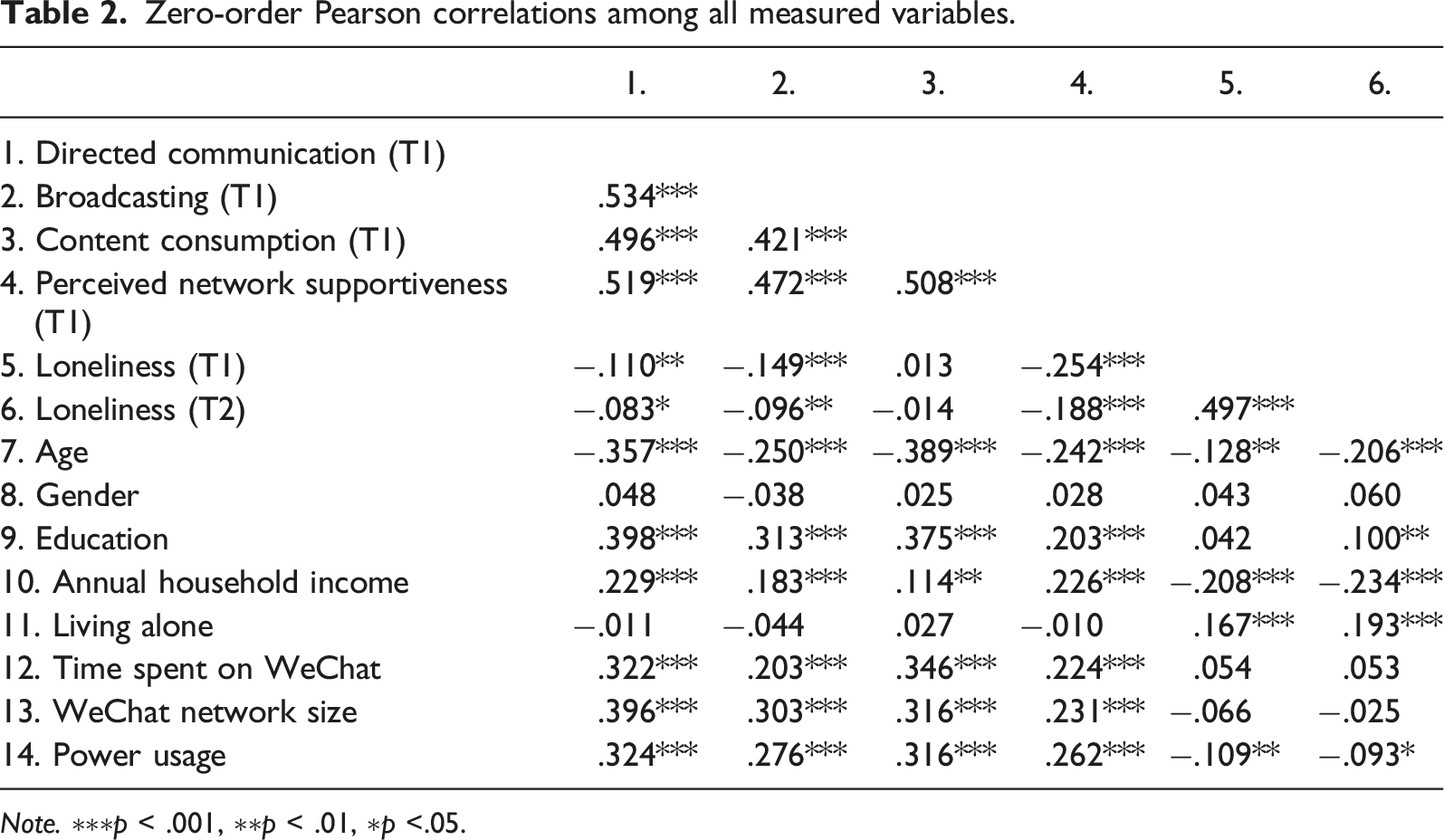
Note. ∗∗∗p < .001, ∗∗p < .01, ∗p <.05.
Hierarchical autoregressive regression analysis predicting the effects of WeChat activities at T1 on loneliness at T2 (N = 740).
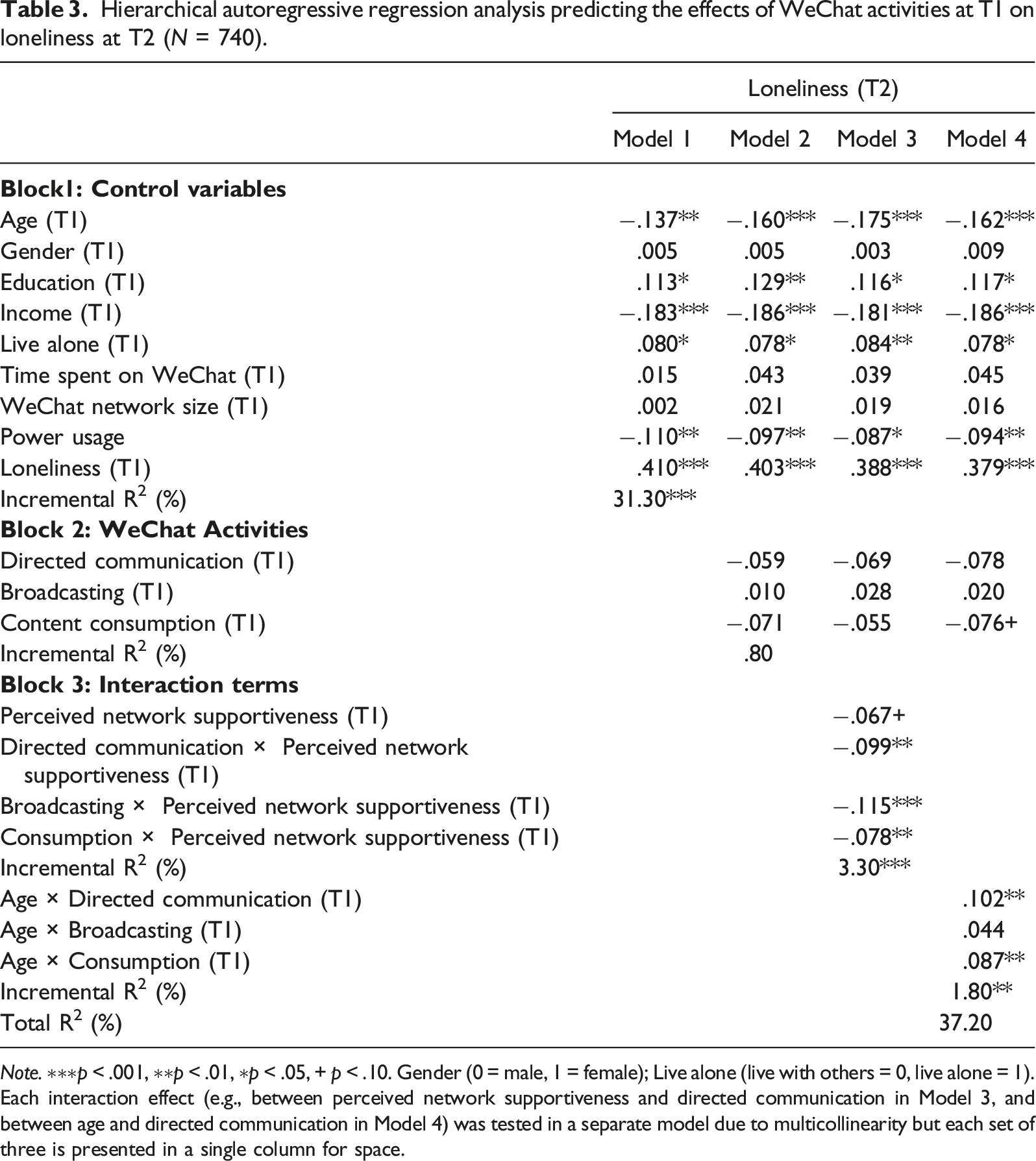
Note. ∗∗∗p < .001, ∗∗p < .01, ∗p < .05, + p < .10. Gender (0 = male, 1 = female); Live alone (live with others = 0, live alone = 1). Each interaction effect (e.g., between perceived network supportiveness and directed communication in Model 3, and between age and directed communication in Model 4) was tested in a separate model due to multicollinearity but each set of three is presented in a single column for space.
Regarding RQ2, which explored the moderating role of age, the results revealed a significant interaction effect between directed communication and participants’ ages in predicting loneliness (β = .102, p < .01). Specifically, using the Johnson–Neyman technique, we found that the effect of directed communication on loneliness was significantly negative when participants were younger than 41.33 years and significantly positive when participants were older than 77.45 years (out of the observed values of 18–75 years in our study). However, when participants were between 41.33 and 77.45 years, the effect of directed communication on loneliness was not significant (see Figure 1). Johnson–Neyman plot for the interaction of directed communication (T1) and users’ age on loneliness (T2).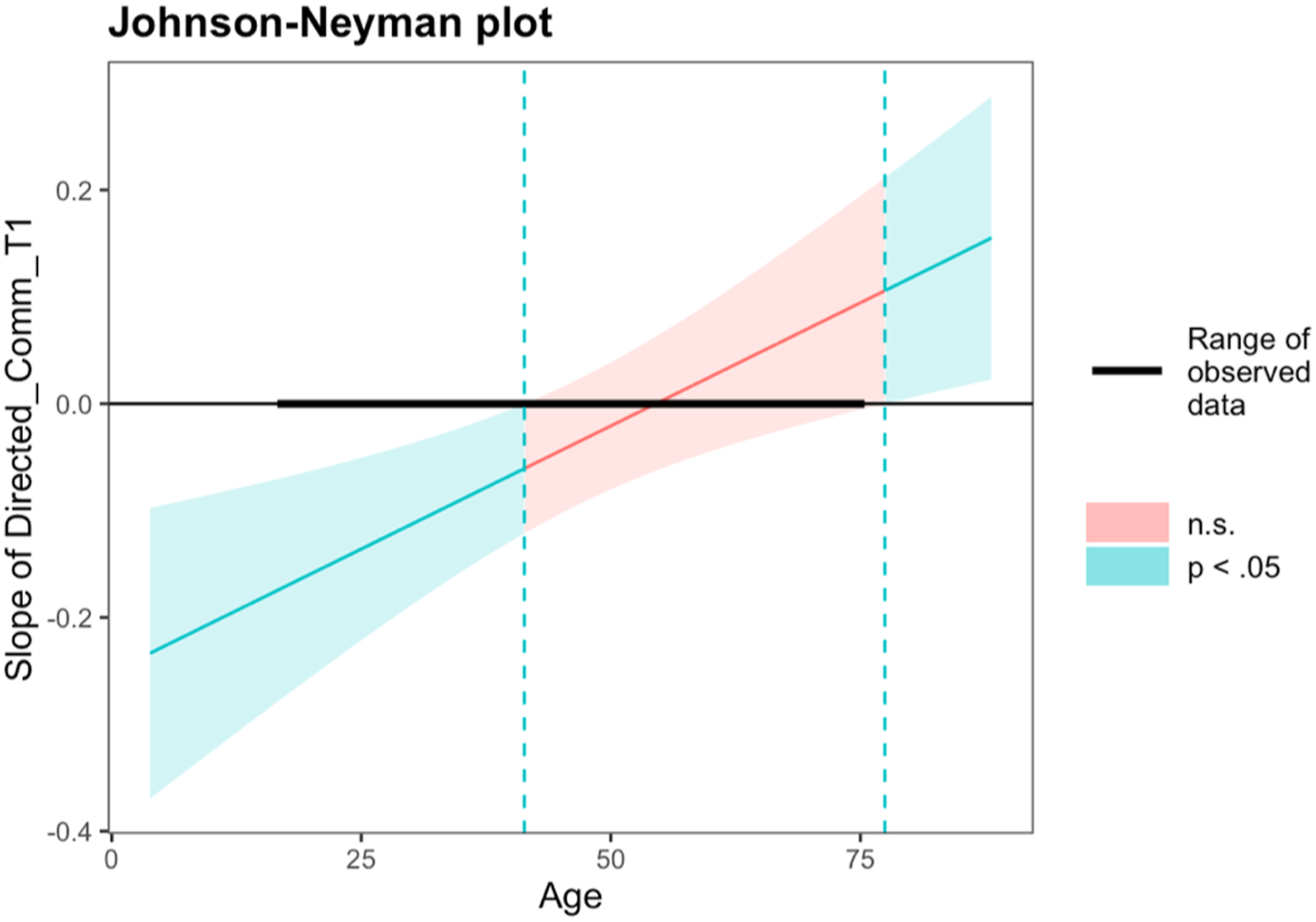
The results also revealed a significant interaction effect between content consumption and a user’s age in influencing one’s loneliness at T2 (β = .087, p < .01). As shown in Figure 2, the positive effect of content consumption on reducing loneliness was significant only for participants who were younger than 41.68 years; while for people older than 89.01 years, frequent consumption increased their loneliness over time. Nevertheless, this study did not find a significant interaction effect between broadcasting and a user’s age in predicting loneliness over time (β = .044, p = .166). Johnson–Neyman plot for the interaction of content consumption (T1) and users’ age on loneliness (T2).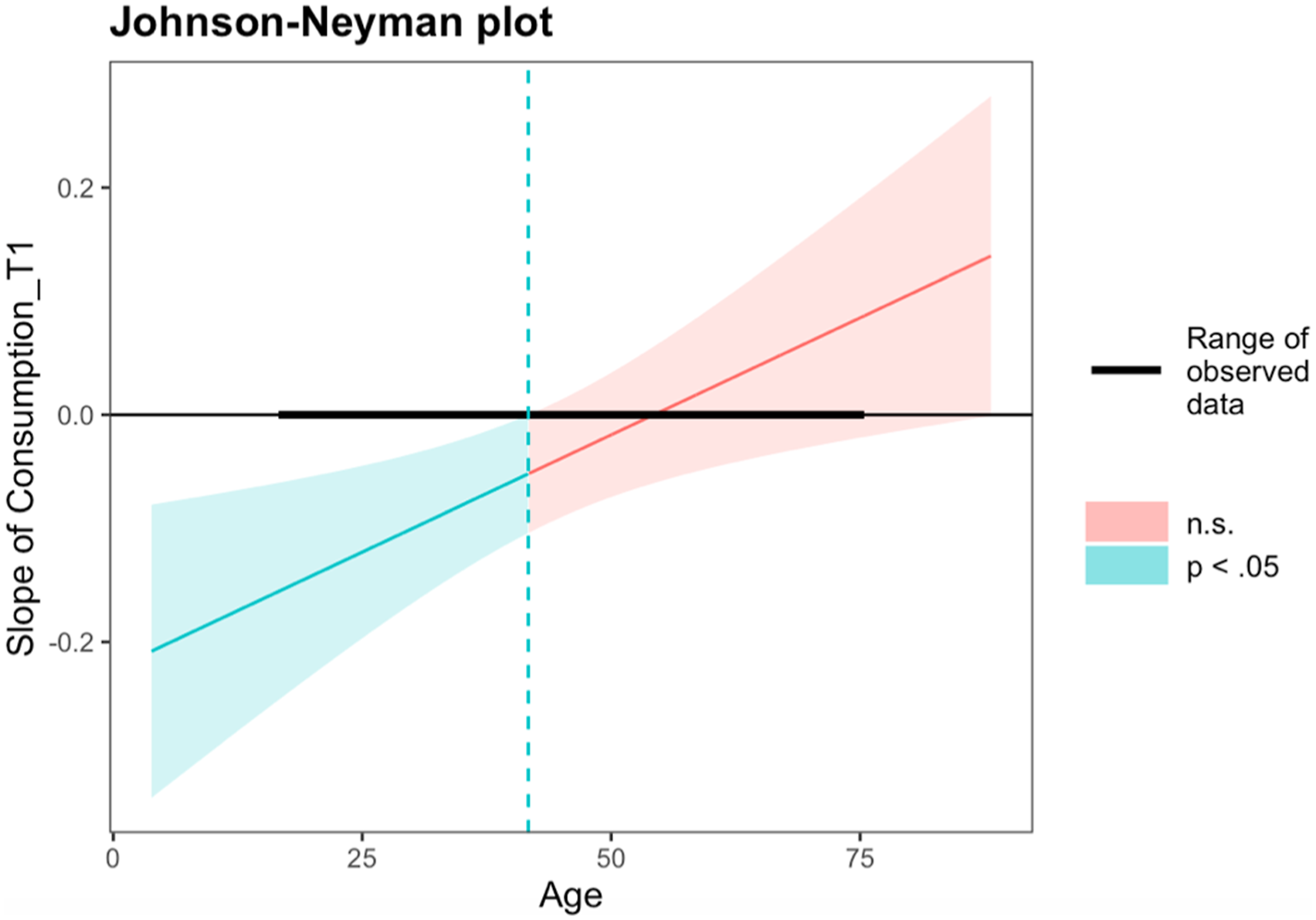
For H2, which examined the moderating role of individuals’ perceived network supportiveness, the results revealed a significant interaction effect between perceived network supportiveness and directed communication in predicting loneliness at T2 (β = −.099, p < .01). Specifically, for participants who perceived a lower level of network supportiveness on WeChat (less than 3.26), the more they engaged in directed communication, the more they felt lonely; while for those in our study who perceived a higher level of network supportiveness (larger than 5.42), frequent directed communication was found to reduce their loneliness over time (see Figure 3). Johnson–Neyman plot for the interaction of directed communication (T1) and perceived network supportiveness (T1) on loneliness (T2).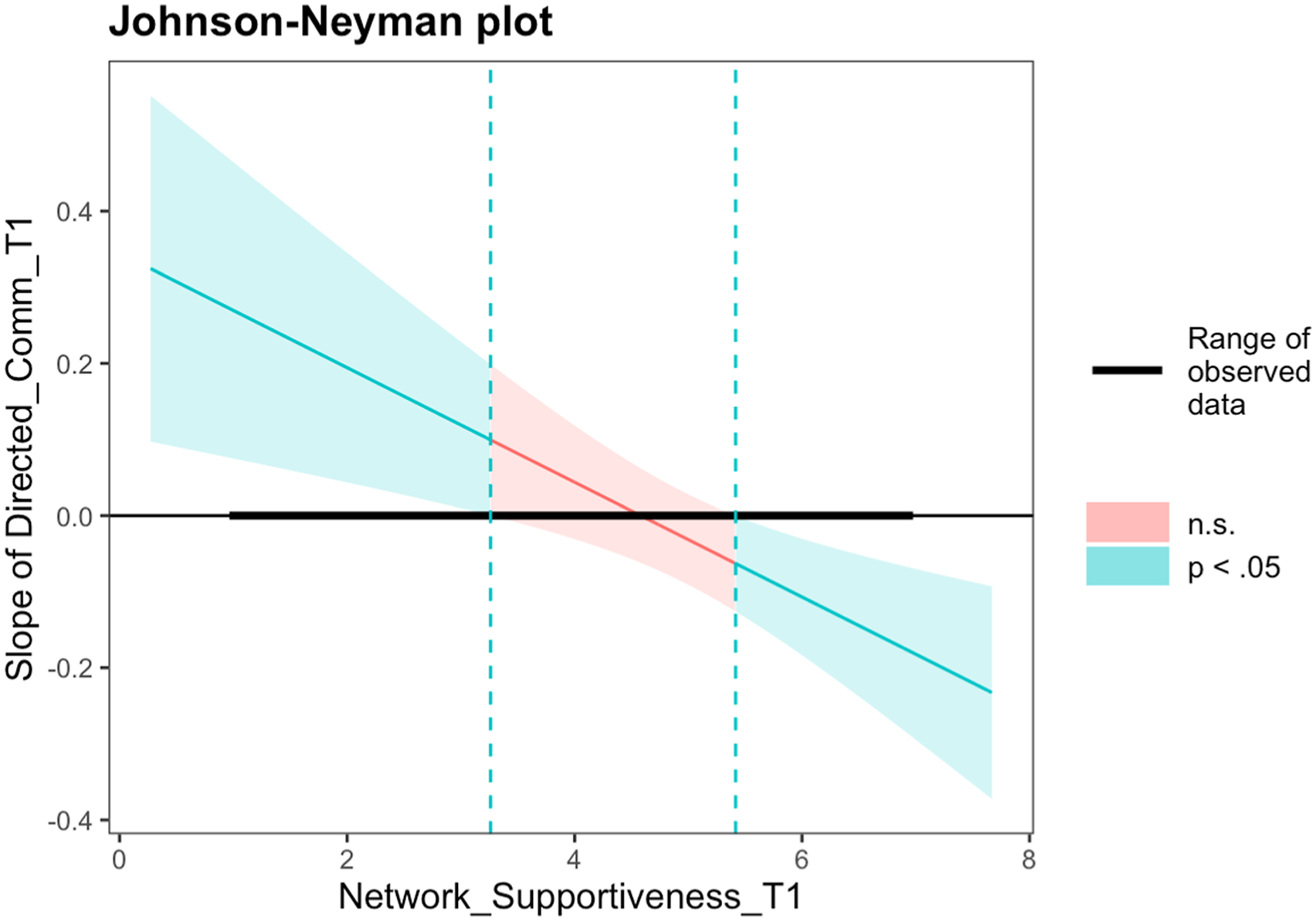
A similar interaction pattern was observed for broadcasting on WeChat (β = −.115, p < .001). When participants perceived higher levels of network supportiveness on WeChat (larger than 6.02 in our study), frequent broadcasting reduced their feelings of loneliness over time, but when participants perceived lower levels of network supportiveness (less than 4.68), frequent broadcasting induced more loneliness (see Figure 4). Johnson–Neyman plot for the interaction of broadcasting (T1) and perceived network supportiveness (T1) on loneliness (T2).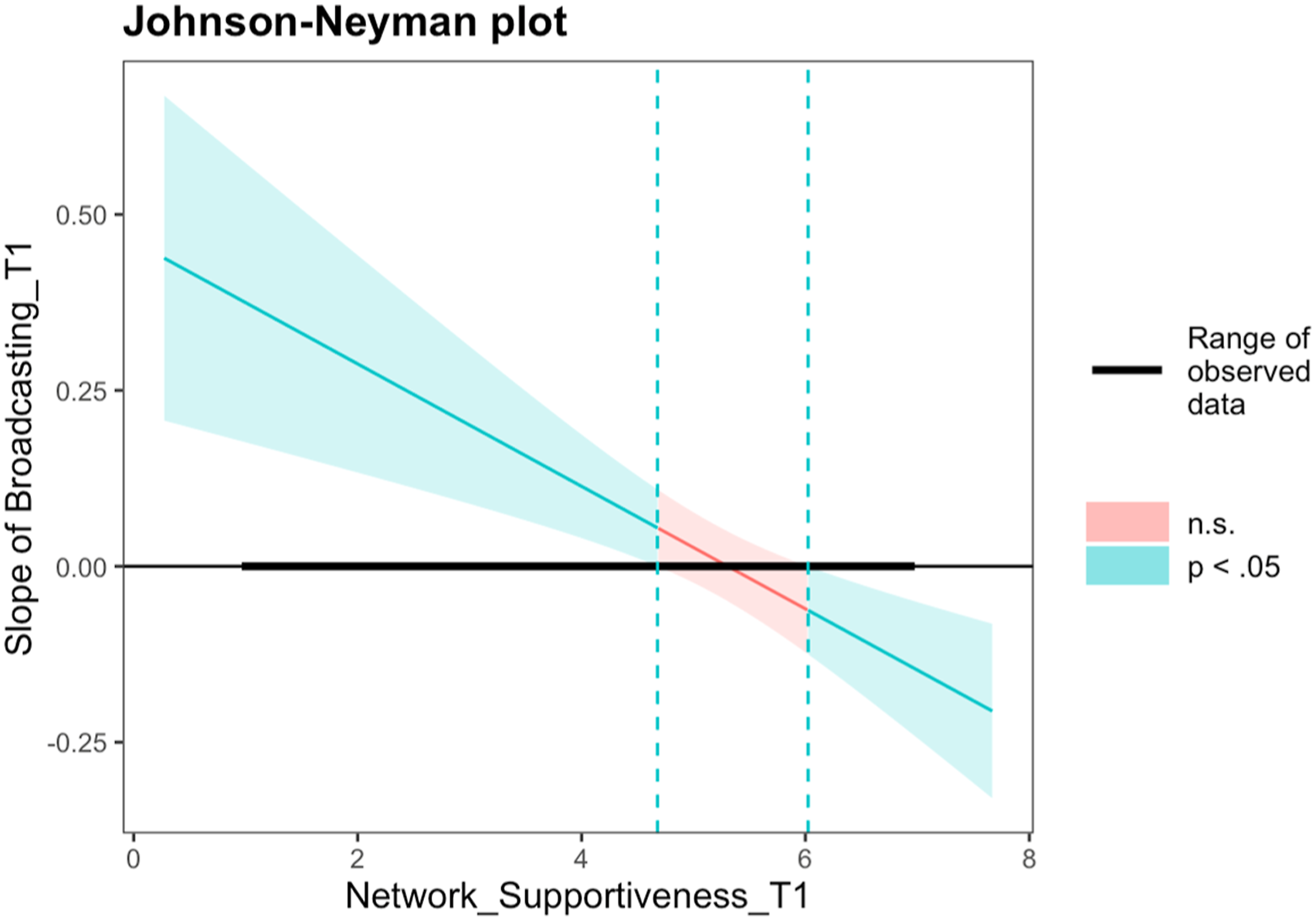
Likewise, the interaction effect between content consumption and perceived network supportiveness (β = −.078, p < .05) on reducing loneliness was more pronounced among those who reported higher levels of network supportiveness (larger than 5.40). For those who perceived lower levels of network supportiveness (smaller than 0.87), the more content they consumed on WeChat, the higher their reported loneliness scores (see Figure 5). Johnson–Neyman plot for the interaction of content consumption (T1) and perceived network supportiveness (T1) on loneliness (T2).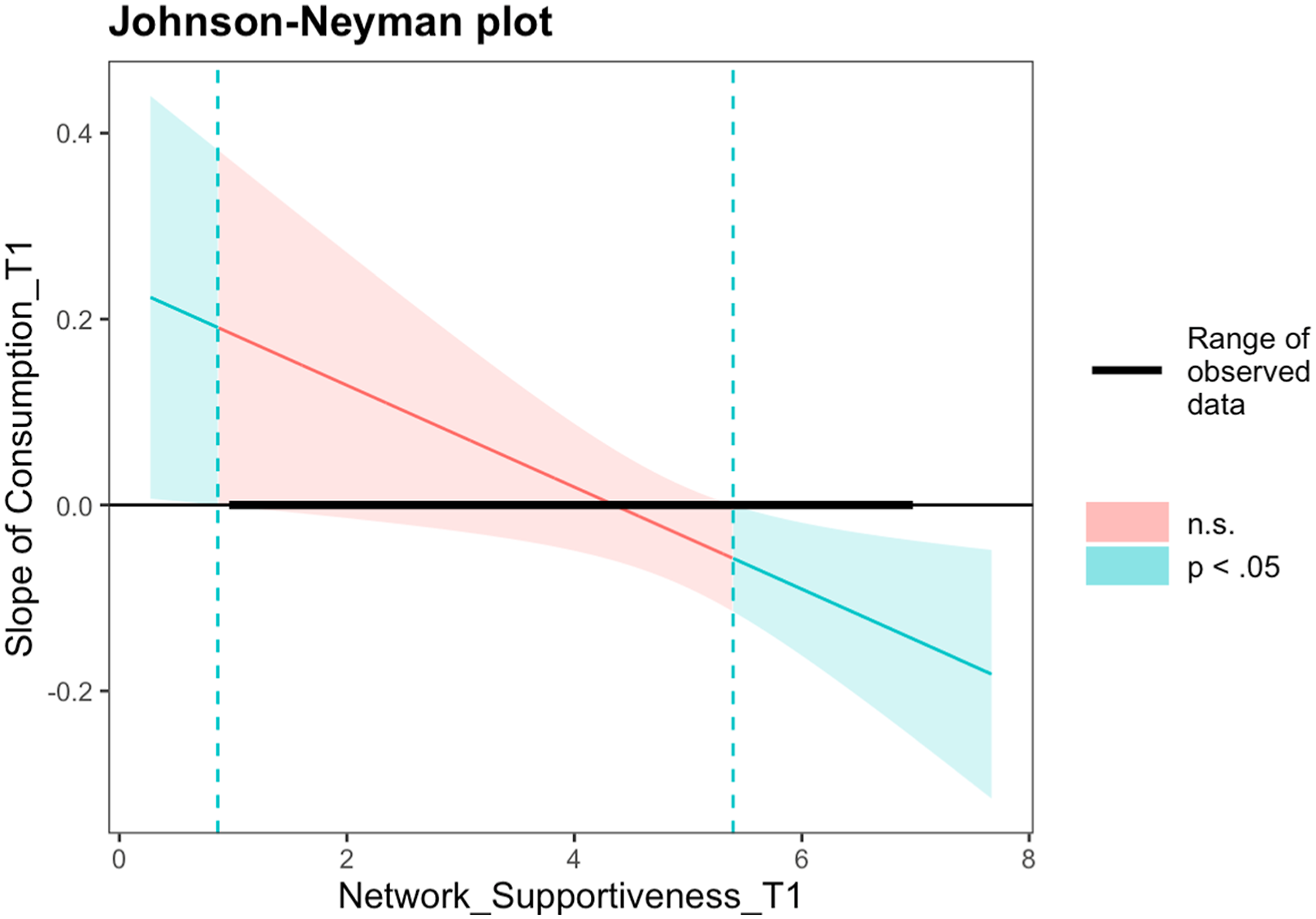
Additional Analysis
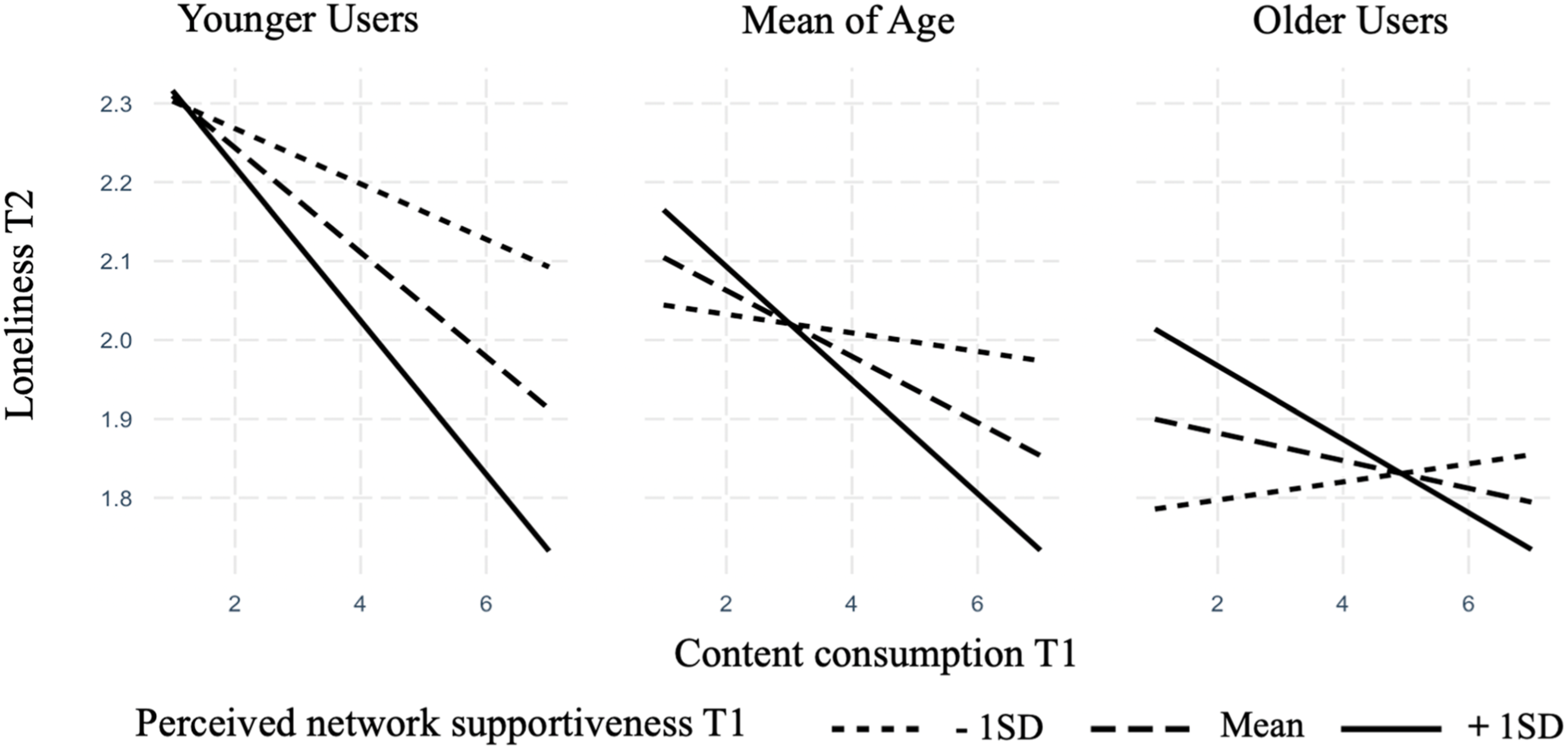
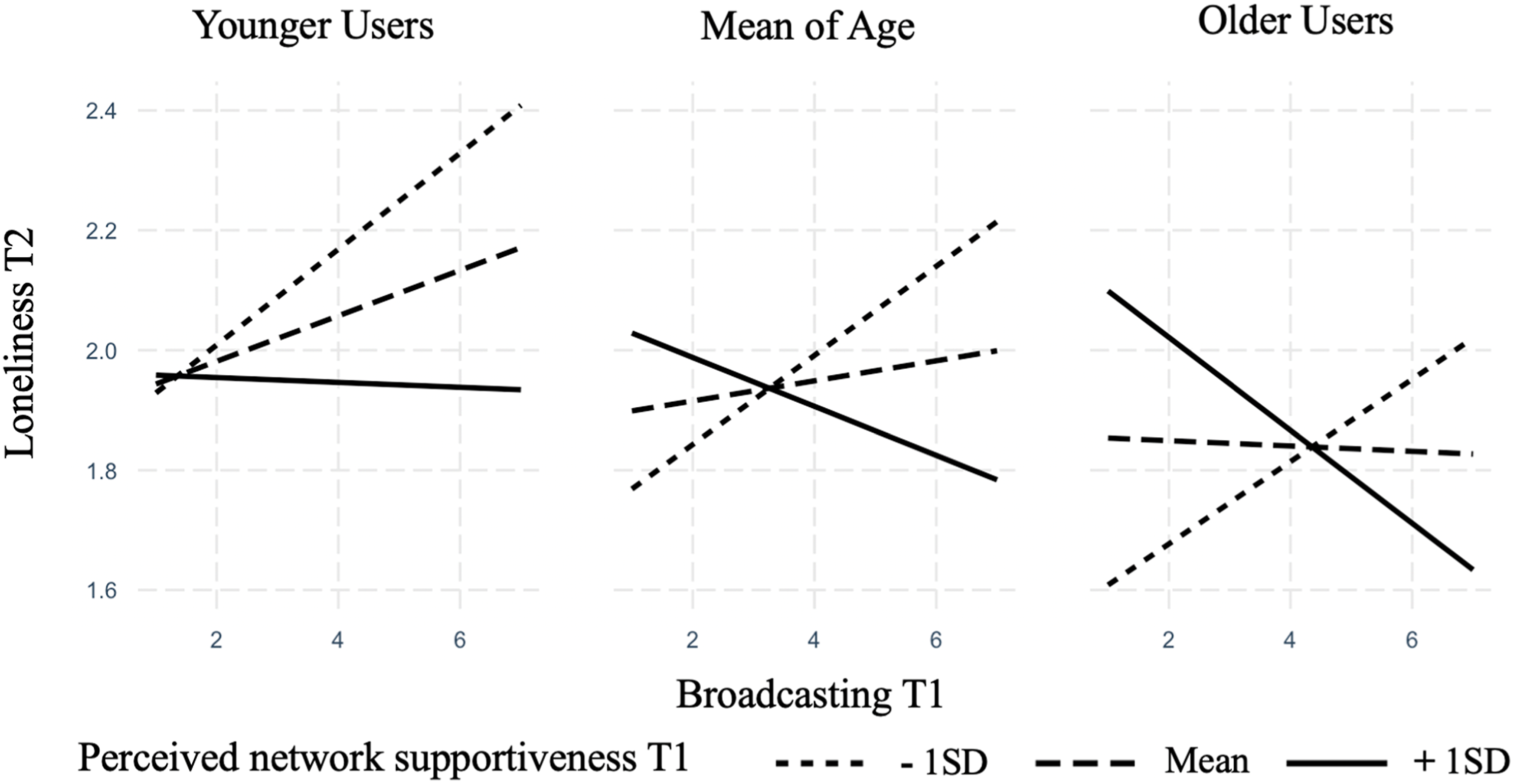
Considering the significant moderating effects of age and perceived network supportiveness, we additionally tested if a participant’s age interacted with WeChat activities and perceived network supportiveness on loneliness. Our data revealed a significant three-way interaction effect among directed communication, age, and perceived network supportiveness on loneliness (β = −.076, p < .05). The simple slope analysis showed that the interaction effect between directed communication and perceived network supportiveness on loneliness was significant only for younger participants (β = −.100, p < .05; see Figure 6). Likewise, there was a significant three-way interaction effect among content consumption, age, and perceived network supportiveness on loneliness (β = −.045, p < .05). As shown in Figure 7, the moderating role of perceived network supportiveness in enhancing the effect of consumption on reducing loneliness was more salient among younger users (β = −.099, p < .05). As for broadcasting, the results also revealed a significant three-way interaction effect on loneliness (β = −.054, p < .05). The simple slope analysis showed that for both younger (β = .081, p < .05) and older participants (β = .072, p < .05), when they perceived a lower level of network supportiveness, frequent broadcasting significantly increased their feelings of loneliness (see Figure 8). Three-way interaction between directed communication, perceived network supportiveness, and age on loneliness. Three-way interaction between content consumption, perceived network supportiveness, and age on loneliness. Three-way interaction between broadcasting, perceived network supportiveness, and age on loneliness.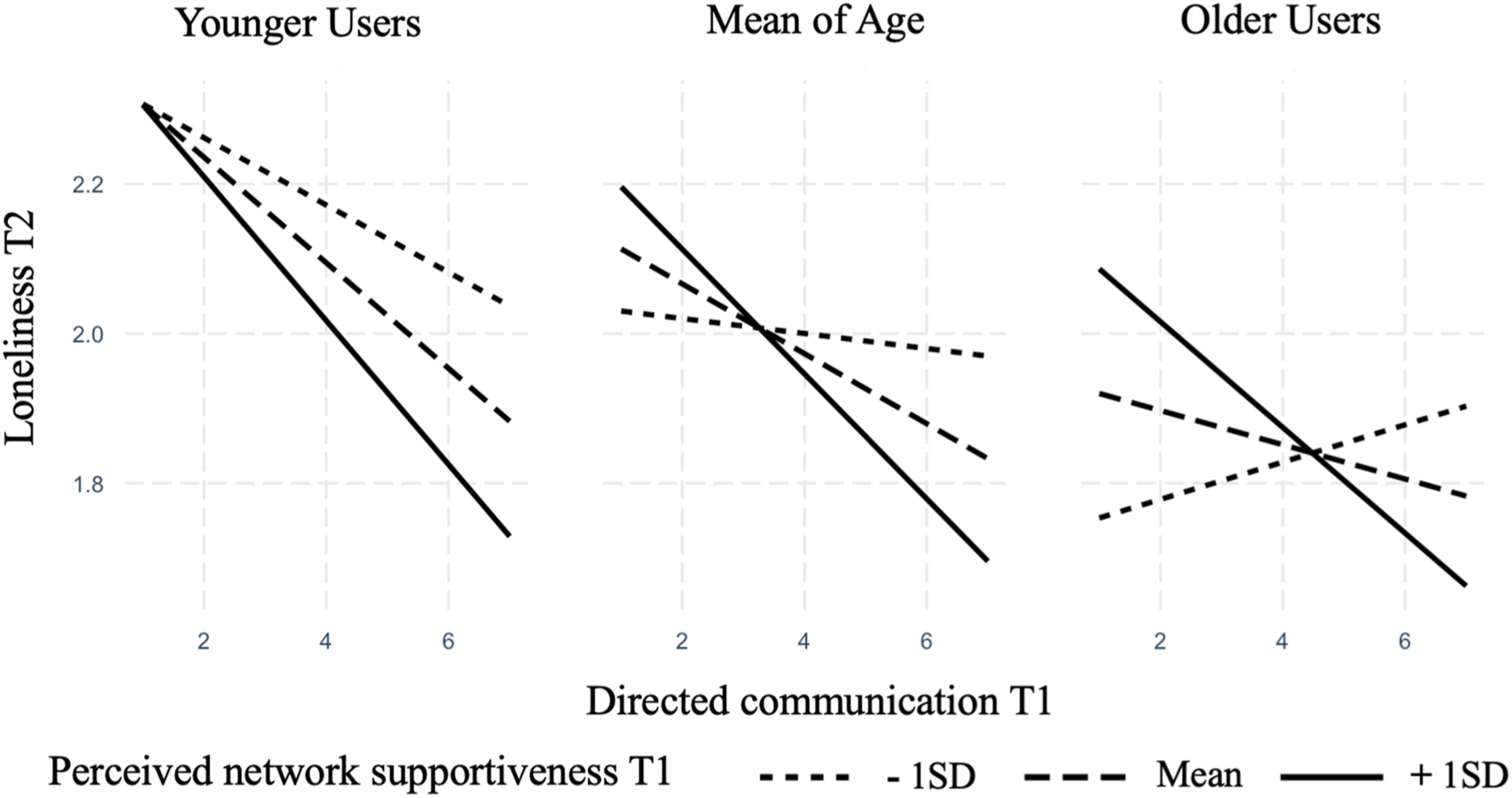
Discussion
Using SNSs to build and maintain social relationships has been incorporated into daily living across generations; however, whether SNS use reduces or increases loneliness is not clear-cut. This study addressed this issue by performing lagged analyses on two-wave panel data, considering three distinct types of SNS activities on WeChat. In addition, this study extended previous research by identifying the important roles of users’ ages and perceptions of network supportiveness in altering the effects of SNS use on their well-being.
First, this study did not find a significant relationship between WeChat use and loneliness over time. Hence, we cannot conclude that WeChat activities had a direct effect on users’ loneliness across age cohorts. Our finding is consistent with prior longitudinal studies indicating that SNS use rarely affects individuals’ well-being directly (e.g., Dienlin et al., 2017). On the one hand, this finding indicates that we should be cautious about the significant direct relationships between WeChat use and individuals’ well-being outcomes reported in prior studies using cross-sectional data. To avoid drawing spurious conclusions, one must not overemphasize any reported direct influences of WeChat that disregard generational differences. On the other hand, the nonsignificant relationship between WeChat activities and users’ loneliness may be attributed to WeChat’s unique ecosystem. Specifically, compared to mass-oriented platforms such as Twitter or Weibo, WeChat is a less public platform; a WeChat user’s network of friends comprises primarily two-sided connections (mutual friending), along with more strong ties and less weak ties than other open SNSs (Shen & Gong, 2019). It is possible that frequent communication with existing familiar and stable relationships, such as those with family and friends, in a relatively short time would not significantly reduce WeChat users’ feelings of relational deficit across users of all ages.
Although this study did not find a significant direct effect across age groups, taken in the context of digital inequality and the life course, our results revealed that the influence of WeChat use was contingent upon an individual’s age. Our findings showed that directed communication and content consumption on WeChat significantly reduced younger users’ loneliness over time but not older users’ loneliness. Even more concerning, we found that such activities can bring about more feelings of loneliness for old-olds. This finding is consistent with prior research (e.g., Quinn, 2021) indicating that younger users tend to attain more beneficial outcomes from SNS use. Contrary to the theoretical prediction of the social compensation hypothesis, the older population in our study seemed to miss out on the myriad compensation opportunities offered by SNS interactions. Our study’s finding is thus more in line with the digital inequality perspectives, which highlight the digital divide between younger and older generations. It seems that the digital gap in technological skills can lead to differences in leveraging connectivity on SNS in ways that are useful and meaningful for well-being improvement. Building upon prior studies indicating that older populations lag in the adoption of and access to newer technologies (e.g., Haight et al., 2014), our finding extends the digital inequality scholarship to the effects of mobile SNS use. Our results demonstrate that digital inequality among WeChat users may impact the outcomes of WeChat use because different populations do not universally experience the benefits derived from WeChat interactions. This outcome inequality leads to an effect gap (differences in the consequences of SNS use) among users possessing different levels of digital skills.
Another significant finding pertains to the moderating effect of perceived network supportiveness on WeChat. Our results revealed that the perceived supportiveness of a WeChat user’s network conditions the degree to which engaging in WeChat activities ameliorates or aggravates feelings of loneliness. It appears that only when individuals perceive adequate levels of network support and experience sufficient instances of receiving support and feedback from their network can they benefit from directed communication, broadcasting, and content consumption on WeChat. As such, the finding reinforces the social enhancement hypothesis, indicating that the benefits of SNS use are greater for socially rich users possessing more social resources, consistent with prior studies (e.g., Lee et al., 2020). That said, it is noteworthy that compared to directed communication and content consumption, WeChat broadcasting tends to be a more challenging or somewhat demanding activity. We have drawn this conclusion based on our results from the Johnson–Neyman analysis, which demonstrated that frequent broadcasting led to more loneliness even for those participants who scored their perceived network supportiveness as above average (M = 4.12) but lower than 4.68. In other words, broadcasting seemingly requires a higher level of network support and feedback than the other two types of activities to transform the potentially harmful effects into beneficial outcomes for individuals’ well-being. To some extent, the finding helps explain why some prior research found that broadcasting can bring about negative psychosocial outcomes (e.g., Frison & Eggermont, 2016; Xie & Karan, 2019). It appears that a lack of supportive feedback and responses could be perceived as social rejection, which makes individuals be more vulnerable to develop negative feelings. This indicates that the examination of the effects of SNS activities cannot be isolated from the contexts that individuals engaged with.
Theoretical and Practical Implications
This study has important theoretical implications that shed light on future SNS research. First, rather than encapsulating SNS use and linking it broadly to loneliness, this study differentiated diverse WeChat activities and identified the specific links from use contexts to loneliness. The findings indicate that not all users experience the same extent of benefits and social consequences from WeChat activities, and not all activities guarantee the same benefits across contexts and user groups. In this regard, our study argues against a general conclusion that treats SNS use as a whole or treats users as one uniform group. Future research employing displacement or reinforcement frameworks in determining the effects of SNS use is suggested to consider individual differences that tend to alter the induced outcomes by using the same technological features. Older adults and those who have limited access to supportive networks and resources, on the disadvantaged side of the divide, require additional attention to enable them to engage in and benefit from the digital society. In a broader sense, our study expands current definitions of the digital divide by arguing that the effects of SNSs need to be included as an important dimension when investigating the digital divide. This directs to a new theoretical understanding of digital inequality and further develops social engagement research, particularly in the Chinese mobile SNS context.
Second, this study has implications for the social enhancement and compensation perspectives and points to ways to advance the relevant scholarship. The finding that individuals who are resource-rich benefit most from WeChat use reinforces the social enhancement hypothesis in a mobile SNS context and stands in contrast to other empirical studies that previously demonstrated the social compensation perspective on other SNSs, such as Facebook in Western contexts (e.g., Rains & Tsetsi, 2017; Stevic et al., 2021). The finding that older adults in our study missed out on the compensation opportunities that WeChat affords indicates that we should not assume that older adults would certainly benefit from the compensation opportunities that WeChat affords; the availability of the compensation opportunities does not guarantee effective utilization. To fully capture the opportunities that online communication offered to make up the older adults’ reduced interactions in offline settings, scholars need to figure out and eliminate the potential barriers for older adults to reap benefits from WeChat use, such as uncertainty or skeptical attitudes toward the value of technology (Hayes et al., 2015). Likewise, the finding that frequent WeChat broadcasting can induce greater feelings of loneliness for younger users who perceived lower levels of network supportiveness indicates that social enhancement would not be universally experienced by younger users. This suggests that scholars should remain vigilant about the one-size-fits-all hypothesis by advocating for either the social enhancement or social compensation perspective. Hence, we conclude from this study that future research can more accurately examine the implications of SNS use via such theoretical frameworks by determining the conditions under which social enhancement and compensation are more likely to be triggered. This approach opens up future SNS research trajectories to closely examine whether the enhancement/compensation effect varies by the source of inequality (e.g., demographic characteristics, technological skills; Rains & Tsetsi, 2017).
Third, this study challenges the dichotomous passive-versus-active framing used when investigating the implications of SNS uses. We found that content consumption, defined as passive use in prior literature (e.g., Verduyn et al., 2015), can enhance individuals’ well-being depending on the level of perceived network supportiveness. The finding that invisible communication, such as passive consumption unobserved by other parties, matters in a positive way concerning individuals’ well-being reinforces the increasing advocacy for additional research that can add specificity and theoretical refinement to the passive-versus-active behavior distinction (Ellison et al., 2020). Our study took a step in this direction by including two highly relevant moderating variables (age and perceived network supportiveness) that determine the effect of active/passive use and contribute to a nuanced understanding of the implications of mobile SNSs, particularly on WeChat.
The study’s findings also provide several practical implications useful for future interface designs and SNS interventions aimed at enhancing individuals’ well-being. First, it should be noted that it would be risky to encourage frequent directed communication, content consumption, and broadcasting on WeChat for all populations, as such activities can induce more loneliness for those who lack network supportiveness. Hence, future SNS designs and interventions that aim to generate positive psychosocial outcomes should account for users’ characteristics and individual network characteristics. For example, for those users who are at risk of social exclusion, WeChat interfaces can help rank their posts higher and display the posts for a longer period on Moments to increase the possibility of receiving feedback and support from their WeChat friends. SNS designers can also provide users with examples of supportive messages to induce them to engage in supportive communication.
Second, considering that older adults were found to miss out on the compensation opportunities that SNSs afford, it is crucial to narrow the gap in digital skills and knowledge, enabling them to fully participate in a digital society and take full advantage of SNS technologies. Specifically, additional training sessions can be organized both online and offline to arouse older adults’ interests and advance their digital skills. In addition, short tutorials can introduce newer interface features to provide older users with hands-on and step-by-step procedures. That said, considering the finding that older adults benefited less from WeChat use in reducing loneliness, policy makers and practitioners should devote more effort into the offline communication and organize more elderly-oriented offline activities to facilitate older adults’ social participation to build and sustain meaningful relationships to reduce loneliness.
Third, considering the vital role of perceived network supportiveness in ensuring positive outcomes, designers should help build a supportive atmosphere when users engage in SNS interactions, particularly when individuals post broadcasts. Specifically, SNS designers can create more features that provide users with additional opportunities to express support in diverse ways. For example, WeChat currently only offers the “like” button. Other interactive features, such as offering a hug or expressing encouraging emotions and supportive connotations (e.g., buttons expressing love, care, and support), can be implemented on WeChat.
Limitations and Future Research
This research is not free of limitations. First, although this study employed two-wave panel data, the time lag we chose (3 months) may have affected the findings. Communication activities on WeChat might have a long tail that needs a longer interval to detect their direct significant effects. Hence, future research can explore whether using different time lags can result in different findings to validate our findings. Second, this study examined WeChat activities by using self-reported measures. Although prior studies indicated that users are self-aware enough to report their media use (e.g., LaRose et al., 2001), it may be somewhat difficult for older adults to precisely recall their past activities. In addition, this study adopted a 7-point scale (1 = very infrequently, 7 = very frequently) for the measures of WeChat activities based on prior literature. Nevertheless, the option “very infrequently” may be ambiguous for our participants to understand and to evaluate their usage. Therefore, we recommend that future research supplement our findings by using other well-crafted scales or activity-log data.
Third, although this study measured overall time spent on WeChat as a control variable in trying to rule out the confounding effects of other communication activities on WeChat, due to the scope of this study, we did not measure other communication activities outside WeChat (e.g., face-to-face communication, talking on a mobile phone) that prior research has found to be important in influencing one’s well-being (e.g., Goodman-Deane et al., 2016). As such, future research is recommended to include a more conclusive set of communication activities on and off WeChat to provide a more comprehensive understanding of the effects of WeChat use. Fourth, given the objectives of this study, we focused on the direct effect of different types of WeChat activities on loneliness in a longitudinal context. It should be noted that in some cases, the use of SNS features can be indirectly related to one’s psychosocial outcomes through crucial underlying processes. Hence, one of the promising future lines of research in this area is to identify the working mechanisms linking different types of SNS use to psychosocial outcomes to further add to the expanding literature on the uses and effects of SNS.
Lastly, although we asked participants to report their perceived network supportiveness on WeChat with wording fit the WeChat context, considering that WeChat’s social network is largely based on one’s existing friends and acquaintances established in offline settings, the interpretation of our findings should note the overlap between one’s WeChat social network and offline social network.
Conclusion
Across generations, mobile SNSs have become ubiquitous for daily communication. It is thus critical to understand which contexts empower SNSs to improve individuals’ well-being. Our findings provided empirical evidence that the outcomes of using WeChat can vary depending on users’ ages and perceptions of the support provided by their online networks. Mobile SNSs may not necessarily benefit certain groups of people. The findings suggest that in terms of enhancing well-being, the essence of SNS use lies in users’ characteristics, such as age and individual network resources to leverage connectivity, rather than merely their access to the SNS or their overall use of it. To this end, this study sheds light on future scholarship investigating the implications of mobile SNS usage with a granular view.
Footnotes
Declaration of conflicting interests
The authors declared no potential conflicts of interest with respect to the research, authorship, and/or publication of this article.
Funding
The author(s) disclosed receipt of the following financial support for the research, authorship, and/or publication of this article: This research is partly supported by National University of Singapore under the Graduate Research Support Scheme.
