




Abstract
To better understand the demographic composition of people participating in commenting sections beneath online news articles, we conducted a large-scale survey (n = 5,490) with a panel that is representative of the Dutch population – the LISS panel. We combined these data with demographic background variables and previously collected data on political views and values, to provide a detailed description of the identity of online news commenters in comparison to non-commenters. Our results show that the group of commenters contain more men (55%), and the age group of 45–54 years old has the largest share of commenters (18% for men, 13% for women). Furthermore, we found little to no differences for education levels, income, location, political preferences, and cultural background, suggesting that there is no striking overrepresentation of specific groups among online commenters in general. However, when looking at the profiles of online commenters as a function of the topic and platform of discussion, differences start to emerge for gender, age, and education levels. We found no differences related to age and gender distributions for those with a higher commenting frequency, but a higher frequency does go hand in hand with more support for national populist and far-right political parties and a lower confidence in political parties.
Introduction
Online comments are argued to influence opinion formation (Anderson et al., 2014; Lee & Jang, 2010; Sung & Lee, 2015), mainly because online users rely on the way in which others perceive a news story as a heuristic for making their own judgements (Lee et al., 2022). Therefore, online comments are often interpreted as a gauge for public opinion (Kim et al., 2022; Neubaum & Krämer, 2017; Soffer, 2019; Srivastava & Eachempati, 2023), despite discrepancies being observed between online discussions and public opinion surveys (-De Kraker et al., 2014; Kim et al., 2022). According to the Reuters Institute Digital News Report (Newman et al., 2023), there is a small unrepresentative group (male, higher education, more partisan in their political views – the traditional target group of many news media) that predominates active online news participation. It is therefore questionable to what extent online comments reflect the public opinion, and to what degree readers should interpret them as a distorted picture.
Previous literature, however, does not show consensus for one predominant stereotypical commenter (Friemel & Dötsch, 2015; Lee & Ryu, 2019; Newman et al., 2023; Pierson, 2015; Stroud et al., 2016; Van Duyn et al., 2021). This may be attributed to methodological difficulties, as looking at existing discussion data may cause a selection bias, and surveys among news outlets could lead to a response bias. But it could also relate to differences in the age and gender of commenters per topic (Lee & Ryu, 2019; Van Duyn et al., 2021) – a nuance which perhaps also holds for the type of news outlet or commenting platform. To gain an unbiased impression of the demographic composition of comment sections in response to news articles, we collected a wide range of data with regard to online commenting behaviour with a large sample (n = 5,490) from a panel that is representative of the Dutch population, encompassing frequency, quantity, topics, preferred news outlets and platforms, and motivation for (not) commenting. The current research report will provide a descriptive analysis of these data, containing an overview of the average commenter and three more detailed analyses on how the characteristics of commenters change based on the topic of discussion, the platform, and the frequency of commenting.
Methodology
Data Collection
We collected our data through the Longitudinal Internet Studies for the Social Science (LISS) panel of CentERdata 1 at Tilburg University (Scherpenzeel & Das, 2010). This is a representative sample of the Dutch population, based on a true probability sample of households drawn from the population register by Statistics Netherlands. 2 The panel consists of 4,500 households comprising approximately 7,000 individuals above the age of 16, who participate in internet surveys on a monthly basis for which they receive financial compensation. We presented the LISS panel with a two-part questionnaire in October 2022. In the first part news commenters and news comment readers were distinguished so that only those participants continued to the second part of the survey. There they were presented with questions regarding reading and commenting frequency, quantity, topics, preferred media, platform, and motivation. Before presenting the survey to the panel, several pilots and pretest sessions were conducted by both CentER data and the authors, to make sure that the questions were understandable and would reach their goals. See Appendix A for the full questionnaire. All data will be publicly available on the LISS archive. 3 All subjects gave their informed consent before they participated in the study. The study was approved by the ethical board of Tilburg School of Humanities and Digital Sciences (Project identification code: TSHD_RP90a) on February 10, 2022, and was conducted in compliance with the General Data Protection Regulation (GDPR).
Measurements
Commenting Behaviour
Respondents were asked to indicate whether, over the past 12 months, they had read online news and opinion articles, the online discussions in response, and whether they commented themselves. Respondents that did not, were asked about their motivation for not doing so. The frequency of news reading, comment reading, and commenting was measured on a 8-point scale, with the categories being: ‘never’, ‘once a year’, ‘few times a year’, ‘once a month’, ‘few times a month’, ‘once a week’, ‘few times a week’, and ‘daily’. Distinctions were made for doing so on news websites, opinion websites, and news articles on social media. For 15 known Dutch news outlets (Newman et al., 2021; Vinex, 2022), respondents could indicate the platform they used for commenting and comment reading. Furthermore, the respondents indicated on which topics they have read and written comments, the way in which they do so (e.g. ‘only reading the first page of comments’ and ‘never posting more than one comment’), and their motivations for doing so, by choosing one or multiple options that were presented.
Socio-Demographic Background Variables
The following socio-demographic background variables were extracted from the LISS core questionnaire: age, gender, education level, gross income, cultural background, and region. The education levels are based on the categories by CBS Statistics Netherlands: Primary education, prevocational secondary education (VMBO), senior general secondary education (HAVO), pre-university education (VWO), senior secondary vocational education (MBO), higher vocational education (HBO), and university education (WO). The cultural background variable is also based on categories by CBS Statistics Netherlands, but aggregated to native Dutch or a different background, for simplicity’s sake. Maps of the distribution of respondents across COROP regions 4 were created by CentER data.
Politics and Values
We combined our data with data from the LISS core study on Politics and Values (wave 15, Dec 2022 – March 2023), and report on the elements that show the most substantial differences in relation to commenting behaviour. The political preferences of the respondents are based on their response to the question what political party they voted for in the latest elections, March 17th 2021. 5 For readers who are unfamiliar with the Dutch political context, the political preference was additionally categorized per ideology (left to right) based on the description of political parties by Wille and Bovens (2026, Appendix, p. 1). The respondents’ confidence in institutions’ (e.g. the government, the legal system, and the media) was measured on a 10-point scale. Furthermore, their confidence in political parties and political self-confidence is based on agreement with the statements ‘Political parties are only interested in my vote and not in my opinion’ and ‘I have a clear picture of the most important political issues in our country’.
Analysis
As the goal of this study is to provide an unbiased characterization of the demographic composition of online commenters, we have chosen a descriptive approach for the data analysis. We therefore refrain from testing hypotheses about the population and thus focus on the reporting of descriptive statistics rather than inferential statistics. We do so by relating the measurements of commenting behaviour to socio-demographic variables and the politics and values data. We report the results of our survey and the combined data in numbers (n) and percentages (%) and describe the differences between comment readers and commenters. We provide an overview of the commenter in general by describing the average socio-demographic characteristics and politics and values responses of those who indicated to comment. Furthermore, we report focused analyses based on three factors: (1) topic, (2) platform, and (3) commenting frequency.
Results
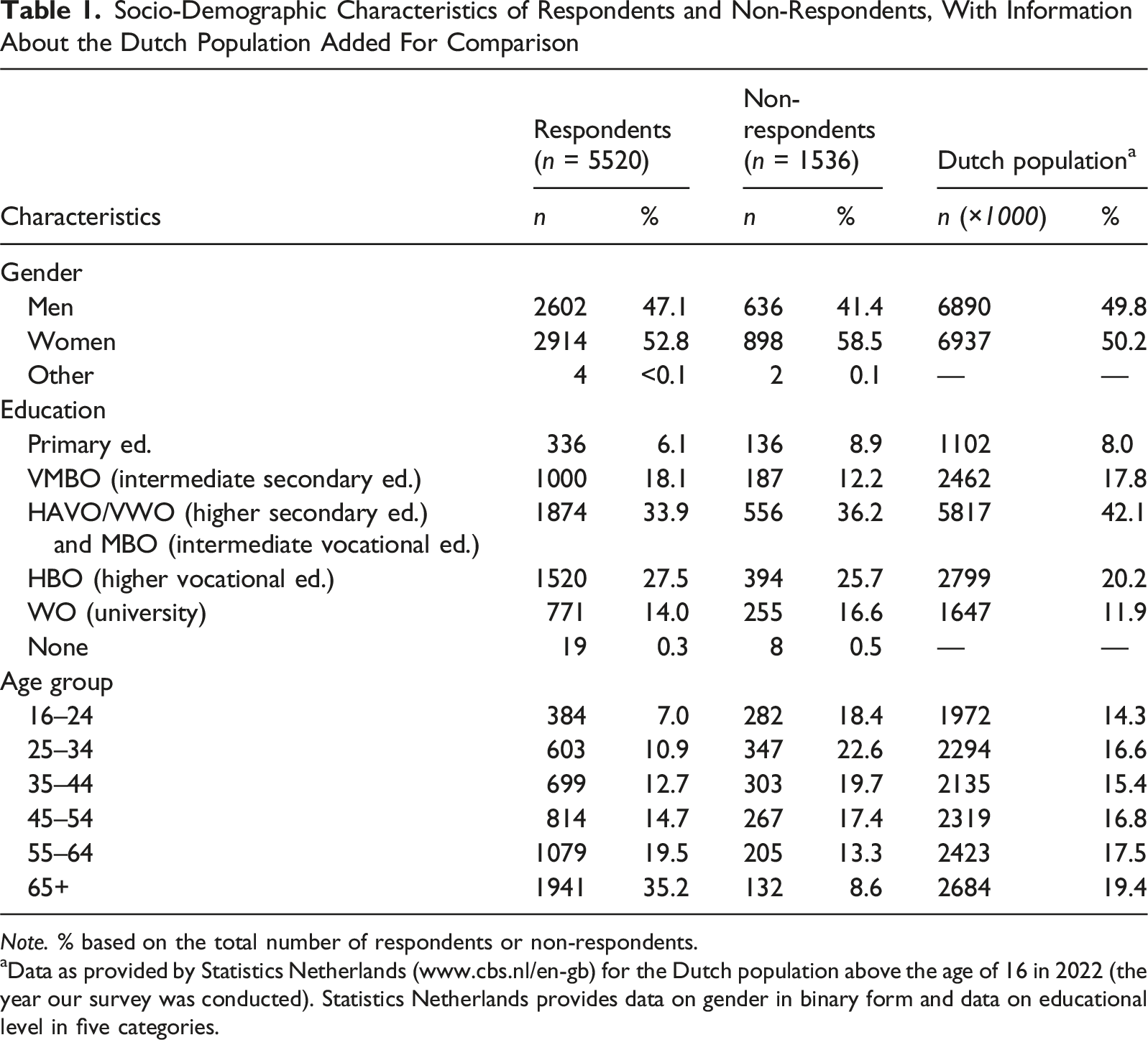
A total of 5,490 participants completed our survey, of which 63% continued to the second part of the survey. 1,536 panel members did not respond, and 30 panel members did not fully complete the survey (Figure 1). Our sample is largely representative of the Dutch population as a whole (Table 1). Minimal differences were found with regards to education and age, as respondents are slightly higher educated and contain a slight overrepresentation of those above the age of 65 compared to the Dutch population. Response rate of the survey Socio-Demographic Characteristics of Respondents and Non-Respondents, With Information About the Dutch Population Added For Comparison Note. % based on the total number of respondents or non-respondents. Data as provided by Statistics Netherlands (www.cbs.nl/en-gb) for the Dutch population above the age of 16 in 2022 (the year our survey was conducted). Statistics Netherlands provides data on gender in binary form and data on educational level in five categories.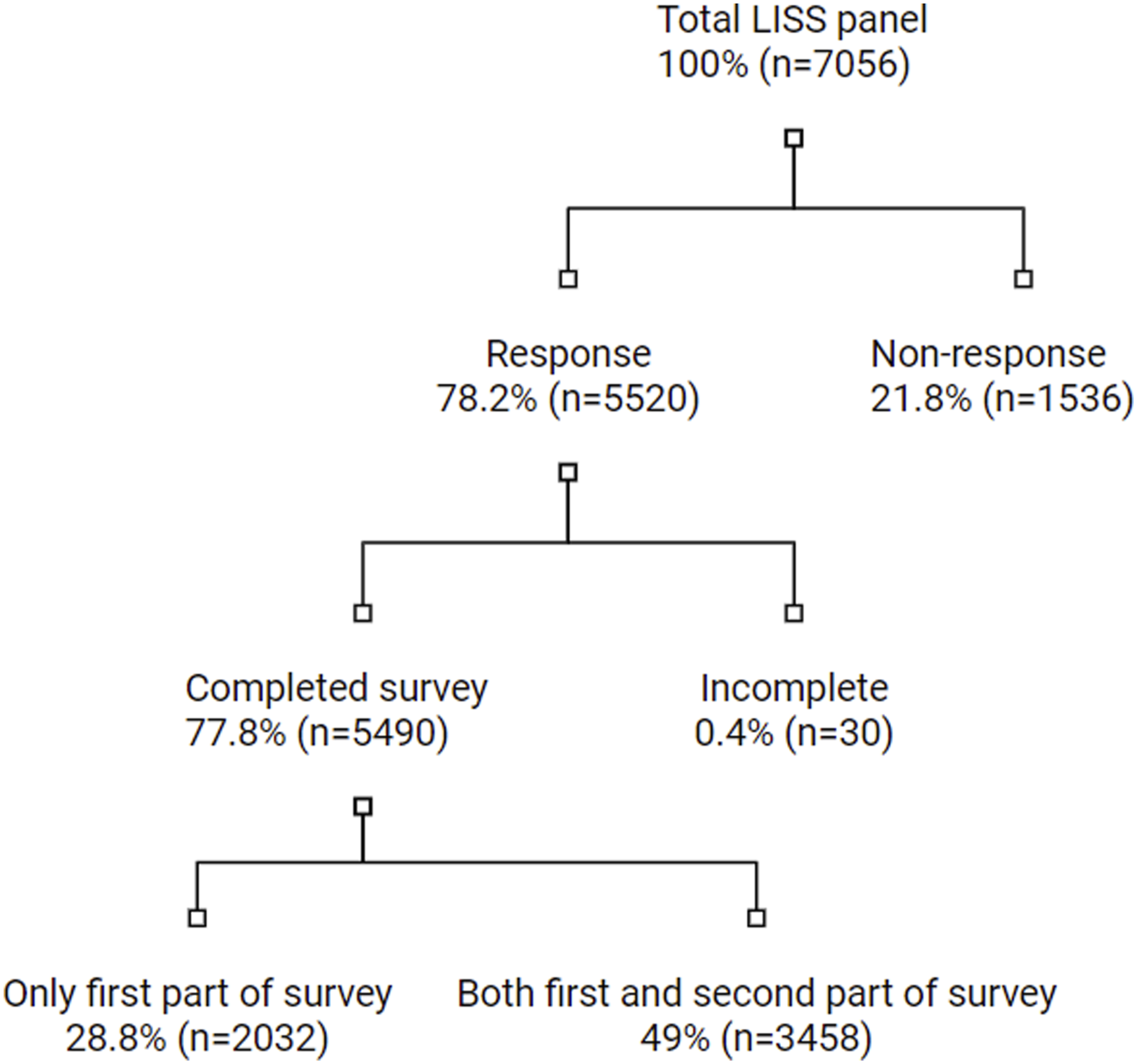
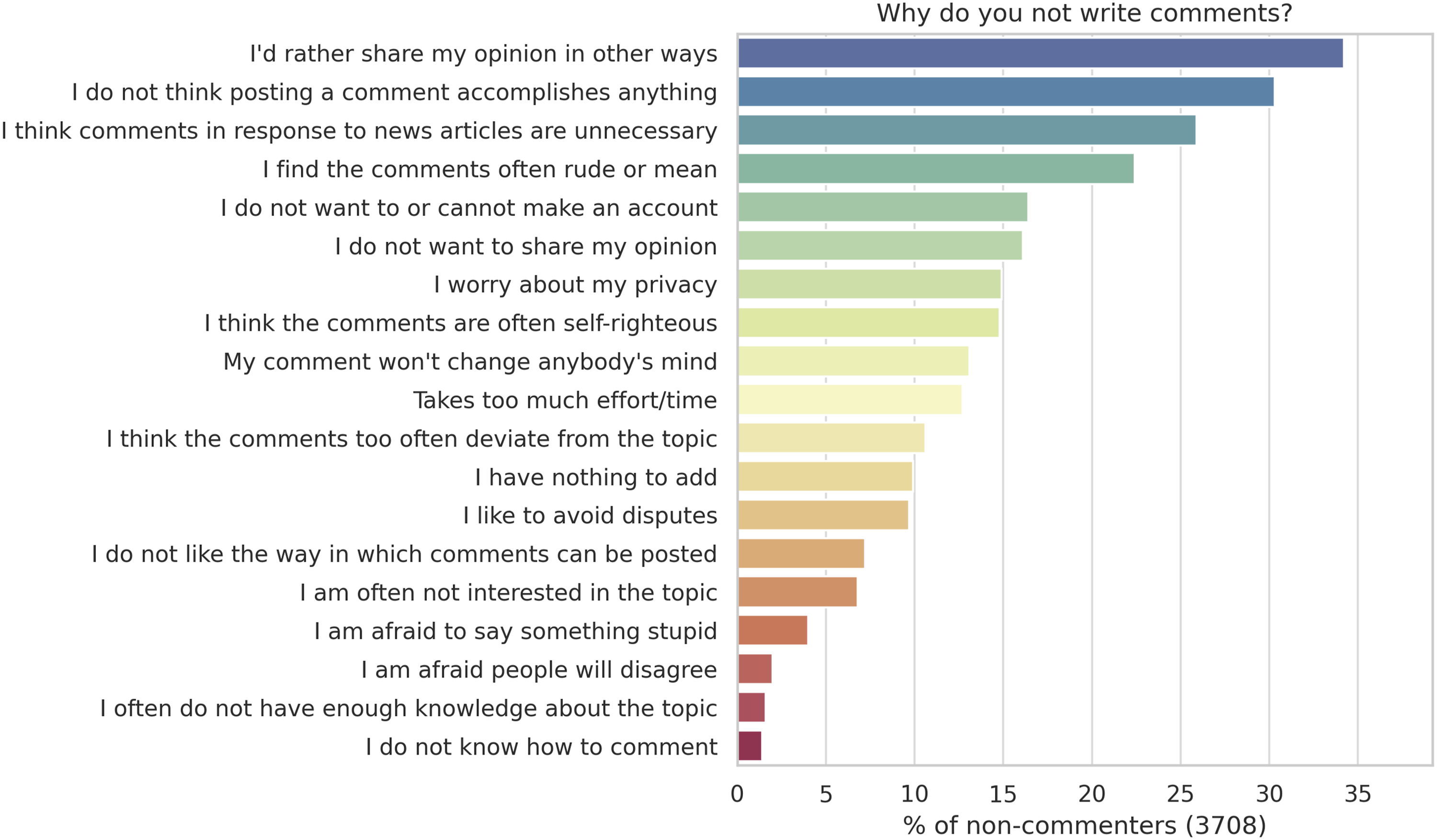
The results of the first part of our survey indicate that 78.2% of the total respondents to our survey have read online news or opinion articles over the previous 12 months. An amount of 63.0% also read online comment sections, and 11.1% (610 respondents) also posted online comments. Most comment readers (31%) read few comments, only 11.2% of comment readers try to read all comments beneath an article. Most commenters (39.3%) do not post more than one comment per article. Furthermore, 30.8% of the commenters post comments in reply to the news article itself, 16.6% post in reply to comments by others, and 29.2% do both. The most popular topics are: national news (reading: 61.4%; posting: 37.2%), political news (reading: 54.7%; posting: 42.3%), and regional news (reading: 52.1%; posting: 31.8%). The most important motivation for reading comments was reading others’ opinions (45.2%) and comparing these to one’s own (35.9%). The main motivation for not reading comments (n = 841) was viewing commenters as insufficiently informed about the topic (26.9%), and the harshness of comments (23.9%). Figures 2 and 3 summarize the given motivations for (not) comment posting. Motivations given for posting online comments in response to news articles Motivations given for not posting online comments in response to news articles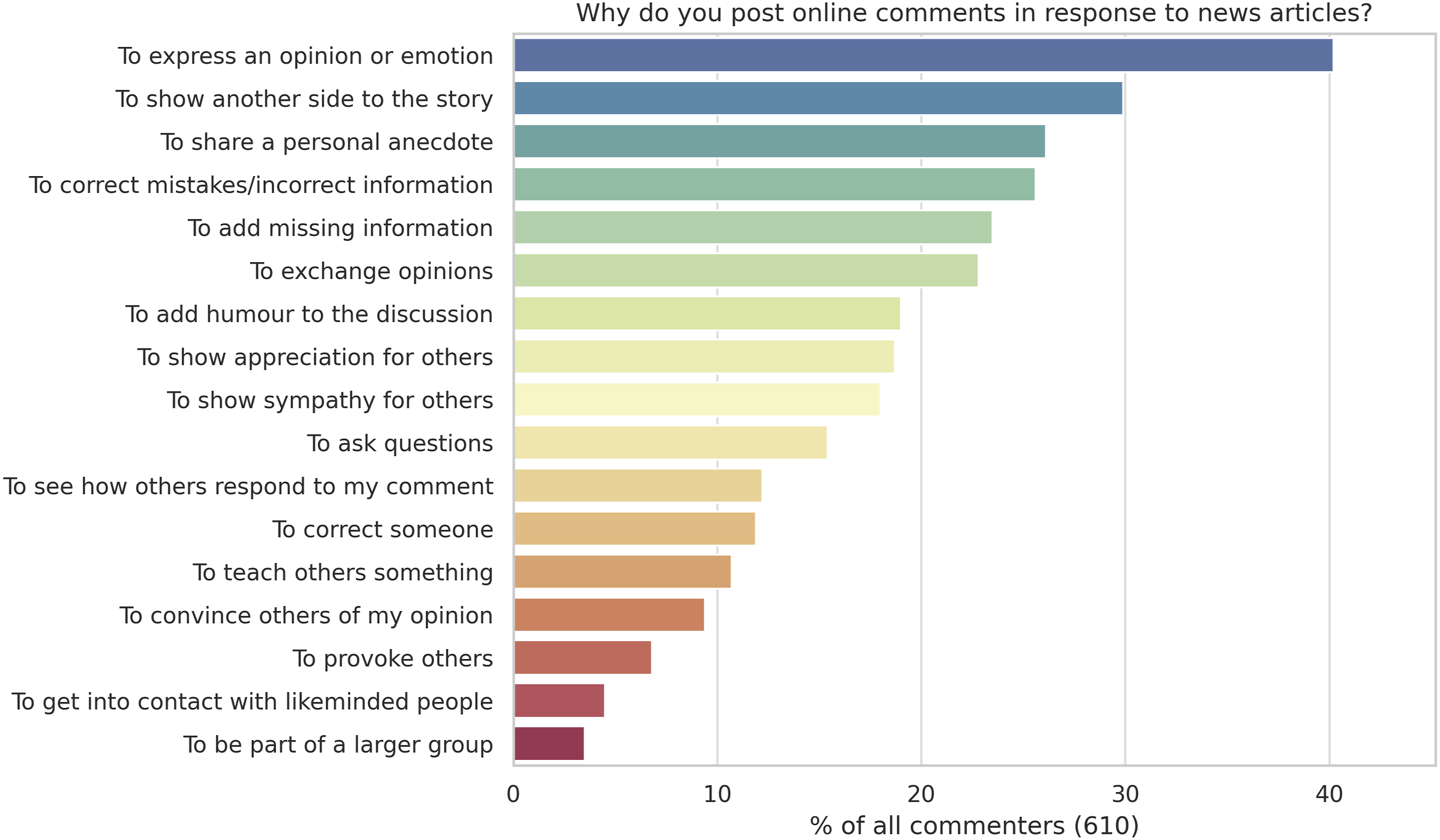
Who Are the Online Commenters: General Overview
The proportion of men (55.4%) outweighs the proportion of women (44.6%) among commenters, even more than across all respondents (male: 47.1%). When comparing the proportion of commenters per age group and gender (see Figure 4), we find that for both genders the age group of 45–54 years old (men: n = 367; women: n = 446) contains the largest share of commenters. 18.3% of men and 13.5% of women in this age group post comments. In contrast, commenting is less popular among the oldest age groups for both men (8.5%) and women (6.3%), and for women between the ages of 15–24 years old (6%). Thus, while all age groups do comment online to some degree, there is a tendency towards middle-aged commenters, especially among men. Percentage of commenters within age group per gender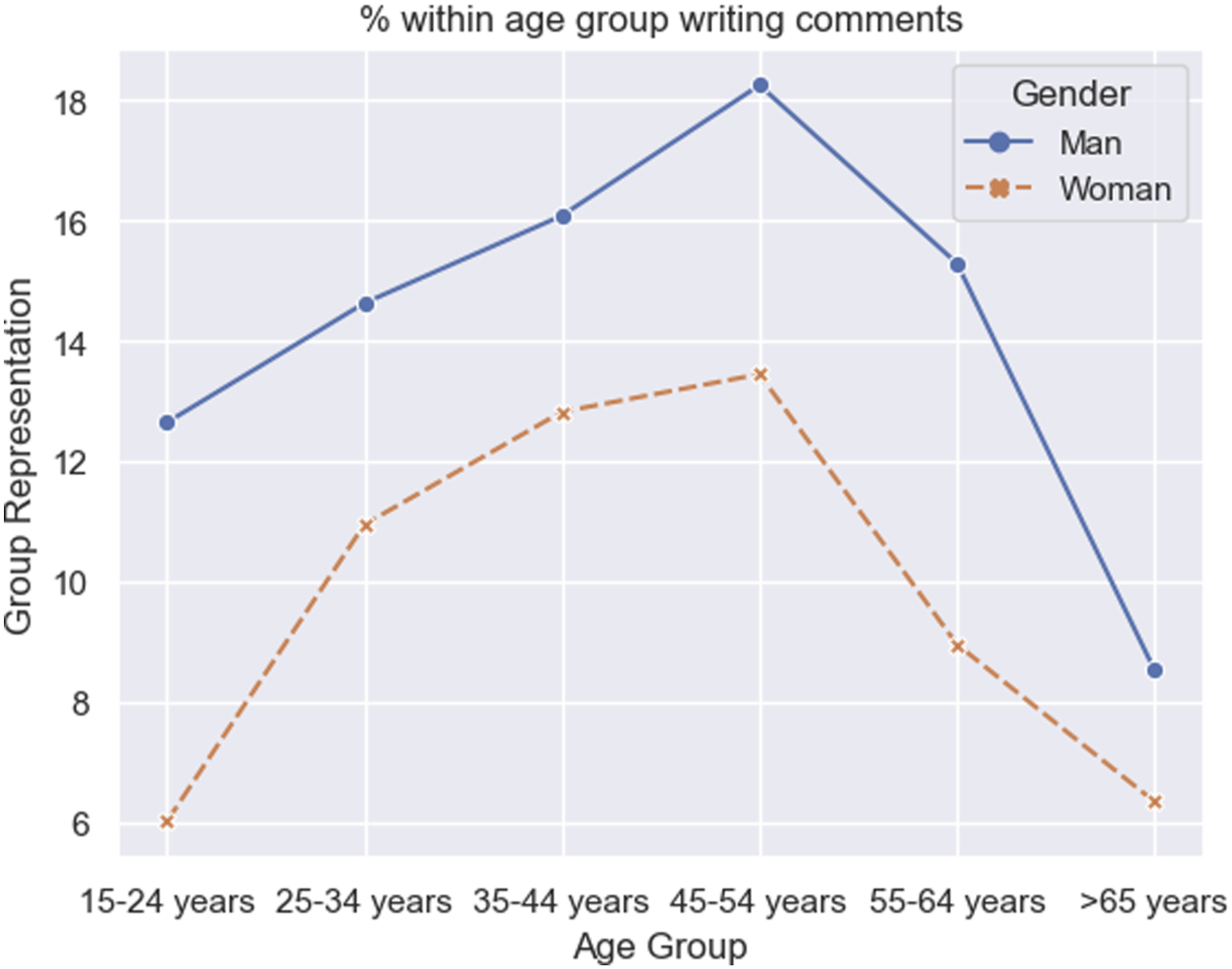
For both commenters and non-commenters, the largest educational groups were those who completed secondary vocational education – MBO in Dutch (commenters: 27.5%; non-commenters: 23.6%) and those who completed their higher professional education – HBO in Dutch (commenters: 27.2%; non-commenters: 29.7%). There are no clear differences based on gross income, and the largest share of both groups has a native Dutch background (84.6%; 79.3%).
6
Albeit a small difference, it is noteworthy that the percentage of native Dutch backgrounds is lower for commenters than non-commenters. With regard to region of residence, we find that commenters are equally spread out across the Netherlands. This is depicted in Figure 5 (note that the lack of contrast is due to little to no regional differences). In short, when it comes to education, income, cultural background, and region of residence, we find little to no differences between commenters and non-commenters. Percentage of respondents that post comments per COROP region relative to the total amount of respondents from the region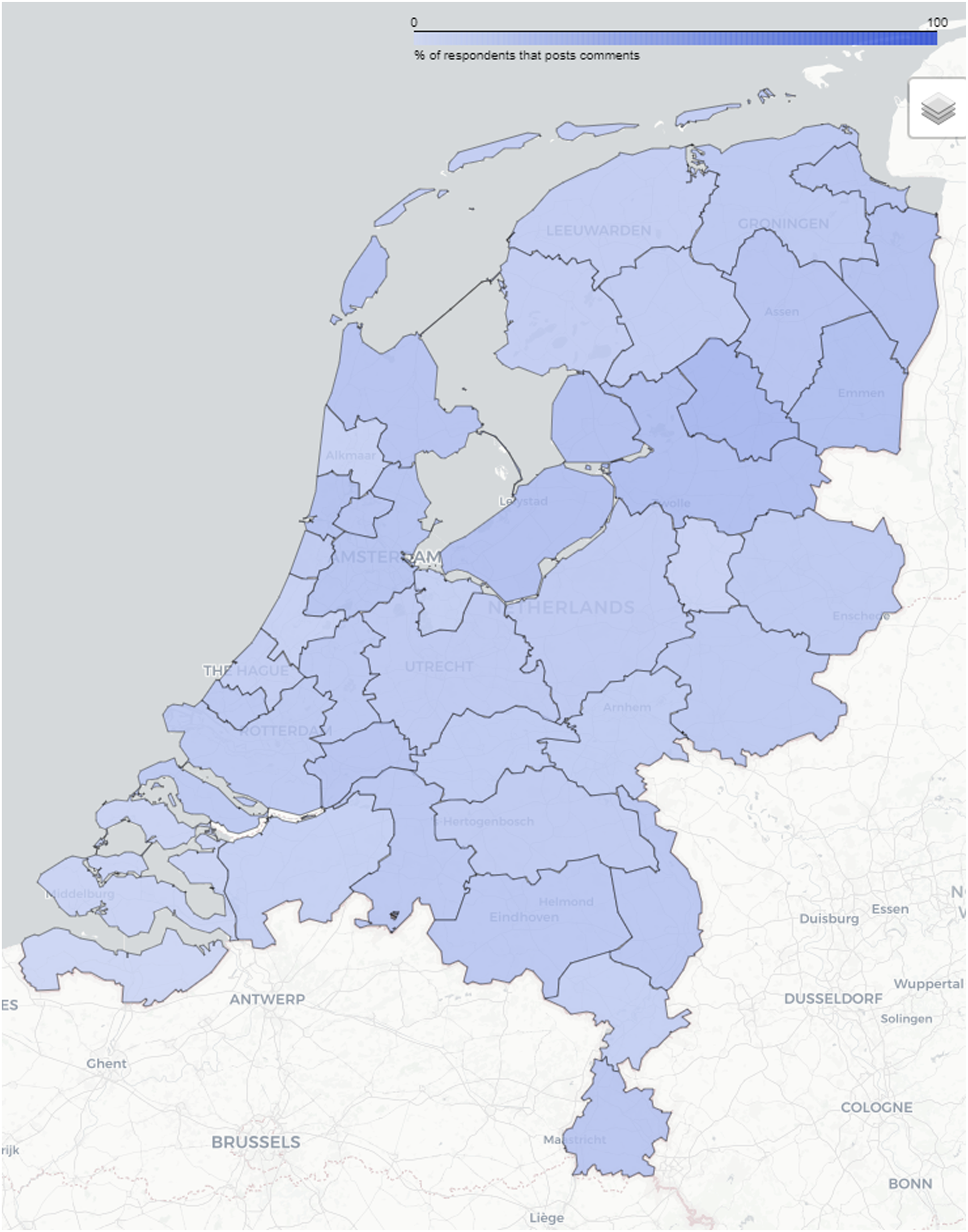
Figure 6 shows the voting behaviour of commenters and non-commenters.
7
Note that voters for the (then) governmental parties VVD (centre-right) and D66 (centre) are proportionally less represented among commenters (VVD: 17.6%; D66: 11.7%) compared to non-commenters (VVD: 21.8%; D66: 18.4%). Still, these parties had the largest representation among both. Far-Right parties such as FVD and PVV are slightly more represented among commenters (FVD: 5.6%; PVV: 10.2%) compared to non-commenters (FVD: 1.3%; PVV: 5.4%). Overall, our data showcased a very diverse commenting base through the lens of political preference with the wide array of Dutch political parties present. Voting behaviour of commenters and non-commenters in the 2021 elections in percentages per party and ideology (categorization based on Wille and Bovens (2026 and Appendix, p. 1))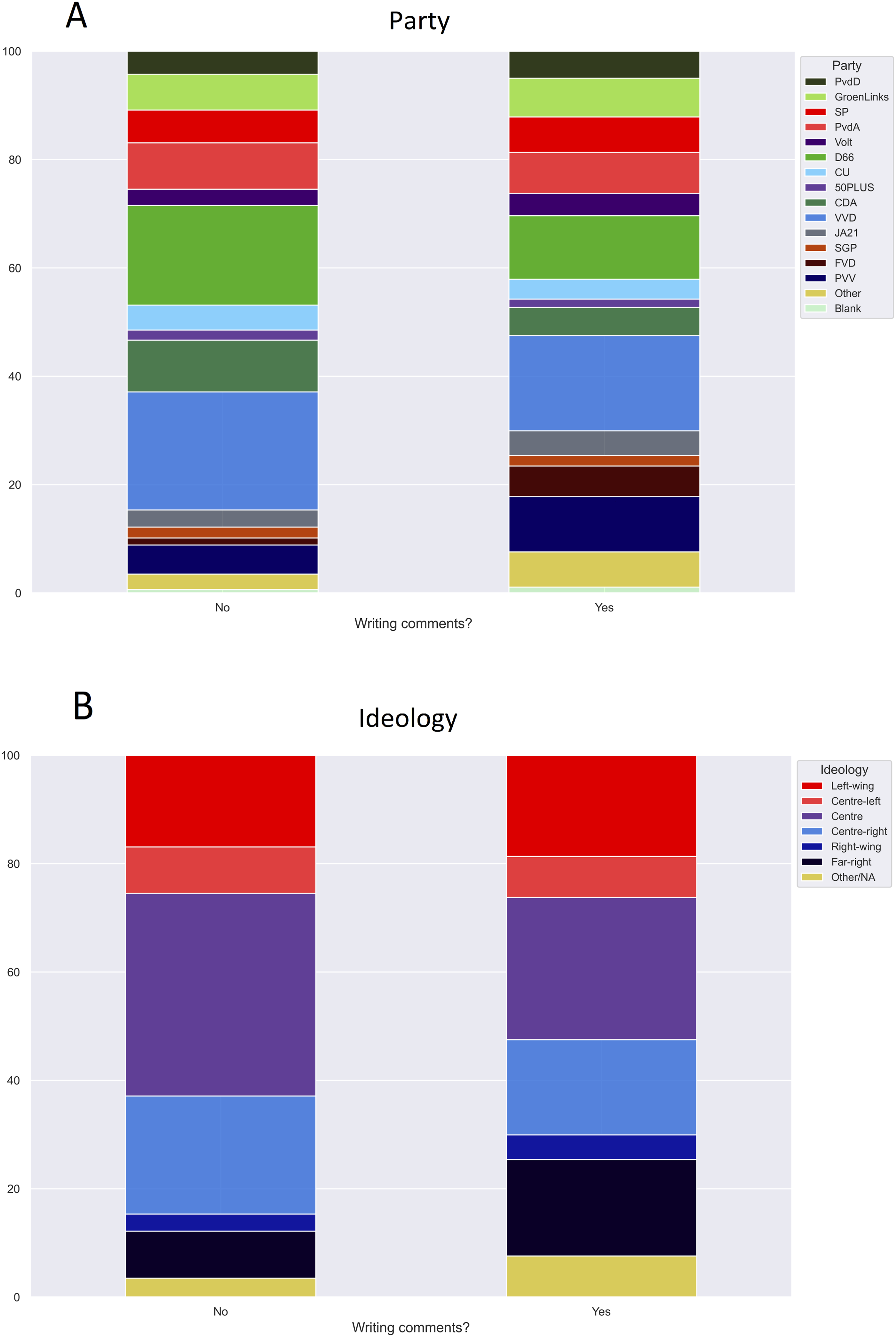
Figure 7 shows the confidence of commenters and non-commenters in several institutions ranging from 0 (no confidence at all) to 10 (full confidence). Although the differences are small, it is noteworthy that commenters consistently ranked their confidence for each institution lower than non-commenters. Low confidence in political parties is also emphasized by high agreement rates to the statement: ‘Political parties are only interested in my vote and not in my opinion’ (commenters: 73.2%; non-commenters: 67.5%).
8
In contrast, a higher confidence in one’s own political insights is shown by high agreement rates with ‘I have a clear picture of the most important issues in the country’, for which commenters also score higher (74.4%) than non-commenters (67.6%). Confidence rates of institutions for commenters and non-commenters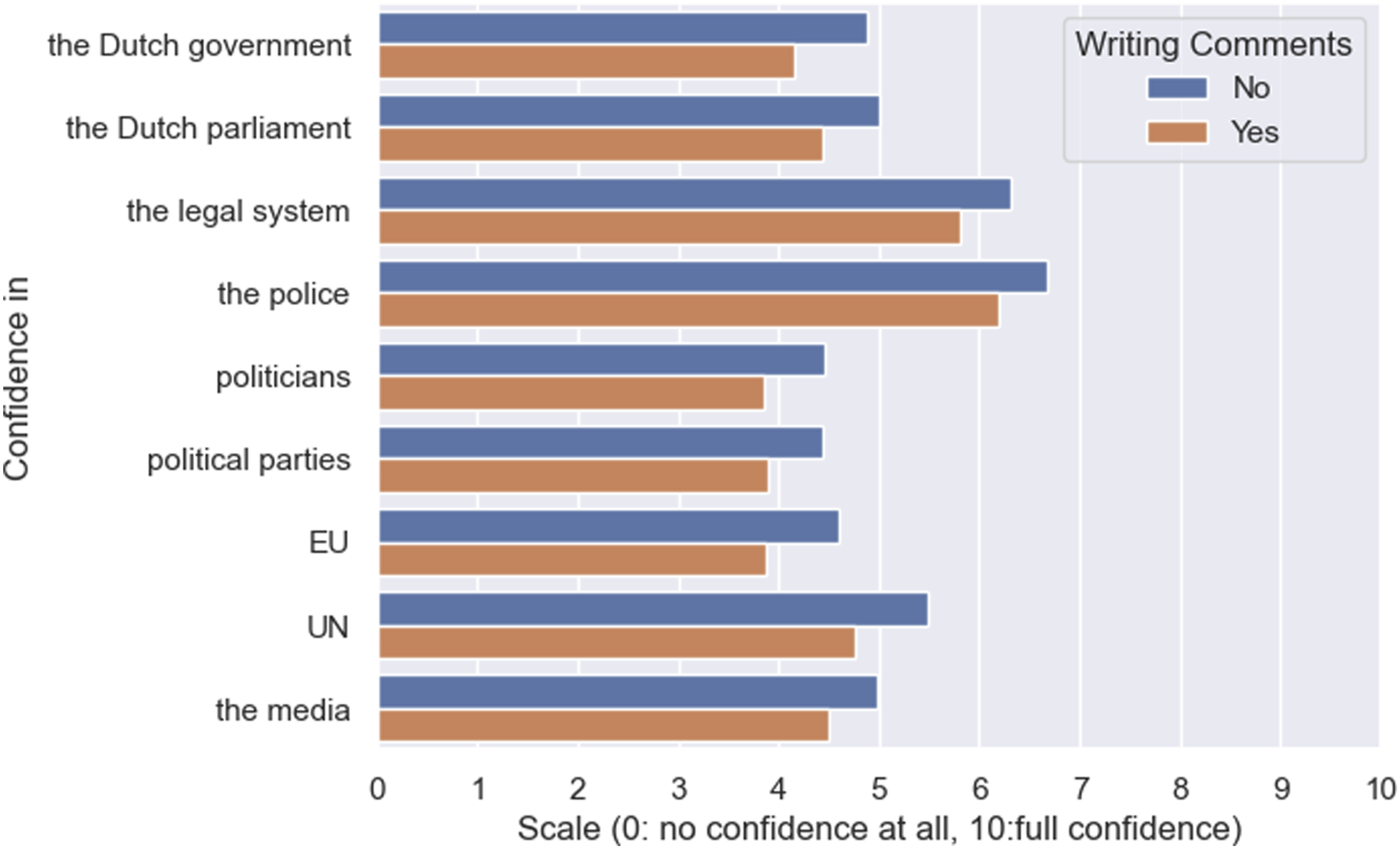
Focused Analyses on Topic, Platform, and Frequency
While the overall pattern we just described is already insightful, looking in more detail reveals interesting nuances of the general picture. We will therefore report on three focused analyses.
Focused Analysis 1: Topic-Specific Commenters
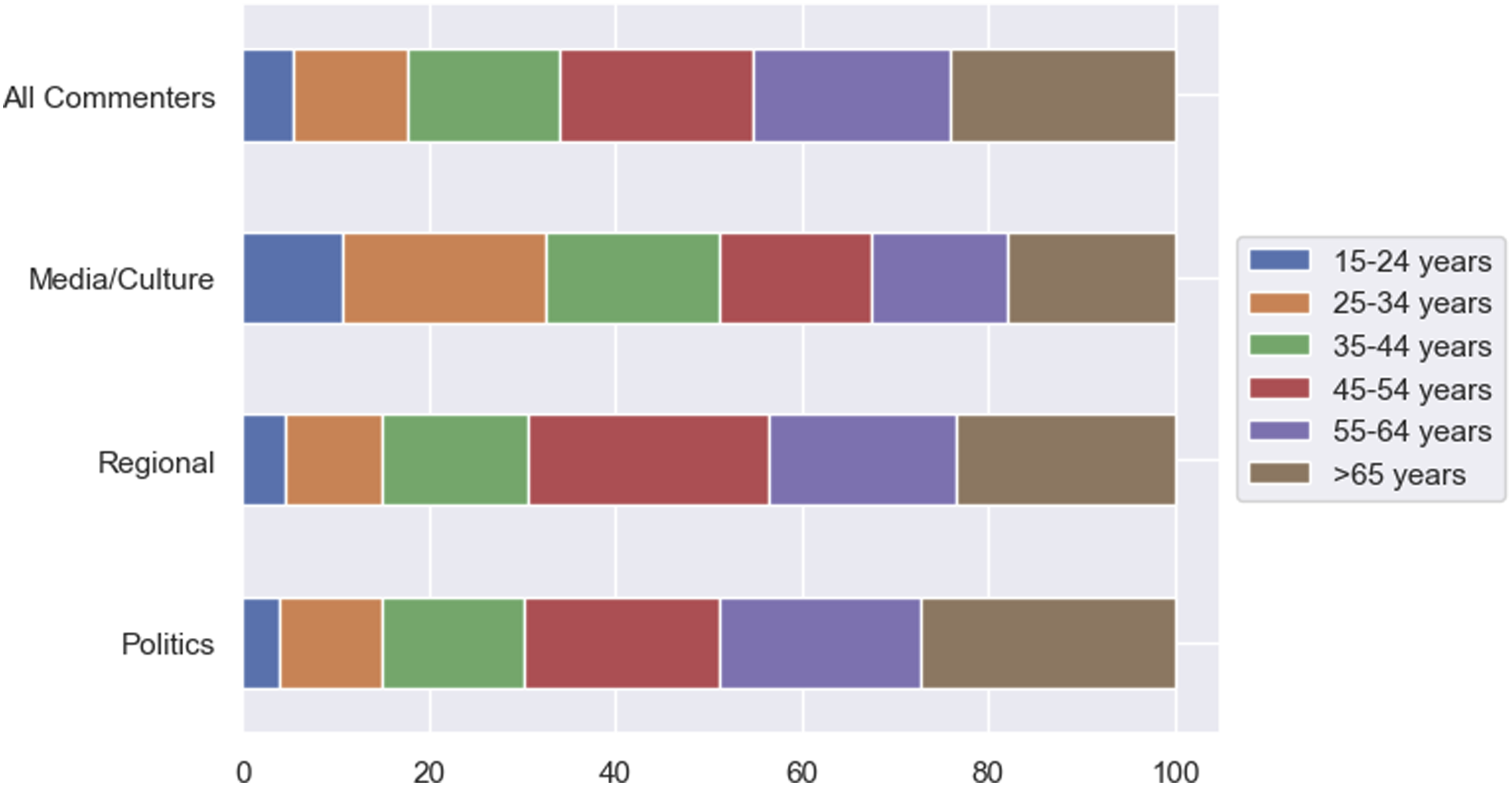
The first sub-analysis focused on the differences between commenters on popular topics: ‘political’ (n = 258), ‘regional’ (n = 194), and ‘media and culture’ (n = 133) news. Figure 8 shows that the gender distribution for these subgroups deviates from the distribution among commenters in general (men: 55%; women: 45%). Men are more represented in political commenting (67.1%), whereas ‘regional’ and ‘media and culture’ comment sections contain slightly more women (52.1%; 52.6%). The age distribution for the different topics is quite similar to the commenters in general (Figure 9), except for ‘media and culture’ which notably attracts younger commenters. For that topic, 50.4% were aged below 44 years old with 25–34 being the most frequent age category (21%). Gender distribution for different themes of commenting in percentages Age group distribution for different themes of commenting in percentages
Regarding education levels, the only noteworthy difference is that among the commenters to ‘regional’ and ‘media and culture’ news, the MBO level (32.5%; 30.1%) outweighs the HBO level (23.7%; 19.5%). In terms of cultural backgrounds, we find that the proportion of those with a Dutch background is largest for ‘regional’ news (regional: 82.1%; politics: 77.0%; media and culture: 70.2%). 9 A final noteworthy finding is that the high confidence in one’s own political capacities seems to only hold for the commenters in political discussions (political: 88.3%; non-political: 64.2%). 10
Focused Analysis 2: Platform-Specific Commenters
Gender Distribution of Commenters Based on Outlet and Commenting Platform

Focused Analysis 3: Frequent Commenters
The third sub-analysis focused on the differences between commenters based on commenting frequency. Commenters who indicated to comment daily or multiple times per week (26.8%) were categorized as ‘frequent commenters’,
12
the remaining commenters (73.2%) as ‘less frequent commenters’. We find that the frequent commenters do not differ from less frequent commenters with regard to gender, age, and cultural background. They do differ from less frequent commenters when it comes to education (an increase of 10.9% point for VMBO, and decrease of 9.6 and 5.6% point for HBO and WO, see Figure 10) and political preference (an increase of 12.8% point for the far-right PVV, and decrease of 7.2% point for the centre-right liberal party VVD, see Figure 11). Highest completed education levels of frequent commenters and less frequent commenters Voting behaviour of frequent commenters and less frequent commenters in the 2021 elections in percentages per party and ideology (categorization based on Wille and Bovens (2026 and Appendix, p. 1))

The more recent election results of November 2023 affirm the proportionally higher support for the far-right in an even more pronounced way: despite a general rise for PVV among all respondents (11.4% point increase), a higher proportion of votes for the PVV is observed among the frequent commenters in 2023 (40.8%) compared with the less frequent commenters (23.6%). Furthermore, frequent commenters show more agreement (80.9%) with the statement that ‘Political parties are only interested in my vote and not in my opinion’, which indicates lower confidence in political parties. As a comparison, 70.4% of the less frequent commenters agreed with this statement.
Discussion and Conclusion
In this research report, we aimed to explore the demographic composition of online comment sections. Overrepresentation of a specific demographic group could have significant consequences for the online public debate and how it should be interpreted. We identified a representative Dutch sample of 4,319 readers of news or opinion articles (78% of total respondents), of which 3,479 also read online comments (63% of total respondents) and 610 also comment themselves (11% of total respondents). The most important motivation for reading comments was to gain insight into the opinions of others and compare them to one’s own, which indicates that online comment sections are in fact an important factor in public debates. The top motivation for not reading comments was related to commenters being insufficiently informed, which shows that at least some people are aware of the need to carefully interpret online commenting. With regard to posting online comments, the main motivation for doing so was to share an opinion or an emotion, showing that online comment sections are commonly participated in as a means to express oneself. This is in line with the main motivation for not commenting, as non-commenters indicated to express their opinions in different ways.
So, who are the online commenters? In line with previous research (Friemel & Dötsch, 2015; Koc-Michalska et al., 2021; Küchler et al., 2023; Newman et al., 2023; Pierson, 2015; Stroud et al., 2016), we found that the group of online commenters contains more men (55.4%), and that the demographic group of middle-aged men proportionally contains the most commenters. Commenting is relatively unpopular among the very oldest and the youngest age groups. Where previous studies suggested commenters to have either higher (Newman et al., 2023) or lower (Stroud et al., 2016) education levels, we found an equal distribution of education levels among commenters when compared to non-commenters. We also found that commenters are equally spread out across the Netherlands. Regarding political preferences, commenters tend to resemble non-commenters, apart from a slight underrepresentation of the larger governmental parties (centre, centre-right) and a small overrepresentation of the far-right parties. We did find that commenters had a lower trust in institutions in comparison to non-commenters, especially with regard to the EU, Dutch politicians, and their political parties.
However, our analysis paints a more nuanced picture when differences based on topic, platform, and commenting frequency are taken into account. Our data support the previous findings by Lee and Ryu (2019) and Van Duyn et al. (2021) that commenters differ in age and gender based on the topic they reply to. According to our analysis, this also holds for educational levels and cultural background. For example, men are far more overrepresented among political commenters, whereas for other topics the proportion of women slightly outweighs the proportion of men. Additionally, discussions on ‘media and culture’ news attract younger commenters on average. Similarly, we found that internal commenting platforms attract commenters that differ in age and gender in comparison to social media commenters. For example, the former have higher percentages of men among their commenters, whereas women are more represented on the commenting sections of social media platforms.
Lastly, we found that a higher frequency of commenting is not connected to differences with regard to age and gender, but frequent commenters do show lower education levels, more support for far-right political parties, and a lower confidence in political parties. Thus, the finding by Friemel and Dötsch (2015) that the political orientation of commenters is skewed further to the right in comparison to comment readers is somewhat supported by our findings. Even though our results only show a slight overrepresentation of the far-right parties among the preferences of commenters compared to readers in general, we did find a noteworthy increase of this preference among those who comment frequently. As frequent commenters inherently make a larger contribution to the content of online discussions, a larger overrepresentation of the far-right in their preferences indicates that the recent rise of far-right populism in Western Europe (e.g. Engler & Weisstanner, 2021; Milner, 2021; Rooduijn, 2015) is magnified in the content of online discussions. This is in line with what Galpin and Trenz (2019) have previously defined as ‘participatory populism’.
Through sampling from a large representative panel, we have averted the risk of selection and response bias, and were able to combine our survey data with a large number of demographic variables and measures on values and political preferences. The latter allowed to make several interesting connections, but given the explorative nature of the study it also required well-motivated decisions on which combinations to explore. Because the topics of online discussions are often politically related, we chose to investigate the relations between commenting and measurements of the politics and values survey. However, we encourage further research to look deeper into the mechanisms of online commenting by combining other data gathered with the LISS panel on, for example, religion, personality traits – similar to the work of Norhup et al. (2022) – or economic situations, with our survey results.
The goal of our study was to explore the characteristics of online commenters, without testing predefined hypotheses. Hence, we did not perform any inferential statistics. In view of this goal and the large sample size of the study, we believe our results are reliable. Our study is solely focused on the Dutch population, but our findings do show overlap with studies conducted for different populations in Western Europe and the US. Future research could further investigate the extrapolation of the trend that we find to a broader context of online discussions in different cultural contexts. A possible limitation of our data collection is that we relied on self-reported measurements of news reading and commenting behaviour while self-reported measures of, for example, news consumption have been suggested to lead to overestimation (Prior, 2009). It is therefore appropriate to take the possibility of overestimation into account when interpreting our results with regards to reading and commenting behaviour. Nevertheless, we do not suspect that overestimation of this kind affects the distinction between types of (non-)commenters. Finally, we would like to note that the relation between online news behaviour and support for far-right populism is an important issue. Future work is needed to investigate the threshold for online participation, linking this concept to people’s view of society, including support for far-right political parties.
In conclusion, the question whether the content of online discussions accurately reflects the public opinion requires a nuanced answer. When looking at the demographic makeup of online commenters as a whole, we find a rather well-represented resemblance of society among them. Commenters are slightly more often male and middle-aged, but we found a diverse distribution of education levels and political preferences among commenters. In other words, there is no striking overrepresentation of specific groups among online commenters in general. However, caution is called for when using online discussion content as a reflection of the public opinion. Different platforms and discussion topics attract a distinct audience, and among frequent commenters we encounter comparatively more people who voted for a far-right party. Research into the usage of online discussion content should therefore always account for differences based on topic and platform, as well as overrepresentation of far-right viewpoints.
Supplemental Material
Supplemental Material - Who Are the Online Commenters? A Large-Scale Representative Survey to Explore the Identity and Motivation of Online News Commenters in Comparison to Non-Commenters
Supplemental Material for Who Are the Online Commenters? A Large-Scale Representative Survey to Explore the Identity and Motivation of Online News Commenters in Comparison to Non-Commenters by Liesje C. A. van der Linden, Cedric Waterschoot, Ernst van den Hemel, Florian A. Kunneman, Antal P. J. van den Bosch, and Emiel J. Krahmer in Social Science Computer Review.
Footnotes
Acknowledgements
We would like to thank and acknowledge CenterData for the pleasant collaboration in the data collection of this research.

Ethical Considerations
This study was approved by the Ethics Review Board of Tilburg University (reference: TSHD_RP90) on February 02, 2022.
Consent to Participate
All participants provided digital informed consent prior to participating.
Author Contributions
LvdL, CW, AvdB, EvdH, FK, and EK conceptualized and planned the study. LvdL initiated the design of the questionnaire and the data collection procedure, and all authors contributed to the final version. LvdL and CW analyzed the data and wrote the first draft of the manuscript. AvdB, EvdH, FK, and EK helped finalize the manuscript and all authors approved of it. FK and EK supervised the project.
Funding
The authors disclosed receipt of the following financial support for the research, authorship, and/or publication of this article: For this work, funding was received by Nederlandse Organisatie voor Wetenschappelijk Onderzoek project of Better informing citizens about current debates: Moderating and Summarizing Online Discussions.
Declaration of Conflicting Interests
The authors declared no potential conflicts of interest with respect to the research, authorship, and/or publication of this article.
Supplemental Material
Supplemental material for this article is available online.
Notes
Author Biographies
References
Supplementary Material
Please find the following supplemental material available below.
For Open Access articles published under a Creative Commons License, all supplemental material carries the same license as the article it is associated with.
For non-Open Access articles published, all supplemental material carries a non-exclusive license, and permission requests for re-use of supplemental material or any part of supplemental material shall be sent directly to the copyright owner as specified in the copyright notice associated with the article.
