




Abstract
Despite an increased reliance on immigrants to fill important jobs within the United States, research is lacking with regard to job satisfaction among immigrant employees. Using data from the 2002 and 2008 National Study of the Changing Workforce (n = 559), the authors examined how immigrant status affects determinants of job satisfaction. Hierarchical linear regression was used to uncover whether income satisfaction, autonomy, learning opportunities, supervisor, and coworker support predict U.S.-born and immigrant workers’ job satisfaction and how immigrant status moderates the relationship between each predictor and job satisfaction. Results showed the moderating effects of immigrant status for income satisfaction and autonomy on the job. The relationship between income satisfaction and job satisfaction was stronger for immigrants and the relationship between autonomy on the job and job satisfaction was negative for immigrants who lack English proficiency. These results add to the limited knowledge about the ever growing immigrant workforce within the United States.
A great number of immigrants participate in the U.S. workforce. According to the U.S. Bureau of Labor Statistics (U.S. BLS, 2012), there were 25 million foreign-born workers in the U.S. labor force in 2012, comprising 16.1% of the total. Over the past 35 years, the number of foreign-born labor force participants rose, while the number of U.S.-born labor force participants declined (U.S. BLS, 2012). Despite this increase in the number of immigrant workers in the U.S. workforce, they remain virtually an unstudied population in social science research. Specifically, the relationships between immigrant status, the work environment, and job satisfaction have not been explored (Sloane, Williams, & Zimmerman, 2010). Outside of a few studies that were conducted to identify the determinants of immigrant job satisfaction in occupations such as nursing and accounting (Moyes, Cortes, & Lin, 2007; Sloane et al., 2010), no study to date could be located using a representative sample of immigrant workers across industries within the United States.
Job Satisfaction and Immigrants
Knowing the factors that predict job satisfaction is important for both employees and professionals who work with employees, such as frontline managers, human resource managers, and Employee Assistance Program (EAP) professionals. It has been generally agreed upon that employees’ job satisfaction is positively related to the organizational commitment level and that satisfaction reduces turnover and increases productivity (Back, Lee, & Abbott, 2011; Judge, Thoresen, Bono, & Patton, 2001). Therefore, understanding the factors affecting employee job satisfaction can potentially save employers human resource management costs and will contribute to increasing productivity. Furthermore, on the employees’ side, job satisfaction can be a source of self-esteem and overall positive mental health and well-being (Arnett, Laverie, & McLane, 2002).
Immigrant status may impact job satisfaction for several reasons. For example, diverse cultural backgrounds often correlate with different values and thus different expectations about work. In addition, immigrants may have a lack of resources such as English communication skills and social network compared to their native counterparts. Moreover, immigrant workers experience “double jeopardy” of dealing with stressors related to a new working environment and living in a new country (de Castro, Gee, & Takeuchi, 2008). The experience of immigration itself can also play a role as a prominent life event, which can lead to negative outcomes. Previous research has linked acculturative stress with general mental health issues, including anxiety, depression, feelings of marginality, and alienation (Choi, Miller, & Wilbur, 2009; Roh et al., 2011). Therefore, it cannot be assumed that the determinants of job satisfaction that have been identified for the general U.S. working population can be generalized to immigrants without further investigation.
This study is based on the notion that a “good job” is subjectively defined and the level of job satisfaction is a matter of “good fit” rather than the absolute standard. Person–organization fit theory defines person–organization fit as the “compatibility between people and the organizations in which they work” (Kristof, 1996, p. 1). Based on this theory, this study assumes that immigrants’ job satisfaction can differ from U.S.-born workers’ job satisfaction because of the different needs, experiences, and cultural values that immigrants may hold. The following sections will review literature on immigrants’ job satisfaction.
Income Satisfaction
A number of studies have identified extrinsic rewards, such as wage, as key factors for job satisfaction among the general population (Iverson & Maguire, 2000; Westover & Taylor, 2010). On the contrary, prior research on the relationship between income satisfaction and job satisfaction among Latino immigrants indicated that other predictors such as supervisor support and coworker support better explain Latino immigrants’ job satisfaction as opposed to income (Moyes et al., 2007; Valdivia & Flores, 2012). In a study of job satisfaction among 253 Latino immigrants in three rural communities in the Midwest, results indicated that ethnic identity and Anglo acculturation had positive effects on job satisfaction and wages were not significantly related to job satisfaction (Valdivia & Flores, 2012). In another study of differences in work-related values between Mexican American and the non-Latino White accounting professionals, Mexican American respondents were less satisfied with their compensation and benefits, but they had greater overall job satisfaction than the non-Latino White respondents (Moyes et al., 2007). The researchers explained this difference as being related to the Mexican American culture that values loyalty to one’s employer and appreciates job longevity more than non-Latino Whites. No study has been conducted to date that examined the differences between U.S.-born workers and non-Latino immigrant workers regarding the relationship between income satisfaction and job satisfaction.
Work Relations: Supervisor and Coworker Support
Work relations are the most frequently investigated determinant of job satisfaction both in the general public and with immigrant populations. Studies support the positive relationship between social support, drawn from supervisors and coworkers, and job satisfaction (Baruch-Feldman, Brondolo, Ben-Dayan, & Schwartz, 2002; Harris, Winskowski, & Engdahl, 2007; Tierney, Bauer, & Potter, 2002). Furthermore, employees’ feelings of being accepted by their supervisors are positively related to their productivity (Moyes et al., 2007). Research indicates that having close relationships with supervisors and coworkers is valued particularly high among the Latino population (Chen, 2001). Latino employees experienced greater satisfaction and overall well-being when they have been accepted and respected by their coworkers and supervisors, whereas White employees tended to experience more satisfaction from jobs with higher compensation and wage fairness (Hawkes, Guagnano, Acredolo, & Helmich, 1984; Hoppe, Heaney, & Fujishiro, 2010). Researchers have pointed out that in collectivist cultures, such as Mexico, employees tend to have a strong sense of loyalty to their supervisors and thus, having a close relationship is very important (Moyes et al., 2007). Overall, research on job satisfaction among Latino professionals emphasizes supervisor–employee relationships, group acceptance, and organizational commitment (De Forrest, 1994; Hoppe et al., 2010).
Research also suggests that social support at the workplace is particularly necessary for immigrants because of their experience of discrimination. Many immigrants experience an occupational downgrading or underemployment, particularly shortly after their arrival (de Castro, Rue, & Takeuchi, 2010). In a study of the relationship between immigrant status and intention to leave among nursing assistants, immigrants reported feeling less respected by residents and families and that they were more likely to report an intention to leave the job within 1 year (Sloane et al., 2010). These studies suggest that social support in the workplace was highly valued among immigrants in seeking a sense of belonging and feeling respected.
Job Characteristics: Autonomy and Learning Opportunities on the Job
Job characteristics are considered as the critical factors for employees’ job satisfaction. Job characteristics, such as autonomy and career development through learning opportunities, define good jobs and provide employees with intrinsic rewards (Romzek, 1990). Autonomy on the job seems to have particular importance among certain professionals. More autonomy was negatively related to occupational stress and positively related to empowerment and professionalism among teachers (Pearson & Moomaw, 2005). In another study, autonomy was the most important job component for registered nurses’ job satisfaction (Finn, 2001). In contrast, investigation on the effects of autonomy on temporary workers’ job satisfaction revealed that autonomy did not predict temporary workers’ job satisfaction and organizational commitment (De Cuyper & De Witte, 2006). Literature on general population showed that professional learning opportunities are important predictors of job satisfaction (Acker, 2004; Kramer, Seibert, Wayne, Liden, & Bravo, 2011; Ting, 1997), but no study was found which examined the role of learning opportunities among immigrants.
Research Questions
As evidenced by the brevity of research studies conducted within the recent years referenced earlier, few studies have examined the determinants of immigrants’ job satisfaction. The existing research has limited implications in understanding how immigrant status will affect job satisfaction because they are focused mainly on the Latino population and are specific to certain occupations. Furthermore, few studies have used both U.S.-born and immigrant workers to examine whether immigrant status affects the relationships between certain job conditions and job satisfaction. To address this dearth in the literature, this study used a nationally representative sample of U.S.-born and immigrant workers to understand the effects of immigrant status on the determinants of job satisfaction.
This study is based on the theory that work attitudes are formed in a multidimensional context. Rousseau (1978) argued that the relationships between organizational settings and individual responses should be understood in relevance to multiple levels of factors, including individual attributes, job characteristics, and organizational characteristics. In a study investigating work-related outcomes such as job satisfaction and work adjustment among Filipino immigrant employees in Canada, immigrant workers reported receiving higher support from peer immigrants than from Canadian-born coworkers or management (Wang & Sangalang, 2005). This source of support, however, was not significantly related to work-related outcomes (Wang & Sangalang, 2005). Similarly, studies referenced in the prior section demonstrated that the importance of income satisfaction, supervisor, and coworker support differs among immigrant workers when it comes to job satisfaction (Hoppe et al., 2010; Moyes et al., 2007; Sloane et al., 2010; Valdivia & Flores, 2012). In other words, although the same predictors can determine the level of job satisfaction among immigrants and U.S.-born workers, the importance of certain job characteristics can differ in strength of relationship between immigrants and U.S.-born workers. Based on this prior literature, this study postulates that immigrant status will interact with job and organizational characteristics in affecting employees’ job satisfaction. Thus, this study tested the moderating effects of immigrant status for the determinants of job satisfaction. In addition, in order to address diversity within immigrants, this study examined how immigrants-related characteristics affect these moderating effects.
The primary research questions addressed in this study are as follows: (1) Are income satisfaction, supervisor support, coworker support, learning opportunities, and autonomy on the job predictive of job satisfaction among a nationally representative sample of U.S.-born and immigrant workers? (2) Does immigrant status moderate the relationship between each predictor and job satisfaction? and (3) Can the variability in the moderating effects of immigrant status be explained by immigrants’ characteristics?
Method
Data
This study utilized data from the 2002 and 2008 National Study of the Changing Workforce (NSCW). NSCW has been conducted by the Families and Work Institute every 5 or 6 years since 1992. The sample is representative of the nation’s labor force. Eligibility includes the following: (1) worked at a paid job or operated an income-producing business, (2) employed in the civilian labor force, (3) resided in the contiguous 48 states, and (4) lived in a noninstitutional residence with a telephone at the time of the survey. In households with more than one eligible person, one person was randomly selected to be interviewed. Households without anyone who could speak English or Spanish well enough to be interviewed, as determined by the interviewer during a preinterview screening, were determined to be ineligible for the interview (NSCW, 2002 & 2008). The interview was conducted by phone and overall response rates were 52.0% for the 2002 survey and 54.6% for the 2008 survey. Total sample size is 3,504 for the 2002 survey and 3,502 for 2008 survey. For the purpose of this study, the combined 2002 and 2008 wage and salaried workers data file was used (N = 5,579). From this data file, a new data file was created by extracting immigrant workers (n = 323) and combining the data with data representing randomly selected U.S.-born workers (n = 323). The final analyses were based on data from 559 cases after deleting the cases without immediate supervisor or coworkers.
Sample
Immigrant status in this article refers to whether or not the respondent reported being identified as an immigrant on the survey. This was asked by the question, “Did you immigrate to the United States from another country” with response categories of “yes” or “no.” The sample for this study included 277 immigrants and 282 U.S.-born workers. The demographic characteristics of the sample by immigrant status are presented in Table 1. Bivariate analyses were conducted to test whether immigrant and U.S.-born samples were comparable on the key demographic variables. χ2 tests revealed that proportion of ethnicity, χ2(3, 558) = 186.35, p < .001; highest education, χ2(5, 559) = 20.02, p < .01; and occupation, χ2(6, 548) = 13.49, p < .05 were different between immigrant and U.S.-born workers. Independent samples t-tests revealed significant difference for age, t(557) = −4.71, p < .001, but not for total annual income. Mean age for immigrant workers was 40.1 (SD = 11.93) and 44.8 (SD = 11.83) for U.S. born workers. Mean annual income was 51.055 (SD = 36.15) for U.S.-born workers and 49,928 (SD = 41.45) for immigrant workers. Among immigrant workers, 12% were rated as not fluent in English.
Demographic Characteristics of the Sample.
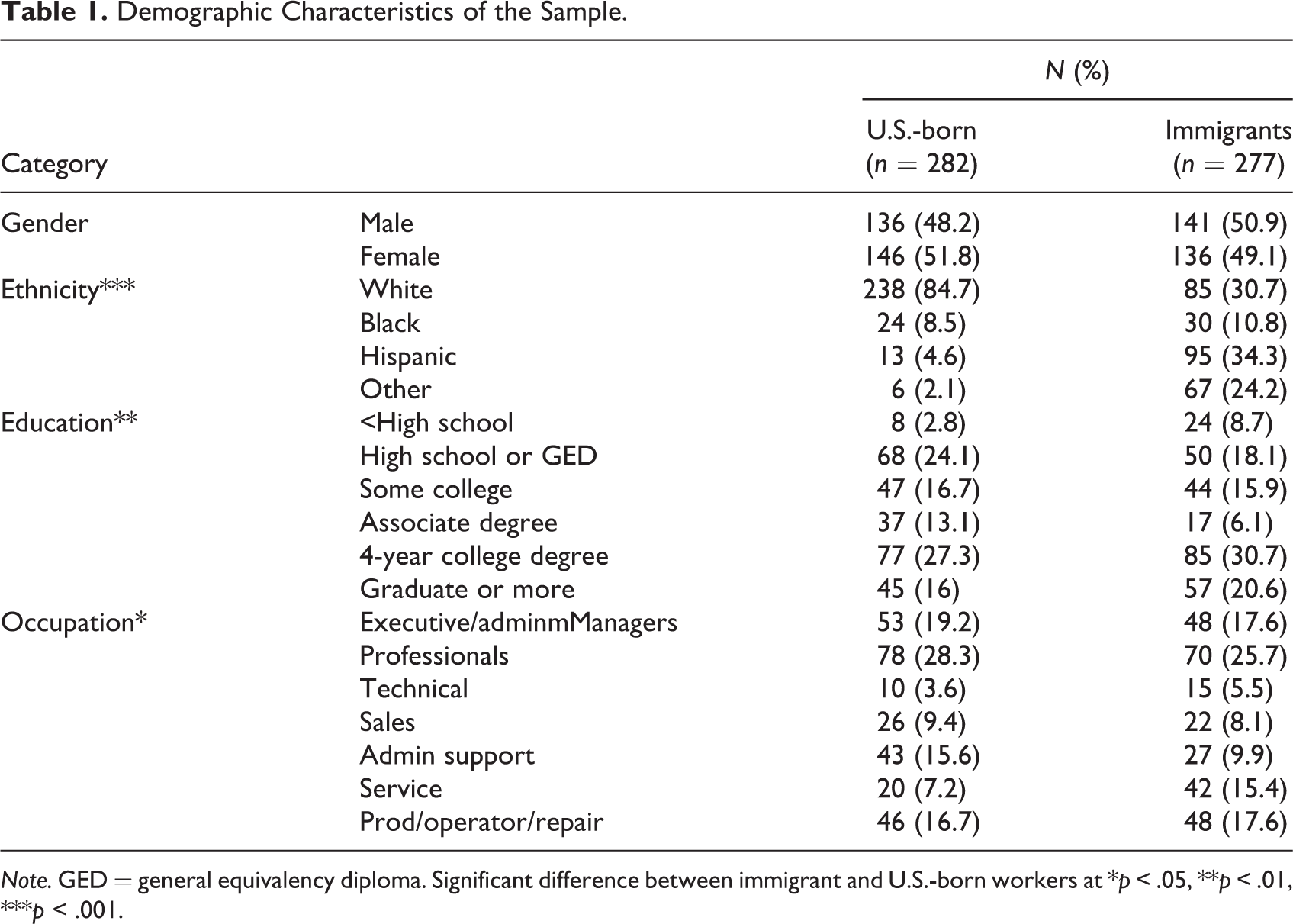
Note. GED = general equivalency diploma. Significant difference between immigrant and U.S.-born workers at *p < .05, **p < .01, ***p < .001.
Measures
Job satisfaction
Job satisfaction was measured by the variable “jobsat1; henceforth Job Satisfaction” scores. This variable was included in the original data set by reversing response categories so that higher scores indicate higher Job Satisfaction. The survey question asked was “All in all, how satisfied are you with your job?” with four possible answers (4 = very satisfied, 3 = somewhat satisfied, 2 = not too satisfied, and 1 = not satisfied at all).
Income satisfaction
Income satisfaction was measured with the question of “How satisfied are you with your income” with four levels of response categories; the responses were reverse coded so that higher scores indicate higher Income Satisfaction (4 = very satisfied, 3 = somewhat satisfied, 2 = not too satisfied, and 1 = not satisfied at all).
Autonomy on the job
Autonomy on the job was measured by the Index of Autonomy on the Job (henceforth, Autonomy). The score was computed by averaging scores from the following three questions: (1) “I have the freedom to decide what I do on my job,” (2) “It is basically my own responsibility to decide how my job gets done,” and (3) “I have a lot of say about what happens on my job” with four response categories (4 = strongly agree, 3 = somewhat agree, 2 = somewhat disagree, and 1 = strongly disagree). Scores for Autonomy are calculated and rounded to two decimal points; total scores can range from 1.00 to 4.00. Observed Cronbach’s α for both 2002 and 2008 wage and salaried workers was .72 for the current sample.
Learning opportunities on the job
Learning opportunities on the job was measured by Index of Learning Opportunities and Challenges on the Job (henceforth, Learning Opportunities). Learning Opportunities total score was computed by averaging scores from the following three survey questions: “My job requires that I keep learning new things,” “My job requires that I be creative,” and “I have the opportunity to develop my own special abilities.” Responses were coded in four categories (4 = strongly agree, 3 = somewhat agree, 2 = somewhat disagree, and 1 = strongly disagree). Learning Opportunities score was also calculated to two decimal points between 1.00 and 4.00. Observed Cronbach’s αs for the 2002 and 2008 wage and salaried workers were .65 and .66 for the current sample.
Supervisor support
Supervisor support was measured by the Index of Supervisor Support (henceforth, Supervisor Support). Supervisor Support total score is a mean score of the following 9 items: “My supervisor keeps me informed me of the things I need to know to do my job well,” “My supervisor has expectations of my performance on the job that are realistic,” “My supervisor recognizes when I do a good job,” “My supervisor is supportive when I have a work problem,” “My supervisor is fair and does not show favoritism” “My supervisor is responsive to my needs when I have family or personal business to take care of,” “My supervisor is understanding when I talk about personal or family issues that affect my work,” “I feel comfortable bringing up personal or family issues with my supervisor,” and “My supervisor really cares about the effects that work demands have on my personal and family life.” Responses were coded in four categories (4 = strongly agree, 3 = somewhat agree, 2 = somewhat disagree, and 1 = strongly disagree). Supervisor Support score was also calculated to two decimal points between 1.00 and 4.00. Observed Cronbach’s α for both entire 2002 and 2008 wage and salaried workers was .91 for the current sample. In a previous study using the NSCW data (Ojha, 2011), factor analyses revealed that all 9 items grouped together as one factor among immigrant workers (Cronbach’s α = .88) as well as among U.S.-born workers (Cronbach’s α = .90).
Coworker support
Coworker support was measured by the Index of Coworker Support (henceforth, Coworker Support). Total scores were obtained by averaging scores from the following 3 items: “I feel I am really a part of the group of people I work with,” “I have support from coworkers that I need to do a good job,” and “I have support from coworkers that helps me to manage my work and personal or family life.” Responses were coded in four categories (4 = strongly agree, 3 = somewhat agree, 2 = somewhat disagree, and 1 = strongly disagree). Coworker Support score was also calculated to two decimal points between 1.00 and 4.00. Observed Cronbach’s α for both entire 2002 and 2008 wage and salaried workers was .75 for the current sample. In a previous study using the NSCW data (Ojha, 2011), Cronbach’s α for this measure was .73 for immigrants and .79 for U.S.-born workers.
Immigrants’ characteristics
Whether or not immigrants were fluent in English was rated by interviewers and coded as a binary variable (1 = fluent in English and 0 = not fluent in English). Years in United States was measured by self-report by immigrants and coded as continuous variable. These two variables were entered into the second analysis that was conducted with the immigrants-only subsample.
Analysis
The first hierarchical linear regression comprised of five steps. Step 1 controlled for age and survey year, and Income Satisfaction was entered as a predictor. Step 2 added two job characteristics measured by Autonomy on the job and Learning Opportunities on the job. Step 3 added Supervisor Support and Coworker Support scores. Step 4 added immigrant status. U.S. born workers were coded as “0” and immigrant workers were coded as “1.” Step 5 added interaction terms between each predictor and immigrant status.
The second hierarchical regression was conducted among an immigrant worker sample. This analysis was conducted within immigrants-only sample in order to test whether characteristics of immigrants explain variability in the moderating effects of immigrant status. It was hypothesized that English proficiency and years in the United States will moderate the relationships between each of job determinants and job satisfaction within immigrants sample. Step 1 added Autonomy and Learning Opportunities, Supervisor Support, and Coworker Support scores. Step 2 added English proficiency for Analysis 2 and years in the United States for Analysis 3. Step 3 added interaction terms between predictors and English proficiency and years in the United States.
Results
All statistical assumptions for hierarchical regression were assessed and met. Correlation matrixes for model variables were examined. The correlations ranged between .17 and .56, meeting the criterion for hierarchical regression analyses (Stevens, 1996).
Bivariate Analyses
Differences in model variables were tested according to immigrant status. A significant difference was found for Income Satisfaction. On average, immigrant workers (M = 2.78, SD = 0.91) scored 0.18 point lower on Income satisfaction than did U.S.-born workers (M = 2.96, SD = 0.87), indicating significantly lower level of Income Satisfaction, t(557) = 2.39, p < .05. Significant differences were not found for any other variables (p > .05). Additionally, differences in model variables were tested by survey year. A significant difference was found only for Learning Opportunities scores, t(557) = 2.003, p < .05. In 2002, the mean score for Learning Opportunities (M = 3.35, SD = 0.63) was 0.12 point higher than 2008 (M = 3.23, SD = 0.74).
Hierarchical Multiple Regression
Hierarchical multiple regression with immigrants and U.S.-born workers
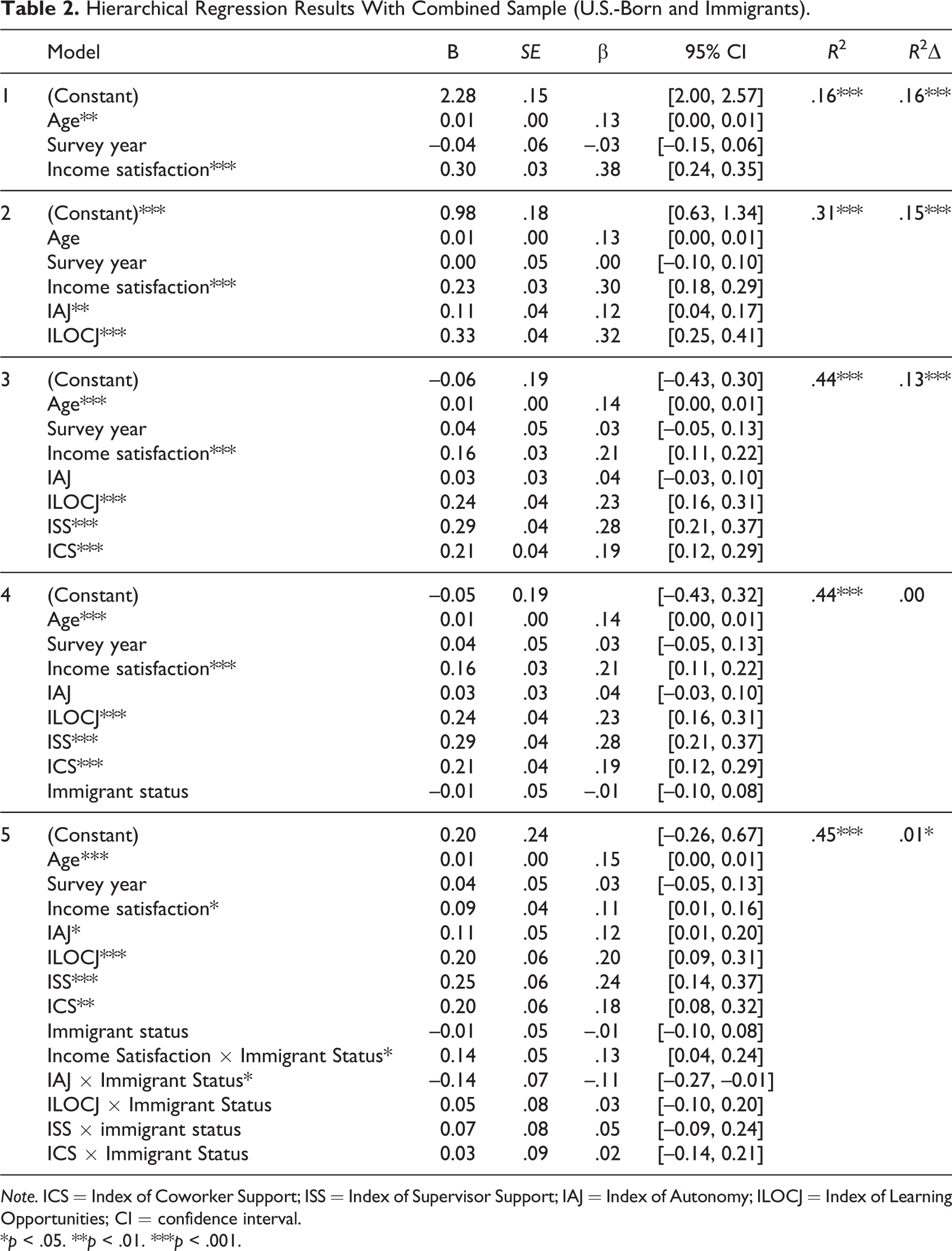
A hierarchical multiple regression was conducted to assess the effect of income satisfaction, job characteristics, coworker/supervisor support, and immigrant status on job satisfaction. Results of the hierarchical regression are presented in Table 2.
Hierarchical Regression Results With Combined Sample (U.S.-Born and Immigrants).
Note. ICS = Index of Coworker Support; ISS = Index of Supervisor Support; IAJ = Index of Autonomy; ILOCJ = Index of Learning Opportunities; CI = confidence interval.
*p < .05. **p < .01. ***p < .001.
Model 1 was significant with model R2 of .16, F(3, 555) = 35.465, p < .001. Income Satisfaction was significant predictor (B = .295; t = 9.69, p < .001), after controlling for survey year and age. Autonomy and Learning Opportunities scores were entered in Step 2, increasing the model R2 to .31, F(5, 553) = 49.22, p < .001. This R2 increase of .15 was significant, F(2, 552) = 58.77, p < .001. Both Autonomy (B = .11, t = 2.98, p = .003) and Learning Opportunities (B = .33, t = 8.04, p < .001) were significant predictors. As Coworker Support and Supervisor Support were entered at Step 3, model R2 increased to .44, F(7, 551) = 62.43, p < .001. This R2 change of .13 was statistically significant, F(2, 551) = 66.37, p < .001. Significant regression coefficient were obtained for Coworker Support (B = .21, t = 4.71, p < .001), Supervisor Support (B = .29; t = 7.04, p < .001), and Learning Opportunities (B = .24, t = 6.25, p < .001). Autonomy was no longer significant at Step 3. Immigrant status was entered at Step 4 but the overall model R2 did not change, R2 = .44, F(8, 550) = 54.54, p < .001, and immigrant status was not a significant predictor. Consistent with Step 3, Income Satisfaction (B = .16, t = 6.19, p < .001), Learning Opportunities (B = .24, t = 6.24, p < .001), Supervisor Support (B = .29, t = 7.03, p < .001), and Coworker Support (B = .21, t = 4.71, p < .001) remained significant predictors, and Autonomy was not significant.
With the inclusion of interaction terms, the model R2 increased to .46, F(13,545) = 35.052, p < .001). This R2 increase of .01 was significant, F(5, 545) = 2.6, p = .02. The interaction terms were significant only for Autonomy and immigrant status (B = −.14, t = −2.14, p = .03) and Income Satisfaction and immigrant status (B = .14, t = 2.65, p = .01). With the inclusion of interaction terms, Autonomy became significant again (B = .11, t = 2.27, p = .02). Other predictors remained significant but coefficients decreased for Income Satisfaction (B = .09, t = 2.31, p = .02), Learning Opportunities (B = .2, t = 3.64, p < .001), Supervisor Support (B = .25, t = 4.49, p < .001), and Coworker Support (B = .2, t = 3.33, p = .001).
Results from the final step of the model suggest that higher scores on each measure predict higher scores on Job Satisfaction. Immigrant status was not a significant predictor; however, the significant interaction terms indicate that there are the moderating effects of immigrant status. For each one point increase in Autonomy scores, a .11 point increase for U.S.-born workers and a .03 point decrease for immigrant workers in Job Satisfaction score is predicted, holding other variables constant. For each one point increase in Income Satisfaction score, a .09 point increase for U.S.-born workers and a .23 point increase for immigrant workers are predicted in Job Satisfaction score.
Hierarchical multiple regression within immigrant-only sample
Additional hierarchical multiple regression analyses were conducted within immigrant sample to identify whether moderating effects of immigrant status can be explained by immigrant-related characteristics including years living within the United States and English proficiency.
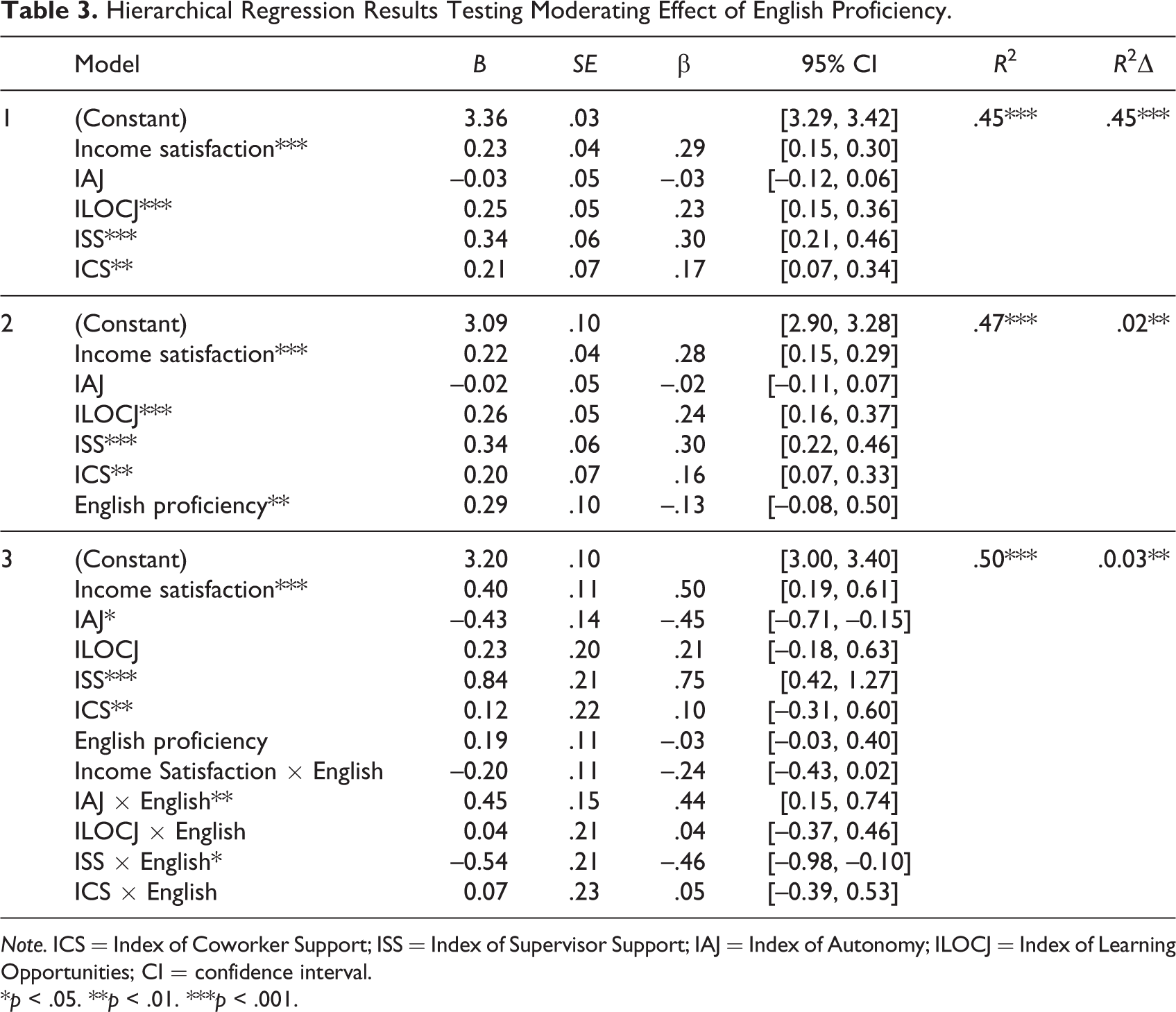
Results from the analysis testing moderating effects of English proficiency are presented in Table 3. The final step of the model indicates that the model is significant with R 2 = .50, F(11,267) = 44.58, p < .001. Interaction terms between Autonomy score and English proficiency (B = .45, t = 3.01, p = .003) and Supervisor Support score and English proficiency (B = −.54, t = −2.43, p = .02) were found to be significant, indicating moderating effects of English proficiency. The positive coefficient of the interaction term between Autonomy and English proficiency indicates that for immigrants who are fluent in English, .02 point increase in Job Satisfaction score is predicted for one point increase in Autonomy score. For those without English proficiency, with one point increase in Autonomy score, .43 point decrease in Job Satisfaction score is predicted. This suggests that whether immigrants are fluent in English can change the direction of relationship between Autonomy and Job Satisfaction. The negative coefficient for the interaction between Supervisor Support score and English indicates that the strength of relationship between Supervisor Support and Job Satisfaction weakens for immigrants who have English proficiency. For immigrants who are fluent in English, .30 point increase in Job Satisfaction score is predicted with one point increase in Supervisor Support score. For immigrants who are not fluent in English, .84 point increase in Job Satisfaction is predicted with one point increase in Supervisor Support score.
Hierarchical Regression Results Testing Moderating Effect of English Proficiency.
Note. ICS = Index of Coworker Support; ISS = Index of Supervisor Support; IAJ = Index of Autonomy; ILOCJ = Index of Learning Opportunities; CI = confidence interval.
*p < .05. **p < .01. ***p < .001.
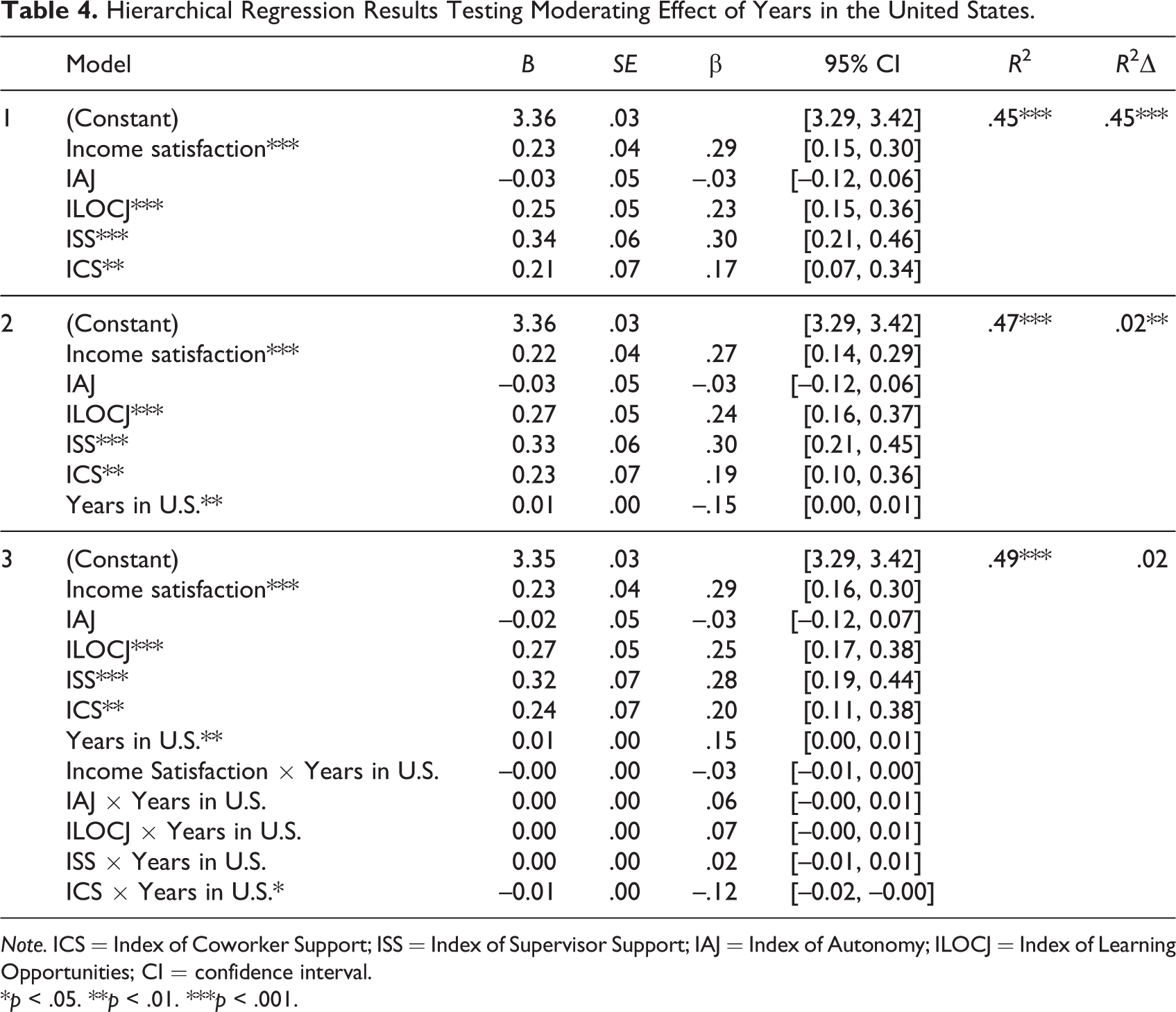
Table 4 presents the results from the analysis testing moderating effects of years in the United States on Job Satisfaction among immigrant workers. The R2 from the final step indicates that the model is significant, R 2 = .49, F(11, 267) = 23.32, p < .001. A significant interaction term was found only for Coworker Support scores. The negative coefficient (B = −.01, t = −2.31, p = .02) indicates that the positive relationship between Coworker Support score and Job Satisfaction weakens for immigrants who spent more years in the United States. For immigrants who spent 21 years (average of years in the United States among immigrants) in the United States, .24 point increase in Job Satisfaction score is predicted for one point increase in Coworker Support score. For an addition year spent in the United States, the degree of increase in Job Satisfaction as a function of Coworker Support is expected to decrease by .01 point.
Hierarchical Regression Results Testing Moderating Effect of Years in the United States.
Note. ICS = Index of Coworker Support; ISS = Index of Supervisor Support; IAJ = Index of Autonomy; ILOCJ = Index of Learning Opportunities; CI = confidence interval.
*p < .05. **p < .01. ***p < .001.
Discussion
This study examined whether income satisfaction, autonomy, learning opportunities, supervisor support, and coworker support are predictive of U.S.-born and immigrant workers’ job satisfaction, and how immigrant status moderates the relationship between each predictor and job satisfaction. Results support that these job-related conditions are all positively related to job satisfaction among wage and salaried employees. The moderating effects of immigrant status were found only for income satisfaction and autonomy on the job. The effects of learning opportunities, supervisor support, and coworker support on job satisfaction did not differ between U.S.-born and immigrant workers.
Income satisfaction was a significant predictor for job satisfaction, even after controlling for age, job characteristics, and social support. This positive relationship was found to be stronger for immigrant workers than for U.S.-born workers. The stronger relationship for immigrant workers does not support prior research suggesting that income is less important for immigrants. However, it should be noted that the previous research on income and job satisfaction were conducted only among Latino immigrant workers (Moyes et al, 2007; Valdivia & Flores, 2012) and this study included a more diverse sample of immigrant workers. It has been suggested that one of the main reasons for immigration to the United States is for higher wages as compared to those that can be obtained within immigrants’ home countries (de Castro et al., 2010). This motivation for immigration and work within the United States might explain why income satisfaction was such a strong predictor of job satisfaction among immigrant workers in this study as compared to U.S.-born workers.
Autonomy on the job predicted job satisfaction after controlling for age and learning opportunities on the job; however, it was not a significant predictor when supervisor support and coworker support were considered. This suggests that when employees have the same level of coworker and supervisor support at work, more autonomy does not necessarily increase job satisfaction. The result of the final step indicates that the relationship between autonomy and job satisfaction is positive for U.S.-born workers and negative for immigrant workers. The second analysis using the immigrant-only sample revealed that the interaction term between autonomy and English proficiency was significant. These results suggest that for immigrants who are fluent in English, similar to U.S.-born workers, job satisfaction increases as levels of job autonomy increase. However, for immigrants lacking English proficiency, job satisfaction decreases as job autonomy increases. These subsequent results partly explain the moderating effect of immigrant status by pointing to English proficiency as a partial explanation of results and are supported in prior research identifying the importance of language fluency as a predictor of positive career outcomes among immigrants (Ea, Griffin, L’Eplattenier, & Fitzpatrick, 2008; Shinnar, 2007).
Higher rating of supervisor and coworker support predicted higher job satisfaction among U.S.-born workers and immigrant workers after controlling for age, income satisfaction, and job characteristics. A comparison of the magnitude of the standardized coefficient of each predictor suggests that supervisor support was the strongest predictor for job satisfaction among all predictors. Coworker support was the third strongest predictor, followed by learning opportunities. The results are in agreement with the previous studies that emphasized the role of social support in job satisfaction (Baruch-Feldman et al., 2002; Tierney et al., 2002). However, immigrant status did not change the intensity of this positive relationship between social support and job satisfaction. In the second analysis using the immigrant-only sample, we found that while still important, the strength of supervisor support on job satisfaction weakened as immigrants reported being proficient in the English language. Additionally, in the third model testing the moderating effect of years living in the United States, there was a significant interaction effect for coworker support, suggesting that the importance of coworker support increases among immigrants who have been in the United States for shorter periods of time.
Limitations and Strengths
Results of this study should be interpreted with caution due to the potential diversity within this study’s immigrant population. Immigrant workers are a heterogeneous group in terms of country of origin and cultures, which were not measured in the current NSCW data. Furthermore, the impact of culture on job satisfaction may be moderated by individual experience and this was not measured within the NSCW database either. In addition, the sample covers only legal immigrant workers who can speak and understand English or Spanish and complete the survey. If the sample included undocumented immigrants, results could be different in many factors such as income, English proficiency, education level, and ultimately experience in the workforce. Exclusion of immigrants who do not speak English and Spanish also limits generalizability of this study to diverse immigrant groups.
It should also be noted that data were collected through survey by self-report or interviewers’ ratings in the case of English proficiency. The level of support or autonomy was rated subjectively by employees and was not confirmed through workplace observations or more standardized measures. Finally, some of the multi-item scales used in the NSCW were not validated in prior literature. Although most of the scales used in this study had reasonable to good internal consistency among the current sample, internal consistency for learning opportunity was lower than other measures (Cronbach α of .65 and.66.); however, it was still in the acceptable range (Churchill& Peter, 1984).
In spite of these limitations, this study has several strengths. The moderating effects of immigrant status in this nationally representative sample of wage and salaried workers can provide a basis for the future studies that will examine the effects of immigrants’ experience on job outcomes. Another strength of this study is a comprehensive sample for the analysis. The sample includes not only immigrant workers but also U.S.-born workers as a comparison group. This comparison captured unique results of immigrant workers’ job satisfaction. Finally, most of previous studies related to immigrant workers examined only Latino immigrant workers and very few studies have examined a more diverse sample of immigrants. The analysis and results of this study contributes to filling the gap in the literature.
Implications for Future Research
In this study, immigrant status had moderating effects on the relationship between job conditions and job satisfaction. Although this study did not investigate causes of these differences between U.S.-born workers and immigrant workers, the impact of cultural values, different organizational commitment, and underemployment are among the possible explanations (De Castro et al., 2010; Kirkman & Shapiro, 2001). Future studies should explore whether the moderating effects of immigrant status result from different cultural values that immigrants hold or they have more to do with socioeconomic or underemployment status of immigrant employees. In this study, because of the use of a secondary data set, some important factors related to immigrants could not be explored. These factors include country of origin and reasons for immigration. Future studies should consider diversity within immigrant groups by investigating the role of these factors in models of job satisfaction. Additionally, in the wake of the prolonged economic recession, the relationships between job-related factors and the level of job satisfaction can change. Thus, we suggest that the current model should be retested with the newer data to account for the role of recent economic recession.
Implications for Career Counseling
The results imply that supervisors and professionals who work with immigrant workers should consider employees’ immigration experience in assessing their needs and cultural orientation to develop appropriately tailored goals that enhance immigrant workers’ job satisfaction and job performance. Managers can be trained to work more effectively and sensitively with immigrant workers who have not lived as long in the United States to be attentive to their needs and positive response to supervisory support. With regard to coworker support, mentoring programs for new immigrants should be considered that include social support in the workplace and connection to the community or broader acculturation process. Finally, literacy plays an important role in supporting immigrant job satisfaction. Career counselors or EAP counselors can work with immigrant workers to connect them, when needed, to community-based literacy courses to improve their language skills, while also showing support from the workplace. Management training, mentoring programs, and literacy support initiatives are low-cost interventions that are shown in this study and other research to have a positive impact on job satisfaction and other factors related to the acculturation process that are cost effective and easy to implement. Future research study needs to examine such programs in the workplace and assesses outcomes related to job satisfaction, career advancement, and productivity.
Footnotes
Declaration of Conflicting Interests
The author(s) declared no potential conflicts of interest with respect to the research, authorship, and/or publication of this article.
Funding
The author(s) disclosed receipt of the following financial support for the research, authorship and/or publication of this article: Funding for obtaining the data sets used in this study was provided by the University of Maryland, Baltimore, School of Social Work.