




Abstract
This study examined the prevalence of student-to-student and staff-to-student sexual harassment in K-12 schools and school district compliance with Title IX using a retrospective survey of young adults. Participants (n = 511) were asked to describe their knowledge of policies and procedures regarding Title IX, the prevalence of sexual harassment, and the school’s observed response to harassment using a 34-item, anonymous online survey. Descriptive statistics revealed that 13.4% of participants perceived that sexual harassment at their K-12 school district was at a “moderate” or “high” level, 50.1% reported that they either knew someone who experienced sexual harassment by a school employee or experienced it themselves, and 17.4% (n = 89) of individuals personally experienced one or more incident of staff-to-student sexual harassment. Nearly all (94%) students were unable to identify their Title IX compliance officer and 70% were unaware of how to file grievances. School districts without policies and materials that address sexual harassment had statistically significantly higher rates of harassment than school districts with policies (p = .01) and materials (p < .01).
Keywords
Introduction
As recognized by the Department of Education, the Supreme Court, Congress, and other federal agencies, Title IX of the 1972 Education Amendments to the Higher Education Act prohibits the sexual harassment of students as a form of discrimination based on sex in education programs and activities. As a condition of receiving federal financial assistance, school districts are required to comply with Title IX regulations, including prevention, investigation, and remediation of complaints. Specifically, among other requirements, school districts must establish a safe environment, develop and announce grievance procedures, train their staff, educate students and parents, and identify a trained compliance officer. This study sought to examine K-12 school district compliance with Title IX using a retrospective survey of young adults. Participants (n = 511) were asked to describe their knowledge of policies and procedures, the prevalence of sexual harassment, and the school district’s observed response to the harassment. This paper will first present the history and definition of Title IX requirements, followed by the methodology for this study, the results, a discussion, and limitations.
Background
History and Definition of Title IX
Title IX advises that “no person in the United States shall, on the basis of sex, be excluded from participation in, be denied the benefits of, or be subjected to discrimination under any education program or activity receiving Federal financial assistance” (Education Amendments Act of 1972, 2018). Historically, Title IX was synonymous with gender equity in sports (Frost, 2005; Jones, 2010). Title IX is far more complex and holds greater protection than equity in sports, but the application of Title IX was complicated by the absence of an explicit reference to sexual harassment. Despite this absence, the Department of Education, the Supreme Court, Congress, and other federal agencies have interpreted sexual harassment to be a form of sex discrimination and a violation of a person’s civil rights under Title IX (Brotine, 2019).
Eight years prior to the passage of Title IX, Titles VI and VII (Mayer, 2016) laid the groundwork for equity, but passing Title IX proved to be challenging. In 1970, Congresswoman Edith Green initiated legislation “prohibiting sex discrimination in education and congressional hearings on the education and employment of women.” This legislation was formally introduced and defeated in 1971 then reintroduced and passed in 1972 (Frost, 2005, p. 562). After Title IX became a law in 1972, attempts to amend the language continued. In 1974, an amendment to exempt revenue-generating programs from Title IX oversight was introduced and defeated. The final version was approved by congress and President Ford on July 21, 1975 and gave all educational institutions 3 years to comply. The implementation of Title IX in all educational institutions receiving federal funds was re-emphasized with the passage of the Civil Rights Remedies Equalization Act of 1986 and the Civil Rights Restoration Act of 1987.
Application of Title IX in K-12 Schools
Proposed Title IX language provides the Office of Civil Rights with greater ability to enforce Title IX in K-12 schools while defining sexual harassment as: A school employee conditioning an educational benefit or service upon a person’s participation in unwelcome sexual conduct (often called quid pro quo harassment); or unwelcome conduct on the basis of sex that is so severe, pervasive, and objectively offensive that it effectively denies a person equal access to the school’s education program or activity; or sexual assault (Brotine, 2019).
The inclusion of school employees in the definition is indicative of “educator sexual misconduct”—the abuse of students by school employees—in K-12 schools. Accordingly, case law and empirical studies demonstrate that perpetrators of sexual harassment in K-12 schools include students, teachers, coaches, and administrators (Mackinnon, 2016). As Title IX explicitly applies to any institution receiving federal funding, K-12 schools carry the burden of responsibility to protect students from sexual harassment by providing access to a safe school environment where mental and physical impacts of harassment are minimized (Brotine, 2019). Additionally, the Every Student Succeeds Act of 2015 (ESSA) encourages the development of laws, regulations, and policies for better hiring procedures that prevent employment of anyone who has sexually abused a minor (Title VIII, March 20, 2019). Yet, as of August 2021 only 13 states having either enacted or proposed laws (Enough Abuse 2021) to do so. The lack of compliance with ESSA guidelines, supports a greater focus on Title IX and sexual harassment in K-12 schools.
Existing Title IX Research in K-12 Schools
Few major studies have explored sexual harassment in K-12 schools. One study by Hand and Sanchez (2000) found that 61% of surveyed students in grades 10 and 11 had been harassed by a student or a staff member at school. Furthermore, Young et al. (2009) noted that 40-50% of students had experienced some form of sexual harassment by a student or a staff member in a given year (Hill & Kearl, 2011). When K-12 sexual harassment was researched by the American Association of University Women, survey data showed that nearly 50% of students in grades 7 to 12 experienced sexual harassment by a student or a staff member in 2010 to 2011 while 33% of girls and 24% of boys had observed sexual harassment by a student or a staff member at school (Hill & Kearl, 2011). Even more alarming was the finding by Mayer (2016) showing that 81% of students—male and female, grades 8 through 11—had personally experienced sexual harassment by a student or a staff member at some point in their K-12 lives. Furthermore, Klein and Blad (2018) noted 70% of girls experienced sexual harassment by a student or a staff member in high school and 25% of girls experienced sexual assault or abuse before turning 18.
Much of the available data focuses on sexual harassment in secondary schools, but sexual harassment also occurs in elementary schools (Lichty et al., 2008). If we assume that harassment does not affect younger students, those students become more vulnerable due to victimization or failure to develop appropriate boundaries. At the elementary level, glossing over or ignoring sexual harassment can send the message that it is neither a problem nor a priority (Cristo, 2019; Lichty et al., 2008), and if students receive that message, harassment may continue unchecked. Stemming harassment must begin with leadership at all levels of K-12 education. As noted by Meyer (2008) and Lichty and Campbell (2012), if school administrators do nothing about sexual harassment complaints, teachers and students have little incentive to take action (Hill & Kearl, 2011).
In addition to empirical studies, the prevalence of sexual harassment in schools can be assessed through filed complaints. In 2010, the United States Department of Education received “7,000 complaints and [conducted] 54 compliance reviews” regarding sexual harassment in K-12 schools (Jones, 2010). As of November 2014, the Office of Civil Rights was investigating 24 schools (elementary and secondary) for mishandling incidents under Title IX (Did You Hear?, 2015). More recently, in August 2017, The Atlantic (Keierleber, 2017) reported 137 school districts under investigation by the Office for Civil Rights for 154 Title IX sexual-violence complaints and noted pending investigations—against public districts, private institutions, and charter school networks in 37 states and the District of Columbia—stretching back to December 2010. It is important to note that most students never file a federal Title IX complaint.
Educational Institutions have a responsibility to provide a hostile-free environment under one or more of the federal anti-discrimination laws including Titles VI, VII, and IX (Title VI; Title VII; Title IX). A “hostile environment” occurs when the conduct unreasonably interferes with a staff or students ability to work or learn. When considering hostile school environments, the terms bullying and harassment may be used interchangeably to the detriment of sexual harassment reporting. Since the 1980s schools have had to address sexual harassment, but the focus has since shifted to bullying (Miller & Mondschein, 2017). Fineran and Bennett (1998) found sexual harassment interferes with the social development and academic success of students, making it akin to bullying, but Hill and Kearl (2011) differentiated the two in that bullying tends to occur in childhood whereas sexual harassment begins in adolescence. In line with this, Gruber and Fineran (2008) determined that grade level is positively correlated with incidences of sexual harassment and negatively correlated with incidences of bullying. In cases where bullying is assumed, policies and procedures must ensure that it does not escalate to sexual harassment. Notably, bullying can violate Title IX if it is “predicated on sex or gender” (Miller & Mondschein, 2017), but “must rise to a certain level of severity to constitute an actionable claim” (Fleming, 2014, p. 525). As noted by Russlynn H. Ali, Assistant Secretary for Civil Rights under President Barack Obama, “misconduct that falls under a school’s anti-bullying policy also may trigger responsibilities under one or more of the federal anti-discrimination laws” (Dillon, 2010) including Titles VI, VII, and IX.
Challenges to Title IX Implementation in K-12 Schools
Although Title IX language is clear, a school districts compliance with the law can be problematic (Meyer & Somoza-Norton, 2018). The Office of Civil Rights (OCR) and the United States Supreme Court agreed that if a school administrator knows or reasonably should know that sexual harassment is happening, they must take steps to address it reasonably and promptly (Brotine, 2019; Brown, 2017; Mitchell, 2010, and Miller & Mondschein, 2017). Failure to acknowledge sexual harassment and respond appropriately may leave schools liable by way of deliberate indifference. Deliberate indifference manifests by someone in authority knowing about the sexual harassment (Mackinnon, 2016; Surface et al., 2014) and failing to do something about it (Mackinnon, 2016). School districts must take steps to respond reasonably and promptly, thoroughly investigate, and prevent any retaliation or further harassment (Mackinnon, 2016). Consequently, schools cannot ignore Title IX issues.
One of the requirements of Title IX is for K-12 schools to appoint a Title IX coordinator (Hill & Kearl, 2011; Meyer & Somoza-Norton, 2018). The Revised Sexual Harassment Guidance issued by the Office of Civil Rights in 2001, the interim guidance released in 2017, and now the 2020 Title IX regulations, require schools to have an adequately trained Title IX coordinator (Hartle, 2017; OCR, 2020). However, Meyer and Somoza-Norton (2018) found that coordinators surveyed in California and Colorado were poorly equipped to do the work required by their position. Even with a Title IX coordinator in place, Meyer and Somoza-Norton (2018) found that contact information is difficult to find, job descriptions are inadequate or too broad, training is insufficient, many coordinators do not clearly understand their role, and few coordinators have adequate time to do their job effectively.
Schools also have other requirements to provide training and prompt investigations of concerns and complaints. Non-compliance with these mandates can result in Title IX sanctions and schools may be accountable for monetary damages (Surface et al., 2014). Title IX requirements to provide students an education free from sexual harassment are largely unfunded and rely primarily under pressure to lose funding (Meyer & Somoza-Norton, 2018). Since 2001, the Office for Civil Rights has mandated specific responsibilities for schools which include publishing and disseminating “a policy opposing sex discrimination. . .a grievance procedure for complaints. . .and procedures for the ‘prompt and equitable resolution of complaints” (Lichty et al., 2008). Appropriately, schools are required to set and make available clear policies and procedures (Mayer, 2016) and widely distribute them to all members of the school community. To be effective, policies and guidance should be easily searchable on the district website, and the identity of the Title IX coordinator, their contact information, and all relevant harassment and discrimination documentation should be readily available.
School Employee Perpetrated Sexual Harassment in K-12 Schools
Title IX is also applicable to school employee perpetrated sexual abuse, assault and misconduct of students (Mackinnon, 2016). Even initial communication or contact that is not overtly sexual, physical or malicious can be problematic, since merely the perception of nonsexual conduct can take on sexual connotations and therefore fall under Title IX guidance (Brotine, 2019). Sexual crimes against students may include indecent liberties with a child, sexual assault, sexual abuse, rape, and child pornography whereas misconduct may include sexual acts or communication that are not necessarily criminal but are unethical (B.-J. Grant et al., 2019). While criminal laws are well-defined, ethical misconduct is less understood and potentially underreported.
The sexual misconduct of students by school personnel has lived in the background of education for decades, but more recently, social media, news media and reporting expectations have contributed to both visibility and potential magnitude (Abboud et al., 2020; Goldman, 2009; Prairie View A&M University, 2021). Unfortunately, past practice identifying and addressing school employee sexual misconduct and a failure to adequately confront sexual harassment in K-12 schools “leaves the impression of permitting sexually predatory teachers at least one free bite” (Mackinnon, 2016, p. 2071) before their behavior begins to raise alarm. Shakeshaft (2018) noted that within 7 months since the start of 2018, at least one teacher in every state had been arrested for the sexual abuse of a student or students. If one then considers misconduct by support personnel and administrators, the number of victims rises even higher. Quantifying misconduct is one thing, but many states lack even basic legislation to superficially address misconduct in schools. B.-J. Grant et al. (2019) found 39 states lacked legislation to protect students from predatory teachers, and Abboud et al. (2020) noted only 29 states with specific educator sexual misconduct statutes.
The key to addressing sexual misconduct would appear to be similar in approach as Title IX violations. Mitchell (2010) suggested that when creating a plan for identifying misconduct schools must “teach all school personnel where to go for help, whom to call for help, and how to react if they suspect child sexual abuse.” In 2015, ESSA reauthorized ESEA and included language requiring school personnel to report incidences of sexual misconduct by a school employee (B.-J. Grant et al., 2019). Once a case of misconduct is reported in a K-12 setting, the response should be even stricter than in student-student harassment cases (Mayer, 2016). This escalated expectation to respond to teacher-student relationships would be in line with language from Title VII, forbidding supervisor-employee harassment, as teachers and students have a similar relationship. A swift and substantial response to educator misconduct has been supported by only a handful of states including Texas, New York, Mississippi, and Missouri. Lawmakers in each of these states have created legal ramifications for educator misconduct and violations of Title IX (Surface et al., 2014). Missouri’s Amy Hestir Act provides well-defined guidance for educator sexual misconduct including: Defining misconduct; triggering automatic investigations; providing information to districts looking to hire a teacher who has been terminated, non-renewed, or allowed to resign; assigning an authorized district representatives to response to requests for information; creating specific examples defining boundary-crossing; preventing settlements where boards are held to the notion of a preponderance of evidence; mandating annual training; and creating guidelines for reporting that are accessible by the entire school community (Surface et al., 2014).
Even plans in place require a substantial amount of training and support to be implemented effectively. As with Title IX, schools have adopted and disseminated policies regarding teacher sexual abuse, but faculty and staff continue to be unaware of what constitutes misconduct (B.-J. Grant et al., 2019). Ultimately, K-12 institutions have an obligation to deliver a “sex-equal education into the hands of those who have the capacity and duty to provide it” (Mackinnon, 2016, p. 2105).
Challenges to Title IX Implementation in K-12 Schools
Little evidence exists that schools have reliably worked to prevent sexual harassment and misconduct (Mackinnon, 2016). Institutional liability under Title IX, particularly in the context of sexual misconduct in schools, continues to gain national attention (Mayer, 2016). Under this scrutiny, the public is becoming more aware of reports of sexual abuse in schools (Meyer & Somoza-Norton, 2018) and are demanding change. The starting place for dealing with harassment and misconduct is Title IX, and “Title IX has helped to make clear that educational institutions have a responsibility to protect every student’s right to learn in a safe environment and to prevent unjust deprivations of that right” (DeVos, 2017). Even though the consequences of failing to follow Title IX can be severe, prior to 2018, no school had lost federal funding for failing to uphold Title IX (Mackinnon, 2016; Mayer, 2016). In 2018, Chicago Public Schools were barred from a $4 million federal grant due to an insufficient response to Title IX complaints (Associated Press, 2018). In most cases, when a court attempts to hold a school accountable under Title IX, that school is asked only to respond effectively which may be little more than going through the motions (Mackinnon, 2016).
The state of Title IX became more precarious under former Education Secretary DeVos. One of the most important changes is the requirement that harassment be severe, pervasive, and objectively offensive as opposed to past legislation requiring it to be severe, persistent, or pervasive (OCR, 2001, 2020). The new regulations attempt to equalize due process for both the accuser and the accused with explicit dismissal language and the right of the accused to cross examine their accuser face-to-face. Furthermore, the new regulations require schools to establish and maintain a consistent burden of proof that is based on a “preponderance of evidence” (great than 50%) or “clear and convincing” (more likely to be true than untrue). Each of these changes appear to favor due process for the accused and potentially make it harder for survivors to both report abuse and find resolution. Although the new rules explicitly impact K-12 and post-secondary schools, they raise concerns over the prioritization of accused rights over victims’ rights (Blad, 2017; Klein & Blad, 2018). The revised language makes it harder for victims to achieve justice for sexual assault and harassment under Title IX because it requires clear and convincing evidence including actual knowledge. It also further narrows the definition of sexual harassment to “unwelcome conduct on the basis of sex that is so severe and pervasive and objectively offensive that it denies a person access to the schools education program or activity” (OCR, 2020). Other complications of the 2020 regulations include the potential to ignore off-campus incidents and cause confusion over the role of the school in responding to online harassment (Klein & Blad, 2018). The U.S. Department of Education released additional proposed amendments to the implementation of Title IX on June 23, 2022. The Department is summarizing and responding to comments received and will likely issue the resulting final regulations and changes with a new effective date in 2023.
Using Title IX legislation to address sexual harassment and school employee sexual misconduct is undermined by the lack of studies on both harassment or misconduct in K-12 schools. Meyer, Somoza-Norton, Longren, Meyer et al. (2018) found that there is an inadequate number of empirical studies on Title IX in K-12 education and therefore we have a “limited knowledge-base about other elements of sex discrimination in schools covered by Title IX” (p. 6). These authors further contend that of the 70 articles published since 1972, only 23 were empirical, and of those, eight focused on athletics. Current data on the prevalence of school employee sexual misconduct is limited—the last national study in 2004 indicated nearly 10% of students being victimized by school employees (Shakeshaft, 2004). Consequently, a lack of knowledge about Title IX is pervasive. Kurtz et al. (2018) noted that only 21% of educators reported they were extremely knowledgeable about what they should do if they witness sexual harassment and less than 25% were knowledgeable about how sexual assault and harassment are defined in their district policies. Systemically, our justice system is failing to put time and effort into refining Title IX, and case law shaping Title IX liability has not been addressed by the Supreme Court since 1998 (Mayer, 2016). Shakeshaft et al. (2019) have taken steps to describe specific practices for a standard of care for the prevention of sexual misconduct by school employees with categories including policies, hiring, training, and reporting.
The Relationship Between Title IX Implementation and Sexual Harassment in K-12 Schools
The realities of sexual harassment and sexual misconduct in K-12 schools are undeniable. Two of the largest nationally representative studies of sexual harassment in schools found that nearly 80% of students in grades 8 through 11 experienced sexual harassment by a student or a staff member during their school career. Subsequent studies have found a similar prevalence of harassment in K-12 schools but has only recently received serious attention (Lichty et al., 2008), and there exists “no published evaluations of the degree to which primary and secondary school policies follow federal guidelines regarding content and accessibility” (Lichty & Campbell, 2012, p. 609) relative to Title IX. As concluded by Mackinnon (2016), schools are mostly unaccountable for sexual harassment, even at a time where Title IX is receiving intense federal attention.
Large government-funded studies that gather data on child sexual abuse focus on child sexual abuse incidents outside the school setting and fail to gather data on school employee sexual misconduct and the abuse of students by school personnel. A few examples of national government funded studies and government offices that do not collect indicators for school employee sexual misconduct are: the National Crime and Victimization Survey, the National Violence Against Women Survey, the Office of Civil Rights and the US Department of Education. In addition, criminal records and social service departments tracking systems are antiquated and unable to be aggregated. Furthermore, the majority of cases are underreported to law enforcement and social welfare institutions by school administrators and victims, making it even more difficult to track. More data is needed to understand why and how often school employee sexual misconduct occurs in our K-12 school districts.
This current study demonstrates a strong initial step to remove some of the uncertainty surrounding Title IX, sexual harassment, and school employee sexual misconduct in K-12 schools.
Methods
This study used an anonymous retrospective survey of young adults to gather information concerning students’ knowledge and experiences with K-12 school employee sexual misconduct. The goal of the survey was to get the most up-to-date data on Title IX policy implementation and prevalence of sexual misconduct of students by school personnel.
Measure
The survey for this study was comprised of 34 items and took participants approximately 10 min to complete. Items included questions about their K-12 school district, their knowledge of policies and procedures, the level of harassment at their school overall, the experience of students at their school, and their own experiences with sexual harassment. Survey items included multiple choice, Likert style questions, select all that apply, and open-ended response opportunities. The survey was validated with experts in sexual harassment and school employee sexual misconduct including Dr. Charol Shakeshaft, Dr. Glenn Lipson, and Terri Miller . The survey was uploaded to Survey Monkey, an online survey platform, and distributed using a link. The survey was administered using a single link/contact between October 2018 and April 2019. All responses were anonymous and no identifying information was collected and no follow-ups were conducted.
Data Collection
The study was approved by the Cal Poly State University Institutional Review Board. The sample for this survey was recruited by university professors, Title IX officers, and sexual harassment organizations who were contacted by email and asked to distribute this survey to their students and organizations. The survey was completed by college students and other young adults across the United States (35 states represented). The sample is therefore convenient, which suggests that these results may be biased to the students who elected to complete the survey and not representative of those who elected not to volunteer to complete the survey. The survey was designed to be delivered to young adults who had already graduated from K-12 to avoid the need for parental consent to participate. Data was maintained in a locked office in a password-protected file on a password-protected computer.
Analyses
The analyses for this study were completed in several steps. First, the data was reviewed for outliers, missing data, and the presence or absence of response. The authors also ran frequencies and cross tabs to identify any errors. Responses from 38 individuals were completely removed from analyses due to non-responses for any of the questions. Another 17 responses were excluded under certain sections of the analysis due to participants giving incomplete answers to a question or submitting the survey before completing all questions. With a finalized database composed of 511 respondents, authors conducted descriptive analyses to examine the survey responses using JMP, a statistical analyses software. Descriptive statistics included the calculation of percentages, frequencies, and means across all variables of interest. Chi-square test, were used to examine the relationship between perceived levels of sexual harassment and presence of policies and materials. Independent samples t-tests and one-way ANOVA were used to explore how average sexual harassment ratings varied by student demographics, location, and school commitment (α = .05). All data is presented in aggregated form.
Results
Level of Harassment at Schools
A total of 511 students completed a series of questions that asked them to rate the level of sexual harassment at their K-12 school district using a 6-point Likert scale (None = 0, Very low = 1, Low = 2, Moderate = 3, High = 4, Very high = 5). For this article average ratings for student-to-student sexual harassment were 2.32 (Low/moderate) and staff-to-student harassment were 1.09 (Very low). Average ratings for student-to-student and staff-to-student sexual harassment were examined by varying student demographics, location of their K-12 school and the sexual harassment and prevention materials distributed by their school district (see Figures 1 and 2 & Tables 1 and 2).
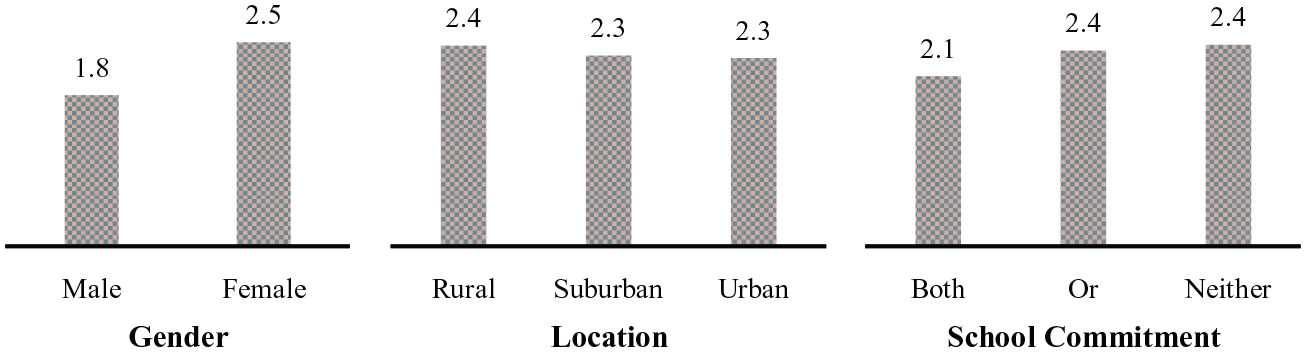
Level of student-to-student sexual harassment by gender, location of school, and school commitment.

Level of staff-to-student sexual harassment by gender, location of school, and school commitment.
Level of Student-to-Student Sexual Harassment Levels by Type, Gender, Location of School, and School Commitment.
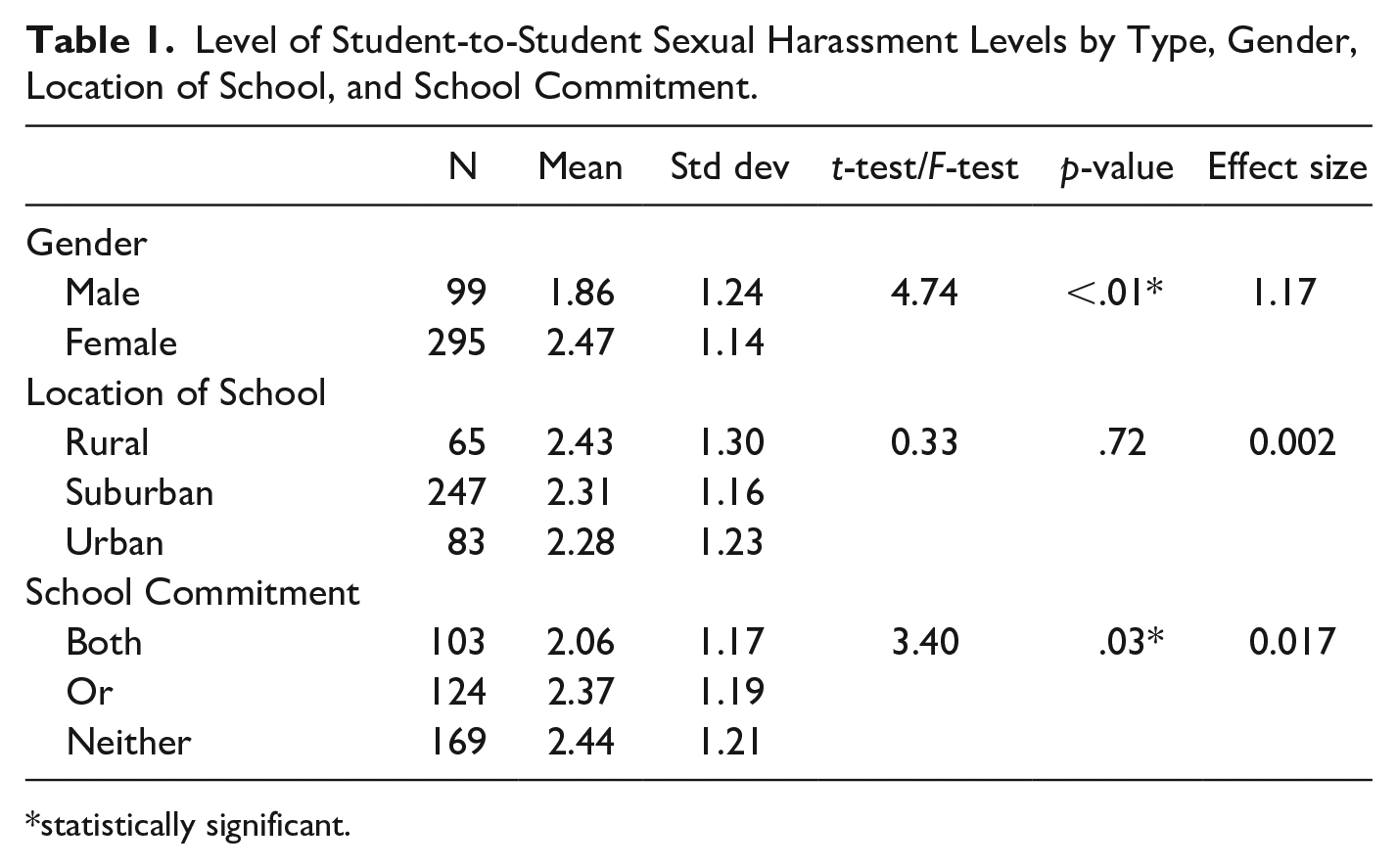
statistically significant.
Level of Staff-to-Student Sexual Harassment Levels by Type, Gender, Location of School, and School Commitment.

statistically significant.
Student-to-Student Sexual Harassment
Females tended to observe a higher level of student-to-student sexual harassment on their school campus compared to males (females = 2.47, males = 1.86), and this difference was statistically significant (t = 4.74, p < .01). Schools located in rural areas had higher average rates of perceived student-to-student sexual harassment (2.43) than suburban (2.31) and urban schools (2.28), but there were no statistically significant differences. Participants were also asked if their school districts had a sexual harassment policy and if the school district distributed any materials on sexual harassment prevention and education. These responses were classified into the school’s commitment to prevention and awareness. A school either had both a policy and handout, a policy or a handout, or neither. When focusing on a school’s commitment to the prevention and awareness of student-to-student harassment, 24.7% of schools had both a policy and handouts, 30.1% had one or the others, and 45.2% had neither. Average ratings for student-to-student harassment were then examined by the school’s level of commitment to prevention and awareness. Schools that had both policy and handouts, had lower level of sexual harassment (2.06) than schools that only had a policy or a handout (2.37) or neither (2.44), and this difference was statistically significant (F = 3.40, p = .03). This conveys that the perceived level of sexual harassment depends on the presence or absence of sexual harassment prevention policies and prevention and education materials.
Staff-to-Student Sexual Harassment
Females tended to observe a higher levels of staff-student sexual harassment on their school campus compared to males (females = 1.18, males = 0.88), and this difference was statistically significant (t = 2.30, p < .02). Schools located in rural areas had higher average rates of perceived staff -to-student sexual harassment (1.18) than suburban (1.10) and urban schools (1.03), but there were no statistically significant differences. Participants were also asked if their school districts had a staff-to-student sexual harassment policy and if they distributed any materials on sexual harassment prevention and education. These responses were classified into the schools commitment to the prevention and awareness or staff-to-student sexual harassment. A school either had both a policy and handouts, a policy or a handout, or neither. When focusing on the materials schools distributed to their students regarding staff-to-student harassment 5.9% of schools had both a policy and handouts, 8.4% had one or the other, and 85.7% had neither. Average ratings for staff-to-student harassment were then examined by the schools level of commitment to prevention and awareness. Schools that had both a policy and handouts or one or the other, had higher levels of staff-to-student sexual harassment (1.17) than schools that only had neither (1.08), but there were no statistically significant differences.
Students were asked how much they feared sexual harassment occurring and by whom (see Figure 3). Students feared another student harassing them the most with 39.2% reporting very high to moderate harassment and 31.9% reporting somewhat. A known adult was the next most feared individual with 15.3% reporting very high to moderate and 14.7% saying somewhat. There were 9% of students that said they feared being sexually harassed by a coach and 12.8% somewhat fearing harassment by a coach. A teacher was feared by 7.7% of students and somewhat feared by 13.8% of students. School administrators were feared by 4.1% of students and somewhat feared by 2.8% of students. A family member and a parent were collectively feared by 8.6% and somewhat feared by 5.1% of students. Harassment by others was feared by 1.8% of students.
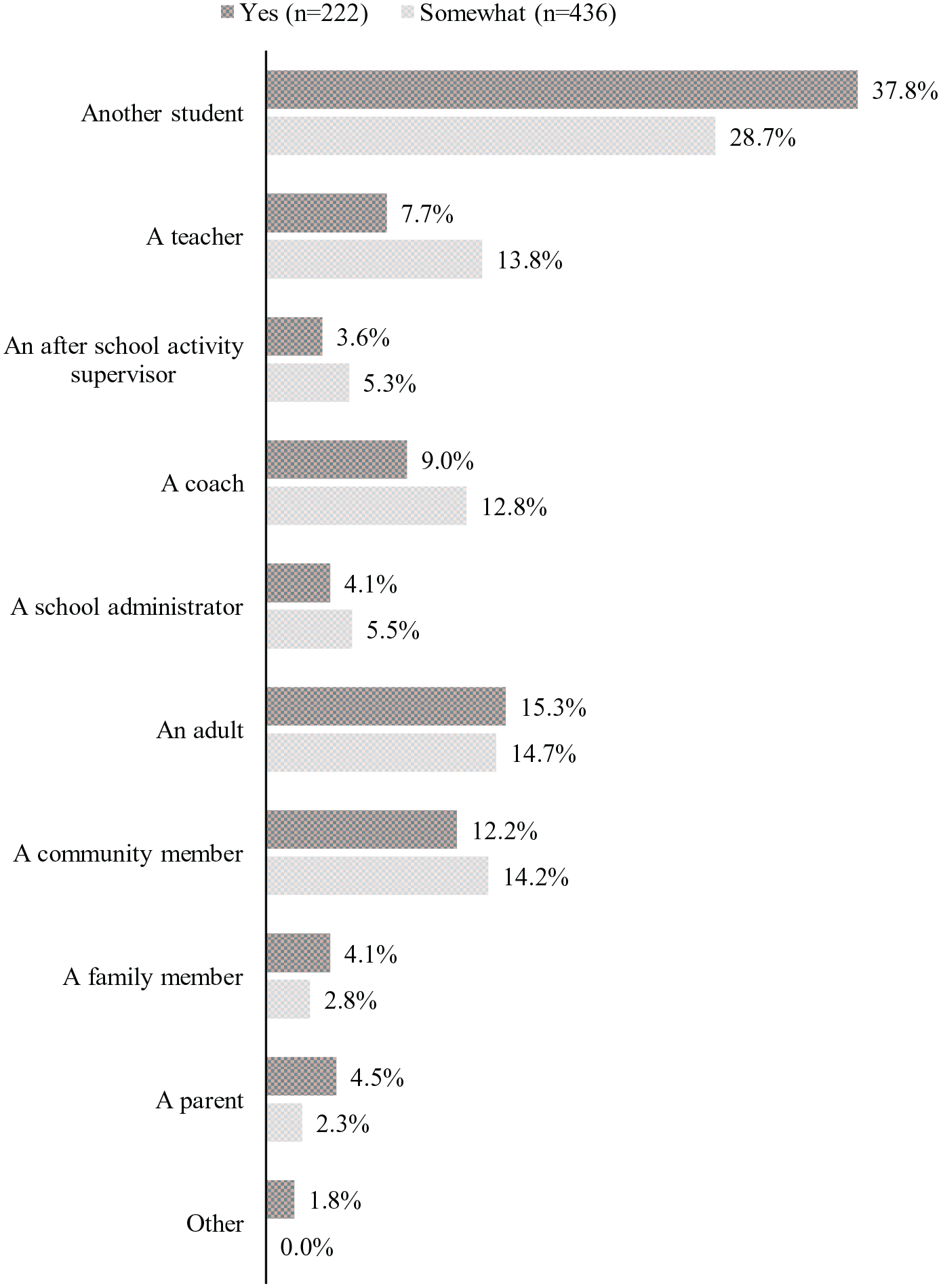
Percentage of students reporting by whom they feared being sexually harassed.
School District’s Effort to Prevent Sexual Harassment
School districts can try to reduce sexual harassment on their campuses by providing materials about sexual harassment to students, adopting and implementing policies to protect students from sexual harassment, educating students on how to report sexual harassment, and setting boundaries between student and school employee relationships. Students were asked whether their school district did any of these actions. In Table 3, the prevalence of harassment materials, prevention policies, reporting knowledge and relationship rules within student’s school districts are shown. There were 39.2% (n = 200) of students who attended school districts that distributed materials about sexual harassment while 48.8% (n = 249) of school districts did not and 12% (n = 61) did not know. Of the 200 students who received the materials, 26.5% (n = 53) of the materials addressed employee-to-student sexual harassment, 52% (n = 104) did not and 21% (n = 42) were unsure whether it was present within the materials. There were 40.4% (n = 206) of students who knew their school district had a sexual harassment prevention policy and 13.9% (n = 71) who reported that there was no prevention policy. From the 206 students who knew of their sexual harassment policy, 23.3% (n = 48) of the policies addressed employee-to-student sexual harassment, 26.2% (n = 54) did not and 50.1% (n = 104) were unsure of the descriptions within their district’s policy. Out of 511 students, 29.6% (n = 151) understood how to report or file a complaint about sexual harassment to the school. Students were asked whether they knew who the Title IX officer was for their school. Out of 509 students, only 6.1% (n = 31) knew who their Title IX officer was, leaving 93.9% (n = 478) of students unaware of the individual as depicted in Figure 4.
Percentage of Students Who Reported on Their School District’s Contribution to Sexual Harassment Education and Prevention.
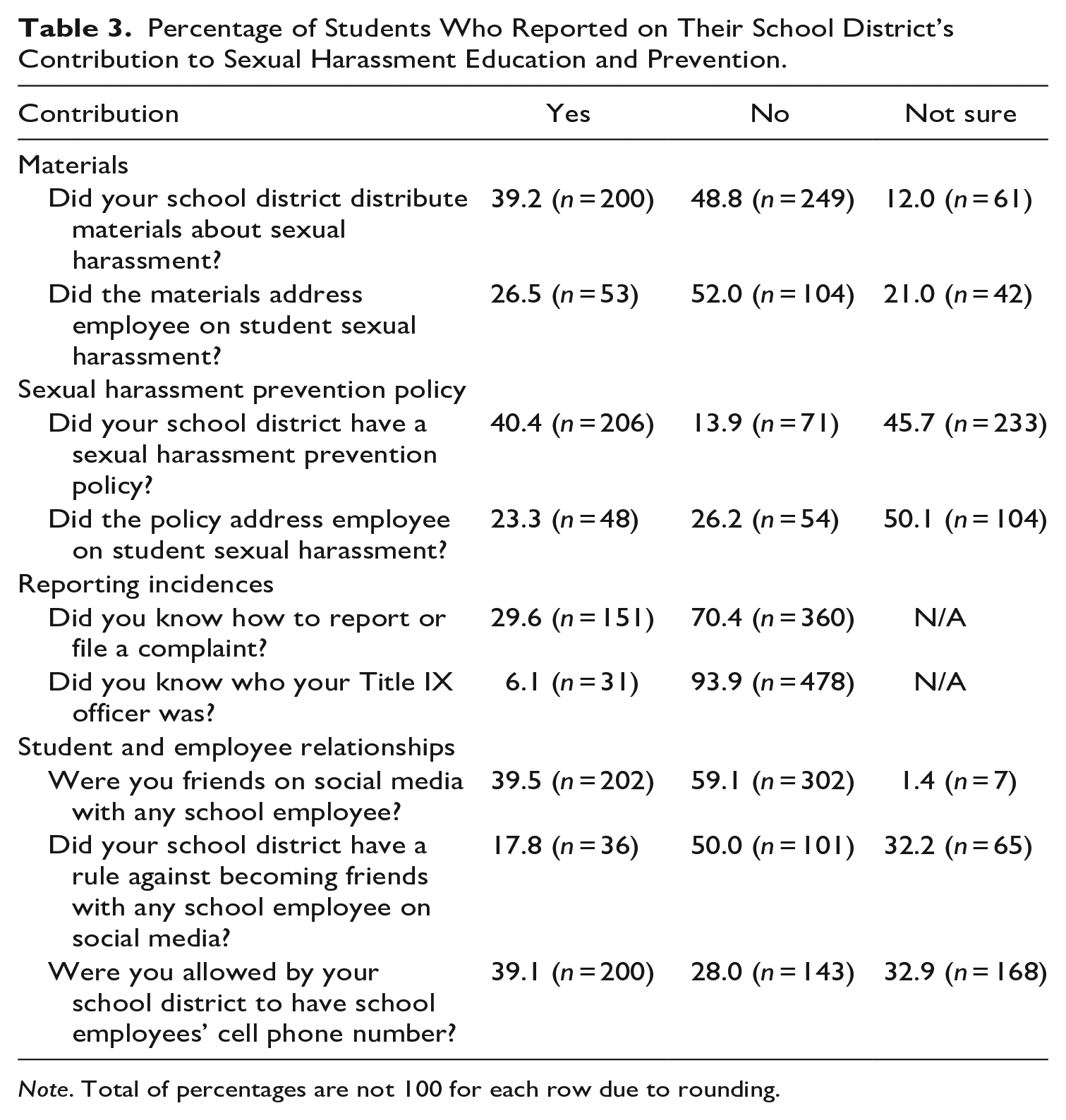
Note. Total of percentages are not 100 for each row due to rounding.
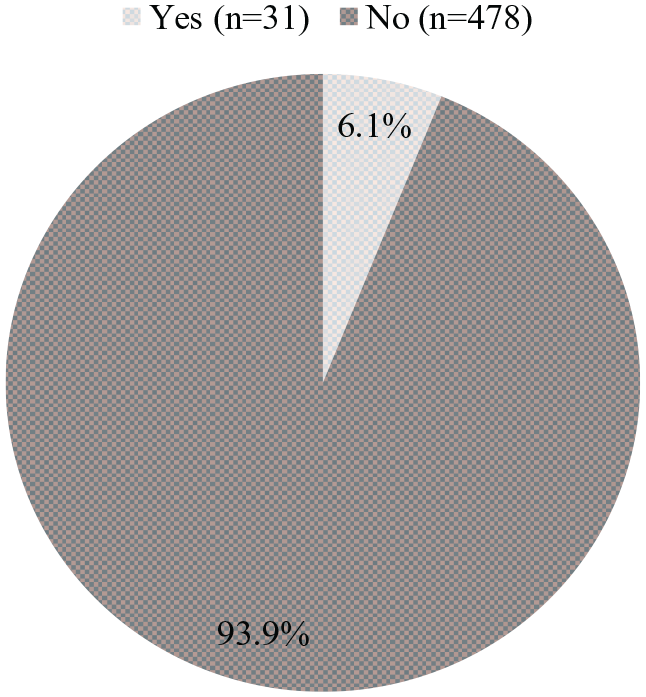
Percentage of students reporting whether they could identify their Title IX Officer.
While the students were attending school, 39.5% (n = 202) were friends with a school employee on social media, 59.1% (n = 302) of students were not and 1.4% (n = 7) could not recall. Among the 202 students who were friends with a school employee on social media, 17.8% (n = 36) reported knowing that their school had a rule against their school employees befriending a current student on social media, 50% (n = 101) of student’s schools did not and 32.3% (n = 65) were not sure. A total of 39.1% (n = 200) of students were allowed by their school district to have a school employee’s cell phone number, 28% (n = 143) were not allowed and 32.9% (n = 168) were unsure.
Sexual Harassment by School Employees
Students were asked whether someone they knew from their K-12 experience was sexually harassed by a school employee and whether they themselves were sexually harassed by a school employee. In total, 256 respondents (50.1%) reported that they either knew someone who experienced sexual harassment by a school employee or experienced it themselves. Almost 50% of respondents (n = 250, 48.9%) reported that someone they knew experienced one or more incidents of staff-to-student sexual harassment and 17.4% (n = 89) of individuals personally experienced one or more incident of staff-to-student sexual harassment. For each of the incidents, they were then asked to describe how the school employee(s) committed the sexual harassment which can be seen in Table 4. Of the 903 reports of sexual harassment, 35.8% (n = 323) were verbally harassed, 31.5% (n = 284) were inappropriately touched, 15.3% (n = 138) had forced or consensual sexual contact, 14.4% (n = 130) received sexual messages or videos, and 3.1% (n = 28) felt spied on by a school employee. The rates of each form of sexual harassment to someone the student knew and to themselves followed descending order with the highest prevalence being verbal harassment and spying having the lowest prevalence. It is important to note that respondents were able to select all that apply, meaning their responses regarding type of harassment and location may be in reference to multiple incidents by different individuals or incidents committed by the same individual.
Percentage of Students Who Reported How a School Employee Sexually Harassed Them.
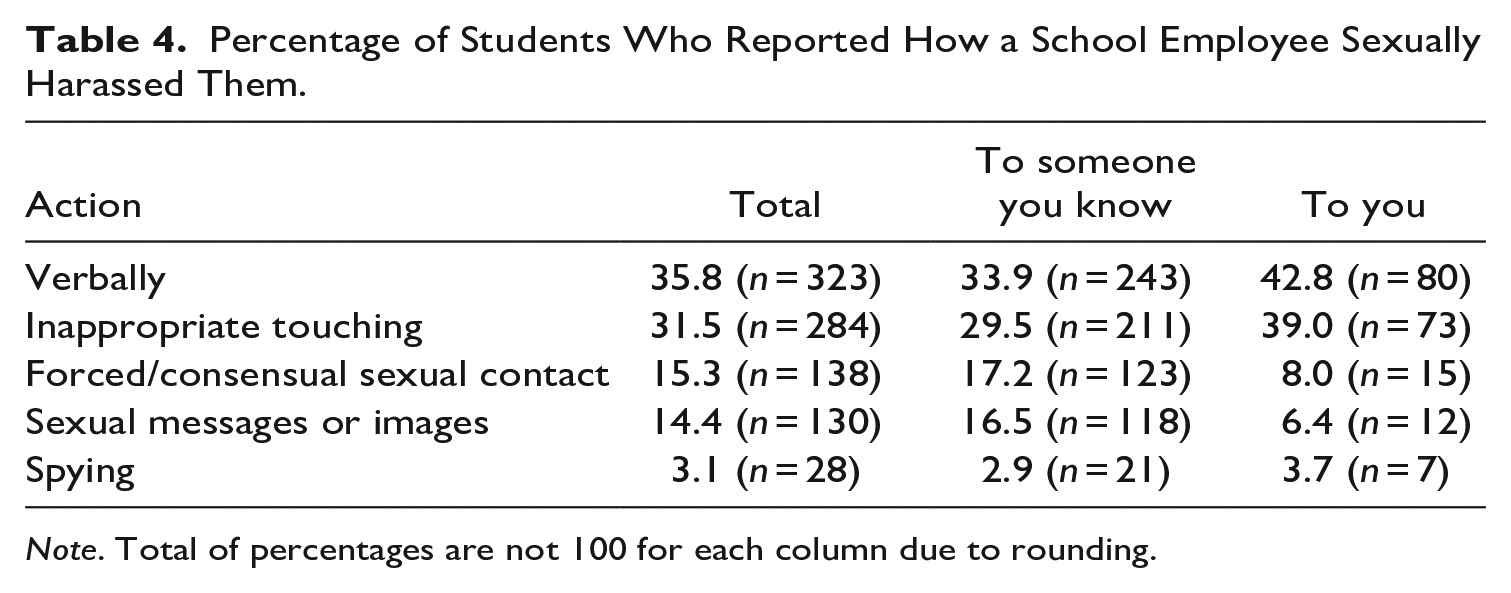
Note. Total of percentages are not 100 for each column due to rounding.
The students were asked to report where the sexual harassment occurred to someone they knew and/or to themselves. There were multiple areas on and off school grounds broken down into more specific areas as apparent in Table 5. Of the 510 events described by respondents, school employees who sexually harassed students had 38.8% (n = 198) of their incidences occur in a classroom, the location most sexual harassment occurred to either someone the student knew and/or to the students themselves. This was followed by athletic facilities on school grounds where 17.1% (n = 87) of the events took place. The hallway is where 12.2% (n = 62) of incidences occurred which made up the third most overall location for sexual harassment. Outside of the school yet on school grounds was where 10.6% (n = 54) of the events occurred. The locker room area was where 7.1% (n = 36) of incidences occurred. The cafeteria, parking lot, school transportation, field trip location, and driver’s education car each made up less than 5% of where the school employee to student sexual harassment occurred.
Percentage of Students Who Reported the Location Where Harassment Occurred.
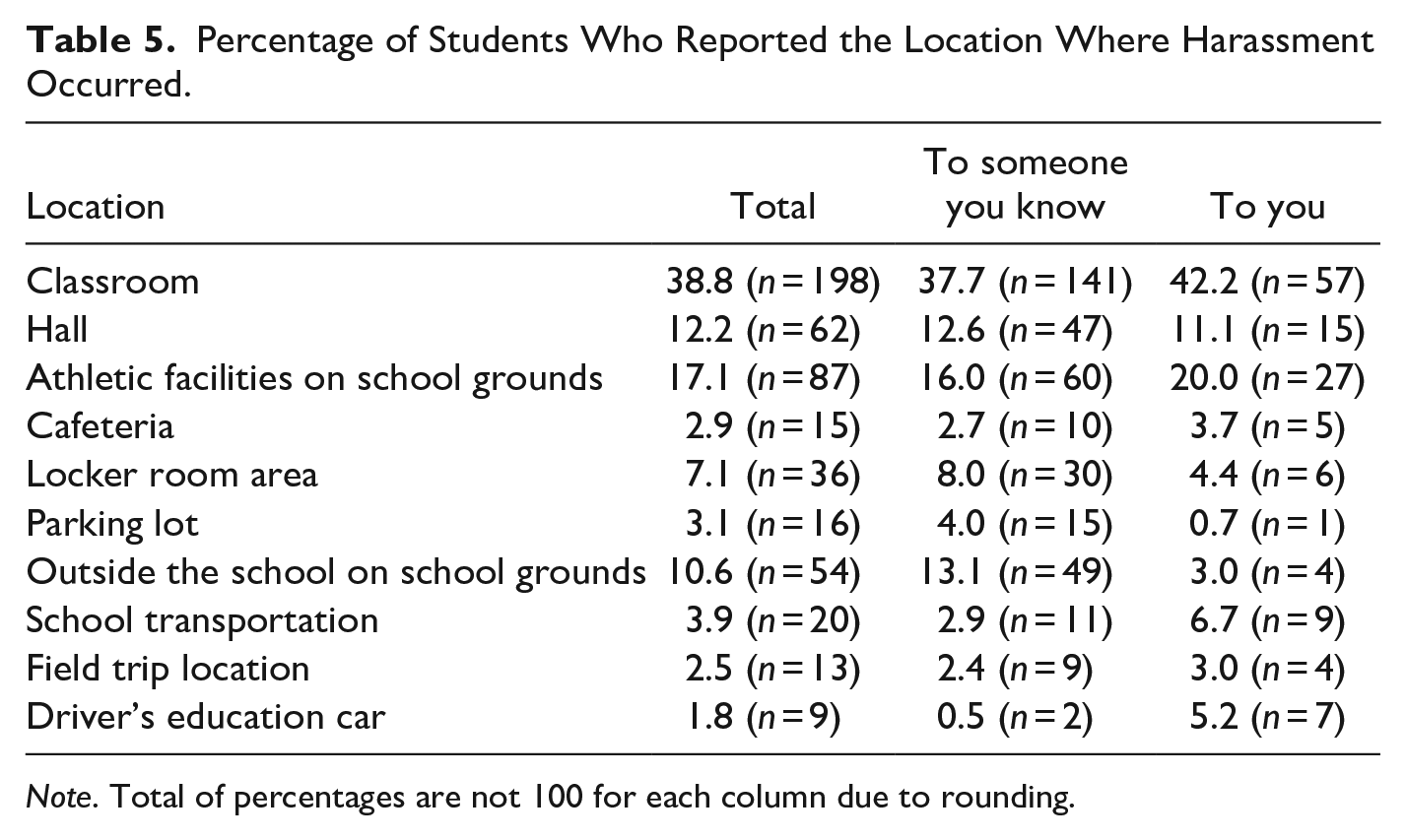
Note. Total of percentages are not 100 for each column due to rounding.
Students were asked to indicate which school employee or employees sexually harassed them while they attended K-12 schools. Figure 5 lists the school employees who sexually harassed the students in descending order. Two hundred fifty-six students described 379 incidents of sexually harassment, 57% (n = 216) of employees were in teaching positions such as teachers, substitute teachers, teacher’s aides/assistants, or student teachers. Teachers made up the highest percentage of offenders, 47.2% out of all school employees. A combined 33.3% (n = 125) of employees such as athletic coaches, athletic trainers or athletic assistant coaches were the second highest group of offenders. Athletic coaches made up 19.3% of all the school employee offenders and were the second most offending school employees. There were 3.7% of students who were sexually harassed by employees in positions like district administrators, principals, and vice principals. School employees such as bus drivers and custodians made up 1.4% of the offenders. School volunteers accounted for 1.3% of the offenders, and 3.4% of students classified the offenders with dfifferent positions than those listed above.
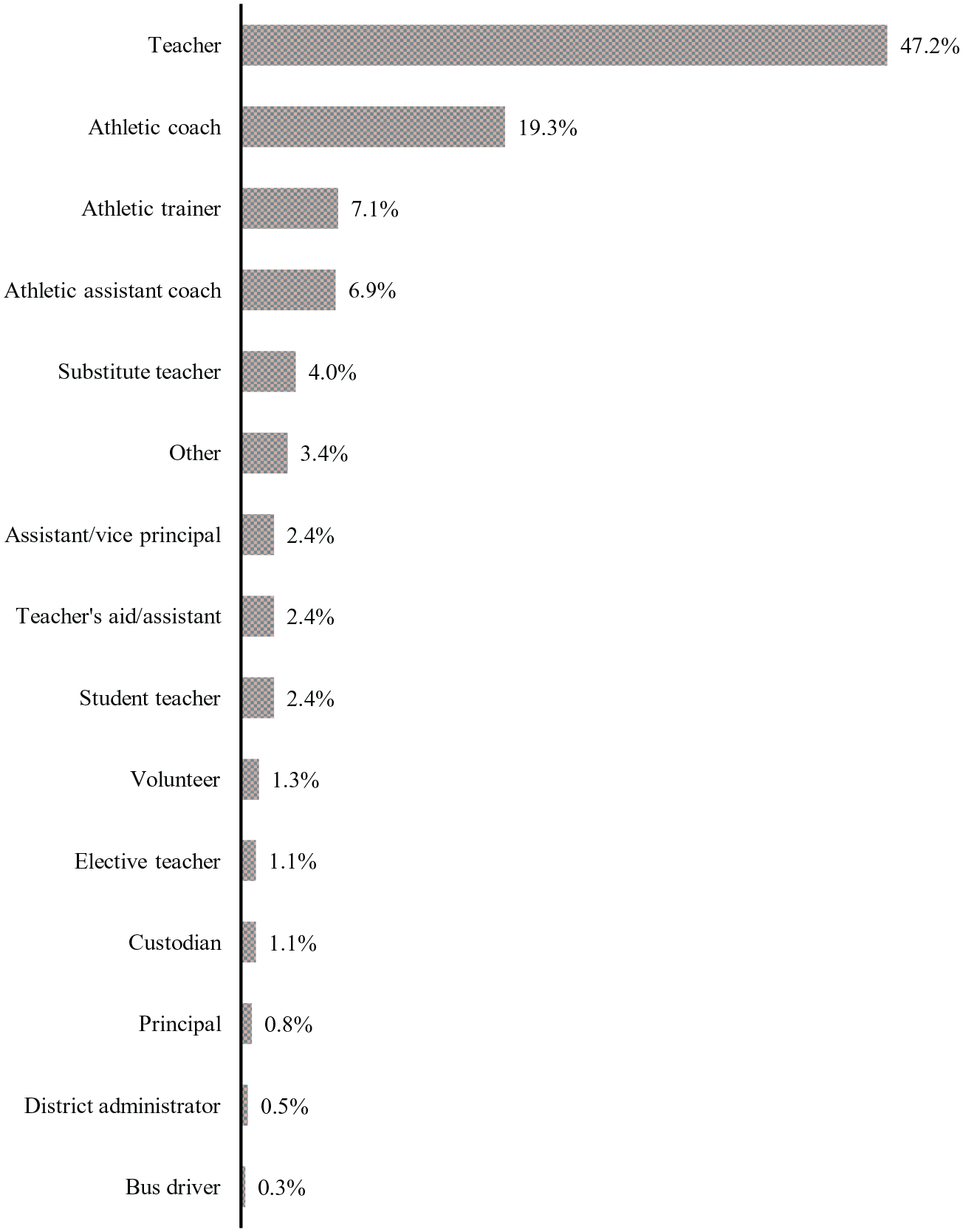
Percentage of students reporting which school employee(s) sexually harassed them (n = 379).
Sexual Harassment Aftermath
Students who reported being sexually harassed by a school employee (n = 89) were then asked with whom they discussed the incident, as shown in Table 6. Sixty of the 89 students who experienced sexual harassment by a staff member said they told someone (67.4%). Students could select all that apply, thus some reported the incident to more than one person. The students who were sexually harassed by school employees told their friends about the incident in 51.9% (n = 55) of the events. 11.3% (n = 12) confided in their parents or another family member. Students reported to both teachers and school employees in 4.7% (n = 5) of incidences. Title IX coordinators and other individuals were told 1.9% (n = 2) of the time. The remaining 23.6% (n = 25) of the students chose to refrain from telling any person about the incident. Students had told another school employee about the event 19.2% (n = 15) of the time. Of the 15 students who informed a school employee, only 21.4% (n = 3) of these employees filed a formal complaint to the school administrators or authorities leaving 78.6% (n = 11) of mandatory reporters failing to report the harassment the student received from a school employee.
Percentage of Students Who Reported Who They Told About the Incident.
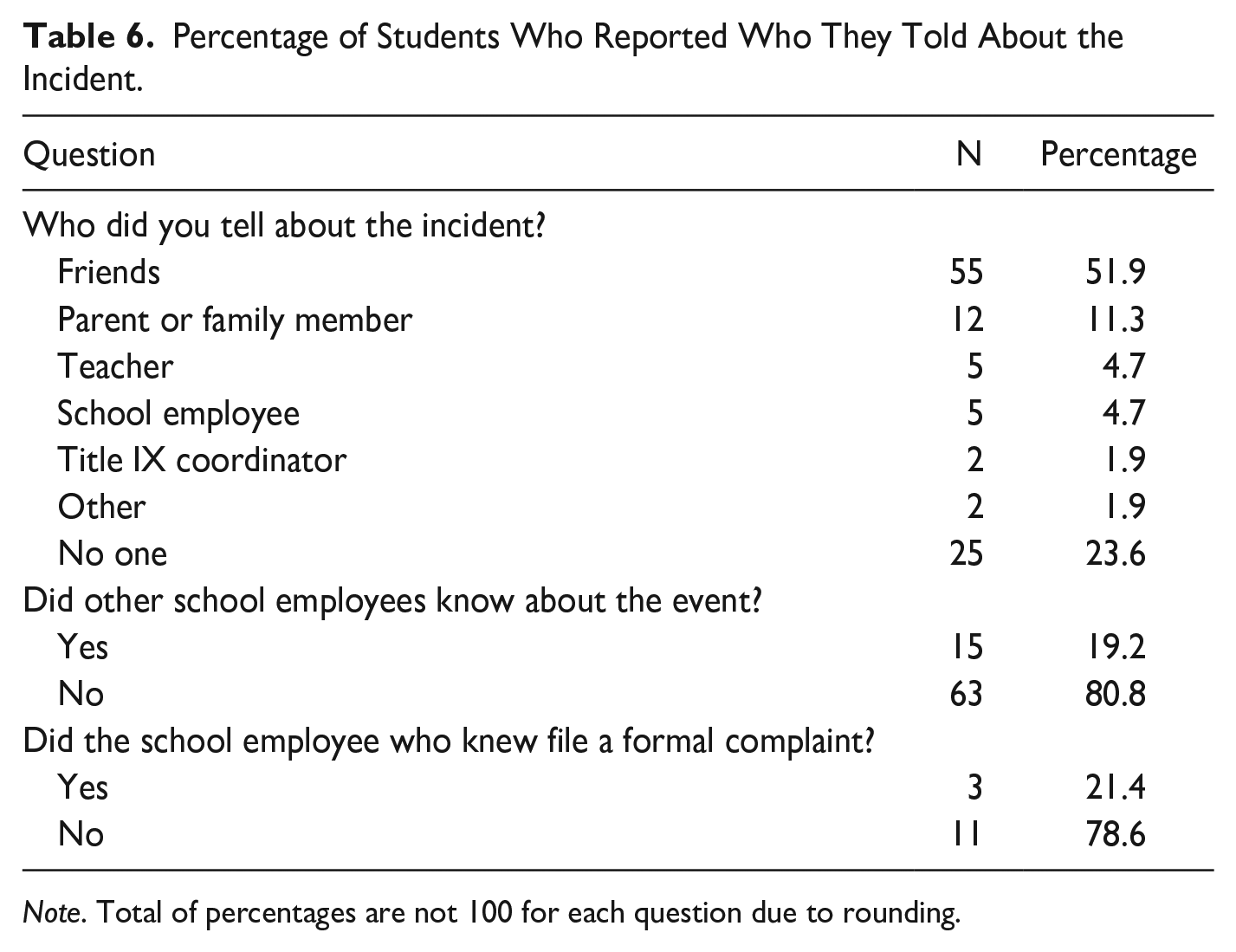
Note. Total of percentages are not 100 for each question due to rounding.
The students who experienced sexual harassment from a school employee were asked to list different ways the sexual harassment had affected them. They were asked how upset they felt, in which ways they were emotionally impacted, and in which ways they were behaviorally impacted by the event as shown in Table 7. 20.2% (n = 17) of students said they were not upset, 51.2% (n = 43) were a little or somehwat upset, and 28.5% (n = 24) were upset or very upset after being sexually harassed. The most common emotional impact was feeling embarassed with 26.2% (n = 39) reports followed by 24.2% (n = 36) reporting feeling self-conscious. Feeling less sure or less confident of oneself occurred to 14.8% (n = 22) of students and feeling afraid or scared occurred to 14.1% (n = 21) of students. Each of the remaining emotional impacts occurred to less than 10% of students. There were 27.6% (n = 24) of students who did not talk much in class after getting sexually harassed by a school employee and 12.6% (n = 11) who did not want to go to school. The remaining behavioral impacts made up less than 10% of the reactions among students.
Percentage of Students Who Reported How the Incident Impacted Them.

Note. Total of percentages are not 100 for each question due to rounding.
The amount of sexual harassment incidences to someone the students knew and to themselves was analyzed by the presence or absence of sexual harassment materials and policies. The percentages and counts are depicted in Table 8 and illustrated in Figure 6. Of students who attended schools that provided materials, 43.7% (n = 86) knew someone who was sexually harassed and 56.3% (n = 111) did not. This was compared to the students who attended schools without materials, 57.4% (n = 140) knew someone who was sexually harassed and 42.6% (n = 104) did not. A chi-square test resulted in a statistically significant test statistic of 8.24 (p = .00). Among the same students who attended schools with materials, 16.0% (n = 31) were sexually harassed themselves and 84.0% (n = 163) were not. For schools without materials, 21.3% (n = 51) were sexually harassed and 78.8% (n = 189) were not. For these analyses there were no statistically significant differences and resulted in a chi-square test statistic of 1.97 (p = .16). Students who attended schools with a policy, 41.8% (n = 86) knew someone who was sexually harassed and 58.2% (n = 117) did not. These findings were compared with the students who did not have a policy at their schools in which 55.7% (n = 39) knew someone who was sexually harassed and 44.3% (n = 31) did not. This resulted in a statistically significant chi-square statistic of 4.05 (p = .04). The students who attended schools with a policy were sexually harassed themselves in 13.5% (n = 27) of incidences and not in 86.5% (n = 172). Of those who did not have a policy at their school, 17.9% (n = 12) were sexually harassed and 82.1% (n = 55) were not. For these analysis there were no statistically significant differences and resulted in a chi-square statistic of 0.75 (p = .39). The percentage of sexual harassment incidents increased when schools did not distribute/make accessible sexual harassment prevention materials and decreased when sexual harassment policies were in place. The two statistically significant chi-square tests show an association between a student knowing someone who was sexually harassed and the presence or absence of sexual harassment materials and policies at their K-12 school. The other chi-square results are not statistically significant and do not suggest an association between a student being sexually harassed and a school providing or omitting materials or a policy.
Percentage of Reported Sexual Harassment Incidences (to Someone You Know or to You) Dependent Upon School Districts’ Material and Policy Presence or Absence.

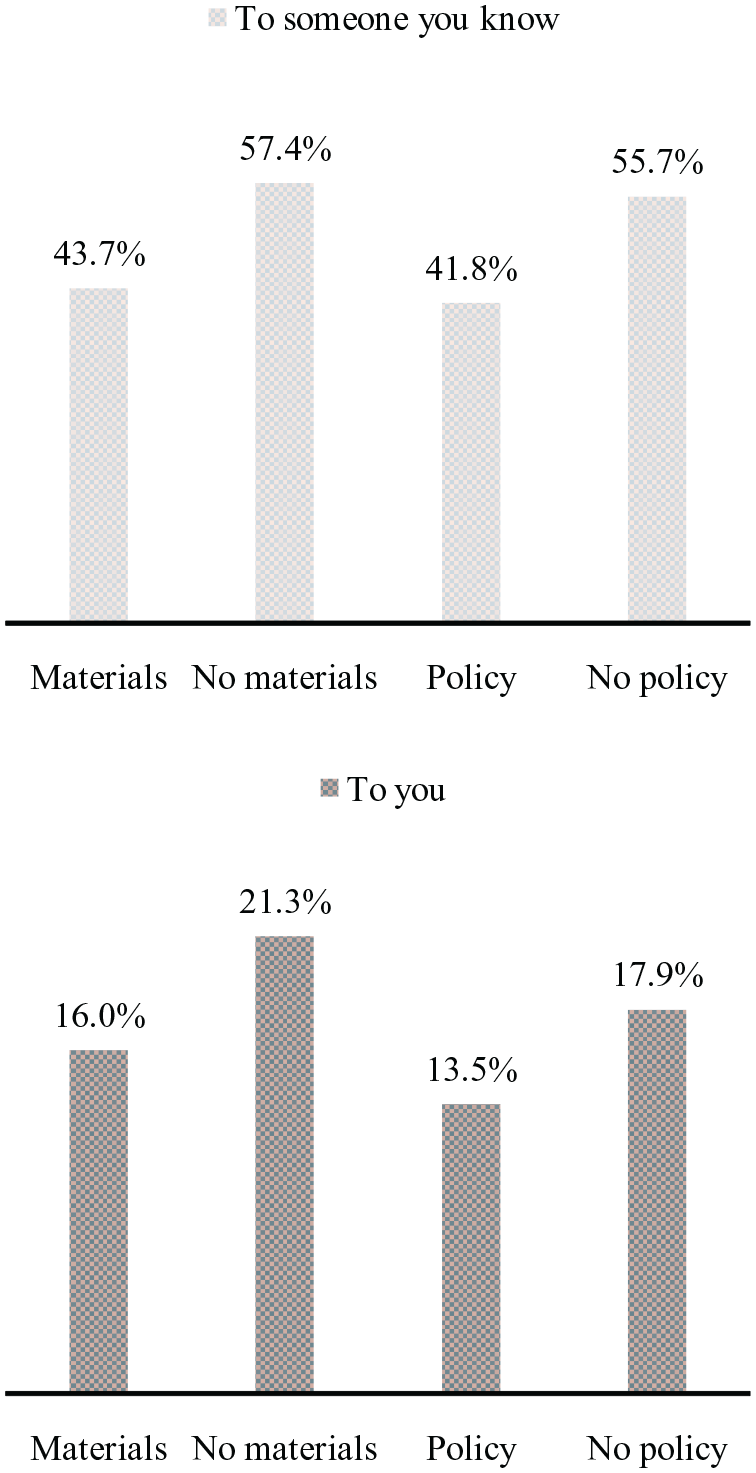
Percentage of reported sexual harassment incidences (to someone you know or to you) dependent upon school districts’ material and policy presence or absence.
Discussion
Historical studies documenting the prevalence of sexual harassment in K-12 schools have found that from 48% (Hill & Kearl, 2011) up to 70-90% (Sandler & Stonehill, 2005) of students will experience sexual harassment by students or school employees and 9.6% will experience harassment by a school employee (Shakeshaft, 2004). The present study found that 256 respondents (50.1%) reported that they either knew someone who experienced sexual harassment by a school employee or experienced it themselves. In addition, 42.8% (n = 218) of students reported some level of sexual harassment from school employees to students (Very Low, Low, Moderate, High, Very High) and 7.4% (n = 38) of participants believed the staff-student harassment at their K-12 school district was at a “moderate,” “high” or “very high” level. The results of this survey provide evidence that sexual harassment continues to occur despite federal protections. Although sexual harassment has been addressed more recently in the media with the “Me Too” movement (2017), schools need to take action to prevent and effectively respond to cases.
Sexual harassment can have lifelong consequences on students including physical, psychological, and behavioral effects that can impact financial, physical, and emotional health (Afifi et al., 2007; Burgess et al., 2010; Felitti et al., 1998; Winks, 1982). As noted in this study, of the participants who reported being sexually harassed personally by a staff member (n = 89), 79.7% (n = 67) said that they were “somewhat upset,” “upset” or “very upset” after being sexually harassed by a school employee and 26.2% felt embarrassed, and 24.2% reporting feeling self-conscious and did not talk much in class after getting sexually harassed by a school employee. Thus, the cost of sexual harassment and misconduct is detrimental for student success. More work needs to be done to explore the physical and emotional effects of sexual misconduct as well as the cost to a person’s ability to be successful in life.
Title IX is a powerful federal law that encompasses lofty ambitions to protect students from sexual harassment. Without strong implementation and accountability of this law, school districts are failing to comply, meaning the laws may be “symbolic” without consequences for failure to comply (Blumer, 1986). Title IX requirements state that all students should be aware of who their Title IX compliance officer is and know how to file grievances (B. Grant et al., 2017; OCR, 2001, 2020). In this study, 94% of students reported being unaware of who their Title IX compliance officer was and 70% were unaware of how to file grievances. Given the majority of students are unaware of how to file a complaint and with whom, reporting may never occur, which can impact the effectiveness of Title IX. Of the students who reported experiencing sexual harassment, only 1.9% said they told their Title IX officer. Of the 15 students who informed a school employee, only 21.4% (n = 3) of the employees filed a formal complaint to the school administrators or authorities leaving 78.6% (n = 11) not telling anyone about the harassment the student received from a school employee. Despite laws and policies, in the absence of quality training, ongoing and open communication, awareness, and effective leadership, implementation of Title IX legislation will continue to fall short and further endanger students. This finding is consistent with other policy implementation studies that examined Title IX implementation (B. Grant et al., 2017) and suggests that further action is needed to improve Title IX implementation and awareness.
Title IX also requires schools to make sure all students, staff, and parents are aware of their sexual harassment policies and how to file a complaint (B. Grant et al., 2017; OCR, 2001, 2020). Yet, only 39% of students said their school distributed materials on sexual harassment and 40% knew that their school had a sexual harassment policy. Of the students who knew their schools had a sexual harassment policy, 23% of students said the policy specifically addressed employee-to-student sexual harassment. This finding is consistent with other research which shows that schools often have a general sexual harassment policy but do not specifically address employee-to-student sexual harassment or provide examples of boundary crossing behaviors (B. Grant et al., 2017). While the students were attending school, 39.5% (n = 202) were friends with a school employee on social media, despite 17.8% (n = 36) knowing that their school had a rule against employees befriending a current student on social media, A total of 39.1% (n = 200) of students were allowed by their school district to have a school employees’ cell phone number, 28% (n = 143) were not allowed, and 32.9% (n = 168) were unsure.
Title IX also requires that materials be made publicly available and distributed to staff, parents, and students (OCR, 2001, 2020). Yet, less than half of students reported that their schools had distributed materials or had a policy about sexual harassment or had a policy that students were aware of. Results also found that schools where students reported that they did not have materials or policies were more likely to have students report higher levels of sexual harassment. This finding strongly suggests that many school districts are not compliant with prevention and policy requirements, despite their legal obligation. Additionally, this finding provides empirical evidence that if schools do not provide sexual harassment materials, they are more likely to experience higher rates of sexual harassment and misconduct in their school district.
Previous research has found that sexual misconduct cases are made up primarily by school employees, most often committed by teachers and coaches at a school facility (Henschel & Grant, 2019). This study found similar results; among reported employee-to-student sexual harassment cases, 57% of employees were in teaching positions and 33.3% (n = 125) were athletic employees. Results of this study also confirmed these results with the classroom being the most frequent location for abuse to occur (38.8%) followed by athletic facilities on school grounds (17.7%) and the hallways (12.2%). Thus, the monitoring of school facilities is an important element to prevent sexual harassment and misconduct at school.
Limitations and Future Directions
Prevalence studies in the field of school employee sexual misconduct are limited and dated. Shakeshaft’s 2004 study which analyzed data collected in the year 2000, is our only generalizable study to date and is now 22 years old. While this study provides a convenience sample that is not generalizable, it is a new number from which to determine an estimate of how often sexual misconduct occurs. A larger, nationally representative study needs to be conducted. Our department of education and justice do not currently collect data that can determine the rate of sexual misconduct in K-12 schools in the United States.
Recent studies of Title IX implementation have found that policies are not being implemented and school district employees are unaware of their requirements. School districts should review their policies, prevention efforts, investigation procedures, and response efforts to ensure they are compliant with Title IX. Accountability of this federal law needs to be more strictly enforced by the Department of Education. Title IX studies need to be consistently conducted to measure compliance with the law.
This study found school districts with student-reported policies and materials had lower rates of sexual harassment. While this finding is valuable in convincing school districts to make sure policies and materials are distributed, it does not tell us how detailed those policies and materials should be and how they should be distributed. Key elements of policies and best practices have been discussed by leaders in the field, but a study that examines the effectiveness of policies and materials is needed to most effectively keep our students safe in school.
The data in this study may also be limited due to the passage of time from when a student completed the survey and the actual context of their school experience which may have occurred years earlier. In this, there is a possibility that memory may not fully equate with actual circumstances and it is likely that changes may have occurred at this school during the respondent’s absence.
Future directions may be to conduct surveys with younger students currently enrolled in K-12 schools, which will require parent permission. Data from current students will likely be more accurate than retrospective surveys. In addition in may be helpful to conduct the surveys annually to better track changes over time. Data collection efforts may be conducted by local school districts, or could be funded more broadly by the Department of Education.
Footnotes
Appendix—Survey Questions
Declaration of Conflicting Interests
The author(s) declared no potential conflicts of interest with respect to the research, authorship, and/or publication of this article.
Funding
The author(s) disclosed receipt of the following financial support for the research, authorship, and/or publication of this article: Partial funding for this study was provided by the Frost Foundation at California Polytechnic State University, San Luis Obispo. We are grateful to the Frost Foundation for their support of this study. We would also like to thank the participants for their time to take this survey – this study would not have been possible without you.
