



Abstract
In this study, we examine the social phenomenon known as ‘QAnon’. While QAnon is typically thought of as an exclusively online cultural phenomenon, and thus easily dismissed, it has played a significant role in promoting physical acts of violence—including multiple murders and the attack on the United States Capital on 6 January 2021. Utilizing a qualitative analysis of 300 hours of QAnon-related content, we argue that the widespread beliefs held by QAnon supporters were only possible due to the confluence of feelings of distrust in government and other public officials, purveyors of QAnon that profited in the movement’s success, and a populist digital media environment in which extremist ideas are housed and promoted. We conclude by asking if this is a phenomenon created by greater connectivity, or if this is a byproduct of late-stage capitalism in which social relations continue to be atomized.
Keywords
Introduction
On 6 January 2021, people around the world watched in abject horror as rioters descended upon the United States Capital. For those who have been following American politics, and particularly right-wing extremism, this event was far from shocking. Following the presidential election of 2020, supporters of then-President Trump began spreading the narrative which became known as the ‘big lie’, in which Donald Trump was the true winner of the election. In order to ‘stop the steal’ of the election, Trump called for his supporters to travel to Washington D.C. in order to march to the Capital on the day in which the state votes were to be certified, promising the event would be ‘wild’. For months leading up to 6th January, misinformation online supporting the big lie was increasing (Klepper, 2021). Among the sources of this misinformation were followers of the group known as ‘QAnon’, who believe Donald Trump was ordained by God to combat the deep state and global elites.
QAnon Subculture
It is difficult to determine just how influential QAnon has been in the lives and minds of Americans. One of the main Telegram channels for QAnon currently has 337,915 followers, and other channels of similar sizes exist across a range of social media platforms. At its peak, some experts have suggested that as much as 14% of the United States population believed in QAnon, but these same experts caution against these polls which may overestimate the movement (Shanahan, 2021). According to one poll conducted by Ipsos (Newall, 2020), those who subscribed to QAnon were largely male, non-college educated, Republican, and primarily from the South and Midwest regions. Our secondary analysis of their survey found that when controlled for by geographic region (N = 184), those with beliefs in QAnon were largely from rural and suburban areas (70%). 1
One sociological reading of these figures is that support for QAnon is strongest among those with whom traditional institutions have failed; a turning away from traditional forms of authority and other ‘mainstream’ institutions. As Frank (2004, 2017, 2020) has shown this general sense of distrust can be traced back to the changes in production and neo-liberal policies which, from the point of view of those impacted, left working- and lower class individuals in the Midwest and the South without good paying jobs necessary to maintain the middle class. These groups, so affected, suddenly found themselves without the skills necessary to compete in a knowledge-based economy. Another source of this distrust stems from physicians and pharmaceutical executives exploited those in rural and suburban areas to boost the sale of prescription opioids (Case and Deaton, 2020; Monnat and Brown, 2017; Quinones, 2015).
As if the structural conditions were not enough, cultural portrayals of those living in rural areas as ‘backwards’, racist, uneducated, or as unfortunate victims of geography have created a stark political divide between rural and urban residents. These reductionist cultural portrayals of individuals in rural and suburban settings as ‘deplorables’ glosses over the issues that impact them and paints them as irrelevant (Conner and Okamura, 2021; Reilly, 2016). Many of these issues are reflected in the core beliefs of QAnon who have expressed continued disdain long for the Clinton family (see Figures 1 and 2), due in part to Hillary Clinton’s use of ‘deplorables’ to describe middle America, long after the 2016 election.
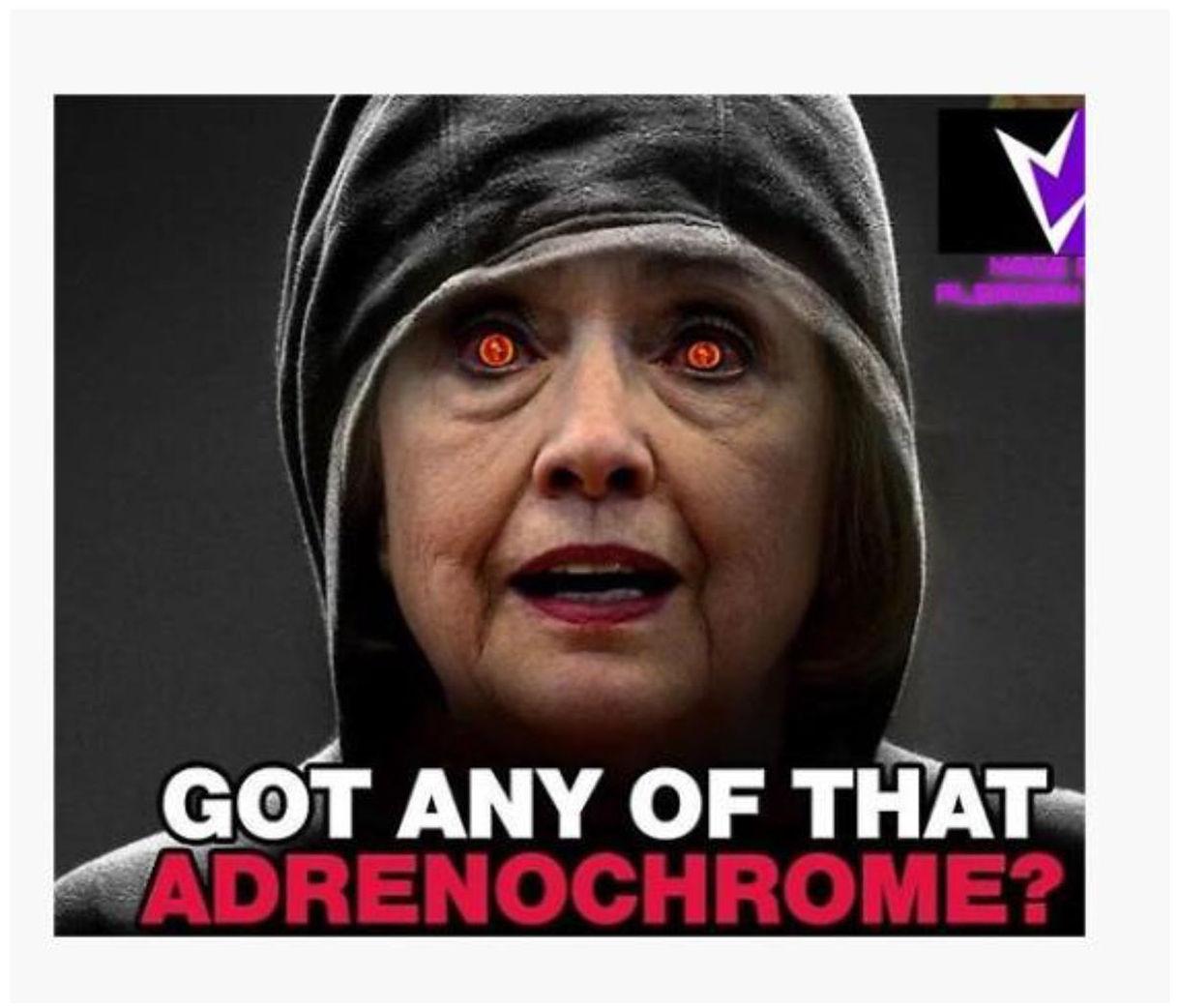
Hillary adrenochrome meme from a QAnon influencer.

Meme alluding to association between convicted pedophile Jeffrey Epstein and Bill and Hillary Clinton.
The core belief 2 held by those in the QAnon movement is that ‘Q’, a supposed high-level government official, has been providing ‘Anons’, those who follow Q, with highly classified government intelligence on Trump’s hidden struggle with a global cabal of ruling elites. This information comes to Anons in the form of ‘QDrops’ which were posted on website known as 4chan, a chat board which allows users to anonymously post images and text. Figures 3 and 4 are examples of a QDrop. However, due to the rising disruption posed by Q, and the merging with white supremist groups, the movement was forced to migrate to 8chan and then later 8kun (Hoback, 2021; Rothschild, 2021).
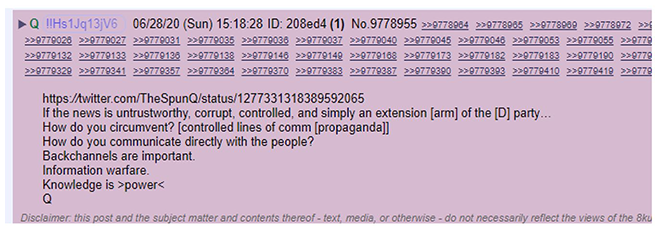
Example of a Q drop archived.
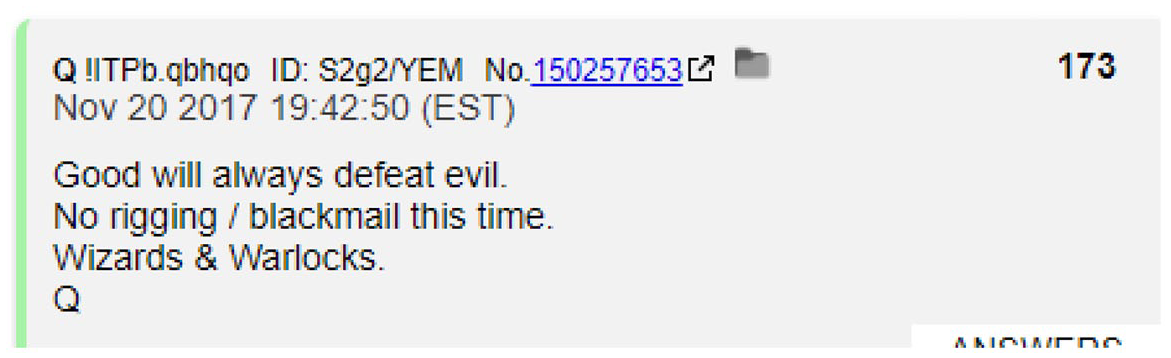
Another example of a Q drop archived.
QAnon supporters also support the idea that Democrats and other ruling elite figures are part of a Satan-worshiping, pedophilic cabal. While these ideas may seem a bit fringe, a December 2020 poll conducted by Ipsos (see Kight 2020) revealed that only 47% (523) of those surveyed (N = 1115) disagreed that ‘A group of Satan-worshipping elites who run a child sex ring are trying to control our politics and media’, suggesting this is far more than just a fringe view within the group. Q believers argue that members of this cabal engage in the trafficking of young children, in order to procure a chemical known as adrenochrome. When injected, so the narrative goes, those who take the drug (adrenochrome) can enjoy regenerative properties which keep them young and healthy. In other words, QAnon believers claim that the ruling elite steal the essence of children as a sort of youth elixir.
QAnon supporters are also well known for their support of Donald Trump, as they believe that Donald Trump has been ordained by God to initiate a war against the cabal, by ushering in an event they call ‘The Storm’. Often invoking correlations with the book of Revelations in the Bible, in which corrupt elites will be purged from society, The Storm is the event or serious of events by which then-President Trump was to expose the vast cabal and bring those responsible to justice, bringing conclusion to his holy quest and justice to the land. From this perspective, storming the Capital and attacking the police were not only justified as patriotic acts, they were part of a holy mission to protect children around the world.
Literature Review
Scholarship on right-wing extremism has noted the increasing emphasis by organizers to incorporate cultural and stylistic elements as part of their recruitment strategies (Futrell et al., 2006; Simi and Futrell 2015; Katz, 2020). These scholars note how white power movements utilize the group building functions that are crucial components within ‘music scenes’, subcultures, and social movements. Specifically, the US white power movement draws upon the collective and emotionally charged experiences that music scenes can produce. A recent report by the Anti-Defamation League echoes these concerns, and notes that individuals may be drawn to the white power movement as a way of solving feelings of loneliness of alienation, which are then weaponized by white power movement activists (Katz, 2020). In addition, the concept of ‘music scenes’ calls upon us to consider the ways in which an alternative network of organizations, businesses and media are created and consumed (Hodkinson, 2002). This network allows participants in scenes to utilize signs, symbols and style in order to transform the world around them an adopt an alternative worldview (Hebdige, 1979: 17).
Perhaps, no other term in sociology has been more widely debated than the term ‘subculture’. Critics argue that the term has been overused and that it lacks analytical utility, as sociologists have expanded of the term (Fine and Kleinman, 1979; Yinger, 1960). To resolve this concern, some theorists have argued for the development of the term ‘contraculture’ or ‘counterculture’, to differentiate between groups who actively resist the values of the dominant culture and those who do not (Yinger, 1960). Others argue that the analytic utility of the term subculture lies in how these groups produce cultural aspects related to authenticity, identity, and resistance (Fox, 1987; Haenfler, 2013; Conner 2022) and that these elements are embedded within the dress, music, ritual, and language of the group (Cohen, 1972; Haenfler, 2013; Hodkinson, 2002). QAnon illustrates the slippage that exists between the concepts of music scenes, subcultures, and contemporary social movements. As a group, those who embrace QAnon simultaneously reject mainstream (read establishment) values, organizes people to take action and engage in collective events. Thus, the key to understanding QAnon lie in our ability to understand what they are reacting to and how this is reflected through language, symbols, style, and dress. To do so, we employ the social constructionist perspective, and symbolic interactionist theory.
Urban legends, such as the Kentucky Fried Rat (see Fine, 1980), more isolated incidents such as a clown scare in 2016 (Gordon, 2021), and even more widespread media scares such as the satanic panics of the 1980s (DeYoung, 1998; Richardson et al., 1993; Victor, 1993) have all utilized the constructionist perspective to unpack the underlying social mechanisms that lead to their etiology and appeal within contemporary society. Constructionists typically draw upon the work of Stanley Cohen (1972) to understand these phenomena, pointing to the role of the mass media in galvanizing our emotions and mobilizing individuals to put pressure on those in positions of power to ‘do something’ about the issue. The process by which this occurs involves casting opposing sides as part of a melodramatic media created spectacle, and these media outlets serve a significant role in amplifying claims and raising awareness toward an issue. While Cohen (1972) and scholars adopting similar perspectives, his work occurred well before the creation of social media. However, his framework is still useful in understanding how misleading, false, or conspiratorial thinking can spread in the online eco-system.
QAnon is also part of a trend of diffuse, leaderless activities brought into focus by Zeynep Tufekci (2017). As she argues in a recent piece in The New York Times, QAnon is unlike previously studied ‘conspiracy theories’ in that its adherents have marshaled a variety of resources to build a community of likeminded individuals, enabled by technology (Tufekci, 2018). This includes the interactivity facilitated by social media that allows for both widespread transmission and engagement with QAnon material, such as creating and sharing memes that represent QAnon ideology. Due to QAnon being leaderless and porous, the group can continue to make claims that undermine authority (Muirhead and Rosenblum, 2019). While Tufekci directs our attention toward the ways in which QAnon mirror new configurations found in social movements, her larger point is that we should look to the technological conditions necessary for this type of organizing and begin to utilize alternative frameworks for understanding this movement.
The study of social problems reminds us that social problems are socially constructed (Best, 2016), meaning that there is no social problem until some aspect of society is interpreted as such. Once defined, advocates for addressing the problem mobilize their efforts by drawing others to their cause. They use linguistic frames (Benford and Snow, 2000) to define the condition as problematic (diagnostic frames), to define their actions as solutions (prognostic frames), and to encourage others to join the movement (motivational frames), all of which function as a means to maintain social-psychological alignment among participants (McAdam and Tarrow, 2013). In the case of QAnon, believers have constructed a narrative in which the root of the most heinous evils can be traced to a single source, the cabal of elites who hold control over all global events. Framing global events in this way provides a simplistic moral binary of good and evil. Thus, to be a QAnon believer is to frame one’s self as being on the side of the highest good.
For Tufekci (2017), and other scholars studying QAnon, we should move beyond proving or disproving the claims made by the movement and instead look to uncover the underlying causes that gave birth to this movement. For as W. I. Thomas and D.S. Thomas (1928) famously wrote, these claims need not be objectively accurate for them to constitute the reality of QAnon adherents. Here, we see why understanding QAnon ideology is so important. While the Q belief structure may lack empirical grounding, that in no way precludes these ideas from being believable. In fact, lack of evidence is often cited as proof that global elites cover the tracks of their clandestine activities. This is perhaps the true genius of the QAnon phenomenon, its ability to adapt to any global event by incorporating that event into the ever-evolving narrative.
The merging together of fascist or totalitarian ideology, like QAnon, with the culture industry was a primary interest uniting the different research agendas of the Frankfurt School theorists (Held, 1980; Kellner, 1989). For them, the culture industry was a driving force that was increasingly characterizing contemporary culture in late-stage capitalism. While they differed on their approaches, their result was the same that cultural products were increasingly being administered from the top down and that art in contemporary capitalism was losing its critical capacity as it became co-opted in the interest of business and as state propaganda (Adorno, 2000 [1975]; Adorno and Rabinbach, 1975; Horkheimer and Adorno, 1997 [1944]; Marcuse, 2007). Moreover, Adorno’s empirical work into the radio, which was just coming into use at the time, revealed how technologies that enabled mass consumption could exploit social-psychological mechanisms to drive individuals toward fascist ideologies (Adorno, 2000 [1975]). The general notions of QAnon are attached to anti-Semitic troupes (i.e. Jewish Blood Libel as indicated in the fictious book known as the Protocols of the Elders of Zion), and are fully weaponized through the underlying social-psychological mechanisms identified in our findings.
Methods
While we first began informally researching QAnon a year before the COVID-19 pandemic lockdown, we formalized our curiosity into a research project once we began to notice an increase in QAnon related activity in March 2020. Our formal research took place from March 2020 to June 2021. Due to lockdowns associated with the pandemic, we relied heavily upon content analysis and participant observation to inform our study. Specifically, we watched approximately 300 hours of video and audio 3 produced by QAnon influencers, those critical of QAnon (i.e. the QAnon anonymous podcast and other investigative journalists), monitored QAnon related hashtags, collected mainstream journalistic reports on the movement, observed interactions on the GreatAwakening.win message board, monitored telegram channels used by QAnon influencers, and attended (virtually) QAnon-related events that we could live stream. Among the hashtags, we followed were #Q, #QAnon, #darktolight, #trusttheplan, #10daysofdarkness, #plandemic, #Adrenochrome, #savethechildren, and others as they became relevant. During the course of this study, several hashtags became blocked by Twitter and other social media platforms making it difficult to monitor the movement. Members of the movement also attempted to create new hashtags, and phrases as a way to avoid censorship algorithms. 4
Informed by the sociological literature, our research questions focused on the ways in which QAnon participants construct a countercultural reality (Berger and Luckmann, 1967). Specifically, we sought out to answer the following questions:
How is the belief system within the QAnon movement constructed, and what elements of this system lead to its spread?
What are the motives that drive QAnon promoters—those pushing this narrative?
How did social media and the Internet enable the movement to grow so quickly?
Each of these questions is tied to an aspect of the moral panic framework developed by Stanley Cohen (1972), which is also partially informed by Becker’s labeling theory perspective (Becker, 1963). We used this theoretical framework to craft sensitizing concepts (see Blumer, 1954) to help drive our analysis. We argue that this article advances the moral panics framework by showing how panics occur in the absence of mainstream media coverage—as was the case in Cohen’s (1972) original study. In fact, as we found, social media and the Internet played a crucial role in spreading of the QAnon conspiracy theory in ways not found within traditional media.
An additional problem that we ran into during the course of our study was the fact that QAnon is an elaborate and broad network of people, ideas, and interactions, that we argue has transitioned into something similar to a social movement or new religion. Its broadness stems from the fact that QAnon describes itself as a ‘big tent conspiracy movement’. In other words, part of the QAnon belief system is that all conspiracy theories—from Big Foot to the staging of the moon landing—are accepted, and no one is dismissed for their beliefs. Moreover, QAnon promoters and believers try to construct a narrative that unites a variety of theories. The QAnon map, Figure 5, illustrates this notion of a ‘big tent’ network of conspiracy theories. While the map itself offers no explanation (though there are several individuals who have made videos offering an explanation), it shows the variety of major theories held by members of the movement. Thus, one of our challenges was figuring out what narratives to focus on as central to the group and which ones to leave for later analysis.
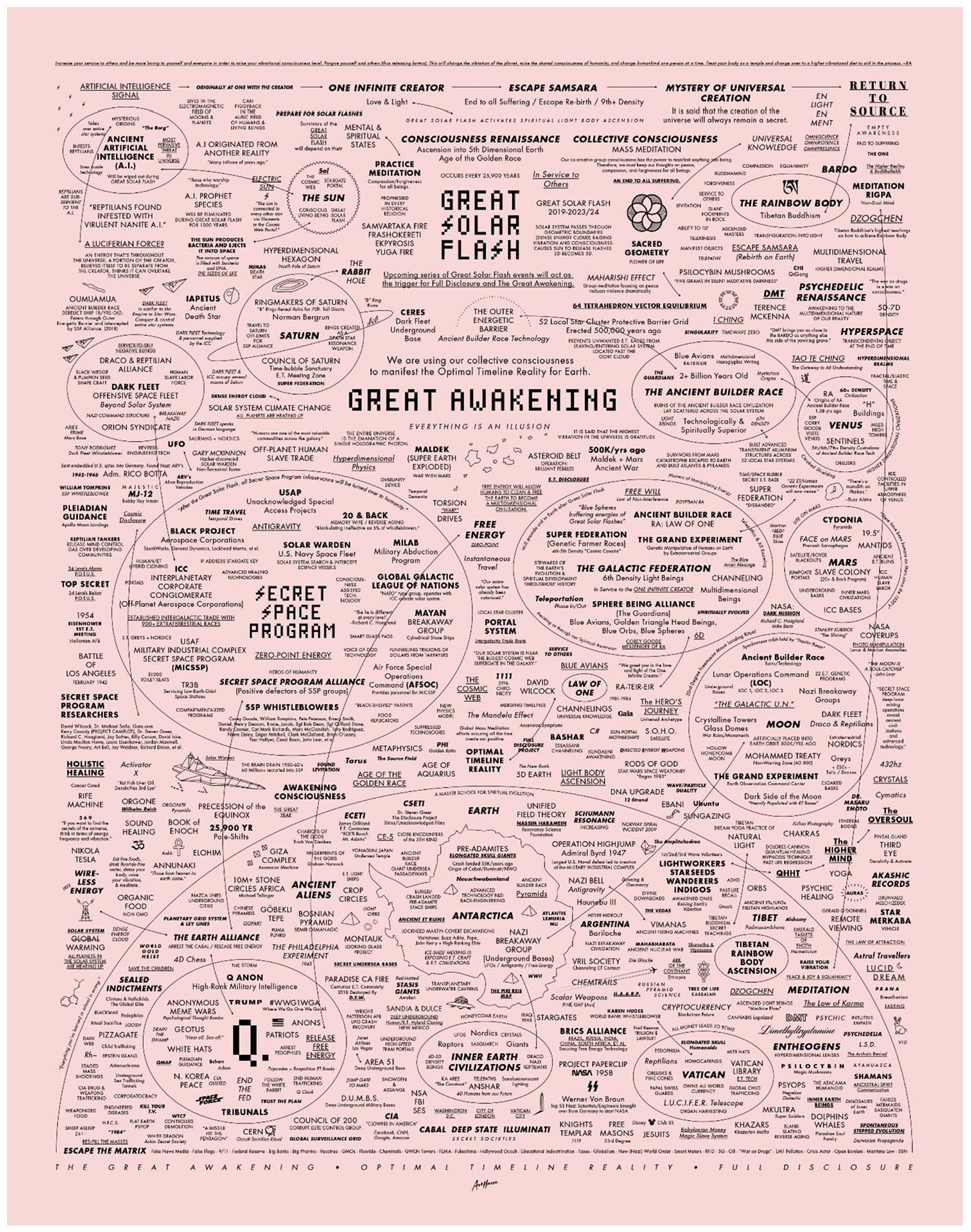
The QMAP.
We also note that while QAnon ideology if often referred to as fringe, cult like, conspiracy minded, or crazy, these ideas constitute the worldview, or constructed realities of these individuals. Similar to the study of new religions, we abstain from value judgments of Q ideology. However, we do wish to note that many of the claims made by this subculture are verifiably false (i.e. that Democrats are drinking the blood of children, that COVID-19 is a hoax). None the less, adherents to QAnon seem to be expressing emotional outrage against a system that they feel has wronged them in some way—a finding echoed by Reinhard et al’s (2021) study on QAnon. One example of this is how they claim to be fighting against human trafficking but many of their tactics seem to undermine the end goal of eliminating the problem. Ultimately, the goal of this article is not to determine whether QAnon beliefs are objectively true, but instead to understand the ideological belief structure and consider why it has been so successful in its spread. We believe that understanding the mechanisms that enabled the spread of QAnon, while also taking into account what members of the movement are responding to, is essential for preventing the ongoing violence like that observed on 6th January, as well as other more recent incidents such as the murder of two children in Mexico by their father who began following the QAnon conspiracy theory (Hernandez, 2021), and a Texas woman who used her car to attack strangers that she believed to be pedophiles (Feeld, 2020).
Findings
We organize our findings into three overarching themes. First, we detail the ideology that makes up the QAnon belief system, noting the theoretical links to the moral panic framework. Second, we typify the promoters of QAnon beliefs, and develop three different categories of QAnon promoters. These categories are best understood as ideal types (in the Weberian sense), and it is entirely possible that some of these influencers fit multiple categories. However, our purpose here is to show the incentives that some individuals have in adhering to what many people might consider ‘odd’ theories that run against proven scientific discovery. Finally, we consider the ways in which social media and the Internet have enabled the QAnon conspiracy belief structure to flourish.
All Roads Lead to Q
One of the innovations of the QAnon belief system is multiple points of entry to the ideology. The common thread through each of these entry points, however, is a distrust in traditional societal institutions, such as the media, government, organized religion, and science. In addition, many QAnon followers initially start at one of the more reasonable versions of their conspiracy theory before going deeper into some of the more fantastical views. An example of this is the use of ‘Save The Children’ as a way to spread Q-related info to those who might otherwise be unaware of the movement. One of the ways that QAnon has attracted a more mainstream audience is by organizing save the children rallies across the United States.
QAnon adherents often claim that 800,000 children go missing in the United States each year (Beam, 2007). According to the latest Federal Bureau of Investigation (FBI, 2020) missing person’s report, juveniles below the age of 18 accounted for only 30,396 of the active missing persons’ cases (34%). Despite the National Center for Missing and Exploited children who have noted that 91% of these cases are ‘runaways’ and that less than 1% are these children go missing from unknown abductors (Sedlak et al., 2002). A finding repeated in the latest FBI report (FBI, 2020: 2). However, despite this QAnon supporters claim that hundreds of thousands of children go missing each year and are presumably trafficked by members of the cabal who then torture them to produce and harvest the lifegiving adrenochrome. Understanding these statistics would mean confronting a variety of other social forces that would cause children to run away, and much simpler QAnon explanation allows adherents to believe the world is just and it is only the actions of a select few that are creating problems. 5 Regardless, this has allowed QAnon adherents to launch highly successful ‘save the children’ initiatives, both online and offline, to draw attention to their core belief system. Figures 6 and 7 illustrate some of the protest style signs members use. You can already begin to see signs of the conspiratorial thinking that is present in the mind of QAnon followers. By positioning the movement as opposed to heinous acts directed at children, they frame themselves as protagonists in their own narrative. Moreover, these examples illustrate the selective use of facts and figures to support these claims.
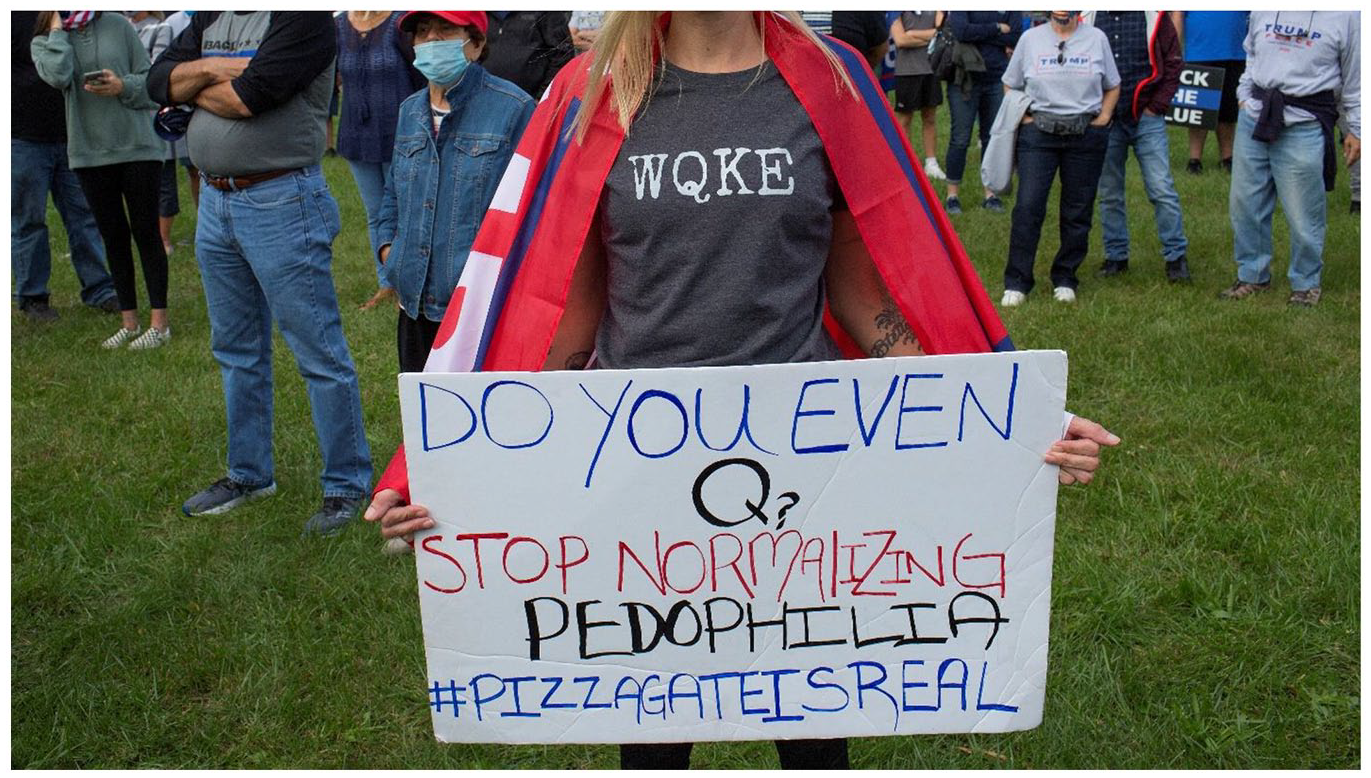
Example of a QAnon protest sign.
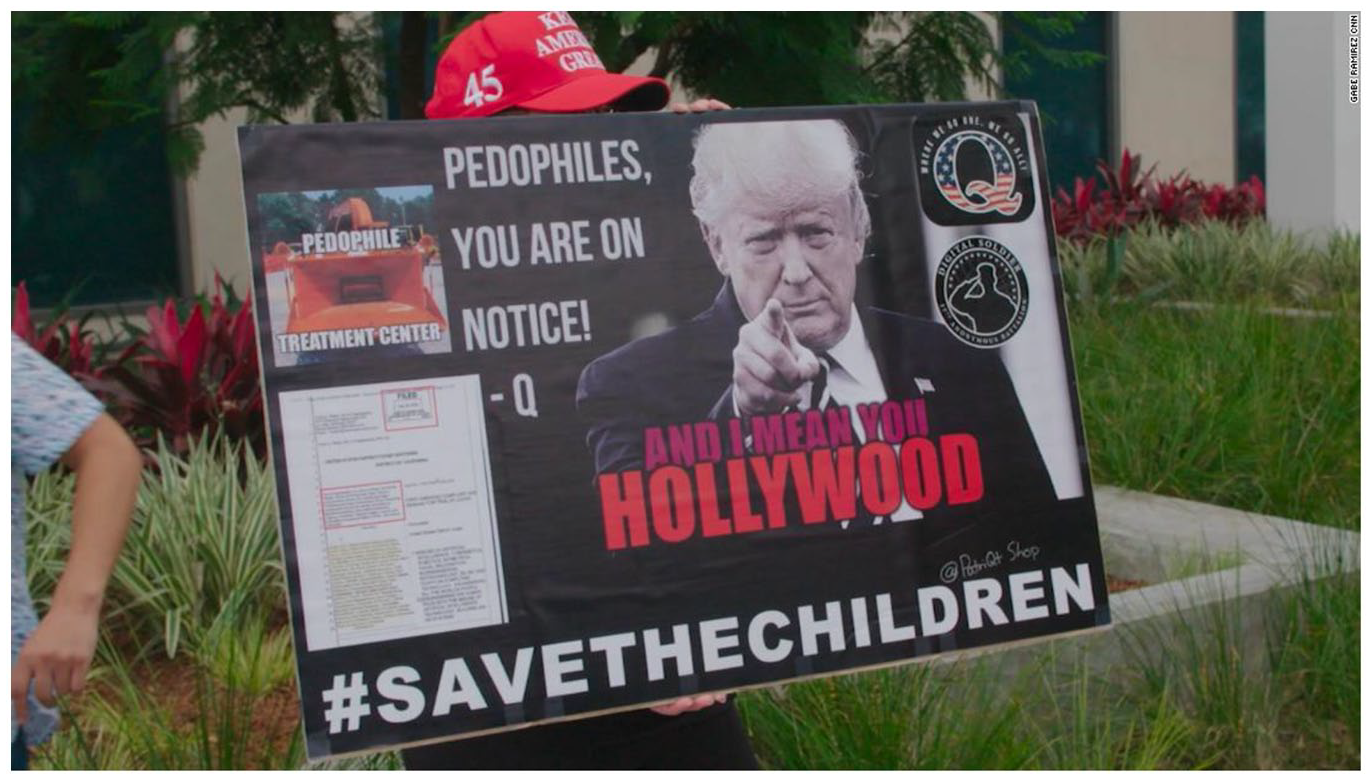
Photo from CNN.COM.
One of the most visible ways that participants in the QAnon movement transformed the world around them was in how they interpreted the pandemic lockdowns, which began in the United States around 19 March 2020. Almost immediately, QAnon influencers and others took to the Internet, calling the Corona Virus pandemic a ‘Plandemic’, arguing that lockdowns, mask mandates, and other public health guidelines were ‘proof’ of the United States globalist agenda to enslave humanity. Where many saw masks as a way of preventing the spread of the virus, QAnon followers viewed them as a symbolic means of control and conditioning. Accusations among QAnon supporters range from the pandemic being part of an international conspiracy designed orchestrated by the world economic forum to turn average citizens into slaves, to a media created spectacle designed to draw attention away from the scandals in the Democratic party. Thus, not wearing masks and disregarding social distancing guidelines were seen acts of patriotic resistance. Sociologically, this resembles a defining characteristic of youth subcultures which reject mainstream values of the parent culture (Clarke et al., 1975; Haenfler, 2013; Hebdige, 1979; Willis, 1977).
Another example of QAnon followers using their belief system to re-interpret the world around them is demonstrated by looking at their reaction to a large boat getting stuck in the Suez Canal. Because the ship had the radio call sign of H3RC (contains the initials of Hillary R. Clinton), and because the shipping company is named the Evergreen (the secret service code name for Hillary R. Clinton), many in the QAnon movement alleged that the containers on the ship contained thousands of children. Figure 8 illustrates the ‘research’ done by using information posted by Q, real-world happenings, and creating associations between the reality of Q and individuals’ lived experience. While these examples have been debunked, they illustrate how QAnon adherents view everything through the lens of Q—meaning all events are part of a large-scale globalist conspiracy involving the trafficking of children, and are part of a larger plot to exert the power of ruling elites. This is perhaps why so many QAnon supporters feel as though the 2020 Presidential Election was rigged against Donald Trump. This notion supports their underlying world-view that a cabal of ruling elites exists, and also supports the notion that they are part of an oppressed class.
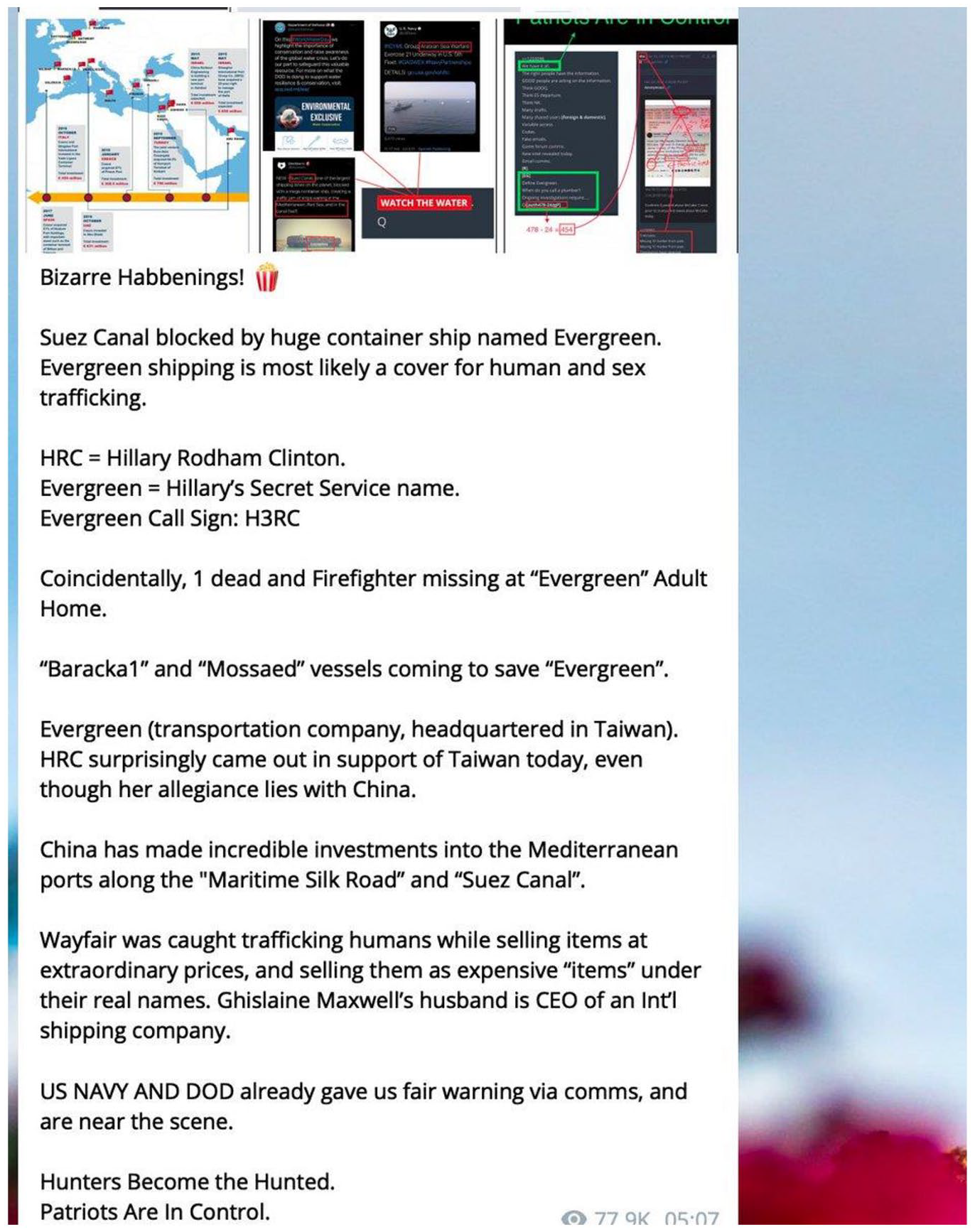
QAnon infleuncer Shayan Sardarizadeh (@Shayan86) interpreting Suez Canal blockage through the lens of Q.
Us Versus Them
A recurring theme within the QAnon universe is the casting of those outside the movement as ‘others’. One of the ways they achieve this, as discussed earlier, is by framing Democrats 6 as members of a pedophilic Satanic cabal. However, they also use a variety of other linguistic techniques to frame non-believers as ‘others’ (Bauman, 1991: 14). Anons believe that they have ‘woken up’ to the realities that the world is outside of their control, and that through Q, they have awakened to ‘what is really going on’. They refer to this process of awakening as ‘redpilling’ and see it as their mission to ‘redpill’ as many others as they possibly can. The term, red pilling, is a clear reference to the 1999 film The Matrix, in which the lead actor is given a red pill to awaken him to the truth about his reality—that machines have imprisoned human beings in an artificially simulated reality. This is not unlike Becker’s (1963) description of how jazz musicians use the terms hip and square to establish boundaries and in-group authenticity. Figure 9 is another example of QAnon merchandise that can be found online, depicting a red pill, the contents of which create a white Q. 7
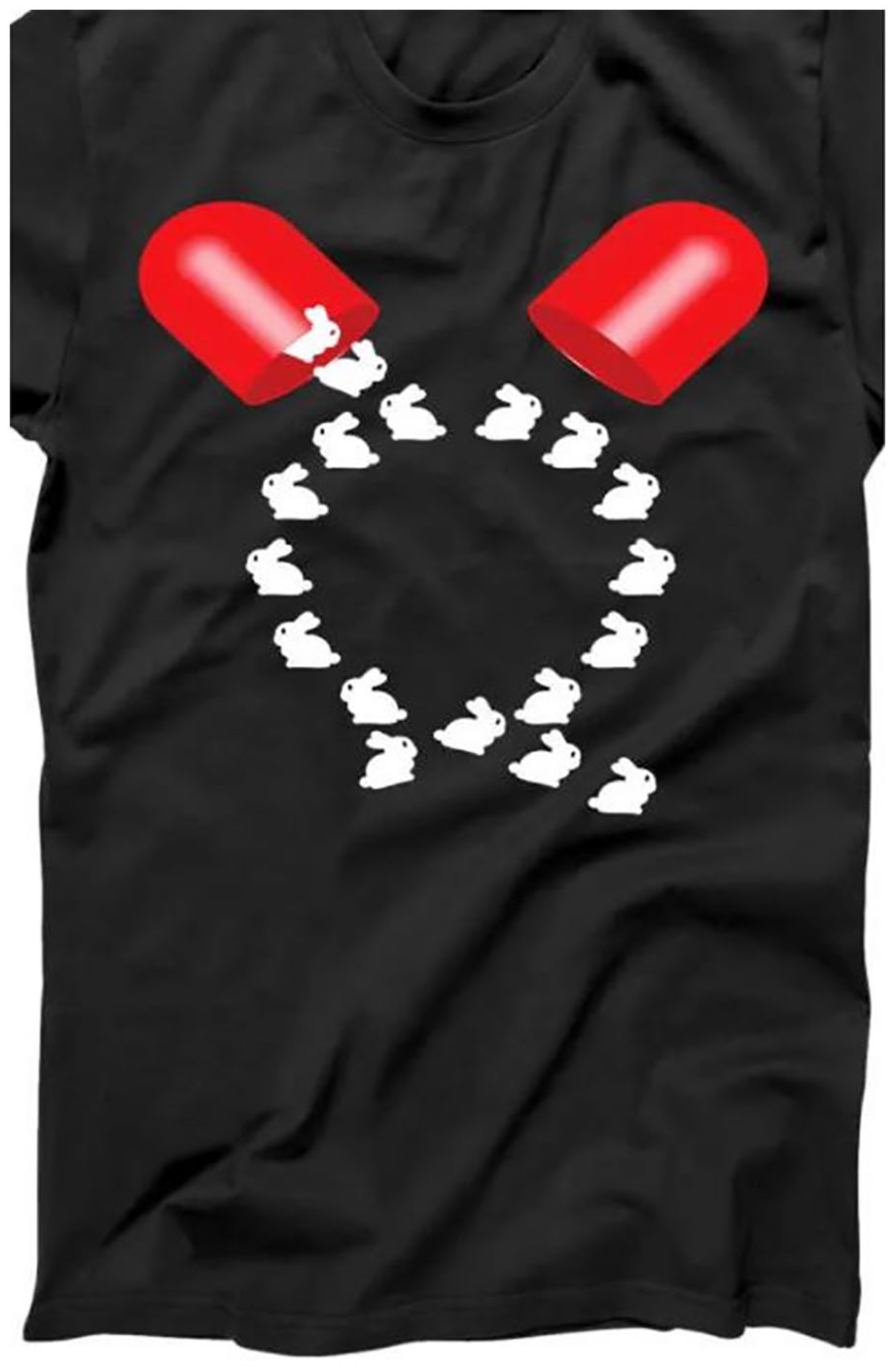
QAnon redpill t-shirt (Teeshirtpalace.com).
Adherents of the movement also use other adjectives to demarcate themselves and those opposed to the movement. This includes the use of patriotism, religious, and quasi-religious metaphors. Figure 10 illustrates two of these metaphors—the use of terms like ‘sheep’ to describe those who discount the movement, and the use of ‘darkness to light’ as a way to frame their involvement and support of QAnon. A common strategy used by QAnon supporters is to call those who still have faith in science, political institutions, and other ‘mainstream’ sources as ‘sheep’ or ‘sheeple’. According to Q supporters, these people just follow what they are told by these sources which are intentionally manipulating the public to stay in power. QAnon supporters also refer to themselves as ‘great patriots’, as this is how Q signs many of his posts on the image board 4chan. An example of the more subtle ways that QAnon supporters create an ‘us versus them’ dichotomy is by framing their promoting the movement as bringing ‘darkness to light’, or by using the more direct version ‘good versus evil’. Thus, we see similar social processes at work to those sociologists have used to understand social movements, subcultures, and religious groups at play within this context.
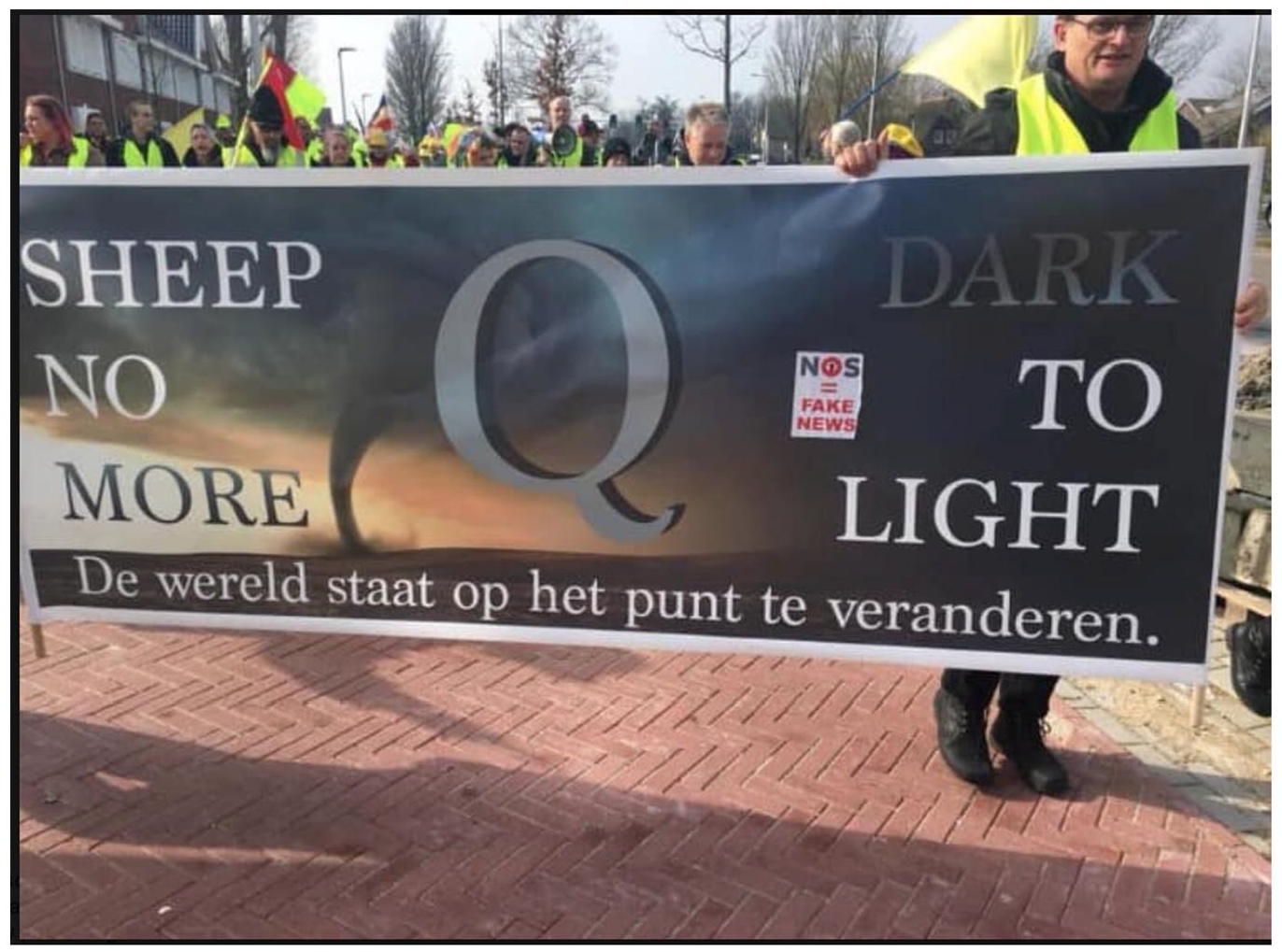
QAnon sign from a rally in Germany.
The Influencers
At the core of the QAnon movement are a variety of individuals that produce online content for the movement called Q Influencers. The influencers play a significant role in the spread of QAnon and are responsible for some of the most shared content—some of which is of Hollywood quality lending an air of legitimacy to it. However, the drives motives and rationalizations that these figures have seemed to be vastly different from each other. We found the following three different archetypes among the different influencers: true believers, purveyors, and political actors. Each of these types promote QAnon for different reasons, and represent the multi-dimensional nature of power first written about by Max Weber (Hekman, 1983). This is a particularly important aspect of our study, for expanding how we understand stakeholders within the frameworks of labeling theory and moral panics. While the original model of moral panics seemed to make the case for moral entrepreneurs as being motivated almost solely by ideology, as we will show stakeholders can also be committed on the basis of political and economic gain.
We found a variety of QAnon promoters who we call ‘true believers’. These individuals create content including memes, YouTube videos, and try to spread the message within their local spheres of influence. One example of a true believer is the QAnon Shaman, aka Jake Angeli, aka Jacob Chansley, so named for his style of dress (see Figure 11). Angeli, a failed Hollywood actor, was made famous for his participation in the 6th January insurrection and, due to his costuming, has become a highly recognizable figure—inspiring at least one other QAnon Shaman seen at a rally in Italy. However, Angeli represents a group of believers that seemingly do not fall into our other categories which seem largely motivated by financial reward or political gain. Instead, individuals like Angeli seem to have found a home in QAnon, and while they may share content on social media or make content related to Q, they do not seem to have an interest in amassing a large number of followers. However, this type should not be confused with religious figures such as evangelical leaders and faith healers who use Q to attract more followers as a strategy for building an audience and making money.
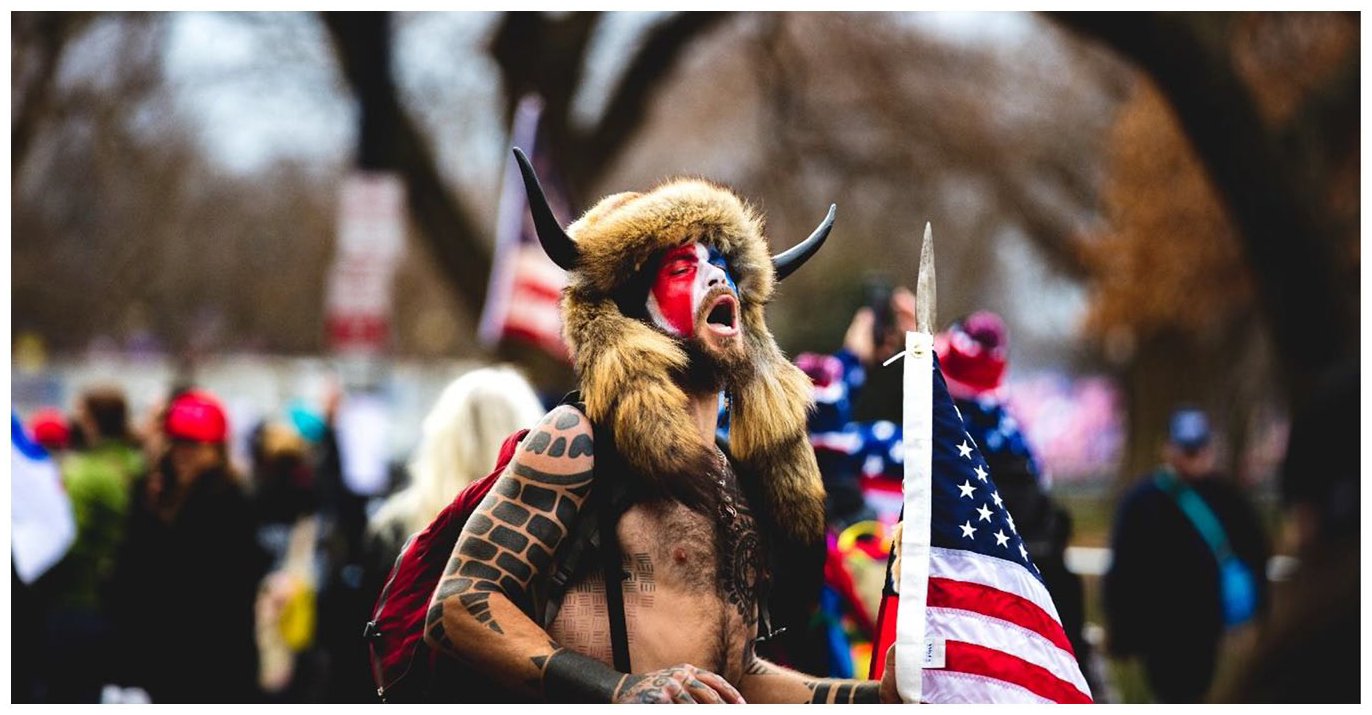
Image of ‘the QAnon Shaman’.

Screen shot of QAnon influencer Jordan Sather’s affiliate store selling chlorine dioxide water purification drops.
The second type of QAnon influencer that we encountered were people we refer to as ‘purveyors’. These individuals encompass a wide variety of individuals—from faith healers like ‘Praying Medic’ who for a fee would pray for you, streaming content creators like Alex Jones, 8 who profit from ad revenue or through selling health-related products, and an assortment of others who create merchandise related to Q. While some of these individuals have been removed from social media sites like Facebook 9 and Twitter—however, other social networking sites like Twitch (an Amazon-owned site known for streaming gamers) have taken a less active role. While it would be difficult to assess how much money some of the top QAnon purveyors make from promoting QAnon, for many this appears to be their only source of income—and many of these individuals release 2-hour long ‘News’ segments requiring at least some effort in their production.
In addition, creating quality streaming content can be expensive and requires at least a cursory amount of knowledge about computers. Since the 6th January insurrection, there has been an attempt by some purveyors to distance themselves from the movement. Due to a lack of Internet regulation, these influencers are allowed to make wild claims and, because these individuals are seen as trusted new sources by QAnon followers, many of their viewers took their advice to not wear masks and to purchase products that are the equivalent to bleach on their websites, as illustrated in Figure 12 (Buckley, 2021).
The third type of QAnon promoter that we observed were ‘political operatives’ who seized upon QAnon as a way to garner votes during the 2021 US Election cycle. Two of these include Marjorie Taylor Greene (R-Georgia) and Laruen Boebert (R-Colorado), who were first elected to the United States House of Representatives in the 2020 election—36 others ran but were not elected (Kaplan, 2021). 10 Following in the footsteps of Donald Trump, the most successful of these individuals cast themselves as outsiders set to take down operatives of the ‘deep state’. This kind of political posturing allowed them to play to the majority of the Republican base, including wealthy donors, while also signaling to members of Q that they were one of them and earning the accolades of then-President Donald Trump. 11 However, over time, and after they were elected, they have begun to soften their position ever so slightly toward a more general animosity for Democrats and ‘Deep State’ operatives. As elected officials individuals like Marjorie Taylor Green have had to tone down this rhetoric due to their liability as elected officials—and a broader Republican base whose values do not necessarily allow for belief in QAnon.
Participatory Culture and Doing Your Own Research
The importance of the purveyors attached to QAnon lie not in their ability to market and make money off of a belief system, but rather that they act as a continuous content generation machine, providing an ongoing cycle of information—similar to CNN, NBC, or Fox, except exclusively focused on QAnon. Promoters have produced a variety of high-quality documentaries used to promote the movement. Much of this content seeks to interpret the ‘drops’ made by Q, and deciphering ‘the plan’. Moreover, this user created content has produced a vast network constituting a grass-roots phenomenon. Former National Security Adviser and military General Michael Flynn who has openly embraced QAnon, and exists as part of the important members of the Q pantheon, has suggested that it is an imperative for ‘digital warriors’ to create, share, and repost content—marrying notions of patriotism with extremist views.
Part of the ingenious aspects of QAnon is how it harnesses the potentially liberating aspects of social media and online life to increase participation and engagement. This is achieved through both the creation of content, and the encouragement by those showing interest in the movement to ‘do your own research’ or to ‘look into’ certain topics. Participants in interviews by investigative journalists, signs present at QAnon rallies, and posts on message boards all offering instructions on how to interpret messages from Q, and how to ‘do your own research’. By empowering potential adherents to Q to ‘do their own research’, Anons avoid the discomfort of having to explain demonic forces within the Democratic party, while also laying the ground work for potential conversion deeper into the movement.
The directive within Q to engage in digital warfare through the creation, sharing, and overall production of the culture has created a seemingly never-ending repository of QAnon related content, and also a community of like-minded individuals that believe in the wisdom of Q. Moreover, this allows Q to tap into the psychological gratification that have been pointed to as an aspect of fandom cultures (Jenkins, 1992; Jenkins et al., 2018), and also the rewarding aspects that can come from social media through likes exchanges and seeing one’s own content shared (Wohn and Yvette, 2016). The result is the creation of an Internet fandom culture, seemingly fighting for the cause of right versus wrong, that is politically motivated, by fictional depictions of the world.
Algorithmic Rabbit Holes, Echo Chambers, and Failed Prophecy
The belief system of Q resembles a carefully constructed labyrinth of half-truths and misinformation, and aided along by search engine algorithms that link these pieces of information together. Anons refer to this process of following algorithmically recommended content as ‘going down the rabbit hole’. Due to the autoplay function of the YouTube, algorithms which allow users to sit for hours viewing content related to their users’ preferences (as well as the suggested group feature on Facebook). While at the time of this writing, no one fully knows what formula the algorithms use to make suggestions to users; presumably, uses past search history, engagement with posts, likes and YouTube thumbs up, and information shared between companies (i.e. Amazon, Google, Bing, YouTube, Facebook, and others). In short, technology companies utilize data on their consumers to provide them with information that relates to what they previously viewed in order to maintain or increase engagement with the platform, thus generating ad revenue.
The directive by Q influencers to be active participants in the creation of QAnon culture, 12 through ‘liking’, creating, and sharing content, as well as the communal aspects that users experience through participating in online forums (Facebook groups, message boards, etc.) has also led to the creation of ‘echo chambers’. The term echo chambers are used by scholars conducting research on the impacts of social media and online life to describe a phenomenon whereby individuals surround themselves with those that reinforce, rather than challenge, their political opinion (Garrett, 2009; Sunstein, 2001). However, the algorithm can only direct users toward already existing content. Thus, the participatory nature of QAnon plays an important role in promoting the beliefs held by its followers. The result is a computer-generated tautological worldview brought about because of the information created by members of the movement.
Discussion
Our findings reveal that the QAnon movement has a variety of subcultural features that helped facilitate its spread. Specifically, QAnon participants utilize linguistic strategies to create an ‘us-versus-them’ dichotomy, the movement offers participants a variety of ways in which they can interact and shape the culture, and provides a worldview that empowers followers of the moment to view themselves as heroes in their own story. Just as Dick Hebdige (1979) wrote about the ways in which members of subcultures transform the world around them, so too do members of the QAnon movement transform their world, to make sense of a complex and changing society and to frame their own actions as good, in opposition to evil. While many of these concepts have been understood as important mechanisms for establishing authenticity, and in-group membership; as we have shown, they may also be important elements of radicalization.
We also found that the belief system of QAnon is so broad that nearly anyone can find some point in which to join the movement. By offering to accept all viewpoints as part of a ‘big tent’ network of conspiracy theories, and presenting alternative, less-extreme versions of its core belief QAnon makes itself appealing to a wide variety of individuals. These alternative versions enabled QAnon to penetrate into the mainstream by appealing to mommy bloggers, wellness coaches, and lifestyle influencers (Bloom and Moskalenko, 2021). Moreover, it also is a tactic utilized by multi-level marketing campaigns that make promises that a better life is achievable by using their products, and for those willing to sell their products vast fortunes await (Tiffany, 2020). These groups are also notorious for positioning themselves as an alternative to ‘big pharma’ and traditional institutions, which is perhaps why some researchers have noted the overlap between adherents to the QAnon movement, and involvement in multi-level or direct sales marketing. Future research should seek to expand upon this and explore more clearly this connection.
One of the limitations of Cohen’s (1972) concept of moral panics is that it was written before the explosion of the Internet and social media, which have fundamentally restructured the means of human interaction. While mainstream media played a role in spreading QAnon, it did not take the same form as Cohen’s (1972) model suggests. Instead, we found a much more nuanced process in which adherents to QAnon created their own parallel media network that was the primary amplifier of their message. Even before mainstream sources began to report on QAnon, the movement had amassed a significant following. However, political figures and mainstream media may have played a role in legitimizing, rather than amplifying, the beliefs of QAnon. When Trump repeatedly failed to denounce the movement and even hinted at the coming ‘storm’, which Q believers understand as the righting of global wrongs led by Trump, many followers took these actions as evidence that Donald Trump was involved in the movement. What is less clear is if those legitimizing forces helped spread the movement, or if they merely hijacked an already existing movement to help in their retention of political power.
Relatedly, we found that the concept of moral entrepreneurship could be applied to a variety of actors and change agents. While Cohen and Becker’s models suggest that such individuals are acting out of a moralistic belief, we found that promoters of QAnon to be involved for a wide variety of reasons. These include actors who received economic incentive to promote the movement, those who were able to advance their political careers, and also those whom were motivated by a desire to be part of something bigger than themselves. In doing so, we expand the concept of moral panics and provide an updated understanding of the role the media plays in the social construction of reality.
The emerging scholarship on collective online behavior over the last 20 years has produced powerful insights into changes in the way we interact, especially at the group level. We have discussed a variety of features of the QAnon movement that have and continue to encourage the spread of the ideology. Specifically, members of the movement created content which was distributed across social media platforms. This content was amplified by computer algorithms which suggested QAnon content to individuals whose beliefs ran parallel to the movement (Peck, 2020; Wong, 2020). Finally, participants in the movement are encouraged to share, like, and participate with content as ‘digital soldiers’. By engaging and creating new content, algorithms further amplified the QAnon materials it perceived as being popular. In many ways, this is similar to Cohen’s (1972) insights in how the media amplify moral panics, but in other ways, it expands upon those ideas due to fundamental differences between traditional and Internet-mediated communications technologies.
Conclusion
Among contemporary sociology, the interactionist perspective is often dismissed by mainstream sociologists to various degrees, though as Gary Alan Fine (1993) has argued, this is largely a product of the perspective’s success in making itself recognized by those scholars. Similarly, the study of subcultures, conspiracy theorists, and other significant cultural arenas have largely been dismissed due to the politics of science (Conner and Okamura, 2021; Kuhn, 1962). However, as we have tried to illustrate, this perspective has continued relevance for a variety of phenomenon related to right-wing extremism in the United States and echoes emerging scholarship on QAnon (Reinhard et al., 2021). Specifically, we explored the underlying social processes at work in the right-wing conspiracy theory known as QAnon, in order to understand the factors that allowed what may have otherwise been a fringe element to blossom into a widespread social movement in the United States.
It is too early to tell if the influence of QAnon will fade away from the American public consciousness, or if this ideology and movement are here to stay for the foreseeable future. While proponents of the moral panic framework have often been accused by critics (Conner, 2014) of ignoring structural conditions; in this article, we have tried to overcome these limitations, by considering the structural conditions which led to distrust of traditional social institutions, leading to people who are primed for QAnon belief. While structural conditions inform and often constrain social interaction, the QAnon phenomenon represents the potential for groups to interpret and construct a dynamic belief structure in opposition to ‘elites’ such as politicians and celebrities, even if their reaction is to subvert reality and supplant it with an alternative fictionally based account. Indeed, were it not for the underlying political unrest that has been growing since the 1990s, it seems doubtful that this movement would have gained so much momentum (Case and Deaton, 2020; Frank, 2004, 2017, 2020; Hochschild, 2018; Monnat and Brown, 2017; Quinones, 2015). These sentiments have been echoed by other scholars focused on the rise of right-wing extremism in the West (Khosravinik, 2017).
Since 6th January, social media platforms have begun some important first steps in combatting the spread of misleading or false misinformation (Paul, 2020). This includes de-platforming, flagging potentially misleading content, having employees monitor their sites, and suspending and banning of those who spread misinformation. However, there are several high-traffic sites (i.e. Twitch, Instagram, Gab, Telegram, etc.) that have done a little in the way curtailing the spread of this information. Even today, many of these sites have partnership agreements with purveyors that openly support individuals ingesting bleach to cure COVID (Browning, 2021). Cohen has suggested that changing social policy to halt the mass media might be one way to prevent moral panics. We concur with this assessment, as the main promoters of QAnon are those financially benefiting from advertising in the unregulated social media landscape. 13 One reason QAnon remains a figure within the political landscape may be due to the continued deliberate manipulation by social media corporations, which push users toward increasingly extreme content. This should not be taken to mean individuals have no agency in this process. Rather, that when traditional sources of information (political figures, mainstream news outlets) spread false and misleading information, that it has the potential to take on a life of its own with deleterious consequences.
While early studies of the Internet believed that it would usher in a great era of connectivity, empirical studies continue to demonstrate that it has resulted in hyper-individualism and a tribal mentality (Gottschalk, 2019). Our findings here echo these previous findings, and remind us that the promises of the greater connectivity made possible through new communications technologies have stalled as corporations continue to co-opt that space (Conner, 2019; Kellner, 1989). Moreover, the online world has enabled a type of political polarization that is a threat to democratic principles, by harnessing psychological, sociological, and technological tools as weapons. Unless we find ways to counter the impact of misinformation online in real time, we will continue to see outcomes of those who take that information as objective truth, which we know carries the potential for future violence. Future studies on QAnon should look to explore and develop best practices for instilling media literacy skills in the public, to find ways to snuff out potentially harmful information that threatens society, and additional focus on the underlying social-psychological structures identified by the Frankfurt School (see Adorno, 1974 (1957) Haverda and Halley, 2019) utilized to promote this authoritarian movement. So long as the underlying social conditions, civil unrest, and real human suffering go unaddressed, groups like QAnon will continue to proliferate the political landscape in Western societies.
While we have tried to unpack the movement here, the remaining question is one of policy. To date, QAnon influencers continue to build a following and to co-opt other movements. The anti-defamation league reports echoes our concerns, and notes that the movement is increasingly taking a more overly racist tone. It would appear that the more the prophecies of the QAnon movement continue to go unfulfilled, the more overtly racist and the more willing participants seem to be willing to call for violence. The curious case of QAnon presents a variety of questions to social scientists—chief among those is if QAnon is a product of increased connectivity enabled by social media and the Internet, or if this is a qualitatively new phenomenon created as a byproduct of late-stage capitalism.
Footnotes
Acknowledgements
The authors are thankful for the anonymous reviewers of the manuscript for their assistance in its preparation, and to the editors of this special issue. While drafting this manuscript, they also received help from the QOrigins Project ( on Twitter) who helped review the initial manuscript. Finally, they are thankful for the various QAnon research communities that helped inspire them—especially, the QAnon Anonymous Podcast and Echoplexmedia.
14
on Twitter) who helped review the initial manuscript. Finally, they are thankful for the various QAnon research communities that helped inspire them—especially, the QAnon Anonymous Podcast and Echoplexmedia.
14
Funding
The author(s) received no financial support for the research, authorship, and/or publication of this article.