



Abstract
Objectives
Previous research on the association between socioeconomic position (SEP) and dementia has not sufficiently accounted for the complex relationship between education and occupation. We investigated the independent and joint effects of educational attainment and occupation-based SEP on dementia.
Methods
We used register-based information about educational attainment, occupation-based SEP, and dementia from 1,210,720 individuals. Information about cognitive ability at conscription was available for a subsample of men.
Results
When mutually adjusted, lower educational attainment and occupation-based SEP were associated with higher dementia risk in a dose–response manner. Higher occupation-based SEP partly mitigated the higher dementia risk associated with lower educational attainment. After adjusting for cognitive ability in a subgroup of men, only unskilled work was associated with higher dementia risk.
Discussion
Occupation-based SEP is independently associated with dementia and may mitigate the higher dementia risk associated with short education. Future research should elucidate the mechanisms underlying social inequality in dementia.
Introduction
Despite dementia being considered a disease of old age (Livingston et al., 2017; Prince et al., 2015; Winblad et al., 2016), the long prodromal phase necessitates the understanding of risk factors occurring decades before disease onset, potentially during the whole life course (Birdi et al., 2015; Solomon et al., 2013; Taudorf et al., 2019; Wu et al., 2016). Socioeconomic position (SEP) throughout life reflects living conditions and exposures that could influence the risk of dementia.
Occupation is one indicator of SEP (Diderichsen et al., 2012; Galobardes et al., 2006a), which may be associated with dementia risk through several mechanisms. On the one hand, exposure to a heavy physical workload (Nabe-Nielsen et al., 2020; Rovio et al., 2007; Smyth et al., 2004), magnetic fields (Jalilian et al., 2018), and pesticides (Yan et al., 2016) may increase the risk of dementia. On the other hand, high job complexity and high autonomy may increase cognitive reserve through mental stimulation (Potter et al., 2007; Then et al., 2014). Cognitive reserve is suggested to buffer the effect of brain damage, as more pathological changes are needed before dementia becomes clinically manifest (Stern, 2009). Such predictors of dementia in the working environment are often differentially distributed across occupation-based SEP (Borg & Kristensen, 2000; Brønholt et al., 2020; Marmot et al., 1997). Occupation-based SEP is also associated with cardiovascular risk factors and diseases (de Mestral & Stringhini, 2017), which can influence cerebrovascular functioning involved in pathological conditions underlying dementia (Raz et al., 2016).
The association between occupation-based SEP and dementia is potentially confounded by educational attainment, which is both an indicator of SEP in itself and a strong predictor of (later) occupation-based SEP (Galobardes et al., 2006a). Educational attainment is linked with dementia through some of the same mechanisms as occupation-based SEP, such as cognitive reserve (Staff et al., 2004) and cardiovascular risk factors and diseases (Kubota et al., 2017). The potential effects of educational attainment and occupation-based SEP on dementia risk may also interact. For instance, the negative effect of a short education on dementia may be buffered by a high occupation-based SEP. Identifying such buffering effects have profound implications for dementia prevention during adult life.
Due to the close and complex relationship between education and occupation-based SEP in relation to dementia, it is important to consider both of these indicators of SEP when investigating the relationship between SEP and dementia. We have identified six studies within this area, which have shown conflicting results regarding the relationship between occupation-based SEP and dementia, when including educational attainment as a confounder (Fratiglioni et al., 1993; Karp et al., 2004; Prince et al., 2012; Rusmaully et al., 2017; Russ et al., 2013; Takasugi et al., 2019). Of these studies, only one investigated the joint effect of educational attainment and occupation-based SEP on the risk of dementia in a small study sample reporting no modifying effect of occupation-based SEP (Karp et al., 2004). Keeping in mind the limited evidence from previous studies, we hypothesized that the effects of educational attainment and occupation-based SEP on risk of dementia were not mutually exclusive. Additionally, we hypothesized that a high level of occupation-based SEP could partly counteract an adverse effect of low educational attainment.
Against this background, the aim of the present study was to investigate the effect of SEP on dementia by analyzing the association of educational attainment and occupation-based SEP, both separately and in combination, with dementia. Furthermore, in a subsample of men, we adjusted for cognitive ability in young adulthood.
Methods
Study Population and Design
We used data from Danish nationwide registers and linked the relevant register data on the study population using a unique personal identification number assigned to all permanent residents in Denmark. This unique personal identifier is available in all national registers (Pedersen, 2011).
Due to the relatively low incidence and validity of dementia diagnoses among younger individuals (Salem et al., 2012), we considered individuals at risk of dementia from age 60 years. Thus, as end of follow-up was in 2017, only birth cohorts born ≤1956 were eligible for inclusion. Exposure information from birth cohorts born before 1934 was not available, and thus we included birth cohorts born between 1934 and 1956. We assessed highest attained educational level at age 55 in order to capture this information before the start of the follow-up period. We defined occupation-based SEP as the longest held position (of at least 3 years) during a 10-year period between age 30 and 55. Occupational information was available between 1980 and 1995. Therefore, the specific age range where occupation-based SEP could be assessed depended on the birth year of individuals in the study population (Figure 1). Graphical representation of the study design. The figure illustrates the time points of assessment of educational attainment, occupation-based socioeconomic position and covariates for five of the 23 birth cohorts included in the study.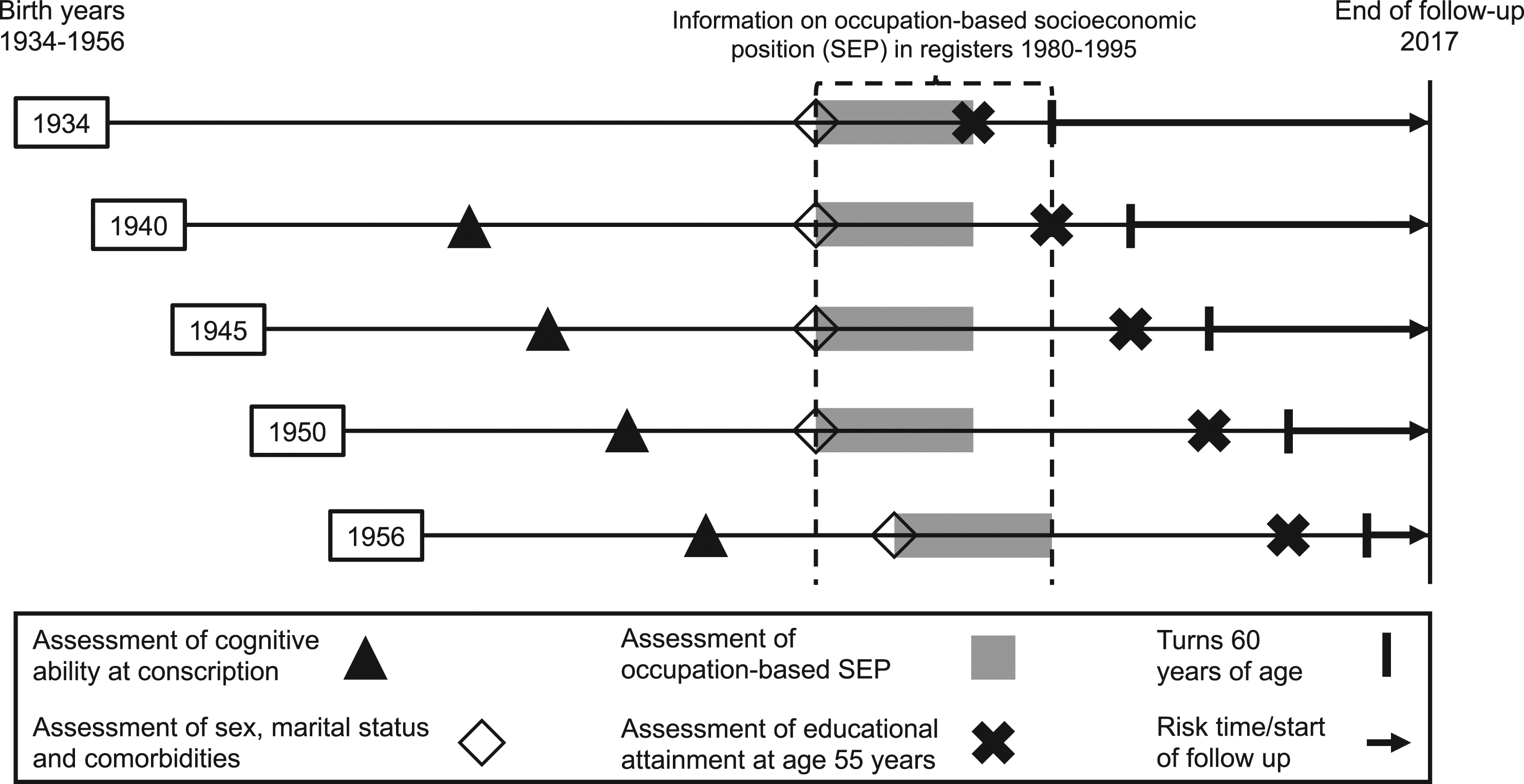
The long preclinical phase of dementia (Jack et al., 2010) could create a spurious relationship between SEP and dementia, as decline in cognitive ability is likely to affect attachment to the labor market. Therefore, we postponed start of follow-up at least 5 years from the latest obtained exposure assessment in order to reduce the risk of reverse causation, that is, that subclinical dementia pathology influenced educational and occupational choices (Figure 1).
We identified individuals eligible for inclusion based on the following criteria: (1) Survived, not having emigrated or been diagnosed with dementia up until age 60 years; (2) having non-missing information about exposures (educational attainment and occupation-based SEP), outcome (dementia), and the following covariates: age, sex, marital status, and comorbidities; (3) being registered as employed for longer than being registered as unemployed in a job with the same occupation-based SEP for at least 3 years. We did not include assisting spouses of self-employed individuals. The final study population consisted of 1,210,720 individuals (Figure 2). Flow diagram of the selection of the study population.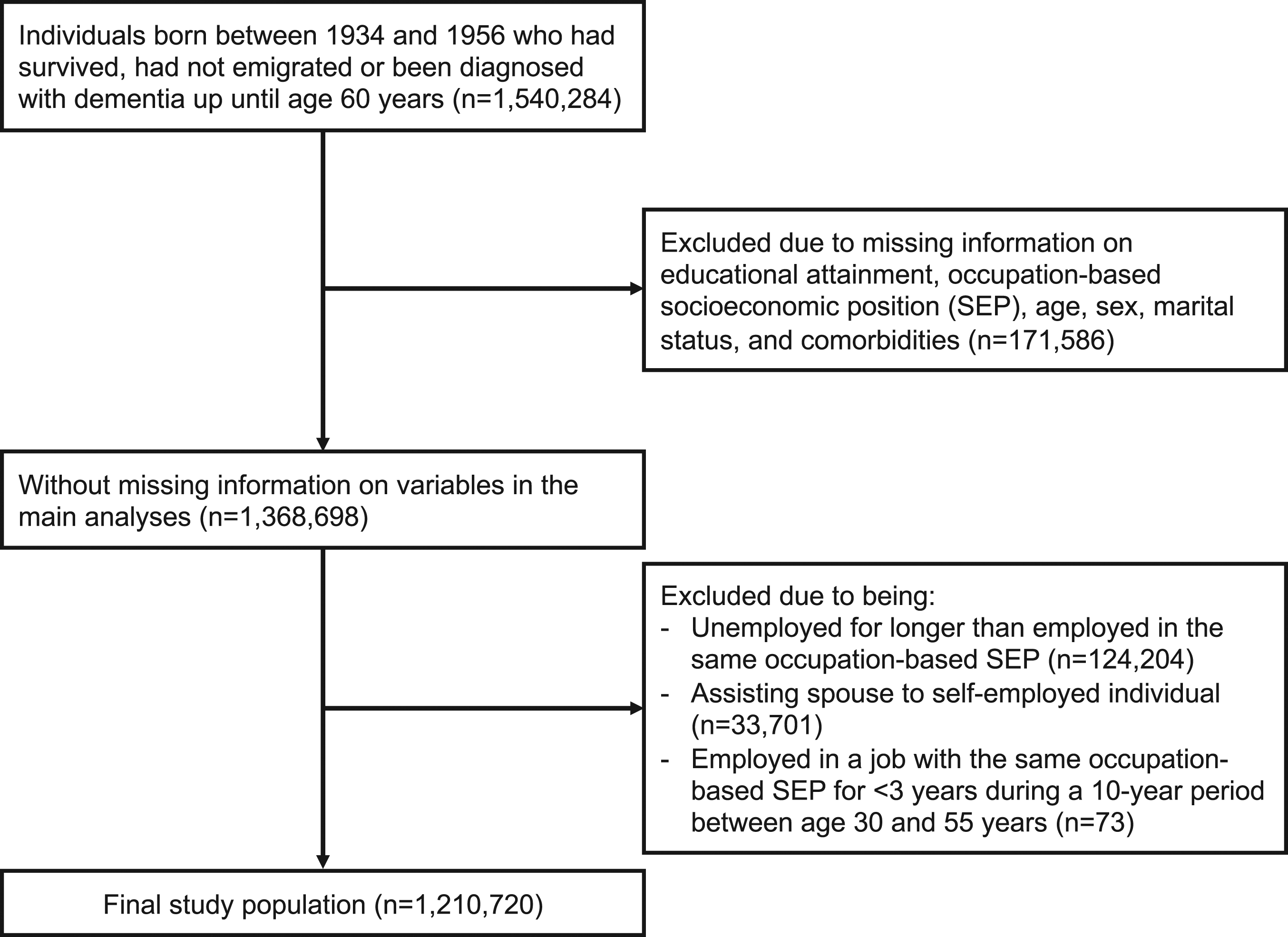
Educational Attainment
We obtained information on education from the Population Education Register (PER). PER contains information on the highest attained education of the entire Danish population from 1981 onward. The categories of highest attained education are based on the Danish version of the International Classification of Education (DISCED) (Jensen & Rasmussen, 2011). Nine original levels of educational attainment were aggregated into three levels based on number of years of education: high (>12 years, i.e., short-term further education, middle-range education, bachelor’s degree, and above), medium (10–12 years, i.e., upper secondary education, business high school, and vocational education and training), and low (≤9 years, i.e., primary school).
Occupation-based SEP
Information on occupation-based SEP was drawn from the Employment Classification Module (ECM) (Petersson et al., 2011). We identified levels of occupation-based SEP through the Danish Occupational Classification (DOC), which was used to classify occupation in the entire Danish population from 1980 to 1995. The main classifications of the DOC for individuals in the workforce were (1) self-employed, (2) assisting spouse to self-employed individual, (3) manager with ≥20 employees, (4) manager with <20 employees or senior official, (5) employee in management, (6) other employees, (7) skilled worker, and (8) unskilled worker. These classifications are based on the employment status in the registers defined as the primary source of income during a calendar year.
Occupation-Based Socioeconomic Position (SEP), Corresponding Levels of the Danish Occupational Classification (DOC) and Examples of Occupations Within DOC Levels.

Assessment of Dementia
Diagnoses of Dementia based on Diagnostic Codes in the International Classification of Diseases (ICD) and Anatomical Therapeutic Chemical (ATC) Codes for Anti-Dementia Medications.

Covariates
Based on existing literature, we considered the following covariates potential confounders assessed prior to assessment of occupation-based SEP: age, birth cohort, sex, marital status, cognitive ability, and comorbidities. Information on age, birth cohort, sex, and marital status was obtained from the Civil Registration System (Pedersen, 2011). Marital status was assessed at first year of assessment of occupation-based SEP (see Figure 1). From the Danish Conscription Database, we obtained data on cognitive ability at approximately age 18 for men born in 1939 or later (Christensen et al., 2015). Cognitive ability was measured using the validated cognitive ability test, the Børge Priens Prøve (BPP) (Teasdale et al., 2011). We standardized the BPP score to have a mean of 0 and a standard deviation (SD) of 1. We assessed the presence of comorbidities based on the Charlson Comorbidity Index (CCI) (Charlson et al., 1987). A cumulative CCI score was determined based on diagnoses in the NPR and the PCRR.
Statistical Analyses
We estimated the risk time for each individual in the study population from the date they turned 60 years until registration with dementia, emigration, death, or end of follow-up, whichever came first. We estimated the number of additional dementia cases per 100,000 person years (PY) associated with levels of educational attainment and occupation-based SEP, accounting for the competing risks of emigration and death, using Aalen’s additive hazards model (Rod et al., 2012). The additive model provides estimates of absolute risk differences, conveying the public health impact of our socioeconomic exposures and the number of dementia cases potentially avoidable by intervention (Harper et al., 2010; Rod et al., 2012).
We performed the main analyses by first calculating the additional number of cases for each level of educational attainment and occupation-based SEP in a mutually adjusted model (reference: high educational attainment and high non-manual occupation-based SEP, respectively). Then, we calculated the additional number of cases for different combinations of educational attainment and occupation-based SEP (reference: combination of the highest level of educational attainment and occupation-based SEP, respectively). We estimated the associations using both an unadjusted model and a model including birth cohort, sex, and marital status. Age was the underlying time scale in all models. Additionally, we have plotted the unadjusted cumulative incidence of dementia in each level of educational attainment and occupation-based SEP (see Figure A.1 and A.2 in the Appendix).
We also performed a number of sensitivity analyses. First, we tested whether associations in the main analyses were different for men and women separately. Second, we tested if missing occupational data or unemployment during part of the study period could have affected our results by requiring ≥1, ≥5, and ≥10 years in the same occupation-based SEP (instead of ≥3 years as in the main analyses). Third, we adjusted for comorbidities throughout the life course to test whether this could explain associations observed in the main analyses. Fourth, in a subsample of 446,969 men, we tested whether the results from the main analyses were due to confounding by cognitive ability at conscription.
In order to test the underlying assumption of proportional hazards in Aalen’s additive hazards model, we tested whether the effects of educational attainment and occupation-based SEP varied over the follow-up period in the main analyses. Furthermore, because the educational attainment, occupation-based SEP, and cognitive ability at conscription are likely correlated, we tested for the presence of multicollinearity between these factors. Thus, in the entire study sample, we estimated Pearson correlation coefficients, tolerance levels, and variance inflation factors (VIFs) in a model only including educational attainment and occupation-based SEP (Dormann et al., 2013). We then performed the same tests while also including cognitive ability in the above-mentioned subsample of men. We used SAS 9.4 for data management and descriptive analyses and R for Aalen’s additive hazards model.
Results
Study Population Characteristics Stratified by Occupation-Based Socioeconomic Position.
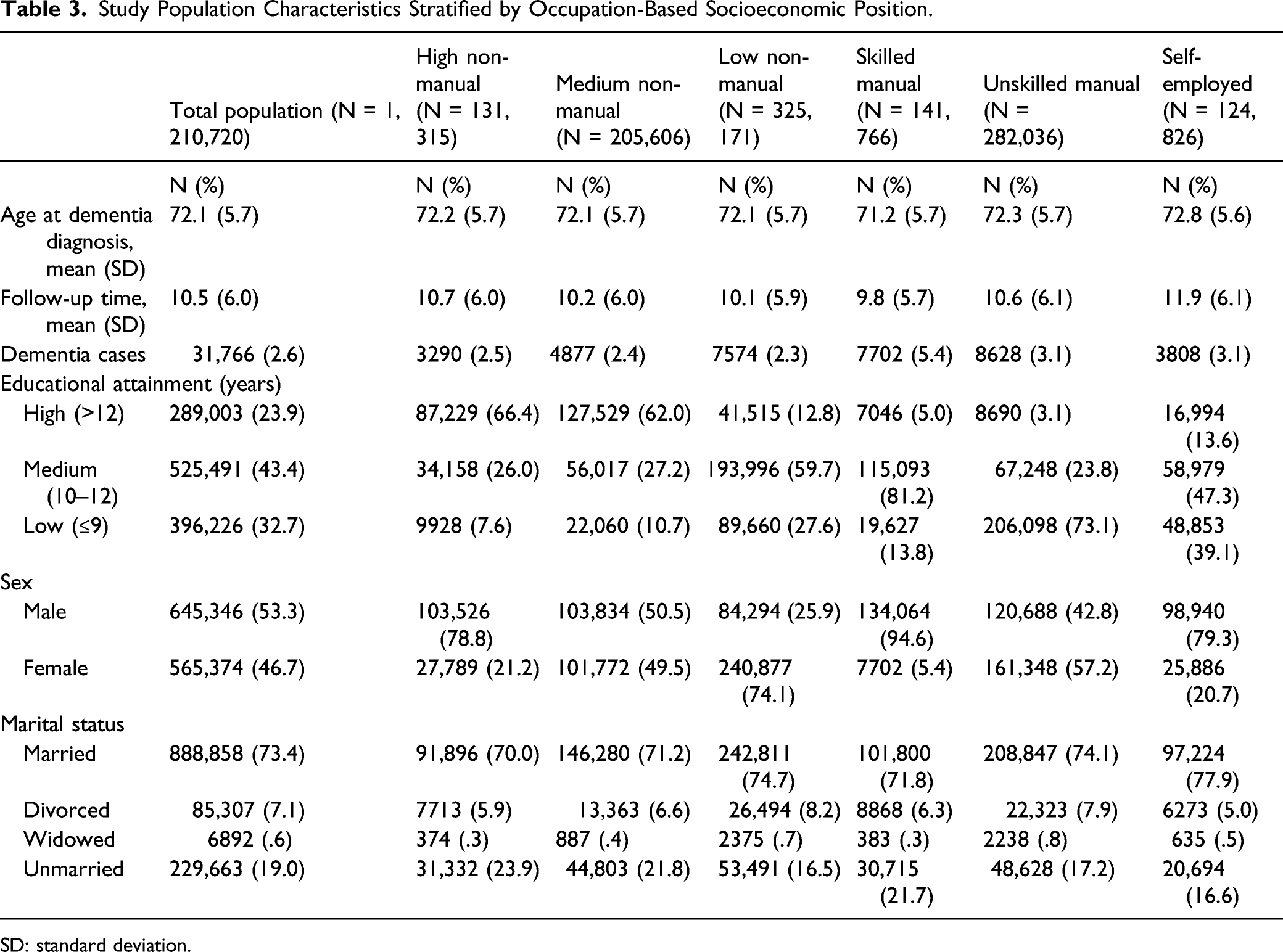
SD: standard deviation.
We found a slightly larger proportion of dementia cases among unskilled workers (5.4%) compared with the other levels of occupation-based SEP. Dementia cases were mainly identified through patient registers (NPR and PCRR: 83%), followed by the prescription register (DNPR: 16%) and the mortality register (RCD: 1%). The mean follow-up time varied from 9.8 to 11.9 years, and the age at diagnosis varied from 71.2 to 72.8 years across occupation-based SEP.
Because our test indicated a varying effect-size of the two exposures during the study period (data not shown), the following estimates should be considered average differences in dementia risk across the entire follow-up period rather than the risk differences at any given time point.
Lower educational level was associated with a higher rate of dementia in a dose–response manner in the unadjusted (Model 1, Supplementary Appendix Table A1) and adjusted model (Figure 3 and Model 2, Supplementary Appendix Table A1). On average, each decreasing level of educational attainment was associated with 14.8 additional dementia cases per 100,000 PY (p-value for trend: <0.001). Self-employed had the lowest dementia rate of all groups. Among the other levels of occupation-based SEP, we found a dose–response relationship corresponding to an average of 10.9 additional dementia cases per lower level (p-value for trend: <.001). Unskilled workers had the highest number of additional cases with 48.3 additional cases per 100,000 PY (95% CI: 36.2 to 60.4) corresponding to a hazard ratio of 1.2 (95% CI: 1.2 to 1.3). Additional cases of dementia per 100,000 person years (PY) and 95% confidence intervals compared with high educational attainment/high non-manual occupation-based socioeconomic position (SEP) (PY: 13,370,063; N: 1,210,720). Mutually adjusted and additional adjustment for birth cohort, sex and marital status.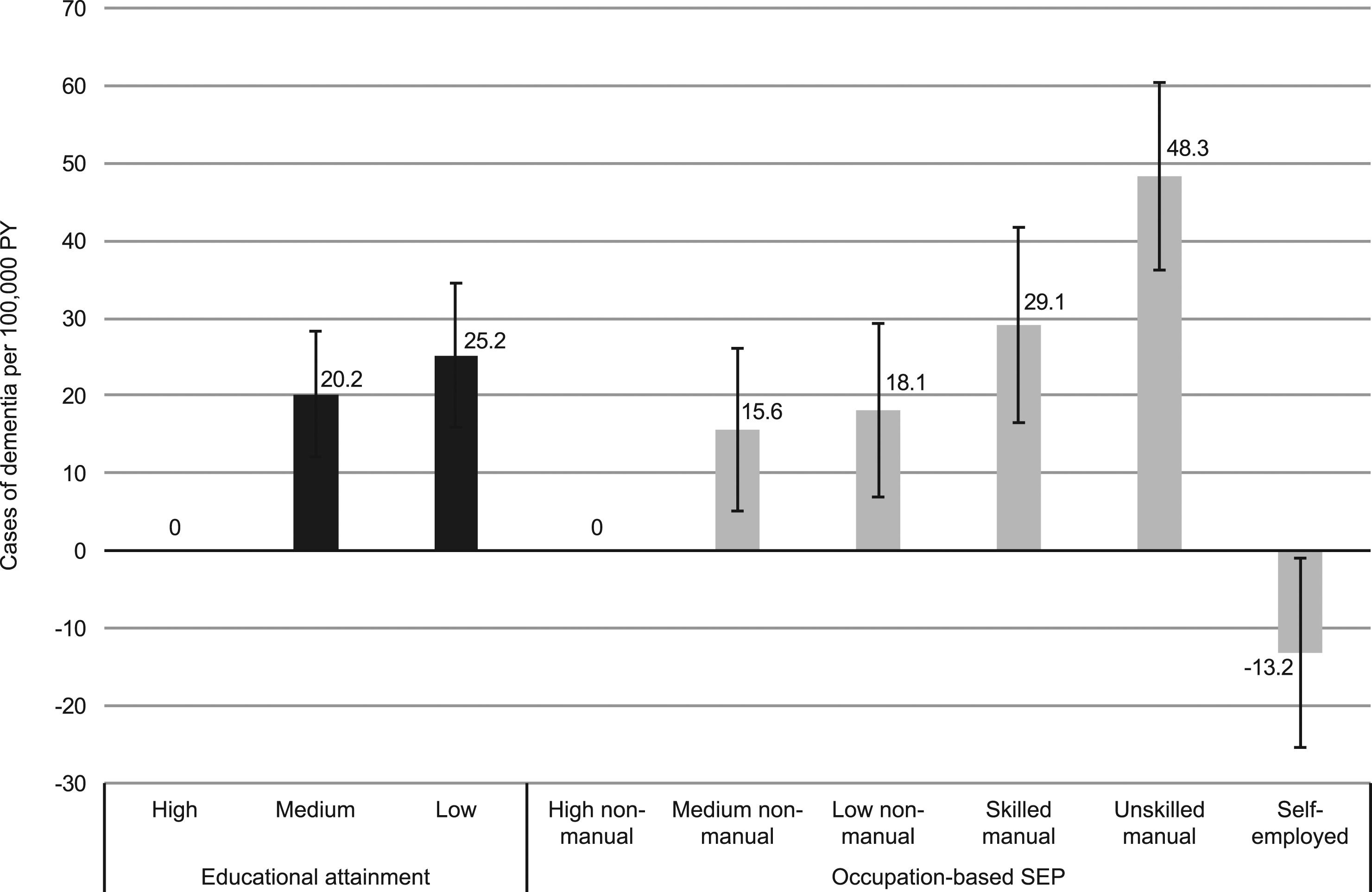
Among individuals with the highest level of educational attainment, occupation-based SEP was generally not associated with a higher rate of dementia (Figure 4 and Supplementary Appendix Table A2). In contrast, among individuals with medium or low educational level, lower occupation-based SEP was associated with higher rate of dementia in a dose–response manner (disregarding self-employed). Thus, we found indications that the association between occupation-based SEP and dementia may differ across levels of educational attainment and vice versa (p-value < .001 for interaction in a model including self-employed individuals; p-value = .13 for interaction in a model excluding self-employed). The highest estimated number of 78.3 additional dementia cases per 100,000 PY (95% CI: 66.1–90.5) was among individuals with low educational attainment in an unskilled manual occupation, corresponding to a hazard ratio of 1.4 (95% CI: 1.3–1.4). The results for self-employed individuals indicated that the dementia incidence in this group resembled individuals in high non-manual positions. Additional cases of dementia per 100,000 person years (PY) and 95% confidence intervals compared with the combination of high educational attainment and high non-manual occupation-based socioeconomic position (SEP) (PY: 13,370,063; N: 1,210,720). Adjusted for birth cohort, sex and marital status.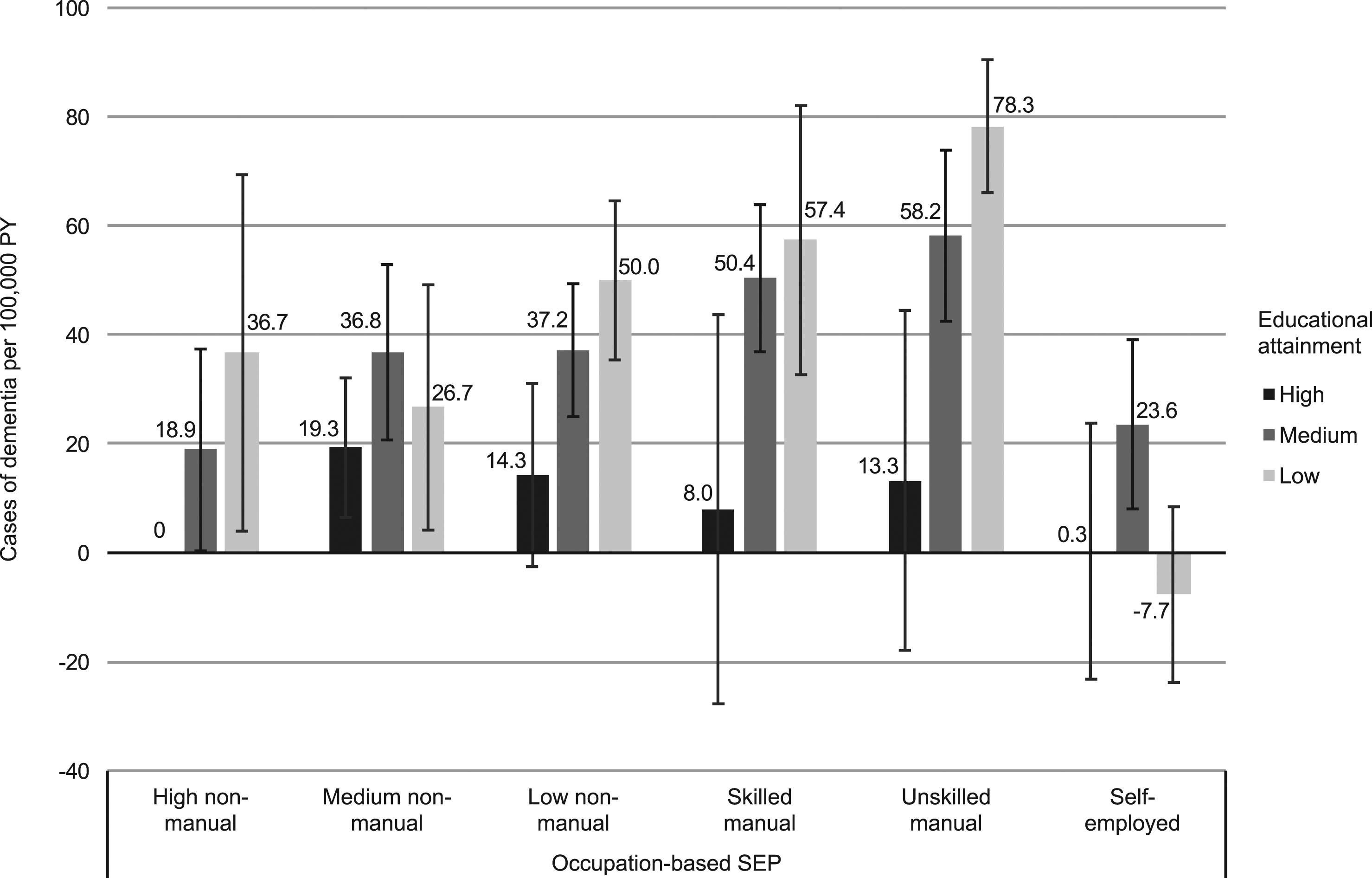
In the sensitivity analyses, we required ≥5 and ≥10 years in the same occupation-based SEP. In these analyses, both separate and joint exposure to educational attainment and occupation-based SEP showed similar associations with dementia as in the main analyses. Furthermore, our results did not change with adjustment for comorbidities (data not shown).
In the sex-stratified analyses, we found a less clear dose–response association between the exposures and dementia among men compared with women, particularly regarding educational attainment. Furthermore, educational attainment appeared to be more strongly associated with dementia among women, while occupation-based SEP was more strongly associated with dementia among men. The results regarding the joint effect of educational attainment and occupation-based SEP were similar for men and women, although the relatively small subgroups in the sex-stratified analyses of joint exposure complicated the interpretation of the findings (data not shown).
The analysis including cognitive ability showed a strong independent association between higher cognitive test scores at conscription and lower dementia risk in a subsample of men (−22.5 dementia cases per SD increase, 95% CI: −27.6 to −16.6). Adjusted for cognitive ability, educational attainment no longer showed an independent relationship with dementia risk. The effect of occupation-based SEP on risk of dementia somewhat attenuated and no longer followed a clear dose–response pattern (Supplementary Appendix Table A3). Despite the reduced associations, the average number of extra cases per lower level of educational attainment and occupation-based SEP was similar to the main analysis and these trends were still significant (p-values < .001). Regarding the joint effect of educational attainment and occupation-based SEP, the differences in rate of dementia across exposure levels generally attenuated (Supplementary Appendix Table A4). The small sample sizes in the joint variable made it difficult to assess specific patterns in the estimates, with only few significant differences in the risk estimates. However, there was a significant interaction between the two exposures (p-value < .01 in a model including self-employed individuals; p-value < .05 in model excluding self-employed).
In both the entire study sample and the subsample with available information on cognitive ability, all Pearson correlation coefficients were <.7, all tolerance levels >.1, and all VIF <10. Thus, although we observed a moderate correlation between educational attainment, occupation-based SEP, and cognitive ability, we did not find any indication of high multicollinearity in either the main or the cognitive ability–adjusted analyses (Dormann et al., 2013).
Discussion
Main Findings
In the main analyses, we found a higher number of dementia cases among individuals with lower educational attainment and lower occupation-based SEP. These associations were present when adjusting for other sociodemographic factors and comorbidities. The main analyses also indicated a potential joint effect of low educational attainment and low occupation-based SEP on the number of dementia cases. Occupation-based SEP appeared to have the strongest association with dementia among individuals with low or medium educational level. It should be noted that the association between educational attainment and risk of dementia disappeared with adjustment for cognitive ability at conscription in a subpopulation of men. This adjustment also markedly attenuated the estimated effects of occupation-based SEP so that only unskilled workers had a significantly higher dementia risk compared with those in a high non-manual position.
Comparison with Previous Research
The results from the present study differ from those reported in the previous study by Karp et al. (2004) investigating the association between both the mutually adjusted and joint exposure to low educational attainment and low occupation-based SEP and risk of dementia. When mutually adjusted, the authors only found an association between educational attainment and dementia, and concurrent exposure to low occupation-based SEP was not associated with any additional risk (Karp et al., 2004). However, this previous study was limited by a small study population (n = 931), self-reported measures of educational attainment and occupation-based SEP at old age (≥75 years), and a short follow-up of 3 years (Karp et al., 2004).
Four studies investigating the mutually adjusted associations of both educational attainment and occupation-based SEP with the risk of dementia reported conflicting results. Two studies found an association between low educational attainment, but not low occupation-based SEP, and higher risk of dementia (Russ et al., 2013; Takasugi et al., 2019). Conversely, Rusmaully et al. (2017) only found a higher risk of dementia among individuals with low occupation-based SEP and not among individuals with low educational attainment. However, this association disappeared when adjusting for cognitive performance in midlife, which is a potential mediator between occupation-based SEP and dementia (Rusmaully et al., 2017). Finally, Prince et al. (2012) found a lower risk of dementia among individuals with low educational attainment and no association between occupation-based SEP and dementia. This latter study was based on data from middle income countries, which complicates the comparison with the results of the present study (Prince et al., 2012).
Our findings regarding the independent associations between lower educational attainment and higher risk of dementia may be explained by an effect of education on cognitive reserve (Staff et al., 2004) and cardiovascular risk factors and diseases (de Mestral & Stringhini, 2017). Similar mechanisms could explain the higher risk of dementia among individuals with low occupation-based SEP that we found in this study. Occupations of higher socioeconomic status often involve a higher level of complexity and autonomy at work (Dieker et al., 2019), potentially reducing the risk of dementia by contributing to the cognitive reserve (Hussenoeder et al., 2019). In addition, these types of occupations are less likely to encompass chemical and physical exposures (Dieker et al., 2019), which could otherwise increase the dementia risk (Hasselgren et al., 2018; Jalilian et al., 2018; Rovio et al., 2007; Yan et al., 2016). Differences in the working environment across levels of occupation-based SEP (Dieker et al., 2019) may also explain why individuals with low or medium educational attainment tended to have a lower risk of dementia, if they attained a higher occupation-based SEP. Conversely, the importance of the above-mentioned mechanisms should be considered with caution in light of the reduction of associations between the exposures and dementia risk when adjusting for cognitive ability. Cognitive ability in adolescences is likely a strong predictor of later educational attainment and occupation-based SEP (Foverskov et al., 2019) and should be viewed as an important confounder of the association between our main exposures and risk of dementia. However, cognitive ability at conscription did not explain the entire association between occupation-based SEP and dementia risk in our study.
Strengths and Limitations
The strengths of the study include the large study population of more than 1.2 million individuals, a long follow-up time (mean 10.5 years, maximum 24 years) from age 60 with low loss to follow-up, and the temporally separated assessment of educational attainment and occupation-based SEP during midlife and dementia after age 60. A major strength is the adjustment for cognitive ability at age 18 in a subgroup of men. According to a validation study, clinical dementia diagnoses in the Danish national registers have a high validity, with a positive predictive value of 85.8% (Phung et al., 2007). We also included data on anti-dementia medication in order to use all available sources to identify dementia cases. We did not test whether results were different for different subtypes of dementia for two reasons: First, although the overall validity of a diagnosis of dementia as such is high, the validity of the diagnoses of dementia subtypes in the Danish registers has been reported to be low (Phung et al., 2007) and >73% of dementia patients are registered with dementia without specification (Phung et al., 2010). Second, those identified through the drug register do not have a specific diagnosis (Kildemoes et al., 2011). This leaves us with insufficient data to perform separate analyses for each of the dementia subtypes.
It is up for debate whether the hierarchy in our measure of occupation-based SEP accurately captures this latent construct. Our operationalization is inspired by previous research placing non-manual occupations above manual occupations (Fratiglioni et al., 1993; Prince et al., 2012; Russ et al., 2013). The estimated independent effects of occupation-based SEP reported in our study empirically support a socioeconomic gradient in dementia risk across the proposed levels.
Despite the advantages of using register-based data, such data may also miss non-registered educational activities or suffer from imprecise registration of jobs, which bias the risk estimates toward unity. Furthermore, register data underestimate the general dementia prevalence, as it has been estimated that only 40% of the total number of dementia cases in Denmark are registered with a diagnosis (Jørgensen & Waldemar, 2014). To improve the validity of our outcome, we added information on prescriptions of anti-dementia medication in addition to diagnoses registered during patient contacts at hospitals or on death certificates. However, the underreporting of cases may still have biased our results. One proposed reason for not being diagnosed is that many patients and relatives lack information about the dementia syndrome and possibilities for treatment (Jørgensen & Waldemar, 2014). Dementia cases with short education and/or low level of occupation-based SEP may be less likely to seek out treatment options (Berkman et al., 2011) due to a low level of health literacy (Bostock & Steptoe, 2012). Thus, the underreporting of dementia may be inversely correlated with education and occupation-based SEP (Kokmen et al., 1996) resulting in an underestimation of the rate differences in the present study. The duration of our study period may also have caused an underestimation in rate differences across socioeconomic positions as studies indicate an increased incidence of dementia beyond the maximum age in this study of 83 years (Livingston et al., 2017; Taudorf et al., 2019). This assumed underestimation may be exacerbated by those with higher socioeconomic position being diagnosed earlier as indicated by a recent Danish study (Petersen et al., 2021). Conversely, our findings may also be overestimated due to social inequality in morbidity and thereby contact to the health-care sector, that is, detection bias. Nevertheless, adjusting for comorbidities during the life course only resulted in minor changes in the estimates.
Individuals with poor health could be more likely to become unemployed (the healthy worker effect), in particular when they are in a lower occupation-based SEP (Chowdhury et al., 2017). This could lead to an underestimation of the differences in dementia rates across occupation-based SEP. However, we do not consider this a major issue, as we found similar results when restricting the study population to individuals with the same occupation-based SEP for at least 1, 5, and 10 years.
We adjusted for a wide range of potential confounders including other morbidities than dementia (i.e., CCI), which did not affect the results. We did not, however, adjust for epilepsy, hearing loss, and traumatic brain injuries, as well as parental educational attainment or occupation-based SEP. Additionally, we were only able to adjust for cognitive ability for a subgroup of men in our study population.
In the eligible birth cohorts, there was a slightly higher proportion of missing data on cognitive ability among those with the lowest level of educational attainment and occupation-based SEP compared with their respective reference groups (3 and 5 percentage points more individuals with missing data, respectively). One reason for missing information on cognitive ability is non-participation at conscription due to chronic health conditions. Thus, selection based on health status may have biased the estimated effects from the sensitivity analyses adjusting for cognitive ability. However, in our study, we did not have the data to elucidate the direction and magnitude of this potential source of bias. Additionally, a Danish study has found that men from immigrant backgrounds scored lower on cognitive ability tests at conscription (Teasdale, 2009). Thus, bias due to ethnicity may have affected the results of the cognitive ability–adjusted analyses.
The generalizability of our results is strengthened by the register-based information on educational attainment and occupation-based SEP from the entire working population in Denmark dating back to 1970 and 1980, respectively. However, due to the age-related nature of dementia, we used data on exposure from older birth cohorts, which may not be representative of the current educational system and labor market. The risk estimates adjusted for cognitive ability were limited by only being based on men. This is a particular drawback of the data considering the impact of adjusting for cognitive ability on the risk estimates and the differences in results between men and women in the sex-stratified analyses.
Finally, our large study sample increased the likelihood of type I error. In the main analyses, differences of roughly ≥20 dementia cases were statistically significant and the largest effect size we observed was 78.3 additional dementia cases per 100.000 PY among unskilled workers with low educational attainment compared with high non-manual occupation-based SEP and high educational attainment. For comparison, the incidence of dementia in the entire study sample during the entire study period was 237.6 cases per 100.000 PY. While the estimated differences in this study may seem small, we expect that the actual social gradient in number of dementia cases is larger based on the assumed underreporting discussed above. Furthermore, due to the high economic, societal, and individual burden of dementia, we find it relevant to identify risk factors for even small numbers of additional cases, in order to inform future strategies for prevention of dementia in old age at a population level.
Conclusion
To our knowledge, this is the first study investigating both the independent and joint effect of educational attainment while also adjusting for cognitive ability in adolescence in a subsample. Educational attainment and occupation-based SEP were independently associated with higher risks of dementia. These associations were significantly reduced when adjusting for cognitive ability so that solely those working in unskilled occupations had a higher risk of dementia.
When considered in conjunction, our results indicated a potential for reduction in the risk related to a low or medium educational attainment by obtaining a higher occupation-based SEP, e.g. a skilled instead of an unskilled occupation. However, adjustment for cognitive ability complicated this conclusion by rendering most of the associations insignificant.
Our findings highlight the need for more research on the underlying mechanisms of the socioeconomic inequality in the burden of dementia, for example, investigating more specific exposures related to occupation. Such research could provide valuable knowledge for improving prevention and postponement of dementia onset. Our results also highlight the necessity for future studies, to consider the potential impact of cognitive ability in early life on both SEP and risk of dementia and to explore sex differences.
Supplemental Material
sj-pdf-1-jah-10.1177_08982643211037200 – Supplemental Material for Socioeconomic Position and Late-Onset Dementia: A Nationwide Register-Based Study
Supplemental Material, sj-pdf-1-jah-10.1177_08982643211037200 for Socioeconomic Position and Late-Onset Dementia: A Nationwide Register-Based Study by Andreas M. Appel, Henrik Brønnum-Hansen, Anne H. Garde, Åse Marie Hansen, Kazi Ishtiak-Ahmed, Sabrina Islamoska, Erik L. Mortensen and Kirsten Nabe-Nielsen in Journal of Aging and Health
Supplemental Material
sj-pdf-2-jah-10.1177_08982643211037200 – Supplemental Material for Socioeconomic Position and Late-Onset Dementia: A Nationwide Register-Based Study
Supplemental Material, sj-pdf-2-jah-10.1177_08982643211037200 for Socioeconomic Position and Late-Onset Dementia: A Nationwide Register-Based Study by Andreas M. Appel, Henrik Brønnum-Hansen, Anne H. Garde, Åse Marie Hansen, Kazi Ishtiak-Ahmed, Sabrina Islamoska, Erik L. Mortensen and Kirsten Nabe-Nielsen in Journal of Aging and Health
Supplemental Material
sj-pdf-3-jah-10.1177_08982643211037200 – Supplemental Material for Socioeconomic Position and Late-Onset Dementia: A Nationwide Register-Based Study
Supplemental Material, sj-pdf-3-jah-10.1177_08982643211037200 for Socioeconomic Position and Late-Onset Dementia: A Nationwide Register-Based Study by Andreas M. Appel, Henrik Brønnum-Hansen, Anne H. Garde, Åse Marie Hansen, Kazi Ishtiak-Ahmed, Sabrina Islamoska, Erik L. Mortensen and Kirsten Nabe-Nielsen in Journal of Aging and Health
Footnotes
Acknowledgment
The authors acknowledge the crucial work performed by the secretariat of The Public Health Database at Department of Public Health at the University of Copenhagen in regard to operating and establishing project data.
Declaration of Conflicting Interests
The author(s) declared no potential conflicts of interest with respect to the research, authorship, and/or publication of this article.
Funding
The author(s) disclosed receipt of the following financial support for the research, authorship, and/or publication of this article: This work was supported by The Danish Working Environment Research Fund [grant number: 10-2015-03 20150017498]. The funding source had no role in the design of the study, data collection, statistical analysis, interpretation of data, writing of the article, or the decision to submit the article for publication.

Supplemental Material
Supplemental material for this article is available online.
References
Supplementary Material
Please find the following supplemental material available below.
For Open Access articles published under a Creative Commons License, all supplemental material carries the same license as the article it is associated with.
For non-Open Access articles published, all supplemental material carries a non-exclusive license, and permission requests for re-use of supplemental material or any part of supplemental material shall be sent directly to the copyright owner as specified in the copyright notice associated with the article.
