



Abstract
Since de Tocqueville’s visit to the United States, it has become common knowledge that people in civic associations are more civic minded: They display higher levels of political interest, tolerance, and social and political trust. The question remains, however, whether young people are socialized through associations or self-select into associations. This article aims to untangle this relationship, using a representative panel of 16- and 18-year-old Belgian students by focusing on deliberative associations. The results show that both self-selection and socialization effects play a role with respect to political interest but not for other political attitudes and that long-lasting engagement and membership in multiple associations have the strongest socializing effect.
Introduction
Civil society is vital to democracy. Participation gives a positive boost to the working and acceptance of democracy and stimulates the functioning of the political system (Easton, 1965; Putnam, 1993, pp. 98-99). A lot of positive attitudes to democracy have been attributed to people who are active in voluntary associations.2 It has been stated by many authors since de Tocqueville that when people are involved into one activity, they develop skills and attitudes that are positive toward the society as a whole. Associations are schools in democracy: “Les associations politiques peuvent donc être considérées comme de grandes écoles gratuites, où tous les citoyens viennent apprendre la théorie générale des associations” (de Tocqueville, 1835/1951, p. 158). Also other research analyses have demonstrated this positive link. Almond and Verba (1965) found that members of voluntary associations have greater subjective competence (i.e., efficacy), discuss politics more often, and are more willing to express their political opinions. Other authors have shown that voluntary association membership leads to higher levels of efficacy, information, political skills, civic virtues, and critical skills (Verba, Schlozman, & Brady, 1995; Warren, 2001) also among young people (Conway, Amel, & Gerwien, 2009; Niemi & Junn, 1998; Pasek, Feldman, Romer, & Jamieson, 2008; Quintelier, 2008; Spannring, Ogris, & Gaiser, 2008; Westheimer & Kahne, 2004). This study focuses on adolescents because attitudes are more susceptible for change during adolescence. Recent genetic research on twins has shown that political attitudes accumulate markedly between the ages of 9 and 17. At this age, family and other shared environmental influences are of great importance in the socialization of young people (Hatemi et al., 2009). Also older studies have shown that political attitudes are most impressionable during adolescence and become more stable or crystallize afterwards (Alwin & Krosnick, 1991; Sears & Funk, 1999; Visser & Krosnick, 1998).
However, it is unclear how associations stimulate these positive outcomes for young people, society, and democracy. Do adolescents with certain political attitudes self-select into associations or do associations socialize adolescents to become “good citizens”, that is, adolescents who are interested in politics and have high levels of trust and tolerance (van Deth, 2009)? This article aims to untangle this relationship by using a representative panel of Belgian adolescents surveyed in 2006 and 2008 at the ages of 16 and 18, focusing on membership in deliberative associations. Deliberative organizations share characteristics and objectives of (public) deliberation and influence on decision making (Stoll, 2001). These associations provide a forum for debating current issues and may be situated not only within the school (e.g., the school council) but also in the more public context offered by political parties and citizen assemblies.3 Most studies thus far focus on the effect of voluntary engagement over longer periods of time and are not limited to adolescence as this study (Claibourn & Martin, 2000). The results indicate that adolescents who are a member of a deliberative association for a longer period of time have stronger political attitudes than those who only join an association briefly. In other words, long-lasting engagement and multiple memberships have the strongest socializing effects. However, we did not find clear-cut evidence for either socialization or self-selection; rather, we found evidence for both perspectives.
Socialization or Self-Selection?
Thus far, it is not clear how membership in voluntary associations and political attitudes are related: Do people develop certain attitudes through their membership in voluntary associations or do they self-select into these associations on the basis of preexisting views? In their review on citizenship and civic engagement, Theiss-Morse and Hibbing (2005, p. 230) argue that although “research confirms the correlation between civic participation and interpersonal trust,” there is as yet no clear evidence regarding the direction of the relationship. Dietlind Stolle (1998) explored the relationship between generalized trust and membership in voluntary associations by asking German and Swedish respondents how long they had been a member of a specific association. The results indicated that even those who had only joined an association recently (i.e., less than a year ago) were more trusting than nonmembers. People who join associations are thus already more likely to have a certain level of trust. In addition, members of associations do not become more trusting over time, which lends support to the hypothesis that people self-select into associations and that rather they are socialized to the norms of their association. Unfortunately, this approach does not rule out the possibility that socialization may have taken place during the first meetings.
The social capital literature represents the opposite line of thinking: As a result of face-to-face interaction, people participating in associations will become more trusting of other members and subsequently of all people in society (i.e., they develop generalized trust; Putnam, 2000; Stolle, 2001, p. 205). Hooghe also supports the perspective of context-specific socialization occurring through the contact mechanism. He argues, “Even without any real contact with different groups within society, the culture within an association can strengthen tolerance toward others. If a group is dedicated to liberal principles, it can be expected that members will internalize these values, whether or not there is actual face-to-face contact with other, or even opposing, groups within society” (Hooghe, 2003, p. 170). Thus, social tolerance is produced in the same way as social trust, that is, through a mechanism of interaction and tolerance that extends beyond the association itself. Socialization also occurs with respect to (political) tolerance. As Theiss-Morse and Hibbing put it,
People join groups for a variety of reasons and interact with others in pursuit of the group’s goals. Since most people do not automatically talk about politics when in a nonpolitical group, and often actively avoid it (see, for example, Eliasoph, 1998, Chapter 2), they become friends with fellow members before learning that these new friends hold different political views. Since they now like these people, they become more tolerant of these different views. This tolerance then spreads to people who are not members of the group (see Mutz, 2002b, for an excellent overview of cross-cutting networks and tolerance; Theiss-Morse & Hibbing, 2005, p. 230)
In other words, through their involvement in a group, people become aware that others hold different opinions, which in turn makes them more tolerant of these opinions. Claibourn and Martin (2000) also find (limited) evidence that belonging to groups at a young age makes individuals more socially trusting later in life. Verba et al. (1995) also prefer a socialization perspective. Their data show that people from different backgrounds still develop the same civic skills, lending support to the hypothesis of a socialization effect, as it is very unlikely that people would choose a specific church, for instance, because this develops greater civic skills.
Three criticisms are often leveled at the research that relates political attitudes with voluntary engagement. First, some authors question the relationship between political attitudes such as social trust and voluntary engagement. Second, it is pointed out that most studies rely on theoretical arguments and explore only one direction of the relation. Third, some authors argue that self-selection and socialization are not a zero-sum game, as in practice people might self-select into associations and then socialize further. We elaborate on each of these critiques in what follows.
First, a number of authors have shown that there is only a weak link between political attitudes and voluntary engagement. Uslaner (2000, p. 721) considers this finding self-evident:
Group membership and informal socializing don’t depend upon trust. And they don’t create trust either. . . . Trust doesn’t come from our social interactions. We learn it early in life from our parents, who impart to us a sense of optimism and a belief that we are the masters of our own fate. Most of us don’t change from mistrusters to trusters (or the other way around) that easily.
Uslaner argues that there is no reasonable explanation why participants would start trusting other people simply because they are involved in associations, especially since associations tend to consist of like-minded people: “Interaction with group members makes you more likely to have faith in them—not in people generally” (Uslaner, 2000, p. 574). This view is extended by Newton (1997), who argues that most people spend much more time in other contexts (e.g., school, family, work, community) than in associations, and consequently, these contexts will have greater effects. Similarly, Badescu and Neller (2007) find only weak effects of social trust, social tolerance, and political interest on voluntary association membership.
Second, the studies that explore the relationship between voluntary engagement and political attitudes are by no means perfect. Mostly, they rely on single-wave studies and theoretical arguments for the self-selection and/or socialization theses; that is, members are not surveyed before joining, so we have no information on prior attitudes, engagement, other memberships, and so on. Some authors, however, have tried to clarify the relationship between participation and political attitudes. One example is the study by Brehm and Rahn (1997), who argue that participation promotes interpersonal trust, rather than the other way around, lending support to the socialization perspective. However, this study does not take full advantage of the panel data, as the General Social Survey (1972-1994) was pooled. Using two-stage least squares ordered probit regression to analyze the Parent Youth Socialization Study data, Claibourn and Martin (2000) find that membership promotes interpersonal trust, but only in the parent sample and not in the youth sample. Jennings and Stoker (2004), on the other hand, using the same panel data and OLS regression, find that trusting people are more likely to join associations. However, they do not control for prior social trust and engagement.
Third, people might not only self-select or only socialize, as Hooghe (2003, p. 170) claims, “too often it is assumed that processes of self-selection and socialization exclude one another . . . self-selection and socialization do not stand in a zero-sum relation, but on the contrary, they interact.” Cigler and Joslyn (2002, p. 9) state this as follows: “Ideally, political toleration is both necessitated and enhanced by immersion into the life of a voluntary association.” Voluntary engagement not only stimulates political tolerance (i.e., socialization), but conversely, a certain level of political tolerance is a prerequisite for entering an association (i.e., self-selection). In a similar study, Wilson and Musick (1999, pp. 160-161) explore the relationship between volunteering and mental health. Using three-wave panel data, they find that “Causal effects and selection effects can be mutually reinforcing as well as mutually exclusive. Volunteering improves health, but healthier people may also be more likely to volunteer. Essentially, volunteering keeps healthy volunteers healthy.” In what follows, we will explore whether evidence can be found for both perspectives among a sample of late adolescents.
Hypotheses
This article aims to overcome the gaps in the existing research by using panel data to analyze the extent to which socialization and/or self-selection effects occur among participants, nonparticipants, leavers (exit) and joiners (entry) of deliberative associations. To measure voluntary engagement, we choose to analyze the effects of deliberative voluntary associations on political attitudes. Deliberative associations are expected to have the largest effect on the political attitudes and political skills (Cigler & Joslyn, 2002; Quintelier, 2008; Schachter, 2010; Verba et al., 1995; Warren, 2001; Wollebaek & Selle, 2003, p. 72). Note however, that this is voluntary engagement and not political participation, because membership in school councils (and to a lesser extent citizen assemblies) does not always aim to influence political decision making (Verba et al., 1995, p. 38).
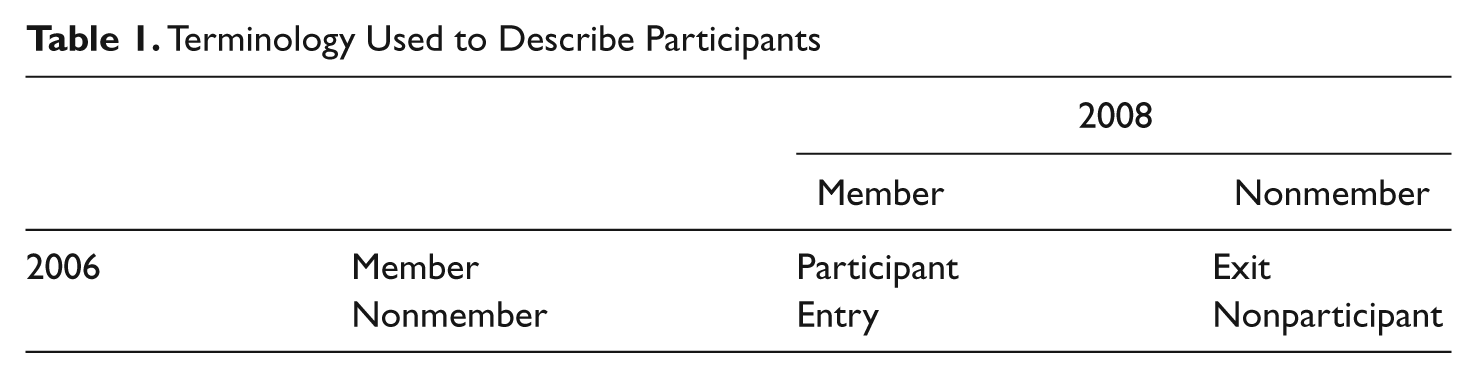
To test the hypotheses, we will rely on panel data of a 2-year Belgian panel study conducted among late adolescents (16 at Time 1 and 18 at Time 2). Therefore, respondents were divided into four groups: those who were members of an association at both survey times (the participants), those who were not participating in any association at either point in time (the nonparticipants), those who were participating in 2006 but not in 2008 (the exit group), and those who were not participating in 2006 but had joined an association by 2008 (the entry group; van Ingen & Kalmijn, 2010). Table 1 presents the different groups.
Terminology Used to Describe Participants
Hypothesis 1: Self-selection: If the entry group scores are higher in 2006 than those found for nonparticipants, this would provide evidence for the self-selection hypothesis among adolescents: Even before being involved in an association, entry group respondents already have stronger political attitudes. In addition, nonparticipant adolescents are expected to have the lowest levels of political interest, political trust, social, and political tolerance, at levels lower than participants in 2006 and/or 2008 (participant, exit, and entry).
Hypothesis 2: Socialization: We expect adolescents who left a deliberative association between 2006 and 2008 (exit) to have retained their levels of political interest, tolerance, and social and political trust in 2008 (e.g., are socialized), equal to those adolescents who continue to be a member of an association or have recently joined one (participant and entry).
Method
Data Set
The data for this study come from the Belgian Political Panel Survey (BPPS) 2006-2008. These data constitute a two-wave panel study among a sample of 16- and 18-year-olds. In 2006, a representative survey was conducted among 6,330 sixteen-year-olds in Belgium. Analysis of the survey responses confirms that the sample is representative for region, school type, gender, and educational track. Based on written surveys completed by the respondents in 112 schools, the study focused on young people’s social and political attitudes and contained questions about their participation habits. To obtain a national random sample, all schools included in the survey were selected through a stratified sample, based on the location and type of the school. In each school, a minimum of 50 students were selected, representative of the academic tracks in that school. The response rate was 66% for the schools.
In 2008, the respondents were surveyed for a second wave, this time at the age of 18. Although most of the initial respondents were still at school, alternative strategies had to be developed to reach those who had left or changed schools. Of the initial 112 schools, 109 participated again in the survey in 2008. In these schools, the same classes were resurveyed, which allowed us to reinterview more than 2,000 students. The other students were contacted through a mail survey. In total, 4,235 pupils (or 67%) of the initial panel were resurveyed. The attrition rate is in line with what can be expected for this kind of panel study. The second wave was again representative with regard to region, school type, gender, and educational track. As such, this data set is ideally suited to test our hypotheses. It provides access to a total sample of 4,235 panel respondents, who were interviewed both in 2006 (average age 16) and in 2008 (average age 18).
Variables
Voluntary engagement
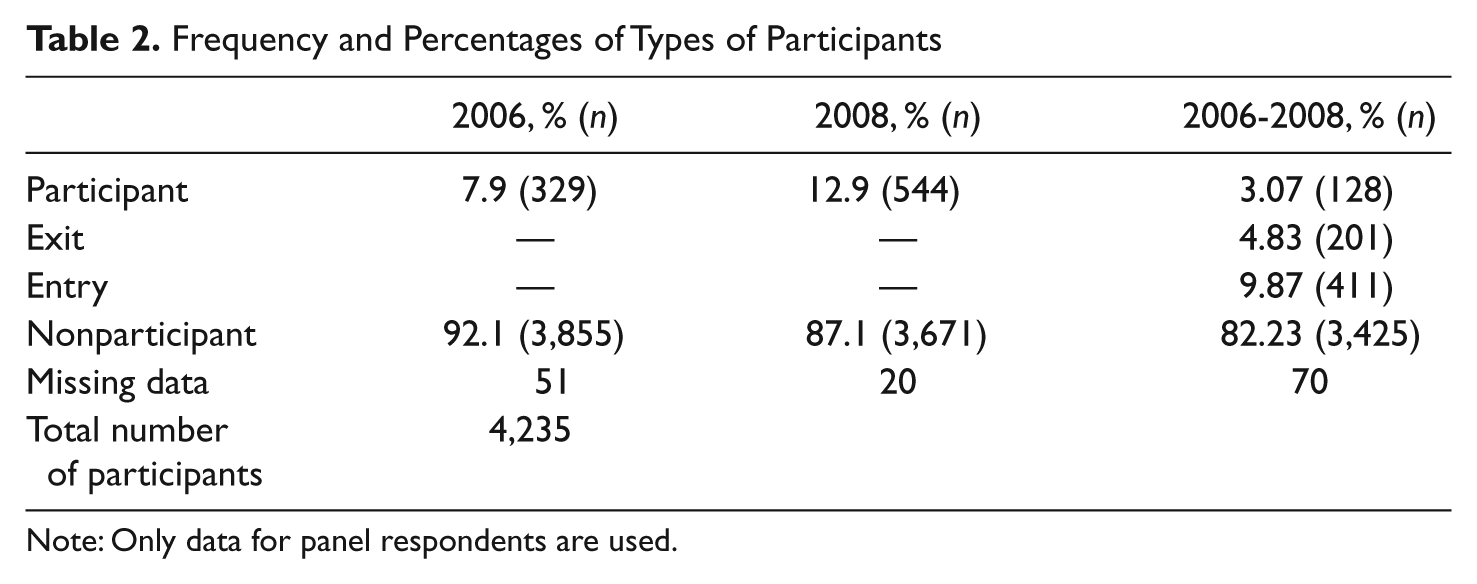
To measure voluntary engagement, we choose to analyze the effects of deliberative voluntary associations on political attitudes, as already mentioned previously. Table 2 presents the results of the sum of membership in a school council, political party, and assembly1 (a participant is a member of any of the three associations; nonparticipants belong to none of the associations). In total, 8% of the respondents were a member of one or more deliberative associations in 2006, with this figure rising to 13% in 2008. However, as the results in the final column demonstrate, these are not the same people: Only 3% of the respondents have remained a member between 2006 and 2008, 5% left a deliberative association (exit), and 10% joined one (entry). Over the 2-year period, 82% of the adolescents remained uninvolved. The survey did not distinguish between passive and active membership, although this is not necessarily a problem, as Wollebaek and Selle (2002) have shown that active and passive members have the same levels of social trust.
Frequency and Percentages of Types of Participants
Note: Only data for panel respondents are used.
Social trust
Several authors have demonstrated that high levels of voluntary association membership coincide with high levels of social or generalized trust, both at the individual (Bekkers, 2005; Brehm & Rahn, 1997; Stadelmann-Steffen & Freitag, 2011) and at the aggregate level (Putnam, 2000). Putnam, for instance, has shown that, in the United States, the decline in voluntary association membership is highly similar to the decline in social trust. For the following analyses, social trust was measured by two standard questions: “Generally speaking, would you say that most people can be trusted, or that you can’t be too careful in dealing with people?” (0 = You can’t be too careful, 10 = Most people can be trusted) and “Would you say that most of the time people try to be helpful or that they are mostly looking out for themselves?” (0 = People mostly look out for themselves, 10 = People mostly try to be helpful). A factor scale was created combining these two measures (which explains 71.767 of the variance; Cronbach’s alpha is .609 for the 2006 data).4
Political interest
It has frequently been argued that members of associations are more interested in politics than nonmembers are (Bekkers, 2005). Using the Eurobarometer data, van Deth (2006) clearly illustrates that members of associations, irrespective of the type, are more interested in politics than nonmembers. Members of social, cultural, human rights, nature, environmental, youth, or consumer associations or of political parties, unions, sports clubs, hobby clubs, and other groups, all display greater levels of political interest than the uninvolved, with the exception of religious groups. Political interest was measured by the question, “How interested would you say you are in politics?” (the response options to this question were: not at all interested, hardly interested, quite interested, very interested). Although multiple indicators should be preferred, the survey did contain only one question on political interest. However, a single indicator for political interest “by asking people directly how interested they are in politics” has been used in several surveys since the early 1950s (Gabriel & van Deth, 1995, p. 395). The study of Prior (2010, p. 747) has, using data from 23 panel studies, shown that “political interest is exceptionally stable in the short run and over long periods of time,” so even using a single indicator of political interest should lead to a reliable measure here.
Social and political tolerance
Several authors have shown that voluntary engagement and social and political tolerance are related. Cigler and Joslyn (2002) found a strong positive relationship between group membership and political tolerance, which is even stronger in the case of multiple memberships (see also Verba et al., 1995, pp. 500-506). Likewise, Hooghe (2003) has demonstrated that members of associations are more tolerant toward foreigners. To measure social tolerance, we asked the respondents to rate the following items on a 10-point scale5 “Immigration is good or bad for the economy,” “The country’s cultural life enriched or undermined by immigrants,” and “Immigrants make Belgium a better or worse place to live.” A factor scale was created combining these two measures (which explains 75.158 of the variance; Cronbach’s alpha is .834 for the 2006 data).6 Political tolerance, on the other hand, was only measured in 2006. Because the items did not load on a single scale, a sum scale containing 10 items was created, with a score of 10 for the most politically tolerant view. “For each of these groups, please indicate whether they should be allowed to do the activity listed (a) Hold a peaceful march in your neighbourhood, and (b) Talk on public television about their views: Gay Rights activists, Skinheads, Flemish separatists, Racists, Radical Muslims.”
Results
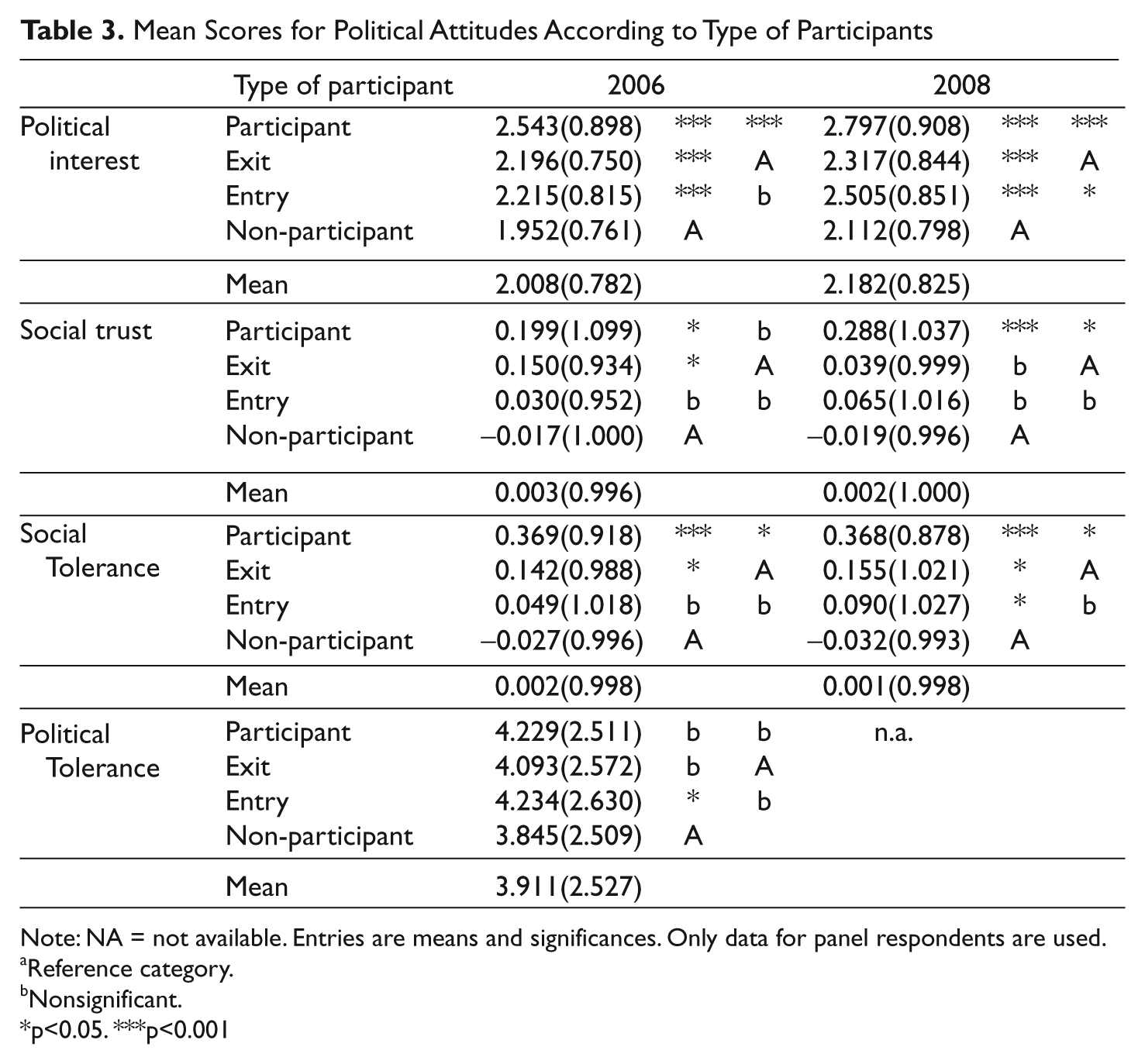
We first present the bivariate analyses and then the OLS regressions predicting the four political attitudes. Table 3 presents the mean scores on the four different political attitudes for the four types of respondents in 2006 and 2008. As expected in Hypothesis 1, nonparticipants have the lowest score on every political attitude, lower than the participant, exit, and entry groups. Clearly, future or past engagers are slightly more civic minded than nonparticipants both before and after their involvement in an association, although some differences are not significant. Apparently, those who are not involved in any deliberative association in 2006 and 2008 are the most distinctive group, in contrast to those who were a member of such an association on either one or both occasions. As entry group respondents already differ from nonparticipants in 2006 in their level of political interest and political tolerance, some degree of self-selection may be at work. Therefore, these analyses resemble Hustinx (2010) findings that volunteers and ex-volunteers do not substantially differentiate based on their social background profiles, patterns of involvement, or strength of organizational attachment. Similarly, we find only limited attitudinal differences between the participant, exit, and entry groups.
Mean Scores for Political Attitudes According to Type of Participants
Note: NA = not available. Entries are means and significances. Only data for panel respondents are used.
Reference category.
Nonsignificant.
p<0.05. ***p<0.001
Second, we expected, according to the socialization hypothesis, respondents who left an association between 2006 and 2008 (exit) to have similar levels of political attitudes in 2008 than those who continue to be a member of an association or joined one in 2007-2008 (participant and entry). However, contrary to our expectations, the political attitudes of the exit group did not differ from the attitudes of the entry group, except for political interest in 2008 (p > .01), which was slightly higher for the entry group than for the exit group. However, exit respondents still show higher levels of political interest and social tolerance (though not for social trust) than nonparticipants in 2008, so some degree of socialization also must occur. Therefore, although short-term engagement already strengthens people’s political attitudes, long-term engagement has an even greater effect.
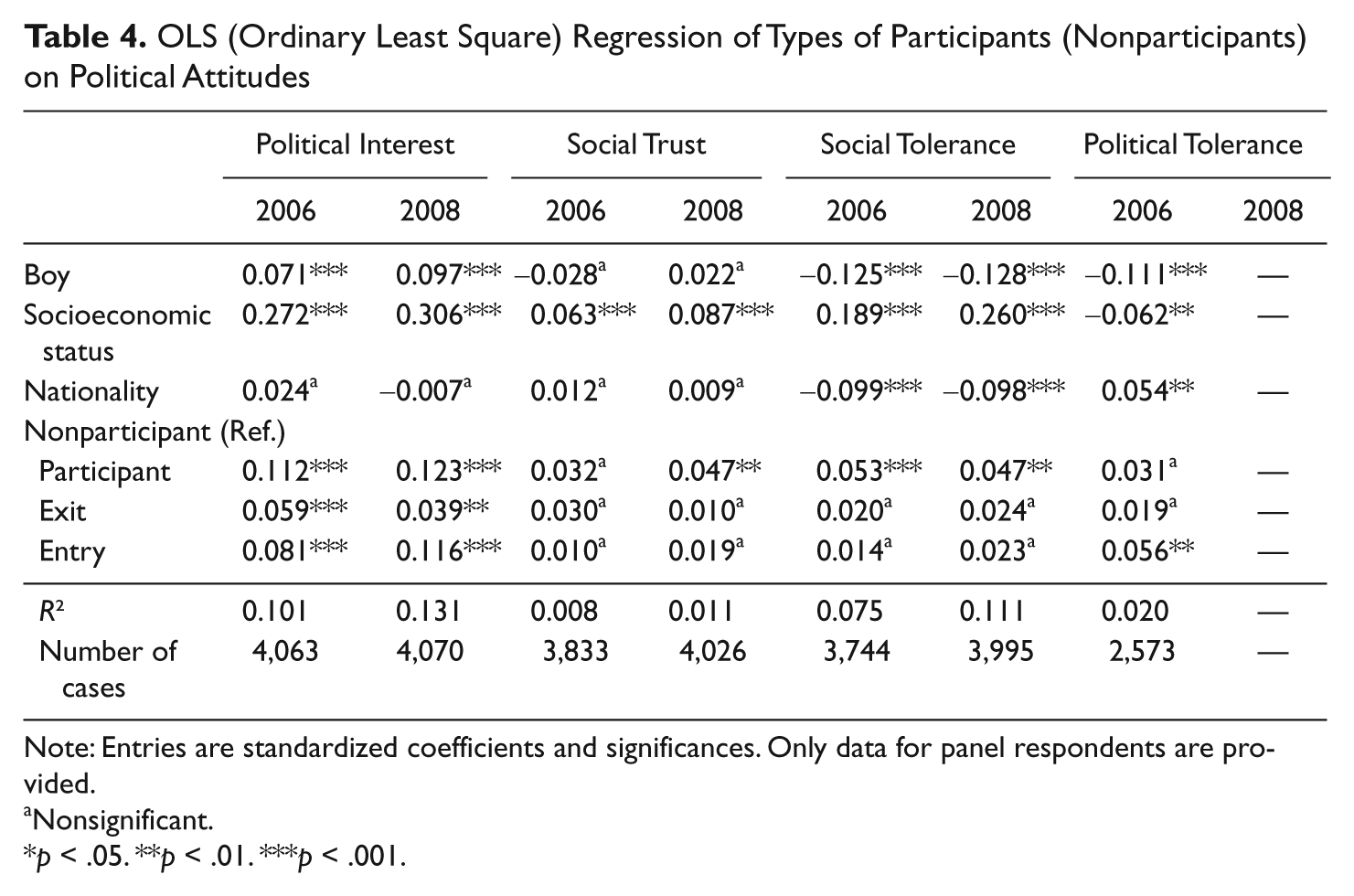
In a second step, the results were tested using a multivariate approach. The OLS regression presented in Table 4 compares the political attitudes of nonparticipants to those in participant, exit, and entry groups. A first finding is that boys have higher levels of political interest but lower levels of social trust and social and political tolerance. Young people with higher educational aspirations are also more interested in politics and are more socially trusting and tolerant but less politically tolerant. Having a Belgian nationality is associated with less social tolerance but greater political tolerance.
OLS (Ordinary Least Square) Regression of Types of Participants (Nonparticipants) on Political Attitudes
Note: Entries are standardized coefficients and significances. Only data for panel respondents are provided.
Nonsignificant.
p < .05. **p < .01. ***p < .001.
Then, if we look at the participation items, we find that participants are generally more civic minded than nonparticipants, except for political tolerance where there is no significant difference (see also Appendix 1 and Appendix 2).
Every other political attitude, however, shows a distinctive pattern. For political interest, we find that participants are the most interested, followed by entry-group respondents (who were already more interested in 2006), exit-group respondents, and finally, nonparticipants. This suggests that self-selection may play a role for political interest, as the group that joined a deliberative association in 2008 was already more interested than nonparticipants in 2006, that is, before joining. For social trust, however, participants are only slightly more trusting than the nonparticipants in 2008. For the other groups, no difference was found. So, in contrast to the social capital literature, but in line with the analyses conducted by Uslaner (2000), we find only a weak relationship between voluntary engagement and social trust. We also find participants to be more socially tolerant than nonparticipants. Thus, only long-term engagement leads to greater tolerance (or vice versa). As no significant differences were found for the “exit” and “entry” groups, this effect cannot be unambiguously attributed to socialization and/or self-selection. Political tolerance, finally, is most prominent among those who start engaging in the deliberative process. Probably, the view that everyone is allowed to have their say in the political process is a prerequisite for involvement in a deliberative association. The question is, however, why participants, and to a lesser extent, exit-group respondents hold the same level of political tolerance as nonparticipants. One explanation may be that participants are more pessimistic or realistic about the effectiveness of participating in politics. They may think that there are other, more effective ways to express their opinion than television talk shows and protest marches. Hence, we find some self-selection effects for political interest and political tolerance: Entry-group respondents have significantly higher levels of interest and political tolerance in 2006, that is, before they engage in a deliberative association. However, overall we find that nonparticipants have the lowest levels of political interest, tolerance, social, and political trust whereas participants have the highest levels.7
Contrary to our expectations, almost no significant differences were found between entry and exit groups for most political attitudes (Table 5). The only exception is that respondents who had left an association reported a lower level of political interest than those who had just joined one. As long-term participants have the highest scores for most political attitudes, we know that some socialization or self-selection effect must occur: Either people with certain dispositions self-select to remain in an association because their values are closer to the values within the association or long-term members are “better” socialized and develop stronger political attitudes. The only socialization effect we find for the exit group is for political interest: In 2008, exit respondents are more interested in politics than nonparticipants are, but this level is still lower than that reported by entry-group respondents and participants. In addition, it is clear from Table 4 (and to a lesser extent Table 5) that additional socialization effects occur among long-term participants, as these retain high levels of political attitudes. It is thus not either self-selection or socialization but self-selection and socialization that make participants more civic minded.
OLS (Ordinary Least Square) Regression of Types of Participants (Entry) on Political Attitudes
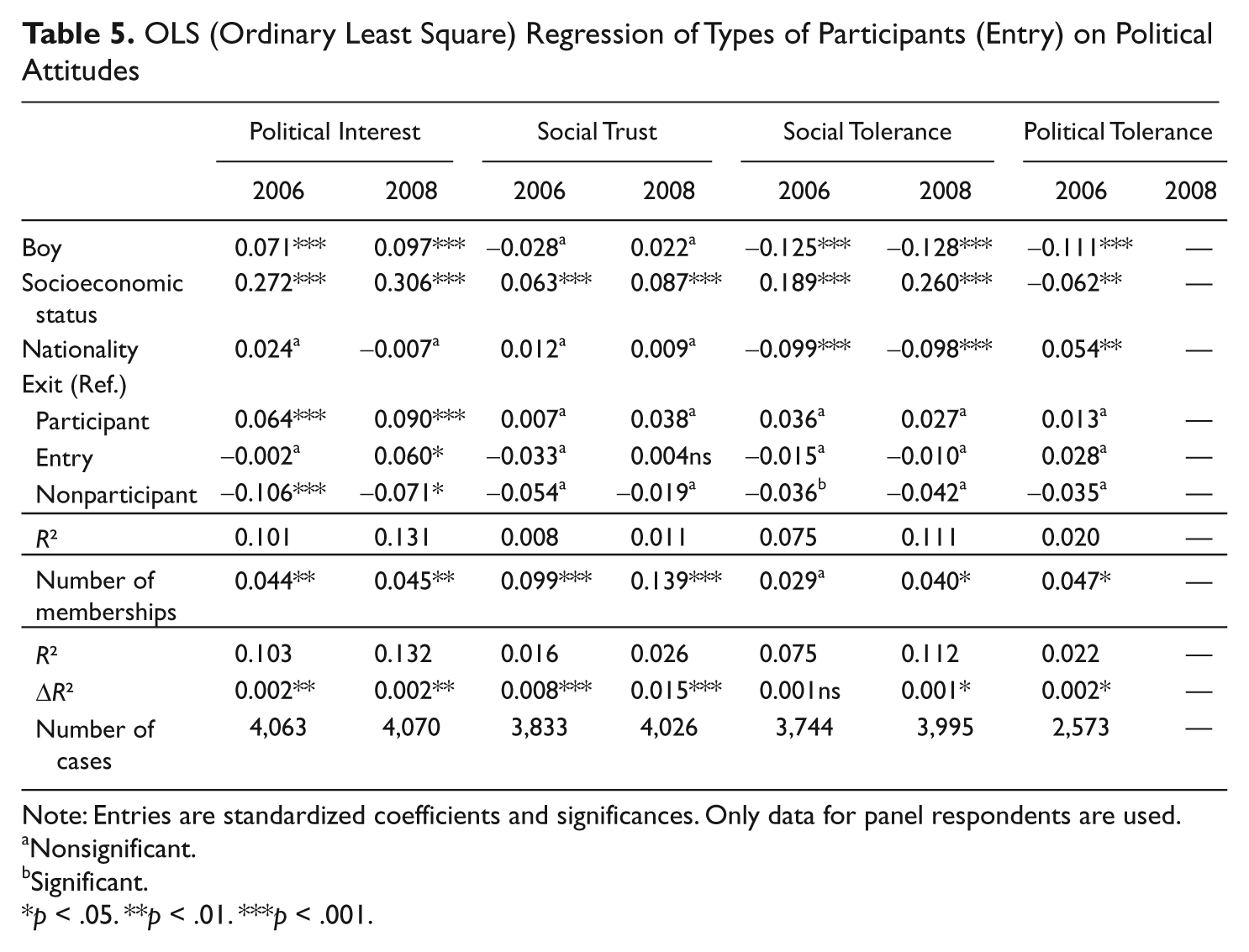
Note: Entries are standardized coefficients and significances. Only data for panel respondents are used.
Nonsignificant.
Significant.
p < .05. **p < .01. ***p < .001.
Finally, we also added the number of memberships to the regression analysis (Table 5), as multiple authors have stated that overlapping memberships might lead to stronger political attitudes, for instance, greater political tolerance. Cigler and Joslyn (2002, p. 10) state, “It is important to have overlapping memberships, as a single membership may expose people to similar views, whereas overlapping memberships have the potential to sensitize one to the views of others and perhaps contribute to an empathy for their positions, even if one does not agree.” Similarly, Uslaner also argues that engagement in different associations might lead to more social trust: “Yet there is substantial evidence that more demanding types of civic engagement, activities that involve you with people who may be different from yourself, both depend upon trust and lead to more faith in others in turn” (Uslaner, 2000, p. 573). Although we expected membership in deliberative associations to play an important role, the number of memberships has a greater effect for some political attitudes than membership in deliberative associations, a finding that has already been reported by Wollebaek and Selle (2003).
Although we specifically focused on deliberative associations, we also ran the regressions for other types of associations (sports and hobby groups; youth clubs and youth groups; cultural groups; environmental, peace, Third World, antiracism, volunteer organizations, and religious-ethnic organizations).8 Although one would expect different effects to occur for other types of associations, these relationships remained quite stable: The largest effects were found for political interest in addition to small socialization and self-selection effects.
Conclusion
In the literature, the available evidence on the relationship between voluntary engagement and political attitudes was discussed. The available research demonstrated evidence for both the socialization and self-selection hypothesis. First, research has shown that people self-select into associations; for instance, people with higher levels of social trust are more likely to join associations (Stolle, 1998). Second, other research has shown that people develop political attitudes as a result of their membership (Hooghe, 2003). However, most of the available studies thus far have shown only limited or indirect effects (Conway et al., 2009; Pasek et al., 2008); they draw on single-wave studies, and/or they have not explored whether socialization and self-selection effects to not reinforce each other. This study aims to overcome these limitations by relying on panel data among adolescents. Despite all these precautions, and in line with previous research, only limited effects were found, suggesting that young people’s political attitudes are not that vulnerable as expected from genetic and psychological research (Alwin & Krosnick, 1991; Hatemi et al., 2009). However, this study did not compare the vulnerability of young and old age groups, so it remains to be investigated whether the same effects occur among adults.
This article explored the relationship between voluntary engagement and political attitudes in order to establish whether people either self-select into or are socialized through associations. Although we used panel data, we were unable to develop clear conclusions and found evidence for both hypotheses. First, we found that respondents who joined a deliberative association between 2006 and 2008 have higher levels of political interest and political tolerance than the nonparticipants in 2006. This provides evidence for the self-selection hypothesis: Even before being involved in an association, entry-group respondents already have stronger political attitudes. However, we do not find such effects for social trust and social tolerance. Second, we show that those who left a deliberative association between 2006 and 2008 (exit) retained their levels of political interest in 2008 compared to nonparticipants but did not differ with respect to social and political trust. This article thus also provides evidence for the socialization hypothesis.
Although we found that uninvolved respondents had the lowest scores on the political attitudes scales, those who were a member of a deliberative association in 2006 or 2008 were almost indiscernible from each other. Those who continued to be a member, on the other hand, were the most civic minded. This suggests that the process of self-selection is reinforced by socialization: People with certain political attitudes (mainly political interest) self-select into associations that socialize people to develop greater political interest, social trust, and social tolerance. Most notably, multiple memberships contribute equally or more to the explained variance of political interest, social and political tolerance, and social trust than membership in deliberative associations.
The question is why the greatest effects are found for political interest. A first explanation may lie in the fact that we explored the relationship between deliberative associations and political interest, and there is probably a higher incentive to engage in deliberative associations if one is interested in political processes. People who are more interested in politics will tend to self-select into deliberative associations. This manifests itself in the higher correlation between political interest and voluntary engagement, compared to the other political attitudes (see Appendix 1). Second, processes of mobilization might also play a role, as young people who are already interested might be easier to recruit into deliberative associations. People who are already interested in politics and engaged in public deliberation will be more likely to join an association when asked to participate. Third, socialization implies that through their engagement, people develop an interest in the deliberative process, leading to greater political interest. By joining an association, people learn to understand the nature of politics and compromise and start to appreciate the political process. These processes may work more for political interest than for trust and tolerance. However, we must stress that political interest is only measured by a single indicator, which might lead to biased estimates. Further research has to look whether these results hold for a measure of political interest using several indicators.
Although we would have expected to find strong effects in our sample, as young people’s attitudes are more still more volatile than adults’, we find only weak effects of engagement in deliberative associations on political attitudes. Overall, the low correlations between social trust, social tolerance, and political tolerance are in line with findings reported by some other authors. First, authors have shown that there is only a weak link between political attitudes and voluntary engagement (Badescu & Neller, 2007; Newton, 1997; Uslaner, 2000). As these attitudes are only weakly related with engagement, it may be useful to look into attitudes that are more closely related to particular types of voluntary association membership; thus, it might be interesting to explore the link between environmental attitudes and the membership in an environmental association, between an individual’s level of altruism and their membership in a volunteering association, between religiosity level and the membership in a religious association. Second, more information is needed on how the attitudes of members develop before, during, and after their involvement in associations. We know that young members joining an association are more likely to remain involved throughout their life, but the exact nature of this process is unclear. This would require longitudinal panel data on association members or on the membership in specific associations. Third, as we already described in the beginning of this article, we expect that political attitudes develop mostly during adolescence and early adulthood. Although this study does not focus on this issue in particular, it might be that the age between 16 and 18 is the most important period for the development of political interest and some forms of political mobilization and radicalization rather than social trust, social tolerance, and political tolerance, which might develop much earlier (Hess & Torney, 1967; van Deth, Abendschön, & Vollmar, 2011). Fourth, it has to be noted that data were collected in Belgium, a country that has known political turmoil during the entire observation period. This might imply that the effect we found are specific for the Belgian case. It has to be noted, however, that in other Western European countries too, political systems have experienced moments of political crisis, related to economic problems, the increasing cultural diversity of society, or the rise of populist or extreme right parties.
Footnotes
Appendix 1
Correlations Between Membership in Deliberative Associations and Political Attitudes
| Participant | Entry | Exit | |
|---|---|---|---|
| Political interest 2006 | .122*** | .088*** | .054*** |
| Political interest 2008 | .133*** | .130*** | .037* |
| Social trust 2006 | .035* | .009 | .034* |
| Social trust 2008 | .051*** | .021 | .008 |
| Social tolerance 2006 | .068*** | .016 | .032* |
| Social tolerance 2008 | .065*** | .030 | .035* |
| Political tolerance 2006 | .025 | .044* | .016 |
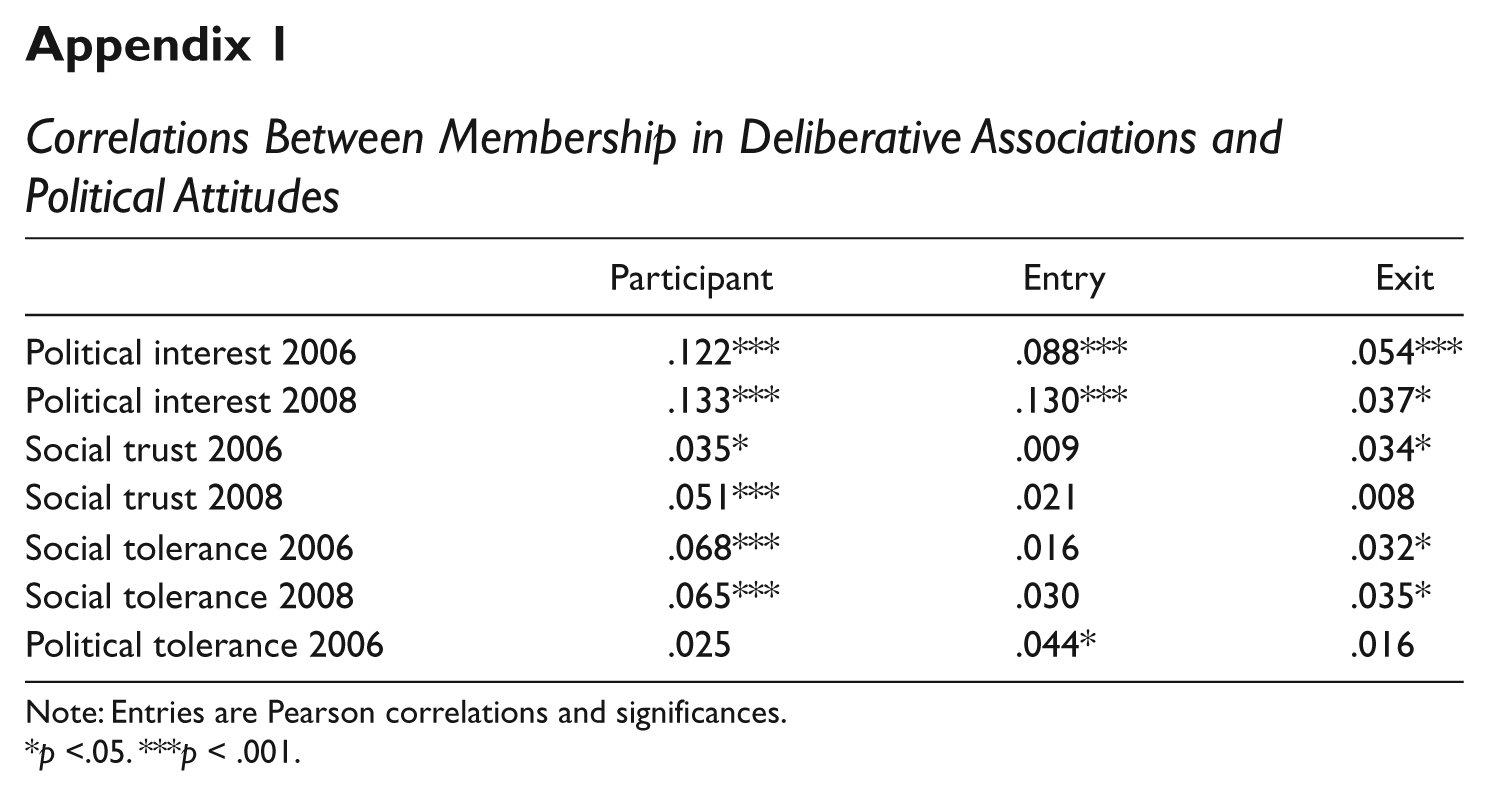
Note: Entries are Pearson correlations and significances.
p <.05. ***p < .001.
Appendix 2
OLS (Ordinary Least Square) Regression of Participants on Political Attitudes
| Political Interest | Social Trust | Social Tolerance | Political Tolerance | |||||
|---|---|---|---|---|---|---|---|---|
| 2006 | 2008 | 2006 | 2006 | 2008 | 2008 | 2006 | 2008 | |
| Boy | 0.072*** | 0.094*** | −0.027 a | 0.024 a | −0.125*** | −0.131*** | −0.112*** | — |
| Socioeconomic status | 0.280*** | 0.308*** | 0.062*** | 0.090*** | 0.190*** | 0.258*** | −0.057** | — |
| Nationality | 0.026 a | −0.006 a | 0.014 a | 0.008 a | −0.099*** | −0.102*** | 0.052** | — |
| Participant | 0.106*** | 0.154*** | 0.042** | 0.033* | 0.046** | 0.038** | 0.028 a | — |
| R 2 | 0.093 | 0.126 | 0.008 | 0.010 | 0.074 | 0.108 | 0.017 | — |
| Number of cases | 4,082 | 4,120 | 3,850 | 4,075 | 3,759 | 4,045 | 2,579 | — |
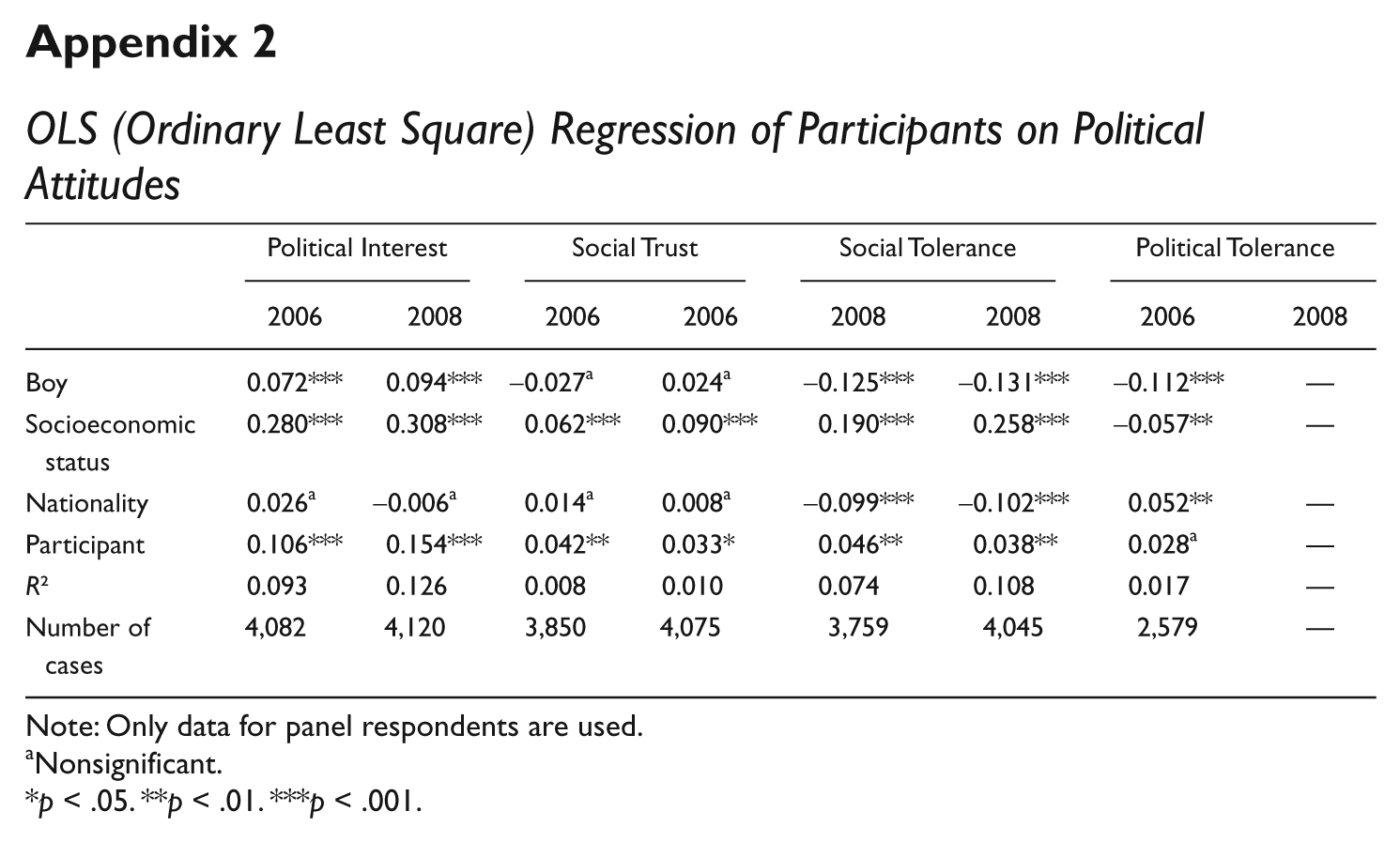
Note: Only data for panel respondents are used.
Nonsignificant.
p < .05. **p < .01. ***p < .001.
Acknowledgements
The author would like to thank the Research Council of the KU Leuven and the Research Foundation—Flanders for their generous support for this project.
Declaration of Conflicting Interests
The author(s) declared no potential conflicts of interest with respect to the research, authorship, and/or publication of this article.
Funding
The author(s) received no financial support for the research, authorship, and/or publication of this article.