



Abstract
Social, economic, and political transformations have traditionally complicated the balance between individual liberties and common good (or national needs). In times of war this balance appears more fragile and—given the role of philanthropy in the formation of identities—philanthropic studies as a field should pay more attention to these dynamics. Accordingly, in this article, the author investigates the impact of World War 1 on the German-American community. Through the historical case study of one German-American voluntary association based in Indianapolis, the author dismisses both ethnic disappearance and ethnic survival theories. In contrast, the author proposes a more nuanced approach to the processes of assimilation of minority groups. The author contends that German-Americans did not lose the battle for survival but for pluralism and suggests that in times of economic as well as social transformations homogenizing forces tend to silence alternative voices in American society.
The terrorist attacks of September 11, 2001, have opened a debate on the integration of Muslim Americans in society (Abdo, August 27, 2006) and their loyalty to their country of adoption (Shavit, 2007). Controversies over a Muslim Center in lower Manhattan and the teaching of Arabic at public schools (Kahlenberg, August 19, 2007) have spurred acrimonious exchanges in several media outlets. The expression “hyphenated Americans” resurfaced in public debates. A growing body of research has investigated the influence of a contentious political environment on ethnic identity formation (Fine & Sirin, 2007) and analyzed the traumatic impact of surveillance, exclusion, and isolation on Muslim Americans (Zaal, Salah, & Fine, 2007). Muslim Americans have reacted to these outside pressures by modifying their philanthropic behaviors (Al-Marayati, 2005), internalizing Muslim identities (Peek, 2003), or affirming their Islamic rather than ethnic or national identities (Cainkar, 2004; Peek & Sutton, 2003).
Against this background, the analysis of German-Americans during World War I sheds light on the complex dynamics through which ethnic minorities have negotiated their identities and roles in American society. During the nationalist hysteria of the war years, American public opinion mistrusted German-Americans’ devotion to their country of adoption and attacked their alleged double allegiance. I contend that conventional narratives of assimilation framed along either ethnic disappearance or ethnic survival approaches cannot account for the complex strategies of resistance, adaptations, and retreat that characterized the German-American community during a contentious political period. While scholars of philanthropy have investigated the role of minority groups’ voluntary associations in facilitating or resisting assimilation in mainstream society (Kaufman, 2002; Whitefield, 2004), American patriotic organizations of the time had no doubts in denouncing German-American associations both as Prussianism’s inroads into American society and as part of a master plan to Germanize America. Accordingly, through the historical case study of the Indianapolis Sozialer Turnverein, I examine the hyphenated identity formation of an ethnic group in the United States against the background of a conflictual sociopolitical environment.
German-Americans During World War I: Old and New Perspectives
World War I was a watershed in American history. It marked the passage from a society organized along voluntaristic lines to a modern, industrial one. More than a war against Germany, the war years radicalized American society’s inherent conflicts (Kennedy, 1983, p. 41). At the turn of the century, American society appeared fragmented along ethnic, religious, and economic lines. American society’s social homogeneity, which in the eyes of Alexis de Tocqueville (2006 [1835-1840], pp. 193-195) had made the American democratic experiment possible, vanished under the combined pressures of immigration and industrialization. To progressive supporters of the war, the crucial problem of American society appeared to be the tension between individual rights and national, collective needs. Lamenting excessive individualism and societal fragmentation, progressives hoped the war would tighten social bonds and create a commonality of mind, which were considered the prerequisites for a stable democracy (Kennedy, 1983, pp. 42-49).
The primary American front thus became the home front. The war years forced social, economic, and ethnic groups to redraw the boundaries of their identities and roles (Capozzola, 2008, p. 209). For nobody was this task more traumatic than for Americans of German descent. A perceptive observer recognized the “profound tragedy” of German-Americans:
Just when they were beginning to be proud of their native country, they had to denounce it; for the time being, the process of voluntary assimilation that they had cheerfully, nay eagerly, undergone halted. Their loyalty, which had been spontaneous, became strained when it was made compulsory. (Bonn, 1948, p. 177)
Emphasizing either the continuity over or the break represented by the war years, scholars have juxtaposed two interpretations of the German-American experience during the war. While contesting the myth of German-Americans betrayal, studies written in the immediate postwar period were influenced by an “assimilationist perspective,” thus leading to descriptions of World War I as a clear break in the German-American experience (Tolzmann, 1988, p. 283). In contrast, the rediscovery of American society’s ethnic roots in the 1960s gave new momentum to the field of German-American studies and, consequently, to ethnic survival theories (Conzen, 1980). However, although U.S. 1980 Census data contributed to German-American studies’ growth and to a general attention to American society’s “German heritage” (Tolzmann, 1988, pp. 284-285), they emphasized again the negative effects of the nationalist hysteria of the 1910s.
The U.S. 1980 Census reported the astonishing number of nearly 50 million Americans claiming a German ancestry (U.S. Census Bureau, 1980). Although the “statistical game” at the base of these numbers is questionable, scholars estimate that between 1820 and 1970 Germans accounted for about 15% of the total immigrants to the United States (Adams, 1993, p. 2). To many commentators, the relative absence of a vital public German culture in America stood in sharp contrast not only to the 1980 Census data but also to the prominent role of many Americans of German descent in business as well as cultural life at the turn of the 20th century. 1
Ethnic disappearance theories thus emphasized the eradication of German culture, the so-called Lusitania effect, the closure of German-speaking newspapers, and the disappearance of German language from American schools. Yox (2001) has recently stressed the dangers of German nationalism and linked German-Americans’ strength during the prewar years to their emphasis on German nationalism, German cultural and moral superiority, and a duty to defend Deutschtum (Germanness or German culture). In his pioneering study, Wittke (1936/1995) had debunked, however, the myth of German-Americans’ betrayal during the World War I and asserted that the American patriotic hysteria did not correspond to a real threat. Like Wittke, Kirschbaum (1986) and Ramsey (2002) emphasize the negative effects of the war on German culture. In a more nuanced approach, regional studies have related the defensive attitude of the German community to a decreasing influx of German immigrants at the turn of the century. According to these interpretations, World War I only represented the final blow to an already weakened German community (Probst, 1989).
Although not downplaying the negative influence of the war on German culture, ethnic survival theories underline the survival of Deutschtum in America. Scholars have stressed the paradoxical effects of the climate of accusations and counteraccusations on the German community. The attack on “everything German” tightened the ranks of German-Americans, Americans of German descent rediscovered feelings of nostalgia for the old Heimat (Wüstenbecker, 2007), and the German language press boomed during the first war years (Wittke, 1936/1995). In the wake of the American entry in the war, Germans internalized their identities and Germanness became a private and personal affair. From a broader perspective, Trommler (2009) contends that the anti-German hysteria was part of a larger attack on pacifists and socialists, which eventually prepared the terrain for the “Red Scare” propaganda. Similarly, through an analysis of four mid-Western cities, Wüstenbecker (2007, pp. 320-327) argues that anti-German suspicions developed in episodes of violence only in cities where Germans could be identified with pacifists and socialists.
Historical evidence, however, supports both ethnic disappearance and ethnic survival theories. By stressing the heterogeneity of the German community, Wüstenbecker (2007, pp. 307-315) asserts that German-Americans’ reaction to the nationalism of the time was all but homogeneous. 2 Similarly, in an empirical study of American Turners’ associational life at the end of the 1990s that traces the prewar origins of more than 90% of today’s Turner societies, Hofmann (2002) contends that although the data confirm the ethnic survival theory, the ethnic disappearance theory cannot be dismissed since these societies developed into multiethnic organizations. Pfister (2009) analyzes the opposing tendencies among American Turners, torn between attempts of “going mainstream” and closing themselves on ethnic lines to defend and preserve German culture from the threat of Americanization. In line with these studies and from a broader perspective focusing on foreign language newspapers of multiple immigrant communities, Jeffrey Mirel (2010) has dismissed the classical narrative describing American educational programs as aiming to eradicate immigrants’ cultural background and push for an acceptance of American values. In contrast, he contends that immigrants resisted unilateral Americanization and mediated assimilation by embracing American democracy as a framework allowing for pluralism (pp. 104-157). Immigrants’ newspapers promoted a “patriotic pluralism,” that is, a particular version of Americanization that “combined deep, patriotic commitment to this country with pride in the immigrants’ native cultures” (Mirel, 2010, p. 156). From this perspective, Turner societies offer an interesting vantage point for the study of transnational transfers of symbols and traditions and their adaptation to a new sociopolitical context.
Founded in Germany by Friedrich Ludwig Jahn in the early 19th century, the Turner movement developed in response to Prussia’s humiliating defeat by Napoleon’s armies. Turner societies contributed to popularize German nationalism by merging physical exercise, patriotism, and democratic ideals. Amidst a plethora of other voluntary associations, they played a crucial role in Germans’ struggle for democracy and national unification in the 19th century (Düding, 1991). The development of the American national Turner movement followed the failed 1848 uprisings. In contrast to a conservative nationalist wing, the radical, democratic Turners who had actively participated in the democratic revolutions of 1848 found political refuge in the United States (the “Forty-Eighters”), where old associational habits soon resurfaced and were progressively adapted to the new American realities. The democratic “Spirit of 1848” continued to influence the lives of these political refugees in the United States, hence explaining their commitment to the abolitionist cause, support of President Abraham Lincoln, and participation in the Civil War (Levine, 1992; Pumroy & Rampelmann, 1996). Their participation in the Civil War and the political support given to Abraham Lincoln became symbolic events in shaping the distinctive identity of American Turner societies (Hofmann, 2009).
Regional studies have shown that disappearance and survival approaches are not mutually exclusive. Scholars have analyzed the effects of World War I on the German community through the lens of the German language press (Wittke, 1936/1995), the teaching of German language in public schools (Ramsey, 2002), general regional comparative approaches (Wüstenbecker, 2007), and nationwide surveys (Kirschbaum, 1986). Surprisingly, historians have not paid much attention to the fate of Turner societies during the war years (see Pumroy & Rampelmann, 1996). I argue that neither the ethnic disappearance theory nor the ethnic survival theory appropriately describe the difficult evolution of the Indianapolis Sozialer Turnverein (Indianapolis Social Gymnastic Society) in the 1910s. 3
Scope and Methodology
The scope of previous studies has strongly influenced their authors’ endorsement of either ethnic survival or ethnic disappearance theories. Large, nationwide investigations (limited to the war years) usually pinpoint American public opinion’s multifaceted pressures on German-Americans; hence, these approaches (quite unsurprisingly) support ethnic disappearance theories (Kirschbaum, 1986; Wittke, 1936/1995). In contrast, regional studies (Probst, 1989; Wüstenbecker, 2007) and longue durée approaches (Tolzmann, 1995-1998) emphasize (equally unsurprisingly) the survival of Germanness in spite of the war.
I shall discuss the reactions and strategies of Indianapolis’ Germans during the war years and, hence, focus primarily on the Indianapolis Sozialer Turnverein (or Athenaeum Turners) and not on the interrelated pressures exercised by American society and state as well as federal policies. The importance of American society’s pressures on the German community cannot be underemphasized. Nonetheless, by placing the Athenaeum Turners in the foreground and by analyzing this association in the 1910s, I will explore one German-American organization in depth and discuss its different strategies of defense, assimilation, and survival.
The records of the American Turners (North American Gymnastic Union), Athenaeum Damenverein (Athenaeum Women’s Auxiliary Gymnastic Society), and Athenaeum Turners are crucial primary sources. The richness of (almost unexplored) archival sources simultaneously makes this undertaking worthwhile and historians guilty of having neglected a case study that may shed light on the effects of the World War I on German-American associational life. At least in part, the rarity of studies on the Athenaeum Turners in this period might be linked to the fragmentation of the Athenaeum Turners’ records during the crucial years of the war.
By using the traditional historical methodology of the triangulation approach, I will use the records of the American Turners and the Athenaeum Damenverein to integrate the scattered information of the Athenaeum Turner records. This approach is fruitful because during the 1910s the National Union overlapped the Indianapolis branch. Indeed, leading members of the Sozialer Turnerverein held senior officer positions in the National Union (e.g., Theodore Stempfel was both the president of the National Union and secretary of the Athenaeum Verein). Similarly, the Athenaeum Damenverein records (the minutes of the Board of Directors are complete for all the 1910s) provide important insights into the Athenaeum Turners’ internal discussions.
In order, however, to avoid an examination of the Athenaeum Turners in a historical vacuum, I use two English language newspapers (Indianapolis Star and Indianapolis News) and one German language newspaper (Telegraph und Tribüne) to place the Turner society in the broader context of the 1910s. Although the use of newspaper articles cannot provide a thorough picture of the complexities of American society, they give a “taste” of the national hysteria of those years and of the problems the German community faced in Indianapolis. Furthermore, traditional primary sources such as speeches, pamphlets, and publications of the time integrate the background information provided by contemporary newspapers.
The Indianapolis Sozialer Turnverein in the 1910s
Drawn from the American Turner Records’ Annual Reports (North American Gymnastic Union [NAGU], 1884-1922), Turner societies’ membership statistics suggest a link between immigration patterns and membership levels (Figure 1). Membership in Turner societies (both at the national and state levels) increased steadily until the mid-1890s. Although lower than during the 1890s, membership remained stable during the first decade of the 20th century and even increased in the years before the outbreak of the war. In 1916-1917, membership in all Indiana Turner societies reached 2,415—the highest number since 1883-1884 (when data were first collected). Although the data between 1915 and 1919 are fragmented, membership declined as the result of the war. Membership levels in the Athenaeum society, however, show a different pattern (Figure 2). Membership increased steadily until 1908-1909 to 275 members. The numbers remained stable from 1909-1910 to 1914-1915 (between 240 and 250 members), increased to a surprising 267 in 1916-1917, fell to 213 in 1919-1920, and recovered to 314 in 1922-1923 (the highest level since 1883-1884). Whereas the membership boom of the 1890s followed the last German immigration wave of the 1880s, the decrease of the 1900s mirrors the integration of second-generation Germans at the beginning of the new century (Adams, 1993; Stempfel, 1898/1991). The sudden increase in membership during the early war years (during the phase of American neutrality) confirms scholars’ suggestions of a rediscovery of German roots by assimilated immigrants of German descent when confronted with the emerging American patriotic hysteria. The available data for the period 1916-1920 show the effect of the war on German associations. However, Turner societies survived and membership levels did not collapse. On the contrary, membership in the Athenaeum Turner increased to unprecedented levels in the early 1920s.
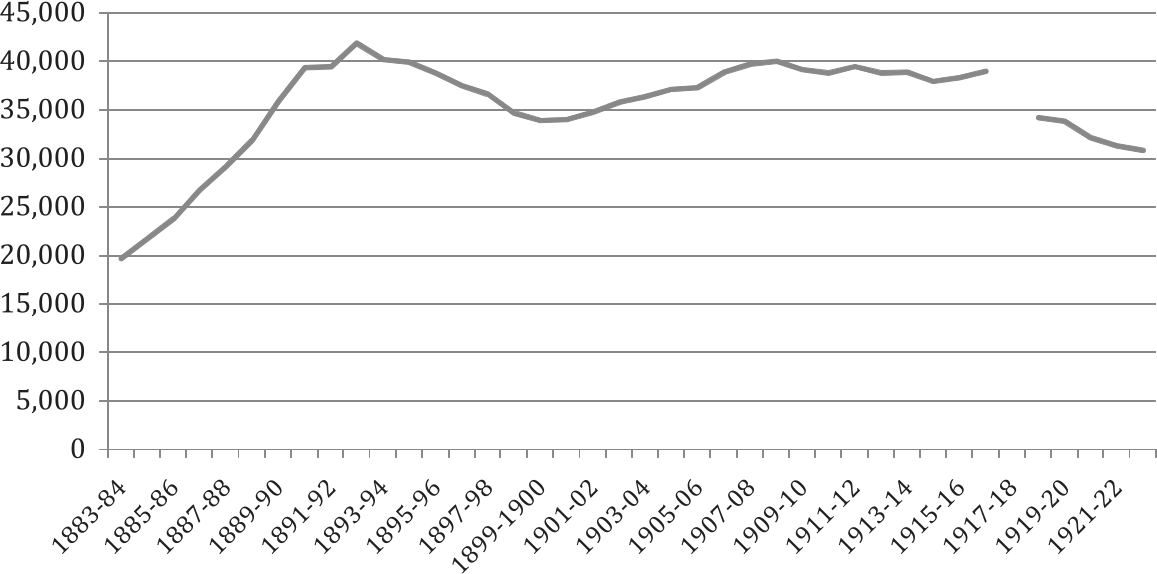
National Turner Union membership.
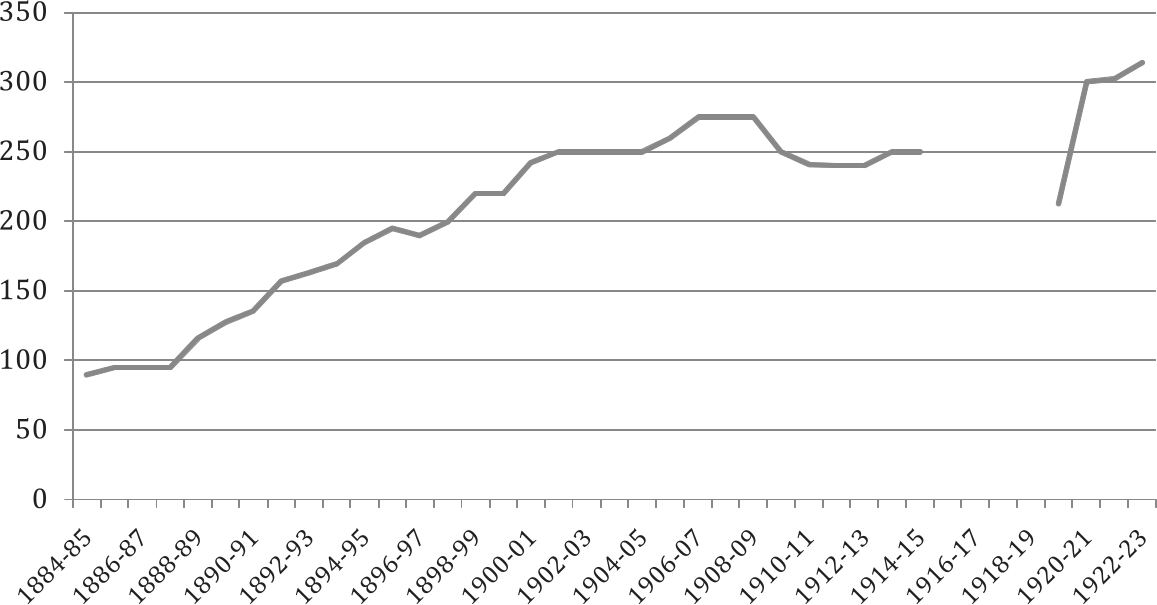
Indianapolis Sozialer Turnverein membership.
Other archival materials confirm this pattern and add flesh to the numerical bones. The Constitution and By-laws (Verfassung und Nebengesetze des Sozialen Turnvereins von Indianapolis) of the Athenaeum Turners (and of all the National Union’s member societies) required American citizenship (or at least the First Papers) for membership in a Turner society (Athenaeum Turners, n.d.). 4 In the years before the outbreak of the war, Turners had emphasized assimilation and their role in American society. On the occasion of the 1898 opening ceremony of the German House, Charles E. Emmerich (supervisor of German instruction in Indianapolis public schools) stressed Anglo-Saxons’ German origins and identified the United States as the place where immigrants “can meet . . . and . . . after rubbing elbows together, so to speak, we shall, each of us, find that we are not nearly such bad fellows as some pessimists on either side paint us” (as quoted in newspaper clipping; Emmerich, n.d.). Herman Lieber, president of the German House, entwined German and American values. Accordingly, George Washington’s “logical and unselfish patriotism” was described as also representing German values, and “We [German-Americans] can therefore be true to our adoptive country and fulfill all duties towards it, and yet keep our old home in loving remembrance” (as quoted in newspaper clipping, Lieber, June 16, 1898). By celebrating the anniversary of the German House on the day of Washington’s birthday, the Sozialer Turnverein explicitly emphasized the bonds between the German-American community and their country of adoption. Washington was the “embodiment of the best attributes of German character” (Fesler, 1908) and, during the 1908 celebrations, Herman Lieber (1908) declared to be “an American by choice, a democrat in principle.”
After the beginning of the European hostilities in August 1914, however, Athenaeum Turners assumed a clear pro-Germany stand. In a letter mourning the death of the German “Turnveteran” Ferdinand Goetz, the national leadership expressed its support to the German Turner Societies in the midst of the “heroic war” (Stempfel, T. to Prof. Dr. F. Rühl, December 2, 1915). The German House became a base for German nationalists and even for a small group of Germans willing to fight for Germany on European battlefields (“Die Liga von 1914,” August 14, 1914; “German Citizens Form ‘The League of 1914’,”August 12, 1914; “Germans for War Body Here,” August 4, 1914; “German Reservists Not Able to Get Started,” August 4, 1914). 5 In the local press, leaders of the Athenaeum Turners vehemently defended Germany and the teaching of German language in public schools (Stempfel, August 23, 1914; May 27, 1917; “War Declared Fight to Preserve Teutonic Standards of Civilization,” August 20, 1914). Furthermore, the National Executive Committee (Vorort des Nordamerikanischen Turnerbundes) decided to collect funds to aid Germans (National Executive Committee, August 1, 1914; December 4, 1915). On May 3, 1915, the National Union (1914-1915, p. ix) sent US$2,076 to the Deutsche Turnschaft (German Gymnastic Community) and the Arbeiter-Turnerbund (Workers’ Gymnastic Union), which would transfer the money to the National Relief Fund (Nationaler Hilfsfond). According to the National Council Meetings’ Minutes (National Executive Committee, September 9, 1916; January 7, 1917), the Executive Committee transferred to the German Gymnastic Community at least an additional US$5,000 before the U.S. war declaration on Germany. Through the German House’s Support Fund (Unterstützungsfond), the National Union (National Executive Committee to the Societies of the North American Gymnastic Union, February 7, 1917) also sent additional money to Germany on October 9, 1916 (US$538.50) and on February 16, 1917 (US$811.90) to be distributed among the members of the gymnastic societies in Austria and Germany. 6
German language newspapers actively supported Germany’s “heroic war.” Articles and cartoons expressed Germany’s point of view and celebrated the valor and bravery of the Prussian soldier. Published on May 3, 1915, by Telegraph und Tribüne, Figure 3 depicts two enemy soldiers approaching a brave German with firearms pointed. Emblematically, the caption reads: “Blackmail. Stop, German! Take us prisoners, otherwise . . . we will shoot!”
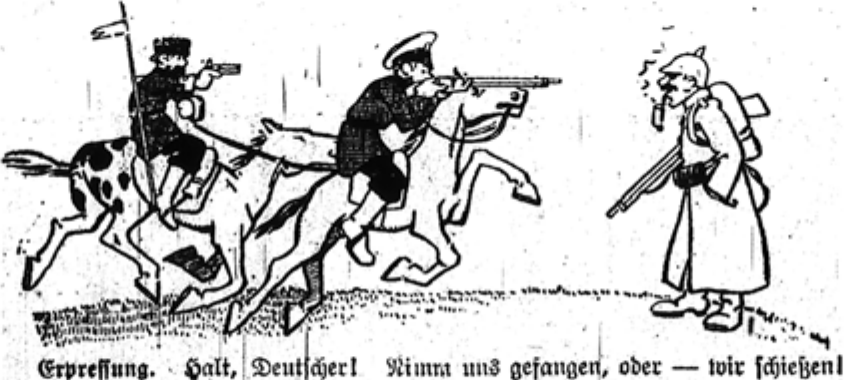
Blackmailing.
Besides celebrating the military valor of the German army, German-American newspapers attempted to balance what they perceived as blatantly pro-British reports by the American press. Allied charges of war crime were perceived as particularly pernicious. Also published on May 3, 1915, by Telegraph und Tribüne, Figure 4 shows a soldier whose name betrays his Russian nationality. In the first image he appears pinched and the caption reads: “How he looked like before being taken prisoner by the Germans.” In the second image the same soldier appears smiling and well fed, and the caption reads: “And how he looked like after having spent three months in a German prison.”
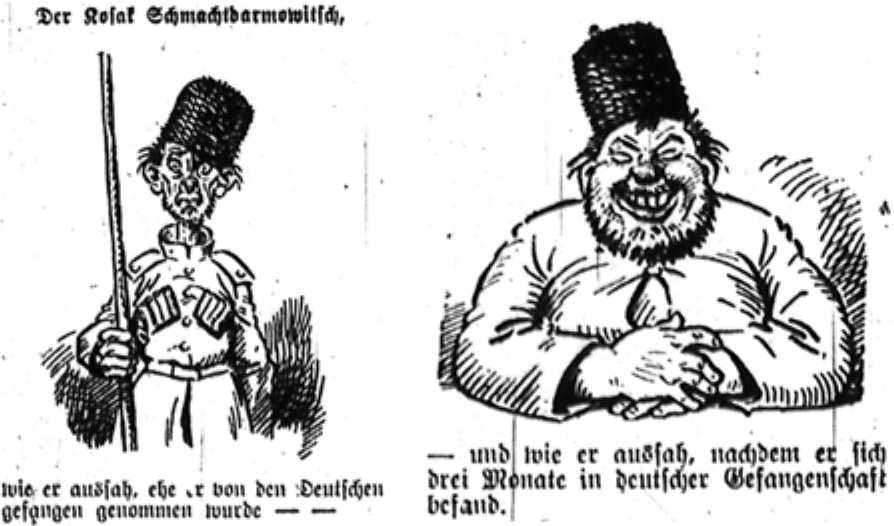
Russian prisoner.
During the first years of the European conflict, the Turners emphasized their support to international peace and arbitration. According to an advertisement published on The American Turner (Turner Publishing Co., 1917), a Turner stands for “the most intensive cultivation of humanity” and for “the solidarity of mankind in all its cultural enterprises.” Prior to this, in 1913, the National Executive Committee (March 1, 1913) had protested against the passage of the Militia Pay Bill (Pepper Bill) because any “attempt to strengthen our military force contradicts the seriousness of our declaration in favor of peace and arbitration.” Preemptively, the committee dismissed possible accusations of antipatriotism by celebrating German-Americans’ participation in the Civil War. 7
With the war, however, external pressures increased. The lawyer Gustavus Ohlinger gained brief notoriety as an author of articles and books on the “German problem” in the United States during World War I. He (1916) argued that German immigrants from the 1870s and 1880s felt a deep allegiance to the German Empire, and thus cannot be integrated in the United States because of this double allegiance.
8
Moreover, Ohlinger compared the German war conduct in Europe with German-Americans’ pressing for German language in public schools and German language newspapers in America. In a speech at the Indianapolis Literary Club, Lucius B. Swift (a publicist, Indiana attorney, and civil service reformer) vehemently attacked German aggression during the war years and questioned German-Americans’ loyalties. Swift (1915) compared German and Anglo-Saxon traditions by describing the former as an “unbroken monotony of submission by the people to authority,” whereas the latter was “an undying struggle for government of the people” (p. 6). He questioned German-Americans’ loyalties, underlined their political immaturity, and concluded that
there can be no blending of American and German political ideals. . . . [T]here must be no divided allegiance; . . . Americans will make it their work to preserve their heritage. The struggle which shakes the world today is the old struggle of democracy against autocracy. (p. 30)
Not surprisingly, the Turner leadership became increasingly concerned with the nationalist hysteria. As president of the North American Gymnastic Union, in a telegram to President Woodrow Wilson, Theodore Stempfel stressed that the “rupture [between the U.S. and Germany] would cause the most profound and irremediable grief, particularly when the issue under discussion is seemingly based upon disputable facts and theories” (National Executive Committee to President Wilson, June 3, 1915). In the 1916-1917 Annual Report, Richard Kurz (Chairman of the Indianapolis Sozialer Turnverein; Sozialer Turnverein von Indianapolis, 1916-1917) attacked the Wilson Administration and the Congress for their intention to intervene in the European conflict and stressed the potential negative effects on the German-American community. Nonetheless, Stempfel (July 27, 1915) and the National Executive Committee (March 11, 1915) repeatedly criticized public demonstrations against the Wilson Administration, regarding them as both a “tactical mistake” and a sign of impoliteness toward their country of adoption. One month before the American declaration of war, the National Executive Committee (National Executive Committee to the Societies of the North American Gymnastic Union, February 7, 1917) published an official note expressing the hope to settle the “complications between our country [emphasis is mine] and Germany” by arbitration, but stressing that
since membership in our organization is restricted to American citizens, there can be no other thought than that all its members will be true to the demands of American citizenship. . . . [T]he tender voice of the heart must be silenced should the stern call of duty be heard. . . . Our home and country is America!
The strategy of appealing directly to and mobilizing the people in his support in order to bypass a confrontational Congress and party led President Woodrow Wilson to launch a broad attack against hyphenated Americans in 1915 and 1916, thus contributing to the widespread intolerance (Kennedy, 1983, pp. 23-25, 45-49, 59-66). The Espionage Act of June 1917 and later the Sedition Act (March 1918) provided the government with the tools to suppress opposition to war and civil liberties (Kennedy, 1983, pp. 75-88). Against this background, patriotic organizations and a majority of newspapers could not, or refused to, understand the energy with which German-Americans had sustained their Fatherland during the years of American neutrality (1914-1917). Since the outbreak of the European war, and with increased virulence in the wake of the Lusitania’s sinking, the “Zimmermann telegram” affair, and the eventual entrance of the United States in the first worldwide war, newspapers had given high resonance to trials and convictions for conspiracy and espionage of German citizens as well as of German-Americans (e.g., “German Seized at Border,” April 8, 1917; “Germans Sentenced in Bomb Conspiracy,” April 6, 1917; “Spies Still Get Facts to Kaiser,” May 26, 1917; “U.S. Convicts Six Teuton plotters,” April 2, 1917; for the widespread anti-German sentiments and national mobilization see as examples Figures 5 and 6). Nationalist groups attacked the teaching of German in public schools (Forrest, May 29, 1917; “German School Book Protested,” April 10, 1918; “Plans to Eliminate German From Schools,” May 17, 1917; see also Stempfel, May 27, 1917) and publicists (and in some cases their names betrayed clear German origins) vehemently questioned German-Americans’ loyalties (Ohlinger, 1916, 1995; Swift, 1916). Rhetorically, the Indianapolis Star (April 5, 1917) asked, “President or Kaiser, Which?”
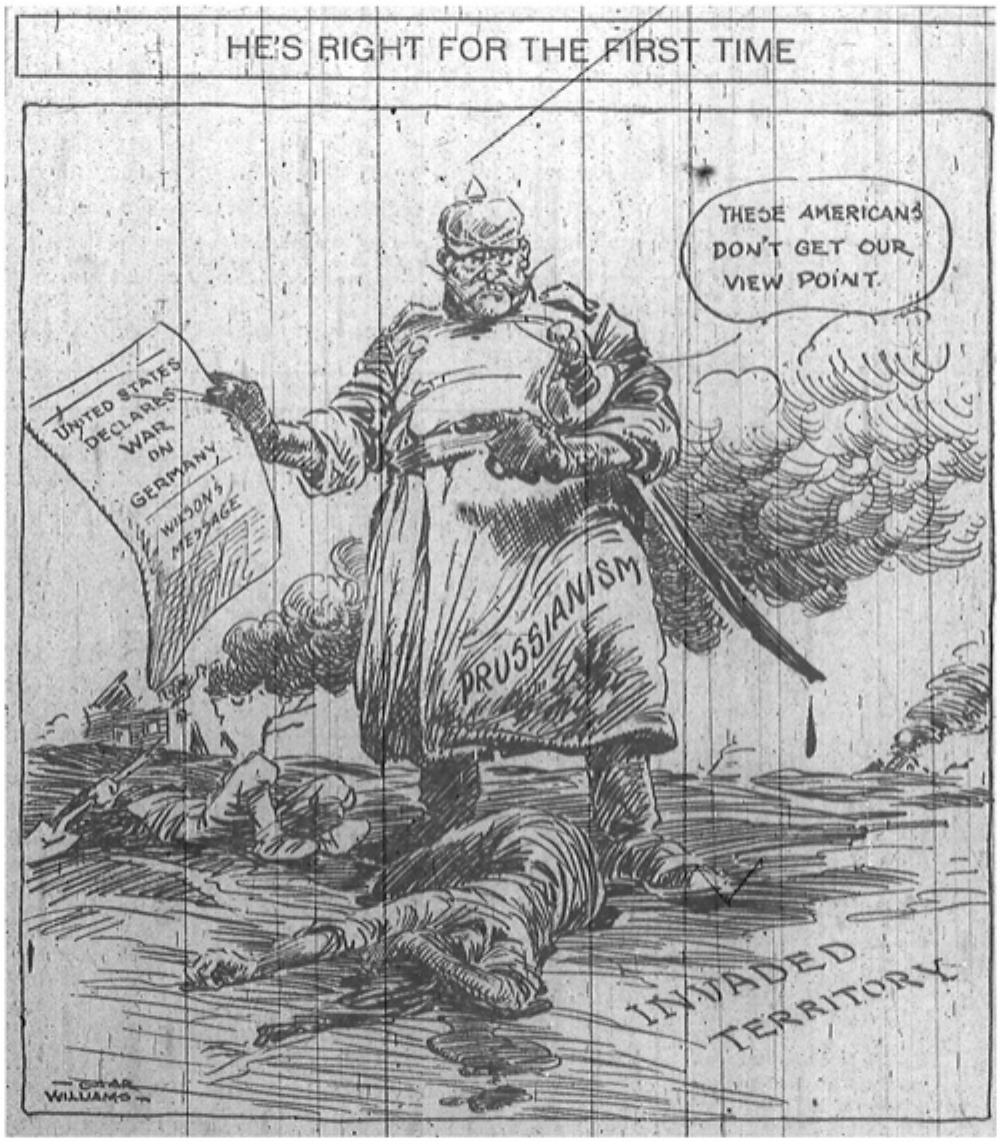
He’s right for the first time.
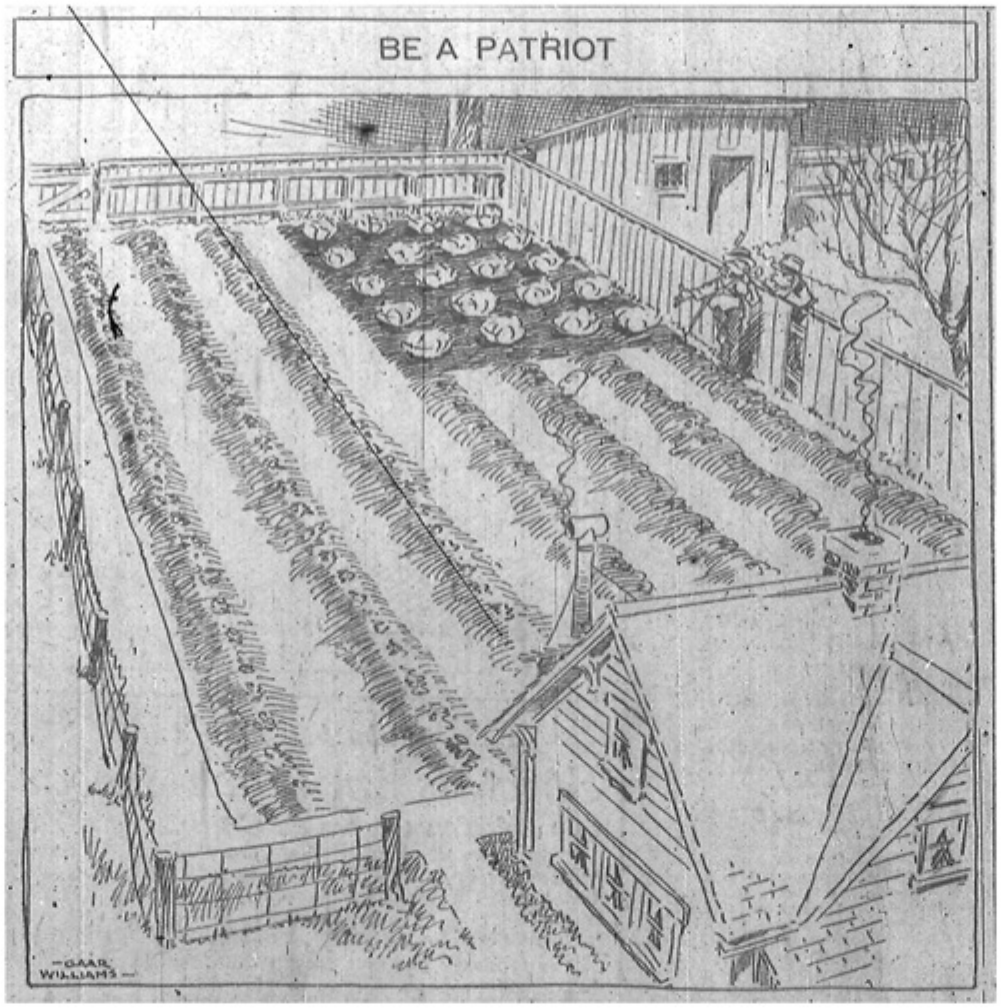
Be a patriot.
While during the years of American neutrality German-Americans had denounced the “un-neutral neutrality” of the Wilson Administration and the pro-England attitude of U.S. newspapers, after 1917 they retreated into an understandable mutism. Simultaneously, German language newspapers performed an exercise of “mental gymnastics” and aligned themselves to clear patriotic positions (Kennedy, 1983, pp. 25-26; Wittke, 1936/1995). As a sign of civic responsibility, some American newspapers emphasized German-Americans demonstrations of loyalty (“Accepts Tender of German House,” April 10, 1917; “Calls Germans to Nation’s Side,” March 17, 1918; “Maennerchor Pledges Support to Wilson,” April 7, 1917; “U.S. Germans Loyal Citizens,” August 4, 1917). Nonetheless, observers suspected excessive manifestations of patriotism to disguise “real” loyalties. For example, the Indianapolis News suspiciously noted “Cities in Indiana which have a large German-American population are showing unusual patriotism in the national crisis” (“Thousands Show Their Patriotism,” April 5, 1917).
Prior to the U.S. entry in the war, the Turner Society had been accused of undermining the welfare of the nation with their antiprohibition stand. The prohibition campaign of the Indiana Anti-Saloon League tried to find leverage in German-Americans’ business activities. As state superintendent of the Indiana Anti-Saloon League, E. S. Shumaker inferred that Stempfel, as vice-president of Fletcher American National Bank, acted against the interest of the bank’s depositors (Shumaker, E. H. to Theodore Stempfel, May 11, 1914; see also “Anti-Saloon League Offers Its Program,” April 16, 1917). In an acrimonious reply, Stempfel (Stempfel, T. to E. H. Shumaker, May 13, 1914) voiced German-Americans’ typical reaction to outside pressures:
Aside from the fact that it is preposterous to have an accidental majority dictate to the rest of the population how it should live and to stamp as a crime what is, has been and always will be, permissible in the rest of the world, nationwide prohibition would be an incubator for nationwide hypocrisy.
After America’s entry in the war, the House Committee (House Committee to Superintendent of German House, May 26, 1917) became increasingly concerned with the federal laws forbidding the sale of “intoxicating liquors” to enlisted soldiers and officers. In a letter to former member of the German House Colonel Edwin Glenn, the Chairman House Committee (June 4, 1917; Glenn, E. F. to Chairman House Committee, June 5, 1917) warily enquired the consequences of the new legislation while agreeing with the need to “prevent the misuse of the liquor habit among our boys in uniform” and being “heartily in accord” with the new laws. Nonetheless, in a letter to the U.S. District Attorney, the Chairman House Committee (Chairman House Committee to Mr. L. Erst Slack, June 4, 1917) noted, “[It is our] intention to carry out the wishes of the government . . . [but] our members claim certain rights.”
Notwithstanding these controversies, the leadership of the Athenaeum Turner offered immediately the society’s facilities in support of the American war effort (Accepts Tender of German House,” April 10, 1917; Board of Directors to Hon. James P. Goodrich, April 9, 1917; Goodrich, J. P. to Board of Directors, April 9, 1917). Furthermore, in reaction to reports detailing the low physical preparedness of American soldiers, the national Turner leadership offered both their expertise in training future soldiers and Turners as soldiers for the American army (the War Department accepted the offer, but the end of the conflict made the proposal eventually unnecessary; NAGU, National Executive Committee, September 23, 1918). 9 As a further sign of loyalty, the Sozialer Turnverein, followed immediately by the Women’s Auxiliary Verein, adopted English as the official language for all meetings, reports, and minutes (Steichmann, H. to Helena Lehritter, July 20, 1918). Although the Damenverein decided to adopt English only for the war years, it never changed back to German (Athenaeum Damenverein, May 4, 1919). In an address at the Friends of German Democracy, Richard Lieber declared that a German victory would be a disaster for German-Americans who are “under a cloud of suspicion” and at “a point where self-preservation and patriotism converge” (as quoted in “Calls Germans to Nation’s Side,” March 17, 1918).
Despite these manifestations of loyalty, the pressure on the German-American community increased. An anonymous letter linked the loyalty of the German House to a change of name, and its author straightforwardly stated: “You ought to change your name!” (“Anonymous to German House,” n.d.). In January 1918, Stanley Wyckoff (food administrator for Marion County) investigated the Independent Turnverein for serving meat at New Year (during a meatless day) and, hence, violating the food rationing (“Would Shut Off Food Supply of Turnverein,” January 3, 1918). As a sign of loyalty the Verein changed its name to Independent Athletic Club (“New Name Is Chosen,” January 30, 1918). In the same month, the Indianapolis News (“German House Also Seeking New Name,” January 11, 1918) reported the German House’s officers’ discussions about changing their name (defined as the “latest organization” with a German name) and linked this to the episode of the Independent Turnverein at New Year. Eventually, the German House changed its name to Athenaeum.
Conclusion
The Athenaeum Turners condemned what they perceived as a shameless pro-ally stand of American society and attempted to avoid the U.S. participation in the European conflict. When confronted with America’s war declaration on Germany, the Indianapolis Sozialer Turnverein unequivocally proved its loyalty to America. In fairness, Turners’ loyalties could not be questioned after the Civil War. Germans’ public, and sometimes outspoken, support for Imperial Germany expressed understandable feelings of attachment toward their old Heimat. More important, however, these opinions voiced Germans’ understanding of American democracy. The Constitution and By-Laws of the American Turners (Athenaeum Turners, n.d.) stated as the Union’s task the defense not only of the “deutschen Charakters” (German character) and the “deutschen Sitte” (German tradition or common decency) but also of the democratic system (see Mirel, 2010). In regard to democracy, the Constitution stated that
we believe that the people [Volk] has to reserve to itself the right to propose laws (initiative), to start a ballot [Urabstimmung] on fine proposals, and to make the validity of important laws dependent on approval (referendum). (p. 3, author’s translation)
The nationalist hysteria during the war years silenced alternative voices in American civil society and created a forced consensus. The war on the home front silenced pacifists, socialists, and German-Americans (Kennedy, 1983; Trommler, 2009; Wüstenbecker, 2007), quite different positions that nonetheless were grouped together. In Indianapolis, the war provided the perfect framework for the prohibition crusade of the Anti-Saloon League. Weakened by the war propaganda, the Athenaeum Turners gave up controversial political and cultural battles in order to survive. In a 1919 article published on The Turner, G. H. Westing (treasurer of the Turner Union and leading member of the Athenaeum Turners) emphasizes the “pioneering” role of the National Union in fostering the development of physical education in public schools. Hence, by prioritizing the introduction of physical education in public schools, he gave up the controversial defense of the German language. While still defending German language, Stempfel (1919) emphasized Americanization as a “matter of spirit” and not of language in an article on The Turner commenting the question of the Americanization of ethnic groups. 10
Like recent research, I suggest that pressures catalyzed by the nationalist hysteria created the consensus in which American civil society found its roots. From this perspective, German-American associational life lost the battle not for survival but for pluralism. In this regard, the prohibitionists’ attack on German associations is emblematic. Pumroy and Rampelmann (1996) linked Turner societies’ declining membership levels in the 1920s to the Prohibition Movement. Simultaneously, the Indiana Ku Klux Klan reached unprecedented membership levels and political influence by presenting itself as a defense of white, protestant America in front of social as well as economictransformations (Moore, 1991). The case of German-Americans during the World War I illustrates the intrinsic tensions of a pluralistic civil society in times of social, economic, and political transformations. The 1910s and 1920s contributed to the establishment of an American national identity, an “imagined community”—both limited and sovereign—(Anderson, 2006) that excluded hyphenated Americans and questioned their loyalties. While advocating for an open, pluralist public sphere, theorists have conceptualized civil society as a space that accepts and even encourages diversity within certain limits (Hall, 1998).
The question of identity is a crucial one for scholars of philanthropy. Voluntary philanthropic and associational activities are, by definition, expressions of identity formation. The questions of identity, of the sociomoral foundations of democratic societies, and of hyphenated Americans reemerged with striking similarities in the aftermath of September 11. Controversies over the teaching of Arabic in public schools, Islamic social as well as religious associations, and Muslim giving practices symbolize the difficulties of finding a common ground for today’s diverse societies (see Obama, 2009, June 4). The rapid demographic transformation of American society documented by recent census data (Tavernise, May 17, 2012) will most likely give an alarmist twist to these debates. Scholars of philanthropy are therefore in the crucial position to observe and investigate the role of philanthropic and associational dynamics in supporting as well as opposing the formation of increasingly diverse societies. The old question about the balance between private interest and the common good that has troubled civil society theorists is of dramatic relevance today.
Footnotes
Acknowledgements
The author wishes to thank the two anonymous reviewers for the constructive comments, the archivists of the IUPUI Ruth Lilly Special Collections & Archives for their assistance in exploring the German-Americana Collection, and the Max Kade German-American Center and in particular its director Daniel Nützel. An earlier version of the manuscript was prepared in fulfillment of the requirements of a Max Kade Fellowship and presented at the Symposium of German American Studies in New Haven, Indiana.
Declaration of Conflicting Interests
The author declared no potential conflicts of interest with respect to the research, authorship, and/or publication of this article.
Funding
The author received no financial support for the research, authorship, and/or publication of this article.