



Abstract
Management capabilities have been widely researched in the private and public sectors, yet there is less evidence relating to the nonprofit sector. Increasing pressures to balance the demands of organizational values with business performance in this sector leads to a focus on the managerial capabilities required to meet these expectations. This article reports an exploratory study of capability expectations of managers within an Australian nonprofit organization. Using semistructured interviews, data were collected from 21 managers across three hierarchical levels. Findings indicate that while there is some overlap with managerial requirements in the private and public sectors, there are some unique aspects of nonprofit operations which warrant further investigation. Specifically, there was an emphasis on personal knowledge and experience (i.e., self-awareness, discipline, knowledge, and strategic thinking) and having a commitment to the nonprofit sector and values of the organization. Expectations also varied depending on the level of management within the organization.
Introduction
The capabilities expected of managers to fulfill their roles have been researched widely in the human resource management (HRM) literature. While the majority of evidence comes from quantitative studies predominately in the private and public sectors, there has been less research on nonprofit management capabilities. Researchers have certainly investigated the governance practices of nonprofit organizations and their overall structures (McClusky, 2002; Paton, Mordaunt, & Cornforth, 2007; Stid & Bradach, 2009) and the application of strategic leadership (Phipps & Burbach, 2010). However, our knowledge of management capabilities in this context is limited. This study addresses this gap and presents an exploratory investigation to determine whether management capability expectations differ from those identified in private and public sector literature and whether expectations differ according to the hierarchical level of manager within the organization. In this research, we have intentionally used the term capabilities to encompass a broader and more holistic set of expectations of managers than may be conveyed by referring to terms such as knowledge, skills, behaviors, and/or competencies (Townsend & Cairns, 2003).
Our research has been guided by a taxonomy of effective leadership behaviors developed by Yukl and colleagues (Yukl, 2012; Yukl, Gordon, & Taber, 2002). This taxonomy builds on the traditional view of leadership and management consisting of task-oriented and relations-oriented behaviors and adds two other critical areas: change-related behaviors and external-related behaviors. Although these behaviors are discussed in a leadership context, we argue that they are also relevant to the study of management capabilities; in fact, some of the specific capabilities included in the framework could be argued to be more about management than leadership. As Yukl (2012) himself acknowledges, there is a degree of overlap between leadership and management both in terms of the processes and the people involved.
Management Capabilities in the Nonprofit Context
The nonprofit sector has undergone significant changes in recent years in terms of impact, governance, management, and the demands placed on those in management positions (e.g., see Paton et al., 2007). For some time, the call has been for nonprofit organizations to be more “business-like” (Dart, 2004), and research has focused on evaluating and restructuring governance and management functions (McClusky, 2002) to meet organizational and stakeholder responsibilities. However, Stid and Bradach (2009) argue that while nonprofits have strong, passionate, and visible leadership, they often lack capabilities at the management level, particularly in terms of “making tradeoffs and setting priorities” to achieve the vision (p. 35).
Managers in nonprofit organizations confront a range of expectations from a variety of stakeholders (Kong, 2007). Specifically, nonprofits often rely heavily on a volunteer workforce to deliver their product or service, and even the paid employees have been argued to have differing needs and expectations to other sectors (Schepers et al., 2005). Research suggests that volunteers are drawn to the sector because of their values, career, or growth aspirations and continue their relationship with a nonprofit organization if these needs are met (Peachey, Lyras, Cohen, Bruening, & Cunningham, 2013). This places additional emphasis on the importance of capable managers who can establish a healthy organizational climate (McMurray, Islam, Sarros, & Pirola-Merlo, 2013), and foster creativity and innovation (Lutz Allen, Smith, & Da Silva, 2013) to meet the specific needs of volunteers and employees.
A recent study of managers in the nonprofit sector found that the decision to work in this sector was driven by differences in the work environment, with managers reporting greater freedom in terms of how work functions were completed and more control over work schedules (LeRoux & Feeney, 2013). Managers are generally expected to be involved in planning, organizing, supervising, and controlling (Fayol, 1916), whereas leadership in the context of an organization encompasses issues such as selecting talent, motivating people, and building trust (Maccoby, 2000), many of which can be undertaken by managers but are often applied beyond formal organizational roles. For the purposes of this study, we intend to focus on expectations of capabilities needed for management roles in the nonprofit sector, acknowledging that this will likely encompass both leadership and management capabilities. Being able to integrate these two concepts and develop them further has been argued to be essential for organizational effectiveness (Yukl & Lepsinger, 2005).
Research by Hamlin, Sawyer, and Sage (2011) in a single nonprofit organization found limited support for the notion of different capability requirements for managers in the nonprofit sector compared with private and public sectors; however, only senior managers were involved in this study. Thach and Thompson (2007) also compared public and nonprofit managers with those in the for-profit sector in an exploratory study and found not only some similarities but also differences in requirements. While managers may need similar knowledge and capabilities to other sectors to fulfill their roles, there is limited evidence of this assertion, and Cheverton (2007) cautions against adopting management and leadership approaches from the private sector without concern for the unique nonprofit context.
In terms of capabilities, the impact of a manager’s hierarchical level in the organization also warrants consideration. It has been argued that each hierarchical level of management differs in terms of primary management roles adopted (Kurke & Aldrich, 1983) and the skills required (Katz, 1974). Given the importance of hierarchy, researchers have called for further investigation of the potential variation in requirements of managers at various levels (Mumford, Campion, & Morgeson, 2007).
In summary, considering what we know at a broad level about the role of managers and the capabilities they generally require, we focus specifically on the nonprofit context and address the following research questions:
Method
Research Methodology
The capabilities of managers at different levels in nonprofit organizations have not been widely researched, and therefore a qualitative approach was considered most appropriate for this study. As Stake (2010) emphasizes, qualitative research is interpretive and allows for different views, and is situational and allows for context. As such, a case study approach was chosen aimed at gathering the views of a range of managers at different hierarchical levels in a nonprofit context. Single-case design was considered appropriate to allow for the collection of the depth of data required.
Selection of Case Organization and Participants
Selecting an appropriate case organization is the first critical step to ensuring any research makes a contribution to the field. In case studies, theoretical sampling is typically used and is aimed at providing the opportunity to extend existing theory (Eisenhardt, 1989). In this research, the key focus was extending current management and leadership capability theory (in particular the Yukl, 2012, taxonomy) to the nonprofit sector. A nonprofit organization was chosen that was sufficiently large enough to have a range of management positions and, as a result of ongoing growth, was experiencing a lack of clarity about management roles. In compliance with ethical clearance requirements, the name of the case organization cannot be disclosed. The chosen case is a research and support organization focusing on a specific disease in the community. They have a presence across one Australian state, but the majority of employees (including managers) are based in the capital city. The organization has approximately 250 employees as well as a regular volunteer workforce of approximately 2,000. In Australia, volunteers represent a large and growing element of the workforce, with 6.1 million people (i.e., 36% of the population aged 18 years or over) undertaking voluntary work in 2010 (Australian Bureau of Statistics, 2011).
The organizational structure is functional and includes three levels of management: Head of Department/CEO, Executive Managers, and Team Leaders. The Heads of Department are the senior executive of the organization and along with the CEO are responsible for the overall strategic direction. Executive Managers report to Heads of Department and are responsible for particular functions of the organization. The third group, Team Leaders, report to Executive Managers and are frontline managers with responsibility for a specific group within a function.
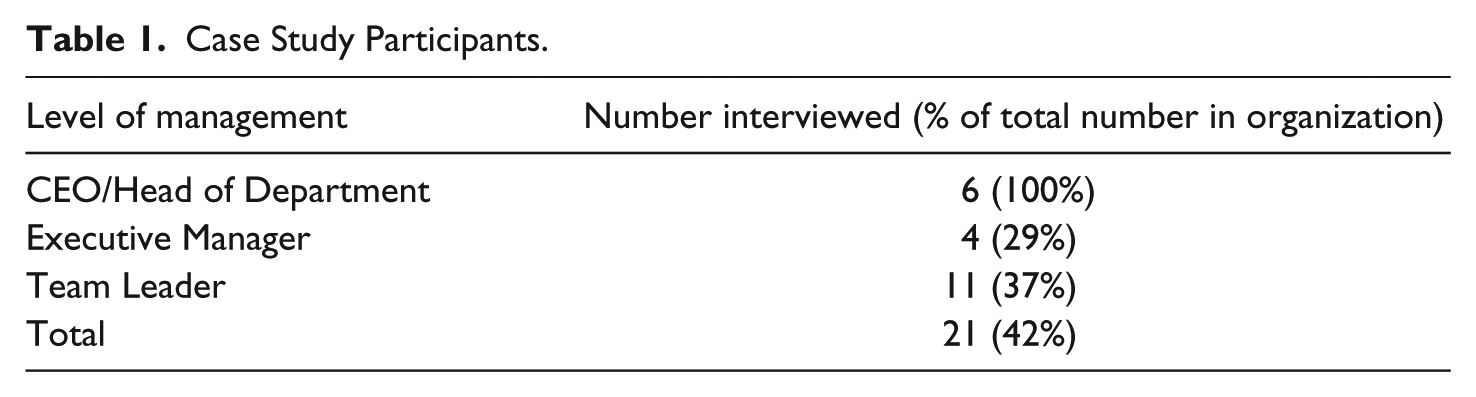
Participants, who voluntarily responded to a direct email from the Human Resources (HR) department about this study into management capabilities, were chosen across the three levels of management. The HR department confirmed that there was an appropriate breadth in this sample. Table 1 shows the number of participants interviewed at each level and the percentage this represented of the total number of managers in the organization. All participants were given a participant number and these are reported with any quotes in the findings.
Case Study Participants.
Data collection
The data collection involved semistructured interviews with the participants. Three key interview questions were designed to allow all participants to reflect on the perceived critical capabilities of managers at each of the three levels of management: “What should someone at [manager level] know in order to be a good manager?” “What should someone at [manager level] be able to do in order to be a good manager?” and “Think of someone you believe is very capable at [manager level]—what is it about them that makes you consider them a good manager?” These questions were aimed to elicit the broadest possible answers from participants about their level of management and also what they consider critical at the other levels of management, while ensuring they were distinguishing between different levels of management to allow for analysis. Interviews lasted between 40 and 70 min.
Data analysis
All interviews were transcribed verbatim and analyzed applying thematic analysis, managed using NVivo 10. Thematic analysis can be used in a variety of ways (Braun & Clarke, 2006); however, we chose a theoretical thematic analysis as the most appropriate way to assess the extent of fit between the data and the hierarchical taxonomy of leadership behaviors (Yukl, 2012). While this taxonomy shaped the preliminary themes, where emerging issues did not fit within the taxonomy, an additional theme was added. In addition, the themes were separated according to the level of manager being discussed, so that it was possible to identify the extent to which there were differing expectations between levels of management.
The coding was undertaken by an experienced research associate not involved in the interviews to provide further rigor to the research. After initial coding of three interviews, the two researchers then separately coded the same transcripts to ensure a consistency of interpretation of the data. The coding was undertaken according to the definitions provided by Yukl (2012) and definitions were developed for all additional codes, details of which are provided in the findings and analysis. For each additional theme identified, it was determined whether the capability fitted within one of the four Yukl meta-categories (task-oriented, relations-oriented, change-oriented, or external) or whether a new meta-category was required. NVivo allows for identification of the number of times themes emerge and these have been reported for the purpose of showing how many times certain capabilities were mentioned, and specifically to see whether some capabilities were more commonly identified at particular levels of management. However, we emphasize that even though graphs are shown in the findings for illustrative purposes, it is not our intention that the rich qualitative data obtained during interviews be reduced to simple counts.
Findings and Analysis
Analysis of the interview data will first be presented in relation to the themes that align with Yukl’s (2012) taxonomy and then in terms of the additional components that emerged from the data. Yukl’s taxonomy has four meta-categories (task-oriented, relations-oriented, change-related, and external-related), each with its own objective and behaviors. In a number of cases, themes emerged that related to an existing meta-category but represented an additional component and were therefore added to that meta-category. However, analysis of the data also found the emergence of two extra meta-categories (personal knowledge and experience, and nonprofit orientation). The rationale for inclusion of these two new meta-categories will be discussed in greater detail in the appropriate section. Each meta-category will be discussed in turn and then we report the observed differences between expectations of each hierarchical level of management.
Task-Oriented Meta-Category
Yukl (2012) argues that the primary objective of this meta-category is to “accomplish work in an efficient and reliable way” (p. 68). The taxonomy includes four task-oriented behaviors: clarifying, planning, monitoring operations, and problem solving.
Task-oriented capabilities
We found evidence of the four task-oriented capabilities in the data, with participants expecting managers to be focused on undertaking the tasks required to achieve appropriate outcomes in their area. Table 2 presents examples of identification of these capabilities (clarifying, planning, monitoring operations, and problem solving) by the participants.
Task-Oriented Knowledge and Capabilities.

Our findings also indicate that this category has additional components. There were three areas that participants identified as important for managers that fitted with the overall objective of the task-oriented meta-category but not within the existing capabilities offered by Yukl (2012).
The first additional capability, implementing policies and procedures, included the ability to understand and implement policy effectively. Participants expected managers to be aware of organizational policy and know how to use the policy appropriately: “you need to be more aware of all the policies and procedures and that kind of thing; and to be able to feed that down into the work that’s going on” (Participant 13). In addition, policies that relate to budgets, expenses and performance management were also highlighted: “. . . you have to know how to do a budget and costings and how to achieve value for money and the business side of things” (Participant 18).
The second capability to be added, managing projects, was seen as a specific configuration of skills and behaviors and separate to others already present in the taxonomy. Managers were expected to be able to manage across a range of diverse projects and understand how all of these projects contributed to organizational objectives. As one participant explained, managers “need to be very skilled at being project leaders and that’s a very definite set of skills” (Participant 11).
Finally, navigating organizational politics was added as an additional capability within the task-oriented meta-category. This encapsulates an understanding of politics within the organization and knowing who to consult to achieve outcomes. Participants spoke of “being able to navigate hierarchy and work out where to go and how to find out who you need to get something actioned” (Participant 03), and acknowledged that this knowledge does not come easily, “I think that it is an art . . . you need to know who the right people are” (Participant 09).
Differences in levels of management
We also analyzed the extent to which there were different expectations of different levels of management in relation to the capabilities within this meta-category. Figure 1 illustrates the number of times each of the capabilities was mentioned during the interviews in relation to the three levels of management (Head of Department, Executive Manager, or Team Leader). The findings indicate that many participants expected Team Leaders to be able to clarify tasks, plan, monitor operations, and solve problems. There were lower expectations for the other two levels of management (Head of Department and Executive Manager) in relation to these task-oriented behaviors, perhaps reflecting the belief that Team Leaders need to be more “hands on” in the task domain. Executive Managers, the middle management level in this case, were still expected to be involved in monitoring operations, problem solving, clarifying, and planning, particularly as complex issues are escalated upward to this level. Managing projects was expected equally across all levels of management, possibly reflecting the project-based nature of the organization and the need to understand these processes at all levels. Finally, implementing policies and procedures and navigating organizational politics were expected more at the Team Leader and Executive Manager levels than at the Head of Department level. This again reflects the frontline nature of the Team Leader roles and the emphasis at that level on trying to establish beneficial working relationships with key people in the organization.
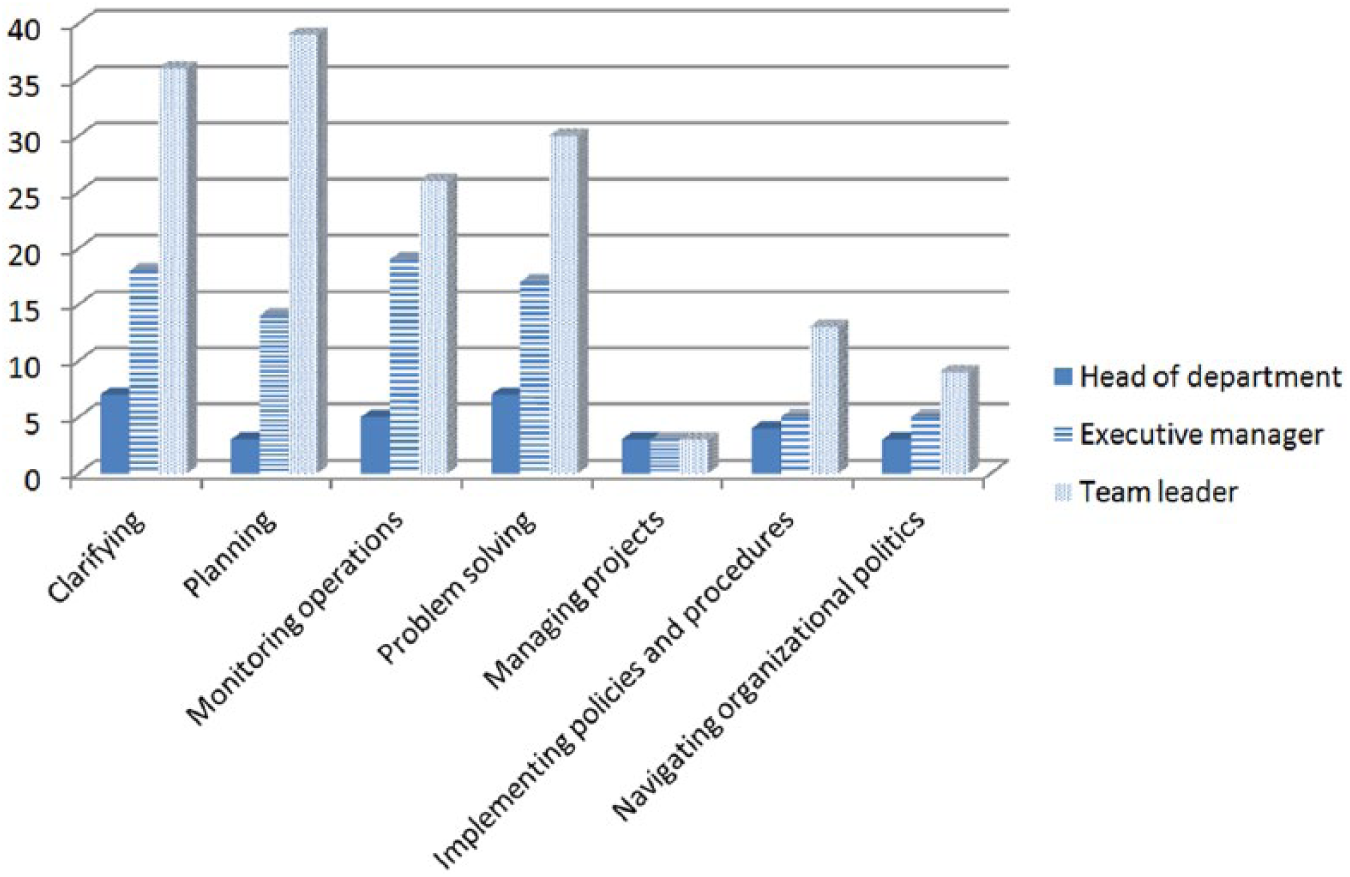
Task-oriented capabilities expected of each level of management.
Relations-Oriented Meta-Category
Yukl (2012) identifies the primary objective of this meta-category is to “increase the quality of human resources and relations” (p. 68) and includes four relations-oriented behaviors (supporting, developing, recognizing, and empowering).
Relations-oriented capabilities
Again, the data provided evidence of the components within the existing taxonomy. Managers at all levels were expected to be supportive of the people in their team and to consider development of team members as part of their role as a manager. Table 3 presents an overview of the components within the taxonomy and examples of evidence of these from the participants.
Relations-Oriented Knowledge and Capabilities.

Our findings also indicate that this meta-category has additional components. It was clearly expected that managers were required to have capabilities to relate, collaborate, and manage conflict.
The first additional capability, relating, included being able to communicate effectively with a range of people within and external to the business. Participants expected managers to “have good communication skills and a good connection with the staff” (Participant 16). Being able to “be inclusive and communicate at different levels, to bring people with you” (Participant 06), were considered essential for effective management. A manager was also expected to use their understanding of communication styles to understand “your team to know how they are going to respond best, so that outcomes can be achieved” (Participant 02).
The second capability to be added, collaborating, included being able to bring groups of people together to complete tasks or projects effectively. This involved having a cooperative approach to relationships, a “colleague mentality” (Participant 02), and bringing a sense that “we are all in this together” (Participant 17).
Finally, managing conflict was added as an additional capability within the relations-oriented meta-category. This encapsulates an understanding of conflict and the knowledge and skills required to facilitate effective resolution of conflict in a timely manner. Managers were expected to “. . . be able to resolve conflict, to see it coming and then have the strength to do something about it, if it’s not solvable by the usual means” (Participant 11). Participants spoke of the need to approach difficult situations, to “not shy away from difficult conversations” (Participant 21) and to “make sure it doesn’t escalate” (Participant 18).
Differences in levels of management
Figure 2 illustrates the number of times each of the capabilities was mentioned during the interviews in relation to the three levels of management and raises some interesting observations. First, there were much higher expectations of Team Leaders across this meta-category than any other level of manager, especially in relation to empowering, supporting, and developing their team members. This is most likely a reflection of their close contact with employees on a daily basis. The only exception here is for collaborating, where there is a greater expectation of Executive Managers, probably reflecting their middle management role in terms of working across divisions to achieve objectives. Second, while empowering has the highest expectation at the Team Leader level, it is also clearly required at all three management levels. The high expectation of Team Leaders may relate to their frontline role, where they recognize inputs and empower their team members on a daily basis, while more senior managers are expected to build a culture of empowerment across the organization. This also appears to be the case with relating, which is expected of Team Leaders and Executive Managers to a higher extent than the most senior management level. Finally, for managing conflict, there were higher expectations for Team Leaders, perhaps reflecting that they are required to act quickly to resolve any conflict within the team, and to escalate situations that they could not resolve to the next level of management, such that the most senior level would be involved in only the most complex issues.
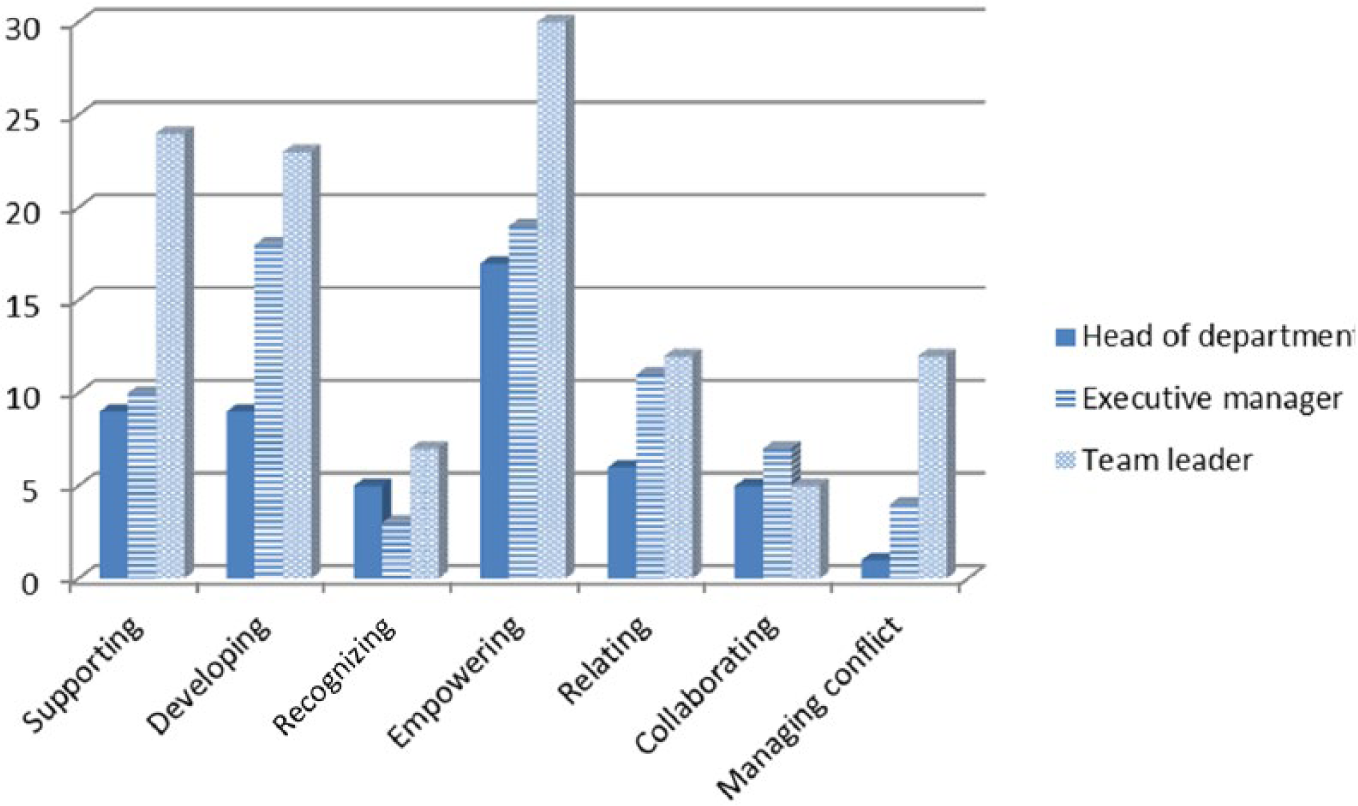
Relations-oriented capabilities expected at each level of management.
Change-Oriented Meta-Category
The primary objectives of this meta-category are to “increase innovation, collective learning and adaptation to the external environment” (Yukl, 2012, p. 68), and the taxonomy includes four change-oriented behaviors (advocating change, envisioning change, encouraging innovation, and facilitating collective learning). There were no additional capabilities that emerged in this meta-category.
Change-oriented capabilities
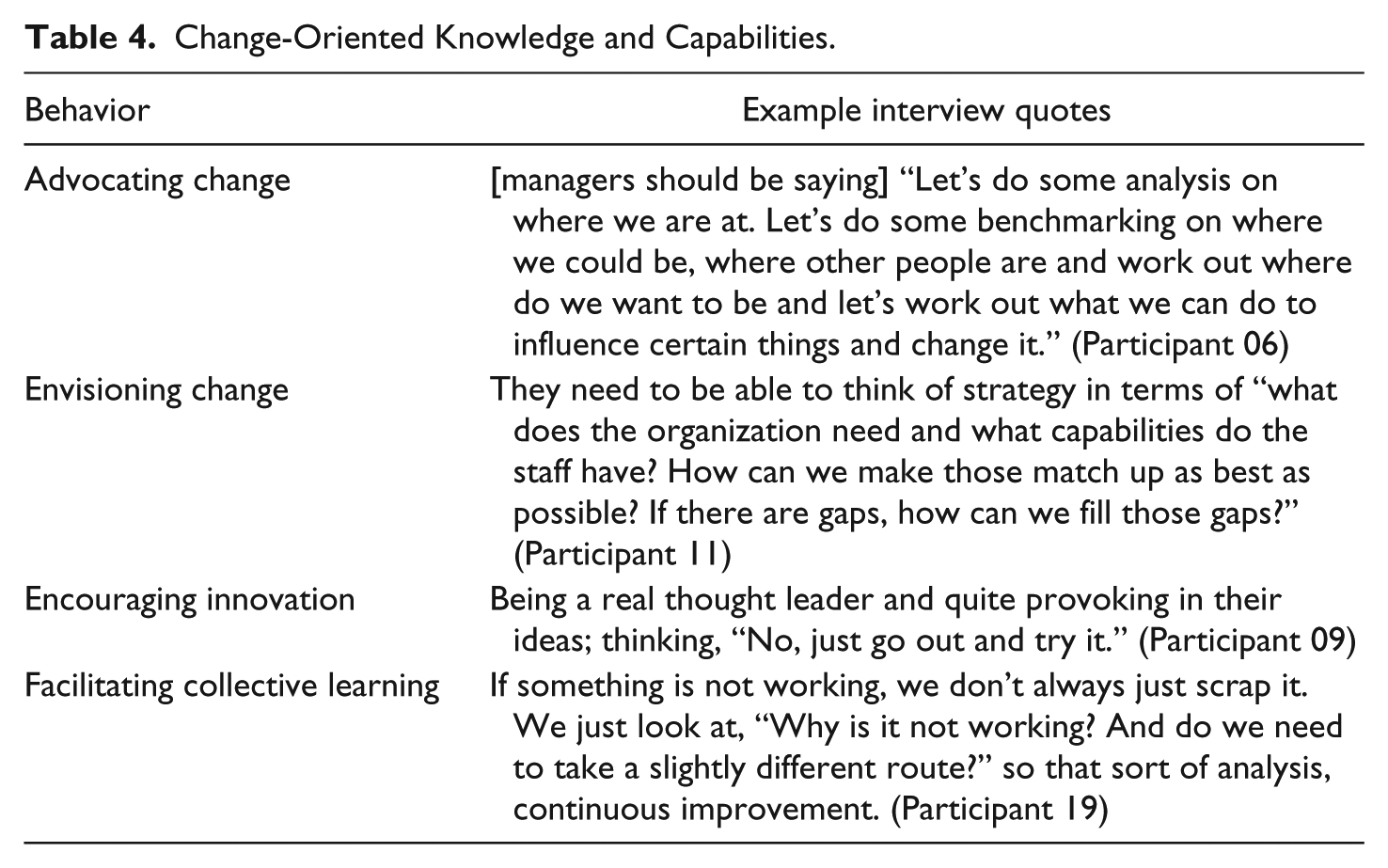
The data provide support for the change-oriented components within the existing taxonomy, indicating that all of these components are expected of managers in this nonprofit context. Consistent with the existing taxonomy, participants spoke of the need for leaders to be able to successfully advocate change and envision change especially at the more senior levels of the organization. Table 4 presents an overview of the components within the taxonomy and examples of evidence of these from the sample.
Change-Oriented Knowledge and Capabilities.
Differences in levels of management
Figure 3 illustrates the number of times each of the capabilities was mentioned in relation to the three levels of management. In this meta-category, we see a clear expectation that the most senior level of management has the highest expectations in relation to envisioning change, facilitating collective learning and advocating change, and equal with Executive Managers in terms of encouraging innovation. This is a shift from the previous two meta-categories, where a stronger emphasis was placed on the frontline management levels. Furthermore, the most frequently discussed change-related capability was the ability to envision change, and this expectation cascaded down through the levels of management, being a high expectation at the most senior level. Very few participants mentioned advocating change, but many wanted a vision for change, with the expectation that the senior leaders will paint a picture for them of the future. Finally, senior managers were expected to encourage innovation and to facilitate collective learning, in a sense reflecting the need for these more senior levels to be active in establishing an innovative culture and supporting the behaviors that sustain innovation.
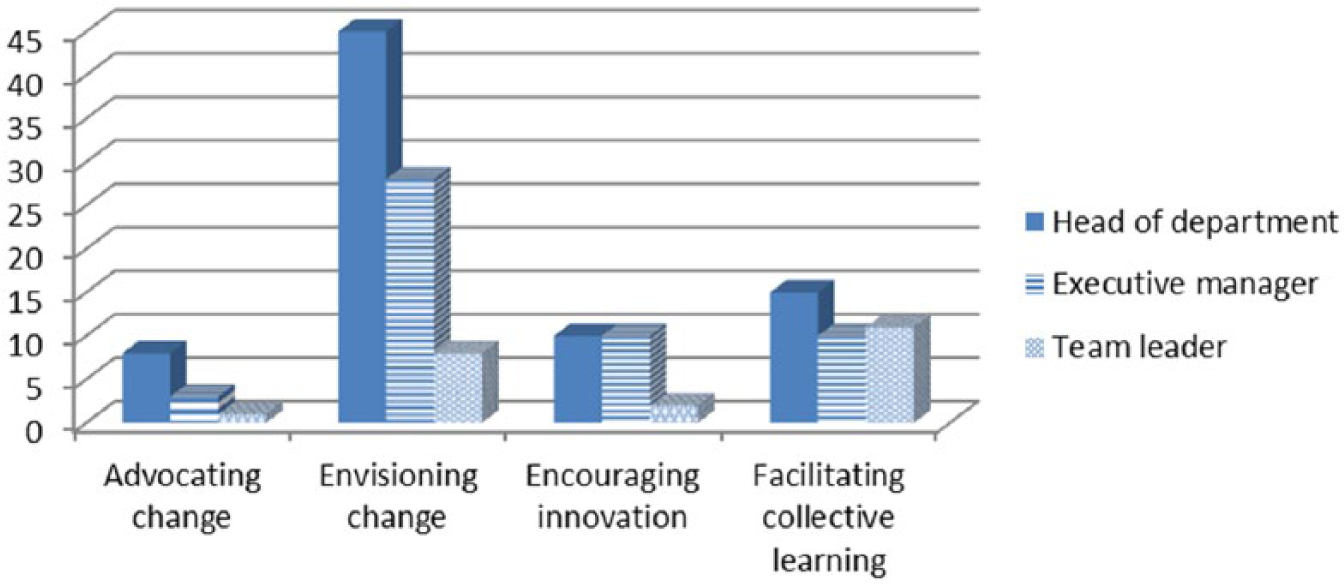
Change-related capabilities expected for each level of management.
External Meta-Category
Yukl (2012) identifies that the primary objectives of this meta-category are to “acquire necessary information and resources, and to promote and defend the interests of the team or organization” (p. 68), and the taxonomy includes three external-oriented behaviors (networking, external monitoring, and representing). There were no additional capabilities that emerged relating to this meta-category.
External capabilities
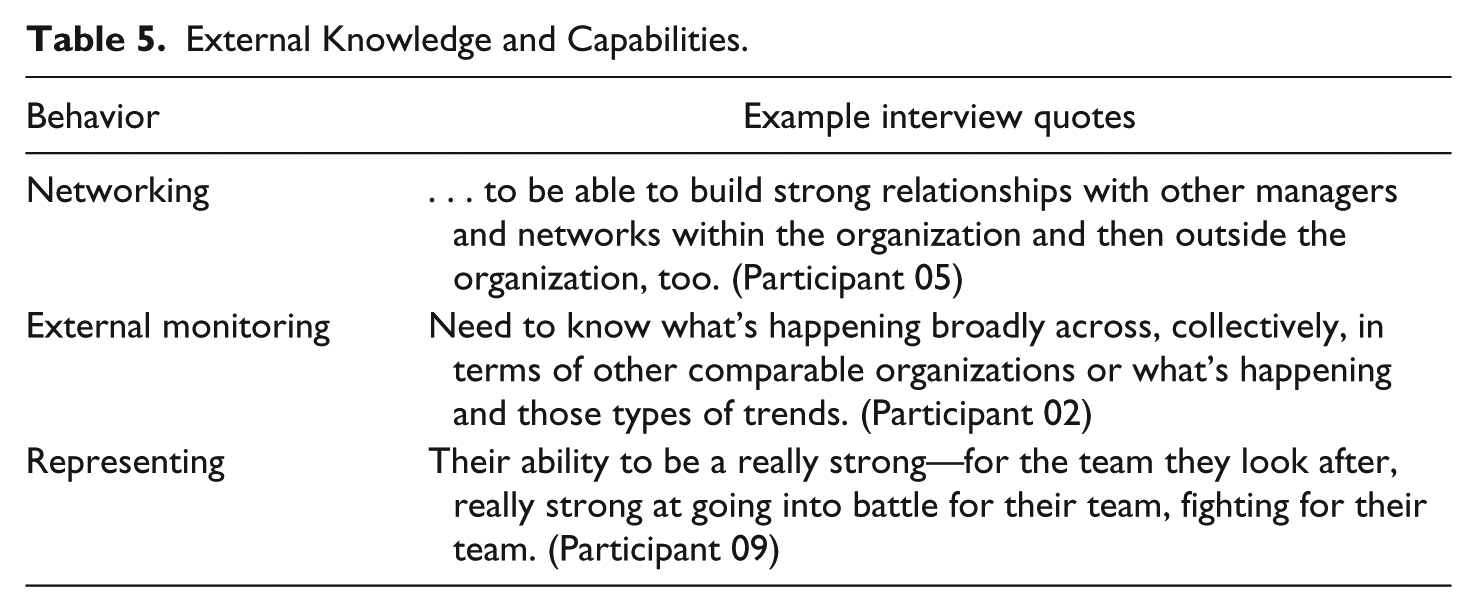
The data provide support for the existing external knowledge and capabilities within the Yukl (2012) taxonomy. Managers were expected to liaise with relevant stakeholders outside of the organization and, depending on their management level, be able to build strategic partnerships and influence the direction being taken within the sector. Table 5 presents an overview of the components within the taxonomy and examples of evidence of these from the participants.
External Knowledge and Capabilities.
Differences in levels of management
Figure 4 illustrates the number of times each of the capabilities was mentioned during the interviews in relation to each of the three levels of management. As we would expect, the most senior level (Head of Department) has the highest expectation in relation to external monitoring, reflecting the need for this level to be highly focused on events and trends in the external environment (Yukl, 2012) to assess implications for the organization. Interestingly, we also see a high expectation of Executive Managers in relation to networking and representing. This relates to establishing productive relationships within and outside the organization, and lobbying for resources, defending the reputation of the department, and negotiating and coordinating activities with other parts of the organization (Yukl, 2012). Team Leaders were also expected to represent the team within the organization to gain recognition for outcomes, access to resources, or resolution of issues that are impeding success of the team, and to a lesser extent network and monitor external events.
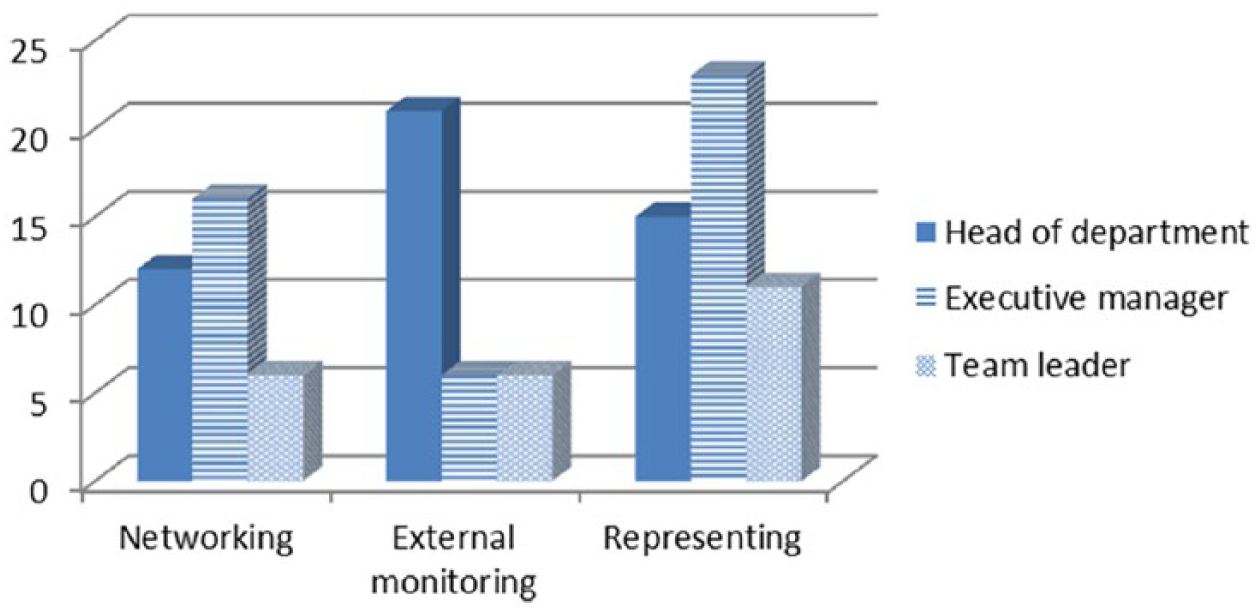
External capabilities expected of each level of management.
This section has presented our findings and analysis in relation to Yukl’s (2012) typology. We have identified where the data have provided evidence confirming the components in the Yukl taxonomy and areas where the data suggest additional capabilities are required in this particular context. Next, we report on two new meta-categories added to the existing taxonomy (personal knowledge and experience, and nonprofit orientation). The behaviors identified within these two categories were viewed as unique and not readily applicable to the existing taxonomy.
New Meta-Category: Personal Knowledge and Experience
Personal knowledge and experience refers to the background that the manager has and how this influences their ability to perform in their current role. As a meta-category, its primary objective is the assimilation of what has been previously learned and the application of this knowledge to the current context. While this may be implied in some of the elements of the existing Yukl (2012) taxonomy, this was a strong and separate category within the data and was seen to reflect important individual behaviors that were expected to be present in all levels of management to some extent.
Personal knowledge and experience capabilities
The themes that emerged which fell within this meta-category were as follows: (a) self-awareness, (b) thinking strategically, and (c) discipline-based knowledge. First, self-awareness relates to the ability to reflect on one’s own strengths and weaknesses and to be conscious of the impact that an individual has due to their management position. As a participant explained, “You need to have a lot of self-awareness about yourself as a manager” (Participant 18).
The second component, thinking strategically, refers to the ability to see the bigger picture, and take a holistic perspective on their work. In particular, a systemic view of the organization, taking into account all stakeholders, including volunteers, was seen as critical. It was explained that they needed to have a very good understanding of the organization. Ability to map together, “okay, this is what all these departments are doing, how do I filter under a broader thing, to make sure it filters back up and meets organizational objectives?" (Participant 02)
Participants often spoke of the need for a “helicopter perspective,” to know how all of the various organizational components fit together and to be able to explain this effectively to their team. This was seen as particularly important when combined with decision making, to prevent decisions from being made in isolation but rather considering the broader organizational requirements and impacts. While the ability to coordinate activities and projects with other parts of the organization has some similarity to Yukl’s (2012) “Representing” behavior (p. 85), we concluded that the components in these data relate to a broader approach and ability to see all organizational components as a whole.
Finally, the third component, discipline-based knowledge, refers to the specific, deep knowledge base the manager possesses. This aspect was considered particularly important for Team Leaders, based on the need for them to be more “hands on” with day-to-day tasks and problem resolution, as evidenced by comments such as “I do believe content knowledge is vital” (Participant 08). There was also the expectation that managers would have an understanding of what is involved “on the ground,” with some participants stating that it was ideal for managers to be promoted from within, “working up the ranks, from a frontline position, to have a very good understanding before being in a management position and possibly some ongoing engagement with that sort of work to keep their sense of currency” (Participant 16).
Differences in levels of management
Figure 5 illustrates the number of times each of the capabilities was mentioned in relation to each of the levels of management. The ability to think strategically (to take an organization-wide perspective, to have knowledge of how all departments contribute to overall objectives) was expected across all management levels, particularly at the middle management (Executive Manager) level. Although discipline-based knowledge and self-awareness are not large categories, they were emphasized throughout the interviews such that their inclusion in this meta-category was warranted. The most notable finding in this meta-category is that it is the Executive Managers who were most often expected to be thinking strategically, a capability typically equated with more senior management. This may be due in part to the expectation that Executive Managers, as the middle level of management, capitalize on their vantage point to improve decision making, exchange innovations and improvements, and share this organizational perspective within their departments.
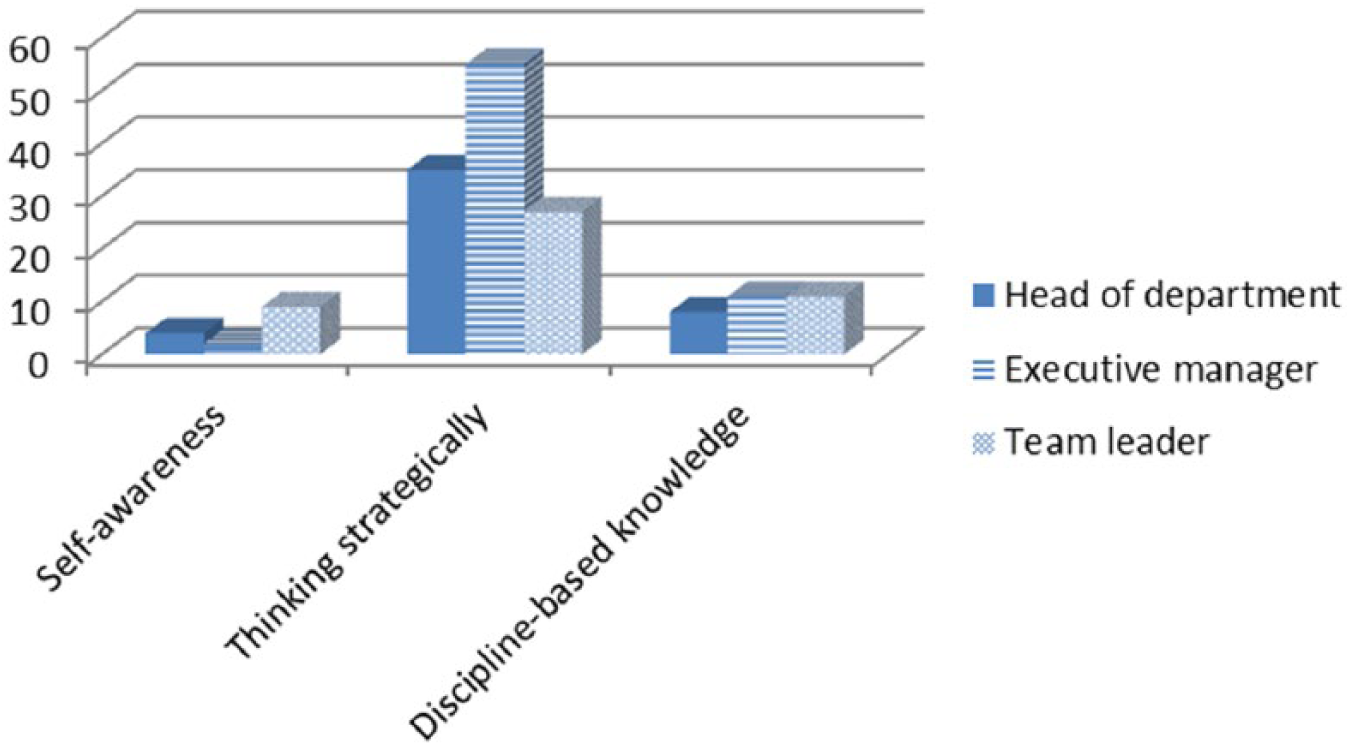
Personal knowledge and experience expected at each level of management.
New Meta-Category: Nonprofit Orientation
The final new meta-category that emerged from the data is that of “nonprofit orientation.” The primary objective of this category relates to the manager’s understanding of the broader nonprofit context in which the business operates and how this information is used to enhance decision making, communication methods, and overall approach to management. In particular, there was a feeling that the values attached to nonprofit organizations needed to be understood and acknowledged by management. Although all organizations have an industry context, it was believed by participants (even by those who had worked in other sectors) that nonprofit was a special case.
Nonprofit orientation capabilities
The data provide support for the inclusion of two components within this new meta-category: (a) nonprofit commitment and (b) managing volunteers. Nonprofit commitment represents the knowledge, understanding, and commitment to the purpose of the nonprofit organization. While it is acknowledged that it is important in any organizational context for managers to understand the core mission and vision of the organization and operate with this in mind, in this sample participants spoke of commitment beyond the stated organizational purpose. Indeed, they spoke about the need for personal alignment with the nonprofit organizational purpose, and the sense of working for the greater good and maximizing the funds that were made available to improve the lives of those for whom the organization was established: “I kind of feel like my salary is paid by public donation. We are being paid to go make a difference, let’s go do it, you know, that is why we are here” (Participant 02). “From a finance point of view we are pretty conscientious . . . every dollar that is wasted is not a dollar that we are putting into patients . . .” (Participant 17).
Participants discussed a strong attachment to the overall objectives, mission, and values of what the nonprofit was trying to achieve, “some people are drawn to us because they want to make the world a better place” (Participant 20), and there was a passion about confronting the challenges within the nonprofit sector, the reason I keep bringing up “best practice” is because we are a charity, we really need to keep on top of what the best practice is out there, we need to be getting the biggest bang for our buck. (Participant 21)
There was also a clear understanding that being a manager in this context meant not only understanding the nonprofit sector and being committed to it, but also understanding how to run a business within this context “. . . sometimes [you need to know] how you manage . . . the corporate sort of style with that warm gooeyness of altruism” (Participant 20).
The second component of the nonprofit orientation meta-category, managing volunteers, acknowledges the unique challenges associated with managing a workforce that consists of a substantial number of volunteers. As one participant stated, “managing volunteers was a big problem across the organization, it was something that kept coming up” (Participant 02). Recently, the organization had developed role descriptions for volunteers and a more rigorous approach to registering an interest in volunteering to set expectations, when expectations aren’t met, that’s when people fail; you know we are not setting people up for success, and we do it with volunteers all the time. We didn’t want to give them position descriptions until recently because we felt that it was unfair, but the thing is we always had that expectation we just weren’t telling them. (Participant 06)
Reshaping the volunteer program was not only seen as essential to the ongoing success of the organization but also to remind volunteers that their time is not wasted, as one participant said, I would assume that anybody that’s going to be so generous to give up their time really wants this job done . . . if you become a volunteer with [organization] you are guaranteed that you are going to be in a role that will be really helping people with [the disease] or it will be mobilizing us to raise money . . . your time will not be wasted. (Participant 06)
Differences in levels of management
Figure 6 illustrates the number of times each of the capabilities was mentioned and when these comments were made in relation to the three levels of management. There is a large expectation that those at the very top demonstrate a commitment to the sector and the mission of the organization. The figure also indicates that this commitment is expected to be shared at the other two levels of management. Given the volume of volunteers involved in this case study organization, it is not surprising that there is a high expectation on Team Leaders to have a focus on volunteers, as again this level of management is the frontline in terms of people management activities.
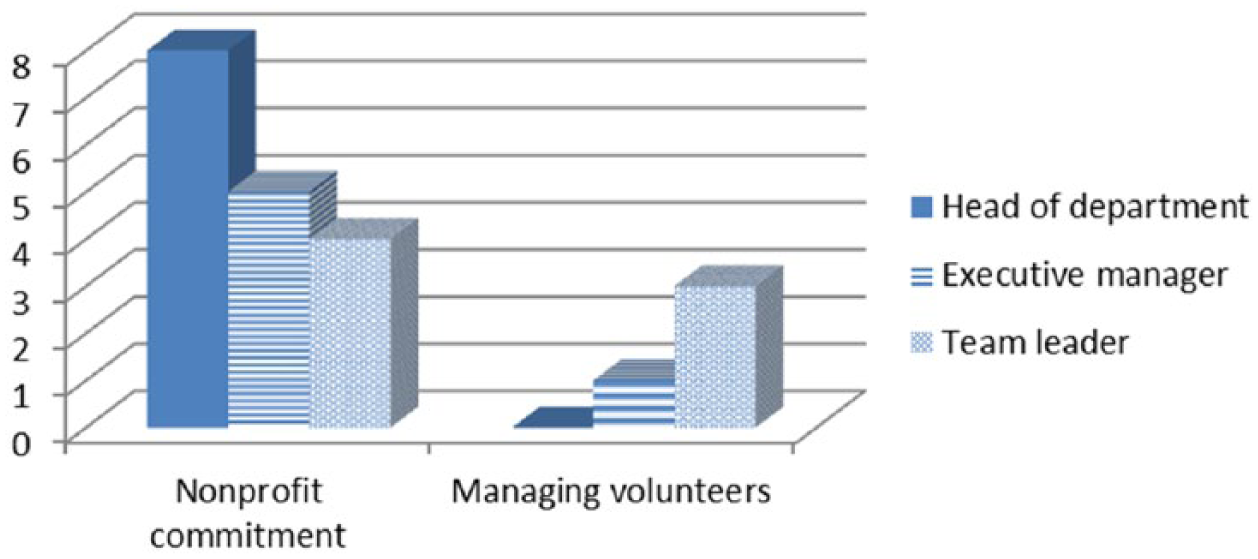
Nonprofit orientation knowledge and experience expected at each level of management.
In summary, our findings and analysis provide support for the existing typology, with the emergence of additional knowledge and capabilities and the establishment of two new meta-categories. These findings suggest that there are some aspects of managing in the nonprofit context that are unique and warrant further consideration. These findings will now be discussed more generally in relation to our research questions and areas for future research.
Discussion and Conclusion
The purpose of this study was to explore the capability requirements of managers within a nonprofit context, and whether these expectations differed according to levels of management. In relation to our first research question, our findings suggest that while Yukl’s (2012) framework is useful for identifying most of the capabilities expected of managers within this nonprofit case study, it does not sufficiently capture all of them. Therefore, we have offered two additions to improve the utility of the taxonomy in this context. First, we have added two meta-categories to the existing taxonomy (“personal knowledge and experience” and “nonprofit orientation”). These meta-categories were clearly seen as separate to others in the Yukl model and warranted recognition. Second, based on our analysis of expected managerial knowledge and capabilities, we added behaviors to two of the existing meta-categories (task-oriented and relations-oriented).
The emergence of the new meta-category “personal knowledge and experience,” which includes self-awareness, strategic thinking, and discipline knowledge, suggests that in the nonprofit context the manager’s own background may be critical. Our findings in relation to the importance of being self-aware and knowledgeable about your impact on others as a manager are not inconsistent with Thach and Thompson (2007), who found that in a nonprofit context, self-knowledge is expected, however not as much as for-profit organizations. Nonetheless, it seems effective managers in nonprofit organizations are expected to have the ability to consider their own responses and be aware of their impact on others. Indeed, these behaviors are in line with the broader concept of emotional intelligence (Goleman, 1998) which has been presented as a critical attribute for professional and managerial effectiveness in other sectors (Boyatzis, 1982). Its appearance in this context suggests that the inclusion of the capacity to know oneself is warranted in managerial typologies. In addition, having the ability to take a “whole of organization” perspective and think strategically was highly valued and not adequately addressed by the existing typology.
Similarly, the second new meta-category “nonprofit orientation” evolved from the themes in the data linking managerial effectiveness to having a commitment to the nonprofit sector and the particular mission and values of these organizations. This finding expands on the argument by Cheverton (2007) that nonprofit organizations are unique in terms of their focus on values and commitment to the organizational mission, and that “rather than being ‘poor cousins’ to the private sector’s approach to management and leadership, the third sector’s commitment to values is a legitimate and successful management approach” (p. 433). We therefore believe that simply applying management frameworks from the for-profit sector may overlook some of the nuances encountered in a nonprofit context.
The existing task-oriented meta-category has been amended to include implementing policy, managing projects, and navigating organizational politics to better reflect the data. Managing projects and the increased emphasis on the appropriate implementation of policy may be indicators of the growing emphasis in the nonprofit sector on accountability and performance (Kong, 2007; Paton et al., 2007). Furthermore, including the knowledge and skills required to successfully navigate organizational politics reflects a growing awareness of the importance of this aspect for managerial effectiveness and the time spent by senior managers on managing power dynamics (Sherlock & Nathan, 2008).
The relations-oriented meta-category has also been amended to now include relating skills, collaboration, and managing conflict to effectively manage a diverse range of employees, volunteers, and other stakeholders. These capabilities are operationalized within an environment that is very focused on values and commitment to the organizational objectives, a distinct aspect of the nonprofit sector (Cheverton, 2007), and it appears that the subjective perception of these values permeates through a range of managerial capabilities.
In terms of our second research question, whether there are different expectations of capability requirements at different hierarchical levels, two key findings were made. First, participants were very clear about the different focus that was required by managers at each hierarchical level. For example, participants had clear expectations that the most senior level of management must have strong commitment to the nonprofit mission, be able to maintain a focus on external developments and envision change. Second, while participants identified different areas of focus depending on level, they still perceived that the capabilities were generally needed at all levels of the business. For example, within the change-related behaviors meta-category, there is a clear expectation that senior management has a significant focus on managing change, especially in relation to envisioning change, yet this capability was also expected at a lesser extent at the two lower levels. This pattern is consistent with research in the leadership area, where there is an expectation of leaders to create a vision based around organizational values (Rafferty & Griffin, 2004). Our findings also suggest that middle managers and frontline managers play a role here, translating and articulating their interpretation of the vision for the team.
This study makes several contributions to nonprofit theory and practice. First, our qualitative research design has facilitated an in-depth exploration of the capability requirements of managers in this sector. Gaining the insights and perspectives of managers currently working in this sector adds to our understanding of the key requirements in a context underresearched. The findings suggest that there are unique aspects of the nonprofit sector that impact on the requirements of managers and these will have implications for organizational processes such as recruitment, selection, and performance management and development. From a practical viewpoint, the management capability framework presented provides clarity about management requirements in behavioral terms and these behaviors may then serve as a basis for establishing selection criteria, coaching tools, and development plans. Finally, our analysis of the capabilities required at three managerial levels provides greater differentiation to existing research (e.g., Hamlin et al., 2011) and has significant practical implications for informing the design of a range of HRM practices and processes for each of these levels of management.
As with any research, this study has a number of limitations and offers an opportunity for future research to enhance and build upon our findings. Due to the qualitative methodology used in this research, and the use of a single case, we are limited in the extent to which we can generalize these findings to other organizational contexts, and our findings need to be validated in other nonprofit settings. Future research using a longitudinal design would provide stronger evidence of the expected capability requirements of managers over time than our cross-sectional design. Our results are also based on individual perceptions of what is expected of managers. Future research could improve on this design by adding objective measures of performance expectations (e.g., performance review results, peer assessments) and broadening the perspective to include subordinates. However, this research demonstrates the substantial overlap of expectations of management knowledge and capabilities of the nonprofit sector with other sectors while also highlighting some areas of uniqueness. In response to the call by Yukl (2012) for more integration of management and leadership research, our findings begin to address the importance of management roles in a sector with a growing expectation of managers to effectively navigate a complex, rapidly changing environment.
Footnotes
Declaration of Conflicting Interests
The author(s) declared no potential conflicts of interest with respect to the research, authorship, and/or publication of this article.
Funding
The author(s) disclosed receipt of the following financial support for the research, authorship, and/or publication of this article: This research was funded by the nonprofit case study organization, and the authors are grateful for the opportunity to undertake this research. In compliance with research ethics requirements, the name of the organization must be kept confidential.