



Abstract
In response to rapid changes in the communication environment, nonprofits are increasingly relying on digital technologies to achieve their communication goals. We examine factors influencing nonprofits’ digital-based external communication based on a survey of communications directors at transnational nonprofits, with an analysis of each organization’s characteristics as described on its Internal Revenue Service (IRS) Form 990 and website. Our results show that, at the organizational level, nonprofits with stronger leadership support concerning social media activities were more likely to use different digital platforms and value more various functions of social media for external communication as compared with those lacking such support. At the individual level, communications directors’ perceived ease of social media use and time in their current position significantly influenced their emphasis on different functions of social media. This research fills a gap in the literature by analyzing both organizational characteristics and individual communications director’s attributes in assessing nonprofits’ social media use.
Introduction
Digital technologies have allowed nonprofit organizations to interact directly with their key constituents without relying heavily on news media organizations as intermediaries (Benkler, 2011; Bortree & Seltzer, 2009; Guo & Saxton, 2014; Lovejoy et al., 2012; Nah & Saxton, 2013; Saxton & Wang, 2013). The increased availability and affordability of digital communication platforms, however, does not mean that most nonprofits fully utilize these platforms. Indeed, a nonprofit’s adoption and use of social media varies, depending upon both the characteristics of the organization and the demographics of the individuals working at it (Curtis et al., 2010; Guo & Saxton, 2014; Nah & Saxton, 2013; Seo et al., 2009). Organizational strategies, capacities, governance features, and external factors, as well as communications professionals’ years of experience in the field and confidence in using social media, can all influence a nonprofit’s utilization of social media and the outcomes of its social media use (Curtis et al., 2010; Nah & Saxton, 2013; Seo et al., 2009).
In examining nonprofits’ social media adoption and use, previous research tends to look at either organizational characteristics or individual communicators’ demographics (Curtis et al., 2010; Guo & Saxton, 2014; Nah & Saxton, 2013). While these previous studies offer helpful insights, we argue that it is desirable to consider factors at both the organizational and individual levels at the same time to offer a more complete understanding of nonprofits’ digital-based external communication. How are specific characteristics of the organizations and attributes of individual communications professionals within the organizations associated with different aspects of the organizations’ social media efforts? What are the combined effects of variables at both the organizational and individual levels on nonprofits’ social media use?
To answer these questions, we surveyed those who manage external communication at transnational nonprofit organizations headquartered in the United States. Communications directors from 146 transnational nonprofits participated in the survey. Thereafter, we combined the survey data with organizational information available through each participating nonprofit’s Internal Revenue Service (IRS) Form 990 and website. We focus on transnational nonprofit organizations because digital communication technologies provide especially relevant benefits to these organizations, including mobilization of people around the world more quickly and less expensively (Chadwick, 2006; Naudé et al., 2004; Seo et al., 2009).
As roles of traditional intermediaries have diminished in the age of online social networking, it is important to understand how nonprofits’ relative reliance on social media has changed as compared with their reliance on traditional news media. This study advances the literature on nonprofits’ digital-based external communication by identifying individual and organizational variables that influence the organizations’ efforts in this area. Findings from this study also help explicate evolving trends in nonprofits’ use of social media with its analysis of how different digital media platforms are used in comparison with findings from a decade ago (Seo et al., 2009). From practical and policy perspectives, the results of the study can help nonprofit organizations identify areas to enhance their use of social media for external communication.
Literature Review
Purposes of Social Media Use by Nonprofits
Social media offers a vast array of opportunities for nonprofits to communicate, mobilize, and engage the public quickly, efficiently, and at low costs (Bhati & McDonnell, 2020; Xu & Saxton, 2019). However, how and why nonprofits are utilizing different digital platforms remain an understudied area in academic research (Briones et al., 2011; Guo & Saxton, 2014). Findings from a limited number of studies have shown that nonprofits use social media for various purposes. Specifically, scholars have found that besides promoting organizations’ images, social media has been a helpful tool for nonprofits in mobilizing resources from different targeted audience groups (Zorn et al., 2013), facilitating civic engagement and collective action (Obar et al., 2012), and fundraising (Seo et al., 2009).
Social media has also been used to build relationships with stakeholders. For example, in their case study focusing on the American Red Cross, Briones et al. (2011) found that the nonprofit had effectively maintained two-way dialogues with younger constituents, the news media, and the communities it serves through Twitter and Facebook. Lovejoy and Saxton’s (2012) analysis of tweets from the 100 largest nonprofits in the United States showed that about one fourth of the tweets were intended to interact with the public, creating a sense of community and encouraging engagement with stakeholders. In addition, in crisis communications situations, social media can help enhance transparency while minimizing “confusion and errors that are bound to occur in the midst of the crisis” (Veil et al., 2011, p. 113).
Although the key benefits of social media, compared with those of traditional media, are that social media platforms are “inherently interactive, communicative, and social” (Avery et al., 2010, p. 337), ample evidence indicates that nonprofits have largely failed to fully utilize the potential of these platforms. For instance, Waters and Jamal (2011) found that nonprofits’ communication strategy on social media is still largely one-way, with limited use of interactive functions. In a similar line of research, Guo and Saxton (2014) analyzed tweets by 188 civil rights and advocacy groups and found these organizations primarily used social media for public education purposes, disregarding the reciprocal nature of the platform. Challenges that nonprofits face in more fully utilizing social media include the lack of human and financial resources, technical expertise, clear organizational policies on how to use these digital platforms, and support from management within the organization (Carboni & Maxwell, 2015; Hackler & Saxton, 2007; Hou & Lampe, 2015). These constraints may force nonprofits to abandon social media in their work or be selective in adopting platforms to use. Thus, this study examines the primary social media platforms used by nonprofit organizations with international reach and the main purposes of those platforms for the organizations.
Individual Communicators’ Perspectives and Social Media Use
Although previous research has shown that it is important to consider both individual and organizational factors in studying communication practices (Curtis et al., 2010; Shoemaker et al., 2001; Shoemaker & Reese, 2013), insufficient attention has been paid to analyzing how communications professionals’ perceptions about social media might be associated with their nonprofits’ adoption of social media for external communication. The current study aims to fill this gap by analyzing relationships of organizational characteristics and individual communications professionals’ attributes to nonprofits’ social media efforts.
There are several important approaches to studying people’s perceptions of new technologies and decision to adopt them (Atkin et al., 2015; Davis, 1989; Lin, 2003; Venkatesh, 2000). In recent years, scholars proposed integrating the uses and gratifications theory with the technology acceptance models (Atkin et al., 2015). The uses and gratifications theory is an audience-centric approach to understanding why people seek out particular media, and it has served as a framework for understanding technology adoption (Luo & Remus, 2014; Ruggiero, 2000). Studies using this theory focus on why people use social media and what gratifications they obtain as a consequence (Barker, 2012; Whiting & Williams, 2013). The integrated technology adoption model suggests that system factors and audience factors affect the adoption of information on the internet or acceptance of the next-generation computer interface technology. In addition, it argues that social factors, including opinion leadership in peer social networks, will influence whether people adopt emerging technologies. This integrated technology adoption model is influenced by the unified theory of acceptance and use of technology that takes into account social influence processes (i.e., subjective norms, voluntariness, and image) and cognitive instrumental processes (i.e., job relevance, output quality, result demonstrability, and perceived usefulness; Venkatesh, 2000; Venkatesh & Davis, 2000; Venkatesh et al., 2003). Overall, these models posit that people’s perceptions of the utility and ease of use of a technology influence their decisions to adopt and use that technology.
Building on these theoretical approaches, previous studies have identified several key demographic variables that are associated with people’s adoption and use of digital technologies (Anandarajan et al., 2000; Curtis et al., 2010; Davis et al., 1989; Dumpit & Fernandez, 2017; Hsieh et al., 2014). For example, based on a survey of 409 nonprofit public relations practitioners and the unified theory of acceptance and use of technology, Curtis et al. (2010) showed that gender is an important factor to consider in understanding public relations practitioners’ perceptions and uses of social media. Specifically, the scholars found that women were more likely than men to consider social media beneficial, whereas men were more confident than women in actually using social media. The Pew Research Center’s (2019) recent survey of U.S. adults also show differences between men and women in adopting and using different social media platforms. For example, women are more likely to use Instagram or Facebook than men, whereas a higher proportion of men than women use Twitter or LinkedIn. Age is another factor that influences perceptions of social media. In their study of older adults in the United States, Seo et al. (2017, 2019) found that, compared with younger adults, older adults demonstrate lower levels of perceived ease of use of technology, which consequently discourage them from adopting social media. The Pew survey (2019) results also showed that age remains an important factor in social media use and adoption, with younger generations being more likely to utilize social media than older ones.
Studying how individuals’ demographic characteristics might affect perceived ease of use and perceived relevance is important as perceptions can influence whether and how they eventually use social media. For example, based on a survey of students in higher education institutions in the Philippines, Dumpit and Fernandez (2017) found that students’ perceptions of utility and ease of use of social media were significantly associated with their social media use. Dumpit and Fernandez used the technology acceptance model for their study while also considering subject norm, perceived playfulness, internet reliability, and speed as additional constructs. Similarly, Anandarajan et al.’s (2000) study showed that perceived usefulness was a significant predictor of increased time of internet use and influence in employee internet usage in the United States.
Theories of technology use and adoption, and empirical studies informed by those theories, suggest that demographic characteristics, in particular gender and age, tend to be significantly associated with individuals’ perceived ease of use and perceived relevance of technology, which then influence their adoption and use of social media. These approaches are applied to the current research in examining how nonprofit communication directors’ perceptions of relevance and usefulness of social media are related with their use of social media for personal purposes as well as for organizational purposes. Based on previous studies, we hypothesize that communications professionals’ age, gender, and number of years in the profession will be associated with their perceived ease of use and relevance of social media.
Organizational Characteristics and Social Media Use
With the growing importance of information and communication technologies (ICTs) for many different sectors in the society, previous studies examined what factors are associated with organizations’ adoption of ICTs (Bruque & Moyano, 2007; Ghobakhloo et al., 2011; Hackler & Saxton, 2007; Hameed et al., 2012; McNutt & Boland, 1999, 2007; Nah & Saxton, 2013; Teo & Pian, 2004). These studies identified several key organizational factors that influence an organization’s use of ICTs in general or for social media specifically. In this article, we use the term “ICTs” as an umbrella term for digital communication technologies, including the internet, websites, and social media. The term social media is used to specifically refer to applications that allow people to create and share digital content (Ellison & boyd, 2013; Kaplan & Haenlein, 2010).
First of all, the management’s level of support can play a significant role in the organization’s adoption and use of ICTs (Bruque & Moyano, 2007; Nah & Saxton, 2013; Soliman & Janz, 2004). The adoption of newer communication technologies requires willingness to experiment with different ways of interacting with stakeholders and the general public and to assume risks that come with new approaches. The management’s direct and explicit support as well as a presence of technology leaders in the organization can positively influence an organization’s ICT adoption (Bruque & Moyano, 2007; Sharma & Rai, 2003). When it comes to nonprofit organizations, the governance structure of membership organization versus nonmembership organization can influence the dynamic (Nah & Saxton, 2013). Compared with nonmembership organizations, membership organizations tend to have more bottom-up or decentralized approaches.
Second, organizational resources and capacities are associated with an organization’s adoption and use of ICTs (Bruque & Moyano, 2007; Nah & Saxton, 2013; Seo et al., 2009). The organization’s overall size, number of staff available for public relations and marketing, and other internal resources influence whether and how an organization uses different ICTs. Nonprofit organizations, small- and medium-sized ones in particular, often cite lack of human and financial resources for not adopting more ICTs. This is especially the case for social media as organizations often struggle to measure return on investment (Malcolm, 2016). Curtis et al.’s (2010) research showed nonprofits with public relations departments were more likely to adopt social media. In addition to internal resources, external resources of an organization (e.g., donors or other stakeholders) influence the behavior of the organization, as conceptualized in the resource dependence theory (Hillman et al., 2009; Pfeffer & Salancik, 2003). Institutional policies and concerns about the appropriateness of using social media to reach target audiences have also been identified as barriers to social media use by nonprofit organizations involved in the delivery of human services (Campbell et al., 2014).
Finally, the type or strategic goal of the organization can influence the adoption and use of ICTs. For example, in their study of transnational nongovernmental organizations (NGOs) based in the United States, Seo et al. (2009) found that advocacy NGOs focused more on promoting the organization’s image through digital media than did aid and research NGOs. In their study of 100 large nonprofit organizations in the United States, Nah and Saxton (2013) found that nonprofits focusing on raising funds through external sources were less likely to be active on social media in terms of volume and dialogue with constituents.
Previous research showed that the aforementioned factors can combine to influence an organization’s adoption of social media, an important example of ICTs in this online social networking environment. Nah and Saxton (2013) proposed a theoretical framework incorporating four dimensions considered as important determinants of an organization’s adoption of social media: (a) the organizational strategies employed to achieve its mission, (b) the capacity and resources that can be mobilized, (c) the organization’s governance characteristics, and (d) the organization’s external resource environment. Their analysis of secondary data on 100 large U.S. nonprofit organizations and their social media posts showed that all four dimensions play a role in an organization’s adoption and use of social media. Given the previous studies showing effects of organizational characteristics and individual communicators’ attributes, we hypothesize that organizational characteristics will be significant predictors of individual communicators’ perceived importance of different social media platforms for the nonprofit’s external communication, even after controlling for the communicators’ demographics and social media perspectives. We also hypothesize that organizational characteristics will be significant predictors of individual communicators’ perceived importance of different social media functions for the nonprofit’s external communication, even after controlling for the communicators’ demographics and social media perspectives.
Method
To understand the compound effects of organizational and individual factors on social media efforts by nonprofits with international reach, in the fall of 2017 we conducted a survey of organizations listed on the Charity Navigator website (charitynavigator.org) that identified their scope of work as “international.” These are organizations whose reach extends beyond the United States.
Charity Navigator is the “largest independent evaluator and rater” of nonprofits; it provides ratings of nonprofit organizations as well as basic information about them to “make impactful philanthropy easier for all” (Charity Navigator, n.d.-b). About 9,000 U.S.-based nonprofit organizations were rated by the Charity Navigator website as of October 2017. In addition, its website attracted more than 650,000 registered users and 10 million annual visitors. In evaluating nonprofit organizations, Charity Navigator considers two aspects of included organizations, financial health and accountability, based on information from the charity’s IRS Form 990 and website. Previous studies have used Charity Navigator in examining nonprofit organizations (Curtis et al., 2010; Seo et al., 2009; Sisco & McCorkindale, 2013).
Each organization rated on the Charity Navigator site receives an overall score, a financial health score, and an accountability score. Each score ranges from 0 to 100. The financial health score is determined by analyzing seven metrics related to the charity’s efficiency and capacity based on the financial information available on the charity’s IRS Form 990. The accountability/transparency score is determined by an analysis of 17 metrics regarding the charity’s governance, ethics, and disclosures (12 metrics from the nonprofit’s IRS Form 990 along with five metrics from its website). The overall score is determined based on the financial health and accountability/transparency scores (Charity Navigator, n.d.-a).
An initial survey questionnaire was developed based on the review of the literature discussed in the previous section. We then conducted a pretest of the questionnaire on a sample of 10 nonprofit communications directors who were recruited via email. Based on their feedback, we finalized our survey questionnaire. The survey was created on Qualtrics.com. 1
Sampling
To identify nonprofits with an international scope of work, we examined organizational information on the Charity Navigator website in April 2017. The website allows users to search organizations based on 11 categories: (a) Animals; (b) Arts, Culture, and Humanities; (c) Community Development; (d) Education; (e) Environment; (f) Health; (g) Human Services; (h) International; (i) Human and Civil Rights; (j) Religion; and (k) Research and Public Policy. Organizations listed in each category were rated by Charity Navigator, allowing us to collect and analyze organizational information, such as financial health information and accountability and transparency metrics, along with our survey data from communications directors. There were 626 organizations in the International category, which refers to organizations that “work throughout the world to defend human rights, to promote peace and understanding among all nations, and to provide relief and development services where they are needed the most” (Charity Navigator, n.d.-b). We then manually examined all organizations listed under other categories to further identify organizations that work internationally. As a result, 477 additional organizations were added to the list. These methods resulted in identifying 1,103 nonprofit organizations based in the United States that explicitly mention international or global aspects in their activities and rated by Charity Navigator.
We examined the website of each of these organizations to obtain contact information for the person responsible for the organization’s external communication. When the communications chief’s contact information was not available on the nonprofit’s website, we emailed or called the organization using its general contact information. Through this process, we were able to obtain email addresses of heads of communications for 917 of the nonprofits. An individualized link to the questionnaire was sent to each of these professionals. Only one person in each organization received the survey link. Out of the 917 communications professionals in nonprofit organizations contacted for the survey, 146 participated in the survey, yielding a response rate of 15.9%. The response rate is higher than that in other studies that surveyed communications professionals; members of this target group tend to be very unresponsive to surveys (Jin, 2010; Tench et al., 2009).
We conducted mean difference tests of organizations participating in the survey and nonparticipating organizations in terms of the financial score, accountability score, and overall score assigned by the Charity Navigator. Our comparison analysis reflects dozens of financial aspects of the organizations, as the financial and accountability scores are calculated based on multiple metrics related to the organization’s financial capacity and health. These characteristics include program expense percentage, administrative expense percentage, fundraising expense percentage, allocation adjustments, program expenses growth, working capital ratio, and liabilities to assets ratio, among others. Our independent t tests showed no statistically meaningful differences between the participating and nonparticipating groups based on these variables. Specifically, the mean financial health score of the participating group was 85.96 (SD = 8.87), the mean accountability score was 92.71 (SD = 8.90), and the mean overall score was 87.74 (SD = 7.34). The mean financial health score, accountability score, and overall score for the nonparticipating group were 85.46 (SD = 10.04), 89.28 (SD = 13.04), and 85.62 (SD = 9.58), respectively.
Measurements
Independent variables: Organizational characteristics
Previous research has shown that the management’s level of support, internal and external resources available for the organization, and the organization’s mission all can influence an organization’s adoption and use of technology or innovation (Bruque & Moyano, 2007; Curtis et al., 2010; Nah & Saxton, 2013; Seo et al., 2009; Soliman & Janz, 2004). Therefore, our survey took this into account by asking participants how much they agree with the following statements: The leadership in our organization is supportive of social media use for our organization’s external communication; The leadership in our organization provides sufficient resources for social media use for external communication; and Our organization has clear guidelines for social media use by members of the organization. The three items were tested for reliability (α = .75) and the mean score of the items was used as the value of the index variable. In addition, we considered the number of full-time and part-time staff in the communication team along with the organizational ratings determined by Charity Navigator.
Independent variables: Individual communicators’ attributes
We asked a series of questions to ascertain communications directors’ perceptions of the utility and ease of use of social media as well as their demographic characteristics. Survey questions on the perceived ease of use and relevance of digital technologies were informed by previous research on technology adoption (Anandarajan et al., 2000; Atkin et al., 2015; Dumpit & Fernandez, 2017; Hsieh et al., 2014). Specifically, we asked on which social media platforms they have personal accounts, how much they view social media as being part of their everyday activity, and how important they consider being active on social media. In addition, we asked participants to respond to questions about how easy they find learning to use different social media sites, becoming skillful at using social media sites, and following new trends in social media. The communications director’s perceived ease of use of social media was measured by four items (α = .87) and relevance of social media was measured by five items (α = .83). Each index value was calculated by the mean score of the subitems. In addition, we asked questions about demographic characteristics and professional experiences. Questions in this area included gender, age, job title, and years of experiences in the field and in the current position.
Dependent variables
Our study includes three dependent variables. First, we created an index regarding the perceived importance of different social media platforms by asking how important different social media sites were for their external communication (α = .88). The index was created by adding scores (1 = not important at all to 7 = extremely important) assigned to eight social media platforms: Facebook, Twitter, Instagram, Snapchat, Pinterest, blog site, Wiki, and other. Second, we developed an index of functional importance of social media for external communications by asking the participants how important the following functions of social media were for their external communication (α = .85): promoting the image of the organization, fundraising, gathering ideas/information and getting feedback, engaging with the general public, providing journalists with easy access to materials regarding the organization, encouraging people to attend the organization’s events, influencing policy makers, networking with other nonprofit organizations, and other (please specify). Finally, we developed an index of functional effectiveness of social media for external communication by asking them to rate how effective social media was for fulfilling those functions (α = .83). Each index value was calculated by the mean score of the subitems. These categories were developed based on preliminary interviews with 15 nonprofit communications directors as well as previous research on the topic (Miller, 2009; Obar et al., 2012; Seo et al., 2009; Zorn et al., 2013). The survey also asked what types of audiences their organizations consider important to engage via social media. The response options for this question included general public, current funders of the organization, potential funders, other nonprofit organizations, journalists, and other.
Results
Multiple statistical analysis techniques are used to answer the research question and test the hypotheses. These techniques include regression, path analysis, and ANOVA as described below.
Organizational Characteristics and Social Media Use (RQ1)
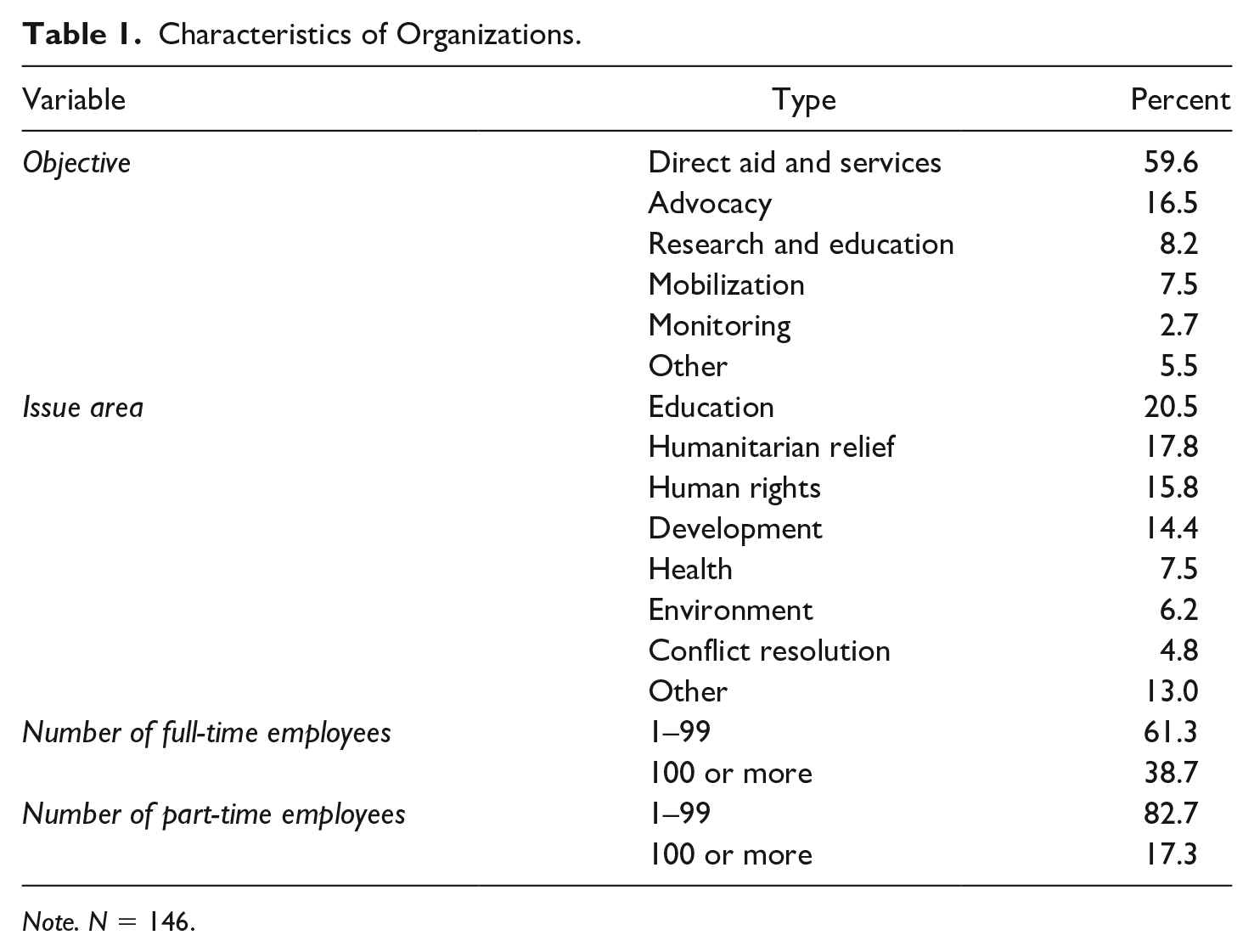
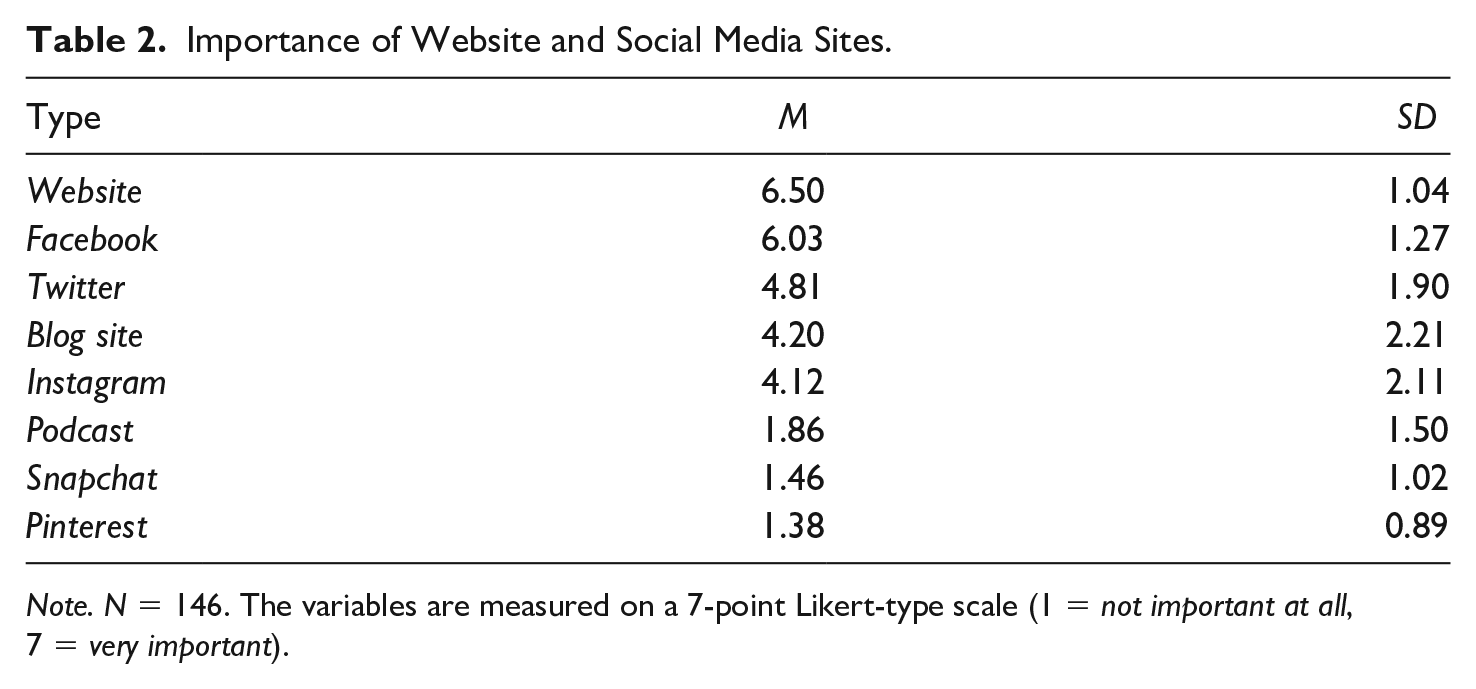
Table 1 summarizes general characteristics of organizations whose communications professionals participated in this study. When asked to identify the primary objective of their organization, about 60% of the respondents indicated their organizations focus on providing direct aid and services to their primary audiences or clients. This was followed by advocacy, engaging in research and public education, mobilization of people for campaigns, and monitoring and assessing the effects of policies. In terms of the main area the organization deals with, a quarter of the respondents chose education, followed by humanitarian relief, human rights, sustainable development, health, environment, and conflict resolution. In terms of key audiences for social media efforts, the general public was considered the most important, followed by potential funders, current funders, other nonprofit organizations, and journalists. As shown in Table 2, the organization’s website was considered most important in their digital-based external communication, followed by Facebook, Twitter, blog site, Instagram, podcast, Snapchat, and Pinterest. In open-ended responses, eight respondents said LinkedIn was very important to their organization’s external communication, and four identified YouTube as an important platform.
Characteristics of Organizations.
Note. N = 146.
Importance of Website and Social Media Sites.
Note. N = 146. The variables are measured on a 7-point Likert-type scale (1 = not important at all, 7 = very important).
Demographic Characteristics and Social Media Ease of Use and Relevance (H1)
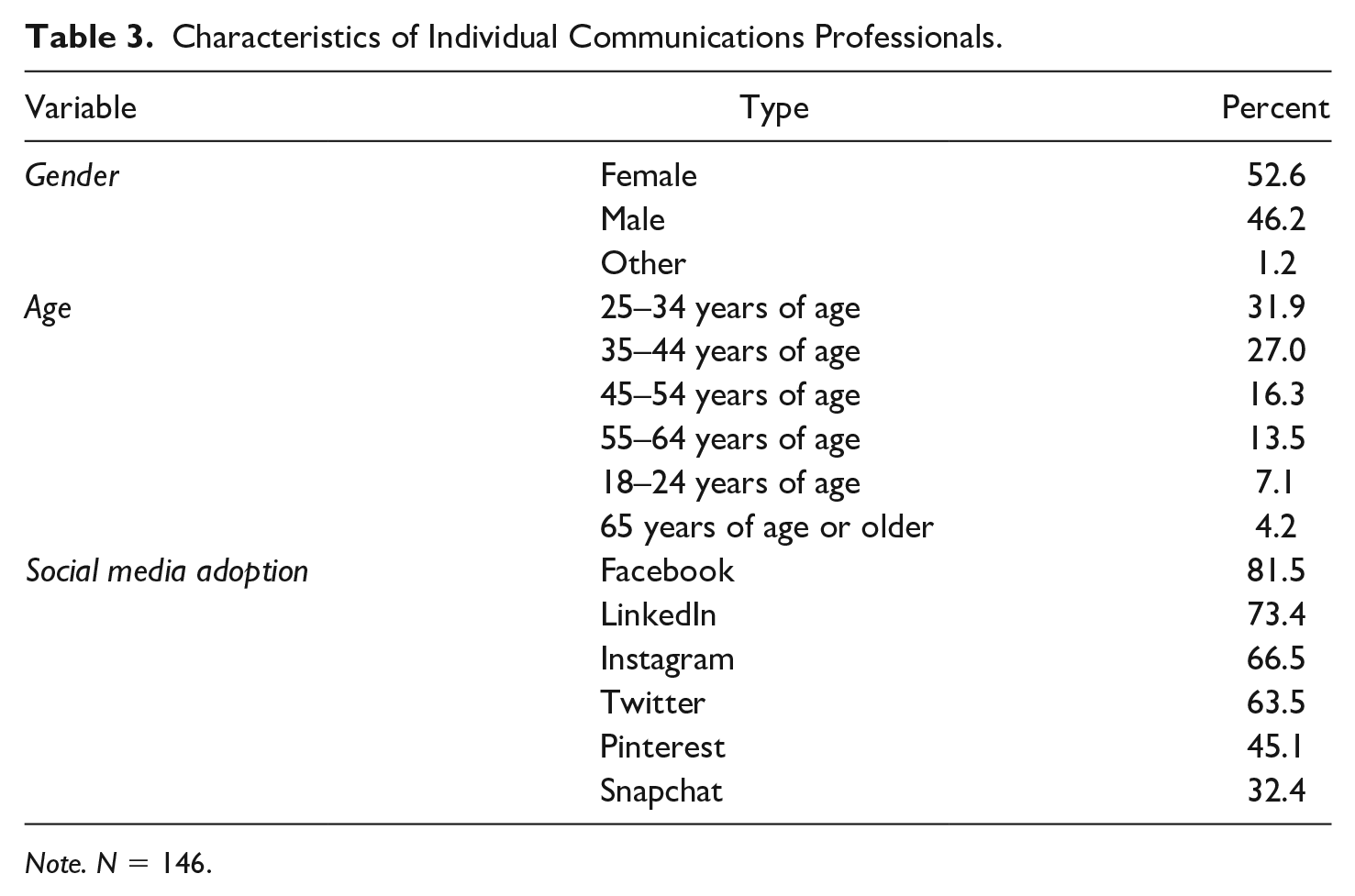
Characteristics of individual survey participants are shown in Table 3. Roughly, equal proportions of men and women participated in the survey. The largest age group was aged 25 to 34 years, followed by 35 to 44 years of age, 45 to 54 years of age, 55 to 64 years of age, 18 to 24 years of age, and aged 65 years or older. The majority of the participants indicated that they had been in their current organization less than 3 years. We asked a series of questions to understand participants’ perceived ease of use and relevance of social media. Learning to use different social media sites was considered relatively easy by communications professionals. In general, they also demonstrated confidence in interacting with social media sites and becoming skillful at using social media sites. However, they showed a lower level of confidence in following new trends in social media. Results show a high personal relevance of social media on the part of the communications directors. Social media is part of these communications professionals’ everyday activities. They reported being active on social media and said that using social media has made communicating their lives easier and improved their ability to communicate with others.
Characteristics of Individual Communications Professionals.
Note. N = 146.
Our analysis shows no significant associations between individual communicators’ demographic characteristics (i.e., age, gender, and years in the communication field) and their perceived ease of use of social media. No significant relationship was found between those demographic characteristics and their perceived relevance of social media. Therefore, H1 was not supported.
In addition, we analyzed how the communicators’ perceived importance of social media platforms and functions for the organization’s external communication was associated with their perceived effectiveness of social media in fulfilling different functions. Our path analysis shows that both platform importance and function importance were significantly associated with how effective individual communicators think social media is for fulfilling different functions of external communication.
Primary Social Media Functions for Transnational Nonprofits
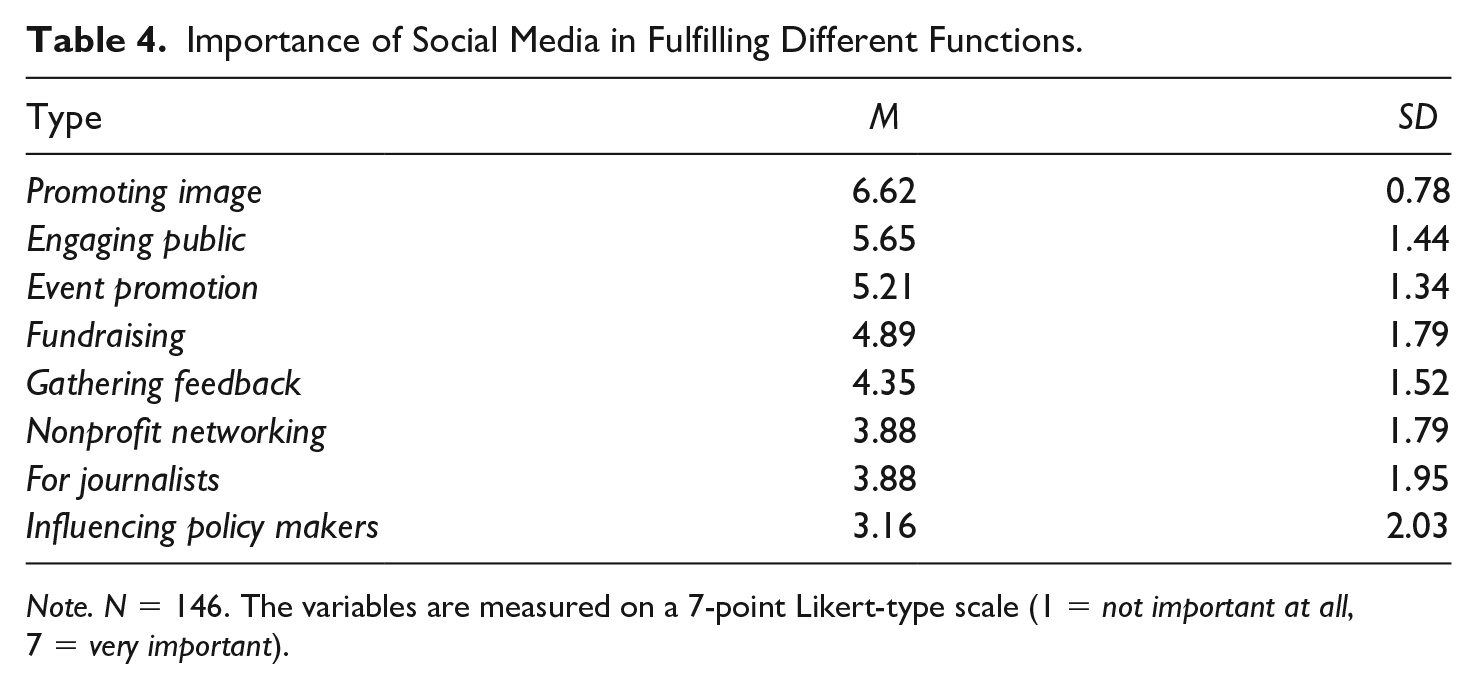
In terms of roles of social media for their organizations (Table 4), promoting the image of the organization was considered the most important function, followed by engaging and interacting with the general public, encouraging people to attend the organization’s events, fundraising, gathering ideas/information and getting feedback, providing journalists with easy access to materials regarding the organization, networking with other nonprofit organizations, and influencing policy makers. With regard to effectiveness of social media in fulfilling these roles, promoting the image of the organization received the highest score, followed by engaging and interacting with general public, encouraging people to attend the organization’s events, fundraising, gathering ideas/information and getting feedback, networking with other nonprofits, providing journalists with easy access to materials regarding the organization, and influencing policy makers. We ran a series of ANOVA tests to see whether there are any statistically significant differences between the organizations focusing on different objectives and causes in terms of their social media use. We found that the organizations of different primary objectives differed in terms of how much they emphasize the social media function of influencing policy makers, networking with other nonprofit organizations, and providing journalists with easy access to relevant materials. We also found that organizations that put greater emphasis on Facebook tend to emphasize the image promotion function of social media, fundraising, and interacting with the general public. When an organization emphasized the importance of Twitter, the organization was more likely to emphasize social media as a channel for influencing policy makers and providing journalists with easy access to materials regarding the organization.
Importance of Social Media in Fulfilling Different Functions.
Note. N = 146. The variables are measured on a 7-point Likert-type scale (1 = not important at all, 7 = very important).
Factors Associated With Social Media Platform Importance (H2) and Functional Importance (H3)
We analyzed how organizational characteristics and individual communicators’ attributes are associated with each communicator’s perceived importance of social media platforms for the organization’s external communication and perceived importance of different social media functions. For this analysis, we conducted a series of regression tests. Organizational characteristics and communications professionals’ individual attributes were independent variables, and the platform importance and functional importance were dependent variables as described in the “Method” section.
Variables used for organizational characteristics are the organization’s financial, accountability/transparency, and overall scores on Charity Navigator as well as the size of the communication team and the leadership’s support for using social media for the organization’s external communication. The leadership support variable was measured by three items: general support, resource support, and policy support. The majority (71.1%) of the respondents indicated that their organizations have one to four full-time employees on the communication team with about 11% having five to nine full-time employees on the communication team. Organizations participating in the survey demonstrated a relatively healthy financial condition, with the mean financial health score being 85.96 out of 100 (SD = 8.87). The mean accountability score was 92.71 (SD = 8.90) and the mean overall score was 87.74 (SD = 7.34). In terms of leadership support for the organization’s social media use, most respondents indicated that their leadership was very supportive. However, the response was not as positive when asked whether the leadership provides sufficient resources for social media efforts or clear social media guidelines for members of the organization. Each communications professional’s perceived ease of use of social media and relevance of social media—along with age, gender, and number of years in the profession—were also included in this analysis.
As shown in Table 5, our results demonstrate that the level of the organization leadership’s support was the most significant variable associated with the organization’s social media use. The leadership support variable—an index of overall support, resource support, and policy support—was positively associated with the importance of different social media platforms (“platform importance”) for the nonprofit. When we ran the regression analysis with each individual social media platform as the dependent variable, we found that the leadership support variable was a significant predictor of how much emphasis the nonprofit places on the company’s Facebook, Twitter, and Instagram accounts. This means that organizations with higher levels of leadership support for social media efforts are more likely to use Facebook, Twitter, and Instagram as important channels for external communication. There was also a positive relationship between leadership support and the importance of different functions of social media (“functional importance”). In particular, organizations with higher levels of leadership support for social media efforts are more likely to value the social functions of social media, including promoting image, engaging and interacting with the general public, and gathering ideas and feedback.
Results of Multiple Regression Analyses.
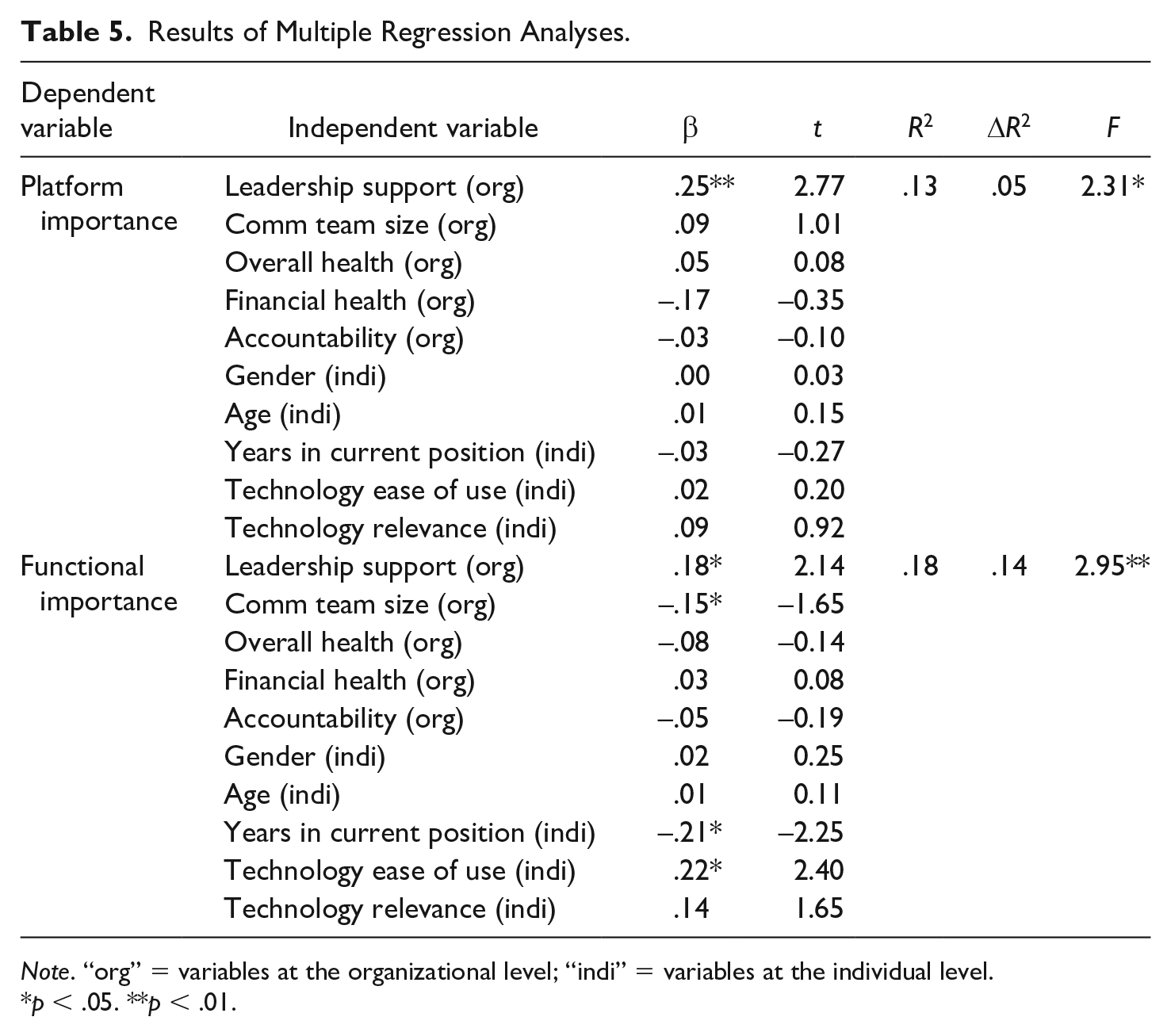
Note. “org” = variables at the organizational level; “indi” = variables at the individual level.
p < .05. **p < .01.
Our findings also suggest that the size of the communication team is another important variable to consider in understanding nonprofit organizations’ social media efforts. Specifically, the size of the communication team was negatively associated with the functional importance of social media, particularly the importance of social media for fundraising. This suggests that the fundraising function of social media is more important for organizations with a smaller number of members in the communication team. There was also a positive relationship between the size of the communication team and the importance of the organization’s website for its external communication. Our findings show that even after controlling for communications professionals’ attributes, organizational characteristics are significantly associated with how importantly different social media platforms and different functions of social media are valued by nonprofits. Thus, H2 and H3 were supported.
Discussion
Our study advances research in the area of nonprofits’ digital-based external communication and offers practical insights into how nonprofits utilize different social media platforms. One of the most important contributions of this research is examining combined effects of individual and organizational factors by analyzing survey data on individual communications directors’ perspectives and demographic characteristics as well as organizational information derived from the nonprofit’s IRS Form 990 and website.
Several key findings from the study offer particularly helpful insights. Most of all, we identified nonprofits’ leadership support for social media use as being most significantly associated with how much nonprofits value different social media platforms and various functions of social media for external communication. This finding highlights that relevant resource and policy support from the leadership is important for advancing a nonprofit’s social media presence and engagements. In this study, the leadership support was measured by overall support, resource support, and policy support. Organizations with higher levels of leadership support considered leading social media platforms such as Facebook and Instagram more important than organizations with lower levels of leadership support. However, the level of leadership support was not related to how important the website was for the organization’s external communication. This indicates that leadership support is particularly relevant for a nonprofit’s social media use, as content posted on social media can easily go viral either positively or negatively. Having the leadership’s support may encourage communications professionals to be more active and creative in using social media for the organization’s external communication. Similarly, leadership support was positively associated with how important social media was for promoting the organization’s image, engaging and interacting with the general public, and gathering ideas and feedback. These functions of social media also entail willingness to take some risks and thus leadership support might be essential. This finding is in line with previous research showing that the management’s level of support plays a significant role in an organization’s adoption and use of digital communication technologies (Bruque & Moyano, 2007; Nah & Saxton, 2013; Soliman & Janz, 2004).
In addition, findings from this study show evolving trends in nonprofits’ use of social media. For example, the role of social media in providing relevant information to journalists is not considered as important as it was a decade ago (Seo et al., 2009). As society becomes increasingly decentralized with increased availability of social media channels, organizations’ reliance on news media outlets has decreased (Benkler, 2011; Bennett & Segerberg, 2013). These changes indicate that transnational nonprofit organizations increasingly see social media as a channel for engaging the public rather than for fundraising or earning news media coverage. Specifically, our results indicate that most important audiences for these nonprofits’ social media channels are the general public and potential donors. In the same vein, nonprofits reported using social media primarily for promoting organizational image and engaging and interacting with the general public. These were followed by encouraging people to attend the organization’s events, fundraising, and gathering ideas/information and feedback. Providing relevant materials to journalists was considered the least important function of social media channels. These findings provide interesting contrasts from a survey of transnational nonprofit organizations a decade ago (Seo et al., 2009). According to that survey, conducted in 2008, promoting the image of the organization was the most important, followed by fundraising, providing information to journalists, and interacting with the public. Analyzing these differences in nonprofits’ social media use contributes to enhancing our understanding of communication practices by nonprofit organizations.
It is also important to note that the organization’s website is still considered the most important digital communication channel despite the rising number of social media platforms and increasing use of social media by the general public. This is in line with the 2008 survey of transnational nonprofit organizations that found an organization’s website was the most important digital media platform (Seo et al., 2009). The finding indicates that despite the availability of different social media channels, the organization’s website plays an important role as a hub of information, event promotion, donation, and so on. In terms of social media platforms used, Facebook, Twitter, blog sites, and Instagram were considered the most important for the organization’s external communication. It seems intuitive that Facebook is considered the most important social media channel for nonprofits’ external communication as it is the most popular social media site both within the United States and around the world (Greenwood et al., 2016; Hutt, 2017; Perrin, 2015). Twitter, blog sites, and Instagram were the next most important social media platforms for the nonprofit organizations surveyed. These are consistent with social media sites popular among the general public (Greenwood et al., 2016). Although Instagram is more widely used than Twitter among U.S. users (Greenwood et al., 2016), Twitter has been around longer and more widely adopted by organizations and businesses for its branding and real-time marketing opportunities (Kerns, 2014).
An individual communicator’s perceived ease of use of social media was significantly associated with how important the communicator perceives of different functions of social media for the organization’s external communication. Specifically, when communicators perceived using social media is easy, they assigned higher scores to the importance of social media in fulfilling different functions of external communication. Interestingly, there were no differences between women and men in terms of perceived ease of use and relevance of social media. This is different from results from a study of nonprofit public relations practitioners several years ago indicating that men exhibit more confidence in actively using social media and women regard social media as more relevant (Curtis et al., 2010). It is possible that as social media has become such an important part of our daily lives in recent years, those individual differences are not as salient.
Future research should consider several areas. Analyzing social media posts of the transnational nonprofits under study would allow us to better understand the specific social media engagement strategies they use. In addition, comparing and contrasting U.S.-based transnational nonprofit organizations’ social media adoption and use with transnational nonprofit organizations based in other countries would provide a more complete picture of social media efforts by nonprofit organizations. Similarly, examining differences and similarities between U.S.-based nonprofit organizations with international reach and those focusing on domestic matters may also offer useful insights.
The results of this research should be helpful for scholars studying roles of social media for nonprofits’ external communication as well as those who practice public relations or digital marketing for nonprofit organizations. In terms of scholarly contributions, this research advances literature on nonprofit organizations’ use of digital communication technologies. Whereas previous studies in this area examined relevant topics focusing only on organizational characteristics or individual communicators’ attributes (e.g., Curtis et al., 2010; Guo & Saxton, 2014; Nah & Saxton, 2013), this research fills the gap in the literature by examining factors at both organizational and individual levels. In this sense, it also informs theoretical models of technology use by connecting technology use at the individual level with that at the organizational level. The current study is also one of the few studies that specifically examine nonprofit organizations with international reach (Seo et al., 2009). While our analysis is confined to transnational nonprofits, the findings may suggest future directions for nonprofits’ social media strategy in general. As digital technologies facilitate communications across the globe quickly and inexpensively, nonprofits working with residents of other countries are more adept at responding to the rapidly changing media environment (Chadwick, 2006; Naudé et al., 2004; Seo et al., 2009). Therefore, understanding how transnational nonprofits engage in digital-based external communication can suggest useful insights for nonprofits that aim to expand internationally or use social media more actively. In addition, survey findings related to individual communicators and nonprofits’ use of social media lay the foundation for future longitudinal research on related topics. Analyzing nonprofits’ social media use and communications professionals’ perspectives on social media over time will permit us to identify changes in nonprofits’ communication strategies as the larger digital media environment develops.
In a practical sense, the results from this research help communications professionals better understand how their organization’s characteristics are associated with their current social media adoption and use and what needs to be done to address relevant issues. In particular, this study highlights the significant influence of the organization’s leadership on its social media use. Relevant resource and policy support from the leadership is essential for advancing a nonprofit’s social media presence and engagements. The study serves as an opportunity for them to learn how other nonprofit organizations are utilizing social media and for what purposes.
Footnotes
Declaration of Conflicting Interests
The author(s) declared no potential conflicts of interest with respect to the research, authorship, and/or publication of this article.
Funding
The author(s) disclosed receipt of the following financial support for the research, authorship, and/or publication of this article: The authors would like to thank the Waterhouse Family Institute for the Study of Communication and Society at Villanova University for its generous funding for this research.
