



Abstract
Philanthropic foundations are critical actors in the nonprofit sector—funding the programs of social and human service charities, fostering innovation, and serving as patrons of the arts. However, the dramatic growth of foundations and their endowments in recent decades has intensified charges of plutocracy—the claim that foundations are more interested in protecting their power and privilege than in contributing to the public good. The COVID-19 crisis has brought this critique into sharp focus, leading to the question, “How are large foundations acting to stem COVID-19’s impact and help in the process of recovery?” Our descriptive study leverages data from a nationwide survey of the 500 largest philanthropic foundations (by total assets) in the United States to characterize foundations’ (a) changes to internal strategy or giving, (b) shifts in relationships with grantee organizations, (c) prioritization of communities most affected by the COVID-19 crisis, and (d) collaboration across organizations and sectors.
Introduction
Foundations are critical actors in the nonprofit sector, but there is little precedent to predict their responses to the emergent needs of public charities and the communities they serve during a global pandemic. As the United States confronts the fallout of COVID-19, important questions arise regarding how philanthropic organizations—whose combined assets total to nearly US$1 trillion (Foundation Center, 2020)—are responding. Foundations contribute to the public good in many ways, from supporting programs that address basic human needs to fostering innovation to serving as patrons of the arts (Jung et al., 2016; Moody & Breeze, 2016). Although foundations might be expected to alter their grantmaking as a result of the pandemic, their unique missions could constrain shifts in strategic priorities (Frumkin, 2006; Irvin & Kavvas, 2019). Moreover, while foundations might be expected to increase their giving, COVID-19 has created an economic crisis, and many foundations decrease giving during a downturn (Calabrese, 2020; Dietz et al., 2015; Irvin, 2007).
At the same time, the dramatic growth of foundations and their endowments in the last few decades—often described as the “Second Gilded Age” of philanthropy—has intensified claims that foundations are plutocratic and dedicated primarily to protecting their power and privilege (Callahan, 2017). Foundations, which are seeded with money from the wealthy who receive generous tax subsidies for doing so, have few requirements regarding disclosure and transparency (Giridharadas, 2019; Reich, 2016). Although some criticize this lack of public accountability as undemocratic, foundations’ independence positions them to be flexible and innovative in response to social challenges, and the pandemic presents an opportunity for foundations to demonstrate their commitment to the public good (Fleishman, 2007; Prewitt et al., 2006; Weinryb, 2020).
Although comparative research would be valuable for understanding foundation behaviors during a pandemic, the United States constitutes a key country case for research on foundation responses to COVID-19 (Jung et al., 2018; Toepler, 2018). Unlike some Western countries with highly centralized public services, the U.S. federal governance structure and limited social safety net result in unmet needs and implementation gaps that civil society actors seek to fill (Marwell & Calabrese, 2015; Salamon & Anheier, 1998). Consequently, many foundations in the United States support public services, and COVID-19 has exacerbated the need for those services—the country leads the world in infections (and total deaths) from the disease (Statista, 2020). In March 2020, the Council on Foundations (CoF, 2020), a national philanthropic association, challenged foundations to commit significant resources to address COVID-19 and maximize the impact of their giving. Although 750 foundations have signed the pledge, the overall extent to which grantmaking has changed remains unclear.
Preliminary evidence suggests that foundations have acted decisively, demonstrating leadership during the pandemic. Recent estimates of foundation and corporate pledges to COVID-19 response have topped US$1 billion internationally (Grabois, 2020). Early in this crisis, several U.S. foundations tended swiftly to the urgent need for COVID-19 testing, created new funds to develop solutions to the disease’s health and economic effects, and increased support for nonprofit organizations (Sullivan, 2020). In addition, five of the largest foundations in the country—Ford Foundation, MacArthur Foundation, W.K. Kellogg Foundation, Andrew W. Mellon Foundation, and Doris Duke Charitable Foundation—pledged to dramatically increase their funding to address the effects of COVID-19 (Stewart & Kulish, 2020). Community foundations have also been working to mobilize support for those most affected by the crisis; the Greater Washington Community Foundation raised more than US$7.5 million from 700 donors to support nearly 200 organizations, 50% of which are led by people of color (Scutari, 2020).
Our descriptive study aims to document these efforts more systematically through a survey of the 500 largest private and community foundations in the United States (by assets) that asks leaders four key questions. Our first question explores whether and how foundations are changing their internal strategy or giving to address growing crises. Although some foundations could change priorities entirely, for instance, others might increase their payout percentage, establish a new fund, or advocate around COVID-19 issues. Another way that foundations could respond to COVID-19 is by altering relationships with their current grantees, the second question we consider. Unlike internal strategy or giving changes, alterations to grantee relationships focus on current ties and are narrower in scope, such as changing payment schedules, loosening restrictions on current funding, or decreasing reporting requirements. Nonprofit advocates have long argued for changes to the foundation–grantee relationship (Goggins Gregory & Howard, 2009; Le, 2016), and in the midst of a pandemic, these changes have the potential to ameliorate the strain nonprofit grantees face in adapting to this turbulent environment.
The third question we examine is whether and how foundations are orienting their efforts to help those disproportionately affected by the COVID-19 crisis. Although COVID-19 affects all Americans, the extent of these effects varies tremendously across communities. Data from the Centers for Disease Control and Prevention (CDC, 2020) indicate Native Americans, Black and Latinx communities, people experiencing homelessness, low-income individuals, older adults, and immigrant communities are at higher risk for COVID-19 infection and more intense effects of the virus. People of color also bear the brunt of the subsequent economic crisis (Lopez et al., 2020). The final question we ask is whether and how foundations are collaborating with other organizations and sectors to confront COVID-19, as growing evidence suggests that foundations increasingly partner with other organizations to implement or change policy (Abramson et al., 2014; Reckhow, 2013).
We discuss our data in the next section, followed by the presentation of our results. After presenting the survey results from our four key questions, we use our survey results to compare foundations that signed the CoF pledge with those that did not. We conclude with a discussion of how our descriptive findings could be utilized in analytical studies that compare foundations, not only within the United States but also across national contexts.
Method
Data for this descriptive study come from a nationwide survey of large philanthropic foundations. We sampled the 500 largest private and community foundations in the United States (by total assets), as determined from the Foundation Center database, a national repository of foundation and grant information. These data were obtained in 2018, and as a result, some organizations have since sunsetted, merged, or transitioned to an alternative organizational designation, leaving an effective sample size of 489 foundations. The survey was first emailed to chief executive officers or high-level executives in late May of 2020 and as of August 2020, 138 foundations responded to the survey, yielding a response rate of 28.2%.
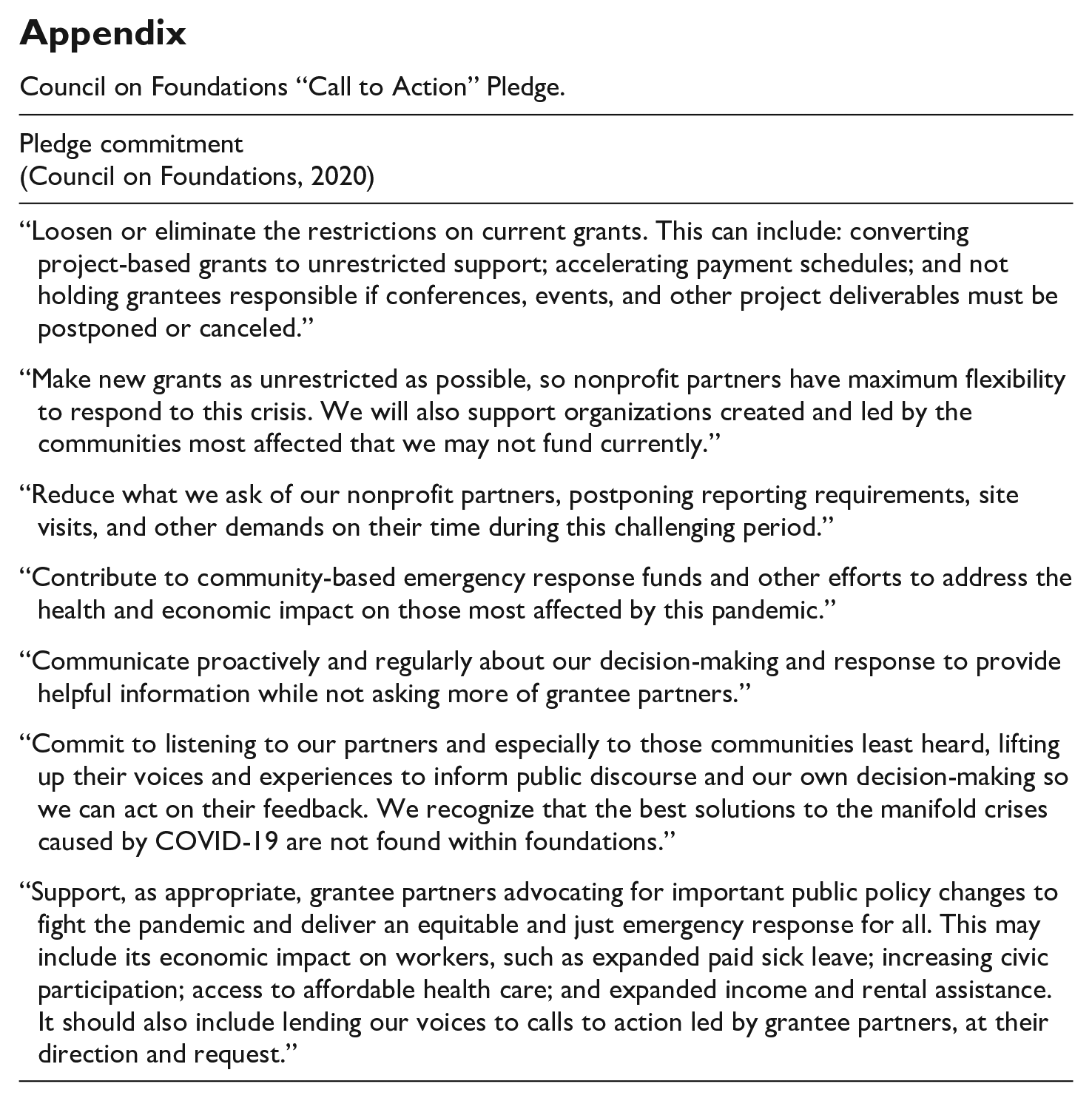
Table 1 shows our four survey questions about foundations’ responses to the COVID-19 crisis, which were informed by the commitments of the CoF pledge (see Appendix). Foundation assets and location were obtained through the Foundation Center database. The mean total assets of respondents are approximately US$972,000,000, with median total assets of US$451,555,836, which approximates that of our overall sample (US$472,942,717). As Table 2 illustrates, community foundations are slightly overrepresented, where our sample features 23.2% (N = 32), roughly 15% of the largest foundations are community foundations. Geographically, foundations in the Northeastern United States are slightly underrepresented in the sample. We identified 42 foundations in our sample (30.4%) as signatories to the CoF pledge using the Council on Foundations website.
Survey Questions Regarding COVID-19 Response.
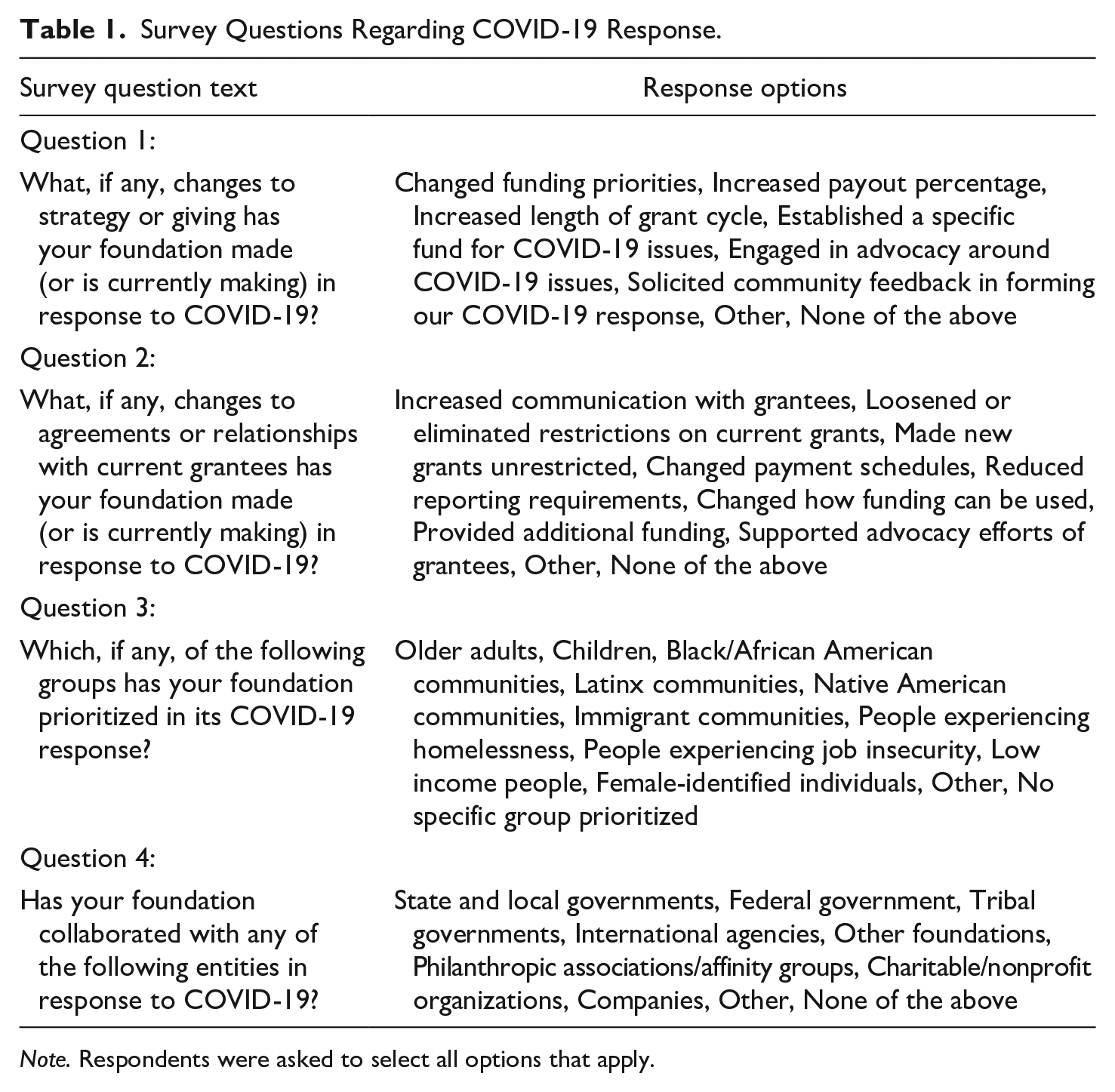
Note. Respondents were asked to select all options that apply.
Descriptive Statistics for Reported Sample (N = 138).

Note. FTEs = full-time equivalents.
Foundations whose primary grantmaking is one of these four areas, as determined by data from the Foundation Center Database.
Findings and Discussion
Changes in Internal Strategy or Giving
Our first research question asked the extent to which foundations changed their internal strategy or giving in response to the COVID-19 crisis. As indicated in Figure 1, the most commonly reported change is what some respondents called “emergency” or “rapid response” grantmaking. Most foundations (70.3%) reported establishing a new fund to address emergent issues related to COVID-19. Several foundations clarified the magnitude of the additional investment in an open-response question, revealing that they infused anywhere from US$500,000 to US$50 million in additional grants to increase research funding and COVID-19 testing. However, our survey data show that only about a third of foundations that reported establishing a new fund also reported increasing their payout percentage, suggesting that about 67% of foundations are not paying out more money than they otherwise would have.

Changes in internal strategy or giving as a result of COVID-19.
Foundation–Grantee Relationships and Agreements
Our second research question asked how foundations changed their relationships or agreements with current grantees in response to the crisis; results are presented in Figure 2. Our data show that 75.4% of foundations have reduced the restrictiveness of grant funds in direct response to COVID-19. In addition, the majority of foundations indicate that they have increased communication with grantees (70.3%) and increased the flexibility of their funding in one or more ways. More than half of the foundations reported decreasing reporting requirements on existing grant projects and changing the stipulations around how grant funds can be used. Interestingly, only 7.2% of foundations reported supporting the COVID-19-related advocacy efforts of their grantees, despite 50% of respondents indicating that, in their general practice, they support the advocacy of nonprofit grantees.
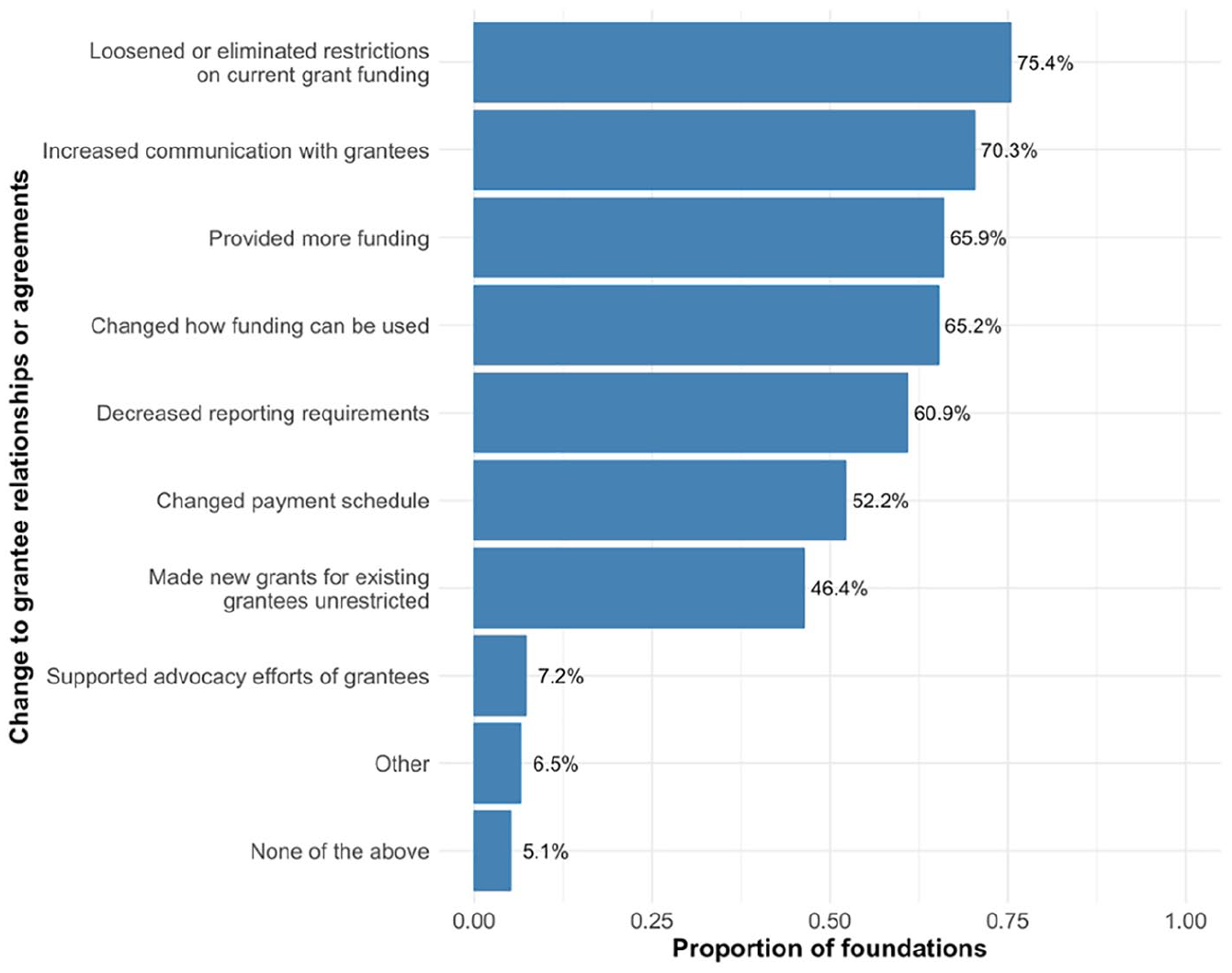
Changes to grantee relationships or agreements in response to COVID-19.
Support for High-Risk Communities
Our third research question asked whether foundations prioritized communities that are disproportionately affected by COVID-19. As Figure 3 illustrates, most foundations (60.1%) indicated that they prioritized low-income individuals in their COVID-19 response. Many foundations also indicated that they prioritized Black (47.8%) and Latinx (43.5%) communities. Roughly 40% of foundations reported prioritizing immigrant communities, with some clarifying that they prioritized undocumented immigrants and refugees in their response. Other foundations indicated that they prioritized those who were not otherwise eligible for public assistance but were strongly affected by the economic downturn that accompanied the first wave of the pandemic. Just 18.8% of foundations indicated that they prioritized Native American communities in their COVID-19 response.

Foundation support for high-risk communities in response to COVID-19.
Collaborations Between Foundations and Other Organizations
Our final research question asked foundations about collaborations across organizations and sectors in response to the COVID-19 crisis. Figure 4 shows that the majority of foundations have partnered with other foundations (81.9%) and philanthropic associations (61.6%), including pooling COVID-19 funds and working with foundations located in their target communities. Most foundations (80.4%) have collaborated with nonprofit organizations, including hospitals and health care providers. In addition, more than half of foundations that responded to the survey (55.8%) reported collaborating with state and local governments; some foundations reported working with school districts or across levels of government to address reopening procedures. Collaborations with the federal government, tribal governments, and international agencies were much less common.

Organizations with which foundations report collaborating in response to COVID-19.
Council on Foundation’s Pledge Signatories Versus Nonsignatories
Finally, we compare foundations that signed the Council on Foundations’ pledge committing to ethical philanthropy in the time of COVID-19 with those that did not sign the pledge. Table 3 shows the proportion of each group, signatory and nonsignatory, that reported adopting pledge-aligned practices, with difference of proportions tests to examine whether differences are statistically significant. Signatory foundations report adopting practices aligned with the stipulations of the pledge significantly more than nonsignatory foundations, with two exceptions. There are no statistically significant differences in support for nonprofit engagement in advocacy around COVID-19—the proportion is low for both groups. Increased communication with grantees is reported frequently among both signatory and nonsignatory foundations, with no significant differences between groups.
Signatory Versus Nonsignatory Adherence to the Council on Foundations Pledge Commitments.
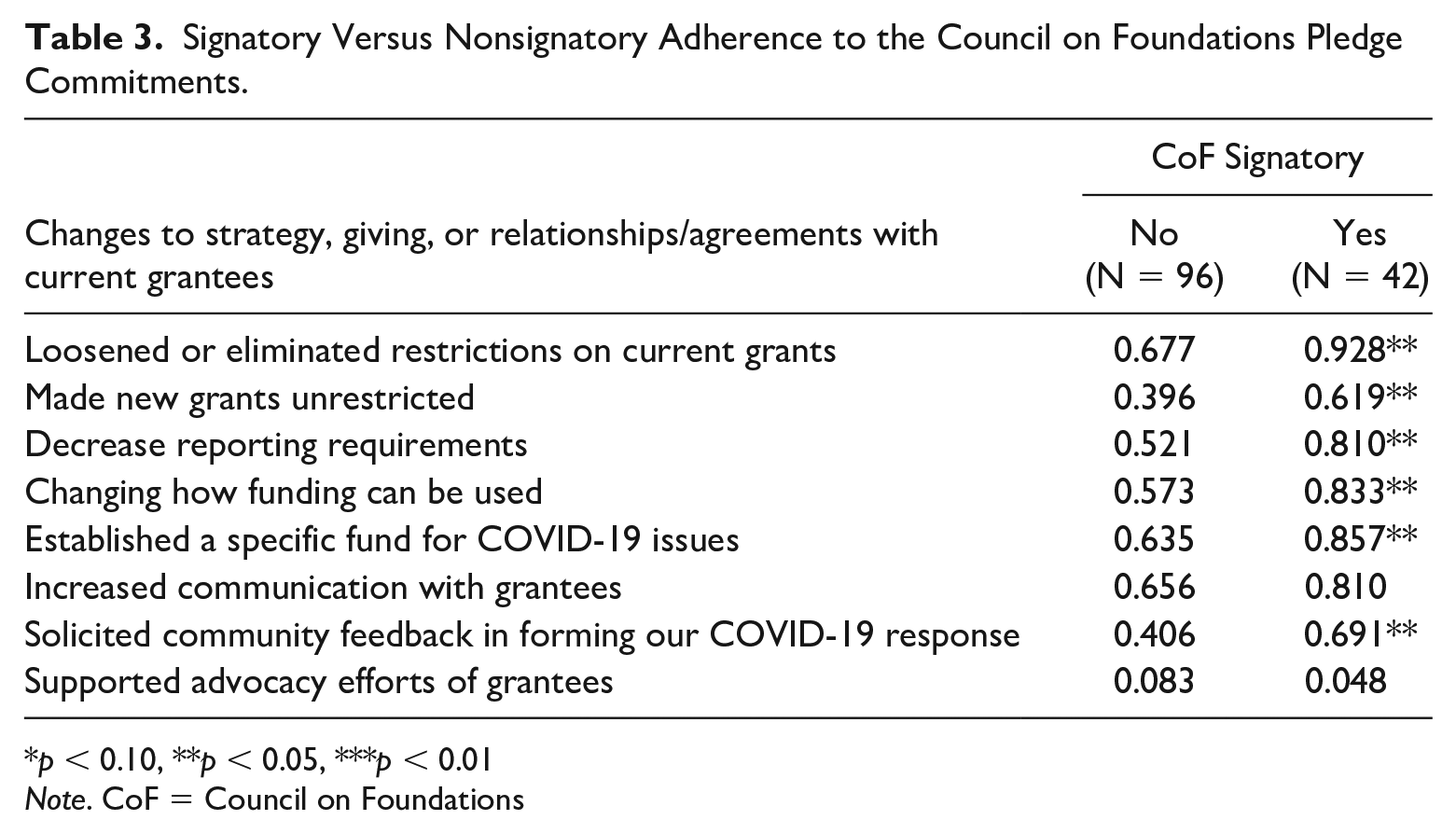
p < 0.10, **p < 0.05, ***p < 0.01
Note. CoF = Council on Foundations
Conclusion
Without any doubt, large private and community foundations are taking action to fight the COVID-19 crisis in many ways. More than two thirds of the foundations in our study have established new funds to address issues related to COVID-19, and many are shifting their funding priorities, soliciting community feedback to develop their strategy, and advocating for change in public policy. Where we see the most movement across all foundations is in grantee relationships and agreements, with a majority reporting that they are making significant changes in how they support their nonprofit grantees, from loosening restrictions, changing how funds can be used, and reducing reporting requirements to providing additional grant funding and making such funding unrestricted. Whether the COVID-19 crisis will serve as a catalyst for institutionalizing these changes in foundation–grantee relations remains an open question.
There are, of course, limitations to our research. While the characteristics of our respondents closely align with that of the overall sample in terms of private and community foundations, geography, and asset size, some selection bias is likely. Foundations that were willing to participate in the survey may be more likely to support an active COVID-19 response. Furthermore, our survey questions capture dichotomous responses; thus, we do not know the extent to which foundations have implemented changes. For instance, when a foundation indicates that they have increased their payout percentage or communication with grantees, we do not know the magnitude of that increase. Relatedly, although we know COVID-19 has hit Black, Latinx, and Native American communities particularly hard and we observe many foundations indicating that they are prioritizing these communities and collaborating with other organizations across public and private boundaries in their crisis response, it is unclear how that prioritization looks in practice and whether resources are being directed to organizations led by people of color.
Despite these limitations, the study provides evidence that many foundations have been responsive to the pandemic and lays the foundation for future research. One of the major questions that arises from these findings is what drives differences in crisis response among foundations. The diversity of foundation forms, missions, fields, and strategies may imply different courses of action during times of crisis. This study also raises questions about how the nature of a crisis shapes foundations responses—as foundations may respond differently to a pandemic than to a crisis that is more localized or does not involve public health. Finally, future research should address how national context shapes foundation responses to crisis, and lamentably, a pandemic allows for cross-national comparison of philanthropic responses to the same crisis.
Footnotes
Appendix
Council on Foundations “Call to Action” Pledge.
| Pledge commitment |
|---|
| “Loosen or eliminate the restrictions on current grants. This can include: converting project-based grants to unrestricted support; accelerating payment schedules; and not holding grantees responsible if conferences, events, and other project deliverables must be postponed or canceled.” |
| “Make new grants as unrestricted as possible, so nonprofit partners have maximum flexibility to respond to this crisis. We will also support organizations created and led by the communities most affected that we may not fund currently.” |
| “Reduce what we ask of our nonprofit partners, postponing reporting requirements, site visits, and other demands on their time during this challenging period.” |
| “Contribute to community-based emergency response funds and other efforts to address the health and economic impact on those most affected by this pandemic.” |
| “Communicate proactively and regularly about our decision-making and response to provide helpful information while not asking more of grantee partners.” |
| “Commit to listening to our partners and especially to those communities least heard, lifting up their voices and experiences to inform public discourse and our own decision-making so we can act on their feedback. We recognize that the best solutions to the manifold crises caused by COVID-19 are not found within foundations.” |
| “Support, as appropriate, grantee partners advocating for important public policy changes to fight the pandemic and deliver an equitable and just emergency response for all. This may include its economic impact on workers, such as expanded paid sick leave; increasing civic participation; access to affordable health care; and expanded income and rental assistance. It should also include lending our voices to calls to action led by grantee partners, at their direction and request.” |
Declaration of Conflicting Interests
The author(s) declared no potential conflicts of interest with respect to the research, authorship, and/or publication of this article.
Funding
The author(s) disclosed receipt of the following financial support for the research, authorship, and/or publication of this article: This research was supported by the Ford Foundation (Grant No. 134670).
