



Abstract
State restrictions on nongovernmental organizations (NGOs) have become increasingly pervasive across the globe. Although this crackdown has been shown to have a negative impact on public funding flows, we know little about how it affects private philanthropy. How does information about crackdown abroad, as well as organizational attributes of nonprofits, affect individual donors’ willingness to donate internationally? Using a survey experiment, we find that learning about repressive NGO environments increases generosity in that already-likely donors are willing to donate substantially more to legally besieged nonprofits. This generosity persists when mediated by two organizational-level heuristics: NGO issue areas and main funding sources. We discuss the implications of our results on how nonprofits can use different framing appeals to increase fundraising at a time when traditional public donor funding to such organizations is decreasing.
Over the last three decades, governments across the world have sought to limit the work of nonprofits and nongovernmental organizations (NGOs)—a phenomenon known as “closing civic space” (Carothers, 2015; Dupuy et al., 2016). Repressive governments have enacted laws creating barriers to advocacy and funding for a variety of NGOs. The adverse effects of these laws are particularly felt in countries with weak institutions and poor governance. International donors directing aid to these countries typically seek out NGOs to implement their projects, as direct aid transfers to recipient governments pose the risk of misuse and bureaucratic inefficiency (Dietrich, 2013). However, official aid flows to NGOs have decreased considerably in countries that repress NGOs (Brechenmacher, 2017; Chaudhry & Heiss, 2018; Dupuy & Prakash, 2018). Although we know there has been a negative impact on funding from official donors, we know relatively little about how this crackdown affects private donors, in particular how it influences individual donors’ willingness to donate internationally.
Charitable giving to nonprofits working in international affairs has steadily increased over the past two decades. 1 From 2014 to 2016, giving to international affairs–focused issues increased by 14.1% (IUPUI Lilly Family School of Philanthropy, 2017). This amount is not insignificant—by 2016, total private giving to nonprofits working in international affairs had increased to US$22.03 billion (Giving USA, 2017). Most notably, a large portion of this growth was driven by individuals making small-scale donations. In 2017, individuals gave US$286.7 billion or approximately 70% of total giving to international affairs. This further increased to US$427.71 billion in 2018, 85.7% of which was through individuals (Giving USA, 2019). Although much is known about individuals’ motivations for giving locally (Bekkers & Wiepking, 2011), much less is known about motivations to give internationally. These large amounts show the urgency of understanding this phenomenon. What factors affect individual donor preferences on giving to international causes? How does information about repressive NGO environments abroad affect donors’ willingness to donate internationally, and how does knowledge of legal crackdown interact with other organizational attributes?
Given information asymmetry and time constraints, individual donors often use heuristics to simply their decision-making (Croson & Shang, 2011; Tremblay-Boire & Prakash, 2017). Framing, or the process through which actors present information to influence perceptions of behavior, is particularly important in this regard (Chong & Druckman, 2007), as NGOs’ appeals for donations are framed by structural and organizational characteristics. We use a survey experiment fielded in the United States to assess how different structural- and organizational-level heuristics affect donor preferences. We find that learning about repressive NGO environments increases generosity and that already-likely donors are willing to donate substantially more to legally restricted nonprofits.
This generosity persists when mediated by two important organizational-level heuristics: issue area and funding source. Learning about crackdown increases individuals’ willingness to donate to privately funded nonprofits. This may be because the survival of the NGO appears to be in question and the donor’s assessment might be that their donation actually makes a difference. These results are particularly substantive for privately funded human rights NGOs facing crackdown, with donors showing an increased willingness to not just donate to them but also to donate more to them. While not unsurprising, this does suggest that private donors to human rights NGOs likely know that their work is always challenging to host governments and that such organizations need greater support when facing hostile environments.
Our study makes a significant contribution to research on individual giving and indicates the promise and limits of different framing appeals on individual donor preferences. Although factors shaping individual giving to domestic causes have been thoroughly explored in existing literature, the dynamics of international giving are less explored. 2 Understanding the latter is important as philanthropy to international causes can be harder to motivate because the number of recipients is larger and further removed from the donor (Casale & Baumann, 2015, p. 100).
Second, most nonprofits working internationally have traditionally relied on government and foundation funding. In the era of closing civic space, NGOs may need to reframe and tailor their fundraising strategies to individual donors. However, we lack systematic studies of which frames may be effective when making appeals to donors considering international philanthropy. Our study examines the impact of political frames such as regulatory crackdown and how this frame interacts with organizational attributes to change donor preferences. Accordingly, our results can help international nonprofits frame their appeals for funding, especially when facing restricted legal space abroad.
Below, we summarize existing research on the determinants of giving to NGOs and lay out our expectations regarding how crackdowns and NGO organizational attributes shape individuals’ philanthropic preferences. We then describe our survey experiment and present the results. We conclude with implications for NGOs working in repressive countries and lay out questions ripe for future research.
Philanthropy Toward International NGOs
Thousands of international NGOs (INGOs) in the Global South receive funds from a variety of public and private sources each year. 3 While we focus on private funding in this article, it is essential to differentiate between the two sources. Public aid, or more traditional donor aid, channels funds from official aid agencies toward nonprofits through a variety of bilateral and multilateral institutions. Private funds come from foundations, corporations, and individuals. We are specifically interested in individual-level determinants of private international philanthropy.
Nonprofits working internationally typically rely heavily on official aid from government sources. In 2018, for instance, humanitarian INGOs received 81% of their total funding from governments and European Union (EU) institutions (Development Initiatives, 2020). However, private giving to nonprofits working in international affairs has increased consistently over the past decade. Donations from individuals have far outstripped foundation and corporate giving—in 2018, individual donations amounted to US$292.09 billion, compared with US$75.86 billion from foundations and US$20.05 billion by corporations. Although foundations are often seen as the primary funders of international nonprofits, they accounted for only 18% of all charitable giving in 2018—and grants from the Bill and Melinda Gates Foundation accounted for more than half of all foundation giving (Giving USA, 2019). Moreover, although government, foundation, and corporate funding is often earmarked for specific purposes, private donations are typically unrestricted funds. 4 Individual donors thus play an incredibly important—and underexplored—role in funding INGOs.
Given these substantive amounts, understanding individual motivations to donate internationally is important as individual donor preferences may not necessarily mirror the preferences of official aid agencies. While there is evidence that citizens generally support the goals of aid agencies (Milner & Tingley, 2010), surveys show that the American public is notoriously misinformed about U.S. foreign aid (Norris, 2019). Furthermore, both foreign aid and democracy aid are often considered unresponsive to political developments in recipient countries (Carothers, 2015), and public aid decisions—especially regarding final recipients and amounts—are not easily accessible. There is also heterogeneity in how donor governments allocate funds. For instance, unlike established donors such as the United States and other Organisation for Economic Co-operation and Development (OECD) countries, emerging donor governments tend to demand fewer human rights, governance, or environmental preconditions (Fengler & Kharas, 2010).
Recent experimental evidence also finds little support for the idea that individual donor behavior mimics that of official donors. Desai and Kharas (2018) find that unlike official donors who tend to channel funds to countries with better institutional quality or to reward governmental performance (Bermeo, 2011; Dietrich & Wright, 2015), individual donors do not use the same performance-based metrics. Rather, individuals are more inclined to donate to NGOs in countries experiencing a humanitarian crisis—in particular, crises following natural disasters. Desai and Kharas (2018) conclude that compared with donor agencies, “private donors respond to different project and country characteristics” (p. 517). International philanthropy by individuals should therefore be investigated on its own terms.
Looking at different funding flows, it is also notable that private funding toward nonprofits working internationally appears to not be as adversely impacted as public funding flows in the face of the global crackdown on NGOs. Although anti-NGO restrictions have reduced official aid to repressive countries (Dupuy & Prakash, 2018), private foundations have continued to channel funds to countries with unfriendly legal environments (Foundation Center, 2018). Accordingly, it is imperative to understand whether individual donors mirror the trajectory of foundations when giving internationally, especially to organizations facing legal crackdown abroad.
Key Drivers of Individual-Level Philanthropy
Substantial research on charitable giving has looked at the motivations of individual donors (Bekkers & Wiepking, 2011; Wiepking, 2010). However, research on individual donor behavior has overwhelmingly examined giving to organizations working locally, rather than internationally. This literature has primarily focused on the importance of three main factors, especially when considering international philanthropy: (a) the role of social and associational capital, (b) the role of individual experiences such as higher education and levels of religiosity, and (c) third-party certifications.
Prior research has found that those who participate in a variety of associations and build social capital are more likely to make charitable donations as well as make larger donations (Hossain & Lamb, 2017). An individual’s social network also plays an important role in deciding to donate. Looking at relational configurations in social networks, Herzog and Yang (2018) find that having both a giver and a solicitor in one’s social network increased the likelihood of that individual’s charitable giving.
Individual experiences such as access to higher education and increased religiosity can also influence giving (Wiepking & Bekkers, 2010). Higher education fosters pro-social motivations and brings people into social networks that entail a higher level of solicitation (Bekkers & Wiepking, 2011). Education also increases abstract thinking (Wiepking & Maas, 2009), which is important for donating to distant international relief organizations than donating to local, more visible nonprofits (Micklewright & Schnepf, 2009). Overall, individuals with higher levels of income, education, and greater religious proclivities have been shown not only to be more likely to give internationally but also to give higher amounts (Casale & Baumann, 2015; Rajan et al., 2009).
Finally, information about organizational characteristics and third-party certifications can also affect levels of individual philanthropy, though results are mixed. Existing research shows that information on the efficiency of NGOs merely steers rather than encourages or discourages overall donations (Ryazanov & Christenfeld, 2018). The effects of changes in charity watchdog ratings and nonprofit accountability systems on individual donors are also mixed, showing that donors do not have the time to research charities thoroughly (Bekkers, 2010) and that ratings by charity watchdogs do not really affect donor support for these nonprofits (Szper & Prakash, 2011).
Even though these above factors affect individuals’ motivations to donate internationally, extant literature on international giving focuses on donating during crises and emergencies. However, as Micklewright and Schnepf (2009) point out, motivations for donating to ongoing international causes differ from donating money to natural disasters or emergency international causes. Under ordinary circumstances, “donors are more likely to donate to a charity operating locally than to a charity providing identical service abroad” (Tremblay-Boire & Prakash, 2017, p. 644). However, we lack adequate data and theory regarding international philanthropy. Most research on individual donors to international causes has been restricted to elite, high net worth donors—those with more than US$200,000 in annual income or US$1 million in assets (US Trust, 2014). However, given the increasing funds channeled by individuals to international nonprofits, it is crucial to understand what motivates these donors to donate.
Individuals rely on heuristics that differ from the benchmarks used by large governmental agencies and private foundations. These signals, we argue, can be even more important in giving to international causes. In theory, donors should scrutinize each aspect of an NGO’s organizational structure and programmatic performance prior to donation, but this rarely happens in practice (Tremblay-Boire & Prakash, 2017). Instead, donors respond to a host of heuristics when deciding whether to donate to an NGO, as seeking complete information about an organization is costly and time-consuming. These heuristics are commonly rooted in donor perceptions of organizational characteristics—donors make cursory judgments about an organization’s issue area, mission, vision, and values and seek out supplementary information from friends, family, and acquaintances (Sloan, 2009; Szper & Prakash, 2011). Nonprofits fundraising internationally may therefore rely on framing to control perceptions. Below, we theorize the effect of different frames surrounding a country’s legal environment and nonprofit organizational characteristics on individual donor preferences.
Theorizing the Effects of Structural and Organizational Frames on Individual Giving
We argue that structural factors—including whether an organization works abroad and the domestic political environment of the group’s host country—can serve as important heuristics in the decision to engage in philanthropy (Casale & Baumann, 2015; Knowles & Sullivan, 2017; Tremblay-Boire & Prakash, 2017). We propose that the regulatory relationship between INGOs and their host governments serves one such heuristic. NGO legislation is not inherently restrictive, and governments frequently use laws to regulate the behavior of NGOs (Bloodgood & Tremblay-Boire, 2016; DeMattee, 2018). Restrictive NGO laws, however, are designed to limit organizational programming by imposing barriers to entry, funding, and advocacy (Spires, 2020). These stricter anti-NGO laws can signal to donors that governments perceive these groups as threatening and may crack down on them.
We argue that donors perceive legal crackdowns differently from organizational-level heuristics—such as NGO missions and programming—because donors may be able to influence these latter attributes, at least to some extent. Conversely, donors can do little to change the domestic political environment of another country. Legal crackdowns abroad can signal to donors that the government may eventually target other NGOs as well, which can increase donor urgency to support legally besieged groups, even if donors are not completely satisfied with some organizational-level features of a group. As such, we expect that government restrictions abroad will increase respondents’ likelihood of donating to the organization and increase the amount donated.
Figure 1 represents this relationship formally. Legal crackdowns (
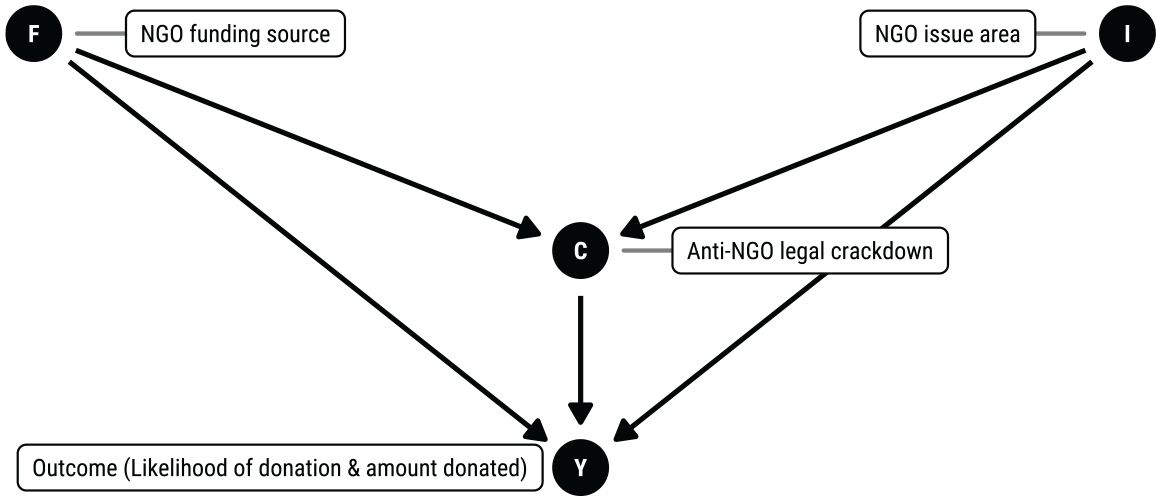
Causal diagram of the relationship of organizational and structural causes of donor preferences.
The contentiousness of NGO issue areas—or the degree to which an NGO’s programming is compatible with government preferences—can also serve as an organizational-level heuristic. 5 NGOs that address humanitarian issues such as relief and development have broader appeal to donors, and these issues rarely challenge the government. Furthermore, their programmatic output is easily quantifiable, and donors can see the results of their charity more readily (Bush, 2015). Previous research has shown that public donors do indeed differentiate between NGO issue areas, especially when these organizations are working in repressive contexts. Donor agencies in OECD countries respond to repressive NGO environments, especially those containing barriers to advocacy, by decreasing funds for groups working on politically sensitive causes such as anti-corruption initiatives, elections, human rights, legal reform, and security sector reform, and instead increase funding for groups working on relatively tamer causes such as health, education, and agriculture (Chaudhry & Heiss, 2018).
Issue area contentiousness directly influences legal crackdowns, however, and confounds the heuristic effect of crackdowns on donor behavior (see Figure 1). NGOs working on more contentious human rights issues can be challenging to regimes (Heiss, 2017). These organizations are often viewed as politically motivated outsiders and run a higher risk of getting expelled (Dupuy et al., 2015), increasing the possibility of wasting donor resources. There is evidence that this a concern for private donors. In a survey of women’s NGOs across the globe conducted by Mama Cash and Urgent Action Fund, many groups argued that private donors (especially foundations) were withdrawing from funding sensitive issues in repressive contexts, which in turn hurt women’s and trans rights organizations. Some private funders, these groups argued, were also more likely to fund well-established groups that were more likely to survive crackdown (Bishop, 2017).
However, compared with our existing knowledge on public donors and foundation donors, we lack knowledge about how individuals respond to frames emphasizing one nonprofit issue area over another, especially a contentious area over a tamer one. NGOs working on tamer issues such as health, education, disaster relief, and humanitarian aid can often frame their activities as in need of greater support. This may strongly influence individual decisions to donate to relief efforts (Wiepking & Bekkers, 2010). On the flip side, individual donors may believe that it is more difficult to improve human rights in the host country and subsequently shy away from donating to NGOs working on contentious causes.
As such, we hypothesize that donors will be more likely to donate to less contentious NGOs because these are seen as uncontroversial, apolitical, directed toward the most deserving of need, and are more capable of producing short-term quantifiable results. We use humanitarian NGOs as a proxy for groups working on noncontentious issues and human rights NGOs as a proxy for contentious issues.
The final heuristic we examine is the source of NGO funding. Government grants to nonprofits can often crowd out private funding, though evidence is mixed on whether this completely or partially crowds out private dollars (Heutel, 2014; Steinberg, 1991). Donors may feel less inclined to contribute to NGOs receiving funds from agencies like the U.S. Agency for International Development because such funding can signal a lack of independence from the government. Organizations that receive substantial funding from their home governments frequently avoid programming that would question the donor government even if such programming is in line with their mission (Stroup, 2012; Yu et al., 2020). In contrast, individual donors who see that organizations are privately funded may feel that they can also contribute and help and that their marginal donation would make a noticeable difference.
As funding restrictions are one of the most common forms of anti-NGO regulations (Dupuy et al., 2015), organizational funding again confounds the effect of anti-NGO crackdowns on donor behavior (see Figure 1). Accordingly, the combination of legal crackdown and funding may affect donor preferences. Individual donors may be less likely to donate to government-funded NGOs that face restrictions, as they may believe that legally besieged government-backed NGOs would enjoy the backing of their home government when facing difficulties. Legal trouble in the NGO’s host country could also indicate mistrust between the home and host government—a dynamic that individuals may not wish to enter with their dollars. Donors thus may be likely to donate more to NGOs that rely on private funding.
Importantly, when testing these hypotheses, we do not assume that individual donors have perfect knowledge about an NGO or the country an NGO operates in. Moreover, the average donor will not know exactly what “legal crackdown” entails for any given organization (i.e., does it mean an NGO was expelled, or that its assets were frozen, or that it received a fine?). For the sake of this experiment, this ambiguity is not a central concern as the heuristics we explore here are explicitly simplified shortcuts to donor information-gathering. Knowing that an organization works on human rights issues (even if donors are not familiar with specific kinds of rights) or knowing that an NGO faces legal trouble abroad should be enough to trigger the effect of these frames on donor preferences. Moreover, although many NGOs make information about their operations accessible through annual reports, it is time-consuming to track down that information. In each of these hypotheses, we assume that donors will not spend additional effort to research the exact details concerning crackdown, issue area, and funding sources. Instead, donors rely on signals and heuristics about the organization to shape their preferences and behavior (Szper & Prakash, 2011).
We also posit that these signals work interactively to shape donor preferences—as seen in Figure 1, issue areas and funding sources each change the probability of NGO crackdown and confound causal relationships. As such, the effect of crackdown will be different depending on if an organization focuses on humanitarian assistance or human rights, or if it receives government funding or not. Accordingly, we test nested versions of these hypotheses in our analysis. It is unclear a priori what these interactive effects will be and which frames are more powerful when nested, though in general we expect the nested hypotheses to have an additive effect (i.e., because crackdown and humanitarian assistance should each have a positive effect on preferences on their own, the combination of the two will have a larger positive effect).
Research Design
To measure the effect of structural- and organizational-level heuristics on individual donor preferences, we use an experiment to vary the different frames donors are exposed to. Comparing these effects allows us to measure the relative strength of these heuristics and ultimately help NGOs tailor their fundraising strategies for individuals. Prior to launching the experiment, we preregistered our hypotheses and research design at the Open Science Framework, and our preregistration protocol is available at https://doi.org/10.17605/OSF.IO/DX973. The online appendix also includes the full text of the survey experiment, as well as details about our sample demographics, balance across experimental conditions, CONSORT diagram, and Bayesian priors. The analysis is fully reproducible using code and data available at https://doi.org/10.5281/zenodo.4058986 and https://dx.doi.org/10.17605/OSF.IO/FG53W.
Sample
We test these hypotheses with a vignette-based survey experiment fielded through Amazon’s Mechanical Turk. 6 Our target population is the portion of Americans hypothetically willing to donate money for human rights and humanitarian work abroad. Our convenience sample (March 2018, N = 531) generally approximates the characteristics of our target population, as it is younger, more educated, wealthier, and more likely to donate to charities than nationally representative samples. In addition, the majority of the sample (≈90%) feels favorably toward human rights, humanitarian, and development NGOs.
Experimental Treatments and Outcomes
We presented participants with a short paragraph with three manipulated frames, each highlighting different factors that might influence patterns of private philanthropy: (a) crackdown/no crackdown, (b) humanitarian assistance/human rights, and (c) government/private funding. We used the International Rescue Committee (IRC) as our example NGO because it fits within each possible frame and, as such, requires no respondent deception. IRC provides humanitarian assistance and engages in human rights advocacy for refugees, more than a quarter of IRC’s income comes from both government grants and private donations, and it works in countries with and without anti-NGO laws.
7
We use a 2 × 2 × 2 between-subject factorial design with participants randomly assigned to one of eight versions of the following vignette: The International Rescue Committee (IRC) focuses on {humanitarian assistance for refugees | human rights for refugees} {and works in countries that have recently passed laws that harshly restrict nonprofit organizations | NOTHING}. A substantial proportion of IRC’s funding comes from {government | private} donors.
We measured two outcomes: (a) how likely participants would be to donate to IRC (measured with a 5-point scale ranging from extremely likely to extremely unlikely) and (b) how much participants would hypothetically donate to IRC if they had an extra US$100. Research finds that the factors driving donation willingness and amounts differ depending on donor income, pro-social attitudes, self-image, and other psychological benefits (Wiepking, 2007). Accordingly, our framing treatments might differ across the two outcomes. We collapsed the likelihood scale into a binary variable measuring whether the participant is likely (extremely likely and somewhat likely) or not likely (all other responses) to donate. 8 We also included an exploratory free response question asking respondents to justify their choice.
Each of the varied treatments correspond to our hypotheses: crackdown versus no crackdown, humanitarian assistance versus human rights, and government versus nongovernmental funding. Participants might misinterpret the vignette and assume that IRC’s host governments fund the organization rather than its home government. In either case, knowing about government funding should still serve as a signal of the organization’s deservingness. Similarly, there could be confusion with phrase “private funding,” but as we use it as the opposite of government funding, it should still act as a heuristic. Free responses tend to confirm the correct interpretation of the vignette, and many respondents explicitly justified their lack of support for IRC because of government funding, as expected (“I see that a large portion of its funding comes from government donors, so I feel it doesn’t need me as much” 9 ).
Estimation
We test our first hypothesis by calculating the differences in the average likelihood to donate and the average amount donated across the crackdown conditions. For our second and third hypotheses, we measure the difference in means spread across both issue and funding conditions. For additional exploration of the effect of issue and funding, we also measure the effect of crackdown within nested combinations of issue and funding conditions.
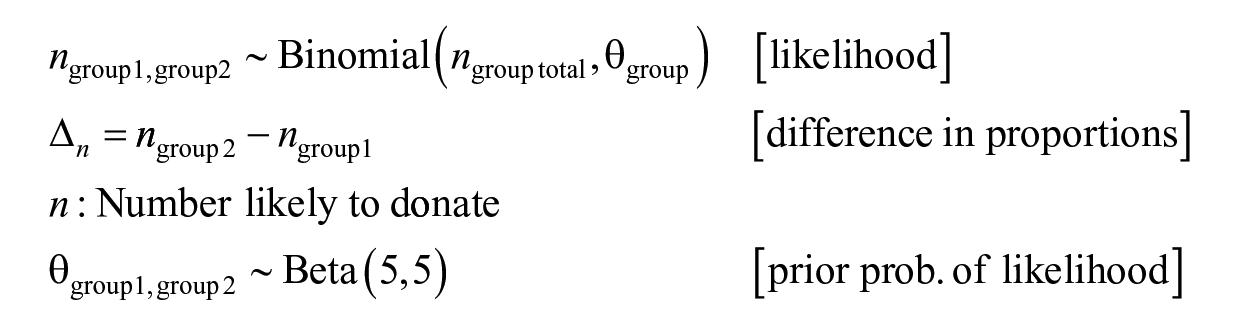
We use two Bayesian models to estimate the effect of crackdown on the likelihood of donating and the amount hypothetically donated. We model the proportion of respondents indicating they would likely donate as a binomial distribution:
We estimate the mean amount donated in each condition using a t distribution:
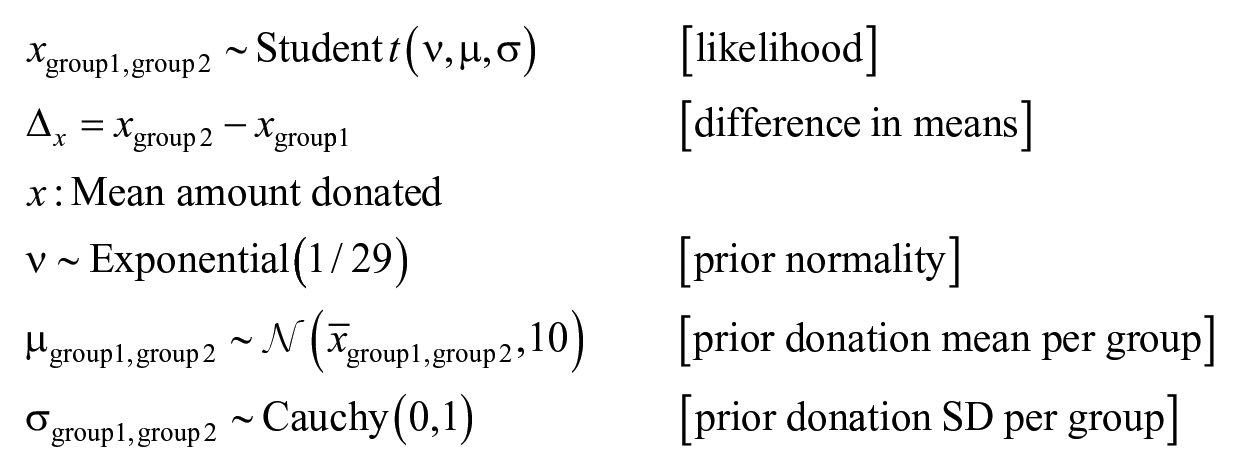
We use median values from the posterior distributions as point estimates and calculate credible intervals using the 95% highest posterior density. We declare an effect statistically significant if the posterior probability of being different from zero exceeds 0.95. Because differences can be either positive or negative (i.e., in some frames, the crackdown condition causes larger donations; in others, it causes smaller donations), we report the probability that the difference is not equal to zero: When the median value is negative, we report the proportion of predicted values that are negative, and vice versa.
Results
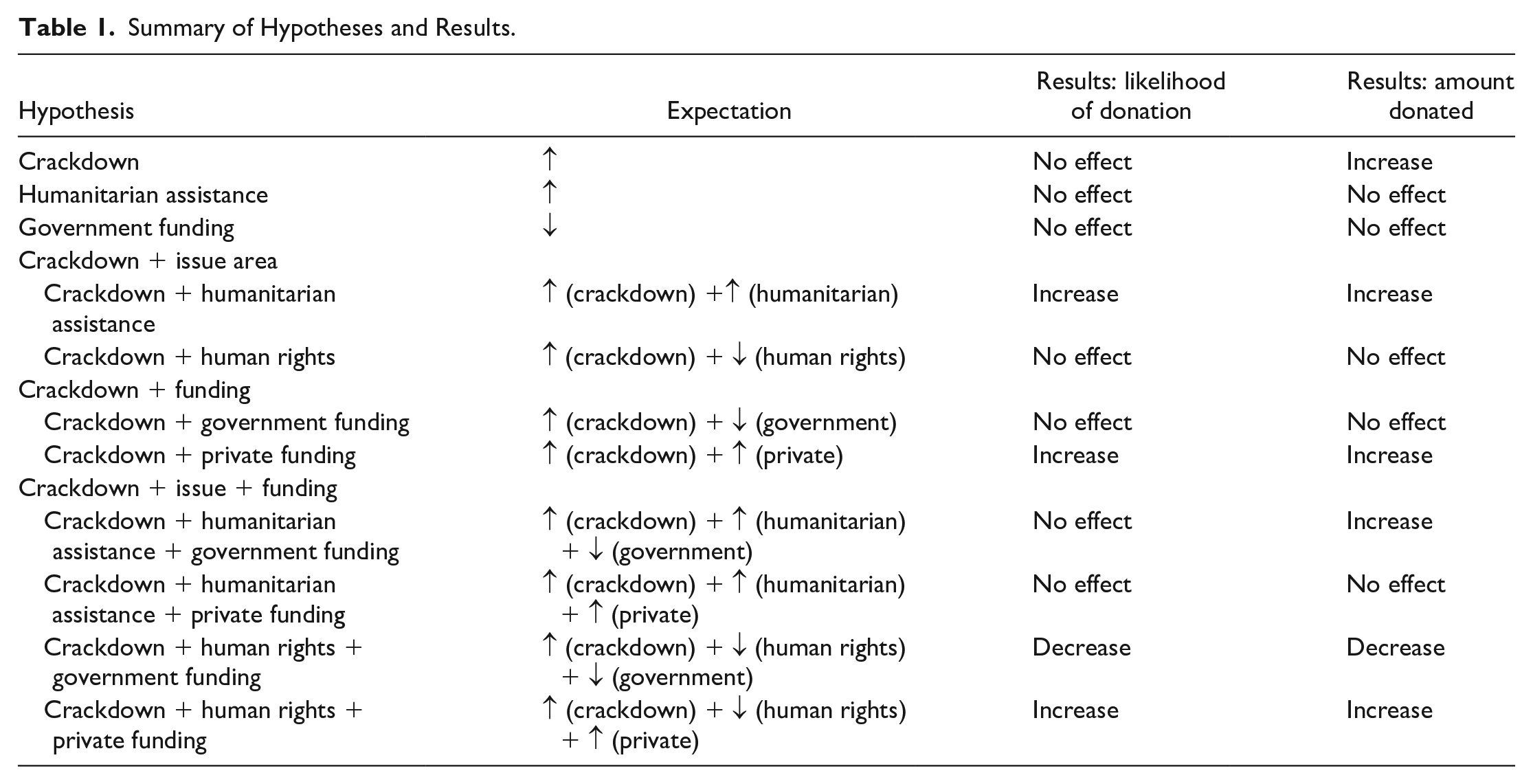
Table 1 provides a summary of how our results map onto our hypotheses, both individually and nested within each other.
Summary of Hypotheses and Results.
Likelihood of Donation
In isolation we find that respondents are not more likely to donate to legally besieged INGOs (H1a). As seen in Figure 2a, those exposed to the crackdown condition tend to have a slightly higher probability of donating (46.7%) than those in the control condition (42.9%), but the difference is not significant
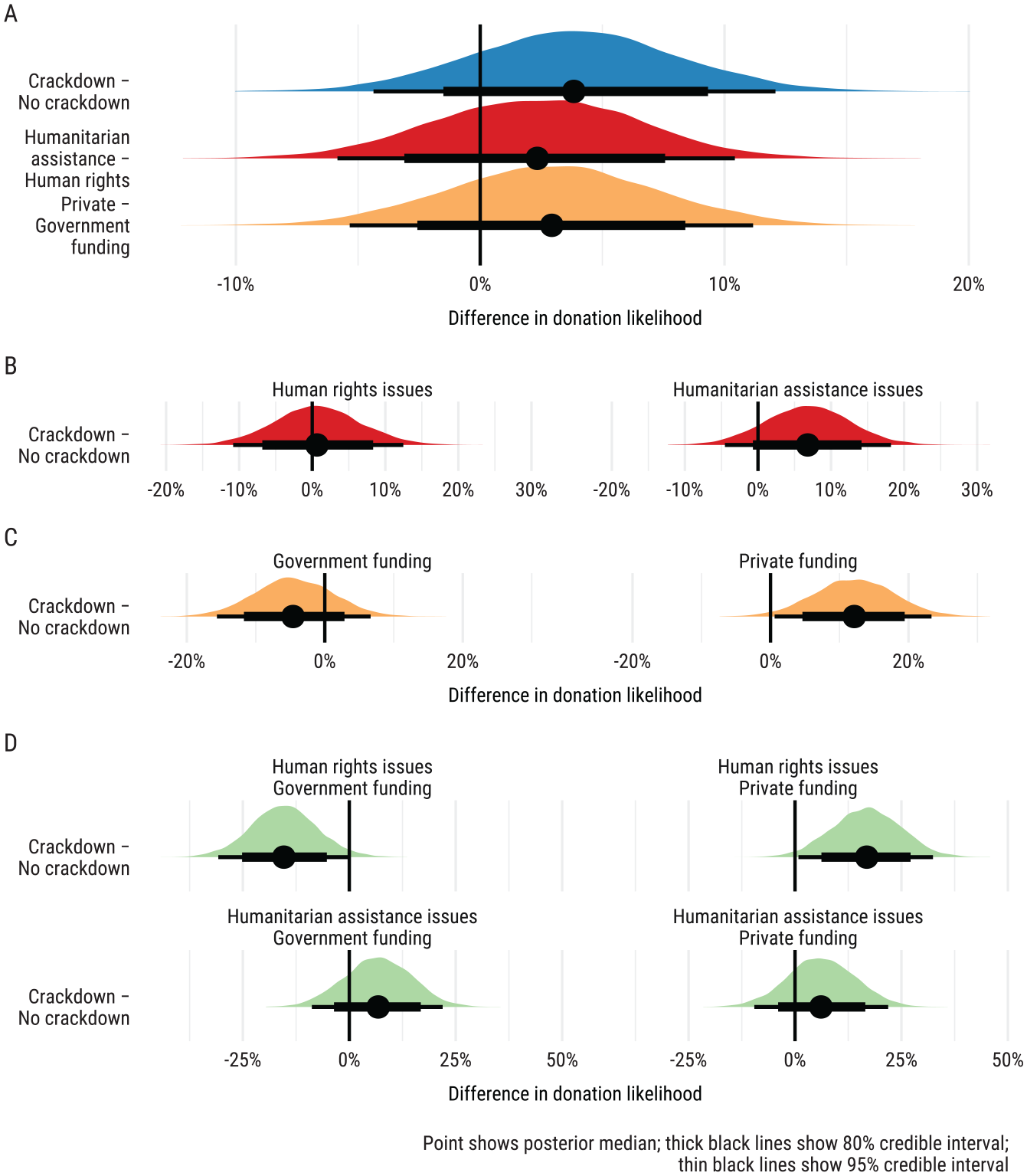
Difference in likelihood of donation across crackdown and no crackdown groups, conditioned by other experimental frames.
Likelihood of Donation and Differences in Proportions in “Crackdown” (Treatment) and “No Crackdown” (Control) Conditions; Values Represent Posterior Medians.
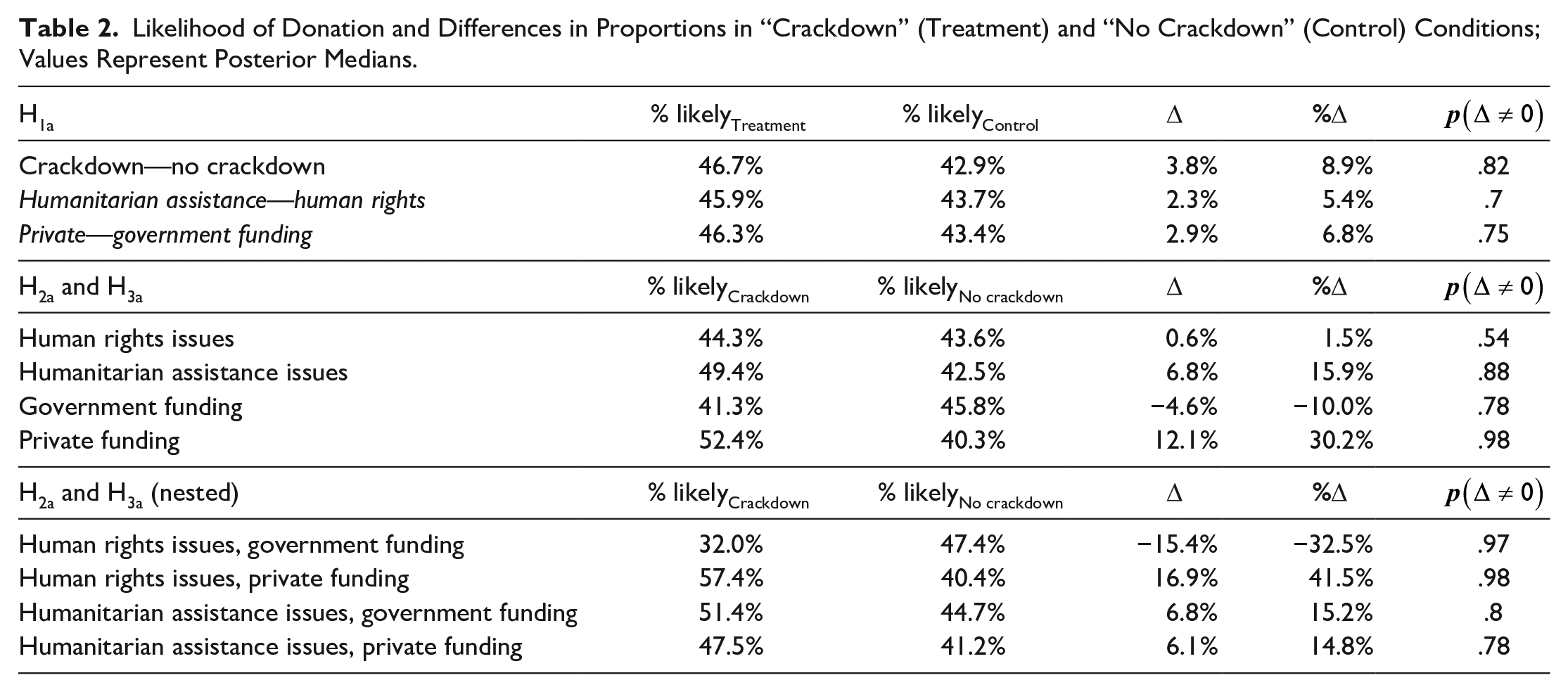
Figure 2b and c shows the difference in the likelihood of donation for both crackdown conditions across NGO issue areas (H2a) and funding sources (H3a). Crackdown has almost no effect on the likelihood of donating to human rights NGOs
We do find some evidence for H3a, however. Crackdown has little effect on individual preferences to donate to NGOs receiving government funding
Although the crackdown frame has no effect on the probability of donating to human rights NGOs alone, conditioning this finding on the source of NGO funding reveals competing trends. Figure 2d shows the difference in donation likelihood across all experimental conditions. When donors know that a human rights organization is primarily government-funded, they are substantially less likely to donate if the organization faces government crackdown abroad. This follows our expected hypotheses for both issue area and funding
In contrast, when donors know that a human rights organization is privately funded, they are more likely to donate when there is a legal crackdown than when the NGO faces no legal hurdles
These results give partial support to H3a. The source of funding has little influence on the preference to donate to humanitarian NGOs, but on average, donors are substantially more likely to want to give to privately funded human rights NGOs than government-funded organizations. In addition, donors appear to both punish government-funded human rights NGOs facing crackdown and rally behind privately funded NGOs facing those same hurdles. For instance, one respondent who was presented with a government-funded human rights version of IRC explained that “I’m not exactly sure what they did was right or wrong, I think it just seems bad, so I’m less likely to want to donate to them.” 12 Other respondents showed increased support when presented with a privately funded version of IRC, explaining that they would donate a substantial amount because “[t]hey [IRC] are doing good work in countries where it is tough for groups like them to operate and they need all the help they can get.” 13 Individual donors thus seem to be more willing to support besieged human rights organizations when they are unencumbered by government funds.
Amount Donated
On their own, crackdowns do not substantially influence donors’ likelihood to donate, but they do increase the amount of money that respondents are willing to contribute (see Figure 3a). Informing participants that IRC faces legal hurdles abroad increased donations by US$3.39 on average, a 26% increase from the no crackdown condition
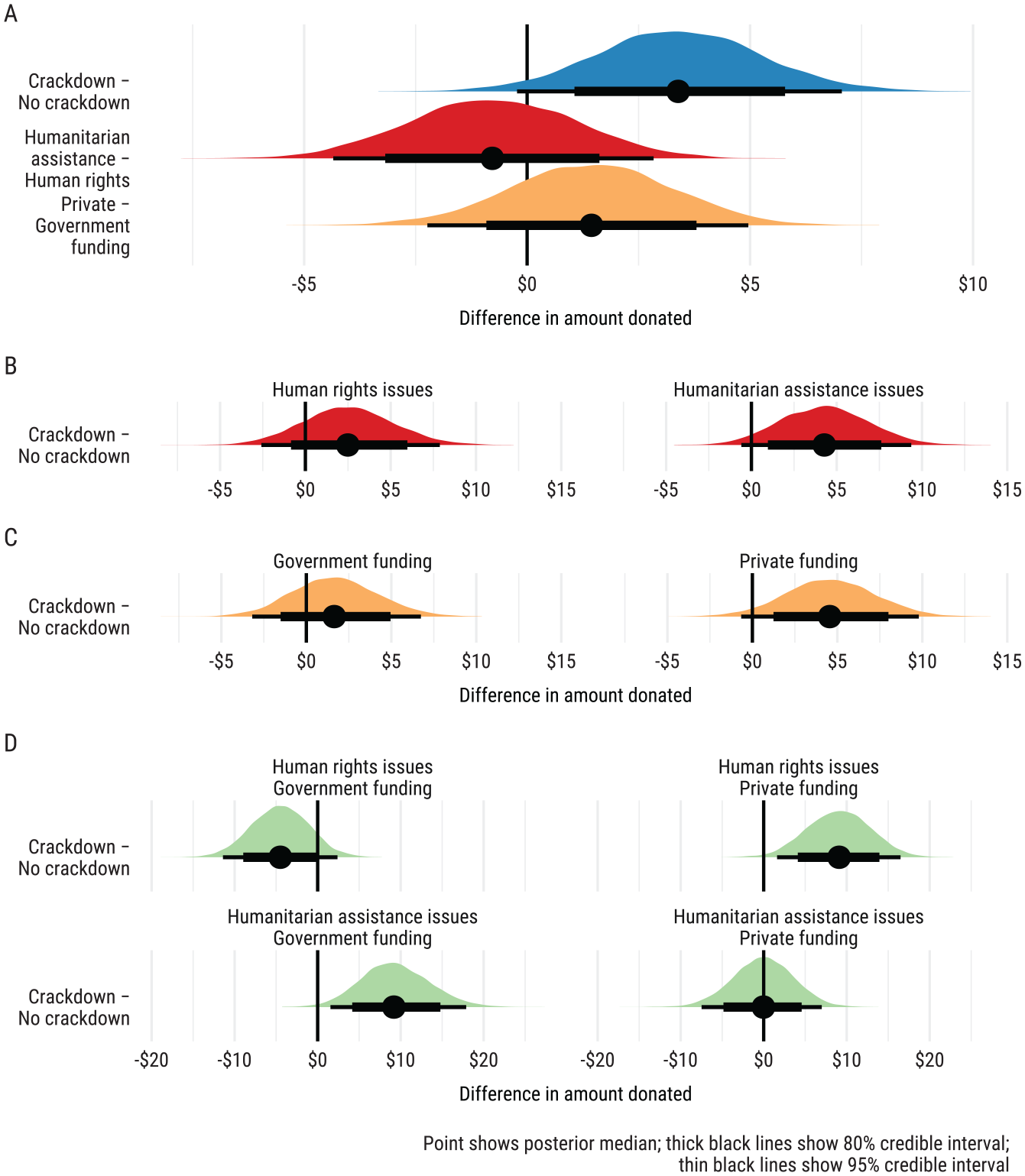
Difference in amount donated across crackdown and no crackdown groups, conditioned by other experimental frames.
Mean Values and Differences in Means for Amount Donated in “Crackdown” (Treatment) and “No Crackdown” (Control) Conditions; Values Represent Posterior Medians.

This trend also holds when nesting crackdown within NGO issue area. The crackdown condition elicits higher donations for both the human rights and humanitarian NGOs, though with varying levels of significance (see Figure 3b and c). Emphasizing legal crackdown increases donations to human rights NGOs by US$2.49, but with a lower probability of significance
Combining issue areas and funding sources provides more texture. We previously found that donors are less likely to donate to government-funded human rights NGOs and more likely to donate to privately funded human rights NGOs when they face legal issues. These trends also apply to preferences in the amount donors donate. Respondents were willing to donate US$9.09 more to besieged privately funded human rights NGOs compared with the no crackdown control condition
Emphasizing legal difficulties increased donations to government-funded humanitarian NGOs by 76%, or US$9.18
In contrast, crackdowns have no substantial effect on the amount donated to privately funded humanitarian NGOs
Discussion: Can These Preferences Translate to Behavior?
Although the survey experiment allows us to hold the organization constant and test for specific hypotheses, there are a few caveats to consider when interpreting these results and applying them to nonprofit fundraising. This is because the experiment measures preferences (willingness to donate) rather than behavior (actual donations). However, there is evidence that individuals’ willingness to donate (as measured in the experiment) translates well into behavior. The wording of the survey experiment uses an informational frame, where the focus is on educating respondents. This is in stark contrast to the use of personal frames, which draw the audience’s attention to the plight of an individual, or motivational frames, which are meant to motivate individuals to act by creating feels of agency and efficacy. 18 Prior research has shown that informational frames are the most important frames in generating donations (McEntire et al., 2015).
Moreover, informational frames are a necessary precondition for encouraging action in human rights nonprofit campaigns, and individuals are more likely to donate when informational frames are combined with personal frames (McEntire et al., 2015). Our experiment shows a substantial increase in donors’ willingness to donate to human rights groups facing crackdown, especially those that are privately funded, and this result emerges from the use of only informational frames. If organizations combined with information with personal frames, research suggests these donations may further increase.
It is also worth noting that there is evidence, at least domestically, that restrictions on nonprofit activities spur changes in private donors’ giving patterns. For instance, after Texas and other states pledged to impose new restrictions on Planned Parenthood following the 2016 election, donations to the organization increased more than 40 times the usual amount (Cooney, 2016). Thus, donor preferences of increased generosity toward legally besieged groups abroad also has some domestic parallels.
Conclusion
In the era of closing civic space, dozens of countries restricted INGO funding and programming. With the consequent withdrawal of official governmental aid, many INGOs have turned to foreign individual donors as an additional funding source. Because seeking out perfect information about a nonprofit and its activities—especially international programming—is costly and time-consuming, donors use heuristics when deciding which organizations to support. In this article, we argue that informational heuristics about NGOs’ legal environments and organizational-level attributes can influence donor preferences for international giving.
Using a survey experiment with respondents in the United States, we find that the domestic political environments of INGO host countries can serve as one such signal. Our results show that although crackdowns do not consistently influence individual preferences of donation on their own, respondents indicated willingness to donate 26% more to legally restricted NGOs. This effect persists when mediated by other organizational heuristics, with respondents giving 37% more to humanitarian NGOs, and 63% more to privately funded human rights NGOs.
This article should be viewed as an exploratory study. Although the survey experiment allows us to hold the organization constant and test for specific hypotheses, there are limits to its external validity. Our sample captures people who are relatively more likely to donate to charities and thus does not reflect the general U.S. population. Our findings do not apply to the total population—we still know very little about how anti-NGO crackdowns change perceptions of nonprofits in general.
Future research should test the generalizability of our findings to individual donors in other countries, as well as determine the extent to which these preferences translate into behavior. For instance, the nonprofit sector in the United States relies more heavily on government funding than in Europe. In the latter, large organizations like Amnesty International and Médecins Sans Frontières receive very little support from their home governments (Stroup, 2012). This may imply that donors in European countries will have different preferences when choosing to donate to government and privately funded organizations. Future research should also look more narrowly at donors who regularly give to international causes, as these individuals are likely more aware of political trends in the countries where their preferred organizations work.
Because our sample reflects those who are already willing to donate to charities, these results have important implications for nonprofit fundraising. NGOs may benefit from publicizing when they are targets of government crackdown and including that information in their framing appeals. Although this may not be enough to sway the average U.S. donor, our results show that communicating this information can convince already-likely donors to donate more to besieged groups. Furthermore, if NGOs signal to donors that they receive a majority of their funding from private sources, they may be able to convince individual donors that their contributions might help the NGO resist the crackdown.
Supplemental Material
Online_supplement – Supplemental material for Dynamics of International Giving: How Heuristics Shape Individual Donor Preferences
Supplemental material, Online_supplement for Dynamics of International Giving: How Heuristics Shape Individual Donor Preferences by Suparna Chaudhry and Andrew Heiss in Nonprofit and Voluntary Sector Quarterly
Footnotes
Acknowledgements
We thank Mark Buntaine, Michael DeCrescenzo, Jeffrey Friedman, Thomas Leeper, and Tristan Mahr for their helpful comments and input, as well as the anonymous reviewers at Nonprofit and Voluntary Sector Quarterly for their excellent feedback. We also thank Samantha Camilletti and Joshua Dutro for their excellent research assistance.
Authors’ Note

Declaration of Conflicting Interests
The author(s) declared no potential conflicts of interest with respect to the research, authorship, and/or publication of this article.
Funding
The author(s) disclosed receipt of the following financial support for the research, authorship, and/or publication of this article: Suparna Chaudhry received financial support for this research from the John Sloan Dickey Center for International Understanding at Dartmouth College.
Supplemental Material
Supplemental material for this article is available online.
Notes
Author Biographies
References
Supplementary Material
Please find the following supplemental material available below.
For Open Access articles published under a Creative Commons License, all supplemental material carries the same license as the article it is associated with.
For non-Open Access articles published, all supplemental material carries a non-exclusive license, and permission requests for re-use of supplemental material or any part of supplemental material shall be sent directly to the copyright owner as specified in the copyright notice associated with the article.
