



Abstract
In this article, we examine whether and how the institutional context matters when understanding individuals’ giving to philanthropic organizations. We posit that both the individuals’ propensity to give and the amounts given are higher in countries with a stronger institutional context for philanthropy. We examine key factors of formal and informal institutional contexts for philanthropy at both the organizational and societal levels, including regulatory and legislative frameworks, professional standards, and social practices. Our results show that while aggregate levels of giving are higher in countries with stronger institutionalization, multilevel analyses of 118,788 individuals in 19 countries show limited support for the hypothesized relationships between institutional context and philanthropy. The findings suggest the need for better comparative data to understand the complex and dynamic influences of institutional contexts on charitable giving. This, in turn, would support the development of evidence-based practices and policies in the field of global philanthropy.
Introduction
There is abundant research showing how individual motivations and resources influence giving to philanthropic organizations 1 (Bekkers & Wiepking, 2011b; Wiepking & Bekkers, 2012). Less is known about how the context in which people live influences this behavior (Barman, 2017). This is surprising as it is “certain that philanthropy would not have the form it currently does in the absence of the various laws that structure it” (Reich, 2006, p. 17). Analogous research on the institutional context for blood and organ donations finds that collection regimes of countries strongly influence individual donation behavior (Healy, 2006; Johnson & Goldstein, 2003), suggesting that philanthropic donations may be influenced by the institutional contexts (Barman, 2007; Galaskiewicz & Burt, 1991; Galaskiewicz & Wasserman, 1989; Mosley & Galaskiewicz, 2010; Sargeant, 1999; Schervish & Havens, 1997).
In this article, we contribute to the global philanthropy literature by examining how individual charitable giving is associated with the institutional philanthropic context of a country. Specifically, we examine key factors of the formal and informal institutional contexts for philanthropy at both the organizational and the societal levels, including regulatory and legislative frameworks, professional standards, and social practices. Analyzing how institutional contexts relate to individual charitable giving is instrumental for understanding how societies can be shaped to contribute, through philanthropy, to benefit others and the public good. We test our hypotheses by analyzing merged and synchronized data sets from 19 countries: The Individual International Philanthropy Database (IIPD). The IIPD uniquely includes both incidence and amounts of individual donations as well as relevant individual-level characteristics.
To our knowledge, this is the first article to empirically examine how the institutional context for philanthropy relates to the individual incidence and level of giving across a range of countries. Lacking individual-level data on the amount of philanthropic donations, past studies typically used aggregated measures or analyzed data with bivariate correlational analyses (Charities Aid Foundation [CAF], 2017; Einolf, 2017; Sokolowski, 2013). Although these studies contributed to an initial understanding of global philanthropy, we show that these studies may have overestimated support for relationships between institutional contexts and philanthropy.
We also show the importance of considering the demographic characteristics of countries when studying the relationship between institutional context for philanthropy and individual giving. We find that if people in countries with less developed philanthropic institutional context (typically developing economies) had the same average age, level of education, and income as those in countries with more developed philanthropic institutional contexts, they would be equally likely to give and to give similar amounts. This points to a higher relative importance of individual-level resources for charitable giving, rather than the philanthropic infrastructure, at least in relation to the factors of institutionalization included in our study.
Finally, such comparative analysis is critical for the design of evidence-based policies that relate institutions to the practice of philanthropy. Our findings represent a first attempt at understanding what factors are associated with the differences in individual philanthropic giving across 19 countries, and aim to contribute to a new research agenda focused on understanding global differences in philanthropic behavior.
Theory and Hypotheses
There are large differences in individual giving to philanthropic organizations in different countries (Wiepking & Handy, 2015; Wiepking & Handy, 2016b). Figure 1 shows that the average annual donation to charity per person ranges from the equivalent of US$12 in Russia to US$1,427 in the United States.
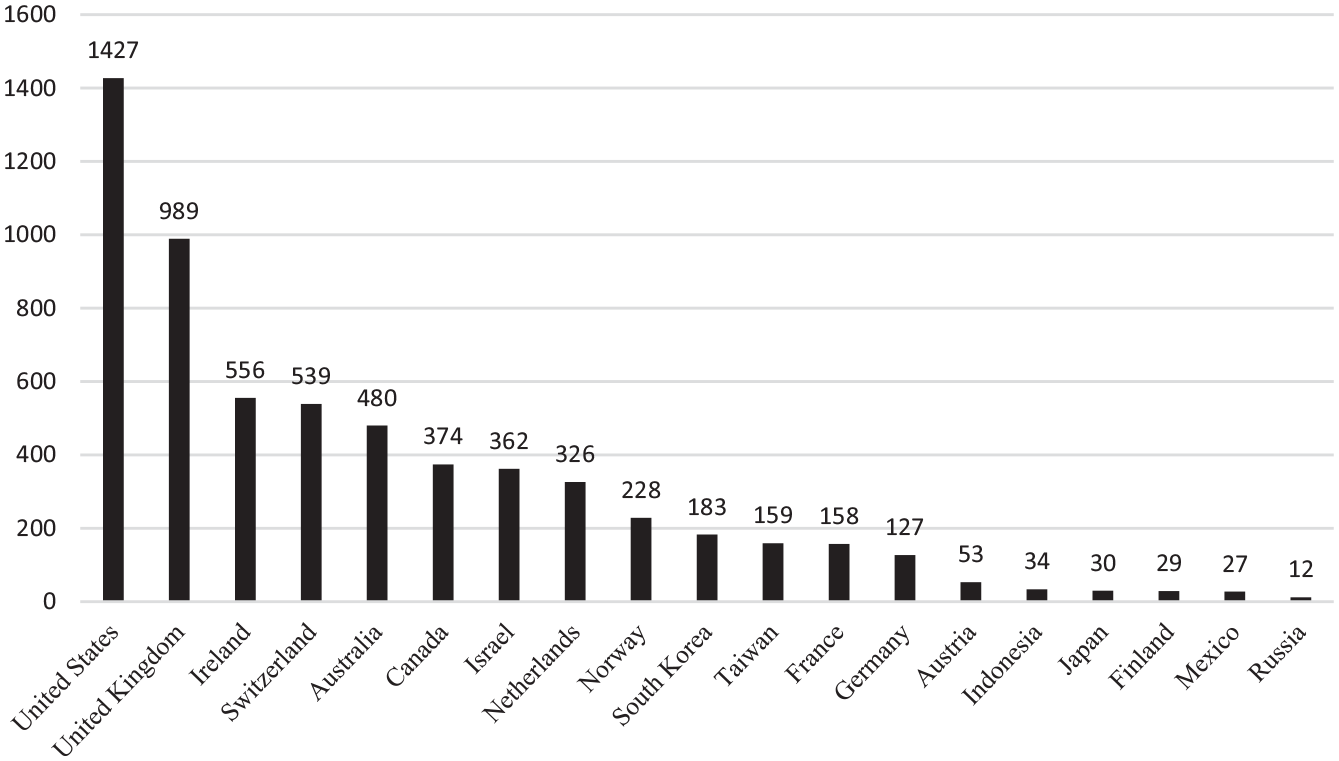
Average annual philanthropic donation in 2012 US Dollars per person in 19 countries.
What contextual underpinnings can explain these large differences in individual giving across countries? In a qualitative content analysis of 136 contextual factors identified by experts from 26 countries and regions to facilitate or inhibit philanthropy, Wiepking and Handy (2015) identified several key factors. These relate to the institutional context for philanthropy at both the organizational and the societal level, including regulatory and legislative frameworks, professional standards, and social practices.
Our main hypothesis is that the stronger the institutional context for philanthropy is in a country, the more likely people are to give and to give higher amounts to philanthropic organizations. We use the notion of “institutionalization of philanthropy” to refer to the socially constructed system of norms, beliefs, and definitions manifested in different institutions that shape an individual’s philanthropic behavior by providing legitimacy (Scott, 2008) and influences transaction costs for that behavior (North, 1990). We define institutions as “aspects of societal structure or human-devised rules of the game of society which give ‘solidity’ [to social systems] across time and space” (Giddens, 2004, p. 24). In doing so, institutions consist of both formal rules (e.g., laws backed by authorized powers) and informal ones (e.g., customs or traditions deriving from a set of shared norms), which guide and constrain individual behavior (Scott, 2008).
Formal institutionalization includes the legal framework in a country: laws, contracts, and judicial rules. In a complex society, such rules govern interactions and transactions. Within this class of institutionalization, Ingram and Clay (2000) distinguish public rules made by governmental authorities from private rules made by private organizations. Informal institutionalization, instead, refers to informal norms as constraints that define our set of choices in daily life (North, 1990). Together, public and private institutions that are formal as well as informal provide the context in which individuals make gifts to charitable organizations.
As we elaborate below, the role of institutions, and regulations more generally, can reduce transaction costs for donors (the “supply-side”), and thus positively influence giving. At the same time, such regulations may increase transaction costs for organizations (the “demand-side”) 2 and thus could also negatively influence giving, especially for smaller organizations and especially in the short-run as they must adopt regulations regarding reporting, transparency, and fundraising. However, over time, as organizations learn and adapt, and become more effective, and undertake varied best practices for fundraising, regulations may positively influence giving on the demand side as well. Indeed, research at the level of individual donors has shown that lowering the costs of giving and providing more opportunities to give increase philanthropy (Bekkers & Wiepking, 2011a).
Regulations and Fiscal Incentives: Formal-Public Institutionalization
Regulations that curb the power of philanthropic organizations to commit fraud ensures that only legitimate and trustworthy organizations solicit donations. On one hand, this enables individuals to donate while reducing their transaction costs related to monitoring the quality of organizations (Hogg, 2017). On the other hand, these and other regulations can increase costs for the establishment and operation of philanthropic organizations, reducing giving (Huck & Rasul, 2010; Knowles & Servátka, 2015). The regulations may increase barriers to entry and consequently decrease the number of philanthropic organizations and thus provide fewer opportunities for charitable donations, consequently reducing overall philanthropy, especially in the short term. On balance, although government regulation—such as compulsory registration for organizations involved in fundraising—provides legitimacy to the philanthropic sector and lowers transaction costs for individual donors, if too cumbersome for organizations it can also reduce giving.
Regulations, posited by North (1992), are driven by the need to create efficiency and resolve issues and arise from (a) information and measurement costs (Can the donor be sure the donation will buy the desired service and in the right quantity?), (b) the costliness of the exchange and size of the market (How can donors buying service for an unknown third party ensure it was done as contracted? and How to protect the rights of the donor?), and (c) enforcement (Who will enforce the rights of the donor?). However, while regulations are designed to efficiently resolve these above-mentioned issues, they are in fact, heavily influenced by political actors and prevailing ideology (North, 1992). Such influence can raise or lower transaction costs for organizations and individuals and change the perception of fairness of the regulations and thereby impact the overall sector, in ways that may or may not promote efficiency, illustrated by the case of nonprofit reforms in China described by Hu and Guo (2016).
Overall, government regulation is a complex phenomenon varying greatly across countries (Breen et al., 2016). Nevertheless, it does contribute to more efficient philanthropic organizations, making them attractive to donors (Breen et al., 2016; Cagney & Ross, 2013; Marx, 2015). However, if regulations increase transaction costs for nonprofits, if they are opaque or difficult to follow, or if they are perceived as unfair or undemocratic, they may have negative effects on their growth as well raise barriers to entry and limit the philanthropic sector (EU Russia Civil Society Forum, 2017; Vandor et al., 2017; Wiepking & Handy, 2015). Due to the complexity of government regulations, here we focus only on registration for philanthropic organizations, which is easily comparable between countries. We hypothesize as follows:
Government regulations that offer fiscal incentives for philanthropic donations also suggest that donating is a legitimate, socially desired behavior that is publicly sanctioned. Furthermore, fiscal incentives also reduce the “price” of donations to the donor, thereby increasing philanthropic activity (Bakija & Heim, 2011; Duquette, 2016; Kingma, 1989). We hypothesize as follows:
Education and Training: Formal-Private Institutionalization
Philanthropic practices are influenced by formal rules made by private institutions. For example, giving may be facilitated by nonprofit education programs and fundraising professionalization. Nonprofit education programs are a private form of institutionalization that legitimizes philanthropy. 3 For example, as the philanthropic sector grows and its activities get more specialized, there is a need for personnel that are specially trained to manage philanthropic organizations and engage in fundraising (Mirabella et al., 2007; Mirabella & Wish, 2001). Thus, the degrees in higher education related to the management of nonprofits are an indicator of the professionalization of philanthropy. As trained personnel typically enhance the benefits and impact of donations made to nonprofits, donors are more satisfied and likely to give more (Bekkers & Wiepking, 2011a). We hypothesize as follows:
A related form of professionalization influencing giving is the training of those soliciting donations. Empirical findings show that solicitation is a critical motivator of giving; the majority of donations are prompted by a request (Bekkers & Wiepking, 2011a; Breeze, 2017; Neumayr & Handy, 2019; Yörük, 2009). Not surprisingly, if individuals are not asked to donate, individuals are unlikely to give. Fundraising, done well, can increase donations by reducing donors’ transaction costs and raising awareness for the need for donations (Schlegelmilch et al., 1997; Wiepking & Maas, 2009; Yörük, 2009). When donors are treated well by fundraisers, donors are more satisfied and likely to give more (Breeze, 2017). According to Breeze and Scaife (2015), well-trained fundraisers follow relationship-centric and not transactional fundraising approaches, conduct many different types of appeals and are supported by institutions that regulate and promote best practices, all of which promotes successful solicitations. Thus, we expect that a higher degree of development of the fundraising professionals will facilitate fundraising, and hence is associated with a greater level of giving. We hypothesize as follows:
Norms: Informal Institutionalization
Informal institutionalization usually refers to group norms, that is, cognitive schemata that are commonly recognized and culturally supported such as customs, taboos, or traditions (Ingram & Clay, 2000; Mair & Hehenberger, 2014; North, 1990; Scott, 2008). Such informal norms are both constraints that may limit and sanction transactions (North, 1990) and cultural lenses that give meaning to social phenomena (Scott, 2008). Although government legislation is part of the formal-public institutionalization, we suggest that government funding of nonprofits is the reflection of a group norm. Government grants are used to signal the legitimacy of the nonprofit sector (Handy, 2000; Heutel, 2014) and also signal desired social behavior as government expenditures are the reflection of democratic processes and shared values (Saunders-Hastings, 2018).
Government funding could be “crowding-out” philanthropic giving (Bekkers & De Wit, 2013; De Wit et al., 2018; Pennerstorfer & Neumayr, 2017; Sokolowski, 2013). This is supported by evidence in laboratory experiments, but studies that use field data generally find little evidence (De Wit & Bekkers, 2017; Lu, 2016). In the practice of philanthropy, it is more likely that decisions are guided by shared beliefs about what are “good” philanthropic causes, which may result in “crowding-in.” We argue that government funding reflects such shared beliefs. We hypothesize that, in general, the larger the share of the funding received from the government by nonprofits, the more their activities are perceived as relevant and necessary, which in turn increases individuals’ giving.
A final form of informal institutionalization of philanthropy relates to the social norms that encourage philanthropy. When social norms are more supportive of giving, it will positively influence individual giving (Ariely et al., 2009; Simpson & Willer, 2015). For example, religious norms for giving are especially strong, and exist across almost all religions, inspiring charity in their adherents (Bekkers & Schuyt, 2008; Bennett & Einolf, 2017; Wuthnow, 1991). We hypothesize as follows:
In formulating these hypotheses, we are cautious in suggesting that there exists a uni-directionality in these relationships; just as institutions shape individuals’ behavior, so too do individuals shape institutions. For example, it may well be that an easy and fair nonprofit registration system will emerge only when there a sufficient level of philanthropic activity, as very low philanthropic activity may not trigger a need for a bureaucratic registration process. However, after a certain threshold of philanthropic activity, governments may decide that the registration of nonprofits would reduce fraudulent behaviors as well as information and monitoring costs to donors. Registration reduces transaction costs to donors, and this in itself may spur increased philanthropic activity. Similarly, it can be argued that when philanthropic activity is high, nonprofits can lobby for fiscal incentives (although the governments’ resistance may also be high if the cost to the treasury is perceived sufficiently large). Given that the only data currently available to test our hypotheses are cross-sectional, such directionality or causality cannot be determined, and thus our findings need to be interpreted with caution. 4
Data and Measures
Research documents the ubiquitous presence of philanthropy across the world, but most studies thus far have concentrated on single countries or regions, especially in Western Europe and North America, and typically analyze only aggregated country-level data about individual philanthropic behavior (e.g., Bekkers et al., 2017; European Social Survey, 2002; Giving USA, 2016; Hoolwerf & Schuyt, 2017; Papacostas, 2008; Philanthropy Age, 2016). One exception is the Gallup World Poll, but these data are not publicly available and only provide the incidence of giving, and not amounts donated (Gallup, 2018), which we argue is key in understanding the relationship between institutional contexts and individual donating (Wiepking & Handy, 2015).
A new and unique database, created by Wiepking and Handy (2016b), merged and synchronized micro-level data sets from 19 countries: The IIPD. It includes the incidence and amounts of individual donations as well as relevant individual-level characteristics: gender, age, marital status, income, and level of educational achievement. Data were collected using probability-based sampling in Australia (Lyons & Passey, 2007), Austria (Neumayr & Schober, 2009), Canada (Canada Survey of Giving, Volunteering and Participating, 2004), France (Wiepking, 2009), the Netherlands (Wiepking et al., 2006), the United Kingdom (Low et al., 2007), the United States (Wilhelm, 2005), Norway (Wollebæk & Sivesind, 2010), Finland (Pessi & Grönlund, 2008), Mexico (Encuesta Nacional De Filantropía, 2005), South Korea (The Beautiful Foundation, 2006), Japan (Japan Fundraising Association, 2010), Indonesia (Strauss et al., 2009), Taiwan (Taiwan Social Change Survey, 2009), Israel (Haski-Leventhal et al., 2011), Ireland (Household Budget Survey, 2005), Russia (Centre for Studies of Civil Society and Nonprofit Sector, 2010), Germany (Schupp, 2009; Wagner, et al., 2010), and Switzerland (Stadelmann-Steffen & Freitag, 2011). The IIPD is a nonoverlapping multiple frame sample (Kaminska & Lynn, 2017).
There exist several methodological weaknesses; that is, different timeframes, sampling methods (Abraham et al., 2009), and questionnaires (Bekkers & Wiepking, 2006; Rooney et al., 2004) were used. These differences may lead to different estimated relationships between factors of institutionalization and philanthropic giving. However, until other micro-level data are collected, the IIPD is the best available database to test relationships between institutional contexts and individual philanthropy across a range of countries. More information on data sets is available in Online Appendix A and in the IIPD documentation (Wiepking & Handy, 2016a).
In the IIPD, the proportion of the population surveyed differs strongly between countries. Following Kaminska and Lynn (2017), a cross-national weight, reflecting the relative inclusion probability within each country, was created using population scaling:
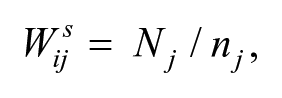
where
The IIPD consists of 138,927 respondents in 19 countries. The country data sets in the IIPD were collected between 2004 and 2011, depending on the availability of data at the country level. List-wise deletion was used for missing values, resulting in 118,788 respondents from 19 countries.
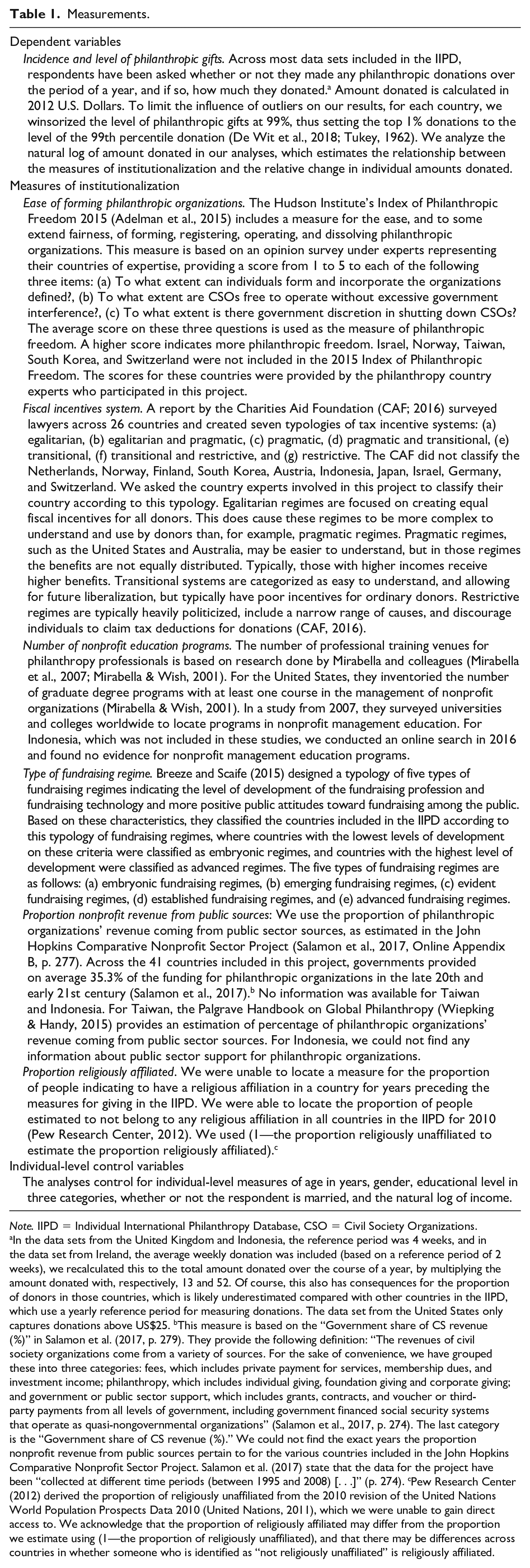
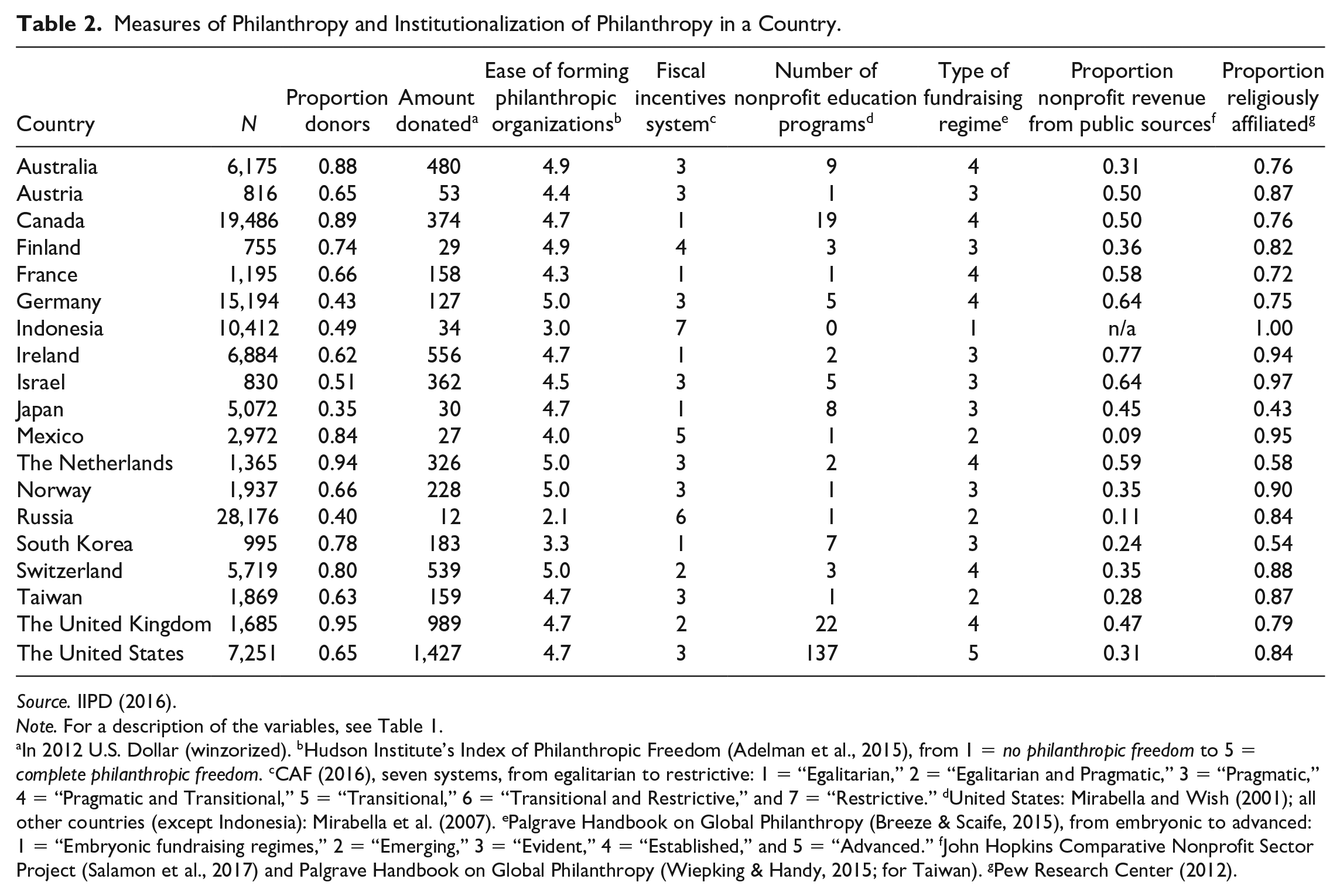
Table 1 provides the measurements used; Table 2 provides an overview of the measures of philanthropy and institutionalization; and Table 3 provides descriptive statistics for measures of institutionalization examined. 6
Measurements.
Note. IIPD = Individual International Philanthropy Database, CSO = Civil Society Organizations.
In the data sets from the United Kingdom and Indonesia, the reference period was 4 weeks, and in the data set from Ireland, the average weekly donation was included (based on a reference period of 2 weeks), we recalculated this to the total amount donated over the course of a year, by multiplying the amount donated with, respectively, 13 and 52. Of course, this also has consequences for the proportion of donors in those countries, which is likely underestimated compared with other countries in the IIPD, which use a yearly reference period for measuring donations. The data set from the United States only captures donations above US$25. bThis measure is based on the “Government share of CS revenue (%)” in Salamon et al. (2017, p. 279). They provide the following definition: “The revenues of civil society organizations come from a variety of sources. For the sake of convenience, we have grouped these into three categories: fees, which includes private payment for services, membership dues, and investment income; philanthropy, which includes individual giving, foundation giving and corporate giving; and government or public sector support, which includes grants, contracts, and voucher or third-party payments from all levels of government, including government financed social security systems that operate as quasi-nongovernmental organizations” (Salamon et al., 2017, p. 274). The last category is the “Government share of CS revenue (%).” We could not find the exact years the proportion nonprofit revenue from public sources pertain to for the various countries included in the John Hopkins Comparative Nonprofit Sector Project. Salamon et al. (2017) state that the data for the project have been “collected at different time periods (between 1995 and 2008) [. . .]” (p. 274). cPew Research Center (2012) derived the proportion of religiously unaffiliated from the 2010 revision of the United Nations World Population Prospects Data 2010 (United Nations, 2011), which we were unable to gain direct access to. We acknowledge that the proportion of religiously affiliated may differ from the proportion we estimate using (1—the proportion of religiously unaffiliated), and that there may be differences across countries in whether someone who is identified as “not religiously unaffiliated” is religiously affiliated.
Measures of Philanthropy and Institutionalization of Philanthropy in a Country.
Source. IIPD (2016).
Note. For a description of the variables, see Table 1.
In 2012 U.S. Dollar (winzorized). bHudson Institute’s Index of Philanthropic Freedom (Adelman et al., 2015), from 1 = no philanthropic freedom to 5 = complete philanthropic freedom. cCAF (2016), seven systems, from egalitarian to restrictive: 1 = “Egalitarian,” 2 = “Egalitarian and Pragmatic,” 3 = “Pragmatic,” 4 = “Pragmatic and Transitional,” 5 = “Transitional,” 6 = “Transitional and Restrictive,” and 7 = “Restrictive.” dUnited States: Mirabella and Wish (2001); all other countries (except Indonesia): Mirabella et al. (2007). ePalgrave Handbook on Global Philanthropy (Breeze & Scaife, 2015), from embryonic to advanced: 1 = “Embryonic fundraising regimes,” 2 = “Emerging,” 3 = “Evident,” 4 = “Established,” and 5 = “Advanced.” fJohn Hopkins Comparative Nonprofit Sector Project (Salamon et al., 2017) and Palgrave Handbook on Global Philanthropy (Wiepking & Handy, 2015; for Taiwan). gPew Research Center (2012).
Descriptive Statistics for the Measures of Institutionalization.

Source. IIPD (2016); Adelman et al. (2015); CAF (2016); Breeze and Scaife (2015); Mirabella and Wish (2001); Mirabella et al. (2007); Pew Research Center (2012); Salamon et al. (2017); Wiepking and Handy (2015).
Note. SD = standard deviation.
Without the United States, as United States has 137 Nonprofit education programs, which is an outlier. bNo information available for Indonesia.
Table 4 shows the bivariate correlation between the measures of institutionalization (with continuous measures) and amounts donated (individual and aggregated country level). When it is easier to form, register, operate, and dissolve philanthropic organizations, when there are more nonprofit education programs, and when the proportion of nonprofit revenue from public sources is higher, people give higher amounts. We find no relationship between the proportion of religiously affiliated in a country and levels of giving. Interestingly, the correlation between country-level average donation and the significantly related measures of institutionalization is between 0.25 (nonprofit revenue from public sources) and 0.45 (ease of forming philanthropic organizations) stronger than for individual-level donations, suggesting that cross-national studies using aggregate measures may overestimate relationships. 7
Correlation Between Measures of Institutionalization and Amount Donated to Charitable Organizations.
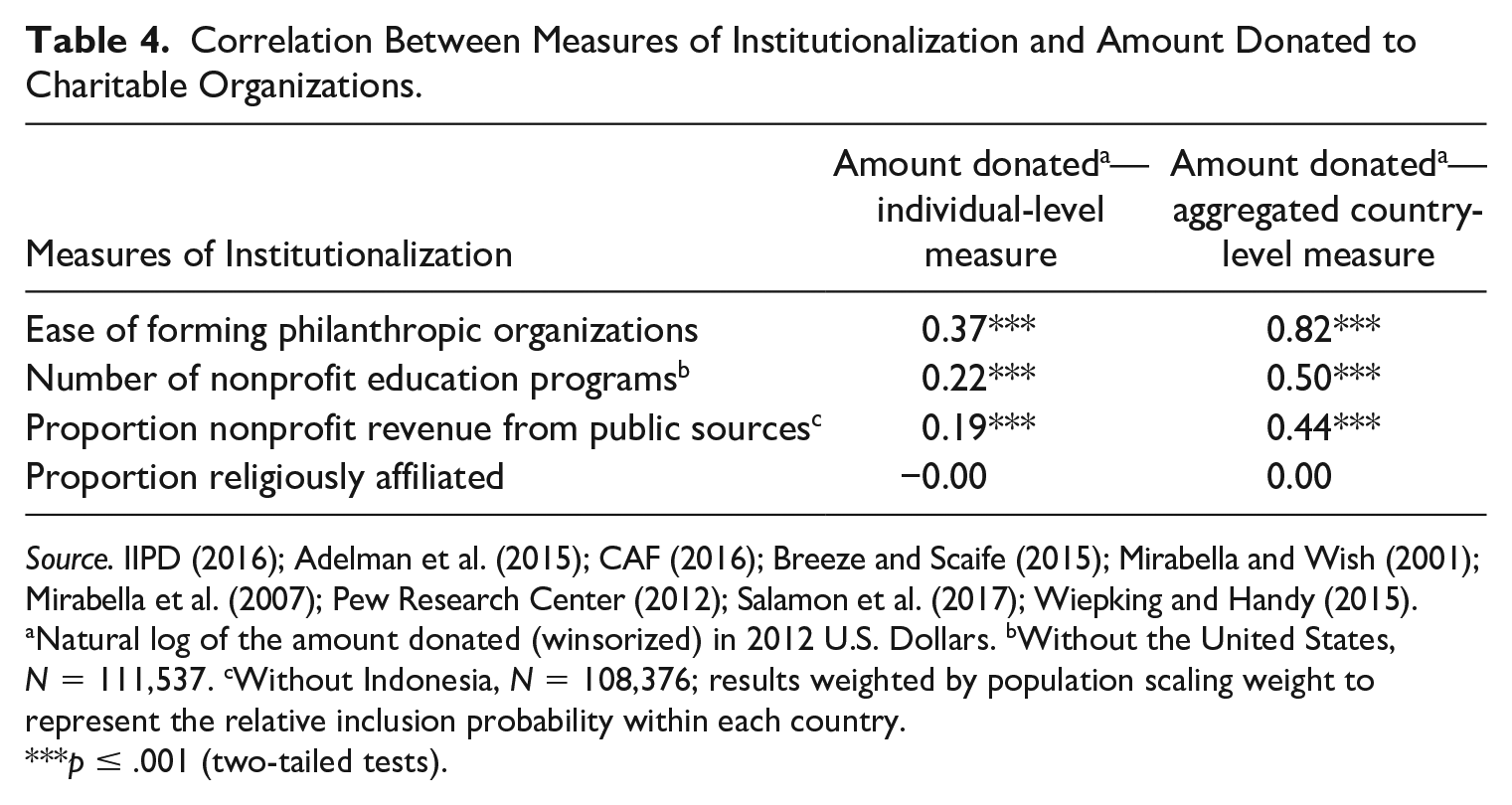
Source. IIPD (2016); Adelman et al. (2015); CAF (2016); Breeze and Scaife (2015); Mirabella and Wish (2001); Mirabella et al. (2007); Pew Research Center (2012); Salamon et al. (2017); Wiepking and Handy (2015).
Natural log of the amount donated (winsorized) in 2012 U.S. Dollars. bWithout the United States, N = 111,537. cWithout Indonesia, N = 108,376; results weighted by population scaling weight to represent the relative inclusion probability within each country.
p ≤ .001 (two-tailed tests).
Table 5 shows the average proportion of donors and average donations for each of the fiscal incentive categories. Dismissing the results for fiscal incentives represented by only one country (Categories 4–7), people in countries with a combination of an egalitarian and pragmatic fiscal incentive system are most likely to give and give the highest amounts to charitable organizations. Although the likelihood of giving is similar for people in a pure egalitarian or pragmatic fiscal regime, people in a pragmatic regime donate on average higher amounts.
Fiscal Incentive System and Average Incidence of Giving and Amount Donated to Charitable Organizations.
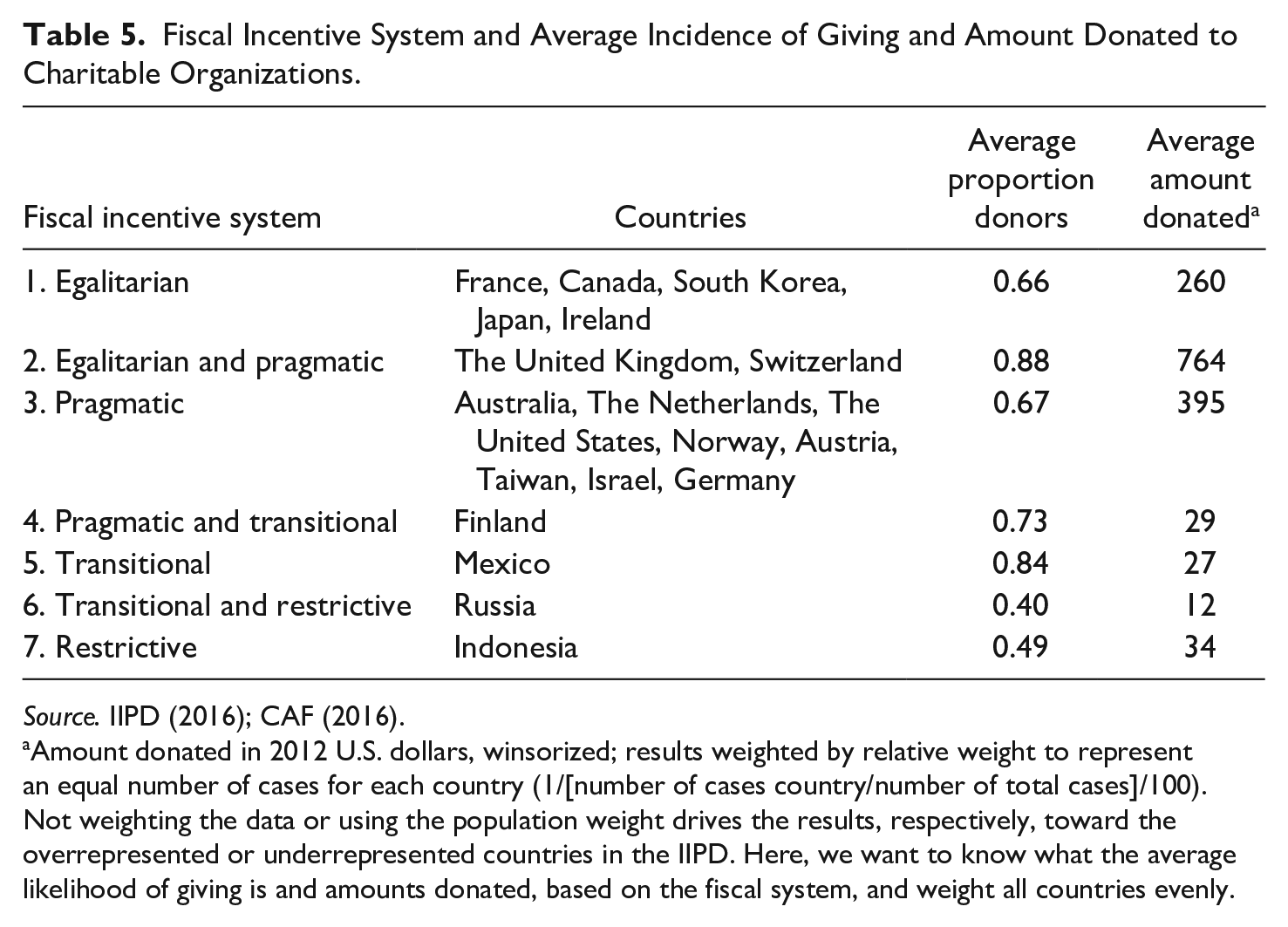
Source. IIPD (2016); CAF (2016).
Amount donated in 2012 U.S. dollars, winsorized; results weighted by relative weight to represent an equal number of cases for each country (1/[number of cases country/number of total cases]/100). Not weighting the data or using the population weight drives the results, respectively, toward the overrepresented or underrepresented countries in the IIPD. Here, we want to know what the average likelihood of giving is and amounts donated, based on the fiscal system, and weight all countries evenly.
The relationship between fundraising regimes and giving in Table 6 shows that the likelihood of giving does not necessarily increase with the advancement of fundraising regimes (i.e., development of the profession, technology, positive public attitudes toward fundraising). People are most likely to give in established fundraising regimes (Category 4), followed by advanced regimes (only represented by the United States), and emerging and evident regimes. The relationship between a fundraising regime and donations is as expected; the more advanced a fundraising regime, the higher the average amount people give.
Type of Fundraising Regime and Average Incidence of Giving and Amount Donated.
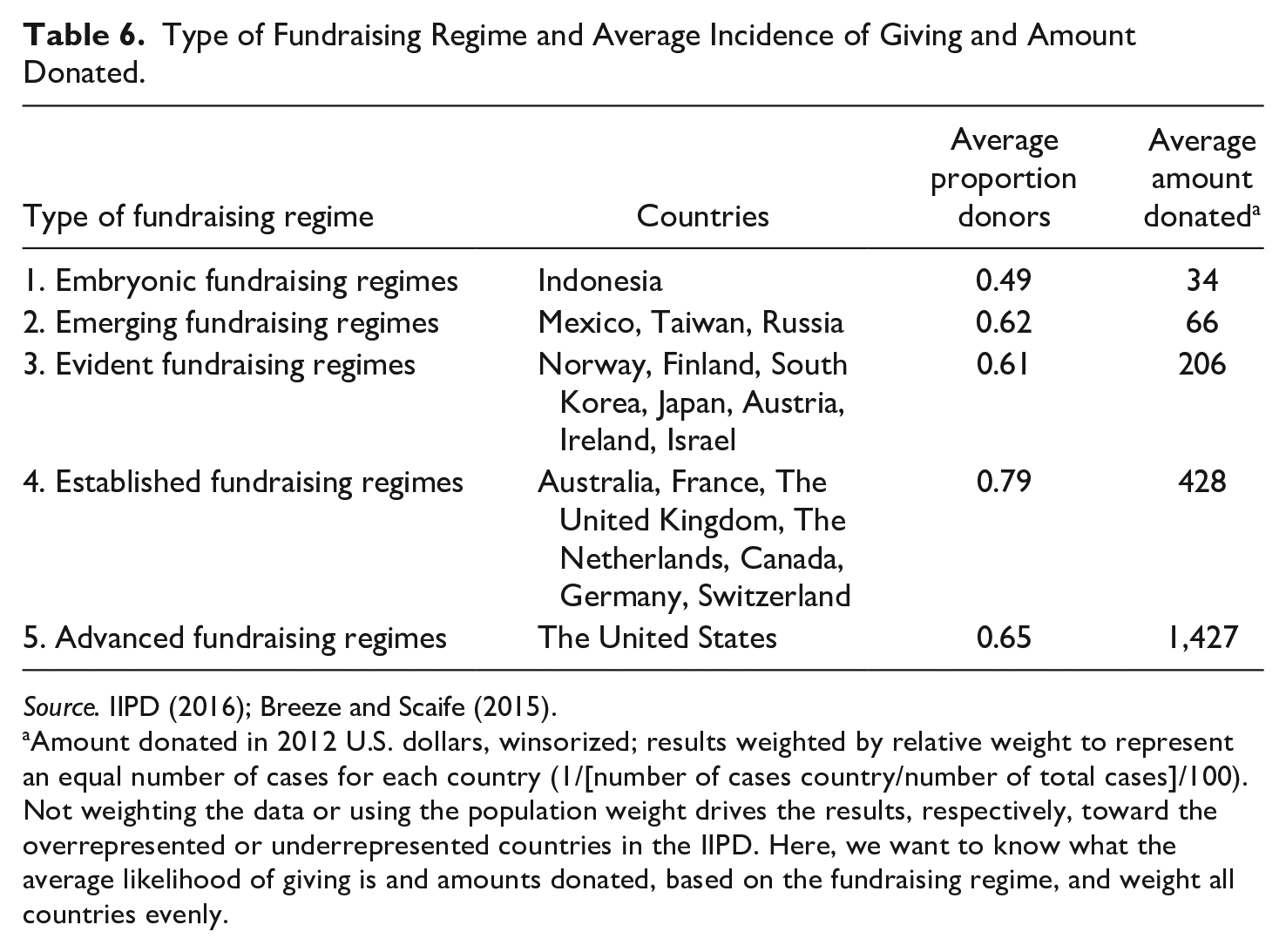
Source. IIPD (2016); Breeze and Scaife (2015).
Amount donated in 2012 U.S. dollars, winsorized; results weighted by relative weight to represent an equal number of cases for each country (1/[number of cases country/number of total cases]/100). Not weighting the data or using the population weight drives the results, respectively, toward the overrepresented or underrepresented countries in the IIPD. Here, we want to know what the average likelihood of giving is and amounts donated, based on the fundraising regime, and weight all countries evenly.
Analytical Models
To understand the relationships between the institutionalization measures and the incidence and level of giving, we tested the relationship using multilevel mixed-effects logistic regression analyses (Table 7) and Maximum Likelihood (ML) mixed-effects multilevel models (Table 8) using Stata 15. In multilevel analyses, the clustering of individuals within countries is considered to avoid the issues arising in previous studies, which used aggregated data in combination with bivariate correlational analyses. We estimated the predicted probability and linear prediction of donating for different institutional measures (Figures 2 and 3 and Tables 9 and 10).
Maximum Likelihood Multilevel Mixed-Effects Regression Analyses of the Likelihood of Giving to Charitable Organizations (Nindividual = 118,788; Ncountry = 19).

Source. IIPD (2016); Adelman et al. (2015); CAF (2016); Breeze and Scaife (2015); Mirabella and Wish (2001); Mirabella et al. (2007); Pew Research Center (2012); Salamon et al. (2017); Wiepking and Handy (2015).
Note. OR = odds ratio; SE = standard error; ICC = intraclass correlation; AIC = Akaike information criterion; BIC = Bayesian information criterion.
Because the (combinations of) pragmatic, transitional, and restrictive fiscal incentive systems only relate to one country in our sample, we used these categories as reference category. bWithout the United States, N = 111,537. cWithout Indonesia, N = 108,376; individual control variables included in the analyses (but not presented in the table): age, gender, educational level, marital status, and the natural log of income.
p ≤ .10. *p ≤ .05. **p ≤ .01. ***p ≤ .001 (two-tailed tests).
Maximum Likelihood Mixed-Effects Multilevel Linear Regression Analyses of the Natural Log of the Amount Donated to Charitable Organizations (Nindividual = 118,788; Ncountry = 19).
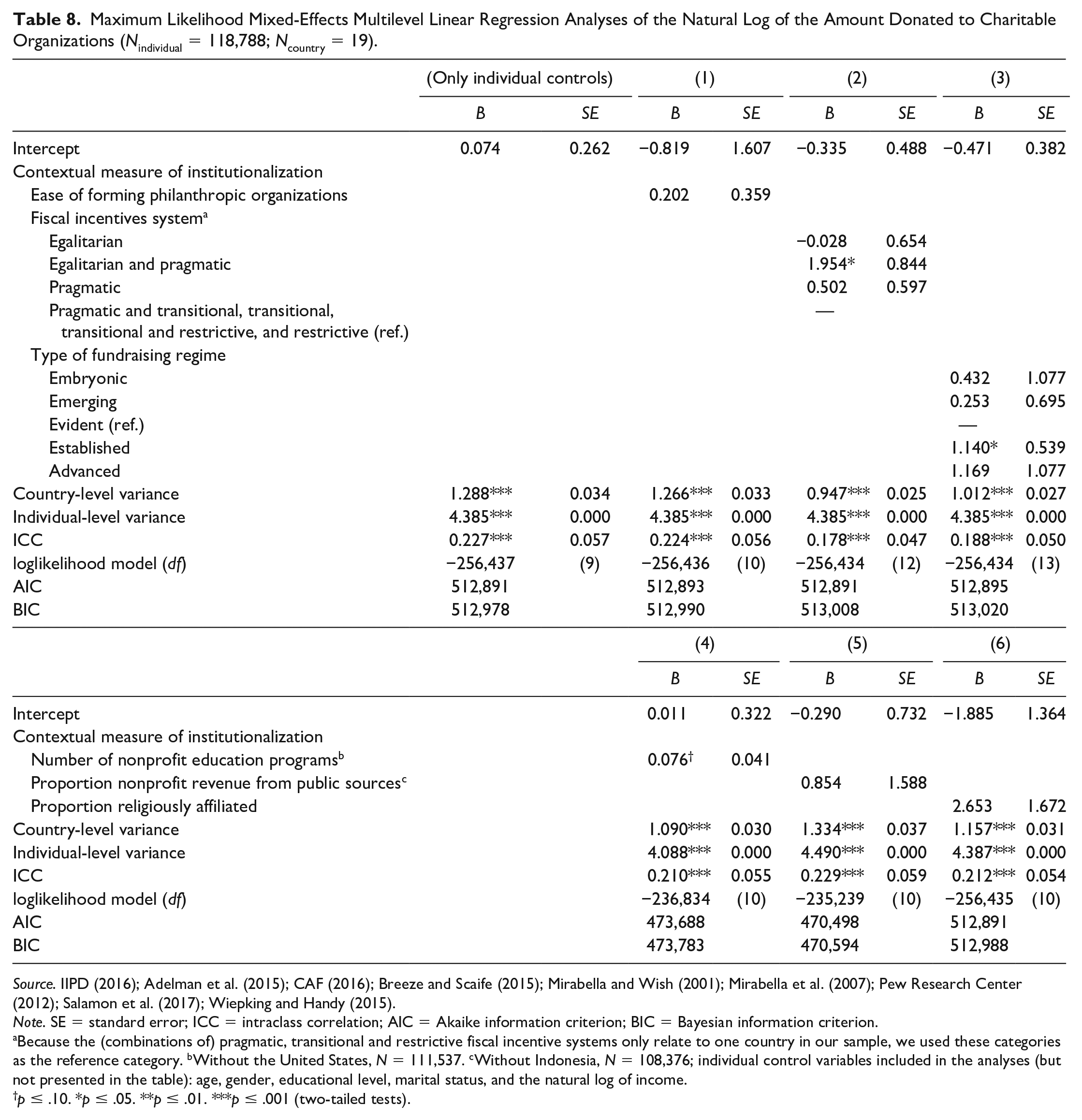
Source. IIPD (2016); Adelman et al. (2015); CAF (2016); Breeze and Scaife (2015); Mirabella and Wish (2001); Mirabella et al. (2007); Pew Research Center (2012); Salamon et al. (2017); Wiepking and Handy (2015).
Note. SE = standard error; ICC = intraclass correlation; AIC = Akaike information criterion; BIC = Bayesian information criterion.
Because the (combinations of) pragmatic, transitional and restrictive fiscal incentive systems only relate to one country in our sample, we used these categories as the reference category. bWithout the United States, N = 111,537. cWithout Indonesia, N = 108,376; individual control variables included in the analyses (but not presented in the table): age, gender, educational level, marital status, and the natural log of income.
p ≤ .10. *p ≤ .05. **p ≤ .01. ***p ≤ .001 (two-tailed tests).

Predicted probability of giving to charitable organizations for the different continuous measures of institutionalization (adjusted predictions with 95% CIs; all other variables at mean).

Linear prediction of the natural log of the amount donated to charitable organizations for the different measures of institutionalization (adjusted predictions with 95% CIs; all other variables at mean).
Predicted Probability of Making a Charitable Donation and Linear Prediction of the Amount Donated to Charitable Organizations Across 19 Countries Estimated for the Different Fiscal Incentive Systems.
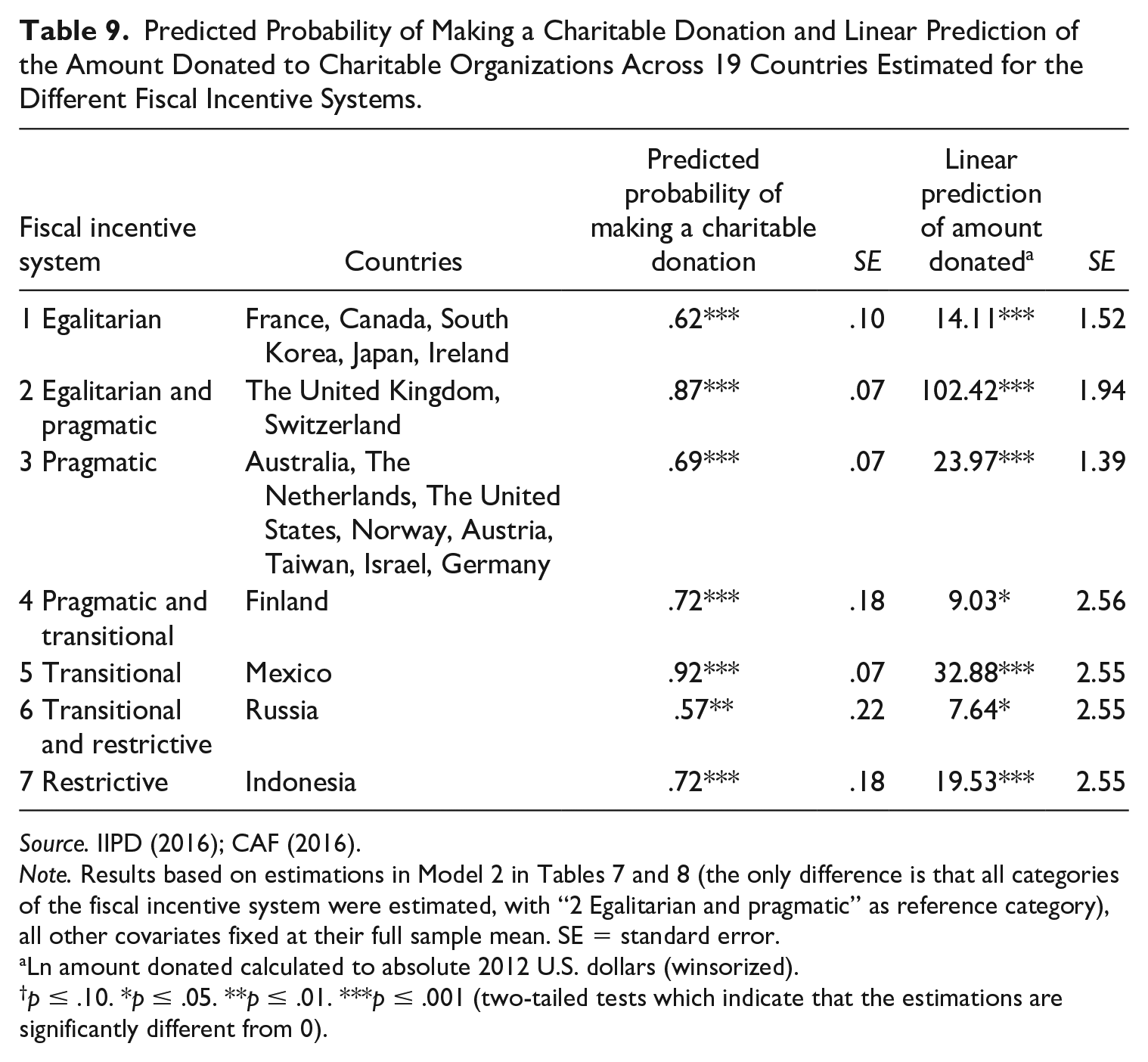
Source. IIPD (2016); CAF (2016).
Note. Results based on estimations in Model 2 in Tables 7 and 8 (the only difference is that all categories of the fiscal incentive system were estimated, with “2 Egalitarian and pragmatic” as reference category), all other covariates fixed at their full sample mean. SE = standard error.
Ln amount donated calculated to absolute 2012 U.S. dollars (winsorized).
p ≤ .10. *p ≤ .05. **p ≤ .01. ***p ≤ .001 (two-tailed tests which indicate that the estimations are significantly different from 0).
Predicted Probability of Making a Charitable Donation and Linear Prediction of the Amount Donated to Charitable Organizations Across 19 Countries Estimated for the Different Types of Fundraising Regimes.
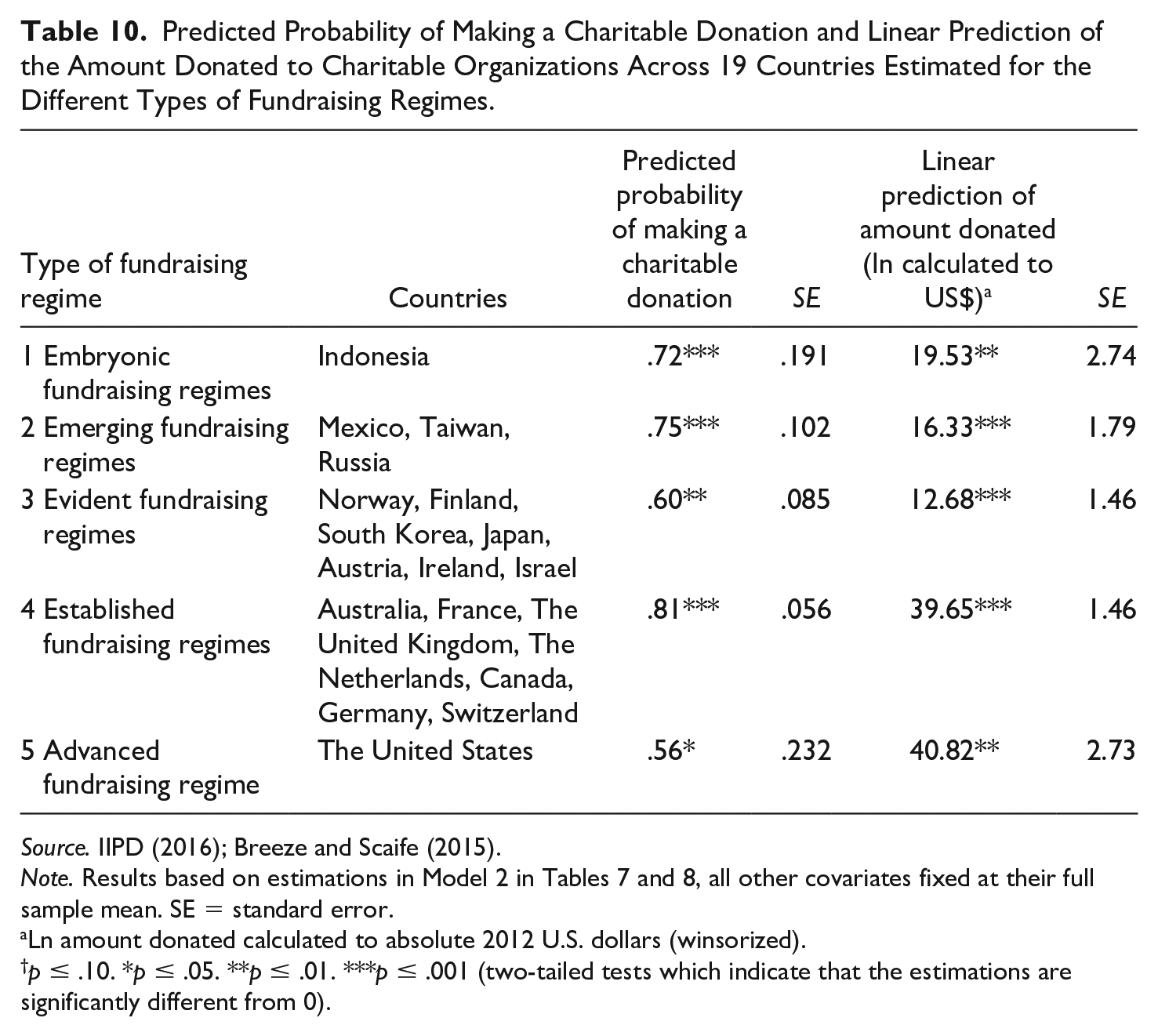
Source. IIPD (2016); Breeze and Scaife (2015).
Note. Results based on estimations in Model 2 in Tables 7 and 8, all other covariates fixed at their full sample mean. SE = standard error.
Ln amount donated calculated to absolute 2012 U.S. dollars (winsorized).
p ≤ .10. *p ≤ .05. **p ≤ .01. ***p ≤ .001 (two-tailed tests which indicate that the estimations are significantly different from 0).
Results
The Relationship Between Institutional Context and the Likelihood of Giving
Table 7 displays the results from ML multilevel mixed-effects regression analyses of the likelihood of giving.8,9 The first column shows results from a model including only the individual-level control variables. 10 In each subsequent model, we include one of the contextual measures of institutionalization. Figure 2 displays the predicted probability of donating, estimated using the results from Table 7. The predicted probability of donating for an individual in a country with varying levels of ease of forming philanthropic institutions is calculated based on Model 1 in Table 7, keeping all other covariates at their full sample means. The predicted probabilities in Figure 2 indicates that the relationship between the number of nonprofit education programs and the proportion of the population religiously affiliated and the likelihood of giving is positive as expected.
Unexpectedly, the relationships between the ease of forming philanthropic organizations and the proportion of nonprofit revenue from public sources and the likelihood of giving are negative. From Figure 2 and the odds ratios in Table 7, we note that most of the measures of institutionalization are not significantly related to the likelihood of giving, showing little support for the hypotheses. Table 7, however, does show a significant relationship between an established fundraising regime (compared with an evident regime) and the likelihood of making donations. Hence, these results only provide support for H4 and then only specifically for one type of fundraising regime.
The Relationship Between Institutional Context and the Level of Giving
Table 8 displays the results from an ML mixed-effects multilevel linear regression analyses of the natural log of the amount donated. 11 Figure 3 displays the linear prediction of the natural log of the amount donated, estimated using the results from Table 8.
Figure 3 shows that all relationships are as expected: in countries where it is easier to form philanthropic organizations, with more nonprofit education programs, where a higher proportion of the revenues of nonprofits comes from public sources, or where a higher proportion of the population is religiously affiliated, people are predicted to donate, on average, higher amounts. However, as can be seen from the coefficient estimates in the models in Table 8, most of our hypotheses were not supported. We do find partial support for H2: People in a combination of an egalitarian and pragmatic fiscal system are estimated to donate higher amounts than people in (combinations of) pragmatic, transitional, or restrictive systems (Model 2 in Table 8). H4 is also partially supported. People in an established fundraising regime are estimated to give higher amounts than people in an evident fundraising regime (Model 3 in Table 8). To further understand relationships between fiscal incentive systems, fundraising professionalism, and incidence and level of giving, we show the predicted probability and the linear prediction of giving for the different categories of fiscal incentive systems (Table 9) and fundraising regimes (Table 10).
Table 9 shows that people in a combination of an egalitarian and pragmatic fiscal system are predicted to donate US$102, compared with US$24 (pure pragmatic system) and US$14 (pure egalitarian system). Canada and France are countries classified by CAF (2016) as egalitarian tax incentive regimes where tax credits have equal benefit for all donors; however, the weakness of egalitarian regimes is that the fiscal benefits may be more complex and not easily claimed by donors than those in pragmatic regimes. Pragmatic regimes, such as the United States and Australia, are those where fiscal benefits are relatively easier to apply for but those with higher incomes receive higher benefits (CAF, 2016). Our results suggest that a combination of an egalitarian and pragmatic regime may be most beneficial to individual philanthropy, partially supporting H2. However, as our data include only two countries classified as a combination of egalitarian and pragmatic regimes, Switzerland and the United Kingdom, further research is needed to establish this finding.
People in an established fundraising regime have a predicted probability of donating 81% (Table 10), and they are predicted to donate US$41 as compared with US$13 in an evident fundraising regime. This finding partly supports our H4, suggesting that people in established fundraising regimes are more likely to give and give higher amounts.
Comparing results in Tables 9 and 10 with the bivariate statistics in Tables 5 and 6 illustrates that countries’ demographics influence relationships among fiscal incentive systems, type of fundraising regime, and philanthropic giving. Especially the bivariate results for the “less institutionalized” countries in fiscal system and fundraising regime seem to be driven, at least partly, by these countries’ demographics, which are less favorable for donating (e.g., populations are younger, less wealthy, and less educated). If people in transitional and restrictive fiscal systems, and embryonic fundraising regimes in particular, had similar levels of income (and to a lesser extent similar ages and education), they may be just as (or even more) generous than people in countries with more advanced types of fiscal systems and fundraising regimes.
We conducted several robustness tests, controlling for per capita Gross National Income (GNI) in the multilevel analyses, estimating the multilevel models using the amounts donated relative to a country’s per capita GNI, leaving potentially influential countries out of the analyses, and including all measures of institutionalization in one model. The results of these tests do not lead to different findings than reported. A description of these robustness tests and results are available through Online Appendices.
Conclusion and Discussion
We examined how the institutional context for philanthropy, manifested in different formal and informal institutions, relates to individual philanthropic behavior across a range of 19 countries. We argued that the stronger the institutional context for philanthropy is in a country, the more people are likely to give and to give higher amounts to philanthropic organizations. In other words, the more strongly philanthropy is supported by organizational and societal structures, the more donors will give.
We find that—considering bivariate statistics and simple correlational tests—when there is more ease and fairness in government registration for philanthropic organizations, when the fiscal incentive system for philanthropic giving can be characterized as both egalitarian and pragmatic (e.g., The United Kingdom and Switzerland), when there are more formal training opportunities for people working in the philanthropic sector, when fundraising is more developed, when there is proportional more government funding for philanthropic organizations, people are more likely to give, and give higher amounts of money to philanthropic organizations. Thus, at the bivariate level, the institutionalization of philanthropy through formal and informal rules positively relates to more and higher individual giving to philanthropic organizations.
However, these results pertain strictly to bivariate statistics and bivariate correlational tests. When using multilevel analyses, we find less support for our ideas. The results of these more stringent analyses show that only people in an established fundraising regime have a higher probability of donating and give higher amounts compared with people in an evident fundraising regime. In addition, we found that people in a combination of egalitarian and pragmatic fiscal incentive regimes are predicted to donate higher amounts than people in (combinations of) pragmatic, transitional, and restrictive fiscal incentive systems. However, as our data include only two countries classified as a combination between egalitarian and pragmatic regime, Switzerland and the United Kingdom, further research is needed to establish this finding.
The results are also suggestive of a positive relationship between the number of nonprofit education programs and the predicted level of giving in a country (p ≤ .10). We do not find support for any of the other expected relationships. This leads us to the first important message from our study: Past empirical comparative studies of philanthropy, that examined only bivariate correlational relationships using only aggregated measures for individual philanthropic giving, may well have overestimated or over-stated relationships.
Although not hypothesized, a significant finding for the understanding of global philanthropy is that if people in countries with lower levels of philanthropic institutionalization, typically developing economies, had the same average age and level of education and especially income as those in countries with more advanced levels of philanthropic institutionalization, they would be equally likely to give and give similar amounts. Indeed, a large part of the variation between countries in the individual likelihood of giving and level of giving can be explained by compositional demographic differences between countries’ populations. From our results, it can be expected that when populations in developing economies start to resemble populations in developed economies more, we expect the likelihood and level of giving in developing economies will go up, independent of the level of philanthropic institutionalization. This is the second key message of our study.
When interpreting the results, we bear in mind the relatively low number of countries included in our study, and thus the limitations in the generalizability of our findings. Nevertheless, our results are the first of their kind and point to relationships that could spur further research. Although the 19 countries in the IIPD represent 21% of the world’s population (United Nations, 2017), there is an overrepresentation of countries situated in Western Europe, North America, and Asia. Furthermore, Elff et al. (2016) suggest that using a restricted maximum likelihood (REML) estimation eliminates the bias in multilevel analyses with a low number of countries. In a robustness test (see Online Appendix C), the REML estimation produced similar results as the multilevel estimation, suggesting that the results are not biased. However, we do expect the results are driven by the selection of countries included in our study. Excluding Germany and Japan, which were the two countries that followed different logics of institutionalization, the rest of the countries resulted in somewhat stronger support for our hypotheses (see Online Appendices D1 and D2).
At this time, the IIPD is the only data set that allows studying how institutional context relates to individual-level philanthropic behavior. Hence, it is not possible to test our data using a larger and less selective range of countries, or data that have been collected using one standardized methodology and survey. We tried to correct the flaws in these data and reported our results conservatively and with caution. Hence, we refrain from policy recommendations based on our results.
Our findings first need to be replicated, in further research using a less selective sample and a higher number of countries, and measurements of philanthropy that capture giving across all countries. To rule out the possibility that our hypotheses were not supported because of measurement problems, future studies should include additional and possibly more direct measures. Our findings, we hope will spur scholars and philanthropy professionals to engage in global philanthropy research, contributing to the collection of longitudinal data and comparative analyses. With new data, longitudinal analyses become a possibility, which can address some of the problems with causal inference inherent in cross-sectional designs. Although formal and informal institutionalization of philanthropy is continuously being shaped, there is a need for evidence-based policies. Through this, future global philanthropy research can contribute to an understanding of how philanthropy can be a source of societal well-being for everyone, and not just for selected populations and groups.
Supplemental Material
sj-pdf-1-nvs-10.1177_0899764021989444 – Supplemental material for Global Philanthropy: Does Institutional Context Matter for Charitable Giving?
Supplemental material, sj-pdf-1-nvs-10.1177_0899764021989444 for Global Philanthropy: Does Institutional Context Matter for Charitable Giving? by Pamala Wiepking, Femida Handy, Sohyun Park, Michaela Neumayr, René Bekkers, Beth Breeze, Arjen de Wit, Christopher J. Einolf, Zbignev Gricevic, Wendy Scaife, Steffen Bethmann, Oonagh B. Breen, Chulhee Kang, Hagai Katz, Irina Krasnopolskaya, Michael D. Layton, Irina Mersianova, Kuang-Ta Lo, Una Osili, Anne Birgitta Pessi, Karl Henrik Sivesind, Naoto Yamauchi and Yongzheng Yang in Nonprofit and Voluntary Sector Quarterly
Footnotes
Acknowledgements
The authors thank the anonymous reviewers and NVSQ editor Angela Bies for their feedback and suggestions which significantly contributed to this article. They would also like to thank all data authorities and data contributors for enabling the creation of the IIPD (2016), including SOEP, The Beautiful Foundation, COPPS-PSID (and especially Mark Ottoni-Wilhelm), CSGVP, IFLS, HBS, ENAFI, GINPS, CNCSNS, and TSCS. The authors especially thank Ge Jiang and Astrid de Jong for support with data management, and Jonathan Bergdoll, Jeroen Weesie, and Fengjing Zhang for their feedback on data management and analyses, and Omkar Katta for his editing skills. The authors thank all the experts who provided country-specific information in the case of missing values in the original sources, including Henriëtta Grönlund, Georg von Schnurbein, and Silvia Garcia, and the participants to the 2016 ISTR and 2017 ARNOVA conferences for valuable feedback.
Author Contributions
P.W. and F.H. designed research; P.W., F.H., S.P., M.N., R.B., B.B., C.E., Z.G., W.S., S.B., O.B., C.K., H.K., I.K., M.L, I.M., K-T.L., U.O., A.B.P, K.H.S., A.W., and N.Y. contributed to data collection and synchronization; P.W., F.H., S.P., Z.G., and Y.Y. analyzed the data; and P.W., F.H., M.N., R.B., B.B., and A.W. wrote the paper.
Declaration of Conflicting Interests
The author(s) declared no potential conflicts of interest with respect to the research, authorship, and/or publication of this article.
Funding
The author(s) disclosed receipt of the following financial support for the research, authorship, and/or publication of this article: Pamala Wiepking was funded for her work in this paper by The Netherlands Organization for Scientific Research grant VI 451-09-022 and by the SPP Do Good Institute—ARNOVA Global Philanthropy & Nonprofit Leadership Award. Her work at the Lilly Family School of Philanthropy is funded by the Stead Family, and her work at the Vrije Universiteit Amsterdam is funded by the Dutch Charity Lotteries. Femida Handy was funded for her work in this paper by the University of Pennsylvania’s PURM mentorship grant. Both authors are grateful for the support and funding received.
ORCID iDs

Supplemental Material
Supplemental material for this article is available online.
Notes
Author Biographies
References
Supplementary Material
Please find the following supplemental material available below.
For Open Access articles published under a Creative Commons License, all supplemental material carries the same license as the article it is associated with.
For non-Open Access articles published, all supplemental material carries a non-exclusive license, and permission requests for re-use of supplemental material or any part of supplemental material shall be sent directly to the copyright owner as specified in the copyright notice associated with the article.
