



Abstract
Despite the importance of self-regulation for school readiness and success across the lifespan, little is known about children’s conceptions of this important ability. Using mixed-method interviews, this research examined kindergarten children’s (n = 57) perspectives on self-regulation in a disadvantaged area in Dublin, Ireland. Children depicted school as requiring regulation of their emotional, cognitive and behavioural responses. They characterised school as a dynamic setting, placing emphasis on the regulatory challenges of the outdoor environment. Children also described difficulties associated with navigating complex social interactions, often without assistance from external supports. The results inform strategies to support children’s emerging self-regulation abilities.
Keywords
Introduction
Across disciplinary perspectives, children’s ability to self-regulate is recognised as a significant predictor of important life outcomes, including academic achievement, social and emotional well-being, and health and financial outcomes (Duckworth et al., 2012; Moffitt et al., 2011; Tangney et al., 2004). It also plays a vital role in children’s transition into, and success in, the school environment (Blair and Raver, 2015). Indeed, self-regulation underlies many of the skills that are endorsed by kindergarten teachers as important aspects of school readiness, such as working independently, understanding and following rules, and sharing and taking turns (Rimm-Kaufman et al., 2000).
Self-regulation is an integral part of learning to wait, think and reflect in order to react appropriately in a given situation. It represents the ability to recognise, monitor and manage emotional, behavioural and attentional capacities towards goal-directed actions (Diamond, 2013; Eisenberg et al., 2010; McClelland et al., 2015; Schultz et al., 2001). When children start school, their ability to self-regulate is challenged as they experience major changes in their physical surroundings and expectations in terms of their learning and the rules and routines they have to follow (Dockett and Perry, 2001; Dockett and Perry, 2004). Although increasing numbers of children experience preschool education, starting school continues to represent a significant transition in children’s lives (O’Kane and Hayes, 2006; Rimm-Kaufman et al., 2000). Compared to preschool environments, school settings are usually larger, more formal learning environments, with more verbal instructions, higher student–teacher ratios and a greater focus on skills and achievement (O’Kane and Hayes, 2006; Rimm-Kaufman et al., 2000). Within this context of new and competing stimuli, children must manage their regulatory responses to successfully engage in classroom activities that are typically more prescriptive and involve less play. They also need to navigate social interactions with new and often unfamiliar peers who may be struggling to manage their own responses, and develop social relationships with teachers and peers (Danby et al., 2012; Fabian, 2000; Shonkoff et al., 2000). Throughout the school day, children also have to move flexibly between activities and settings such as moving between individual and group activities, to play, clean-up or line up, as well as moving between the classroom and the playground. These transitions engage children’s self-regulation, as they need to disengage from the activity underway, follow the teacher’s directions and avoid distraction to begin a new activity or move to a new setting (Diamond, 2013).
A growing body of empirical research emphasises the role of self-regulation during the transition to school. This research suggests that independent of IQ, self-regulation is a powerful predictor of classroom adjustment as well as math, reading and standardised achievement test scores (Blair and Razza, 2007; Neuenschwander et al., 2012; Williams et al., 2016). Yet, not all children possess the necessary skills to meet the demands of the school environment (Marmot, 2010). Children of low-income families are particularly at-risk of low levels of self-regulation (Evans and Rosenbaum, 2008; Magnuson et al., 2004). These children often have more difficulty paying attention, are frequently distracted and typically find it hard to regulate their emotions and behaviour (Evans and Rosenbaum, 2008; Howse et al., 2003; Tominey, 2011), which may contribute to subsequent academic difficulties (Arnold et al., 1999).
According to socio-cultural theory, children’s early development is shaped by contextual factors such as their interactions with adults, peers and the surrounding environment (Vygotsky, 1978). Growing up in poverty places children at increased risk of experiencing disrupted social relationships as well as exposure to chaotic and stressful environments that contribute to a reduced capacity to self-regulate (Blair, 2010). It can also contribute to a learned pattern of reactive, rather than reflective, responding as continued exposure to environmental stressors overwhelms their ability to self-regulate (Heatherton and Wagner, 2011; Ursache et al., 2012). Children then continue to apply these reactive strategies in new situations such as school, where higher levels of reactivity are maladaptive (Ursache et al., 2012), thus, making the transition to school more difficult.
Recognising the impact of poverty-related adversity on children’s self-regulation and school readiness, children from disadvantaged backgrounds are often targeted by intervention strategies to support their skills. Indeed, strategies to support children’s self-regulation have been incorporated into the curricula of several preschool programmes serving children in disadvantaged areas (e.g. Barnett et al., 2008; Bierman et al., 2008). These intervention programmes operate by fostering improvements in preschool classroom quality to support children’s behaviour, making it easier for them to self-regulate, as well as allowing them play-based opportunities to practice self-regulatory techniques (Blair and Raver, 2015). Encouragingly, randomised control trial evaluations of the programmes report improvements in children’s behavioural regulation and cognitive skills (Barnett et al., 2008; Bierman et al., 2008). However, we know very little about children’s subjective experiences of regulating their responses in the early school environment. Thus, we do not know whether these intervention strategies are acceptable to children or whether they address all areas of the school environment where children perceive the need for regulatory support.
Obtaining children’s views
As starting school is such a significant life experience for most children, their views are particularly valuable for understanding this transition. Garnering children’s perspectives in matters affecting their lives is also required by the United Nations Convention on the Rights of the Child (United Nations General Assembly, 1989). An increasing body of research examining children’s views on starting school demonstrates the value of using children’s perspectives to inform what we know about their early school experiences. In these studies, children report the many difficulties associated with starting school (e.g. struggling with classroom activities and peer interactions), and the importance of both academic (e.g. letter and number knowledge) and social skills for adjusting to school (e.g. Danby et al., 2012; Dockett and Perry, 2004; Harrison and Murray, 2015; Murray and Harrison, 2005). Extending this framework, children’s expressed views and experiences have the potential to enhance what we know about the role of self-regulation during their early school experiences. Developing an understanding of aspects of school that challenge, or support, appropriate self-regulated responses could be used to inform strategies to scaffold their emerging skills as they navigate their new school environment.
Research on self-regulation to date has focused on theoretical and quantitative, explorations of the construct, incorporating an array of test, informant-report and observational measures. However, children’s own perspectives are rarely explored (Dennis and Kelemen, 2009). Yet previous research suggests that children as young as 3 years old demonstrate an awareness of their own emotional and behavioural regulation strategies (Robson, 2010). Moreover, preschool children describe effective strategies for regulating their emotional responses (Dennis and Kelemen, 2009). Thus, young children may offer useful insights on the importance and application of self-regulation during early school experiences which would help to inform the resources required to support their emerging regulatory skills.
As children growing up in disadvantaged environments typically have lower levels of self-regulation and are often targeted through intervention, their views are particularly important for understanding the context within which these interventions are applied. Acknowledging the valuable contribution that children’s perspectives can make towards informing the nature and extent of supports they are offered, this article examined the perspectives of 4- and 5-year-old children, on their self-regulation and that of their peers during their first year of formal schooling.
Method
Research context
In Ireland, the majority of children start school between the ages of 4 and 5 years, with a legal requirement to start by the age of 6 (Education [Welfare] Act, 2000). At the time of data collection, 2014–2015, most children experienced at least 1 year of preschool prior to school entry.
This study used data collected as part of the Children’s Thoughts about School Study (CTSS; O’Farrelly et al., 2014), which interviewed children in a disadvantaged community in Dublin, Ireland, about their experiences during their first year in school. 1 Findings from the CTSS have been previously reported on children’s general school experience, toileting and resilience (O’Rourke et al., 2017; Tatlow-Golden et al., 2016, 2017). The CTSS was reviewed and approved by the University College Dublin Human Research Ethics Committee.
Participants
Participants were 57 children (27 male, 30 female) with an average age of 62.1 months (standard deviation [SD] = 3.72; range = 55.1–70.5), who were 7 months into their first school year at the time of data collection. Participants were recruited in 2014 and 2015 from two schools based in a community that was designated disadvantaged by the Irish Department of Education. Schools in the community reported low levels of school readiness, with approximately half (45%–52%) of children rated by teachers as not ready for school (Doyle and the UCD Geary Institute PFL Evaluation Team, 2013). Table 1 presents demographic information for the families of participating children.
Demographic information for families of participating children.
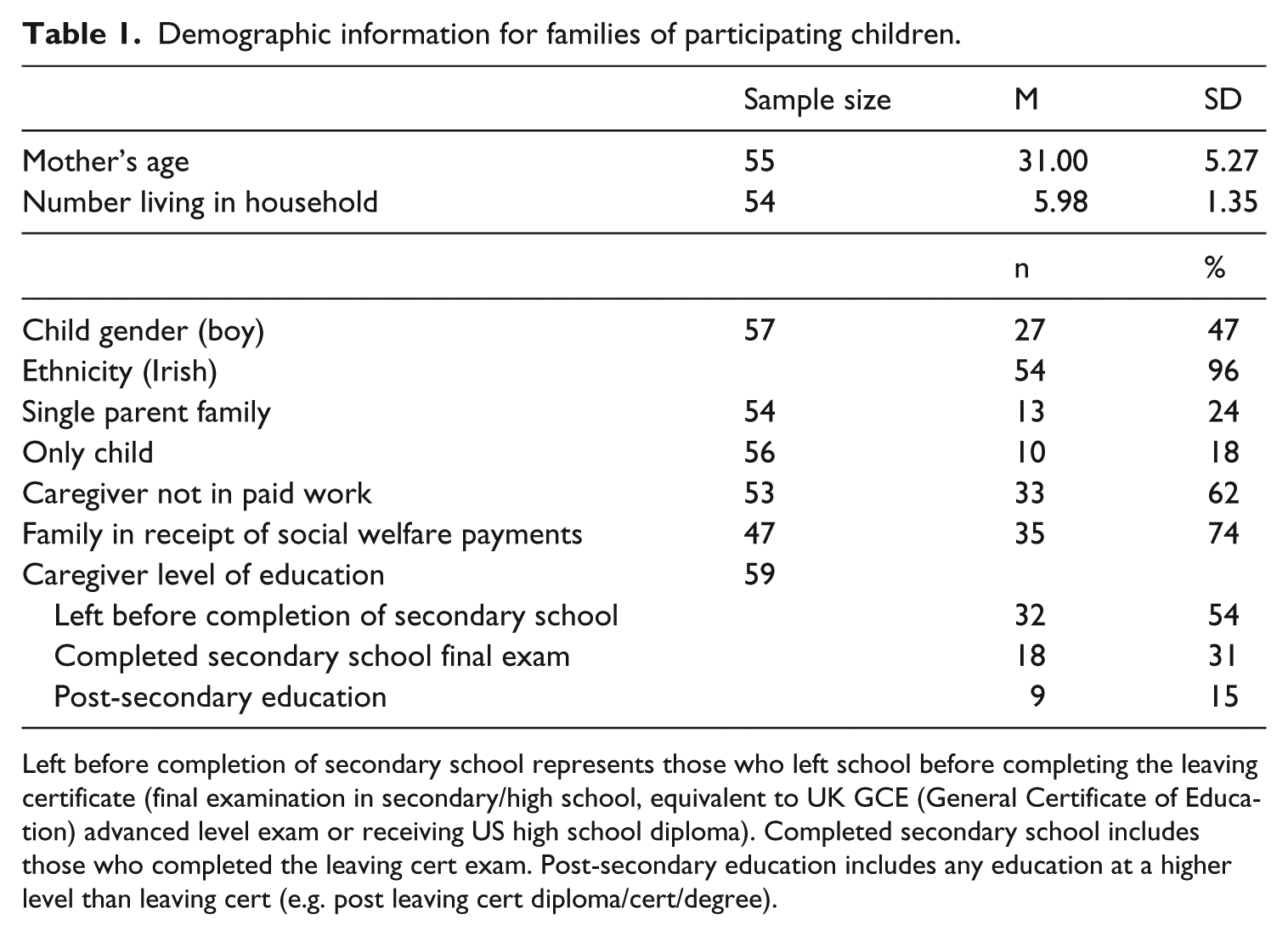
Left before completion of secondary school represents those who left school before completing the leaving certificate (final examination in secondary/high school, equivalent to UK GCE (General Certificate of Education) advanced level exam or receiving US high school diploma). Completed secondary school includes those who completed the leaving cert exam. Post-secondary education includes any education at a higher level than leaving cert (e.g. post leaving cert diploma/cert/degree).
Data collection and measures
Prior to data collection, researchers visited each classroom (n = 10) to introduce the study to children using a booklet with images of the study activities and researchers. Teachers then distributed information and consent materials, including the children’s booklet, to parents/guardians. Written consent for their child to participate in the study was sought from parents. At the start of each interview, the children’s information booklet was used to explain the study and children gave verbal assent to participate. Children were reminded that they could take breaks or stop at any time and researchers remained alert to fatigue and disinterest throughout.
Children’s responses were gathered using multi-method interviews (~45 minutes) conducted on a one-to-one basis, with two interviews running concurrently in a classroom or space familiar to the child (e.g. library). Interviews were audio recorded with permission. To capture children’s perspectives on their early school experiences, the CTSS incorporated four measures: (1) a questionnaire on children’s school liking and avoidance, to assess the degree to which children liked or avoided school; (2) semi-structured interview questions about Riley Rabbit, to elicit children’s experiences, likes, dislikes, friendships and advice for others starting school; (3) structured interview questions based on pictorial depictions about everyday school events, to elicit children’s affective responses to typical school events and (4) a draw and talk activity which gave children scope to depict what they felt are the most salient aspects of school. This study focuses on the semi-structured and structured interview questions, (2) and (3) above. These measures were structured to focus children’s attention on aspects of school they found challenging as well as providing scope to discuss supportive factors. As such, these measures elicited a higher concentration of responses relating to self-regulation than the other CTSS study measures. In contrast, the questionnaire and the draw-and-talk activity targeted children’s global feelings towards school.
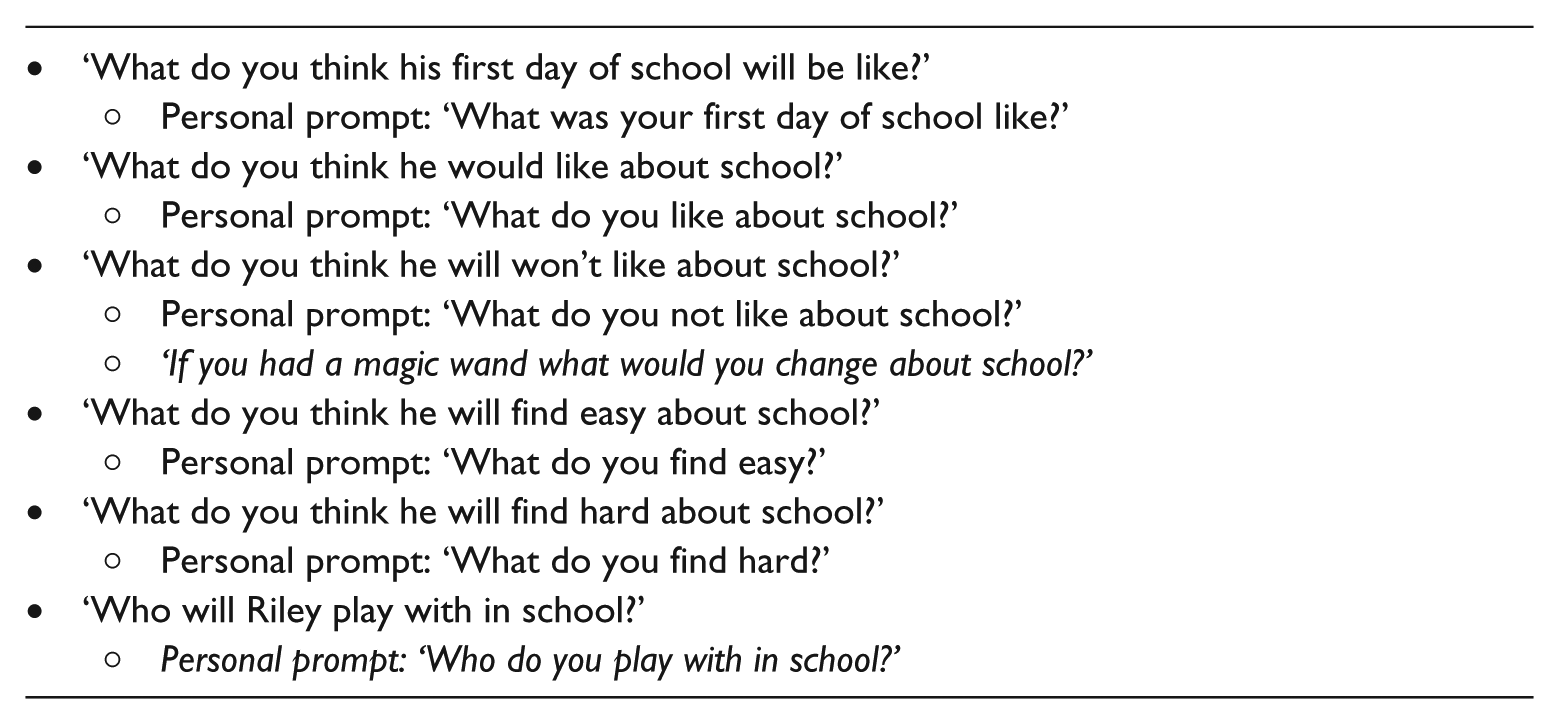
The semi-structured interview questions centred on an anthropomorphised character, Riley Rabbit, created by the research team. Animal characters, such as Riley Rabbit, are familiar to children and help to avoid issues related to how children may/may not identify with a human character based on factors such as age or race (Tatlow-Golden et al., 2013). Children were asked to give Riley advice about starting school, and a series of semi-structured questions (see Appendix 1) about different aspects of school, such as likes and dislikes, friendships and things you need to know when starting school. Children were asked how Riley would experience these aspects of school (e.g. what do you think Riley would like about school?) and what their own experience was like (e.g. what do you find easy about school?). Children were also asked what they would change about school. This measure was designed to prompt discussion of salient issues children faced when starting school including those that might challenge their regulatory capacity.
The structured interview questions comprised the Pictorial Measure of School Stress and Well-being scale (PMSSW; Murray and Harrison, 2005). Developed in Australia, the PMSSW presents children with scenarios of potentially stressful school situations where children are likely to experience self-regulatory demands. Figures were depicted in line drawings with blank faces so that participants would project feelings on to the depicted characters. Previous studies have used the PMSSW to explore children’s experiences of stress and coping in school (e.g. Harrison and Murray, 2015). The original images were adapted, with permission, to more accurately reflect typical Irish schools. The revised nine PMSSW scenarios (see Appendix 2, Figure 1) were presented to children and for each image, participants were asked: How does the child in the picture feel? Why do they feel that way? Would they tell the teacher how they are feeling? Why would they [not] tell the teacher? What might happen next? Methods that use visual prompts, like the PMSSW, can engage young children by stimulating discussion and helping them understand and relate to the questions (Hatch, 1995).
Analysis
The data were transcribed and analysed qualitatively using the principles of thematic analysis (Braun and Clarke, 2006). Codes were generated using a line-by-line coding strategy similar to that used in grounded theory (Charmaz, 2008). The first author examined each line of children’s responses; codes were grouped based on commonality and combined into themes. Salience of themes was determined by representation across multiple children in the dataset, in combination with the emphasis that children placed on the content within their interview. As the focus of this study was on children’s self-regulation, children’s responses were then analysed deductively through the lens of the self-regulation. Informed by the literature on self-regulation, references to a wide range of emotions (e.g. Schultz et al., 2001) and behaviours (e.g. Eisenberg et al., 2010), managing and controlling responses (e.g. Diamond, 2013) and goal-directed actions (e.g. McClelland et al., 2015) were considered relevant. In order to foreground aspects of children’s experiences relating to self-regulation, less weight was given to purely descriptive codes (e.g. neutral descriptions of the physical school environment) which featured more prominently in the initial stages of analysis. A subset of interviews (n = 6) were double-coded by the first two authors. Codes, themes and examples were then reviewed and through a process of ‘ongoing reflexive dialogue’, differences were resolved and minor revisions were made to arrive at a consensus that the analysis reflected the meaning in the data (Braun and Clarke, 2006: 82). The first three authors reviewed the final analysis.
Results
Four themes were identified from children’s responses across both study measures: regulatory challenges, settings and activities, supports and peer interactions. 2
Regulatory challenges
Children’s responses described different emotional, cognitive and behavioural regulatory challenges they faced in school.
Emotional challenges were a particularly salient aspect of children’s descriptions. Just under half of the children talked about separation from, or missing, their mother or family during school time, for example, one child who was generally positive about school commented, ‘yea and I feel happy but sometimes I miss my mammy in school’. Indeed, the significance of this challenge was conveyed by one quote where a child reported with pride that on her first day ‘I told my mam to go instead of her telling me to go I told her to go’.
Children also described emotional reactions in response to social isolation and exclusion. Over half of the children reported feeling negative emotions or appeared distressed when presented with ambiguous peer situations on the PMSSW including where a child was on their own, entering the playground or looking on at a group of children. Their reactions are conveyed in the following quotes, ‘she has no one to play with … sad, sad, sad’; ‘sad … ’cause she asked can she play and that little girl said no’; ‘Em lonely … ’cause she has no friends’. This contrasts with reactions to other non-peer-based scenarios where less than a third of responses were negative. Several children described difficultly regulating their responses to these instances of perceived peer rejection, for example ‘… they’ll say because I have no one to play with … they’ll cry … they’ll cry … they’ll cry and they’ll cry’.
Children’s ability to regulate negative emotional experiences is closely associated with their emotional literacy, in other words, their emotional knowledge and ability to recognise emotions (Schultz et al., 2001). Notably in this sample, children’s responses suggested a spectrum of emotional literacy, with some children exhibiting more fluency than others. Most described feeling either ‘happy’ or ‘sad’, but some children also reported feeling ‘excited’, ‘scared’, ‘nervous’, ‘lonely’, ‘sorry for them’ and even ‘super duper angry’; while a small group of children repeatedly struggled in ascribing an emotion to the scenario simply responding with ‘I don’t know’.
Children’s responses also highlighted their awareness that school requires cognitive effort, particularly regarding the need to ‘listen to teacher’ and ‘pay attention’. Children described difficulties in engaging with tasks that taxed their developing cognitive abilities, with many describing tasks that required skills such as remembering, block building, planning and learning words as ‘hard’. This was particularly conveyed by one child who reported how she struggled when explaining her play plans to the class ‘when thinking about my plan for doing my play when I go to my area but if I don’t know the sound so then I need to get some help from the teacher every time. It is tricky’. Another child’s response suggested that he would like to reduce the cognitive effort school requires by ‘make[ing] it more faster to learn you know’. Several children also described specific difficulties in regulating their attention and energy. Two reported feeling bored in class ‘eh a little bit bored … because ehm they’re not doin’ anything’, while four others referred to being tired, ‘he wants to fall asleep on the chair’.
Finally, children talked about the difficulty of sitting still. One child repeatedly described different scenarios as sad ‘because they want to be running around’, several others mentioned that sitting down was one of the hardest things about school. Yet being able to sit in class was something that children seemed proud of and they recognised it as being valued by the teacher, as described in the following quote: ‘she feels happy because she’s sitting on the ground and she’s very listening and the teacher won’t give out to [scold] her’. In addition to regulatory challenges, some of the children described being restricted by their emerging motor skills. They talked about activities in school that challenged their co-ordination and motor abilities, ‘drawing … a sun … ehm it’s hard to draw that for me’; ‘I think she’s going to find it hard when we’re going to be fallin’ out in yard [playground] … sometimes you fall when you run’.
Settings and activities
Children described moving between activities and settings throughout the school day, for example, ‘we do colouring and … and writing … and we always do playtime … we go into groups and whoever goes in the slow one we do in a different one, in a different place …’ They referred to a wide variety of activities, including colouring, writing and playing. They also described the need to operate in and negotiate multiple settings from the classroom to the playground. They spoke about school work and traditional school activities such as ‘doing colours’, ‘handwriting’, ‘learning sounds’ and ‘trace[ing] numbers’. However, play emerged as a particularly valued aspect of school life. Play was enjoyed by all children and their descriptions suggested that it was less burdensome than other school activities. When asked what was easy, or what they enjoyed, about school, play was frequently reported. For example, one child responded, ‘pllllayy … pllllaaay’. Several children provided enthusiastic descriptions of the availability of toys, ‘you get to play with anything you want or read books any books you want’, as well as structured opportunities for play and engaging in play-based activities designed to promote learning such as ‘play centres’, ‘blocks’, ‘jigsaws’ and other role-play materials.
The most salient setting described by children was the playground. Their descriptions depicted the school playground as a less structured/monitored environment that seemed to provide a release from the explicit regulatory demands of the classroom. In contrast, children rarely mentioned the classroom explicitly; rather they alluded to it through their descriptions of classroom-based activities. Several children who did refer to the classroom identified it as a place where you ‘do some more work hard’. Whereas children frequently referred to the playground as a place where they were ‘happy … because I like the yard [playground]’ and they had the opportunity to ‘… get fresh air’ and ‘… play and run out yard ’. Its importance is also reflected in the disappointment of not being able to play outside, for example, one boy’s desire to ‘change [school] for sunny … because I like playing in the yard’. Indeed several children expressed displeasure that they could not play in the playground when it rained, for example, ‘because it rains and you have to go in’.
Supports
Children’s accounts demonstrated how their self-regulation was scaffolded by a range of environmental and social supports that guided their behaviour, helping them meet the demands of school. The children demonstrated an awareness of rules that were explicitly stated, ‘Be good, know the rules … Rule 1 stop what you’re doing, rule 2 look at the person who’s talking, rule 3 stay quiet’, as well as implicit expectations of how to behave, such as knowing to hang up your coat and schoolbag at the start of the school day. Children’s behaviour was also guided by positively reinforcing rewards, including praise, ‘the teacher eh, might say to them “good work”’ and stickers. They also suggested that their behaviour was guided by the desire to avoid punishments, such as the fear of being scolded, getting sent ‘to the principal’s office’ or having privileges removed, as one child explained: ‘The two that are in trouble, they might go to the other teacher and do no art … if you’re bold you go to “[Ms teacher name”]’s office and then do no art’. Although, these consequences did not always override children’s perceptions of the gratification they derive from misbehaviour, as appeared to be the case for one girl: ‘if she walked up to the teacher and hided behind the board, and she pumped up, all the class would laugh at the teacher and then, they’re then they don’t care if they get sent down to the principal’.
Children also conveyed a sense of familiarity with the routines of the school day. This script helped to guide children’s expectations and, by consequence, their behaviour and compliance as suggested by this quote: They go to line back up to go back in to school and hang their coats up … and then they come back into the class and they learn stuff … Or they might be colouring before lunch and they finish it after, you can finish it.
Children depicted their classroom teacher and friends as important influences on their self-regulation. Teachers helped children to navigate the school environment but also acted as referees, ‘you have to tell the teacher in the yard [playground] if people won’t let you play with ya’, and provided comfort, with one child describing feeling safe ‘… ’cause of the teacher …’ Most children described positive relationships with their teacher, ‘’cause teacher does loads of fun stuff with them and they loves their teacher’, although a few children described instances where their teacher was not available to attend to them as he or she was busy or not present. Friends were another important source of support for children’s emotion regulation. Having friends was paramount to children’s sense of emotional well-being, with positive feelings directly linked to instances when children shared their experiences with, or were surrounded by, their friends. Children’s pairing of happiness and friendship were captured by their simple yet effective explanations: ‘because she is happy when she is with all her friends’; ‘she feels happy if she has these friends to play with’. A small number of children also spoke about the practical support that friends could offer ‘I guess … they … do a plan and they get good at it and sometimes they good at it, they just need some help from their friends’.
Peer interactions
Peer interactions were among the most important aspects of children’s accounts of their school experience. Peer interactions placed a unique burden on children’s self-regulation, as they had to manage their own responses in the face of peers who were also still learning to manage theirs. Several children were enthusiastic about making new friends and proposed proactive strategies for doing so, such as knowing other children’s names or approaching a group to ask if you can join in. One child explained, ‘You ask them are you allowed to play with them. And they say yeah or no …’ Although most children reported positive interactions with their peers, descriptions of conflict and negative peer interactions were commonplace. In particular, children expressed disapproval of dysregulated behaviour from their peers, frequently reporting a dislike for physical aggression, such as hitting and pushing, for example, ‘I don’t like pushing, I don’t like anyone pushing me’. Several children felt that these outbursts were enjoyable for the perpetrator and that the aggressive children were ‘happy … because she is doing what she wants’, whereas several other children suggested it was because the perpetrators were angry, grumpy or sad. Most children described prosocial responses for dealing with such aggression, for example, by saying sorry or walking away to join another group. However, a small group of children reported reactive responses, including one child who said ‘[If] I saw someone got a bullying me, then I bullied them back … they would fall on the ground … they they wouldn’t tell the teacher’.
Discussion
This study, which investigated the role of self-regulation in the early school experiences of children from an economically disadvantaged community provides valuable insight into how children apply their emerging regulatory skills within the school context. In particular, it informs what we know about how young children from a disadvantaged community understand and manage, or indeed struggle to manage, the diverse challenges of school. The results suggest that the school environment challenges multiple aspects of children’s regulatory skills in terms of their emotion, cognition and behaviour. Children also depicted school as a dynamic environment that requires self-regulation both within and outside of the classroom, as well as navigating complex interactions with their peers who may be struggling to regulate their own responses. Children’s distinction between the regulatory demands of the classroom and the playground evidences their implicit awareness of self-regulation as a core requirement in school.
In keeping with multi-component conceptualisations of self-regulation (Baumeister and Vohs, 2007; Liew, 2012), children described facing regulatory challenges across multiple domains. With regard to their emotions, children appeared particularly upset when describing feelings associated with separation from their parents, as well as isolation and exclusion from their peers. Emotional challenges such as these can make it harder for children to regulate their social behaviour (Blair et al., 2004). Children described struggling with their emerging cognitive abilities and co-ordinating their fine and gross motor abilities. This is relevant for self-regulation as difficulties with cognition and co-ordination may make it harder for children to follow direction and increase their frustration in learning new skills (Huffman and Fortenberry, 2011; Rothbart and Gartstein, 2010). Thus, children need to exert extra effort to self-regulate in the face of such challenges.
The children were particularly enthusiastic about engaging in play-based activities. Engaging in such activities can channel children’s motivation, facilitate improvements in core regulatory processes and provide opportunity to practice new regulatory skills while interacting with others (Savina, 2014). Intervention programmes that target self-regulation often use strategies that transform play-based classroom activities into learning or rehearsal opportunities to promote self-regulation or executive skills (Calkins and Williford, 2009). The results from this study suggest the acceptability of these methods as these children embraced learning through play and were motivated by play-based interactions.
Children’s descriptions also suggested that their school day consisted of a series of transitions between activities and settings which may challenge their self-regulation. Much of the school readiness and early childhood care and education literature focuses on major school transitions such as transitioning from home or preschool into school or between classrooms and teachers (e.g. Dockett and Perry, 2001); however, managing the everyday transitions between activities and settings is a large part of the school experience (Elicker and Mathur, 1997). Transitioning between activities reflects a core aspect of self-regulation whereby children have to selectively attend to particular features of the environment, cease an ongoing activity and flexibly shift their focus to another (Diamond, 2013). Previous studies identified classroom organisation and structure as a key support for children in navigating between activities and settings. For example, Ursache et al. (2012) propose that a classroom environment that has predictable rules and routines helps children to direct and reallocate their attention, minimises stress and ultimately makes it easier for them to self-regulate. In this sample, the children referred to similar features of the classroom, such as predictability, that helped to direct their behaviour.
A notable feature of children’s descriptions was that school, and indeed the regulatory demands placed on children, extended beyond the classroom. In particular, the playground was a central aspect of the school experience. This distinction between the regulatory demands of the classroom and the playground suggests that children have an implicit insight into the nature and importance of self-regulation in school. This is supported by previous research which found that young children are aware of the emotional and behavioural regulation strategies they use (Robson, 2010). Children’s descriptions suggested that the playground provided them with a release from the significant regulatory burden of the classroom. This may reflect the importance of sensory stimulation, or movement breaks, for young children to moderate their arousal and prevent self-regulation failure or behavioural outbursts (Dunn, 2007). However, the playground presented its own regulatory challenges where children had to navigate social interactions in the absence of structures or external supports (such as easy access to the teacher). Much of the focus of current intervention strategies centres on regulation within the structured environment of the classroom and supporting children to adhere to the classroom expectations (Barnett et al., 2008; Bierman et al., 2008). However, the results from this study suggest that the external school environment is also important and a setting within which children may benefit from regulatory support. At the age of school entry, children often depend on the external environment to support their emerging self-regulation skills (Rimm-Kaufman et al., 2009). As such, children may learn to adhere to the expectations of the classroom in the presence of structures that support their self-regulation, yet they may struggle to apply these skills in the unstructured playground environment.
Establishing relationships with other children is another important aspect of children’s development (Dockett and Perry, 2004). However, their ability to interact positively with peers is limited both by their own emerging self-regulatory and social-emotional skills, and the emerging skills of others within the peer group (Shonkoff et al., 2000). In keeping with other studies of children’s early school experiences, including those using the PMSSW (e.g. Harrison and Murray, 2015; Peters, 2003), children described difficulties in navigating peer interactions. These interactions were complicated by trying to navigate their own self-regulation in the presence of a minority of children who are unable, or unwilling, to regulate their reactions. This suggests a role for practicing group-based regulatory strategies so that children can rehearse proactive responses to counteract negative peer experiences. Moreover, the playground was the most common setting where these interactions took place, reinforcing the importance of developing self-regulatory supports both within and outside the classroom.
While these results provide valuable insights into the role of self-regulation in the early school experiences of a disadvantaged sample, one limitation is that children’s responses may have been tempered by their ability to understand and express their emotions (Aldridge and Wood, 1997). The interview procedure elicited more detailed responses from children who demonstrated better emotional literacy, and appeared better able to interpret and articulate their experience. Although the majority of children remained engaged and responsive to the interviewer for the full duration (~45 minutes), or became briefly distracted and returned their attention, a minority of approximately eight children appeared to have particular difficulty regulating their attention to stay on task. While they seemed happy to engage with the interviewer, they struggled to remain attentive to the tasks, were repeatedly distracted and required regular prompts to return their attention. This suggests that the results provide less insight into the experiences of children who may have the most difficulty with self-regulation. The study is also limited in generalisability as the results reflect the experiences of a small group of children from a particular demographic. As such, future studies should explore children’s perspectives on self-regulation with other disadvantaged groups and across different demographic profiles.
In conclusion, examining children’s perspectives through the lens of self-regulation provides insight into the processes involved in self-regulation within the context of the early school environment, as well as children’s awareness of their own emerging skills. Obtaining the views of children from low-income families provides ecological validation of current strategies used to promote children’s self-regulation, such as classroom structure and organisation and implementing play-based training to support self-regulation. However, the results from this study also highlight that school extends beyond the classroom, and the playground seems to be particularly important to children. Thus, within this unstructured environment, children may need additional support to help them self-regulate.
Footnotes
Appendix 1. Riley Rabbit Semi-structured Questions/Prompts
| • ‘What do you think his first day of school will be like?’ |
| ○ Personal prompt: ‘What was your first day of school like?’ |
| • ‘What do you think he would like about school?’ |
| ○ Personal prompt: ‘What do you like about school?’ |
| • ‘What do you think he will won’t like about school?’ |
| ○ Personal prompt: ‘What do you not like about school?’ |
| ○ ‘If you had a magic wand what would you change about school?’ |
| • ‘What do you think he will find easy about school?’ |
| ○ Personal prompt: ‘What do you find easy?’ |
| • ‘What do you think he will find hard about school?’ |
| ○ Personal prompt: ‘What do you find hard?’ |
| • ‘Who will Riley play with in school?’ |
| ○ Personal prompt: ‘Who do you play with in school?’ |
Appendix 2
Declaration of Conflicting Interests
The author(s) declared no potential conflicts of interest with respect to the research, authorship, and/or publication of this article.
Funding
The author(s) disclosed receipt of the following financial support for the research, authorship, and/ or publication of this article: This work was supported by funding from the Irish Research Council (GOIPG/2015/2814).
