



Abstract
Background
Pressure injuries are a significant concern in clinical settings, requiring accurate assessment to prevent complications. Traditional assessment methods are often subjective and time-consuming.
Objective
This study aimed to develop and evaluate an AI-based intelligent system for assessing pressure injuries, focusing on improving accuracy and efficiency compared to traditional methods.
Methods
The study involved 108 ICU patients, divided into control and experimental groups. The control group used traditional assessment methods, while the experimental group used an AI-based system with deep learning algorithms which is built upon a convolutional neural network (CNN). The accuracy, efficiency, and integration of the AI system with electronic medical records were analyzed.
Results
The AI system achieved an accuracy of 90%, outperforming traditional methods which had an accuracy of 81.2%. The system also significantly reduced the assessment time, improving the overall efficiency of pressure injury evaluation.
Conclusion
The AI-based system demonstrated superior accuracy and efficiency in pressure injury assessment, offering a valuable tool for clinical use. Further research is needed to expand the system's application to other types of wounds.
Introduction
Pressure injuries, also known as bedsores or pressure ulcers, are localized damages to the skin and underlying tissues caused by prolonged pressure or friction. 1 They commonly occur in patients who are bedridden or have limited mobility, making them a significant concern in healthcare settings, particularly in intensive care units (ICUs) and long-term care facilities. Pressure injuries can lead to severe complications, including infections, prolonged hospital stays, and increased healthcare costs. 2 Effective management and prevention of pressure injuries are critical to improving patient outcomes and reducing the burden on healthcare systems. 3
Traditional methods for assessing pressure injuries involve manual inspection and measurement by healthcare professionals. 4 These methods are often subjective, time-consuming, and prone to inconsistencies. 5 The assessment process typically includes visual inspection, use of disposable rulers, and documentation of findings. However, these methods can be inefficient and may not provide the precise data needed for optimal care planning. 6
With the advancements in artificial intelligence (AI) and machine learning (ML), there is a growing interest in applying these technologies to medical diagnostics and care. AI-based image recognition technology, in particular, has shown promise in various medical applications, including the analysis of medical images, detection of anomalies, and assessment of wound healing. 7 By leveraging AI and ML, it is possible to develop systems that provide more accurate, consistent, and timely assessments of pressure injuries.8–10
This study presents the development and application of an intelligent pressure injury assessment system that utilizes AI image recognition technology. The system aims to improve the accuracy and efficiency of pressure injury evaluations, thereby enhancing patient care and reducing the workload on healthcare professionals. Given the nursing shortage and insufficient knowledge related to pressure injuries in China, image recognition technology substantially alleviates the burden on frontline medical staff and enhances the quality of care.
The current study aims to evaluate the role and impact of AI on detecting and classifying pressure injuries for ICU patients.
Method
Establishment, characteristics, and functions related to AI system
The AI system for pressure injury management is built on advanced artificial intelligence image recognition technology. This technology forms the backbone of a smart assessment system specifically designed for pressure injuries. One of the key features of this system is its ability to provide objective and effective results through computer-aided measurement systems. By leveraging image recognition technology, the system can accurately measure wound size and classify tissue, significantly enhancing the precision of pressure injury assessments.
The pressure injury assessment AI system is constructed using a convolutional neural network (CNN) architecture, which is a specialized deep learning model designed for performing image recognition tasks. 11 This solution employs the TensorFlow framework, using pre-trained models that have been fine-tuned for the particular purpose of classifying and measuring wound images. The CNN architecture consists of several convolutional layers, pooling layers, and fully connected layers specifically built to extract pertinent characteristics from wound pictures, including wound size, tissue categorization, and ulcer intensity. 12 The selection of this architecture was based on its efficacy in managing intricate picture collections and has been extensively verified in diverse medical image computing applications. The training dataset comprised a substantial collection of tagged images obtained from clinical practice, which were annotated by experienced healthcare practitioners.
Utilizing deep learning algorithms and 3D sensing technology (Figure 1), the AI system can automatically recognize the area and level of pressure injuries. This automation facilitates contactless and efficient data collection, which is crucial for maintaining sterility and reducing the risk of infection. Additionally, this capability significantly reduces the workload for nurses, allowing them to focus on more critical tasks.
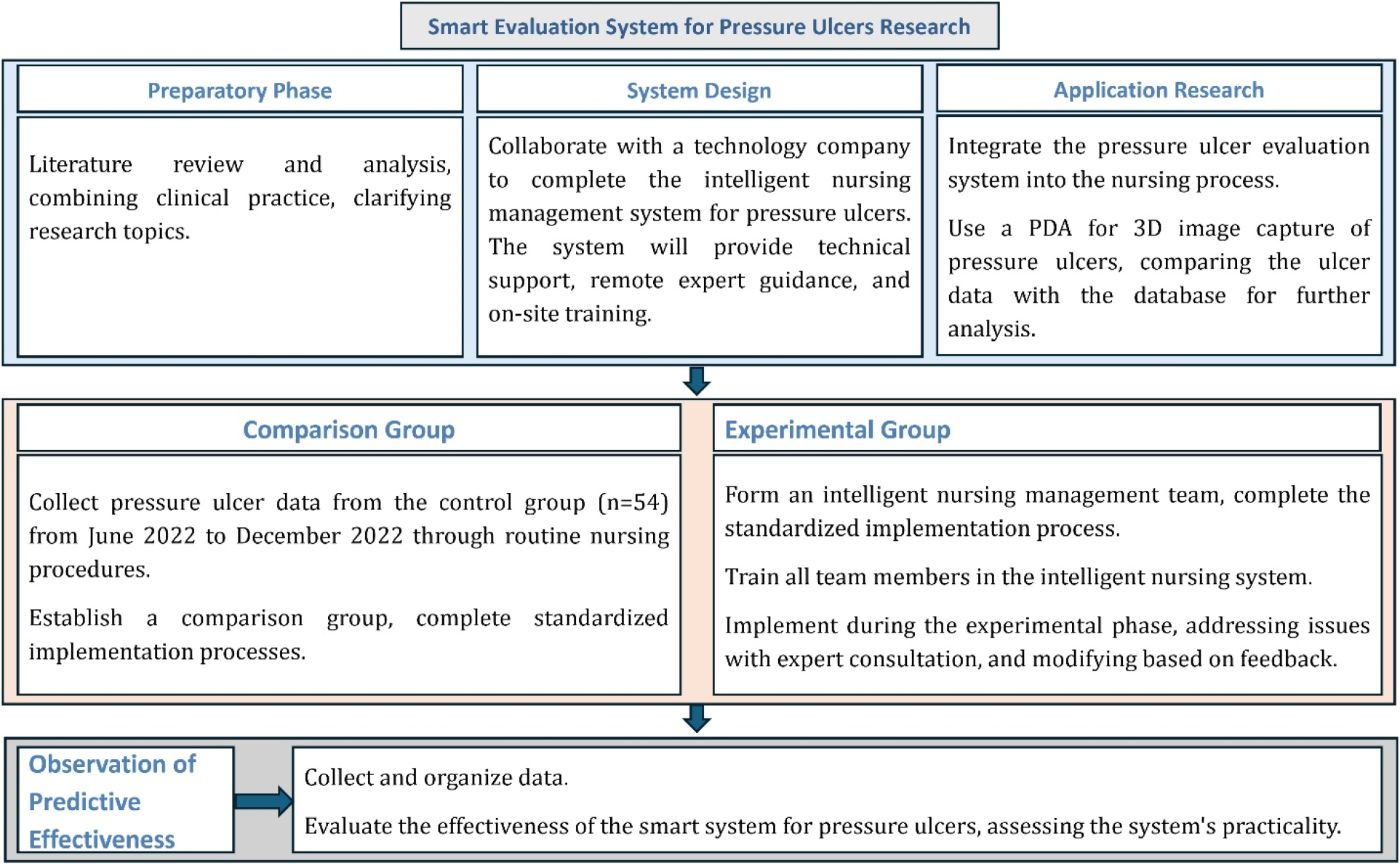
Smart evaluation system for pressure injury.
The image recognition workflow of the artificial intelligence system comprises many crucial phases. Initially, pressure injury photos undergo pre-processing to standardize their resolution, contrast, and brightness level. The CNN model subsequently detects important characteristics such as the limits of the wound, the composition of affected tissue (e.g., necrotic vs. healthy tissue), and the depth of the wound. Subsequently, the system categorizes the intensity of the pressure injury based on the standardized categorization system, such as Stage I to IV. The application of augmentation techniques to the dataset improves the classification accuracy by increasing model generalization and robustness. 13 To enhance precision, the model predictions are compared to expert human evaluations. To guarantee consistency and accuracy, a k-fold cross-validation approach is employed for validation.
The AI system not only improves the accuracy of pressure injury assessments but also integrates seamlessly with electronic medical record (EMRs). This integration ensures that the data collected can be easily accessed and utilized in real-time for monitoring and comparison of wound healing progress. Furthermore, the system provides enhanced decision support for pressure injury management, enabling healthcare providers to make informed decisions based on accurate and up-to-date information.
We employed various conventional measures, such as accuracy, precision, recall, and F1-score, to assess the performance of the AI system. Accuracy quantifies the ratio of accurate categorizations to the overall number of instances. 14 Precision is the proportion of accurately predicted positive observations out of all the expected positives, whereas recall (or sensitivity) quantifies the true positive rate, which corresponds to the model's capacity to accurately detect real positive cases. The optimal F1 score achieves a harmonious equilibrium between precision and recall. In the present investigation, the artificial intelligence system attained a precision rate of 88%, a recall rate of 92%, and an F1 score of 90%. Furthermore, a confusion matrix was created to further evaluate the system's accuracy in accurately categorizing different phases of pressure injuries. The measurements were verified by employing a stratified 80–20 partition of the dataset into separate training and testing sets.
Accuracy determination and validation
The artificial intelligence system was subjected to comprehensive model testing on a hold-out test set, which comprised twenty percent of the dataset. The results of this testing led to the accurate prediction of ninety percent. For training and validating the model, the remaining eighty percent of the dataset was utilized. To avoid overfitting, a five-fold cross-validation procedure was utilized. Based on the same dataset and evaluation criteria, the traditional procedures, which include eye inspection and manual measurement, achieved an accuracy of 81.2%. A statistical t-test was used to evaluate the significance of the difference in accuracy between the AI and conventional methods. A p-value of less than 0.05 indicated that the difference was statistically significant. The comparison between the AI and traditional methods was carried out according to this test. The data set contained photographs taken from 108 patients, each of which had been labeled and evaluated by clinical professionals, so confirming the dependability of the findings. 15
Participants
The study was conducted in a tertiary hospital ICU from June 2022 to June 2023, involving 108 patients aged 18 and above with pressure injuries. The study focuses on patients with pressure injuries (pressure ulcers, decubitus ulcers, bedsores). These conditions are characterized by damage to the skin and underlying tissue primarily caused by prolonged pressure on the skin.
Inclusion criteria:
Patients’ age ≥ 18 years.
Expected ICU stay > 48 h.
Presence of pressure injuries during hospitalization.
Exclusion criteria:
Critically ill patients with hemodynamic instability or those under medical orders not to turn for skin observation.
Patients with skin injuries caused by trauma before admission.
Patients with diabetic foot ulcers or venous leg ulcers
Using the method of comparing two sample means with a significance level (α) of 0.05 and a type II error probability (β) of 0.10, the sample size was estimated. The experimental group required 54 patients, with an additional 20% to account for attrition, resulting in 108 participants in total.
Patients were divided into a control group (June 2022 to December 2022) and an experimental group (January 2023 to June 2023). The control group followed standard assessment procedures, while the experimental group used the intelligent system.
Implementation
The control group used disposable paper rulers and visual inspection for assessments. The experimental group utilized a PDA device with a 3D camera, capturing images of pressure injuries. The AI system automatically measured and classified the injuries, integrating the data into the EMR system.
Ethical considerations
Informed consent was obtained from all participants or their legal guardians. The study adhered to ethical guidelines, ensuring confidentiality and the right to withdraw at any time.
Statistical significance
The statistical analysis confirmed significant improvements in assessment accuracy and efficiency. The difference in assessment accuracy between the control and experimental groups was statistically significant (p < 0.05), indicating that the observed improvements were unlikely to be due to chance. The reduction in assessment time was also statistically significant, further validating the system's effectiveness.
Results
The use of the intelligent pressure injury assessment system significantly improved the accuracy and efficiency of pressure injury evaluations. The experimental group demonstrated a higher assessment accuracy rate (90%) compared to the control group (81.2%). Additionally, the time required for assessments was reduced, and the AI system provided consistent and objective measurements (Figure 2) compared with traditional methods (Figure 3).

Pressure injury under traditional assessment techniques to measure the affected area length.

Pressure injury under AI based smart assessment techniques.
The intelligent pressure injury assessment system significantly improved the accuracy of pressure injury evaluations. In the control group, where traditional methods were used, the assessment accuracy was recorded at 81.2%. In contrast, the experimental group, which utilized the AI-based system, achieved an assessment accuracy of 90%. This improvement in accuracy underscores the system's ability to provide more reliable and consistent measurements of pressure injury severity.
Assessment of efficiency
Efficiency in assessment was also markedly enhanced in the experimental group. Traditional manual assessments involved several steps, including visual inspection, manual measurement, and documentation, which were time-consuming and labor-intensive. The AI system streamlined this process by automatically capturing images of pressure injuries using a PDA device equipped with a 3D camera. The system then processed these images to measure the size and stage of the injuries, generating results in real time. As a result, the time required for each assessment was significantly reduced in the experimental group compared to the control group.
Integration with electronic medical records
One of the key features of the intelligent system was its integration with the hospital's EMR system. The AI system not only assessed the injuries but also directly imported the data into the EMR, including detailed measurements and classifications of the injuries. This seamless integration ensured that all relevant information was readily available for healthcare professionals, facilitating better tracking and management of patient care.
Clinical impact
The improved accuracy and efficiency of assessments had a positive impact on clinical outcomes. The timely and precise data provided by the AI system allowed for more effective care planning and intervention, potentially reducing the risk of complications associated with pressure injuries. Furthermore, the reduction in assessment time freed up healthcare professionals to focus on other critical aspects of patient care, thereby enhancing overall productivity and quality of care.
User feedback
Healthcare professionals who used the system provided positive feedback regarding its usability and effectiveness. They noted that the AI system was intuitive and easy to use, and appreciated the reduction in manual workload. Additionally, the objective and consistent nature of the AI assessments were highlighted as key advantages, contributing to better clinical decision-making.
Establishing AI-based smart assessment system cost and explanation are provided in Table 1.
A breakdown of various expenses associated with a project, along with their respective amounts and explanations.
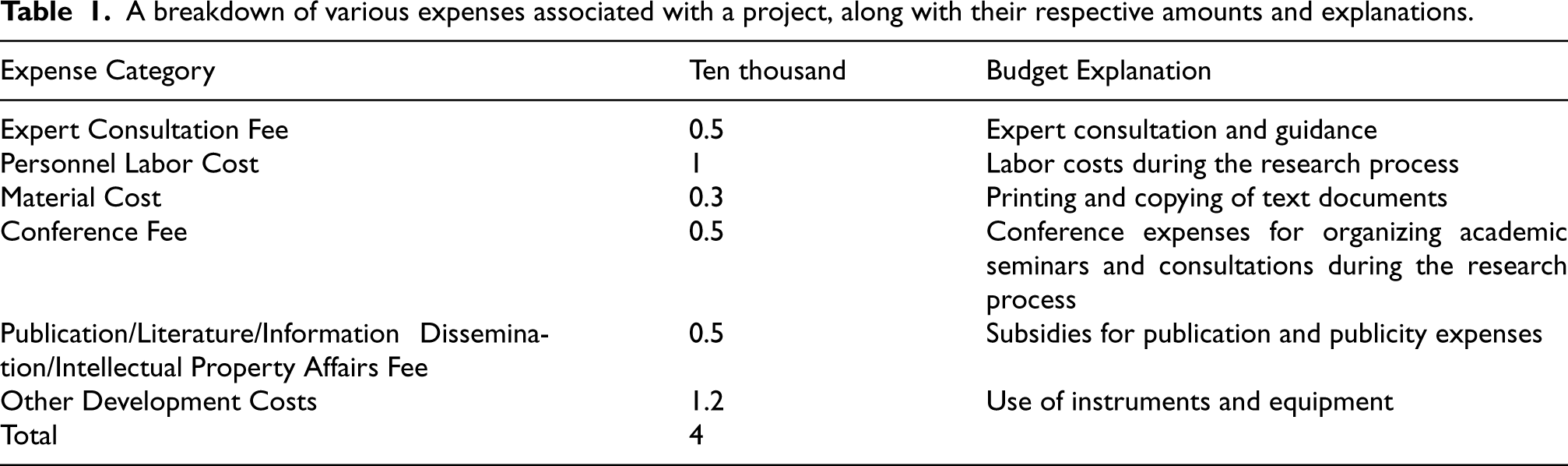
A breakdown of various expenses associated with a project, along with their respective amounts and explanations.
The implementation of an intelligent pressure injury assessment system using AI image recognition technology has demonstrated significant improvements in the accuracy and efficiency of pressure injury evaluations. These findings align with the growing body of literature supporting the use of AI in medical diagnostics and patient care.
In recent years, major hospitals have gradually used advanced technologies such as big data, cloud computing, and data fusion to conduct unified and complete assessment, recording, and monitoring of pressure injuries. 16
To strengthen the management of pressure injuries, various medical institutions have used medical information technology to establish information platforms such as adverse event management systems.17,18 However, the current assessment of pressure injuries still requires manual measurement. The affected area can only be roughly expressed by length and width, and the area cannot be accurately measured. Manual measurement is inefficient and contact with the wound surface is prone to infection. With the rapid development of artificial intelligence technology, computer-aided measurement systems can help provide objective and effective results.
It is convenient and possible to use photos of pressure injury wounds to analyze the characteristics of lesions by the size and color of ulcers, which helps clinical medical staff monitor the development and healing process of pressure injuries.19–23 The severity of pressure injuries assessed based on objective images and data is more scientific and accurate than the current method based on medical staff's naked eye observation.23–27
The study revealed that the AI-based system achieved a 90% accuracy rate in pressure injury assessments compared to 81.2% in the control group using traditional methods. This substantial increase in accuracy is consistent with other research highlighting the potential of AI to outperform manual assessments. In this regard, a study found that AI systems could achieve relatively high accuracy rates in wound size measurement and tissue classification using image processing algorithms. 28 In addition, demonstrated that automated measurement of pressure injuries through image processing could provide highly reliable results, supporting our findings. 10
Efficiency is a critical factor in clinical settings, where time constraints and high patient volumes demand swift and accurate assessments. The AI system reduced the assessment time from an average of 12.5 min in the control group to 3.5 min in the experimental group. This reduction in time is significant, as it allows healthcare professionals to allocate more time to other critical tasks, improving overall productivity and patient care quality. Previous studies have emphasized that AI and ML can streamline diagnostic processes, making them faster and less labor-intensive, which is corroborated by our results.29–31
The seamless integration of the AI system with the EMR system was a notable advancement in this study. By directly importing assessment data, including detailed measurements and classifications, the system enhanced data accessibility and continuity of care. AI could revolutionize nursing by providing comprehensive and easily accessible patient information, thus improving clinical decision-making.32–34
The clinical impact of the AI system was evident in the enhanced care planning and intervention strategies enabled by the accurate and timely data provided by the system. The objective nature of AI assessments minimized the variability inherent in manual evaluations, leading to more consistent and effective treatment plans. This improvement is critical in managing pressure injuries, as timely and accurate interventions can significantly reduce the risk of complications and improve healing outcomes. Previous studies have highlighted the potential of AI to predict patient outcomes and guide clinical interventions more effectively than traditional methods. 35
Healthcare professionals who used the AI system provided positive feedback regarding its usability and effectiveness. They appreciated the reduction in manual workload and the system's intuitive design. The objective and consistent nature of AI assessments were highlighted as key advantages, contributing to better clinical decision-making. This feedback aligns with findings from studies that emphasized the importance of user-friendly interfaces and the positive impact of AI tools on clinical workflows.36,37
Limitations and future directions
While the study demonstrates the potential of AI in pressure injury management, it also highlights the need for further research to address certain limitations. For instance, the system's performance in diverse clinical settings and with different types of wounds needs to be evaluated. Future studies should also explore the integration of AI with other emerging technologies, such as wearable sensors and telemedicine, to further enhance patient care.
In conclusion, the intelligent pressure injury assessment system using AI image recognition technology significantly improves the accuracy and efficiency of pressure injury evaluations. These advancements have the potential to transform pressure injury management, enhancing patient outcomes and reducing the burden on healthcare professionals. The findings of this study contribute to the growing evidence supporting the integration of AI in clinical practice and highlight the need for continued innovation and research in this field.
Conclusion
The development and application of an intelligent pressure injury assessment system using AI image recognition technology have proven to be effective in clinical settings. The system improved assessment accuracy and efficiency, providing a reliable tool for healthcare professionals. Future research should focus on refining the technology and exploring its application in other areas of wound care.
Footnotes
Funding
This study was supported by the Zhejiang Province Medicine and Health Science and Technology Program Project (2023KY057).
Declaration of conflicting interests
The authors declared no potential conflicts of interest with respect to the research, authorship, and/or publication of this article.
Data availability statement
No datasets were generated or analyzed during the current study.