



Abstract
Background
Predicting the course of Parkinson's disease is essential for prompt diagnosis and treatment, which may enhance patient outcomes.
Objective
This study presents a novel method for Parkinson's disease prediction using freely accessible resources. The suggested approach starts with band-pass filter data preprocessing and uses Empirical Mode Decomposition (EMD) for feature extraction. Then, for classification, these features are supplied into an Attention-based Efficient Bidirectional Network (ImCfO_Attn_EffBNet) based on Improved Crayfish Optimization. EfficientNet-B7, BiLSTM, and Attention modules are integrated by ImCfO_Attn_EffBNet to effectively gather temporal and geographic data.
Methods
Additionally, we use the Improved Crayfish Optimization (ImCfO) algorithm to maximize convergence rates, optimize the loss function, and find the global best solutions.
Results
ImCfO enhances performance by adding a self-adaptation criterion to the traditional crayfish algorithm. The classifier's configurable parameters are adjusted using the ImCfO resultant solution, which raises the prediction accuracy overall.
Conclusion
Based on a number of assessments, the ImCfO_Attn_EffBNet analyzed the performance and found that the results were as follows: accuracy (95.068%), recall (92.948%), specificity (92.89%), F-Score (92.89%), precision (92.89%), and FPR (2.1%), in that order.
Keywords
Introduction
A neurological disorder that affects the central nervous system is Parkinson's disease (PD), is growing more common among the ageing population. In Europe, it impacts 1.2 million individuals, and experts estimate that number will have doubled by 2030. 1 A precise diagnosis is essential for bettering PD therapy and follow-up, as well as for differentiating the condition from other neurological disorders and healthy individuals. 2 The gold standard for diagnosing PD and tracking symptoms is still clinical examination, despite the fact that a number of criteria and suggestions have been proposed to aid in the process.3,4 The accuracy range for clinical evaluation, which takes into account several subjective aspects, is 75% to 82%. The diagnosis of Parkinson's disease depends on the presence of resting tremor, stiffness, and bradykinesia. 5 Consequently, PD presents with a gradual development of symptoms, and by the time it is identified, brain damage has advanced considerably. 6 In this context, clinical features that predate motor symptoms may be useful. Apart from coexisting with, but often preceding, the onset of motor characteristics, non-motor indicators such as depressive symptoms, visual impairment, cognitive decline, sleep disorders, olfactory dysfunction, orautonomic symptoms are increasingly recognised. 7 An increasing number of people are interested in utilising this range of premotor symptoms to identify illness.
It might be challenging to determine the clinical diagnosis of illness by considering the symptoms. Clinicians have utilised many neuroimaging measuring approaches to diagnose PD.8,9 Magnetic resonance imaging or Computed tomography types are the bases for some of these procedures, while physiological signals like electromyography and EEG are the basis for others. 10 With a high temporal resolution and no invasiveness, electroencephalography (EEG) captures the electrical activity of the brain's pyramidal neurons to provide an inferred understanding of their function. It is a widely accessible, low-cost approach that has been extensively utilised to research epileptic diseases. 11 Although information processing techniques enable the extraction of several properties that might be useful for characterising neurological illnesses, visual EEG analysis remains challenging.12,13 Dynamic information on electrical brain activity and connections may be obtained from EEG data because of its high temporal resolution. 14 EEG has therefore been monitored in a variety of physiological settings, including basic wakefulness, sleep, particular sensitive input, cognitive processes, and, lastly, resting state. Different networks should engage under each of these circumstances, and in the resting state, spontaneous connection should occur. 15 Two key features characterise the EEG data and complicate any further analysis in addition to the widely recognised inter- and intra-subject variability. Machine learning techniques may be used to assess the EEG signals and overcome these challenges since they are powerful methods that enable dealing with raw EEG data and conducting non-linear investigations. 16
The development of automated diagnostic systems mostly uses machine learning techniques on EEG data. Non-stationary EEG waves can be challenging to evaluate due to their intricate nature. Applying features derived from different nonlinear feature extraction techniques makes it simple to classify PD -healthy control (HC) groups in order to facilitate these studies.
17
Furthermore, by breaking down EEG signals into smaller bands using a variety of techniques, comprehensive data may be acquired at distinct frequencies. This approach can lead to success in research using machine learning for the automated identification of neurological diseases.
18
These investigations enable physicians to make decisions in a more methodical manner. The signal processing techniques used aids in the automated identification of PD through deep learning.
19
However, a number of issues still impact how well ML-based algorithms can predict.
20
Therefore, this research introduces an optimised deep learning model to address the problem. The major contributions of the research are:
The existing methods concerning the PD classification is reviewed in this section. A technique for classifying PD in patients using deep learning methods was designed by
21
based on ensemble of Convolutional Neural Networks (CNNs), specifically ResNet models, for analyzing spiral and wave form data. In this, Pre-trained ResNet models are fine-tuned on the PD data to leverage existing knowledge from larger datasets. The model's performance was evaluated, with a reported accuracy of 96.67% using the ResNet50 model for spiral waveform. The study likely involves a limited dataset, raising concerns about generalizability, which was a challenging aspect of the model.
In order to increase the precision of diagnosing Parkinson's illness, 22 created an optimized deep learning model. Relevant information such as kinematic features from hand motions or acoustic features from voice recordings, were retrieved in this case once the pre-processing procedures were completed. The Quantum Mayfly Optimization (QMO) method was then used to choose the best attributes. For the purpose of classifying diseases, a deep learning model was created especially for examining data with spatial patterns. In this instance, the classifier used was a recurrent neural network, which is beneficial for analyzing speech or voice patterns since it can detect temporal relationships in data. In this, QMO-based feature selection helps reduce the data dimensionality, potentially improving model training efficiency. Still, the time complexity of the model was higher that limits the applicability of the designed model in real world applicability.
Electroencephalography (EEG) data were used by 23 to create a machine learning model for the early and automated identification of PD. Here, EEG waves were broken down into smaller bands using a signal processing method called Kalman filtering, which may have the ability to uncover hidden patterns linked to PD. Relevant traits were retrieved from the decomposed sub-bands that might help distinguish between individuals with Parkinson's disease and those in good health. Statistically significant features were found using the Chi-squared test, which may have reduced data complexity and enhanced model performance.
A hybrid model based on XGBoost with Random Forest was designed by 24 for disease prediction and classification. The imbalance of data was solved through the data sampling approach for the reduction of biased outcome. The designed approach could potentially provide a tool to aid healthcare professionals in early and more accurate identification. In this, the use of a relatively small, publicly available dataset raises concerns about generalizability to real-world populations. Training XGBoost models on large-scale datasets or with complex parameter configurations requires significant computational resources and time, which was considered as limitation in resource-constrained environments or when dealing with real-time applications.
For the purpose of early PD diagnosis, 25 created an advanced deep learning model. The study introduces a novel method using affine transformation to improve the alignment of MRI scans, which ensures images were in the same orientation, crucial for accurate analysis by deep learning models. A deep learning architecture specifically designed for image segmentation was used to identify and isolate potentially Parkinson's disease-affected brain regions within the MRI scans. Finally, using the DenseNet Model disease classification was devised. Here, it analyzes the segmented brain regions from the U-Net model to differentiate between PD and non- PD cases. In this, improved image alignment reduces artifacts and improves the effectiveness of deep learning models. Higher computational complexity of the model was considered as the challenging aspect.
PD prediction holds immense importance for early diagnosis and intervention, crucial in managing the condition effectively. Its application domains span various fields, including healthcare, where accurate prediction aids in timely treatment planning and monitoring of disease progression. Existing methods for PD prediction encompass diverse approaches, such as deep learning models, optimized deep learning models employing Quantum Mayfly Optimization (QMO) for feature selection, machine learning models utilizing Electroencephalography (EEG) signals with techniques like Kalman filtering and algorithms like Support Vector Machine (SVM), and hybrid models combining XGBoost with Random Forest for classification. Challenges faced by these methods include limited dataset sizes affecting generalizability, high time complexity hindering real-world applicability, data imbalance issues, and concerns regarding model scalability and computational resources.
The proposed novel Improved Attention based Efficient Bidirectional Network (Attn_EffBNet) model with Improved Crayfish Optimization Algorithm (ImCfO) based loss function optimization addresses several challenges encountered in existing methods for PD prediction. Firstly, by incorporating attention mechanisms and bidirectional network architecture, the model effectively captures and prioritizes relevant features while considering temporal dependencies within the data, thus enhancing its ability to generalize across different patient populations. Additionally, the utilization of ImCfO for loss function optimization enables efficient navigation of high-dimensional parameter spaces, overcoming the curse of dimensionality prevalent in PD classification tasks. Moreover, the model's optimization approach enhances training efficiency and effectiveness. Furthermore, the Attn_EffBNet model's capability to accurately analyze and classify data, coupled with its efficient computational architecture, ensures improved diagnostic accuracy and practical applicability in clinical settings for early and accurate PD diagnosis.
Methods
Clearly defining inclusion and exclusion criteria is essential when creating a study on PD prediction using ImCfO_Attn_EffBNet. These standards guarantee both the reliability and generalizability of the results as well as the well-definedness of the study population. The age range, disease stage, diagnosis status, data accessibility, and consent are the inclusion criteria. Comorbid conditions, medication, data quality, non-compliance, and additional considerations, such as patients with a history of substance addiction and brain surgery, are the exclusion criteria. The proposed Parkinson Disease Prediction acquires the data for processing the input from publically available database and then pre-processed using the band-pass filter. Then, the essential features are acquired through empirical mode decomposition (EMD) technique, which is fed into the proposed Improved Crayfish Optimization based Attention based Efficient Bidirectional Network (ImCfO_Attn_EffBNet) technique. In this, Attn_EffBNet is designed by integrating EfficientNet-B7, BiLSTM and Attention modules are integrated for enhancing the classification accuracy through capturing spatial and temporal features. Furthermore, the ImCfO method is utilized for the optimization of the loss function. In order to improve the global best solution and convergence rate, the self-adaption criteria is integrated with the traditional crayfish method to create the suggested ImCfO algorithm. Figure 1 illustrates the suggested method's process.

Workflow of proposed Parkinson disease prediction.
The EEG data was gathered from the publicly accessible Kaggle Database, 26 which contains the EEG signals of 31 patients with PD as well as normal people.
Pre-processing using band-pass filter
The essential features from the EEG signals are removed through pre-processing technique based on filtering process. When a signal is processed through a band-pass filter, frequencies outside of the pass-band are attenuated and only a specific range of frequencies, called the pass-band, are allowed to pass through. While considering the EEG signal processing, a band-pass filter is used to isolate specific frequency bands of interest, such as delta, theta, alpha, beta, or gamma waves.EEG signals are composed of various frequency components that represent different brain activities. Filtering involves separating these frequency components into distinct bands to extract relevant information.
Thus, the filtered delta, theta, alpha, beta, and gamma features are fed into the feature extraction module for deriving the essential attributes.
Feature extraction
Empirical Mode Decomposition (EMD) is a signal processing technique used for feature extraction from EEG signals, particularly in the context of PD classification. EMD decomposes a signal Mean ( Standard Deviation ( Skewness ( Kurtosis (
Using the extracted features, the Parkinson disease prediction is employed using the ImCfO_Attn_EffBNet technique.


The Parkinson Disease classification is employed using the novel Improved Attention based Efficient Bidirectional Network (Attn_EffBNet) model. In the Attn_EffBNet, the EfficientNet-B7, BiLSTM and Attention modules are integrated for enhancing the classification accuracy through capturing spatial and temporal features. Besides, the adjustable parameters of the classifier are fine-tuned using the proposed ImCfO algorithm.
Design of Attn_EffBNet
Well-known for its ability to extract spatial information from input data, EfficientNet is potent convolutional neural network (CNN) architecture. By taking into account the EEG data, EfficientNet is utilized to extract pertinent spatial features from the signal representations, identifying significant patterns and structures from the data. For capturing temporal relationships in sequential data, bidirectional long short-term memory (BiLSTM) networks are an effective alternative. Considering the intrinsic temporal nature of EEG data, activity patterns throughout time might yield vital information for the categorization of various diseases. BiLSTM layers enable the model to concurrently learn from past and future contexts by efficiently capturing both forward and backward temporal relationships in the EEG data. Additionally, the attention processes allow the model to ignore noisy or irrelevant information and concentrate on pertinent portions of the input data. Attention processes can dynamically weight the value of various temporal and spatial variables retrieved by EfficientNet and BiLSTM while analyzing the EEG data for the categorization of PD. By focusing on prominent aspects in the EEG signals that are most instructive for precise classification, this attention mechanism helps the model improve its discriminative capacity. Therefore, BiLSTM and Attention modules are incorporated for improved classification accuracy in the proposed EfficientNet-B7 Parkinson disease classification model. Figure 2 shows the structure of the Attn_EffBNet Parkinson Disease classification model.
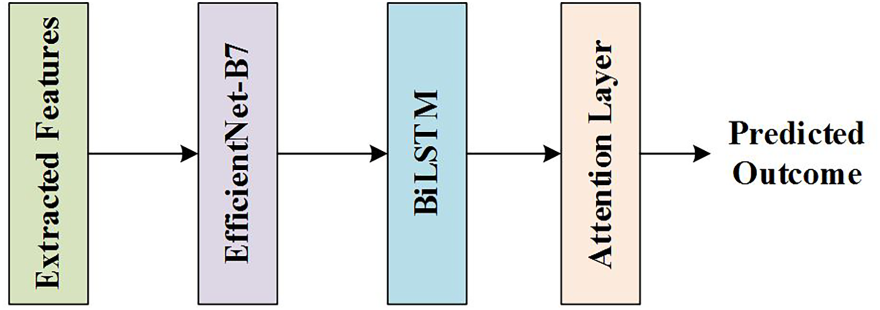
Structure of Attn_EffBNet.

Structure of EfficientNet.
EfficientNet utilizes three various parameters like resolution, width and height with the compound scaling factor for providing the enhanced efficiency with minimal parameters.


These architectural aspects are critical in defining the model's capacity to effectively extract pertinent features from EEG data for PD classification using EfficientNet. EfficientNet can efficiently capture spatial patterns and temporal dynamics in EEG signals by carefully balancing depth, breadth, and resolution using compound scaling. This results in accurate classification outcomes while minimizing processing overhead.

Structure of LSTM.
Several Bidirectional LSTM layers make up the central component of the BiLSTM architecture. A BiLSTM layer consists of two LSTM sub-layers, one for forward processing of the input sequence and another for backward processing. Due to its bidirectional processing, the network may concurrently collect temporal dependencies from contexts in the past and the future. Within each LSTM sub-layer, LSTM cells process the sequential input data. An LSTM cell consists of several components like input, forget, cell state and output gate.



The ImCfO algorithm is designed for fine-tuning the parameters of the classifier for enhancing the classification accuracy of Parkinson disease. In order to improve the global best solution and convergence rate, the self-adaption criteria is integrated with the traditional crayfish method to create the suggested ImCfO algorithm. The ImCfO algorithm's solution, which is thus achieved, is used to alter the classifier's configurable parameters.


The behavior of the search agent varies based on the temperature of the surrounding and hence the definition of the temperature is expressed as:


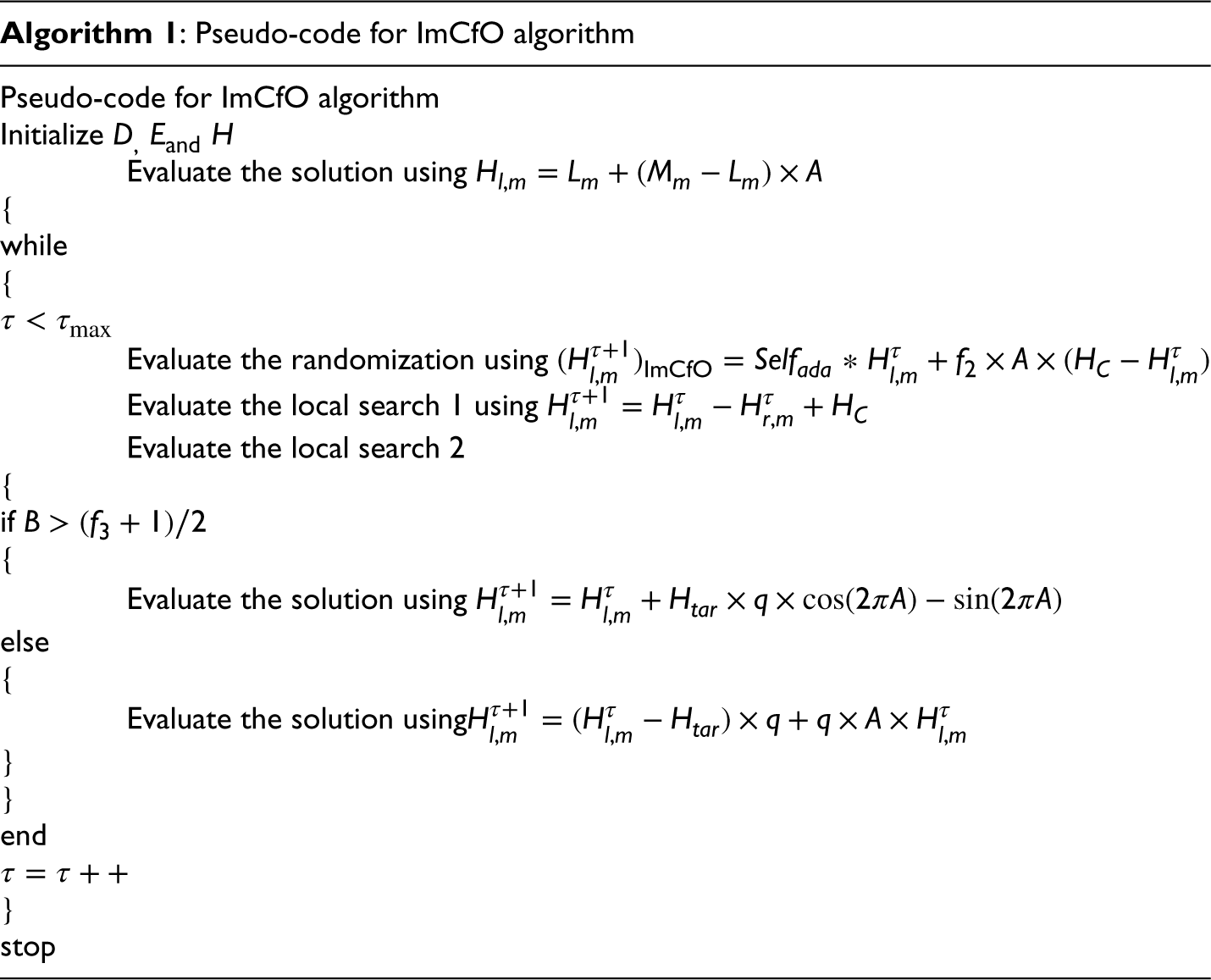
Consequently, the ImCfO algorithm's answer is used to modify the classifier's ideal parameters. The local optimum trapping problem is resolved and the global best solution is given by the algorithm with expanded exploration. Thus, the ImCfO algorithm improves the prediction accuracy of Parkinson disease.
The proposed ImCfO_ Attn_EffBNet is implemented in PYTHON programming language and is evaluated using Parkinson EEG dataset. 26 To demonstrate the superiority of the suggested approach, the ImCfO_ Attn_EffBNet method is compared with other existing methods such as CNN, QMO_DL, and DenseNet.
Comparative analysis
The proposed ImCfO_ Attn_EffBNet is assessed using accuracy, recall, specificity, F-Score, FPR, and precision. In this, the analysis is devised based on training percentage and K-Fold data.
Training data
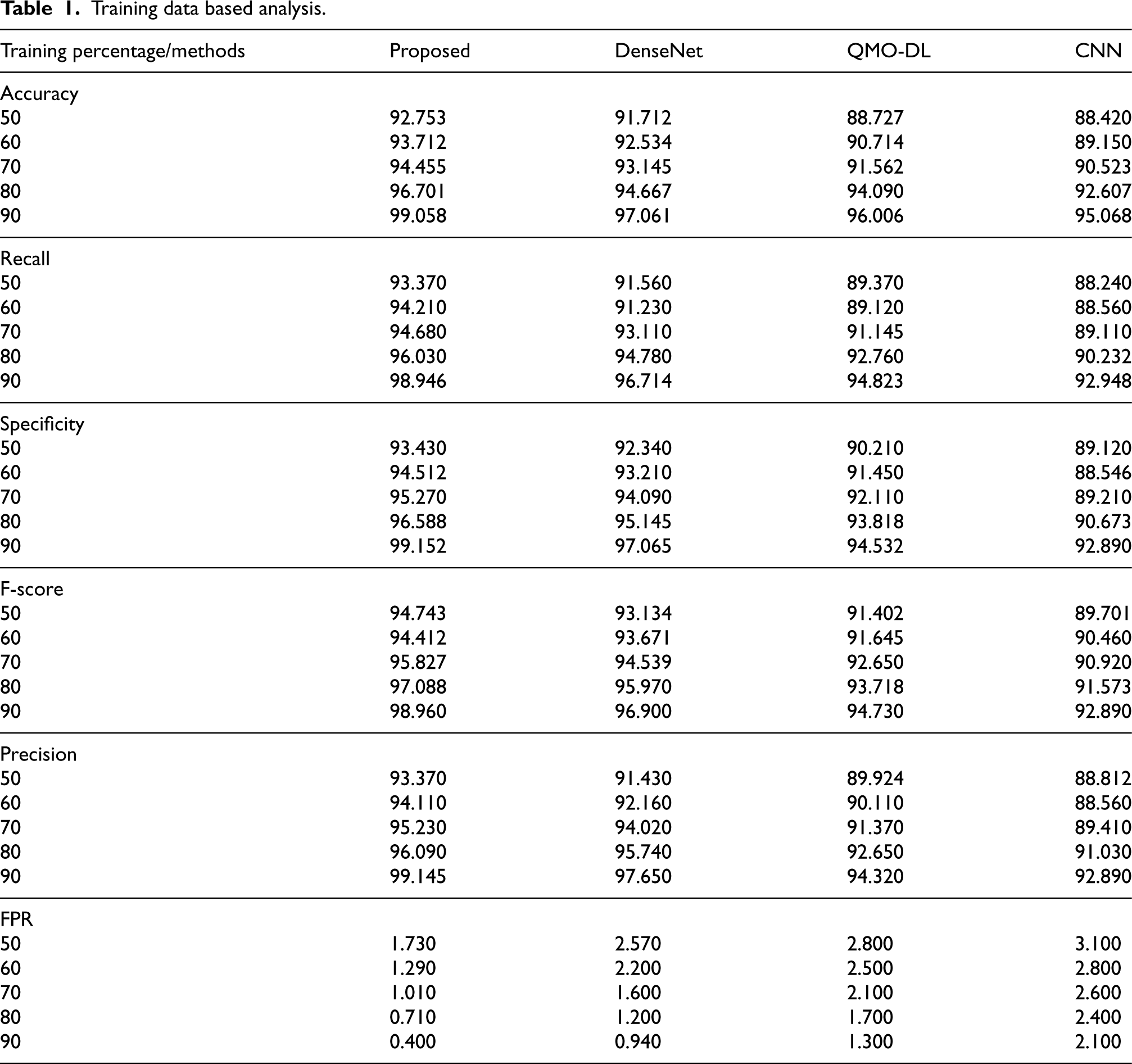
Various training data amount based analysis of ImCfO_ Attn_EffBNet refers to the investigation of how the size of the training dataset affects the performance of predictive models. The analysis is portrayed in Figure 5 and its detailed outcome is presented in Table 1. For example, by training models using only 50% of the available data and evaluate their performance on a separate 50% test dataset. They then repeat the process with larger training datasets like 60%, 70%, 80%, and 90% of the data to observe how the model performance changes with increasing amounts of training data. The examination showed a better result with more training data, indicating that the ImCfO algorithm of Attn_EffBNet's loss function optimization improves the prediction accuracy by providing more generalization capacity.

Training data based analysis (a) accuracy, (b) recall, (c) specificity, (d) F-score, (e) FPR and (f) precision.
Training data based analysis.
Analysis of PD prediction using different K-fold values, such as 2, 4, 6, 8, and 10, focuses on how the number of folds in K-fold cross-validation influences the predictive models’ performance assessment. A popular resampling method in machine learning for evaluating the effectiveness of prediction models is K-fold cross-validation. Figure 6 depicts the K-Fold based examination, and Table 2 provides the entire findings. The dataset is split into K subsets, or folds, of about similar size for K-fold cross-validation. K-1 folds are used for training each time the model is trained, and the leftover fold is used for testing. Each fold is used as a testing set once, and this procedure is repeated K times. Smaller training and validation sets may arise from using a greater value of K, such as K = 10, which can provide a reliable assessment of the model's generalization performance.

K-Fold data based analysis (a) accuracy, (b) recall, (c) specificity, (d) F-score, (e) FPR and (f) precision.
K-Fold data based analysis.

A prediction model's capacity to distinguish between those with PD and those without is evaluated using ROC analysis. Plotting the real positive rate versus the false positive rate across various threshold values used to categorize people as positive (having Parkinson's disease) or negative (not having Parkinson's disease) is estimated by ROC. The ROC analysis is illustrated in Figure 7.

ROC analysis.
When predicting PD, accuracy-loss analysis refers to analyzing the correlation between the predictive models’ accuracy and the loss function applied during model training. In Figure 8, the accuracy-loss analysis is shown.

Accuracy-loss analysis.
Assessing how quickly the optimization algorithm progresses towards the optimal solution. A faster rate of convergence indicates efficient optimization, while slower convergence may suggest potential issues such as suboptimal parameter settings or convergence to local minima. Proposed ImCfO algorithm converges faster compared to the traditional Crayfish optimization (CFO) algorithm, which is portrayed in Figure 9.

Convergence analysis.
The best performance evaluated by the ImCfO_Attn_EffBNet based on various assessment are accuracy (95.068%), Recall (92.948%), Specificity (92.89%), F-Score (92.89%), Precision (92.89%), and FPR (2.1%). Here, the combination of Efficientnet-B7 and Bidirectional LSTM networks in the Attn_EffBNet model allows for highly efficient feature extraction from the input data. Sequential data can have temporal relationships captured by Bidirectional LSTM, and Efficientnet-B7 is renowned for its adeptness in extracting hierarchical features from input. This makes it possible for the model to extract temporal and geographical information from the input data, which is essential for precise PD prediction. The use of the Improved Crayfish Optimization Algorithm to optimize the loss function of the Attn_EffBNet model is another significant advantage. This optimization technique helps the model converge to better solutions faster, resulting in improved performance and efficiency during training. By effectively optimizing the loss function, the model can better learn from the training data and generalize to unseen data, leading to enhanced prediction accuracy for PD.
Thus, in the comparative discussion, various metrics depicts the superior performance of the Attn_EffBNet model with the Improved Crayfish Optimization Algorithm in predicting PD. High values for accuracy, recall, specificity, F-Score, and precision indicate a strong predictive model with good performance in identifying both positive and negative instances of PD. Conversely, a low False Positive Rate indicates that the model is effectively minimizing the misclassification of negative instances as positive. Thus, the overall effectiveness of the proposed predictive model based on the assessment measures depicts its potential utility in clinical practice for PD diagnosis and prediction.
During this investigation, the author encountered the following restrictions. The constraints encountered will guide the course of future study.
PD datasets frequently have class imbalance, which might skew the model because there are substantially fewer PD patients than healthy people.
When it comes to feature extraction and data preparation, integrating data from several sources (such as voice recordings, MRI scans, and healthcare records) presents substantial problems.
Deep learning models frequently function as “black boxes,” making it challenging to interpret the outcomes and comprehend the underlying decision-making process. This is especially true of hybrid approaches.
When using the model in actual clinical settings, healthcare experts may oppose its use and seek substantial validation.
Conclusion
In this research, we introduced a comprehensive framework for PD prediction that leverages advanced machine learning techniques and optimization algorithms. Through experimentation, we demonstrated the effectiveness of our proposed method in accurately predicting PD from publicly available datasets. By integrating Empirical Mode Decomposition for feature extraction and ImCfO_Attn_EffBNet for classification, we achieved notable improvements in prediction accuracy compared to existing approaches. The incorporation of the ImCfO algorithm further enhanced convergence rates and global solution quality. The performance evaluated by the ImCfO_Attn_EffBNet based on various assessments acquired the outcome of accuracy (95.068%), Recall (92.948%), Specificity (92.89%), F-Score (92.89%), Precision (92.89%), and FPR (2.1%) respectively. The findings highlight the potential of combining state-of-the-art machine learning models with innovative optimization techniques for advancing disease prediction and healthcare applications. Further research could explore the application of our approach in clinical settings and investigate its potential for early detection and personalized treatment of PD.
Footnotes
Acknowledgments
The authors would like to thank the managements of their respective institutions for their continuous support and encouragement throughout this research.
Ethics approval statement
Not Applicable.
Funding
The authors received no financial support for the research, authorship, and/or publication of this article.
Declaration of conflicting interests
The authors declared no potential conflicts of interest with respect to the research, authorship, and/or publication of this article.
Permission to reproduce material from other sources
Not Applicable.
Data availability statement
Data will be made available upon reasonable request.