



Abstract
This article analyses the role of collective agreements in institutionalising and legitimising the undervaluation of work conducted by women. The undervaluation of women’s work has been identified as one of the main causes of the gender pay gap. Despite this, it continues to escape many of the policy measures on gender pay equity that focus on establishing wage discrimination. The Finnish local government sector provides an interesting case for research on undervaluation, as it has several collective agreements and several wage determination systems for different employee groups. However, a local authority is a single employer, and is obliged by law to treat all employees equally. Although the processes of wage determination vary across different national contexts, institutionalised undervaluation is very likely among highly feminised jobs and occupations worldwide. This article sees wages as social practices that reflect and are shaped by institutional, societal and historical contexts.
Keywords
Introduction
Undervaluation of women’s work has been identified as a significant threat to gender pay equity (e.g. Austen et al., 2013; Grimshaw and Rubery, 2007). This article aims to contribute to the understanding and conceptualisation of certain aspects of and dynamics behind undervaluation, namely the embeddedness of cultural gendered valuations in formal wage determination processes. Grimshaw and Rubery (2007) define the undervaluation of women’s work as: (a) being paid less than men for equally demanding jobs and (b) being employed in jobs and industries that are undervalued. The first definition is familiar from scholarship on comparable worth (e.g. Acker, 1989), as well as from policy measures on gender pay equity (e.g. International Labour Organization (ILO), 1951). The second form of undervaluation escapes much of the established equal pay policy, which focuses on comparisons between the wages and job demands of men and women. Undervaluation, however, is likely to occur in jobs and industries that are highly feminised (see Austen et al., 2013).
This article offers novel insights into the relationship between gender pay equity and collective bargaining by analysing the undervaluation of women’s work that has become embedded in the formal procedures of wage determination. The Finnish local government sector is a particularly relevant sector to this issue for several reasons: it is a large employer in Finland, especially of women; it has a highly segregated labour force; and it has five major collective agreements with different pay systems for different employee groups. Despite these collective agreements, however, a local authority is a single employer and therefore legally obliged (Act on Equality between Women and Men, 1986/609, 232/2005, 1329/2014) to treat all its employees equally in terms of employment, including wages paid. The data used in this article were collected in a participatory action research project, Gender equality into pay systems (Ikävalko et al., 2011), in which 18 Finnish organisations, including the two local authorities analysed in this article, participated. The aim of the project was to promote equal pay through improving pay systems.
This article seeks to make three contributions. First, building on earlier research, the authors introduce the concept of institutionalised undervaluation. Second, the article provides a methodological example of how to study the challenging issue of the institutionalised undervaluation of women’s work, by analysing both the collective agreement documents and the wage data of the case organisations from the Finnish local government sector. Third, based on the results, the authors argue that the question of institutionalised undervaluation escapes current equal pay policy, which focuses on comparing the wages of men and women within job titles and pre-determined pay grades.
The research questions are:
RQ1) What are the main characteristics of wage determination systems in the Finnish local government sector, and how are they likely to impact on gender pay equity in the sector?
RQ2) How is the undervaluation of women’s work embedded in the collective agreements of the local government sector?
RQ3) To what extent do collective agreements explain the differences in pay in the case organisations when controlling for human capital variables?
The undervaluation of women’s work
Building on earlier scholarship, this article introduces the concept of institutionalised undervaluation. Institutionalised undervaluation refers to how the undervaluation of women’s work is embedded in the formal structure of wage determination, such as collective agreements. Institutionalised undervaluation originates from the gendered understandings of appropriate wages for work conducted by men and women (e.g. Figart et al., 2002). However, it has become a part of the formal structure, the gendered nature of which often remains invisible and unrecognised.
While mainstream economics conceptualise the gender pay gap as resulting from differences between the human capital of men and women (Mincer, 1958), and as reflecting market factors, not all studies agree with this. Grimshaw and Rubery (2007) view wages as serving multiple roles and functions. According to them, wages reflect compromises between competing pressures, and are shaped by institutional, social and economic contexts (see also Austen et al., 2013). Similarly, Figart et al. (2002) claim that wages can be viewed from three perspectives: wages as a price, wages as a living and wages as a social practice. When conceptualising wages as a social practice, they are understood as being based on the societal understanding of an appropriate wage level for certain jobs and certain employee groups. The understanding of appropriate wage levels for men and women is deeply rooted in societal value systems.
The value of work and occupational status is socially constructed (e.g. Hampson and Junor, 2015). The association between the gender of the typical worker and the work conducted has often led to women’s work being undervalued. The roots of this undervaluation are likely to lie in the way that reproductive work has historically been work conducted by women in the private sphere without pay, and this has affected feminised jobs. Grimshaw and Rubery (2007) argue that not only is undervaluation a legacy from earlier contexts, it is an ongoing process that is shaped by the actions of employers, governments, trade unions and other social actors.
Pay systems and gender pay equity
Prior to the comparable worth movement, the gender pay gap was regarded as a combination of women’s lack of human capital and labour market discrimination. The comparable worth movement drew attention to the idea that wage determination processes might be distorted, and reflect a greater valuation of male skills and characteristics (e.g. Acker, 1989; England, 1992; Steinberg, 1990). Several kinds of processes and practices mutually reinforce gender inequality in wage determination (e.g. Koskinen Sandberg, 2017). This article links these mutually reinforcing practices that produce and reproduce gender inequality in wage determination to broader questions of collective bargaining. In countries with centralised wage negotiations, such as Finland, collective agreements include both wage levels and wage determination processes such as pay systems.
Evaluation-based pay systems are central in both international (e.g. ILO, 1951) and Finnish equal pay policy (e.g. Ministry of Social Affairs and Health, 2007), and policymakers assume that these systems promote equal pay. This assumption is based on the earlier link (e.g. Acker, 1989; England, 1992) between job evaluation and attempts to implement comparable worth. Evaluation-based pay systems were indeed implemented in Finland throughout the 1990s and 2000s, and today the coverage of such systems in Finnish organisations is very high. Even though they are assumed to promote equal pay, these pay systems were not implemented with equal pay as their primary objective. When equal pay is not the objective, it is unlikely to be the result (e.g. Figart et al., 2002; Koskinen Sandberg, 2017). Nonetheless, the evaluation of the Finnish Equal Pay Programme states that the entire local government sector is covered by ‘new pay systems’, that wages there are based on job demands and individual performance, and that they are gender-equal (Lonka, 2015). However, as this article will clarify, this is not the case.
Collective agreements and gender pay equity
Centralised and regulated industrial relation systems have been associated with positive equal pay outcomes (e.g. Colling and Dickens, 1998; Mandel and Semyonov, 2005). Collective agreements have traditionally been viewed as gender neutral, but more careful examination reveals that they are indeed gendered and can influence the working conditions of men and women in different ways. In this article, the complex Finnish collective agreement system is considered a gendered structure that has both positive effects, such as raising wage floors, and negative effects, such as maintaining the gendered hierarchy between male-dominated and female-dominated jobs and occupations, and legitimating gender-based wage disparities.
In Finland, collective bargaining is extensive, and industry-wide collective agreements are also binding for non-organised employers. A great majority of Finnish employees are covered by collective agreements. The bargaining system is centralised, and a national framework, typically negotiated by the central employee and employer organisations, is used as the basis for industry-level collective agreements (e.g. Kauppinen, 2005). Some previous studies indicate that these different collective agreements contribute to the gender pay gap in the local government sector (Ministry of Social Affairs and Health, 2008), but this topic is very seldom studied.
Suoranta (2009) argues that the gendered hierarchy is a central feature of the Finnish labour market and that trade unions have protected male privilege at the expense of female labour. Female labour was, and still is, flexible and less costly than male labour (see also Walby, 1986, 1990). In the past, demands have been made to raise women’s wages in jobs that are considered underpaid and undervalued. The best example of this is the Union of Health and Social Care Professionals’ threat of group resignation in 2007, which originated from a conflict in the collective bargaining between local government employers and the above-mentioned trade union about wage increases for registered nurses, a highly feminised occupation in Finland and elsewhere.
The Finnish context
The key characteristics of the Finnish labour market are the unusually strong horizontal segregation of the labour market, combined with poorer appreciation and valuing of jobs and fields that are female-dominated (e.g. Ministry of Social Affairs and Health, 2008; Suoranta, 2009). Finnish men and women work in different jobs and industries – men often in the private sector, in industries such as manufacturing and construction, and women often in the public sector, in industries such as health care, social services and education (Official Statistics of Finland, 2015). The average income of Finnish women is 83 per cent of that of Finnish men (Official Statistics of Finland, 2014). The gender pay gap has been very persistent and has shown no significant signs of narrowing.
Walby (1990) describes two patriarchal strategies in women’s employment: exclusion and segregation. Exclusion prevents women’s access to areas of work or paid employment altogether, while segregation is a weaker strategy that aims to separate women’s work from men’s work and build a hierarchy between them (see also Pfau-Effinger, 1993). The Finnish highly gender-segregated labour market is a textbook example of the segregation strategy. Women are in paid employment but segregated into their own areas, which are less valued and lower paid. Thus, the labour market is divided into the primary male-dominated labour market in the private sector and the secondary female-dominated labour market in the public sector.
The right to equal pay is based on several international agreements and conventions (e.g. ILO, 1951; European Commission, 2006) as well as on national legislation (Act on Equality between Women and Men, 1986/609, 232/2005, 1329/2014). Until the 1960s, it was widely accepted common practice to pay women significantly lower wages than men, even for the same or similar jobs (Nummijärvi, 2004). Collective agreements contained different pay scales for women and men. After Finland ratified the ILO Equal Remuneration Convention in 1962, these separate pay scales gradually disappeared. However, traces of these gendered practices can still be found in current collective agreements, both in the wage determination processes and the relative wage levels for different jobs.
Challenges in Finnish gender equality legislation
In Finnish legislation, the central gender equality law is the Act on Equality between Women and Men (1986/609, 232/2005, 1329/2014). According to this law, employers are obliged to actively promote gender equality. Furthermore, they are obliged to regularly conduct gender equality planning and pay surveys. The latest amendment to the law contains guidelines for how to conduct pay comparisons: the comparisons must be made within job titles and within pay grades or other suitable groups. Earlier drafts of the legislative renewal included comparisons between different collective agreements, but their wordings did not survive the tripartite policy process in which the guidelines were drafted. The employer organisations that took part in the policy process, including local government employers, succeeded in preventing comparisons between collective agreements from becoming part of the new law (Koskinen Sandberg, 2016; Saari, 2015). Since men and women typically work in different jobs in Finnish organisations, much of the wage differences between men and women are outside the scope of the pay survey.
The Finnish local government sector
In Finland, local authorities are responsible for a wide variety of services, including health and medical care, education, social services, waste management, water services, and so forth. The Finnish local government sector is a typical example of an organisation with a highly gender-segregated labour force. Its workforce is highly educated, almost all employees have at least tertiary education, and more than half have a Bachelor’s or Master’s degree. Local government employees are covered by a total of five major collective agreements. In a nation of a little over five million people, the local government sector is a large employer, with 435,000 employees altogether (Local Government Employers, n.d.). It is also a female-dominated sector, with 80 per cent of its personnel being women. The largest collective agreement, the General Collective Agreement (General CA), covers almost entirely only females (90%). The General CA applies to jobs such as child care, health care and social work, all of which are skilled occupations requiring formal qualifications. Among the five major collective agreements, the General CA is on average the lowest paying (Table 1). The Technical Sector Collective Agreement (Technical CA) covers mainly male employees (80%).
Local government sector collective agreements.
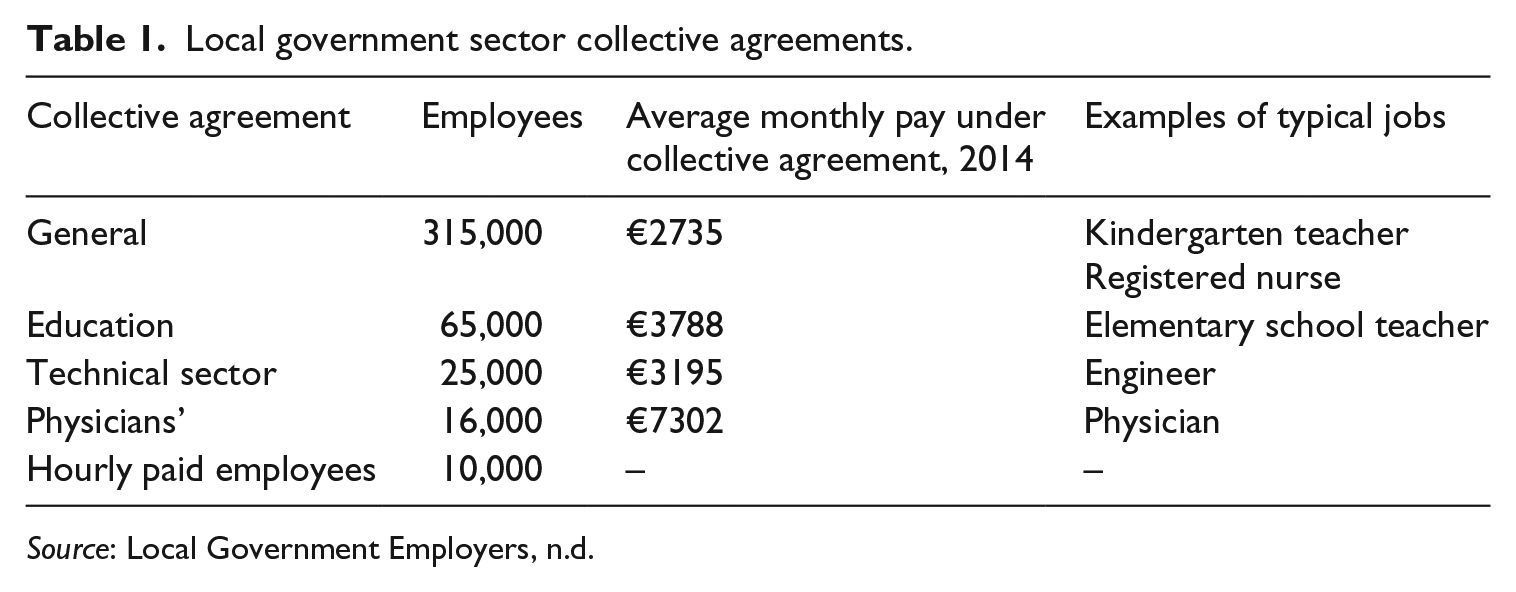
Source: Local Government Employers, n.d.
Having separate wage determination practices for different employee groups is not only a Finnish practice; before harmonising wage determination practices as part of the Single Status Agreement, the UK local government sector also had separate systems. Harmonising these systems uncovered the undervaluation of female-dominated jobs (e.g. Conley, 2014). Care and service sector occupations have also been revealed as undervalued in Australia (e.g. Austen and Jefferson, 2015; Austen et al., 2013), although in this context the jobs are in the private service sector rather than the local government sector. The main issue, however, remains the same: highly feminised jobs in care and other reproductive areas are likely to be undervalued and underpaid in several national contexts.
Features of local government sector collective agreements
This section is based on a qualitative content analysis (e.g. Schreier, 2014) of approximately 500 pages of collective agreement text that describes the practices of wage determination in the local government sector. The analysis produced a classification of the features of wage determination practices in the five main collective agreements. The aim of the analysis was to demonstrate that wage determination in local government sector collective agreements is likely to be based on a variety of institutional factors (e.g. Figart et al., 2002), and not on job demands or performance in the job. The main argument is not that collective agreements are a negative thing as such. Rather, the authors argue that since the current collective agreements are the end result of a long history of negotiations, they are very likely to entail gendered cultural valuations, which have become part of the formal structure. This is conceptualised as institutionalised undervaluation.
Wage determination in the Finnish local government sector is a complex and highly bureaucratic process. The bureaucratic structure of the pay system documents conceals their gendered nature (e.g. Acker, 2012; Koskinen Sandberg, 2017). Since much feminised reproductive work is concentrated in this sector, especially under the General CA, it is likely that women covered by the General CA are undervalued and underpaid. No systematic attempts have been made to assess job demands throughout the local government sector. As the wages and working conditions of the employees covered by the five main collective agreements are negotiated separately, the agreements are likely to treat different employee groups unequally.
Although the local government sector claims to use job demands as a basis for determining wages, it actually uses whole job ranking 1 (overall impression of the demands of the job), as opposed to analytical job evaluation. The scope for comparing the job demands of different jobs is very small; they are only compared within job pricing groups. In other words, job demands are only compared within one job title that constitutes the pricing group. The five collective agreements contain several methods of wage determination and almost 300 pricing groups. The job demands of different jobs are not compared; neither are the five collective agreements. Indeed, the local government sector keeps the wages for different employee groups strictly separate. The details of wage determination and the components of pay in the five major collective agreements are presented in Table 2.
Wage determination in Finnish local government sector collective agreements.
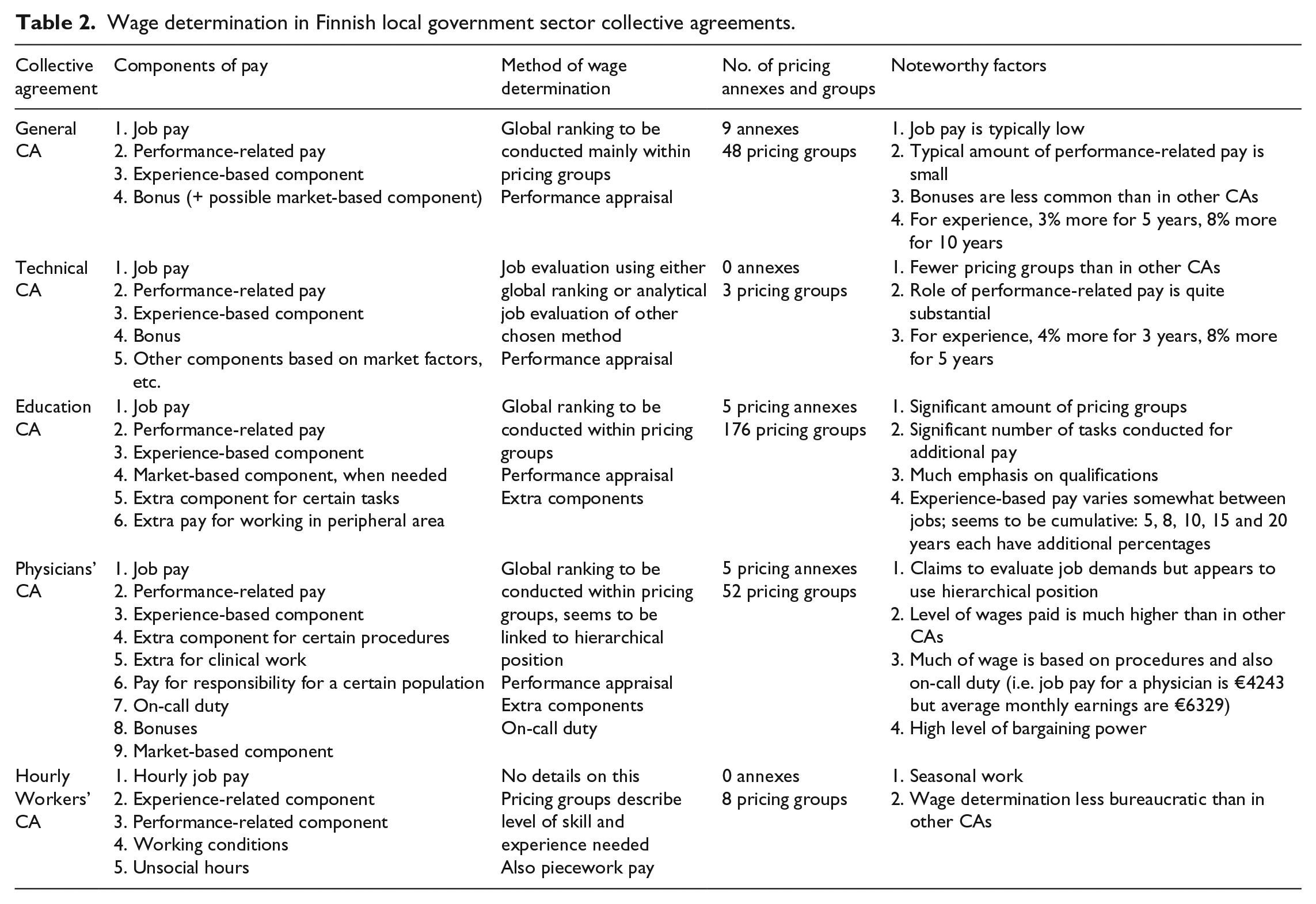
In the quantitative section of this article, the analysis focuses on the extent to which the separate collective agreements contribute to the gender pay gap in the local government sector. Since wage data for all the five major collective agreements 2 were not collected, the quantitative part focuses on the comparisons between two collective agreements and the wages determined by these, namely the female-dominated General CA and the male-dominated Technical CA. It is nevertheless useful to briefly describe all five main collective agreements, which are summarised in Table 2. The main argument is that while a local authority is a single employer and legally obliged to treat its employees equally, in practice there is no guarantee of equal treatment, and wage levels and wage determination practices generally vary across the five collective agreements.
General Collective Agreement
The General CA is the largest of the five major collective agreements of the local government sector. It covers fields such as child care, health care, care of the elderly, social work and libraries. In this agreement, each field has a pricing annex, which contain pricing groups by job title. The pricing group has a minimum wage per job. The agreement’s nine pricing annexes contain 48 pricing groups (see Table 2). Minimum pay varies between €1700 and €2880. The collective agreement guides the evaluation of job demands by a job evaluation system that is based on assessing the following criteria: skill, responsibility, communication and working conditions. In addition to job-based pay, the General CA has performance-related pay, a component based on experience and incentive pay. Performance-related pay within this collective agreement is small and bonuses are uncommon. One component is based on work experience, and market-based additional pay is also possible.
Technical Sector Collective Agreement
As the name indicates, the Technical CA covers the technical jobs within the local government sector. These jobs are mainly male dominated. ‘Technical’ here has a broad meaning that covers areas such as maintenance, firefighting and city planning, to name a few. The wage determination process (Table 2) in the Technical CA is different to that in other local government collective agreements. It has no pricing annexes, but it does have three pricing groups: (1) ‘craftsman’ tasks with a minimum wage of €1657; (2) intermediary-level tasks with a minimum wage of €1835; and (3) supervisory and leadership tasks with a minimum wage of €3038. Each employee belongs to a pricing group. Base job pay can be above the minimum but not below it.
Job demands are ‘taken into account’ when deciding on job pay. They are evaluated using the following criteria: decision-making, responsibility, organisational position, technical skills, education, experience, interaction and working conditions. The Technical CA allows the method of job evaluation to be decided on at the local level. It may be an analytical job evaluation, a whole job ranking, or some other method. Whole job ranking is commonly used. In addition to job pay, the agreement also has performance-related pay, a component based on experience, and bonuses and several additional pay components, such as a market-based component.
The other three main collective agreements
The Physicians’ Collective Agreement (Physicians’ CA) is significantly higher paying than the other local government sector collective agreements. This agreement has the highest bargaining power, the highest level of occupational status and the highest average level of education among its members. The Physicians’ CA is different to other local government sector collective agreements. It follows the general principles of assessing job demands based on the General CA. It has five pricing annexes, each of which typically contains four pricing groups. These seem to be based on hierarchical organisational position; the range is from senior physician or medical superintendent to medical student. In addition to job pay, physicians receive a fee for a long list of tasks or procedures. Moreover, the nature of the job is that working hours play a large role in the overall wages paid.
Wage determination in the Education Sector Collective Agreement (Education CA) is rather like that of the General CA. The main difference is the level of pay, which is typically significantly higher. The Education CA has five pricing annexes for different types of schools, and a total of 176 pricing groups. Pricing has a lower and upper threshold; that is, a minimum and maximum wage. In addition, a large number of different tasks have their own price. Teachers also have a performance-related, experience-related and market-related pay component.
The Hourly Workers’ Collective Agreement (Hourly Workers’ CA) mainly applies to seasonal work such as gardening, construction and maintenance. Wage determination in this collective agreement is simpler than that in the other collective agreements.
Data and methods
The data were collected as part of the project Gender equality into pay systems (Ikävalko et al., 2011). This project worked on the pay systems of 18 Finnish organisations to promote equal pay. Four Finnish local authorities participated in the project, and a large amount of data was collected from these case organisations, including wage data and survey data that included information on demographics. This article focuses on two case organisations: Organisation 1 (N = 318) and Organisation 2 (N = 365).
The authors drew on the feminist institutional approach (e.g. Austen et al., 2013; Jefferson et al., 2014) in the analysis. Utilising mainstream methodology, the primary aim of the analysis was not to explain the gender pay gap by productivity factors. The authors acknowledged the importance of the institutional context for wage determinations. Thus, the aim was to analyse the role and impact of the different collective agreements in local government sector wage determination, and their role in relation to the gender pay gap. The authors chose to analyse how collective agreements can contribute to the gender pay gap within organisations, as it is clearly visible in the collective agreement texts that wages are not based on the analytical evaluation of job demands. It is likely that gendered cultural valuations are embedded in the structures of local government sector collective agreements.
Sample selection
The cases under investigation were two Finnish cities and certain units within their local authorities. In both case organisations, comparisons were made between the General CA and the Technical CA. In the Finnish collective agreement system, an employee’s agreement is determined by occupational group and educational background; for example, all kindergarten teachers have similar qualifications and belong to the same collective agreement and pricing groups.
In Organisation 1, the work conducted under the General CA was day care, whereas the work conducted under the Technical CA consisted of a variety of jobs of a technical nature, including city planning, maintenance and engineering. In Organisation 2, the unit in question worked on city planning and mainly employed experts and administrative staff. Employees within the same unit could be covered by either collective agreement, depending on their job. In Organisation 1, women were strongly concentrated at the lower end of wage distribution, whereas in Organisation 2, the distribution was more balanced. However, in Organisation 2, men were somewhat more strongly represented at the upper end of wage distribution.
Measures and descriptive statistics
The dependent variables in the analyses were the monthly base and total wage (log transformed). The employees in the sample worked full-time. 3 The monthly base wage is based on the job and its demands, whereas total wage also includes other wage components such as performance-related pay. The independent variables were gender (coded 1 for women and 0 for men) and collective agreement (coded 1 for Technical CA and 0 for General CA). Figure 1 shows the distribution of participants in the two organisations based on gender and collective agreement (CA).
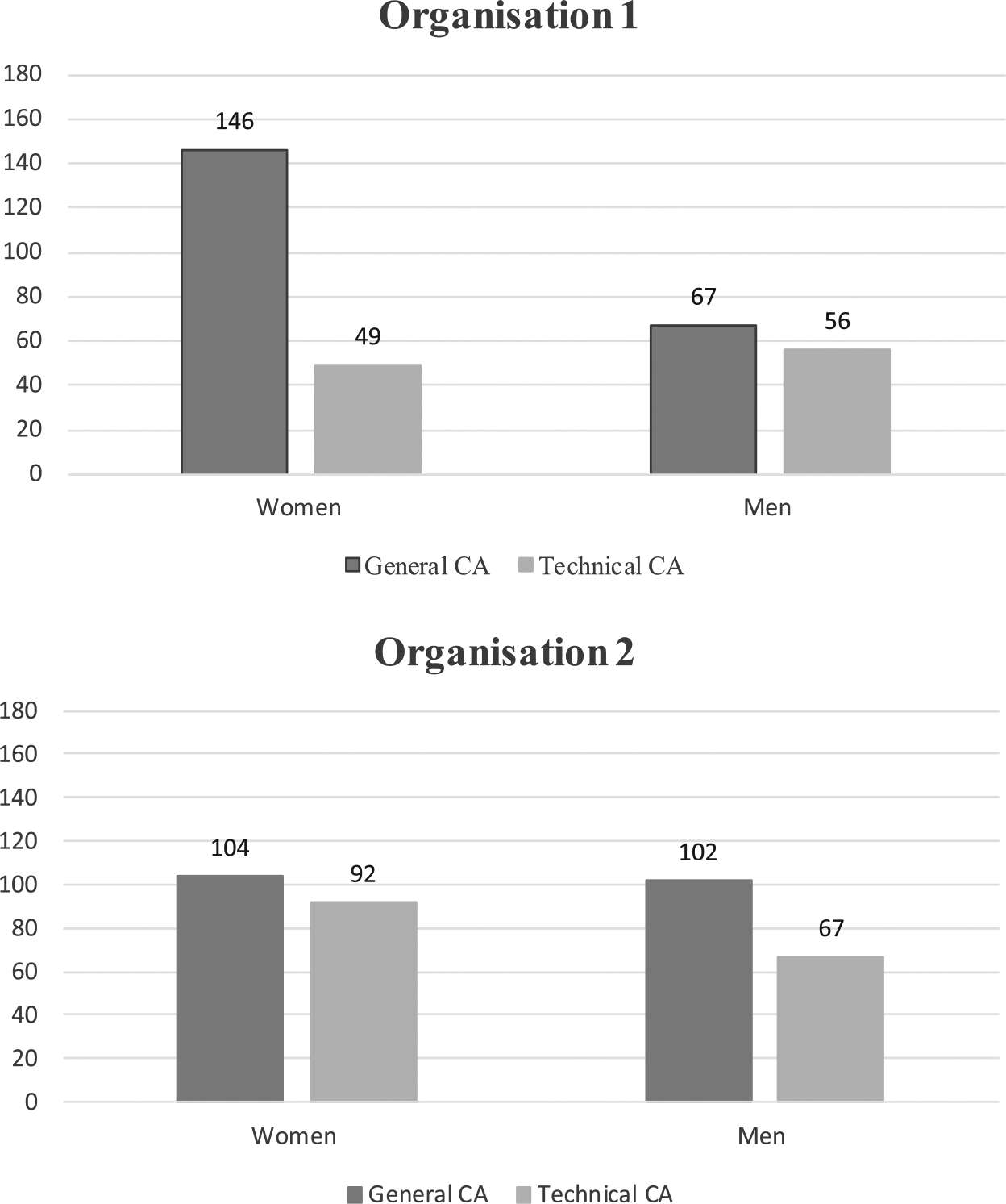
Number of participants in organisations studied by gender and collective agreement (CA).
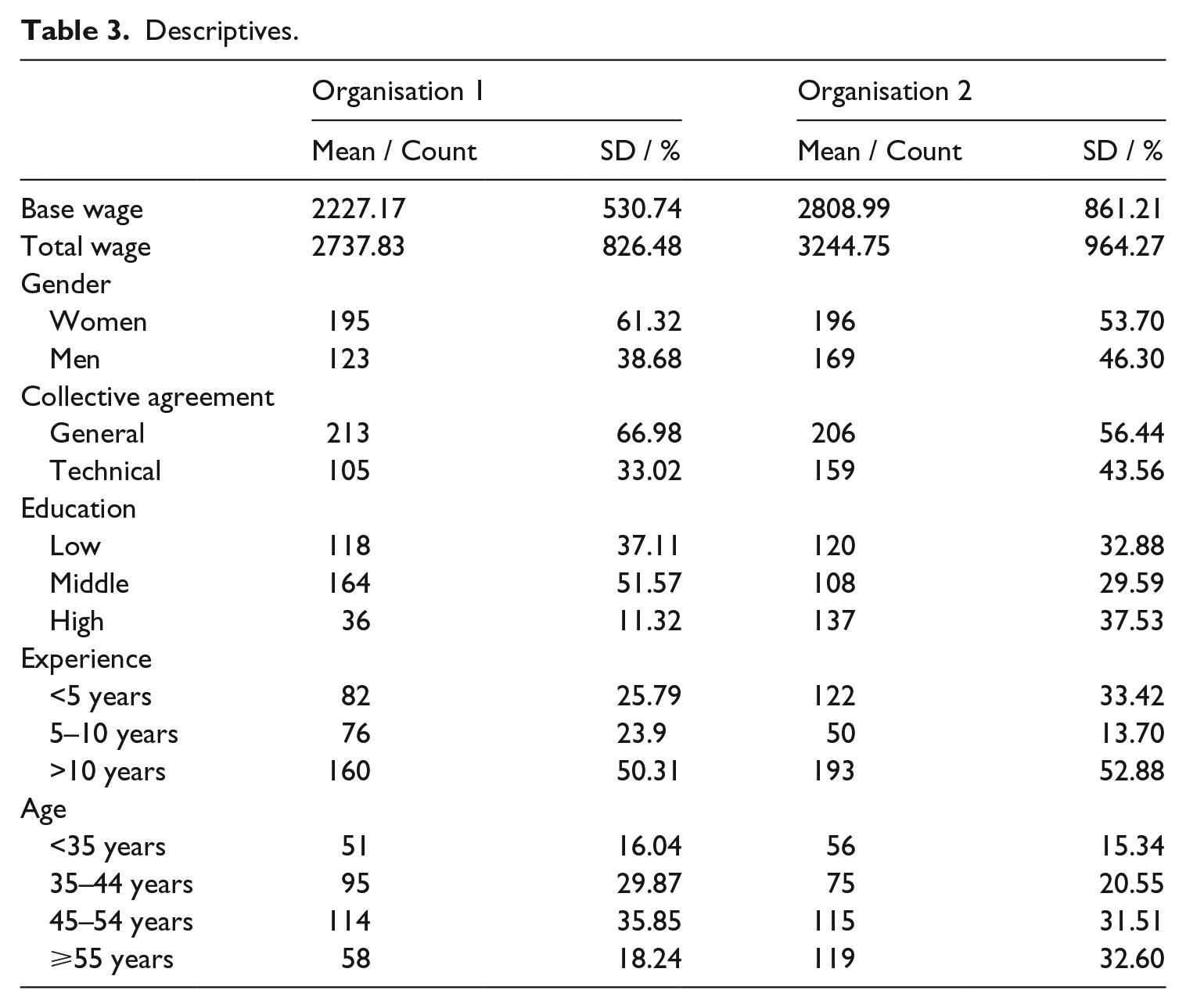
Following Mincer (1958, 1974), the models included three human capital variables as covariates: education level, work experience and age. Education level was dummy coded into three variables: (1) low/comprehensive school; (2) middle/secondary education; and (3) high/academic education. Work experience was dummy coded into three variables: (1) less than 5 years; (2) 5–10 years; and (3) over 10 years. Finally, age was coded into four dummy categories: (1) 34 years and younger; (2) 35–44 years; (3) 45–54 years; and (4) 55 years and older. Table 3 shows the descriptives of the study variables.
Descriptives.
The authors wished to minimise the collinearity between the variables of interest and the control variables. Increasing the number of control variables increases potential collinearity, and with small samples this might be a problem. To rule out the possible collinearity and endogeneity of the variables, collective agreement was regressed on all the other independent variables. The results (not shown here) confirmed that none of the other independent variables were associated with collective agreement. Thus, the results should not be biased due to endogeneity or collinearity.
Results
To analyse the determinants of wages and how much of the gender wage gap in the local government sector can be attributed to the collective agreements, while also controlling for human capital variables, regression analyses (ordinary least squares, OLS) and an Oaxaca-Blinder decomposition analysis were conducted. The sample sizes in the analyses varied due to missing values in the included variables. The final sample sizes were 309 for base wage and 318 for total wage in Organisation 1, and 365 for base and total wage in Organisation 2.
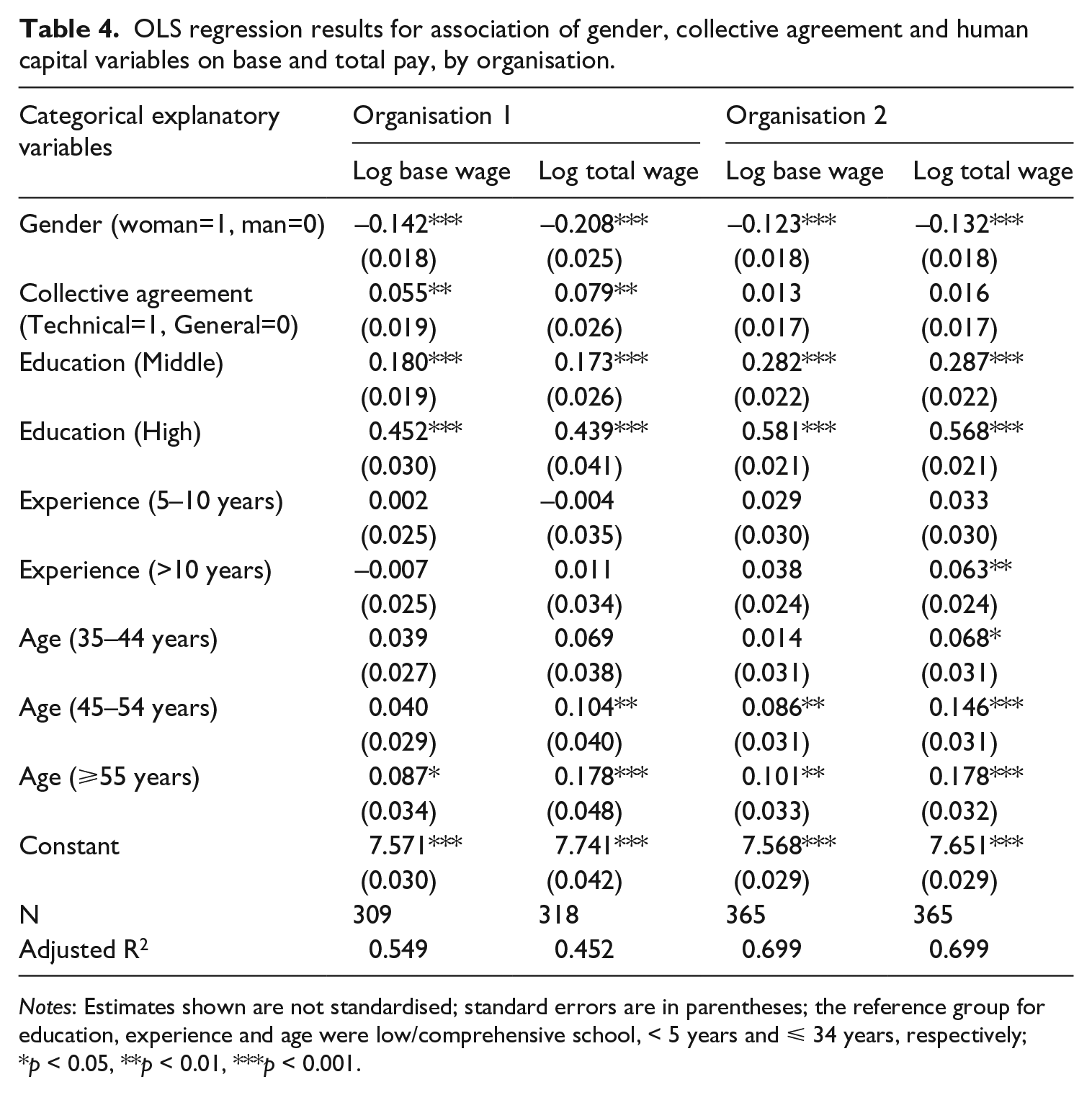
The regression analyses for base wage and total wage, and for Organisation 1 and Organisation 2, were conducted separately. In the first set of regression models, the independent variables were gender, collective agreement and the human capital variables. Table 4 presents these results.
OLS regression results for association of gender, collective agreement and human capital variables on base and total pay, by organisation.
Notes: Estimates shown are not standardised; standard errors are in parentheses; the reference group for education, experience and age were low/comprehensive school, < 5 years and ⩽ 34 years, respectively; *p < 0.05, **p < 0.01, ***p < 0.001.
The results show that women were at a disadvantage in both base and total wage in both organisations, regardless of the collective agreement and human capital variables. In addition, study participants covered by the Technical CA had an advantage in both base and total wages in both organisations. As expected, educational level (high vs low) and age (old vs young) were significant covariates for both base and total wage in both organisations. Furthermore, the highest level of experience (more than 10 years) increased the total wage in Organisation 2, compared to lower levels of experience.
The interaction between gender and collective agreement was also tested (results not shown). Gender had a significant interaction effect with collective agreement only on base wage in Organisation 1 (B = 0.091, se = 0.037). To explore this further, the above-mentioned analyses was conducted for women and men separately. The results (not shown) were similar to those of the previous analyses among both genders, but also showed that women under the Technical CA had a base wage advantage in Organisation 1, compared to those under the General CA, regardless of human capital variables. This further confirms that the wage formation within an organisation is dependent on the collective agreement.
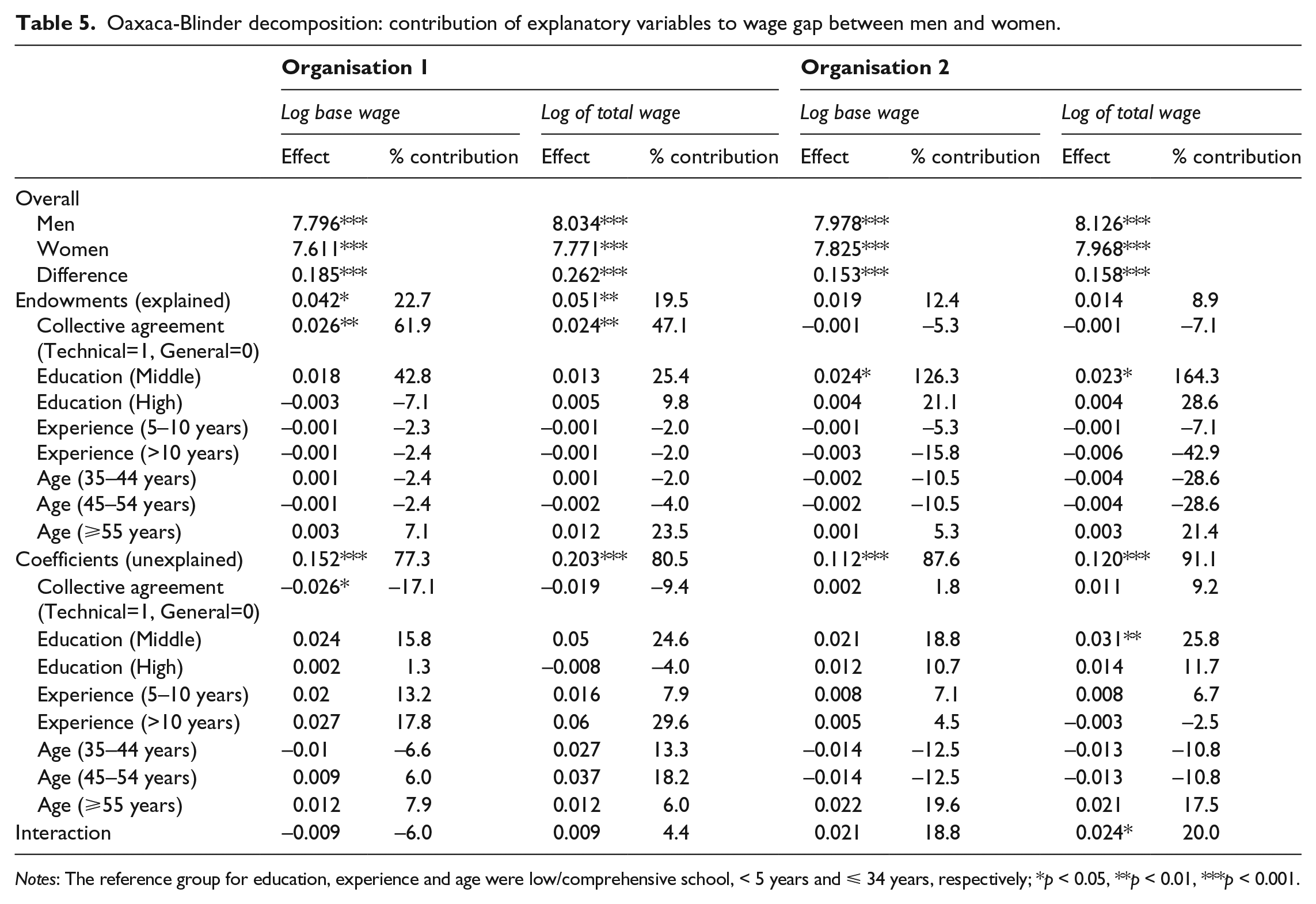
To examine the determinants of the gender wage gap, Oaxaca-Blinder decomposition analyses were conducted. The Oaxaca-Blinder multivariate decomposition approach is the most familiar and widely used method for linear models (Blinder, 1971; Oaxaca, 1973; Powers and Pullum, 2006). This approach divides the wage differential into a part that is ‘explained’ by group differences in endowments such as collective agreement and education, and a residual part that cannot be accounted for by such differences (‘unexplained’, coefficients). The explained part may be further interpreted as the mean increase in the non-reference group’s wages, if they have the same characteristics as the reference group. The unexplained part may be interpreted as the change in the non-reference group’s wages, when the reference group’s coefficients are applied to the non-reference group’s characteristics. The interaction term measures the simultaneous effect of differences in endowments and coefficients (Blinder, 1971; Oaxaca, 1973).
In the decomposition analysis, the dependent variables were base and total pay, the reference category was men, and the covariates were collective agreement and the human capital variables. The results of the decomposition analyses are shown in Table 5.
Oaxaca-Blinder decomposition: contribution of explanatory variables to wage gap between men and women.
Notes: The reference group for education, experience and age were low/comprehensive school, < 5 years and ⩽ 34 years, respectively; *p < 0.05, **p < 0.01, ***p < 0.001.
The decomposition results show that the wage difference between women and men was 18.5 per cent for base wage and 26.2 per cent for total wage in Organisation 1; 15.3 per cent for base wage and 15.8 per cent for total wage in Organisation 2. In Organisation 1, 22.7 per cent of the wage difference in base wage and 19.5 per cent in total wage was accounted for by differences in collective agreement and human capital variables. Furthermore, the collective agreement contributed 61.9 per cent to the explained part in base wage and 47.1 per cent in total wage. This means some differences between the wages of women and men within the organisations were not accounted for by human capital variables such as age, education and experience, but were due to belonging to different collective agreements. In Organisation 2, education accounted for the explained portion of base and total wage. The remainder of the wage gap in Organisation 2 was due to unexplained differences in the variables.
Discussion
This article aims to contribute to the understanding and conceptualisation of the dynamics behind the undervaluation of women’s work, namely the embeddedness of cultural gendered valuations in the formal wage determination processes. Building on earlier scholarship (e.g. Figart et al., 2002; Grimshaw and Rubery, 2007), this article introduces the concept of institutionalised undervaluation. By this, the authors refer to how the undervaluation of women’s work is embedded in the formal structure of wage determination such as collective agreements. Institutionalised undervaluation originates from the gendered understandings of appropriate wages for work conducted by men and women (e.g. Figart et al., 2002). However, it has become part of the formal structure, and the gendered nature of the structure often remains invisible and unrecognised. In addition to contributing to theory, the article aims to provide an example of how to study institutionalised undervaluation by combining qualitative and quantitative analyses.
The qualitative results show that, in contrast to what is claimed, wages in the Finnish local government sector are not only based on job demands and performance in the job. Job demands in the local government sector are only evaluated within job pricing groups (same jobs) and by using a whole job ranking, which allows several factors to influence wages. Wages in the Finnish local government sector are indeed very likely to be strongly influenced by a variety of institutional factors, such as cultural and gendered valuations, the perceived appropriate wage for different employee groups, bargaining power and the historical development that has led to the current situation of complicated wage determination processes (see also Austen et al., 2013; Figart et al., 2002; Koskinen Sandberg, 2017).
Further analysis of wage data from the two case organisations shows that collective agreements may indeed contribute to the gender pay gap in the Finnish local government sector. First, the results of wage analyses show that women are at a disadvantage in both base and total wage in both of the organisations studied, regardless of collective agreement and human capital variables. Second, study participants covered by the Technical CA are at an advantage in both base and total wage in both organisations. Third, the collective agreement explains 61.9 per cent of the wage gap in base wage and 47.1 per cent of the gap in total wage between women and men in Organisation 1. Consistent with previous studies on human capital theory (Mincer, 1958, 1974), human capital variables, such as education, experience and age partly explain wage formation and the wage gap between women and men in the data. However, in Organisation 1, women and men have different wages, and a considerable amount of this difference is due to belonging to different collective agreements. This reflects institutionalised undervaluation, in which wages are based on institutional factors in addition to human capital variables (e.g. Austen et al., 2013; Koskinen Sandberg, 2017).
Although the two organisations studied have the same two collective agreements, the specific units under investigation are very different, and this explains the different results. In Organisation 1, the participants who worked in day care were covered by the General CA, and those with jobs of a technical nature were covered by the Technical CA. The different collective agreements very clearly contributed to the wage differences between these two groups when human capital factors were controlled for. In a unit working on city planning in Organisation 2, the wage differences were not as clearly attributable to the two collective agreements, but differences in education and experience played a significant role. The authors interpret this result as meaning that the undervaluation of women’s work does not necessarily occur throughout the General CA. Rather, it is traceable to certain occupations that are, due to gendered historical development, undervalued and underpaid. Such occupations are jobs in day care, for example, as demonstrated by the analysis. The undervaluation of these feminised jobs is institutionalised in the wage formation system of the Finnish local government sector. Jobs in more gender-balanced settings within the local authority are less likely to be affected by institutionalised undervaluation.
Like any study, this study has also certain limitations. Consistent with the institutional approach, this article utilised more limited project data rather than a large data set. As the project data were only collected from certain units of the local authorities, the results cannot be generalised to apply to the entire sector. Further, the authors were not able to provide an analysis of some employee groups such as physicians and nurses. The major strength of this smaller scale study was that the authors worked in a research and development project together with the case organisations, and were therefore able to reflect on the relevant local institutional factors.
This article provides an example of how the challenging issue of the undervaluation of women’s work can be studied: by combining the qualitative study of wage formation structures and the quantitative analysis of wage data with a focus on the role of collective agreements and gender pay equity. Further studies are needed in this area to more fully evaluate the impact of undervaluation on the aggregate gender pay gap and the kind of policies that are called for to address this. Although wage determination processes vary across different national contexts, it is very likely that institutionalised undervaluation of women’s work as a phenomenon exists in highly feminised jobs and occupations worldwide.
Footnotes
Acknowledgements
We would like to thank the members of the research project Gender equality into pay systems, Heini Ikävalko, Virpi Liinalaakso, Minna Nylander and Tapio Wallin, for their contribution to the research project and data collection. We would also like to thank the anonymous reviewers, and Professor Jill Rubery and Professor Emeritus Jeff Hearn for valuable comments on earlier versions of this article.
Funding
The project from which the data for this article are from was funded by the European Social Fund. The project was a part of the Finnish Equal Pay Programme, which allocated the ESF funding. Writing this article was made possible by a research grant from the Finnish Work Environment Fund for Koskinen Sandberg’s doctoral dissertation.