




Abstract
Policymakers in many countries have lit on tech-entrepreneurship as an essential element for economic development. To this end, South Africa’s Technology Innovation Agency, with co-sponsorship from the Swiss–South African Joint Research Programme, has run a cross-country tech-entrepreneurial training programme for local tech-entrepreneurs since 2010. This study reviews participants’ assessment of the training programme utilizing the Tech-Entrepreneurship Survey of 2016, designed and administered by the authors. From analysis of the participants’ rich feedback on their motivations for enrolment, the quality of training received and the strengths and weaknesses of the programme, clear indications emerge of what worked and what did not work. This enables the identification of focus areas for tech-entrepreneurship programme owners and policymakers in pursuit of tech-entrepreneurship expansion.
Keywords
Science and technology matter for human progress and value creation for societies across the globe; but how best to capitalize on the opportunities provided by science and technology remains a question that many grapple with. In this regard, many policymakers have lit on entrepreneurship as the key to unlock the promise held by advances in science and technology. In a fast-changing technological landscape, tech-entrepreneurship has attracted attention as a significant contributor to economic growth and development (Dahlstrand, 2007; Foo, 2012; Walicka et al., 2015; Wickham, 1998). Bailetti (2012) states that tech-entrepreneurship lies at the heart of a number of important topics, including launching and growing firms, regional economic development, organization, risk tolerance of technology-based businesses, selecting suitable stakeholders to take ideas to market and educating engineers, managers and scientists. To date, there is no universally accepted definition of tech-entrepreneurship and existing knowledge on the subject remains rather limited. To illustrate, a brief review finds several possible definitions. Dorf and Byres (2007, cited in Siyanbola et al., 2011:10) consider technological entrepreneurship to be ‘…a style of business leadership that involves identifying high-potential technology-focused business opportunities, gathering resources such as capital, talent and experts, and finally managing rapid growth and risk using principled decision-making skills’. Tech-entrepreneurship focuses on efforts to connect more effectively academic institutions, research and development centres, capital market institutions, as well as business environment institutions and companies involved in the manufacture and sale of products or services, especially in high-tech industries (Adamik and Szymanska, 2016; Badzinska, 2017). Shane and Venkataraman (2004, cited in Prodan, 2007: 27) argue that technological entrepreneurship is ‘…the processes by which entrepreneurs assemble organizational resources and technical systems, and the strategies used by entrepreneurial firms to pursue opportunities’.
Whatever the definition selected, the point raised by Uctu and Jafta (2014: 220) remains the crux of the matter: ‘…the greatest challenge for researchers is converting scientific discoveries and innovations into successful companies’. Significantly, Mosey et al. (2016: 7) argue that the debate is no longer about definition, but the key question of ‘…how best to investigate, analyse and share how technology entrepreneurship can be encouraged.’
Most scientists, moreover, do not come into the world of commerce with the requisite skills to match scientific rigour to the salient requirements of markets. 1 As a result, tech-entrepreneurship training programmes have become critically important to develop tech-entrepreneurs. Specifically, engineers, scientists and tech experts require additional training not found in their core education programmes. In Africa, a shortage of science and tech-entrepreneurship capital impedes the development of productive capacity and limits value addition to local resources (Bubou and Okrigwe, 2011). Many African countries are in their early stages of harnessing the power of entrepreneurship. South Africa, Nigeria and Tunisia, for example, consistently reveal low levels of entrepreneurial activity (Bubou and Okrigwe, 2011; Ghodbane, 2016; Turton and Herrington, 2014, respectively), which heightens the need for appropriate tech-entrepreneurial training programmes. In South Africa, in particular, there is a significant gap between the number of people reporting that they see opportunities in entrepreneurship and those who actually act on those opportunities, despite many efforts by government to promote entrepreneurship. The Global Entrepreneurship Monitor for South Africa found that, traditionally, entrepreneurship activity has tended to be of the necessity type (Turton and Herrington, 2014). However, as the OC&C strategy report on South Africa (2018: 24) states, ‘the newly developing culture of tech entrepreneurship means that few entrepreneurs are aware of what’s required to develop, launch, grow and exit a tech-based venture’.
In this context, the South African Technology Innovation Agency (TIA 2 ) which, with co-sponsorship from the Swiss–South African Joint Research Programme, has been running a training programme for South African tech-entrepreneurs since 2010 has been an early mover in creating that awareness. The programme has three tiers, with only a selected number of delegates chosen for the final phase, the Swiss–South African Venture Leader Programme (VLP). While research on entrepreneurship education and training (EET) per se abounds (see e.g. Valerio et al., 2014), tech-EET does not yet enjoy the same status. As in many other fields, research on tech-entrepreneurship is predominantly from the United States, EU member states and other developed countries (Blanco, 2007; Dahlstrand, 2007; Gupta et al., 2015). Less research on the topic has coming from emerging economies like India, China and South Africa (for tech-entrepreneurship in India, for instance, see Meil and Salzman, 2017). In the South African context, few studies with a focus on tech-entrepreneurship training programmes have been carried out (Uctu and Jafta, 2014 and Pepper, 2009, are two of very few examples 3 ). Consequently, research that sheds more light on aspects of tech-entrepreneurship is crucial in improving understanding of the phenomenon. This article extends the tech-entrepreneurship literature for South Africa by assessing a pioneering cross-culture tech-entrepreneurship training programme in developed and emerging economy settings – namely the Swiss–South African Business Development (SSABD) Programme.
This study reviews the participants’ assessment of the latter phase of the programme utilizing the Tech-Entrepreneurship Survey of 2016. Participants were asked to provide feedback on their motivation for enrolment, the quality of training received and the strengths and weaknesses of the programmes. This allowed the authors to address a twofold research question, which should assist tech-entrepreneurship programme owners and policymakers in their deliberations on whether and how to expand and improve the programme. Specifically, the research aimed to answer the following: To what extent did the programme succeed in its objective to add value for participants through business process and skills development to enhance entrepreneurial capacity? How can the programme be improved and expanded?
The rest of the article is structured as follows. A brief literature review on entrepreneurship education evaluation is followed by a description of the Swiss–South African VLP, details of the participants’ profiles and analysis and discussion of the survey results, as well as recommendations of focus areas for the owners of tech-entrepreneurship training programmes and policymakers in pursuit of tech-entrepreneurship expansion. The last section concludes.
Literature review and conceptual framework
EET occurs in many different forms and with varying duration and objectives. This variety renders the evaluation of the impact of such programmes complex and often not comparable or generalizable. Matricano (2014: 312), for example, points out that content and context matter in the evaluation of EET programmes, and heterogeneity in both complicates comparative studies. The literature, however, is not lacking in attempts to evaluate EET programmes. A simple maxim would be to evaluate such programmes against their objectives or stated outcomes. The latter have evolved over time and range from creating awareness of entrepreneurship to creating positive attitudes towards entrepreneurship. Researchers assess EET programmes with the latter objective question whether generating positive perceptions of entrepreneurship actually leads to the conversion of intention into action in the form of opportunity recognition and/or venture creation (Elmuti et al, 2012; Matlay, 2008; Menzies and Paradi, 2002; Rauch and Hulsink, 2015). With respect to venture creation as an outcome, Matricano (2014: 315 and 2017: 53) interestingly identifies the expectation of creating a start-up (our emphasis) as a signal of a commitment to entrepreneurship and a harbinger of a future start-up. Menzies and Paradi (2002) further argue that the expected outcomes may derive from the definition of entrepreneurship in use, where a narrow definition would consider opportunity recognition and creating a new business venture as desired outcomes and a broader definition would also recognize outcomes such as appropriate skills acquisition for entrepreneurial action. In a paper dealing with the challenges of assessing EET, Duval-Couetil, (2013: 398) introduces the need to consider contextual variables as well. Along these lines, Vosloo et al. (2018) advocate a framework that encompasses all of these potential outcomes while recognizing the importance of contextual settings. A similar need was identified by the authors of the current study, for which a large number of comments in response to survey questions had to be coded and analysed. In our search for such a framework, we found the Conceptual Framework for EET developed by Valerio et al. (2014) in an extensive study of the dimensions of success of EET programmes around the world, an appropriate structure and guideline for the discussion of our results. The conceptual framework incorporates both the results EET programmes are pursuing and the factors that may shape those outcomes. First, the outcomes are categorized in four domains: entrepreneurial mindsets (socio-emotional aspects, such as self-confidence, leadership, creativity, motivation, resilience, self-reliance and risk appetite); entrepreneurial capabilities, encompassing an ‘entrepreneur’s competencies, knowledge and technical skills associated with entrepreneurship’, such as proficiency in accounting, marketing, management and technical skills; entrepreneurial status, as measured over time through entrepreneurial activities, including starting a business, finding employment or increasing income levels; and entrepreneurial performance, relating to measurable outcomes, such as profit and sales growth, employment creation and survival rates.
Second, the framework identifies three dimensions that may influence the outcomes of EET programmes: programme context, participant characteristics and programme characteristics. The context may be one or a combination of economic, political and cultural settings that might influence the outcomes, whereas participants’ characteristics may include demographics and ‘personal traits, education, interest and intentions, as well as behaviours’ (Valerio et al., 2014: 4).
Programme characteristics include programme design, trainers and delivery, content and curriculum, as well as wrap-around services such as follow-up support, mentoring and coaching and network assistance. This framework allows for the recognition and categorization of recurring themes from the survey data. Since the VLP was primarily focused on business process development and skills development, not all dimensions will be equally relevant, as we illustrate in the findings and discussion sections.
The TIA–Swiss programme
The SSABD programme started in 2010 with 16 delegates. It has subsequently expanded, offering three different levels of training annually. In total, 887 4 delegates had passed through the three phases of the programme by the end of 2015 (TIA, 2016). Figure 1 shows the three phases.
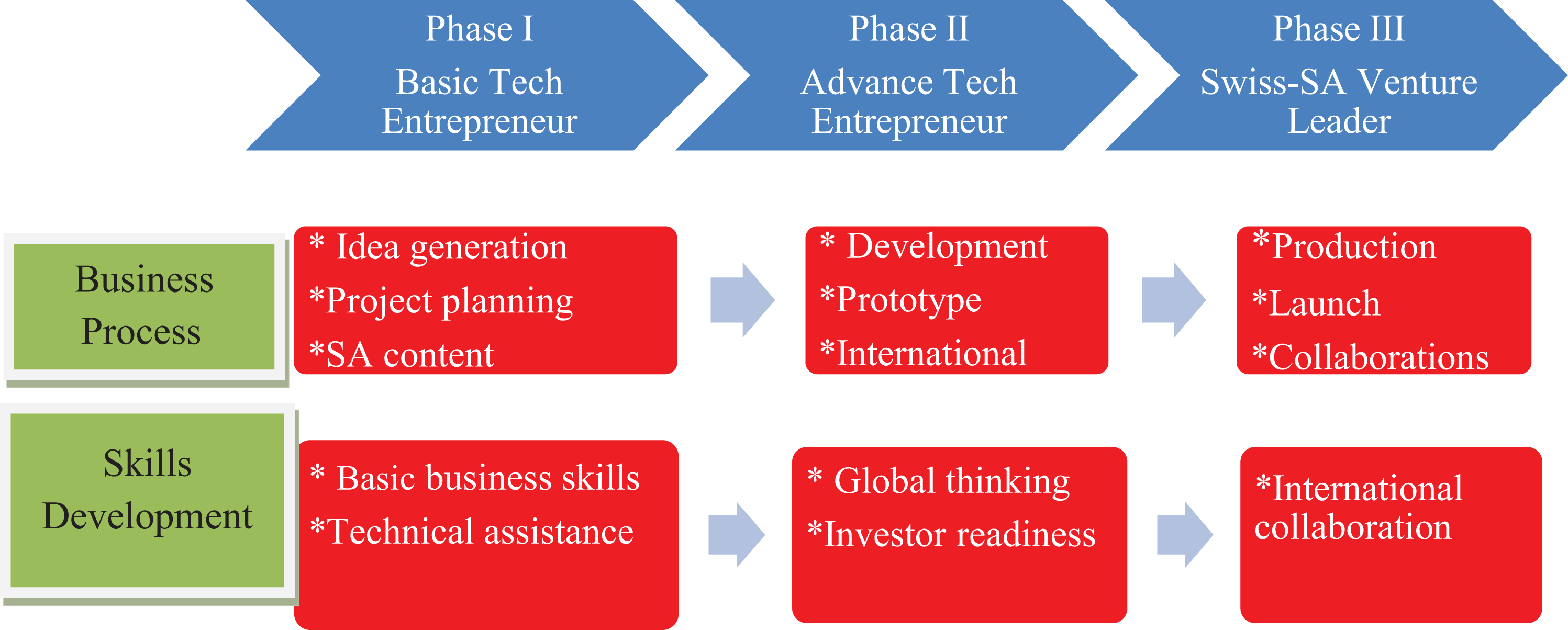
The Swiss–South African Business Development programme.
Each phase was designed to add value to the participants in two areas: business process development and skills development. For the purposes of this article, the focus is on Phase III, which is a collaboration between Swiss and South African institutions (Eksteen, 2015). In this phase, the programme provides motivation, entrepreneurial know-how and support to South African and Swiss scientists. Additionally, it aims to improve cooperation between tech industries in South Africa and Switzerland. The programme includes visits to Swiss start-up companies and workshop sessions on topics such as intellectual property (IP), marketing and start-up financing. In the main, the aim of the programme is to significantly boost participants’ entrepreneurial careers in order for them to successfully commercialize their projects and business ideas and develop sustainable companies. 5
Research purpose and methodology
Given the main aim of Phase III of the VLP as noted above, the purpose of this study is to analyse participants’ assessment of the programme. As articulated in the research questions set out in the introduction, the article looks to draw insights from the rich survey data to evaluate the programme against its stated objectives, systematically capturing merits and drawbacks; identify areas in which the programme may be improved and expanded; and generate key focus areas for owners of tech-entrepreneurship education programmes and policymakers to consider in their efforts to expand tech-entrepreneurship.
The findings presented are based on a survey designed and administered by the authors. The survey was distributed to 55 scientists who attended and completed the third phase of the tech-entrepreneurship training programme run by the TIA and the University of Basel. The scientists surveyed cover the entire period since the programme’s inception in 2010. 6
The questionnaire was transferred to SurveyMonkey and emailed to the former participants (for the period from 2010 to the end of 2015). In total, 40 (out of 55) completed questionnaires were returned, which meant that 72.7% of all graduates responded. This figure is sufficiently high to consider the results presented here to be a credible reflection of the views of the programme participants.
Research findings
Participants were asked to evaluate the VLP. Each subsection following the overview below of participants’ characteristics provides observations and insights that emerged for each area of the tech-entrepreneurship programme. These areas include the motivation of participants to enrol for the programme as an indicator of their expectations ex ante, the strengths and weaknesses of the programme, the impact of the programme on their businesses/projects and whether the programme contributed to developing networks.
A brief overview of participants’ profiles
Several studies have found that, especially in technology-based industries, men are the dominant gender in the entrepreneurial world (see, for instance, Mitchell, 2011). Globally, in an attempt to improve the entrepreneurial gender balance, many leading universities and institutions run special programmes for females. 7 In the case of the programme offered by the TIA, however, of the 39 participants, 8 16 (41%) were female and 23 participants (59%) were male. The results of research by Pepper (2009) and Uctu and Jafta (2014) support the trend towards increased female participation in entrepreneurship programmes, finding that bio-entrepreneurship courses organized in South Africa had 36% (10 out of 28) and 53% (8 out of 15) female participation rates, respectively.
Most participants in the programme are fairly young. In total, 30 of the respondents (75%) were in the 25–44 age group. Again, this is in line with the earlier research by Pepper (2009) and Uctu and Jafta (2014), who found, respectively, that the average age of participants in bio-entrepreneurship programmes was 33.85 and 33.64. It can therefore be concluded that tech-entrepreneurs in South Africa are likely to be fairly young. This contrasts with findings for developed countries. For the United States, for example, Wadha et al. (2010: 142) found that tech-entrepreneurs were mostly middle-aged and that twice as many tech-entrepreneurs born in the United States founded start-ups in their 50s rather than in their 20s.
Another crucial characteristic of the participants is the fact that 50% held a PhD (obtained from a wide range of universities). This finding is in line with the view of Farzin (2015) that tech-entrepreneurs are specialized individuals. In addition to being highly educated, the majority of participants were also in high-level executive positions in business and academia.
Motivations to enrol for the programme
In the survey, participants were asked to identify the reasons behind their decision to enrol for the programme. Understanding the rationale for participating provides an indication of their expectations of the programme and assists in interpreting the opinions voiced on its outcomes. Strikingly, almost all participants (30 out of 34,
9
88.2%) offered the same reasons for enrolling: the programme offered solutions to creating a bridge between science and business; participants wanted to use the programme to ‘skill-up’ on the various components of taking an idea to market (in other words, tech-business start-up basics); to learn basic principles of entrepreneurship and management skills; to gain market insight and to investigate market opportunities; to learn from ‘real-world’ business professionals as well as fellow South African entrepreneurs and international experts.
Moreover, four participants (11.7%) enrolled specifically to learn how to start a biotech business and wanted to gain exposure to international biotech start-ups. 10 Having gained insight into the participants’ rationale for enrolling, we now turn to their assessment of the VLP.
Participants’ assessment of the VLP
We commence with one of the most important questions related to participants’ view of the tech-entrepreneurship course content: design and delivery. Table 1 demonstrates the strengths and weaknesses of the programme based on the participants’ views. It drew both praise and criticism, although the latter was in the minority. Interestingly, the strengths were predominantly linked to the programme characteristics, whereas the weaknesses participants perceived related to participant characteristics and programme context. In addition, the need for wrap-around services was a recurring theme, which we explore further in the section below on follow-up courses and assistance.
Praise and criticism of the tech-entrepreneurship programme (Phase III: VLP).
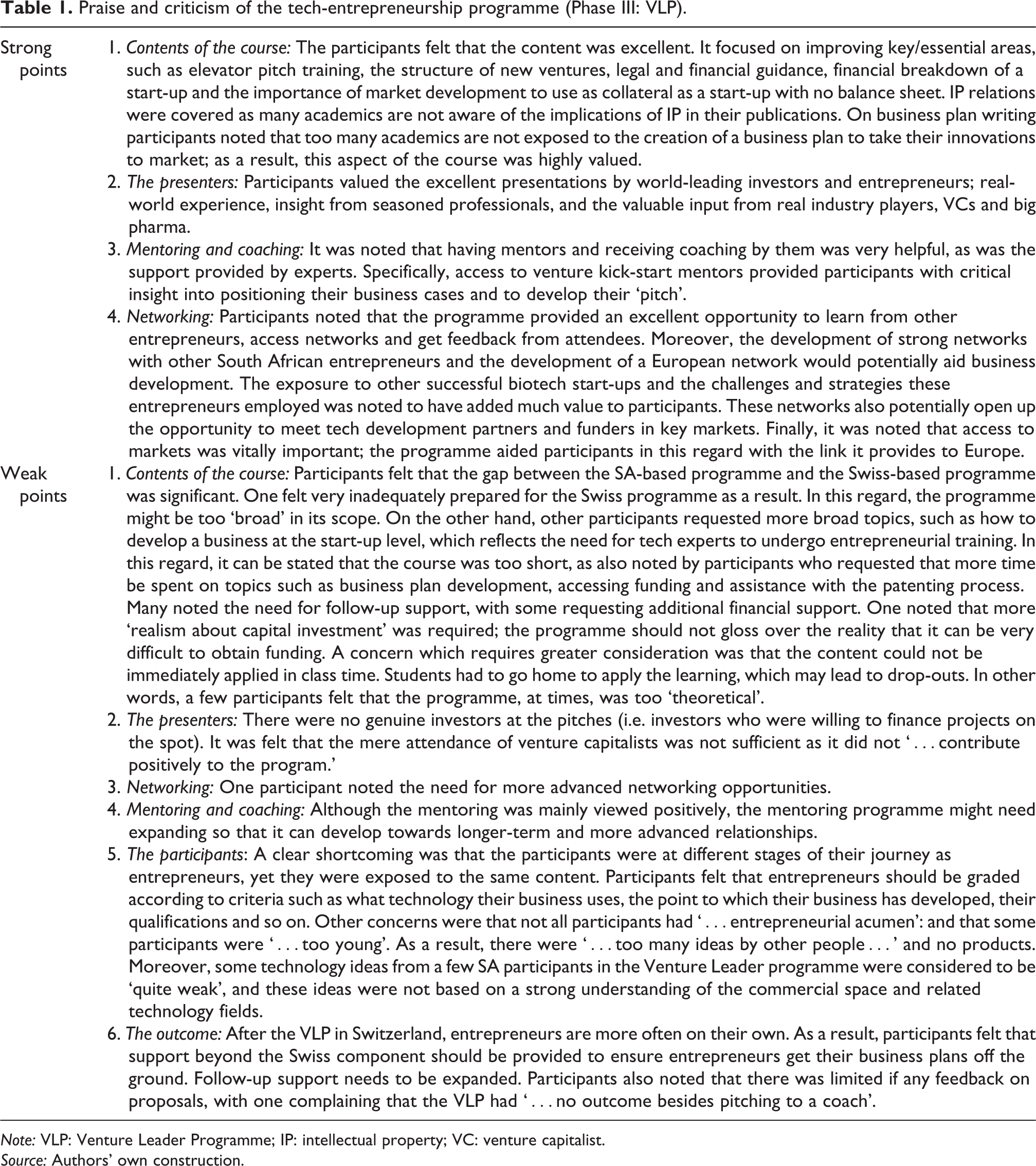
Note: VLP: Venture Leader Programme; IP: intellectual property; VC: venture capitalist.
Source: Authors’ own construction.
Strengths of the programme
The participants described the VLP overall as a holistic journey commencing with no or limited knowledge to a well-rounded state of entrepreneurial understanding where one could become self-critical and learn to plan and grow. The respondents articulated views suggesting that entrepreneurial mindsets and capabilities had been enhanced. One said: This was for me the scariest and most exciting moment in my life. I learnt what it was to believe in yourself 150% and in your idea 1500% and that getting capital to start your venture is all about how you put your idea into a context that suits that market. I also learned from bigger start-ups there that any business can flop and lose millions; only the ones with the strongest convictions in their ideas will survive.
The participants also stressed that the content of the programme was very ‘useful’, ‘valuable’, ‘informative’, a ‘great experience’ and mostly ‘focused on essentials’, such as pitching. Two respondents commented specifically on how pitching was important for them: You have five minutes to sell your product and company. Be super-prepared to present without any errors and be on your ‘A’ game all the time. Experience what it feels like to pitch to a panel of venture capitalists. Five minutes means five minutes and don’t be late. Use protocol and present without ambiguity using the correct subject terminology. The ability to say what your business is in less than 5 minutes. As a scientist, this is the skill I never had and use it almost all the time. It sounds easy like you do not need a lot of training to do that. However, having gone through it, the crafting and delivery of such an elevator pitch have been greatly enhanced.
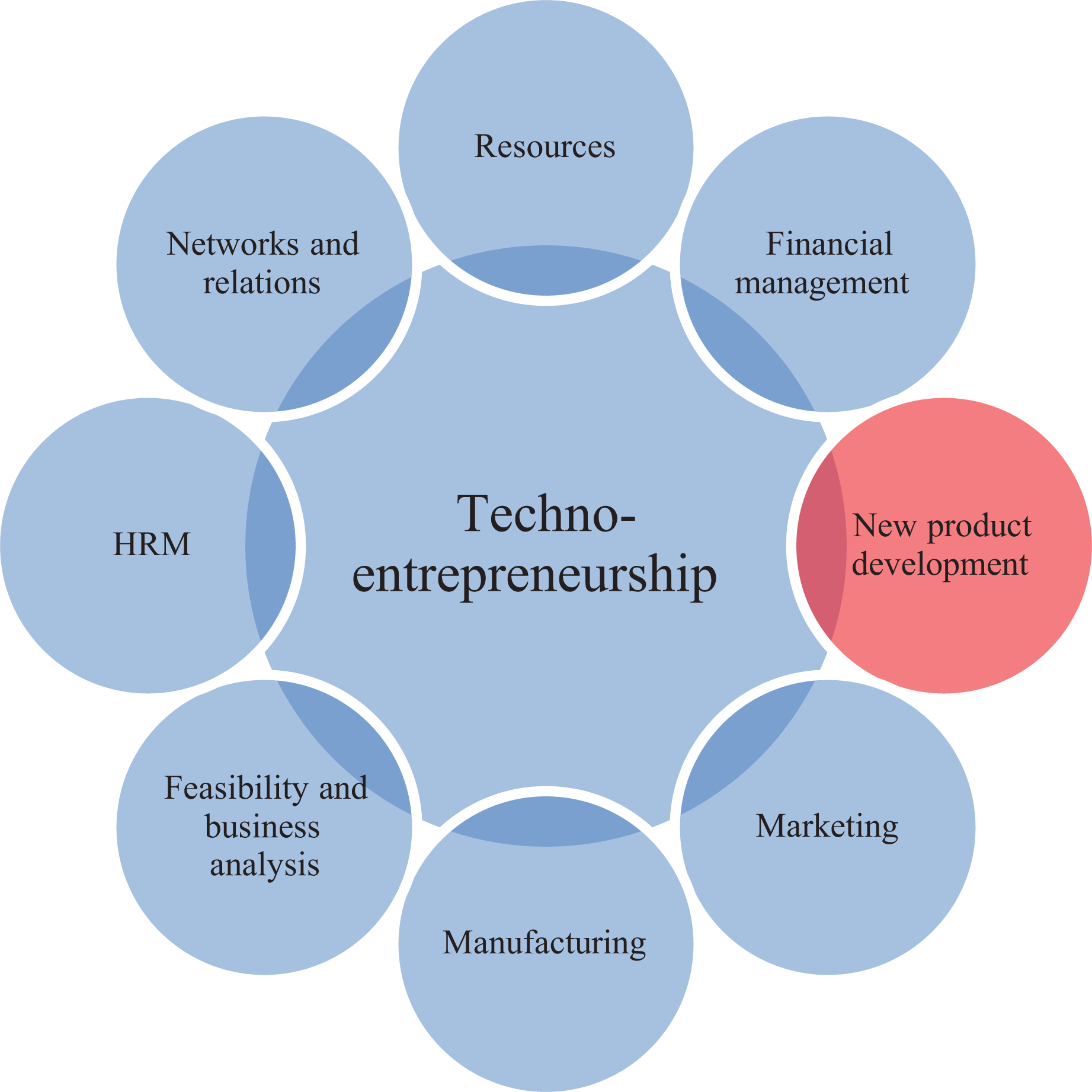
Relationships between management functions, new product development and tech-entrepreneurship.
Petti and Zhang (2011, cited in Allahyary and Meigounpoory, 2013: 290) categorized the factors comprising effective technological entrepreneurship capabilities into three components – entrepreneurial, managerial and environmental – to evaluate the creation of value by technology, and the components are related to private investors, talented individuals, educational institutions and value creation by business. Furthermore, Kamarudin and Sajilan (2013, cited in Allahyary and Meigounpoory, 2013: 290) assert that effective technological entrepreneurship requires skills and capabilities in marketing (promotions, networks, collaborations and diversification), management (business location and talent pool), technology (hardware, software, content quality and IP) and entrepreneurship (entrepreneurship skills, business know-how, government assistance, access to financial resources).
For this study, participants provided feedback as to whether they had received assistance on matters such as financial management, marketing, IP, business strategy, business development, project management and access funding (see Table 2 for more detail). Overall, the feedback was positive (see Figure 3). Apart from project management (at 3.43), the rating average for all subjects was 3.5 or higher (as can be seen from Table 2, financial management and accessing funding were rated 3.54, marketing at 3.66, strategy at 3.94, and the highest rates were for business development at 4.03 and IP at 4.17). 12 Moreover, participants generally selected ‘Agree’ for each subject, implying that the programme had provided sufficient assistance on these topics. For some topics, such as IP, Strategy and Business Development, a large proportion of participants (28, 25 and 30 out of 35, respectively, or over 70% of the participants) selected ‘Agree’ and ‘Strongly agree’, emphasizing the usefulness of those subjects. However, subject areas such as Marketing and Project Management have scope for improvement, with more than one-third of participants (13 out of 35 participants, 37%) being neutral about both. Moreover, participants held the view that the VLP was of a high standard as international best practices could easily be applied.
Participant feedback on subject usefulness.
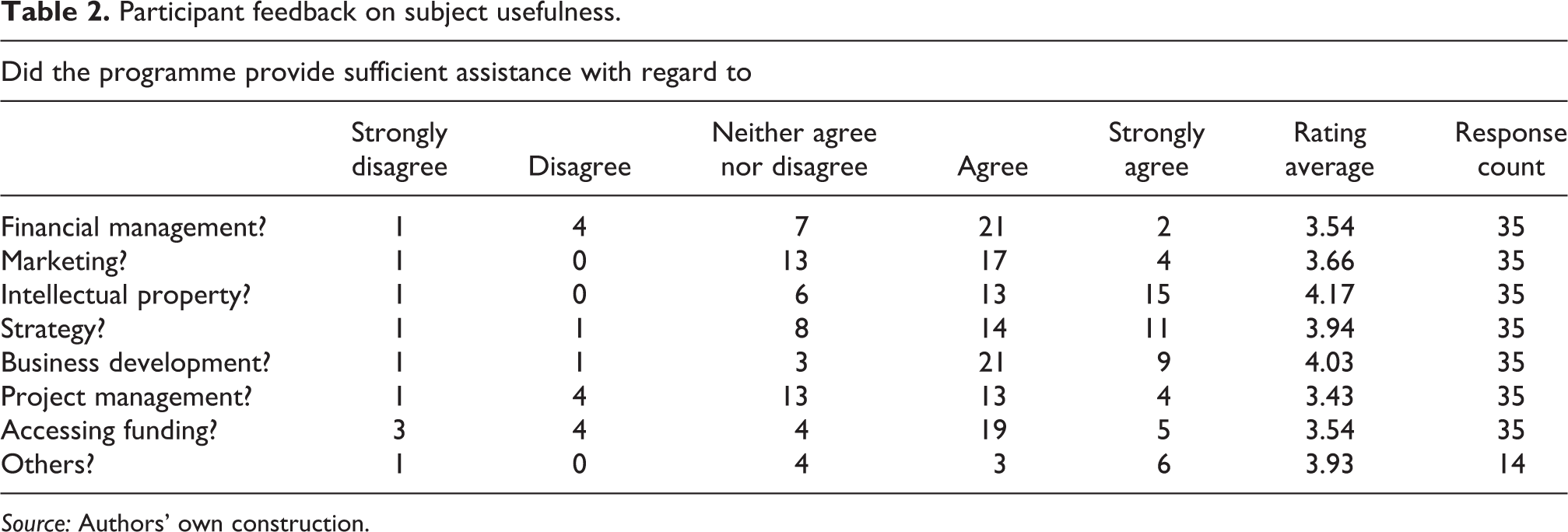
Source: Authors’ own construction.
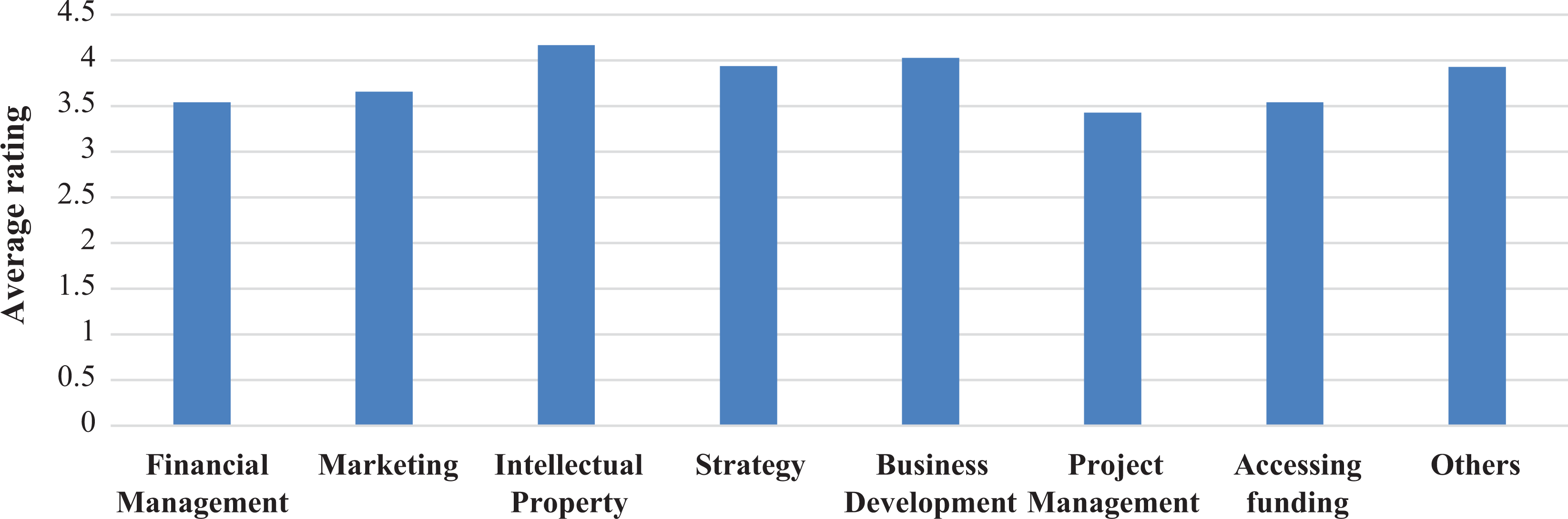
Average rating per module.
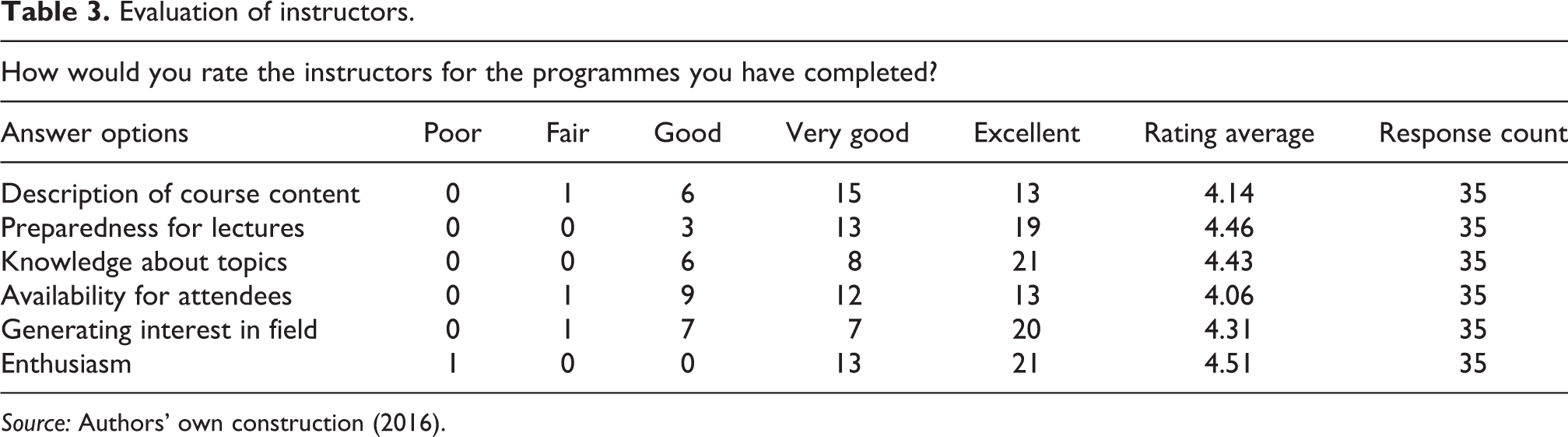
With regard to the quality of the presenters, participants were in general agreement that they were excellent and world-class in terms of talent and experience (Table 3). Generally, all survey items used to evaluate the instructors were rated ‘Very good’, with at least one-third of participants (more than 37% of the participants) rating the instructor for each area as ‘Excellent’ (over 70% responded ‘Very good’ or ‘Excellent’). ‘Preparedness for lectures’ had a high average rating of 4.46, with the ‘Enthusiasm’ of lecturers having the highest (4.51) – despite one outlier score of ‘Poor’.
Evaluation of instructors.
Source: Authors’ own construction (2016).
As Figure 4 indicates, respondents expressed a need for accessibility to lecturers and also a vital need for mentoring, coaching and support from experts. Without this additional support, the learning process and eventual commercialization of a new product could take more time. Participants emphasized the importance of networking, crucial as a source of collective knowledge which every tech-entrepreneur could learn from. Networking also provides a peer-to-peer learning experience and can create opportunities through the combination of local experiences and international mentorship. Local experts can highlight potential solutions to obstacles and challenges, while international experts can provide networking opportunities and significant information and insights if the business is geared towards the global market.

Average rating of lecturers per category.
Weaknesses of the programme
Eleven (of 35) participants could not think of any weak points, but not all were positive about the programme. One noted that they had already self-acquired everything the programme had to offer and that it had not assisted their business to move forward. All the knowledge the participant required was gained from online courses, more commonly known as Massive Open Online Courses and from mentors, all of which were completely unrelated to the programme.
One of the main weaknesses mentioned was the length of the programme. Six participants (of 35) noted that the duration of the programme was very short and should have been longer. As a result, certain aspects of the subjects appeared to be rushed as too much was fitted into too short a time or, alternatively, some subjects were covered insufficiently. Matching the duration of the programme to the needs of all participants is a common challenge. Uctu and Jafta (2014), for example, identified the same challenge in the bio-entrepreneurship programme. Similarly, Westhead and Storey (1996) (cited in Cooney, 2012) examined the relationship between management training and enhanced firm performance, suggesting that the reasons for an inability to demonstrate enhanced firm performance might be because the training was poor, the duration of the programme was too short to have any impact or it was too difficult to demonstrate a cause-and-effect relationship. Fiore et al. (2019) found similar issues in teaching entrepreneurship education for a multidisciplinary programme: students complained that they could not spend enough time with professors. Finally, Garavan and O’Cinneide, 1994: 6 (cited in Botha, 2006) summarized the most significant weaknesses of many entrepreneurial education and training programmes, highlighting that EET programmes were frequently of very short duration compared with other programmes concerned with helping people embark on a major career.
Connected to the above were complaints about the course content, with the observation that there were significant differences between South Africa and Switzerland: The gap between the SA-based programme and the Swiss-based programme is significant. One felt very inadequately prepared for the Swiss-based programme. Technology ideas from SA participants in the Venture Leader Programme were generally quite weak, and not based on a strong understanding of the commercial space, or a strong technology offering. It would have been really useful if the Swiss participants provided the SA techno-entrepreneurs with new ideas to pursue, e.g. technologies/business opportunities that are viable for SA people to pursue, but are not of high priority to Swiss partners.
Further constructive criticism related to the learning context and the impact of the programme design on participant behaviour. One participant believed that the content was not delivered in a way that allowed attendees to apply the lessons during ‘class’. Students had to go home to apply the learning, and this led to many drop-outs. One respondent asserted that ‘there were no genuine presenters at the pitches and to have actual venture capitalists at pitches could have contributed more effectively’.
One shortcoming related to selection is the varying backgrounds and the variation in the techno-entrepreneurial skill levels of participants. Whereas some participants had had some experience of running a tech firm, others were still in the early start-up phase. This point is also reflected in the feedback about the quality of the overall programme; due to the variation in experience and skill levels, the programme necessarily has to cover a wide array of areas and this reduces its effectiveness for specific participants. As a result, once participants enter the third phase of the programme, the gap between what they know and what their equivalent international tech-entrepreneur knows may remain.
Consequently, an argument was raised that the tech-entrepreneur training programme should be aimed at young (or new) entrepreneurs, specifically those with a technical background, but without any business experience: Different levels of entrepreneurs [are] exposed to the same content. Entrepreneurs should be graded according to what technology [they use], [the] point at which [their] business is developed, [what their] qualifications [are].
It emerged that wrap-around services, such as mentoring, coaching, follow-ups and networking opportunities post-programme, were viewed as significant needs. For example, the participants generally agreed on the lack of follow-up support. One touched on this important point: After the venture leadership programme in Switzerland, entrepreneurs are more often on their own; support beyond the Swiss visit should be provided to ensure entrepreneurs get their business plans off the ground.
Networking has attracted positive and negative feedback, but effective networking remains a key requirement for success in the opinion of the respondents. Nearly all participants (30 out of 35 responses) agreed that the programme had definitely contributed to their networks both locally and internationally. Furthermore, it was seen as a door into Europe via the networking events held in Switzerland. Participants also considered these events as an important step towards identifying potential sources of investment. Three participants said that they continued to work with contacts they had made during the programme and one confirmed that, through the networks established during the programme, they were collaborating and developing new products with partners they had met during networking events: I still communicate with some of the contacts I made in Zurich as well as their contacts in the Netherlands. We even went as far as co-developing a product together which is currently in progress, estimated to end in the next 15 months. Pitching like an actor is not for everybody – and only the people that were good at pitching benefited – I don’t believe that it should be all about pitching – constructing a bullet-proof business plan which requires a confirmed market, being able to present it professionally and ensuring all the gaps are covered is KEY to a successful entrepreneurial business and potential investment – being able to pitch like an actor on a stage – this should not be the emphasis – this is not the reality of business – I worked at a very high level in a corporate environment for 20 years (Director) and never had to pitch like an actor – and I presented to many investors at JSE level. To be honest, because the course placed so much emphasis on the ‘acting’ it put me off and made me feel inadequate, when in the meantime I had already come from a level where I had done it and raised money and investor confidence in a corporate – hence the reason why I was able to raise the funding for the project development on my own due to my corporate experience.
Follow-up courses and assistance
An additional indication of the quality of a programme is the willingness or otherwise of participants to attend follow-up courses or the desire for additional support. In this regard, 29 participants (out of 32 who answered this survey question) said that they would like to have additional support. The suggestions varied but can be divided into ideas for further courses and ideas for assistance. Eight respondents suggested courses ranging from advanced modules in entrepreneurship and leadership development, and financial, investment and business management, to business plan writing and fundraising. Also, the development of a tax module, a local programme similar to the VLP, since South Africa has its own nuances, as well a programme on exporting were recommended.
The biotechnology sector featured strongly in the suggestions for both courses (e.g. scale-up and quality management in the drug development sector, fundraising for biotechnology) and assistance (e.g. biotechnology product development and specific medical device technology commercialization). Given the emphasis on biotechnology throughout the survey, it might be sensible for the TIA to consider a specialist biotechnology entrepreneurship training programme again.
Four suggestions came from start-ups looking for assistance to learn from international experts about post-start-up issues, extra support for business development, grant funding opportunities and business intelligence about new start-up opportunities on a global scale. The remainder of the suggestions were concentrated in four areas: commercialization in global markets, planning commercialization and IP consulting; market penetration, marketing and endorsements; investment, fundraising, building relationships with clients, finding new technology investment opportunities and accessing investor platforms; and expanding wrap-around services such as mentorship, networking and access to business intelligence.
One participant specified that they needed actual (our emphasis) business support: We currently need R25m in seed investment to complete patenting and product development, as well as [for the] manufacture [of the] initial batch ([which will take] 3 months) and launch in EU and USA with marketing campaigns to start selling products. This will include a crowd-funding campaign, together with an entire kit for the South African swimming team going to the Rio Olympics 2016.
To assess the impact of the overall three-tier programme, respondents were asked to evaluate the comprehensive programme. We present the outcome below.
Programme’s impact on businesses and projects
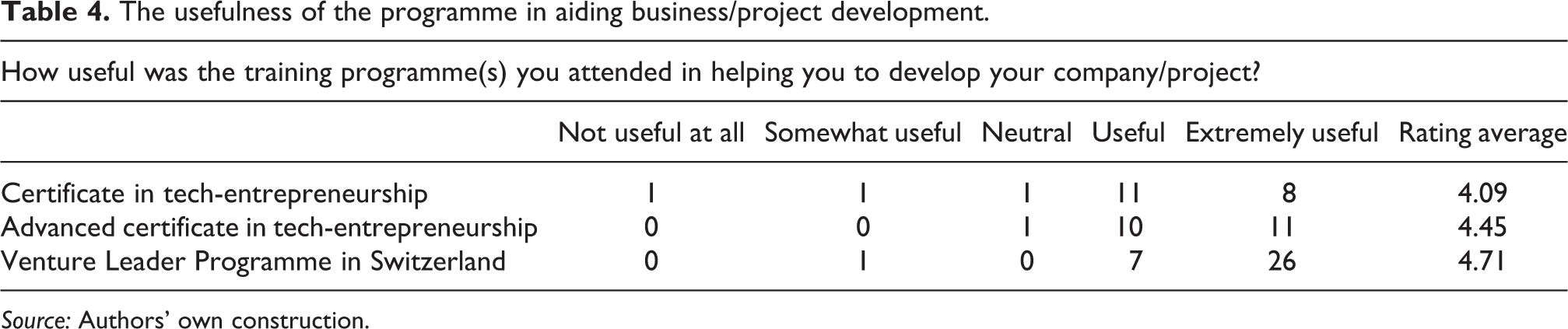
Nearly all participants (33 out of 35) were in agreement that the general three-tier programme was highly beneficial. The feedback is illustrated in Table 4 and Figure 5. Interestingly, the average rating scores, as well as the selection of the ‘Extremely useful’ option, increase as the training programmes become more advanced. This might reflect the fact that some participants had too much experience/expertise for Phase I and that the learning curve for this particular programme was insufficient. If so, it will be important to pay close attention to selection criteria for future programmes. Significantly, 26 out of 34 participants felt that the VLP was extremely useful, which strengthens the rationale for a potential expansion of that programme.
The usefulness of the programme in aiding business/project development.
Source: Authors’ own construction.

Usefulness of the programme in aiding business and project development.
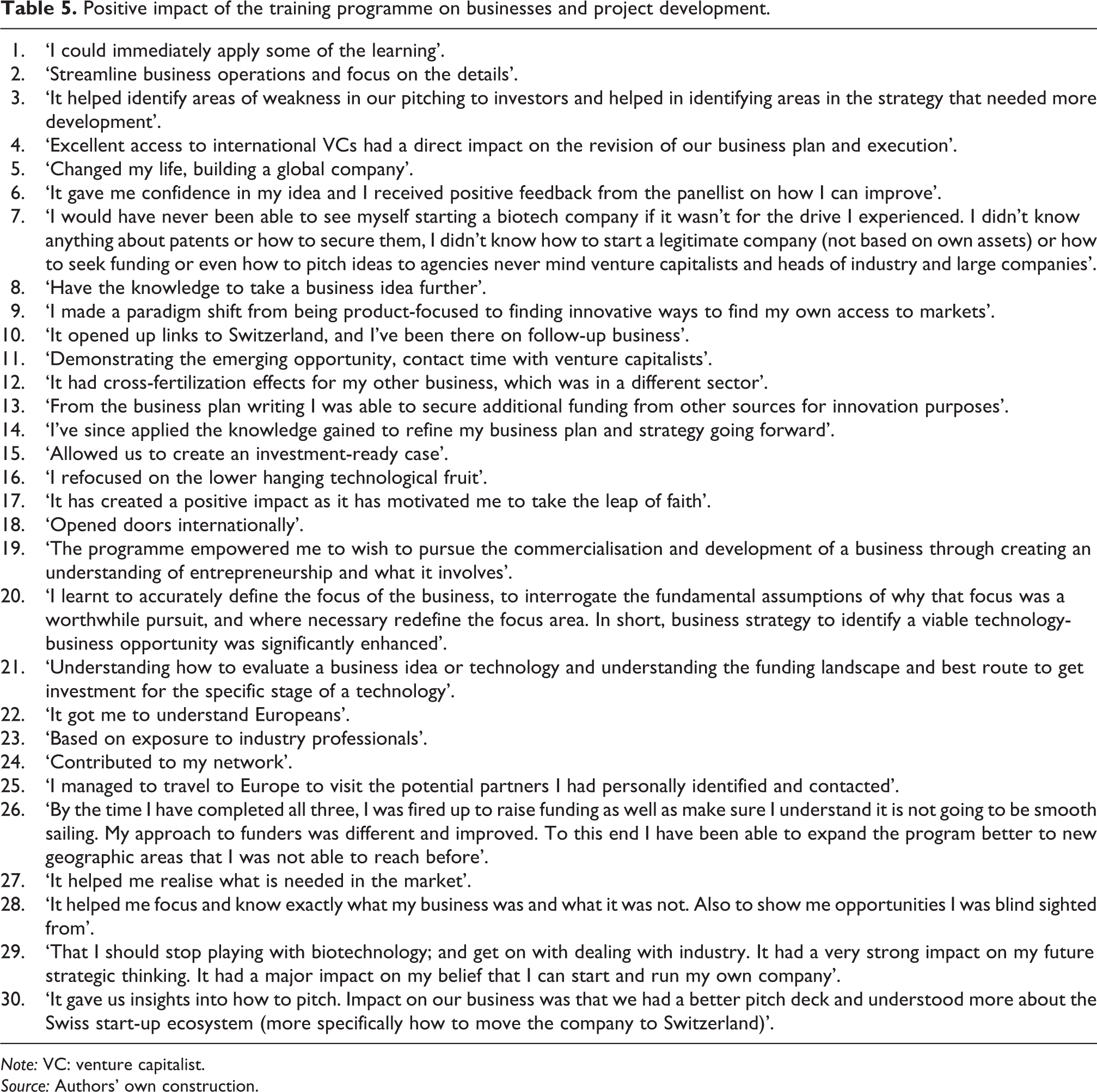
According to the participants, the programme impacted on their projects and businesses in many different ways. The feedback is illustrated in Table 5. Networking, meeting with others and accessing international venture capitalists (VCs) were among the main benefits. Several participants noted that the programme provided ‘excellent access to international VCs’ which, in turn, had a direct impact on the development of their business plans and the execution thereof. Another participant was more precise and mentioned that the programme had opened up links for their company in Switzerland and internationally.
Positive impact of the training programme on businesses and project development.
Note: VC: venture capitalist.
Source: Authors’ own construction.
One participant believed that the programme had changed their life by assisting them to build a global company, while two others said it had helped them to start their own company. Another concentrated on the lower hanging technological fruit: My initial focus was the development of the section insulator. However, [one of the presenters, B.S.] made me realise that the supporting technology (offering tremendous opportunities in switchgear) is on the one hand essential for the section insulator but also is more valuable (probably 400 times more valuable).
Willingness to recommend the programme to others
Overall, the positive view of the programme was again reflected in responses to the question of whether the participants would recommend the programme to other entrepreneurs, engineers or scientists, with only one contradicting the general response that they would definitely recommend it to other potential tech-entrepreneurs. Comments included: It’s such a great programme which every entrepreneur should go through this program not just tech entrepreneurs. Don’t get lost in the science – always see things in dollar signs as nobody will even blink twice never mind invest if your idea is not going to make money for them. It’s a good programme for young entrepreneurs. This program should be aimed at the young entrepreneur with a technical background, but without any business experience. It’s just an academic workshop(s) that doesn’t support businesses besides developing a pitch deck and a business model canvas. This can actually be self-taught and doesn’t require a mentor or an extensive programme. Start-ups in South Africa need funding primarily, secondarily they need access to networks, advisors, mentors and markets. Less catch phrases, more realness. Entrepreneurship is easy, but South Africa is making it difficult for anyone to start or run a business.
Discussion and conclusion
The responses to the survey questions were detailed and wide in scope. In this section, we use elements of the Valerio et al (2014) conceptual framework to draw together the main insights from the study. Broadly, the findings provide useful feedback to EET practitioners in two ways. First, the current elements of success in the programme are identified, as are the areas that need improvement. Second, the findings provide pointers for identifying when an expansion of the tech-entrepreneurship programme is ripe for discussion.
Progress in outcome domains
Our analysis reveals that the programme was largely successful in developing: entrepreneurial mindsets, as the references to socio-emotional improvements and awareness of entrepreneurship challenges attest; entrepreneurial capabilities, as the majority of participants saw improvements in their competences in, among other areas, management, marketing, financial management and investor interactions; entrepreneurial status, as some were able to find investors, start a new business and expand operations; and entrepreneurial performance – as the above section on the programme’s impact on businesses and projects confirms, participants reported that they were able to improve performance in various ways. The exact nature of their post-training entrepreneurial performance is explored in a follow-up paper.
With respect to the factors shaping these outcomes, most respondents were complimentary about the programme design, content and curriculum, trainers and delivery and some of the wrap-around services in the programme. Most of the weaknesses, however, also relate to programme design – some participants found that some activities required more time than was actually allotted to them; trainers and delivery generally scored quite highly in the assessment, except with regard to accessibility (which turned out to be participants’ expression of a need for mentorship); content and curriculum – a need for a more practical and less theoretical (‘classroom’) approach was expressed; follow-up services post-training – this aspect attracted significant criticism and revealed a need that should be addressed; and the heterogeneity of the participants, especially in terms of their entrepreneurial status and experience.
These observations and the suggestions for improvements and expansion lead us to the identification of focus areas to be considered by tech-entrepreneurship training programme owners and policymakers. Although the list is not exhaustive, it provides food for thought: Given the diversity of participants’ profiles, it might be sensible to reconsider the selection process, especially in terms of entrepreneurial experience and company status (e.g. pre-start-up phase as opposed to established companies). For young, inexperienced entrepreneurs, it may be necessary to test for entrepreneurial proclivity. Furthermore, as Matricano (2017:59) emphasized for Italy, a targeted approach in terms of variables such as age and gender, matched by an appropriate method of delivery, could positively impact entrepreneurship propensity and bode well for future start-ups. In addition, and related to the heterogeneity discussed above, and the suggestions for biotechnology courses and assistance, consideration might be given to sector-specific training programmes, rather than wide-scope general programmes. Moreover, when designing a cross-country, cross-culture collaborative programme, in this case in a developed–developing country context, the gap in knowledge and experience can be a two-edged sword: on the one hand, it provides extensive learning opportunities but, on the other hand, too large a gap can lead to frustration and demotivation. In considering the feasibility of scaling up, it is essential to think through how the particular programme fits into the tech-entrepreneurship ecosystem and the national or regional System of Innovation; how institutional linkages, such as the relationship to university technology transfer offices, could enhance or impede progress; and how partnerships can be built for some of the wrap-around services that tech-entrepreneurs need. These are matters for both programme owners and policymakers to consider. Lastly, it may be necessary to consider a fourth phase which provides continuous support of the wrap-around kind, such as mentorship and coaching, as Vosloo et al. (2018: 307) suggest for entrepreneurship programmes in architecture.
Bearing in mind that South Africa is a country in need of economic growth and employment creation, and that increased technology-based entrepreneurial ventures could be instrumental in fulfilling that need, the SSABD programme, specifically the VLP, was evaluated in this study. The key programme aims were to make an impact, through the development of entrepreneurial capacity, to support the development and commercialization of new ideas and creating new start-ups and to form collaborations between Swiss and South African start-ups. Based on our analysis, we conclude that all three key aims have been achieved, albeit at different levels of satisfaction for different participants. The respondents affirm that such a tech-entrepreneurship training programme is necessary and impactful and, furthermore, should not only be continued and improved, but expanded.
Footnotes
Acknowledgements
The authors wish to thank the respondents to the survey as well as the Technology Innovation Agency.
Declaration of conflicting interests
The author(s) declared no potential conflicts of interest with respect to the research, authorship, and/or publication of this article.
Funding
The author(s) received no financial support for the research, authorship, and/or publication of this article.
