



Abstract
The importance of cooperation between higher education institutions (HEIs) has increased and allows the development of competitive advantages, particularly through the transfer of knowledge and technology. Establishing well-conceived and well-managed cooperation networks can bring benefits and overcome obstacles. This article assesses the importance of cooperation between HEIs, characterizing the type of partner suitable for the establishment of cooperation and analysing the benefits and barriers that may arise. To achieve this objective, a qualitative approach based on a case study was adopted. Portuguese HEIs cooperating in the Business Simulation (BS) project were analysed. The results obtained reveal that cooperation between HEIs, more specifically in the BS project, is fundamental for the exchange of knowledge, the acquisition of new technology and platforms, and the acquisition of new work practices. However, it will be necessary to overcome barriers, principally of a more technological nature. This study uses a new and innovative structure, employing a model that expands knowledge on the topic by identifying three dimensions that influence cooperation between HEIs. The authors also present implications for theory and practice and propose an agenda for future research.
In the current era of globalization and knowledge-based economies, achieving innovation and knowledge is fundamental for companies to expand their horizons and grow economically. Higher education institutions (HEIs) face increasing competition (Bravo et al., 2018) and are under increasing pressure from society to act as engines of economic growth (Philbin, 2008). On the other hand, HEIs must also develop their traditional role linked to education and research (Alunurm et al., 2020; Guerrero et al., 2016, 2021). However, it may also be necessary for them to establish partnerships (Fernández-López et al., 2019; Gallego et al., 2013).
With globalization and information technology support, knowledge transfer in higher education has become more frequent and intensive, being easily transmitted between universities in different countries (Teichler, 2004). The relational capital established between partners can promote, besides a cooperative relationship, a basis for learning and knowledge transfer. In addition, successful relationships restrict opportunistic behaviour by any one partner, avoiding the elimination of critical knowledge and allowing the co-existence of competition and cooperation (Niemczyk and Stańczyk-Hugiet, 2014). Successful cooperation will depend on the choice of elements to form the partnership (Franco and Pinho, 2019). Different organizations have different objectives and interests, and so it is fundamental to identify common aims when developing coopetition to form successful collaborative relationships (Chin et al., 2008).
Although cooperation brings benefits to the participating parties, many problems can arise (Kube et al., 2015). Due to the increasing importance of HEIs, studies have been developed concerning the cooperation established between them (Chan, 2004; Franco and Pinho, 2019; Niemczyk and Stańczyk-Hugiet, 2014). An analysis of the literature led to the identification of topics to be investigated in this study which would direct the formulation of the questions to be developed. Thus, the following research questions were developed: How important is knowledge transfer between HEIs? What factors are considered when choosing a partner? What benefits can HEIs obtain through cooperation? What barriers may be faced and how can they be overcome?
Inspired by these questions, the objective of the study was to identify how cooperation could be considered as a strategic orientation contributing to the evolutionary process of university capacities in the era of globalization and knowledge. The analysis carried out was based on the Business Simulation (BS) project, developed in Portuguese HEIs. This paper aims to respond to the need for more research advocated by Franco and Pinho (2019), who call for more studies on HEI cooperation, including analysing various dimensions.
The article is structured as follows. The next section presents a review of the literature on cooperation between universities. The subsequent section describes the methodology used and the case study. The results are presented in the penultimate section and the final section sets out the implications for theory and practice and an agenda for future research.
Literature review
Cooperation theory provides a strong theoretical basis for explaining cooperation between HEIs. According to this theory, knowledge-sharing occurs between HEIs when they exchange experiences and have the motivation, trust and cooperation to achieve common goals (Eom and Lee, 2010). Cooperation can be defined as a relationship in which individuals, groups and organizations interact through dividing complementary capacities and resources or using them to pursue mutual goals (Osarenkhoe, 2010). However, to achieve this common goal, all involved in the cooperation must exhibit constructive and cooperative behaviour, and there should be no competition. Such behaviour will allow an increase in the quality and acceptance of the solutions developed (Tjosvold, 1984).
In addition to being educational establishments, universities are considered organizations that generate new knowledge, creating innovation through research. Research collaboration plays a fundamental role as it allows improvement in the creative process, which may be advantageous for HEIs (Numprasertchai and Igel, 2005). Cooperation can involve different types of partners and can be beneficial by enabling the acquisition of complementary knowledge or capacities (Badillo et al., 2016; Iammarino et al., 2012). However, for Kube et al. (2015) many and varied problems that can arise from cooperation, and these must be overcome.
Knowledge transfer
Universities are known to have a specific organizational structure, but nowadays this form of working is questionable (Czarnitzki et al., 2016). In recent decades, knowledge has become a resource of great importance for all organizations, including HEIs. Thus, networks and relationships are essential sources for sharing, disseminating and acquiring new knowledge (Carayannis et al., 2000; Eom and Lee, 2010).
Universities have three distinct missions: (1) scientific research; (2) producing knowledge directly applicable to industrial production; and (3) education in terms of human capital – including, through the training they provide, preparing future researchers (Ashraf et al., 2018; Bravo et al., 2018; Schartinger et al., 2002). In the university context, the main focus is on the essential activities of teaching and research (Ferguson et al., 2016). For Berbegal-Mirabent et al. (2015), the main objective of the university is to create and transmit knowledge. Therefore, to fulfil their aims, universities have implemented strategies to reinforce their capacity for scientific production (Durda and Krajčík, 2016). Thus, HEIs invest in resources that allow them to achieve the desired quality to achieve the expected results (Ferguson et al., 2016). They do not, however, always control all the important resources they need, and so they may be dependent on other HEIs to gain access to the information and knowledge (Pfeffer, and Salancik, 2003) they need to achieve their goals. For Lambiotte and Panzarasa (2009), scientific cooperation is important because it encourages the creation and dissemination of knowledge.
There are various methodologies for cooperation and knowledge transfer in the academic world: knowledge through media (books, films, letters, e-mail messages and others); the physical mobility of academics and students; collaborative research and joint teaching and learning projects; and transnational education. In academic knowledge transactions, unlike those of goods and services, those who provide their knowledge do not lose it; they lose only its exclusiveness (Teichler, 2004). In the field of cooperation between HEIs, Veugelers and Cassiman (2005) claim that innovation and technological development, provided by knowledge transfer, are the most important factors in this cooperation.
Choice of partner
There are various models of collaboration, including partnerships, strategic alliances and networks, depending on the combination of actors, roles and the strength of the bonds created (Lee et al., 2010).
‘Coopetition’ is another form of collaboration for HEIs. This concept is still the subject of much debate; for Mention (2011), it is a relationship that simultaneously involves competition and cooperation. Coopetition is based on interdependence between organizations, where they share common desires and goals. It is based on aligning different interests in favour of a common objective, and also on creating opportunities to generate competitive advantage, to remove external obstacles and to neutralize threats (Chin et al., 2008). For there to be cooperation, the interaction between partners must be based on trust (Le Roy et al., 2016). The intention is that each partner will contribute resources and functional capacities that the other lacks (Wu et al., 2009). Higher education is a sector in which cooperation and competition systems can be observed, these being the components of coopetition (Niemczyk and Stańczyk-Hugiet, 2014).
HEIs can participate in consortia as a form of cooperation. According to Beerkens (2002), consortia can be defined as groupings of various points of higher education institutions who have a limited number of members and where membership is restricted to private institutions authorized by other partners to conclude the agreement.
Universities establish a cooperation process for several reasons, the most important of which is the establishment of alliances to be competitive (Bravo et al., 2018; Chan, 2004). At the same time, cooperation also allows for an increase in the competitive position of an HEI through the learning and valuable resources obtained from partners (Niemczyk, and Stańczyk-Hugiet, 2014). Thus the choice of the right partners is a determining factor in achieving the proposed objectives and so for the cooperation to be considered a success (Franco and Pinho, 2019).
Cooperation: Benefits and barriers
University networks are considered a mechanism for the sustained promotion of collaboration, and normally involve a considerable number of universities concentrated on a specific objective (Chapman et al., 2014). Coopetition that involves a wide variety of universities increases competitiveness and improves the spread of knowledge. According to Erickson and Jacoby (2003), networks provide access to knowledge that enables the internal technological development of institutions and the spread of innovation, and allows the sharing of innovative work practices that organizations have developed or adopted. Coopetition can bring long-term benefits to all elements of the network and greater efficiency in the education sector, promoting unique and complementary resources (Niemczyk, and Stańczyk-Hugiet, 2014). Many advantages can be obtained through cooperation with competitors, such as increased absorptive capacity, better exchange of information and joint problem-solving. However, coopetition can also bring disadvantages in innovation performance – through, for example, opportunistic exploitation. It is important, therefore, to balance competition and collaboration to optimize innovation performance (Maroofi, 2015). For Kube et al. (2015), problems that can arise from cooperation relate to teamworking and management problems, the security of ownership rights, the management of natural resources, climate protection in the environmental economy, obstacles to trade, and the supply of public goods. However, knowledge-based collaboration should have a foundation of sharing, exchange and integration so that barriers may be overcome and goals achieved (Carayannis et al., 2000).
Another factor to be considered in cooperation is the characteristics of each network element’s surrounding context, as this can give rise to divergent interests in the cooperative context (Beerkens and Derwende, 2007; Padula and Dagnino, 2007). This factor relates to the culture and history of each institution, as well as procedures, routines and linguistic issues that can cause divergence between institutions involved in the cooperation and so generate conflict (Beerkens, 2002; Beerkens and Derwende, 2007). The success of cooperation depends on ensuring value creation for all parties involved (Spence, 2004), commitment and complementarity (Shah, and Swaminathan, 2008), and trust (Mukherjee et al., 2013; Shah, and Swaminathan, 2008). The choice of partners is one of the determining factors of the success or otherwise of cooperation (Franco and Pinho, 2019).
In establishing successful cooperation between HEIs, it is necessary to be aware of the importance of knowledge transfer and the choice of partner and to identify the benefits to be obtained and the barriers to be eliminated. Figure 1 presents the model of analysis to be used.
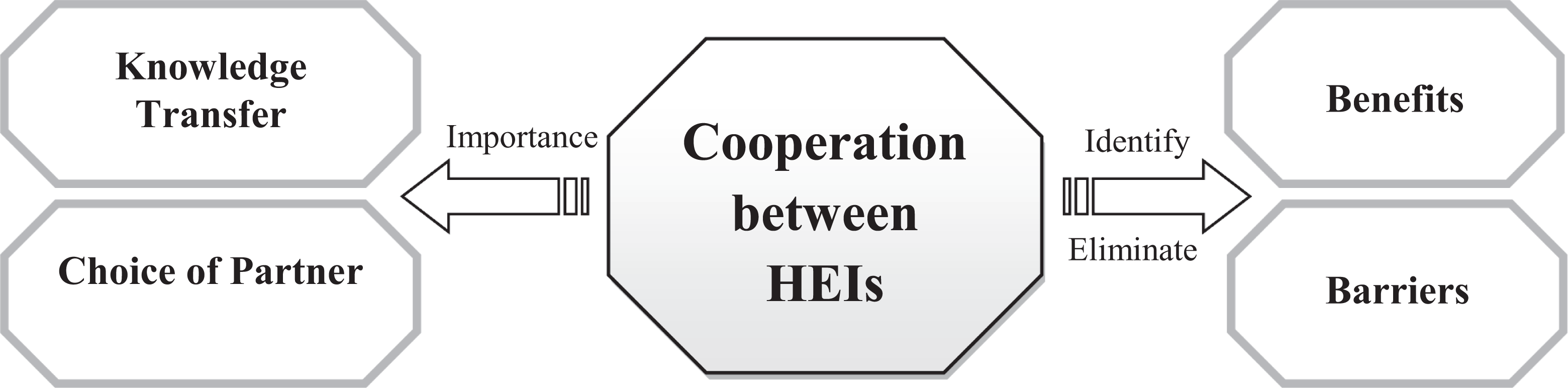
Model of analysis.
Methodology
Type of study
This study adopts a subjectivist approach, also known as qualitative (Silverman, 2016). According to Stake (1995), qualitative research can give the reader an empathetic understanding through describing experiences. This approach should be used when little is known about the phenomenon to be studied, apart from the fact that human sciences often deal with entities that cannot be quantified (Fassinger and Morrow, 2013). Therefore, primary data were collected to obtain a comprehensive response to the question under examination, which, according to Silverman (2016), enables the development of a detailed understanding of a given subject or circumstance.
The case study is the research methodology adopted here as the most appropriate for the issue studied, the aim being to understand a single complex event, its context and circumstances, capturing various patterns and elements that other research does not consider (Yin, 2018). This methodology allows concentration on a specific situation, leading to better, more complete knowledge of the facts, providing enhanced descriptions of mechanisms and processes and facilitating the induction of quantitative patterns for future research (Singh et al., 2015; Yin, 2018).
Case selection
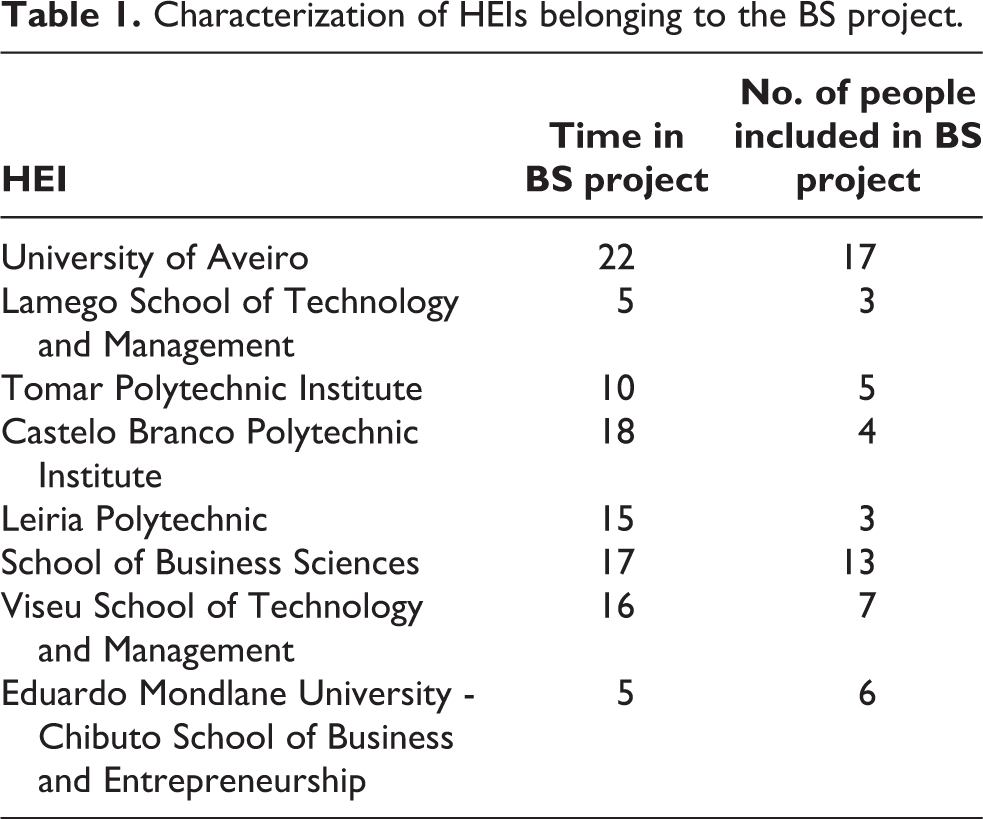
To carry out this research, the Business Simulation (BS) project was used. The choice of this project is based on its major practical contribution in preparing students for entry into the labour market and the opportunity to reflect on the form of cooperation established between the various HEIs cooperating in the project. The initial aim of the BS project was to combine a set of theoretical knowledge acquired over the preceding years with a practical, inclusive vision of that knowledge so that students would be better prepared and competitive with regard to their future careers. Assuming that the BS is an interface between the academic and occupational worlds, its role is that of a motivational catalyst of learning in a simulated environment that uses different areas of work to promote a multidisciplinary perspective. The project is coordinated by the University of Aveiro and, following inter-institutional protocols, also includes a network of Portuguese polytechnics: Setúbal Polytechnic Institute (School of Business Sciences); Viseu Polytechnic Institute (Lamego School of Technology and Viseu School of Technology and Management); Castelo Branco Polytechnic Institute (Idanha-a-Nova School of Management); Tomar Polytechnic Institute; and Leiria Polytechnic Institute. In addition, it includes a higher education institution in Mozambique – Eduardo Mondlane University, located in Maputo and Chibuto. Table 1 characterizes the eight HEIs participating in the study, seven of which are in Portugal, with the other in Mozambique. The table shows that many of the BS partners have been part of the project for 10 years or more and thus that they have extensive experience.
Characterization of HEIs belonging to the BS project.
The choice of the BS project for this case study was further based on the easy access it provided to data collection, the successful partnership between the various HEIs, and the fact that we found nothing in the literature analysing this project as a cooperative network.
Data collection and analysis
The aim of the data collection was to obtain information addressing the research questions and capturing the complexity of the main topic under study (Benbasat et al., 1987). According to Silverman (2016), primary data should enable a thorough understanding of a given topic, in this case the BS project and the importance of knowledge transfer and partner choice when establishing cooperation between HEIs, as well as the benefits and barriers experienced in the course of cooperation. The primary data were obtained through an interview script (see Appendix 1) addressing the main issues studied which was sent online to all coordinators of the HEIs involved in the BS project in the academic year 2019/2020 on 30 March 2020 and answers were received until 8 April 2020. Eight HEIs involved in the BS project participated, with the Eduardo Mondlane University in Maputo not being part of the research.
The BS project is a curricular unit, taught in degree courses in management and accounting, in the last year of the degree course. The project is based on a virtual market in which companies, managed by groups of two students, develop their businesses in intense interactivity over a virtual year. It uses platform informatics as a support, which provides the market with contact between partners and between these and the public entities inherent to the economic, legal and tax framework of any Portuguese or Mozambican company. Through the BS project, it is intended that the teacher, based on the information given by the students during their business activity, should assess each team’s knowledge. The pedagogical goal is, therefore, to strengthen the skills acquired in other curricular units and to consolidate, within the educational institution, professional, personal and ethical attitudes. In other words, it is to conceive a duality of practices in higher education: research and experimentation. The BS project includes teams of teachers and students from the various HEIs, with the University of Aveiro being the entity responsible for the ‘loan’, sharing and good management of the platform.
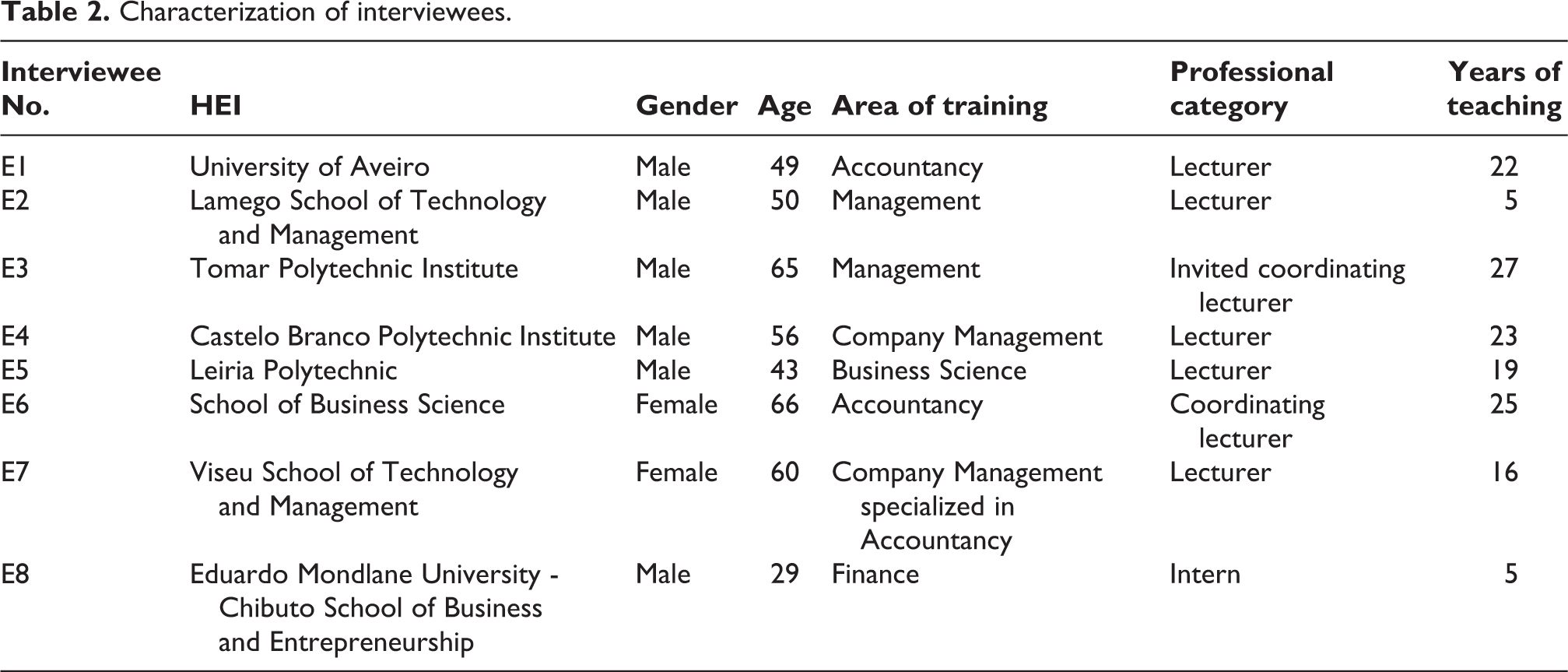
The data gathered from the interviews were analysed using NVivo 12.0 software, which allowed lexical analysis, analysing the responses of a qualitative nature. This revealed and categorized the various coordinators’ opinions, which were grouped. Table 2 characterizes the interviewees.
Characterization of interviewees.
Analysis of the literature review led to the identification of topics to be investigated in this study. Therefore, those responsible for the BS project in each HEI were asked to collaborate by answering the following questions openly: How important is knowledge transfer between HEIs and more specifically concerning the Business Simulation project? As Business Simulation is a cooperation project between competitors, what factors did you consider in choosing a partner? What benefits can your HEI obtain through this cooperation? What barriers do you face and how do you act to solve them?
Results
The analysis of the case study results follows the recommendations of Yin (2018), for whom the ideas to be structured should emerge from the literature review and reveal gaps and interesting topics for the research. Below the results relating to the topics addressed in this study are analysed: specifically, knowledge transfer, choice of partner, and the benefits of and barriers to cooperation.
The figures presented for the various topics and the word-clouds provided in the appendixes, showing the most commonly used words, were elaborated based on the information collected through analysis using NVivo 12.0 software.
Knowledge transfer
Cooperation is a strategy that can create value and new knowledge (Alves et al., 2015). The search for knowledge in external sources, such as entrepreneurial universities due to their scientific quality, is a central factor in the enabling of knowledge transfer and the enhancement of innovation capacities (Bellucci and Pennacchio, 2016).
The HEIs involved in the BS project are unanimous regarding the importance of knowledge transfer, considering it as fundamental for successful cooperation. According to Giuliani and Arza (2009), a significant aspect of cooperation is the multidisciplinary nature of knowledge production it allows. Participants E1 and E7 focus on this aspect. The BS project coordinator at the University of Aveiro (E1) provides his opinion on knowledge transfer between HEIs and with specific reference to the BS project:
The simulation allows contact and relations between students and lecturers in the various institutions of the network. Network functioning allows HEIs to know about the functioning, practice and teaching methodologies of other HEIs. For example, the BS was pioneering in issuing online receipts (green receipts and rent receipts) even before the tax authorities. Innovation arises from the proposals of the coordination, but also proposals from partner institutions (for example, the digital archive, implemented this year and which, unfortunately, has shown itself to be very useful at this moment). (E1)
The literature on cooperation also mentions the importance of transfer through creating new technology developed in universities (Franco and Haase, 2015a). E7 states:
The share of knowledge is very important for all parties. The entity initiating the platform (ISCA Aveiro) enriched its knowledge by making it available to other schools since it let them conceive and develop a much wider and more diversified virtual market. Each member school had the advantage of joining a process in action instead of conceiving a new one, with multiple advantages: economic, financial and knowledge. The starting point is already at a more advanced stage with the initial difficulties being shared by the other schools. We all stand to gain. Pupils can do a much more enriching experiment than if they were on a work placement. They can be owners, partners, managers, accountants, among others, of the firms they form and in their interconnection with external bodies – clients, suppliers, banks, the State – and internal users – managers, employees, production, etc. This practice means students join the labour market much better prepared, even in the use of innovative, digital platforms, bringing added value to the business world. (E7)
E2, E3, E4, and E5 underline the importance of transfer through access to innovation and the use of new work practices, as referred to in the literature by Erickson and Jacoby (2003).
Knowledge transfer is seen at various levels – in the creation of R&D projects, the spread of technology and the promotion of international cooperation (Badillo et al., 2017). E7 and E4 also indicate the diffusion of knowledge as a crucial factor for organizational development.
E7 addresses the aspects referred to by Schartinger et al. (2002), who state that HEIs perform a third mission as generators of industrial innovation in terms of human capital through the training they supply, preparing future employees and researchers.
Appendix 2 and Figure 2 reveal the words most used in the interviews and are consistent with the literature. The most frequently used are: ‘knowledge’, ‘practices’ and ‘work’, with six occurrences each. ‘Innovation’ and ‘new’ occur five times, ‘schools’, ‘important’ and ‘share’ four times, ‘platforms’ and ‘receipts’ three times, and ‘students’, ‘accountancy’, ‘digital’, ‘business’ and ‘teaching’, two times.

Knowledge transfer – most frequently occurring words.
Choice of partner
For Franco and Haase (2015b), it is essential to gain a more profound knowledge of the reasons that lead universities to cooperate. This will enable the transfer of knowledge and technology. The selection of the right partners in the external environment can be a determinant of success (Seo et al., 2017). The factor most indicated in the interviews as influencing the choice of partner was the quality of the project, this being mentioned by E2, E3, E4 and E5.
Competitive advantage, opportunities for field experiences, financing of academic activities and the transfer of knowledge and technology are among the benefits that can arise from cooperation (Morandi, 2013). E3 mentions the sharing of experience and E2 goes further, saying:
Perhaps due to the quality of the project, the platform provided and the bonus of including various HEIs and allowing contact between lecturers and forming other partnerships. (E2)
E1 and E3 refer to the capacity and technical support that are possible with cooperation, agreeing with the study by Badillo et al. (2017):
The choice of institutions by the University of Aveiro does not consider questions of competition, but rather partners’ technical capacity and the teaching body. (E1)
For Park et al. (2015), as markets and technology are constantly changing the traditional practice of depending exclusively on internal R&D can mean that firms face a major challenge. So, companies, universities, research centres and governments should identify potential R&D partners as a tool to support decision-making. E7 mentions one motivating factor as access to technology and the associated cost saving:
When signing the protocol, the motivation was access to new technology – the platform installed by the partner. The amount to pay is less than it would cost to elaborate an identical platform. (E7)
Today, universities form links with each other for a variety of reasons, but importantly and frequently they form alliances to compete in the global educational market and en masse (Chan, 2004); this factor is indicated by E8 as a factor influencing the choice of partner:
The applicability and functionality of the business practice. (E8)
Appendix 3 and Figure 3, providing respectively a summary of counts and the Tree Map, reveals the words most commonly used in the interviews, and these results are consistent with the literature. The most frequently used words were ‘practices’ and ‘quality’, with four occurrences each. The word ‘platform’ occurred three times; ‘lecturer’, ‘partner’ and ‘technical’ two times; and ‘access’, ‘admission’, ‘applicability’, ‘support’, ‘Aveiro’, ‘capacity’, ‘competition’, ‘contact’ and ‘body’ once.
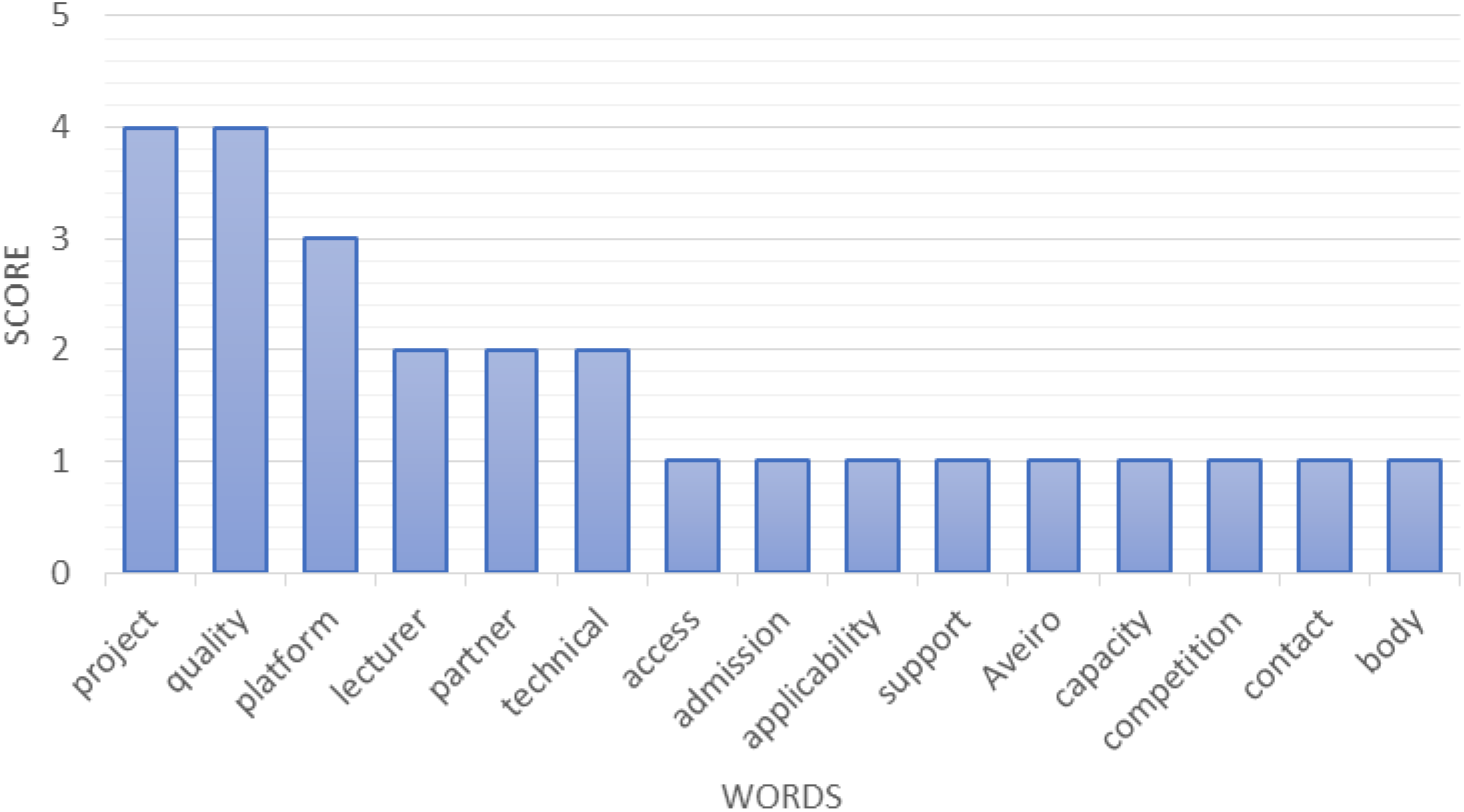
Choice of partner – most frequently occurring words.
Cooperation: Benefits and barriers
Continuous, long-term cooperation can help to diminish conflicts and barriers, allowing benefits for both parties (Muscio and Vallanti, 2014). Interviewees E2 and E6 agree with the literature when stating that the BS project develops without problems:
Nothing to point out. No major difficulties have emerged. (E2) I don’t identify barriers. (E6)
For Ramos-Vielba et al. (2016), it is important to understand the reasons for cooperating, and the barriers preventing cooperation, with external partners from the public and private sectors. Reasons given for cooperating include the type of partner organization involved and seeking opportunities to apply knowledge. As a research group matures and gains additional capacity in human resources, the motivation to cooperate with external partners will be greater. Interviewees E1, E3, E6 and E7 agree with the literature, indicating that the number of elements in the network can be a factor of evolution, allowing increased quality:
The bigger the network, the greater the demands and the faster the evolution. (E1) Good functioning and greater quality in training. (E3)
Knowledge transfer projects and cooperation are critical for contemporary society. One means of cooperation for knowledge transfer is through projects. In establishing such cooperation, analysis of the process and the objectives should be clearly understood by all parties, and the continuous monitoring of objectives and feedback can facilitate and promote an effective process (Branten and Purju, 2015). There is growing interest in applying the intellectual capital developed by universities. Universities generate (research) and transmit (teaching) knowledge, employ knowledge workers, and are committed to improving innovation capacity and the capacity to work with different partners, which is essential for competitiveness and growth (Sáchez et al., 2009).
E2, E4, E5, E7 and E8 share the opinion of previous studies, indicating that the BS project is fundamental in training students for their future entry into the labour market:
Participating in a global project with a national dimension and recognized by the OCA [the Order of Certified Accountants]…and the business community gives importance to the Accountancy and Financial Management course. It means students do not need to complete work placement to enter the profession as a Certified Accountant. (E4) The possibility of providing students with an innovative learning process, to apply and obtain competences in a simulated environment. (E5)
For Lhuillery and Pfister (2009), the unstable nature of cooperation in R&D can produce disappointing results. The risk of failure is a strong determinant in the decision not to collaborate in R&D. Partnerships with competitors and public research organizations are more likely to fail.
Scientific risks – namely autonomy and credibility – are the barriers to cooperation indicated by Ramos-Vielba et al. (2016). These were not mentioned in the interviews, with E1, E4, and E5 stressing students’ capacities, knowledge and doubts, rather than aspects of the project itself:
The main barrier is related to the high level required of students regarding technical knowledge of accountancy, taxation and computing. The solution lies in the strong motivation and effort shown by students and the close accompaniment they receive. (E5)
In developed countries, most R&D work is carried out in universities. According to Deák and Szabó (2016), the use of research infrastructure is one of the most logical and apparent uses of university resources, being considered as important as basic R&D for innovation. Although this is also indicated as important by the participants, interviewees E3, E7 and E8 mention computer equipment and some failings in the platform used as among the factors that can create barriers and difficulties in the BS project:
The barriers that appear are quickly resolved, with the best solution possible. Generally, they are technological: computers that break down, no Internet…The major challenge was the current context of suspending face-to-face classes – it was quickly solved.…All the barriers were always faced by the team as challenges. (E7) Barrier: inconsistency sometimes in the platform. (E8)
Those managing or supervising a cooperation process are challenged to understand how the whole cooperation phenomenon functions and also to maximize the results achieved with the investment (Galan-Muros and Davey, 2019). E3 agrees with the literature when indicating the effort needed in BS articulation and coordination:
Platform functioning, high concentration of work in limited periods. Great effort of articulation/coordination. (E3)
Appendix 4 and Figure 4 show that the most frequently used word with regard to benefits was ‘students’, with seven occurrences. This was followed by ‘business’, ‘training’, ‘network’ and ‘work’, with three occurrences each; and then ‘access’, ‘lecturers’, ‘schools’, ‘internship’, ‘project’, ‘quality’, ‘recognition’ and ‘simulated’ with 2; and finally ‘addition’ and ‘learning’ with only 1 each.
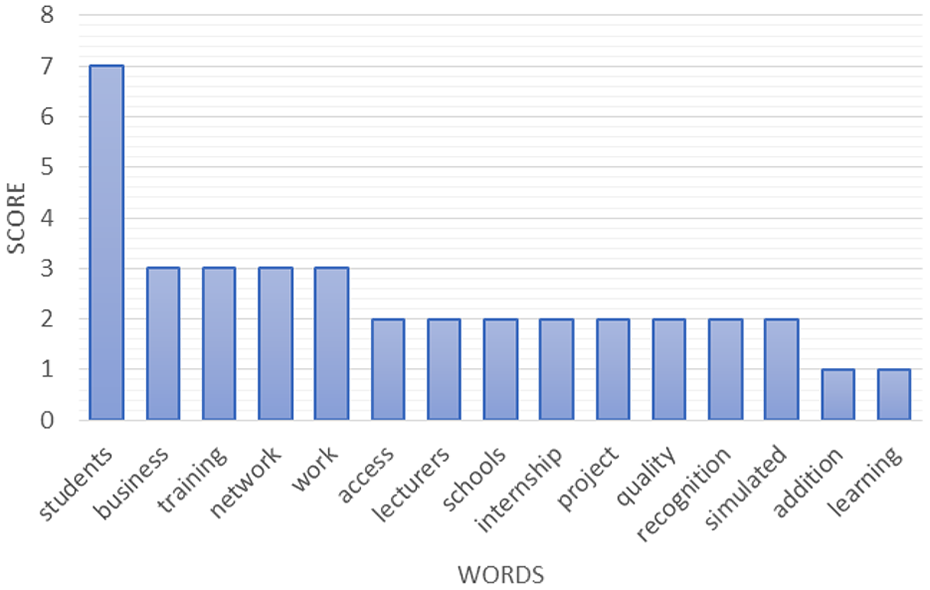
Benefits – most frequently occurring words.
As for barriers, Appendix 4 and Figure 5 show that the most frequently used word was ‘students’, with six occurrences, followed by ‘face-to-face’ with 3; ‘context’, ‘coordination’, ‘challenge’, ‘team’, ‘taxation’, ‘platform’, ‘problems’, ‘resolving’ and ‘work’ with 2; and finally ‘accompaniment’, ‘articulation’, ‘assessment’ and ‘computers’, with 1.
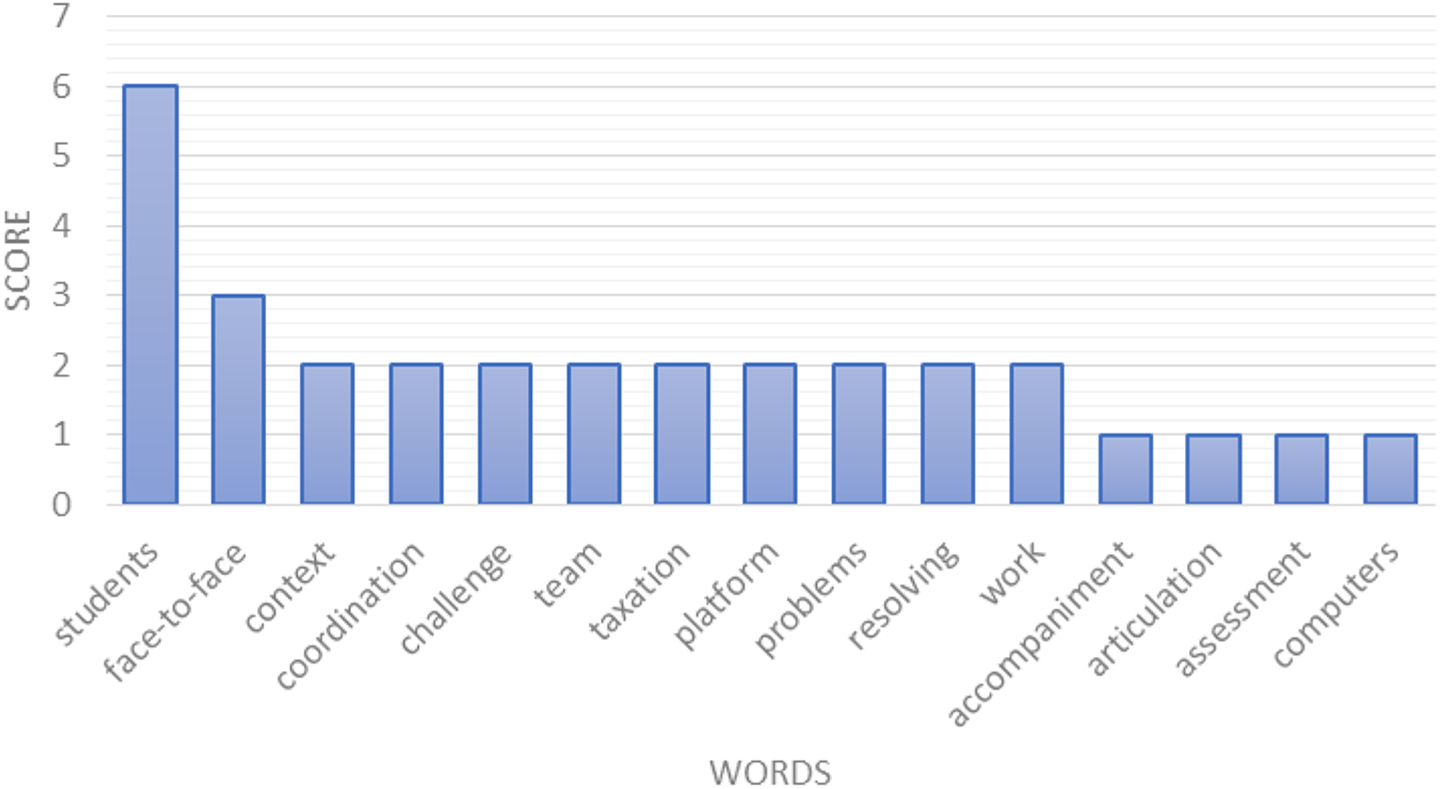
Barriers – most frequently occurring.
For this topic, the most frequently used word, in relation to both benefits and barriers, was ‘students’. As the interviewees see it, it is students who gain most from the cooperation as they receive better-quality training. However, associated with that quality is a high level of demand on both the students, regarding their academic and technical knowledge, and their lecturers who must coordinate the BS project effectively and efficiently.
Summary of results
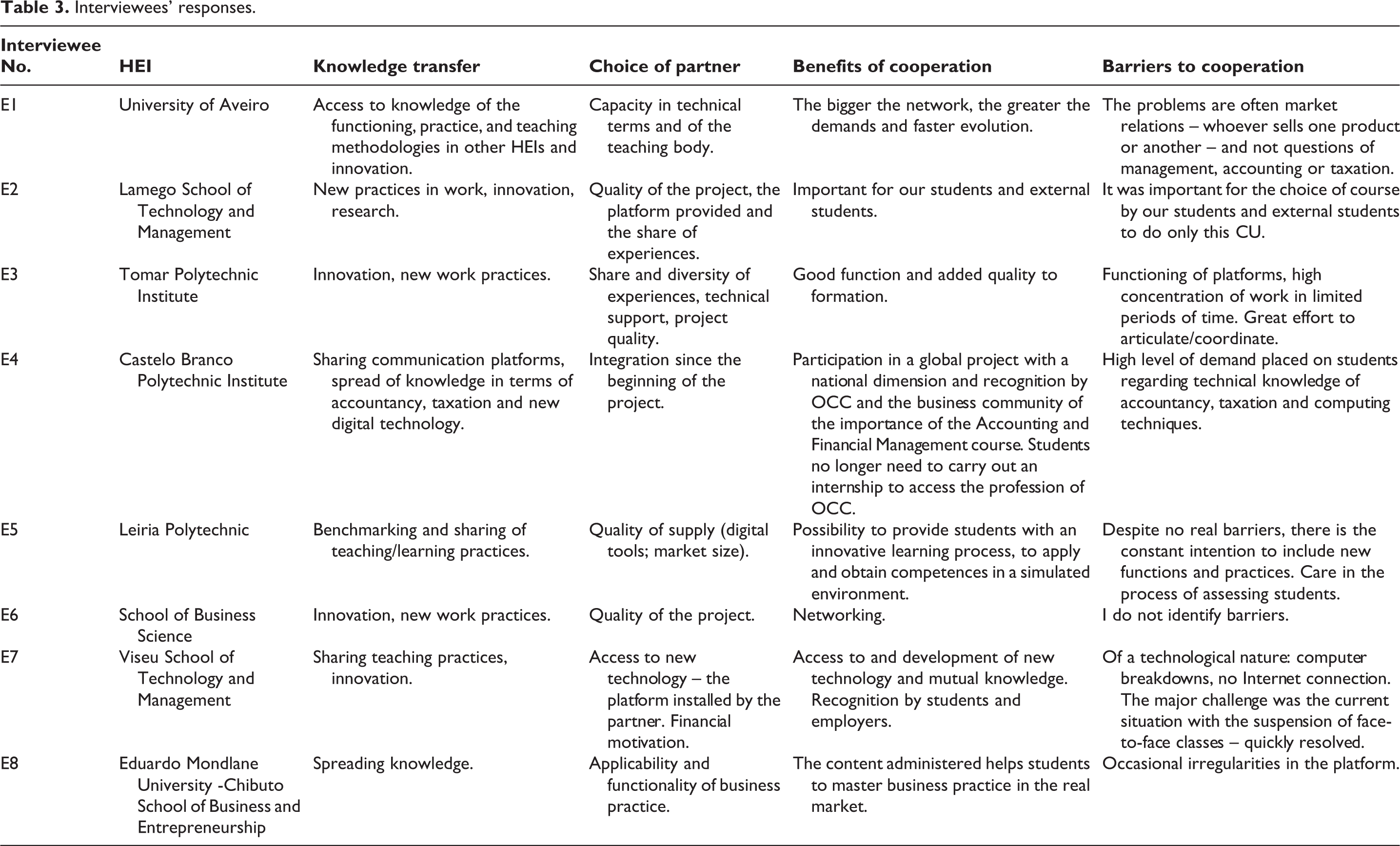
Table 3 summarizes the main ideas and opinions of the eight coordinators of the BS project participating in the study concerning the three topics identified – knowledge transfer, choice of partners and cooperation benefits and barriers.
Interviewees’ responses.
Conclusion, implications and future lines of research
Cooperation could constitute an important framework for the development of universities (Bravo et al., 2018) and countries (Kapetaniou and Lee, 2017). However, the choice of partners is important for the success of cooperation (Franco and Pinho, 2019) and the achievement of objectives.
The main aim of this study is to provide a broad view of cooperation between HEIs. Three dimensions have been analysed: knowledge transfer, the choice of partners, and benefits and barriers to cooperation. The study takes the case of the Business Simulation project, formed by nine HEIs.
Theoretical implications
This study makes a number of theoretical contributions to the topic of cooperation between HEIs. First, it confirms that knowledge develops when HEIs cooperate, exchanging experiences, and when they are motivated to engage with and feel confident about their partner(s). In successful cooperation, HEIs achieve their common objectives of an increase in the quality of research, knowledge and the creation of innovation. Thus, this study confirms the results achieved by Numprasertchai and Igel (2005) and by Osarenkhoe (2010). However, it is important not to underestimate the choice of partner, as a bad choice can lead to failed cooperation. Although cooperation between HEIs can be beneficial to both sides, problems may arise in the cooperative process. In this respect, this study confirms the results of Badillo et al. (2016), Iammarino et al. (2012), and Kube et al. (2015).
The empirical evidence obtained from the BS project reveals that partners are unanimous regarding the importance of knowledge transfer, this being a crucial factor for HEIs’ success, as it allows faster access to knowledge that other HEIs already possess, and together they can find solutions to common problems. As for the choice of partner, various aspects, such as access to new technology, finance and being able to work in networks by sharing experiences were mentioned, but the most commonly noted factor was the quality of the project. Concerning the benefits, the interviewees indicated first student training, marked by quality, rigour and high demands. Thus, students and employers recognize the quality of teaching. Another benefit mentioned was networking, which, as well as the sharing of experience, can help to solve mutual problems. With regard to barriers, the most frequently mentioned was that of the demands made on students concerning the academic and technological knowledge required to complete the BS project. Associated with this barrier was the possible difficulty in providing follow-up to students due to the excessive workload. As for technological aspects, which are identified in the literature and by the interviewees as a beneficial factor in cooperation, they were also indicated as a barrier, particularly in relation to technical problems such as computers breaking down and difficulties in accessing the Internet. (It should also be noted that two of the interviewees did not report any type of barrier.)
Finally, we have responded to a call in the literature for additional research into cooperation among HEIs, including the analysis of various dimensions (Franco & Pinho, 2019), by identifying and illustrating three dimensions that influence cooperation – see the framework presented in Figure 6, in which the various influencing factors are set out.
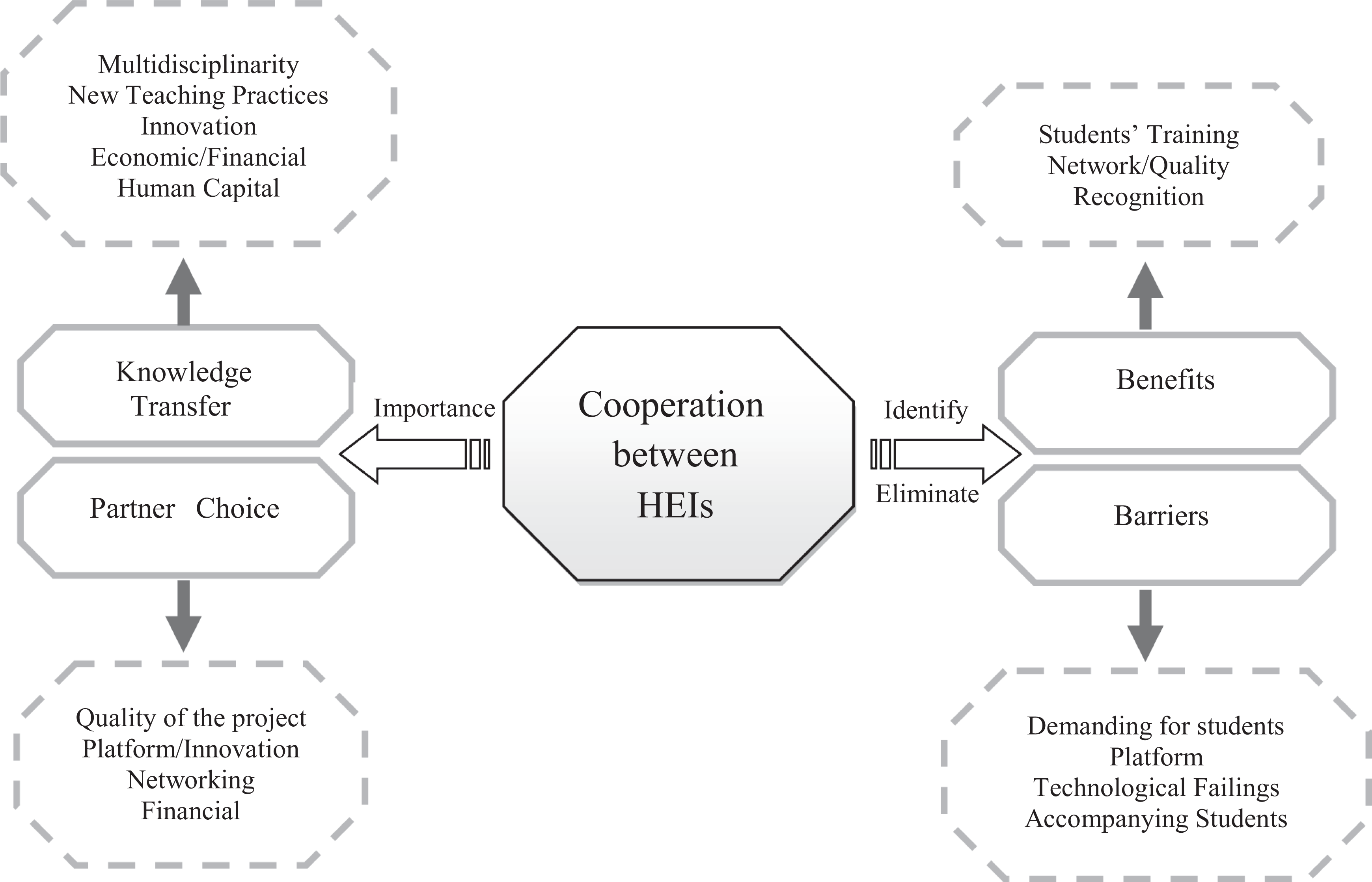
Framework of cooperation between HEIs in the BS project.
Managerial implications
In line with Carayannis et al. (2000) and Eom and Lee (2010) our results show that, concerning the BS project, all universities were unanimous regarding the importance of knowledge transfer. The study also shows that the project is important for both the HEIs and students because it is widely recognized in the labour market, and more specifically by employers.
Our results confirm that determining the right partners is very important for successful cooperation (Franco and Pinho, 2019). Various criteria were presented for the choice of partner, all of them agreeing with the literature. The study participants mentioned the quality of the project, innovation through the use of a platform, the relationship established in the network and the financial aspect as determining factors in the choice of partner. Thus it is important, when establishing a cooperative project, to pay careful attention to the choice of partner HEI, assessing recommendations and previous experience and ensuring that there will be advantages and improvements for both institutions. Furthermore, since this type of project aims to have implications for the labour market, it is in the HEIs’ interest to establish cooperative processes with industry to assess market needs and train students to bridge skills gaps.
As Niemczyk and Stańczyk-Hugiet (2014) and Kube et al. (2015) claim, cooperation brings benefits but also presents barriers that must be eliminated. Although there were confirmed benefits from cooperation in the project studied, including knowledge-sharing, innovation and new teaching and work practices, some obstacles were also identified, including an excessive workload for students and teachers associated with the BS project. It is therefore suggested that work teams should be increased to remedy this situation. The technological aspect was also identified as a barrier because of certain technical problems exclusively associated with the project. Any such barriers could be overcome by appropriate technical training for teachers and staff participating in the project. Eliminating barriers to cooperation would lead to improved results. Thus, it is important that the results obtained through cooperation are disseminated to the community and governments to allow for an increase in the recognition and prestige of the HEIs. Finally, for cooperation to develop successfully, there needs to be government intervention in the form of facilitating and incentivizing policies, since universities are considered fundamental to a country’s economic and social progress (Kapetaniou and Lee, 2017). Governments should provide finance, supporting projects developed by HEIs to achieve the objectives proposed, generating beneficial knowledge for all.
Limitations and future research
The limitations of the study are related to the methodology used. The case study approach means that conclusions cannot be generalized and there is a problem of subjectivity in interpreting the responses. Besides, although the BS project is formed of nine HEIs, a greater number of interviews might be beneficial to support the results obtained or, indeed, to obtain new ones. No other BS projects involve cooperation between various HEIs, but are developed by HEIs autonomously and individually. Another limitation is the fact that the study uses only interviews to support the results obtained: it is suggested that future studies might include other analyses of the BS project, such as the elaboration of a comparison between the results obtained when there is cooperation between HEIs and those obtained when there is not. It would also be interesting to include other dimensions in the study, such as the influence of culture.
Footnotes
Acknowledgements
The authors are grateful to the anonymous referees of the journal for their extremely useful suggestions to improve the quality of the paper.
Declaration of conflicting interests
The author(s) declared no potential conflicts of interest with respect to the research, authorship, and/or publication of this article.
Funding
The author(s) disclosed receipt of the following financial support for the research, authorship, and/or publication of this article: The authors also gratefully acknowledge financial support from National Funds of the FCT – Portuguese Foundation for Science and Technology within the project UIDB/04007/2020.
