



Abstract
This paper explores the effects of gamification (a game-based student response system) on student learning in the United Arab Emirates (UAE). The data, collected through a series of semi-structured in-depth interviews with 32 learners, were analyzed using qualitative thematic analysis (i.e., template analysis). Based on an in-depth analysis of the data using NVIVO 10, the authors propose and apply the “PERI” model to develop multi-focal insights into gamification and its influences on student learning. The model proposed is original and comprehensive, encompassing (1) Preferabilities (P), (2) Experiences (E), (3) Recommendations (R), and (4) Impressions (I). Although most of the findings were positive with regard to application and receptivity across all dimensions of the PERI model for the gamification tool—a game-based student response system (GSRS) used for delivering education—they also reveal areas in need of development for the successful embedding of gamifying technology–enhanced learning provisions and their efficacy in teaching and learning pedagogy. The conclusions of this study outline implications for educators, students, education leaders, and gamification product developers.
There has been an increased incentive for higher education institutions (HEIs) in the United Arab Emirates (UAE) to foster an entrepreneurial culture and nurture entrepreneurial talents among students by harnessing their enterprising and entrepreneurial characteristics through educational programs (Yasin et al., 2020). The increased adoption of digital technology in teaching and learning in higher education teaching was previously a voluntary preference. However, the adoption of digital technology has been gaining significant interest across HEIs, particularly during the COVID-19 pandemic, when regulations were imposed on universities to minimize face-to-face contact with the use of distance learning methods, that is, by adopting e-learning or blended learning approaches as alternative measures.
Simulation-based learning and gamification approaches are increasingly popular globally in diverse areas of business education, including technical and non-technical role-playing, computer and web simulation programs, and the case study approach (Mayer et al., 2012; Breckwoldt et al., 2014). There is also increased dissemination of effective practices among types of gamification approaches, such as SimVenture and VentureBlocks (Yasin and Hafeez, 2018).
The GSRS (game-based student response system) is essentially one form of gamification. It remains a modern concept, with relatively little scholarly attention so far paid to its efficacy and student experiences across a diverse range of disciplines. We concur with Huseyin and Kocakoyun (2018) that future research should determine the achievements, motivations, and opinions of students. To this end, for the present study qualitative methods of inquiry were employed to develop an empirically grounded model based on an in-depth analysis of the data collected. Hence, the “PERI” (Preferences Experiences Recommendations Impressions) framework for gamification was developed and operationalized to represent the multi-dimensional nature of students. Thus, the purpose of this study is to explore how the use of a GSRS influences student learning through the PERI model at an HEI in the UAE.
The next section presents a review of the literature, which is followed by an overview of the GSRS tool, methodology, findings, discussion, and finally, our conclusions.
Literature review
Digital transformation is having a profound impact on education with the development and proliferation of computer-based games that are informing contemporary teaching and learning pedagogies in Western HEIs (Yasin and Hafeez, 2018). Gamification is identified as a tool for supplementing branding initiatives through the application of game elements and mechanics (Zichermann and Linder, 2010), whereas a GSRS is a program that allows students to answer questions in real time, obtains statistics based on student responses in a class and then assesses the overall understanding of the students (Limniou and Mansfield, 2019). Therefore, there is a clear distinction between the terms “gamification” and “game-based student response system,” as is also identified by Jayasinghe and Dharmaratne (2013).
More recently, an increasing number of GSRS software and web-based solutions have been offered by private market vendors, with products such as Kahoot! and Socrative replacing pre-existing student response systems such as iClicker and Poll Everywhere (Plump and LaRosa, 2017).
The increasing number of platforms now available to educators is due to the widening of consumer groups, the democratization of computing and digital technologies and the increased range of target audiences of gamers that have continued to change over the last two decades (Seaborn and Fels, 2015). Therefore, the generally held notion that gaming is solely a teenage phenomenon can be contested. For example, Seaborn and Fels (2015, p.14) stated: ‘The notion of the solitary teenaged white male gamer is no longer relevant: the average gamer is 30 years old, is 45% likely to be female, tends to play puzzle, board or casual games, and is likely a part of the 62% who play games socially.’
However, the positive influences of gamification techniques are well established at the primary and secondary levels of education (Barrio et al., 2016; Wang and Lieberoth, 2016). The findings of a recent qualitative study on the use of Kahoot! in an Information Systems Strategy and Governance course at a university in New Zealand, found that GSRS interventions enriched the quality of student learning in the classroom, created positive classroom dynamics, enhanced engagement and motivation, and minimized distractions while also improving the student learning experience (Licorish et al., 2018).
A systematic literature review carried out by Vlachopoulous and Makri (2017) identified that games/simulations might have a positive impact on predetermined learning goals. The authors present three learning outcomes while integrating these games/simulations into the learning process: the outcomes are identified as cognitive, behavioral, and affective (Vlachopoulous and Makri, 2017). Various authors promote the benefits of adopting games/simulations in courses in higher education (Lean et al., 2006; Vlachopoulous and Makri, 2017; Wiggins, 2016). Additionally, authors promote further research focusing on investigating the impact of games/simulations on learning goals—future findings might challenge or develop current notions on the related learning outcomes (e.g., cognitive, behavioral, and affective, as identified by Vlachopoulous and Makri (2017)).
A study on the use of a GSRS focusing on students on information science (Licorish, et al., 2018), computer science (Wang, 2015), and medical education (Ismail and Mohammad, 2017) courses found that all students reported positive benefits from engaging with a gamification activity. In Malaysia, Tan et al. (2018) conducted a small-scale survey in an English-language course at a university. They reported positive influences in terms of explicating students’ intrinsic and extrinsic motivations while also emphasizing that Kahoot! helped students to revisit the key learning points of missed lectures, and significantly assisted them in knowledge reinforcement and retention (Tan et al., 2018). Felszeghy et al. (2019), in a quantitative study on human morphology at a university in Finland, found positive results in students’ learning as a result of a gamification activity that increased the learner’s motivation and helped the leaner to overcome individual difficulties and develop collaborations with other learners. Gamification has promoted interest in and received positive feedback from senior professionals and learners (Felszeghy et al., 2019).
From a functional perspective, a study conducted in Malaysia found that Kahoot! was a user-friendly tool in comparison to other alternative GSRS platforms for reasons including the ease in downloading the application for both Android and Apple iOS operating systems (Rosdy and Yunus, 2021). The study reported increased student motivation for learning; students were able to determine the subject matter that needed to be studied, and also had a greater awareness of their learning (Rosdy and Yunus, 2021). In a case study based on a small-scale survey of second-year undergraduate hospitality management students studying a research methods course in the UK, Gebbels, 2018 reported positive benefits from the use of a GSRS with regard to improvements in conceptual understanding, increased motivations, and deeper learning of content.
In terms of negative aspects related to the use of Kahoot!, a study conducted by Wang and Tahir (2020) at primary and secondary levels identified unreliable and unstable Internet connection, difficulties in reading questions on projected screens, restrictions on resubmitting answers, time-constrained pressures, and the fear of losing as problems or limitations associated with using Kahoot! (Wang and Tahir, 2020). From the operational perspective of an academic instructor on a chemistry course, Grinias (2017) noted that the Kahoot! learning platform imposed a character limit, thus requiring instructors to create and upload images of the question as an alternative method.
In summary of the review of extant literature, there are limited, if any, empirical insights that qualitatively evaluate students’ learning preferences, impressions, recommendations, and experiences regarding the use of a GSRS in a higher education setting. Furthermore, previous studies have classified outcomes as individual variables or stand-alone themes, and therefore there has been little theory-building and few models have been proposed for the advancement of the literature on GSRS. This should be rectified so that students’ learning preferability, experience, recommendations, and impressions can be unified in a model from the students’ perspective. Based on the review of the literature, we conclude there are limited empirical insights in this context into student learning in entrepreneurship and enterprise education courses, and particularly among HEIs in the UAE. The next section will provide an overview of the gamification tool (GSRS) that was adopted in this study.
Kahoot! The GSRS activity tool
Founded in 2012, Kahoot! is a free gaming application which is primarily used by schools and other educational institutions (Kahoot, 2021; Wang and Tahir, 2020). This GSRS provides users with multiple-choice questions that they have to answer both correctly and responsively to accumulate points (Kahoot, 2021; Wang and Tahir, 2020). Kahoot! facilitates the learning of subjects in any language at any age and is compatible with Android and IOS devices, which enhances the dispersion of this technology to a wider audience (Kahoot, 2021; Wang and Tahir, 2020). Therefore, the only equipment required by the user and instructor to engage in gameplay is a smartphone and any form of Internet accessibility (Kahoot, 2021; Wang and Tahir, 2020).
Considering that Kahoot! is used mostly in educational institutions, it offers face-to-face activity sessions as well as distance e-learning options (Wang and Tahir, 2020). Kahoot! can be used to evaluate a student’s knowledge for a formative assessment (Wang and Tahir, 2020). It also allows the use of videos and illustrations for the questions, which can help to stimulate visual learning and thinking (Kahoot, 2021; Wang and Tahir, 2020). Kahoot! quizzes do not restrict usability to instructors; students can develop their own customized GSRS sessions (Kahoot, 2021; Wang and Tahir, 2020). Kahoot! allows students to create quizzes, play them, and share and analyze results, and it helps instructors to diagnose the strengths and weaknesses in content-based learning related to individual learners or groups of learners (Kahoot, 2021).
Steps of Kahoot!.

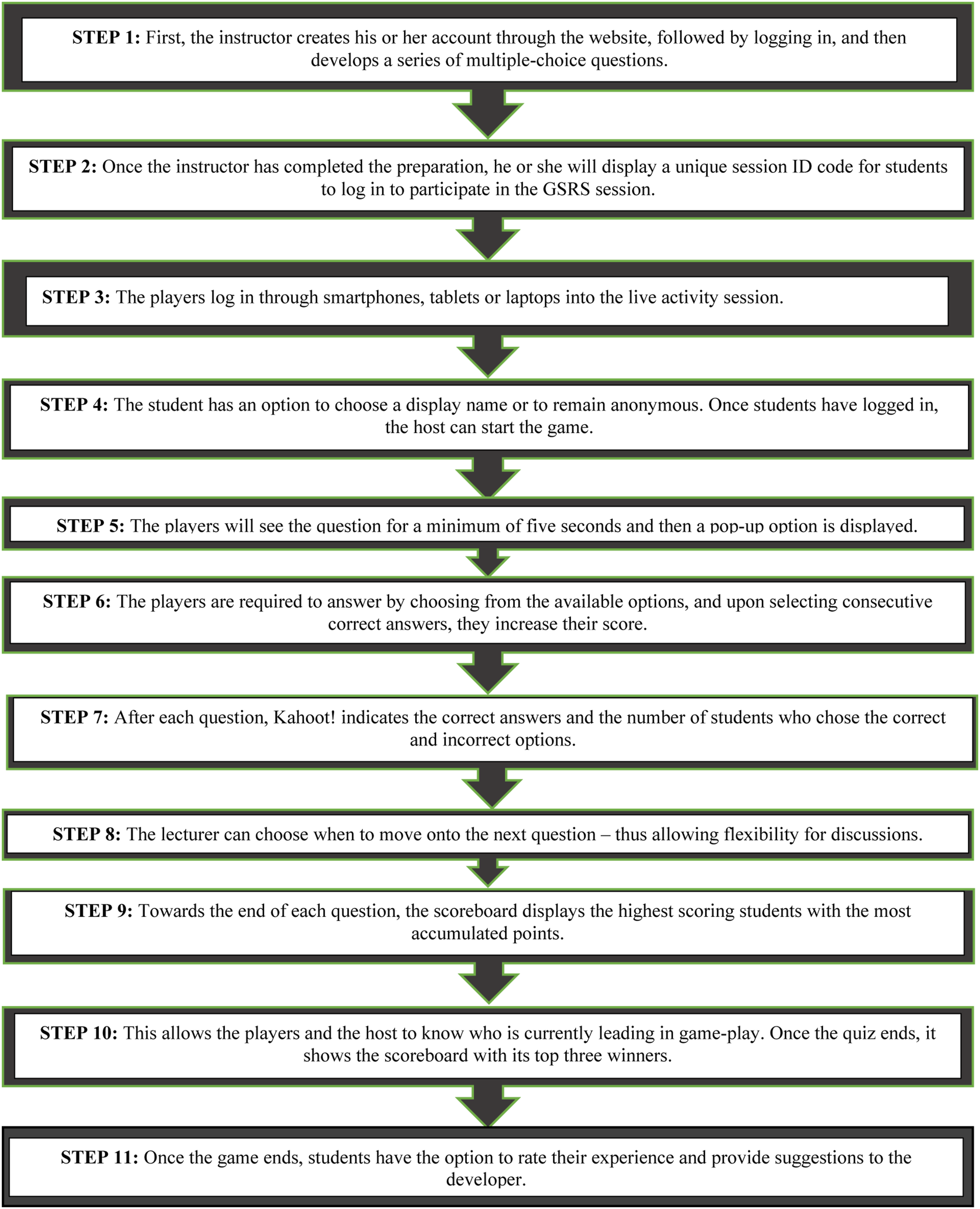
Steps related to the use of Kahoot!.
Methodology
This study employs a qualitative method of inquiry, using an explorative design in a single educational institution in the United Arab Emirates for an in-depth exploration. The reason for adopting this approach, underpinned by a qualitative thematic template analysis, was its suitability for answering the research question: How does the use of game-based student response systems support student learning in the UAE?
The use of qualitative methods of inquiry allowed us to develop insights into how students express themselves through their narratives and how they understand a phenomenon (e.g., gamification and GSRS approaches), how they experience particular initiatives (in groups or individually), and how they express these experiences (in the entrepreneurship course), thus allowing the researcher to access shared expressions, vocabulary, and metaphors (Kvale, 2007; Gibbs, 2007). The use of quantitative methods to analyze GSRSs has been adopted widely in previous studies to measure their effectiveness in educational settings and the importance of qualitative methods has been suggested as a future direction for further research in the GSRS literature (see, Tan et al., 2018).
A snowball sampling approach was applied based on two criteria: (1) all participants must have above 70% attendance on the entrepreneurship course and (2) each participant must have actively participated in a group or individually in at least five GSRSs throughout the year-long program of study. The interviews were pre-scheduled for 30–45 min (conducted online using Webex’s interactive features), were digitally audio-recorded through the built-in features and were then aided with detailed notes taken by the researcher during the interview. All interviews were conducted in English and then followed up with transcript validation with the participants 4 weeks after the interview. The same interviewer was involved in conducting interviews with all participants. The primary data were obtained in April 2020 followed by transcript validation in May 2020. The GSRS activity sessions took place from September 2019 to February 2020. It should be noted that most questions in the interviews were probing questions, and this is why the interviews were identified as semi-structured (Saunders et al., 2015; Silverman, 2009).
Interview guide.

The interview data were analyzed using a qualitative approach known as “Template Analysis” (a specific form of thematic analysis) which uses three flows of activity, starting with data reduction, then data display and finally conclusion drawing and verification (Miles and Huberman, 1994). The data were then input into a framework of high-level emerging themes (PERI model), while details of the responses were categorized under corresponding sub-themes. For data display, QSR Nvivo 10 was used, which helped the researchers to categorize, index, and retrieve the data. Frequent online meetings were held between the researcher and the research supervisor to verify and form a consensus on the emergent codes and themes.
The researchers also considered the importance of focusing on the various types of linguistic connectors during the analysis to develop an appropriate understanding of the interviews. These were explored by focusing on the text while paying attention to causal relations, conditional relations, taxonomic categories, time-oriented relations, X and Y relations, contingent relations, and spatial relations (Bernard and Ryan, 2010). Data saturation and redundancy of themes were reached with a total of 32 research participants. The findings were triangulated with primary data obtained from the in-depth interviews and end-of-course student evaluations and by generalizing findings to theories.
To ensure confidentiality for the research participants, all signed a research ethics form to protect their identity. Therefore, each participant’s name has been replaced with an ID tag and number. The participants were also informed that their participation was voluntary. All interviews were conducted by a former student of the program to reduce the potential for research bias and minimize power relations and structure. Although three different professors delivered three different sections each per term, this approach enabled the students to participate without being reluctant.
Findings
As mentioned previously, 32 participants from the university’s flagship Enterprise Education Program were interviewed to explore student learning and associated experiences when participating in a series of GSRS sessions. This section will first provide an overview of the demographic profile of the sample, followed by the operationalization of the PERI model to explore the preferences, experiences, recommendations, and impressions related to students.
Demographic profile of the sample
Most students in this sample were 18–21 years of age (25 participants); four were in the 22–25 age range and three were 26–30. Reflecting the diversity of the Dubai population, most were of Indian origin (20), seven were Pakistani, and there were also one Filipino, one Syrian, one Emirati, one Central Asian, and one Nigerian. The representation of nationalities, particularly from Asian countries (India, Pakistan, and the Philippines), as well as local Emirati natives and other Khaleeji countries (i.e., Arabic-speaking countries) is well aligned with the population make-up and trends by ethnicity in the emirate of Dubai (see UAE Population Statistics, 2019). For example, the larger proportion of students of Indian ethnicity and nationality reflects the general macro-demographic population trend of the UAE (where Indians are the largest ethnic community), and Pakistanis are the second largest ethnic group (UAE Population Statistics, 2019). Although local native Emiratis are the third-largest group, our sample only contained one Emirati; this might be partly due to the lower number of Emiratis enrolled at the institute under investigation.
The sample comprised two types of students—those born and/or raised in the UAE and international migrant students who held pre–higher-education qualifications from their country of ethnic origin. The students were enrolled in diverse majors in the business and management disciplines (e.g., accounting and finance, international business, human resource management, general management, sports management, marketing, and e-business) and from other schools of specialisms such as events and tourism management and computing and networking engineering technology. Twenty-six participants were third-year students (in a four-year degree program), six were fourth-year students, and one was a second-year student. The group comprised 22 female and 10 male students.
The PERI model in GSRS student learning
Summary of generic gamification frameworks/models.

Summary of business-related gamification frameworks and models.
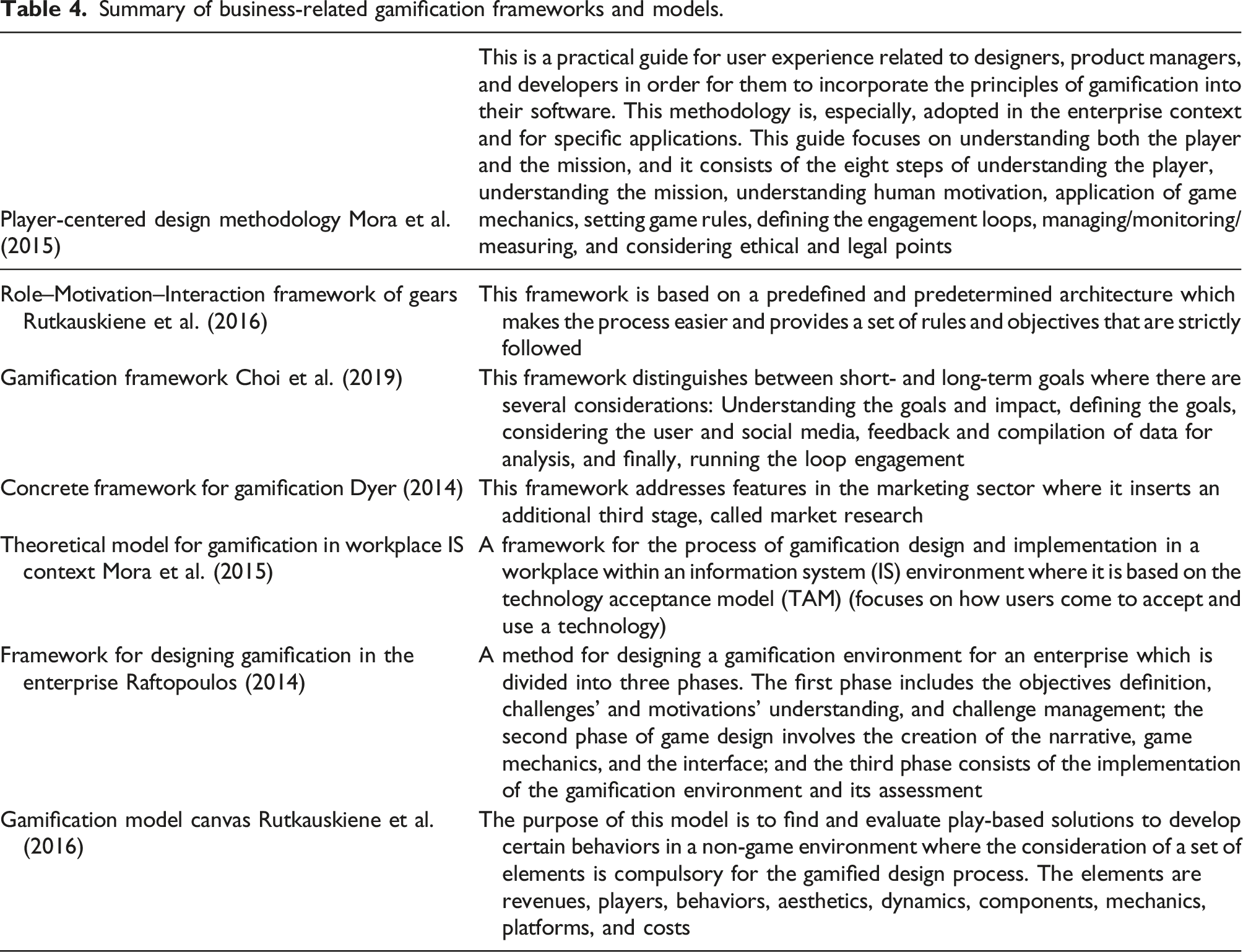
As shown in Tables 3 and 4, most of the reviewed frameworks refer to user data and the importance of collecting these data. However, the adoption of metrics is not widespread in the reviewed frameworks and models, which may limit the quantification of retrieved data. From a psychological perspective, the review in Tables 3 and 4 highlights that users’ social constructs are considered by all the reviewed frameworks and models. Various authors stress that the psychological perspective must be present in the gamification design process (Mora et al., 2015; Rutkauskiene et al., 2016). Additionally, authors also promote the development of a complete and generic gamification framework from a new and unique perspective (not in the existing literature) so that it has the characteristics that enable it to be adopted in any environment (Mora et al., 2015; Rutkauskiene et al., 2016). Currently, education and training, business (commercial, marketing, and human resources), government, and health appear to be the most common areas of focus for gamification frameworks and models (Mora et al., 2015; Rutkauskiene et al., 2016). Mora et al. (2015) identify that current gamification frameworks and models address the social constructs of game users; however, they also identify limitations such as the lack of flexibility in existing theories, which do not consider factors that we have identified such as impressions, experience, preferences, and recommendations amongst users. Therefore, a review of the frameworks and models in Tables 3 and 4 has informed the development of a framework in this research.
Based on the qualitative analysis of the interview data, four higher-level themes were identified (see Figure 2): (1) impressions, (2) experiences, (3) preferences, and (4) recommendations. The PERI model of student learning.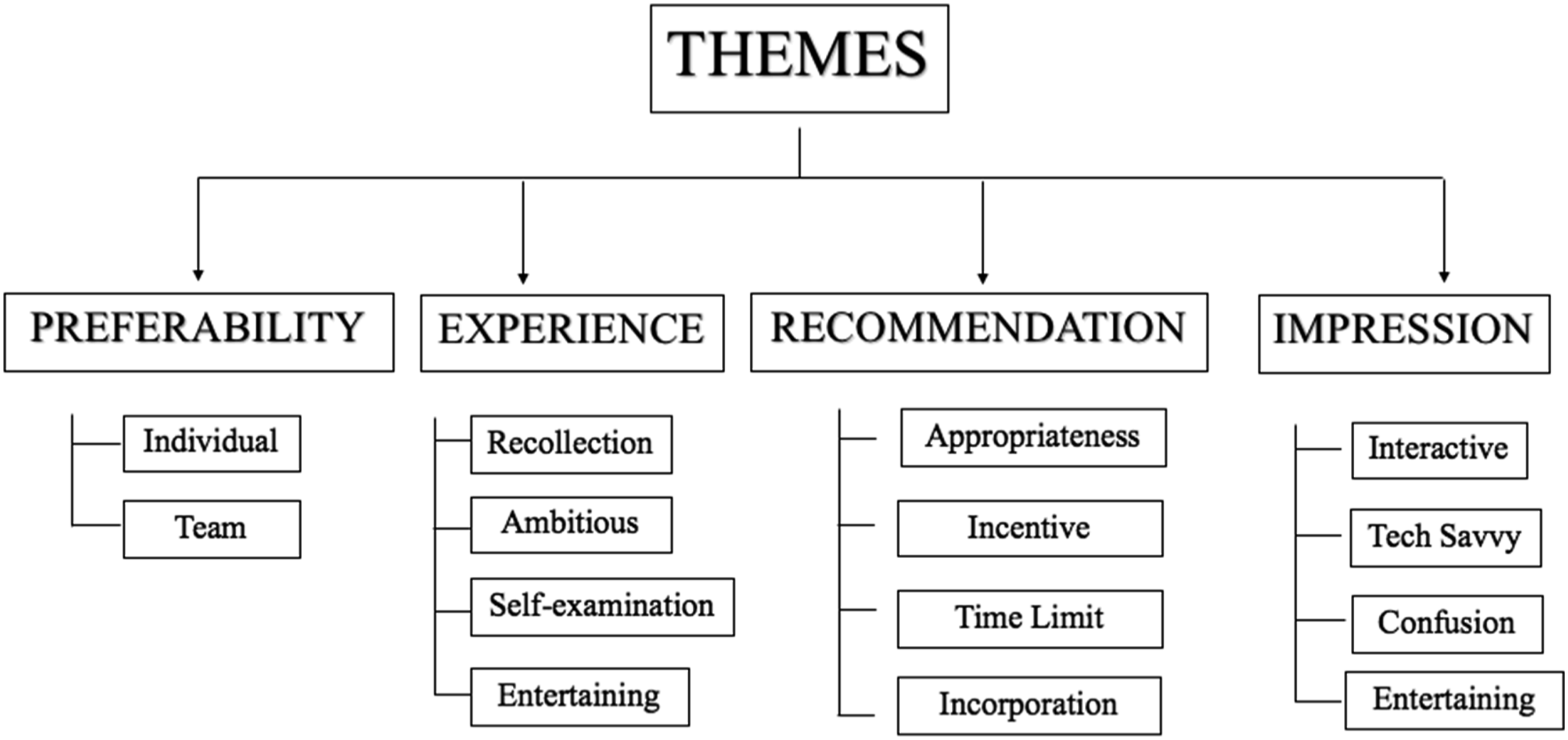
Preferability/Preference. The thematic parameters for “Preferability” are defined as the greater liking for one alternative over another when engaging with a choice for an object or activity. The theme of “preferability” was categorized into two types: individual and group. Each of the sub-categorizations provided a wide range of thematic properties (see Figure 3). Themes for Preferability.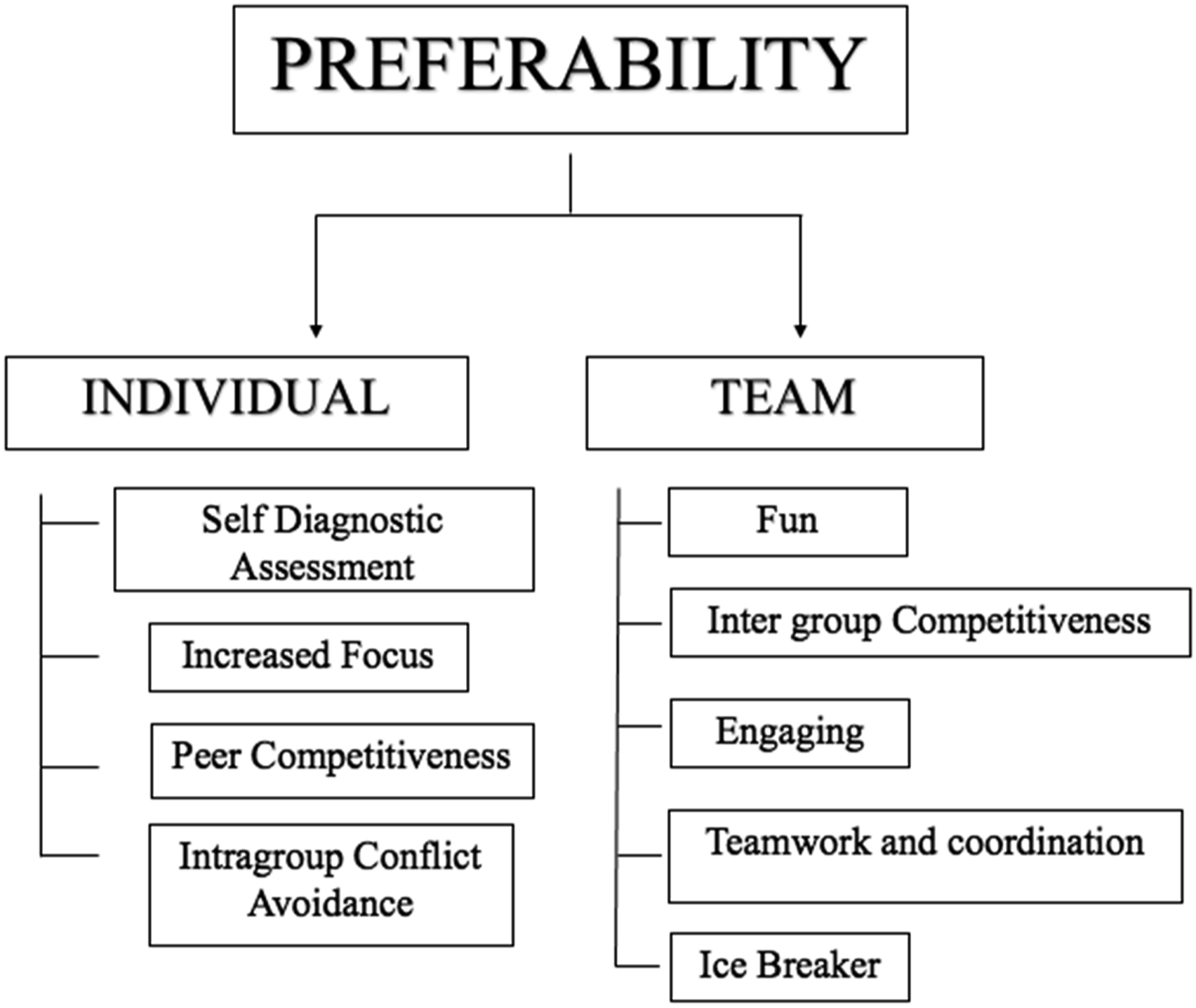
The theme of preferability/preference described how the participants favored the GSRS activities from an individual or group-based dynamic. Ten of the 32 participants preferred to take part individually. The lower-level themes comprise self-diagnostic tools, increased focus on lectures, and peer-to-peer competitiveness. Three participants discussed how engaging in an individual mode with the GSRS activity helped them to learn from the activity as a “self-diagnostic tool” (“Individually, because you get to see how much you remember from class rather than just depending on others in the group to answer for the entire group.”). Two participants mentioned how it increased their focus on lectures. One said: ‘It enlightens my mind and explores further. It helps me remember and know where I need to improve so I rather play it individually than as a group. It also helps me pay attention and focus in the class.’
Three participants mentioned how the gameplay stimulated a competitive environment between peers if played individually. For example: ‘Apart from testing oneself, I feel like I am more competitive when it comes to an individual rather than in a group.’
In comparison to individual preferences, there was greater receptivity to the team feature of the GSRS activities. A majority of the sample (22 of 32 participants) emphasized how the group activities were conducive to learning by pointing out that they were fun, were engaging, were ice-breakers, that they created inter-group competitiveness and that they enhanced teamwork skills and group collaboration. Seven participants reported the activity to be fun. For example: ‘I like playing it with my group…so that we can answer the questions fast and it’s fun also. Individually I feel it’s not practical to play as the class is huge and therefore more competitors.’
Similarly, seven students stated the benefits of team-based activities for group cohesion and communication, and said that these activities helped them to perform better in the summative assessments of the course, as well as being an engaging in-class activity. For example: ‘Playing in groups for sure. Discussing and finding out answers together is fun and there is a lot of teamwork and effort that goes on it. I usually win all the games I played as a group. Working with each other also helped us to perform and communicate better as a team for the final project.’
Similar to the theme of playing “individually,” playing as a group was described as a “fun” activity. Three participants said it was fun to work in a team because it encouraged communication and collaboration. Comments included: ‘I prefer playing it as a group because it will make you interact with your group more and it’s really enjoyable than playing individually.’
Two participants saw the activity as an ice-breaker for team members which increased their interaction by giving reasons for members to step outside their comfort zone: ‘I hadn’t known many people in my group, so this game helped break the awkwardness and helped me engage with my group better.’
Although playing individually and in groups provides numerous benefits, most participants mentioned that the benefits of playing in teams were more conducive to student learning than engagement with the activity on an individual basis. This inclination is perhaps due to the team-based summative assessments of the learning program in enterprise education. Although, from an academic instructor’s perspective, the inclusion of the Kahoot! gaming platform in class was introduced to reinforce the content learning, the activity seems to have added unintentional yet extremely beneficial value to the team-based dynamics of the students.
Experiences. While it is believed that GSRS contributes positively to the intrinsic and extrinsic motivations of students, the sub-themes under “Experiences” support the findings of Tan et al. (2018). Experiences are defined as a skill or knowledge gained by engaging with an object or activity. There are four sub-themes: “recollection,” “ambitious,” “self-examination,” and “entertaining” (see Figure 4). Themes for Experience.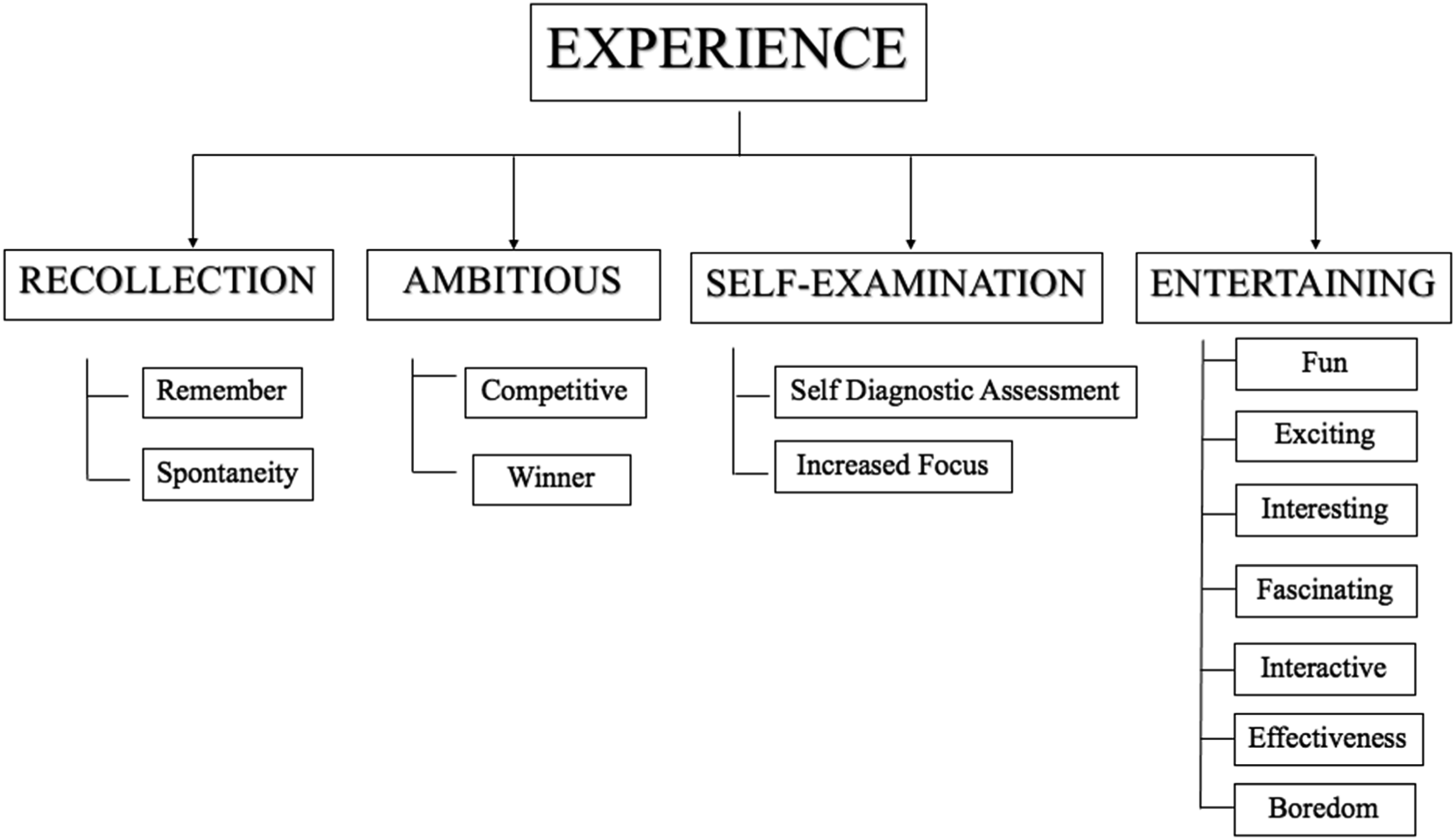
Some of these cross with the thematic properties of “preferability.” Participants mentioned how the gamification tool helped them to “remember” content delivered during lectures as a result of engaging with the GSRS, and noted that this also increased their ability to spontaneously remember concepts. This perception is illustrated by an Indian, international business student: ‘It made the concepts easy to remember and recollect. It helped me understand the course more which made it interesting.’ (P2, 19, India, Year 3, International Business).
Five students discussed how they realized their competitive potential to compete with peers or other groups in their desire and need for achievement. For some of these students, it was necessary to focus during the lectures as they wanted to win the game: ‘Playing in a group gave me high chances of winning the game and get our answers right. It was exciting too. For a person like me, I like and play games with a focus on winning. Therefore, playing as a group was easier.’ (P4, 26, Indian, Year 3, International Business).
Six students said that their engagement with GSRS activities allowed them to self-examine and to assess their learning as a self-diagnostic tool and that this motivated them to increase their focus on learning during the lectures. An Emirati e-business student, for example, said: ‘It’s interactive and very interesting to play individually. It gives me an understanding of how much I know and where I need to improve.’ (P13, 23, Emirati, E-BUSINESS).
Twenty-one students talked about how the GSRS experience was “entertaining” by describing it as a fun, exciting, interesting, fascinating, interactive, effective activity. However, one student in the sample thought that the activity was interesting only when played in groups; otherwise, individually, he found it boring.
Recommendations. The definition of a recommendation is a suggestion or proposal as to the best course of action concerning an object or activity. The thematic properties of Recommendations are “appropriateness,” “incentives,” “usability,” and “incorporation” (see Figure 5). All participants were asked to provide recommendations on how this activity could be improved. Themes for Recommendations.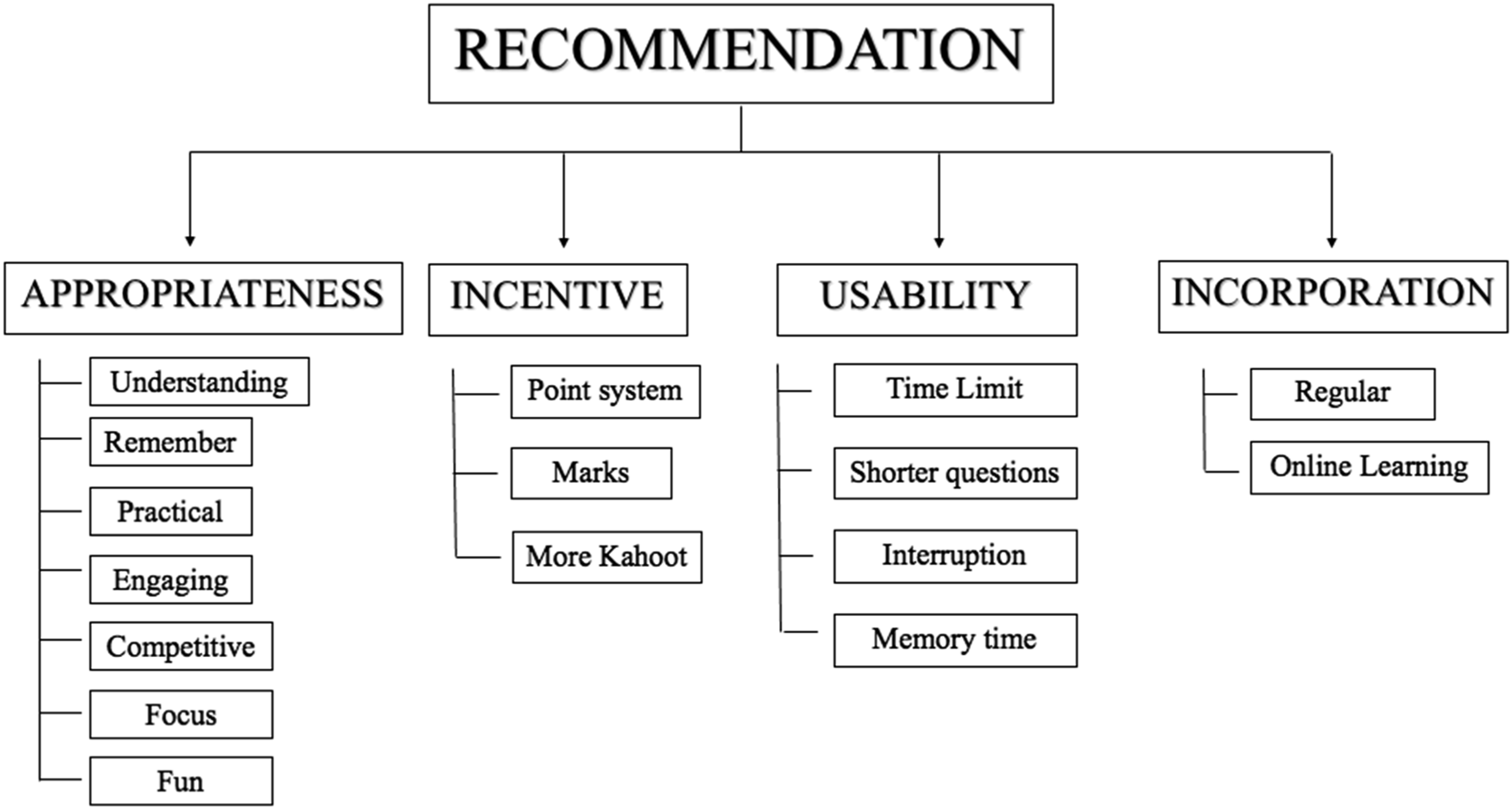
All 32 students recommended continuing the inclusion of gamification tools as a key feature in enterprise education courses. They gave a diverse range of reasons, such as it being appropriate for the course learning content, improving comprehension for deeper learning, helping to recall key learning concepts, requiring practical action from the students for participation, being a unique creation of student engagement, and lastly, increasing focus in a fun and competitive manner. For example: ‘I would say to keep Kahoot! in the entrepreneurship course … because using technology in the class helps to understand learning. It’s much easier to remember terms and concepts. Other than that, I think it is fantastic how a game could help you recollect concepts and terms learned in the class.’ (P3, 20, Indian, Year 2, Accounting and Finance).
In terms of the usability of the learning tool, more than half of the sample stated the frustration of interruption due to technical problems, such as Wi-Fi connectivity and/or interruption on mobile cellular data, which is an essential component for student participation and needs improvements from the vendor:
‘Sometimes slow Internet connection disturbs the flow and the adrenaline rush during the game. If they fix this then it would be better to use.’ (P10, 20, Filipino, Year 3, Accounting and Finance).
Other frustrations were mentioned, such as the limited time to answer questions, the importance of keeping questions short and precise, and the reduced ability for students to recollect and remember key information from the lecture.
Twenty-five students recommended that increasing the frequency of use of the gamification tool in the course should be prioritized, particularly in tutor-centered learning classes: ‘It [the program of study] can stay the way it is now, just include more sessions like these.’ (P15, 20, Indian, Year 3, Tourism Management).
Thirteen students recommended incorporating Kahoot! into distance learning programs (due to the COVID-19 pandemic) to create engagement. Furthermore, some students recommended incentivizing the activities with a “points system” as a formal mark/grade to be added to their final course grade, and others suggested other types of incentives for the top three students. One said: ‘If there was a prize for the top 3 people it would help the students be more enthusiastic. Some kind of incentive could make students interested in the game and it would be more competitive.’ (P1, 19, Indian, Year 3, BBA-Accounting and Finance)
Impressions. We defined the thematic parameters of “Impressions” by how the end-user [i.e., the student] felt about the object or activity. There are four sub-themes: “interactivity,” “tech-savvy,” “confusion,” and “entertaining.” The Impressions theme encompasses a wide range of influences from the students’ perspective, such as how they were “impressed” by the instructor (e.g., professor, as a more common terminology used by the participants) and how the use of gamification methods in the classroom reflected their desires for such activities on other courses in the institution, and also the overall impression it created regarding the HEI (see Figure 6). Themes for Impression.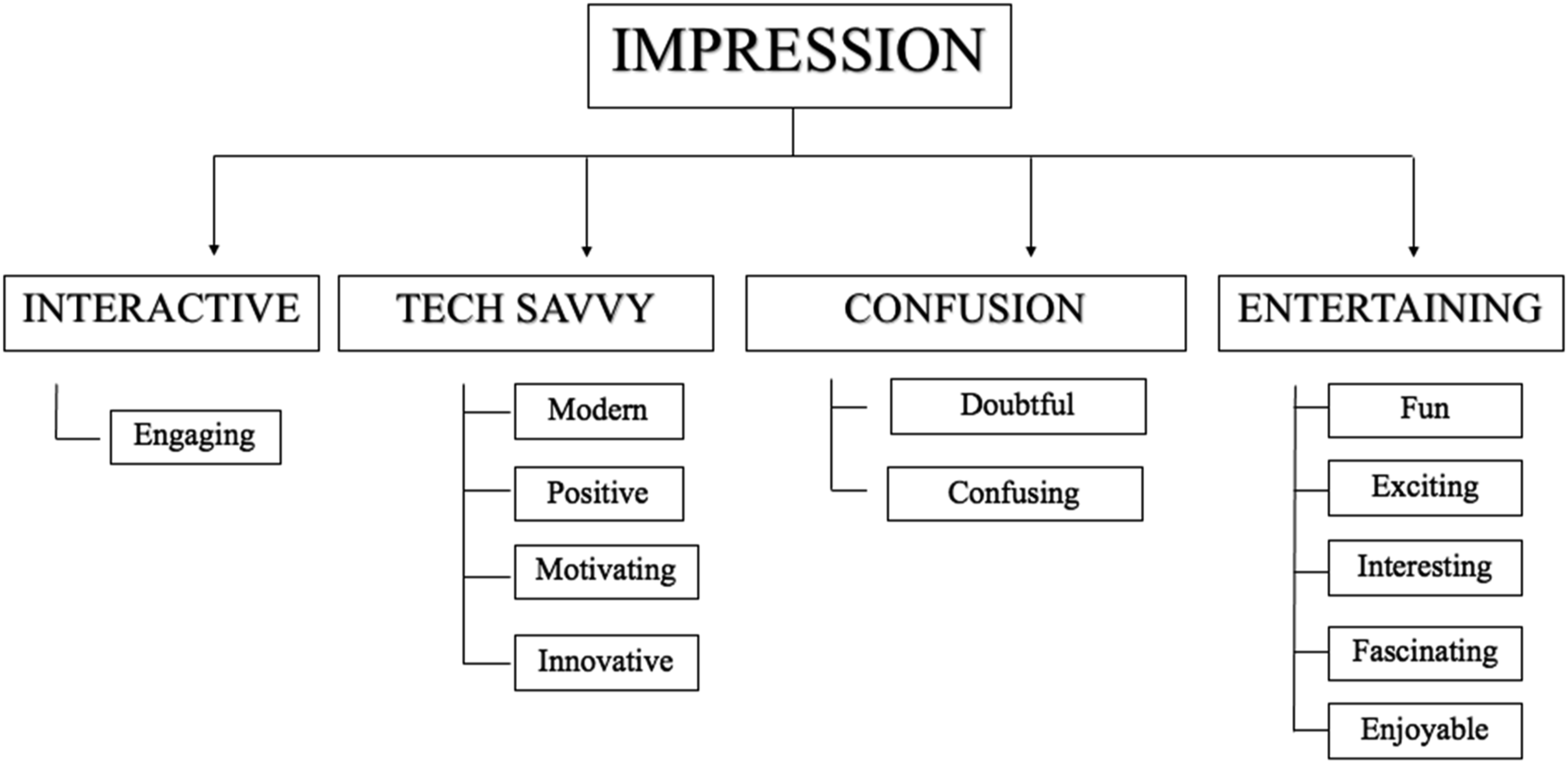
Seven of the students talked about how the initial gamification activity made them feel confused and doubtful. One said, for example: “It was confusing at first because I didn’t know how to play.” However, they later developed a keen interest in actively participating in the sessions. Fifteen students described their initial reaction as “entertaining” in various ways, such as it being fun, fascinating, exciting, interesting, and enjoyable. However, all 32 students received the initiative positively and specifically discussed how undertaking these activities had given them a positive impression of the professor as technologically savvy, modern, positive, motivating and innovative in his teaching and learning pedagogy. For example: ‘The professor applied new techniques/modes into using technology in education which should be adopted by others [professors]. Playing Kahoot! and similar games in many courses could help us positively.’ ‘He [the professor] is very up to date with the latest technology and is genuinely interested in creating an environment that’s not only fun but is also a great way of teaching concepts and helping students to remember them in the long run. I recommend that all the professors at [name of institution] should just dump the boring paper quiz now. It’s so outdated and boring.’
For the institution, such endeavors and investments have the potential to enhance its reputation for adopting newer forms of technology through its resources and to enable professors to acts as agents of change in the institution. Three students mentioned that the professor’s initiative added reputational value to the institution. For example: ‘It shows that the University is becoming modernized and is taking technology seriously. We students then start to expect this type of thing in all of our other courses. Disappointed if we don’t see it happen really. When the tutor used to ask at the end of the lecture if we had any questions I’d hope to put my hand up and ask, are we going to play the game again?’ ‘I told my friends that at [university] we have this one professor who plays games during class time. Many of them can’t believe me [laughter] and they want to leave their university to join mine or wish they joined mine. They told me at their university their professors are like dinosaurs and use the same old boring ways of doing things. Here’s another exam, or here is another pop quiz paper. In my mind I’m thinking, here goes another boring day. Why should I attend if the professor can’t be bothered to make it interesting? Even my friends know that I am lucky to be at such a place where we can learn in different ways and not just with old and medieval ways of learning [laughter]. Now, I have seen this (Kahoot!), I don’t like the professors that still like to do things the old way on paper.’
The overall findings in this section reflect a variety of themes that are multi-dimensional across a broad range of learning effects in the PERI model, which, in summary, emphasizes the effects of the GSRS tool on the users’ preferences, experiences, recommendations, and impressions.
Discussion
In this qualitative study of 32 undergraduate students in the UAE, student learning through gamification was explored with the PERI model, formulated inductively from the data analysis. The diversity of themes proposed under each theme of the model exemplifies the multi-focal and multi-dimensional (four key dimensions) nature of the student learning context when engaging with the gamification tool. This includes a diverse range of Preferabilities, Experiences, Recommendations, and Impressions. As the PERI model was developed from an inductive process by analyzing the qualitative data, the model is foregrounded in each of the higher-level themes (the proposed PERI model) and thus, provides deeper insights about the student learning context and the effects of GSRS. Overall, the study contributes to a relatively young and dynamic empirical scholarship on gamification in the GSRS literature.
The specific themes identified from our findings are consistent with the view that the gamification activity is motivational and entertaining (Tan et al., 2018). Although it is well established that gamification (GSRS) provides numerous benefits to student learning, extant scholarly efforts have not moved beyond the simple description of such activities as simply being “fun,” “exciting,” “competitive,” and “motivating” (Ismail and Mohammad, 2017), both intrinsically and extrinsically (Tan et al., 2018). The findings of this study emphasize the importance of the “learning” element (Ismail and Mohammad, 2017) but extend our understanding about recollecting the core learning concepts whilst also increasing students' spontaneity. In terms of the recommendations, students mentioned the importance of improving the Wi-Fi connectivity, and therefore, this aspect supports the findings of a previous study (Tan et al., 2018).
Our findings with regard to P (preferability) concur with the work of Felszeghy et al. (2019) identifying the benefits of group-based gamification as opposed to individual gameplay. The new findings from this study provide insights into the relevance of such endeavors to the project-based and group-based nature of the summative assessment of the learning program and the learning context. The results highlight the importance for the learner of developing a stronger foundation of learning through an ability to define, duplicate, memorize, and repeat the learning content, and therefore, our findings are favorable to the overall course learning outcomes. The study further adds to the discourse by introducing the higher-level theme of “Impressions,” concerning how such gamification endeavors influence the institution and instructor. As extant studies do not take a holistic perspective of the learning context in gamification and GSRS, this study also enhances the evidence of the value for HEIs of adopting technology-based learning measures to improve their effectiveness and reputation.
Implications and limitations
Considering the interdisciplinary approach that is pertinent to enterprise education, our participants were drawn from a wide range of academic majors but were all enrolled in an entrepreneurship course. Therefore, we referred to the participants as “enterprise” or “entrepreneurship” students. However, it would be interesting to explore the perspectives of specialized entrepreneurship students taking a dedicated major in entrepreneurship. Another limitation of our study was the limited access we had to our participants for the examination of their preferences, experiences, recommendations, and impressions on a longitudinal basis to develop a deeper insight into how these themes develop from the start to the end of a learning program. Lastly, a larger-scale survey (e.g., quantitative method) could also be used to measure the validity of the themes. However, we propose this as a future direction for research, as this study explicitly focused on developing the initial themes and the application of our model for a relatively young academic discipline, and therefore, was sufficient for the proposed research question.
Previous studies have extensively explored quantitative variables but have provided relatively few and limited qualitative insights into student learning. Thus, the efficacy of GSRSs and their impact on student learning remain underemphasized and inadequately understood. Therefore, moving beyond the measurement of individual variables towards the development of theory and the operationalization of a customized model (PERI) for GSRS student learning could inform future studies aiming to further our understanding of student learning through gamification.
Conclusion
The aim of this study was to explore how gamification influenced student learning through the PERI model. The results demonstrate the positive effects of the gamification tool, and also add theoretical value by recognizing the multi-focal advantages for its use in higher education. The importance of gamification in higher education has wider connotations than previously anticipated (e.g., impressions about the quality of provision and the institution). The findings include students’ suggestions on how the activity could be modified and adapted for greater efficacy and in-class engagement. They also show how gamification efforts were conducive to the fostering of greater personalization of learning, interaction and communication among team members that will inevitably improve their quality of learning in their summative assessments. In producing these results, the PERI model has been effective in developing a holistic overview from diverse perspectives through a student-centric approach that gives voice to students’ preferences, experiences, recommendations, and impressions. The devising of this comprehensive model thus adds to the body of knowledge in the gamification literature. Although we developed the PERI model to transparently represent and operationalize the findings of our study, the model is not limited solely to gamification and GSRS activities, but could also be used in other areas of educational studies aiming to understand how a learner learns from an activity. Therefore, the model, in itself, could be transferable to other academic specialisms and institutional training contexts, while our data are derived from only one HEI in the UAE.
The findings contribute to the academic discourse from various perspectives, including student-centric learning, flipped-classroom approaches, gamification, and lastly, game-based student response systems research. The originality and theoretical value of the study are inherent in our proposition for the use of the PERI model, which could be adopted to capture the multi-dimensional nature of the GSRS learning activity. In this respect, we make an empirical contribution to the relative under-representation of entrepreneurship students in the GSRS literature and also in the geographical context of the UAE. Furthermore, we have developed an in-depth qualitative study to complement the abstractness of existing quantitative studies. The novelty of the study and the proposed model provide implications from both theoretical and practical standpoints. We intend to develop quality enhancement measures within our institution based on the study findings and to recommend the use of such approaches more widely across faculties as an evidence-based digital student engagement strategy.
As mentioned previously, this paper focuses on data retrieved and analyzed from a single HEI in the UAE and the findings cannot therefore be generalized to other settings. A larger quantitative study to measure the effectiveness and validity of the PERI model in gamification and GSRS activities would further contribute to theory. Further research could be undertaken with a larger sample size from multiple institutions by operationalizing the PERI framework. Lastly, a comparative study between multiple gamification and GSRS tools could enhance our understanding of effective models for engaging students through a variety of technologies.
Footnotes
Declaration of Conflicting Interests
The authors declared no potential conflicts of interest with respect to the research, authorship, and/or publication of this article.
Funding
The authors received no financial support for the research, authorship, and/or publication of this article.
