



Abstract
Earlier research has not explicitly emphasised the dynamic integration of entrepreneurship imperatives and transformation in developing the entrepreneurial university. The purpose of this research is to examine the linkage between the strategic intents articulated by universities and their corresponding level of entrepreneurship transformation. This article develops a theoretical framework to examine transformational imperatives, applying a data analytical approach to assess strategic documents using automated content analysis and complex algorithms. Australian universities were chosen for the research given the specific context of the higher education sector and the availability of strategic documents on the institutions’ websites. In the research context, the findings show that, while there are some variances with specific institutions, Australian universities in general, and several groups of universities in particular, expressed different levels of determination, ranging from moderate to moderately strong, to transform themselves into being entrepreneurial. Universities’ management can benefit from the theoretical framework developed in this research to craft strategies to further adopt entrepreneurship imperatives. Implications are also provided to inform universities, industry and government with regard to enhancing the dynamics of entrepreneurship ecosystems.
Keywords
Entrepreneurship has been recognised globally as a prominent force of economic growth, dynamism and innovation (Acs et al., 2008; Wong et al., 2005; Audretsch and Belitski, 2017; Sautet, 2013). Via effective entrepreneurial ecosystems, which incorporate structures and the integration of interdependent elements nurturing and fostering innovative and entrepreneurial activities (Stam, 2015; Daniel et al., 2018; Shwetzer et al., 2019), entrepreneurship is nurtured and its impact is intensified (Acs et al., 2017; Alvedalen and Boschma, 2017; Spigel, 2017). Within these systems, universities play an increasingly important role (Mason, 2019) and are viewed as an essential component (Etzkowitz, 2016; Klofsten et al., 2018; Alvedalen and Boschma, 2017). These distinctive higher education institutions serve as a ‘catalyst’ pillar in the entrepreneurial ecosystem, providing start-up ventures with sources of ideas, human resources, learning opportunities, inspiration and guidance for building up research and entrepreneurial cultures (Drexler and Eltogby, 2014). Universities, classified as part of the material attributes of an entrepreneurial ecosystem, help generate potential commercial opportunities and provide human capital for business ventures (Spigel, 2017; Zaring et al., 2019).
Profound changes in the environment, such as advances in automation, the digitisation of information, unprecedented access to data, the democratisation of knowledge and the digital revolution and, more recently, COVID-19 (Maritz et al., 2020), are transforming our economy (Gardner, 2018). Consequently, entrepreneurial ecosystems are inclined towards stronger dynamism (Audretsch et al., 2018), and universities are at the forefront of driving these changes through entrepreneurship and innovation initiatives (Fuller and Pickernell, 2018; Etzkowitz, 2016; Fuller et al., 2019). Under the new increasingly challenging conditions (Ferreira et al., 2018c; Jones and Patton, 2018), many universities around the world have transformed to become entrepreneurial (Rothaermel et al., 2007; OECD/EU, 2018; Fuller and Pickernell, 2018), taking on the role of what is often referred to as the ‘entrepreneurial university’. As agents of change, they initiate entrepreneurial strategies to address challenges (Klofsten et al., 2018; Lombardi et al., 2019; Pickernell et al., 2019), take advantage of the policy environment, and leverage their relationships with relevant stakeholders (Dodgson and Staggs, 2012; McAdam et al., 2018) to drive local and regional economic development (Pugh et al., 2018; Budyldina, 2018).
Various research has been conducted on the different pathways institutions have adopted to transform themselves into entrepreneurial universities (Etzkowitz and Zhou, 2017; Clark, 2015; Morris et al., 2014; Fayolle and Redford, 2014). These institutions increasingly view undertaking entrepreneurship as a strategy for organisational development and a means of adopting transformational change (Schulte, 2004; Guerrero and Urbano, 2012). Nevertheless, little research has examined the linkage between the strategic intents articulated by universities in their planning documents and the corresponding level of entrepreneurial transformation. The limited research on the various leadership and strategic issues facing universities seeking to become more entrepreneurial have led to the development of this paper. It addresses this gap by examining the attributes constituting the entrepreneurial university as a driver of economic growth and social change (Klofsten et al., 2019). The aim, therefore, is to examine universities’ strategic plans and relevant strategic documents in the Australian higher education research context, in order to assess their strategic intents toward adopting transformational change through entrepreneurship imperatives.
The paper makes four primary contributions to the existing body of knowledge on entrepreneurship transformation in the development of the entrepreneurial university. Our theoretical approach is primarily the application of institutional theory, highlighting synergistic potential and entrepreneurial university transformation. First, this appears to be the first study in this area to examine entrepreneurship transformation in higher education institutions in Australia. Second, the paper incorporates a call for innovative and new research methods and approaches in entrepreneurship ecosystems. Employing an unconventional data analytical approach with a focus on universities’ strategic documents, and applying automated content analysis with complex algorithms, we perform a pioneering analytical comparative assessment of entrepreneurship imperatives and levels in Australian universities. Third, we develop a theoretical framework to examine transformation imperatives enhancing entrepreneurial university development. Finally, we provide implications for universities, industry and governments for the enhancement of entrepreneurship ecosystems.
The paper is structured as follows. First, we introduce the overall research topic and the context of the research. This introduction is followed by a comprehensive review of the literature with a resultant integrative theoretical framework. Next, the methodology is discussed with regard to the analytical and data collection processes and the choice of automated content analysis software package. Then the findings, including the major themes, key concepts and concept maps from all Australian universities, are presented and compared with those of the exemplar universities and different groups of universities in Australia. Finally, we present the discussion, conclusions, contributions, limitations and the implications for the relevant stakeholders and future research.
Literature review and theoretical framework development
Several domains of interest in entrepreneurial university research have been identified in the literature, including entrepreneurial research universities, technology transfer, new firm creation and environmental impact (Rothaermel et al., 2007; OECD/EU, 2018) and, more specifically, the entrepreneurial university, academic entrepreneurship and technological spin-offs (Mascarenhas et al., 2017). These topics have been investigated from different theoretical perspectives. This research adopts an integrated approach, which synthesises several relevant theoretical perspectives. On the one hand, our research primarily draws on the literature on the entrepreneurial university and applies Clark’s (1998) widely cited framework of entrepreneurial university transformation, grounded in an institutional perspective (North, 1990, 2005), as the starting point. As part of the entrepreneurial ecosystem (Spigel, 2017), universities in general, and entrepreneurial universities in particular, affect and are affected by the other elements of the institutional environment. The institutional theory helps to incorporate this contextual aspect into entrepreneurship (Welter and Smallbone, 2012).
Our institutional approach embraces wider ecosystem engagement and participation, such as the role of governments, external partners, industry and other significant contributors in regional ecosystems (Metcalf et al., 2020; Stam, 2015). In particular, we refer to the role of external institutions and governments not only in the shaping of regional ecosystems but in enhancing productive and reducing unproductive entrepreneurship (Audretsch et al., 2021). Similarly, the importance of government interventions and enhancements to shaping the entrepreneurial university and associated entrepreneurship education requires particular contextualisation. For example, Looi and Maritz (2021) found that the emergence and proliferation of entrepreneurship education programs in Malaysia were directly related to the influence of and initiatives provided by the government.
On the other hand, and echoing other scholars (Schulte, 2004; Gibb, 2012; Guerrero and Urbano, 2012), we draw on the literature on strategy to view the development of the entrepreneurial university as a strategy for organisational development – in terms of taking strategic actions (Kirby, 2006), exploiting formal and informal factors, developing resources and capabilities (Guerrero and Urbano, 2012), capturing synergistic potential (Gibb, 2012), and leveraging relationships with relevant stakeholders (Dodgson and Staggs, 2012). While reviewing and synthesising the literature to identify the major factors facilitating entrepreneurial university transformation, we also view the entrepreneurial university as an aggregation of resources (Barney, 1991, 2001) which serve as organisational assets through which capabilities are built and strategies implemented (Amit and Schoemaker, 1993; Guerrero and Urbano, 2012). In developing the study’s theoretical foundations, we also incorporate the impact of industry–university–government (Triple Helix) interactions (Etzkowitz, 2003, 2004, 2008) aiming to leverage innovations to promote regional development and the knowledge-based economy (Etzkowitz and Klofsten, 2005; Etzkowitz, 2016).
Next, we review the relevant literature on the entrepreneurial university, from which we synthesise and develop a theoretical framework that serves as a backbone for the subsequent analyses.
Entrepreneurial university
To date, there has been no overwhelming consensus on the definition of the emergent phenomenon of the entrepreneurial university (Fayolle and Redford, 2014; Pugh et al., 2018). Clark (1998: 4) describes an entrepreneurial university as an institution that “… on its own, actively seeks to innovate in how it goes about its business. It seeks to work out a substantial shift in organizational character to arrive in a more promising posture for the future. Entrepreneurial universities seek to become ‘stand-up’ universities that are significant actors on their own terms.”
This definition of the entrepreneurial university is adopted in this research as it succinctly captures the transformation of the institution through innovation and organisational change.
Universities are facing a crucial need to become more entrepreneurial (Fayolle and Redford, 2014; OECD/EU, 2018; Ferreira et al., 2018b). In his seminal work on university transformation, Clark (1998) identified five elements of ‘an irreducible minimum’ for the transformation, including a strengthened steering core, an expanded developmental periphery, a diversified funding base, a stimulated academic heartland and an integrated entrepreneurial culture. While some scholars have argued that the depth of Clark’s arguments could be enhanced (Gibb et al., 2012), or that other contexts should also be considered (Marginson and Considine, 2000), Clark’s framework has served as an influential theoretical background for further investigation in the topic.
In order to synthesise the relevant frameworks and perspectives, the following key factors of the entrepreneurial university transformation were derived from the literature: strategic navigation, entrepreneurial culture, community connections and commercialisation, resource development and supporting mechanisms, and teaching and research. Altogether, those pillars form an integrated platform, which we name S.E.C.RE.T. framework for entrepreneurial university transformation (Figure 1). Next, more detailed discussions on those transformation pillars are presented. Integrated S.E.C.RE.T. framework for entrepreneurial university transformation. Source: Adapted and extended mainly from the work of Clark (1998); Rothaermel et al. (2007); Guerrero and Urbano (2012); and Etzkowitz (2004).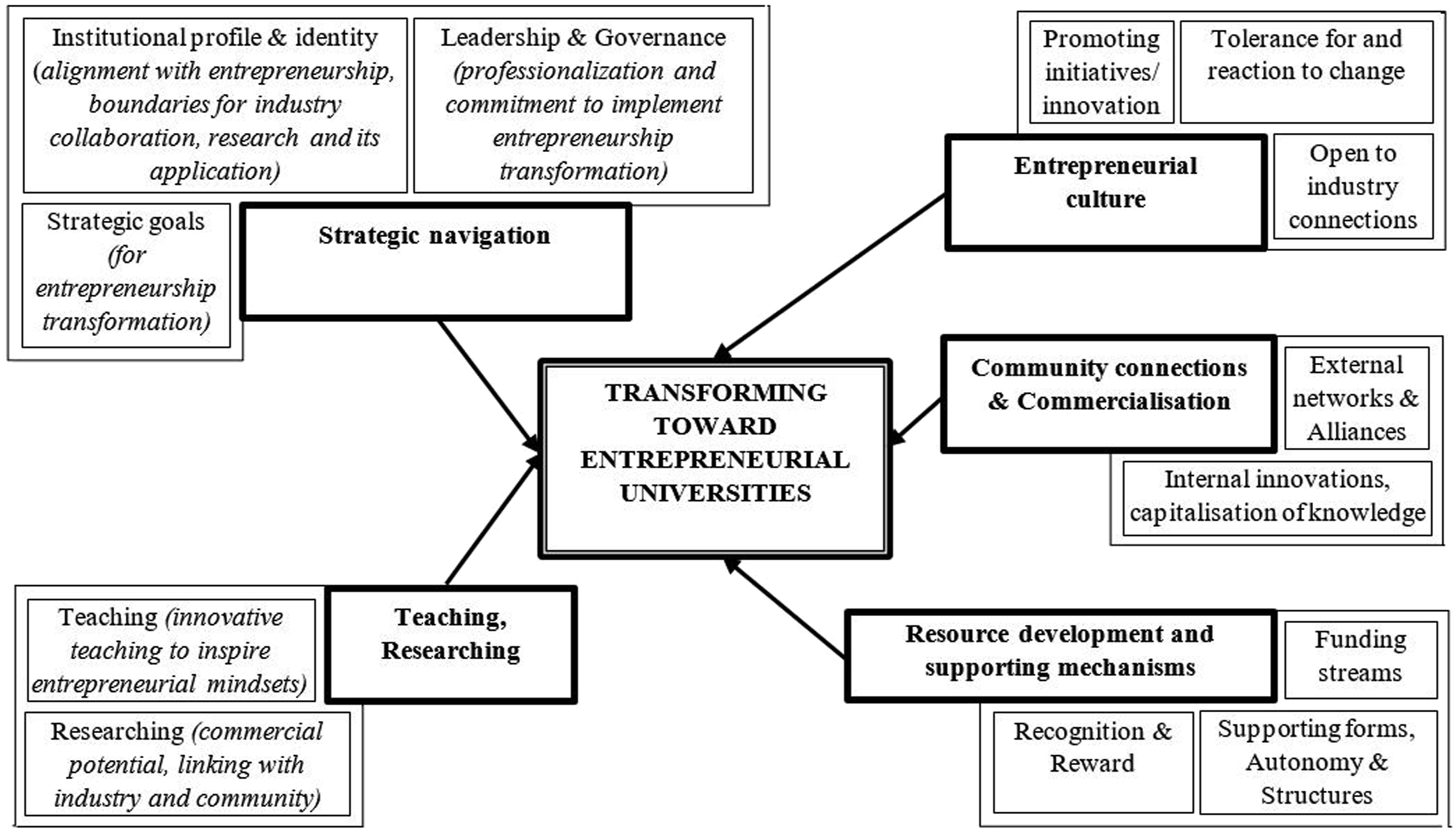
The S.E.C.RE.T. framework for entrepreneurial university transformation
Strategic navigation. Different aspects of strategic management have been mentioned in the literature; notable among them are the steering core, leadership and governance (Clark, 1998; Pinheiro and Stensaker, 2014; EC/OECD, 2012; Gibb, 2012), strategic configuration (Sánchez-Barrioluengo and Benneworth, 2019), entrepreneurial management (Schulte, 2004), incorporation, implementation and communication (Kirby, 2006), endorsement, defined role and identity, institutional profile policy (Rothaermel et al., 2007; Schulte, 2004; Pinheiro and Stensaker, 2014), strategy (Gibb, 2012; Fischer et al., 2019) and policy (Rothaermel et al., 2007). Clark (1998), argued to be in line with Mintzberg’s configurational approach to organisational design (Pilbeam, 2008), suggests that universities need stronger leadership and bold initiatives, particularly in the context of turbulence and escalating complexity. Pressures are being placed on the universities to become more innovative and to seek out better entrepreneurial initiatives and strategies (Ferreira et al., 2018c), which have also received scholarly attention from various perspectives, such as institutional theory, political science, sociology, economics and public management (Bonaccorsi and Daraio, 2007).
Etzkowitz (2013) posits that the entrepreneurial university evolves through three main stages, from merely growing sources of income and securing financial independence (which he argues is in a sense similar to Clark’s (1998) description of the institution at the initial stage), to taking a more proactive role in commercialising intellectual property, and finally to promoting economic development in the region. To achieve these objectives, the university’s mission needs to be expanded in accordance with its transition and transformation. Consequently, in terms of institutional profile, an increasing number of universities wish to link their image with entrepreneurship to enhance their profile (Ferreira et al., 2018c), or specifically include entrepreneurship in their mission (Gibb, 2012).
Entrepreneurial culture. Entrepreneurial culture can be characterised as one that cherishes change, then diffuses and embraces change in, among other elements of the university, academic activities, identity and reputation (Clark, 1998). More specifically, Davies (2001: 27–28) argues that a university’s entrepreneurial culture encompasses the inclination to take risk, and to assess and try out new ideas, and the ability to ‘learn collectively from experience, and transfer the essence of experience across the university’. Entrepreneurial culture can also be portrayed in connection with the university’s historical values and its ability to develop entrepreneur-managers (Birds, 2014), to proliferate individual innovativeness (Jacob et al., 2003; Rothaermel et al., 2007), and to reinforce connections with industry partners (Siegel et al., 2003). Going further, others postulate that, besides risk taking, an entrepreneurial culture can be nurtured and developed in an entrepreneurial university through embracing its history, leveraging diversity and cultivating a pro-commercialisation mindset (Gjerding et al., 2006), and reacting to change (OECD/EU, 2018).
Community connections and commercialisation. Researchers have highlighted several areas of interest regarding linkages with the community and the commercialisation of innovation, including the developmental periphery (Clark, 1998), the commercial potential of the research base and relationships with government, industry, business and agents (Sporn, 2001; Etzkowitz, 2004; Etzkowitz, 2013; Pinheiro and Stensaker, 2014; EC/OECD, 2012), mechanisms to support intellectual property development and technology transfer and the capitalisation of knowledge (Sporn, 2001; Etzkowitz, 2004, 2013; Ricci et al., 2019; Guerrero and Urbano, 2017; Blankesteijn et al., 2020; Gaus and Raith, 2016), and valorisation (OECD/EU, 2018). In particular, entrepreneurial universities should play a greater role in creating knowledge, consensus and innovation spaces to facilitate regional connections (Etzkowitz, 2004). In doing so, they will smooth the transfer of innovative knowledge to and from their region through commercialisation strategies (Breznitz et al., 2008), strengthen relationships with key stakeholders, and acquire the necessary resources to commercialise innovations (Harman and Harman, 2004; Sporn, 2001) and consequently create value via valorisation processes (OECD/EU, 2018). This is, however, a significant challenge to the universities. On the one hand, they have to secure sufficient funds while, on the other hand, they are expected to make a greater contribution to regional economic development (Etzkowitz, 2013; Smith and Bagchi-Sen, 2012; Bramwell and Wolfe, 2008; Wakkee et al., 2019). Etzkowitz (2003) thus proposes that entrepreneurial universities engage with the Triple Helix model, through which, together with industry and government, they foster their interactions and relations to facilitate innovation. The Triple Helix view positions the entrepreneurial university more clearly in terms of its relationships with key stakeholders and the community.
Resource development and supporting mechanisms. Researchers have identified various avenues for developing resources, including funding base, social relevance and third stream funding (Clark, 1998; Pinheiro and Stensaker, 2014), organisational capability building (Rothaermel et al., 2007; EC/OECD, 2012), as well as other supporting mechanisms such as hybrid organisational forms (Etzkowitz, 2004, 2013), encouragement, recognition, incentives and entrepreneurial pathway development (Kirby, 2006; Rothaermel et al., 2007; EC/OECD, 2012), as well as other innovations (Etzkowitz et al., 2021). In more detail, some have suggested that the transfer of technology and the development of an entrepreneurial culture are facilitated by funding and financial capital (O'Shea et al., 2007). Diversification of sources of funding also enables a university to embark more confidently on entrepreneurial initiatives (Clark, 1998; De Zilwa, 2005). In addition, the resources particularly relevant to enhancing entrepreneurial activities in university include ‘expert knowledge’, ‘scientific capabilities’, and support in terms of staffing and information (Powers and McDougall, 2005).
Teaching and research. According to Etzkowitz (2004), the evolution of the university has gone through several major ‘waves’, first adding research to the previous sole mission of teaching, then adding technology generation and transfer (Etzkowitz, 2004), and, more recently, an enhanced role in society (Audretsch, 2014). In this context, researchers have paid particular attention to several domains of teaching and learning, including the academic heartland (Clark, 1998), study and education, research, its outcomes and the third mission (Schulte, 2004; Pinheiro and Stensaker, 2014), faculty (Rothaermel et al., 2007), the knowledge factory and the human capital factory (Lazzeroni and Piccaluga, 2003). The way entrepreneurship is taught at universities has changed significantly as it is now offered not solely in business schools but also in other faculties and departments, in multidisciplinary collaboration (Ferreira et al., 2018c), at different levels, and adapted to different organisational goals and settings (Zaring et al., 2019), drivers, barriers and enablers (Smith et al., 2019). Innovations in teaching to cultivate students’ entrepreneurial mindsets (OECD/EU, 2018) can be embedded in innovative pedagogy, expanded program development, strengthened relationships with key stakeholders and enhanced linkage with research (Gibb, 2012). Consequently, the university’s entrepreneurship teaching mission can be reinforced as a source of new ventures, creating new jobs and facilitating economic development (Etzkowitz, 2003) through the exploitation of research outcomes and the strengthening of collaboration with industry and the community (Lazzeroni and Piccaluga, 2003).
Summary of major pillars of university entrepreneurship transformation.
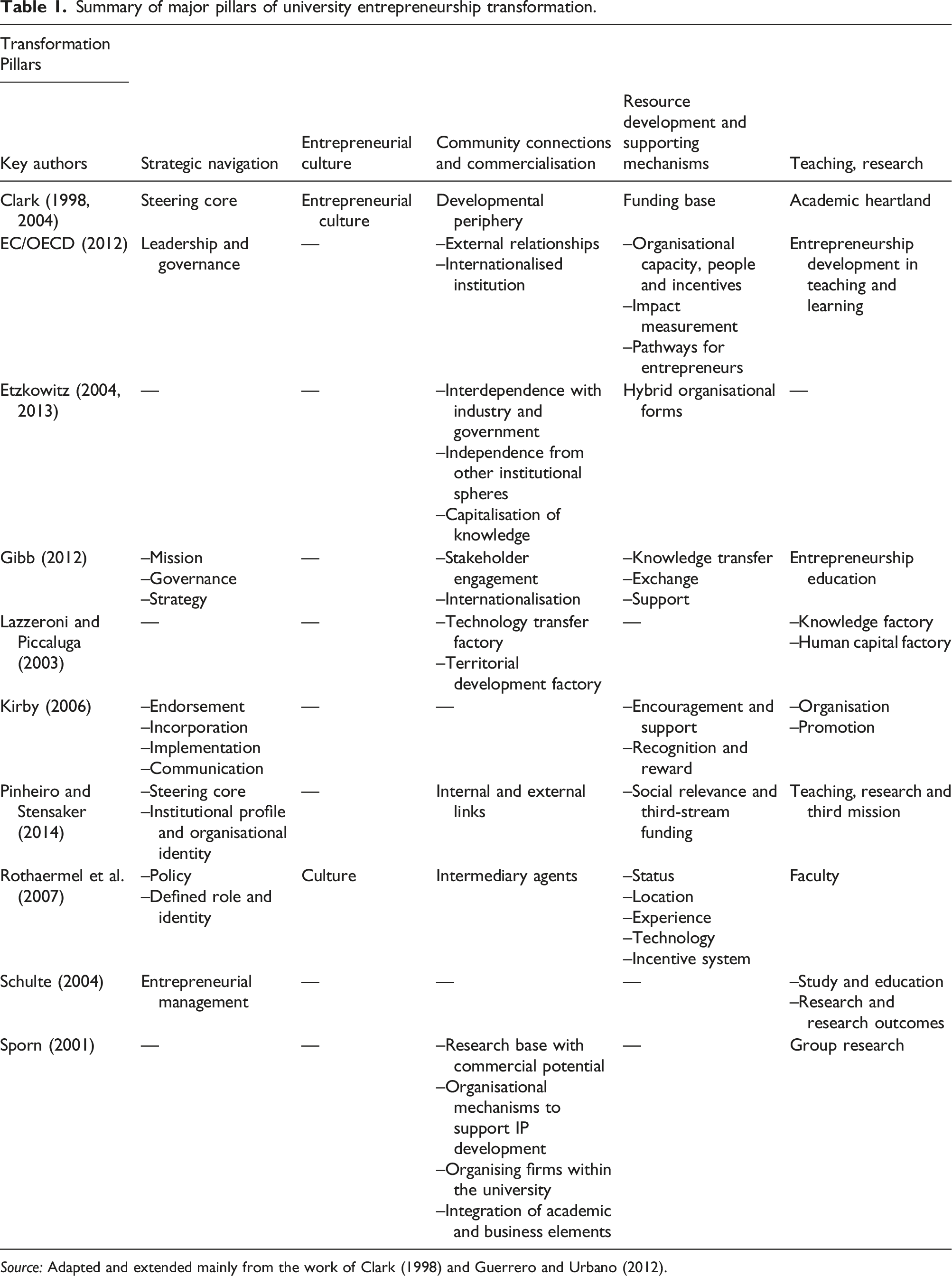
Source: Adapted and extended mainly from the work of Clark (1998) and Guerrero and Urbano (2012).
This research responds to calls from several researchers (Mascarenhas et al., 2017; Ferreira et al., 2018a) for further investigation into how entrepreneurship can be more firmly embedded in universities as a strategic imperative. Addressing this current gap in the literature, our article addresses the following main research question: How do analyses of strategic documents reveal the vigour of a university’s entrepreneurial transformation? We now describe the research context, the methodological approach and the analytical process employed.
Research context
Australia’s higher education institutions were chosen as the context for this research as they are experiencing mixed trends, which are theoretically rich for further investigation. Australian universities can generally be classified into two groups: the ‘traditional’ universities with ‘a strong research focus supporting traditional disciplines’ and the ‘new’ universities of technology ‘which emphasise applied and vocational education and research, frequently in new or emerging disciplines’ (Codling and Meek, 2006: 35). Under market competition (Marginson and Considine, 2000), there is a tendency for the old ‘sandstone’ universities to slide towards the ‘new’ ones (Codling and Meek, 2006). In addition, Australian universities are being compelled to embrace changes (Christopher, 2014), particularly under the conditions of the ‘greater internationalisation of Australian economy, declining productivity, and threats to competitiveness, which have contributed to pressures being placed on the higher education sector to become more “productive”’ (Dodgson and Staggs, 2012: 576).
Despite the widespread global adoption of entrepreneurship as a strategic imperative in higher education (Clark, 1998; Etzkowitz, 2004, 2016), this trend is not so evident in Australian universities (Maritz et al., 2015). Even though there have been start-up initiatives (such as incubators and accelerators) and innovations in the higher education sector (Gallagher, 2000; Bliemel et al., 2018), these efforts have led to symbolic rather than substantive actions and motives (Maritz et al., 2015, 2019; Robinson, 2015; Gardner, 2018); nor do we see significant evidence of entrepreneurship in the strategic intents of Australian universities. There are a few isolated cases of a mention of entrepreneurship in strategic documents or initiatives, but this is certainly not widespread.
Methodology
This study responds calls from researchers on the entrepreneurial university (Rothaermel et al., 2007; Klofsten et al., 2018) to go beyond traditional methods, such as the case study and longitudinal analyses. Grounded in resource-based, knowledge-based and institutional perspectives, our integrative framework on entrepreneurial university strategy transformation serves as the theoretical background for the analyses. The analytical approach employed is presented in Figure 2. We began by selecting forty Australian universities, as specified in Australia’s Tertiary Education Quality and Standards Agency’s Web site, for the study. Analytical approach employed in the study.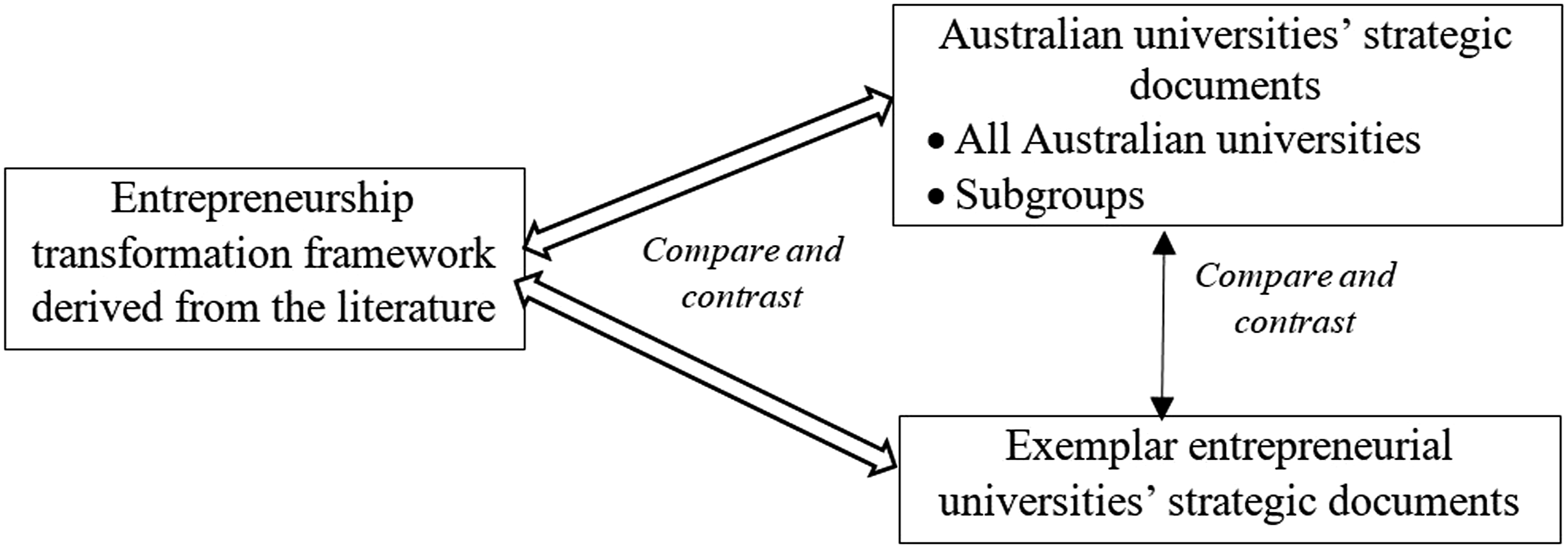
To develop an integrative framework on entrepreneurial university strategy transformation, we performed a systematic review of the literature on the entrepreneurial university from a strategic perspective. As a result of literature review process, we identified five main pillars of entrepreneurial university transformation: strategic navigation, teaching and research, community connections and commercialisation, entrepreneurial culture and resource development and supporting mechanisms. Following Nguyen et al. (2015) approach, we then examined the active Web2.0 strategic plans or relevant strategic documents (for different periods, ranging from 2012 to 2027) of forty Australian universities using an automated content analysis software package, Leximancer 4.5. This included application of associated complex algorithms to highlight the frequency of the five main pillars of our integrative framework for entrepreneurial transformation.
Leximancer (version 4.5) is a text mining software package that has been increasingly used in research in various disciplines where there is a need for performing content analysis with high validity while reducing subjectivity, particularly when a large amount of text is involved (Smith and Humphreys, 2006). The software investigates, discovers and presents the key concepts and their relationships in the input corpus based on examining word frequency and co-occurrence counts (Volery and Mazzarol, 2015). It relies on both semantic and relational analyses (Smith and Humphreys, 2006) to produce a ‘high level of coding stability’ and to generate ‘highly stable’ concept maps (Rooney, 2005; Nguyen et al., 2015).
Leximancer employs complex statistical algorithms using ‘nonlinear dynamics and machine learning’ (Smith and Humphreys, 2006). Generally, it employs a six-step process to perform the analysis, from text preparation to unsupervised and supervised ontology discovery, filling the thesaurus, classification, mapping and, finally, the user interface (Smith, 2000). In the entrepreneurship domain, specifically, various scholars have used this software package in recent years (Volery and Mazzarol, 2015; Roeschke, 2018). A comprehensive discussion on Leximancer’s validity as a content analysis tool, examining different validation typologies discussed in the literature, can be found in Smith and Humphreys’s (2006) well-cited article.
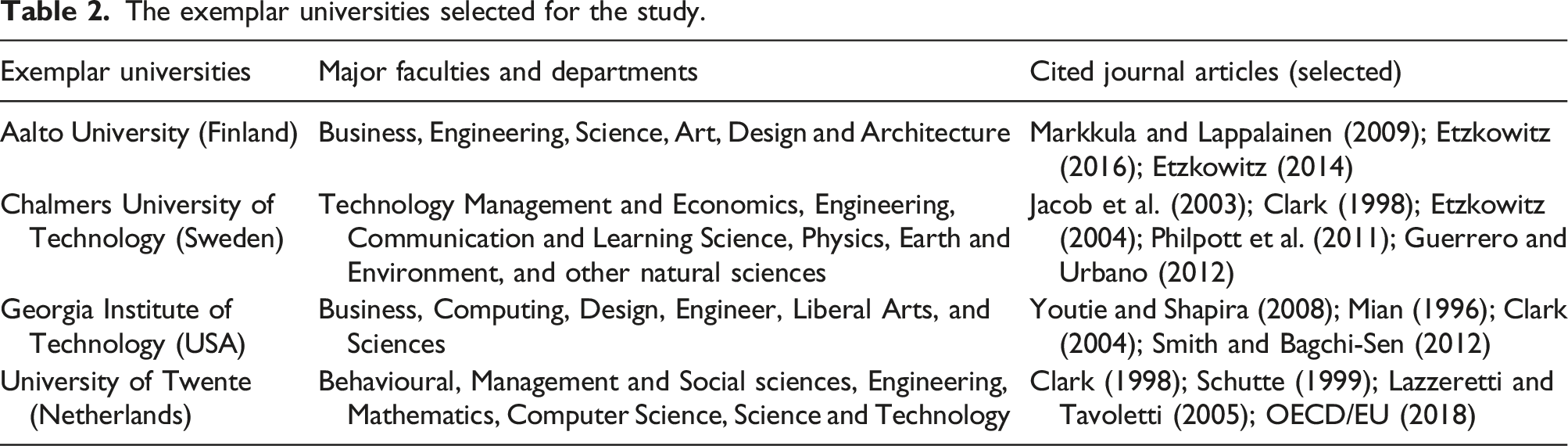
The themes and concepts derived from the Leximancer analyses, or, correspondingly, the strategic intents and major domains of strategies articulated by the forty Australian universities, were also compared to those of the four exemplar entrepreneurial universities, and then to the integrative framework derived from literature review to identify how vigorously the universities strategically planned to engage with entrepreneurship initiatives. The fundamental assumption for interpretation is that the more comprehensive the universities are in addressing the transformation pillars (factors) in their strategic documents, the more likely they are to take relevant actions to turn their intentions into reality.
The exemplar universities selected for the study.
Findings
Our findings reveal that Australian universities, as articulated in their strategic plans, demonstrate overall a moderate level of determination with regard to entrepreneurship transformation when compared to the exemplar universities. Results, however, varied among the Australian university groupings, depicting moderately strong entrepreneurship transformation in the Go8 and ATN, and moderate levels in the IRU.
In particular, the group of exemplar universities’ key concepts and concept maps support the framework, with all five pillars appearing clearly in the concept map (Figure 3). Major themes and concepts from exemplar entrepreneurship universities with 30% (left) and 100% visible concepts (right).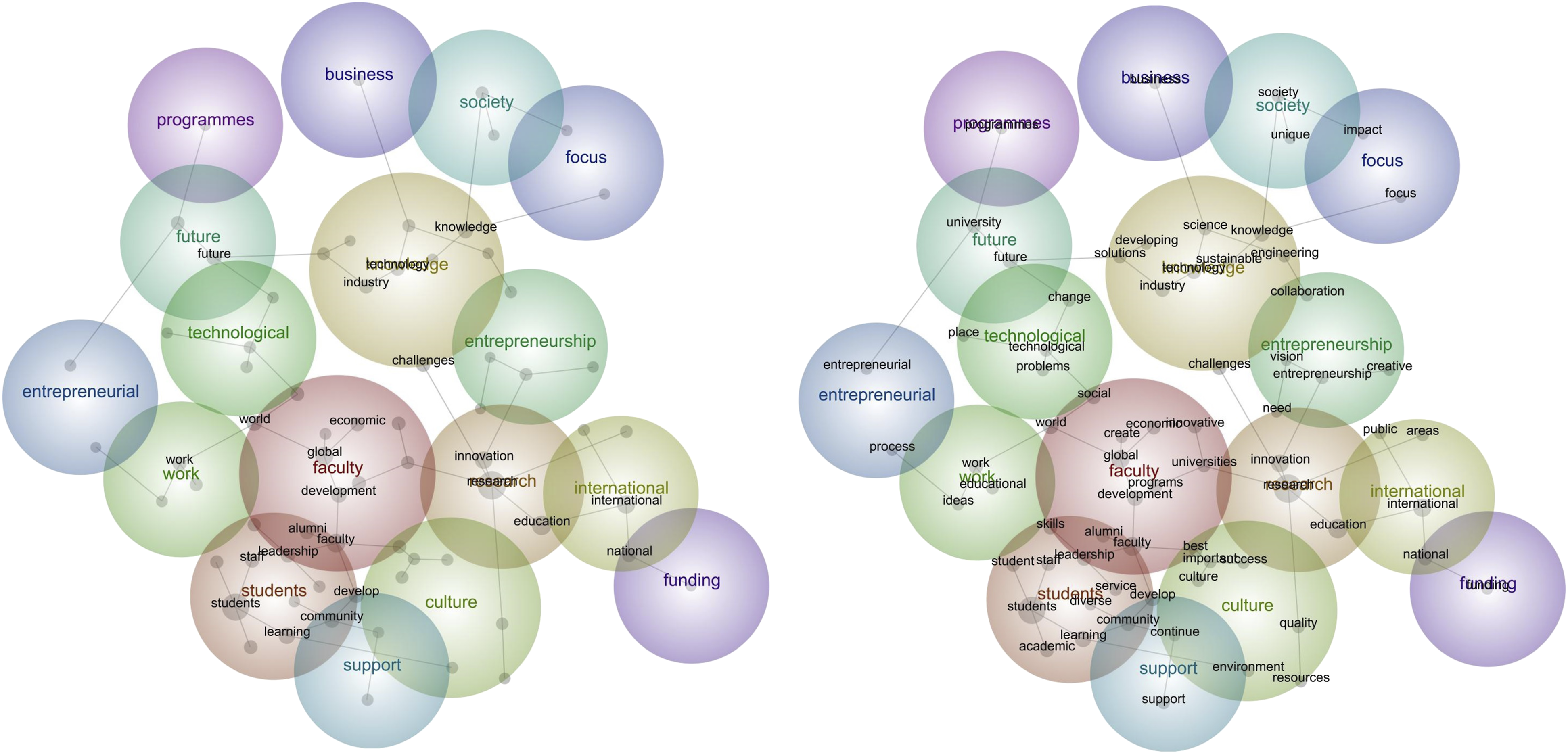
The two ‘Entrepreneurship’ and ‘Entrepreneurial’ themes clearly emerge as important priorities for the exemplar cases. Figure 4 shows how the major themes and concepts generated from the exemplar universities align closely to the entrepreneurial university transformation pillars. Major themes and concepts from exemplar entrepreneurship universities generated by Leximancer, grouped by transformation pillars, with manual annotation.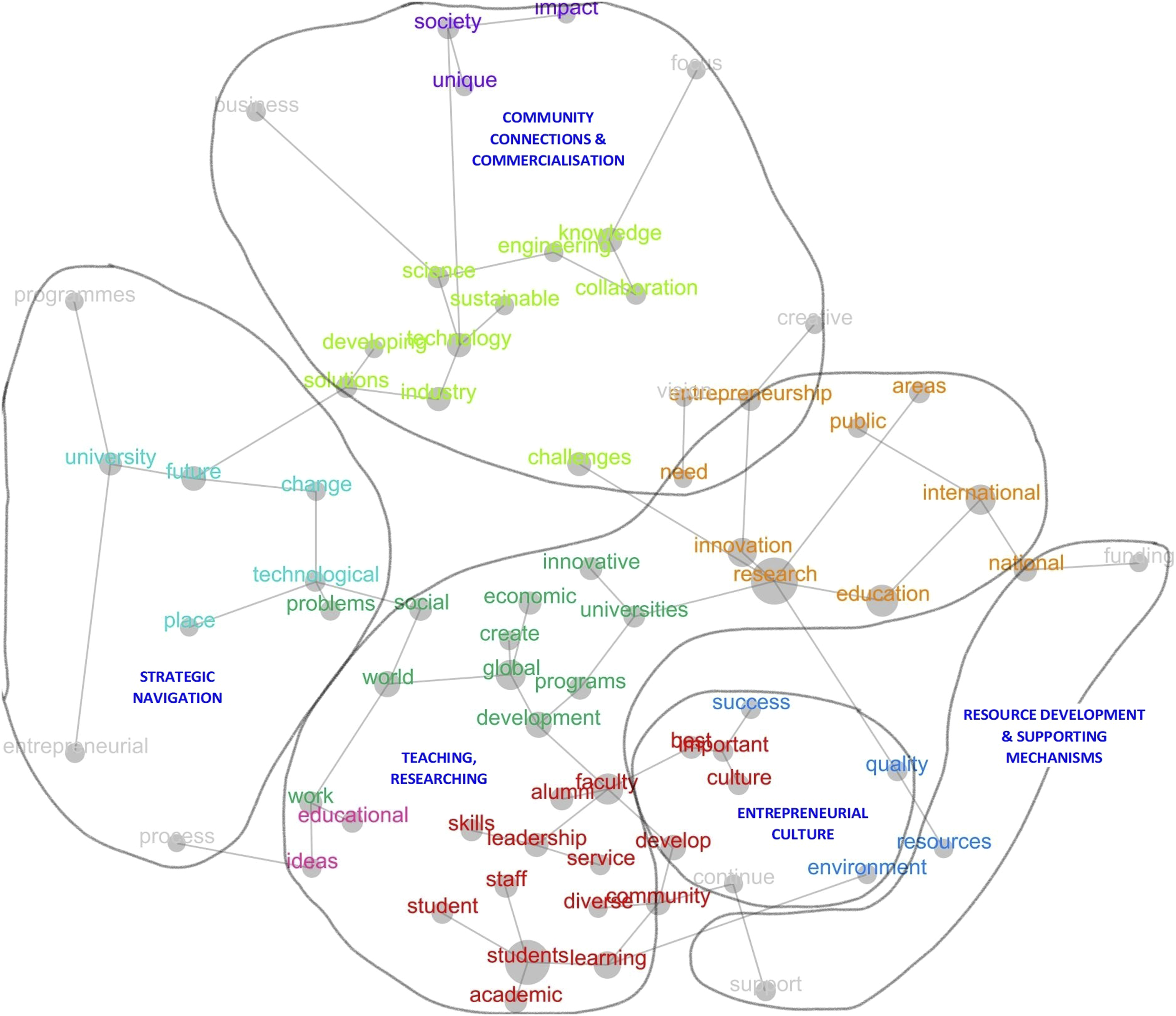
In contrast, no dedicated entrepreneurship and related themes are found in the map for all Australian universities (Figure 5). The ‘Culture’ and ‘Value’ themes correspond to the ‘Entrepreneurial Culture’ pillar, but a specific plan to build an entrepreneurial culture has not been included, although different aspects of innovation have been embedded in some universities’ strategic plans. The strong intention of Australian universities to engage closely and align teaching activities with the needs of the community, industry and relevant partners is shown via the ‘Community’ theme and its integration with industry- and community-related concepts. Entrepreneurship, however, has not been included among the top priorities, but the ‘Research’, ‘Education’ and ‘Community’ themes are closely linked. Major themes and concepts from all Australian universities with 30% (left) and 100% visible concepts (right).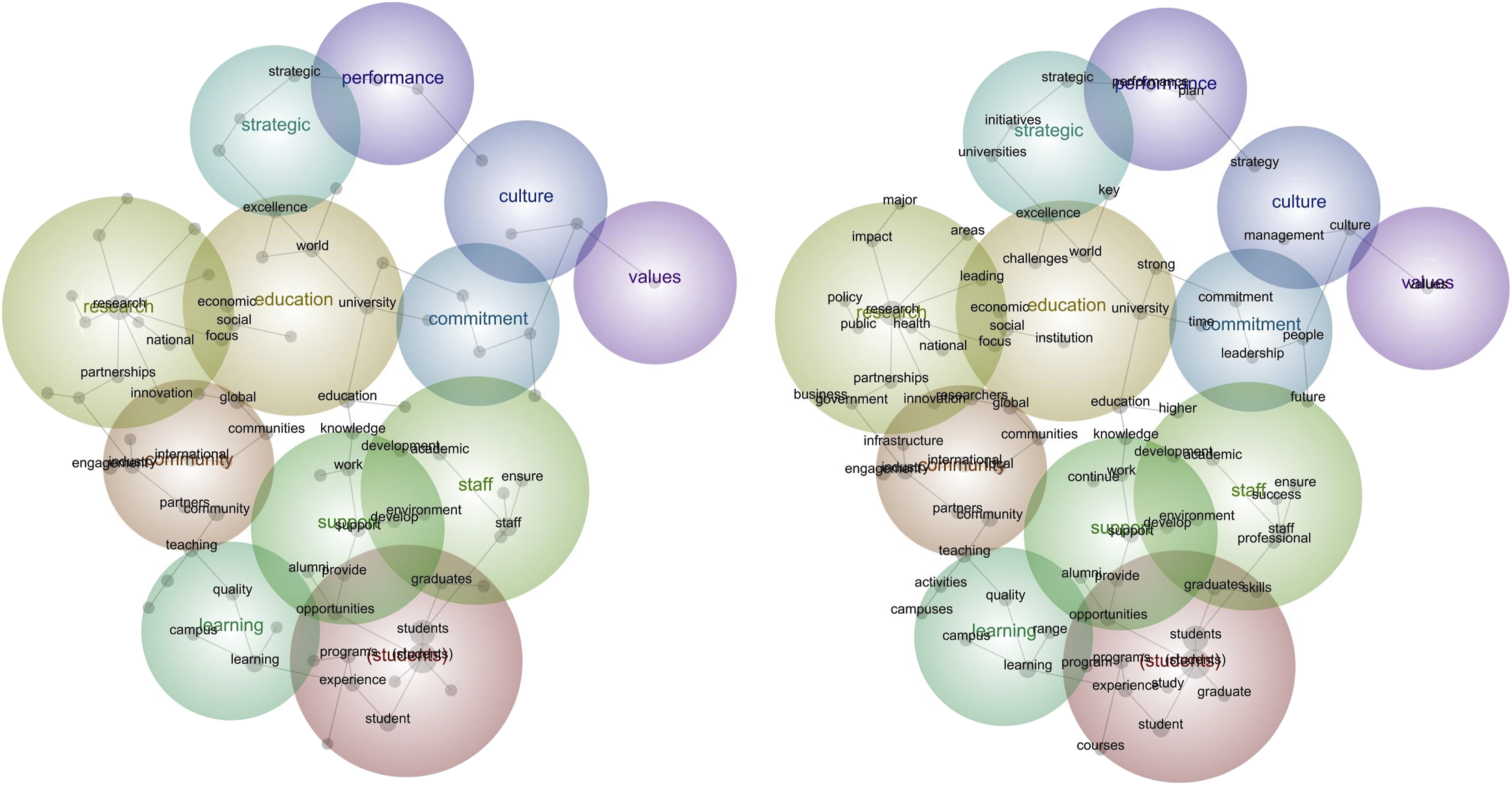
In a similar pattern to that of all Australian universities, no dedicated entrepreneurship and related themes emerge from the maps generated for the Go8 (Figure 6), the ATN (Figure 7) and the IRU (Figure 8). The Go8 has shown a relatively strong focus on developing community connections and commercialisation, particularly via strong connections between the ‘Communities’ and ‘Engagement’, ‘Global’, ‘Students’, ‘Public’ and ‘Research’ themes. Major themes and concepts from Go8 universities with 30% (left) and 100% visible concepts (right). Major themes and concepts from ATN universities with 30% (left) and 100% visible concepts (right). Major themes and concepts from IRU universities with 30% (left) and 100% visible concepts (right).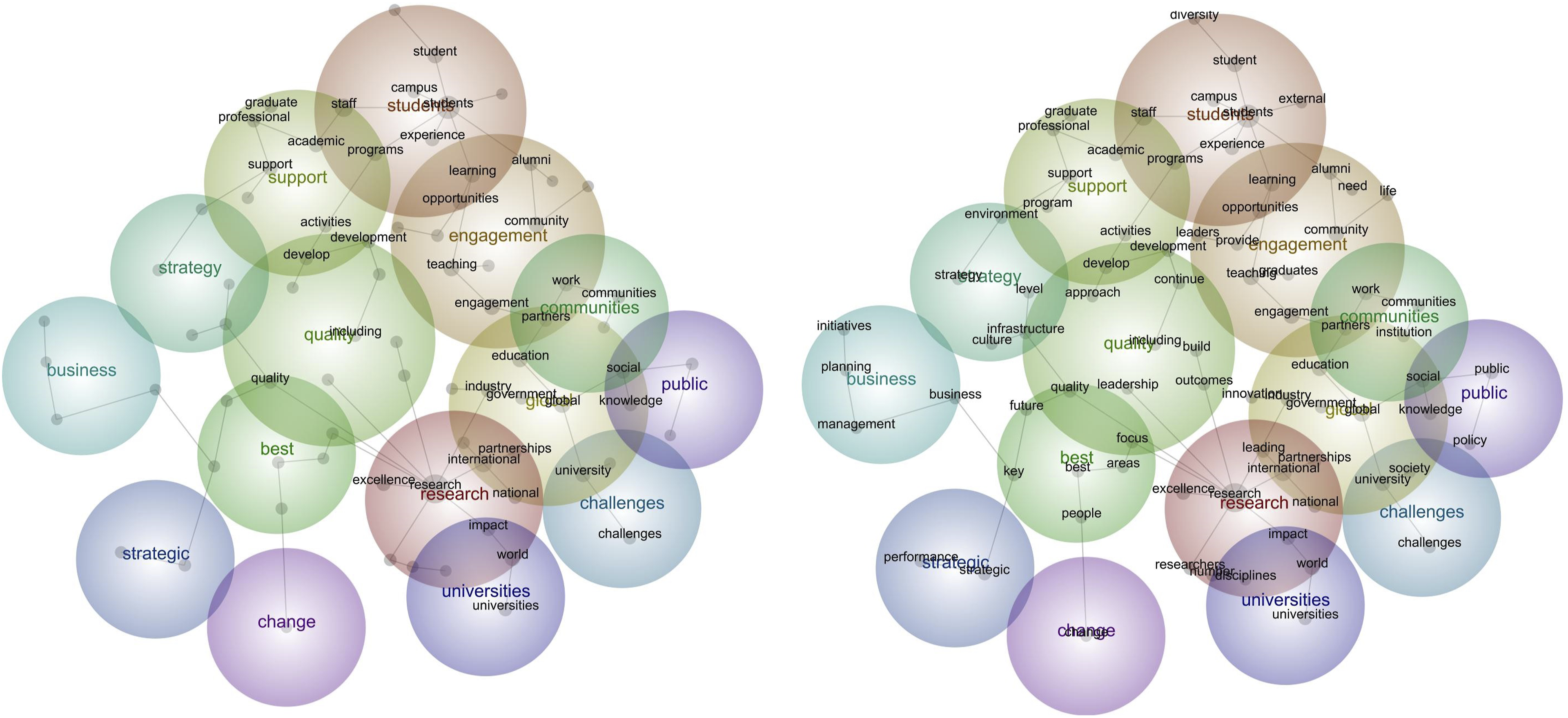
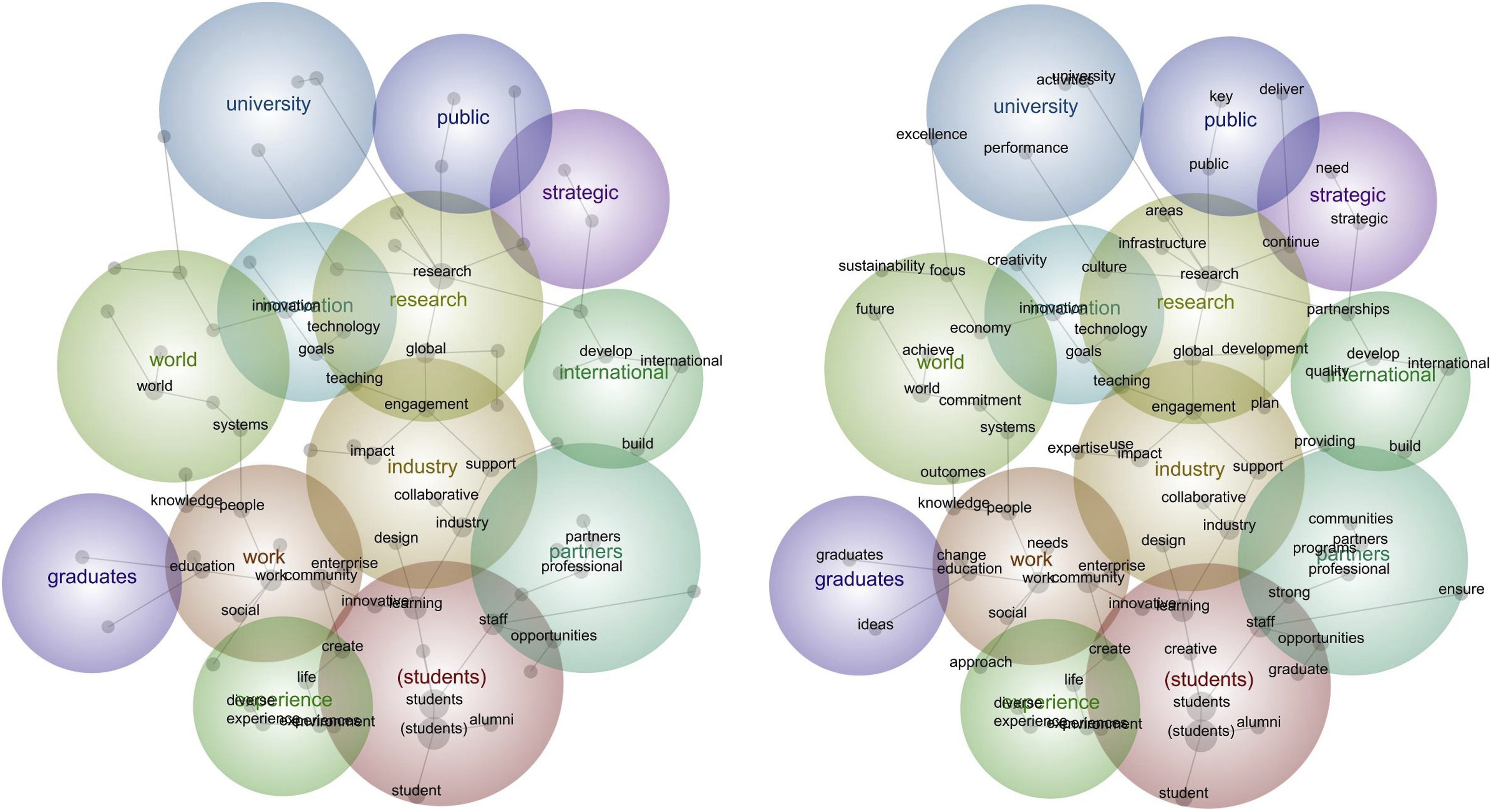
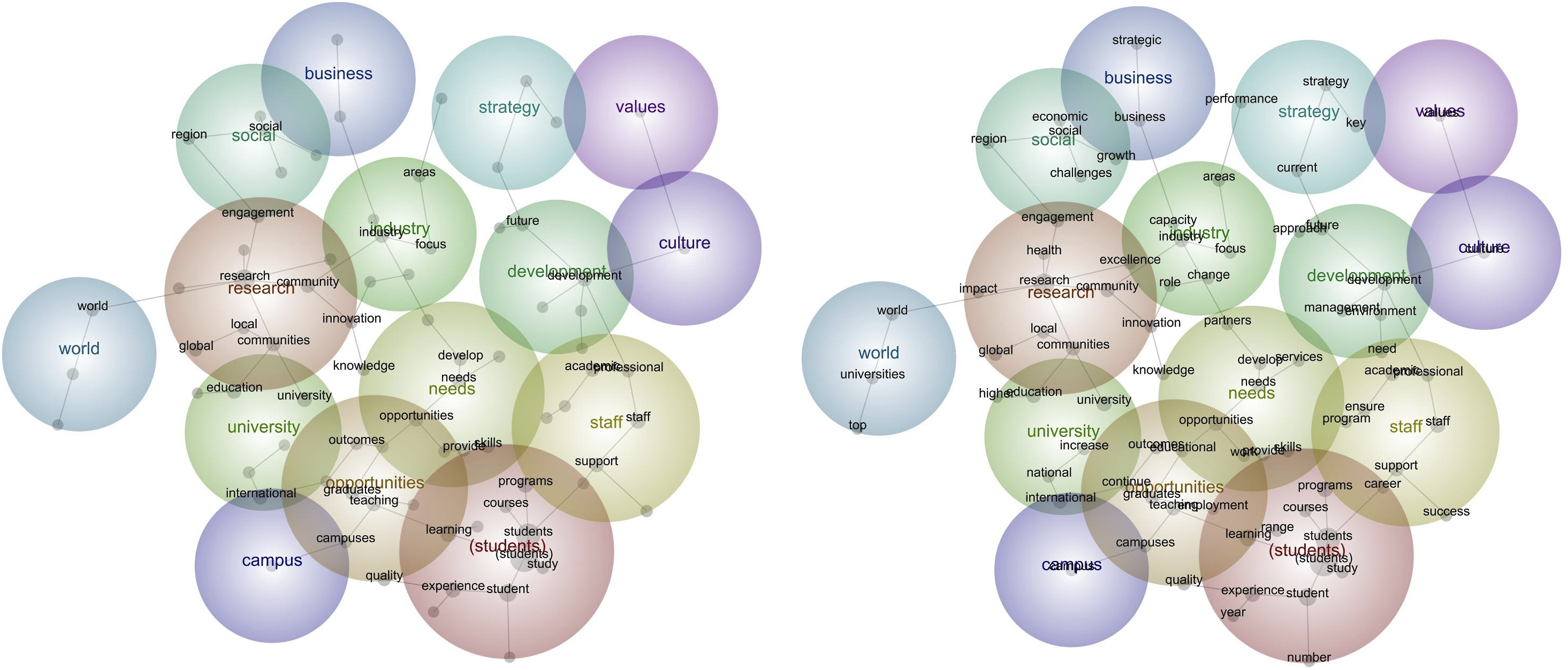
With a strong focus on enterprise, innovation and industry connections, ATN universities seem to have been geared more progressively towards entrepreneurship–industry–community connections, demonstrated via strong connections between the ‘Research’ and ‘Students’ and ‘Work’ themes and ‘Innovation’ and ‘Industries’.
A similar pattern with the focus on industry–community is also discernible for the IRU with a set of themes and concepts but at a lesser level according to the given importance. There were strong connections between the ‘Research’ theme and the ‘Social’, ‘Industry’ and ‘University’ themes.
Major themes and concepts identified in groups of universities.
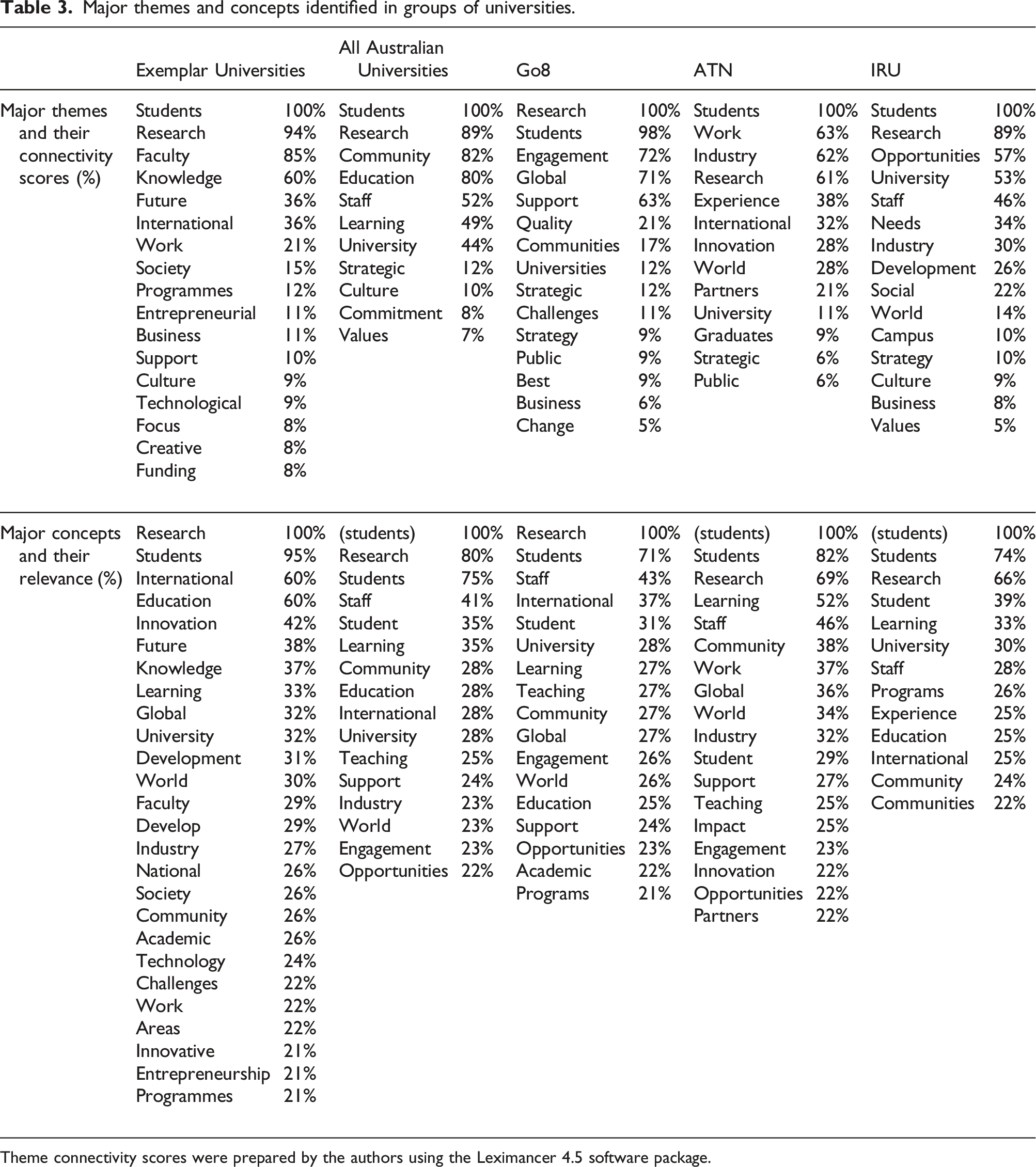
Theme connectivity scores were prepared by the authors using the Leximancer 4.5 software package.
Summary of major findings across examined groups.

Discussion
The study set out to examine how strategic documents suggest universities’ determination to transform themselves into entrepreneurial universities. A theoretical framework was developed from a literature review to guide the process of assessing the strategic documents, with an assumption that the more frequently and assertedly the key elements of the framework are articulated, the more entrepreneurial the institution plans to become. Australian universities were chosen for the research given the specific context of the higher education sector and the availability of strategic documents on the institutions’ websites.
Within the research context, the findings show that, while there are some variances with specific institutions, Australian universities in general, and several groups of universities in particular, expressed different levels of determination, ranging from moderate to moderately strong, to transform themselves into being entrepreneurial. This study, nevertheless, is not meant to undermine the significant achievements of a number of Australian universities over the past decades (Clark, 2004, 2015; Gjerding et al., 2006) to progress further along the entrepreneurial pathway. Instead, its findings simply paint a general picture of the higher education sector showing that entrepreneurship, among other domains of concern, has not been among the top priorities for Australian universities. It therefore signals the need for higher education institutions in the country to gear themselves more strongly towards entrepreneurship.
The variation among Australian universities can to some extent be explained by the particularities of the country’s higher education sector, which includes large and established universities at one end of the continuum and the emergence of technology universities at the other (Codling and Meek, 2006). Marginson and Considine (2000: 233) delineate that the ‘sandstone’ universities are stable institutions ‘with a guaranteed place, though past experience suggests that they are less likely to be brilliant innovators, in either the organisational or the educational sense’. Australian universities have been equipped with greater diversity and autonomy, and thus have ‘greater flexibility to pursue their individual missions’ (Chen, 2007: 209). Despite recent significant efforts by Australian higher education institutions, our findings partially corroborate Marginson and Considine’s (2000) observation that Australian universities in general, though with some variation in specific institutions, display the first three factors in Clark’s (1998) framework – namely, steering core, developmental periphery and, partly, the funding base – thus leaving room for further improvement, particularly in entrepreneurial culture and entrepreneurship teaching.
The findings also generally support Gallagher’s (2000: 2) claim that, among Australian public universities, while coping with various ‘structural, legalistic, and behavioural issues’ to build up the corporate culture (Christopher, 2014), ‘none have yet developed the “integrated entrepreneurial culture” that Burton Clark identified of international pacesetters’. Instead, ‘making money has not become their core business; revenue generation is a means to sustaining the university’s broader purposes’ (Gallagher, 2000: 2). Our findings also corroborate Harman and Harman’s (2004: 168) identification of ‘the need for a culture conducive to and supportive of commercialisation without compromising core academic values’ in Australian universities.
In terms of entrepreneurship teaching, the findings reaffirm Maritz et al.’s (2019) and Maritz et al.’s (2015) conclusion that there is still significant room for the further development of entrepreneurship education programs in Australian universities as many are still ‘in the infancy stage’ of such development (Maritz and Brown, 2013), and there is a ‘lack of cohesion and national entrepreneurship academic standards and graduate student outcomes’ (Maritz et al., 2015: 1031).
Regarding community connections and commercialisation, our findings corroborate the recent report by the Australian government which states that ‘Australia ranked last of 29 OECD countries for the proportion of SMEs collaborating with universities or other non-commercial research organisations’ (Australian Government, 2017: 16). There has been a ‘generally disconnected’ relation between Australian firms and the public academic institutions as a source of innovative ideas (Australian Government, 2017; Robinson, 2015). This is also consistent with other recent reports in which Australian businesses were found to ‘rank reasonably poorly in networking with external institutional sources such as universities’ (Australian Government, 2016: 63), resulting in weak absorptive capacity in the firms (Australian Government, 2014). Our findings also support Gardner’s (2018: 1) concern that ‘there is less collaboration to produce innovations, less commercialisation of new ideas, a less vibrant scene of start-ups and spin-outs’ compared to several other (OECD) nations. Consequently, the findings corroborate Harman and Harman’s (2004: 153) concern about ‘the multiplicity of [government support] programmes and departments involved, about overall policy coherence, and whether business firms rather than universities are the main beneficiaries’, all of which in turn affect the research commercialisation capabilities of Australian universities. Our findings also reveal stronger connections with industry in specific groups (particularly the ATN), which indicate the stronger focus of Unitechs (Marginson and Considine, 2000) on vocational and industry orientation (De Zilwa, 2005).
Finally, concerning the resources needed for entrepreneurial change, the findings suggest that the resources dedicated by Australian universities to entrepreneurial transformation are still at a moderate level. Under the impact of reduced public funding, universities have to embark on entrepreneurialism to seek innovative ways to sustain growth (De Zilwa, 2005). Australian universities have been moving towards a performance-based funding system for research (Sharma, 2004), making access to funding more competitive. In fact, ‘the higher education sector spent $10.1 billion on R&D, over half of which came from general university funds’ (Australian Government, 2016: 50), and many start-ups have grown out of university incubators, accelerators and other supporting institutions (Universities Australia, 2017). The findings, however, corroborate the fact that the network of accelerators as well as other start-up support organisations, ‘independent of policy efforts’ and the related legal framework, were introduced in Australia only in 2010 (Bliemel et al., 2018), making them relatively young and open to improvement.
Conclusions
This study provides guidance for universities wishing to engage in entrepreneurship as a strategic imperative. Outcomes of the research also suggest avenues for policy makers, communities and industry to enhance effective entrepreneurship initiatives to facilitate local, regional and national economic development.
Our contribution to the literature is fourfold. First, this research provides the first analytical assessment of the level of entrepreneurship in Australian universities from a strategic perspective and paves the way for further evaluation. Second, the research employs a novel data analytical approach and may be the first attempt to examine strategic documents of Australian universities using automated content analysis, addressing recent calls for going beyond traditional methods to gain a better understanding of the entrepreneurial university. Third, the study also contributes to the literature by proposing an integrative framework on entrepreneurial university transformation, consequently shedding further light on the transformation process. Lastly, the paper provides implications for universities, industry and government if they are to more vigorously adopt entrepreneurship imperatives to enhance the dynamics of entrepreneurship ecosystems and facilitate economic growth and social change.
In the research context, the findings suggest that there has been a moderate adoption of entrepreneurship imperatives in Australian universities in order to become more entrepreneurial; further efforts are still required. Australian higher education institutions need to take more substantive actions to address all the essential components of the S.E.C.RE.T. framework if they are to strategically progress towards entrepreneurship. While some pillars (i.e. community connections and commercialisation, and resource development and supporting mechanisms) can be enhanced in collaboration with industry partners and the government, others (strategic navigation, entrepreneurial culture, teaching and research) tend to reside within the university’s boundaries, and require all relevant institutional actors, from the highest (and strategic) level to faculties, centres and individual staff members and students to nurture entrepreneurship, fostering a mutually supportive, pro-entrepreneurship culture within the institution. Consequently, the areas of focus for Australian universities include strengthening substantive and symbolic navigation activities, such as crafting stronger entrepreneurship-oriented strategic initiatives and goals, enhancing the pro-entrepreneurship institutional profile and identify, and strengthening leadership and governance to be ready for entrepreneurship transformation. Other means of improvement include conducting more vigorous entrepreneurship teaching and research activities, enhancing the entrepreneurial culture and crafting additional resources and support mechanisms to facilitate the transformation.
Stakeholders from industry can contribute, particularly, to the process of facilitating networks and connections with entrepreneurial universities (Giones, 2019), and can capitalise on innovations originating in these institutions. Successful collaboration outcomes may be in the form of, for example, university spin-off companies (Harrison and Leitch, 2010; Hayter, 2016; Riviezzo et al., 2019; Soetanto and Van Geenhuizen, 2019), knowledge transfer (Wynn and Jones, 2017), technology transfer (Boh et al., 2016) or making the university campus part of an entrepreneurial ecosystem (Miller and Acs, 2017).
The government and relevant authorities can assist the process of transforming higher education institutions into entrepreneurial universities, and so strengthening their impact on technological and social development, by providing more diversified funding mechanisms and strengthening connections with community and/or industry partners. More specifically, the relationship between the government and entrepreneurial universities can be reinforced through the development of effective support mechanisms designed for the institutions (Zaring et al., 2019; Guerrero and Urbano, 2017). Government policies can be geared towards embedding universities in a dynamic ‘entrepreneurial regional economy’ (Stam, 2015), as well as making them drivers of economic growth and social change (Klofsten et al., 2018; Fuster et al., 2019) and promoting third mission imperatives (Smith et al., 2019). Support may be in the form of, for example, a national incubator support program (Bliemel et al., 2018), different funding packages (Dodgson and Staggs, 2012), or even customised policies to fit the phases of an institution’s development (Mack and Mayer, 2016).
Governments and ecosystem stakeholders can contribute to the development of the entrepreneurial university in many ways. For example, government financial assistance might be offered to those institutions reaching specific benchmarks in their progress towards becoming entrepreneurial universities, similar to what has been implemented in Malaysia (Looi and Maritz, 2021). From an industry perspective, industry accelerators may be closely aligned with entrepreneurship education initiatives at universities within the entrepreneurial ecosystems (Metcalf et al., 2020).
Limitations of this research include a point-in-time analysis of strategic university documents in Web2.0, and additional empirical research is desirable on the adoption of entrepreneurship as a transformational change agent in universities. In future research, a mixed-methods research design is suggested to validate the proposed framework and to gain more insight into this emergent phenomenon. Furthermore, as research on the development of the entrepreneurial university within entrepreneurship ecosystems continues to develop, there is a need for theoretical frameworks to understand the process through which the participating communities interact.
Footnotes
Declaration of conflicting interests
The author(s) declared no potential conflicts of interest with respect to the research, authorship, and/or publication of this article.
Funding
The author(s) received no financial support for the research, authorship, and/or publication of this article.
