




Abstract
The mobility of the highly skilled, summarized as brain drain, brain circulation and brain gain, remains a contentious issue for policy. Even so, the evidence base to inform policy remains poor. This gap is of particular importance to policymakers in countries that experience brain drain. This paper reports on the findings of a tracer study of international African doctoral graduates of South Africa’s leading universities. Since access to student records was problematic, the sample frame was developed by the inspection of library holdings of dissertations. This approach allowed for a representative sample to be surveyed. Contrary to the expectation that the majority of graduates would depart from Africa as a brain drain, it was found that the majority returned home on completion. Some 10% remained in South Africa as a brain gain to the host country, with but 5% leaving Africa. The outcome of their temporary migration was brain circulation and talent development.
Keywords
All countries require high-level skills to grow and thrive. This is most cogently recognized in the United Nations Sustainable Development Goal 4.b: By 2020, substantially [to] expand globally the number of scholarships available to developing countries, in particular least developed countries, small island developing States and African countries, for enrolment in higher education, including vocational training and information and communications technology, technical, engineering and scientific programmes, in developed countries and other developing countries. (United Nations, 2015: 17)
Whatever the reason for such travel, there is always a possibility that the graduate may not return home, thereby constituting a loss of skill, commonly referred to as brain drain. Some countries encourage foreign postgraduates to remain in the host country, and fine-tune immigration policy to that end (George et al., 2012; Group of Eight Australia, 2014; Hercog, 2008). Where the local stock of skill is deemed inadequate, positive immigration policy is instituted, as for example the European Union’s Lisbon Agenda which was intended to result in brain gain for Europe. The third dimension of mobility is brain circulation, where a student acquires new skills and then returns home. Academic exchange, as for example in the Marie Sklodowska-Curie programme of the European Union, supports brain circulation (EU, 2020).
This paper investigates the flow of international students to and from South Africa, which has emerged as the postgraduate hub of Sub-Saharan Africa (Cloete et al., 2015b). South Africa has long experienced considerable problems in generating, retaining and attracting high-level skills. These problems arose from its apartheid policies, which restricted the development of all South Africans, and consequent international sanctions (MacDonald and Crush, 2002). In recent years its universities have opened up to the world, so that by 2016 some 7% of university students were international, with close to a third of doctoral graduates, and two-thirds of postdoctoral students from Africa.
While its Ministers have sought to exploit this new stock to ‘reverse brain drain into brain gain’ (Mangena, 2007) or to reduce losses to developed countries (Pandor, 2016), South African immigration law requires that international African graduates return to their country of origin after completion of their studies. This is despite the exhortation of the National Planning Commission that ‘immigration requirements should be relaxed for highly skilled science and mathematics teachers, technicians and researchers. One way of doing this is to grant 7 year working permits to all graduates from foreign countries’ (The Presidency, 2011: 289). To add to the complexity of the discourse, informal discussion with senior university administrators and senior government officials reveals a widely held view that international African graduates from South African universities would most likely seek employment in Europe or North America rather than returning home.
This policy dissonance informs the topic of this paper. What indeed are the destinations and employment characteristics of international African doctoral graduates after completion of their studies in South Africa’s leading universities? A precise answer to this question is necessary but difficult, as student record databases are protected by confidentiality and are not designed to answer questions concerning nationality and future employment. As the literature review below makes clear, there are gaps in the study of student mobility, with most studies offering simple descriptive statistics of gross flows from country of origin to destination (as, for example, does the UNESCO Institute for Statistics database). Details of the nature of postgraduate mobility, the pushes and pulls that inform the decision to migrate temporarily or permanently, are lacking.
In order to improve understanding of postgraduate mobility, a project entitled ‘Mobility of the Highly Skilled’, was designed to generate a fine-grained appreciation of the phenomenon. The National Research Foundation Government was approached to provide a research grant to enable the design and implementation of a tracer study that would carry out the necessary investigation. The chosen moniker for the project was ‘MOTHS’ – the Mobility of the Highly Skilled. After all, moths are attracted to bright lights: so too are those seeking study opportunities abroad.
The MOTHS study was conducted over the 4 years 2016–2019 and, despite numerous obstacles, was able to develop a robust methodology to track and trace doctoral graduates through the complete cycle from country of origin to host university and future employment (Kahn et al., 2019). A now larger realized sample allows for the exploration of a number of additional dimensions.
The analysis illuminates matters relevant to South African (and African) policy for human resource development and immigration, and offers a unique contribution to the literature on migration and mobility.
The paper is structured as follows. This introduction is followed by a literature review, after which the methodology is presented. The fourth section analyses the results. The final section offers a discussion and recommendations.
Literature review
Mobility is a dominant feature of modern life, central to the world economy, with associated costs and benefits. The MOTHS is a multidimensional process, including brain drain, brain gain, brain circulation and, of course, knowledge exchange. There are many drivers of the process, with limited prospects at home encouraging migration of the highly skilled who seek better prospects in the North (Michael, 1993; Thomas, 2011, Docquier and Machado, 2016). A useful overview of the economic issues underlying mobility is that of Guena et al. (2015), while Levent (2016) examines the contribution of international mobile students to economic growth. Mavroudi and Warren (2013) discuss the ways students manage this process.
By 2050, Africa is expected to host the largest and youngest workforce on Earth (Brooks et al., 2014). This apparent demographic dividend presents many challenges, including environmental sustainability, health security, skills development and employment opportunity. The challenges occur in the context of low economic development, weak institutions, historic dependencies and backlogs. Education backlogs must be understood in their historical context, with the publication Higher Education in Developing Countries: Peril or Promise (World Bank, 2000) signalling the reversal of the doctrine that primary education funding should be favoured above secondary or higher education. For Sub-Saharan Africa, this bias was part and parcel of the structural adjustment programmes that contributed to the run-down of high-level skills during the last quarter of the 20th century (Easterly, 2001). That period, the ‘lost decades’ saw the collapse of African country GDP per capita, and the erosion of knowledge infrastructure embodied in universities, public research institutes and commodity-based research organizations. Higher education in Sub-Saharan Africa (SSA) remains underdeveloped, with 2018 enrolments of 8.1 million (www.uis.unesco.org). This may be compared with the 21 million tertiary level enrolments of North America, a rate more than seven times higher.
Like other multilateral organizations such as the European Union, the World Bank and the OECD, the African Union has promoted the innovation system concept as a useful device to frame research and innovation policy. The concept dates back some three decades, with uneven implementation (Freeman and Soete, 2007). At heart, innovation systems depend on the availability of high-level skills. For them to play their role in sustainable growth and wellbeing, support of doctoral education at home, and abroad, is required. Yet sending students abroad carries the risk of permanent brain drain. One of the measures used to describe innovation systems is gross national expenditure on research and development, abbreviated as GERD (OECD, 2015). The ratio GERD: GDP has gained widespread use as the sentinel indicator of innovation system vitality, and a specific level of the ratio is often advocated in policy statements. The European Union, through the 2002 Barcelona Summit, hoped to reach 3% by 2010 (European Commission, 2004). South Africa declared a target for GERD: GDP to be 1.5% by 2018 (DST, 2008). The African Union has advocated that the level of 1% should be reached by 2024.
What is often overlooked in setting such targets is that GERD is a proxy for the stock of the highly skilled. This follows logically, since the calculation of GERD requires the determination of labour costs and other current expenditure. The more personnel employed, the higher current expenditure must be. Growing GERD thus implies more researchers – permanent research staff, doctoral students and postdoctoral fellows, as well as technicians and administrators. To reach the GERD: GDP target of 3%, ‘Europe needs more scientists’ (European Commission, 2004).
Currently the average level of GERD: GDP for African states stands at 0.4% (AUDA-NEPAD, 2019); this despite calls to attain the 1% that dates back to the 1980 Lagos Plan of Action (OAU, 1980). As the leading scientific nation of Africa, South Africa recorded GERD: GDP of 0.83% over the measurement period 2017–2018 (DST, 2019). GERD: GDP has stagnated in a narrow range over the last decade, with the number of full-time researchers growing very slowly, despite new programmes such as the South African Research Chairs Initiative and the Centres of Excellence and Centres of Competence, which have enjoyed generous funding to attract doctoral and postdoctoral students (Chataway et al., 2019; NRF, 2015).
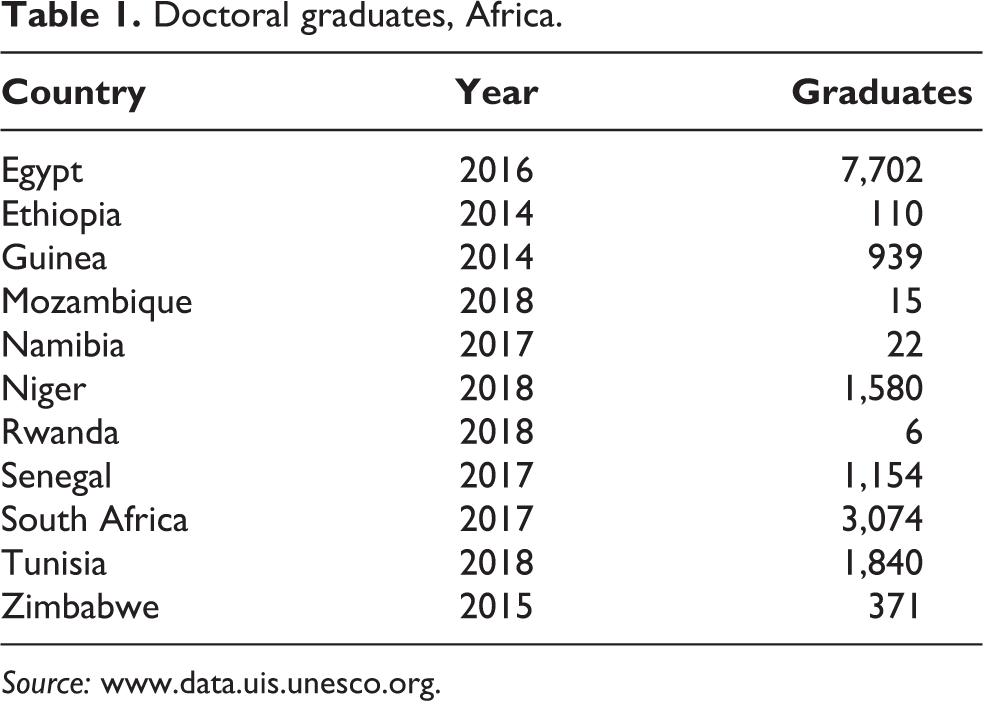
South Africa and North Africa excepted, the other African states record extremely low rates of doctoral production. Currently there are an estimated 111,000 doctoral students enrolled across Africa (www.data.uis.unesco.org), with South Africa accounting for one-fifth (DST, 2019). Unfortunately the data on doctoral graduates are sparse. A search of the UNESCO Institute for Statistics database yields data for only 11 African countries which in some cases is from 5 years earlier (Table 1).
Doctoral graduates, Africa.
Source: www.data.uis.unesco.org.
Notably absent from Table 1 are Algeria and Morocco, which are among the most important scientifically-active African nations. Also absent are the UNESCO member states Nigeria, Tanzania and Uganda, which have a number of prestigious higher education institutions. The World Bank databases, the USAID IDEA dashboard and compilations such as those of Cloete et al. (2015a) and Blumbach and Peak (2014) contribute little to fleshing out the picture.
The best estimate of North African doctoral graduations suggests annual domestic production above 10,000 (Egypt plus Tunisia). For Sub-Saharan Africa, the total would be around 7,500, with production by South Africa’s universities dominating. It appears that the annual domestic production of African doctoral graduates is in the order of 20,000.
As to the importance of foreign country study, Kritz (2015) estimates that 5.8% of Africa’s enrolled university students go abroad to further their studies, the highest such proportion of outward mobility in the world. Spain, France, Italy and Saudi Arabia serve as important sites for the doctoral education of students from the Maghreb. South of the equator, South Africa acts as the SSA hub for postgraduate education, so much so that during 2005–2015 her universities awarded 3,700 doctorates (and 14,000 Master’s degrees) to students from the region (Cloete et al., 2015b). Doctorates were awarded to 112 Ugandan nationals, 151 Malawians, 197 Kenyans, 376 Nigerians and 606 Zimbabweans.
Chikanda et al. (2016) and Newland and Tanaka (2010) argue that active immigration policy by host countries naturally leads to brain drain from Africa and the growth of diasporas. To counter such migration, Kritz (2015) argues that ‘strengthening tertiary education supply at home would be a cost-effective way for African governments to increase their human capital and reduce brain drain losses’. Prior attempts to tap into the South African graduate diaspora have had limited results (Kaplan, 1997). Using remittance data and other financial estimates, Easterly and Nyarko (2008) speculate whether brain drain might actually be good for Africa. Such studies fall within the migration literature rather than examining the specifics of the mobility of the highly skilled, as in this contribution.
Despite the importance of the mobility of the highly skilled in national education and research policy, quantitative data and studies of the phenomenon, migration studies excepted, are few and far between. Information on student flows available from the UNESCO Institute for Statistics is restricted to the gross numbers of students studying in foreign countries. No disaggregation by level or field of study is captured. The most notable contribution is that of the OECD Careers of Doctoral Holders project. That 25-country study made use of labour force surveys (Germany and Switzerland), population registers (Denmark, Finland, Norway and Sweden), existing registers (Chinese Taipei) and the landmark United States National Science Board survey. Auriol (2007) notes the paucity of data: ‘…foreign citizens or graduates who obtained their doctorate abroad are in most cases under-covered’. The Careers of Doctoral Holders (CDH) project acknowledged the difficulty that statistics agencies would confront in putting together a register of doctoral holders, and that there would be different approaches in developing a sample frame. The main objective of the CDH project was to quantify the effect of doctoral study on the earnings of graduates – the project was not primarily concerned with geographical mobility.
A now popular method for studying the benefit of mobility to the scientific community is the use of bibliometric analysis to track changes in the institutional affiliations of research academics (Halevi et al., 2016; Laudel, 2003; Moed and Halevi, 2014; Robinson-Garcia et al., 2019; Sandström, 2009). A key finding of this work is that those who remain at home appear to be less productive and receive fewer citations than those who move abroad. By design, the bibliometric method is restricted to those whose publications are indexed in the major bibliographic databases such as Scopus or the Web of Science. While useful in and of itself, the bibliometric approach necessarily provides a limited view of mobility.
Another approach to quantifying researcher mobility uses patent data, as in the comparison of the productivity of foreign and local researchers in a large German public research institute (Goel and Göktepe-Hultén, 2019). Besides the intrinsic findings, this work serves to illustrate another way around the absence of centralized databases that host full academic biodata.
This observation suggests that researchers in Brazil might be able to exploit the massive resources embedded in the national curriculum vitae database, Plataforma Lattes (www.lattes.cnpq.br), to examine the mobility of Brazilian researchers.
It is noteworthy that large-scale student mobility studies are rarely cited. Teichler (2015: 13) provides a synopsis of attempts to quantify student mobility – and this in the case of the advanced economies of the European Union: Although student mobility is so high on the political agenda, the quality of international data collection is deplorable.
Sehoole (2011) accessed the Department of Education’s higher education management information system (HEMIS) to describe the characteristics of doctoral enrolments. His analysis was naturally restricted by the predetermined HEMIS fields; namely, year of registration, institution, field of study and nationality. While seeking to quantify student mobility, the main finding of the study was the compilation of the number of international students by country. In other words, the study records origins but cannot shed light on destinations. In a follow-up study, Lee and Sehoole (2015) carried out a survey of international students at seven South African universities to determine why they chose the country to further their studies. An important finding was that students from neighbouring countries were attracted to South Africa because of its proximity. Again, that study did not examine the final destination of the graduates.
When senior university and government officials were approached to comment on the most likely location of international African doctoral graduates, the typical response was, ‘Probably in Seattle, Zurich or Paris. They are lost to Africa; gone’. Simply put, there is a strong belief that international African students who obtain a doctorate from South Africa’s universities will join the brain drain out of the continent.
Given the significant contribution that international doctoral students make to South Africa’s research effort, and the potential contribution that these graduates make to the host and countries of origin, a quantitative study into their outward mobility was long overdue. A first and novel contribution has been provided by the MOTHS project, which succeeded in tracing and tracking a representative sample of international African doctoral graduates.
Methodology
The MOTHS set out to quantify the reasons why international African students chose to study in South Africa, aspects of their experience during study, their subsequent career paths, their linkages to the research community in South Africa and their national peers, and to test the following null hypothesis: H0: The majority of international African doctoral graduates of South African universities will leave Africa upon graduation.
This required access to a complete and valid data set from which a representative sample could be drawn.
In practice, the researcher on mobility has limited access to the personal information that would be needed to trace a student from enrolment through graduation to employment, and hence determine their whereabouts, employment status and so on. In principle, university student record data should serve as the basis for legitimate research inquiry, but concerns with applicable law, and the lack of complete and timeous contact data, render these sources unsuited to task. The same may hold true for university alumni records.
Prior to the fieldwork that would generate a primary data set, the demographics of the subjects of study were unknown, save for the fact that these were full-time students enrolled on doctoral programmes. This sets the MOTHS study apart from bibliometric or scientometric approaches that focus on the specifics of employed researchers. The subjects of study might seek their first employment on graduation; they might return to prior employment; they might become temporarily unemployed.
Even where gatekeepers of student record databases are willing to assist, access to records has become increasingly difficult with the recent signing into law of the Protection of Personal Information Act (RSA, 2013), which includes restrictions on access to personnel databases even for legitimate research purposes. Ironically such restrictions co-exist with the emergence of the ‘surveillance state’ (Zuboff, 2019), which is able to intercept electronic signals and create new signal intelligence through voice and facial recognition and geo-location. ‘Track and trace’ is part of the new global surveillance reality, and will likely become more prevalent in the COVID-19 era.
Faced with such barriers, the researcher might turn to the central registers of graduates that exist in some countries – Brazil and Germany being two examples. Unfortunately, no such register exists in South Africa. Accordingly, the attempt was made to access student records held by the public universities, as well as visa and study permit records held by the Ministry of Home Affairs, the sponsor of the Protection of Personal Information Act. Access to both sources was denied on the grounds that this would infringe the Protection of Personal Information Act, even in its provisional form before final assent in 2020, long after the fieldwork had been completed.
Recognizing the potential value of the MOTHS study, a number of university alumni offices were prepared to act as intermediaries to disseminate the survey directly to those registered on their databases. For two reasons this method failed. The first reason was data completeness, with few offices holding records of more than a third of their graduates, let alone having valid and current contact information. The second reason for failure relates to the process of survey dissemination. To preserve confidentiality, alumni offices stood between the principal investigator and the respondents, so that response rates would be difficult to pin down and follow-up was effectively impossible.
An alternative data source had therefore to be found. One such source resides in graduation programme lists that, in some cases, include biographical information on the doctoral graduates. Unfortunately, there are no norms and standards that stipulate the content, design, storage and accessibility of graduation lists, so that avenue was fruitless.
The final resort was to examine the open-access dissertation records held as a legal requirement by each university. The National Research Foundation hosts the full set of university dissertation records on its open-access Dissertation Portal. This source is ‘complete’, with the records comprising PDF copies of each original dissertation, be this for completion of a Master’s degree or a doctorate.
The dissertation depositories are not comprised of structured databases and are thus not searchable according to the types of field that a mobility study would require. In particular, the records lack biodata fields such as gender, marital status and nationality. This posed a seemingly unsurmountable hurdle for the construction of a sample frame, which at a minimum requires the email address of each doctoral graduate of interest.
The sample frame was comprised of all international African graduates of the Universities of Cape Town, Kwazulu-Natal, Pretoria, Stellenbosch and Witwatersrand for the years 2012–2016. These five universities account for 60% of the doctoral graduates of the country’s campus-based universities. The doctoral graduate records of these universities hosted on the National Research Foundation Dissertation Portal were subjected to surname analysis to identify those likely to be international African nationals. This required a manual search of 25,000 PDF files. The first step was manual identification of the doctoral dissertations. The surname of each doctoral graduate was then separately inspected by the main author and the co-author, each of whom tried to match each surname to their most likely country of origin. In some cases, the acknowledgements section of the dissertations provided clues as to their country of origin – as, for example, in a phrase such as ‘my appreciation to the staff of University X for covering for me during my studies at…’ Finally, triangulation was done between the authors. An overlap of 90% was achieved.
The surname analysis resulted in 1,500 (37%) of the total number of doctoral graduates being identified as international African students. This number is in close accord (95% overlap) with the international African count of the official HEMIS doctoral graduate database. Social media and email search engines were then utilized to generate contact information, including email, location and other information.
This tracing process resulted in the identification of 962 potential respondents. The sample frame thus comprised 60% of the international African graduates and was found to be representative by nationality, awarding university and field of study. Social media engines were used to obtain graduates’ contact information.
Quantitative research utilizes a large sample size which represents the intended population of interest (Park and Park, 2016: 5). It stresses the use of large samples because it can expose patterns and offer an overview of the subject of interest. Most importantly, quantitative research designs are highly effective in testing hypotheses.
With permission, the MOTHS survey questionnaire was adapted from the master questionnaire of the OECD’s Careers of Doctoral Holders project. It comprised five sections with a total of 41 items compared to the CDH’s 49. Using the well-tested CDH items allowed for more rapid deployment as there was little need for the design and psychometric testing that would otherwise have been called for (Kelley et al., 2003).
Of the 41 items in the MOTHS instrument, three were unique to South Africa. Section 1, biodata, consisted of five items identical to those of the CDH but excluding marital status and number of children. Section 2, education, consisted of eight items identical to those of the CDH, including details of the doctorate and sources of funds, excluding course details and personal prowess, but including an item on the reason for coming to South Africa, and two open-response items on personal experience while studying. Section 3, on employment, required 14 items identical to those of the CDH, but excluded remuneration and other labour market information. Section 4, on mobility and linkages, consisted of two items only, while the CDH called for seven. The final section, on careers, consisted of 11 items, identical to those of the CDH instrument, which had 14 items.
A total of 19 items were provided with pre-assigned choices either by means of a tick table or drop-down menu. The instrument required some 20 to 30 minutes to complete.
The two most important open-response items that required analysis and coding were: What was the most positive aspect of your educational experience while studying at the South African university? What was the most negative (if applicable) aspect of your educational experience while studying at the South African university?
The research instrument thus elicited both quantitative and qualitative data. However, with appropriate coding of the qualitative responses, the design is essentially quantitative.
A personalized email, subject to normal ethical clearance provisions, was then sent to each graduate requesting the completion of the online questionnaire. In the event of a non-response, a follow-up email was sent a fortnight later. Telephone contact was limited to the resolution of queries.
A total of 463 completed questionnaires was duly received and cleaned. Twenty records required imputation of empty cells based on collateral information within the record, and in the dissertation itself. Where necessary, physical location information was obtained from the IP addresses that were automatically logged to the online system. The application ‘iplocator’ was used for this purpose. The survey return rate was 48%, achieving a 99% confidence level with a 5% confidence interval. While Kelley et al. (2003) suggest that a return rate in the order of 70% is usually called for, the MOTHS population is in no way semi-captive, as would be the case in the health sciences. It is argued that the realized 48% suffices.
Findings
This contribution set out to answer questions concerning the destination and employment of the doctoral graduates. The main results are provided as Table 2.
Destinations, employment status and location, 2012–16.
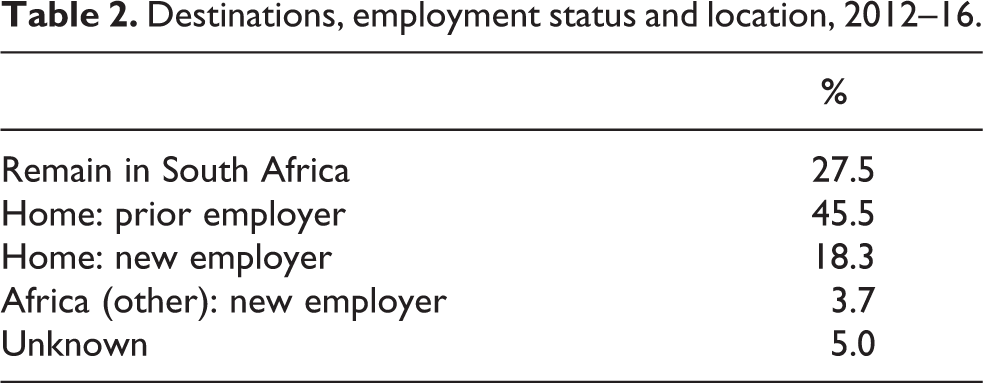
The data presented in Table 2 show that 27.5% of the doctoral graduates remained in South Africa. Of these, 6.8% were previously employed in the country, so that their doctoral studies entailed career development. Of the balance who remained, 10.7% were engaged as postdoctoral students on short-term contracts. In summary, then, based on the graduation data of the five leading research universities, the brain gain to South Africa was 10.0%. Secondly, a total of 63.8% of the graduates returned home; and, thirdly, only 5.0% left the continent as brain drain. It may thus be concluded that the null hypothesis is rejected.
It is noted that a total of 16.8% of the graduates are engaged in postdoctoral study in various sites – in South Africa, at home or abroad. For this select group their destination after completion of the postdoc remains unknown. The overwhelming majority of African students who obtained doctoral degrees from the top five South African research universities returned home after completion of their studies.
The larger realized sample also allowed for more detailed investigations to be carried out. The first result is the distribution of graduates by field of science (Table 3), which shows a high concentration (47.8%) in the social sciences and humanities. The three most practical fields – engineering, agriculture and medicine – comprise 24.7% of the total, close to the proportion opting for the ‘blue sky’ natural sciences.
Distribution by field of science, 2012–16.
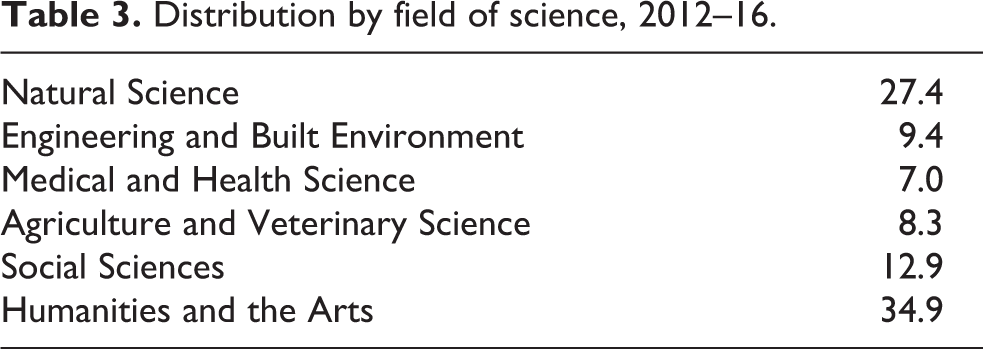
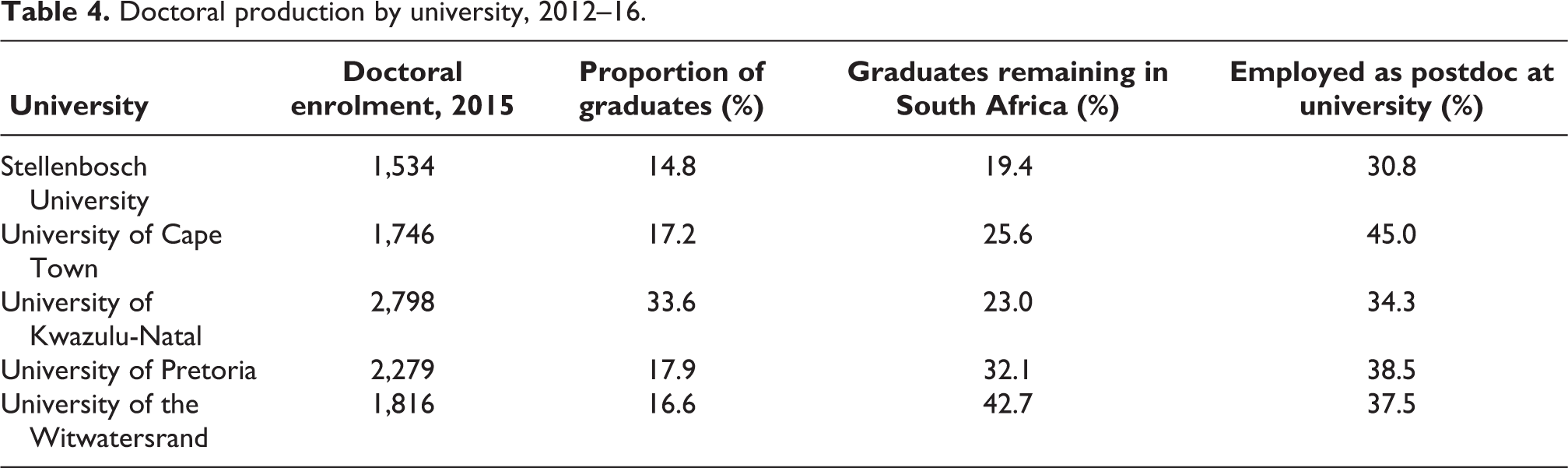
Table 4 presents the results for the production rates of the five universities. It is evident that, inclusive of all nationalities, the University of Kwazulu-Natal is the largest producer of doctoral students. One notes that this university also accounts for the award of the largest proportion of international African doctorates. However, it is clear that the graduates of the two northern universities, the University of Pretoria and the University of the Witwatersrand, show the greatest propensity to remain in South Africa. It is noted that the largest group of students hail from neighbouring Zimbabwe, in line with the observation of Lee and Sehoole (2015). This finding will be discussed further below.
Doctoral production by university, 2012–16.
Since 54% of the doctoral graduates declared that their primary source of funds was South African, it is useful to investigate the relationship between funding and destination. Table 5 provides the results of the searches ‘primary source of funds’ and ‘employer’. These data show that employer-funded graduates were most likely (79.6%) to return home to their original employer. In similar vein, those who were foreign funded were also more likely to return home (73.9%). Own-funded, and even those funded by South African sources (National Research Foundation; university research offices; faculties), tended to return home. A third of those enjoying South African funding remain in South Africa, a third of whom are on short-term postdoctoral studentships.
Sources of funds and destination.
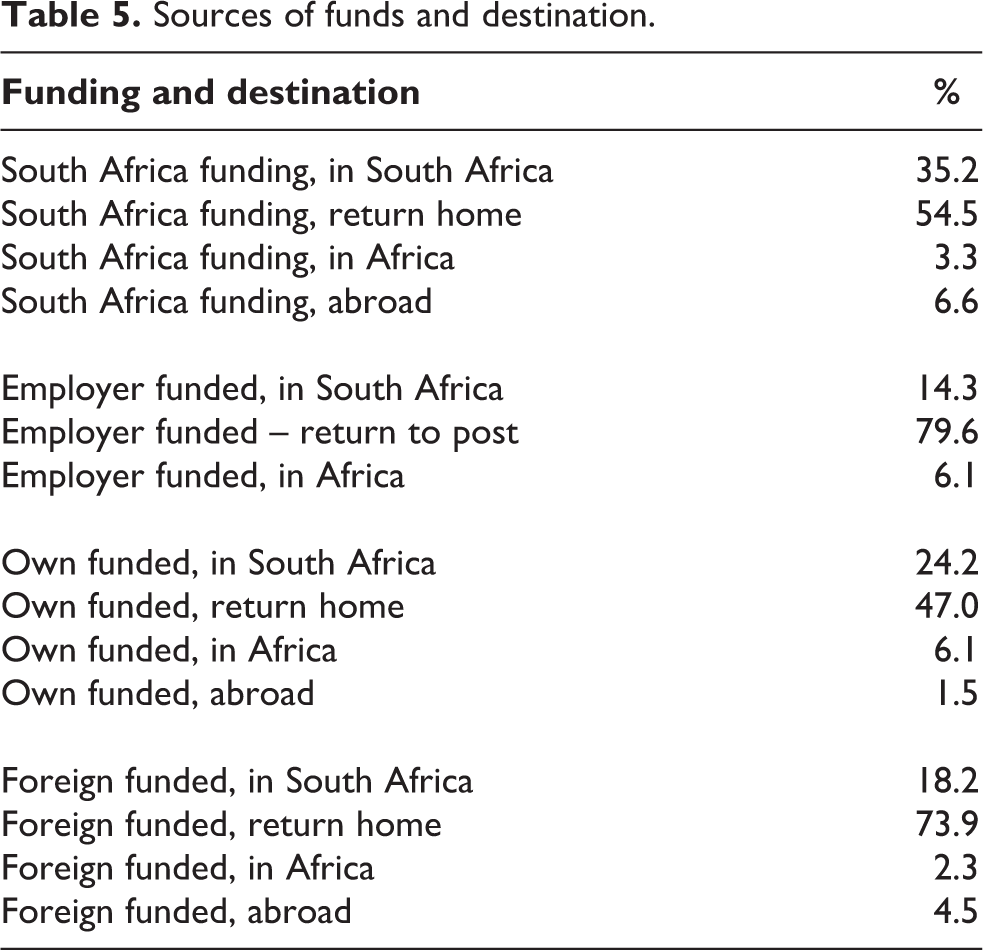
Figure 1 serves as a summary of the sources of funds and associated destinations as listed in Table 4. The thickness of the arrows reflects the proportion of the flow. Home is where employment is.
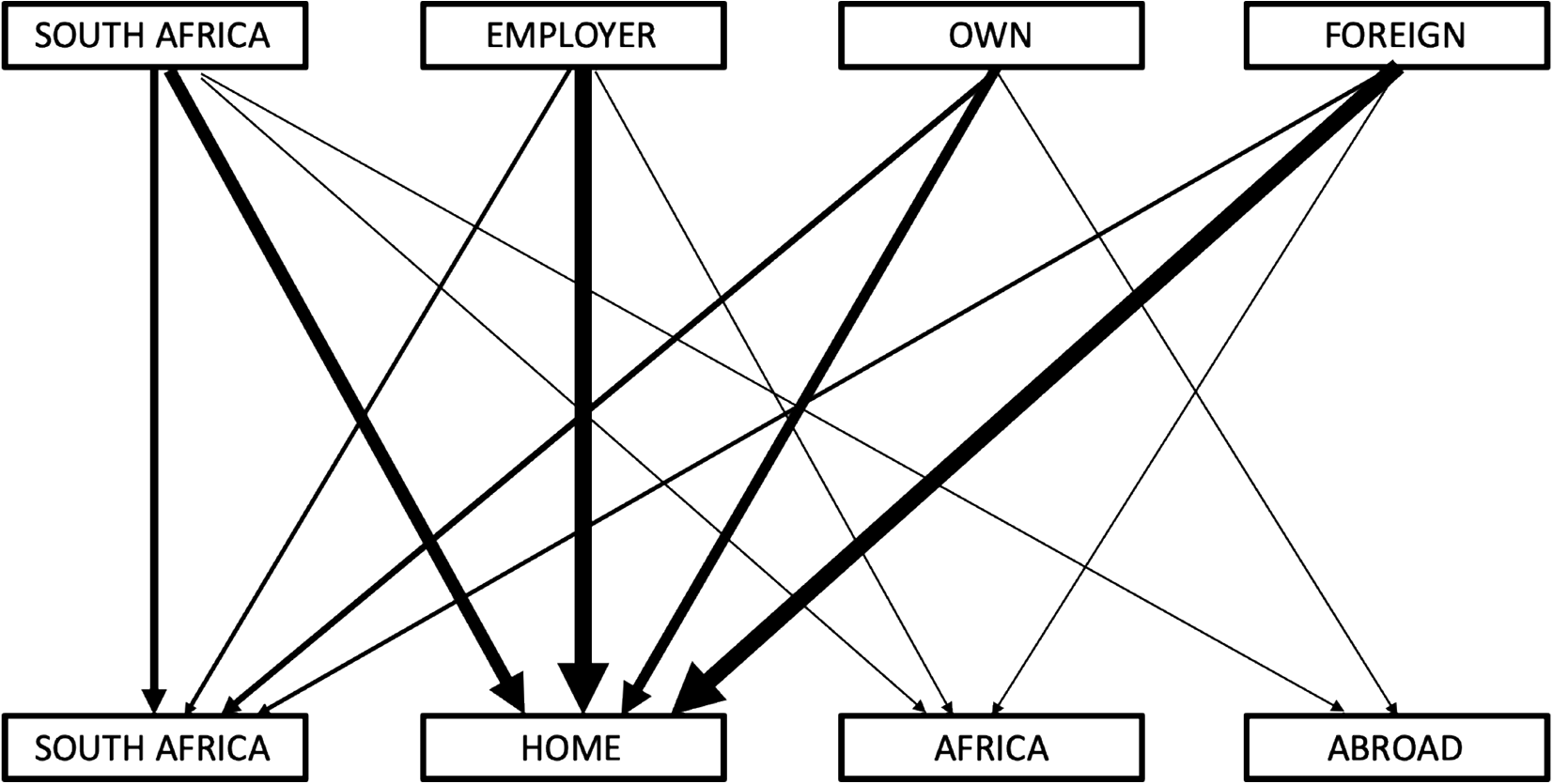
Sources of funds and destinations.
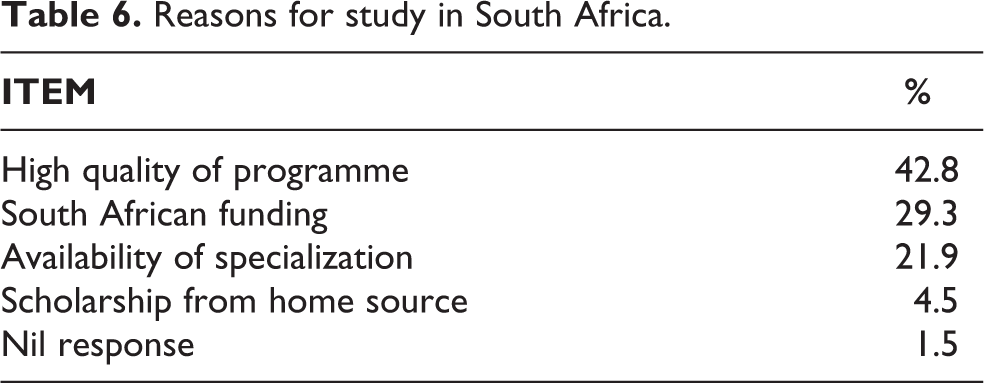
Finally, there are the main reasons given for choosing to study in South Africa. These choices were pre-assigned on the instrument, with results as shown as Table 6.
Reasons for study in South Africa.
Discussion
The results of the tracer study confirm its robustness and value. The preliminary results reported in Kahn et al. (2019) are confirmed with a higher confidence level and are extended to address issues of policy relevance. Given the difficulty associated with access, and obtaining contact information, there was little prospect of conducting a non-response follow-up survey. Bias in the decision to respond or not respond is at present unknown.
The null hypothesis is clearly rejected, with brain drain of doctoral graduates out of Africa estimated to be in the order of 5%. The majority of graduates return to their country of origin. Excluding those on short-term postdoctoral appointments, only 10% of the graduates remain in South Africa.
The dynamics of the underlying relationships speak to mutual benefits. With regard to the doctoral graduates who return home, they have obtained a qualification from a university of high international standing. According to the 2019 Leiden Ranking, as measured by production of papers among the 5% most highly cited, the five universities stand topmost among Africa’s universities (CWTS, 2019). The data in Table 6 show that two-thirds of the students chose South Africa for its high-quality, specialized offerings. South African funding was more important than home funding in informing this choice. More detailed analysis of this dynamic is pending.
The overwhelming majority (88%) of graduates who returned home were externally supported; only 12% were self-funded. Of those who remained in South Africa, only 13% were self-funded. From the perspective of these knowledge workers, it may be averred that the system has worked for them. As reported in the prior publication (Kahn et al., 2019), the median age of graduates was 43 years, indicating that they were mid-career professionals.
From the South African perspective, there is the question of value for money. Since university study is partially state-subsidized, the South African taxpayer supports all university students, irrespective of nationality or level of study. In addition, many of the doctoral graduates enjoy direct subvention by the National Research Foundation, and their host universities. The government formula-based subsidy system provides an annual quantum to each university, calculated retrospectively, according to specified inputs and outputs: the more doctoral graduates, the larger the quantum. Mature, mid-career (international) scholars motivated to complete their studies in the minimum time (3 years) are an ideal source of such income. Moreover, the doctoral students may be employed as low-cost graduate assistants, thereby relieving pressure on permanent research and instruction staff. In the short term, all win. And since only 10% of the graduates remain in South Africa, there is no political fall-out as regards contributing to brain drain.
The goals of the Immigration Law are being satisfied, in that international students are seen to leave South Africa. Perhaps unintended consequences of the brain circulation are the subsidy rewards to universities that give vitality to their doctoral programmes. Without the international students, some doctoral programmes might be in financial jeopardy. And as noted above, doctoral students are a low-cost substitute for tenured staff.
The data in Table 4 show that the two universities located in Gauteng Province (Pretoria and Witwatersrand) accounted for the largest proportion of those who remain in the country after graduation. Of the total number of the University of Cape Town’s doctoral graduates who remained in South Africa, 45% were provided with postdoctoral positions. The University of Pretoria gave 38.5% of its graduates who remained in South Africa a postdoctoral position, accounting for 50 out of the 131 graduates who remained in the country The University of the Witwatersrand awarded postdoctoral fellowships to 37.5% of its international doctoral graduates. The University of Kwazulu-Natal retained 34.3% of its graduates who remained in South Africa in postdoctoral positions: even though as a percentage the proportion of these graduates who were absorbed into postdoctoral positions is smaller than in the case of the Universities of Cape Town, Pretoria and Witwatersrand, the actual number is greater, amounting to 74 postdoctoral positions. Stellenbosch University had both the lowest percentage (30.8%) and the lowest number (14 postdoctoral positions).
The observed provincial ‘imbalance’ arises for a number of reasons. One is that Gauteng Province accounts for 45% of South Africa’s GERD, followed by the Western Cape (22%) and Kwazulu-Natal (10%) (DST, 2019). Taking GERD as a proxy for the size of an innovation system, one might speculate that the larger provincial innovation system offers enhanced post-qualification employment opportunities but testing this assertion must be suspended until more data become available. The second reason is geographical proximity, in that the two northern universities (Pretoria and Witwatersrand) are physically closest to neighbouring Botswana, Namibia and Zimbabwe, the last accounting for close to 40% of all international student enrolments. Lee and Sehoole (2015), seeking to understand why they chose to study in the country, surveyed international undergraduate and postgraduate students of seven South African universities. Their sample covered research universities, comprehensive universities and universities of technology across the country. The leading reasons given by students of the contiguous countries of the Southern African Development Community 1 were geographical proximity, job prospects and the presence in South Africa of family and friends. This finding is to be expected since, as noted above, neighbouring Zimbabwe, with English as a lingua franca, accounts for 40% of international African students in South Africa. Gauteng Province is the magnet for this migration.
Embarking on doctoral study in South Africa results in ‘brain circulation’, not brain drain to South Africa or out of Africa. The majority of the doctoral graduates returned home to resume their positions in academia or in public research organizations, so that the process is one of talent building for the country of origin. Further analysis of the data set will examine linkages between graduate, host university and the peer diaspora.
The finding that most returning students resume their prior careers, raises the question of what proportion use their enhanced qualification to obtain new positions in the private sector. Here the data are sparse, with only 2% of the realized sample doing so. Stated differently, the previously employed mainly originated from the public sector, and to a lesser extent from the not-for-profit sector. They circulated in the public sector, largely returning to their original employer. Doctoral study in South Africa, it seems, does not directly contribute to adding knowledge workers to the private sector. The public–private divide remains.
Concluding remarks
In this, the ‘with COVID-19’ (WC) era, mobility remains a topic of vital interest, relating to information exchange, law, tourism, consulting, diplomacy, food production, refuge and study. No sector has been spared. The mobility of the highly skilled, especially of migrant students, has been another casualty of the pandemic, with students confined or repatriated, their universities closed and international travel curtailed. The highly skilled travel to share and gain new knowledge, and in many instances cannot replace such movement through the use of electronic media. Face-to-face mattered before COVID-19, and matters WC. It remains difficult to study geology without taking samples. Medicine, agriculture and other fields of science require human, animal and physical contact that cannot be replaced with artificial intelligence or robots, yet.
This study has demonstrated the power of the track and trace method, which links origins and destinations. In contrast to the official perception, the MOTHS project provides evidence that study in South Africa does not lead to a brain drain out of Africa.
Future application of the tracer method will entail the study of the middle-tier universities and as well as including the years 2017 and 2018. Looking forward, we recommend the establishment of a national register of postgraduate degree holders. We also recommend revisiting the restrictions on research as determined in the Protection of Personal Information Act (RSA, 2013). Finally, consideration might be given to changing the work permit regulations to attract a set quota of all international students to seek full-time employment in existing posts.
Footnotes
Declaration of conflicting interests
The author(s) declared no potential conflicts of interest with respect to the research, authorship, and/or publication of this article.
Funding
The author(s) disclosed receipt of the following financial support for the research, authorship, and/or publication of this article: National Research Foundation grant #98773 is acknowledged for financial support.
