



Abstract
This paper analyzes the role of the university research laboratory in university–industry interactions for technology transfer. Specifically, it examines how the laboratory research infrastructure, team qualification and local incentives influence knowledge and technology transfer in biotechnology. Despite the importance of the research laboratory for an entrepreneurial university and the development of new technologies, few studies have focused on this level of analysis. This research addresses this literature gap with data from two leading laboratories in a highly-ranked Brazilian university. Data were collected through questionnaires on laboratory infrastructure and channels of collaboration with firms, interviews with laboratory leaders and key post-doc fellows, and documentary research. The results show that physical infrastructure, biological samples and qualified teams enabled technology transfer to firms. The main channel of interaction between these laboratories and firms is the generation of spin-offs, which perform the bilateral hybrid function of disseminating university research results and brokering patent licensing to larger firms. Spin-offs also contribute to the absorptive capacity of larger firms and, above all, allow laboratories to disclose results to the community and potential end-users. The findings present a new perspective on spin-off technology transfer in Brazil and open new research avenues for other developing countries.
Keywords
Scientific research conducted in university laboratories generates new knowledge and technology and supports student training. In this sense, the university research laboratory is a space that takes on the challenge of translating part of the research carried out into practical application, supporting innovation by the industrial productive sector (Reynolds and De Negri, 2017). Academic research plays an increasing role in fostering innovation, including in developing countries (Chaves et al., 2015; Garcia et al., 2018; Suzigan et al., 2009). However, in these countries university–industry interaction (UII) is typically a relatively recent phenomenon that is located in certain industrialized regions and does not fully exploit the potential of knowledge transfer for innovation (Chaves et al., 2015; De Negri et al., 2013; Suzigan and Albuquerque, 2011). This is the case in Brazil, where there is a highly unequal regional distribution of innovation and university–industry linkages, with a strong concentration in the southern part of the country (Garcia et al., 2018). Consequently, the role of Brazilian universities in the national system of innovation remains underestimated (Garcia et al., 2018; Suzigan and Albuquerque, 2011).
Worldwide, the literature on UII for technology transfer has gained substantial attention (Perkmann et al., 2013; Villani et al., 2017) as firms need new sources of information and knowledge in face of the high complexity of products and production processes (Garcia et al., 2018) if they are to remain and become more competitive (Zhang et al., 2018). Universities, then, are a source of technological capability through their researchers’ knowledge, skill and ability (Battistella et al., 2016l; Phongthiya et al., 2021). In biotechnology, the acquisition and development of technological capacities requires access to research infrastructure, highly equipped facilities and a safe environment in which to test, experiment, fail, learn, generate knowledge and technologically succeed. Thus, for the introduction of biotechnological products that are new to the market, partners from science are more important than the firms’ customers (Kaufmann and Tödtling, 2001).
Studies on UII in developing countries highlight contextual characteristics such as a lack of industry interest in UII, low external financial support and the relevance of informal mechanisms of knowledge transfer from university to firms (Abdulai et al., 2020; Intarakumnerd and Schiller, 2009; Kruss, 2012; Phongthiya et al., 2021; Suzigan et al., 2009). In countries with immature innovation systems, universities, beyond their traditional functions, may perform a dual role in their interactions with firms: they substitute and complement the research and development (R&D) done by firms. In Brazil, most firms do not have internal research and development laboratories, so they depend on university research laboratories for innovation (Rapini et al., 2009).
Despite this central position of the university research laboratory in UII, most research has investigated the interaction from the point of view of firms or Technology Transfer Offices (TTOs) and university deans (Albuquerque et al., 2015; Klevorick et al., 1995; Lemos and Cario, 2017). Few studies have given attention to the level of the university research laboratory (Kleinman, 2003; Laredo and Mustar, 2000; NAE, 2003). To help fill in this gap, this study analyzes Brazilian university research laboratories in relation to their UII and proposes a framework for UII research and policy making in developing economies.
A nationwide mapping of the Brazilian research laboratory infrastructures by the Institute for Applied Economic Research in the mid-2010s provided insights into their characteristics but did not delve into their UII (De Negri and Squeff, 2016). This scarcity of databases limits understanding of UII from the perspective of laboratories, especially in science-based technology areas such as biotechnology (Cooke, 2002).
This study was carried out in two biotechnology research laboratories at the Federal University of Minas Gerais (UFMG), a research university ranked 5th in the Latin American region by Times Higher Education, and which is prominent in the local biotechnology cluster and in Brazil (Torres-Freire et al., 2014) because it provides the key elements required by this field to run experiments on living cells and living beings. Minas Gerais State has the main social and economic characteristics and heterogeneity of Brazil, and thus provides an insightful region for study (Rapini et al., 2009).
This paper 1 aims to answer the following research question: how do university research laboratory infrastructure, human capital and local incentives influence knowledge and technology transfer to biotechnology firms in a Brazilian university?
The next section reviews theoretical constructs on university research laboratories, biotechnology, the Triple Helix, UII and technology transfer. The third section explains the analytical framework. The fourth presents the research methodology. Then, results are summarized and contributions and implications are discussed. A research agenda on university research laboratories and UII challenges in developing countries is proposed.
Literature review
University research laboratories and biotechnology
During the 20th century, university research began to influence economic growth in a systematic way, following the evolution of science and technology (Mowery and Rosenberg, 1998) and supporting the emergence of the knowledge-based economy (OECD, 2005). In some fields of knowledge, more specifically in the new science-based technologies such as biotechnology, the university research laboratory gained industrial and governmental attention (Cooke, 2002).
There is agreement in the literature that a research laboratory is a geographically limited space, with a set of instruments and devices used by researchers to constantly conduct experiments based on theories and methodologies safely and according to propositions; a research laboratory is a place where empirical observations can be examined, explained and interpreted in order to make sense of them (Knorr-Cetina, 1981; Latour and Woolgar, 1986; Tash, 2006). Laboratories are spaces for data manipulation and the simulation of practices, spaces where facts are observed and new theories are constructed, involving roles and planned and defined strategies, and both people and machines (Latour and Woolgar, 1986). The main mission of the university research laboratory is to teach how scientific research should be conducted (Bozeman and Crow, 1990) by practicing what has been learned in theory (De Negri, 2017).
The characteristics of a laboratory include specialized technical activities, codified communication between researchers, the formation of alliances, resource mobilization and detailed description and division of laboratory spaces (Latour and Woolgar, 1986). Laboratories vary in several ways, including the degree of external support and research staff, the proportion of faculty versus technical research staff, the separation of academic departments, integration, multidisciplinary focus and emphasis on the practical application of research (Stahler and Tash, 1994).
Complementary knowledge and skills in academic research groups provide different perspectives and communication networks to achieve the research objectives (Verbree et al., 2013). This heterogeneity can be related to functional areas, research methods, educational specialization, experience, age and gender (Carayol and Matt, 2004; Verbree et al., 2013). Additionally, carrying out experiments involves collaboration, diversity, a high educational level, interest in the search for knowledge, openness to new paradigms and a high turnover of students and researchers (Tash, 2006).
In the field of biotechnology, it is necessary to carry out research at different stages, such as pre-clinical and clinical trials, which involve human beings (Peerbaye and Mangematin, 2005). These stages are time-consuming and expensive, which makes innovation difficult for small firms, despite their being the ones leading the process with their intense knowledge and high absorption capacity (Wolter, 2004). These small firms are often spin-offs from universities or research centers, endowed with specific intellectual properties and strictly related to the development and application of new technologies (Cooke, 2002; Corolleur et al., 2004; Lokko et al., 2018). Innovations in biotechnology are the key to defining the technological future of countries (Beuzekom and Arundel, 2006; Wolter, 2004); hence, as this field enters the mature phase, it is stimulated by public policies aimed at the commercialization of scientific products (technologies and patents) and by business opportunities fostered by knowledge-based industries.
For developing countries, biotechnology can be viewed, at the same time, as posing a challenge to keep up with advances within the scope of an immature national innovation system, and as offering an opportunity to contribute to the process of approaching the technological frontier, reducing dependence on importing technological products and processes (Souza, 2012). Biotechnology offers an unprecedented opportunity for developing countries; however, harnessing this opportunity depends on the creation of capacities and institutional incentives that go beyond laboratory infrastructure and include access to knowledge under the protection of intellectual property, innovative applications, entrepreneurship skills, local skills to ensure domestic production and the development of a national biotechnology industry.
Promoting biotechnology capabilities has been one of the central tenets of Brazilian science, technology and innovation policies since the early 1990s; however, these capabilities have not been translated into a more complex productive structure (Cassiolato et al., 2011; De Negri, 2017). To understand why this is so, it is crucial to examine the core of technological innovation processes within a university: the research laboratory and its role in technology transfer (De Negri and Squeff, 2016).
Laboratory–enterprise interaction for technology transfer
The theoretical foundations for explaining laboratory–enterprise interactions for technology transfer lie in the conceptual framework of UII. UII for technology transfer is an inter-organizational relationship to collaborate in R&D activities with shared objectives and is considered a strategic factor in the fostering of innovation and economic development through the expansion of scientific knowledge (Mowery and Sampat, 2005; Nelson, 2015; Phongthiya et al., 2021). It is an innovation promotion mechanism relevant to the national innovation system, as it involves the exchange of information and the complementarity of competences (Britto, 2017).
Firms innovate in interaction within a system. The relationships of firms with customers, suppliers, competitors, universities and other organizations are components of this system (Edquist, 2005). In UII, despite the different characteristics and objectives of firms and universities, this inter-organizational arrangement generates results considered positive for both university and firm, such as the sharing of learning and the reduction of risks and costs (Britto, 2017).
Channels for knowledge and technology transfer are among the UII research topics relevant to academics, policy makers and business strategists (Dutrenit and Arza, 2010; Fernandes et al., 2010; Lemos and Cario, 2017; Mazzucato, 2011). These channels can take several forms, according to the motivations and expected benefits. Fernandes et al. (2010) highlight four types of UII channel, according to the direction of knowledge flow and the motivation for the interaction: traditional (publication and conferences); services (exchange of scientific knowledge for remuneration); commercial (transfer and commercialization of technologies, such as patent licensing); and unidirectional or bidirectional knowledge flow (collaborative research for R&D, spin-offs).
Many barriers hinder technology transfer and, to overcome them, the literature indicates the establishment of a growing number of intermediary organizations in universities around the world, such as TTOs, university business incubators (Chandra and Fealey, 2009; Villani et al., 2017) and science parks (Phongthiya et al., 2021). In this regard, a landmark in Brazil is the Technological Innovation Law no10973/2004 (Brasil, 2004). Inspired by the French Innovation Law and the American Bayh–Dole Act (1980), it represents the legal beginning of the regulation of innovation in the Brazilian context, aimed at strengthening areas of research and integrating knowledge production (universities) with industrial innovation (firms).
It is noteworthy that Brazilian university research laboratories have been interacting with firms at least since the early 1990s (Garcia et al., 2018). The advantage of the law was that it established mechanisms to encourage UII and strengthen intermediary agents, the Technological Innovation Centers, which act as technology transfer offices for universities and as support units for patenting and licensing. Nevertheless, the implementation of this Brazilian innovation law remains at an initial stage since, to some extent, the institutional mechanisms have failed to provide legal certainty, encourage interactions and give dynamism to the components of the national innovation system (De Negri, 2017).
Triple Helix
An approach that explores the complex processes and interactive chains of transactions between scientists, entrepreneurs and government for technology transfer from the university laboratory to the market is the Triple Helix (TH). It articulates three spheres – university, industry and government – and their distinct functions; respectively, teaching and research, the generation of wealth and innovative products, and normative control and policy regulation. The TH spheres have porous boundaries when interacting, one taking the role of the other, laterally, bottom-up and top-down (Etzkowitz and Leydesdorff, 2000).
The transition to a knowledge-based society is the basic premise of the Triple Helix model, with the triad of university, industry and government constituting the key institutional framework of post-industrial, knowledge-based societies (Etzkowitz and Klofsten, 2005). The emerging role of the university as a source of firms is complemented by the role of government, which provides resources for academic research and drives demand as a customer (Etzkowitz, 2008) or an enabler. In these interactions, universities, in conjunction with inputs from multiple sources, are important for the creation of knowledge-based firms, or spin-offs.
A spin-off is a technology transfer mechanism because it is usually formed to commercialize a technology that originated in a university research center, a private R&D organization, or a government R&D laboratory (Rogers et al., 2001). Enabling conditions for spin-offs and knowledge firm creation are described as human capital, material and organizational factors (Etzkowitz, 2008).
Human capital factors are, for instance, a critical mass of scientists, engineers linked through social networks, research groups in areas of potential commercialization and a pool of scientists and engineers interested in forming their own firms. Examples of material factors include seed capital, inexpensive and appropriate space for new firms and equipment. Finally, organizational factors are, for instance, opportunities for scientists and engineers to learn business skills, university policies designed to encourage faculty members and students to interact with industry, clear guidelines delineating appropriate activities, applied research institutes and business incubators, and a residential community with cultural or scenic recreational resources that can attract and hold a population whose skills make them potentially highly mobile (Etzkowitz, 2008).
Research on the TH model has found distinctions between developed and developing countries (Etzkowitz and Dzisah, 2008; Kruss, 2008). Developing countries exhibit late industrialization, a lack of industrial R&D activities, and recent support infrastructure for entrepreneurship. Their trajectory of economic development has been strongly shaped by the imperatives of state security, energy sufficiency, import substitution and the fragmentation of science, technology and innovation policies (Kruss, 2008). These structural, historical and cultural differences from the developed world raise questions about the application of the TH model in developing countries.
Analytical framework
Conceptual description of the analytical framework.
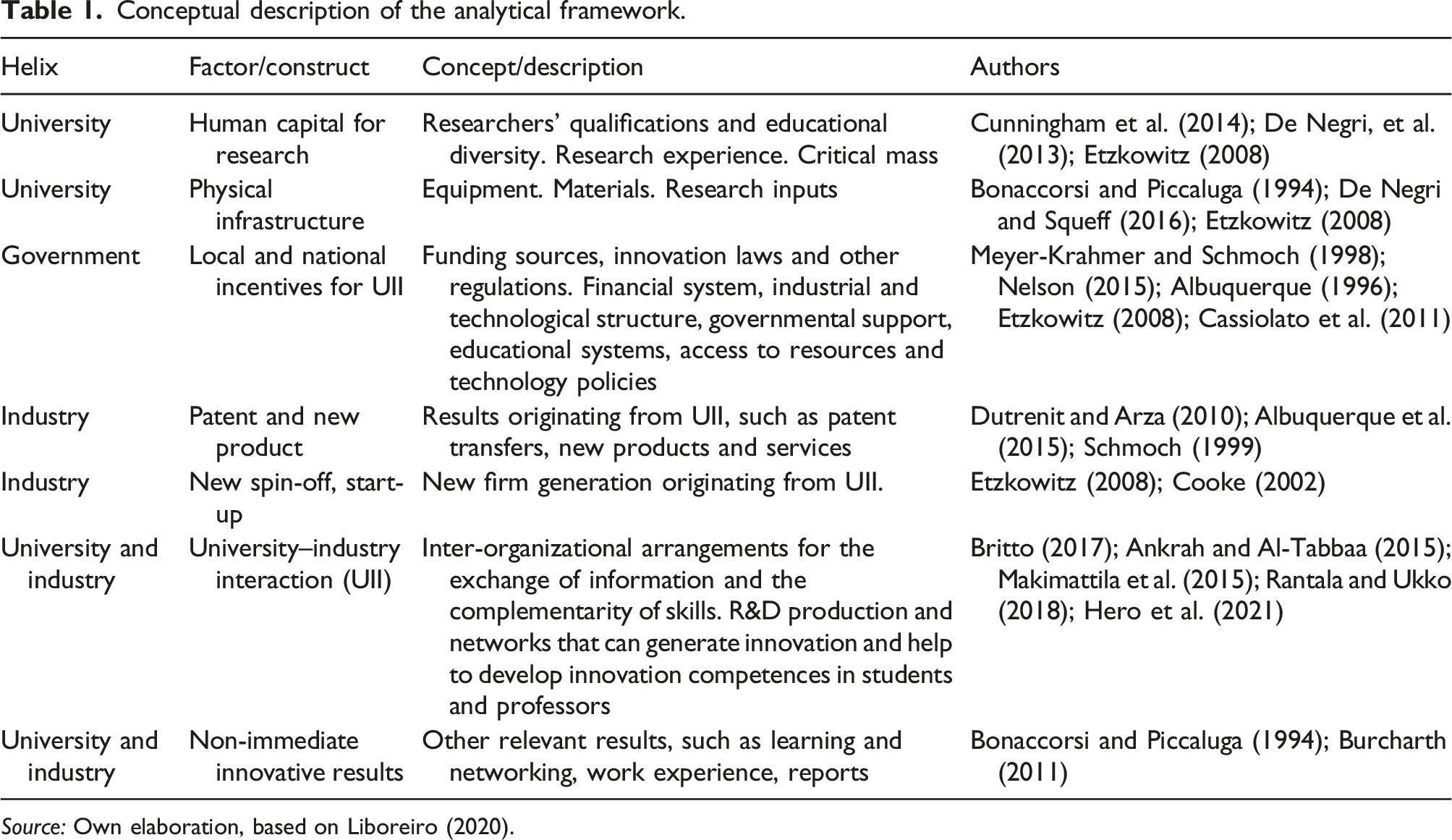
Source: Own elaboration, based on Liboreiro (2020).
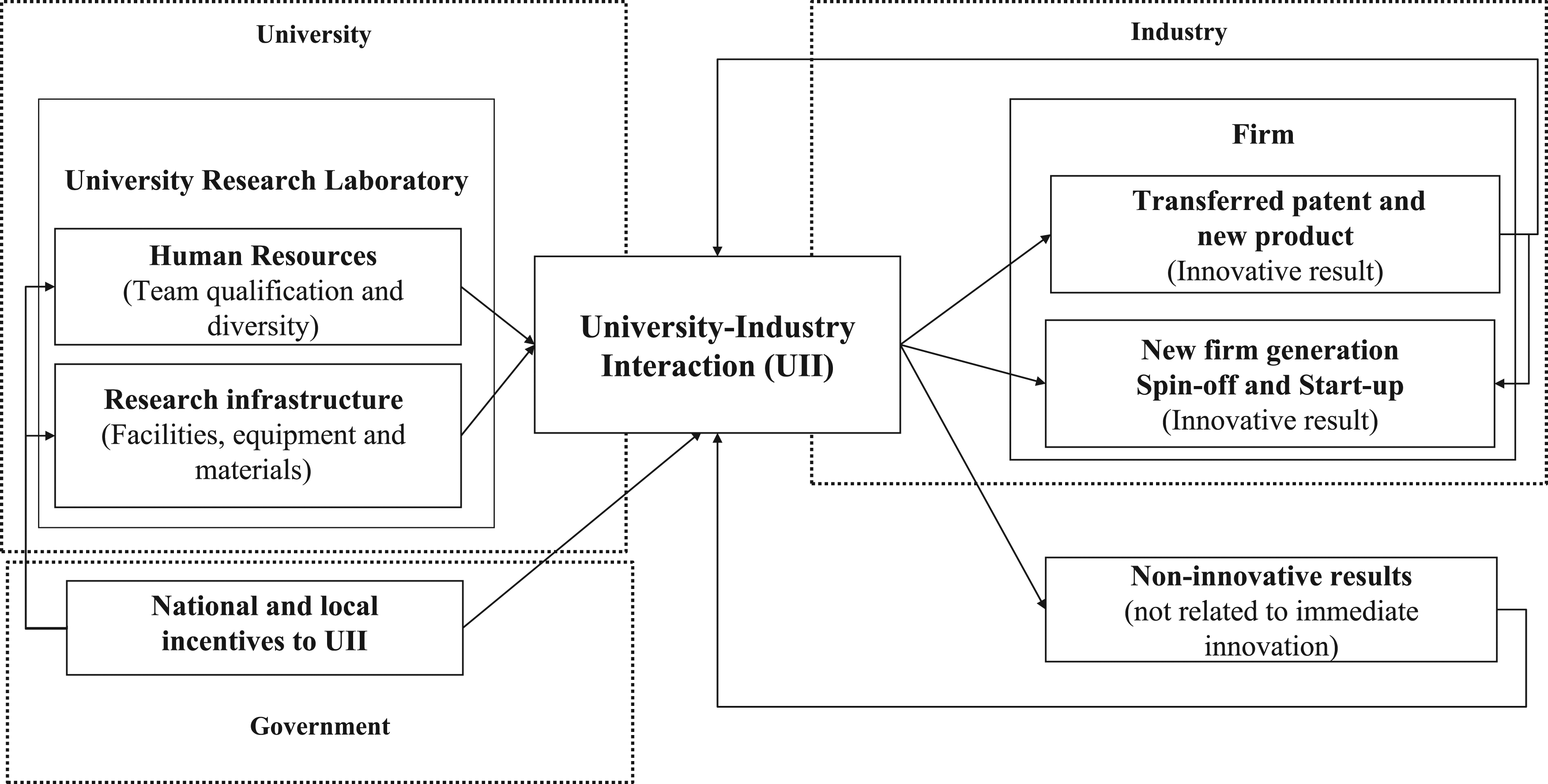
Analytical framework.
Methodology
This is a comparative case study supported by a mixed methods approach that combines questionnaires, interviews and documentary research. The two Brazilian research laboratories studied are similar in the following respects: they are in an immature national innovation system, they are located in the same resource-rich university, they operate in biotechnology and they have relationships with firms for technology transfer. They differ in how they pursue UII, allowing for richness of analysis. Therefore, these cases were purposively selected (Creswell, 2013) for their information-rich and comparability potential (Patton, 2002). An inclusion criterion was the interest and availability of the laboratory coordinator in participating in this research.
The primary data collection instruments included two structured questionnaires, for which protocols have been validated in previous studies (Albuquerque et al., 2015; De Negri and Squeff, 2016) and a semi-structured interview guide. The first questionnaire, BR Survey (Albuquerque et al., 2015), contained 17 questions on two topics: (a) interaction with firms: channels, benefits, and results (9 questions) and (b) the research group’s technological results (8 questions). Laboratory leaders were requested to provide information referring to the last 3 years (following Suzigan et al., 2009). This questionnaire was validated in 12 Southern countries by Albuquerque et al. (2015) within the scope of the Research on Knowledge Systems (RoKS) project. In Brazil, more than 1000 research groups in public institutions and 318 firms participated in the original study.
The second questionnaire, Ipea-Infra, contained 20 questions covering laboratory infrastructure (3 questions), laboratory–firm cooperation (2 questions), laboratory capacity (3 questions), modernization and repair of equipment (2 questions), laboratory services and use of equipment by external users (2 questions), equipment values, costs and revenues (7 questions) and relevant equipment (1 question). It was validated by De Negri and Squeff (2016) in a study with 2000 Brazilian research infrastructures. Laboratory leaders were required to provide information about the last year of the laboratory’s activities.
The semi-structured interview guide contained 13 questions, covering laboratory and team characteristics and UII channels, incentives, results, enablers, benefits and barriers. Interviews were conducted through scheduled individual face-to-face meetings with two laboratory leaders and three post-doc affiliated research fellows between July and August 2019. Interviewees were anonymized as E1, E2, E3, E4 and E5.
Documentary materials on these laboratories' technology transfer processes were sourced in UFMG’s Technological Transfer and Innovation Coordination (CTIT), technology transfer reports, university and laboratories’ websites, the patent database from the Brazilian National Institute of Industrial Property (INPI) and governmental information on calls for sponsorship for university–industry collaboration for innovation released by the Financing Agency for Studies and Projects (FINEP), the Minas Gerais State Research Support Foundation (FAPEMIG), the National Council for Scientific and Technological Development (CNPq), among other state funding institutions.
Data from these quantitative and qualitative sources were triangulated and the results were organized using a narrative approach. The findings are presented according to the analytical framework, as illustrated in Figure 2. All procedures followed the ethical principles adopted by the ethics committee of UFMG, under protocol number 69502317.3.0000.5149. Results presentation structure.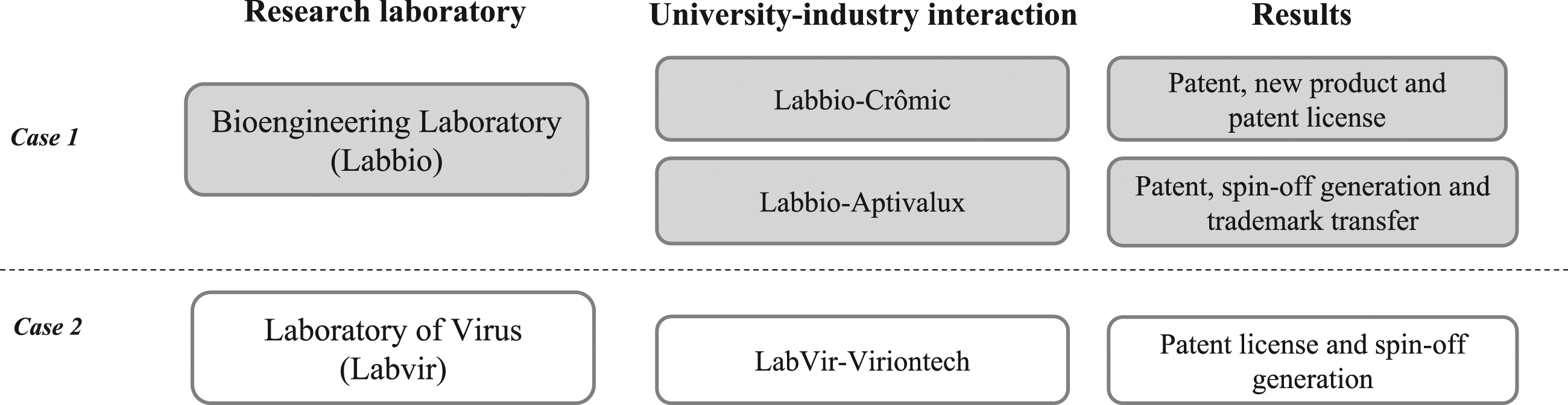
Results
This section begins with the overall findings, presents an in-depth analysis of the interactions in each laboratory, and then compares the respective findings. The laboratories are well-structured and have been interacting with firms for knowledge and technology transfer for over 20 years. This study analyzes the most relevant UII according to the laboratory leaders as they showcase their laboratory’s internal organization to engage in industry interactions.
The Laboratory of Bioengineering – Labbio (Case 1), founded in 1999, is in the Mechanical Engineering Department of UFMG. Labbio is dedicated to research in cardiovascular engineering, assistive technologies, biomimetics, regenerative medicine, biomechanics and neurological vision. This laboratory has three spin-offs and 51 patent applications filed. The Virus Laboratory – Labvir (Case 2), founded in 1962, is one of the largest and most traditional virology laboratories in Brazil and Latin America. It is in the Department of Microbiology of UFMG and holds the prestigious status of a National Institute of Science and Technology (INCT), with its program for Emerging and Re-emerging Viral Diseases. Its modern infrastructure allows the characterization of viral agents in human and veterinary environments in its biosafety areas levels 1 and 2. Labvir has one spin-off and 54 patents filed.
Laboratory infrastructure, human resources and UII.
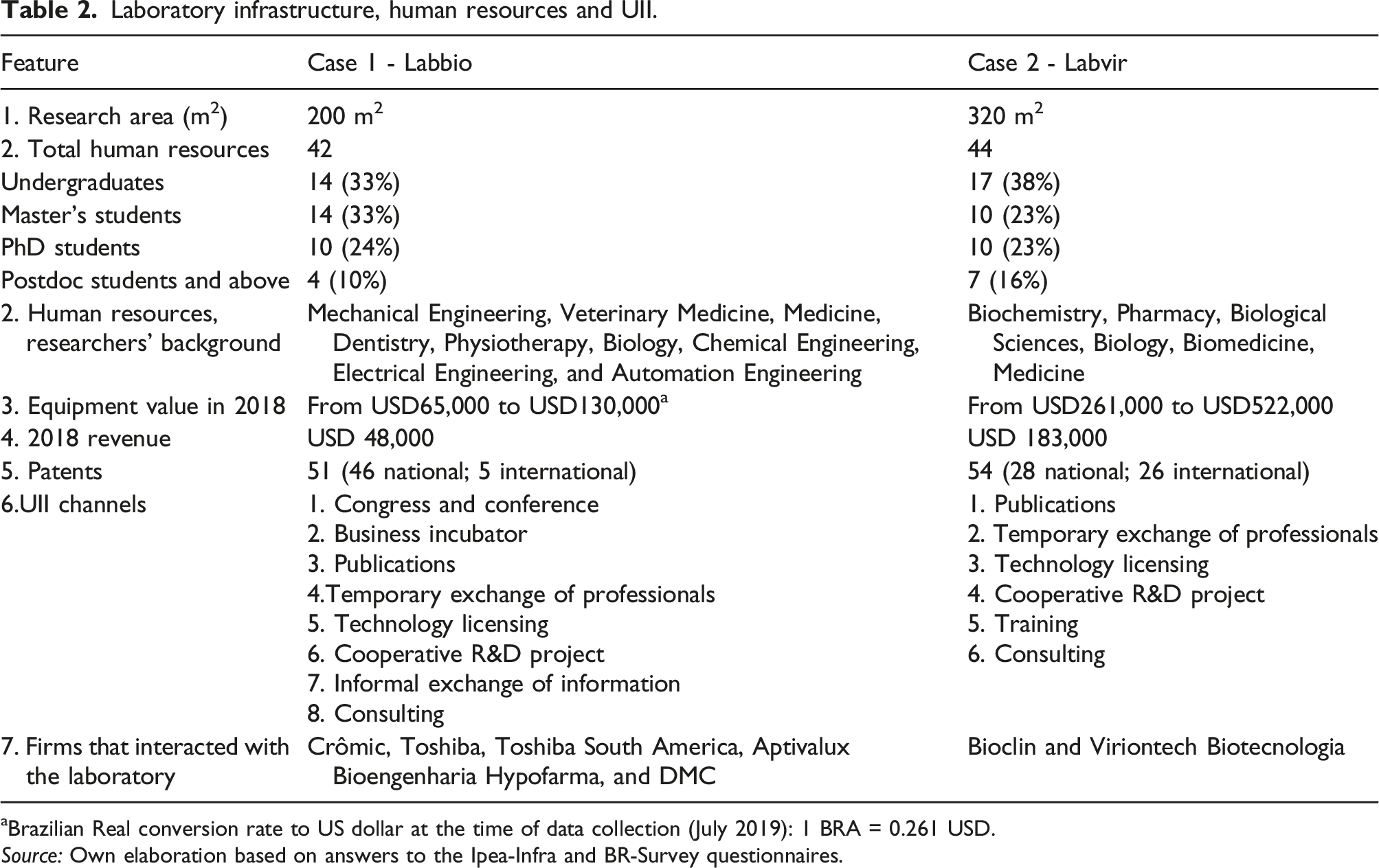
aBrazilian Real conversion rate to US dollar at the time of data collection (July 2019): 1 BRA = 0.261 USD.
Source: Own elaboration based on answers to the Ipea-Infra and BR-Survey questionnaires.
Laboratories’ structure and technology transfer process.
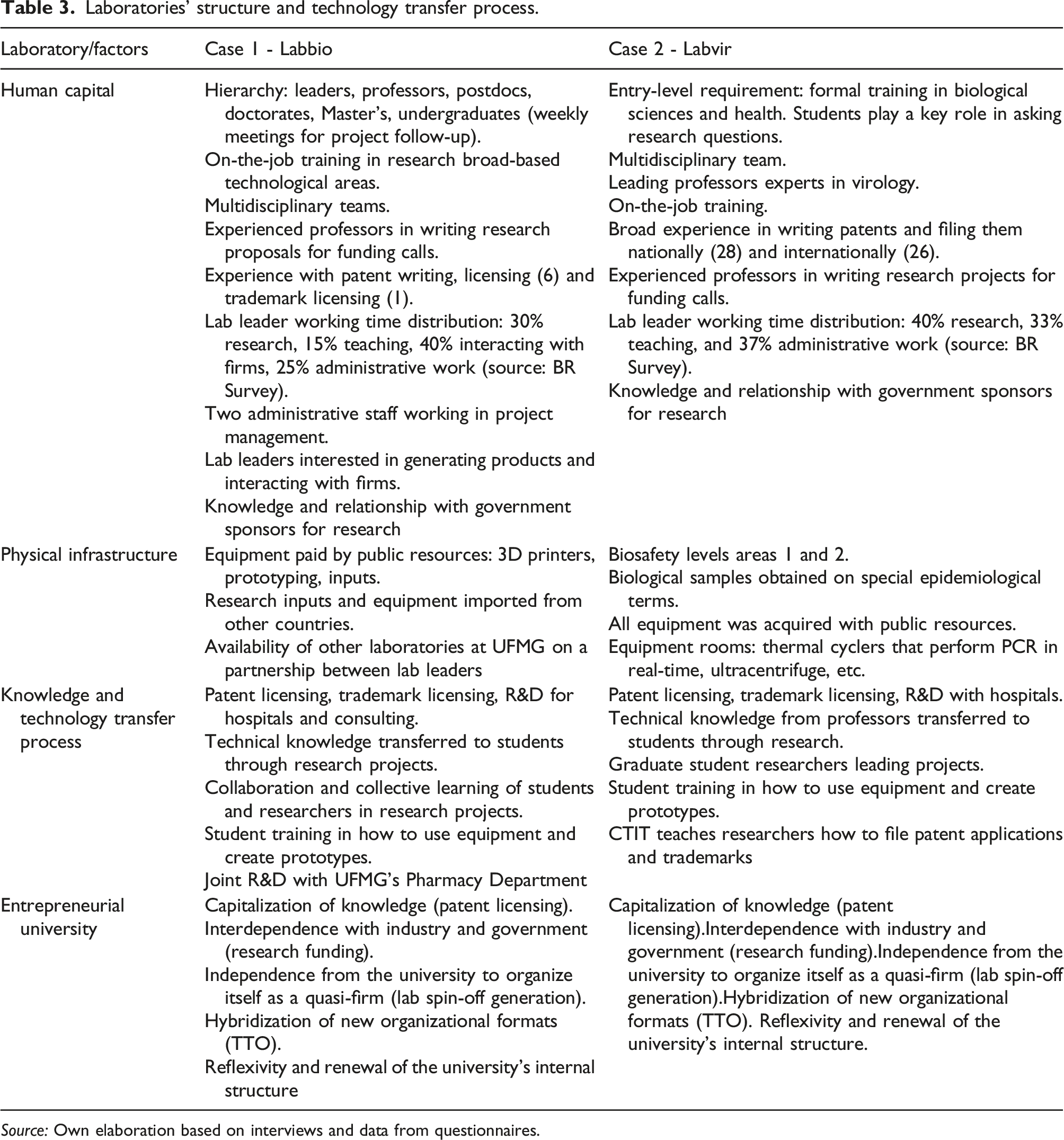
Source: Own elaboration based on interviews and data from questionnaires.
Labbio laboratory - case 1
This section presents the internal organization of Labbio and details its two UIIs.
Labbio’s leader and senior researchers report internal characteristics embedded in a context of enablers and barriers to UII. The enablers relate to the external knowledge transfer process and the national and local incentives for UII, such as science fairs and events for disseminating the laboratory’s research results, firms’ visits, firms’ internships for professors and students, and government funding. The laboratory spin-off (Aptivalux) disseminates knowledge, research results and facilitates the laboratory’s technology transfer to other firms. Other UII enablers are the Brazilian Government’s calls for joint R&D projects, representing 91% of the laboratory’s research financing (Liboreiro et al., 2018) and the UFMG’s location in the second largest biotechnology hub in Brazil. Finally, the UFMG’s TTO (CTIT) seeks partnerships with firms for technology transfer, teaches researchers how to file patents, prepares licensing contracts and manages royalty payments.
The barriers to UII include multiple levels for contract approval, a lack of time for elaborating detailed reports required by the government for sponsored research, a lack of administrative support staff, and the lack of a biotechnology specialist at CTIT to translate lab technologies to firms.
A description of two interactions with firms (Crômic and Aptivalux) demonstrates this process in detail.
Labbio–Crômic interaction: patent filed, patent licensed and new product
Chronology of the Labbio–Crômic interaction (2007–2012).
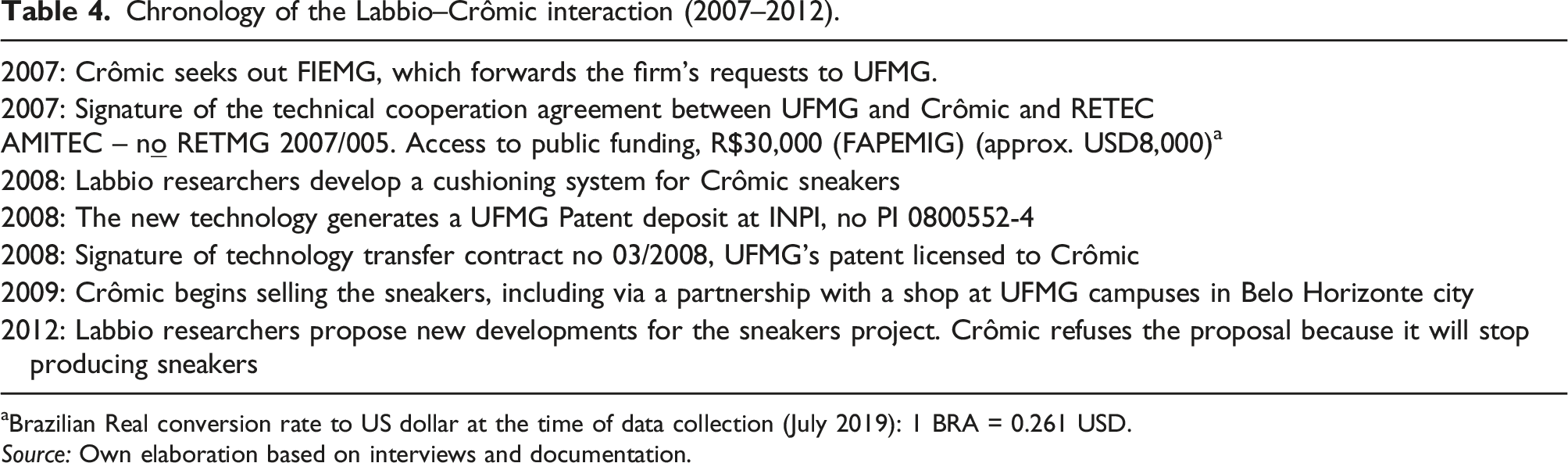
aBrazilian Real conversion rate to US dollar at the time of data collection (July 2019): 1 BRA = 0.261 USD.
Source: Own elaboration based on interviews and documentation.
One of the reasons that led FIEMG to direct Crômic’s request to UFMG and Labbio was the expertise of the principal investigator and laboratory leader, according to E2. Additionally, E1 states that CTIT’s infrastructure contributed to the initiation of this relationship between Crômic and Labbio. E1 and E2 participated in the project from the start and have their names in the deposited patent (PI 0800552-4) with nine other researchers. The prototype of a cushioning system for a sneaker’s sole model was built in the first year of the interaction. It involved qualified researchers from various departments and knowledge areas. Tests were carried out to validate the prototype: “Crômic was aiming to improve the quality of its tennis shoes cushioning […] FIEMG bridged the gap with CTIT[…] We needed researchers from physical therapy and engineering.” (E2)
The following year, CTIT brokered the signing of the contract whereby UFMG transferred to Crômic the patent rights for 10 years (Oliveira and Giroletti, 2016). Crômic paid UFMG 1.5% of the gross revenue earned as royalties from product sales. Four years later, Labbio researchers suggested new developments to the sneakers. However, Crômic had no interest in continuing the UII, as it was about to discontinue its sneakers’ production line.
Labbio–Aptivalux interaction: patent filed, spin-off and trademark transfer
Chronology of the Labbio–Aptivalux interaction (2004–2019).
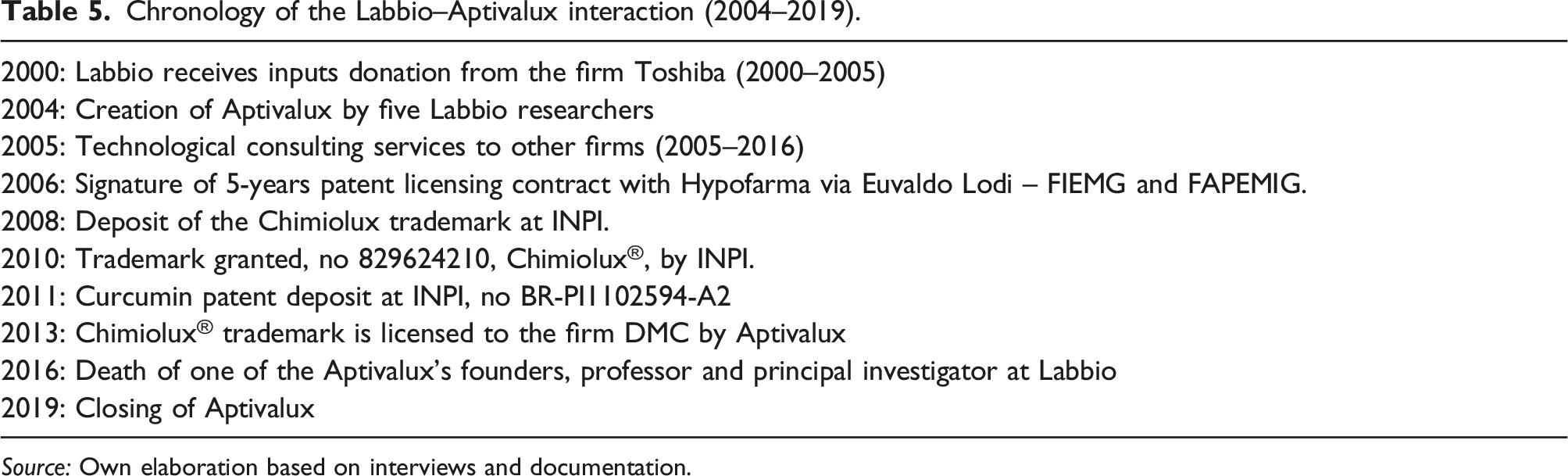
Source: Own elaboration based on interviews and documentation.
Aptivalux’s initial objective was to build LED laser radiation equipment. LED input was donated by Toshiba to Labbio and Aptivalux. During the development process, Aptivalux found that the investment to set up a factory would be prohibitive, and the many regulations of the National Health Surveillance Agency (ANVISA) represented a critical barrier to obtaining an operating license. Aptivalux’s founders then searched for a partner with the required infrastructure and ANVISA certifications. The researchers visited many firms and the Euvaldo Lodi Institute – FIEMG to get to know other potential partners. The first technology transfer was in 2006 with the signature of a 5-years patent licensing contract with Hypofarma, which produced and sold the Chimiolux® product. In 2011, as another result of this interaction, a Curcumin-based photosensitizing agent patent was deposited (registration no PI11025948). At the end of this contract, given the lack of interest of Hypofarma in renewing it, Aptivalux’s founders found a new partner at DMC Equipment, to which they licensed the trademark Chimiolux®.
Aptivalux continued to carry out technological consulting services, the revenues from which helped to maintain some of the Labbio’s research and the expansion of which increased the spin-off’s networking with other firms. Labbio and Aptivalux invested time and financial resources in this knowledge transfer strategy to expand the access of other firms to knowledge about new technologies, hoping that this would help to create a market of potential buyers.
In this process, Labbio and Aptivalux were granted USD400,000 in research funding by FINEP. It was a complex process, time-consuming in terms of proposal writing and accountability reporting (E3). They were also granted USD150,000 by FAPEMIG, which enabled Labbio to acquire equipment in 2009, according to E3. In 2016, the founder of Labbio and a key partner in Aptivalux died. After this critical and unexpected event, there was a fall in the firm’s income, which caused it to close in 2019: “It had a big impact. Many of the external resources we had from consulting were brought in by him. Back then, it was the firm's biggest source of income. It has changed the pace and the risk of work a lot. We're finishing up.” (E3)
This pattern is consistent with the environment of weak entrepreneurial culture and infrastructure in Brazil, with a general lack of awareness of business incubation, despite the country’s few hundred incubators fostering a culture of entrepreneurship and promoting economic development (Chandra and Fealey, 2009). The law and policies provide little or no support and that significantly impact the growth potential of academic spin-off ventures. Despite the Innovation Law of 2004, allowing incubation within research laboratories, UFMG’s business incubator, Inova, was not geared to biotechnology-related firms but to those with expertise in information technology businesses (Botelho and Almeida, 2011; Liboreiro et al., 2017) and could not support Aptivalux.
Labvir laboratory – case 2
This section presents the internal organization of Labvir and details its UII.
UII enablers reported by Labvir’s leader and senior researchers relate to the external knowledge transfer process and the national and local incentives for UII, such as Labvir being an INCT (CNPq-INCT) with leadership in knowledge nucleation. The greatest virologists who are on the rise in Brazil today are alumni of Labvir. Other UII enablers are science fairs to disseminate the laboratory’s research results, firms’ internships for professors and students to exchange knowledge, brokerage of the laboratory’s spin-off (Viriontech) to transfer technology to larger firms, government calls to fund joint research projects, UFMG’s location in the second largest biotechnology hub in Brazil, partnerships with the Ministry of Agriculture, Livestock, and Food Supply (MAPA), the Brazilian Agricultural Research Corporation (Embrapa), and the support of the Biominas Foundation. Biominas is a biotechnology business incubator created in 1990 in Belo Horizonte and a pioneer in supporting bio businesses in Brazil with an active role in promoting local biotechnological development (Cassiolato et al., 2011). Finally, UFMG’s CTIT seeks partnerships with firms for technology transfer, supports the preparation if licensing contracts, and teaches researchers how to file a patent and manage royalty payments.
Barriers to UII include the time consumed by multiple decision-making levels for contract and sponsored research approval, a lack of communication between CTIT and UFMG’s Research Development Foundation (FUNDEP) for sponsored research, a lack of administrative support staff in the laboratory, and a lack of interest from Brazilian firms at regional and national levels. Yet another barrier is the lack of funding for the acquisition and maintenance of equipment. Most of Labvir’s equipment is considered outdated and some of it is in need of replacement. The most important piece of equipment is the ultracentrifuge, which is important in purifying the virus and carrying out biological tests. Most of Labvir’s equipment dates from the 1980s, when the Banco do Brasil Foundation still supported research projects (E4, E5).
To examine how the knowledge and technology transfer process occurs at Labvir, the following section details its interaction with the spin-off Viriontech.
Labvir–Viriontech: spin-off generation and patent transfer
Chronology of the Labvir–Viriontech interaction.
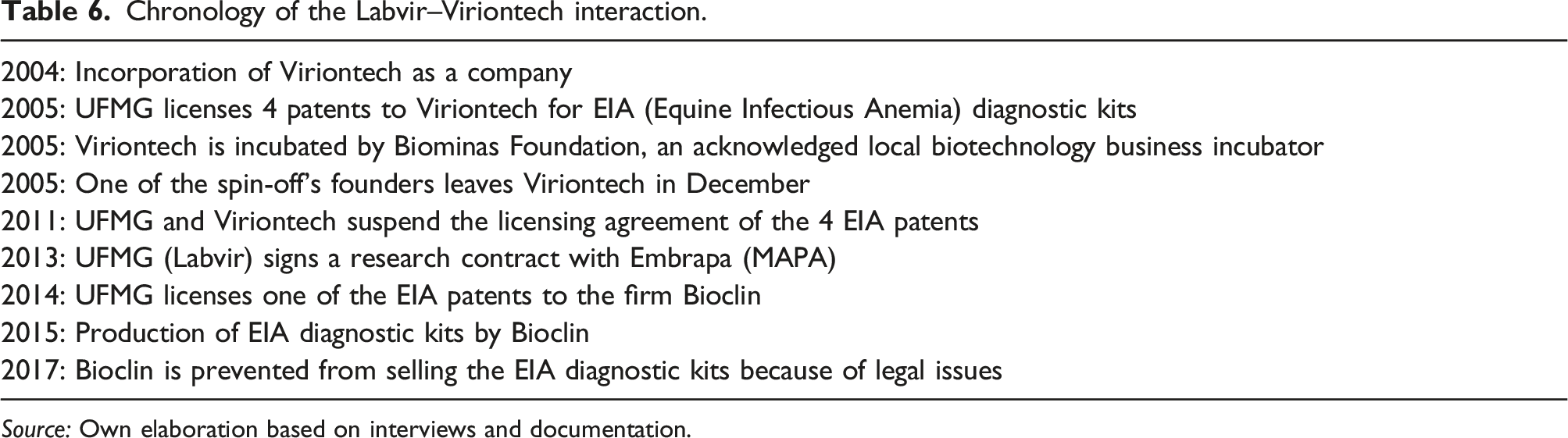
Source: Own elaboration based on interviews and documentation.
UFMG licensed four patents for equine infectious anemia (EIA) diagnostic kits to Viriontech in 2005. This technology was developed through research carried out in the laboratory from the early 1990s (E5). Six years later, however, Viriontech had not directly produced this patented technology and the licensing contract expired. Despite being located at the specialized biotechnology incubator Biominas Foundation, the barriers were the high costs to set up a production plant, strong competition and extensive health regulations from ANVISA. In 2014 UFMG licensed an EIA patent to the Bioclin firm, which started the production of the EIA diagnostic kits in 2015 with the aid of Viriontech’s technical consulting: “We have one patent, which took 17 years until it was released, so we were able to make a technology transfer to a firm, Bioclin. This whole process was done via UFMG, and we involved two other partner firms, one of which was Viriontech. Why is that? To facilitate for a firm that had no experience with recombinant.” (E5)
Nevertheless, this Labvir–Viriontech interaction allowed the laboratory to acquire experience in production processes in partnership with larger firms, as well as to disseminate the laboratory’s technologies (E5). The next year, UFMG signed a contract with Embrapa with the main objective of developing the EIA project. The purpose was to evaluate the effects of the incurable disease on the physical performance of equines from the Brazilian Pantanal region (Andrade et al., 2018): “Labvir developed the technology for the EIA diagnostic kit. Viriontech has perfected it and we are in negotiation with the Ministry of Agriculture and Livestock. We are trying to implement this test as a standard test in the country because it is a mandatory notification disease. If your horse has it, except in a region of the country that is the Pantanal, you must sacrifice the animal.” (E4)
Comparative analysis of the cases
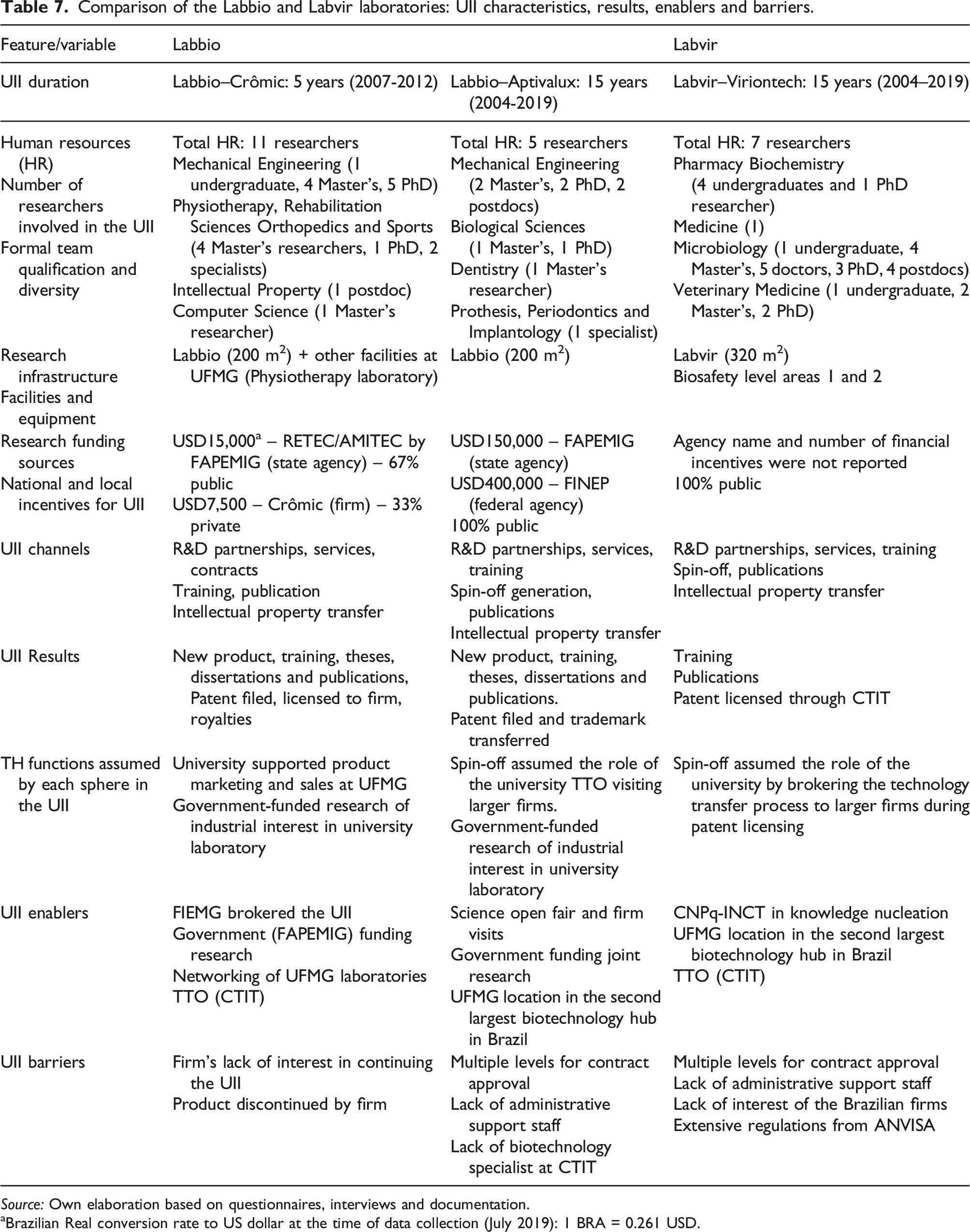
Comparison of the Labbio and Labvir laboratories: UII characteristics, results, enablers and barriers.
Source: Own elaboration based on questionnaires, interviews and documentation.
aBrazilian Real conversion rate to US dollar at the time of data collection (July 2019): 1 BRA = 0.261 USD.
The first similarity is the long duration of the UIIs, from 5 to 15 years. Second, there was a multidisciplinary team working in each UII. Third, the UIIs were funded by public resources from government agencies. Fourth, they used similar UII channels, such as R&D partnership, training, spin-off generation and patent licensing. Fifth, the TH spheres crisscrossed functions, such as the government funding research of industrial interest (industry function) and the laboratory spin-off brokering patent licensing to larger firms (university role). Sixth, similar UII enablers are access to government funding, the location of UFMG and the UFMG TTO. Last, similar UII barriers are the multiple decision-making levels for contract approval, lack of administrative support and lack of interest in UII from Brazilian firms.
The findings also show structural differences between the two laboratories. Labvir is larger than Labbio (320 m2 and 200 m2, respectively) and Labvir has specific equipment, such as levels 1 and 2 biosafety areas. In relation to UII outcomes, only Labbio reported product generation.
Discussion
Role of university research laboratories
Our results confirm those of previous studies by describing how both laboratories played an important role in fostering interactions with biotechnology firms in Brazil, through which they generated knowledge and technology (Cooke, 2002; Corolleur et al., 2004; Lokko et al., 2018). The specialized technical multidisciplinary teams were critical for the biotechnology industry’s complementary knowledge needs. Additionally, the laboratory safety level spaces, equipment, historical samples and research inputs attract the attention of firms for UII and innovation in biotechnology. Even if this attention remains far from ideal, this highlights the distinct role of research laboratories from other university units in promoting technology transfer (Reynolds and De Negri, 2017).
Triple Helix – crossed functions between TH spheres and spin-off generation
The findings corroborate those of previous research in developing countries regarding the primary role of each helix and the observed functional substitutions. The Brazilian government funds university research projects with industrial applications to foster the economy (Abdulai et al., 2020; Kruss, 2008; Saad et al., 2008). To a lesser extent, industry provides financial resources to university research with commercial interests (Crômic and Aptivalux). Novel findings, not found in TH studies, relate to the new functions of laboratories as brokers of technology transfer.
All dimensions of human capital were observed: a critical mass of scientists, research with commercial potential and scientists interested in starting a business. However, the material and organizational factors were scarce. It was observed that the TTO was not yet sufficiently mature to liaise effectively between the laboratories and firms to support the identification and transfer of technologies with commercial potential. Laboratory leaders pointed out a lack of institutional support at UFMG for scientists to develop business skills, weak policies to encourage faculty and students to interact with industry and insufficient biotechnology incubator facilities.
The movement towards an entrepreneurial university is at an initial stage, since neither of the two spin-offs had, in 15 years, produced innovative products from the laboratory’s patented technology. Instead, they acted as consulting and brokering firms with a dual hybrid function that involved marketing university research and brokering patent licensing (Figure 3). This emergent hybrid function in the industry sphere, resulting from the UII, expands the assumptions of the TH, which would have predicted a new hybrid institution (rather than a function) in this setting. Triple Helix in Labbio and Labvir’s spin-offs and the bilateral hybrid function.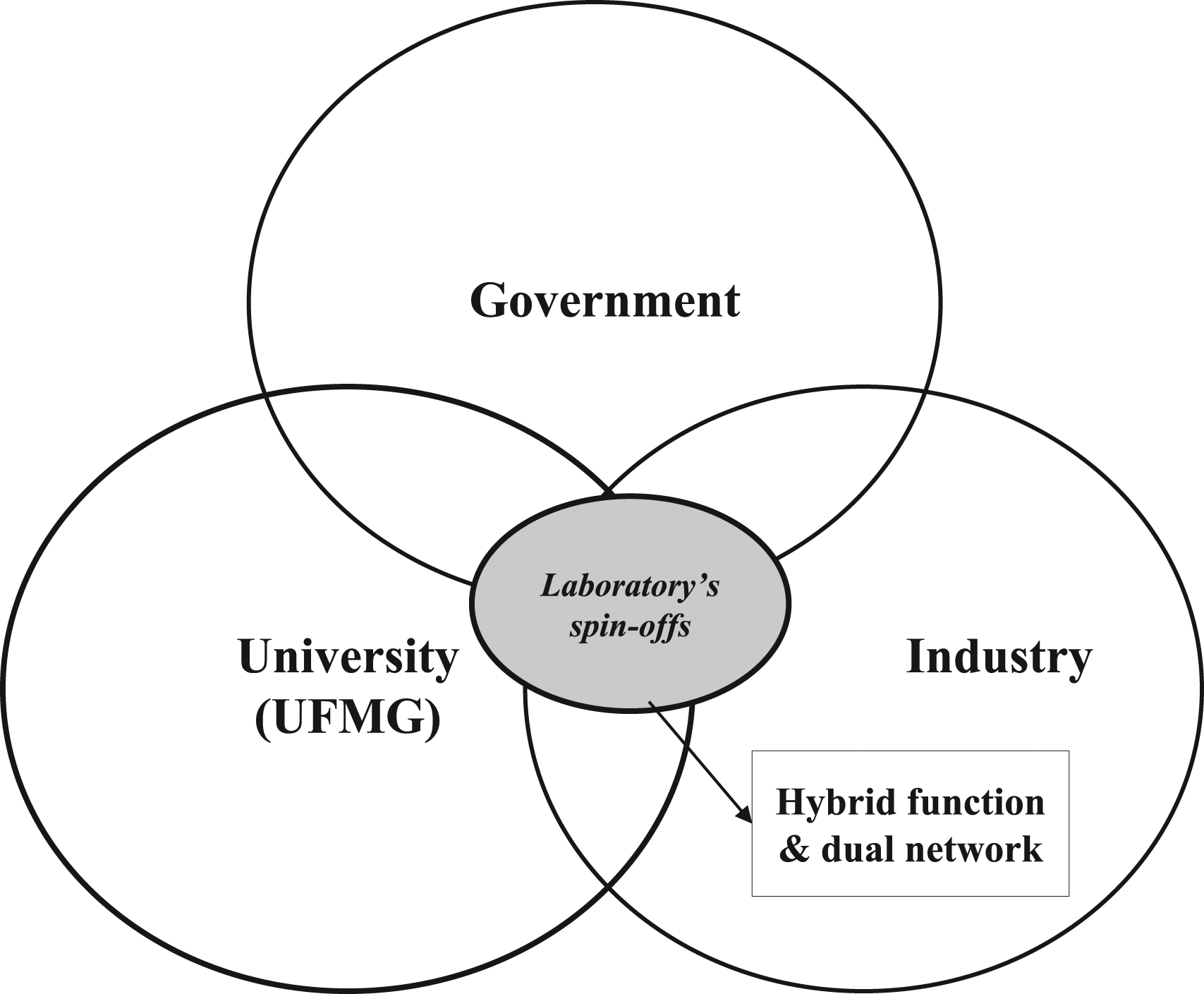
Technology and knowledge transfer in the UIIs
Both laboratories transferred technology through patent licensing and product sales, such as Crômic’s sneakers, Chimiolux® and the EIA diagnostic kit. However, according to the laboratory leaders, most of the interactions between the laboratory and firms or hospitals happened without patent transferring and did not involve the TTO. Various reasons explain this degree of informality, including the multiple decision-making levels for contract approval and the lack of administrative support staff in the laboratories.
Informal channels of knowledge transfer, such as a long-term partnership with public hospitals for support in disease diagnostics, seem to be an important way to transfer knowledge and technology with social impact (Intarakumnerd and Schiller, 2009). Informal UII generated input donations for Labbio and Labvir, as in other studies in developing countries (Abdulai et al., 2020; Kruss, 2008). On the formal side, patent licensing is observed in the development of Labvir’s EIA diagnostic test kit in an R&D project with Embrapa, Viriontech, and Bioclin, and patent transfer in the development of Labbio’s cushioning system for Crômic sneakers.
The analysis of the UII channels made it possible to identify how infrastructure and team qualification influenced the knowledge transfer process. In addition to the unidirectional and low-proximity channels, such as patent licensing and publications (Dutrenit and Arza, 2010), the results showed high-proximity channels (Perkmann and Walsh, 2007), such as research contracts for product development and consulting services (Schiller and Lee, 2015).
Contributions, implications, and future research
The main contribution of this article to innovation and TH studies is its provision of empirical data on the role of the university research laboratory as the locus of innovation in the university sphere in a developing country context. Despite research laboratories being the unit of analysis closest to the generation of knowledge and technology with the potential to become innovations, empirical studies on factors at their level remain scarce. The participants in the study were university professors, post-doc fellows and senior researchers who combine expertise in biotechnology academic research and spin-off firm creation. The results reveal a wealth of detail about how a laboratory’s team and equipment, with the support of national and local incentives to UII, fostered the entrepreneurial endeavors of scientists and spin-off CEOs and promoted the UIIs investigated.
The process of knowledge and technology transfer observed in both laboratories showed the importance of the internal organization of the laboratory for the university community (students, researchers, professors, administrative staff), of the access to multidisciplinary areas of knowledge, and of the communication with the local industry. These laboratories help to advance biotechnology in Brazil through academic and technological results, such as patents, products and professional training. UFMG seems to be at the intermediary level of entrepreneurial university development (Etzkowitz, 2008), facilitating industry interaction through its TTO (CTIT) and the laboratories’ spin-off firms.
The proposed analytical framework represents a contribution to the analysis and interpretation of empirical data on the UII process for knowledge transfer considering the diversity of channels and potential results at the laboratory level. By emphasizing human resources, equipment and local UII incentives, this framework operationalizes the relationships within the Triple Helix (Etzkowitz and Leydesdorff, 1995) and the set of factors that influence spin-off generation (human capital, material and organizational factors) (Etzkowitz, 2008). The generation of spin-offs is a traditional channel of UII in biotechnology (Cooke, 2002), but our findings indicate that they face several challenges in a developing country. The understanding of their roles and interactive dynamics was supported by the Triple Helix approach.
A noteworthy finding from these interactions is that the two laboratory spin-offs faced structural barriers to production and growth. This can be partly explained by their location in a developing country with an immature national innovation system, in which low private investment in R&D prevails (Albuquerque, 1996; Albuquerque et al., 2015). Nevertheless, these spin-offs developed ways to survive and generate revenues, such as technological consulting services to other firms.
A novel contribution of the study is the identification of new institutional arrangements around spin-offs. The whole idea of a TH spiral and intersecting spheres is the emergence of hybrid organizations, such as TTOs and business incubators (Etzkowitz, 2008). However, these Brazilian findings show the spin-offs as formally incorporated firms with a hybrid function that is fundamental for their survival and for the commercial exploitation of the laboratory-originated technologies. They could not have come into existence without performing this special hybrid function through university professors working as both spin-off founders and active members. It is worth considering to what extent this is the result of embryonic legislation or of a lack of incentives from the national system of innovation. These spin-offs contributed to the absorptive capacity of external firms and, above all, allowed the laboratories to disclose their results to potential end-users and buyers.
These findings offer new perspectives for universities and policymakers in Brazil and other developing countries in relation to the role of academic spin-offs in UII for knowledge and technology transfer at local and national levels. Exploring their role as technology brokers between university and industry can help to increase the technological capabilities and absorptive capacity of local industry, reducing regional inequalities and international gaps in relation to the generation and transfer of knowledge and technology. Our data from biotechnology laboratories in a highly-ranked Brazilian university offers evidence-based recommendations to Brazilian institutions and governments, which include (a) considering the local institutional settings when writing regulations, policies and R&D joint funding calls; (b) promoting spin-off generation and training to perform hybrid functions (disseminating university research results and brokering patent licensing to larger firms); and (c) building UII protocols to facilitate funding accountability and reduce the barrier imposed by the lack of administrative staff at the laboratory.
Our results show that laboratory leaders are willing to create a spin-off to commercialize laboratory technology and to disclose knowledge and technology to larger firms, operating as a facilitating agent to the patent licensing process and ameliorating the laboratory conditions through inputs and equipment acquisition. Policymakers and industry stakeholders could use this information to identify similar spin-off structures in other university research laboratories, seeking to foster spin-off generation elsewhere. This process of promoting best practices could generate guidelines for benchmarking and to encourage new professors and researchers to follow this path and start to build an entrepreneurial university.
Future research might explore the role of informality in technology and knowledge transfer to expand our research findings. A relevant research agenda would aim to amplify the scope of this study by including the view of firms that interact with university research laboratories in biotechnology. Moreover, since Brazil has a relatively well-developed incubation system with a diversified scope, future research could analyze the potential impacts of biotech business incubators on spin-off formation and survival in Brazil and other developing countries or comparable contexts. These research efforts would test the robustness of the proposed analytical framework in order to expand it.
Footnotes
Declaration of conflicting interests
The author(s) declared no potential conflicts of interest with respect to the research, authorship, and/or publication of this article.
Funding
The author(s) disclosed receipt of the following financial support for the research, authorship, and/or publication of this article: The authors received financial support for the research from the National Council for Scientific and Technological Development of Brazil (CNPQ – Projects 205963/2017-0, 314360/2020-4) and Coordination for the Improvement of Higher Education Personnel (CAPES – 88882.461737/2019-01).
