



Abstract
This paper presents the findings of a research study focused on industry-university collaborations within the design studio culture. The study utilized a mixed-methods approach, including a literature review and case studies, to investigate and identify lessons learned from university-industry collaborations for interior design students. Two industry-university collaborations within AU were selected as case studies based on their relevance to the design courses offered in the BSID program. The case studies employed a mixed-methods approach, involving non-participant observations, students’ reflection reports, and semi-structured interviews with instructors and industry staff members. This research contributes to the understanding of industry-university collaborations within design studio culture and provides valuable insights for instructors, universities, and industry partners seeking to engage in such collaborations. By highlighting the experiences of instructors at AU, we aim to provide insights into the benefits and challenges of industry-university collaborations for universities that are new to such partnerships. The findings include the importance of embracing exposure and new partnerships, providing real-world experience, balancing autonomy and dependence, understanding the limitations of scope, considering the scale and limitations, navigating bureaucratic procedures, mitigating conflicting interests, adhering to regulations and guidelines, emphasizing positive social impact, and learning from limitations.
Introduction
In recent years, there has been a growing recognition of the importance of industry-university collaborations in promoting innovation and entrepreneurship in higher education. Kalar and Antoncic (2015) suggest that the mutual exchange of knowledge between universities and industry has led to the transformation of many universities from traditional institutions into entrepreneurial entities with strong ties to industry. This transformation has encouraged the entrepreneurial activities of academics and has helped universities to remain relevant and connected to industry needs.
However, not all universities have traditionally engaged in entrepreneurial activities or have strong ties to industry. For these universities, building successful industry partnerships can be challenging. Instructors may face a variety of barriers, including institutional resistance, lack of resources, and cultural differences.
To overcome these challenges, universities must adopt strategies that foster collaboration and knowledge exchange between academia and industry. This may involve developing programs and initiatives that encourage entrepreneurship and innovation, building networks and partnerships with industry partners, and providing training and support for academics who are interested in engaging in entrepreneurial activities.
In this paper, we will explore the challenges faced by instructors at universities that are new to industry partnerships and do not traditionally have entrepreneurial activities. We will focus on the experiences of instructors at Ahlia University (AU) who have recently embarked on industry partnerships in the context of design courses offered in the Bachelors of Science in Interior Design (BSID) program. We will also explore the benefits and challenges of such collaborations, and offer recommendations for how universities can overcome common barriers and build successful partnerships with industry partners.
By highlighting the experiences of instructors at AU, we aim to provide insights into the benefits and challenges of industry-university collaborations for universities that are new to such partnerships. This will help to promote entrepreneurship and innovation in higher education and provide instructors with valuable guidance on how to successfully navigate the challenges of industry partnerships.
Literature review
Several studies explore institutions that have connections to industry. Valentin and Sanchez (2002) and Kalar and Antoncic (2015) suggest that partnerships between universities and industry could convert universities into entrepreneurial institutions with strong industry connections. Allen and Williams (2005) suggest a categorization framework that could identify potential gaps and opportunities for future collaborations in the built environment sector. Wynn and Jones (2017) study Knowledge Transfer Partnerships (KTPs) and their effectiveness in promoting innovation and the commercialization of university research.
These findings emphasize that comprehending the challenges that universities face when collaborating with industry partners is crucial, mainly if they lack experience in entrepreneurial activities. These universities may encounter obstacles such as resistance from faculty, inadequate resources, and lack of experience in industry collaborations. Instructors may also face challenges such as balancing the demands of the collaboration with their teaching responsibilities and managing industry partners’ expectations.
Allen and Williams (2005) proposed a framework for measuring engagement between industry and higher education in the built environment sector. The framework includes three dimensions: level of collaboration, nature of collaboration, and outcomes of collaboration. The level of collaboration refers to the degree of interaction and integration between industry and academia, while the nature of collaboration refers to the type of activities undertaken. Finally, the outcomes of collaboration refer to the tangible and intangible benefits that result from the collaboration.
To build on this framework, it will be used as a basis for evaluating and analyzing two case studies of industry-university collaborations at Ahlia University. The framework proposed by Allen and Williams will be used to evaluate the level, nature, and outcomes of the collaboration. For example, you assessing the degree of interaction and integration between the university and the company, the types of activities undertaken (such as joint research or internships), and the benefits that have resulted from the collaboration (such as improved graduate employability or enhanced industry competitiveness). Also the challenges that have arisen will be identified in the collaboration and suggest strategies for addressing them.
Overall, by using the framework proposed by Allen and Williams, the success of industry-university collaborations can be analyzed at Ahlia University, and identify strategies for building stronger partnerships with industry partners. This can help to promote entrepreneurship and innovation in higher education, and provide students with valuable learning opportunities that prepare them for success in the workforce.
In conclusion, the reviewed literature suggests that university-industry partnerships can be advantageous for both parties. However, universities that lack experience in entrepreneurial activities may encounter challenges when collaborating with industry partners. The proposed case studies can provide valuable insights into how such universities could overcome these challenges and establish successful industry partnerships.
Methodology
This research used a mixed-methods approach, including a literature review and case studies. The literature review provided an overview of the gaps in knowledge for industry-university collaborations within design studio culture. According to Yin (2013), the case study has become a popular tool for conducting contemporary and contextualized research. When executed correctly, this method enables researchers to gain a comprehensive understanding of a specific scenario’s details and overall perspective (Woodside, 2010). The case study approach is suitable in three situations - when the research question is not clearly defined, when the researcher lacks control over the objects being studied, and when the focus of the research is current rather than historical (Yin, 2013). It is thus particularly suitable for investigating and identifying lessons learned from university–industry collaboration for interior design students.
Two industry-university collaborations within Ahlia University (AU) were selected for the case studies. The collaborations were identified based on their scope, scale, and relation to the design courses offered in the Bachelors of Science in Interior Design (BSID) at AU. The case studies involved mixed methods, consisting of non-participant observations, students’ reflection reports, semi-structured interviews with the instructor and industry staff members, was adopted. Observation was used to gain insights into the collaboration process and the outcomes. Observations was conducted during the collaboration process, including meetings, workshops, and design reviews. Reflection reports were used to gather feedback from students and educators on the collaboration process and the outcomes. Students and educators were asked to provide written feedback on their experiences, including the benefits and challenges of the collaboration. Semi-structured interviews were conducted with industry partners and educators to gain insights into the benefits, challenges, and best practices of the collaboration. The interviews were conducted in-person or over video conferencing platforms.
Problem-based learning was also used within the design studios to provide students with real-world experience and to help them develop the skills and knowledge needed to succeed in the industry. Problem-Based Learning (PBL) is a student-centered pedagogical approach that involves solving a real-world problem or scenario that is relevant to the students’ fields of study. The approach is designed to enhance critical thinking, problem-solving, and collaboration skills among students (Hmelo-Silver, 2004). Students were given an academic design brief with an articulation of the problem related to the industry-university collaboration. The design brief was based on the needs of the industry partner as well as to fulfill the requirements needed for the course module. The brief articulated the problem that the students will be tasked to solve. The academic design brief was reviewed by the industry partner to ensure that it accurately reflects their needs and expectations. Students developed solutions to the problem. The solutions were presented to the industry partner for feedback and in one case study taken all the way to implementation.
Student visited the sites to gain insights into the needs and expectations of the industry partner. The visits were conducted during the collaboration process. The visits provided students with the opportunity to see the industry partner’s operations and to gain insights into their needs and expectations.
Continuous contact with the industry partner was maintained throughout the collaboration process. Educators maintained regular contact with the industry partner to ensure that their needs are being met. Students received feedback from the industry partner on their design solutions. The feedback was used to refine and improve the solutions.
Location of study participants
The University that both collaborations with industry were based is AU in Bahrain. AU is a private university offering BSID since 2009. The BSID program offers five design studios each catered towards a specific area in interior design such residential, retail, commercial, educational and healthcare.
Case study A - IKEA
The students were second year students at AU BSID program. The course that this project was introduced in is titled INTD 212 Elementary Residential Interior Design Studio for the academic year 2022–23 in the First Semester.
The first collaboration was set with IKEA Bahrain. IKEA is a globally recognized brand that has been successful in expanding its operations to Bahrain. The company’s franchise in Bahrain is owned and operated by the Al Sulaiman Group, and it has been able to establish a significant presence in the country’s furniture market. The success of IKEA in Bahrain can be attributed to its ability to cater to the needs and preferences of the local population while still maintaining its global brand identity.
The partnership began with a meeting between the course instructor and the design manager at IKEA, Bahrain. The instructor outlines the timeline available for the students to work on the project, the size of the projects they needed to cover, and the intended learning outcomes of the course. Based on the information provided by the instructor the design manager discussed the possibilities such as the students designing a living room, bedroom or office. After the discussion it was suggested that the students should design a two-story villa, with one part of the villa the size of the living rooms at IKEA and that space needs to include all IKEA furniture in the design. This ensures that the students cover the size of space that they need to design for their course, but they also have a chance to design for the IKEA within a certain area of that project. This discussion ensures the discovery and definition of the interests of both parties, and find synergies. The industry in this case IKEA receives several proposals from students for their showroom, while the students fulfil the academic requirements of a 2nd year curricular unit.
The relationship with the students became effective and official on November 10, with a visit where the students were taken to a visit to the IKEA showroom and given a short lecture about how design is done in IKEA (Figure 1(a)) and they were also given a tour on the showroom guided by the design manager (Figure 1(b)). In attendance were 25 students. (left to right) (a) IKEA Bahrain X Ahlia university collaboration lecture. (b) IKEA Bahrain X Ahlia university collaboration showroom tour.
All designs that were done by all 25 students were judged by IKEA interior design members after 5 weeks of development (Figure 2(a) and (b)). In attendance were two interior designers and the design manager from IKEA, as well as the instructors for the course. Three finalist designs were chosen to proceed to the next stage. It should be noted that teachers, although members of the jury, played a secondary role in the decisions, as happens with thesis advisors in public defenses. IKEA Bahrain X Ahlia university collaboration presentations.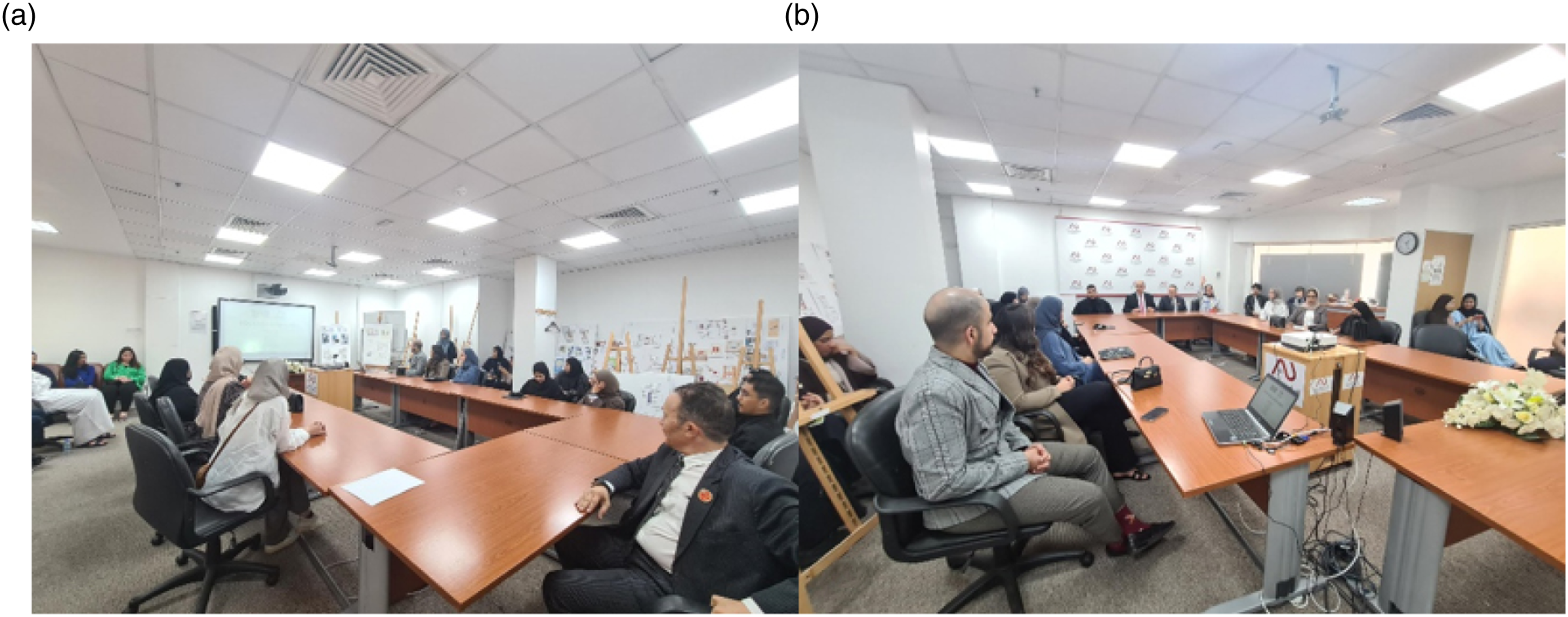
The three finalists were then asked to work on the feedback and re-present to IKEA after 3 weeks (Figure 3). The three finalists then presented to the IKEA living room design team where one finalist was chosen for the design to be implemented in IKEA’s showroom. IKEA Bahrain X Ahlia university collaboration finalist presentations.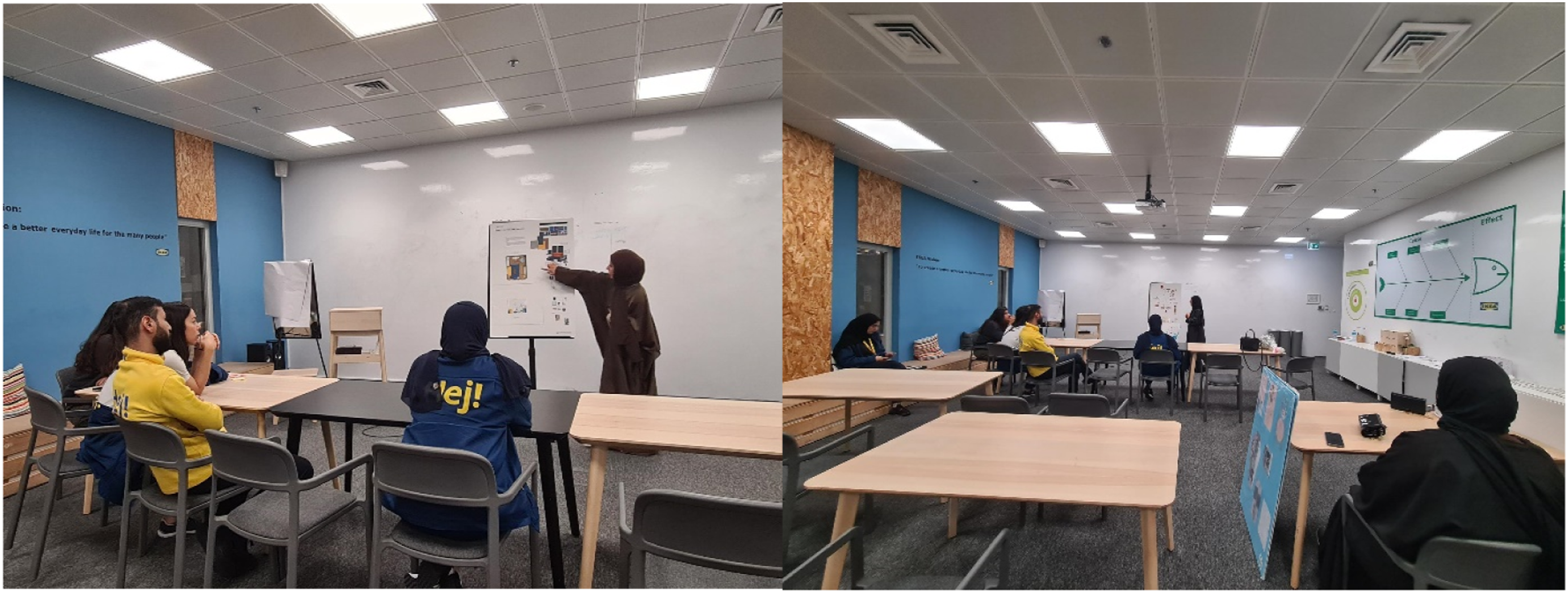
The three finalists were then asked to work on the feedback and re-present to IKEA after 3 weeks (Figure 3). The three finalists then presented to the IKEA living room design team where one finalist was chosen for the design to be implemented in IKEA’s showroom (Figure 4). The finalists board before implementation.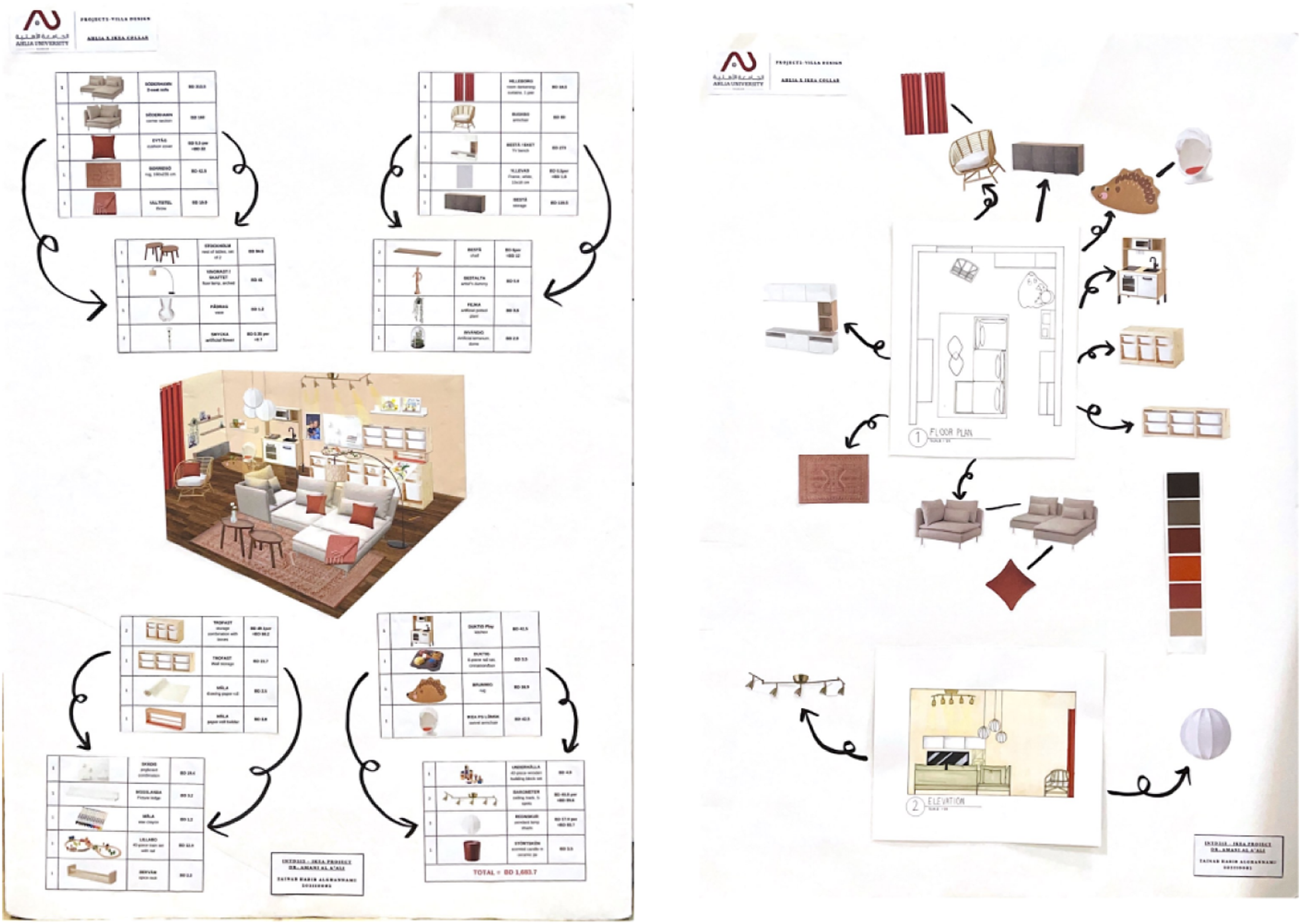
For the winning design, the living room IKEA team together with the student worked on further developing the design to suit the market needs in Bahrain (Figure 5). The design was finally implemented in the showroom and the student was given a designer’s story framed by the IKEA design team (Figure 6). The project was realized in approximately 3 months. IKEA Bahrain X Ahlia university collaboration during implementation. IKEA Bahrain X Ahlia university collaboration implemented.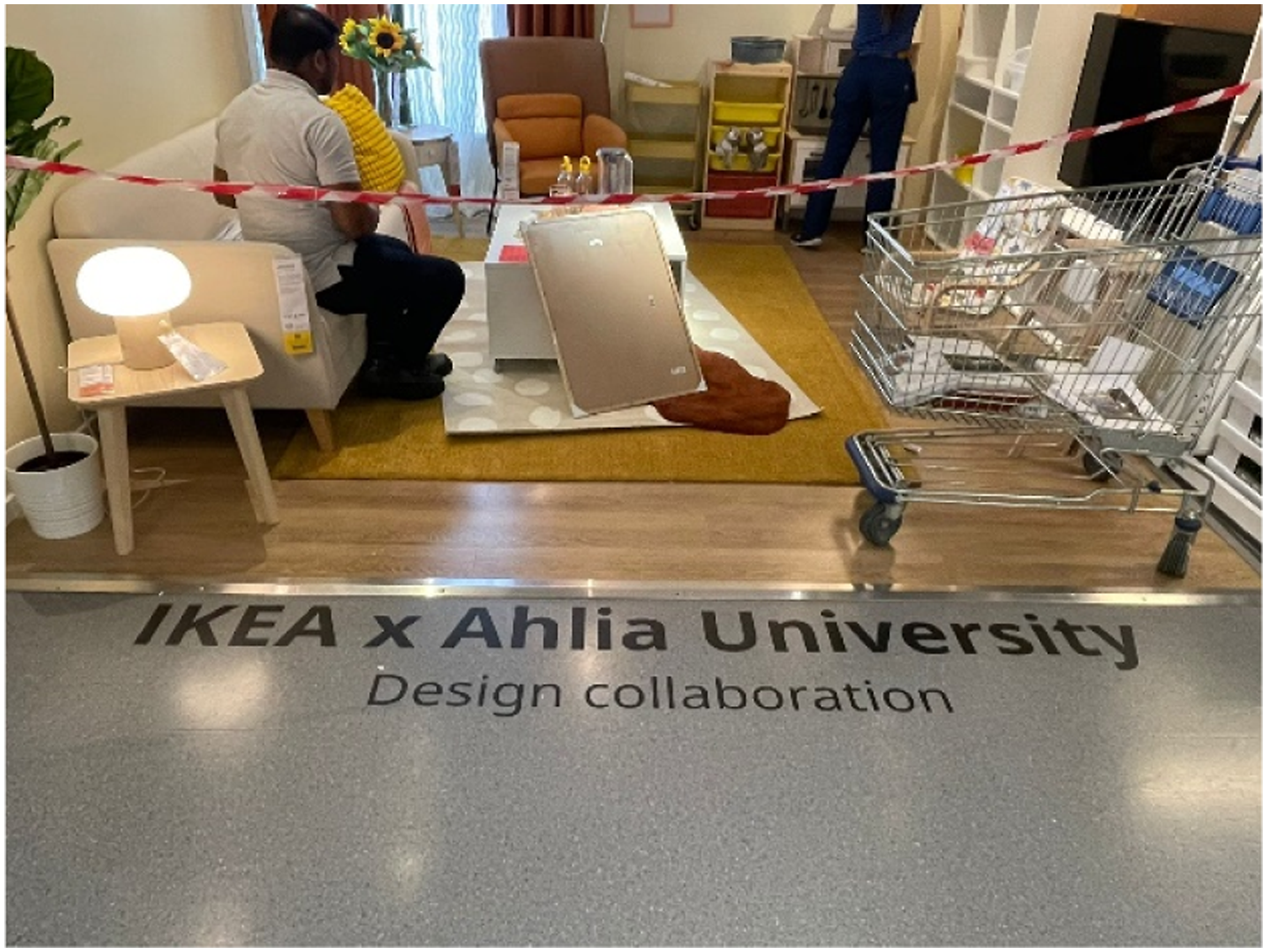
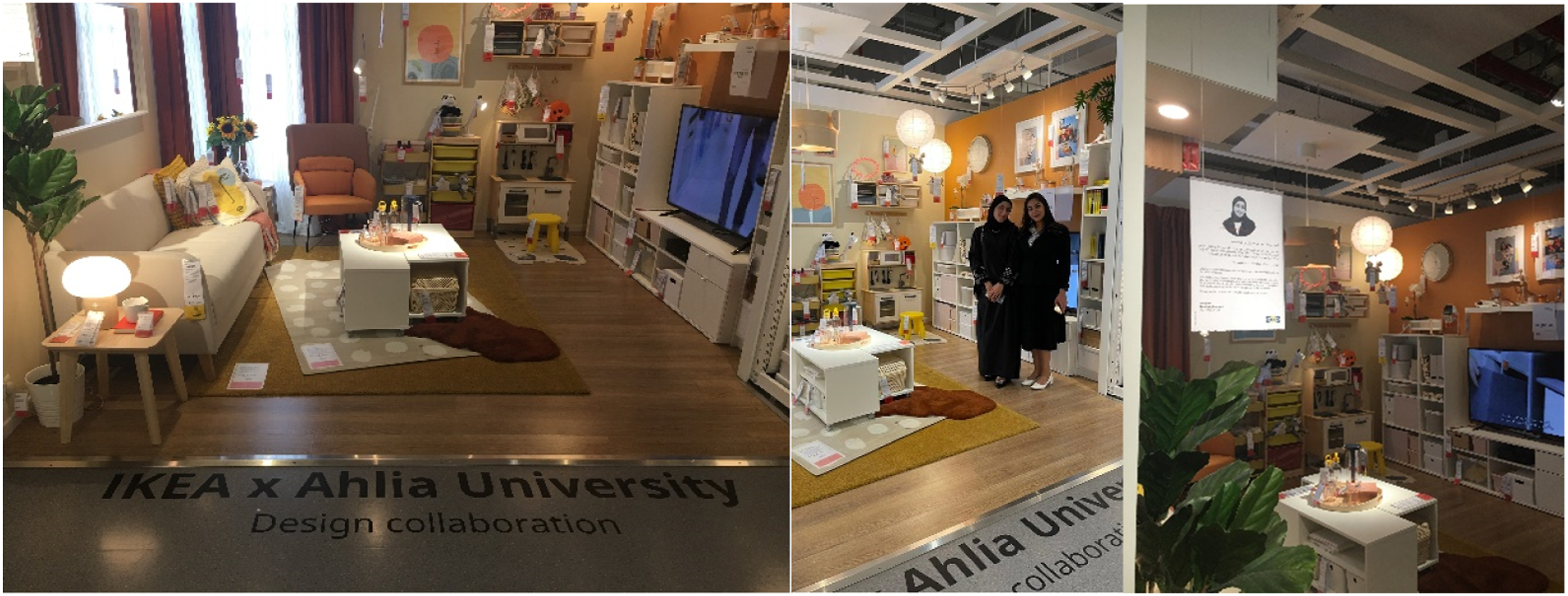
Case study A – Salmaniya hospitals
The students were fourth year students at Ahlia University BSID program. The course that this project was introduced in is titled INTD 417 Advanced Healthcare Interior Design Studio for the academic year 2022–23 in the First Semester.
The second collaboration was set with the governmental hospitals in Bahrain, specifically Salmaniya Hospitals. Salmaniya Hospitas is one of the largest hospitals in Bahrain and is located in Manama, the capital city of the Kingdom of Bahrain. The hospital has a long and fascinating history that spans over a century. It was established in 1929 as a small clinic and was named after the then ruler of Bahrain, Sheikh Salman bin Hamad Al Khalifa. Over the years, it has grown to become one of the most advanced medical facilities in the region. In the early years, it served as the primary healthcare facility for the entire country, providing medical care to the local population as well as expatriates. The hospital has expanded its services over the years, and today it offers a wide range of medical services, including emergency care, intensive care, surgery, pediatrics, cardiology, oncology, and more.
The brief was to produce ideas for the renovation of the courtyard space of North Block at Salmaniya Hospitals. The North Block at Salmaniya Hospitals Bahrain is not only known for its advanced medical facilities, but also for its courtyard and landscape. The courtyard at the North Block also serves a practical purpose. It provides a safe and secure outdoor area for patients to get fresh air and sunlight, which is essential for their recovery. The courtyard is also used for various hospital events and activities, such as health fairs, charity events, and educational programs.
The North Block courtyard at Salmaniya Hospital in Bahrain dates back to the British colonial era. The hospital was originally established in the 1920s, during a time when Bahrain was under British rule. The hospital was built to serve the needs of the British expatriate community living in Bahrain, as well as the local population. After Bahrain gained independence from British rule in 1971, the courtyard at the North Block was preserved as a historic landmark. The Bahraini government recognized its cultural and historical significance and invested in regular restoration and maintenance. Which is why the building is now due for another renovation, which they need fresh ideas and design proposals for.
The brief was outlined by the need for this restoration. It started with contact with the CEO of Salmaniya Hospitals to discuss if there is any real-life project that could be given to the students in the healthcare design module. The courtyard space was suggested as a viable collaborative project to ensure the students get hands on experience while Salmaniya hospitals gets a fresh perspective on designs for the space from the students.
The relationship with the students became effective and official on 30 September 2022, with a visit to the North Block at Salmaniya hospitals, guided with an engineer working as part of Salmaniya Hospital’s team (Figure 7). In attendance were 7 students. The engineer showed them around the building and specified the current issues with the building. The engineer also mentioned the restrictions as well as opportunities of flexibility in design when it came to the case of the historical building of the north block at Salmaniya. Salmaniya hospitals X Ahlia university collaboration internal feedback presentations.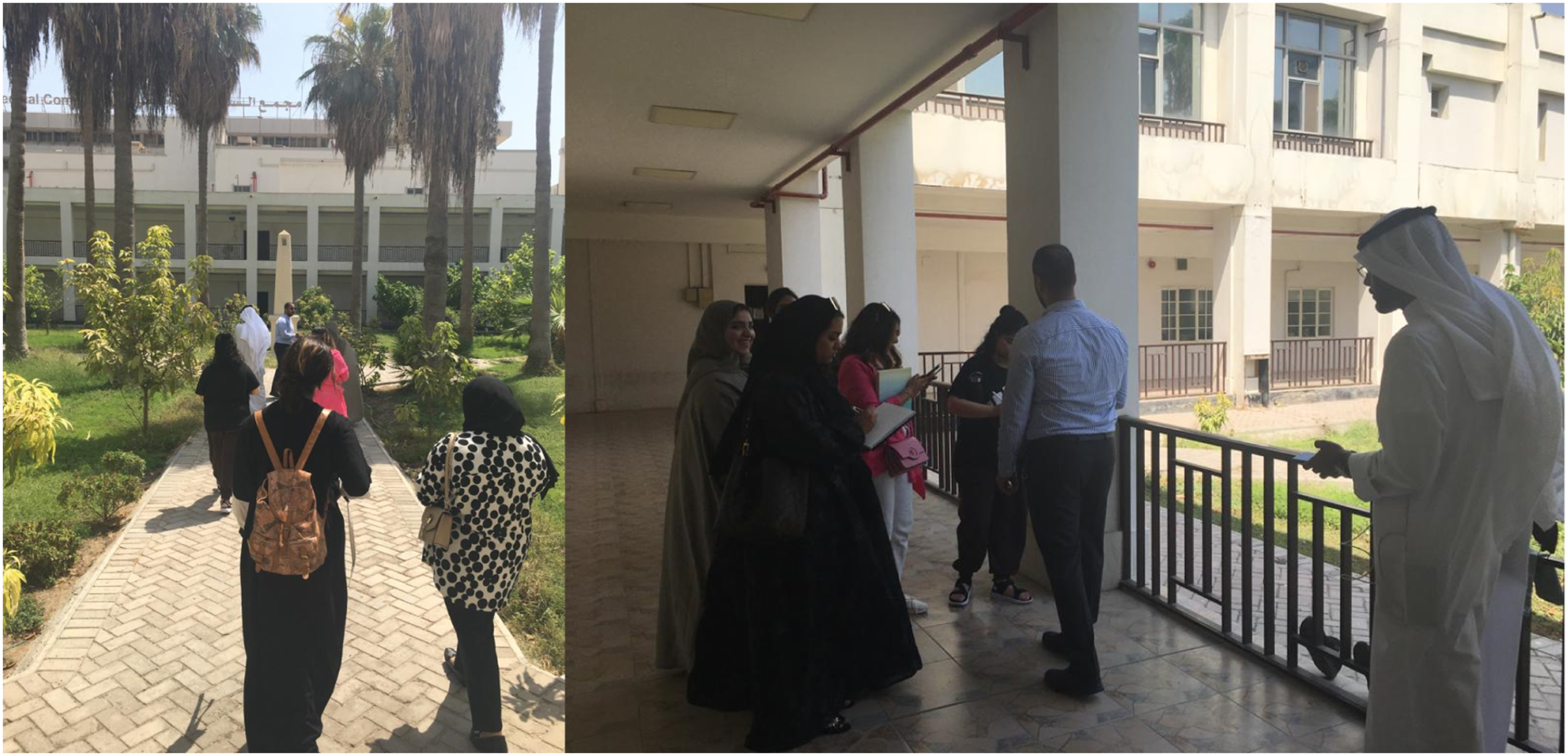
The students worked on proposals in the classroom guided by the instructor of the course. During which they had several milestones in class to present to internal members and receive feedback (Figure 8). Salmaniya hospitals X Ahlia university collaboration internal feedback presentations.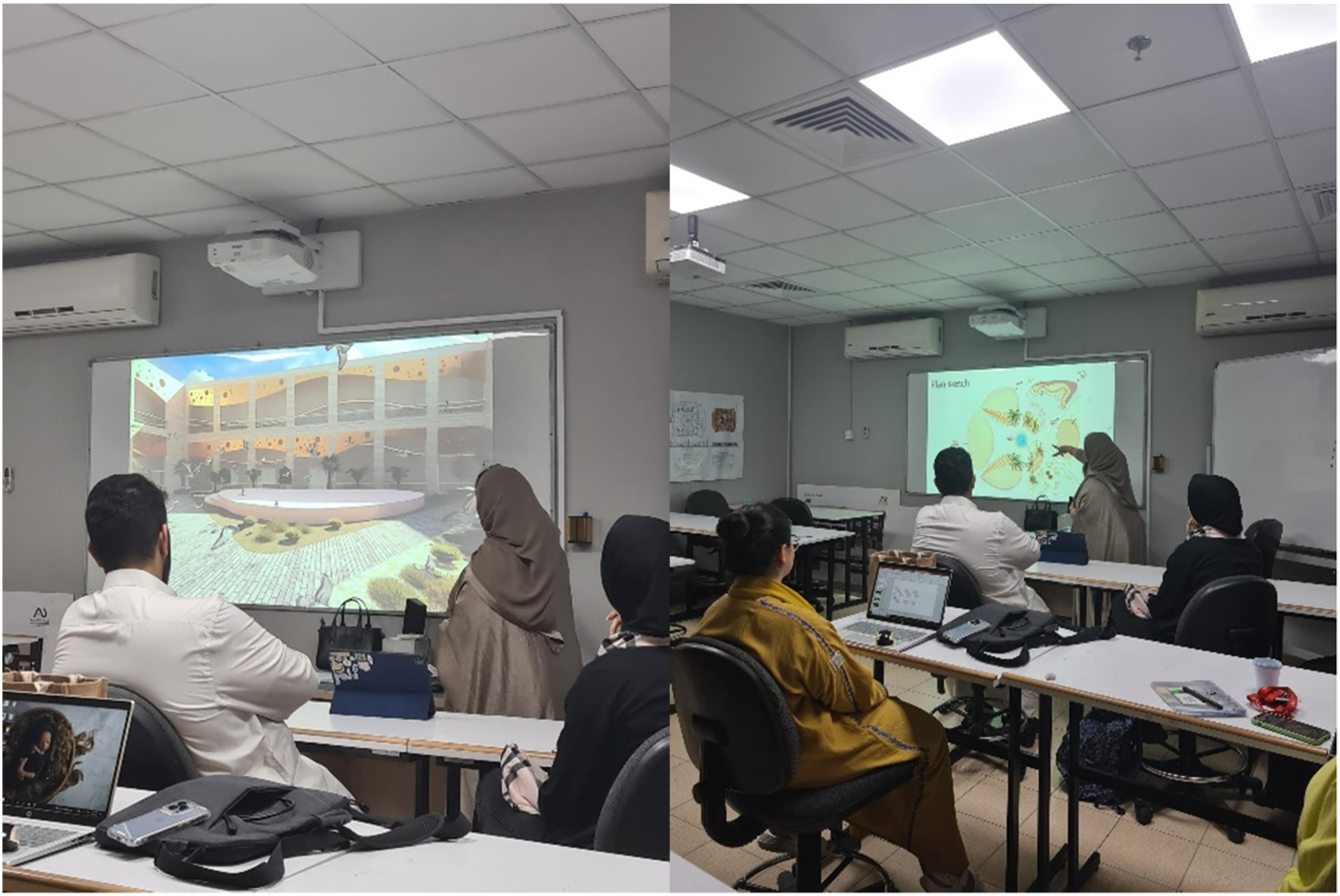
During a final presentation to the internal members at Ahlia University, the instructors at Ahlia University chose three finalists to go and present to the CEO of Salmaniya Hospitals.
The three finalists presented their design to the CEO of Salmaniya Hospitals and the team on the 11th of November (Figure 9). The CEO then suggested that they will keep the student presentation to discuss with the team and they will get back to the instructors with feedback. Salmaniya hospitals X Ahlia university collaboration finalist presentations.
The CEO contacted the university wanting to merge ideas from the two students designs. The Salmaniya team mentioned that they do intend to implement these projects however budget approval from the government needs to be applied for first. The project has not yet been implemented at the writing of this paper.
Comparing and contrasting
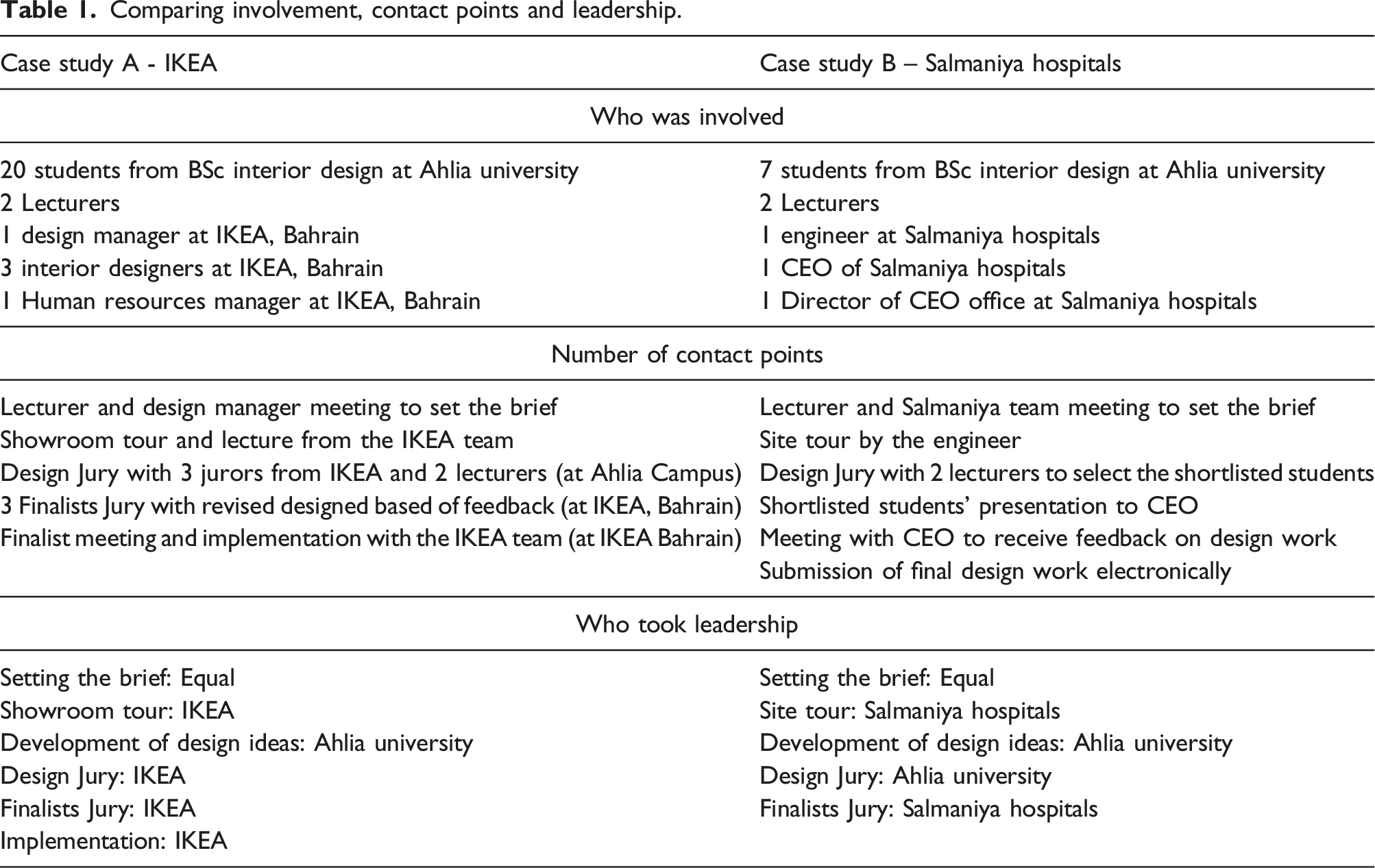
The following section explores the best practices for establishing successful collaborations by reflecting on and comparing the two case studies implemented at AU in the BSID program in the first semester 2022–23. This section also explains the challenges and barriers that were understood by conducting the case studies. The points of comparison between the two case studies firstly included comparing who was involved, the number of contact points and who took leadership. Then the points compared include small versus large scale, modern versus historic renovation design, and global brand versus governmental institution.
Who was involved, the number of contact points, and who took leadership
Comparing involvement, contact points and leadership.
Small versus large scale
Firstly, the case studies differed greatly in terms of scale. The IKEA collaboration was to design a living room only, while the Salmaniya Hospitals collaboration was to design an entire courtyard. This was seen appropriate because the IKEA case study was given to second year students while the Salmaniya hospitals case study was given to fourth year students.
Since IKEA was a small-scale project of just one living room, it was less expensive and less time-consuming than a full design proposal. That is why it was possible to implement the IKEA project. Moreover, the IKEA project gave the students experience in networking, and receiving feedback from the market without requiring major renovations, especially that the majority of the project did not have any permanent features, and rather it had mainly moveable furniture. Further, the small-scale project in this case the collaboration with IKEA was a great option since there was a limited budget or if the industry is not ready to commit to a full redesign.
However, there were some downsides to the collaboration with IKEA being small scale. One of the weaknesses is that the students did not address larger structural or design issues in the space. Another weakness is that it was not a comprehensive design plan that takes into account all aspects of the space, including lighting, color, and texture. The IKEA collaboration also did not provide as much opportunity for customization as a full design proposal as the students were restricted to IKEA rules and inventory and therefore did not result in a dramatic transformation.
The larger scale project in this instance being Salmaniya hospitals provided a comprehensive plan for the space, taking into account all design elements, including layout, furniture, lighting, color, and texture. The proposals also addressed larger structural and design issues in the space. Moreover, in the larger scale collaboration a dramatic transformation of the space was proposed and making it feel completely new and fresh, while providing more opportunities for customization and personalization.
However, the weaknesses of a larger scale project are that it was more expensive and time-consuming than an interior design project of arranging furniture as it required major renovations or structural changes to the space and therefore, it may not be feasible for those on a limited budget or timeline. However, it may not be necessary if the space only requires minor updates or changes, but in this case the project required major changes and for that reason has not yet been implemented.
New versus historic projects
Another point of comparison is new versus historic projects. In the IKEA case the students were asked to design a space with modern qualities while in the Salmaniya hospitals project the students were asked to retain the historic qualities of the building.
The benefits of Salmaniya Hospitals being a historic renovation collaboration was that it has a positive social impact by preserving historical landmarks and providing updated facilities for healthcare services. Collaboration with Salmaniya hospitals also helped to restore and preserve historic buildings, which can enhance the cultural and architectural heritage of the community.
However, the limitations to collaborating with Salmaniya Hospitals includes that often governmental institutions have bureaucratic procedures that can slow down the collaboration process, including obtaining permits and approvals from various government agencies.
Also, in the case of Salmaniya hospitals the government had limited funding for the project, which limited the scope and scale of the renovation. Moreover, the goals and interests of the hospital and the university may not always align, which can lead to conflicts and challenges in the collaboration. In this case, the students were enrolled for a semester, so any further feedback and work needed for the project towards the end was not implemented as the students completed the semester. Renovating a historic building may be subject to strict regulations and guidelines, which can limit the design options and increase costs. This was evident as the engineer in the tour of Salmaniya Hospitals informed the students of which parts of the project cannot be changed. Moreover, renovating a historic building can present technical challenges that require specialized skills and expertise, which may not be available within the collaboration, such as the interior design students not being able to tell weather air conditioning can be provided in the spaces that they designed or if the structural qualities of the design are valid. Adding to that communication between the hospital, university, and government agencies may be limited or ineffective, which can lead to delays and misunderstandings. Such as when the students had questions for the engineers, they would not always be available to answer the questions.
Global brand versus govermental institution
Moreover, an additional comparison factor is that IKEA is where the students designed for a global brand while for Salmaniya Hospitals they designed for a governmental institution.
The benefits of collaborating with a global brand in the case of IKEA was that IKEA had access to vast resources, such as funding, expertise, and technology, which benefited the collaboration. The resources available to global brands are discussed in previous work such as Alaali and Pitsaki (2019) and Alaali (2019). Also, collaborating with IKEA provided exposure for the university and the industry, which lead to new opportunities and partnerships. Moreover, the students were provided with real-world experience and the opportunity to learn from industry professionals, especially that an interior design at IKEA is a possible future job opportunity for them, as two of the collaborators from IKEA were ex-Ahlia University members (Lecturer and Alumni).
The weaknesses of collaborating with a global brand in this case IKEA is that the university was dependent on the brand, which can limit the university’s autonomy and creativity (as the students could only choose IKEA furniture for the project). The collaboration with IKEA also limited the scope of the project, as the project needed to align with the brand’s values and goals. Therefore, the student had to also focus on marketable pieces and had to receive a lecture of IKEA goals and target audience. Furthermore, collaboration with a global brand lead to competition among universities for the opportunity to collaborate, which can limit the opportunities for other universities.
Lessons learned
Instructors at universities that are new to industry partnerships and do not traditionally have entrepreneurial activities face unique challenges when venturing into collaborations. This is particularly evident in the experiences of instructors at Ahlia University (AU) who recently embarked on industry partnerships within their Bachelors of Science in Interior Design (BSID) program. These instructors sought to provide their students with real-world experiences, access vast resources, and foster exposure through collaborations with a global brand. However, they also encountered certain weaknesses and limitations inherent in such partnerships. Through their experiences, valuable lessons were learned, which can serve as guidance for instructors and universities navigating similar endeavors. 1. Consider the scale and limitations: Instructors at Ahlia University learned the importance of considering the scale and limitations of a project. Whether it’s a small-scale project with a limited budget or a larger-scale project with time and budget constraints, understanding these factors helps set realistic expectations and ensures the feasibility of implementation. 2. Navigate bureaucratic procedures: Collaboration with governmental institutions often involves navigating bureaucratic procedures. Instructors realized the need to plan ahead and account for the time required to obtain permits and approvals from relevant government agencies. Understanding and managing these procedures is crucial for a smooth collaboration process. 3. Mitigate conflicting interests: Collaborations bring together different stakeholders, which can lead to conflicting interests. Instructors at Ahlia University recognized the importance of anticipating and addressing these conflicts through open dialogue, finding common ground, and seeking compromises that align with the overall objectives of the collaboration. Effective conflict resolution is key to maintaining a productive partnership. 4. Adhere to regulations and guidelines: Projects involving historic landmarks or healthcare facilities are subject to strict regulations and guidelines. Instructors learned the significance of understanding and complying with these requirements to ensure feasible design options and effective cost management. Adhering to regulations is essential for a successful collaboration. 5. Emphasize positive social impact: Instructors at Ahlia University discovered that collaborations can have a positive social impact, such as preserving historical landmarks or improving healthcare services. Highlighting these benefits is essential for garnering support and resources from industry partners and other stakeholders. Emphasizing the social impact can contribute to the success and sustainability of the collaboration. 6. Learn from limitations: Instructors acknowledged that limitations, such as limited funding or scope, can provide valuable lessons. By recognizing and learning from these limitations, they can refine future collaborations, identify areas for improvement, and develop effective strategies to overcome challenges. Continual learning and adaptation are crucial for successful industry-university partnerships. 7. Capitalize on the benefits of collaboration: Collaborating with a global brand offers numerous advantages, such as access to extensive resources, including funding, expertise, and technology. Instructors should leverage these benefits to enhance the collaboration’s outcomes and provide students with valuable opportunities for growth and learning. 8. Embrace exposure and new partnerships: Collaborating with a global brand can significantly increase the visibility of both the university and the industry partner. This exposure can lead to new opportunities and partnerships, further enriching the educational experience and opening doors for future collaborations. 9. Balance autonomy and dependence: It is crucial to strike a balance between the university’s autonomy and the dependence on the global brand. While accessing the brand’s resources can be beneficial, it is important to ensure that the university retains its creativity and independence in designing and implementing projects. 10. Understand the limitations of scope: Collaborating with a global brand often requires aligning the project with the brand’s values and goals. Instructors should be aware that this alignment may limit the scope of the project, and they should manage expectations accordingly.
By embracing these lessons and navigating the challenges encountered, instructors and universities can effectively navigate industry partnerships, create meaningful educational experiences, and cultivate successful collaborations with global brands.
The lessons learned by instructors at Ahlia University (AU) align well with Allen and Williams’ (2005) proposed framework for measuring engagement between industry and higher education in the built environment sector. The framework highlights the importance of collaboration, innovation, and knowledge-sharing between industry and academia. The lessons learned by instructors at AU emphasize the need for effective communication, planning, and conflict resolution to ensure successful partnerships with industry partners.
Considering the scale and limitations, aligns with the framework’s emphasis on collaboration and innovation. To effectively collaborate with industry partners, universities must consider the scale and limitations of the project and set realistic expectations for implementation. While navigating bureaucratic procedures, highlights the importance of effective communication and planning. The framework emphasizes the importance of knowledge-sharing and collaboration to overcome bureaucratic hurdles in the built environment sector.
Moreover, adhering to regulations and guidelines, emphasizes the importance of knowledge-sharing and collaboration to ensure feasible design options and effective cost management in the built environment sector. Adding to that emphasizing positive social impact, aligns with the framework’s emphasis on sustainable development and social responsibility in the built environment sector. Additionally providing real-world experience, aligns with the framework’s emphasis on experiential learning and practical applications of knowledge in the built environment sector.
Overall, the lessons learned by instructors at AU highlight the importance of effective communication, planning, and collaboration to achieve successful partnerships with industry partners. These lessons align well with Allen and Williams’ (2005) proposed framework for measuring engagement between industry and higher education in the built environment sector, emphasizing the importance of collaboration, innovation, and knowledge-sharing to promote sustainable development and social responsibility.
Conclusion
In conclusion, this research study explored the lessons learned from industry-university collaborations within the design studio culture, specifically focusing on the experiences of instructors and students in the Bachelors of Science in Interior Design program at Ahlia University (AU). Through a mixed-methods approach, including a literature review and case studies, valuable insights were gained regarding the benefits, challenges, and best practices of such collaborations.
The findings of this study highlighted the importance of embracing exposure and new partnerships, providing real-world experience, balancing autonomy and dependence, understanding the limitations of scope, considering the scale and limitations, navigating bureaucratic procedures, mitigating conflicting interests, adhering to regulations and guidelines, emphasizing positive social impact, and learning from limitations. These lessons provide valuable guidance for instructors and universities embarking on industry partnerships, enabling them to navigate challenges, maximize the benefits, and foster successful collaborations with global brands.
By sharing these lessons learned and the methodology employed, this paper contributes to the existing body of knowledge on industry-university collaborations within the design studio culture. It provides instructors, universities, and industry partners with practical insights and guidance for designing and implementing successful collaborations that benefit students, enhance educational experiences, and foster meaningful partnerships.
Footnotes
Declaration of conflicting interests
The author(s) declared no potential conflicts of interest with respect to the research, authorship, and/or publication of this article.
Funding
The author(s) received no financial support for the research, authorship, and/or publication of this article.
