




Abstract
Keywords
Introduction
His Majesty’s Government (cf. Rhodes, 2019) states that the United Kingdom (UK) construction sector comprises around 343,000 companies (13% of UK businesses) which employs approximately 2.4 million individuals (7% of UK jobs). These companies and individuals are responsible for approximately £117 billion or 6% of the UK’s economic output (Rhodes, 2019). Moreover, the sector provides important socio-economic infrastructure (e.g., housing, roads, factories, amenities) that facilitates future economic growth and prosperity (Owusu-Manu et al., 2020). To augment sector performance, a drive towards digital innovations under the auspices of Industry 4.0 has dominated the contemporary discourse (cf. Newman et al., 2020). Notable and prominent digital innovations such as building information modelling (BIM) have been heralded as a panacea via which to streamline project management processes and procedures (cf. Chan et al., 2019; Yin et al., 2019). Yet despite these technological advancements, construction managers remain in the vanguard of this national economic engine – ultimately responsible for a project’s success (typically measured in terms of financial, safety, quality and schedule aspects) (Walker, 2015). Metaphorically, a construction manager constitutes the glue that holds construction team and project together (Fewings, 2013; Harris et al., 2021). Without the proper management and leadership of the complex teams responsible for project delivery, a project’s success is severely jeopardised (Nicholas and Steyn, 2021) – hence, the educational provision for construction managers can also be one of the requisite requirements to bolstering a nation’s economy.
Posillico et al. (2022a) highlighted that, whilst the current construction management curricula environment is largely fragmented and non-cohesive, there does remain a consensus that both interpersonal and technical skills are vital to a healthy curriculum that provides employable graduates. Furthermore, arguments supporting an industry-infused curriculum have been overwhelmingly supported by construction management courses that strive to engender a practice-based curriculum (cf. Goulart et al., 2022). This desire for training future generations of construction management practitioners has been bolstered by the UK government’s modern apprentices programme which supports graduates to acquire a degree whilst in full-time employment (Mulkeen et al., 2017). A combination of governmental education initiatives, private financial initiatives (PFI) and public private partnerships (PPP) (such as the delivery of English hospitals procured under a PFI contract with a capital cost exceeding £50 million cf. Adamou et al. (2021)) and a strong focus on increasing student employability have inevitably shaped the ensuing discourse within higher education institutions (HEIs) (Doherty and Stephens, 2020; Okolie et al., 2020).
Against this prevailing landscape of a rapidly evolving and technologically advanced construction sector (and inextricably linked economic machinations that govern it), this research investigates the relevance and currency of modern construction management courses. Specifically, the research conducts descriptive and inferential statistical analyses of primary questionnaire data sourced from built environment academics to develop a proof-of-concept model of construction management curriculum foundation. Associated objectives are to: investigate the core interpersonal and technical skills and competencies required of a contemporary construction management graduate; formulate a foundational set of core interpersonal and technical skills for construction management curricula; and stimulate pathways for industry and academic informed, contemporary curriculum development research that augments graduate employability.
Technology and the curriculum
Industry 4.0 can be characterised as a heighted presence and infiltration of digital technology, tools and information within the workplace (Javaid et al., 2022). Whilst the limelight of Industry 4.0 has traditionally been placed squarely in the manufacturing, engineering and computing realms, all industries have been impacted albeit to varying degrees. Higher education has also responded to Industry 4.0 by adjusting, modifying and rethinking how to incorporate the requisite skills into relevant educational provisions (González-Pérez and Ramírez-Montoya, 2022; Moraes et al., 2022). Currently, Industry 5.0, which in response to the full throttle digital nature of Industry 4.0, has realised and reaffirmed the unwavering presence and interaction of people within industry (Alves et al., 2023; Golovianko et al., 2023; Hein-Pensel et al., 2023). At the cusp of Industry 5.0 is the expectation that higher education’s response to facilitate proper educational provision of students would be holistic in nature (Broo et al., 2022; Carayannis and Morawska-Jancelewicz, 2022). That is, technological advancements are a tool that assist and enable construction stakeholders (e.g., designers, engineers, construction managers) to optimise the co-operative management of increasingly complex mega projects (Ahuja et al., 2009). For example, at the forefront of recent prominent UK projects is the HS2 high speed rail infrastructure project which cost circa £115 billion (Sergeeva and Zanello, 2018). Towards the latter half of 2023, considerable modifications in the reduction of scope for the HS2 project were pursued due to cost and schedule overruns (His Majesty’s Government, 2023). For such projects, interpersonal skills and competencies remain quintessentially important in the management process (Azim et al., 2010) and managers must remain the ‘masters of technology’ and not become enslaved by it (cf. Edwards et al., 2017).
Given this rapid transition into a technologically advanced construction sector, curriculum development within HEIs has received increasing scrutiny and attention to ensure modernity and relevance of provisions (cf. Co et al., 2023; Luo and Chan, 2022; Shen et al., 2020; Upsher et al., 2022; Xu et al., 2022). Yet, this scrutiny remains at the institutional level and across the HEI sector a notable lack of connectivity between research conducted also exists (Posillico et al., 2021). This lack of a cohesive nucleus in the prevailing body of knowledge is further intensified by the strong prevailing academic notion of ‘individualism and self’ – where bespoke curriculum development prevails within an ‘every person for themselves’ mentality (Hrivnak, 2019; Trinter and Hughes, 2021). The same dispersed and detached sentiment is even more evident within a construction management curriculum development context (cf. Posillico et al., 2022b).
The successful delivery of curriculum rests firmly on the collective teaching expertise of academic staff. The scholarship of teaching and learning (SoTL) has increased its foothold in a wide range of academic disciplines as a valid and convincing form of scholarly work for educators (Van Dijk et al., 2020; Weimer, 2006; Zeng, 2020). This work has explored questions about teaching strategies; student engagement, growth and learning; and other aspects of the teaching and learning process (Hutchings et al., 2011; Spooren et al., 2017). Akin to Industry 5.0, SoTL is a disruptive force in higher education by, at its very core, making clearer how to support and enhance students’ learning (Tagg, 2003). Higher education has witnessed a new SoTL biome, one characterised by new venues for making the work public – including journals and conferences – tools for doing SoTL and a vibrant community of scholars (Steiner and Hakala, 2021). No longer was SoTL the purview of faculty in schools of education. Rather, faculty from any discipline were invited to and recognised for their investigations into questions about teaching and students’ learning – questions they could examine using the tools of inquiry of both disciplinary and interdisciplinary traditions (Boyer, 2016). Despite the prominence of and increasing attention to SoTL in higher education, its presence across the spectrum of academic disciplines and professions is uneven, particularly in construction management education (Posillico et al., 2022b). Any discipline disengaged from SoTL, risks utilising significantly outdated or ineffective educational theories and/or teaching strategies in the classroom (Neubauer et al., 2022). Doing so would, in turn, leave a student with a grossly inadequate educational experience and lack of development in the skills needed to successfully navigate a career industry (Forrest et al., 2022).
Cumulatively, the rapid technological developments within the construction industry and the drive towards SoTL across the HEI sector are shaping current curricular development. However, in a construction sector context the expansion of technology has been largely uncontrolled and construction schools and departments (notably in the UK but potentially globally) lack the finer nuances of a credible SoTL. In turn, this raises questions about the validity and appropriateness of current provisions and raises the need for a thorough review and introspection of courses for construction management graduates.
Methodological approach
A mixed philosophical stance (using postpositivism and interpretivism) was implemented and abductive reasoning used to examine built environment academics’ perceptions of professional skills required by construction management students. The purpose being to identify specific educational skills and competencies for incorporation into the higher education curriculum (cf. Hughes et al., 2021). Interpretivism was used to ascertain the key development skills noted in construction management advertisements, whilst postpositivism was used to statistically analyse the results from a structured questionnaire survey. Abductive reasoning, which is a semi-hybrid approach where the researcher moves between inductive and deductive in a pragmatic way to establish a structure of how a phenomenon occurred (Saunders et al., 2016).
A three-tiered waterfall research approach is adopted (Figure 1). First, a structured questionnaire survey instrument was developed from the key professional development skills noted within UK construction/project manager job advertisements (Han et al., 2021; Rakowska and De Juana-Espinosa, 2021). Specifically, referencing construction industry publication company’s rating and ranking indices (e.g., The Construction Index, Construction News, Construction Global and Construction Review Online), construction companies with a noteworthy impact (minimum construction revenue of £700 million, minimum of 1600 UK employees) were identified (frequency (f) = 10). The 10 companies in aggregate, according to their 2020/2021 Annual Reports, are responsible for £34.3 billion in global revenue and employ over 56,000 employees in the UK. Complete job advertisements for the role of ‘Construction Manager’ or ‘Project Manager’ were located within each of the companies’ career/Human Resources portal. Questions posed utilised a closed Likert scale of 1 (not at all important) to 5 (very important) to collate primary quantitative data; the survey also included open-ended questions to collate primary qualitative data on the reasons for selections made. Second, the survey instrument was distributed to built environment academics (cf. Ayodele and Olaleye, 2021; Wang et al., 2021). Finally, through a postpositivist lens, the results of the Likert-scale survey instrument were statistically analysed to develop a proof-of-concept model of construction management curriculum development (CMCD) (cf. Adepoju and Aigbavboa, 2020; Dharmapalan et al., 2021). Three-tier waterfall research process flow diagram.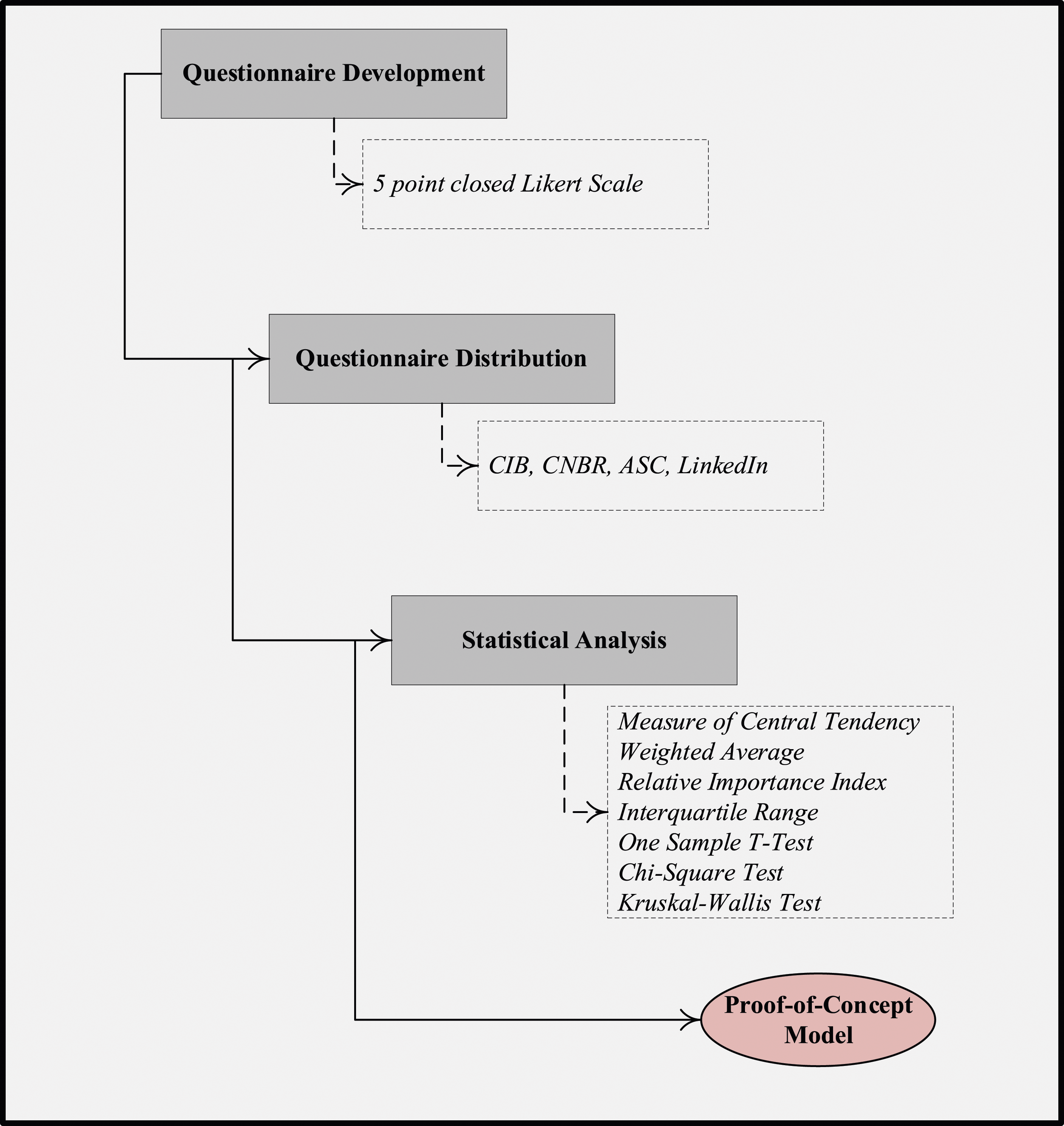
Questionnaire design
The questionnaire was divided into three key sections. Section one presented preliminary information such as the research background (to secure informed consent) and ethical statements. Specifically, participants were assured that: their information would remain strictly confidential (published in aggregate form) and not divulged or disseminated to any third party willingly or otherwise; all data would be securely stored and securely disposed of post publication; and participants could access the findings post publication (cf. Fisher et al., 2018; Law et al., 2021). Section two requested demographic information from participants (i.e., age range, role, years in academia, built environment course affiliation and years in industry), to ensure that only participants who were sufficiently knowledgeable and experienced, regards the phenomenon under investigation (i.e., selection criteria), participated in the research. Section three contained overall skill and competency ranking and ratings, as well as open-ended questions to elucidate further upon the rationale for their choices. The questions were based upon the aggregate analysis of extant literature (cf. Posillico et al., 2021; Posillico et al., 2022a) and secondary data (i.e., UK construction management curriculum data and UK construction manager job advertisements). Cumulatively, this produced a list of core professional skills and competencies. The questionnaire comprised a total of frequency (f) = 28 questions (f = 5 demographic, f = 18 Likert, f = 1 ranking and f = 4 open-ended).
The question limit was primarily based upon ease of use relative to the high-paced and high-demand nature of academia which, in turn, would help with obtaining a healthy response rate (Yan et al., 2011). The style and user interface of the questions was also considered, primarily rating and ranking with open-ended question opportunities. This again, was utilised to dovetail with an academics’ daily work constraints so that the survey could be completed quickly, easily and/or on a mobile device (Harrison et al., 2019). This strategy has been utilised by other researchers (cf. Hassanain et al., 2022; Pidgeon and Dawood, 2022; Saleh and Bista, 2017) – thus justifying this selection and method.
Sample size determination, questionnaire administration and survey reliability
Utilising Cochran’s Formula (n0): With an unknown population (p = .5), a confidence level of 95% (Z = z-score = 1.960) and a margin of error of 5% (e = 0.05), the needed sample size for the Likert-scale survey instrument is 385 construction professionals. Purposive sampling was utilised to identify academics in built environment disciplines who had sufficient knowledge and experience to comment upon curriculum design and development (Adabre et al., 2022; Jupp, 2006). Specifically, the Co-operative Network of Building Researchers (CNBR), the Associated Schools of Construction (ASC), International Council for Research and Innovation in Building and Construction (CIB) and LinkedIn were utilised as the main platforms for the questionnaire’s distribution due to their high membership concentrations of built environment academics. Electronic and online distribution of the survey was utilised to help reach a large population of knowledgeable respondents (Harrison et al., 2019) and increase the likelihood of a higher response rate due to its user-friendliness and reliability (Saleh and Bista, 2017). The online survey was open from 9 April 2022 to 25 May 2022.
At the time the questionnaire closed for responses, a total of 99 academic professionals had provided a response. After reviewing the responses for completeness, six were identified as incomplete and were removed from analysis. A final total of 93 surveys was noted. There is a discrepancy between the sample size goal (f = 385) and the actual number of respondents. However, recent literature published does support similar research with a smaller sample size than the intended goal (cf. Al Mawli et al., 2021; Fatayer et al., 2021; Shaharuddin et al., 2021). Moreover, a sample size of 93 is reflective of similar research conducted within construction management literature (cf. Chithambo et al., 2022; Folorunso, 2021; Matin et al., 2021). Hence, it was decided that although imperfect, sufficient data had been collected via which to draw inference from the wider population of practicing construction management academics.
A survey scale is generally noted as reliable if the Cronbach’s alpha value is >0.700 (Al-Emran and Shaalan, 2021; Belkhamza and Wafa, 2012). The Cronbach’s alpha value, as calculated via IBM® SPSS Statistics v.28 (SPSS), for the present survey is 0.839, which is > 0.700. It can therefore be noted that the present survey is considered reliable. Both descriptive [e.g., mean, median and weighted average (WA)] and inferential statistical analyses were utilised on the data collected. Inferential statistics included: Relative Importance Index (RII); Interquartile Range; One Sample t test; Kruskal-Wallis Test; and Chi-Square Test.
Results and analysis of Likert-scale survey instrument
The completed survey results were formatted from Jisc Online Surveys files to both Microsoft Excel and SPSS compatible files for statistical analysis.
Demographics – overall
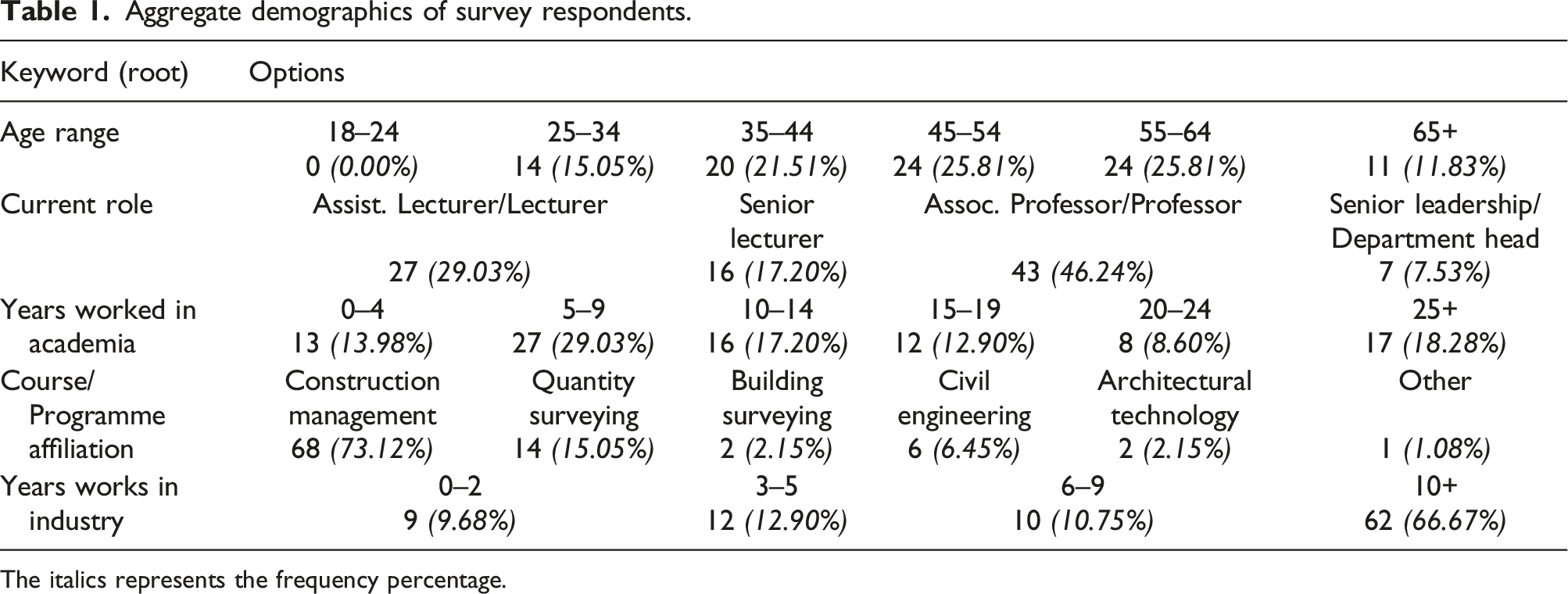
Aggregate demographics of survey respondents.
The italics represents the frequency percentage.
Specifically, 73.21% (f = 68) of the survey respondents were aged between 35 and 64 years, with a similar spread between the three age-group bands: 35–44 years (f = 20 or 21.51%), 45–54 years (f = 24 or 25.81%) and 55–64 years (f = 24 or 25.81%). Respondents aged 65 and over accounted for 11.83% (f = 11) whilst respondents aged between 25 and 34 years accounted for 15.05% (f = 14). These summary statistics demonstrate a sufficient respondent age range to complete the questionnaire and add informed knowledge. From an academic role standpoint (refer to Table 1), the respondents predominately were in an Associate Professors/Professors role with 46.24% (f = 43) with Assistant Lecturer/Lecturer the second most categorised with 29.03% (f = 27). Senior Lecturers and Senior Leadership/Department Heads were a distant third and fourth with 17.20% (f = 16) and 7.53% (f = 7) respectively. The demographic profiles within this sample demonstrate a good breadth of academic standing, discipline knowledge and understanding; consequently, this strengthens confidence that knowledge imparted will be of value and use.
Figure 2 examines respondents’ career background both from their time in academia and the construction industry. Slicing the questionnaire year range in half, a comparison of the percentages of respondents can occur. A 60%–40% split regarding years in academia is visible, with 60.22% (f = 56) of the respondents falling within the first half of the year spectrum (0–14 years). For years in industry, a 23%–77% split is viable, with 77.42% (f = 72) of the respondents falling within the second half of the year spectrum (6–10+). There is a strong industry practice tenure with a slightly less robust academic tenure within the respondents. From a broad view, this does appear reasonable as construction industry experience usually precedes academic experience. Respondents time in academia and industry.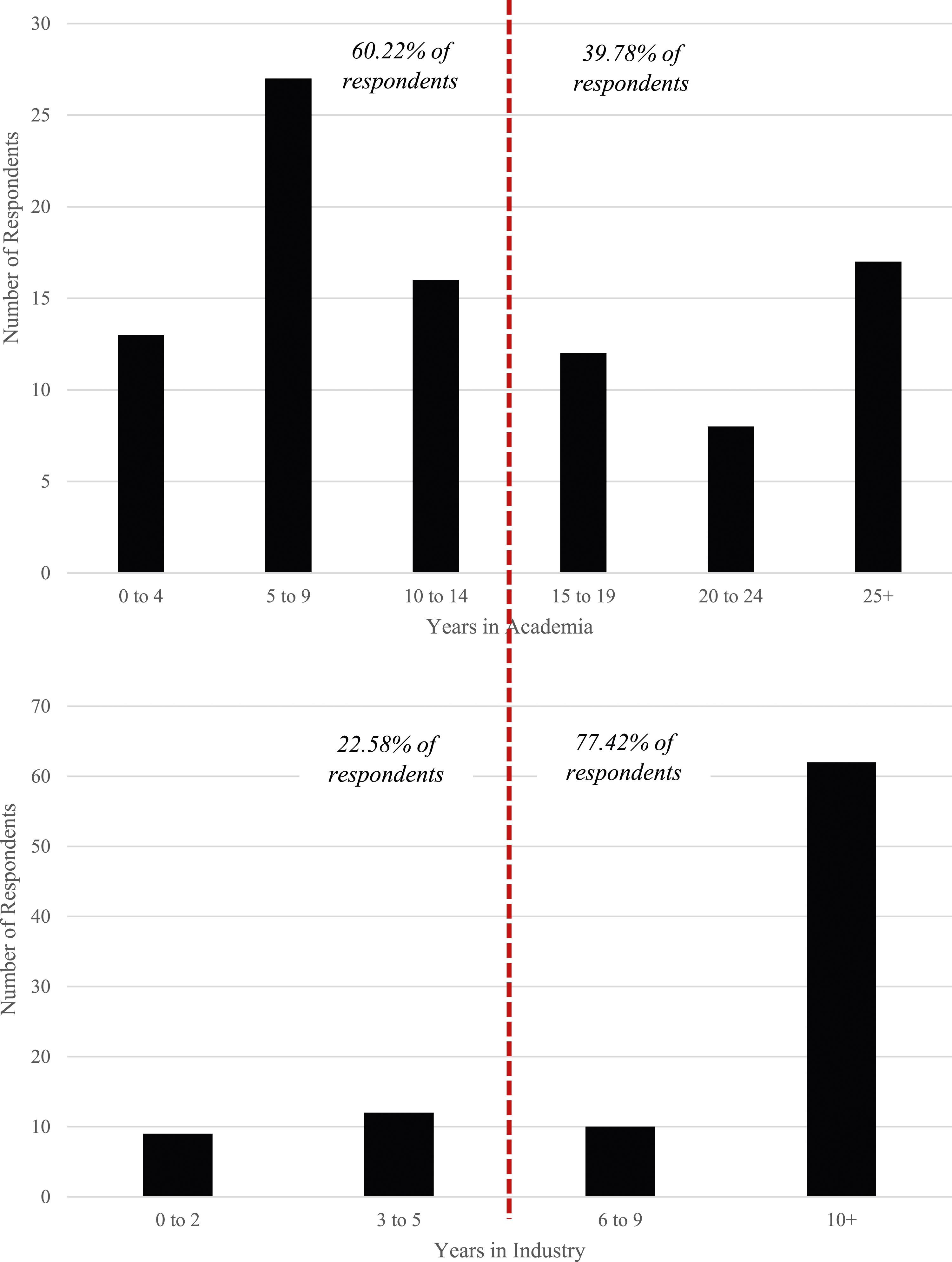
Demographics – specific academic role
Looking specifically at the 27 Assistant Lecturer/Lecturer respondents, the most frequently occurring age range was 25–34 years (f = 11 or 40.74%) followed closely by 45–54 years (f = 8 or 29.63%). Around half of the respondents have spent 5 to 9 years in academia (f = 13 or 48.15%) and 10+ years in the construction industry (f = 14 or 51.85%). The construction management course of study is by far the most associated course with 70.37% (f = 19) of respondents indicating such. For the 16 Senior Lecturers, the 45–54 and 55–64 years age ranges were both equally represented as the most frequent (f = 5 or 31.25%). Likewise, the 25–34, 35–44 and 65+ years age ranges were equally represented (f = 2 or 12.50%). A total of six respondents have spent 5 to 9 years in academia (f = 6 or 37.50%) with a quarter of the respondents (f = 4 or 25.00%) spending <4 years. Six respondents (f = 6 or 37.50%) had between 10 and 25+ years of academic experience. Three quarters (f = 12 or 75.00%) had over 10 years of industry experience with all but one respondent indicating between 6 and 9 years of industry experience. Half of the respondents (f = 8 or 50.00%) identified most closely with the construction management course of study with a fairly equal distribution spread throughout the remaining five course options (f = 2 for Quantity Survey, Building Surveying and Architectural Technology; f = 1 for Civil Engineering and Other). Almost half (f = 43 or 46.24%) of all survey respondents identified their role as either Associate Professor or Professor. Close to 80% (79.07% or f = 34) were within the 35–44, 45–54 and 55–64 years age bands. From time spent in academia, a very even spread across year ranges is evident. Specifically, 25+ years (f = 11 or 25.58%), 10 to 14 and 15 to 19 (f = 9 or 20.93%) each and 5 to 9 years (f = 8 or 18.60%). In contrast, most respondents (f = 30 or 69.77%) indicated 10+ years of construction industry experience. Likewise, the course which the respondents identified with (in terms their role within an academic institution) was ‘construction management’ (f = 34 or 79.07%). Regards the Senior Leadership/Department Head role, this ranked as the lowest frequency of respondent identification (f = 7). The age range for these respondents focused on 45–54 years and 55–65 years bands (f = 3 or 42.86%) each. All respondents identified with the construction management course of study. Similarly, all respondents had over 10+ years in academia and all but one respondent had over 10+ years in the construction industry. From the above demographic statistical analysis, the respondents are very reflective of both academic and industry practice. The balance and spread of roles, ages and experiences of the respondents indicate a good distribution of knowledgeable academics at all levels of academia.
Descriptive statistics for survey
Descriptive statistics are utilised to describe, contextualise and provide a high-level summary of basic features (e.g., measure of central tendency, frequency distribution) of the dataset (Holcomb, 2017; Lacort, 2014). This type of analysis forms the basis for more advance inferential statistical analysis because it provides a general, broad-brush understanding of the dataset (Holcomb, 2017). For this research the mean, median and WA, along with general mathematics, such as variance and proportion, were the descriptive statistic methods utilised.
Interpersonal skills and competencies
The mean and median values for each of the nine interpersonal skills and competencies questions were calculated and plotted in Figure 3. All nine skills and competencies were within the 5.00 (very important) to 4.00 (important) mean and median range. Furthermore, ‘very important’ (5.00) and ‘important’ (4.00) ratings, in total, comprised 93.31% of the ratings given by the 93 respondents. Only 5.50% and 1.19% were given to ratings of ‘neutral’ (3.00) and ‘low importance’ (2.00). This suggests that overall, the spectrum of interpersonal skill and competencies was identified as being important to the role of construction management graduate. Mean and median values for interpersonal skills and competencies.
Analysis of the interpersonal skills and competencies can also occur based on the respondents’ current academic roles. Figure 4 illustrates that there is very little difference between the ratings given for each skill and competency based on the role of the respondent; all four roles appear to agree on the level of importance for the interpersonal skills and competencies. Specifically, the two largest rating differences, based on the four role categories for a skill/competency was 0.30 (‘verbal communication’) and 0.29 (‘listening and understanding’), or just less than one third of a rating score. Elaborating further, this indicates that throughout academic positions/standings in HEIs, there is general agreement as to the level of importance of the interpersonal skills and competencies. Ratings of interpersonal skills and competencies based on respondent role.
Weighted averages of interpersonal skills and competencies.

Technical skills and competencies
The mean and median values for each of the nine technical skills and competencies questions were calculated and plotted in Figure 5. All nine skills and competencies were within the 5.00 to 3.00 mean and median. Corresponding the quantitative value to the indicated qualitative description, this ranged from ‘neutral’ to ‘very important.’ Just under 85% (f = 79 or 84.95%) of the ratings for all nine skills and competencies range from ‘neutral’ to ‘very important’ (3.00 to 5.00). A rating of ‘low importance’ (2.00) comprised 12.31% and the lowest rating (1.00) which signifies no importance was noted 2.75%. Mean and median values for technical skills and competencies.
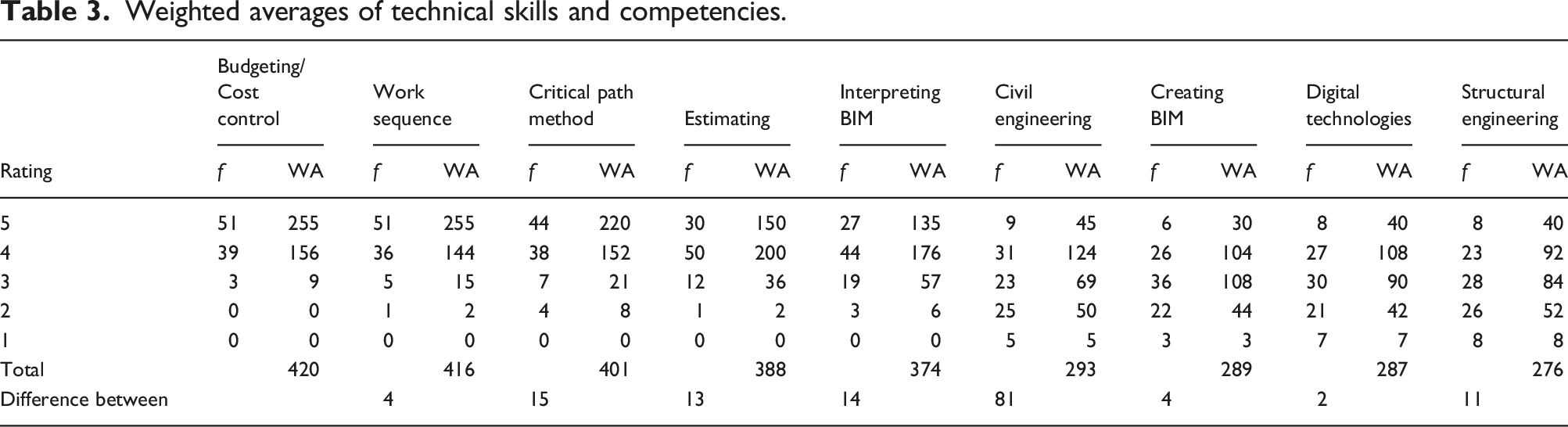
Analysis of the technical skills and competencies can also occur based on the respondents’ role. As depicted in Figure 6, there is a wide range of difference between the ratings given for some skills and competencies based on the respondents’ role. Specifically, the two largest rating differences, based on the four role categories for a skill/competency was 1.21 (‘structural engineering’) and 1.05 (‘civil engineering’). Similarly, four additional skills and competencies depicted a smaller, yet still large, rating difference – 0.87 (‘creating BIM’), 0.63 (‘work sequence’), 0.57 (‘interpreting BIM’) and 0.40 (‘digital technologies’). However, the four roles do appear to agree on the level of importance for some of the technical skills and competencies. Specifically, the three smallest rating differences, based on the four role categories for a skill/competency was 0.15 (‘critical path method’), 0.30 (‘estimating’) and 0.34 (‘budgeting and cost control’). This agreement may be because those three skills and competencies could be considered traditional, non-digital technical construction management aptitudes which suggests a possible preference for tenured skills rather than entrant skills. As noted in Table 3, the top-rated technical skill was ‘budgeting/cost control’ (WA total = 420) with ‘work sequence’ a close second (WA total = 416). The difference in WA totals between the five technical skills is around 13 – 15 points. However, there is an extremely large void between the fifth-rated skill (‘interpreting BIM’) and the sixth-rated skill (‘civil engineering’) – 81 points. In summary, the top five skills are fairly dispersed in terms of importance and the respondents are in agreement regarding the bottom four technical skills. Ratings of technical skills and competencies based on respondent role. Weighted averages of technical skills and competencies.
Inferential statistics
Relative importance index for survey questions.
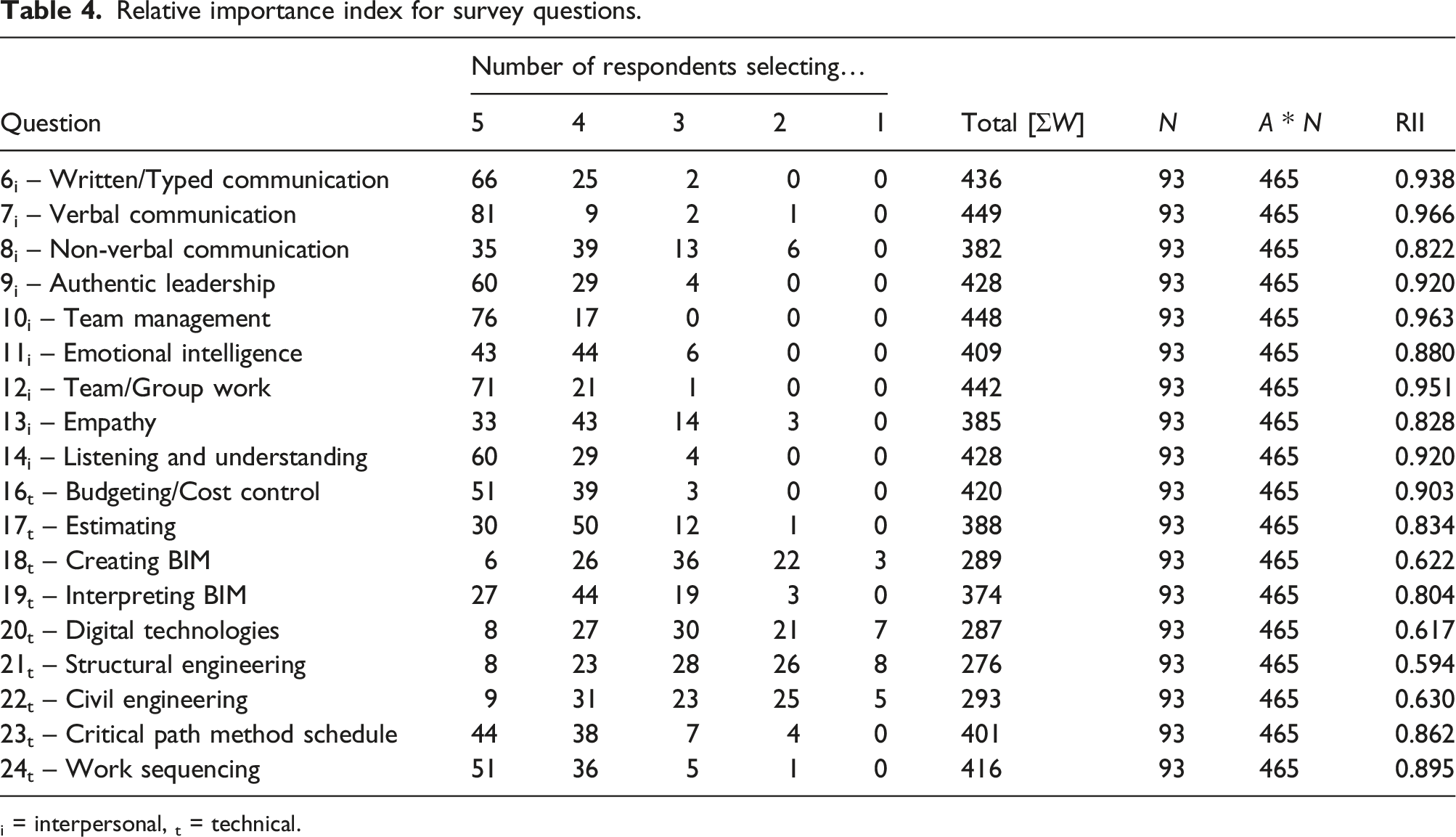
i = interpersonal, t = technical.
Relative importance index for survey questions – ranked.
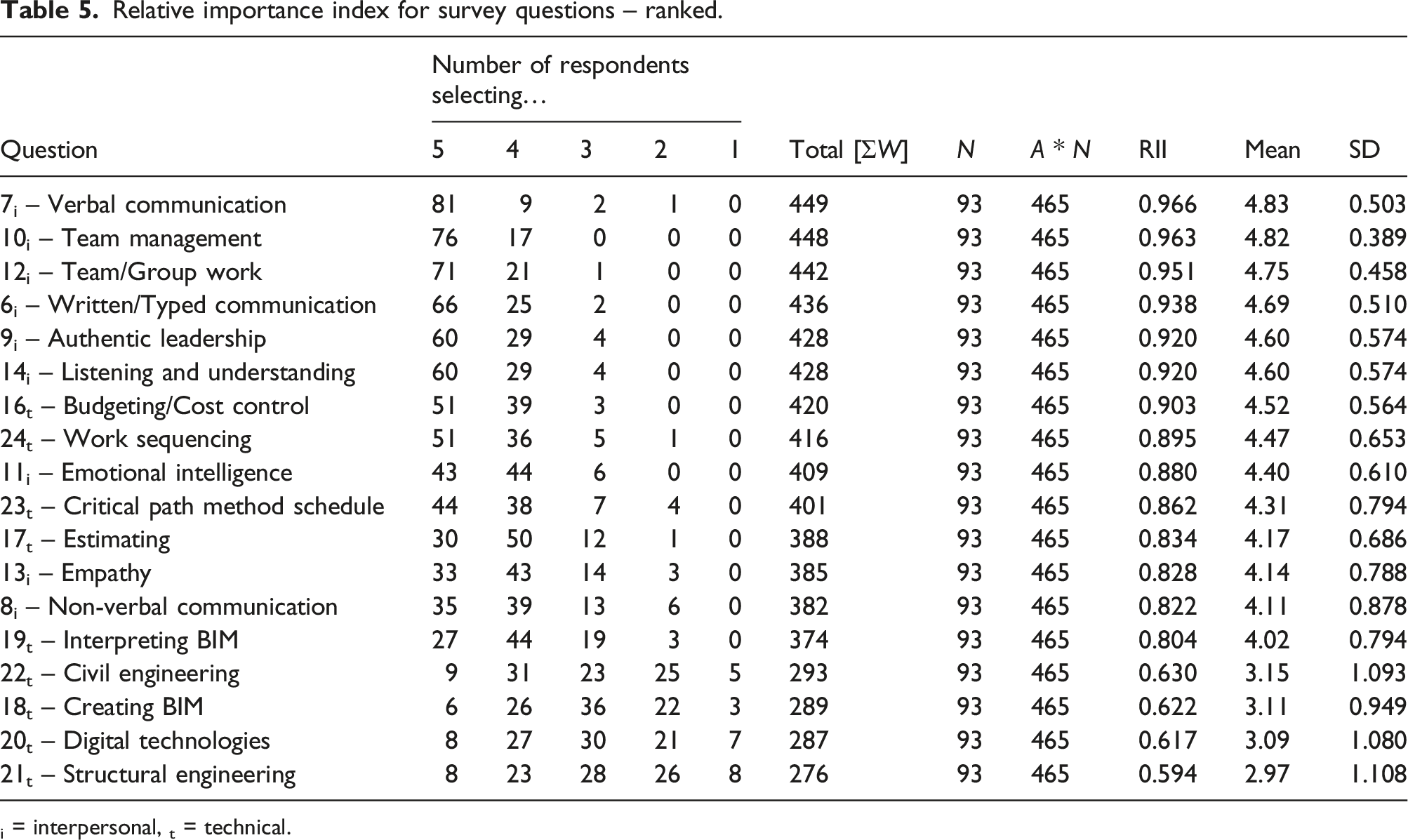
i = interpersonal, t = technical.
The interquartile range was also calculated for the mean rating scores for each question to give a deeper and richer summary statistical analysis of the data. The interquartile range was determined to be 0.58 (Q3 = 4.60 and Q1 = 4.02), which indicates that half of the rating scores fall with the range of 4.02 to 4.60. From this analysis, it can benoted that the data are skewed towards a higher rating of importance. Examining the entire set of 14 skills and competencies, there are nine interpersonal skills (100% of interpersonal skills) and five technical skills (55.56% of technical skills). Of Band 001s seven skills and competencies all but one (85.71%) are interpersonal skills and of Band 002s seven skills and competencies, three (42.86%) are interpersonal skills.
One sample t test and chi-square test
One sample t test for interpersonal skills.
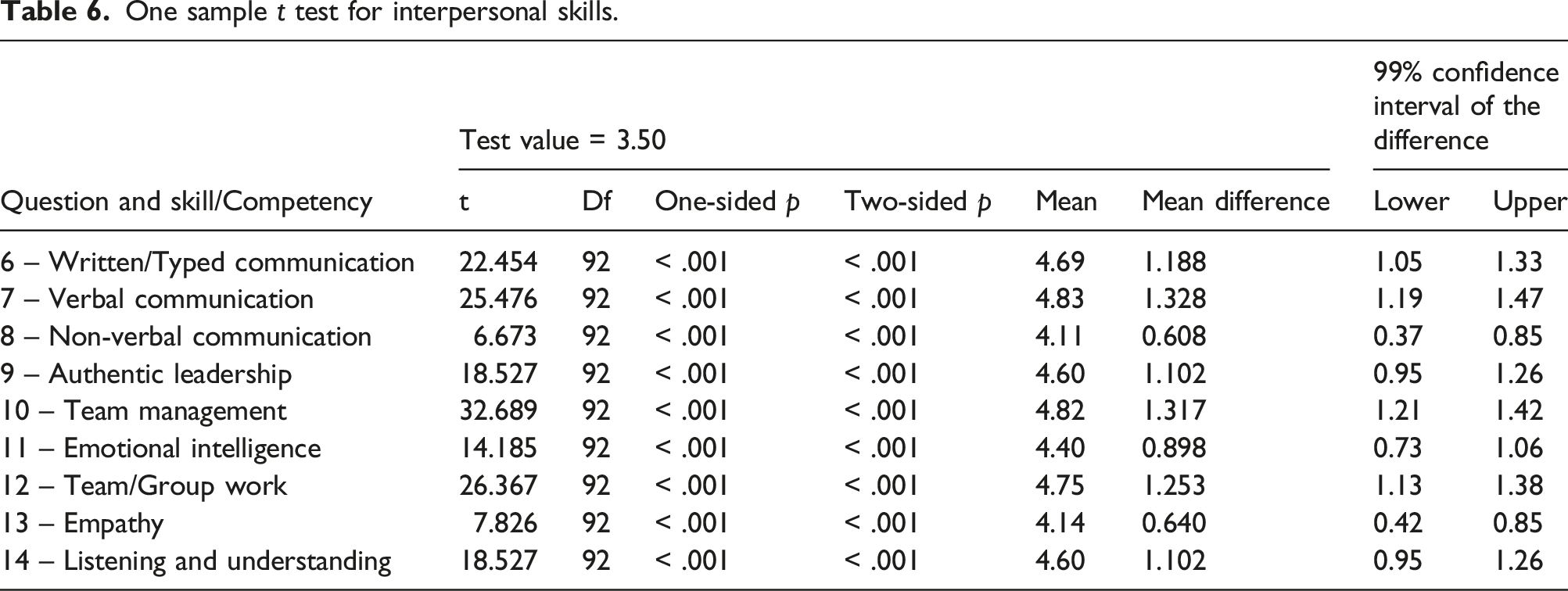
One sample t test for technical skills.

Chi-square test for interpersonal and technical skills.
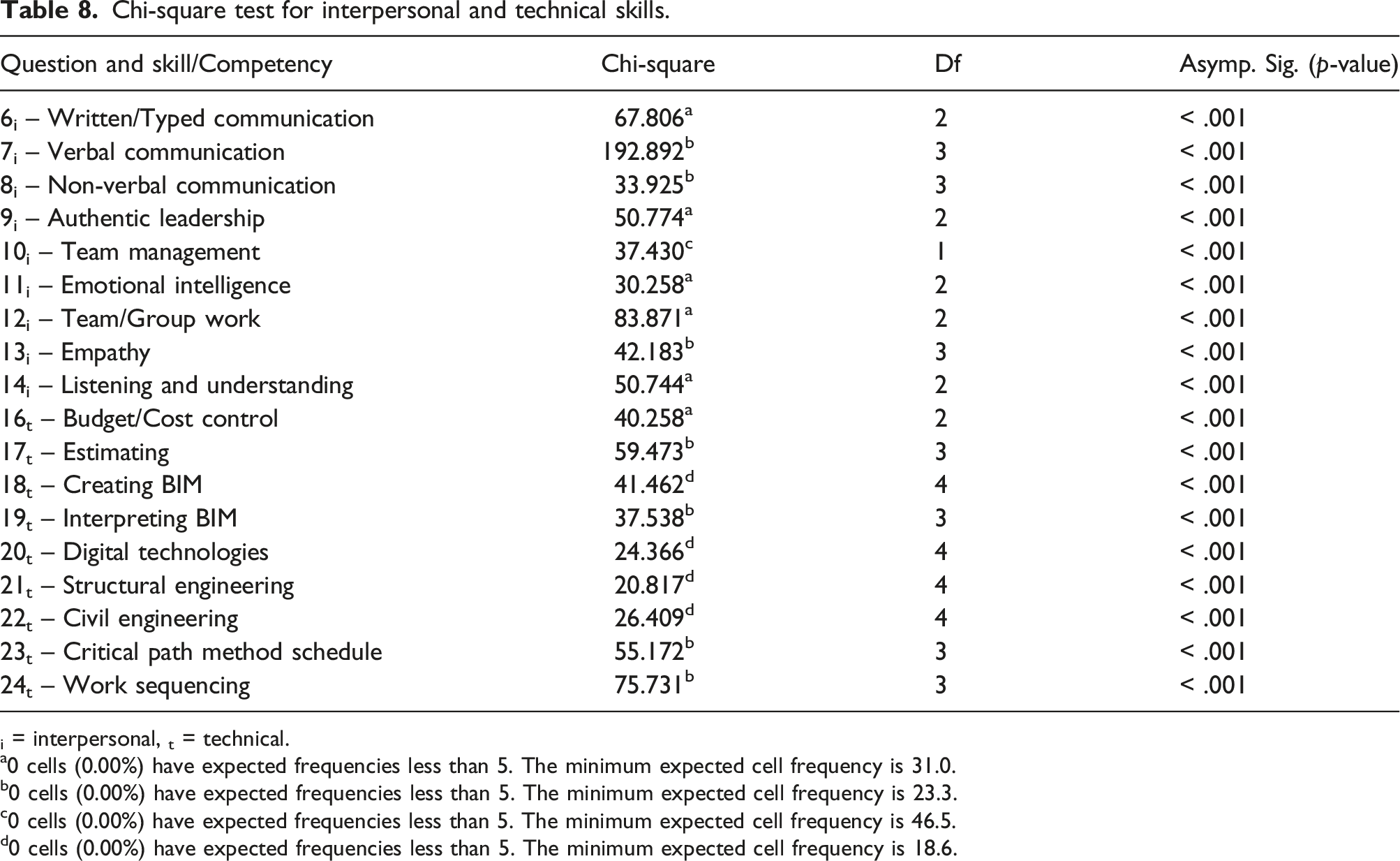
i = interpersonal, t = technical.
a0 cells (0.00%) have expected frequencies less than 5. The minimum expected cell frequency is 31.0.
b0 cells (0.00%) have expected frequencies less than 5. The minimum expected cell frequency is 23.3.
c0 cells (0.00%) have expected frequencies less than 5. The minimum expected cell frequency is 46.5.
d0 cells (0.00%) have expected frequencies less than 5. The minimum expected cell frequency is 18.6.
Kruskal-Wallis test
Kruskal-Wallis test results.

aThe test statistic is adjusted for ties.
bMultiple comparisons are not performed because the overall test does not show significant differences across samples.
Comparison between interpersonal and technical
Figure 7 overlayed the mean and median values for the 18 interpersonal and technical skills and competencies and clearly depicts a higher rating trend for interpersonal skills and competencies rather than technical skills and competencies. Mean and median values overlay for interpersonal and technical skills and competencies.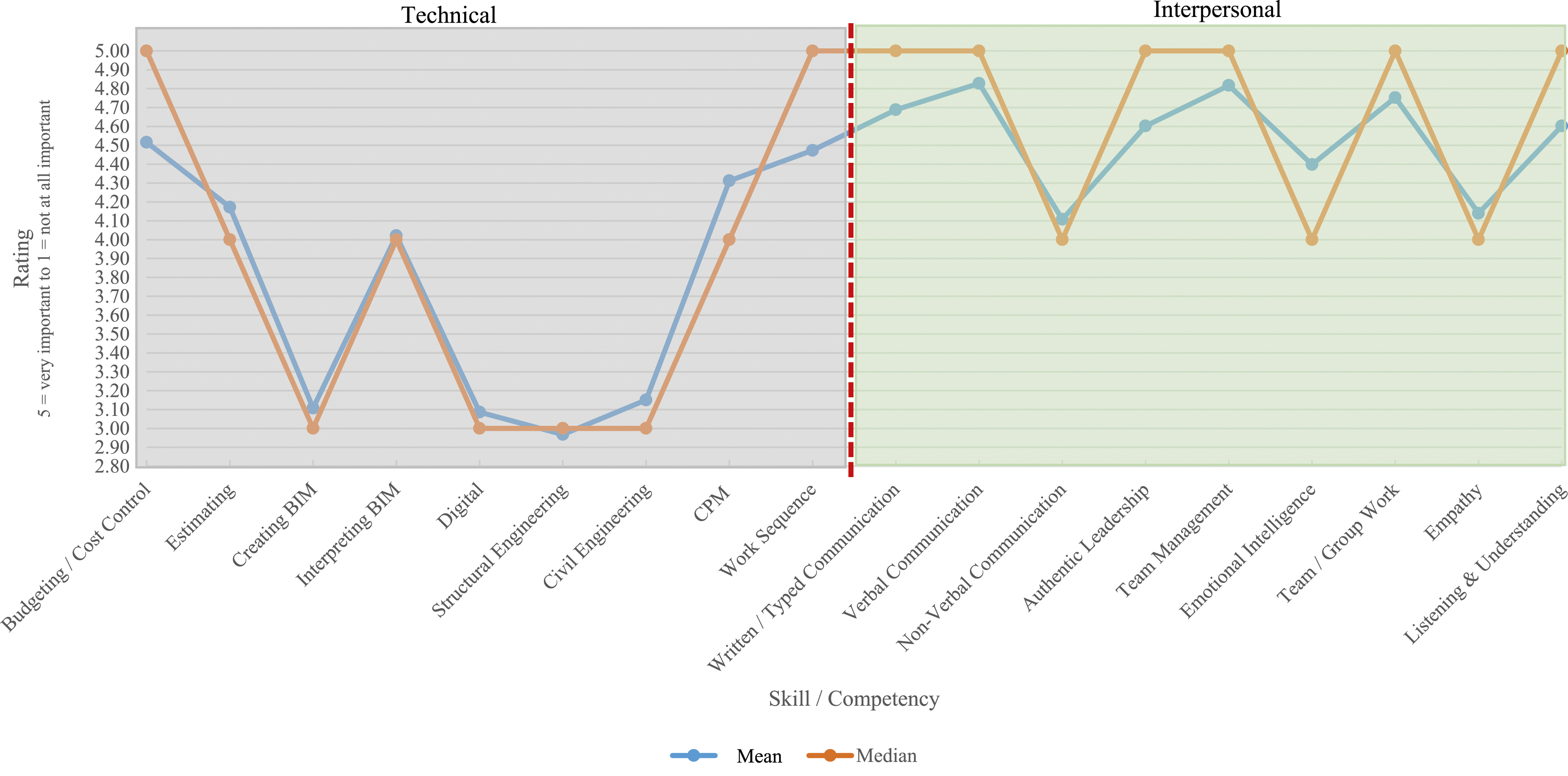
Weighted averages of interpersonal and technical skills and competencies.
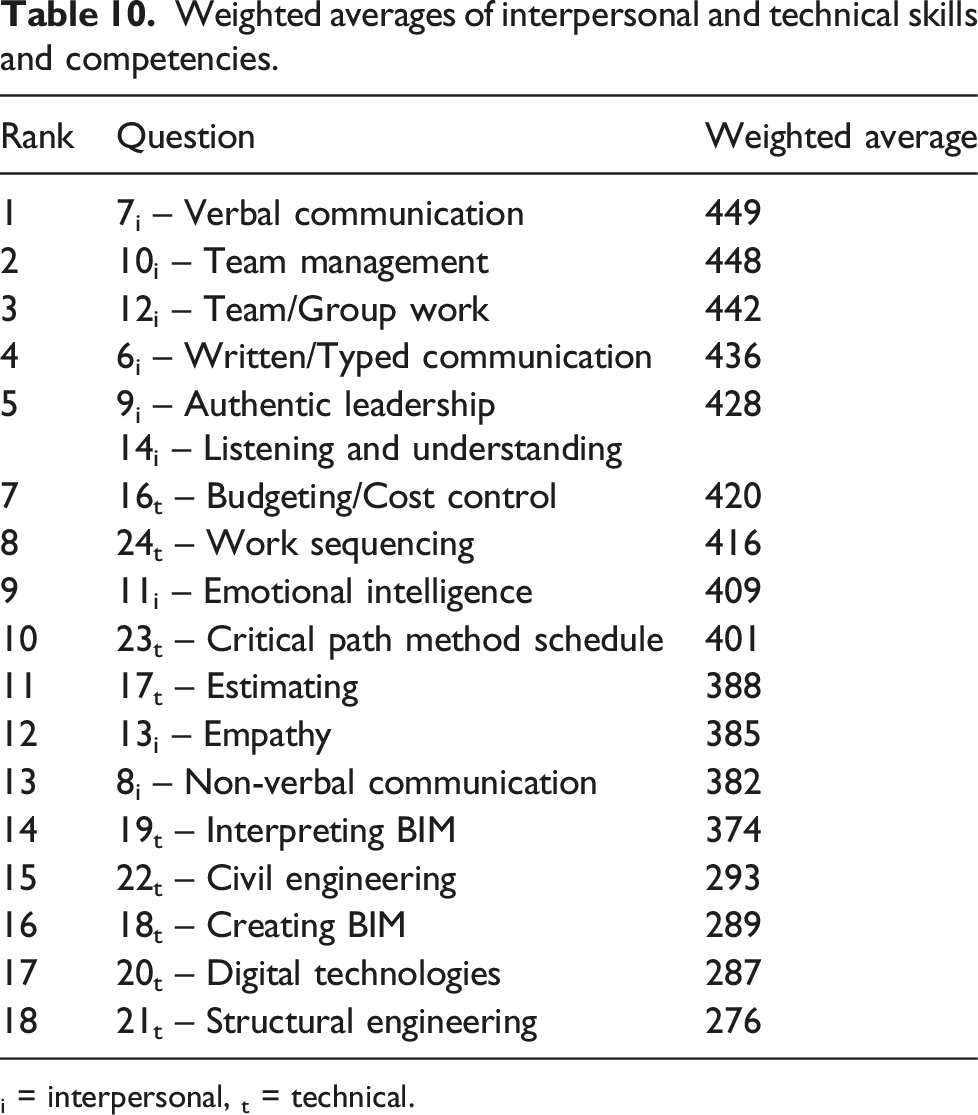
i = interpersonal, t = technical.
Proof-of-concept curriculum foundation model
Final ranked skills and competencies.
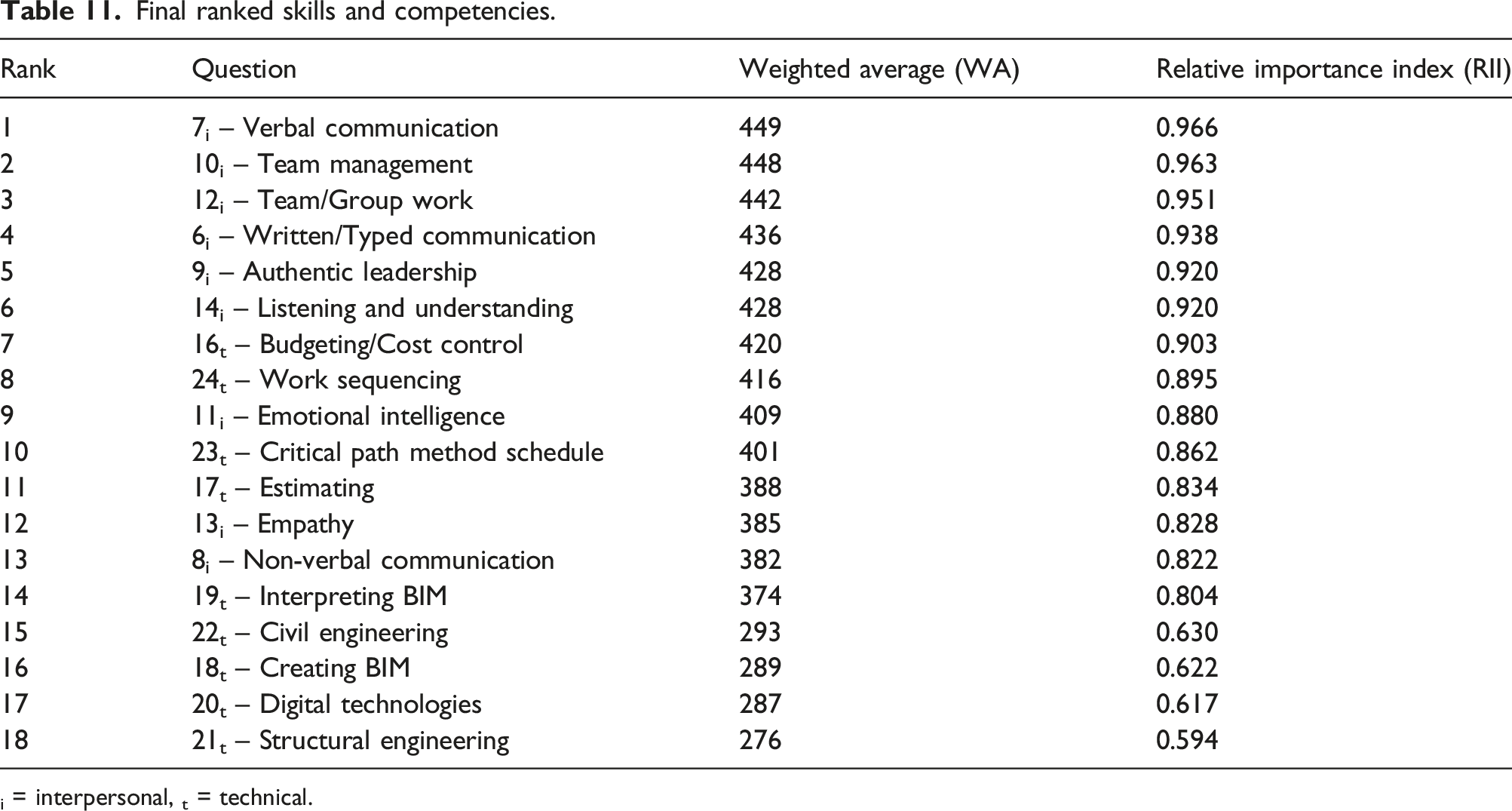
i = interpersonal, t = technical.
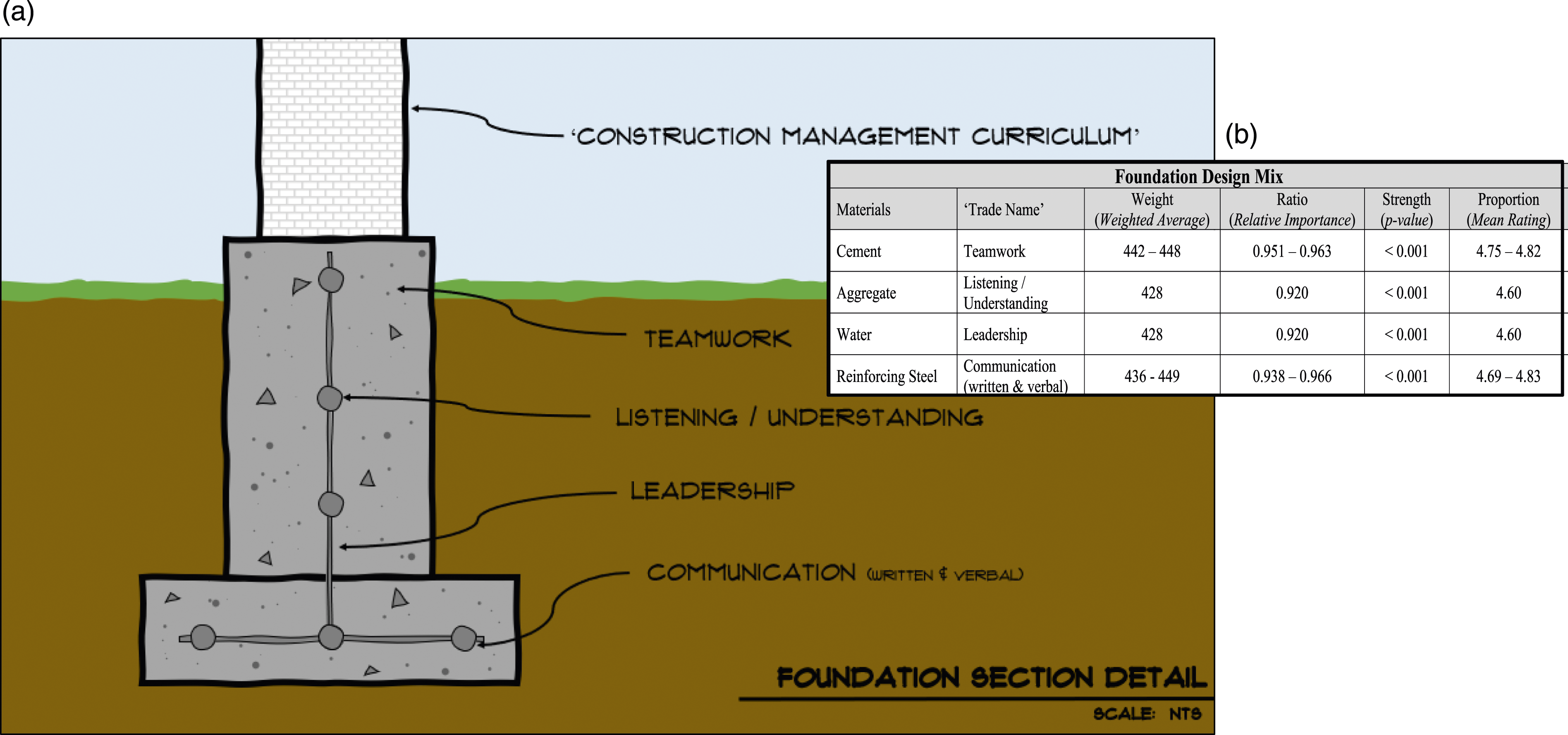
(a)–(b): proof-of-concept model.
Regards the previously identified technical skills and competencies (refer to Table 11), whilst their importance to the construction manager role is lower than most of the interpersonal skills and competencies noted (refer to Table 11), they constitute an integral supporting curriculum role. Specifically, the technical skills and competencies find their home within the matrix of course modules – explicit modules where adequate attention is given to technical skills and competencies. For example, the technical ‘structural engineering’ subject matter came last across all skills and competencies, because construction managers only need an appreciation of the complex mathematics and principles involved to communicate effectively with a structural engineer who is ultimately responsible for such works. Essentially, the construction manager manages the delivery and assembly of the structured engineering works to the design created by the structural engineer. However, as the proof-of-concept model indicates, it is important to note that the appropriate educational provision for the technical skills cannot be achieved without the four inextricably linked interpersonal skills and competencies. For example, a student will be unable to grasp the holistic intricacies and concepts of construction process ‘workflow and sequence’ without complete comprehension of ‘communication,’ ‘teamwork,’ ‘leadership’ and ‘listening and understanding.’
Discussion
Several practical applications of the research results are apparent for construction management education. Initially, there is an overwhelmingly strong preference from academia for interpersonal skills and competencies (i.e., ‘teamwork’, ‘communication’, ‘leadership’ and ‘listening/understanding’) rather than more technically focused skills and competencies. Interestingly, there was notable lack of support for the importance of digital and building information modelling (BIM) skills and competencies. At face value, this finding is perplexing given that current construction management curricula within UK HEIs, have doubled down on a digital infused curriculum development. Perhaps this momentum for ‘all things digital’ is the result of a trickle-down effect from, not only the disjointed CMCD landscape, but the individualistic perceptions of senior/course leadership of what a modern curriculum ‘should’ be. More worrying could be the push to capitalise on a wealth of government grants and income streams that require a stronger digital presence within the HEI landscape? Anecdotal evidence suggests that this has created a situation where digital specialists are employed to teach on construction management courses but are then constrained by their limited knowledge of the practical aspects of employment within the sector and cannot teach practice-based work (e.g., how to manage a project). Perhaps HEIs have gone too far in their estimation of the importance of digital in a management orientated curricular? Further work is required to explore these speculations in more detail and delineate the boundaries of digital teaching on a construction management course. Anecdotal evidence suggests that construction management students need to keep abreast of digital technologies only in order to adequately converse with colleagues (such as designers) who are more immersed in such technologies as well as read digital aids (such as plans, schedules/programmes and costings). However, some construction management professional bodies, such as the Chartered Institute of Building (CIOB) and the Royal Institution of Chartered Surveyors (RICS), have begun to offer training and development courses focusing on interpersonal skills (Chartered Institute of Building, 2023; Royal Institution of Chartered Surveyors, 2023).
Higher education institution’s fascination with digital technologies within the built environment disciplines (Macchiarella and Smith, 2021) is in stark contrast to the humanistic, interpersonal skills and competencies preference noted within the research findings. With a prominent goal of student employability upon graduation (Jackson and Tomlinson, 2021), it is a concern how curricula are currently designed, implemented and promoted with little regard to not only the voice of the industry in which they are preparing students, but front-line, industry robust academics (cf. Akdur, 2022; Jacobs and Lu, 2022). With such lucrative short- and long-term employment offerings leading to an increased number of students enrolling in construction management courses (Besné et al., 2021; Khan et al., 2021), it is worrisome that the curricula currently in place are not only insufficient in the short-term but potentially fail to adequately meet the long-term character-building needs of construction management professionals (cf. Posillico et al., 2022a). The proof-of-concept model offered provides a foundational slice of an overall construction management curriculum, upon which course content is built. Validation of this model is now needed to confirm agreement of the top interpersonal skills and competencies from the primary data and how these could be better integrated in HEI practice. More importantly, future work is now required to determine how practicing academics perceive the specific interpersonal skills as the core foundational element of construction management curricula and how they integrate such within their construction management modules and courses. In addition to validation, action research within various construction management courses is required to employ the lessons learnt from this present study in practice. A longitudinal case study may provide fruitful snippets of data to determine whether the application of theory developed and now tested will augment the employability of graduates within industry.
Conclusions
Applying the analysis conducted in this paper, a proof-of-concept model for the foundation of a construction management curriculum is developed. This research revealed that global built environment academics, with substantial industry experience, generally rate interpersonal skills and competencies as more important than technical skills and competencies for the role of construction manager. In fact, common interpersonal skills (‘communication’, ‘leadership’ and ‘teamwork’) were ranked pointedly higher in importance than more trendy and glitzy technical skills such as augmented reality, virtual reality and BIM. Therefore, it can be implicitly noted that, from an educational perspective, interpersonal skills and competencies are an essential or core aspect of a construction management degree course. This makes intuitive sense given that the role is focused on the ‘management’ of other construction stakeholders involved in a complex project’s development. The proof-of-concept model bridges this void by providing a robust, structurally sound foundation for which to construct a bespoke curriculum. Through the development of this model, it is hoped that a central foundation of interpersonal skills and competencies for construction management curricula can be shared, not only for the modification of current education provision, but for the benefit of future construction management students.
Interpersonal skills and competencies are essential to the construction manager’s role and thus, should be at the heart of construction management curricula. However, with HEI’s fascination with technical skills, mainly digitally based skills, a dichotomy in educational provision is born. Academic introspection is required to re-think the lowest common denominator of construction management curricula – placing interpersonal skills and competencies at the core of the curriculum.
Successful graduate employability is an overarching factor for technically based educational programmes; graduates must have the requisite skill sets to contribute to their respective discipline. Previous research (cf. Posillico et al., 2022a) revealed that construction management education is currently misaligned with the essential core skills required of the profession – namely management. Managers need an appreciation of advanced technologies to be able to effectively communicate with other project team stakeholders, but applications of these technologies (such as BIM) are not required nor needed within the management remit. This skewed position not only impacts students but also negatively impacts their outlook of the profession and future employability within the sector. By challenging this current status quo, this present research hopes to engender wider polemic debate and discussion within both industry and academia, whilst also create a platform for future research work in this area.
Footnotes
Declaration of conflicting interests
The author(s) declared no potential conflicts of interest with respect to the research, authorship, and/or publication of this article.
Funding
The author(s) received no financial support for the research, authorship, and/or publication of this article.
