



Abstract
Public–private partnerships in emerging countries are gradually considered a tool for growth development. One particular public–private partnership is that of outsourcing logistics in the healthcare sector. These partnerships provide several benefits for both private and public sectors but are generally associated with numerous risks that must be evaluated and subsequently managed. The aim in this paper is to develop a risk evaluation approach to rank risks when decision makers’ judgment is taken into consideration and where traditional risk evaluation techniques become less applicable. The proposed approach makes use of fuzzy multi-criteria decision analysis methods since they are efficient techniques to rank alternatives based on selected evaluation criteria and can accommodate human judgment and preferences. The approach treats predetermined risks like alternatives, and evaluation criteria are represented by areas of impact of the risks. To validate the approach, we applied it to a real case of logistics outsourcing to private service providers in a Moroccan public pharmaceutical supply chain. The ranking results obtained show that the two methods lead to some differences in ranking but are highly correlated. The obtained results support healthcare policy makers in setting priorities to effectively deploy preventive and mitigation efforts.
Keywords
Introduction
Public–private partnerships are contracts between public and private sector organizations such that the private entity provides service operations in return for a financial remuneration according to specified contract requirements. In emerging countries, public–private partnership projects remain limited as opposed to developed countries, where such projects can be regarded as mainstream, and are increasingly considered as a tool for growth development. One particular public–private partnership is that of outsourcing logistics in the healthcare sector, which enables public entities to focus on their area of expertise. Outsourcing can provide several benefits related to cost reduction and resource acquisition, in addition to increasing the overall responsiveness of the supply chain. 1 Although public–private partnerships provide several benefits, they are also associated with numerous risks that require to be assessed. These risks may include inadequately resourced service providers, inadequate planning and implementation, poor coordination between parties, and leakage of critical information. 2 Risks of outsourcing in the healthcare sector are generally related to losing control of suppliers and excessive supplier dependency. 3 Therefore, these risks need to be identified and evaluated to ensure a successful implementation as a public–private partnership.
The literature provides numerous quantitative methods for risk evaluation that include the fault tree analysis, the Failure Mode and Effect Analysis, and others (Saud et al. 4 ). These techniques are scientific methods involving calculation of probabilities of occurrence and quantification of consequences. However, in the context of emerging countries, where there is limited availability of resources and accurate data, an important part of risk evaluation involves intangible implications and a great deal of human judgment. In such context, calculation techniques for quantifiable aspects of risks may lead to inaccurate results and are less appropriate for accommodating human judgment. This paper uses the fuzzy analytic hierarchy process (F-AHP) method, 5 the fuzzy Technique for Order Performance by Similarity to Ideal Solution (F-TOPSIS), 6 and the Preference Ranking Organization Method for Enrichment Evaluations (F-PROMETHEE) 7 to evaluate risks. These fuzzy multi-criteria decision analysis (MCDA) methods are efficient techniques to rank alternatives based on selected evaluation criteria using human judgment and preferences. The proposed approach treats predetermined risks like alternatives to obtain a ranking/prioritization according to their level of impact. Areas of impact are perceived as MCDA weighted criteria across which the risks will be evaluated.
For the Moroccan healthcare sector, outsourcing logistics as a public–private partnership was motivated by the major political and social reform projects that the Moroccan government embarked on in recent years. These projects aim to put in place a strategy that guarantees access to pharmaceuticals to a large portion of the population. 8 In 2011, a new constitution in Morocco addressed the health sector and started a health program to generalize the medical assistance scheme RAMED (Régime d'Assistance Médicale). As a consequence of these reforms, the volume of pharmaceutical products consumed increased throughout the country. Several evaluations performed by the Ministry of Health demonstrated that the current public pharmaceutical supply system is saturated and unable to meet the current demand it has to face. 9 Outsourcing logistics to the private sector emerged as the best option for the Ministry of Health to meet patients’ needs and use the expertise of the private providers of logistics. The outsourcing option also allows the Ministry of Health to concentrate on its main mission, in particular, with regard to the purchase of pharmaceuticals. Along these benefits, various risks related to outsourcing logistics, such as the failure to take account of relevant health and safety issues, loss of control over operations, and public information leakage, may arise and have impactful consequences on the overall healthcare system.
It follows from the above facts that there is a need to assess the impact of risks of the implementation of logistics outsourcing as a public–private partnership. For the case of emerging countries such as Morocco, to the best of our knowledge, there is no study that evaluates healthcare logistics outsourcing risks. Our focus in this paper is on risk evaluation, and precisely the impact of risks on specific healthcare system components. The approach takes as input potential risks that were identified using surveys and interviews conducted with healthcare practitioners based on the Delphi method. 10 Risks are prioritized according to selected criteria, which were weighted by stakeholders from the healthcare sector. The weights of attributes are found from applying Fuzzy AHP and are subsequently incorporated in Fuzzy TOPSIS and Fuzzy PROMETHEE calculations to determine risks’ ranking. The ranking results obtained are then compared and showed that the two methods lead to some differences in ranking but were highly correlated. The proposed ranking of risks would allow healthcare policy makers to set priorities in order to effectively deploy preventive and mitigation efforts.
In the following, we will present a literature review about the assessment of risks using MCDA methods. In “A risk evaluation approach” section, the proposed risk evaluation approach is presented. The approach is validated in the “Risk evaluation of the Moroccan healthcare system” section using a real case of the Moroccan healthcare sector. We conclude the paper in the last section by providing insights for decision makers and introduce future research.
Literature review
Outsourcing logistics as a form of public–private partnership allows the public sector to exploit the resources and expertise of specialized service providers from the private one. However, it is crucial to carefully evaluate the conditions for success and sustainability of public–private partnerships. Although numerous countries have implemented public–private partnerships, the scarcity of information regarding success factors and poor risk evaluation have negatively impacted these partnerships. 11 When evaluating a public–private partnership, it is important to detect and classify important risks to determine potential impacts and give practitioners an early warning to prevent them and build mitigation strategies. 12 Organizations may expect to achieve many different benefits through successful outsourcing, 13 although there are various risks related to outsourcing. It is therefore necessary for managers to strengthen their understanding of outsourcing risks and to implement corresponding risk management plans. 14 To do that, the identification and assessment of risks is required. In order to answer our research question, we conduct an extensive literature study on outsourcing risks to investigate what has been documented on the methodologies of evaluation. Related to risk assessment in outsourcing logistics, we investigate previous works on the identification of risks and their evaluation tools and methods. As a result, we narrow down the research to focus on MCDA methods and fuzzy set theory in risk assessment in general and in the specific case of the healthcare sector in emerging countries, such as Morocco.
Several risk evaluation techniques were proposed in the literature. Saud et al. 4 in ISO31010:2009 present several of these quantitative methods. A study on highway project risks in China uses factor analysis for risk identification and the mean scoring ranking technique to determine the score of every risk factor. 15 Zhao et al. 16 propose a fuzzy synthetic evaluation approach to assess risks of a green project in Singapore. Both the probability of occurrence and the level of impact of the risk are used to define the level of risk and can be classified based on a Likert scale, as low, medium, or high, for example. When investigating the application of risk assessment methods, we could not find a systematic method to apply for ranking risks of outsourcing logistics in a public–private partnership. In addition, most of the available methods rely on availability of expert data for estimating probabilities of occurrence and quantifying consequences. Our intended assessment of risks relies on human judgment as a result of scarcity of resources as well as data of the public sector in an emerging country such as Morocco. The present paper proposes a risk evaluation approach based on fuzzy MCDA methods for the assessment of risks, considering fuzzy inputs of policy makers.
MCDA methods give the opportunity to account for decision makers’ judgments in evaluating alternatives. Methods such as AHP, 17 ELimination and Choice Expressing REality, and TOPSIS, have been applied both in public and private sectors and in various domains, including transport, education, environment, energy, and healthcare.18,19 When ranking alternatives, MCDA methods evaluate alternatives with respect to criteria, where one or multiple criteria are related to one or several risks. MCDA methods have also been applied for risk assessment, which leads to a structuring and ranking of risks in a specific industry or project. Few studies incorporated decision makers’ preferences in risk assessment and specifically fuzzy theory. Table 1 summarizes our contribution compared to related research papers from the literature.
Summary of contributions.
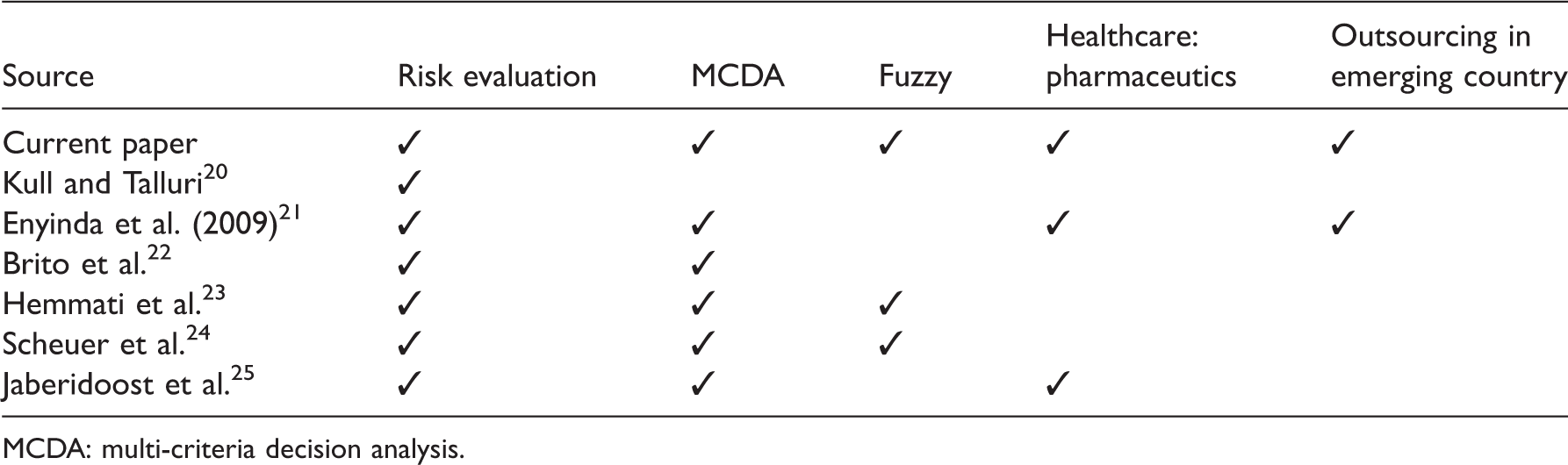
MCDA: multi-criteria decision analysis.
Our intended assessment of risks relies on human judgment as a result of scarcity of resources as well as data of the public sector in an emerging country such as Morocco. The present paper proposes a risk evaluation approach based on fuzzy MCDA methods for the assessment of risks, considering fuzzy inputs of policy makers. We make use of the fuzzy set theory to account for uncertainties in capturing the preferences and judgment of decision makers. 15
In the context of a project on strategic redesign of the healthcare public sector in Morocco, an outsourcing decision framework and risk assessment approach were proposed by El Mokrini et al., 26 a distribution network selection was performed in El Mokrini et al., 27 and a facility location model of the outsourced distribution network was presented by El Mokrini et al. 28 In this work, we propose an approach, which combines Fuzzy AHP, Fuzzy TOPSIS, and Fuzzy PROMETHEE, for risk evaluation. The approach is applied to rank risks of an outsourcing partnership between the public and private sectors related to the healthcare system in Morocco. An emerging market context, where there is limited availability of resources and accurate data, emphasizes the importance of including intangible factors and human judgment in the risk evaluation process.
A risk evaluation approach
In this section, we present an integrated fuzzy approach for ranking to determine the importance of risks, while considering policy makers from the healthcare sector preferences and private sector practitioners’ judgments. The proposed approach makes use of fuzzy MCDA methods since they are efficient techniques to rank alternatives based on selected evaluation criteria. The approach treats predetermined risks like alternatives, and evaluation criteria are represented by areas of impact or consequences of the risks. Accordingly, the risk with the highest score does not represent the best alternative but represents the most critical risk to account for.
Fuzzy AHP is used to obtain the weights of risk criteria. The resulting aggregated objective evaluations are therefore used as inputs of the fuzzy TOPSIS and PROMETHEE to obtain the ranking of outsourcing logistics risks. These methods are classical MCDA tools that provide an interesting basis for ranking alternatives and can effectively handle uncertainty properties. Since we are dealing with an untraditional use of MCDA, it is important to validate the approach by applying two methods that have proven effective in order to compare and confirm the results. We combined AHP with both methods because it is known for providing an efficient method for criteria weights as opposed to TOPSIS. 29 On the other hand, TOPSIS and PROMETHEE are more efficient than AHP in dealing with numerous options which is the case of our case study.
Our approach is schematized in Figure 1. Given a set of identified risks (
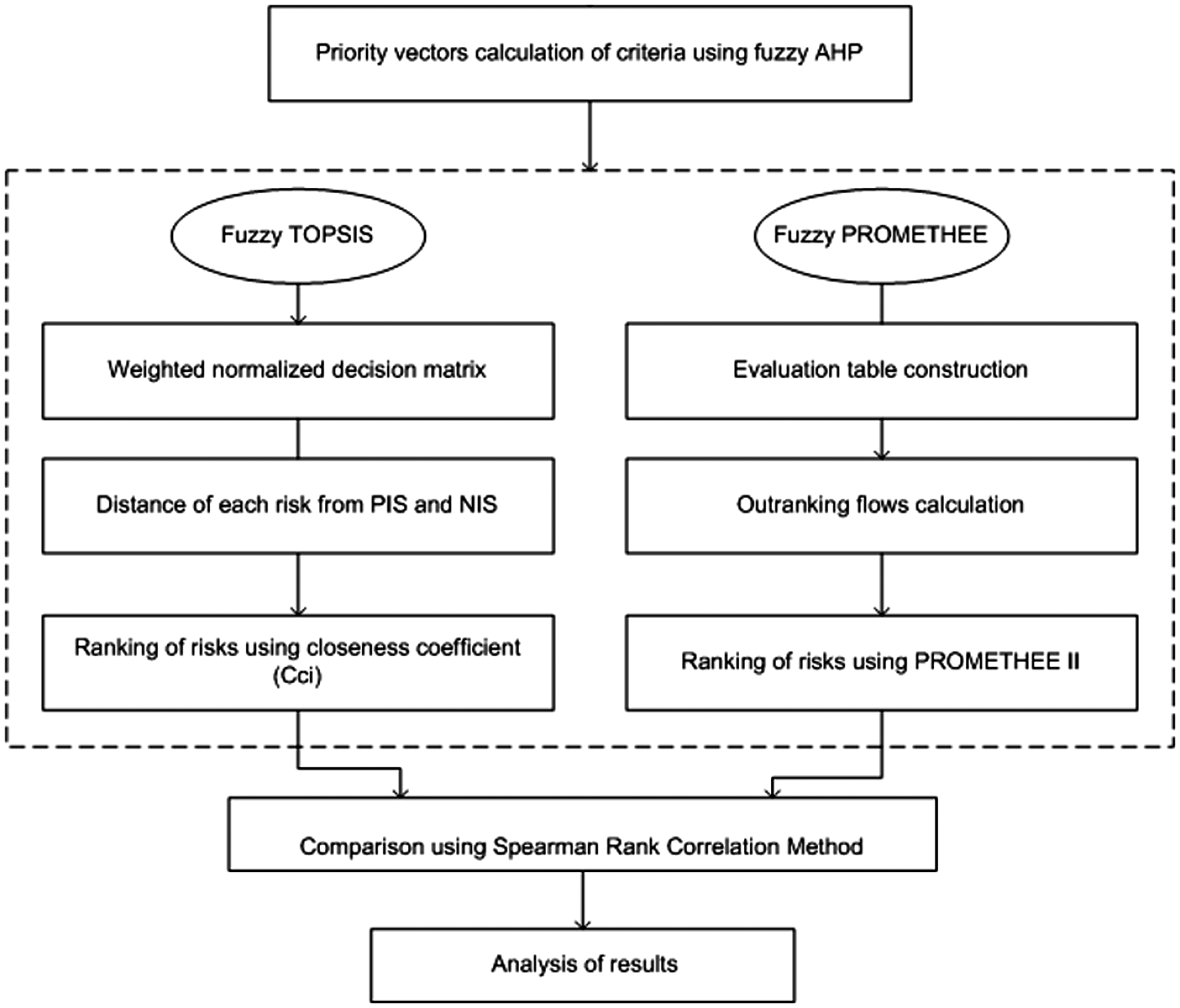
Proposed risk evaluation approach.
Step 1: Fuzzy AHP for priority vectors calculation of criteria
The first step of the approach is the determination of weights related to impact areas (criteria) using Fuzzy AHP and the input of the policy makers. The AHP method is used as a first step in our approach to assign priority weights to attributes. In this work, the main output of assessing risks
Step 2: Risk ranking with fuzzy PROMETHEE and fuzzy TOPSIS
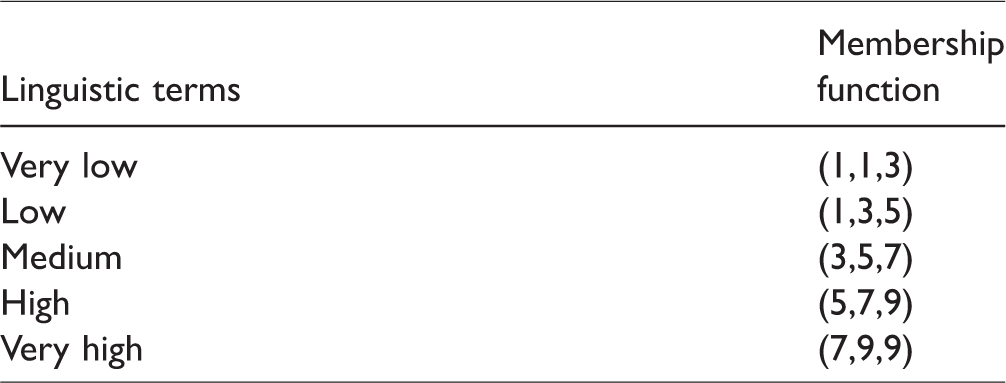
Step 2 of the proposed approach uses the priority weights of F-AHP and performs pair-wise comparisons of the risks across the selected criteria to obtain a ranking using fuzzy PROMETHEE and TOPSIS. The TFN linguistic scale is used for the evaluation as follows:
Step 3: Comparison of ranking results
After obtaining the prioritization of risks according to the MCDA methods in step 2, we proceed to a comparison of these rankings to validate the results. We selected the Spearman rank correlation method since it is known for providing efficient and consistent comparisons of rankings for MCDA.
Risk evaluation of the Moroccan healthcare system
According to the Ministry of health report (2014), 9 the Moroccan healthcare system needs to increase its capacity of supply. It seeks to put in place a pharmaceutical policy, guaranteeing accessible quality pharmaceuticals to the majority of the population. This requires the strategic repositioning of the pharmaceutical supply system. The new policy is reflected in the willingness of the Ministry of Health to develop and implement a procurement system capable of meeting health-care institutions’ health and medicines needs. At the infrastructure and resources level, the system suffers from the inadequacy and overexploitation of human resources, the inadequacy between the increase in budgets and the workload in relation to the current capacities of the supply division. After evaluation of several options to increase the capacity of the Moroccan supply chain of pharmaceuticals, outsourcing of storage and distribution emerged as an option for resolution. This will enable developing and strengthening certain components of the supply chain, including storage and distribution, through a public–private partnership, with a view to increasing its reactivity and reducing the cost structure. We want to evaluate the risks associated with outsourcing through the application of the proposed risk evaluation approach described in the previous section. This study extends the work of El Mokrini et al., 26 where risks and criteria were identified and evaluated using PROMETHEE. In this work, we add the use of the fuzzy theory and apply two MCDA methods to compare and validate the results.
Risk identification and criteria selection
Risks and evaluation criteria were first identified and selected based on a related study performed by El Mokrini et al. 26 They conducted a comprehensive literature review and a questionnaire survey and then used the Delphi method with Moroccan healthcare practitioners, including pharmaceutical wholesalers from the private healthcare sector, distributers in the public sector, in addition to inputs from healthcare policy makers. Next, we summarize the resulting list of risks and criteria that we subsequently take as inputs for the proposed risk evaluation approach.
The results obtained are presented in Figure 2 where potential risks are grouped into six categories as follows.
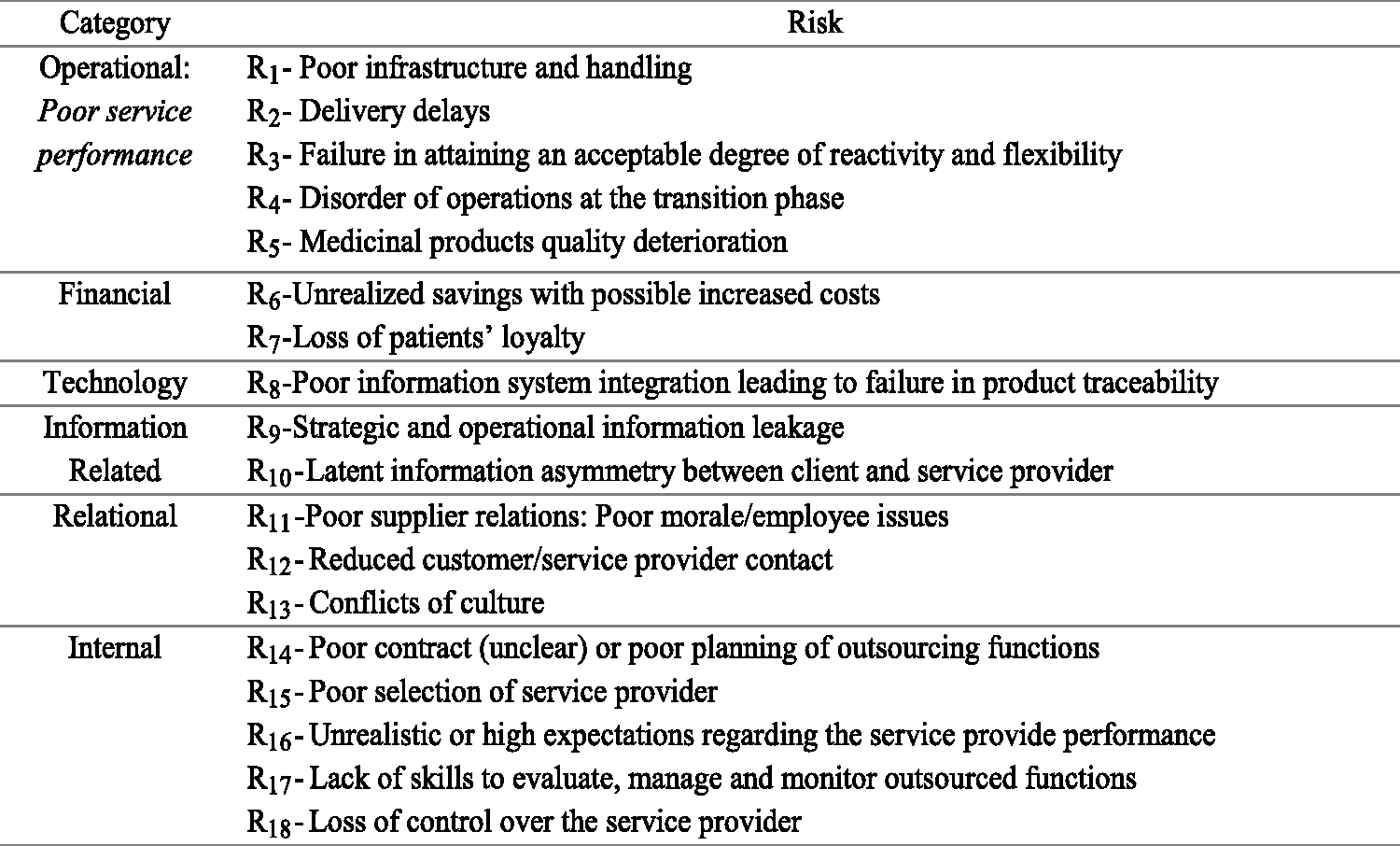
Classification of outsourcing logistics risks.
Once risks are identified, we proceed to the selection of decision criteria/attributes based on which risks will be evaluated. These criteria represent different categories of consequences or losses related to each risk. These areas of impacts represent the losses resulting from the risks. Several areas were suggested by decision makers and practitioners, in which six areas were validated by consensus and considered in the evaluation. Figure 3 presents the six criteria and their description. 26
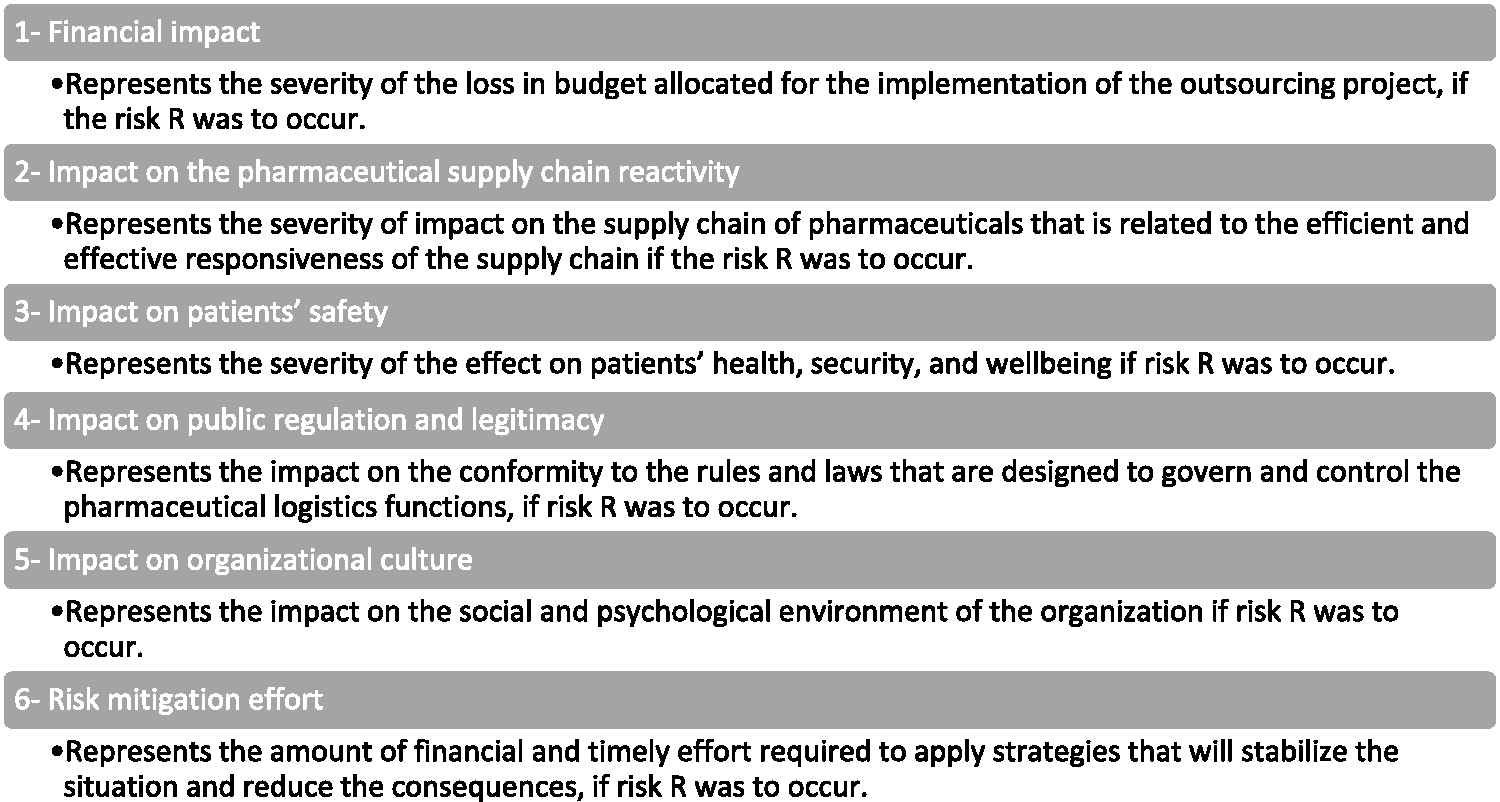
Evaluation criteria: areas of impacts.
Application of the risk evaluation approach
The data collection of this study consisted in providing pair-wise comparisons of criteria to obtain their weights, and pair-wise comparisons of risks across criteria to obtain their rankings. The collection of the preferences from 30 participants was a result of several work sessions in which tables of comparisons were presented and filled upon agreement and discussions. The comparisons were then consolidated to provide a single homogeneous evaluation. The participants involved in the data collection can be classified to four categories as follows: decision makers from the procurement division of the Ministry of Health, pharmaceutical distributers of the public sector, pharmaceutical wholesalers from the private sector, and third-party logistics providers from the private sector. In order to determine the priority of all impact areas, we conducted the comparisons according to AHP. Decision makers within the healthcare system presented their preferences of impact areas based on the linguistic scale of importance translated to TFNs. The participants also used the linguistic rating variables, which is further explained below, to evaluate the risks with respect to each attribute for PROMETHEE and TOPSIS.
Attribute weights using Fuzzy AHP
TFNs were used for pair-wise comparison in Fuzzy AHP rather than assigning fixed and crisp values for attributes to account for uncertainty in the judgment of participants. The priority weights obtained from fuzzy AHP serve as input for the next step. The weighted normalized matrix is presented below
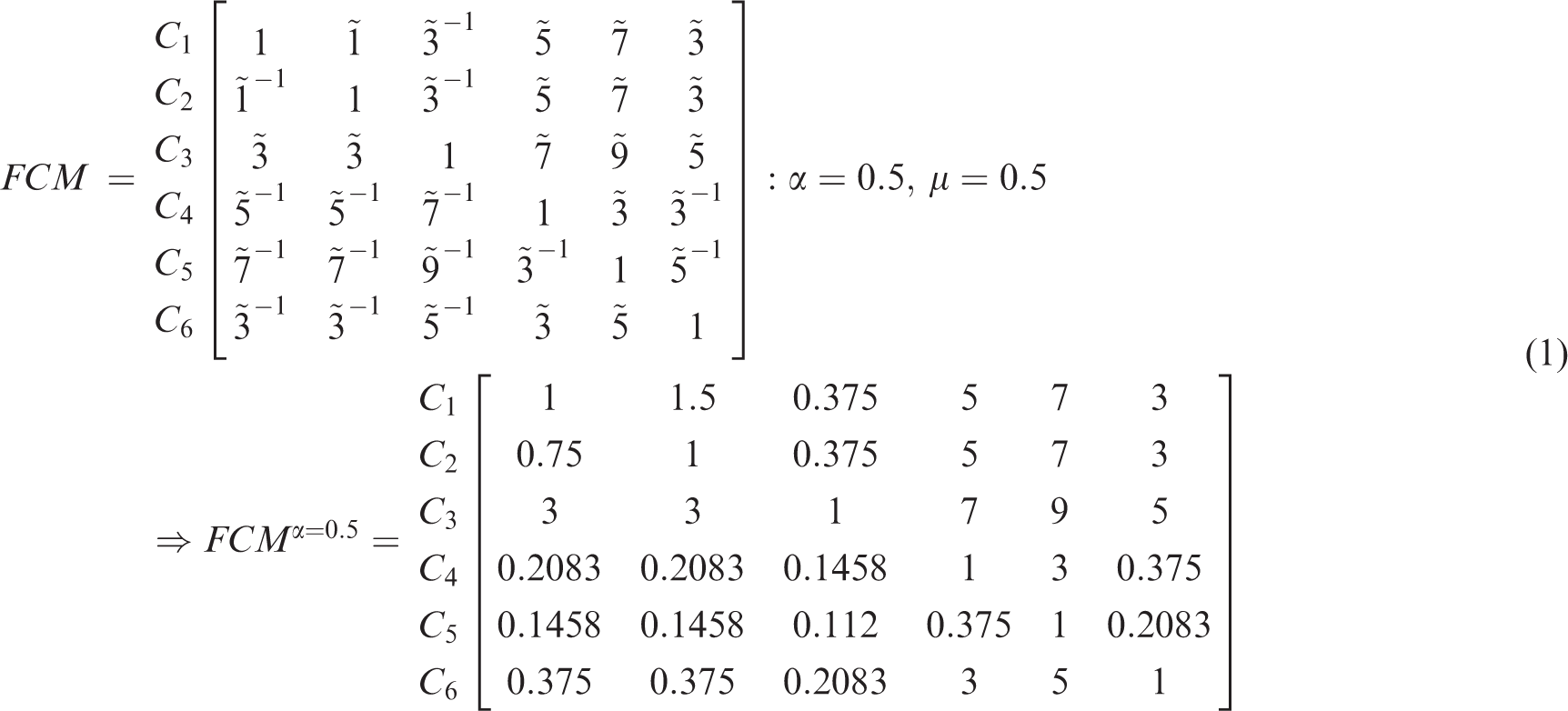
The calculated consistency ratio provides a value of 0.07 <1. The results in Table 2 show that impact on patients’ safety has a 42% weight and is therefore the most significant among all six criteria.
Attribute weights.

Distances and final ranking.

PROMETHEE: Preference Ranking Organization Method for Enrichment Evaluations; TOPSIS: Technique for Order Performance by Similarity to Ideal Solution.
PROMETHEE and TOPSIS results
The fuzzy PROMETHEE II algorithm involves three main steps: 1—choosing linguistic ratings for risks with respect to each impact attribute for preference function, 2—choosing the linguistic ratings for each attribute, and 3—translating linguistic ratings to fuzzy numbers. All risks are evaluated based on their impact according to the TFN linguistic scale. Table 4 in the Appendix presents the decision makers aggregated assessment of risks. The results of PROMETHEE show that R1 “Poor infrastructure and handling” is ranked last which makes it the most significant risk that has the highest impact on all criteria. It is followed by R16 which is unrealistic expectations of service provider performance and R15 which is a poor selection of the service provider. On the other hand, R9 has the highest score and therefore is the least impactful among all the risks. Figure 4 in the Appendix presents a scheme of the scores of all risks according to PROMETHEE: R9≻ R13≻ R11 ≻R7≻R6≻ R8≻ R17≻R12 ≻R18 ≻R10 ≻R4 ≻R3≻ R2≻ R14≻ R5≻ R15≻ R16≻ R1.
The computational procedure of fuzzy TOPSIS included the following:
Step 1: The rating of the 18 risks under 6 attributes are shown in Table 5 and the importance weights of the attributes determined are presented in Table 2. Step 2: The rating of the 18 risks and importance weights of the attributes (Table 5 in the Appendix) allow the elaboration of the normalized decision matrix presented in Table 6 of Appendix. Step 3: The weighted normalized decision matrix is constructed (Table 7 in the Appendix). Step 4: The positive ideal solution and the negative ideal solution are presented in Table 8 in the Appendix. Step 5: The distance D*+ and D*− for each criterion, the closeness coefficient, and the ranking of risks is shown in Table 8. The resulting ranks obtained from PROMETHEE and TOPSIS, as well as the difference between the ranks are summarized in Table 3.
Comparison and insights
PROMETHEE and TOPSIS present different rankings, and the Spearman rank correlation method measures the association between these rankings, by computing the correlation coefficient ρ. From the data shown in Table 3, the correlation coefficient provides a value of ρ = 0.897. This value means that there is a very high correlation between the two rankings. Calculation of the p-value also indicates a statistically significant correlation with a value of p =4.65886E–07. While most risks show a difference in ranking of 1 to 2 points, risk R2 shows the highest difference in ranking with 7 points, followed by risks R4 and R12 with 3 points. The difference present in the rankings of both methods is caused by the fact that TOPSIS evaluates the risks on the general scoring of decision makers for every criterion while PROMETHEE compares the risks on the basis of the priority of attributes and uses a pairwise comparison of risks along each attribute. Risks were evaluated according to impact attributes which had to be minimized. This combined approach was fruitful in that it helped us exploit the advantages and strengths of AHP and the outranking methods and minimize the possible errors associated with the application of these models. Further investigation of the results led us to question the possibility that the interactions between the risks and especially the evaluation criteria may have participated in causing the differences between the two rankings. In an attempt to overcome this shortcoming, future research will aim to investigate the outsourcing risks factors and criteria and highlight their interactive relationships using an appropriate approach such as the DEMATEL method. 30 It can allow the categorization of criteria into “cause” and “effect” classes using impact values of criteria.
The results that are obtained from the application of our general approach depend greatly on the context of our study which is the Moroccan public pharmaceutical supply chain. The results come from consolidating evaluations of decision makers from the procurement division of the Ministry of Health, pharmaceutical distributers of the public sector, pharmaceutical wholesalers from the private sector, and third-party logistics providers from the private sector. The preferences and judgments of the participants and the organization type set a basis for applying the approach, which requires the involvement of stakeholders. The application of the approach led to several findings. It was found that the most significant risks in this partnership are the strategic and operational information leakage, followed by conflicts of culture between the public and private sectors, and unrealized savings with increased costs. These risks belong to information related, relational and financial categories of risks. The “strategic and operational information leakage” being the top prioritized risk is most probably due to the contextual setting of the study—the Moroccan public sector—where information is generally confidential. Information leakage can affect the pharmaceuticals’ market in the country since the public consumption holds an important share of the market. Also, leakage of information from the public to private sector may have political repercussions. As the second prioritized risk, the conflict of culture between the public and private sectors can compromise the success of day-to-day logistics operations since they have different performance and motivational dynamics.
The preferences given to criteria weights stem from the strategic orientation of the Moroccan government following the major political and social reform projects in the healthcare sector. This observation is confirmed by the results obtained and is explained by the Ministry of Health’s will to increase the responsiveness of the supply chain and assure patients’ satisfaction. That is why, the most important impact criterion weighted by the decision makers is the impact of patients’ safety. The risks that present a direct impact on patients’ safety are summarized in the first operational category, such as quality deterioration of pharmaceuticals and lack of reactivity of the supply chain. However, the evaluations obtained from participants show that top prioritized risks do not fall into this category. Nonetheless, it is important to make it a priority to choose a service provider based on the availability of adequate infrastructure rather than other criteria related to cost or proximity, given that quality and availability of infrastructure—including roads, transportation means, and equipped warehouses—is moderate to poor in emerging countries. 31 Our findings also conclude that poor public sector engagement and supervision can present significant obstacles to the application of an outsourcing partnership with the private sector.
Since there are no similar studies available for policy makers and practitioners in Morocco, this study presents an objective and reliable model to exploit and use for benchmarking purposes. Furthermore, a standard and programmed fuzzy risk assessment model would be interesting to develop in order to help practitioners apply the approach in a simple and practical way. Policy makers and practitioners from different fields—especially in emerging countries—are usually unaware of the possibility to use a methodology such as the one described in this study to assess the risks. It would be interesting for them to collaborate with different parties from the public and private sector to gather the maximum amount of information and judgments on risks and use fuzzy MCDA methods since risk assessment is fuzzy in nature. Such a methodology would be appropriate and present an efficient way to manage risks to design the appropriate prevention and mitigation strategies and realize cost savings. The findings of this work also shed light on the possibility to perform a risk evaluation study when no historical data or resources are available, and when it is crucial to have inputs from hands-on practitioners and experts.
Conclusion
This paper presents a fuzzy multi-criteria decision-making approach to evaluate the pharmaceutical supply chain risks of outsourcing logistics in the Moroccan public healthcare sector. From a practical perspective, this research project has been drawn from the need to assess risks of outsourcing in the supply chain of pharmaceuticals in Morocco. Our intended assessment of risks relies on human judgment as a result of scarcity of resources as well as data of the public and private sectors in the context of our application. From a theoretical perspective, this research project was motivated by a number of challenges. Most importantly, based on the literature review on risk assessment, joint research encompassing subjective and qualitative risk evaluation at the strategic level is found to be limited. MCDA and the fuzzy set theory represent an interesting approach since it accounts for subjectivity and uncertainty of risk inputs in an emerging country setting.
By using the fuzzy risk assessment, the most relevant risks of outsourcing were determined in order to effectively deploy preventive and mitigation efforts. The elaboration of this approach was motivated by the need to involve decision makers’ and experts’ judgments in the risk assessment using MCDA methods. We considered the risks as alternatives in the MCDA models to obtain a ranking/prioritization according to their level of impact. Areas of impact were perceived as MCDA weighted criteria across which the risks will be evaluated. In the context of public–private partnerships in emerging countries, which are characterized by a combination of lack of data and lack of resources, risk evaluation needs to take into account a great deal of human judgment in inputs. In this work, fuzzy set theory was used to transform participants’ judgments and experiences to numerical values for every risk and every impact area. To validate the approach, we applied it to a real case of logistics outsourcing to private service providers in a Moroccan public pharmaceutical supply chain. The results presented some differences in ranking but were highly correlated. Based on the outsourcing case study on our hands, it is hard to say which MCDA method gives the best ranking. MCDA methods may help decision makers rank their alternatives; however, the large literature does not provide guidance for which procedure is most appropriate in a specific case. To decide which ranking to select, classifications of comparable problems need to be established. In addition, the results need to be validated through standard procedures. On the other hand, by reducing the subjective judgment in prioritizing the attributes, the performance of the proposed approach can be improved. In addition, TFNs were used in the proposed approach, and it can be easily modified to handle other well-known fuzzy numbers such as trapezoidal or Gaussian fuzzy numbers.
This approach can be applied to both the public and private sectors to evaluate the risk level of project given that the right participant group is identified along with the right application of the Delphi method. The results can provide insights and comparison on outsourcing in other public or private fields such as food industries which are similar to pharmaceuticals in that they also deal with perishable products. Although the risk evaluation approach has been elaborated for the Moroccan pharmaceutical supply chain, it can be adapted and applied to other countries for benchmarking and comparison aims. The approach can be applied to other emerging countries to test its replication, and further comparison can be made to developed countries. The approach can help researchers and practitioners understand the importance of conducting appropriate risk assessment when implementing outsourcing initiatives. This can enable a better management of outsourcing plans in various emerging countries.
Footnotes
Declaration of conflicting interests
The author(s) declared no potential conflicts of interest with respect to the research, authorship, and/or publication of this article.
Funding
The author(s) received no financial support for the research, authorship, and/or publication of this article.
