



Abstract
A substantial literature has been devoted to analyzing how legislators delegate regulatory power to a more knowledgeable agency. Yet, much less attention has been paid to understand how this delegation process is shaped by the environment in which this agency operates, and more specifically by the actions of interest groups. We propose a model of regulatory capture to assess how the distribution of information across interest groups and agencies impacts optimal delegation. Whether an interest group and his agency share information or not determines the scope for capture and how much discretion should be left to this agency in response. Whether asymmetric information reduces or increases discretion depends on the biases of the group and the agency vis-à-vis Congress. Groups that are more aligned with Congress collect politically relevant information, while more extreme groups remain poorly informed. The information structure that endogenously emerges increases discretion under broad circumstances.
Keywords
Introduction
Policy-making most often takes place in highly complex and uncertain environments. Macroeconomic and fiscal policies, economic, environmental and social regulations to quote a few offer a whole array of examples where the precise contours of optimal public decisions are difficult to assess ex ante and their ex post consequences hard to anticipate at the time of their design by acts of Law. Congress lacks the needed expertise to reach sound policy-making. In response to this informational deficit that spans an ever-expanding set of issues, Congress has chosen to delegate an increasing share of its decision-making to better informed agencies, legislative committees and sub-committees so as to inform and sometimes design better policies. 1
Following Gilligan and Krehbiel (1987, 1989, 1990), Epstein and O’Halloran (1994, 1999), Huber and Shipan (39), Bendor and Meirowitz (8), and Baron (6) among many others, a large and insightful branch of formal political science has been devoted to study this delegation process in contexts pervaded by asymmetric information. This literature has offered a number of key insights on what should be the optimal degree of discretion left to the bureaucracy, the scope and nature of communication processes between bureaus, committees, regulatory agencies and Congress and the various institutional tools that could help controlling bureaucratic drift if any.
Yet, the extant literature on delegation has also mostly focused on the two-tier simple hierarchical relationships between Congress and the bureaucracy when taken in isolation, treating the environment in which agencies evolve as immune to any outside influence. In particular, a basic tenet of this approach remains to assume that the preferences of bureaucrats over policy outcomes and the informational structure are exogenously given. In practice, non-elected officials do entertain close-knitted relationships with various interest groups. 2 Interest groups devote much time and resources to influence government agencies and experts commissions. 3 This influence, in turn, shapes the agencies’ preferences and thus their relationships with Congress. As forcefully argued by Boehmke et al. (12), “Theories of legislative-bureaucratic relations that ignore the role of interest groups and non-governmental actors generate predictions that, while potentially important and informative, are only ‘partial equilibrium’ in nature.” 4 Starting from this important observation, this paper aims at reinstalling the Theory of Delegation into a more realistic realm. In this respect, we shall assume that agencies are not only subject to the influence of Congress but also under the pressure of interest groups. We thus study how regulatory capture by interest groups determines the delegation process.
Taking into account the influence of interest groups is all the more relevant that, at least since Lowi (54) and Stigler (74), one of the main concerns raised against the wide recourse to delegation is the threat it poses to the whole democratic process of policy-making. Policy-making is viewed as being at the risk of escaping from the hands of the elected public representatives to end up under the uncontrolled influence of private interest groups. Even when taking this concern very seriously, McCubbins et al. (1987, 1989) took an optimistic stance. Indeed, those authors argued that, with an eye on the environment in which those agencies evolve, Congress is able to design bureaucratic procedures to keep agencies on check. More precisely, Congress can stack the desk so that agencies are monitored by groups which are de facto allied with Congress. This seminal idea, although it stimulated a large body of works in the political science literature, has so far received no formal modeling, at least to the best of our knowledge. This paper aims at filling that gap.
In this respect, it should be first recognized that the ability of interest groups to channel their influence on regulators depends on the information structure that surrounds the bilateral relationship they entertain with those regulators. While some groups share most policy relevant information with the relevant agency, and thus stand on equal feet, others lack relevant information, making the relationship with their agency de facto quite asymmetric. A first step of our analysis thus consists in investing the role and the possible consequences that various degrees of informational asymmetries have on the way interest groups might influence their regulatory agencies.
From there, a second step our analysis, much in the spirit of McCubbins et al. (1987, 1989), consists in observing that Congress might react to this influence of interest groups by shaping the contours of the agency’s mandate and discretion. In more technical parlance, the degree of discretion left to regulatory agencies and the information structure that surrounds their intervention should jointly be determined at equilibrium.
This approach is novel. While asymmetric information between the Congress and agencies has long been recognized as the main justification for both the discretion left to the bureaucracy and the limited scope of regulatory mandates, nothing is known on how the distribution of information between interest groups and agencies impacts those mandates and the afforded discretion. 5 Addressing this question helps us to understand which informational structure interest groups would favor, depending on how their preferences differ from those of Congress and the agency. 6
The Ally Principle takes the perspective of Congress which acts as a principal in designing regulatory mandates. Taking now the perspective of an interest group with his own preferences somewhat modifies the results, and allows to identify two antagonistic effects. On the one hand, and for a given a level of discretion left to the agency, the interest group would always benefit from an agency having an ideal point close to his own. Indeed such an agency would pick decisions closer to the group’s preferences. This Proximity Effect echoes the Ally Principle but now takes the group’s perspective. On the other hand, when bringing the agency ideologically closer to the group also means moving her away from Congress, Congress’ response is to restrict the agency’s discretion. As rules become more stringent, policies are less sensible to the state of the world, which in fine hurts the group by reducing the agency’s discretion. This Discretion Effect contrasts with the Proximity Effect; an interest group prefers an agency closer to Congress than what he is himself.
Suppose now that the interest group plays a more active role and aims at capturing the agency to promote his own goal. We model such an influence by means of a side-contract in which the group offers transfers to the agency in exchange for more favorable decisions. By modifying which policies would end up being implemented by the agency, this external influence also perturbates the relationship between Congress and the agency, and the extent to which the former is willing to delegate. To see how it can be so, we consider two alternative scenarios.
A key building block of our analysis thus consists in developing a theory of capture under asymmetric information. The side-contract proposed by the group now serves a twofold objective. First, it helps the agency to better internalize the group’s preferences. Second, and in sharp contrast with the case of symmetric information, it facilitates screening of the agency’ private information. Under asymmetric information, the side-contract is drafted with an eye on a rent-efficiency trade-off. Implementing a decision rule that would be close to that a strong coalition would choose may require leaving an information rent to the agency. This rent is viewed as costly by the group in terms of extra side-payments needed to induce information revelation. Because of this trade-off between rent extraction and efficiency, the decision rule is now distorted towards the agency’s ideal point. Asymmetric information is akin to a shift in bargaining power towards the informed agency that renders capture more difficult. The outcome of regulatory capture under asymmetric information can be encapsulated into a single parameter: the agency’s virtual bliss point. When a weak coalition forms, everything happens as if the agency’s ideal point was now conflating the influence of the group and its own preferences with some added distortions due to asymmetric information. The loss of bargaining power due to informational asymmetry might sometimes be so severe that the group ends up having no influence at equilibrium. 12 Most often, the group may still keep some influence but it remains limited in scope. In both cases, it is of crucial importance for our analysis that this virtual bliss point always ends up to be closer to the agency’s ideal point than when collusion takes under symmetric information.
The reverse holds when the group is moderate, i.e., less biased than the agency. Capture by such a group tilts the decision towards Congress’ ideal point. In response, the agency is granted a less stringent mandate. This effect matters all the more that the group has a greater ability to influence the agency. As a consequence, Congress will now grant more discretion when facing a strong coalition.
That, in front of a moderate group, Congress would like to increase this group’s ability to influence the agency because it would better align this agency with its own position is an important take-away from our analysis. This result provides firm foundations for McCubbins et al. (1987)’s insights that the pattern of outside influence on an agency somehow shapes its mandate and may explain some intriguing features of bureaucratic procedures. To illustrate, these authors pointed out the case of the U.S. Consumer Product Safety Commission. This agency was once constrained and funded by Congress in such a way that both its agenda and the writing of safety standards were virtually dictated by the organized groups most interested in consumer safety. This surprising feature is well explained by our theory that argues that Congress should find it profitable to facilitate capture of an agency by a moderate group.
Instead, a moderate group would always prefer to share information with the agency. The Proximity Effect and the Discretion Effect both entail a benefit for the group if capture takes place under symmetric information. This induces the choice of a less stringent mandate, while allowing for more favorable decisions within the limits of this mandate.
Our model thus yields strong predictions. The distribution of information within the Iron Triangle affects the implicit bias between Congress and the bureaucracy. Moderate groups are more likely to acquire information which is relevant for policy-making. Extreme groups instead have strong incentives to remain poorly informed. Yet, in both cases, the information structure that emerges out of this multi-stage game is the one that fosters the agency’s discretion and calls for less stringent mandates. Interest groups enjoy having an agency which is a Better Ally for Congress. More discretion means that decisions reflect state-relevant information and it provides to the group some insurance against payoff fluctuations. More broadly, there is a strong congruence of interests within society taken as a whole on the regulatory mandate that should emerge.
Literature Review
The closest paper to ours is certainly Bennedsen and Feldmann (9). These authors also study how Congress grants discretion to an agency, when the latter can be captured by an interest group. They assume that the agency and the interest group, although they might not have the same marginal value of income, always form a strong coalition. Our analysis instead allows for the possibility of a weak coalition. Considering such possibility is a necessary step to derive the equilibrium information structure which might endogenously emerge. It also distinguishes our modeling of capture from earlier work by Laffont and Tirole (1993, Chapter 13). These authors also assume that capture takes place under symmetric information but, in contrast with us, deduce from this assumption that the agency’s discretion should always be restricted in response to capture. Bennedsen and Feldmann (9) demonstrate that capture by a moderate (resp. extreme) group would increase (resp. decrease) the agency’s discretion; a result we confirm below in a context where delegation mechanisms are always optimally designed. Importantly, these authors take as given the existing information structure while, in contrast, we endogenize this information structure from the group and the agency’s joint incentives to share or not information. Finally, Bennedsen and Feldmann (2006)’s main concern, which is orthogonal to ours, consists in investigating the consequences of having a unified (no conflict of interests between Congress and the agency) or a divided government on the amount of discretion left to the agency under the threat of strong capture.
Using a simplified model of delegation, with Congress either keeping full control over the decision or fully delegating regulatory rights to the agency, Boehmke et al. (12) conduct a comparable analysis. Instead, their concern is on the choice of venues, and whether a lobbyist prefers to target Congress or the bureaucracy. These authors focus on the optimal choice of the agency’s bias from Congress’ viewpoint. Again, and in contrast with our analysis that allows for a broader set of information structures, this paper assumes symmetric information between the interest group and the agency. 13
Two other related papers are Baron (6) and Krishna and Morgan (46). In sharp contrast with most of the literature on delegation, these authors introduce the possibility of using monetary transfers to control an agent who has also quadratic preferences on the set of feasible policies. 14 These two papers consider two-tier hierarchical structures, with Congress choosing an incentive mechanism that stipulates not only which policy should be taken but also a set of contingent transfers for the agent. Baron (6) considers the relationship between Congress and an informed committee who might discharge and not communicate at all with Congress. Under those circumstances, Congress then chooses its most preferred decision absent any information. Because this outside option entails a very low payoff for the committee, Congress may actually extract transfers from the committee. In response to what could be seen as an unpalatable result, Krishna and Morgan (46) impose an additional non-negativity constraint on transfer schedules and show that the optimal contract always entails a cap on actions. Since we allow side-transfers in any collusive side-contract, the solution to the principal-agent relationship between the group and the agency bears some ressemblance with those contributions. There are two differences. First, the design of the side-contract takes as given the set of actions made available to the agency by Congress when delegating regulatory rights. Following Laffont and Martimort (1997, 1998), a collusive side-contract is thus reached within the limits of options that have been stipulated through a grand-contract. We thus have to envision a nested mechanism design problem with Congress’ delegation mechanism being designed upfront. In particular, and in contrast with Krishna and Morgan (46) who implicitly assume that the agent cannot take actions outside of those stipulated in the transfer schedule by the principal, this option remains always feasible in our context because an interest group has no such rights. Second, if she refuses the side-contract offered by the group, the agency is still free to choose decisions within the delegation set made available by Congress. It leads to a mechanism design problem with a type-dependent participation constraint that needs to be solved carefully and whose solution depends on whether the group is extreme or moderate.
Finally, Gailmard and Patty (2012) argue that, to adequately describe the administrative relations, the Principal-Agent model must integrate the fact that information acquisition and information sharing are both endogenous. Incentives for interest groups and bureaucrats to do so are a central feature of the institutional problem. Our paper contributes on this important but somewhat underdeveloped front.
The Model
The interest group wants to capture the agency to induce implementation of policies that better please his own interests. How easy it is to channel the group’s influence on policy-making depends on how much information is shared between the group and the agency. Whether the interest group also knows
All parties have preferences over policy that are quadratic and single-peaked loss functions, namely (with subscripts being self-explicit)
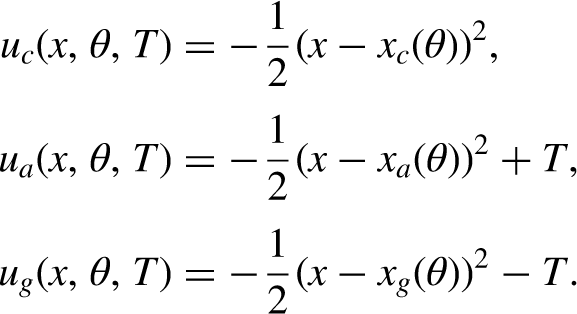
Following a standard assumption in the political science literature on delegation, monetary transfers between Congress and the agency are banned. In the tradition of McCubbins et al. (1987, 1989), the sole possibility for controlling any bureaucratic drift is by means of a convenient design of the agency’s mandate. A contrario, bribes are possible between the interest group and the agency. We do not impose any restriction on the sign of side-transfers. Nevertheless, the structure of the game will imply that the interest group always offers non-negative bribes at equilibrium. Lastly, we also assume, for simplicity, that transferring bribes entails no deadweight loss. All sources of frictions in side-contracting will come from the information structure. 18 The side-transfers between the group and the agency can be viewed as any form of monetary contributions, quasi-transfers such as the provision of technical or legal assistance, or as a reduced form for a “revolving door” strategy, 19 in which the head of an agency which remains compliant with the interest group will be rewarded by a favorable position in the private sector in the future.
The following assumption on biases is maintained throughout:

Three cases must be distinguished. When
Finally, the right-hand side upper bound on
Congress acts as a Stackelberg leader in the game and publicly commits to a (deterministic) policy rule contingent on the information reported by the agent. From the Revelation Principle,
21
there is no loss of generality in focusing on such a communication mechanism. Following the mechanism design literature on delegation,
22
we might view such a rule as a direct revelation mechanism of the form
Once Congress has publicly committed to a revelation mechanism, the interest group proposes a collusive side-contract to the agency. The interest group has all bargaining power in designing such side-contract and, accordingly, makes a take-it-or-leave-it offer to the agency. In contrast with the regulatory mandate, this side-deal is only observed by the collusive parties.
26
For any possible delegation set
Lastly, if the agency refuses to collude with the interest group, her outside option is obtained as her best choice within the delegation set offered by Congress. If the agency accepts the collusive side-contract, communication flows up towards the interest group and second towards Congress. The compounding of the mechanism offered by Congress and the side-contract leads to a decision which is not necessarily the decision that would prevail if the sole communication were to take place between the agency and Congress.
That Congress acts as a Stackelberg leader and anticipates how the interest group will react to the design of the agency’s mandate illustrates well the idea that any capture of the regulatory process takes place within the contours of the regulatory mandate that Congress has set ex ante.
Suppose that the interest group is not active. The sole principal-agent relationship under consideration involves Congress and the agency. The outcome of the delegation game in this simple scenario is well known.
29
The objective of the Congress is to find a decision rule


The allocation


From (4.3) and the definition (4.1), we deduce the following integral representation:


Given a delegation set



The intuition for this result is familiar. From Assumption 1, the agency is biased towards choosing decisions that are above those that would be chosen by Congress itself had it been informed on the state of nature. Under asymmetric information, this means that the agency would like to manipulate upwards her report on that state. Those incentives are controlled by setting a cap on the set of decisions that are available within the agency’s mandate. Assumption 1 then ensures that communication is always valuable on the interval

No capture;
The agency’s ideal bias

Although somewhat artificial, this exercise already highlights the key trade-off faced by the interest group when willing to influence the agency. The interest group always prefers an agency whose preferences lie in between those of Congress and his own. In other words, the group favors a more moderate agency. Two compounding forces are at play that explain such a choice. On the one hand, for a given cap on the agency’s discretion, the interest group always benefits from choosing an agency with nearby preferences since, when the agency has discretion, her decision is then close to the group’s ideal point, a Proximity Effect. On the other hand, Congress will leave more discretion to the agency when her preferences are closer to its own, a Discretion Effect. The best agency’s bliss point from the group’s viewpoint results from a compromise between those two effects. 31 As a result, the interest group always prefers an agency with more moderate preferences, that is, whose bliss point lies in between that of Congress and his own.
In practice, the group might have little or even no influence at all on the agency’s appointment process. The only possibility is thus to capture this agency ex post . Sections 5. and 7. investigate how such capture occurs and its consequences on policy choices depending on whether capture takes place under complete or asymmetric information. Such analysis is a building block to investigate how and under which circumstances deciding to gather or not information acts as a commitment for the interest group to implicitly change the policy chosen by the agency, in a very similar vein but more subtle way, to what he would do by directly choosing her preferences.
When the interest group is active and colludes with the agency, the picture becomes more complex. Once Congress has decided upon a delegation set, the decision chosen within this set by the agency will depend on the collusive side-contract that the agency and the interest group design
ex post
. In this section, we will first study the case of a strong coalition; the interest group and the agency both know
Coalitional Efficiency
Assume that Congress has defined a delegation interval of the form
Given that utilities are transferable between the agency and the group, the optimal collusive side-contract should thus induce the agency to choose the decision that maximizes the joint welfare of the coalition she forms with the interest group, i.e.,


For further references, observe that the decision


The optimal delegation mechanism with a strong coalition is immediately deduced from Proposition 1 by replacing mutatis mutandis the bias
When choosing the mandate of the agency, Congress anticipates how decision-making is impacted by a strong capture. When the group is more extreme, i.e.,


Figure 2 illustrates, in the case of an extreme group, how the discretion of the agency is reduced when a strong coalition forms, and how the reverse happens with a moderate group.
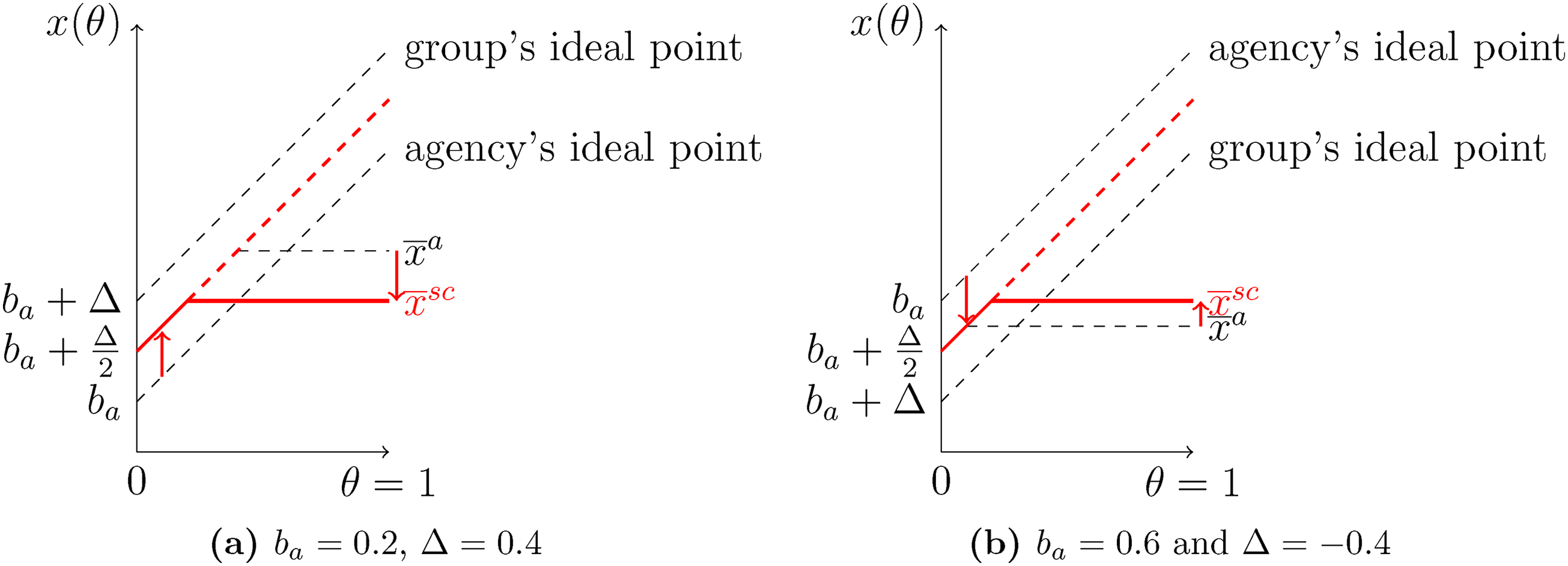
Strong coalition with an extreme group and with a moderate one.
To address the possibility of capture taking place under asymmetric information, we will borrow the methodology of nested contracting problems that was laid down in Laffont and Martimort (1997, 1998). Given a delegation mechanism first set up by Congress (a grand-contract to use the expression coined in this literature), colluding parties design their own mechanism (a side-contract) to promote their collective goals subject to incentive compatibility constraints within the coalition.
A collusive side-contract stipulates which decision the agency should be taking when influenced by the group for any possible realization of the state of nature



The allocation

This Lemma echoes Lemma 1.
34
In particular, notice that the slopes of the payoff profiles
Expressed in terms of information rent, we can also rewrite the agency’s participation constraint that must be fulfilled so that she accepts the side-contract:

To illustrate, suppose that the weak coalition wants to implement the same decision as what a strong coalition would choose when constrained by the agency’s mandate, i.e.



The precise intuition is as follows. Because he has all bargaining power in designing the side-contract, the extra information rent (i.e.,
While Section 4. highlighted the agency’s tendency to overstate the state of nature vis-à-vis Congress, leading to a cap on the delegation set, now the agency also faces some countervailing incentives in her relationship with the interest group who has even stronger preferences towards higher decisions although being equally uninformed. In response, we expect that the weak coalition will now choose policies that are less biased towards the interest group’s ideal point as what a strong coalition would do.


The intuition is the reverse of before. From the moderate interest group’s viewpoint, minimizing the agency’s information rent that she gets beyond her reservation payoff now requires to reduce bribes up to the point where the agency having observed large values of
Whether the interest group is moderate or extreme, there is a common thrust to our findings. The weak coalition chooses policies which are no longer coalitional efficient and, on top, are always more biased towards the agency than when capture takes place under symmetric information. Next proposition formalizes this intuition and characterizes the decision-process that takes place within a weak coalition under both scenarios.
Fix a delegation set

When the interest group is extreme, i.e., When the interest group is moderate, i.e.,


When the agency and the interest group form a weak coalition, they still behave like a single player but now with a virtual ideal point which is located at
With an extreme interest group (i.e.,

With a moderate interest group (i.e.,

We can now turn to the characterization of the agency’s mandate. Congress’ optimization problem again consists in finding a decision rule that maximizes its expected payoff, which now takes into account the agency’s decision under weak capture as specified in (6.8). Next proposition summarizes our findings.


Figure 3 illustrates the characterization of the optimal floor for a couple of scenarios depicted in Proposition 5. Let us now describe each of the different possible configurations and explain the nature of the distortion.

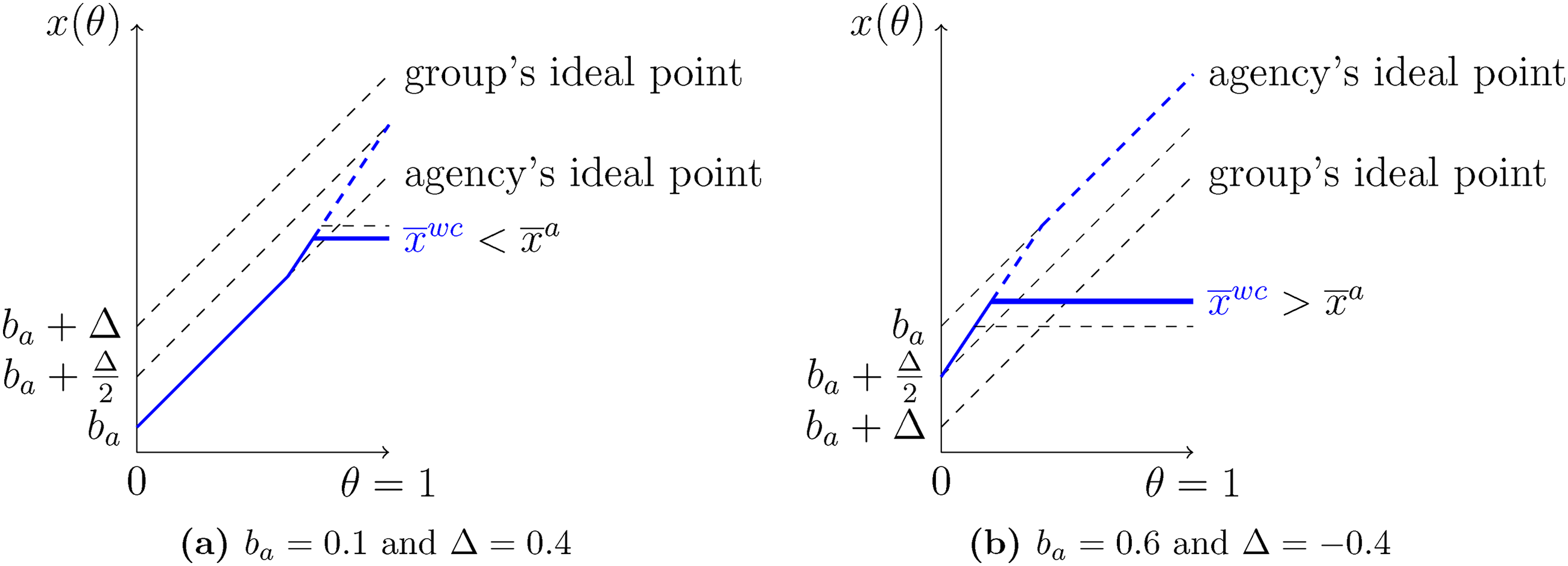
Weak coalition with an extreme group and with a moderate one.
When the group is not so extreme (i.e.,
When
The optimal cap with a weak coalition is less (resp. more) stringent than with a strong coalition when the interest group is extreme (resp. moderate), i.e.,

Asymmetric information sometimes acts as a barrier to entry for an extreme interest group. The bureaucracy can even be made immune to the threat of capture. By contrast, an informed interest group would always be able to modify the agency’s decision; which in turn calls for changes in how much discretion she is given.
Suppose that

Notice that (7.4) also holds when
Equipped with the characterization of the objectives that pertain to either a weak or a strong coalition, we may now investigate what sort of information structure is likely to emerge and when; i.e., under which circumstances information is shared or not by the agency and the interest group. Of course, and as already noticed by Gailmard and Patty (2012), addressing the question of the endogeneity of information structures requires a close look at the exact timing of the game form. Lessons of such investigation may actually vary with fine details. To illustrate, observe that, at the interim stage, i.e., once Congress has already committed to a mandate for the agency, the interest group will always find it profitable to influence the agency’s choice. In this respect, sharing information with the agency and thereby building a strong coalition is unambiguously the best strategy.
Let us now envision a scenario where the agency was established beforehand. For instance, the head of the agency was appointed earlier on and contacts with the group were already established but the contours of the agency’s mandate have not yet been designed. In this ex ante scenario, the regulatory mandate might be modified in response to the strength of the collusion that prevails between the group and the agency. To describe this scenario, we now append to the game that was so far studied, a prior stage in which the group and the agency decide whether they would share information or not. To simplify the analysis, we assume that there is no direct cost of access to information for the group. Actually, the main thrust of our analysis is to unveil conditions under which the group prefers to have a limited access to the agency. Adding such a cost would just make the case for capture under asymmetric information even stronger. To assess the consequences of information sharing for the coalition, we take the expected payoff of the strong coalition as our welfare criterion. To justify this choice, we might argue that, in the prior stage of the game, the agency and the interest group can bargain over the choice of the best information structure before Congress, knowing whether close ties have been knitted or not, decides of the agency’s mandate and before information is learned. The corresponding benefits could then be shared by the agency and the interest group by means of ex ante lump-sum transfers. In particular, keeping the same allocation of bargaining power ex ante and ex post (i.e., once information is learned by the agency and possibly by the group) amounts to assuming that the group pockets all those benefits.
Comparing the objectives of a weak and a strong coalition unveils the role that information plays in determining the interest group’s influence. By getting informed, the interest group can certainly induce more favorable state-dependent decisions as long as those decisions are not bound by the cap on the agency’s discretion. Sharing information with the agency always fosters the Proximity Effect. Yet, the consequences of such information sharing on the Discretion Effect are ambiguous and depend on the relative magnitudes of the group’s and the agency’s biases as we will see below.
A moderate group always prefers to form a strong coalition.
The welfare comparison between the two modes is thus a priori ambiguous. Although we were not able to provide a complete comparison, next propositions provide some insights on which effect may dominate by looking at the two polar cases where
An extreme group prefers to form a weak coalition when
The intuition for this result is straightforward. When the group and the agency are almost congruent (i.e.,
For larger values of
An extreme group prefers to form a weak coalition when
The logic is somewhat similar to that above but the magnitudes of the Proximity and the Discretion Effects differ. The first one disappears and only remains the impact of an expanded discretion. To understand how it is so, consider indeed the polar case where
Mirroring our approach of Section 8., we now investigate Congress’ preferences regarding the strength of collusion between the agency and the interest group. When designing bureaucratic procedures, Congress might actually play on how efficient a group can be in channelling influence on the agency. For instance, quasi-transfers may be banned more or less severely, or public disclosure requirements may be requested so as to render more or less transparent the objectives and information of the agency.
The Ally Principle, when applied to the coalition between the group and the agency, already conveys all the intuition needed. With a moderate group, Congress will be better off as this group becomes more efficient in capturing the agency, since it contributes to tilt the coalition’s ideal point closer to its own. The reverse holds when Congress faces an extreme group. Reducing the group’s ability to capture the agency will benefit to Congress. As far as transfers are concerned, the result is immediate: Congress would prefer to ban transfers by extreme groups, and allow them by moderate groups. More interesting are the results about the distribution of information:
Congress prefers to face a strong (resp. weak) coalition when the group is moderate (resp. extreme).
Comparing this result with those in Section 8. shows that a strong congruence prevails between private interests and the rest of society regarding the distribution of information. It follows that we can expect the emergence of a large consensus about the design of bureaucratic procedures, the degree of transparency and the span of regulatory mandates.
We have so far assumed that Congress could commit to a mechanism upfront, before receiving any information from the agency. Of course, this assumption is somewhat extreme since it implies that, whenever
In this section, we consider the possibility that, once the agency has chosen an action within the delegation set, Congress may overrule this decision. With such limited commitment ability, Congress should offer delegation mechanisms that are still menus of possible decisions with the added property that each action is conditionally optimal from Congress’ point of view given the information inferred by the agency’s choice of such option within the menu. In other words, the delegation mechanism should be not only incentive compatible for the agency but also renegotiation-proof. 36
The requirement of renegotiation-proofness puts lots of structure on implementable menus. An immediate and obvious consequence is that there cannot be any interval with full separation of types. Viewed in terms of delegation set, it means that such set could only entail a countable set of actions. If full separation was possible on a given interval, then Congress would always choose its ideal point on such interval which would violate incentive compatibility on the agency’s side.
More generally, consider a
Incentive compatibility implies that the agency should be indifferent between the two consecutive options when she has observed


For any information structure (
Moreover, for all
The fact that there is a unique

Because preferences are quadratic, it follows that the comparison of the coalition’s expected payoffs across different information structures solely depends upon the variance of the distance between the decision and the ideal point of the coalition. Indeed, up to some constant terms, the payoff of the coalition writes as
37



The expected decision being constant, the coalition favors the information structure that provides the lowest exposure to risk. Such a structure happens to coincide with the one that minimizes the distance between the interest group’s and Congress’ objectives. We summarize these findings in the next proposition.
Suppose that both a weak and a strong coalition are given a
Assuming limited commitment on Congress’ side does not modify and even strenghtens the intuitions given in Section 8.. That Congress is now able to pick its favorite decision after the agency’s move decreases the magnitude of the Proximity Effect, while the Discretion Effect remains at play. Any commitment device that better aligns the agency’s objectives with those of Congress will therefore benefit both players. For an extreme group, it is obtained by reducing his ability to influence the agency (thus favoring a weak coalition), while the reverse is true for a moderate group.
Whether a weak or a strong coalition forms, the maximal number of options that Congress can propose in a renegotiation-proof mechanism is increasing as the biases of the agency and the group decrease. When the group is extreme, a
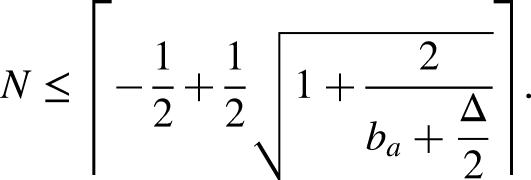
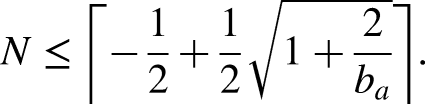
Turning to the optimal renegotiation-proof mechanism, both Congress and the interest group would prefer the menu with the largest number of options. For technical reasons, Proposition 12 compares menus that entail the same number of options in both informational scenarios. Yet, it is the case that, as the agency’s virtual ideal point gets closer to Congress’ ideal point, the number of options that Congress can credibly offer increases. It implies that, when considering the optimal renegotiation-proof mechanism, both Congress and the interest group will generally prefer the informational structure that better aligns the coalition’s objectives with those of Congress.
In this paper, we have investigated how Congress adjusts the agency’s mandate under the threat of capture by an interest group. When the group has extreme preferences, capture increases the ideological distance between Congress and the agency and, in response, more stringent mandates are adopted. Instead, more discretion is left to the agency when capture by a moderate group actually brings the agency’s ideal point closer to Congress.
The distribution of information between the agency and the interest group is a key factor explaining the strength of capture. The magnitude of the interest group’s influence depends on whether a strong or a weak coalition forms, i.e., whether the group shares information with the agency or not. An uninformed group always finds it more difficult to have his preferences been reflected by the agency’s decision up to the point of sometimes eschewing any influence at all. To illustrate, an uninformed group has limited influence on the agency; while an informed group channels more efficiently such influence. Putting together those results with Congress’ optimal response in terms of discretion left to the agency delivers clear-cut predictions about how the distribution of information and the preferences of parties impact not only on the delegation process but also on policy-making taken more broadly. Interest groups and Congress tend to agree on an informational structure that contributes to make the agency a better ally to Congress. As a result, information should be shared between a moderate group and the agency, while extreme group should remain uninformed.
Our framework could be extended along at least two possible directions.
This discussion suggests that a fruitful research alley would consist in investigating the means by which an extreme group, or a coalition of such groups, could credibly stay at arm’s length with the agency. As a preliminary step along this route, it is worth noticing that building heterogenous coalitions of interests, be they individual members or coalescing interest groups themselves, might actually act as such a device. In an Olsonian tradition, 39 the decision of sharing or gathering information at the interim stage may suffer from a collective action problem. The fact that solving this collective action problem would become difficult de facto makes an earlier commitment to stay at arm’s length credible. Pushing this line of arguments even further, we might expect that extreme groups would consist of heterogenous coalitions of interests while, a contratio, moderate groups should be more homogenous. 40
Even though space constraints prevent us to develop a full fledged analysis in this paper, it might be worth to sketch how our model could be extended to explain how interest groups may channel their influence on multiple venues. The first key difference between targeting legislators or bureaucrats is certainly timing. Capture of legislators arises at the inception stage of regulation, i.e., when the mandate of the bureaucrat is chosen while capture of bureaucrats takes place thereafter; once bureaucrats choose decisions within the range of possible options. As a first pass, consider the case of a group that will be informed and able to manage a strong coalition with the agency. Assume that this group has to choose between both venues, Congress or the agency. From an ex post point of view, targeting bureaucrats offers a convenient way of passing the group’s preferences onto the policy. The Proximity Effect gets its full force. On the other hand, when the group is extreme, such bureaucratic capture also exacerbates the Discretion Effect and will call for a more stringent mandate as we showed above. Suppose now that the interest group targets legislators. So doing, the group may induce Congress to choose a more lenient mandate. In other words, the choice between ex ante capture of legislators versus ex post capture of bureaucrats bears some strong resemblance with the choice of an information structure that was studied in this paper. Ex ante capture is akin to a commitment not to interfere ex post; a strategy that is preferred by extreme groups.
The case of a moderate group is more complex. Indeed, this group gains from being active at both levels. Targeting Congress induces a mandate that better reflects the group’s preferences. Targeting the agency in turn allows not only a less stringent mandate but also more attractive decisions within that mandate. Which venue brings the larger gain is likely to depend in fine details on the relative position of the group and the agency with respect to Congress. 41
Beyond those immediate inferences from our modeling, the question of the optimal venue might also call for a more dynamic approach. Indeed, the choice of bureaucratic procedures may also be a way for a political principal in charge at a given point in time and biased towards an interest group, to tie the hands of subsequent principals in a way that favors this group. 42
Those extensions await for further research.
Footnotes
Acknowledgements
An earlier version of this paper was previously circulated under the title “Downstream Lobbying and Informational Frictions.” We are grateful to Morten Bennedsen, Francis Bloch, Amaury Freslon, Frederic Koessler, Ariane Lambert-Mogiliansky, Michel Le Breton, Manuel Marfan, Jerôme Pouyet and Arthur Silve for useful suggestions and comments. We also thank two referees of this journal and the Editor, John Patty, for very useful and constructive comments. This paper also benefited from useful remarks by seminar participants at CREST, Paris School of Economics, Ecole Polytechnique, the EEA Congress in Gotebörg, and the University of Namur. Financial support from the Programme Investissements d’Avenir of the French government (ANR-10-LABX-93-01) is acknowledged. The second author also thanks Toulouse School of Economics for its hospitality and for financial support from the ERC (MARKLIN). The usual disclaimer applies.
Declaration of conflicting interests
The author(s) declared no potential conflicts of interest with respect to the research, authorship and/or publication of this article.
Funding
The author(s) received no financial support for the research, authorship and/or publication of this article.
Appendix
Notes
Funding
The author(s) disclosed receipt of the following financial support for the research, authorship, and/or publication of this article: The second author received financial support for his research from the ERC (MARKLIN).
