




Abstract
This study investigates key aspects of administrative process in citizen contacts with local government agencies and their impact on citizen satisfaction with those agencies in an institutional context of limited accountability and channels for obtaining information of public service outcomes and performance. Using survey data collected in a Chinese city district, we examine the effect of administrative processes—the quality and results of citizens’ bureaucratic contacts—on their satisfaction with local police departments and the role of citizens’ expectation in this relationship. The findings indicate that both quality and results of bureaucratic contacts are significantly related to citizen satisfaction. Additionally, the relationships of citizen satisfaction and bureaucratic contacts are moderated by citizens’ expectation on the performance of local government agencies. The results suggest that using proper communication strategies, which help shape citizen expectation, and improving citizens’ experiences in the administrative processes are important practices that could increase citizen satisfaction.
Introduction
In recent decades, governments in both developed and developing countries have been increasingly using citizen satisfaction to evaluate government performance (Andrews and Van de Walle, 2013; Chen et al., 2010; Grosso and Van Ryzin, 2012). As Brown (2007) points out, “Under the rising pressure to be more accountable to their constituents, public managers at all levels have turned to measures of citizen satisfaction with public services to gauge performance” (p. 559). China, the world’s largest nation-state with an authoritarian regime, has been paying growing attention to citizen satisfaction since the economic liberalization reform of Deng Xiaoping (Gao, 2012). This trend has intensified with the “service-oriented” government reform in China since 2003 (Tsao, 2009; Wang, 2009). Chinese local governments have started to use results from citizen satisfaction surveys to improve service delivery (Gao, 2012). In light of this trend, this study investigates the factors associated with citizen satisfaction with local public agency in China, where the authoritarian political system and the accountability mechanisms of civil servants are different from the West.
Previous literature on citizen satisfaction focuses on individual level factors, such as age, race, socioeconomic status, and individual political attitude (Brown and Coulter, 1983; Cheurprakobkit, 2000; Dehoog et al., 1990; Durand, 1976; Percy, 1986; Schuman and Gruenberg, 1972). Recently citizen satisfaction research has adopted an expectations disconfirmation approach to examine the relationship between citizen satisfaction and the prior experience and expectation of service outcomes (Morgeson, 2013; Nicolai et al., 2017; Roch and Poister, 2006; Van Ryzin, 2006). These studies suggest that public managers need to improve particular services’ quality and outcomes to increase citizen satisfaction, which reflects the focus of results-oriented New Public Management (Pollitt and Bouckaert, 2011). However, in the psychology and legal studies fields, evidence shows that people’s experience and perception of the administrative process are also very important in shaping their attitude towards the governments (Reisig and Parks, 2000; Tyler, 2006). In the public administration field, only a handful of studies directly examine the effect of administrative process on citizens’ evaluation of government agencies (Brown, 2007; Herian et al., 2012; Van Ryzin, 2015). For example, Brown (2007) finds that citizens who have poor-quality interaction with police officers are likely to report low ratings for services. Herian et al. (2012) find that process fairness has a material impact on citizens’ evaluations of local government. Thus, we believe that empirical investigation of how the administrative process influences citizen satisfaction is warranted.
In addition, most of the existing studies on citizen satisfaction, and theories developed on the subject have been based on western countries, such as the United States and the United Kingdom, where governments are service-oriented and the accountability mechanisms are highly functional, and citizens are readily able to access information of service outcomes and performance. Little is yet known about the influence of administrative process on citizen satisfaction with government and the role of citizens’ performance expectation in a different political and institutional context. China is the largest authoritarian country where citizens have difficulties to either voice or exit for public services they received, and to access information about service inputs, output, and outcomes. Personal experience of how they receive actual services is particularly crucial in their subjective satisfaction evaluation. Therefore, empirical studies on whether and how administrative processes of receiving services influence citizen satisfaction are particularly needed in China. Although there are some studies on China’s citizen satisfaction with public services or governments, most of them focus on the development of indicators or index of citizen satisfaction (see Yang's review, 2012). To the best of our knowledge, among a few studies on the relationship between citizen satisfaction and service outcomes or government performance (such as Feng and Zhong, 2016; Lin, 2013; Zheng et al., 2014), none of them investigate how the administrative process affects citizen satisfaction and the moderating role of expectation in this relationship. This study builds on and expands the extant literature, such as expectations disconfirmation and expectations anchoring models, by examining how key aspects of administrative process may shape citizen satisfaction using a citizen survey from a district of F city in the Guangdong Province of China. Specifically, we examine how citizens’ performance expectation and the experience of bureaucratic contacts, defined as the quality and results of citizen contacts with a government agency, affect citizen satisfaction with the local government agencies, and whether or how citizens’ performance expectation on the government agency further moderates these relationships.
The findings of the study contribute to the theoretical understanding of how the process of citizen contacts and citizens’ performance expectation on government agencies are associated with the level of citizen satisfaction. This study also provides practical implications for public managers who seek to improve their interaction with citizens in the service delivery process and to manage citizens’ expectation of public agencies. More importantly, this study contributes to the existing literature by examining citizen satisfaction in a political and social contexts in which citizens have only limited channels to voice their opinion about public services and in which accountability mechanisms of civil servants are somewhat limited in local governments.
The rest of the article proceeds as follows. The second section proposes the theoretical framework and research hypotheses. The third section describes the survey and the methods used to test the hypotheses followed by the research findings. The final section provides a discussion of the findings and managerial implications of this study.
Literature review and theoretical framework of citizen satisfaction
Early studies of citizen satisfaction predominately focus on how individual demographic characteristics, such as age, gender, social economic status, race, marital status (Brown and Coulter, 1983; Cheurprakobkit, 2000; Dehoog et al., 1990; Durand, 1976; Jiang et al., 2012; Percy, 1986; Schuman and Gruenberg, 1972; Wu and Sun, 2009) and neighborhood characteristics, such as poverty and residential mobility (Dai and Johnson, 2009; Reisig and Parks, 2003), shape citizen satisfaction.
Recent studies examine the relationship between citizen satisfaction and perceived service outcome from the perspective of citizens’ expectation and the disconfirmation of expectations which implies that citizens’ subjective perception and evaluations are jointly determined by citizens’ expectation and the perceived service outcome (see Van de Walle's comprehensive review, 2018). However, the literature on legal studies and psychology reveal that citizen’s satisfaction with government is not only influenced by the perceived service outcomes, but also by the process through which citizens receive the services, particularly legal services provided by the courts and the police departments (Reisig and Parks, 2000; Tyler, 2006). Studies indicate that the quality of treatments received by citizens during the administrative process, such as procedural fairness, responsiveness, and efficiency, exerts important influences on citizens’ evaluation of public agencies (Brown, 2007; Meier and Bohte, 2006; Wells, 2007). While numerous public administration scholars have investigated the impacts of expectations and service outcomes on citizen satisfaction, the role that the quality of citizens’ interaction with agency plays remains understudied. Therefore, in this study, we focus on the potential influence of administrative process, in terms of both the qualities and the results of bureaucratic contacts, on citizen satisfaction as well as the role that citizens’ performance expectation on government agency plays in shaping citizen satisfaction. By drawing on the relevant literature and apply them to the study of citizen satisfaction in the Chinese local government setting, we attempt to identify potential strategies that local governments can adopt to improve citizen satisfaction.
Administrative processes: The qualities and results of bureaucratic contacts
Citizen contacts have been considered traditionally as a non-electoral form of citizen participation, which has the potential to improve bureaucratic responsiveness (Jones et al., 1977; Rivenbark and Ballard, 2012; Verba and Nie, 1972). Previous studies find that in addition to the actual service outcome and performance, the process of citizen–government interaction in the delivery of public services may also influence citizen satisfaction (Brown, 2007; Herian et al., 2012; Reisig and Parks, 2003; Serra, 1995; Skogan, 2005; Wells, 2007). For instance, studying police–citizen encounters, Reisig and Parks (2000) list “experience with police” as one of the key factors that affect satisfaction with law enforcement agency. In an examination of various determinants of satisfaction with federal agency handling certain problems, Serra (1995) considers two characteristics of bureaucratic contacts, which include treatment by the federal agency and by the individuals in the agency. He proposes, “citizens’ assessments of the process that the federal government agencies went through are positively related to satisfaction with the agencies handling their problems” (p. 179) and confirms that assessments of the administrative processes and of bureaucrats’ attitude significantly affect citizen satisfaction. Most recently, Van Ryzin (2015) also identifies the positive effect of administrative process on citizen’s evaluation of local governments in the United States. This study builds on and expands previous studies by distinguishing two dimensions of administrative processes: quality and result of bureaucratic contacts.
First, the qualities of the administrative process when a citizen interacts with a government agency may affect whether one is satisfied with the local government in charge of service provision. With friendly, polite, helpful, efficient, and accessible public frontline employees, citizens may have better experiences in their direct contact with government agencies, resulting in higher levels of satisfaction. Studying distinctive impact of various dimensions of quality of service delivery process has important practical managerial implications because it is where street-level bureaucrats can have the most influence and make concrete changes to improve citizen-bureaucratic encounter. As Brown (2007) argues, the direct service experience that is in the “zone of control” of public employees will negatively or positively impact citizen satisfaction and he further states: The behavior and actions of government employees form the basis of the service experience; street-level bureaucrats shape expectations and determine the quality of treatment for service recipients. Consequently, the conduct of government employees is likely to play a role in citizen evaluations of public service quality. (p. 562)
Based on the literature, we propose that fairness, bureaucratic efficiency, and responsiveness are critical dimensions of quality in citizen contacts with government agencies. That is, citizen satisfaction with government agencies would be lower if they feel that the issue was dealt with inefficient and bureaucratic manners (such as red tape problems), or that the governmental officials were unwilling to respond to their requests, or that they were not treated fairly and equally in the process. Thus, we hypothesize the following:
Hypothesis 1a: Citizen satisfaction with government agency will be lower if they feel that they were not treated fairly in the process.
Hypothesis 1b: Citizen satisfaction with government agency will be lower if they feel that the agency dealt with the issue inefficiently in the process.
Hypothesis 1c: Citizen satisfaction with government agency will be lower if they feel that the agency was unresponsive to their requests in the process.
Hypothesis 2a: Citizen satisfaction with government agency will be higher if the issues for which a citizen contacts the agency are successfully resolved.
Hypothesis2b: Citizen satisfaction with government agency will be higher if the issues for which a citizen contacts the agency are not resolved due to reasons that are out of the agency’s control.
Hypothesis 2c: Citizen satisfaction with government agency will be lower if the issues for which a citizen contacts the agency are not resolved due to problems with the agency.
Performance expectation on government agency as a moderator
Psychological and marketing research has studied the role of expectations in shaping people’s satisfaction for a long time (Oliver, 1980; Van Raaij, 1989). Public administration research has also applied the expectation theory to citizen satisfaction with government services (James, 2009; Morgeson, 2013; Van Ryzin, 2006). These empirical studies conducted in democratic including fledgling democratic countries have found that citizens’ expectations are key to citizen satisfaction with public institutions (such as Nicolai et al., 2017).
Expectations disconfirmation and expectations anchoring are one of the main approaches to understand citizen satisfaction with public institutions (James, 2009). According to the expectations disconfirmation approach, disconfirmation is operationalized as the difference between perceived service performance and their prior expectation on the service. Therefore, high expectation will result in negative disconfirmation, which is associated with low citizen satisfaction. In an era of austerity and cutback management, local governments faced with limited resources may find that the high expectation of citizens actually lead to lower level of satisfaction based on “relative deprivation” (Kim and Van Ryzin, 2014).
The expectations anchoring approach focuses on direct impact of expectation of service quality on satisfaction “separately from the influence of disconfirmation” (James, 2009: 110). According to expectations anchoring approach, expectation is positively related to citizen satisfaction. For instance, in the marketing literature, anchoring effect occurs when the consumer’s final expectation on price is determined by a starting value. An initial expectation becomes the standard of comparison or a frame of reference, especially when the evaluation tasks are ambiguous and difficult. The high starting values (i.e., expectation) tend to result in higher estimates (i.e., satisfaction evaluation) than low starting values (Tversky and Kahneman, 1974). Therefore, expectations tend to bias new information in the direction of the existing expectations (Van Raaij, 1989).
These theoretical approaches are insightful for understanding citizen satisfaction, but both of them consider expectations functioning as a direct or indirect (via disconfirmation) precursor of citizen satisfaction. Recent studies in the field of marketing propose that customer expectation may not only function as a predictor of satisfaction, but also play a moderating role in the customer satisfaction model (Wong and Dioko, 2013; Yi and La, 2003). For example, in their study of customer satisfaction with casinos, Wong and Dioko (2013) treat customer expectation as a moderator, which “specifies its effects as contextual, though distinct and independent from other antecedent variables such as perceived performance” (p. 192).
In this study, we propose that citizens’ performance expectation not only positively influences citizen satisfaction with government but also moderates the relationship between administrative process and the level of citizen satisfaction. The moderating effect of citizens’ performance expectations on the relationships between the quality and results of bureaucratic contacts would be negative. As James (2009) states, “high satisfaction could involve low expectations rather than simply well-performing public services, and low satisfaction could involve not simply poorly performing services but high expectations” (p. 108). From the administrator’s perspective, if citizens have low expectations initially, then public officials can protect themselves against “unanticipated failures and take advantage of unexpected successes” (Lindstädt and Staton, 2012, p. 275) which can be translated into higher level of citizen satisfaction. Although good quality public service and results in bureaucratic contacts may increase citizen satisfaction, a high level of performance expectation on government agency would actually weaken the relationship between administrative processes (i.e., contact quality and results) and citizen satisfaction. Therefore, we hypothesize that:
Hypothesis 3a: Citizens’ performance expectation on the government agency will be positively associated with citizens’ satisfaction.
Hypothesis 3b: The relationship between administrative process and citizens’ satisfaction will be weakened if performance expectation on the government agency is high.
Administrative process, expectation, and citizen satisfaction with local government agency: A theoretical framework.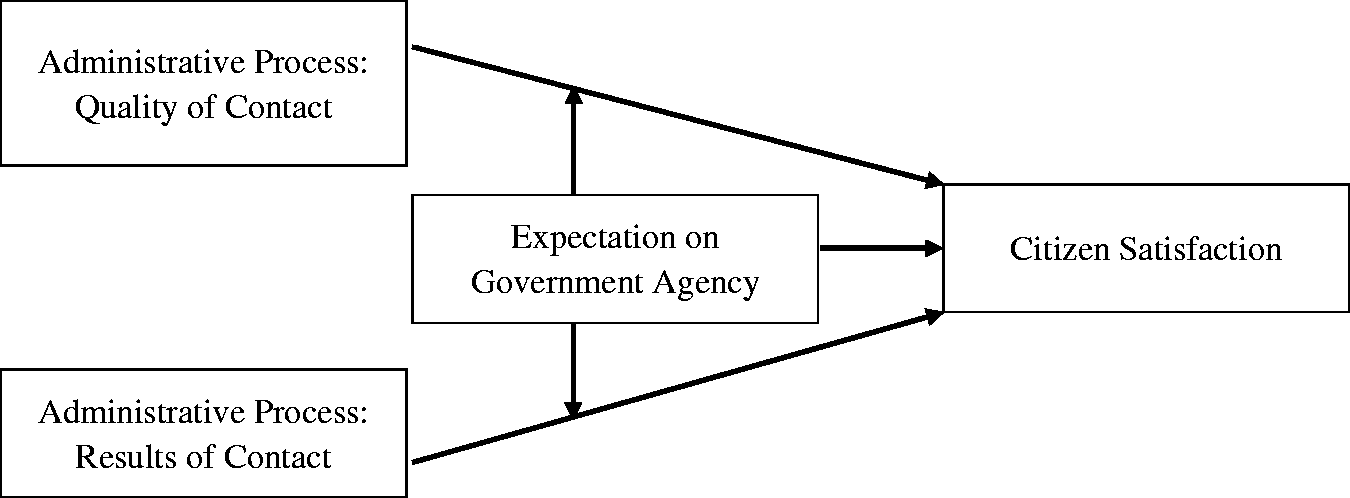
Methodology
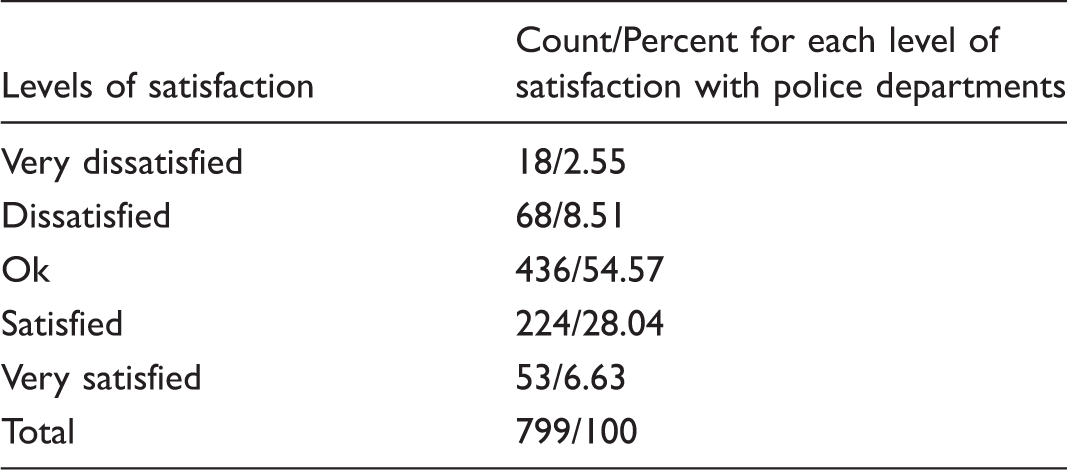
Data used in this study were collected in a district of F city in the Guangdong Province, China. 1 Using a stratified random sampling technique, 1200 residents were selected for the survey, including 30 residents from each of the 40 communities. 2 In the end, a total of 949 residents or 79% of those selected for the study responded to the survey. After excluding cases with missing values on dependent and independent variables of this study, 799 respondents are included in the final analysis.
Perceived most influential issue on people’s daily lives.

Dependent variable
Dependent variable: Citizen satisfaction with local police departments.
Independent variables
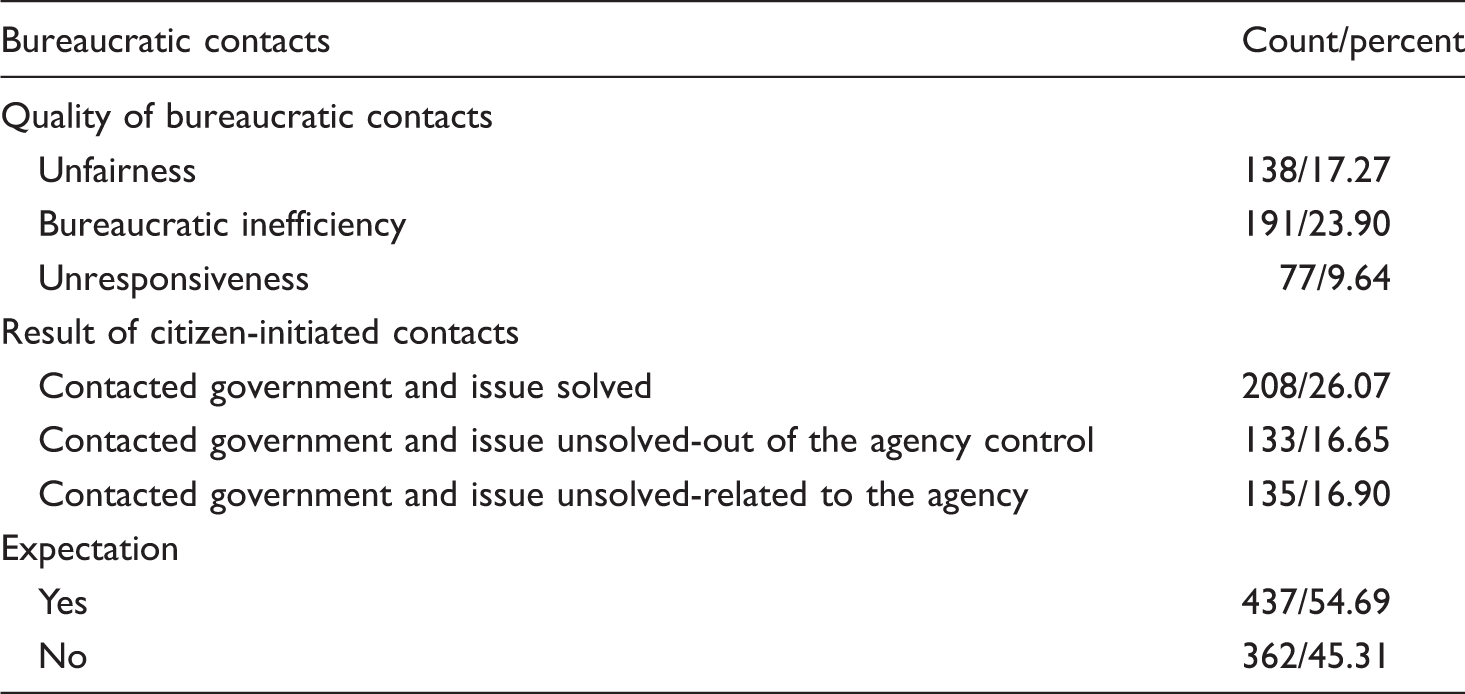
Based on the hypotheses, we included three sets of key explanatory variables in the analysis. First, we captured the quality of bureaucratic contacts using three dummy variables. In the survey, respondents were asked: “What are the main problems you experienced in your contact with local police departments?”. The variable “inefficiency” was coded as 1 if a respondent reported that he/she interacted with police departments and felt that the issues were dealt in bureaucratic and inefficient ways, such as red tape problems; otherwise, the variable was coded as 0. The variables “unresponsiveness” and “unfairness” are similarly defined for cases in which a citizen interacted with police departments and felt that the agencies were unwilling to respond to one’s request or comments, or one perceived not being treated fairly by the police officers, respectively.
Second, the results of citizen-initiated contacts were differentiated by three types. The survey asked a question, “Please indicate what best describe your contact with the local police departments.” The answer included six 3 different types of experience in interacting with local police departments. We considered three results of citizen-initiated contacts, as follows: (1) the citizen actively contacted the local government agency and issues were completely solved; (2) the issues were unresolved and the citizen felt it was due to reasons out of the agency’s control; and (3) the issues were unresolved and the citizen felt it was due to reasons related to the agency. These three categories were created as three dummy variables, which were coded as 1 if the above choices were affirmed respectively.
Third, citizen’s expectation on the government agency was measured by a dummy variable. In the survey, the respondent was asked: “If your motorcycle was stolen, do you expect that the local police department could solve the case?” The variable was coded as “1” if the respondent chose “Yes,” which indicates high performance expectation towards the local police departments. It was coded as “0” if the respondent chose “No” which demonstrates citizens’ low expectation on the performance of the local police departments.
Descriptive Statistics of Independent Variables (N = 799).
Control variables
For control variables, we included a set of demographic and socio-economic variables, such as gender (1 for male and 0 for female), age (continuous), government employee (1 if yes and 0 otherwise), individual monthly income (continuous), and education (1 if having college and above education and 0 otherwise). Government employee is a variable that captures whether the interviewees themselves are occupationally related to the domain of public services. We expect that those who work for the government will tend to be more satisfied with public service providers (McNeal et al., 2008; West, 2004).
Descriptive statistics of demographic variables.

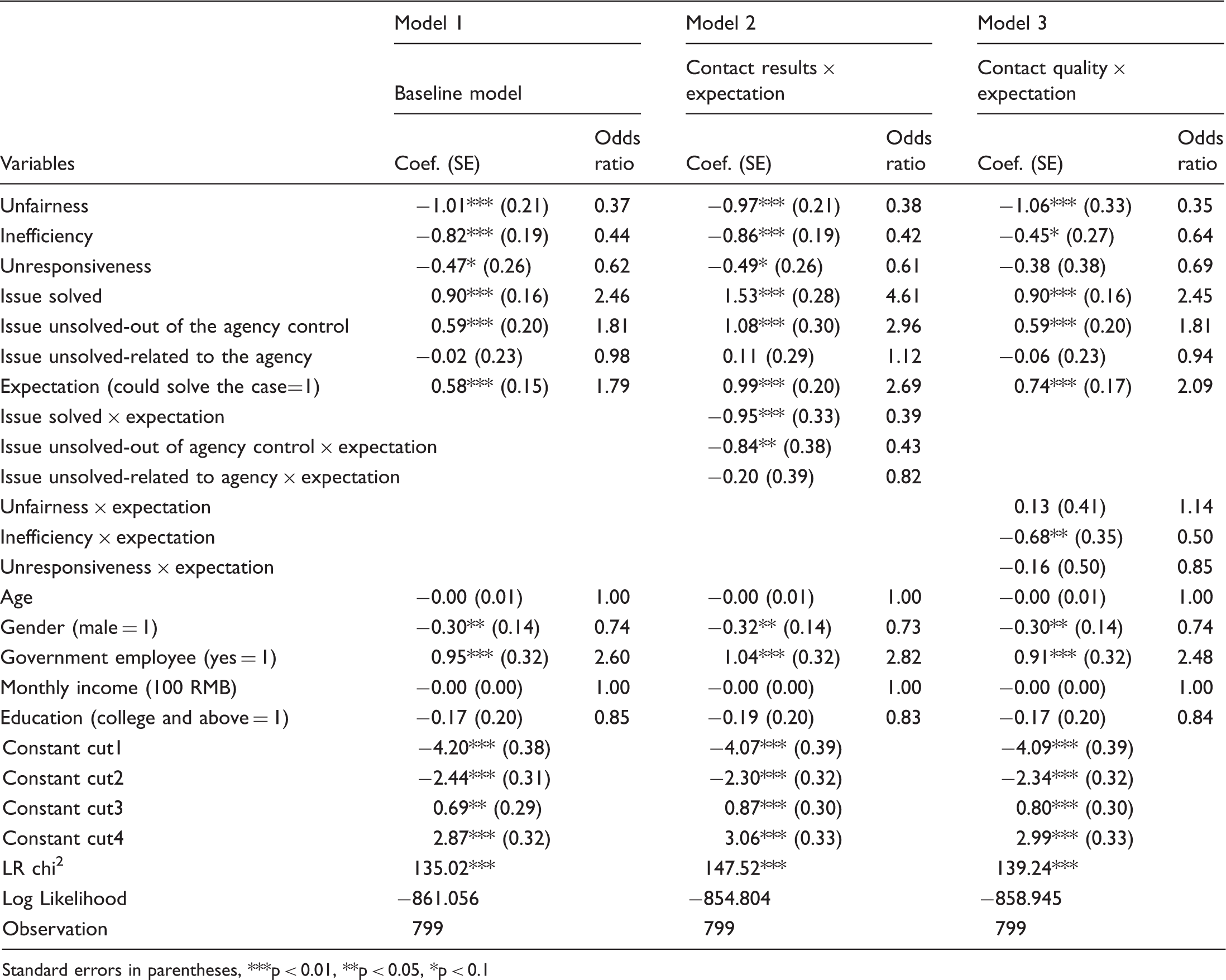
Ordered logit regression results of citizen satisfaction.
Standard errors in parentheses, ***p < 0.01, **p < 0.05, *p < 0.1
Findings
Table 5 presents the ordered logit regression results of how the quality and results of bureaucratic contacts influence citizen satisfaction with local police departments, and the extent to which the expectation on government moderates the influence of bureaucratic contacts on citizen satisfaction.
4
Model 1 is the baseline model only considering the role of performance expectation in affecting citizen satisfaction. Models 2 and 3 present the results with the moderating factor. The Likelihood Ratio Chi-Square statistics indicate that three models are all statistically significant

The results of the three models show the following consistent findings. First, for quality of bureaucratic contacts, we find that unfairness and inefficiency significantly and negatively affect citizen satisfaction with local police departments in all of the three models, supporting Hypotheses 1a and 1b. Unresponsiveness is negatively associated with citizen satisfaction at the 0.05 level in Model 1 and Model 2, partially supporting Hypothesis 1c.
Second, in terms of citizen-initiated contact results, contacted government and issue solved is positively related to citizen satisfaction in all the models (p < 0.01). It supports Hypothesis 2a, that is, citizens who actively contacted government and got their issues resolved have higher level of satisfaction compared to those who did not initiate their contact with government agencies or who did not get their issues resolved. Citizen satisfaction also increases when the problem was unsolved and the respondent believed that the reasons were out of the agency’s control supporting Hypothesis 2b (p < 0.01). However, when citizens contacted government but issues were not solved for reasons related to the agency, their satisfaction would not change significantly.
Third, the findings suggest that performance expectation on a government agency not only positively influences citizen satisfaction, but also moderates the influence of the result and the quality of bureaucratic contact on citizen satisfaction. We find that expectation significantly and positively affects citizen satisfaction with local police departments in all of the three models (p < 0.01), confirming Hypothesis 3a. Model 2 integrates the interaction effects between citizen’s performance expectation on agency and three types of results of bureaucratic contacts. The results show that the interactions of expectation and two types of results—issue solved and issue unsolved-out of agency’s control—are statistically significant and negative (p < 0.01), which suggest that expectation moderates the impact of the results of bureaucratic contacts on satisfaction. The findings on the moderating effect of expectations support Hypothesis 3b.
Although citizens who have higher performance expectation on government agency tend to show higher satisfaction (Odd Ratio = 1.79, p < 0.01) in Model 1, the results of Model 2 suggest that performance expectation moderates the influence of contact results on citizen satisfaction. To further elaborate the moderating effect of citizen expectation, we predicted the likelihood of “satisfied” as opposed to “very dissatisfied” by holding other dichotomous variables constant at 0 and continuous variables constant at their means. As shown in Figure 2, when citizens did not contact the police department or did not have their issues solved, those with higher expectation (i.e., who expected the police departments to find stolen motorcycles back) would have higher satisfaction than those with low expectation. However, when citizens contacted the police department for some issues and the problems were solved, those with low expectation on local police department would have a much higher increase in their satisfaction with the agency than those with high expectation.
Predicted probabilities of “satisfied” for issues solved by expectation level.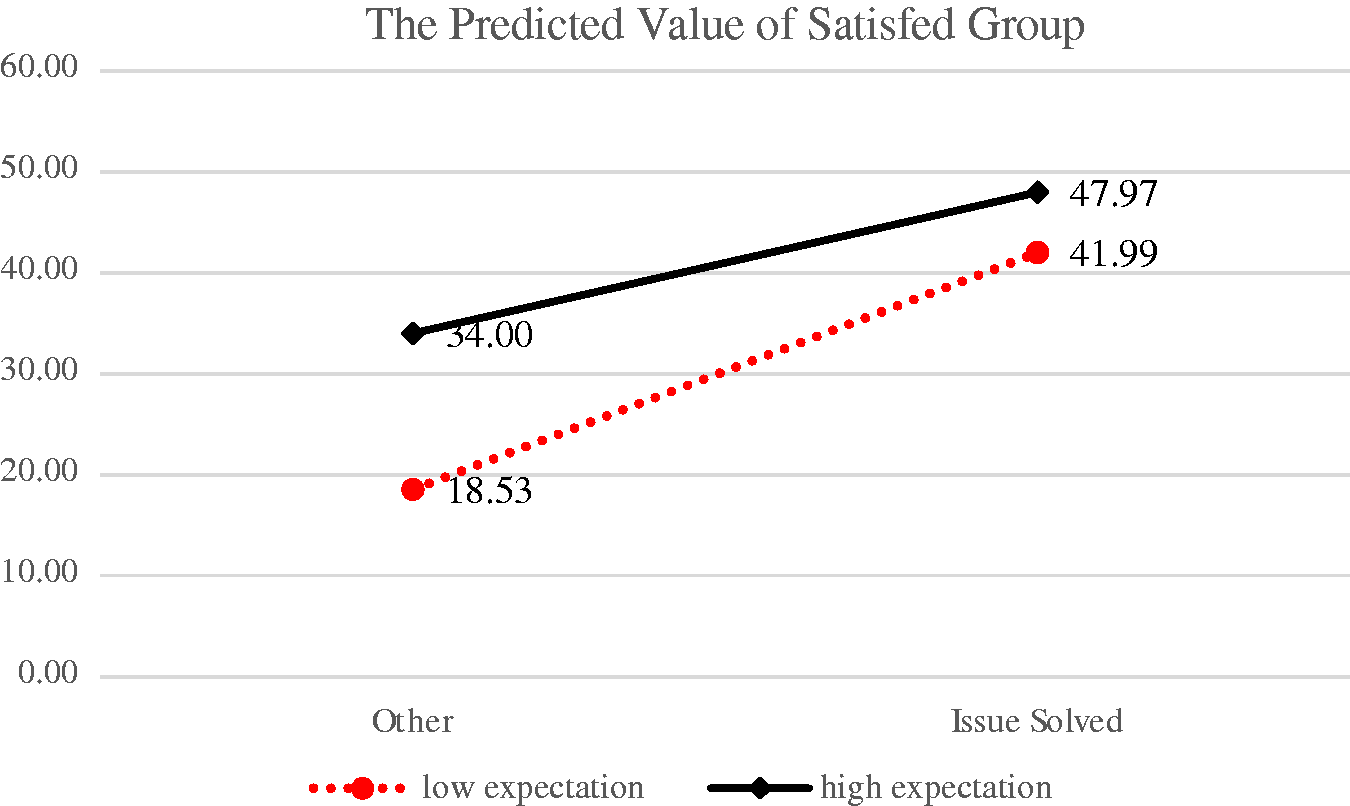
Similarly, Figure 3 shows that for those with low expectation on local police departments, if they contacted government, but issues remained unsolved for the reasons out of the agency’s control, their satisfaction with local police departments increases more than those with high expectation did.
Predicted probabilities of “satisfied” for issues unsolved-out of agency control by expectation level.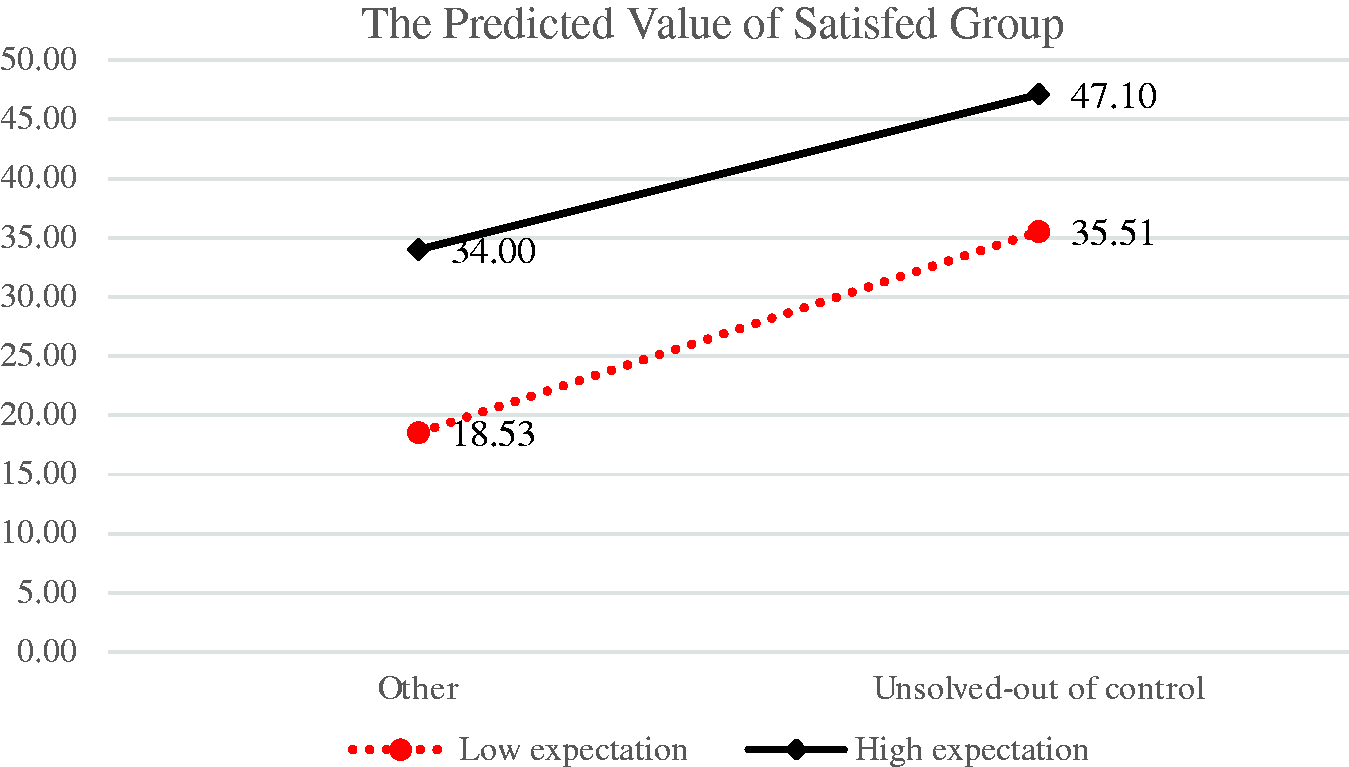
Model 3 presents the moderating effect of citizen expectation on the relationship between contact quality and citizen satisfaction. The results show that citizen expectation mitigates the relationship between the perceived inefficiency in the contact process and citizen satisfaction (p < 0.05). While inefficiency generally lowers citizen satisfaction with local police department (Odd Ratio = 0.50, p < 0.1), those with high expectation reduces their satisfaction at a slightly higher rate than those with low expectation (see Figure 4). However, this study did not find significant moderating effects for the influence of unresponsiveness and unfairness on citizen satisfaction. The finding partially supports Hypothesis 3b.
Predicted probabilities of “satisfied” for perceived inefficiency of contact by expectation level.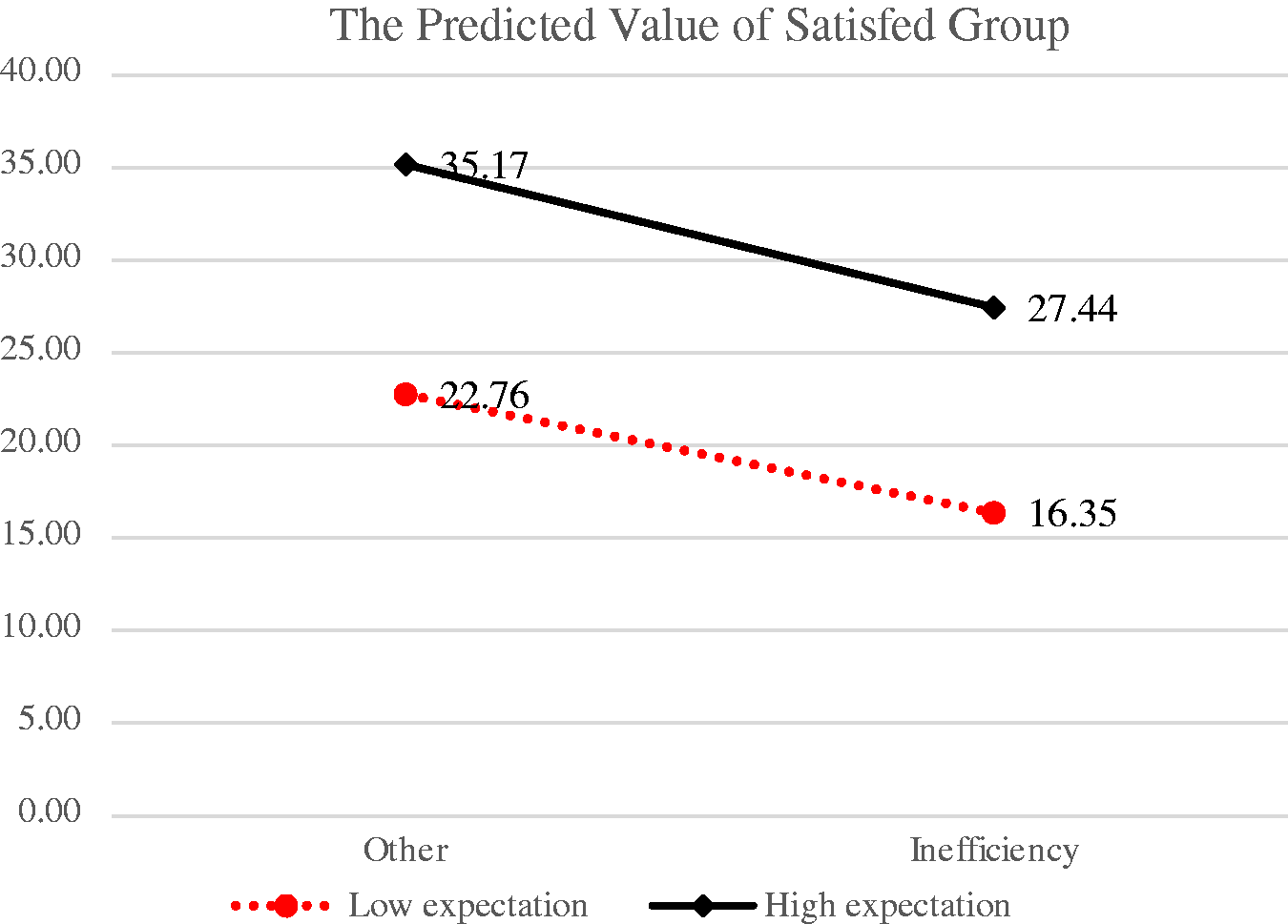
In terms of individual characteristics, Table 5 shows that in general, men are less satisfied with police departments than women, which is consistent with prior findings (Overman, 2017). In addition, government employees who actively contacted the police department for services have a higher satisfaction (p < 0.01), which is also in line with prior studies (West, 2004).
Discussions and conclusion
In the past two decades, the major citizen satisfaction research has been focused on the linkage between the outcomes of public services and satisfaction. Using the expectations disconfirmation approach, many scholars study citizen’s expectation and the disconfirmation of expectations based on perceived performance (James, 2009; Morgeson, 2013; Roch and Poister, 2006). Rather than focusing on service outcomes, this research identifies factors associated with administrative process in service delivery that influences citizen satisfaction with local government agencies, particularly in the local police department setting in China. The main theoretical argument is that citizen satisfaction with local government agencies is influenced by the quality and the results of bureaucratic contacts assessed by “experienced” service recipients (Kelly and Swindell, 2003) who actively contact government for particular problems. Citizens have a higher satisfaction level if they perceive that the quality of bureaucratic contacts is good and that the results of bureaucratic contacts are positive.
Similar to citizens in the West, our results demonstrate that fairness and efficiency in the process of contact also significantly influence citizen satisfaction with police departments in China (such as Andrews and Van de Walle, 2013; Herian et al., 2012). It reinforces the importance of fairness and efficiency in the service delivery process regardless of the political contexts. In an online legal advice website in China,
5
one person asked for legal advice from lawyers about the police officer’s unfair attitude. She wrote that she had a fight with her neighbor on how to use the public space outside the building. Her neighbor threw all her drying clothes on the ground. She reported it to the police department. The police officer, however, made her more upset than before. It was not only because the police officer did not resolve the case, but also because he showed a very unfair attitude. The resident stated: The police officer did not look at the space in dispute, but readily sided with my neighbor and judged that it was my fault. I asked the officer ‘Is this how you solve the problem?’ and he responded: ‘You can go to the court’ and then left. I felt that the police officer was totally unfair only because I am not a native resident here. I supposed that the police officers should be fair. I was so disappointed with the police agency.
Similarly, another case shows how efficiency in the bureaucratic contacting process affects people’s satisfaction. In a Chinese online forum,
6
one person wrote a long message about how the police officers helped him solve a robbery case within five hours, which far exceeded his expectation. His six-year-old son played in a public square with him and a teenager robbed the camera from his son’s hand. He said that he did not want to report to the police department because he read too many stories that police officers would not resolve the cases. In order to comfort his young child, he, however, decided to report the case to the police department. To his surprise, he received a call from the police station at 11.00 pm, asking him to take the robbed camera back. Then he wrote: I cannot believe that the police officers can solve the case within five hours after I made a report. My experience is far from my earlier expectation. I had many issues that need the help from the police departments in the past: I was bullied in my high school, my money was stolen in the bus… But I did not want to contact police departments because I felt that the police department couldn’t help me at all. There were too many negative news and complaints. My mind has been completely changed this time. I am very satisfied with the police department!”
Unlike fairness and efficiency, this was not the case for responsiveness, however. In this study, different from findings from democratic contexts, bureaucratic responsiveness or the lack of it does not appear to be a significant factor that influences citizen satisfaction in China. This finding might be explained by China’s political and top-down hierarchical control systems, which shaped citizens’ satisfaction in a way that is different from those in electoral democratic countries. According to the modern political theory, responsiveness is an important characteristic of public agencies in a democratic society (Dahl, 1971; Verba and Nie, 1972). Studies in the Western context have found that government responsiveness is significantly related to citizen satisfaction (such as Dukes et al., 2009). However, in an authoritarian country like China, local government officials may not be motivated to respond to citizens’ requests under the top-down hierarchical control system where “overhead democracy” (Redford, 1969) is systematically absent.
In China, local governmental officials’ career advancement is directly tied with performance targets imposed top-down by the upper level governments. Under this personnel system, they tend to be more responsive to upper-level government’s imposed performance targets and indicators, rather than to citizens’ requests (Chen et al., 2016) or only selectively respond to some types of citizen requests (Su and Meng, 2016; Wang and Hu, 2017). For example, Wang and Hu (2017) find that Chinese local government is fast to respond to the citizens’ requests that were proposed through a group demonstration or petition approaches while slow or not responsive to citizens’ daily requests. To be clear, group demonstration or petitions are considered as factors that will result in social instability, and maintaining social stability (weiwen) is a top performance indicator for local government cadres. If local government officials do not respond to group requests appropriately, they will face scrutiny from upper level administration and could be demoted or lose promotion opportunities. However, local government officials have no strong incentives to respond to their individual clients’ requests in an authoritarian system since slow response or unresponsiveness to individual client’s request rarely have serious consequences to them (Chen and Chen, 2008; Chen et al., 2016). Moreover, the low police–citizen ratio in China (Cao and Hou, 2001; Dutton and Tianfu, 1993) might also make it practically hard for local police departments to respond to every citizen’s request. In turn, citizens are accustomed to be tolerant of slow response or even no response from government agencies in a polity with limited opportunity for meaningful political participation (Zheng, 2001).
Nevertheless, when the issues for which they actively contact government agencies are successfully solved, or remain unsolved but out of agency’s control, citizen satisfaction with local government agencies is higher than those who do not contact. Additionally, the findings demonstrate that citizens’ performance expectation on the government agency plays a moderating role, mitigating the influence of the quality and the result of bureaucratic contacts on citizen satisfaction. A Chinese citizen recently shared his experiences with the authors in an interview: I went to a hospital and got into a fight with the parking fee collector. Since he did not let me go and blocked many cars, I decided to call 110 (similar to 911 in the United States). I expected that a police officer would arrive soon, but no one arrived for a long time. I clearly remembered one bystander said, ‘If nobody died, 110 would not send police officers.’ Then I called 110 again, told them we had a severe fight and someone was to die. This time two police officers arrived soon. Since my impression was that 110 is fast and efficient, I felt very disappointed as they selectively responded to calls and did not arrive at the site until several calls with an exaggerated report. Even if the problem was resolved, my satisfaction with the police agency dropped greatly.
In addition, citizen satisfaction survey is considered an “information-gleaning” type of citizen participation initiative which has the potential to address the representational bias of other types of public participation mechanisms (Sharp, 1990). With the change in Chinese political economy, citizen satisfaction surveys can provide opportunities to citizens “to voice opinions on whether government services meet public expectations and preferences” (Gao, 2012: 136). Similarly, Yu and Ma (2015) suggest that external performance evaluation activities, such as citizen satisfaction survey, have “certainly the potential to improve public administration efficiency and effectiveness, enhance political accountability, advance administrative reforms, and facilitate the transformation of China’s governance model” (p.164). Under the circumstance of lacking electoral democracy, citizen participation channels, and accountability mechanisms to ensure government performance, understanding the factors associate with citizen satisfaction is particularly important. This study elaborates that service-oriented government should not only emphasize the service outcome but also pay attention to the process in delivering the public services and citizens’ perception of this administrative process.
Second, the findings show that citizen expectation moderates the influence of the results and quality of bureaucratic contacts on citizen satisfaction. Unlike most previous studies on citizen satisfaction from expectations-disconfirmation or expectations-anchoring perspectives, we expand the role of expectation from an antecedent to a moderator, finding that expectation not only is a core predictor of citizen satisfaction, but also weakens the administrative process–citizen satisfaction relationship. Although we do not propose that local governments need to artificially lower or manipulate citizen expectation so that their level of satisfaction could be increased without any changes to the actual quality of services, our findings suggest that one needs to be realistic about what local government can or cannot provide so that citizens’ expectations are reasonable. For example, China has one of the lowest reported police-to-population ratios (Cao and Hou, 2001). Given the insufficient police force, it is difficult for local police departments to respond to all the residents’ needs. As a result, police departments may think about how to communicate with citizens so they would set realistic performance expectations.
In terms of managerial implications, this study calls for more attention to what influence citizens’ expectation so that public managers could improve citizen satisfaction by swiftly managing citizens’ expectation via traditional media or various e-government and social new media channels. People’s expectation is subjective and fluid and often changes with individual experiences and the information they receive. For citizens who receive services often, their expectations could be shaped most directly by their experiences. If the recent services they received were not as good as the ones they received earlier, then their satisfaction may be lowered. In these cases, public managers could make effort to ensure that the quality of service is consistently good. For those who do not seek police service often, their expectation might be shaped more by the information they receive. In these cases, public managers could pay attention to communication with the public so that citizens understand the nature of police work, the workload, and the like. The communication can facilitate citizens set a reasonable expectation of the process or time it needs to get a job done. Managers could also do pre- and post-survey at service site to see whether services meet citizens’ expectation. This is also evidenced by our results, which show that the level of citizen satisfaction is increased even when an issue is not solved by government agency but citizens believe it is out of the agency’s control. This finding echoes the importance of communication between street-level bureaucrats and citizens because some issues which the public expects the agencies to fix may in fact be out of agency’s control. If government agencies are able to explain the situation clearly to concerned citizens, they would receive fewer complaints and citizens would be more satisfied. This finding echoes the previous studies that highlight the positive role of public communication in impacting citizen satisfaction (Charbonneau and Van Ryzin, 2015; Ho and Cho, 2017).
Third, in terms of managerial practices, citizens would feel more satisfied if government agencies act efficiently when addressing the issues for which citizens seek help, and they would feel even more satisfied if the issues are solved successfully. Public managers should make efforts to improve citizens’ experiences with the process when they contact government agencies, which are within the “zone of control” of most street-level bureaucrats.
Fourth, bureaucrats’ attitudes matter in the process of citizen-bureaucrat contacts. Three models show that unfair attitudes pose an issue for local police departments. This finding highlights the importance of fairness, which is one key aspect of government process in public management practice. It may be particularly true for coercive service when citizens do not have any choices in receiving them and that are crucial to people’s daily lives. For example, if people go to the local police department regarding a burglary or physical threat but feel that the police department does not treat them fairly to address their problems, it will increase their dissatisfaction with the agency.
As this study focuses on local police department, the findings could be particularly useful for coercive service providers who wish to improve the satisfaction level of their citizenry. The Chinese case poses additional significance because it represents a political-social context where citizens have very limited political channels through which to voice their opinions about public services, and limited market channels by which to choose public services.
The findings are not without limitations. First, the dependent variable, citizen satisfaction, is based on perceptual measures. In addition, the measurements for perceptions were single-item measures, which may pose a threat to reliability and construct validity. Future studies should further examine citizen satisfaction using objective measures or multiple indicators that can capture the multi-dimensionality of the concept (Christensen and Gazley, 2008; Farazmand, 2009). Second, the analyses of this study were quantitative and drawn from a single source, which may result in the potential common-source biases (Podsakoff et al., 2003). We tested some potential causes of common-source bias, such as consistency motif, and found that the model results were robust controlling for potential sources of bias. However, given there are many other potential causes of common-source bias (i.e., respondents respond in a socially desirable way), future studies should consider other remedies, such as using non-self-reported data, separating the measurement of predictors and citizen satisfactions, and so on. Third, this article focuses on how bureaucratic contacts with police departments affect citizen satisfaction in China. Since the nature of citizen contact with the police bureau may be different from that of other governmental agencies, it requires caution to generalize the findings from this study. It is, however, imperative to study this line of research as police agencies, which evidently in the Chinese context, have one of the most important public service functions in the daily lives of Chinese citizens. Fourth, the survey data used for this study were collected in 2007. Although the data were released recently, any changes occurred after 2007 were not reflected in this study. For example, since 2013, the surveyed district government has updated e-government services, making many public services more accessible and efficient, which could potentially influence citizens’ satisfaction. Therefore, a follow-up study regarding how changes in local governments’ service mode, such as adopting information technology, may impact citizens’ satisfaction would be informative. Despite the limitation, conclusions drawn from this survey data collected through a stratified random sampling technique provide valuable information on how citizens’ satisfaction with local government are associated with the quality and result of bureaucratic contacts as well as expectations. Finally, the empirical focus of this research is a city district in an economically prosperous area in southern China and its government is one of the first local governments to start service-oriented government reform. Therefore, the findings of this research could offer useful insight for local governments implementing service-oriented government reform in other parts of China. In order to examine the external validity of the findings, future studies should examine the influence of bureaucratic contacts on satisfaction in other local jurisdictions in China or other developing countries.
Footnotes
Acknowledgements
Thanks are due to Professor Keith Baker, Professor Claire Dunlop, Professor Edoardo Ongaro, and three anonymous reviewers for their helpful comments. The sponsors of this study played no part in the study design; in the collection, analysis and interpretation of data; in the writing of the paper; or in the decision to submit the paper for publication.
Declaration of conflicting interests
The author(s) declared no potential conflicts of interest with respect to the research, authorship, and/or publication of this article.
Funding
The author(s) disclosed receipt of the following financial support for the research, authorship, and/or publication of this article: Financial support for the research was provided by the National Natural Science Foundation of China (No. 71774107) and China State Scholarship Fund (201706485018).