



Abstract
The article applies an experimental vignette research design to test how blame and credit expectations affect individuals’ willingness to support innovative programs. Respondents received a survey with three scenarios of innovative programs and were randomly allocated to being blamed if the program failed, credited if it succeeded, or a control group. Blame and credit framing had no statistically significant effect on willingness to support the programs. It was much more important for respondents whether the program was 'good for the community'. This calls into question current assumptions about anticipatory blame avoidance motivations as a primary antecedent of innovative behavior.
Keywords
Introduction
Much of the recent literature on public sector innovation has focused on the factors that drive or hinder innovation in public services (Hansen, 2011; Verschuere et al., 2014). A subset of this literature has focused on understanding the role of decision-making behaviours, personality characteristics and beliefs on innovation (Meijer, 2014; Roberts and King, 1991). Given that innovation is an inherently risky activity (Singh, 1986), the literature has cited the desire to avoid blame as one of the main behavioural tendencies that are at odds with current prescriptions to increase the innovation capacity of public sector organisations (Borins, 2001; Knutsson and Thomasson, 2014). As the argument goes, individuals in the public sector will be reluctant to innovate if there is a chance that they will be blamed for failures (Lægreid et al., 2011).
So far, however, little empirical research exists to test these assumptions in the context of innovation. What is also puzzling is that despite claims of a blame avoidance culture in the public sector, we often see instances of successful innovation, often led by innovation champions who seem more willing to manage the risks of innovation (Meijer, 2014). Moreover, blaming behaviour in a public organisation can be a powerful mechanism to encourage caution in public policy design processes and ensure that the policies and programmes are not ultimately harmful to communities. Eliminating this mechanism in order to promote innovation is not necessarily wise.
This paper is a first attempt to test how heavily blame or credit expectations affect people’s support for innovative policies. The results can yield insights about how public sector managers and innovation champions can foster an organisational culture that assesses innovation programmes as rationally as possible.
To test these expectations, we designed an experimental vignette study. Vignette studies offer a straightforward test of the impact of framing options with expectations of blame and credit while holding other factors relatively constant (Wenzelburger, 2014). Using short scenarios called ‘vignettes’, the study manipulated credit and blame expectations in three fictional innovative service programmes using three groups (two experimental and one control) to test if people reacted to innovation differently depending on the manipulation (Alexander and Becker, 1978).
The study applied an experimental approach for two reasons: first, despite numerous claims in the literature about how blame avoiding motivations affect innovation in public services, there is hardly any empirical evidence to support this idea (Hood et al., 2016). As De Vries et al. (2016) have shown in a systematic review of the literature, much more empirical work is needed to understand what mechanisms might support public organisations’ innovation capacity. An experimental research design is well suited to test theories about how individual-level motivations affect innovative behaviour (Jilke et al., 2016). Second, what literature does exist on blame avoidance has mainly focused on explaining the decision-making motivations of politicians (Moynihan, 2012; Nielsen and Baekgaard, 2013) dealing with issues like crises (Boin et al., 2010) or large scale reforms that can attract a lot of public attention (Prince, 2010). Assuming that non-political professionals also have incentives to protect their own and their organisation’s reputation (Carpenter, 2001), blame avoidance theory has been applied to predict administrative behaviours. So far, however, these assumptions have not been tested in an innovation context. An experimental approach provides an appropriate methodology to test how strongly blame avoidance affects individuals’ innovative behaviour in a non-political context. Vignette studies have the additional advantage of letting researchers make subtle changes in situational factors to see how individuals’ decision-making is affected (Hattke and Kalucza, 2019).
Innovative behaviour in the public sector: Current literature
Recent literature in public administration has shown interest in public innovation as a reform tactic to address the ever more complex challenges that public sector organisations face (De Vries et al., 2016). Public innovation is defined as the deliberate implementation of a service, process, practice, or technology that is relatively new to the adopting public organisation (Damanpour, 1991) and introduces a discontinuous change in at least one of the following: the service itself, its beneficiary population, or the adopting organisation (Osborne, 1998).
Much of the literature on public innovation has focused on structural and environmental antecedents of innovation intending to determine how public organisations can improve their innovation capacity (De Vries et al., 2016). In recent years, a few researchers have also investigated the role of individual behaviours as important determinants of an organisation’s innovation capacity (Bysted and Jespersen, 2014; Considine and Lewis, 2007; Meijer, 2014). Risk-taking behaviour has been found to be especially important (Bysted and Jespersen, 2014). Widely cited characteristics of the ‘public entrepreneur’, who should be able to push through innovations, including competitiveness, autonomy, pro-activeness and risk-taking (Bernier and Hafsi, 2007; Roberts and King, 1991). In a study of the Dutch police force, Meijer (2014) found that people who were driving innovation were tenacious, hard-working, confident and willing to take risks.
Risk-taking is important because innovation introduces uncertainty into the public sector. The newness of innovation means there is insufficient experience to more or less predict what outcomes are likely. Past literature also shows that innovation projects have a high probability of failure and of exceeding their planned budgets (Tidd and Bessant, 2013). Moreover, as Bysted and Jespersen (2014: 224) have argued, employees who push for innovation also perceive it as risky because they are challenging established goals, methods, relationships, norms and expectations that the rest of the administration and the public have. In sum, risk-taking is an inherent element of innovation.
At the same time, scholars argue that bureaucrats are generally risk-averse individuals and that this behaviour hinders public innovation (Bellante and Link, 1981). One of the main risks that public sector workers face is the risk of blame (Hinterleitner and Sager, 2015; Hood, 2002). Reasons for assuming that public sector workers are vulnerable to blame include the media scrutiny that public organisations receive as well as the many procedural safeguards and formal internal controls that characterise the public sector and that punish any deviations from the protocol. In this environment, Hood has argued (Hood, 2011: 24), blame avoidance is usually the ‘political and bureaucratic imperative’ of executive politics. This means that in their decision-making, politicians and bureaucrats will consider the risk of getting blamed for policies that have caused or could cause some harm or loss if they think such blame will affect their reputation, chance of being promoted, current position, remuneration, etc.
Especially in the context of innovation, Howlett (2014) has shown that decision-makers will try to avoid innovation as much as possible to prevent being on the receiving end of potential blame. The argument is in line with current scholarship on the role of risk in public innovation, which argues that public professionals mainly understand risk in terms of organisational and professional consequences, in which blame presumably plays a central role (Osborne and Flemig, 2015), and that current risk management approaches are limited to risk minimization (Brown and Osborne, 2013). Researchers have responded to these arguments with recommendations to eliminate the culture of ‘blaming and shaming’ public sector workers for occasional failures and errors.
Despite the frequency of these assumptions about the relationship between the fear of blame and innovation, they have not been tested empirically in public innovation research. This article addresses this gap by testing the relationship between blame avoidance motivations and support for innovation in public services. This is important so that recommendations for improving the innovation capacity of organisations can be based on empirical findings, rather than on untested assumptions.
Theoretical framework: Blame avoidance as a barrier to innovation
Blame avoidance is generally regarded as the activities and behaviours that individuals engage in to avoid responsibility for policy failures or errors (Hood, 2002). These activities can be anticipatory or reactive, where the former is the set of strategies pursued to prevent the risk of blame from materializing in the first place and the latter refers to strategies employed to block blame once a failure or crisis has occurred (McGraw, 1990; Sulitzeanu-Kenan, 2006). The focus of this study is anticipatory blame avoidance, which the literature assumes affects individuals’ decisions on whether to innovate. The current assumption is that if an individual perceives a risk of being blamed for a decision, they will avoid making that decision (Catney and Henneberry, 2012) or will choose the option that would minimize any risk to themselves (Hinterleitner and Sager, 2015).
The theory of blame avoidance is closely related to theories of cognitive psychology that have been integrated into public administration literature (Pfeifer, 2011). Robust research in psychology and behavioural economics has shown that when people make decisions under uncertainty (such as during innovation), they are likely to base their decision on the potential losses they foresee rather than on the potential gains (Kahneman and Tversky, 1979). According to this ‘prospect theory’, loss-averse behaviour is due to the human tendency to exhibit a ‘negativity bias’: the tendency to give more attention and value to negative information (losses) than to positive information (gains).
In a public innovation context, prospect theory leads to the logical conclusion that decision-makers will spend more effort on blame avoidance strategies than on ‘credit claiming’ (Hood, 2002; Weaver, 1986). Credit claiming motivations are weaker than blame avoiding motivations in this context because the effect of negativity bias plays out in two ways: first, decision-makers themselves will tend to overestimate the possible consequences of a bad decision (James et al., 2016). Second, the public will also be more likely to notice and express discontent than satisfaction with current policy (Sulitzeanu-Kenan and Hood, 2005). In the case of innovative programmes that often target specific problems or groups, these arguments suggest that people who might suffer losses from an innovation failure are more likely to express their grievance than the beneficiaries of successes are to express their satisfaction (Nielsen and Baekgaard, 2013). Decision-makers, who are also subject to negativity bias, would, therefore, limit their engagement in innovation projects that entail risks and uncertainty.
What is interesting in public sector management research is that scholars have claimed that blame avoidance has become the primary concern for decision-makers working in contexts where they have to manage risk and uncertainty, trumping other considerations. Weaver (1986), who first applied these concepts to explain political decision-making argued that in evaluating decisions, people are strongly motivated by the wish to avoid blame (more than by the desire to claim credit). Similarly, Hood (2002, 2011) has argued that public professionals seem more concerned with managing the risks of being blamed for bad decisions than with managing the actual risks of their decisions. This is not to say that other considerations that impact decision-making have not been discussed. Weaver (1986) also argued that policymakers may act because they think a decision is good even if there is no political payoff, what he called the ‘good policy’ motivation. However, he concluded that when ‘push comes to shove’, blame avoidance is the strongest motivation (1986:372). Since innovation has a high likelihood of failure, blame avoidance theory is often used to hypothesize that public-sector workers might hesitate to innovate for fear of the repercussions from failures.
The resulting recommendation for organisations interested in developing their innovation capacity is that they should reduce the culture of ‘blame’ and learn to tolerate a certain level of risk and error (Borins, 2001). However, these recommendations are not based on empirical knowledge; there is still very little research about how the risk of blame is perceived in the context of innovation (Timeus, 2019). Moreover, the theory of blame avoidance does not explain why we do see various instances of innovation in the public sector. As this overview of the literature has shown, the high explanatory power of the blame avoidance theory for why and how actors pursue risky policy (Vis and Van Kersbergen, 2013) means that it has practically become a piece of untested conventional wisdom in the public innovation literature. There is a clear interest in testing the effect of ‘anticipatory’ blame avoidance motivations against other behavioural factors that might affect innovative behaviour, such as credit claiming motivations, good policy motivations and other risk perceptions. This research will provide innovation leaders insights into how to create an organisational culture in which people can assess innovative programmes rationally, on the project’s merits, rather than based on personal concerns.
Moreover, the article focuses on an administrative rather than a political context. Many of the literature’s assumptions about blame avoidance behaviour are derived from politicians’ behaviour (McGraw, 1990; Wenzelburger, 2014), but politicians operate under different incentive structures. It is, therefore, worthwhile to test these assumptions on non-political individuals so that recommendations for organisations can be developed on empirical findings rather than untested assumptions. This article directly addresses this gap in the literature. This will also improve recommendations on how to develop the innovation capacity of public organisations.
Hypothesis development: Blame vs. credit
Based on the overview of the literature and grounded in blame avoidance theory of public administration, this section presents three hypotheses about how the expectation of blame and credit can affect individuals’ willingness to support a public innovation project. The study assumes that actors who pursue blame-avoiding strategies will not be able to also claim credit, in case of success. One can, therefore, assume that the relationship between blame avoidance and credit claiming approaches a zero-sum situation: no strategy can both protect the actor from blame in the case of failure and reward him with credit in the case of success. Even taking a neutral position regarding support for innovation means that one cannot be blamed or take credit. We propose the following three hypotheses:
The first hypothesis (H1) is derived from the literature summarized above and is grounded in current blame avoidance theory and the insights of prospect theory. In line with these current behavioural theories, fear of blame is expected to be a strong motivator for avoiding innovation.
H1: Individuals who expect to be blamed in the event of a failure will be less likely to support innovation in comparison to individuals who do not expect to be blamed or credited.
H2: Individuals who expect to be credited in the event of success will be more likely to support innovation in comparison to individuals who do not expect to be blamed or credited.
H3: Individuals who expect to be blamed in the event of a failure will be less likely to support innovation in comparison to individuals who expect to be credited in the event of success.
Research design
The research design for this project consists of an experimental paper-people vignette study (Aguinis et al., 2014). Vignette studies use short stories about a person or situation and include stimuli that are thought to influence each participant’s decision-making processes (Alexander and Becker, 1978; Hughes and Huby, 2004). In each vignette, specific aspects can be manipulated to test different hypotheses about how people would react in the circumstances described while keeping other information constant (Urbach et al., 2016). After reading the vignette, participants answer a set of questions designed to assess their reactions. The vignettes were included in an online survey.
Vignettes are often used in the field of psychology to study behaviours without directly making respondents aware of what is being studied (Constant et al., 1994; Foxx et al., 1989; Hughes and Huby, 2004). In particular, vignettes are useful for studies whose topic might be prone to socially desirable patterns of responding. This can be the case in a study regarding the adoption of innovative social programmes given the normative and positive connotation that innovative solutions have in popular culture today (Brown and Osborne, 2013). Studies on psychological behaviour argue that the vignette approach reduces the effects of social desirability because it allows people to respond from the perspective of another persona, and can therefore often provide more honest responses to how they would act in that situation (Foxx et al., 1989; Hughes and Huby, 2004). Vignettes also allow the researcher to control for contextual factors and to choose a single variable to manipulate. This experimental approach gives the vignette study high internal validity (Aguinis et al., 2014). Of course, as Hughes and Huby (2004) acknowledge, the vignette cannot perfectly replicate real life, but it can provide an estimate of what people might do in the given situation. These studies can show, with high internal validity, which of the variables tested have the strongest effect on decision-making. A vignette study is, therefore, a useful method to test whether blame or credit has a stronger effect on innovation support.
Questionnaire design
The first section of the questionnaire was the same for all respondents and included preliminary measures that could influence innovative behaviour in social services, such as ideology. The second section was the experimental component. It was designed following current guidelines for survey experiments in public management (Baekgaard et al., 2015; Shadish et al., 2002).
In the second section, participants were randomly assigned to one of three groups by the survey software: two treatment groups and one control group. Each group was presented with a very short introduction to the fictional city of ‘Norden’, where the innovation took place. The introduction to the context helped to create psychological distance between the first and second sections of the survey (Marsden and Wright, 2010) and provided useful background context. Participants were told that they were a unit director in the Department of Health and Social Welfare and were given an organisational chart showing their position in the organisational hierarchy (see Appendix 1). Respondents were asked to think about this situation while answering the questions. The respondents were then presented three randomized vignettes. One vignette described a policy programme called ‘housing first’, which gives homeless people access to apartments that are not contingent on the person proving sobriety or employment. A second vignette described the programme of ‘safe injection sites’, where heroin-users can get access to clean needles, a place to inject themselves, and even access to primary health care. The third vignette described a programme called the ‘Nurse-Family Partnership’, which pairs pregnant women in low-income neighbourhoods with nurses who make home visits over two years to counsel the women on parenting skills ranging from how to feed an infant to what early-education games are helpful for a child’s development.
The sequence of the vignettes was randomized to control for any effect of reading them in a certain order (Tourangeau et al., 2004). To ensure consistency, the vignettes were written as similarly as possible. For each of the groups, all three vignettes started and ended by asking the respondent if they would support the programme’s implementation.
To give the reader some context about how much risk each vignette represented and what its possible costs and benefits would be, the survey also included three bullet points explaining one benefit of the programme, one possible disadvantage, and a statement that the programme had high upfront costs. To offer a neutral indication of the likelihood that the programme might fail or succeed, the vignettes also included a sentence saying that ‘programmes like this usually have a 50-50 chance of working out’. The exact text of the vignettes is included in Appendix 1.
It is worth noting that the vignettes did not include the word ‘innovation’ to avoid suggesting a normative connotation that may introduce a bias as the respondents may then automatically judge the programmes positively due to the popularity of innovation in general. The programmes were selected based on online research of current innovations in social services and all three are examples of programmes that have been implemented in Europe or North America (Bornstein, 2013, 2014; Rosenberg, 2017). These programmes are considered innovative—not only by the authors but also by the organisations implementing them—because they mark a break with how the problem has usually been addressed so far (Bornstein, 2013, 2014), and require the responsible public professionals to develop new skills to implement the programme (Osborne, 1998).
We selected vignettes focused on social service innovation (as opposed to other innovation types such as administrative innovations) because programmes of this nature tend to elicit stronger opinions and were more likely to produce variance in the data than responses to more technical innovations. People answering the survey in the ‘assumed role of public managers’ would also be better able to evaluate the merits of social service innovations than administrative innovations. The three programmes also varied in the extent to which the beneficiaries might have elicited sympathy or prejudice from readers; the study assumes that heroin-users might have elicited the least sympathy and low-income children the most. The purpose of this was to analyse if the treatment conditions have different effects depending on the policies. Because of this, the three vignettes were analysed separately, not comparatively.
Treatment: Blame or credit
Credit or blame expectations were manipulated in two ways for the two treatment groups. First, before the first vignette, the questionnaire included an ‘anchoring question’ to elicit feelings of blame or credit. Respondents were asked to think of a time when they had been blamed or credited for something and to type a word or phrase that reminded them of the situation (see Appendix 1). This anchor was based on research showing that eliciting an emotion or memory from respondents is likely to affect—or ‘anchor’—how they will answer subsequent questions (Gehlbach and Barge, 2012; Inbar and Gilovich, 2011). It has also been shown that remembering a feeling will make it more likely that people will pay more attention later on to information that is coherent with that feeling (Furnham and Boo, 2011). Since the purpose of the experiment was to analyse the effect of blame or credit expectations, the questionnaire elicited a related memory of this emotion. Secondly, respondents were told in the first and last sentence of each vignette that they would be blamed if the policy failed or credited if the programme succeeded.
The control group was presented the vignettes with no anchoring question and no indication of possible blame or credit. For the two treatment groups, the questionnaire included a manipulation check that appeared after reading one of the vignettes to ensure that the treatment groups had noticed the blame/credit information (Baekgaard et al., 2015). After all vignettes, respondents were also asked to rank each programme in order of preference; this served as an additional attention check.
Immediately below the scenario text, respondents had to answer the question of whether they would support the programme on a 5-point Likert scale (dependent variable) with 5 being the highest value. In the next page, respondents were asked follow-up questions on a 5-point Likert scale, such as whether they thought the programme was good because it helped the community, and whether they thought the programme could be risky to their career.
Sample
The survey was conducted twice between May and October 2016; the first survey was used to validate the questionnaire and method and the second survey was used to refine the questionnaire. This improved the reliability and validity of the measurement approach. Following recommendations by Hughes and Huby (2004), the first survey was completed as a pilot test by a sample of 240 graduate students and alumni of a Master’s in Public Policy and an Executive Master’s of Public Administration programme. After presenting preliminary results and receiving expert feedback, the questionnaire design was improved and administered again. The main improvement to the survey was the addition of one more vignette: the ‘family nursing partnership’. Analysing an additional vignette would likely increase the robustness of the findings by decreasing the likelihood that similar findings between the two original vignettes were due to chance. Other improvements included shortening the non-experimental section of the survey to reduce the completion time and adding a second attention check (a ranking question) to improve confidence. The second time, the refined survey was administered on the platform ‘Amazon Mechanical Turk’ (AMT), a ‘crowd-working’ platform where individuals work on small tasks. While the respondents were not necessarily public sector workers, almost half of the sample has experience working in the public sector, which provides some validity to the chosen sampling approach. A comparison between public and privately employed respondents indicated that there was no statistical difference between their responses, so the entire sample could be analysed (Stritch et al., 2017).
AMT is increasingly being used for psychological and behavioural survey research because it offers a suitable alternative for surveying difficult-to-access populations, such as public sector workers (Paolacci and Chandler, 2014; Stritch et al., 2017). Public administration researchers, in particular, have argued that AMT is suitable for studies that focus on human cognitive and decision-making processes of interest to public managers (Stritch et al., 2017). Recent research has supported using AMT for experimental studies because 1) AMT offers a diverse population, 2) the reliability and psychometric properties of measurements are comparable to traditional samples, and 3) AMT respondents tend to exhibit higher intrinsic motivation and engagement as research participants compared to lab participants (Buhrmester et al., 2011; Stritch et al., 2017).
Each respondent received USD 1,10 (approximately the US minimum wage) based on the estimated 8-10-minute completion time. The AMT survey’s results showed similar trends and significance levels to the results of the graduate students, which increases confidence in the study’s methodological approach and findings. However, since the AMT sample received an improved questionnaire, the samples were not directly comparable. As such, given the improved design of the questionnaire in the second round that used the AMT respondents, this article focuses only on the results from these respondents.
Results
Preliminary analysis
A total of 436 participants completed the survey using the AMT platform. Upon completion of the survey, a series of data cleaning exercises were undertaken. Taking into consideration a variety of timed test trials, 35 respondents who finished the survey in less than 4 minutes were dropped because it would have been very unlikely that they would have completely read and processed the information in such a short time. Next, six cases were removed for not passing one of the two attention checks embedded in the survey. Another two cases were dropped due to non-random answer patterns (meaning that they selected only 1’s or 5’s on the Likert scale on all questions). Although 21 cases did not pass the manipulation check, the authors conducted a series of t-tests between samples with and without the people who failed the manipulation check. The results showed no difference between the two samples, so the authors followed the suggestion of Aronow et al. (2019) and kept these cases in the analysis of all three vignettes so as not to interfere with the randomization effects.
Overall, the sample had equal numbers of males and females, with 89% of the respondents between the age of 26 and 60. Approximately 42% of respondents indicated that they had public sector work experience, 76% of respondents indicated they have private sector work experience and 23% of the respondents indicated that they had experience in both sectors. Finally, approximately 78% of the respondents indicated that they had a least a college-level education (and 98.5% had at least a high school diploma). The geographic location of the respondents was limited to the United States to ensure language comprehension and limit external effects of nationalities and institutional contexts.
Hypothesis testing
Given the nature of the experiment, it was expected that respondents were more likely to either agree or disagree with each particular policy, thus yielding the possibility of non-normal data. A Shapiro Wilk Test for normality indicated that the data was not normally distributed (p<.001). Therefore, a non-parametric analytic approach was more appropriate, and a Kruskal-Wallis non-parametric test was conducted to examine whether or not differences existed between the three groups.
Housing programme for homelessness
The results from the ‘housing first’ programme show that the credit group had higher average support for the programme than the blame group; the control group showed the lowest support. The medians were the same across all three groups (see Table 1). The Kruskal-Wallis test results for the hypotheses were not significant (Χ2 (with ties) = 1.280 df =2 p =.51), indicating that no significant differences exist between the three groups in terms of their willingness to support the programme.
Mean, SD and N for blame, credit and control groups’ support for innovation.

Note: inequality between groups is due to random drop outs, as well as those removed from groups based on data cleaning exercises.
Safe injection sites
The results from the ‘safe injection sites’ programme indicate that overall, support for the policy was the lowest of the three vignettes (see Table 1). This was expected given that it was arguably the most controversial of the programmes in terms of ‘moral hazard’. The means between the groups suggest that the credit group had the highest average support rate, followed by the control group, and then the blame group with the lowest. This confirmed the study’s expectation. The median was the same between the blame and the control group (2), and higher in the credit group (3). To test the hypotheses, another Kruskal-Wallis test was conducted. The results were similar to that of the housing programme with no significant differences detected between the three groups’ willingness to support the programme (Χ2 (with ties) = 2.189 df =2 p =.33).
Nurse-family partnership
The mean results from this vignette show that across all groups, respondents indicated the most support for the programme compared to the previous two vignettes (see Table 1). This was expected since this was the least controversial of the programmes. The results from this programme show that the credit group was the most likely to support the policy, followed by the control group, and then the blame group. The medians were the same across all three groups. To test the hypotheses, the Kruskal-Wallis test was conducted again and resulted in non-significant differences between the three groups’ willingness to support the programme (Χ2 (with ties) = 4.207 df =2 p =.12).
Additional empirical analysis
To make further sense of the null results, we tested the potential confounding effects of political ideology, risk aversion, and whether respondents liked the policy itself against respondents’ decision about supporting the programmes. 1 To do so, a binary logistics regression was conducted for each vignette focusing on a categorical outcome: whether respondents did or did not support the innovation. 2 Since the results of this additional analysis were not the primary focus of the study, the results are only summarized in this section and interesting findings are remarked upon in the discussion. The odds ratios are included in Table 2 in Appendix 2.
All three models were overall significant (p<.001). Group effects (blame, credit, or no treatment) were not significant in any of the three models. The only significant variables across all three models were: perceiving that supporting the programme was risky for their career (p<.001 for Housing First model I and for the Nurse-Family Partnership model III, p<.05 for Safe Injection Sites model II) and thinking that the policy was good for the community (p<.001 in all three models).
The odds that a person would support the Housing First programme were 2.33 times as high if the person thought it would not be risky to their career then if they thought it would be risky. The same odds of support were 2 times as high for the Safe Injection Sites and 2.78 times as high for the Nurse-Family Partnership. This shows that risk perception related to career path was negatively associated with a willingness to support the programmes.
On the other hand, if respondents thought the policy was good for the community, they were much more likely to support it than if they did not think so. For the Housing First programme, the odds that a respondent would implement the programme when they thought it was good for the community were 37 times higher than the odds that a person who did not like it, would support it. If respondents thought the programme was good for the community, they were 44 times more likely to support the Safe Injection Sites and 37 times more likely to support the Nurse-Family Partnership.
Political ideology was only marginally significant in the Housing Programme model and in the Nurse-Family Partnership (both p<.05), so it will not be discussed further. The pseudo R2 of all three models indicated a good fit at 0.61, 0.75 and 0.59 for each model respectively.
Pooled model
As a robustness check, we estimated a pooled model in which every respondent was nested in three observations (for the three scenarios). This model can be used to predict the respondents’ overall support for innovation across the three vignettes. The value of this approach is that it improves the model’s predictive power by increasing the total number of observations. The model was analysed via an OLS regression with clustered standard errors (to account for the three data points per respondent).
Despite the increase in power, the results of the pooled model showed no significant treatment effect of blame or credit expectations. The results are, thus, similar to those of the initial model. When controlling for risk perception and good policy motivations, these factors remained statistically significant. When we included dummy variables for each vignette, the odds of generally supporting innovation increased but only marginally. The pooled model also showed that the effect of each particular vignette on support for innovation was statistically significant. This means that, just like in the initial model, people were more likely to support policy programs that they liked (with safe injection houses receiving the least support and the family-nurse partnership receiving the most). To mirror the original analytic approach, the pooled model was also estimated using logistic regression. Taking into consideration the nested nature of the pooled model, a multi-level model was also estimated. In both modelling approaches, the results remained the same. The results of the pooled model, therefore, provide additional confidence to the results of the original model.
Discussion and conclusions
The purpose of this article was to explore how the expectation of blame or credit affects individuals’ decision-making about innovation in public services. The analysis shows that blame and credit expectations had no statistically significant effect on respondents’ stated willingness to support the three programmes.
While one should be cautious about concluding that anticipatory blame and credit expectations do not matter at all in decision-making on innovation given the well-established findings of prospect theory, the insignificant finding of the treatment does call into question claims that blame avoidance is the primary motivator for decision-making about innovation.
Making sense of the findings
There are several potential explanations for the insignificant effect of the treatment. From a methodological viewpoint, the main explanation for the insignificant effect of the treatment is the possibility that, while the study included a carefully designed anchoring question to elicit feelings of blame or credit, the treatment was not strong enough to elicit blame or credit expectations. However, it is doubtful that the treatment was ineffective because although statistically insignificant, the analysis shows that the effects of the treatment are going in the expected direction: the group that was manipulated to expect blame had lower support for innovation across all three scenarios in comparison to the group that expected credit. If the treatment had been ineffective, there would have been a random distribution of support for the innovations across the groups, especially given the 50-50 likelihood of success suggested in the vignettes.
From a theoretical perspective, the article argues that anticipatory concerns with blame avoidance do not seem to play as strong a role in the decision-making behaviour of individuals as currently assumed. Arguments about blame avoiding behaviour in public administration have mostly been translated from research on elected officials, who operate under different incentive structures and who are much more likely to be personally punished by the media and the electorate for perceived mistakes than other decision-makers in public organisations (James et al., 2016; Wenzelburger, 2014). A plausible theory based on the findings is that for individuals in the role of designing and implementing innovative social programmes, who are also more protected from public scrutiny, it is more important to ensure that the programme is well designed for the target group. That, by itself, might be sufficient as an anticipatory blame avoidance strategy in innovation processes (Hood, 2011) and other blame concerns might only emerge once a programme actually fails or has problems.
While the analysis provides confidence in the significance of the findings, it is important to acknowledge that the vignettes were short and that richer contextual details might have strengthened readers’ sense of the consequences of blame or credit (to reinforce feelings of loss aversion) or otherwise aided their decision-making process. This might have produced stronger treatment effects. Nonetheless, vignettes are meant to be short and easy to read so that respondents can react to them with a ‘gut feeling’ and so that the researchers can control certain factors and manipulate only one condition (Hughes and Huby, 2004; Rossi and Alves, 1980). In a prior pilot-test of the survey with volunteers, feedback indicated that the vignettes provided enough information to make a decision about the programmes. The fact that the blame group had the lowest support, and the credit had the highest, shows that respondents did not answer randomly but considered the information given.
Arguably, however, the principal limitation of the study is the sample of respondents. Respondents of the survey administered on the AMT platform are mostly ordinary citizens who are unlikely to be familiar with the type of decision making that concerns top-level public managers. We cannot, therefore, make any generalizations about public professionals’ motivations. We believe that respondents’ likely inability to fully inhabit the mindset of public professionals in decision-making situations where they may gain or lose something dulled, to some extent, the effect of blame and credit expectations in the scenarios. The results’ lack of significance might be due to this.
To some extent, this problem is limited by the fact that the demographic variables for education and past professional experiences showed that at least 42% of the respondents worked in the public sector. Having at least some experience in the public sector makes AMT respondents more suitable for research in public administration (Stritch et al., 2017). In addition, an analysis of the groups found no significant difference in responses between people who said they worked in the public sector and those who did not, justifying keeping all workers in the sample. Finally, the AMT results were very similar to those of the public administration students, who more closely represent the interests and motivations of public professionals. This increases the reliability of the sample. Cognitive psychology research has argued that its findings on decision-making under risk (e.g. loss aversion) are universal traits in humans (Kahneman, 2011; Schoemaker, 2013), and increasingly, public administration research is grounded in such basic models of individual decision-making behaviour to understand public actors’ behaviours (Grimmelikhuijsen et al., 2016; Stritch et al., 2017).
Additionally, to see whether the results changed if we controlled for prior public sector experience, we added an interaction term between having public sector experience and the treatment (blame, credit or neutral). In each of the models, the interaction effect was not significant, which suggests that in this sample, having exposure to the inner workings of the public sector did not change the way they felt about each of the programmes.
Having said that, we believe that a more appropriate sample of public managers is certainly desirable. With such a sample, we would expect respondents to identify more strongly with the feelings of fearing blame and seeking credit in the type of situation described in the vignettes. They would probably be able to draw more strongly from personal experience in answering the survey. In that case, we would have expected—based on the theoretical framework and existing literature—the effect of blame avoidance to be statistically significant. We encourage future research to replicate this study with a sample of elite public sector managers. The external validity of such a study would be much stronger because respondents would not be thinking in the ‘assumed’ role of public managers but in their actual role as such.
However, whether or not a sample of public managers yields more conclusive results about the effects of blame and credit expectations on support for innovation, we would still expect the effect of believing in the merits of the policy (‘good policy’) to be much stronger than blame avoidance motivations. The effect of this variable was so overwhelmingly strong in our sample, that there is no reason to believe it wouldn’t also dwarf blame avoidance motivations in a sample of public managers. We encourage future research to replicate the study so we can gain insight into these claims.
Additional findings
In using an experimental methodology, there is no need for controls because of random assignment. However, due to the null findings, we conducted additional exploratory analysis on factors that might affect people’s willingness to support innovative social programmes (see Results section).
The value of this additional analysis was that it enabled us to identify what cognitive motivations—beyond the assumption of blame avoiding and credit-seeking—can predict support for innovation. It also improved the efficiency of the estimation process by controlling for factors that we suspected were correlated with support for innovation.
To do so, we conducted a series of logistic regression models (one for each vignette) including three control variables. First, we included a variable to control for risk perception expecting that the more people consider a programme to be risky to their career, the less they will be willing to support it (Borins, 2001; Howlett, 2014). Second, we included what we call ‘good policy’ motivations as a control based on Weaver’s argument that individuals are also willing to support programs if they think a policy or programme is worthwhile for the community (1986:372). Third, we controlled for ideology because we suspected that people who believe the state should play a large role in social service provision would be more likely to support the social programmes in the experiment (Taylor, 2006).
The findings of this additional analysis show that whether respondents liked the programme overall because they thought it was ‘good for the community’ had a very strong significant positive effect on the odds that they would support its implementation. It was, therefore, much more important for respondents that the programme had a good purpose than whether they were prompted with expectations of blame or credit. While not as strong as the effect of liking the policy, there was also a significant but negative relationship between perceived career risk and the odds that people would support the innovations.
The highly significant results for the effect of good policy motivations are not surprising since it makes rational sense for people to support programmes they like. Nonetheless, it was unexpected that the effect of liking the policy would be that much stronger than the effect of risk perception and blame or credit expectations. This directly contradicts the predictions made in the literature about how fear of blame affects people’s willingness to support innovative policy approaches (Weaver, 1986). However, this finding is still in line with loss aversion theory: one can hypothesize that given the communities at stake, and the 50-50 risk probability given in each vignette, ensuring that a programme will be beneficial to the community is a strategy for preventing harm.
Regarding the significance of the effect of perceived career risk, there is an interesting puzzle: while blame expectations did not affect support for the innovations, career-related risk perceptions (which assumedly include blame) did have a significant effect. The study expected to see a negative impact for risk perception based on arguments in the literature that public professionals are mainly concerned with the professional repercussion of their decisions and generally attempt to minimise those risks (Bysted and Jespersen, 2014; Howlett, 2014). Upon closer consideration, this means that while individuals are indeed concerned with professional risk, they do not primarily define this risk of innovation in terms of blame expectations, as the literature argues (Hood, 2002; Sulitzeanu-Kenan and Hood, 2005; Weaver, 1986). This suggests that for individuals dealing with the implementation of a new programme, the concept of blame avoidance is too narrow to capture all the considerations they might have about the risks that innovation entails (Brown and Osborne, 2013).
It is also possible that the effects of loss-aversion were stronger for perceived career risk because there is more uncertainty about what that entails. Such risks can range from losing one’s job to having a tainted reputation. With the threat of blame, on the other hand, the consequences might be much clearer in people’s mind. Such an effect would also be in line with prospect theory, but in a much broader sense than the blame-avoidance literature suggests. Whatever the case, the puzzling findings support calls in the literature to further investigate how risk attitudes and risk perceptions affect public professionals’ innovative behaviour in different policy contexts and with different levels of uncertainty (Osborne and Brown, 2011). Future experimental designs in this line of research could focus on perceived career risks more specifically, rather than on the general, and perhaps more abstract, concept of blame.
Recommendations for future research
To improve confidence in the validity of the study’s findings, the researchers encourage the replication of this experimental design with different samples as well as its translation into different policy settings. Conducting this experimental vignette study with a sample of public administration employees might yield results that would complement this study’s findings and either increase the confidence in them or introduce new insights into the debate about the importance of blame avoidance bias in public innovation.
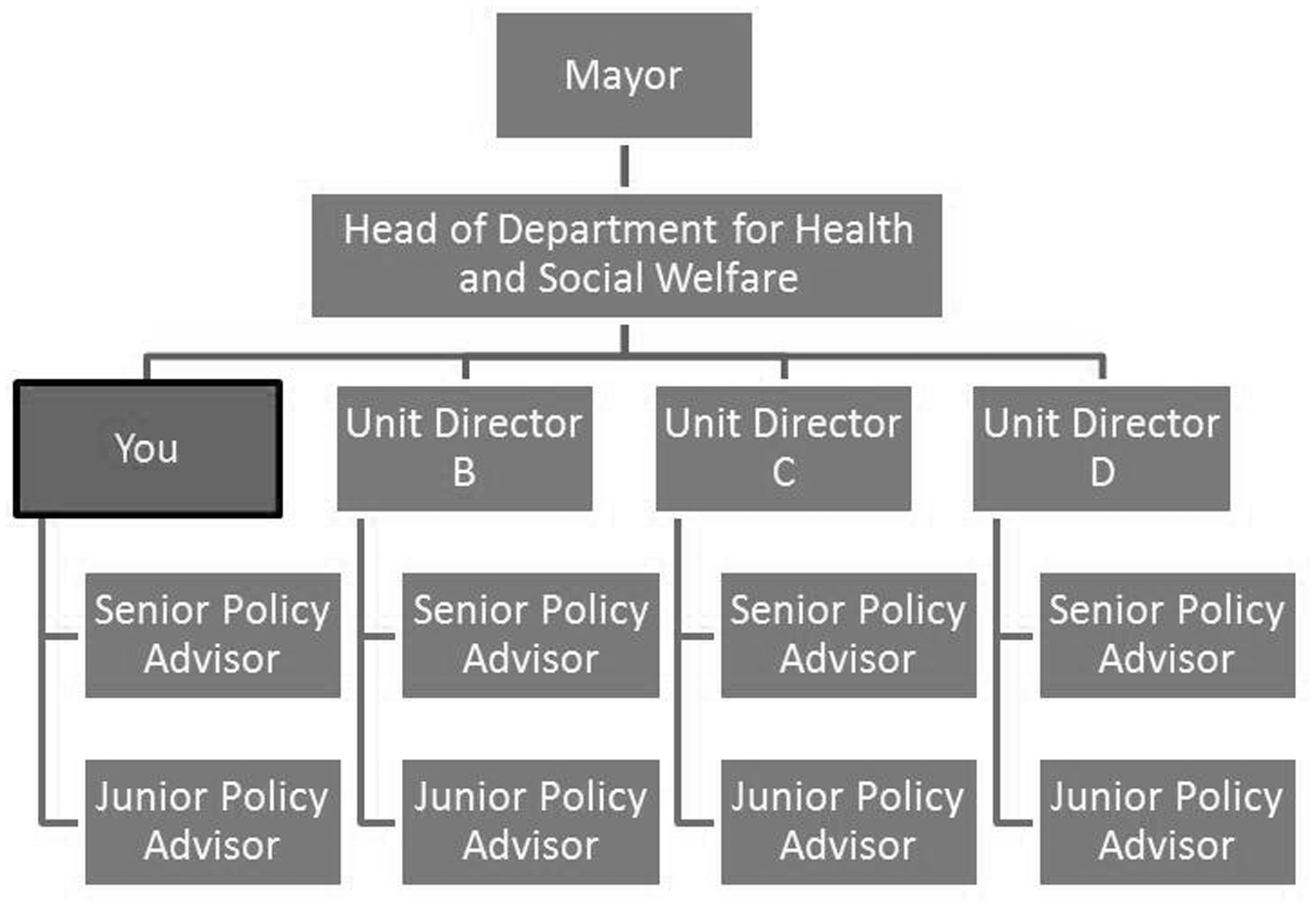
Organisational chart of Norden's Department of Public Health
Another recommendation for future studies is to make the experimental design more realistic to reduce doubt as to whether the treatment effect was strong enough to elicit a response in the participants. One proposed research design with a clearer blame strategy would be to create a role-playing experiment in which respondents assume the role of programme managers who must decide on innovation, like in this study, but are also given a certain budget that they have to allocate between the different programmes. Experiments in which participants have to allocate or bet money have been used to test preferences and risk aversion/tolerance (Kahneman, 2011). To test the effects of blame and credit, participants would be assigned to one of three groups: one where a unit director punished respondents for a supposed ‘failure’ in the projects by reducing their total budget, one with a unit director that rewarded successes with increases to the budget, and one with a unit director that did not allocate funds based on programme outcomes. The participants would be presented with hypothetical programmes sequentially and they would have to decide whether to support them one by one. After each decision, the ‘unit director’ in the treatment groups would tell the participants that the programme failed or succeeded 3 and, depending on the group, would either punish or reward them through their total budget. The researchers would then be able to see whether participants’ subsequent decisions on how to allocate budget to the programmes were affected by previous experiences with reward or punishment. Such simulations, either in person or via software, are becoming more feasible than at the time of this study with increased interest and funding into behavioural public administration research (Grimmelikhuijsen et al., 2016). The current study has established the basic premises and basic structure for such future experiments.
Conclusion
Overall, the study’s findings expand our knowledge of public innovation by showing that claims about the strength of anticipatory blame-avoidance as a hindrance to innovation might be exaggerated in the current public innovation literature. While the fear of blame can play a role, other variables are more important in determining innovative behaviour. In this study, believing in the programme’s benefits affected participants’ behaviour more strongly than fear of blame. This means that recommendations to ‘eliminate the culture of zero-error’ in public organisations can be simplistic and are likely to fall short of expectations. More importantly, channels for assigning blame can be very important in the public sector, where the consequences of mistakes and errors can be harmful to communities. This study suggests that rather than eliminating long-established mechanisms for ensuring that policies and programmes don’t harm communities, managers should focus on communicating the anticipated outcomes of the project and on working to achieve a positive outcome. This in itself will encourage wider support for innovative programmes.
Another practical contribution for organisations interested in applying behavioural insights to assess their innovation capacity is that it is important to involve decision-makers early in the innovation process since the likelihood that they will support the programme depends mainly on their overall judgment of the programme’s benefits. Employees should be given opportunities to debate and define whether an innovation is beneficial. This suggestion agrees with policy alienation theory, which argues that policymakers who are responsible for implementing policies are more willing to do so when they feel they have ownership of the process and find the policy meaningful (Tummers, 2011). The suggestion also builds on collaborative governance literature that argues that the wide inclusion of actors within a particular policy program may lead to better acceptance of the programs through the development of goal and mission symmetries (Ansell and Gash, 2008; O’Leary and Vij, 2012).
Finally, the findings contribute to innovation theory by showing that risk perceptions do influence innovative behaviour, so managers should learn to openly discuss these risks with employees and develop strategies to manage various types of risk.
Current assumptions about blame avoiding behaviour in the bureaucracy have not been tested in the public administration and are derived from studies of politicians. This article’s findings provide some initial empirical insights about decision-making in a non-political context for future research to continue testing. The external validity of experiments is always limited because of the difficulty of translating the findings from the controlled setting to a wider variety of organisational and institutional settings (Baekgaard et al., 2015). To ameliorate this problem, the experiment should be replicated in different public management contexts.
Future research should continue to test which cognitive biases are present in innovation processes and might be preventing people from assessing innovative programmes rationally, i.e. on the merits of the proposed programmes rather than on personal concerns for affinity or career risks, as the literature has suggested. Concretely, this means identifying the circumstances under which cognitive biases that affect innovation are stronger or weaker. For example, are people less willing to support innovation when they have clear responsibility for the management of the programme? Or are they more likely to support innovation when responsibility is diffused across several teams or policy units? Do people consider potential risks to their reputation when assessing innovation programmes? Or do they consider their personal values over collective values when making programming decisions? Are there organisational contexts in which personal reputational concerns are stronger than concerns about the programme’s potential outcomes? The interest in future research on this topic should not be interpreted as a categorical argument that public sector workers should favour innovative programmes, but they do argue that public sector workers should be able to assess innovative programmes as objectively as possible, free of concerns about the personal repercussions of taking risks.
Despite the study’s limitations and null results, the findings offer new empirical insights about the factors that motivate innovative behaviour in the context of public services. Being among the first quantitative studies to use an experimental research design in the public innovation literature and to test the relationship between blame avoidance and innovative behaviour, the study has answered calls to integrate concepts from behavioural psychology into public administration research to study how individual-level behaviours affect decisions in public organisations (Jilke et al., 2016). Future research should continue to apply experimental techniques to study the role of individual risk-taking behaviours in innovation processes. Such studies can help test the effectiveness of incentives on the behaviour of employees and improve managerial strategies.
Footnotes
Declaration of conflicting interests
The author(s) declared no potential conflicts of interest with respect to the research, authorship, and/or publication of this article.
Funding
The author(s) received no financial support for the research, authorship, and/or publication of this article.
