



Abstract
Technological transformations are currently reshaping the structure and strategies of public administrations and are expected to foster efficiency and policy integration. However, the literature on digital government has demonstrated that the introduction of technology is far from a smooth process, as it is often associated with conflict and negative feedback. This paper departs from James Thompson’s notion of technology, understood as one of the most effective devices for organizational integration to conceptualise the context of digital innovations in the public sphere. ICTs are not all the same; they differ in their impact on intra- and inter-organizational interdependencies that are required for them to work properly in their domain. This paper introduces a typology of ICT-driven governance structures and advances hypotheses regarding the causal mechanisms underpinning successful implementation. Each type of governance structure is exemplified by an original case study of a programme of e-government reform in the Italian public sector. The empirical evidence is used to explore some implications concerning the strategies by which the programmes have been implemented and their transferability to other contexts.
Introduction
The social sciences have traditionally paid attention to the impact of technology on organizations; however, the field currently acknowledges that this impact is also constantly mediated by human agency (Bolgherini, 2007; Contini and Lanzara, 2008; Dunleavy et al., 2006; Heeks, 2007; Kallinikos et al., 2013; Pollitt, 2011; Rogge et al., 2017). As far as public sector digitalisation is considered as a policy domain, it is easy to observe how public administrations must cooperate with one other and engage societal actors – experts, firms, citizens – in redesigning structures and processes by which public services are delivered (Clarke and Craft, 2019). For instance, the creation of a national information system for a given sector (health, education, etc.) implies a fairly high level of integration among organizations that, for various reasons, are part of the network: national and regional bureaucracies, local authorities, agencies, as well as the organizations that manage the technology itself. This means that policy entrepreneurs have to cope with actors who may not comply or can strategically use technological legacies to jeopardize a project involving a radical transformation (see Margetts and Naumann, 2017).
In this perspective, this paper aims to frame the interaction of technology and governance in public administration changes, establishing a dialogue between the literature on digital government and the debate on the determinants of success in cases in which policymakers have to manage technological change. Hence, two main claims are advanced.
The first builds on the idea that Information and Communication Technologies (ICTs) are ordering forces, as they restructure power and authority when introduced in a system of relations (Kallinikos, 2005; Pollitt and Bouckaert, 2017: 7). Yet, the paper argues that ICTs are not all the same and artifacts of different kind push policymakers to activate specific strategies for the implementation of proper governance structures. Hence, it is argued that ICTs influence on the distribution of power and knowledge both within and across the organizations of a given policy field mostly depend on their operational characteristics.
The second claim is that, although technologies shape the governance structure of relevant processes, policy actors—individuals and organizations—have to learn how to govern them (Challies et al., 2017; Dunlop, 2015) in order to exploit their potential and make them operate with the expected effectiveness.
Adopting a perspective inspired by Thompson’s notion of organizational interdependencies, we argue that some operational characteristics of a given ICT influence the structure of specific governance settings, which are typified in section two. In turn, depending on the nature of the interdependencies posed by the chosen technology, policy actors are expected to select some implementation strategies and not others and activate learning processes in response to failures. Hence, section three discusses some open dilemmas concerning the mechanisms fostering (or hindering) successful change. In particular, scholars who reflected on technology-related policy change have stressed the importance of agency for the explanations of cases of success, putting the emphasis on the role of political commitment and embeddedness, understood as mechanisms affecting implementation strategies and governance structures (Breznitz et al., 2018; de Vries et al., 2016; Evans, 1995; Kallinikos et al., 2015). The discussion of this literature is used to develop a working hypothesis which will be explored empirically through a qualitative analysis of four e-government infrastructures implemented by Italian public administrations over the last decade.
The research design and methods are discussed in section four, while section five gives an overview of the four cases. Sections six and seven are dedicated respectively to the analysis of the structural properties of each adopted technology and the implementation processes. The conclusive section discusses the evidence collected in light of the theoretical framework and develops more structured hypotheses about the agency-related mechanisms underpinning policy effectiveness in public sector digitalisation.
Framing governance modes for public sector digital transformation
The digital transformation of the public sector is one of the major areas of policy change worldwide. At the European level, this domain has been progressively addressed with a comprehensive agenda aimed at coordinating efforts across the continent (see Codagnone et al., 2020; European Commission, 2016) which include national (Margetts and Dunleavy, 2013) as well as regional and local strategies (Cordella and Tempini, 2015). In particular, against the doctrines of the NPM agenda that contributed at exacerbating fragmentation in the public sector (Verhoest et al., 2007), digitization initiatives constitute a potent driver towards a better internal integration and higher levels of coordination (Ansell and Miura, 2020; Dunleavy and Margetts, 2015). Hence, although policy innovations through ICTs is often understood as an alternative to bureaucratic government, several scholars have highlighted that technological change represents a further step in the evolution of bureaucracy towards a more integrated, efficient and accurate public action addressing the needs of citizens and business (Cordella and Tempini, 2015; Kallinikos, 2005).
In line with this literature, this paper assumes that the governance structures of the organizational and policy domains subject to digital innovation are to a significant extent shaped by the operational characteristics of the adopted ICTs; besides, it conjectures that successful ICTs’ implementation depends on policymakers’ understanding of the organizational implications of the adopted technologies. This idea is in line with Thompson’s organization theory, which emphasizes the impact of the organization’s technical core in shaping the interests and power of different actors. As Thompson affirmed: “(…) it seems fair to say that reorganization represents a more pervasive phenomenon than our studies indicate. Yet as the pace of technological change increases and as host environments become more complicated and more dynamic, organizations are having to learn to be more flexible and adaptive” (Thompson, 1967, p. 80).
Yet, technologies are not all the same and emerging studies adopting an ecological approach suggest that successful implementation is depending on contingencies which relate with organizational features and the policy domain in which technologies are adopted (Feeney and Welch, 2016; Li and Feeney, 2014). In this vein, this paper assumes that different technologies constrain policymakers in multiple ways, giving them different structures of opportunities. The main hypothesis is that each ICT needs different levels of coordination among the actor involved. ICTs can be thus operationalised as a function of interdependencies required to properly work and reach the desired results: A higher degree of interdependence means that a given ICT asks actors to be strongly connected to be effectively used in the field. Conversely, some technologies may be less demanding and need less coordination efforts.
Moreover, interdependencies should be further unpacked along two separate dimensions as they may concern intra and inter-organizational relations. Table 1 sketches four types of governance modes to make the concept of interdependence operational; each is characterised by different degrees of organizational interdependence. These two dimensions also account for the complex relations between micro-level individual agency and macro-level organizational behaviour (Hjern and Porter, 1981; Kilduff and Tsai, 2003; Provan and Kenis, 2007). In fact, the vertical axis dichotomises the concept of intra-organizational interdependence and thus describes the relations between individuals and the organizations to which they belong. Conversely, inter-organizational interdependencies, represented on the horizontal dimension of the matrix, refer to the presence (or absence) of a common operative goal shared by different organizations and, consequently, the need for some degree of coordination to make it real.
Types of governance mode depending on ICT characteristics.
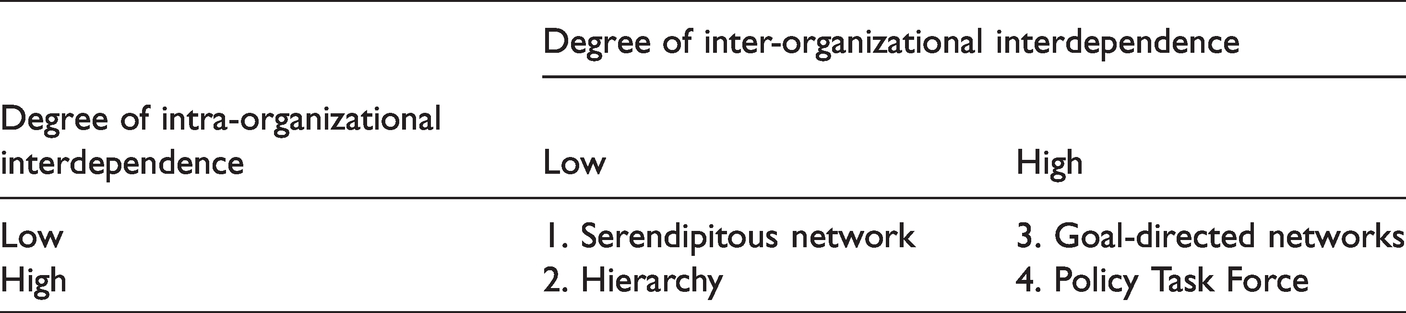
When the interdependencies of the adopted technology are low in both dimensions (box 1), the adoption and implementation of a functioning ICT does not require strong coordination efforts. This means that entrepreneurs are autonomous within their organization and they do not depend on critical resources held by actors in the task environment. In structural terms, this governance mode is what Kilduff and Tsai called a “serendipitous network” (2003: 90), where individual agents act as a community of practices (Wenger, 1998). Low technological constraints make implementation rely on individual commitment and thus cooperation is based on trust and reciprocity, instead of power.
Yet, “hierarchical governance” (box 2) will be necessary when intra-organizational interdependencies are high, namely when the formal goals of the organization represent constraints for most of the units and are imposed through the authority channels. Such a situation resembles what scholars called the “logic of organization” (Hjern and Porter, 1981), which occurs when the internal coordination among actors and/or sectors–needed to reach the planned results–is obtained through a dominant coalition (see: Kelman, 2005) that lead the process by means of authority.
Moving towards contexts in which the adoption of an ICT crosses the boundaries of a single organization and requires more agencies with critical resources to cooperate, two distinct situations do emerge. The first is one (box 3) in which the low level of internal interdependencies creates a working environment in which the logic of organization is not pervasive, so that single units can be part of “goal-directed networks” (Kilduff and Tsai, 2003: 89). Although the units involved in these processes are autonomous, often auto-selected and committed to the project, their behaviour is expected to mediate between the “logic of organization” and “the logic of the programme” (Hjern and Porter, 1981; see also Provan and Kenis, 2007: 232); the same ambiguity characterizing complex organizational settings led some scholars to frame agency in terms of “modular individuals”, emphasizing how behaviour may depend on the multiple roles of any actor involved (see: Abdelnour et al., 2017). Under these conditions, cooperation is not an entirely spontaneous outcome (as in the serendipitous network), nor something which may be reached by means of authority, as in hierarchical contexts. Conversely, cooperation is obtained when participants have a common interest in maintaining and developing the “business model” underpinning an ICT solution (Hedman and Kalling, 2003).
If both inter- and intra-organizational interdependences are strong (box 4), the deployed technology requires an even more complex governance mode to operate properly. Such a highly turbulent context recalls Mintzberg’s notion of operating adhocracy (Mintzberg, 1993: 257), where experimentalism is the norm of conduct and leadership plays a key role in aligning organizations with the environment, as the boundaries between these two poles tend to blur and are constantly reconfigured. The idea of a ‘task force’ grasps the essence of this configuration, but it goes beyond the single organization (as discussed in Mintzberg’s notion) and embraces the whole policy domain. Here, the coordination problem is based on the need for internal and external actors (public and private) to cooperate with the goal of introducing, scaling-up, diffusing and sustaining the adopted digital technology.
The role of agency in ICT-led policy innovation
Despite ICTs’ impact on the structure of agents’ interaction, techno-change is always a socio-political process that is likely to produce failures in both the public and private sectors (Chae and Lanzara, 2006). Thus, given the complexity of the public sphere, e-government adoption and implementation should be considered highly risky ventures (Greenhalgh et al., 2017; Heeks, 2007; Kallinikos et al., 2013, 2015; Margetts and Neumann, 2017; Provan and Kenis, 2007: 237; Rose and Grant, 2010). This section reviews the existing literature on the role of agency in understanding the outcomes of policy processes in which technological innovation plays a major role. In fact, despite several scholars claimed that actors’ strategies and patterns of interactions are vital, the causal depth of specific mechanisms (i.e. whether they are significant or not) and their causal direction (i.e. how do they affect the outcome) are not univocal.
When policy making encounters technology, two factors seem relevant to understand its effectiveness. The first is “political commitment”, understood as the degree to which elected politicians and major interest groups have a stake on a given policy (see Breznitz and Orstorn, 2013). The second can be referred as “embeddedness”, as framed in the sociological debate. This notion has been used in two ways. First, embeddedness describes the degree to which the relations within a network are based on trust and reciprocity (Uzzi, 1996, 1999), and can be crucial in accounting for the outcome of innovation policies based on ICTs (Wadman and Hoeyer, 2018). Second, and more specifically, embeddedness has been also defined as the degree to which government committed at innovating through technology is capable of internalizing some logics of actions of the task environment, particularly those of experts and firms (see Evans, 1995). In policy studies this generally falls under the notion of “absorption capacity” (Borrás, 2011; Breznitz, 2007; Dunlop, 2015).
Although political commitment and embeddedness can be considered important explanatory factors, there is no consensus about how and to what extent the social mechanisms related to them are connected to outcomes. For instance, a consolidated stream of literature has underlined how successful policy often relies on low political commitment. The micro-foundation underpinning this claim posits that technological innovation are jeopardized when political actors and major interest groups have a stake in the policy (Breznitz, 2007; Breznitz and Orston, 2013; Evans, 1995; Lanzara and Patriotta, 2007). However, in other cases, the mobilization of political support was reported as the key (or at least a positive factor) to policy success, giving policymakers the ability to mobilize and maintain consensus, as in the Estonian case of digital innovation (Margetts and Neumann, 2017; Wadmann and Hoeyer, 2018; for a more general discussion of this mechanism, see also Kelman, 2005; Patashnik and Weaver, 2020).
The same uncertainty applies to embeddedness. Such a feature is normally considered a condition for success in highly innovative policy domains (Breznitz, 2007; Evans, 1995). The micro-foundation here assumes that policymakers need to absorb knowledge and skills of a constantly evolving eco-system and thus governance is supposed to be open to the environment. Nonetheless, other scholars have shown that close, trust-based, bonds between agents may hinder innovation and promote the worst practices (Soda and Usai, 1999). The environment in fact can be incompatible with the aims pursued by policymakers and thus internalising its actors and logics might pervert the intended change.
The variation in the causal depth and direction of the abovementioned mechanisms may be in part related to the fact that the literature is not homogeneous and range from public administration digitalization to industrial policies. Nonetheless, relying on the works of Breznitz et al. (2018), it is fair to assume that different technologies may bring about divergent but equally effective policy strategies. Namely, the authors advanced the hypothesis (and provided evidence) supporting the idea that, political commitment can be considered as a threat to successful policies only if cutting edge technologies are at stake, whereas its impact might be different in other settings. In this vein, this paper conjectures that the causal depth and direction of the mechanisms related to political commitment and embeddedness might vary in function of the type of technology discussed in the previous section. More specifically, the paper claims that successful cases of ICT-driven change in public sector and policy can be explained by distinct causal patterns in which the governance architecture underpinning a given type of technology requires certain agency mechanisms and not others to be designed. Hence, the next section develops a theory-building research design that, on the basis of four cases of successful implementation of ICTs in the public sector, aims at clarifying the role played by agency in processes of digital transformation.
Research design and methods
In line with the literature on technological innovation in the public sector, this work assumes that both technology and agency play a role in processes of administrative and policy change. In so doing, the research design bears on both deductive and abductive reasonings (Ashworth et al., 2019; Mele et al., 2020). More specifically, this paper conjectures that the mechanisms which account for policy success depends on the types of ICT – deductively developed in section two – in terms of both causal depth and causal direction. In particular, Figure 1(b) describes the building blocks of our hypothesis and compare them with a model in which only technology plays a causal role. If technological determinism would have been assumed (Figure 1(a)), we would expect a given type of technology produce a governance model fitting its intra and inter-organizational interdependences. Yet, refusing determinisms, we assume that agency mechanisms underpinning the implementation strategy are subject to learning processes. Such a working hypotheses is actually abductive since no prior expectations about the interplay between technology and agency in public sector digitalization have been developed so far.
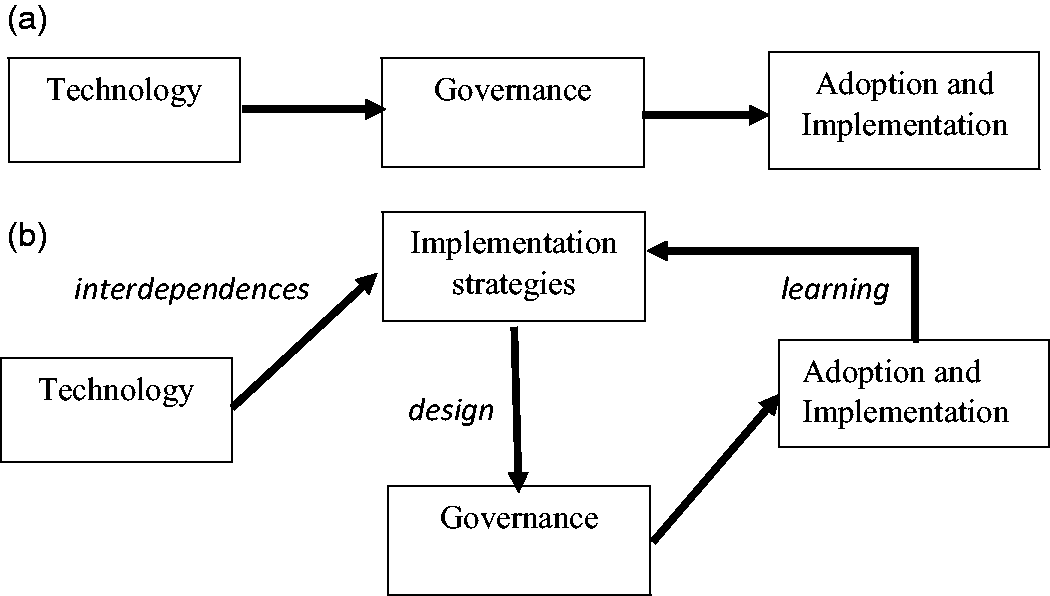
From technological determinism toward a mechanistic model.
Given the explorative and theory building nature of the research question, the only expectation that can be made is that, if our assumption is plausible, the mechanisms discussed in section three are likely to emerge in distinct patterns, with varying depth and direction, defined by the types of technology.
In order to provide empirical arguments to the theoretical issues discussed above, this paper analyses four case studies of ICT programmes that proved to be effective in the Italian public sector. Effectiveness is circumscribed to the stages of adoption and implementation of ICTs, meaning that a given system, once chosen, is effectively used (Bouwman et al., 2005: 14). Conversely, the outcomes in terms of impact on policies are not considered in this study.
In line with the main epistemological and methodological standards in case-oriented research design, such a strategy of inquiry allows both within and cross case analysis. In fact, whereas adopting a working hypothesis in line with technological determinism would have only require a comparative method to test the effect of different types of technology on outcomes, within-case analysis is needed as the role of agency and causal mechanisms are supposed, albeit the way in which they operate is unknown. In this sense, congruence analysis (Blatter and Blume, 2008; George and Bennett, 2005: 182; Wauters and Beach, 2018), understood as a logic of enquiry aimed at showing the plausibility of theoretical claims abductively raised, seems the more appropriate methodological compass for this work (see Appendix I).
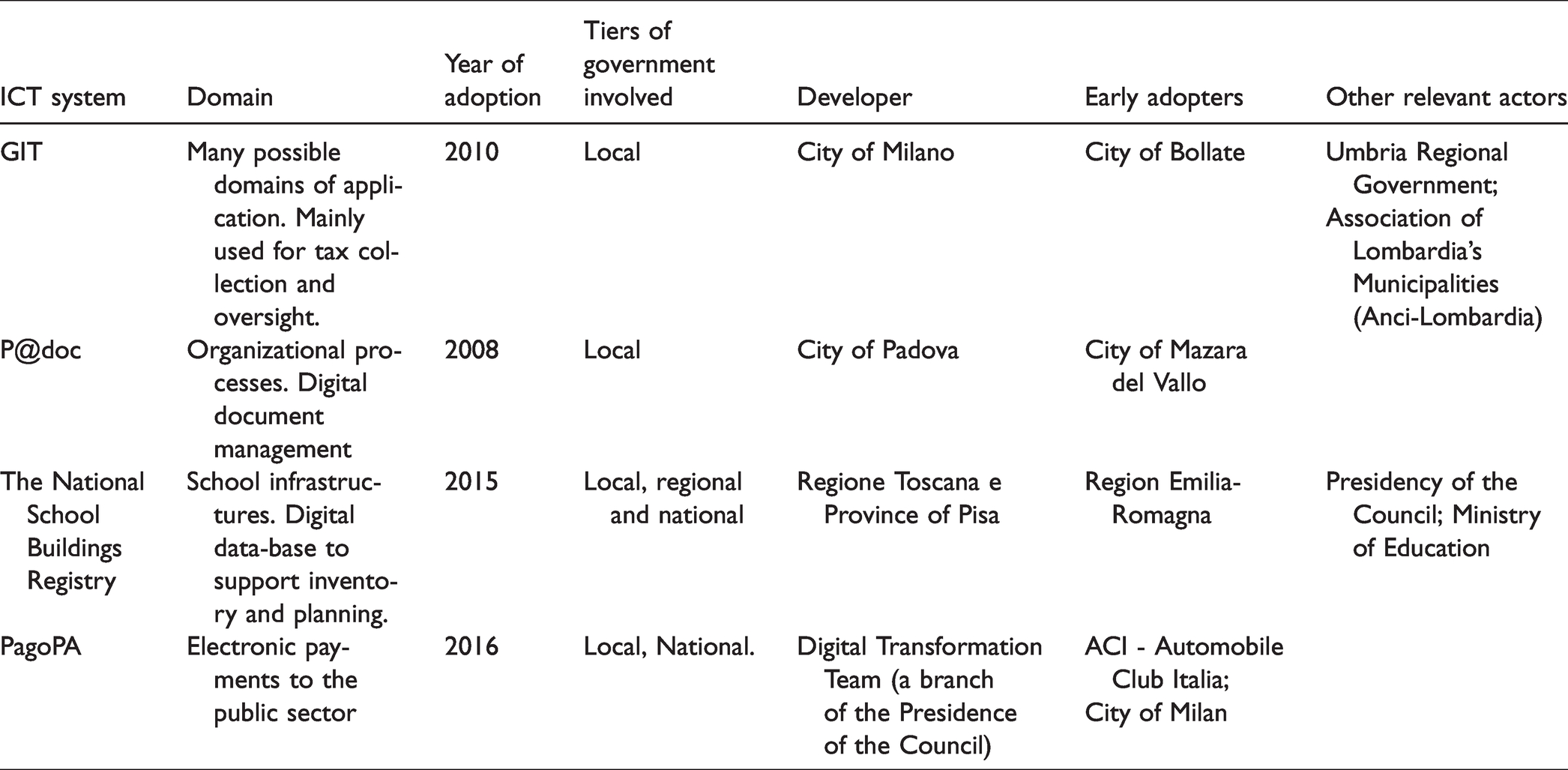
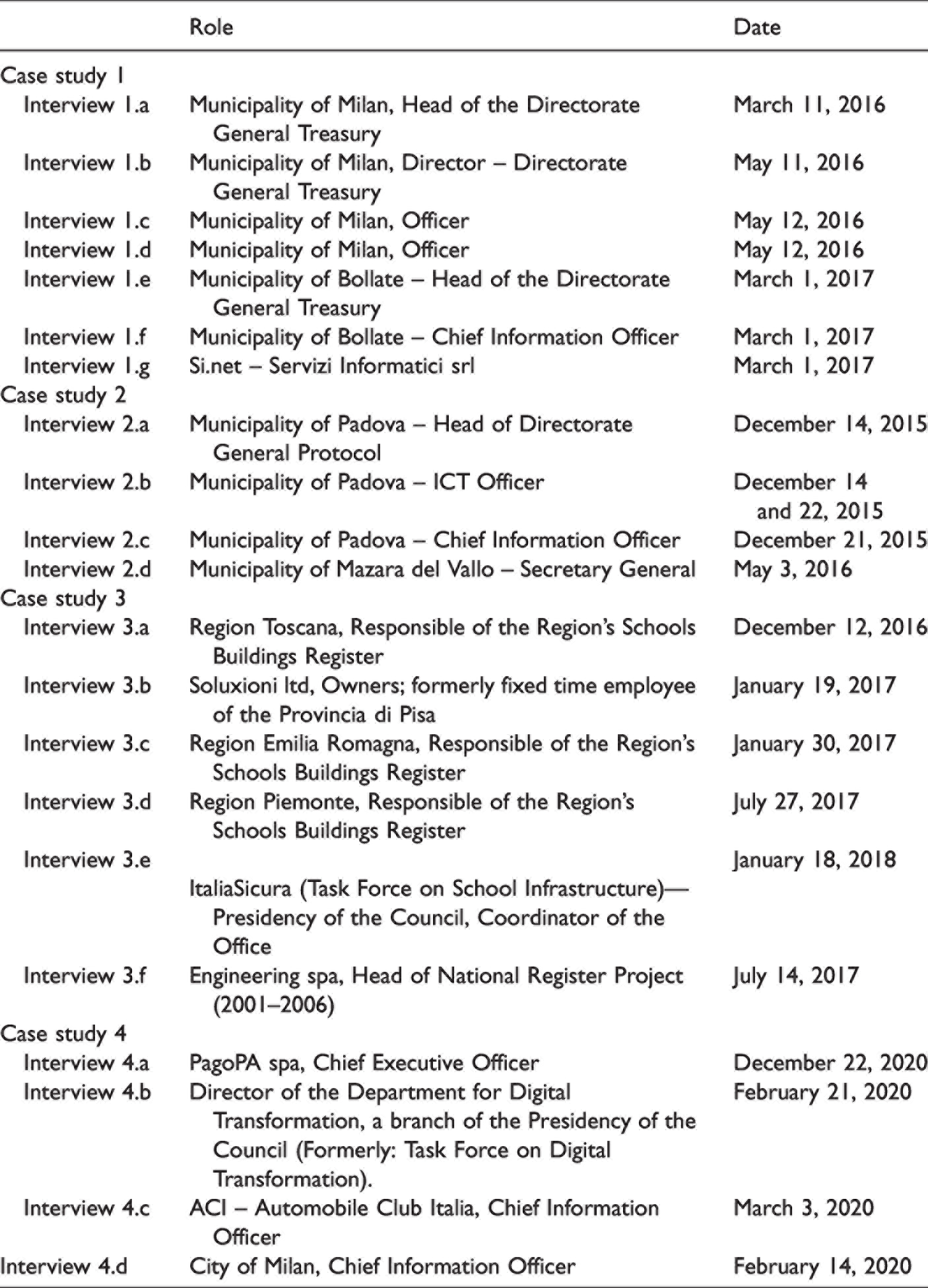
The study was conducted using a qualitative methodology, with document analysis and twenty-one semi-structured, face-to-face, interviews with the most important policy makers (duration range: 40–60 min). Each case study is composed by two units of analysis. The first is the administration which developed the ICT solution (and often is also the first implementer), then at least one of the administrations in which the solution was successfully transplanted (Table 2 below) has been included to reduce probability that success is the outcome of idiosyncratic factors.
Case studies.
Case selection
Although they constitute a very limited and non-representative sample of the universe of e-government initiatives implemented over the last decade in a complex polity such as Italy (see Mele, 2008), the four case studies illustrate different experiences of organizational change. Moreover, in a public sector characterised by strong bureaucratic culture and with a legacy of fragmented and plodded modernization attempts (Capano, 2003; Natalini and Stolfi, 2012), four cases of successful implementation of digital transformation programmes can be considered as deviant and thus the most appropriate choice for a theory-building research design (Beach and Pedersen, 2013: 154). Moreover, since the research question focuses on mechanism and their role, using the final outcome as a selection criterion is not to be considered a bias. Conversely, what we defined policy success is only the eventual outcome of processes which have been punctuated by failures. In this sense, the fact that outcomes’ values did change during the process is consistent with a mechanistic epistemology (Beach and Pedersen, 2013) in which learning is a central feature.
Among cases of success, selection process has been theory-driven (e.g. Curtis et al., 2000) and followed a two-stage procedure: first, following reputational strategy, several best practices have been scrutinized among those selected by the Agency for Territorial Cohesion for the RegioStars Prize. Second, case studies were selected according to the two dimensions discussed in section two, which allows a first test on the plausibility of the conceptualization of ICTs’ impact on governance advanced in the previous sections.
Operationalization and coding
Both independent and dependent variable are treated as dichotomies. Such a choice seems coherent with a theory-building research design in which assessing concepts’ validity constitutes a primary goal (Mahoney and Goertz, 2006: 244). More specifically, the type of technology is defined according to the “low” or “high” level of the underlying interdependences. The same coding has been used for the mechanisms of political commitment and embeddedness. Empirically, these variables are detected through qualitative interviews. Policymakers have been interviewed using semi-structured questionnaires about classic features of stakeholders’ analysis (Weible, 2006: 96). Interorganizational interdependences have been measured on the basis of answers to questions aimed at assessing the importance of actors operating in the organization’s task environment for the final outcome. Detecting intra-organizational interdependence, on the contrary, has been mainly measured surveying policymakers on whether the ICT, in order to properly work, requires to be adopted by all the units of the studied organization or not. As far as implementation strategies are concerned, our working hypotheses required to attribute the causal depth and direction of the mechanisms of political commitment and embeddedness. To avoid interviewees biases would affect their responses, questions did not directly ask about the role played by these two factors. Conversely, their relevance has been attributed on the basis of the narrative actors gave of the implementation process and the actor involved. For instance, if a political actor (a mayor, the president of a regional or national government) is systematically mentioned and linked to actions related to the eventual success, we attributed to the mechanism of political commitment a high relevance and a positive causal direction. The same strategy is used to attribute a value to embeddedness. Here the focus has been on indicators of trust among people across organizational boundaries which the interviewees linked to success such as the presence and importance of informal bonds.
Overview of the case studies
In the followings, the fours ICTs are introduced; all of them have been adopted between 2008 and 2019 and are still operating. Table 2 summarizes some relevant characteristics such as the policy domain of application, the year of adoption, the levels of government involved, and the main actors involved; these latter have been distinguished between developers (the policy entrepreneurs), early adopters and others who played a significant role.
Case 1. GIT
GIT (Gestione intersettoriale del territorio: Intersectoral Territory Management), is a platform developed by the municipality of Milan with the collaboration of a software company owned by the Umbria Region. It allows a given administration to connect and query separate databases and was originally designed to overcome the problem of siloed information systems. One of the policy domains addressed by GIT is fiscal oversight and enforcement. Developers and users attribute GIT’s effectiveness to two factors: it increases the information base, and it improves the quality of the data by reducing inconsistencies between different information systems. The system assists officers in keeping information updated since all information relating to a subject (a citizen or a firm) is collated and anomalies are detected. The case study was conducted by field interviews with the policy entrepreneurs, the treasury department of the municipality of Milan and an early-adopter, the municipality of Bollate (close to the Milan Metropolitan area). GIT is now used by 242 municipalities, mainly concentrated in the regions of Lombardia, Umbria and Veneto, but with some municipalities in Calabria and Sardinia, for a total catchment area of approximately 3 million and 800 thousand citizens. These actors, thanks to the coordination of Anci Lombardia (the association of Lombardia’s municipalities), signed a memorandum of understanding in 2012 and created a real project governance structure.
Case 2. P@doc
The second case study concerns an infrastructure designed to re-engineer the back-office processes related to the protocols in administration. The introduction of the P@doc document management system was initiated by the municipality of Padua and, more specifically, the Protocol Unit played the promoter role within the administration because of its commitment to reduce the inefficiencies and technological inadequacies of the previous infrastructure. In fact, in 2002 the Municipality purchased a data management system through a public tender, which, in addition to not being responsive to the organization's needs, resulted inefficient because of time-consuming activities needed and the costs for the contracted management and maintenance services. In its place P@doc was adopted by over 60 administrations, mostly with success; one of these, the municipality of Mazara del Vallo (Sicily), has been included in the case study and has been selected because, as it will be highlighted, the scarcity of resources and the administrative legacy of a southern region make it a least-likely case for a successful outcome.
Case 3. The national school buildings registry
The National School Buildings Registry (the Registry) was implemented nationwide in 2015; it was envisaged by the national government at the end of the nineties when planning functions concerning education were decentralized to regions. The registry is a data warehouse and repository hosting information and documents concerning the school infrastructures owned by the local authorities of the whole country. Initially, the design and implementation were conducted by the Ministry of Education in partnership with a national ICT firm. Although the adoption of the Registry was mandatory for the regions, the compliance with the programme was rare and the Ministry eventually dropped the programme in 2009. However, two regions—Toscana and Piemonte—developed their own systems, with good results in terms of reliability and compliance. Later on, the system developed by the Tuscany region became the operating standard for a new national policy which entered into force in 2015.
Case 4. pagoPA
pagoPA is a digital infrastructure for payments connecting citizens and firms to any administration—local or national, territorial or functional—collecting taxes and duties. pagoPA is one of the many e-government projects designed within the national government bureaucracies in the 2000s and discontinued due to lack of collaboration among administrative bodies. In 2016, the project was championed and re-designed by the Team for the Digital Transformation, a task force supporting Diego Piacentini, a former Amazon top-manager appointed as Commissioner (a fixed-term position within the national government) by the President of the Council Matteo Renzi to boost public sector modernization. In 2018 a state-owned company has been created to further develop the project. pagoPA was eventually implemented by important public administrations such as the Agenzia delle Entrate (the agency to which the Treasury contracted out tax collection functions), ACI—Automobile Club Italia (a public body collecting car possession duties), the public health system in many Italian regions, and several local governments including the city of Milan.
Organizational implications of the four information systems
The four cases have been selected in accordance with the two analytical dimensions discussed in the previous section in order to assess whether technological interdependences triggered distinct implementation strategies and learning processes which eventually led to proper governance arrangements.
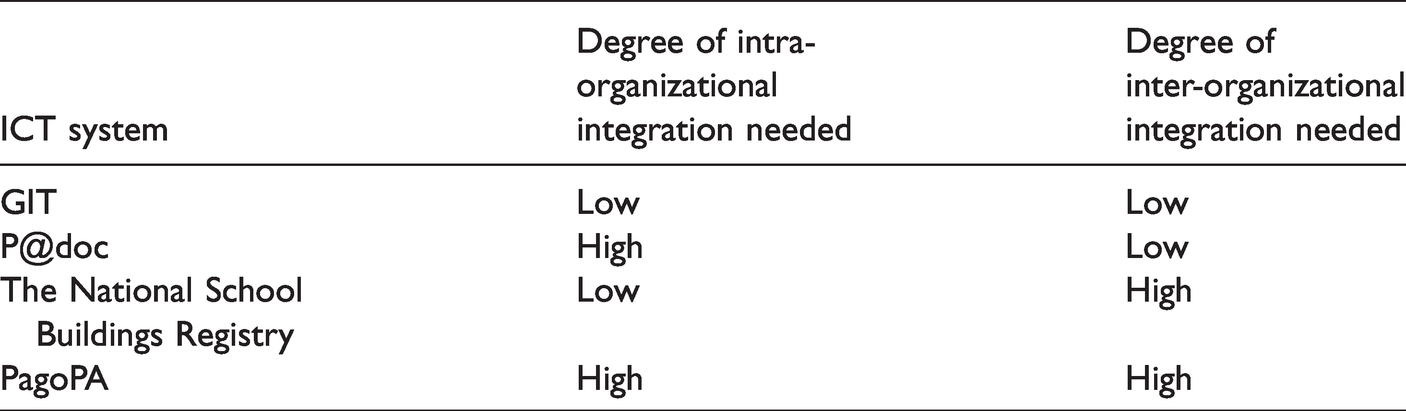
In fact, the evidence collected in the field indicates that the technologies deployed in each of the four cases broadly fit the four configurations typified above. Table 3 summarizes the main organizational interdependencies that each ICT requires to be effectively implemented. Policymakers in the municipality of Bollate reported that GIT is very flexible, as it can be imported and used without the strong cooperation of several organizational units within the municipal administration. GIT required strong cooperation along the inter-organizational dimension only in the start-up phase, since some arrangements with the national Privacy Authority were necessary; thereafter, the implementation is mostly up to the individual users. The case of P@doc is characterized by strong interdependences only within the organization, as the re-engineering of the processes for the protocols impacted the work of practically all the units. Conversely, in the case of the Registry, the main source of interdependence required by the infrastructure to function optimally concerned the inter-organizational dimension and represented a problem of compliance. Here, the basic condition for the system to work locally (within each region) and therefore produce reliable and up-to-date information on school infrastructures was that the owners of buildings—municipalities—had to enter data and ensure its accuracy. Moreover, the national diffusion of the system needed the compliance of regions with the new programme launched by the Italian government in 2014. The organizational features required by pagoPA are much more complex. This solution, developed by the national Team for digital transformation, required (and still requires) important input from both the developers and the main implementers. In addition, for some administrations who complied with the programme—mostly municipal bureaucracies—the implementation of pagoPA also implied a strong organizational change.
Properties of the four ICT systems.
The next section will analyse in detail the implementation strategies actors developed to cope with the interdependencies posed by the adopted technologies. On the bases of the evidence collected, section eight concludes the paper by drawing hypotheses about the links between organizational interdependencies and causal mechanisms accounting for the successful policy innovation in this policy domain.
Analysis
This section is dedicated to exploring the strategies deployed by policy makers in order to successfully implement the four e-government systems. If the interdependences posed by a given ICT do require specific governance arrangements in the way hypothesized in Table 1, different organizational and coordination strategies are expected to emerge and the mechanisms underpinning them will vary accordingly. The analysis is divided along the two dimensions discussed above, in order to emphasize patterns of similarities and differences among the observations and reveal related causal mechanisms.
The intra-organizational dimension
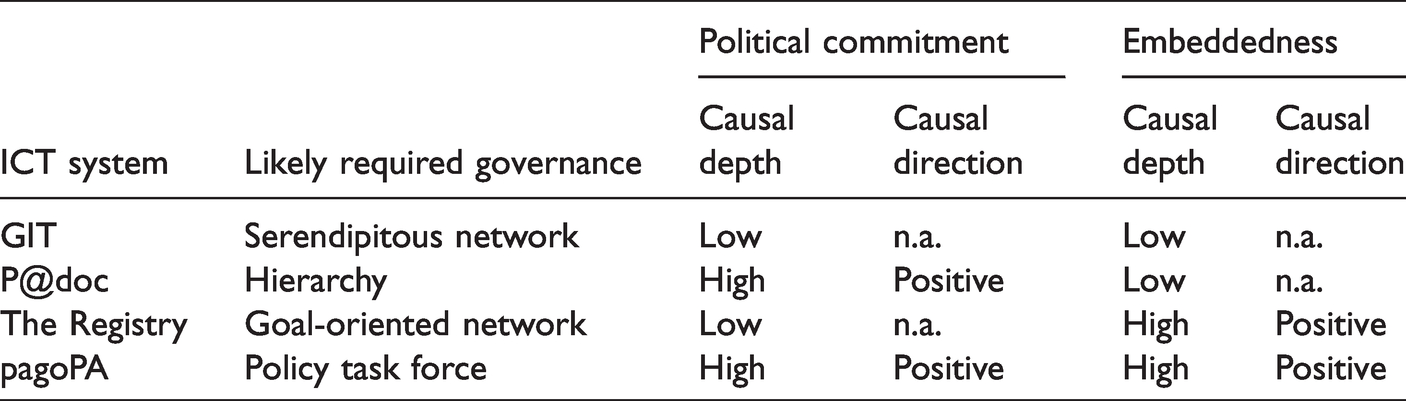
The analysis of the four cases along this dimension made clear that higher levels of internal interdependencies are linked with more pressing challenges in managing consensus. The main finding is that, in the two cases where internal interdependences are higher, political commitment proved to be a key for success for governance learning.
This mechanism emerged clearly in the P@doc case. The Padua city council administration had attempted to apply e-government solutions several times to rationalize processes related to document management, but with modest results. The Protocol Unit was the actor mostly interested in this process, but only in 2005 was sufficient momentum achieved. In that year, a new Chief Information Officer directly reporting to the mayor was appointed. The new head of this branch of municipal bureaucracy endorsed the programme and brought knowledge from similar attempts in other Italian local administrations into the organization. One of the officers interviewed confirmed the importance of a strong leadership:
“The same project in the city of [name omitted] failed because the Secretary General, who was the promoter, was removed. The strength of the project is the organizational model that expresses a corporate culture for the public administration, but this latter needs a leader to be implemented” (Interview 2.a).
Also, pagoPA requires strong intraorganizational bonds to be effectively implemented. Two of the early developers ACI (Automobile Club Italia) and the City of Milan faced severe challenges in the adoption phase, as pagoPA had a strong impact on the operational autonomy of several units. In the case of ACI, these units are represented by the s.c. “delegations”, local branches where citizens can go to settle car duties. Although it was already possible to pay these taxes in other places such as banks and kiosks, ACI delegations had a competitive advantage based on a more accurate elaboration of the owed duty. The introduction of pagoPA would have been disruptive for this business model and understandably this issue created intra-organizational conflicts between innovators and the delegations. One of the former – ACI’s Chief Information Officer – convinced the executive committee to adopt pagoPA on the premise that this innovation would have enabled ACI to effectively answer Antitrust Authority allegations concerning its dominant position in the payment market. Having solved a major institutional problem, the resistance of ACI’s territorial branches lost effectiveness at influencing ACI’s decision making, and they have been induced to refocus on value-added services (Interview 4.c).
In the case of Milan, the units are represented by the different directorates that collect and process revenues within the structure; the introduction of pagoPA constrains them to converge towards a common operational standard. As for P@doc, the commitment of the mayor was a key. As soon as he was elected in 2016, Beppe Sala appointed a city councillor for the Digital Transition Programmes with the mandate to develop bureaucratic digitalization. Moreover, Sala went in power only a few months before Prime Minister Matteo Renzi: both were members of the same party (Democratic Party) and for both digitalization represented a priority. This created a conjuncture of high commitment both at the local and the national level that encouraged cooperation (Interview 4.d). This commitment affected the organizational structure of the municipality: Namely, the Information System Directorate General (DG), which championed the introduction of pagoPA to make tax collection and accountancy processes more efficient, was strongly empowered by a reorganization of the macro-structure, which allowed this DG to operate horizontally as a project manager in several programmes. This was essential for the coordination of other units and to avoid veto points typical of siloed directions (Interview 4.d).
The other two case studies, on the contrary, deployed technologies that had little impact on the internal interdependencies of user organizations. Evidence collected showed that internal conflicts were not relevant. Policy makers had the opportunity to develop their solution with great autonomy and faced little or no opposition from other units.
The development of GIT is a story of bureaucratic professionalism and entrepreneurship. The onset was troublesome because of a lack of resources. Interviewed employees of the municipality of Milan defined themselves as “pioneers”, since they have largely accomplished all tasks internally without resorting to external consultants (Interviews 1.b, 1.c). The Director General drew attention to the fact that monitoring constitutes a “specific profession” and that comprehensive familiarity with the referenced reality is a fundamental element for designing an adequate support system, “while the political sphere has been kept afar from the entire project” (Interview 1.a). The tool is currently used by 308 internal users of the municipality of Milan (of which 102 belong to the local police) who recognize its undoubted benefits precisely by virtue of the application's ability to uniquely identify information contained in different databases. It is worth noting that organizational units were not obliged to adopt and use the application; they did it because of experimentalism and positive feedback.
The development of the software used for the construction of the National Register for School Buildings was also a story of local experimentalism. In particular, the solution–developed nationwide in 2014–5–was originally designed in the province of Pisa by a retired high school professor with a personal commitment towards the use of information systems for improving the planning of educational activities and the work of two part-time conscientious objectors. These latter served the Province in the early 2000s while they were students of informatics and architecture; they brought the necessary skills to develop a first crude, but functional, prototype based on an open-source software (Interview 3.b). The Directorate General of the Toscana region provided support for its implementation in the territory. Also, in this case, internal interdependences are not relevant since its implementation only affect the organizational unit in charge of the task, which, depending on the region, could be managed by either the Information Systems or Education DG (Interviews 3.a, 3.c, 3.d).
Inter-organizational dimension
Two of the e-government systems analysed – the Registry and pagoPA – have to cope with strong interdependencies among the organizations; conversely, the operating technologies underpinning the other two solutions are less demanding in this respect. The main pattern emerging from the analysis of this dimension concerns the relevance of policy makers’ embeddedness within the policy domain as crucial for the success of the two infrastructures subject to this form of interdependence. The attribution of opportunity via the development of viable business models emerges as a causal mechanism (and implicitly a key policy strategy) underpinning vital socio-technical ecosystems.
In the case of the Registry, the creation of a network of organizations was essential to ensuring a successful implementation of the system. This is true both within the regions where it was developed and, later, in the national policy domain, as the diffusion of the local platforms became the main strategy of national policymakers to finally deliver this infrastructure throughout the country. The actors interviewed affirmed that the failure of the first edition of the national implementation was not because of a lack of capacity by the technological partner of the Ministry of Education (Interview 3.f). Rather, the failure was connected to the fact that local governments and the schools’ managers received no positive incentives to cooperate (Interviews 3.b; 3.d); whereas only a generic obligation was imposed on regions, with no sanctions for non-compliance. As two regions—Toscana and Piemonte—decided to provide independent solutions in the mid-2000s, the policymakers involved realized the real issue was developing a “governance structure”. In this sense, the responsible for the policy at the Regione Piemonte affirmed: “In 2004, we went to this coordination meeting at the Ministry of Education in Rome and when it was over, we realized with the other regional officers that there no governance model was discussed, whereas we agreed that it was the most important thing” (Interview 3.d). So, they developed one their own (Regione Piemonte, 2004), teaching local government employees how the application would work, but mostly incentivized compliance by showing the returns a correct implementation would have implied in terms of efficiency. Their compliance would have increased the efficient planning of activities, a faster certification of safety standards, it would have reduced information asymmetries in the award of contracts for cleaning services and so forth.
The importance of building a network was also relevant to the national implementation. Since 2014, the national government has mobilised resources for investments in school infrastructures, and the Registry has once again become a priority. A specific unit within the Presidency of the Council has been established to coordinate a process of diffusion of the two available working solutions. This time, national policymakers decided not to start from scratch; rather, they focused on existing solutions that were working and how to push regions to adopt them. Key to this strategy–the head of the national Task Force on School Building affirmed–was imposing the implementation of existing solutions as a “condition for regions and local governments to obtain European funds dedicated to school infrastructures” (Interview 3.e). In particular, the solution developed in the Toscana region became the national standard; it was preferred because it was based on open-source software and because the cost of services was more affordable due to an aggressive marketing strategy by the developers. They recognized this procurement policy as an opportunity for their start-up company and worked closely with the national policy makers in regulatory fine tuning. As developers putted it: “The solution developed within the Toscana region has been adopted by others also because we established good relations with the directors of Italian regions, we give them assistance at a reasonable price, which is something that a big ICT firm normally does not do” (Interviews 3.b; Di Giulio and Vecchi 2019).
pagoPA is an e-government platform that requires strong interorganizational bonds. Effectively coping with them has been crucial both at the development and adoption stages. The basic idea of pagoPA was originally sketched by a manager of the Bank of Italy who was working on a project for the Ministry of Justice (Interview 4.a). The aim was the rationalization of the channels by which citizens could settle their duties with the justice systems through certified payment providers, without requiring that the Ministry stipulate an agreement with each of them. This early version of the project was technically operative, but remained unimplemented until 2016, when the Team for Digital Transformation designed a different business model around the original idea. This was possible thanks to the ideas that Diego Piacentini and his staff gathered from the Italian national bureaucracies after a round of explorative hearings conducted soon after the Team started working. The original idea has been re-focused on administrations and the types of users who were supposed to benefit the most from its implementation (Team per la trasformazione digitale, 2018: 19). In this way, a restricted number of potentially interested adopters emerged. ACI and the Municipality of Milan were two of these, and each had strong incentives to contribute to the development and implementation of pagoPA. Pre-existing personal bonds and trust between key executives of the policy domain enabled the launch of the project. As ACI’s CIO affirmed: “I know pagoPA’s CEO since he was in the private sector and his firm used to work with our ICT infrastructure for a while” (Interview 4.c). Most importantly, interpersonal trust is essential to pagoPA’s operational effectiveness. Hence, the project manager in charge of its implementation in the city of Milan affirmed that pagoPA implementation is feasible also due to cooperation among the project managers of the different organizations involved: “when we have a problem here in Milan, I directly call the pagoPA’s CEO and he completely understands my need and manages to help me promptly” (Interview 4.d). The same director was part of Milan’s bureaucracy only since a couple of year, being formerly an ICT consultant, which represents per se a signal of absorption capacity.
The other two e-government infrastructures can successfully work with weaker external interdependencies. GIT, for example, required relevant inter-organizational cooperation only in its start-up stage, when legal aspects concerning privacy rights required hard fine-tuning work with the national authority (Interview 1.a). In the case of Bollate, the policymakers interviewed also revealed that some cooperation between the municipalities of the area did take place, but this was more a matter of choice—in order to pool resources to more efficiently cope with fixed costs related to data warehouse services—than a technological imperative (Interviews 1.e, 1.f). Apart from that, the GIT software is normally tailored to the needs of each adopting organization, and, as previously stated, can be applied to a variety of policy domains. Therefore, their users established a community (Progetto GIT) to share experiences and updates, but these external relations do not constitute a functional interdependence, since they are more connected to exploring its potentialities by self-selected and committed users.
Networking activities had also been important for both the city administrations of Padua and Mazara when they were searching for a solution to modernize their back-office activities. The Padua general manager developed P@doc thanks to personal relations with CIO of the municipality of Fano (Marche Region), where an open-source software for protocol function was already developed and constituted a building block for P@adoc (Interview 2.c). In turn, the mayor of Mazara del Vallo acted as a broker for its general manager to digitalize bureaucratic processes because of his friendship with the mayor of Padua. Nevertheless, embeddedness here only accounts for the success of the institutional strategy while–from the technological point of view–no external interdependence was needed for P@doc to function properly.
Discussion and conclusion
These four cases of digital innovation in the public sector suggest that technology does matter in influencing the implementation strategies needed to bring about a suitable governance arrangement. Our working hypothesis assumed that each type of technology, due to different degree of interdependence, would have required distinctive causal patterns to be successfully implemented. Table 4 provides a simplified summary of the findings of the four case studies. The empirical analysis of the two dimensions concerning the intensity of interdependencies seems to confirm the plausibility of the expectation about distinct causal patterns concerning the causal depth of political commitment and embeddedness, understood as mechanisms underpinning the implementation strategies. Yet, assessing their causal direction has only been possible in the cases where a given mechanism was significantly operating, while no confirmatory evidence has been collected when the hypothesized mechanisms are absent.
Synthesis of the main findings.
List of interviews.
Within these limits, the role of political commitment, which emerged as the direct impulse and steering exercised by top managers and political leaders, proved to be a present and positive feature where intraorganizational interdependencies are severe and authority is needed to institutionalise the change; the capacity to overcome negative feedback, as in the case of P@doc, gives strength to the hypothesized mechanism; other evidence are the organization restructuring within the Milan’s bureaucracy: here hierarchical feature are linked to the need to clarify the ownership of the processes related to the introduction of pagoPA. Bluntly put, the cases of P@doc and pagoPA suggest not only that politics matter, but also that it played a role for the final outcome. This finding seems coherent with other case studies conducted on the field of digital government innovation (Margetts and Neumann, 2017).
This finding suggest that political commitment does have a positive impact within a specific scope condition. In fact, while independence from political influence proved to be crucial when developing new technologies is the very policy goals of an industrial strategy, cases in which relatively mature technologies are used as means to modernize the public sector can configure a context compatible with political commitment, which is consistent with the logic of action of agencies operating as “directed up-graders” (Breznitz et al., 2018).
Yet, cases where external interdependences constitute a major challenge seem to show that embeddedness, understood as relations based on trust and reciprocity, is important for the performance of a network of organizations. Some of these conditions were present in the case of pagoPA, by means of pre-existing professional bonds and absorption capacity, which have been indicated as causally related to outcomes. Moreover, the case of the Registry illustrates that embeddedness is not always condition pre-existing the policies, constituting thus a hard case for collaborative governance to emerge. Here, the lack of trust in a multi-level policy domain has been countervailed by and implementation strategy that created opportunities for potentially interested actors; coalition-building and positive incentives proved to be crucial for network building and, as a consequence, the implementation of a working ICT.
Finally, and consistently with the findings, in the case of GIT, where interdependences are weak both at the intra and inter-organizational level, both the two mechanisms have not been detected, nor it is possible to affirm whether their absence is causally linked with the successful outcome. In fact, while policymakers affirmed that political commitment was absent, no probative evidence of the positive impact of this absence has been collected.
Rejecting any technological determinisms, this contribution provided two major findings. First, it operationalized technology according to the idea of organizational interdependencies. In so doing, it allowed a more specific analysis of the impact of technologies in policy domains. The typology advanced in section two seems to effectively grasp relevant patterns of variance in terms of the governance modes reached by actors in successfully implementing the technologies. Moreover, the analysis of four cases in which different types of technologies are deployed contributed to advance the existing knowledge about the mechanisms underpinning techno-change in the public sector. In particular, within the scope of public sector digitalization the paper suggests that the mechanisms related to political commitment and embeddedness depend on the constraints posed by the characteristics of ICTs to be implemented. In this sense, political commitment seems to play a positive role when intra-organizational interdependencies are strong and policy outcomes clear. Conversely, the mechanisms accounting for successful implementation of ICTs demanding inter-organizational cooperation highlight the role of embeddedness, understood as a pro-active role played by agents and their capacity to use persuasion and positive incentives to create and maintain trust in the policy domain.
Footnotes
Acknowledgments
We are grateful to Michele Benedetti and Giuliano Noci for their support and valuable comments.
Declaration of conflicting interests
The author(s) declared no potential conflicts of interest with respect to the research, authorship, and/or publication of this article.
Funding
The author(s) received no financial support for the research, authorship, and/or publication of this article.
