




Abstract
Dolutegravir is an increasingly-used second-generation human immunodeficiency virus integrase strand transfer inhibitor. Drug Reaction with Eosinophilia and Systemic Symptoms (DRESS) syndrome has been described in several patients treated with raltegravir but to our knowledge, there is no previous report of DRESS syndrome associated with dolutegravir.
Introduction
Dolutegravir is a second-generation human immunodeficiency virus (HIV) integrase strand transfer inhibitor which is now recommended for first-line regimens in antiretroviral therapy (ART)-naïve patients and in post-exposure prophylaxis (PEP) regimens. It is available in Europe since 2014 and widely used. Several rashes and hypersensitivity reactions have been described with dolutegravir in the clinical trials1 but to our knowledge, there is no report of Drug Reaction with Eosinophilia and Systemic Symptoms (DRESS) syndrome.
DRESS syndrome is a potentially lethal immunologic drug reaction, distinguished from classical hypersensitivity drug reactions by its long latency period (2–8 weeks) after introduction of the triggering drug, long evolution (sometimes several months), multivisceral involvement including liver, renal and/or lung failure, lymphocytic activation with polyadenopathy, monocytosis, atypical lymphocytosis and severe eosinophilia. It has been described most classically with antiepileptic medications. Mortality can be as high as 10%, mostly due to organ failure.2
DRESS syndrome has been described in several patients (mostly in African patients) treated with raltegravir,2 and was recently associated with the HLA B*5301 allele.3 We report a case of DRESS syndrome in a non-African HIV-infected patient and discuss the potential association with dolutegravir use.
Case report
A Turkish HIV-positive 59-year-old man, treated with elvitegravir/cobicistat/tenofovir/emtricitabine for the past three months, was hospitalized for pulmonary tuberculosis (TB). HIV RNA was controlled and CD4+ T-cell count was 370 cells/μl. Anti-TB therapy was started with rifampicin–isoniazid–ethambutol–pyrazinamide and his ART was switched to dolutegravir with tenofovir/emtricitabine in order to avoid drug–drug interactions with rifampicin. Six weeks later, isoniazid was switched to moxifloxacin following results of Mycobacterium tuberculosis drug susceptibility testing and two weeks later, the patient was admitted with a severe generalized urticarial rash that had appeared one week before (Figure 1). The patient had pyrexia, lymph node enlargement, painful oral ulceration, moderate renal failure, hypereosinophilia, atypical circulating lymphocytes, and mild transaminitis. A DRESS syndrome was suspected which was reinforced by a suggestive cutaneous biopsy showing inflammatory infiltrates in dermis with mainly eosinophils. Moreover, a Human Herpesvirus (HHV)-6 viral load >1,500,000 cop/ml (>log 6) was demonstrated. Moxifloxacin and dolutegravir were stopped; a single shot of methylprednisolone and topical corticosteroid therapy were administered with transient improvement of the patient’s condition over the next ten days. Thereafter, the rash relapsed and severe hepatic failure developed. All medications were withdrawn. A liver biopsy was performed and showed acute injury pattern with lobular inflammation, major confluent hepatocytic, and centrilobular necrosis. Multiple complications occurred (gastrointestinal bleeding, lung infection) and eventually, the patient died from liver decompensation after several weeks despite corticosteroid therapy. A timeline of patient’s clinical evolution is shown in Figure 2.
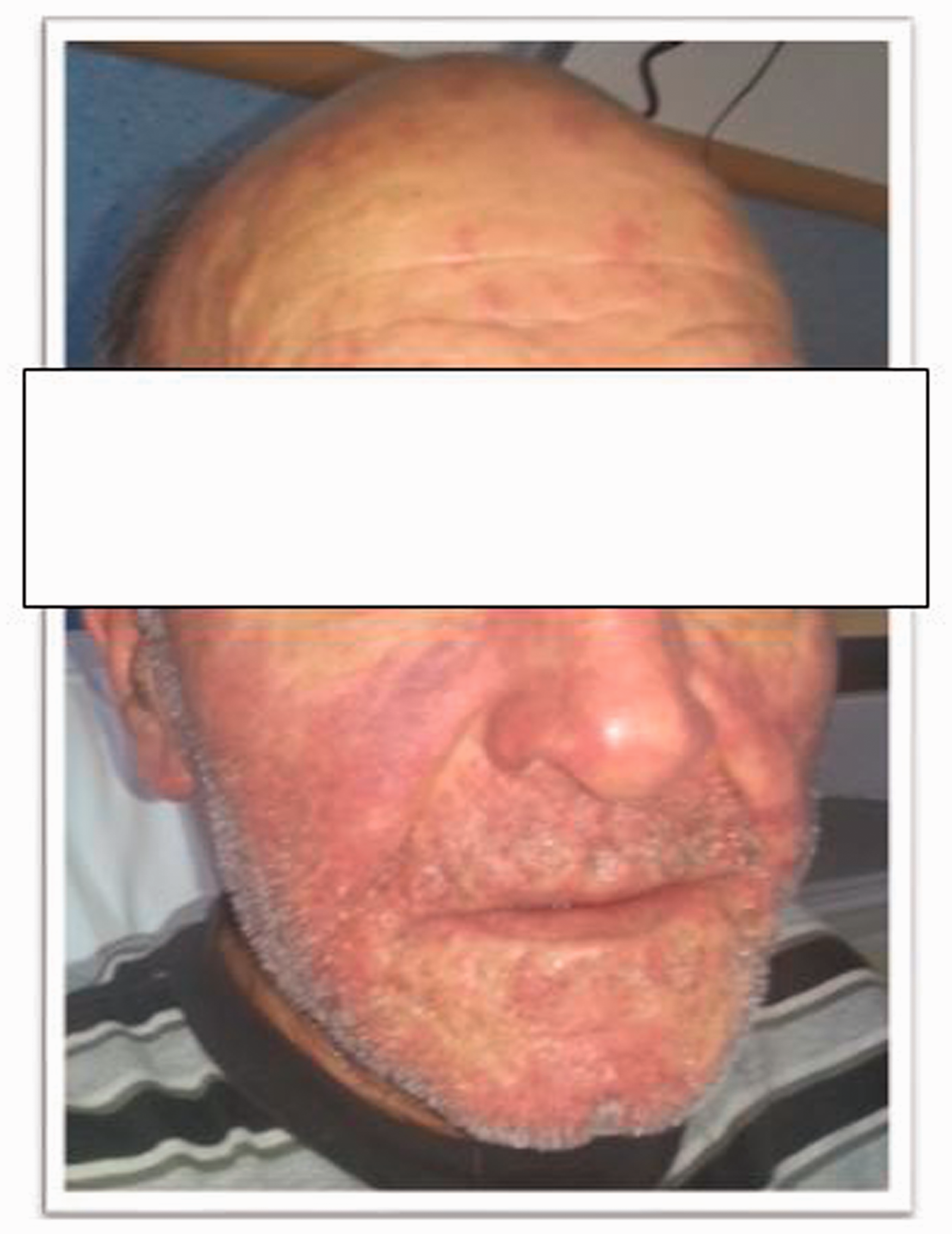
Generalized urticarial rash involving the face and more than 80% of the body surface.

Timeline showing the patient’s clinical evolution until his death. Topical corticosteroids were applied at times during January and February 2016.
Discussion
In this case report, all classical criteria used to define DRESS syndrome were fulfilled with a RegiSCAR score = 9 indicating a definite DRESS diagnosis.4 Skin and liver histopathology findings were compatible although not specific to DRESS with neither granulomas nor eosinophils found in liver biopsy but these are inconsistently described.5 Regarding HHV-6 reactivation, it is reported in 40–60% of DRESS syndrome. DRESS syndrome is characterized by a long latency period after starting the culprit drug: timing for onset of symptoms in our patient suggests dolutegravir rather than moxifloxacin as the causal agent as moxifloxacin was only started one week before the symptoms. Moxifloxacin has never been described as a cause of classical DRESS syndrome, however, ciprofloxacin has been, sometimes with a short latency period.6 Anti-TB drugs may also provoke DRESS syndrome, mainly isoniazid7 which was discontinued early in our patient’s case. The Naranjo score for dolutegravir responsibility for DRESS syndrome was four which indicates a link with dolutegravir classified as “possible”. Furthermore, previous reports of DRESS syndromes in patients treated with raltegravir are an additional element that also has to be taken into account in this link estimation.
Liver failure is a leading cause of mortality in DRESS syndrome and even withdrawal of the drug and corticosteroid therapy are not always enough to ensure a favorable outcome. Moreover, guidelines or consensus about DRESS management are lacking.
Dolutegravir is increasingly used due to its ease of administration, lack of drug–drug interactions, high genetic barrier for HIV resistance and being part of a single-tablet regimen. Moreover, its license has been sold to developing countries which will lead to a worldwide use of generic dolutegravir. Close post-marketing surveillance is essential to detect potential cases of DRESS syndrome linked to dolutegravir as it has been described with raltegravir and to identify potential risk factors for developing this life-threatening syndrome.
Footnotes
Declaration of conflicting interests
The authors declared no potential conflicts of interest with respect to the research, authorship, and/or publication of this article.
Funding
The authors received no financial support for the research, authorship, and/or publication of this article.