



Abstract
Although Vietnam has promoted the utilisation of highly active antiretroviral therapy (HAART) towards HIV elimination targets, adherence to treatment has remained under-investigated. We aimed to describe high-risk behaviours and clinical characteristics by adherence status and to identify the factors associated with non-adherence. We included 426 people living with HIV (PLWH) currently or previously involved in HAART. Most participants were men (75.4%), young (33.6 years), with low income and low education levels. Non-adherent PLWH (11.5%) were more likely to have a larger number of sex partners (p-value = 0.053), sex without condom use (p-value = 0.007) and not receive result at hospital or voluntary test centre (p-value = 0.001). Multiple logistic regression analysis showed that demographic (education levels), sexual risk behaviours (multiple sex partners and sex without using condom) and clinical characteristics (time and facility at first time received HIV-positive result) were associated with HAART non-adherence. There are differences in associated factors between women (education levels and place of HIV testing) and men (multiple sex partners). Gender-specific programs, changing risky behaviours and reducing harms among PLWH may benefit adherence. We highlight the need to improve the quantity and quality of HIV/AIDS services in Vietnam, especially in pre- and post-test counselling, to achieve better HAART adherence, working towards ending AIDS in 2030.
Keywords
Introduction
HIV/AIDS is a global public health problem that affects people in the most productive stage of life. Highly active antiretroviral therapy (HAART) has contributed to prolonging life expectancy and improving quality of life of people living with HIV (PLWH) and has become a key component of the HIV response. 1 The Joint United Nations Programme on HIV/AIDS (UNAIDS) introduced the 90-90-90 targets for HAART programs in 2014. These global targets call for 90% of PLWH to know their HIV status, 81% to be on HAART and 72% to be virally suppressed by 2020. 2 The World Health Organization (WHO) considers adherence to HAART to be a central part of the treatment as prevention (TasP) strategy, a global approach to control the HIV epidemic.3,4 Nevertheless, UNAIDS projects that the global 2020 target will not be achieved, and the HIV elimination goal will be delayed by 10 years or more due to unequal progress within and between countries.5,6
Vietnam has a stable HIV epidemic concentrated in some high-risk groups of people who inject drugs, sex workers and men who have sex with men (MSM).7,8 There were approximately 230,000 PLWH in 2018, with 5000 people dying annually due to AIDS and 5200 newly infected cases. 9 Committing to achieving the UNAIDS targets, Vietnam had promoted WHO’s initiative Treatment 2.0 and issued new guidelines for diagnosis and treatment of HIV/AIDS to increase the uptake of HAART. 10 By 2019, 160,000 PLWH were on HAART, which accounted for 70% of the total number of PLWH. 9 In the context of resource-restricted settings, adherence is not only crucial for improving HAART coverage and ensuring treatment effectiveness but is also needed for preventing drug resistance and avoiding the cost of moving to second- and third-line HAART. However, a recent study showed that 25% of people receiving ART reported non-optimal adherence and missed 25% of doses in the last 7 days. 11 HIV/AIDS prevention and control in Vietnam is facing several challenges with inequalities in receiving health services12,13; thus, more endeavours are needed in progress towards HIV elimination in this low- and middle-income country. 14
Since HAART non-adherence is one of the most serious challenges to the success of HIV treatment, much has been done to identify its associated factors. Prior studies revealed that depression, stigma, drug side effects, forgetfulness, marital status and inequalities in socio-economic conditions were associated with HAART non-adherence in Vietnam. 15 However, quality of the decentralised HAART delivery services needs to be routinely evaluated for its impact on HAART utilisation. Additionally, context-specific knowledge regarding high-risk behaviours and clinical and health service characteristics is still lacking in Vietnam. This scientific-based information is of great interest to policymakers and program managers to make appropriate public health plans and practice decisions. In this study, we determined the high-risk behaviours and clinical and healthcare service characteristics of PLWH on HAART by their adherence status and identified the factors associated with HAART non-adherence in Vietnam.
Methods
Study design
We used data from a cross-sectional study of PLWH in Vietnam in 2017. Hanoi and Nghe An were selected as the capital city and the largest province of Vietnam’s central coast regions, as they are among the top provinces with the highest number of PLWH. 16 This survey used a convenience sampling method to achieve a rapid, readily available and cost-effective sample.17,18
Participant recruitment
We recruited participants using HIV/AIDS case reporting procedures of the Vietnam Authority of HIV/AIDS Control (VAAC). In Vietnam, HIV screening tests are currently performed in three main domains, including hospital systems, voluntary counselling and testing (VCT) centres and other settings such as private clinics or prison facilities. In contrast, the confirmation tests are conducted only at provincial centres of HIV/AIDS prevention and control. They summarise all HIV-positive results and report them to VAAC as provincial monthly reports. The research team used those reports to selected facilities in Hanoi and Nghe An in 2017. A total of 440 adult clients (older than 15 years) with confirmed HIV-positive results were approached for this study. Finally, information of 426 PLWH (response rate = 97%), who were currently or previously involved in HAART, was used for analysis. This sample size is considered as appropriate for multiple regression analyses with less than 30 covariates according to Cohen et al. 19
Measured information
We measured HAART adherence using participants’ self-reported compliance with prescribed medications in the 30 days before the interview. 20 The adherence questions were coded as a dichotomised variable with ‘adherence to HAART’ defined as intake of greater than or equal to 90% prescribed doses, versus ‘non-adherence to HAART’ for less than 90%. Participants’ demographic information (i.e. gender, age, education level, income, marital situation and HIV transmission mode) was collected. We asked clients for their sexual risk behaviours encompassing the number of partners over the last 1 year, sexual history (having sex with or without a condom) and history of ever having been forced to have sex. We asked participants for information about their history of using drugs or stimulants, the age at first time use, injection of any drug, needle sharing and the number of shared injecting partners over the last 6 months. We finally asked participants for their clinical characteristics (i.e. history of sexually transmitted diseases, recently successful treatments, time and the facility since receiving first HIV-positive results, recent treatment status and regimen and the results of the initial CD4 test).
Statistical analysis
We performed univariate analysis including descriptive and inferential methods for demographic information, high-risk behaviours and clinical characteristics between HAART non-adherent and adherent groups. We applied the Student’s t-test for continuous variables and Pearson’s chi-squared and Fisher’s exact test for categorical variables. To examine the key determinants of HAART non-adherence behaviours, we used multivariable logistic regression models. Since there are differences in high-risk behaviours between genders, we conducted models separately for men and women along with an overall model. Associations were measured by the estimation of adjusted odds ratios and 95% confidence intervals (95% CIs). We selected predictors for the multivariate model based on our prior knowledge about relationships between variables and outcomes, results from univariate analysis and our specific research interests. Finally, reduced multivariable models were developed by using forward stepwise variable selection based on the smallest Akaike information criterion. All analyses were conducted using R version 4.0.2.
Ethics statement
This study used data from the survey of PLWH in Vietnam of the Center for Community Health Research and Development. The United States Agency for International Development approved this survey’s ethics with IRB approval number IRB00006556. All the participants were provided verbal consent, information on the study’s objectives and methods and anonymity and opt-out rights. Additionally, identifying information of participants was not collected.
Results
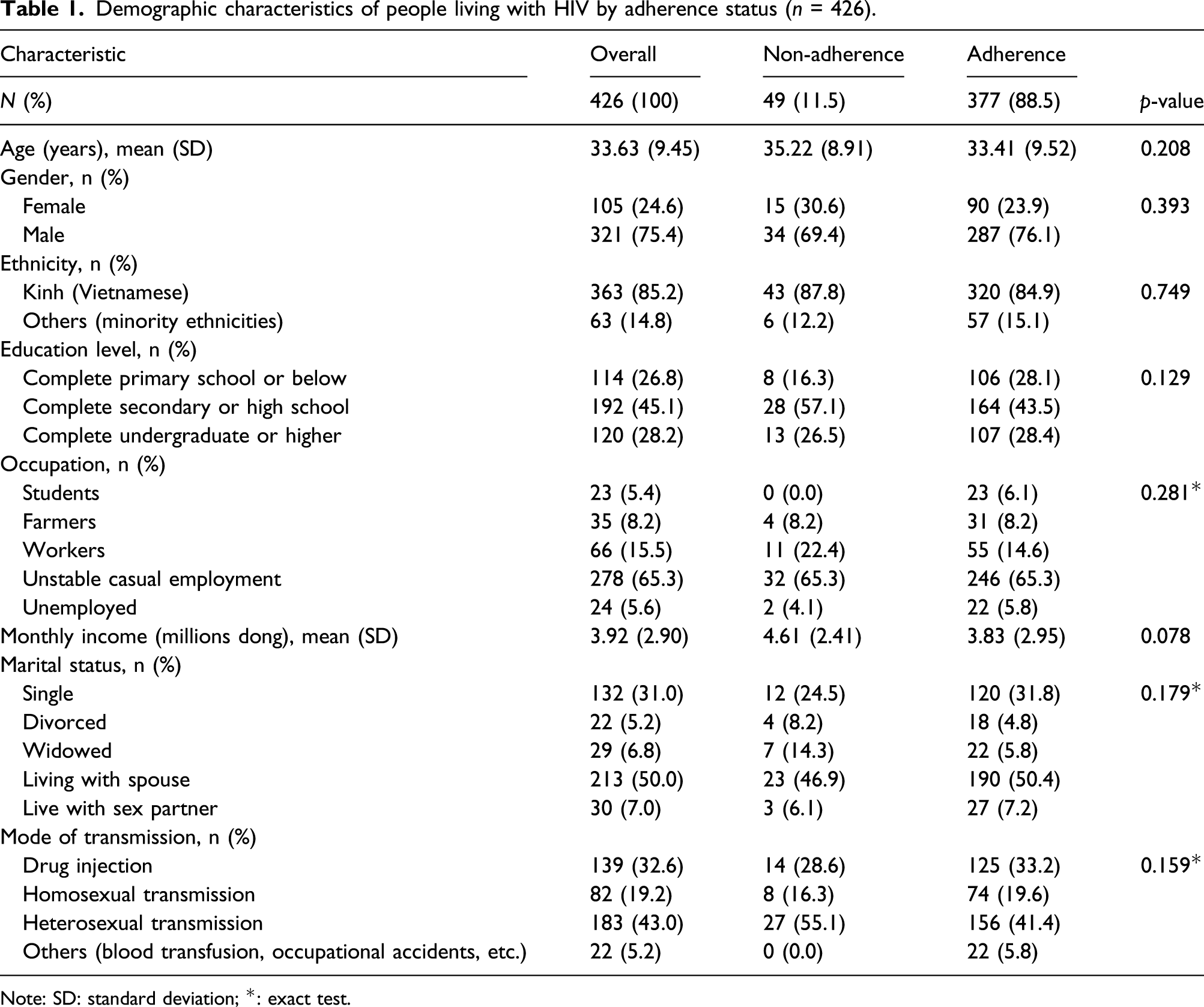
Demographic characteristics of people living with HIV by adherence status (n = 426).
Note: SD: standard deviation; *: exact test.
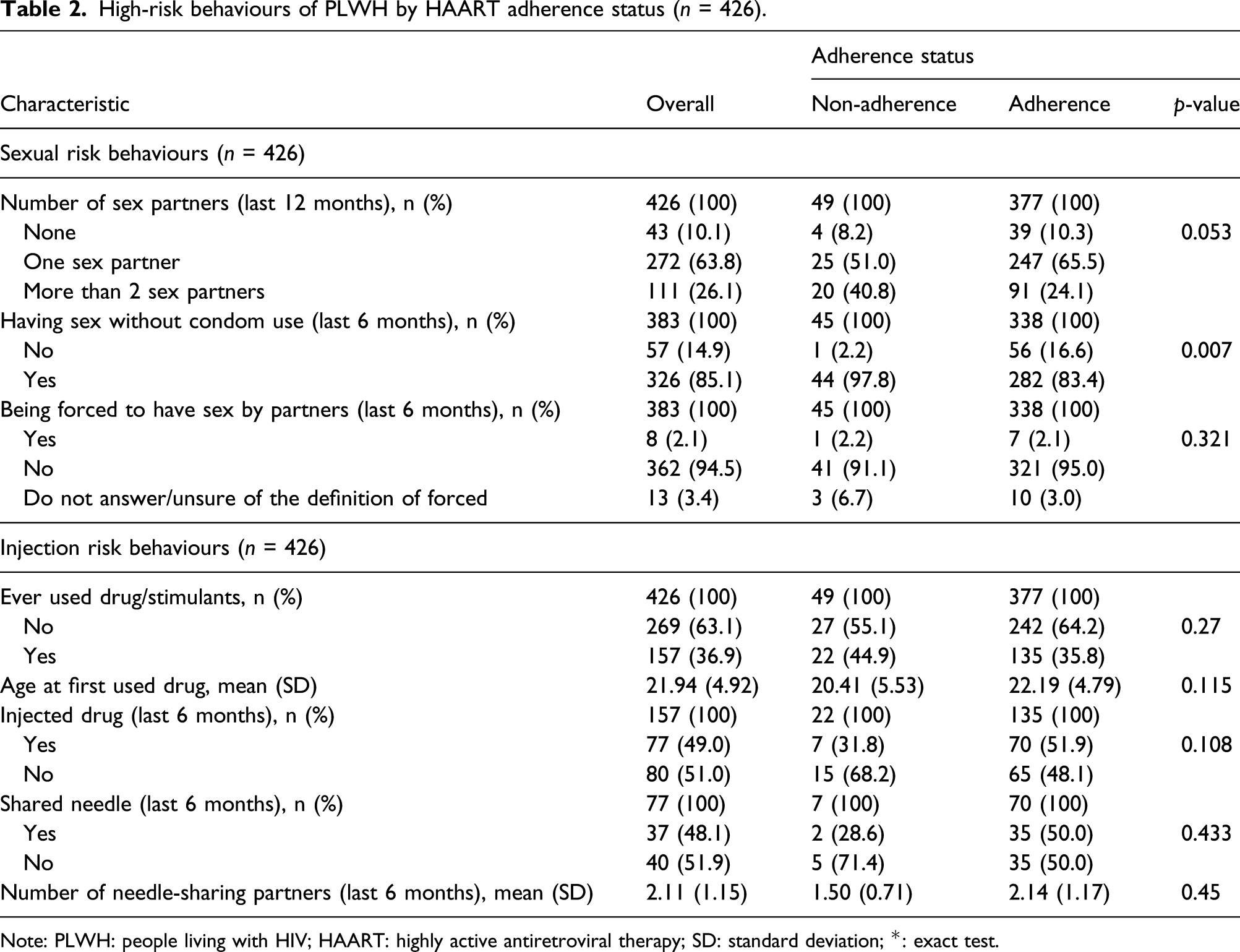
High-risk behaviours of PLWH by HAART adherence status (n = 426).
Note: PLWH: people living with HIV; HAART: highly active antiretroviral therapy; SD: standard deviation; *: exact test.
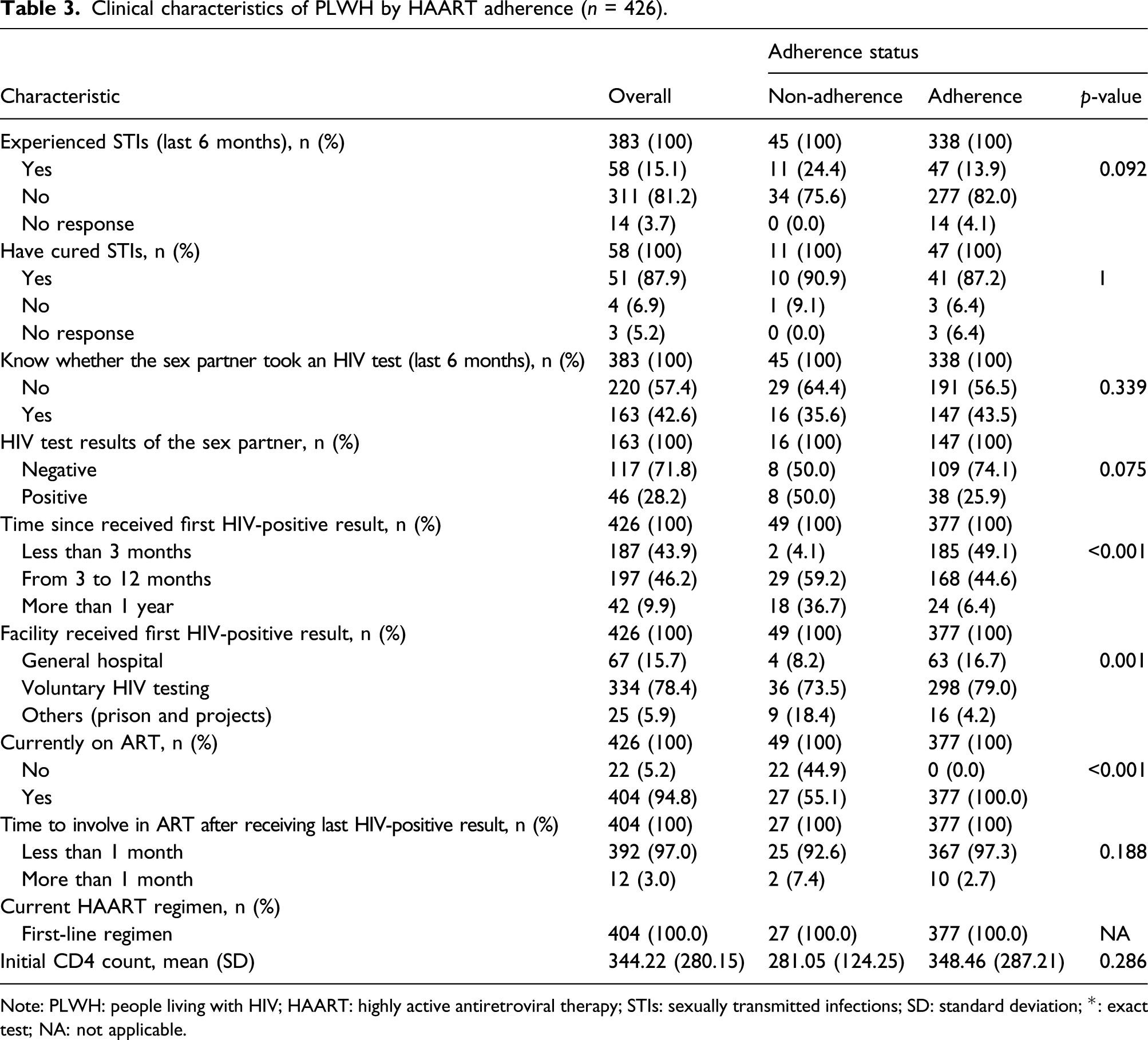
Clinical characteristics of PLWH by HAART adherence (n = 426).
Note: PLWH: people living with HIV; HAART: highly active antiretroviral therapy; STIs: sexually transmitted infections; SD: standard deviation; *: exact test; NA: not applicable.
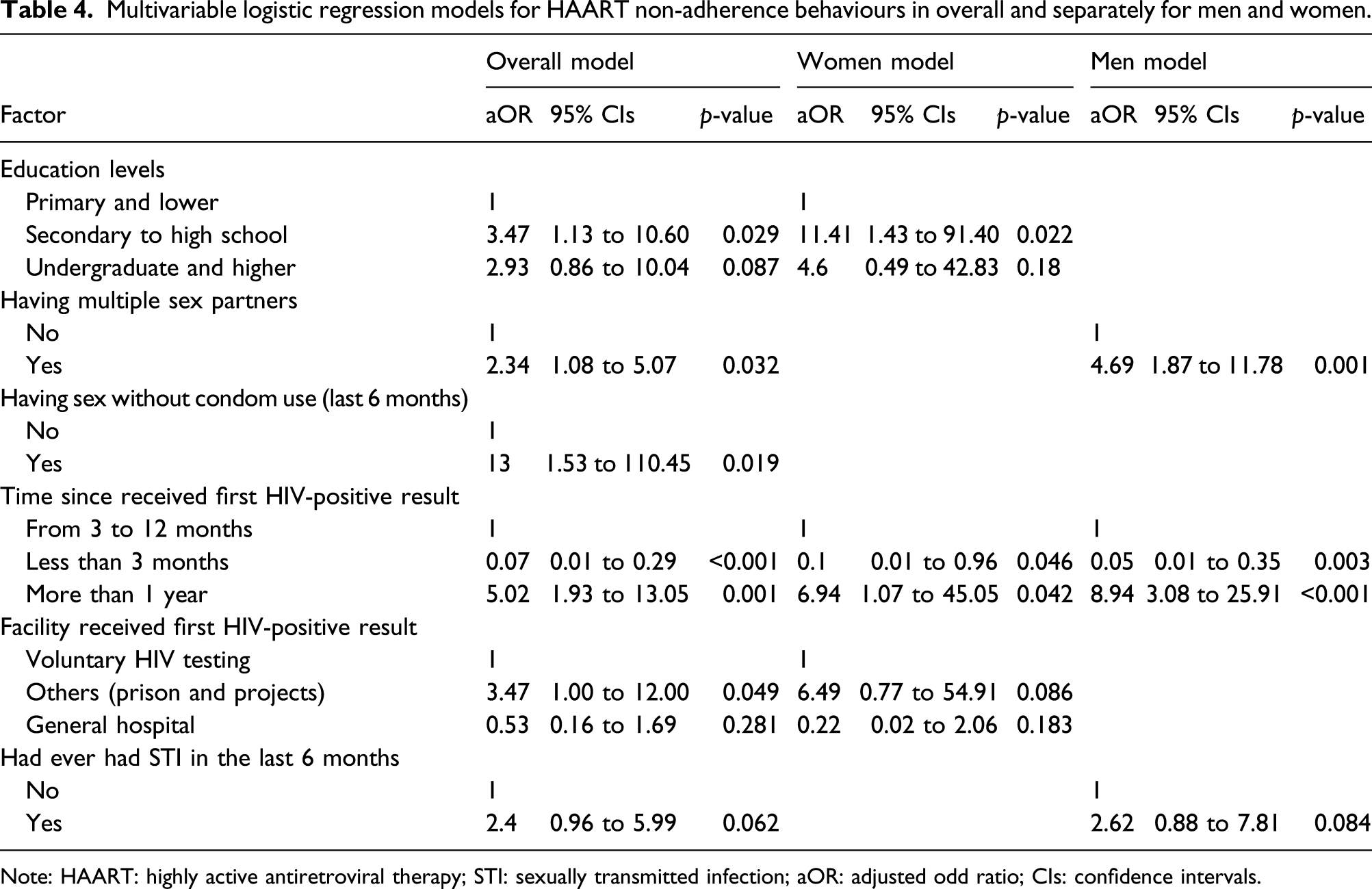
Multivariable logistic regression models for HAART non-adherence behaviours in overall and separately for men and women.
Note: HAART: highly active antiretroviral therapy; STI: sexually transmitted infection; aOR: adjusted odd ratio; CIs: confidence intervals.
Discussion
The present study examined the high-risk behaviours and clinical characteristics of PLWH on HAART and the factors associated with non-adherence to HAART. This study’s participants are comparable with previous studies of PLWH in Vietnam in some demographic characteristics (e.g. age and gender distribution) and socio-economic status (e.g. educational level and income). 21 The distribution of HIV transmission mode in this study is highly similar to the current HIV transmission pattern in Vietnam. 22 Overall, 11.5% of our sample reported non-adherence, which is quite high. If this result was generalisable to the current number of PLWH in Vietnam, 22 nearly 24,380 patients can be expected to be non-adherent. These figures should deserve close attention among AIDS control policymakers, programmers and practitioners. More importantly, we found that high-risk behaviours are more common among non-adherent PLWH. If these trends were to continue without policy adaptation, the transmission of HIV/AIDS would be expected to continue.
Our results highlight the critical role of clinical factors and health services, especially the time and facility of the first HIV test at which participants received a positive result, in non-adherence to HAART among PLWH in Vietnam. In particular, time since the first HIV-positive test is a similarly associated factor in both men and women. There are several possible explanations for this, such as a decline over time in awareness of HAART’s effectiveness and adherence, drug resistance and other difficulties in taking medicine regularly. 23 Furthermore, HIV testing context and facilities are the notable factor in HAART non-adherence among PLWH and particularly women. This is understandable as voluntary testing is recognised as a cost-effective strategy in reducing high-risk behaviours of HIV transmission and ensuring HAART adherence in low- and middle-income countries such as Vietnam. 24 Our result indicates that women, who received HIV-positive result outside of mainstream health services (i.e. hospitals and VCT), were more likely to be non-adherent to HAART. This finding suggests the vital role of HIV counsellors in providing HIV service packages, including testing, counselling, referral to treatment and adherence support. 25 Knowing that adherence counselling is essential in increasing treatment effectiveness and reducing drug resistance, findings from our study emphasise the need to strengthen the counselling procedure at the HIV testing facilities. 26 Vietnam has gained specific achievements in health care in general and HIV and AIDS prevention and control in particular by reforming health systems and policies. 27 Given this, shortages in both quantity and quality of staff may have a significant impact on the quality of HIV services and may deserve more attention. 28
Results from multivariable logistic regression models suggest differences between men and women in factors associated with HAART non-adherence, which are comparable with previous studies in other countries. 29 While socio-economic factors (education levels) had a considerable impact on HAART non-adherence among women, sexual risk behaviours (number of sex partners) substantially affected men. These findings suggest that future HIV/AIDS interventions and programs should be explicitly and separately designed for women and men to achieve higher efficiency. Education has been shown to have an association with non-adherence to HAART among women and is recommended by UNAIDS as a critical target for improving women’s HIV/AIDS outcomes. 30 Our results confirm this and suggest overconfidence and insufficient knowledge of HIV/AIDS even among highly educated women. More efforts are still needed in both the short term by implementations of health education strategies (e.g. integrating HIV/AIDS education into school and HIV/AIDS communication campaigns via the Internet and social networks) and long term with a focus on women’s empowerment and gender equality. 31 On the other hand, our multivariable analysis shows a positive association between having multiple sex partners and HAART non-adherence among men, which is consistent with previous studies investigating sexual risk behaviours. 32 Hence, our results suggest the coexistence of non-adherence and other high-risk behaviours among men, which may amplify the risk of HIV transmission and present an immense challenge for future HIV and AIDS programs and interventions targeting men. 33 The lack of association between having ever experienced an STI and non-adherence among men who living with HIV is also consistent with other studies, in that adherence was not associated with the presence or absence of coinfections. 34
Among our sample, the PLWH who participated in treatment reported a higher prevalence (85.1%) of having sex without using a condom in the last sexual intercourse than previous results (71%) in other regions. 35 Also, the majority of those knowing the HIV status of sex partners (71.8%) had HIV-negative partners. Those results suggest a high transmission risk among those serodiscordant couples. This may partially reflect the inefficiency of behaviour change communication for harm reduction in HIV/AIDS facilities in Vietnam. The prevalence of 6.9% untreated STIs, which can heighten the risk of HIV transmission, indicates that WHO’s recommendation of screening STIs for all PLWH is still not fully achieved in Vietnam. 36 As such, we argue the need for appropriate interventions for STIs and more effective counselling in harm reduction programs.
To the best of our knowledge, this is the first study to examine the association between high-risk behaviours and clinical characteristics with HAART non-adherence among PLWH in Vietnam. We recognise several limitations in the present study. Firstly, as this study was cross-sectional, we may not ascribe causality to the associated factors in our results. Secondly, we collected and analysed the information on high-risk behaviours and HAART non-adherence based on self-reporting, which may lead to misclassification, recall bias and intentional concealment. Thirdly, this study may have potential bias and limitations in its generalisability due to the convenience sampling methods applied. Fourthly, other factors that might impact on HAART non-adherence among PLWH, such as stigma, discrimination and depression, have not been investigated in this study. Forthcoming research that applies implementation science can improve the HAART adherence in both genders most effectively.
Conclusions
This study identified differences in high-risk behaviours and clinical and health service factors by adherence status among PLWH and suggested gender differences in factors associated with HAART non-adherence. Future HIV programs that are gender-specific and tailored-made interventions that increase socio-economic status, change risky behaviours and reduce harms among PLWH can enhance adherence. The present study indicates the crucial importance of clinical and health service factors (the time and facility of the first HIV testing and receiving positive results) for adherence. We, therefore, call for maintaining and improving the quantity and quality of HIV services in Vietnam, especially in pre- and post-test counselling, to better achieve HAART adherence. By promoting HAART adherence programs as the centrality of WHO’s treatment as prevention strategy, 37 we believe Vietnam will have better progress towards the global targets of HIV and AIDS elimination for its people.
Footnotes
Acknowledgements
We would like to express our sincere gratitude and appreciation to colleagues from the Center for Community Health Research and Development, who supported in interviewing participants and collecting data.
Declaration of conflicting interests
The author(s) declared no potential conflicts of interest with respect to the research, authorship and/or publication of this article.
Funding
The author(s) received no financial support for the research, authorship and/or publication of this article.
