




Abstract
Psoriasis is a chronic immune-mediated disease of the skin. The incidence of psoriasis among people living with HIV (PLHIV) is higher than that in the general population. The mechanism is complex, the manifestations are varied, and the treatment is difficult. Biotherapy has greatly alleviated psoriasis, but clinical trials often exclude PLHIV, and evidence is limited to case reports. Here, we report a man living with psoriatic arthritis who had poor response to traditional treatments. After receiving the anti-interleukin (IL)-17 monoclonal antibody (ixekizumab), the arthritis symptoms were significantly relieved, while CD4+ T cell count increased and the viral load of HIV-1 remained undetectable in combination with antiretroviral therapy (ART). In conclusion, anti-IL-17 monoclonal antibody is a promising and safe treatment for psoriatic arthritis in HIV-positive patients.
Introduction
Some data show the prevalence of psoriasis in people living with HIV (PLHIV) is 1–3%, which is similar to rates reported in the general population.1,2 But other studies suggest an increased prevalence of psoriasis in PLHIV of around 4–6%. 3 Moreover, the manifestations of psoriasis in PLHIV are varied and difficult to treat. At present, biologics have made great progress, and have been widely used in the treatment of rheumatic immune diseases. 4
However, biologics should be prescribed with caution in PLHIV.5,6 IL-17 inhibitors have been regarded as an effective treatment for psoriasis, but clinical trials often exclude PLHIV. There are limited data of IL-17 inhibitors PLHIV with psoriatic arthritis. Secukinumab and ixekizumab are both IL-17 inhibitors. Here, we report the first experience with an IL-17 inhibitor (ixekizumab), in an HIV-positive man with psoriatic arthritis.
Case report
The patient was a 43-year-old male who presented with generalized silver dander on his skin five years ago without obvious precipitant. He went to the first Affiliated Hospital of Soochow University, and was diagnosed with psoriasis. He received topical and systemic steroids, and methotrexate, leading to improvement of the skin disease. Then, he dropped all drugs. Gradually, pain in his joints began to emerge; hand joints and sacroiliac joints were the most seriously affected. At the same time, the joints of the hands became gradually deformed. In September 2019, he was diagnosed with psoriatic arthritis, but the rheumatologist did not test him for HIV. He received etanercept, but it had no effect. Then, he accepted ixekizumab for three times, leading to improvement of arthritis. On October 19, 2020, he was hospitalized for facial neuritis. Subsequently, the HIV-1 test was found to be seropositive, HIV-1 viral load was 104 copies/mL, and CD4+ T cell count was 218 cells/mm3. The patient initiated ART with Biktarvy (C) (bictegravir 50mg/tenofovir alafenamide fumarate 25mg/emtricitabine 200mg) one tablet once daily. Biological therapy was discontinued during this period. By January 2021, the pain in the joints was aggravated, mainly in the right hand joint and the right knee. At this point, HIV-1 viral load was 102 copies/mL, and CD4+ T cell count was 382 cells/mm3. He went to our hospital on May 1, 2021, and at that time, the pain of joints gradually worsened.
The patient had a history of iritis a few years ago. Cardiovascular, respiratory, and neurological examinations were normal. He presented with slightly limited mobility of the lower limbs and deformities of the knuckles of both hands, especially the left hand (Figure 1). Psoriatic arthritis in the left hand at baseline.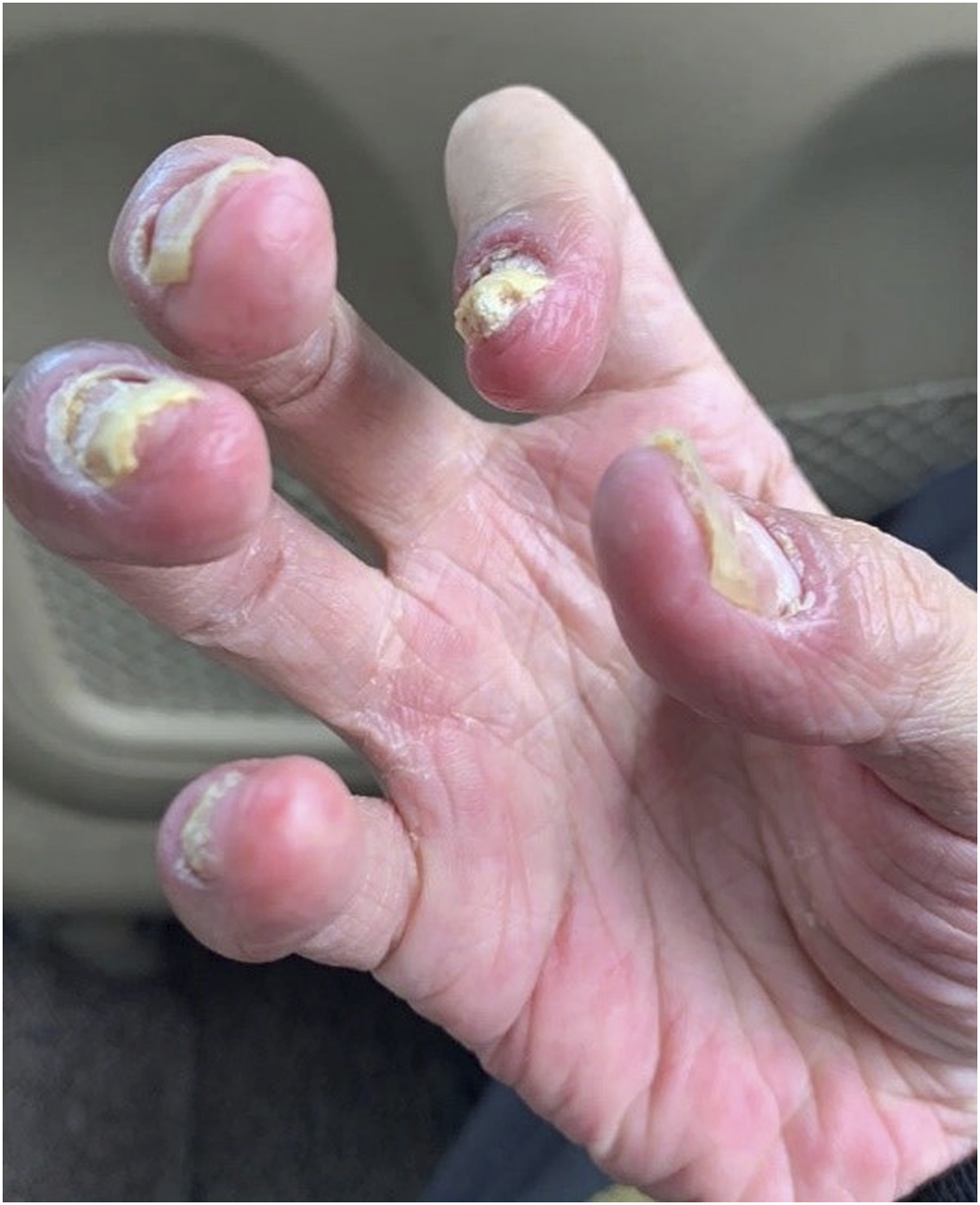
Blood examination demonstrated that the full blood count, liver function, kidney function, and blood coagulation function were all normal; viral hepatitis and syphilis were excluded. Tuberculosis ELISPOT was negative. C-reaction protein was 49.1 mg/L (normal: 0–10 mg/L); procalcitonin was 0.035 ng/mL (normal < 0.046 ng/mL). CD4+ T cell count was 424 cells/mm3, and the HIV-1 viral load was undetectable.
During hospitalization, the patient continued ART. On March 09, 2021, he started ixekizumab, 80 mg every two weeks. He experienced relief from his psoriatic arthritis after 8 weeks’ induction with ixekizumab (Figure 2). Twelve weeks later, he used ixekizumab 80 mg every four weeks. After a clinical follow-up of 8 months, results showed the viral load of HIV-1 was undetectable, and CD4+ T cell count was 569 cells/mm3. Relief of the left hand after 8 weeks’ induction with ixekizumab.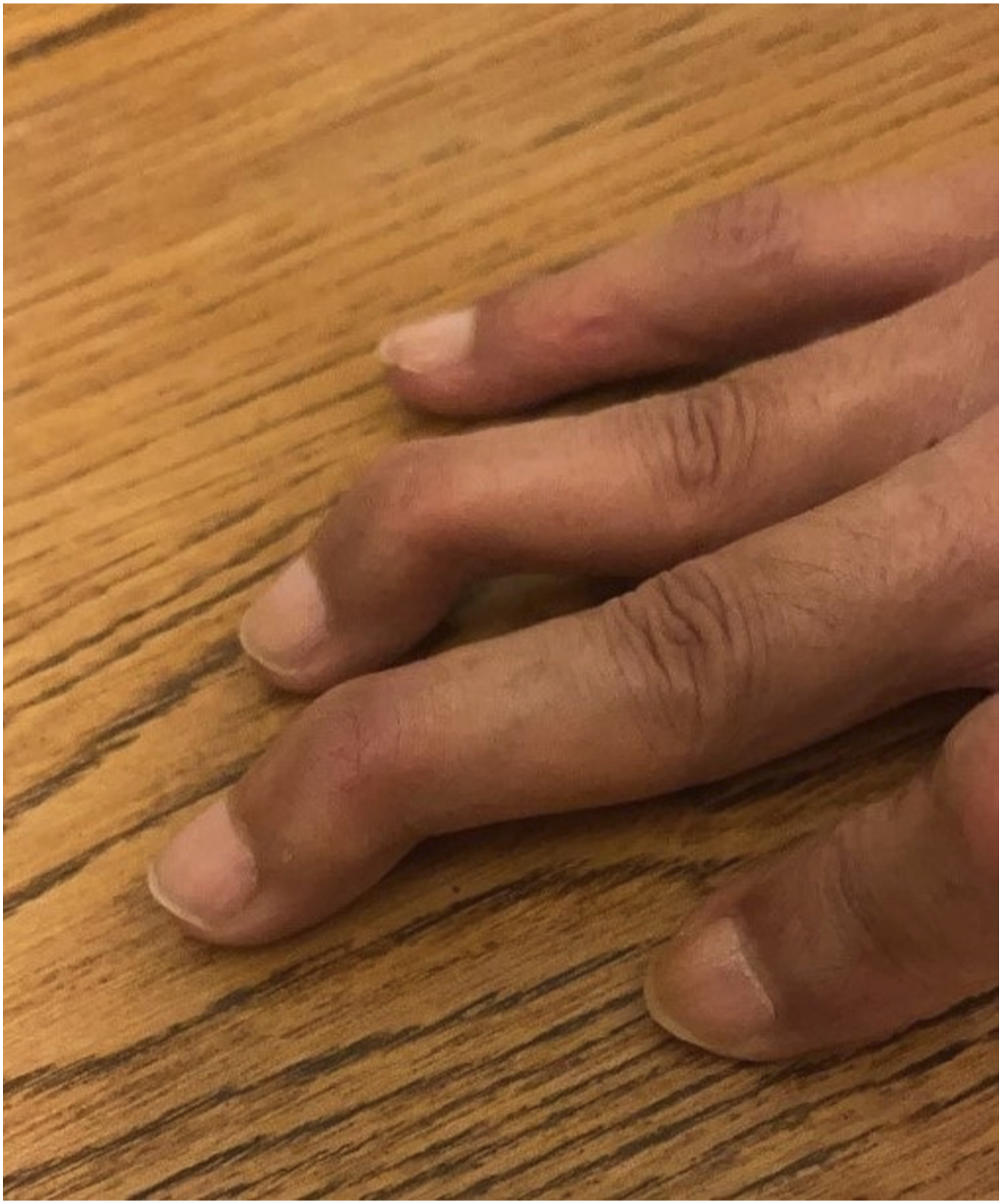
Discussion
HIV is an independent risk factor for many rheumatic immune system diseases, including psoriasis. 7 The presentations of psoriasis in people living with HIV are more severe and atypical, 8 and the pathogenic mechanism is complex. It is well-known that in the progression of infection with HIV-1, CD4+ T cells diminish gradually, which results in a decrease of CD4+/CD8+ ratio. 9 Some studies have shown that there were some correlations between lower CD4+ T cell count and the clinical severity of psoriasis in HIV-positive individuals.3,10 Several studies have proved that type 1 cytokines, such as IFN-γ, TNF-α, and IL-2, increase in psoriasis. Env proteins and other viral proteins can act as superantigens by combining to induce further development of skin lesions. 11 With HIV-associated opportunistic infection, various pathogens can also be used as antigens to stimulate human immune system, increase the secretion of cytokines, and induce skin inflammation. 1
All the above may explain the increased incidence of psoriasis among HIV-positive individuals. So, reducing the type 1 cytokines can relieve symptoms of psoriasis. 12 But the treatment of psoriasis in people living with HIV is more complicated than that in patients without HIV. External hormone, acitretin, UVA, and UVB can be used for the treatment in HIV-positive individuals. Cyclosporin and methotrexate should be used with caution because of the higher risk of opportunistic infections. 13 TNF-α blockers can be used with caution in consideration of risk of opportunistic infections. 13 As IL-17 is a cytokine that plays an important role in the pathogenesis of psoriasis, biologic agents selectively targeting IL-17A are effective and safe.14,15 It is reported that IL-17 inhibitors have lower risk than TNF-α inhibitors 16 but there are only two publications about use of anti-IL-17 monoclonal antibodies in HIV-positive individuals with psoriasis. One publication reports a woman achieving a significant remission of psoriasis after receiving anti-IL-17 monoclonal antibody, but she had candida esophagitis and erosive gastritis after 7 months. The other publication reports two HIV-positive people with erythrodermic psoriasis treated with anti-IL-17 monoclonal antibody. A few months later, they both achieved significant clearance of the lesions, and no opportunistic infection was observed.17,18
In this case, the patient is special. His psoriatic arthritis was very serious and affected the quality of his life. Before the treatment, his Dermatology Life Quality index (DLQI) score was 19 points. Disappointingly, the topical drugs and TNF-α inhibitors were not effective. Fortunately, he was a patient with an undetectable viral load of HIV-1 by anti-retroviral therapy. Therefore, we chose ixekizumab, the inhibitor of IL-17, and the patient’s psoriatic arthritis was relieved quickly. The patient was followed up for 8 months without any adverse reactions, including previously reported oral fungal infections. 19 And his DLQI score turned out to be 6 points. Under ART, the viral load of HIV-1 was undetectable, and CD4+ T cell increased.
Conclusions
We hereby present a case of psoriatic arthritis in an HIV-positive man treated with anti-IL-17 monoclonal antibody (ixekizumab), resulting in significant relief of symptoms without adverse events. These results suggest that IL-17 blockers could be an effective and safe treatment for psoriatic arthritis in people living with HIV.
Footnotes
Declaration of conflicting interests
The author(s) declared no potential conflicts of interest with respect to the research, authorship, and/or publication of this article.
Funding
The author(s) received no financial support for the research, authorship, and/or publication of this article.
