




Abstract
We report a case of an immune reconstitution inflammatory syndrome induced by gluteal silicones in a transgender woman living with HIV following the start of antiretroviral therapy. This case resembles the autoimmune/inflammatory syndrome induced by adjuvants (ASIA) syndrome that has been described as a complication of insertions of materials such as injected or implanted silicones. The potential of developing an inflammatory response in patient with injected or implanted silicones/foreign substances should be considered in patients who have recently started antiretroviral therapy.
Keywords
Introduction
The immune reconstitution inflammatory syndrome (IRIS) is a well described phenomenon of a paradoxical hyperinflammatory response to pre-existing infectious processes following the initiation of combination antiretroviral therapy (cART) in people living with HIV. 1 The autoimmune/inflammatory syndrome induced by adjuvants (ASIA) describes an aberrant inflammatory response triggered by adjuvants such as silicones or oil-based fillers. 2 We describe the case of a transgender woman who developed an IRIS/ASIA induced by gluteal silicone implants after initiation of cART. This case is of importance as many transgender people living with HIV may have received silicones or oil-based fillers. 3
Clinical case
A 38 year old transgender woman was diagnosed with HIV 8 years before presentation to our outpatient clinic. Up to the moment of presentation she had not received any antiretroviral therapy. On physical examination, she displayed signs of cachexia and oral candidiasis. Her plasma HIV-1 RNA load was 500,000 copies/ml and CD4+ cell count was 120 cells/µl. She reported having undergone a buttock enhancement procedure 12 years prior through subcutaneous injections of fillers in the gluteal area and had received bilateral breast implants 6 years prior to the presentation. She noticed that part of the substance that was injected in the gluteal area had dislocated towards the groin over the recent years. She was started on cotrimoxazole and on an integrase strand transfer inhibitor-based regime of dolutegravir and emtricitabine/tenofovirdisoproxil (Truvada). Two weeks after the initiation of cART, she developed a fever (38.0 degrees Celsius) and reported a gluteal pruritic rash. Examination showed indurated skin with numerous erythematous papules and non-movable subcutaneous nodules of different sizes in the hips and buttocks, and a larger bilateral swelling of the groin that contained the subcutaneous fillers. (Figure 1). A CT-scan of the lower abdomen demonstrated subcutaneous fat infiltration around nodules that were distributed diffusely in the gluteal region and the groin. Erythematous papules in the gluteal region (left) and swelling of the groin region (right).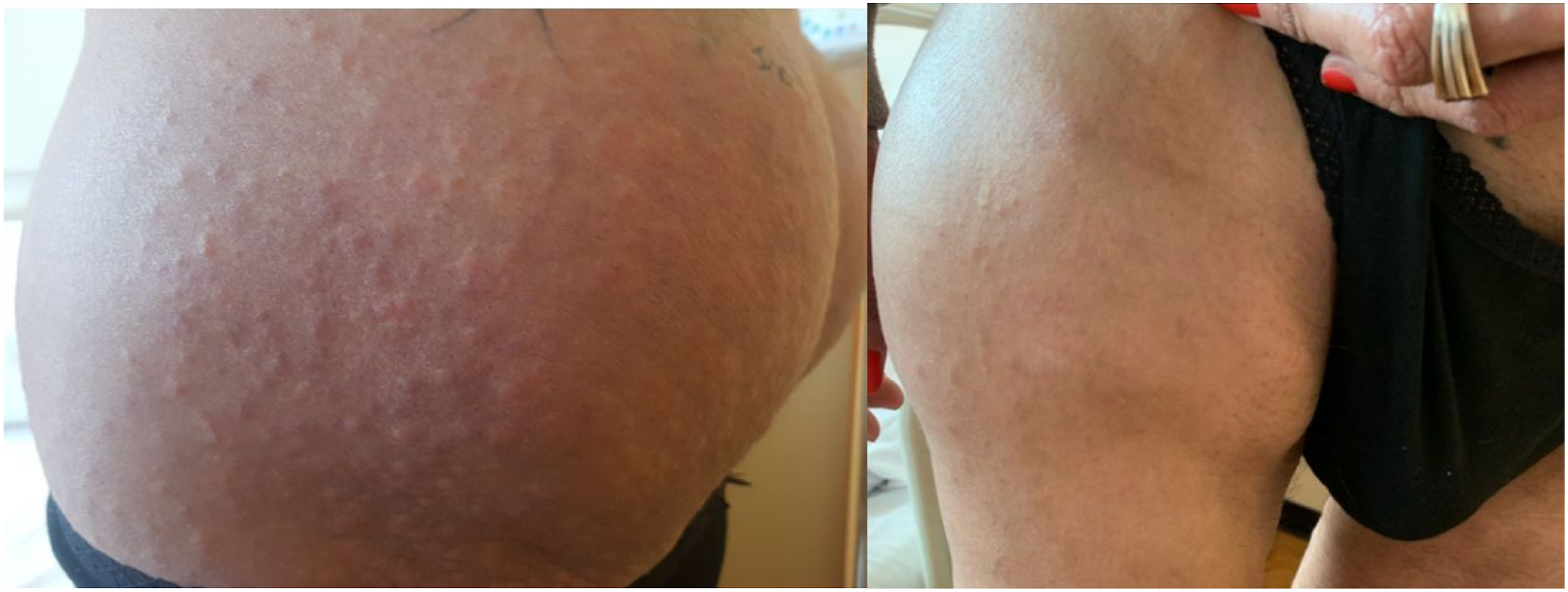
A biopsy of the gluteal area and the groin displayed a vacuolar lipogranulomateus reaction on a non-birefringent oil-like substance taking over the complete dermis in an infiltrative pattern splitting up collagen strands, suggestive of an immune response to a foreign body material in the setting of an immune reconstitution syndrome (Figure 2). No (pseudo)hyphae were seen in periodic-acid Schiff stained slides. Cultures and Polymerase Chain Reaction tests were negative for tuberculosis and non-tuberculous mycobacteria. Gluteal biopsy showing a dermal lipogranulomatous reaction at 40× (whole biopsy) and 100×/200× (red and blue inlets).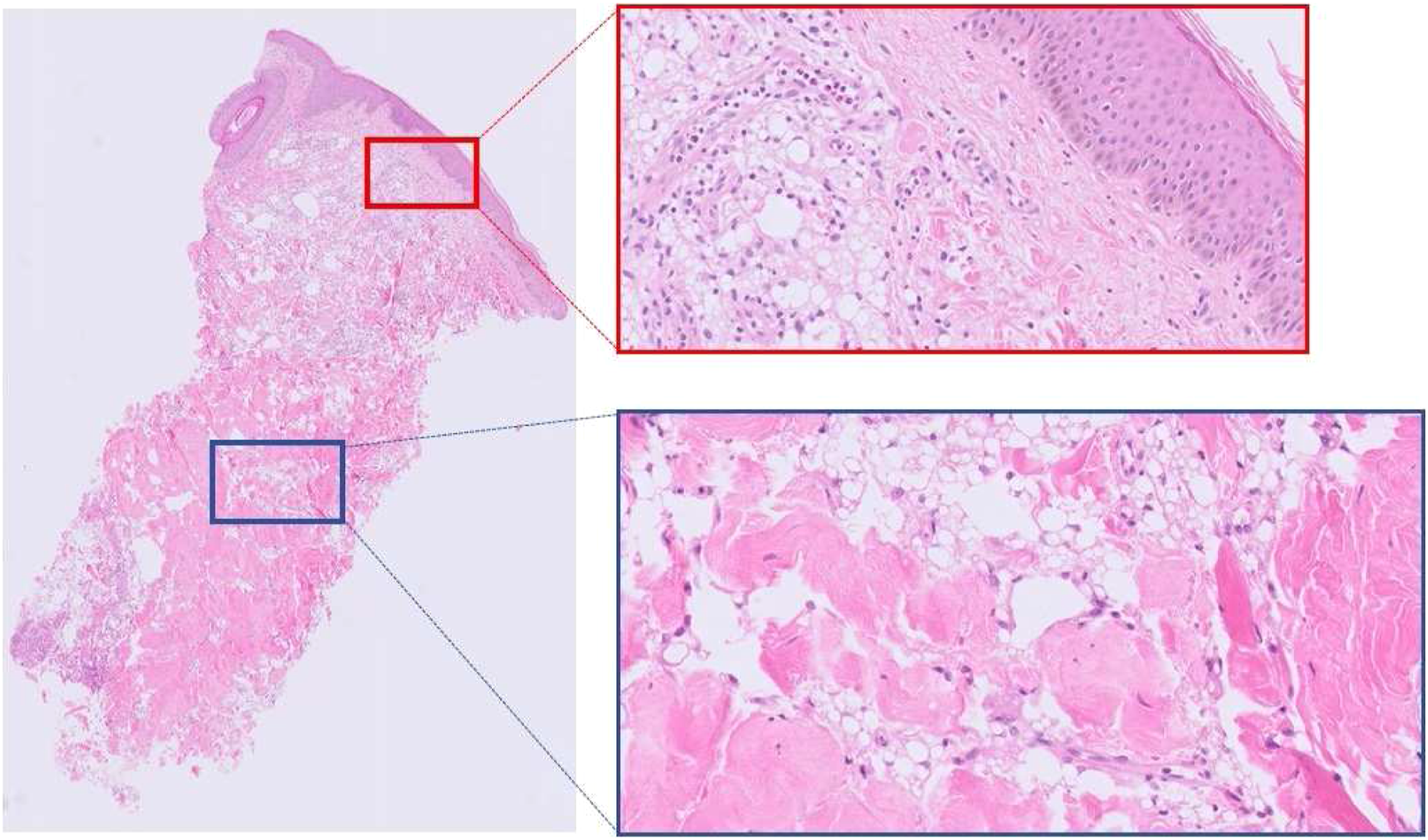
Based on the radiological findings, the pathology results and the medical history we concluded that the complaints of gluteal erythema and local inflammation were caused by a silicone-induced cutaneous IRIS/ASIA. Removal of the foreign substance was discussed, yet due to the extensive migration of the filler substance, we refrained from surgical intervention. We started low-dose minocycline 100 mg once daily in order to reduce the inflammatory response to the subcutaneous fillers, as has been suggested in previous publications.
4
The swelling substantially diminished in the 3 months following initiation of treatment, after which the minocycline was stopped (Figure 3). Photo taken 1 year after start of combination antiretroviral therapy.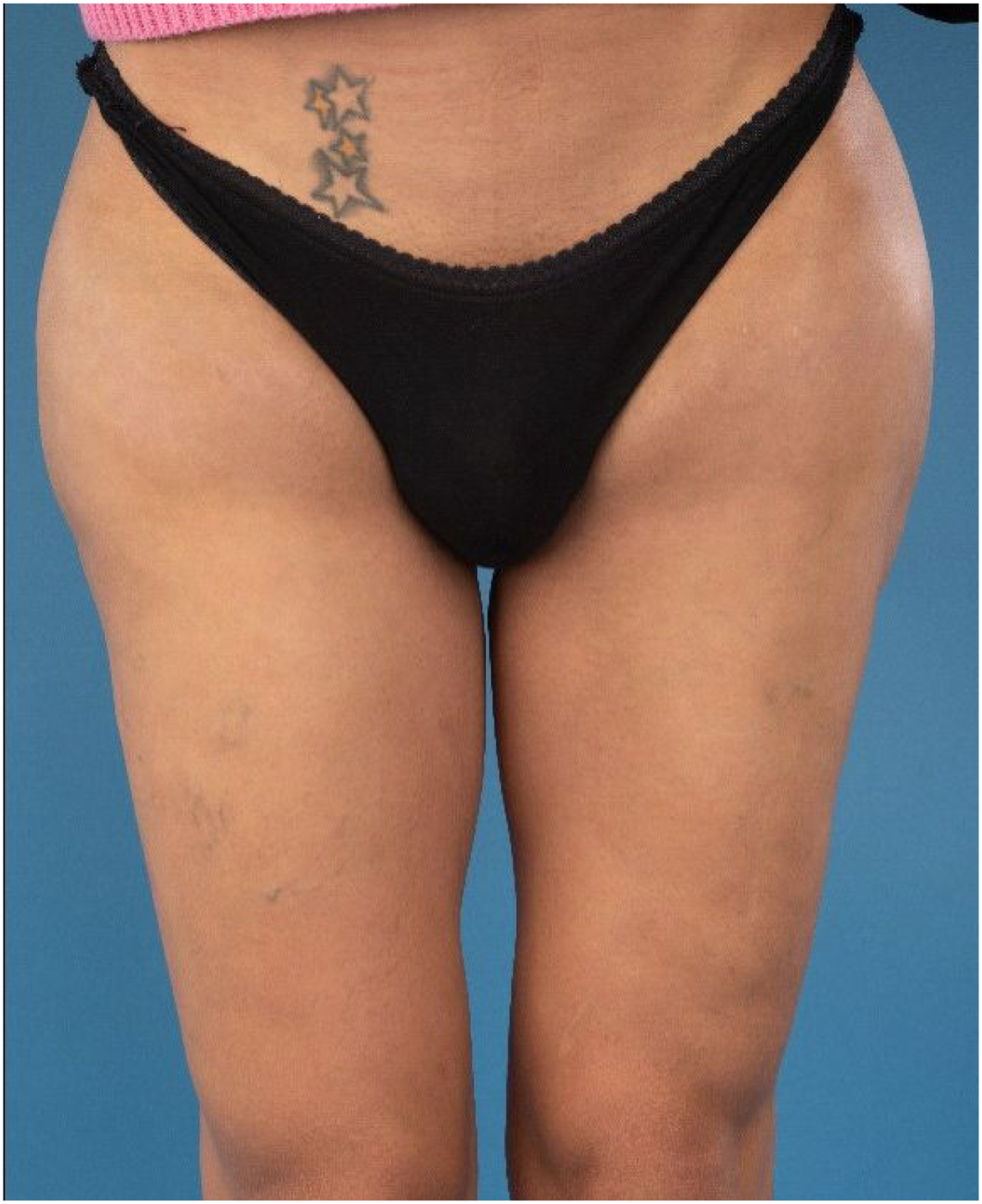
Discussion
The presentation of this case resembles that of an autoimmune/inflammatory syndrome induced by adjuvants that has been described as a complication of the subcutaneous injection of adjuvants used to augment body proportions. Permanent (non-biodegradable/non-absorbable) dermal fillers are known to potentially trigger autoimmune responses through the release of inflammatory cytokines by antigen-presenting cells and the subsequent induction of both humoral and cellular immunity. 5 In addition, migration and dislocation of filler substances is a known late-onset complication, as well as the development of foreign body granulomas. 6
The immune response to these antigens is expected to be impaired in patients with untreated HIV infection, and restoration of the CD4+ T cell populations by cART could result in a hyperinflammatory response to these injected materials. Two independent cases have been published in which inflammatory reactions to subcutaneous fillers during the immune reconstitution phase of HIV-positive patients have been described.7,8 Given these observations, clinicians should be cautious of the development of IRIS/ASIA in the initial phase of cART treatment of silicone filler bearers living with HIV. Given that surgical removal of the subcutaneous adjuvants is often challenging, treatment with oral minocycline could be considered to reduce the local hyperinflammatory response.
Footnotes
Authors’ contribution
Each author has contributed to the written text of the case report.
Declaration of conflicting interests
The author(s) declared no potential conflicts of interest with respect to the research, authorship, and/or publication of this article.
Funding
The author(s) received no financial support for the research, authorship, and/or publication of this article.
Informed consent
Written consent for publication of this case and the accompanying pictures has been obtained from the patient, for which we would like to express our gratitude.
