




Abstract

The Court of Protection was created under the Mental Capacity Act 2005. It has jurisdiction over the property, financial affairs and personal welfare of people who lack mental capacity to make decisions for themselves. But until 2009, the media were excluded from its private hearings. We hear from a journalist, a lawyer and a father involved in CoP cases on why it is right to let the press in
The Journalist's View

Jerome Taylor is an award-winning journalist shortlisted for this year's Paul Foot Award for campaigning journalism for his work on the Court of Protection. He is a reporter and religious affairs correspondent for The Independent.
For a journalist, the Court of Protection is like no other court. With most courts, there's a general acceptance by all parties that reporters are a necessary, and indeed vital, part of a transparent judicial process. Not so the Court of Protection. Lawyers often run a mile when you introduce yourself to them, while some clerks look dumbfounded when you show your press card. A reporter at the Court of Protection is viewed with deep suspicion. Those of us who cover the court are aware that people who are unfortunate enough to need its protection are deeply vulnerable and deserve their privacy. But wherever possible justice must be transparent. And for many years the Court of Protection came up short in this respect. Rushed through in the legislative wash-up before the 2005 General Election, the court has been controversial from its inception. Complaints flooded in: people said it was cumbersome; it was expensive; it was insensitive to the loved ones of those it was trying to protect. But if they spoke out publicly, they faced being in contempt of court.
Moreover, some of the decisions that judges were being asked to make were extraordinary, both in medical and legal terms, and often involved requests to breach some of our most fundamental human rights. Journalists who wanted to know whether there was substance to these allegations found themselves butting a brick wall. As most proceedings were held in private – and hence all the decisions the court made and how they reached them – there was simply no way of telling fact from fiction.
Made public for the first time
The Independent's campaign to report on the workings of the court – which is as much a pioneering legal battle as it is a journalistic one – helped change that. We've come a long way since we were first allowed to report a case in the spring of 2009 on the blind musical maestro Derek Paravicini. In the past 18 months, the public has been told of a string of vital cases including – and this list is by no means exhaustive – a decision not to allow a woman in a minimally-conscious coma to have her nutrition withdrawn; an elderly couple's fight to go on holiday after their local authority refused them permission; a mother's bid to have a daughter with severe learning difficulties sterilised because she kept getting pregnant (eventually withdrawn); and numerous disputes where vulnerable adults have been removed from their parents – rightly or wrongly – by local authorities. None of these could have been made public before.
Details have also emerged of how the Court of Protection intervenes to prevent serious wrong-doing. The famous case of Steven Neary, a young autistic man who was illegally removed from his father by Hillingdon Council, made headlines across Fleet Street. Sadly that case was not a one-off. We now know that an 18-year-old man with autism and severe learning difficulties was unlawfully deprived of his liberty by Wigan Council when he was placed in a padded cell 192 times in a single month. We also know that employees of a care home in Cheshire were sacked after they doctored the records of a difficult patient in their care. We've also been able to gain an insight into some of the desperately difficult calls that local authorities have to make and judges have to arbitrate on.
These are intensely difficult decisions with huge ramifications, which is exactly why the press should be present. But there's still a long way to go. At present the onus is still on the news organisations to show “good reason” as to why they should be let in to report a case. This can often be a time-consuming and expensive process. It is something that even the nationals, with their restricted legal and editorial budgets, struggle to do – let alone local newspapers, who should be covering the day-to-day workings of the Court of Protection in their patch.
Public interest
Most of the time we have to fight it out before the hearing begins. Usually the argument used to deny the press access is that having journalists present would not be in the best interests of the person who seeks the court's protection. Generally, reporters have no desire to identify the vulnerable person unless their case is already in the public domain. But there is a strong public interest argument to name the local bodies that are in charge of that person. People have a right to know what decisions are being made by officials in their area.
Too often it feels like local authorities and primary care trusts are trying to shelter their own – often controversial – decisions from public scrutiny. The conflict of interest is clear. These local authorities would much rather do what they do without having to defend it publicly, so they invoke the need to protect P, when really they want to protect themselves. At a drinks reception for lawyers recently I came across a senior employee of the Official Solicitor – the government body that represents P – who recoiled when I said it was good that more cases were being reported. She not only felt their job was being made harder by all this press intrusion but that we didn't understand how important it was to keep proceedings private.
That view is as patronising as it is wrong. Just look at the way reporting has evolved when it comes to sensitively detailing sexual abuse proceedings or trials involving under-age witnesses. We're adept at filing fair and accurate reports of each day in court that keep the identity of the victims secret whilst casting light on the public bodies involved in the case.
Even when we're allowed in to a case, there's no guarantee we'll get to report it. The second Court of Protection case to which we successfully gained access involved a mother who had been forcibly removed from her son. The case was complicated, but essentially the local authority had fallen out with the mother because she had particularly unorthodox views on medicine – views that they believed were detrimental to her son's health. The mother, meanwhile, argued she was simply a devoted carer and that her son repeatedly expressed a desire to live with her. It was a heart-breaking case involving the forcible separation of a mother from her son.
We sought access to the case against the combined might of the Official Solicitor, the local authority and the Primary Care Trust. It went to the High Court where we won and we published a report in The Independent. Our opponents appealed that decision and it went all the way to the Court of Appeal, where three of the most senior judges in the land upheld the initial ruling. It was a landmark judgment because – unlike the Derek Paravicini case – it paved the way for the press to attend a hearing where the identity of P wasn't previously public.
A few months later I attended a follow-up hearing scheduled to update the court on the boy's progress. We would also find out whether the mother should be kept separate from her son for another lengthy period. Given that the public was already aware of the case, it made sense that we would want to update our readers on any decisions the court made. The case itself had returned to a district court (for legal reasons, I can't say where) and it was heard over two days. At the end of the hearing, the Official Solicitor, the local authority and the Primary Care Trust made another submission to the judge, calling on him to ban any reporting on what had been heard. It was a classic legal ambush. Without representation, I tried to argue that the case was already in the public domain in anonymised form and it made no sense to close us down. The judge disagreed.
To this day, although I know the latest (and have permission to attend all future hearings in this case), I can't report what has happened to the young man. I'd love to tell you whether he was reunited with his mother, or whether the local authority was right all along and he's thrived without her. But I can't.
But it's not all doom and gloom. There is growing recognition among the small number of legal experts who specialise in the Court of Protection that allowing the press into proceedings has not resulted in the privacy Armageddon that some predicted. Lawyers who represent family members and carers involved in disputes with local authorities can be quite keen to have people in the press seats. Even those who represent local authorities are starting to recognise that it can be in their interest to open up to public scrutiny – especially if the court vindicates their clients over a difficult decision they made. Most importantly, a string of senior Court of Protection judges – through the judgments, comments in court, interviews and after-dinner speeches – have indicated that they'd like to see more anonymised cases heard in public. We now have to make sure all those involved in the court heed their call.
The Father's View
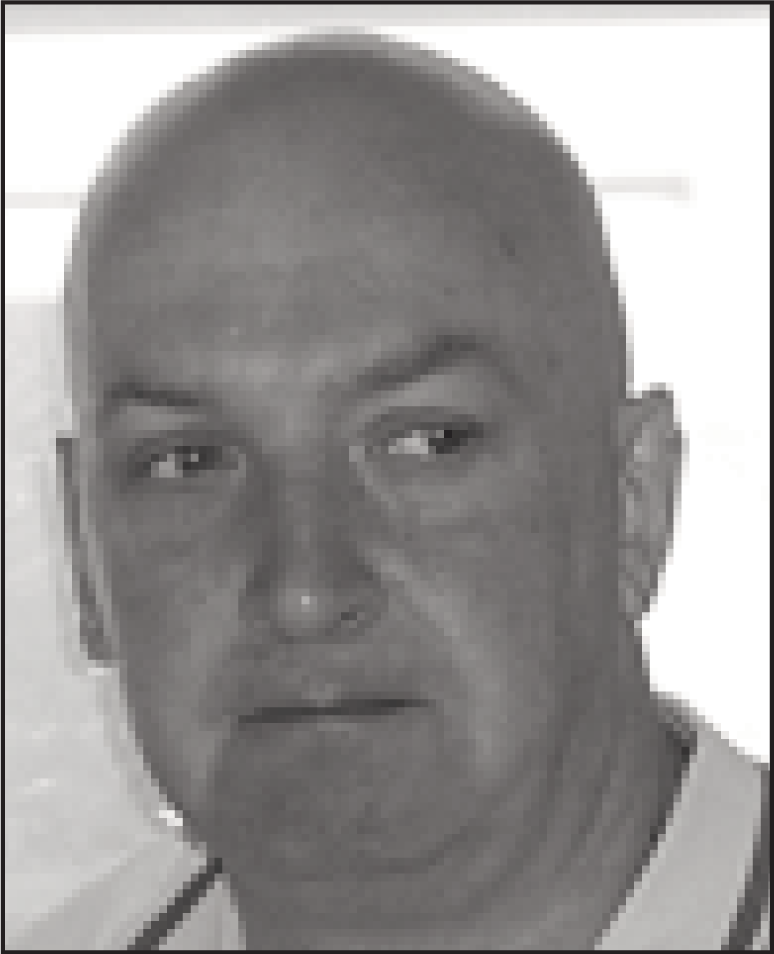
Mark Neary won a landmark court case against a local authority who were found to have unlawfully removed his autistic son Steven from his care.
I support calls for the press to be given access to report more openly cases in the Court of Protection. In 2011, I was involved in the much-reported case Neary vs Hillingdon. I originally approached the media for coverage of our case out of sheer desperation. At the time, my son Steven was under an unlawful deprivation of liberty authorisation and I had been unable to secure legal representation.
As the subsequent judgment of Justice Peter Jackson revealed, I was thwarted at every turn by Hillingdon in trying to challenge their authorisation, which I knew was inherently flawed. My approach to the press was never about seeking publicity; I was trying by any means I could to enable my son to return home. Justice Jackson declared because the case was already in the public domain it could be reported openly with a few minor exceptions. Subsequently, the case made the front pages of several newspapers.
I believe the media coverage has had absolutely no negative impact on Steven or me. I had been warned of the dangers, but have encountered nothing but total professionalism and enormous empathy in all my dealings with the press and media. I can only think of positives that have come from it. Since the judgment was made public, I have been contacted by many people in similar situations who have said they were inspired to become more knowledgeable and stand up for their family member's rights.
I have been invited to speak at numerous events and have been delighted to see what far-reaching impact the judgment has had. It is now used on several social workers degrees as valuable learning. Best interest assessors – who monitor someone when they have been deprived of their liberty – use the guidance of Justice Jackson to improve their practice, and supervisory bodies use the judgment to shape their policy. If this was an anonymous case, I doubt it would have been so widely picked up.
Because this has not been an account of anonymous people, I believe the public have been engaged by the human story that Steven and I represent. This wouldn't have happened without the skill of the writers who have presented our case.
I have worked hard to shield Steven from any intrusion into his day-today life. Because he is autistic, routines and stability are very important to him. I have encountered nothing but respect from the press in making this happen. The involvement of the media in our case has been overwhelmingly positive and has opened up very important issues for discussion that have had far-reaching consequences to many people with learning disabilities and the people who care for them, both personally and professionally.
The Lawyer's View
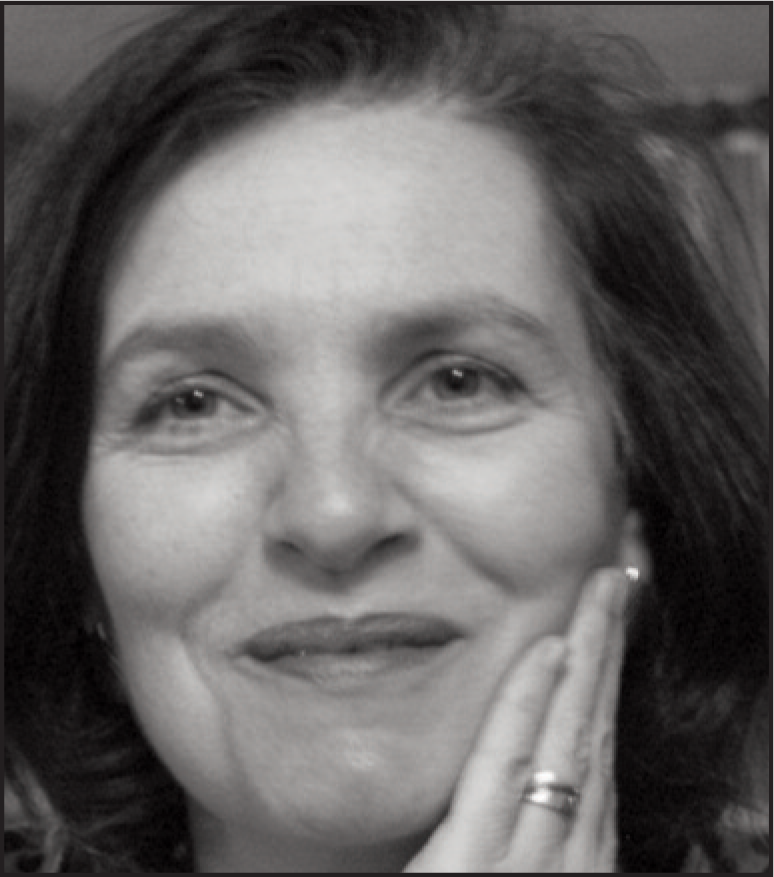
Romana Canneti is a member of the Independent legal team who has handled the first ever, and several subsequent, media applications to attend and report court of protection hearings.
The Court of Protection, or CoP, makes decisions affecting the lives of vulnerable adults. They may have lost “capacity” after a brain injury, from dementia, oxygen-deprivation or a congenital disability – to give just a few examples. Since its creation under the Mental Capacity Act 2005, the workload of the CoP has been massive. It focuses firmly on the “best interests” of the person lacking capacity – often a highly contentious issue. Most difficult of all are decisions about P's welfare and financial affairs – particularly when they involve disputes surrounding where P should live, or with whom, or whether it is in his/her “best interests” to have contact with family members.
Such intimate matters clearly engage P's Article 8 privacy rights under the Human Rights Act. “Open justice” underpins and straddles several of the rights enshrined in the Human Rights Act, including the right to a fair trial and the right to freedom of speech – but the CoP was a rare statutory exception. How could P's privacy rights be protected if the media were allowed in?
Open Justice?
By 2009, the Court of Protection remained almost the last court to conduct its affairs behind closed doors. That was the year that an Independent reporter heard on Radio 4 about the blind and autistic pianist Derek Paravicini's first concert tour with an orchestra. Struck by his remarkable life story, the journalist's attempts to investigate the musician's circumstances hit the buffers. Decisions relating to the affairs and living arrangements of this world-famous performer were in the hands of the CoP. There was a blanket prohibition on investigating, hearing about or reporting anything relating to the case.
When The Independent applied to attend the Paravicini proceedings, and it became clear what an uphill struggle lay ahead – by then even the family courts were routinely allowing reporters in, but the doors to the CoP hearings remained firmly closed. The Mental Capacity Act of 2005 made provision for anyone who could show “good reason” to attend its private hearings – but no media organisation had ever tried to do so.
This first media application turned into an expensive test case, brought by a consortium of newspapers and broadcasters. The Court of Appeal decided in favour of the media, a ground-breaking decision acknowledging the “open justice” principle, whilst recognising that it does not strictly apply to CoP proceedings. For the first time, the judges explicitly recognised that the right to freedom of expression in Article 10 of the European Convention of Human Rights includes the freedom to receive – not only to impart – information and ideas. In other words, the public had a right to be informed, in addition to the media's right to freedom of expression.
Since then, The Independent has been involved in eight CoP applications to attend private proceedings, ranging from the fight of a woman in her 60s for access to her sister, to an autistic adult's unlawful removal by a local authority from his father's care at home, to a disabled man's deprivation of both his liberty and the care of his former foster parents.
In 2011, Mr Justice Peter Jackson, allowing the media access to a case surrounding the care of an autistic adult named Steven Neary, signalled a new judicial willingness to allow access:
“There is a genuine public interest in the work of this court being understood. Not only is this healthy in itself – the presence of the media in appropriate cases has a bracing effect on all public servants, whether in the field of social services or the law – but it may also help to dispel misunderstandings.”
The fight goes on
Although the battle to increase reporting of the Court of Protection goes on, we meet strong resistance from council officials or primary care trusts, who believe that public authorities should shelter under the privacy umbrella. We agree that intimate details of an identifiable person's life should not be aired in public when they are vulnerable and unable to object to unwarranted publicity. But there is no parallel good reason to anonymise the public authorities responsible for their well-being.
We have argued that anonymised court reporting protects the privacy rights of the vulnerable individual. It is good to shine a light on the agonising decisions faced by judges. The media should be allowed to act as the eyes and ears of the public and the principle of “open justice” should extend to these sensitive cases. Senior CoP judges have agreed. The Independent has won every one of its contested applications, including twice in the Court of Appeal.
From 2009, when no reporter had ever attended a closed Court of Protection hearing, we now find parties involved can be open to negotiation on our attendance. We have even been able to agree in advance what reporting, if any, should be allowed (the presiding judge permitting), thus avoiding legal argument in court.
But there is still disproportionate expenditure of time and resources each time that a CoP story interests a reporter. It has been hard for budget-cut newspapers to allocate scarce resources to costly court applications when there is no guarantee of a story. But the campaign will go on – resources permitting – until CoP hearings are routinely reportable, albeit within privacy safeguards set by each presiding judge hearing a case.