




Abstract

A new movement has defied the internet, spotted new audiences, supported minority groups and brought back the magic of the magazine
The internet may be destroying the high street with its direct-to-consumer sales, but it is the secret power behind a remarkable renaissance of printed magazines. Yes: on paper, with ink, stuck together with glue. Remember those?
If you listen hard you will hear the exciting thrum of minds working to come up with new ideas, the click of fingers on touchscreens, the groans of arm-wrestling over layouts and the slap of dummies onto desktops, tables and, even more likely, kitchen worktops. Because these magazines, their creators hope, are like no other before, seeking unexplored cracks in markets between the leaden paving slabs of women's weeklies, male and female glossy monthlies, and general interest magazines full of ill-designed advertising. This does mean that their circulations are sometimes so small as to be near invisible and they may only appear once or twice a year.
So that won't work then? This is the knee-jerk reaction. But talk to these new editors-come-designers-come-publishers and you will discover an energy, sometimes driven by anger, that is exciting. You will find top design skills, often drawn from duller, if more stable, lives in marketing, advertising and photography. And you realise that among these titles are some that will be talked about in 20 years’ time.
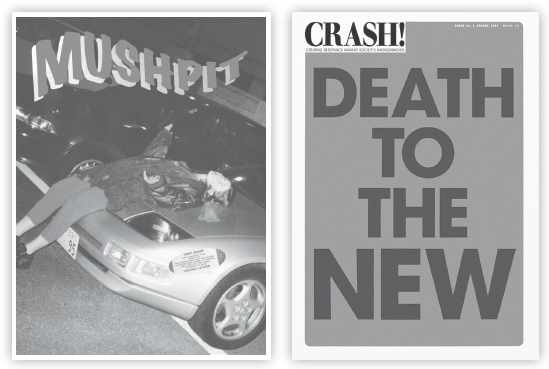
In honour of indie magazines past and present, Somerset House in London is running an exhibition until August called Print! Tearing It Up. It is curated by the culture documenter Paul Gorman and Somerset House's Claire Catterall. Gorman, the author of The Face: The Magazine That Changed Culture, is like a boy in a sweetshop with this project. He can hardly catch breath as he considers the equivalent of a giant jar of lemon sherbets before turning to a boxload of Haribo Starmix and then discovering a tray of hand-crafted salted caramel chocolates. What's giving him this sugar rush is working with magazines dating as far back as 1914's Vorticist Blast, a literary magazine starring Wyndham Lewis that lasted two issues (a year apart) but now recognised as a marker of 20th-century modernism, through the 1960s and 1970s (including Oz, Spare Rib and Private Eye), via 1980's The Face to the present. Of the 200 or so magazines in the exhibition almost half are current and these, apart from some like the satirical Mushpit, are largely unheard of beyond a finely delineated group of followers. They are all, however, magazines that make statements rather than attempt to sell something. And they are making them on paper.

The exhibition spins out of the postscript to Gorman's book, which considered the magazines inspired by or in the footsteps of The Face, the music journalist Nick Logan's 1980, independently launched music and culture magazine. When Emap, Logan's employer, said “thanks but no thanks” to his proposal for a glossy, multi-faceted publication, the 33-year-old went it alone and The Face ultimately kept ahead of trends – until it didn't – for almost quarter of a century.
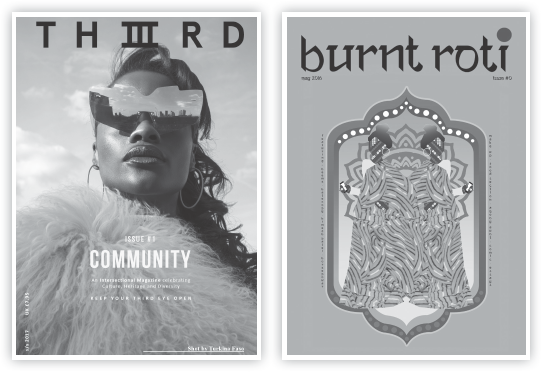
So will it be the beautiful Burnt Roti, a £7 south-Asian lifestyle magazine, which still inspires in the decades ahead? Did anyone know, other than its west London-raised editor, Sharan Dhaliwal, and other women of south-Asian descent, that it was worthwhile, even possible, to separate out their interests, concerns, looks and culture? But read its essays about shame or guilt and its celebrations of successful women in this community on pages of stunning design and you can imagine it growing and evolving alongside its readership. Where you have an interest group on the move there are exciting possibilities for print magazines. It was ever thus.
Or how about Thiiird, an intersectional magazine celebrating culture, heritage and diversity. Don't miss the intersectional bit of that description. This reflects the world of the not just marginalised but the marginalised marginalised, effectively putting the equivalent of that “gay, black, trans woman with a disability”, once the brunt of jokes about fulfilling all the minority employment criteria in one person, centre stage in a strong and aesthetically beautiful way. Not for them a little hand-printed, homemade paper “zine”, following in the shy footsteps of Victorian pamphleteers. No, it's 200 pages of glossy 150gsm paper almost the size of a laptop, with a choice of two covers at £8.95. The second issue, subtitled Femme, was clearly a labour of love by a team marshalled by Rhona Ezuma, 28, its editor.
Ezuma, who has a day job as a stylist and creative director who has Vans, Chanel and Italian Vogue on her calling card, explains its driving force is 110 per cent about inclusivity, whether it's everyday African life if you are LBTQI, or being a black Russian or a femme man at a football ground. Working among top photographers and other creatives on a day-to-day basis means this team can use connections to tailgate into some great locations, style to the hilt and take wonderful images, even of, as the editor politely describes them, private parts (featured alongside on-message poetry). OK, that's not new to magazines, even women's magazines, but why not try again?
While the images in these newcomers are great, their experiments with typography and typesetting can jar with old-schoolers and probably traditional magazine readers, but as Gorman is quick to point out, no one old-school much liked graphic designer Neville Brody's “bendy”, “distorted” typefaces and design back in the 1980s. When it comes to innovations such as an absence of margins or erratic lengths of underscoring, only time will tell. One woman's mistake might be another's work of genius. There is a suspicion, though, that with some of the newer titles, the words are not being recognised for the physical artform they can be on page, but only for their meaning. It's quite a steep relearning curve for anyone who has been reading copy to fit phone screens most of their lives.
A Short Run in the Can-do Mush
Step forward the printers, who have a new bounce in their step at being able to talk intelligently about stuff more beautiful than an annual business report. True, they have had to invest in short-run machines. Park Communications, for example, ran 200 copies of a hyper-local art magazine, but it can offer the fun of cover changes on the run, assorted paper stock within one publication, the best inks, beautiful typefaces and the indescribable buzz of delivering the first copies of an issue to the editor.
There are interesting connections between these precision-targeted, shiny beauties. There is something of Pride about them, as in gay pride with all its sequinned, high-heeled whistle-blowing glamour parades. They shout, “We are here!” and many, if not most, are created by women. They also reflect the picture-perfect world of Instagram and Pinterest, but in a way that almost celebrates that: by being in print not everyone has access to it. And they are definitely the voices of the post-economic crash generation, angry about being forced to compete savagely with each other for jobs, homes, partners – basically lives that mean something, and the resultant breakdown of society into ever smaller interest groups. And the badge of honour in all this? Having your own magazine: solid, tactile, fragrant (if you link ink and paper coatings), believable and, most important of all, real.
How different in appearance to the anger expressed by graphic designer Scott King and writer Matthew Worley's Crash! publications (also at the exhibition) of the late 1990s, which predicted all this coming on what were, effectively, in-your-face folded-up scraps of paper. Crash! raged against Cool Britannia and the selling out of journalists to Britpop, and the arrival of money-balls premier league football and, well, just raged. As with punk, transience was its weapon. If only they had known they were also warning of a world-wide financial crash.
More like today's crop in terms of looks and edge, and being born out of passion, was Huw Gwyther's Wonderland., which is still with us and on regular bookstands. Published four times a year, it offers between 300 and 400 pages of fashion, film, music and art for £6.95. Latching on to a particular bit of 2005 pre-crash entrepreneurial zeitgeist, Gwyther, who says he simply wanted to a create a job for himself that he enjoyed, pitched his idea at an equally embryonic BBC Dragon's Den. The idea, he says, was to self-publish a magazine incorporating the best bits of Smash Hits, The Face, US Vogue, Vanity Fair, W, Details and the US Harper's Bazaar (but only under Liz Tilberis’ editorship). He got start-up funding and a business partner, and 13 years on, it has a circulation of 180,000 (25 per cent in the US) and two stablemates – all without selling out on the original concept. Didn't everyone really want a bit of the ad-packed GQ action? Apparently not, Gwyther declares he has never bought a copy of GQ and wasn't in the least motivated by money when coming up with Wonderland. So it's clearly a role model for 2018's magazines. And his advice? One thing that never changes, it seems, the bigger his cover star the bigger his sales.
A stone's throw from Somerset House is someone else equally passionate about independent magazines. Ten years ago, Steve Watson, then in a career in contract publishing, set up Stack as an innovative way to market the magazines he found exciting to read but hard to find. For a subscription of £7 a month, which is less than the cover price of most of these magazines, each month you will receive the latest issue of a mystery magazine knowing it has been selected by Stack for its “quality, beauty and intelligence”. It also, says the subs page, “defeats the Amazon algorithm”, which has to be a yes! Recently inside the monthly brown envelope have been Delayed Gratification, a magazine for slow journalism; Boat a travel magazine where the whole editorial team moves to a location for a single issue (next stop the Faroes); Hotdog (poetry for/by women/binary/trans gender and also given the nod by Gorman); and Cereal, a British biannual on travel and style that is so beautiful it resists advertising it can't art direct and is written in that overly deferential way that, until now, only American magazines seemed to feel denotes class.
Watson is realistic about this uncounted (no one has a clue what is out there) and largely unaccountable publishing world, and offers what feels a little oasis of order. No one, he reckons, is making a living from cover sales and in many cases the teams wouldn't want to. With pounds come responsibility, to paraphrase a Spiderman comic, and in many cases the team making the magazine is relishing the freedom from being beholden to anyone but themselves. What having no income buys you is time. More time is what most creative people dream of and it is lost as soon as you have advertisers, or even brand partners, on board with their own calendars marked in electronic red ink. So niche and loyal are the readerships, however, that they are happy to wait for something they know will be virtually tailor-made for them when it does appear, and are apparently not fazed by the fact that many magazines don't offer subscriptions. After all, your editor might want to spend a year perfecting each magazine, as does Ben Smith with Shelf Heroes, a £10 publication dedicated to one letter of the alphabet and the world of films as reflected by that letter. It sells online and at specialist bookshops – this labour of love is currently up to the letter E.
Like The Face, most indie magazine start-ups are self-funded and, in Watson's view, breaking even is a mark of success. Ezuma did join the Prince's Trust to find out how to write a business plan and has even managed to pay expenses, but this sort of thinking tends to come later, if ever. Many are created by like-minded friends in the model of Private Eye, the reference most used for five-year-old Mushpit, a successful satirical take on being twentysomething females in London by Charlotte Roberts and Bertie Brandes. Only it is twice yearly rather than fortnightly. In Gorman's view, being unsustainable to start with is part of the attraction, stripping everything back to passion.
But what makes them possible at all, says Watson, is being able to sell online. Postage costs can push up the price but these publications are not price-sensitive and there is no distributor middleman, no salesforce turning up its nose at the concept and no retailers saying sorry you are too small for our shelf space, which nearly killed off many magazines 10 or 15 years ago. In 2018, you have a one-to-one relationship with your customer-reader.
