




Abstract

When newspapers embraced the political cartoon, they encouraged a biting wit and crushing commentary that horrified politicians
As well as being the 50th anniversary of the founding of the British Cartoon Archive at the University of Kent, this year also marks the centenary of the publication of the last political cartoon in a daily newspaper drawn by Sir Francis Carruthers Gould, who was the first staff political cartoonist on a daily newspaper in Britain and the earliest to be represented in the Archive’s collection. (Gould also coined the phrase “picture politics” to describe political cartoons.) In addition, 2023 is the 60th anniversary of the death of Sir David Low (1891-1963), another ground-breaking cartoonist whose work is held in the British Cartoon Archive. What follows is a brief personal overview of the history and development of the British daily newspaper political cartoon from 1913 to 1973, when the archive was established.
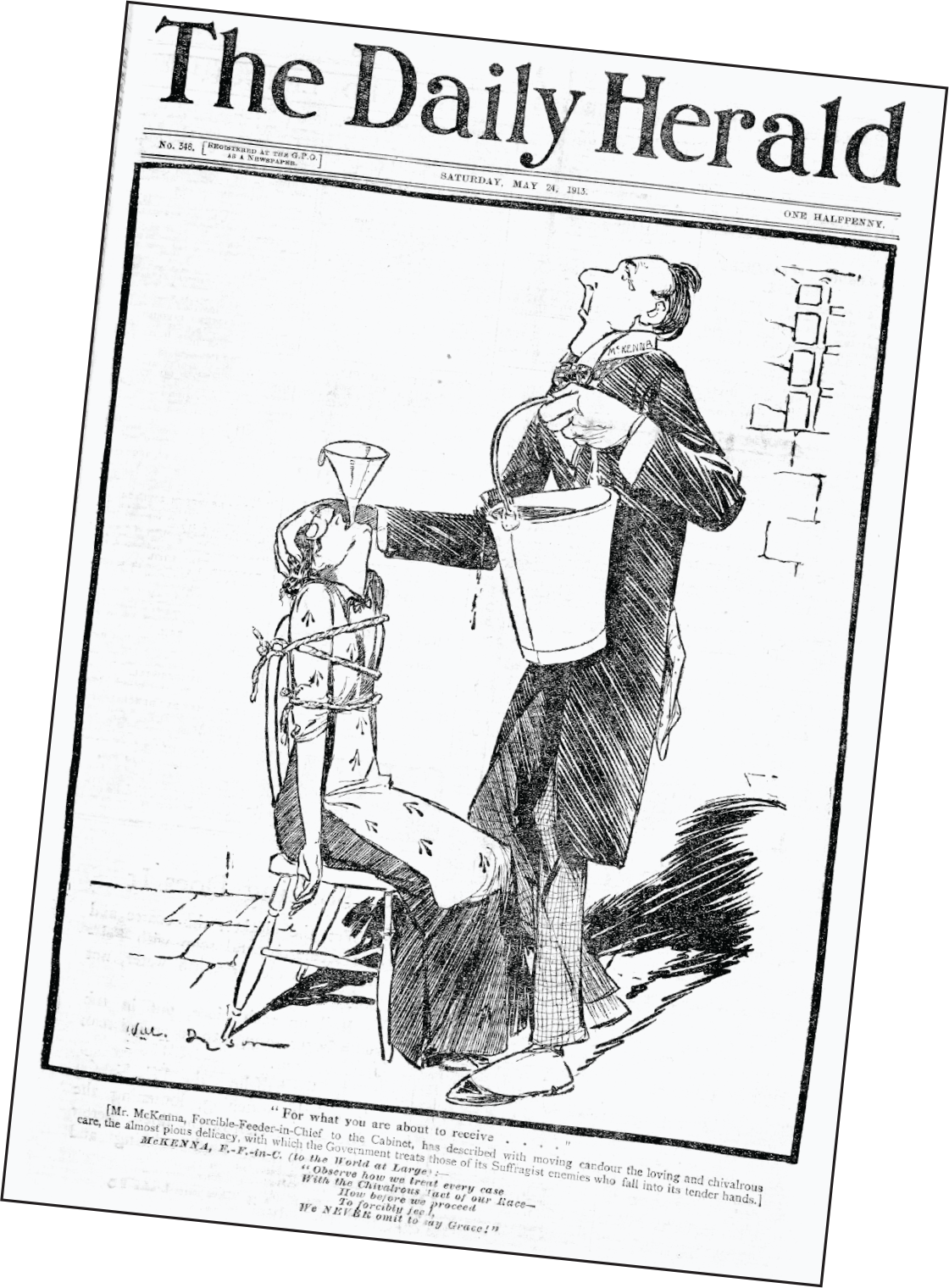
The Daily Herald was launched as a broadsheet newspaper in April 1912. Its first political cartoonist (from September 23 that year) was the Australian Will Dyson, who had arrived in London at the end of 1909 and had worked at first for the Weekly Dispatch, then Britain’s biggest-selling Sunday newspaper. At first, his cartoons for the Herald appeared beside the editorial and occupied a quarter of a page. However, before long, his drawings started to appear on the front page, often filling the entire space below the masthead. No other political cartoons in British daily newspapers had previously been published at such a size, let alone on the front page.
Dyson’s drawings were praised by many literary figures, including HG Wells and GK Chesterton, and so popular was his work that his first collection in book form, Cartoons (1913), sold 10,000 copies in three days.
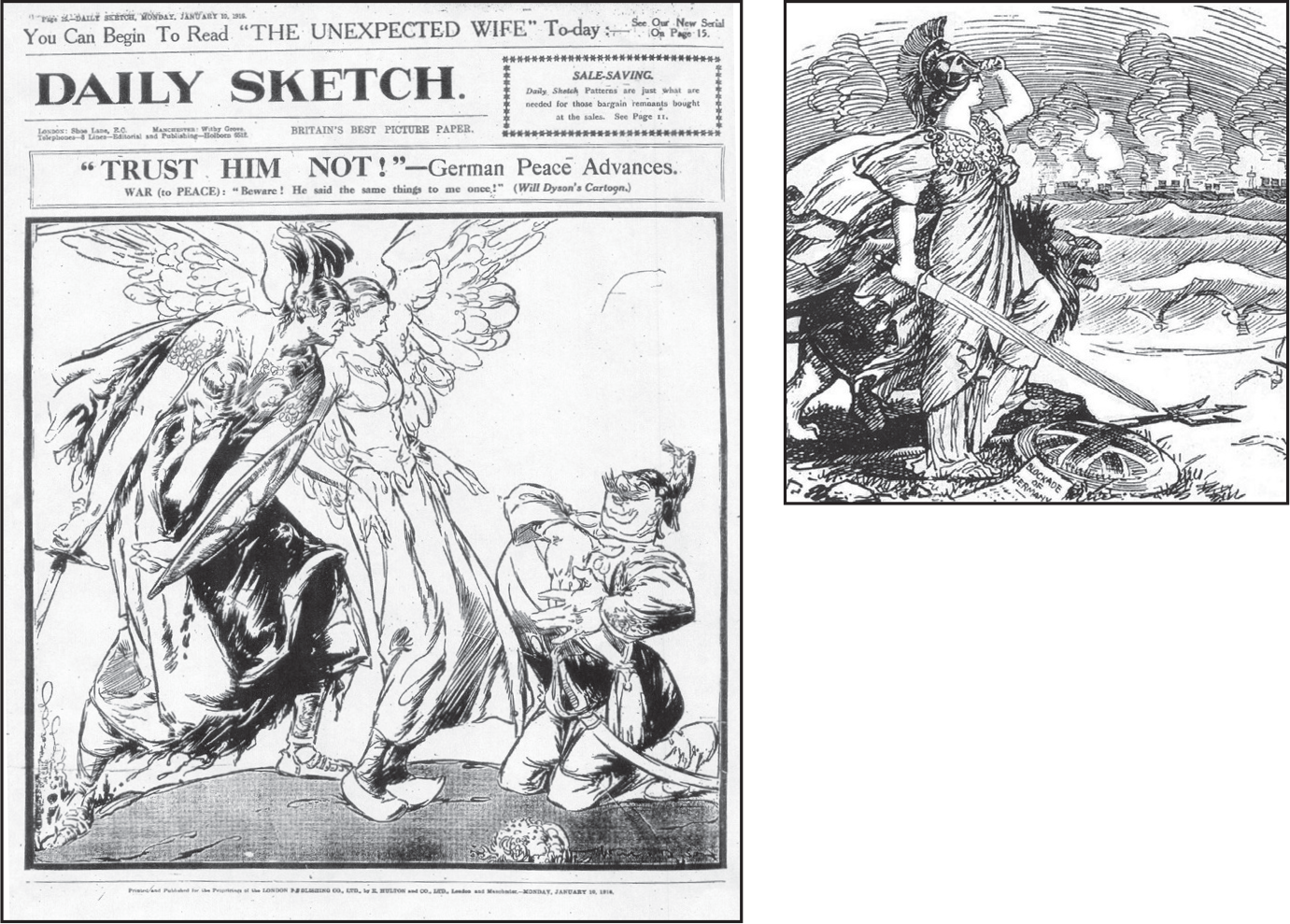
His fame increased still further during the First World War, with his anti-German collection Kultur Cartoons (1915). Indeed, Lord Northcliffe was so impressed by Dyson (who he said had “the most virile style of any British cartoonist”) that on January 1, 1915, he cancelled all the advertisements for the back page of the Daily Mail (thereby losing considerable revenue) to reprint Dyson’s Wonders of Science!, showing monkeys wearing German helmets bombing a city. Northcliffe chose the back page of the broadsheet Mail so that Dyson’s drawing would occupy “a larger space than any cartoon has ever been given in a British newspaper”. It would be nearly 80 years before a political cartoon of comparable size was published in a British newspaper. (This was a drawing by Chris Riddell, then daily political cartoonist of The Independent, for the first issue of the short-lived broadsheet weekly The Cartoonist, launched on April 7, 1993.)
Other daily political cartoonists working during the First World War included Sidney Strube (Daily Express), Jack Walker (Daily Graphic), “Poy” (Percy Fearon, Evening News), WK Haselden (Daily Mirror) and JM Staniforth (Western Mail). Some even published anthologies of their wartime drawings. Francis Carruthers Gould, who had retired in 1914, continued to submit political cartoons to the Westminster Gazette until 1923, and a number of the gruesome drawings of the Dutchman Louis Raemaekers (then exiled in Britain) were reprinted in the Daily Mail. However, no British papers published daily cartoons as large as Dyson’s.
After the war ended, Dyson drew perhaps his best-known cartoon, Peace and Future Cannon Fodder (Daily Herald, Saturday May 17, 1919), which ironically filled only a quarter of a page and was published inside the paper. It featured the main delegates leaving the peace conference at the Palace of Versailles, near Paris. French leader Clemenceau says “Curious! I seem to hear a child weeping!” as a naked child labelled “1940 class” cries behind a pillar. (By coincidence, on the same day, Dutch cartoonist LJ Jordaan used a similar idea on the cover of the weekly De Notenkraker entitled The Peace of Versailles – The Child Enters, showing an armed, winged monster.) As Marshal Foch, supreme commander of Allied forces in the war, commented: “This is not peace; it is an armistice for 20 years.”
In 1927, New Zealander David Low became the first daily political cartoonist on the Evening Standard. Before he arrived in Britain in 1919, some of his Sydney Bulletin drawings had been reprinted in the Manchester Guardian and he had received praise from writer Arnold Bennett (“Low draws as the fishes swim”). After working as daily political cartoonist on the Star, he had moved to the Standard which, though it had a smaller British circulation, syndicated his work to 170 journals worldwide. As a result, during the 1930s, his outspoken drawings caused international protests. For example, shortly after the Nazis came to power, one of his cartoons showing Hitler setting fire to the League of Nations building (“It worked at the Reichstag – why not here?”, November 18, 1933) led to the Evening Standard being banned in Germany (Low would later appear on Hitler’s death list). And in 1935, his comment on Mussolini’s invasion of Abyssinia (The Girls He Left Behind Him, May 10, 1935 – the “girls” being Hitler, Goebbels and Goering) resulted in a ban in Italy. Later came Rendezvous (September 20, 1939), his famous satire on the Nazi-Soviet Pact featuring Hitler and Stalin greeting each other in the smoking ruins of Poland. This period also saw Low’s die-hard character Colonel Blimp enter British dictionaries.
New appointments in the 1930s included James Friell “Gabriel” (1912-97), who was billed as “Fleet Street’s greatest discovery since David Low” when he joined the Daily Worker as political cartoonist in February 1936. And in 1938, George Whitelaw (1887-1957) succeeded Dyson as political cartoonist on the Daily Herald, which in 1933 had become the world’s best-selling daily newspaper. Also in 1938, Osbert Lancaster joined the Daily Express and on January 1, 1939, at the suggestion of features editor John Rayner, he began to draw single-column cartoons on the European model for Tom Driberg’s William Hickey gossip column. They later moved to the front page, headed “Pocket Cartoon”, a phrase coined by Lancaster in a reference to the new heavily armed German cruisers nicknamed “pocket battleships” by the British as they packed a considerable punch despite their small size. Lancaster also drew political cartoons for the Sunday Express, signed “Bunbury” (after the imaginary character in Oscar Wilde’s play, The Importance of Being Earnest).
The cartoon that nearly closed the Daily Mirror
Staff political cartoonists taken on by daily newspapers in 1939 were Leslie Illingworth (Daily Mail), “Vicky” (Victor Weisz, News Chronicle), Clive Uptton (Daily Sketch) and George Butterworth (Daily Dispatch). All drew powerful cartoons during the Second World War, as did Bert Thomas of the Evening News, who had earnt an MBE in the First World War for his famous Weekly Dispatch cartoon Arf a Mo’, Kaiser!.
During the 1940s, the Daily Mirror sold more copies (c2.5 million) than almost any other daily paper in the UK (rivalled only by the Daily Express). However, in 1942, it was very nearly closed down by the government over a drawing by its political cartoonist Philip Zec (1909-83). The Price of Petrol Has Been Increased by One Penny – Official (March 5, 1942), depicting a torpedoed sailor clinging to a raft, was one of a series attacking profiteers. However, to Herbert Morrison (then home secretary), it appeared subversive, unpatriotic and “worthy of Goebbels at his best”, and questions were raised in the House of Commons. For a time, the Mirror was under threat of closure (the Daily Worker had been shut down in 1941) but it got off with a warning. (Forty years later, The Guardian’s Les Gibbard drew a pastiche of the cartoon during the Falklands War, captioned “The Price of Sovereignty Has Increased – Official”. It too was condemned – The Sun even accused Gibbard of treason.)
When Margaret Belsky (1919-89) was appointed pocket cartoonist on the Daily Herald in 1951, she became the first woman to draw a regular political cartoon on a daily newspaper in Britain. Belsky produced more than 6,500 front-page cartoons for the Herald and continued to work for the paper after it was renamed The Sun in 1964. However, she left in 1969 when it was taken over by the Australian Rupert Murdoch.
On February 1, 1953, Low moved to the Manchester Guardian from the Daily Herald, which he had joined in 1950, becoming the paper’s first staff cartoonist. A few months later, his drawing Morning After (June 3, 1953), about the waste of money spent on the coronation of Elizabeth II the previous day, was heavily criticised as vulgar, scandalous, and “a new low in sheer bad taste”.
“JON” (WJP Jones, 1913-92) joined the News Chronicle in 1955, creating two daily pocket cartoons, one on politics and one on sport, and continued to draw for the newspaper when it was absorbed by the Mail in 1960. In his foreword to JON Cartoons (1978), the late Duke of Edinburgh said: “I would love to be a cartoonist. The only problem is that I would never be able to combine a good caricature with a topical situation and a funny caption all in one effort.”
Before being appointed political cartoonist on the Evening Standard in 1958, Vicky had also been on the News Chronicle for many years but had moved to the Daily Mirror in 1954. On November 6, 1958, three days after he arrived at the Standard, he created his best-known character, “Supermac”. It was intended to ridicule the ageing Conservative prime minister Harold Macmillan by portraying him as Superman in an allusion to Stephen Potter’s recently published humorous book Supermanship, or, How to Continue to Stay Top Without Actually Falling Apart (Vicky’s caption was “Introducing: Supermac – How to Try to Continue to Stay Top Without Actually Having Been There”). However, somehow, Vicky’s attack failed, and Supermac became an endearing image of Macmillan.
The Cartoonists’ Club of Great Britain was founded on April 1, 1960, at The Feathers pub in Tudor Street, just off Fleet Street, and its first chairman was Ian Scott, the former daily political cartoonist of the Daily Sketch and News Chronicle. Then, in March 1966, Nicholas Garland joined The Daily Telegraph as the paper’s first political cartoonist (he would later be the first political cartoonist on the newly founded Independent in 1986). Soon afterwards, Kenneth Mahood (1930-2020) was appointed the first political cartoonist on The Times and remained with the paper until 1968. He was later pocket cartoonist on the Financial Times (1972-82) and Daily Mail (1982-2009), creating more than 14,000 cartoons for the Mail alone.
On October 24, 1966, a group of leading cartoonists (many of whom were daily political cartoonists) broke away from the Cartoonists’ Club to form the British Cartoonists’ Association at a dinner held at the Garrick Club. Illingworth was elected chairman and Keith Waite (Sun and later Daily Mirror) was treasurer, with Peter Maddocks (then pocket cartoonist on the Evening Standard) as secretary.
When Rupert Murdoch took over The Sun and turned it into a tabloid, he brought with him Paul Rigby, who had been working on Murdoch’s Sydney Daily Mirror and was billed as “Australia’s No.1 Cartoonist”. Rigby’s drawing appeared on the editorial page of the first issue, November 17, 1969. (Clive Collins also drew for the paper but left in 1970 to become the first political cartoonist on the People.)
The first major exhibition of British cartoons and caricature opened in May 1970 at the National Portrait Gallery in London. Drawn and Quartered: The World of the British Newspaper Cartoon, 1720-1970 was sponsored by the Newspaper Publishers’ Association and arranged by the British Cartoonists’ Association. It was launched at a cocktail party hosted by prime minister Harold Wilson and the private view was attended by Princess Margaret. The exhibition included works by many daily political cartoonists, such as “Eccles” (Frank Brown, Morning Star), “Emmwood” (John Musgrave-Wood, Daily Mail), Stanley Franklin (Daily Mirror), Les Gibbard (Guardian), “GUS” (George Smith, Evening News), “JAK” (Raymond Jackson, Evening Standard), “MAC” (Stanley McMurtry, Daily Sketch), William Papas (Guardian), Paul Rigby (Sun), and “Trog” (Wally Fawkes, Daily Mail).
The Centre for the Study of Cartoons & Caricature (now the British Cartoon Archive) was set up in 1973 at the University of Kent by Dr Graham Thomas, a member of the university’s politics department (who died in April this year). It began when Brian MacArthur, then editor of the Times Higher Education Supplement, sent a Kent colleague an original cartoon by Arthur Horner (former political cartoonist on the News Chronicle) about the university’s first student sit-in. Thomas then contacted Keith Mackenzie, art editor of Associated Newspapers, who arranged the deposit of 20,000 original cartoons from the Daily Mail and Evening News. Other donations followed, including a large batch of drawings by Strube, Low, Vicky and Cummings from the Beaverbrook newspaper group. The collection now contains more than 200,000 cartoons by about 300 artists, including all those political cartoonists mentioned above who have worked for British daily newspapers in war and peace, plus a great many others up to the present day.
Footnotes
Dr Mark Bryant is a former trustee of the Cartoon Museum and has written widely on the history of cartoons, caricature and humorous illustration. He is the author of Dictionary of 20th Century British Cartoonists & Caricaturists, among other books, and is the editor of a new study on Sir Francis Carruthers Gould by the late Professor Colin Seymour-Ure, who was a leading light in the British Cartoon Archive for many years.