



Abstract

What do you do when your moving target keeps moving, or even changing shape? That’s the dilemma facing independent journalists trying to cover politics in Georgia.
Having run media freedom projects in more than 30 countries, including those in Eastern Europe, in the former Soviet Union and in sub-Saharan Africa, I assumed that advising independent media and human rights campaigners in Georgia would be a relatively straightforward mission. It wasn’t.
Compared to their contemporaries across the border in Russia, Georgian journalists are not facing major threats to their liberty or their freedom to report (even though one of their number was imprisoned on trumped-up corruption charges last year – he has now been released). But, in many ways, they are facing a cleverer opponent, although perhaps less ruthless, than Vladimir Putin.
That opponent is Bidzina Ivanishvili, the eminence grise of Georgian politics. He’s an oligarch who made his fortune in Russia in the Wild West days of Yeltsin and continued to do so under the early Putin. He formed his own party, Georgian Dream, which in 2012 ousted the governing United National Movement, led by the oligarch Mikheil Saakashvili (he now languishes in prison, also for alleged corruption). After winning the election, Ivanishvili became prime minister, but stepped down two years later, though he is widely regarded as still running the show – but from very much behind the scenes.
Journalists wanting to challenge him have a tough, make that impossible, task. His public profile is low and his media presence is non-existent. “How do you hold the government to account when the man in charge is nowhere to be seen?” asked one of the participants in my first workshop after I’d given a presentation about the watchdog role of the media (a presentation I subsequently amended).
Despite occupying 20 per cent of Georgian territory – in 2008, Russian troops invaded the regions of South Ossetia and Abkhazia – the Georgian Dream government has been inching closer to Russia and cracking down on media freedom and civil liberties. Earlier this year it tried to bring in a local version of Putin’s “foreign agents” law. This designated any media or human rights organisation operating in Russia that received more than 20 per cent of its funding from abroad as a non-Russian entity; this subjected these organisations to a myriad of restrictions, severely impeding their ability to operate. Indeed, many just folded.
The Georgian version of this law, successfully dubbed by the protestors as “the Russian law” – a term even adopted by the pro-government media – could have been written in Moscow. It quite possibly was. But the independent media and the human rights community forced the government to withdraw it by bringing thousands on to the streets of the capital Tbilisi – a sort of victory for media freedom but a strictly limited one.
News operations can survive many vicissitudes but a lack of money, a lack of access to information and a lack of access to those in power can prove debilitating, sometimes fatally. The opposition media in Georgia suffers from all three – but it’s not yet giving up and, judging from the courageous journalists I met, is unlikely to any time soon.
The government-supporting media is heavily subsidised by way of the generous amounts of official advertising it receives. By the same token, the opposition media receives virtually none. Journalists and media organisations that the government perceives to be less than supportive are not only starved of funds, but they are also starved of information. Official press releases are rarely, if ever, sent to them, nor do they hear about government press conferences, and if they do, they are usually barred from entering.
Government press officers usually refuse to speak to them, and neither do Georgian Dream politicians. They don’t take their questions at those rare press conferences that they have got into, they don’t give them interviews, and if any journalists are adventurous enough to try to doorstep a minister, they are either ignored or physically harassed.
“How do you hold the government to account if you don’t know what they’re doing and when you do find out, they won’t speak to you?” asked Elena, a news editor on a Tbilisi independent 24-hour news channel.
Compounding the problem of this governmental omertà is the opposite problem of information, or rather disinformation, overload – much of which is believed by independent journalists to emanate from Russia.
One of the key targets of this disinformation onslaught is the EU. On paper, the government remains committed to seeking membership of the bloc – indeed, the aspiration is enshrined in the Georgian constitution – but that’s not the impression one gets from the disinformation that floods both the official media and the online space. Even entertainment pages on Facebook can be found carrying Russian-inspired disinformation.
Under cover of purporting to be keen to achieve candidate status, a first step to EU entry, Georgians almost daily read about or hear that European integration will threaten, if not overwhelm, the traditional Georgian way of life. It would represent an attack on the Georgian family, the orthodox church and almost every other aspect of Georgian culture. The average Georgian could be forgiven for thinking that if and when Georgia joins the EU, drug-taking, atheism and LGBTQ+ activities would be almost compulsory.
But the independent media is fighting back. The Media Development Foundation, one of a number of media freedom NGOs working in Georgia, runs a highly effective “Myth Detector” operation, which recently revealed a classic piece of disinformation being put out by the government media.
They were reporting that Georgie Volski, who glories in the title of first deputy chairman of the Georgian parliament, recently told an interviewer on a pro-government TV channel that EU sanctions against Russia had been so unsuccessful that trade between Russia and the bloc had actually increased this year. The Media Development Foundation looked at the figures from the EU’s own statistics agency and revealed that far from trade between the EU and Russia increasing, it had dramatically collapsed.
Detecting this sort of disinformation is hard graft and Georgian journalists would rather be working on their own stories than exposing the disinformation of others. But as Niko, a social media journalist in Tbilisi told me: “It’s vital that the government and their friends in Moscow are aware that they’re being watched and called out whenever they try and fool the population. And we’ll keep doing it for as long as we need to.”
It’s not much but in the current climate in Georgia, in terms of media freedom, it’s probably as good as it gets.
Footnotes
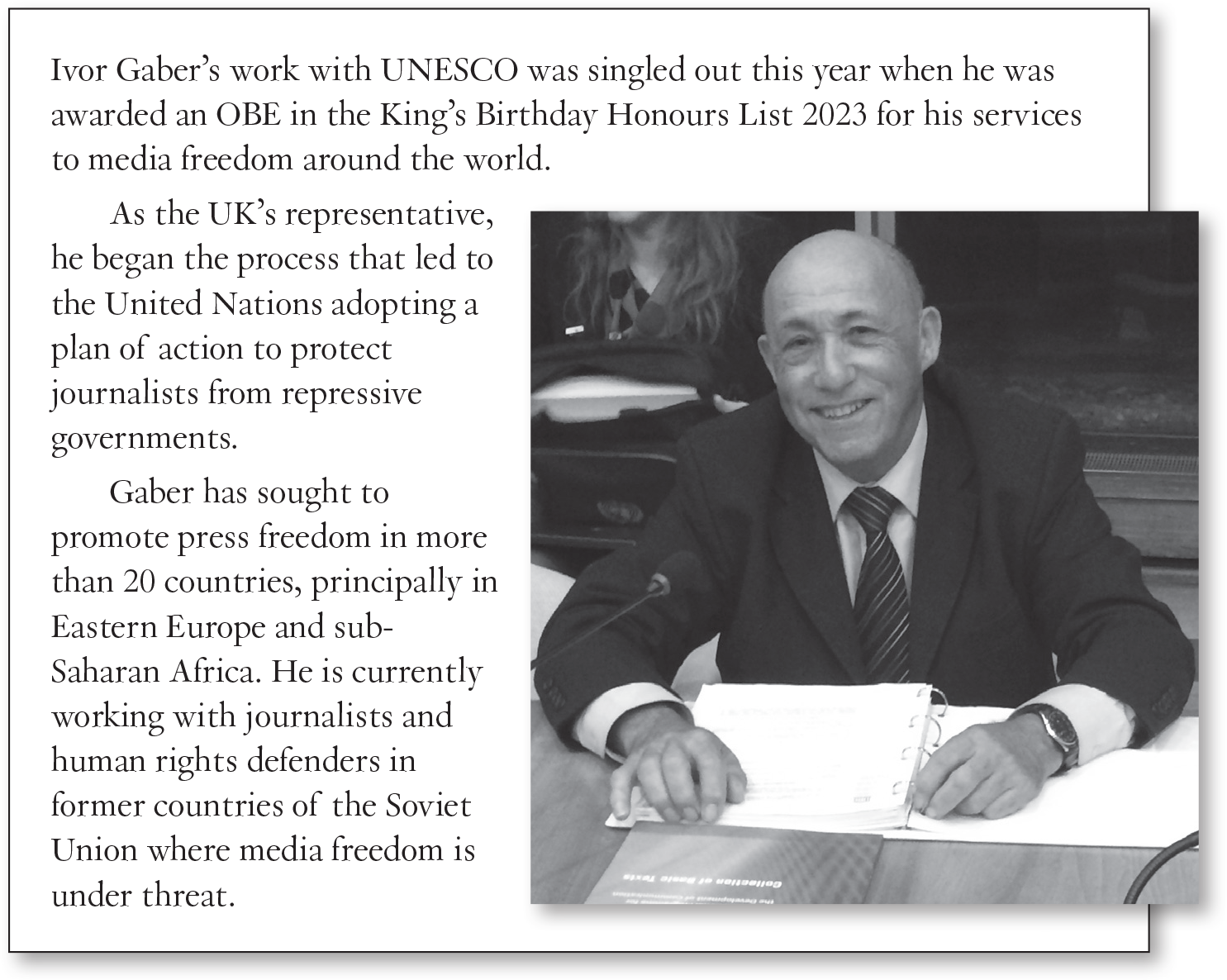
The writer is professor of political journalism at the University of Sussex and a former political broadcaster with the BBC, ITV, Channel Four and Sky News. He represents the UK on the international programme for the development of communication at UNESCO (the United Nations Educational, Scientific and Cultural Organisation) and sits on the BJR editorial board. 